14 Vintage Circus Nursery Ideas for a Whimsical Baby Room
A vintage circus nursery leans into soft, muted color palettes and old-world imagery — striped canvas tents, painted wooden animals, and gentle bunting — rather than the bright primary colors of a modern circus theme. It’s a whimsical look that still feels calm enough for a room meant for sleep, built around nostalgic charm rather than loud, high-energy decor.
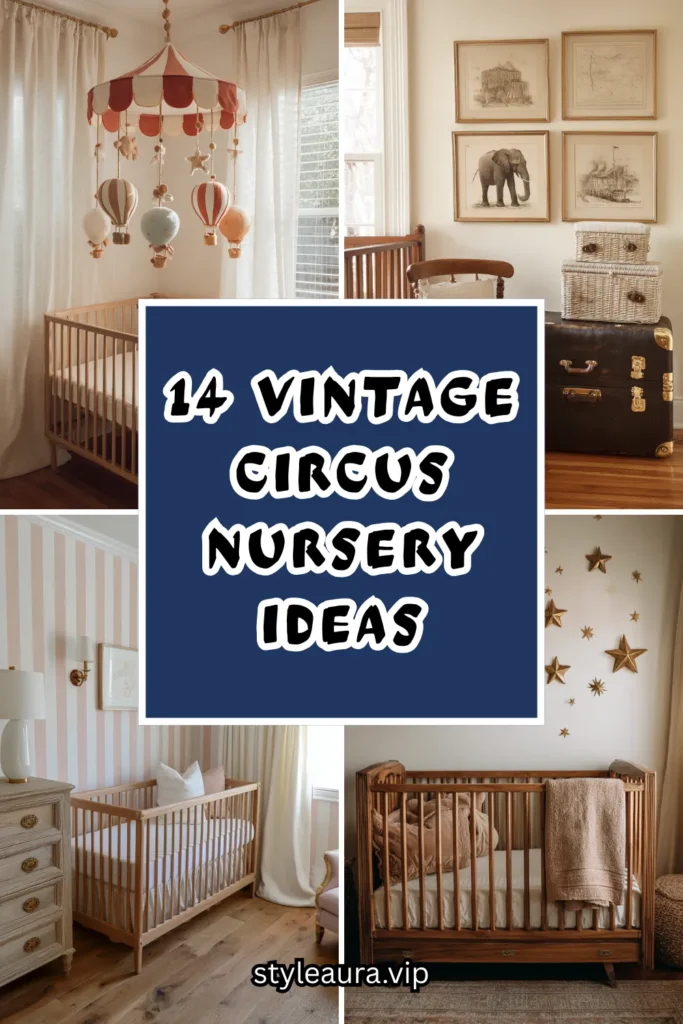
Below are 14 ways to bring a vintage circus theme into a nursery, from wall treatments to small styling details, with real numbers on cost and specifics so the room feels dreamy and whimsical without becoming overstimulating for a baby.
Vintage Circus Color Palette
Core muted tones:
- Soft blush, dusty mustard, sage green
- Cream and ivory as the dominant base
- Reads gentle and nostalgic, not loud
- Works well with faded stripe patterns
Accent colors:
- Muted red or rust (instead of bright red)
- Dusty blue or navy in small doses
- Aged gold or brass metallic accents
- Avoid saturated primary colors typical of modern circus themes
1. Add a Striped Canvas Tent Accent Wall
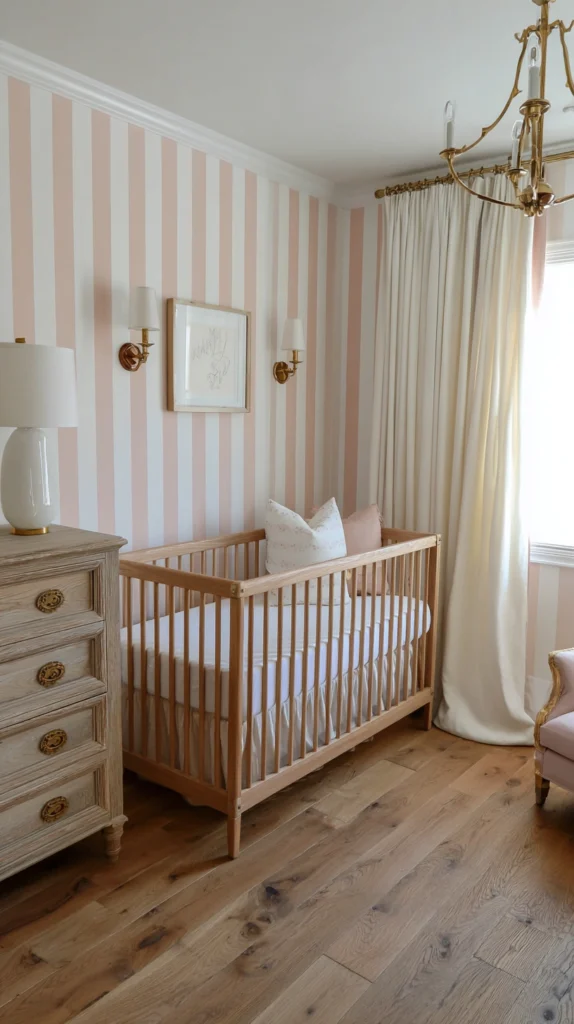
A soft, faded stripe pattern painted or wallpapered on one wall evokes a vintage circus tent without the visual intensity of bold, saturated stripes. Standard accent walls in a nursery run about 80-100 sq ft, needing roughly one gallon of paint for a two-color striped design.
Budget: $50-90 in paint for a DIY striped wall using painter’s tape, or $60-120 for a roll or two of pre-printed striped wallpaper. Choosing two closely related, muted tones (cream and dusty rose, for example) rather than high-contrast colors keeps the stripes feeling soft and calming rather than visually busy.
Using wide stripes, roughly 6-10 inches each, rather than narrow ones creates a gentler, more relaxed pattern that suits a nursery better than the tighter, more graphic stripes typical of a circus tent’s actual canvas. Painter’s tape and a level are essential tools for a DIY striped wall, since even small inconsistencies in stripe width are noticeable once the paint is dry.
This wall works well as the backdrop behind the crib, giving the room a clear focal point without needing bold colors elsewhere to compete with it.
2. Hang a Vintage-Style Circus Bunting Banner
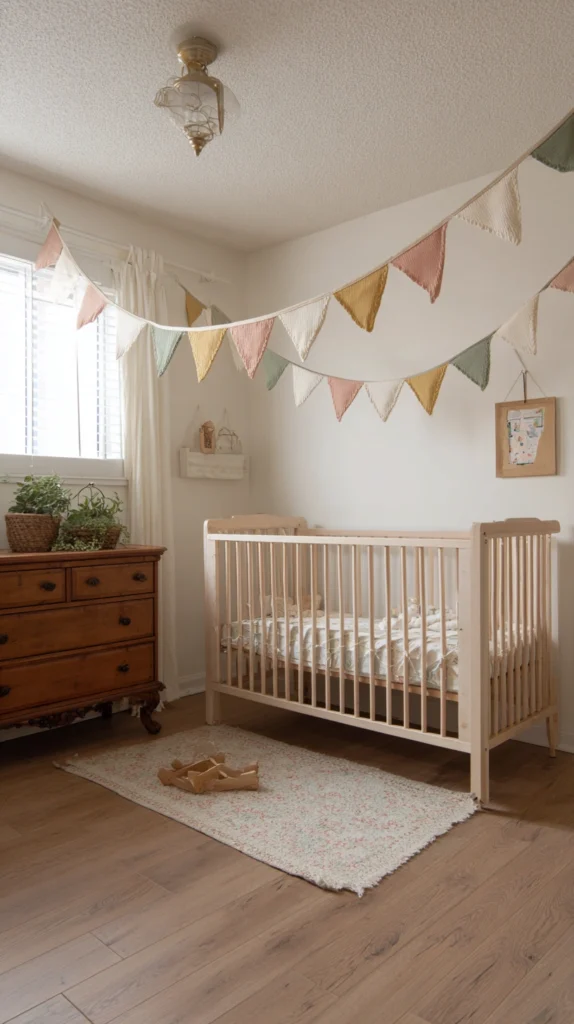
Fabric bunting in muted, coordinating colors, strung above the crib or across a window, brings a festive but gentle circus feel without overwhelming the room. Standard bunting banners run 6-10 feet long, easily draped across a crib rail or window frame.
Budget: $20-45 for a quality fabric bunting banner, or under $15 in fabric scraps if making one at home using a simple triangle template and basic sewing skills. Choosing a muted cream, blush, and sage color combination rather than bright primary colors keeps the bunting in line with the room’s overall soft palette.
Positioning the bunting where it can be easily seen from the crib, without being within a baby’s reach, adds a whimsical visual element that’s genuinely enjoyable for both baby and parent. This is one of the lowest-cost, most flexible additions on this list, since a bunting banner can be swapped out or repositioned easily as the room’s needs change.
A canvas or cotton bunting, rather than a shiny or metallic fabric, better matches the soft, aged quality central to this vintage aesthetic.
3. Add Vintage-Style Painted Wood Animal Figures
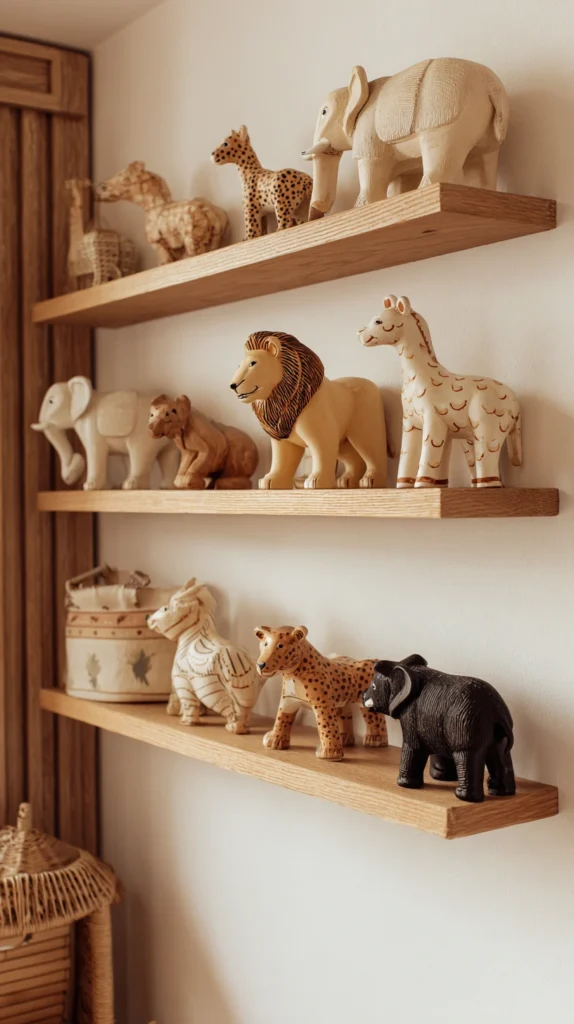
Wooden animal figures in a worn, painted finish — an elephant, a lion, a horse — evoke old carousel and circus imagery while doubling as safe, tactile nursery decor. Standard decorative wood animal figures run 6-12 inches tall, easily displayed on a shelf or dresser top.
Budget: $15-40 per figure depending on size and detail, with vintage or antique originals sometimes available at a comparable price to new reproductions through antique shops and estate sales. Choosing figures with a slightly worn, matte painted finish rather than a glossy new coating fits the vintage aesthetic more convincingly.
Grouping 3-5 figures together on a single shelf, rather than scattering them individually throughout the room, creates a stronger visual moment reminiscent of a vintage carousel display. If purchasing for a baby who will eventually be mobile, confirming the figures are free of small, detachable parts is worth checking before placing them anywhere within eventual reach.
This is one of the more charming, tactile elements on this list, and older siblings often enjoy playing with these figures even if they’re initially purchased primarily as nursery decor.
4. Use a Vintage Circus Poster or Print as Wall Art
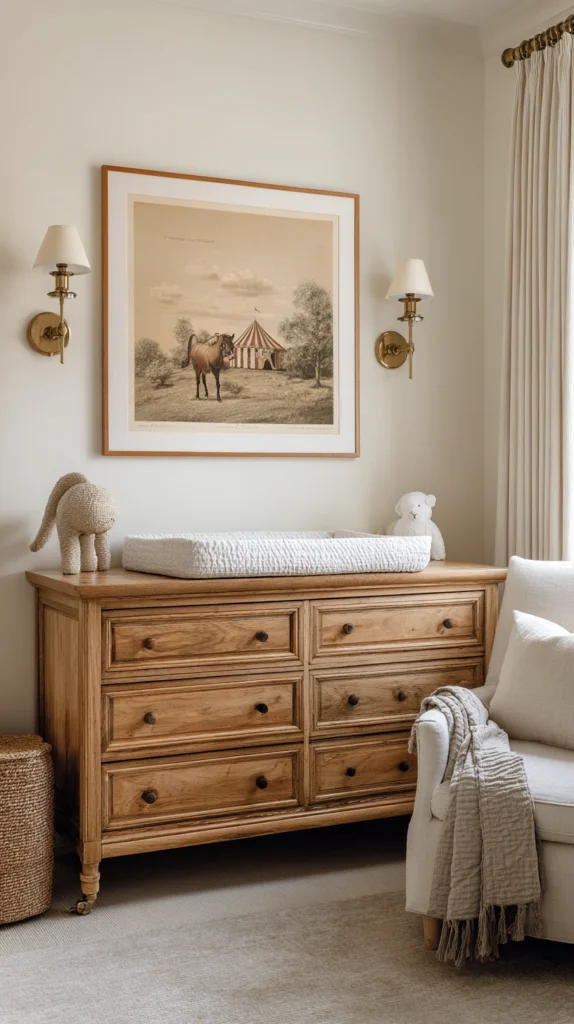
A reproduction vintage circus poster, in a muted or sepia-toned color palette rather than the bright, saturated originals, brings authentic old-world circus imagery to the nursery walls. Standard reproduction posters run 18×24 to 24×36 inches, sized to serve as a room’s main piece of art.
Budget: $30-80 for a quality reproduction print, plus $30-60 for framing if not already included. Choosing a print with more muted, aged coloring — sepia tones, faded pastels — rather than the vibrant reds and yellows typical of mid-century circus advertising keeps the piece feeling gentle rather than visually loud.
Positioning the poster across from the crib, rather than directly above it, allows a baby to eventually enjoy looking at the image while avoiding any concerns about wall art positioned directly overhead a sleeping space. This piece can serve as the room’s primary anchor artwork, allowing other elements throughout the nursery to stay more subtle and supporting by comparison.
Sourcing a genuine vintage poster, rather than a modern reproduction, is possible through antique shops and specialty poster dealers, though authentic originals typically command a significantly higher price than reproduction prints.
5. Add a Mobile With Circus-Themed Shapes
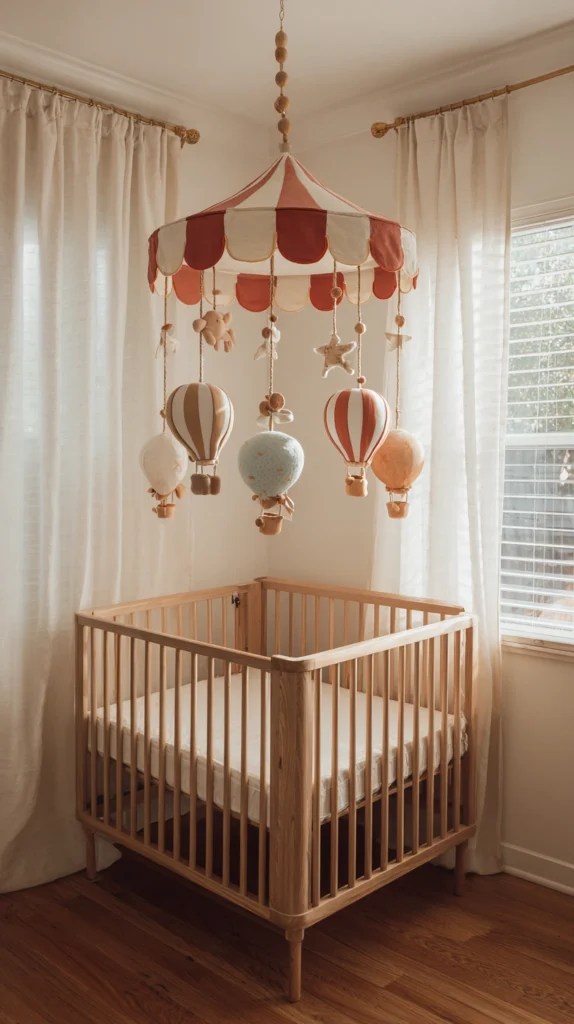
A soft fabric or wood mobile featuring circus-inspired shapes — small tents, stars, hot air balloons, or gentle animal silhouettes — provides visual stimulation for baby while reinforcing the room’s overall theme. Standard crib mobiles hang 12-16 inches above the mattress surface, positioned safely out of a baby’s reach.
Budget: $30-80 for a quality mobile, with handmade or small-batch designs typically running toward the higher end of that range compared to mass-produced options. Choosing a mobile in muted, coordinating colors rather than bright primary tones keeps it visually gentle and calming rather than overstimulating right above the crib.
Confirming the mobile is installed according to current safety guidelines, positioned securely and completely out of reach as the baby grows and becomes more mobile, is an essential safety step regardless of the specific design chosen. This is one of the more functional pieces on this list, since a well-designed mobile provides genuine visual engagement for baby in addition to its decorative contribution to the room.
Removing the mobile once a baby begins pulling up to stand in the crib is an important safety consideration to keep in mind as the nursery transitions along with the child’s development.
6. Use a Vintage Trunk or Suitcase for Storage
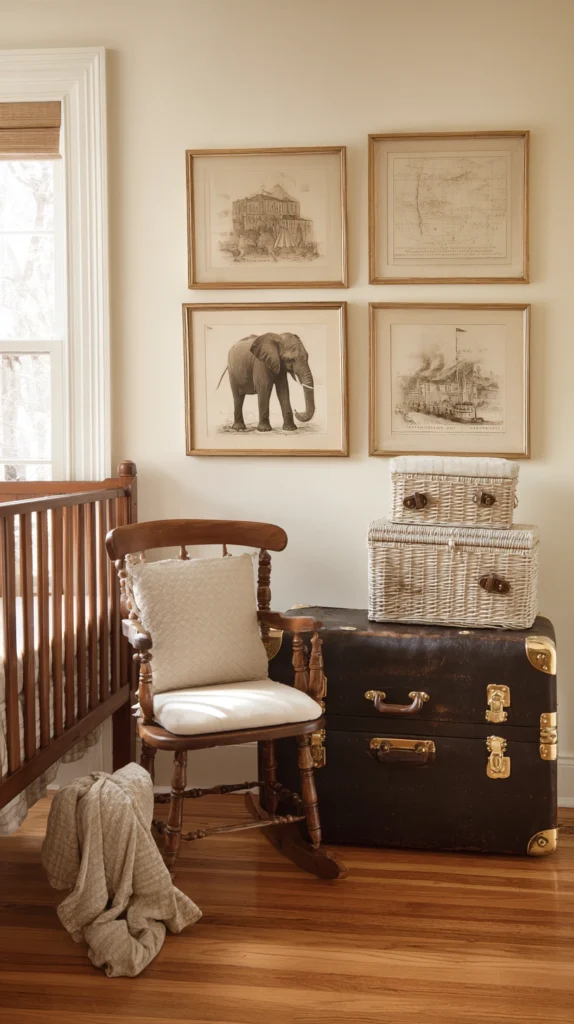
An aged steamer trunk or vintage suitcase, whether functional storage or purely decorative, brings the nostalgic, well-traveled quality associated with old-world circus imagery while offering genuinely useful storage for blankets, extra linens, or toys. Standard vintage trunks run 24-36 inches wide, functioning well as a low storage bench or a decorative accent at the foot of a glider or dresser.
Budget: $60-200 depending on size and condition, typically sourced through antique shops, estate sales, or secondhand marketplaces. A trunk with some visible age and wear — worn leather straps, a slightly weathered finish — fits the aesthetic more convincingly than a pristine, newly manufactured reproduction.
Using the trunk as extra seating or a small side table, in addition to its storage function, makes the piece more genuinely useful within the daily routine of a working nursery. This is one of the more substantial furniture pieces on this list, and it’s worth confirming the trunk’s latch and hinge mechanisms are in safe working condition before placing it somewhere a curious toddler might later interact with it.
Lining the interior with a soft fabric or acid-free tissue paper protects both the trunk and anything stored inside from potential snags or splinters if the piece shows significant age.
7. Add Striped Curtains in Muted Tones
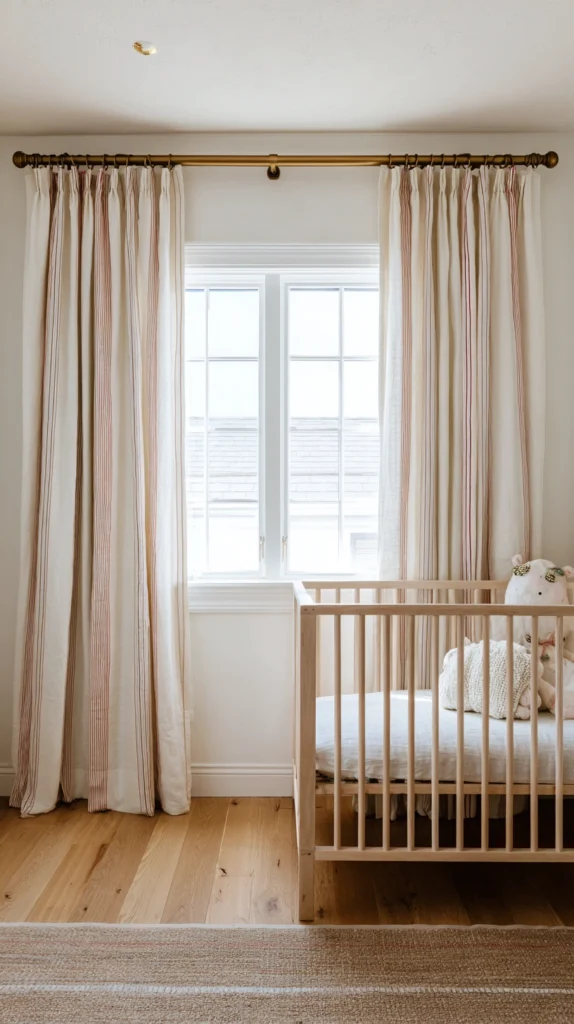
Floor-length curtains in a soft, muted stripe pattern echo the canvas tent imagery central to this theme while providing genuine function for light control in the nursery. Standard curtain panels should extend from just above the window frame to the floor, sized to 1.5-2x the window width per pair.
Budget: $60-140 for a quality striped curtain pair in muted, coordinating tones. Choosing a blackout or room-darkening lining, in addition to the decorative striped outer fabric, adds practical value for supporting a baby’s daytime naps and nighttime sleep.
Pairing muted cream and dusty rose or sage stripes, rather than bold primary colors, keeps the curtains feeling gentle and in line with the room’s overall soft palette rather than visually loud. This is one of the more functional elements on this list, since proper light control genuinely supports healthy sleep patterns for an infant, in addition to contributing to the room’s decorative theme.
Mounting the curtain rod a few inches above the window frame and extending it slightly past the window’s edges makes the room feel more spacious while maximizing the curtains’ light-blocking coverage when closed.
8. Display a Vintage-Style Popcorn or Candy Cart Replica
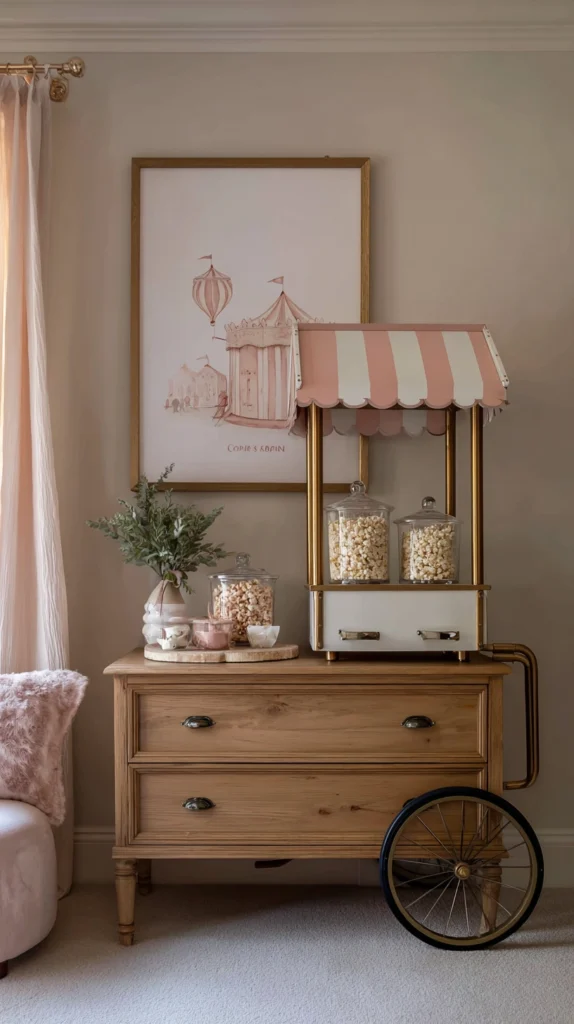
A small decorative replica of a vintage popcorn cart or candy stand, scaled down as nursery decor rather than functional furniture, adds a charming, specific circus reference to a shelf or corner of the room. Standard decorative cart replicas run 10-18 inches tall, sized to sit on a dresser, shelf, or windowsill.
Budget: $30-70 for a quality decorative replica, typically found through specialty nursery decor shops or vintage-inspired home goods retailers. This is one of the more whimsical, specific details on this list, and it works best as a single accent piece rather than needing to be repeated throughout the room.
Positioning the piece somewhere visible but out of a baby’s eventual reach, similar to the wood animal figures described earlier, keeps the decorative object safely in place as the child grows and becomes more mobile. This detail adds a genuinely playful, specific circus reference that helps distinguish the room from a more generic “animals and stripes” nursery theme.
Pairing this piece with the wood animal figures on the same shelf creates a small, cohesive vintage circus vignette within one corner of the room.
9. Add Aged Gold or Brass Star and Moon Accents
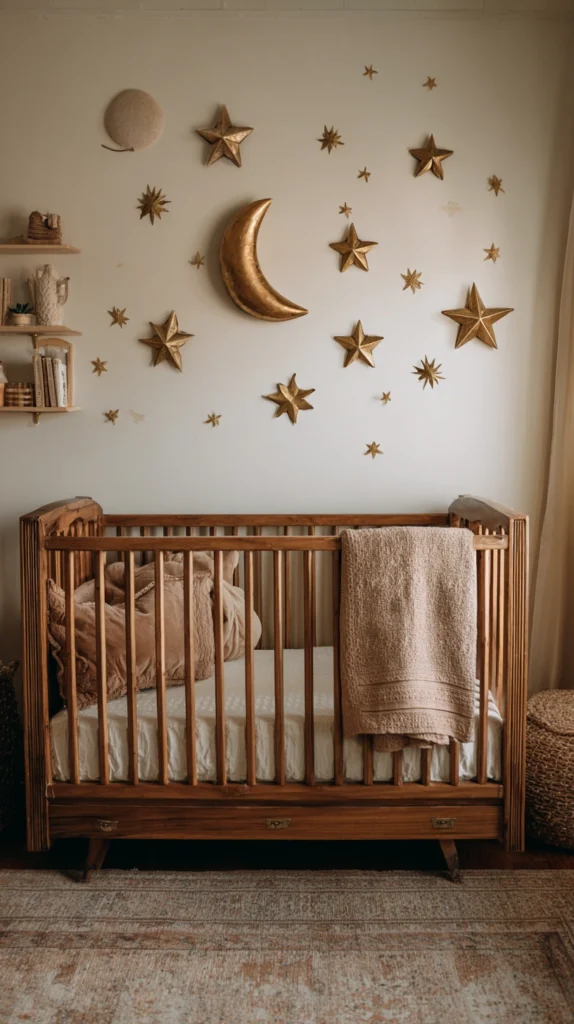
Small decorative stars, moons, or circus-ring-inspired shapes in an aged brass or gold finish bring a soft metallic sparkle to the room without the harsher shine of bright, polished gold. Standard decorative wall accents run 4-8 inches, easily grouped in a small cluster on a wall or shelf.
Budget: $15-35 per piece for quality aged-brass decorative accents, with a small grouping of 3-5 pieces typically running $50-120 total. Choosing pieces with a matte, slightly tarnished finish rather than a bright, reflective gold keeps the look feeling vintage rather than glitzy or overly modern.
These accents work particularly well scattered subtly throughout the room — a small star on a shelf, a moon shape near the mobile, a ring motif on a picture frame — rather than concentrated in one single display. This metallic detail also pairs naturally with any brass hardware used on furniture elsewhere in the nursery, helping tie the room’s various elements together into a cohesive whole.
This is one of the lower-cost ways to add a bit of whimsical sparkle to the room without introducing any bright, potentially overstimulating colors.
10. Use a Faded Circus Ring Rug
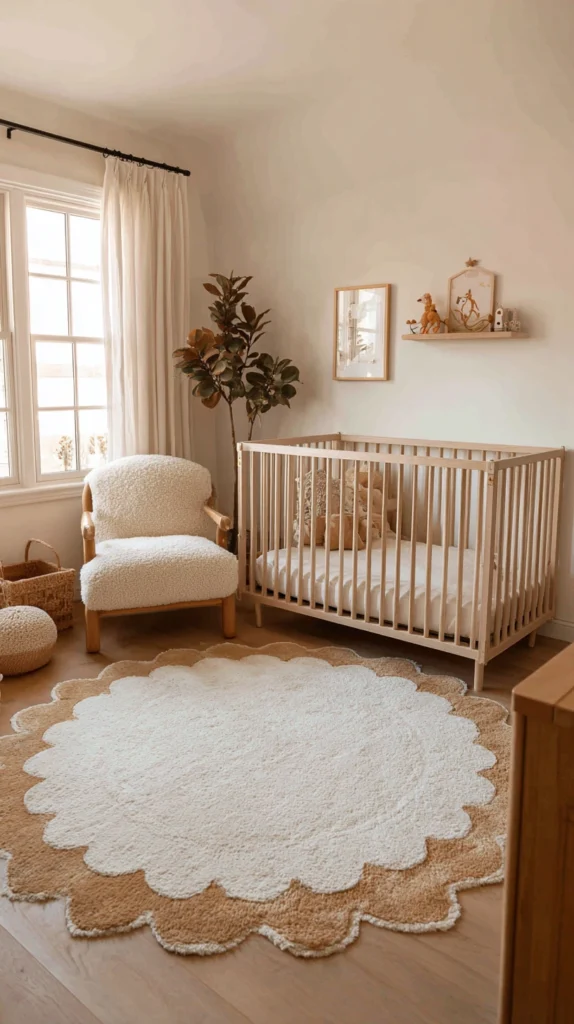
A round rug patterned to evoke a vintage circus ring, in muted stripes or a soft scalloped border pattern, anchors the room’s floor with a playful but gentle nod to the overall theme. Standard round nursery rugs run 4-6 feet in diameter, sized to fit comfortably in a designated play area.
Budget: $80-200 for a quality round rug in this style, depending on size and material. Choosing a rug in muted, coordinating tones rather than a bold primary-color circus ring pattern keeps the floor feeling calm and gentle, in keeping with the rest of the room’s soft palette.
A low-pile or flatweave rug is a practical choice for a nursery floor specifically, since it’s easier to clean after spills or diaper changes than a plush, high-pile alternative. This rug works particularly well positioned in a designated play or reading area of the room, distinct from the immediate area around the crib itself.
This is one of the larger investments on this list, but a well-chosen rug also does significant work in tying together the room’s overall color palette and theme at a glance.
11. Add a Vintage-Style Rocking Horse
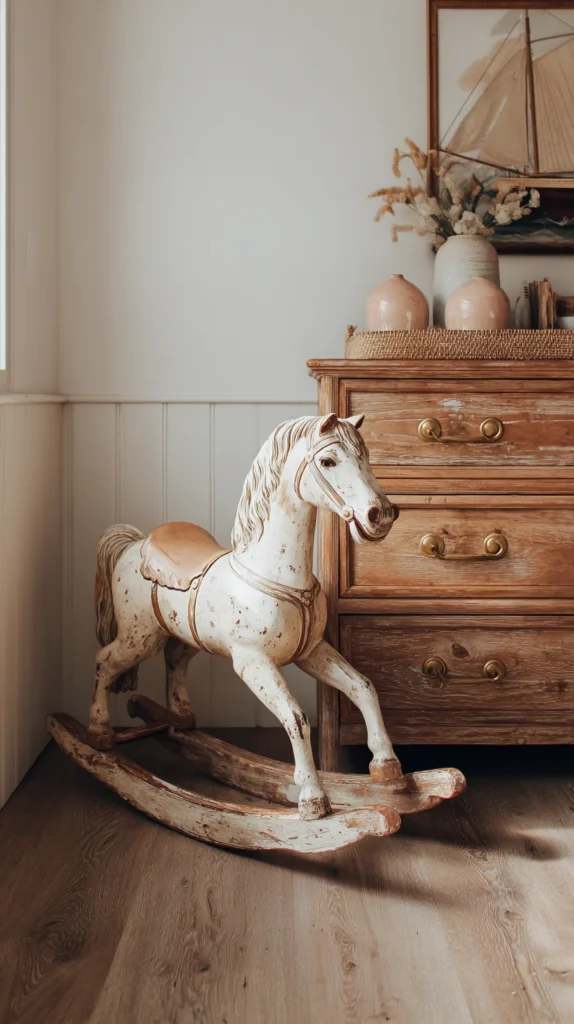
A wood or fabric rocking horse, styled with a worn, painted finish reminiscent of an old carousel figure, serves as both a charming decorative piece and eventually a genuine plaything as the child grows older. Standard rocking horses run 24-30 inches long, sized for eventual toddler use though initially placed purely as decor in a nursery for a newborn.
Budget: $80-250 depending on size, material, and whether it’s a genuine vintage piece or a new reproduction. A muted, slightly worn paint finish, rather than bright, glossy new paint, fits the aesthetic more convincingly and often costs less than a fully restored, pristine antique.
Positioning the rocking horse in a corner of the room, away from the immediate crib area, keeps it safely out of the way during infancy while still contributing to the room’s overall visual theme. This piece has genuine longevity beyond the newborn nursery stage, continuing to serve as both decor and an actual toy well into toddlerhood.
Checking that any vintage rocking horse is structurally sound, with secure joints and no small detachable parts, is an important safety consideration before the piece is used for actual riding once the child is older.
12. Use Vintage Circus-Inspired Alphabet or Number Art
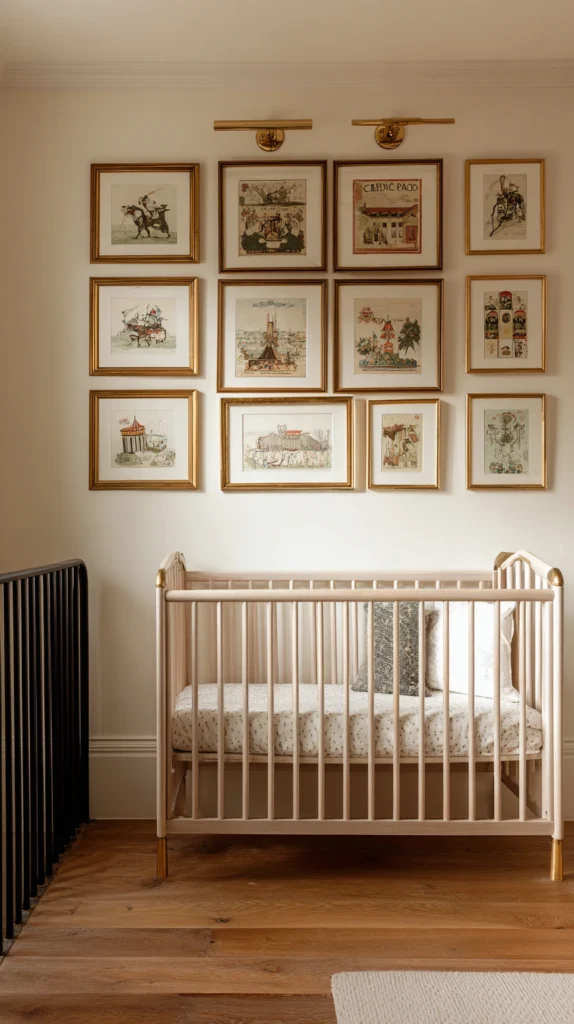
Framed prints featuring circus-themed alphabet letters or numbers, in a soft vintage illustration style, add an educational element to the room’s decor while reinforcing the overall theme. Standard framed alphabet or number prints run 8×10 to 11×14 inches, easily grouped in a series along one wall.
Budget: $15-30 per print if purchasing individual pieces, or $80-150 for a full alphabet series, depending on how many letters or numbers are included in the display. Choosing prints in the same muted color palette used throughout the rest of the room keeps the series feeling cohesive rather than like a separate, competing design element.
Arranging a partial series — just the child’s initials, or a smaller run of numbers 1 through 5 — is a more budget-conscious and space-efficient option than a full 26-letter alphabet display for smaller nurseries. This is one of the more functional decorative elements on this list, since these prints genuinely support early letter and number recognition as the child grows older and begins engaging with the room’s decor more directly.
Positioning the series at a height where it will eventually be visible to a standing toddler, rather than only visible from a distance, extends the educational value of this element as the child grows.
13. Add a Muted Fringe or Tassel Trim to a Crib Skirt or Curtains
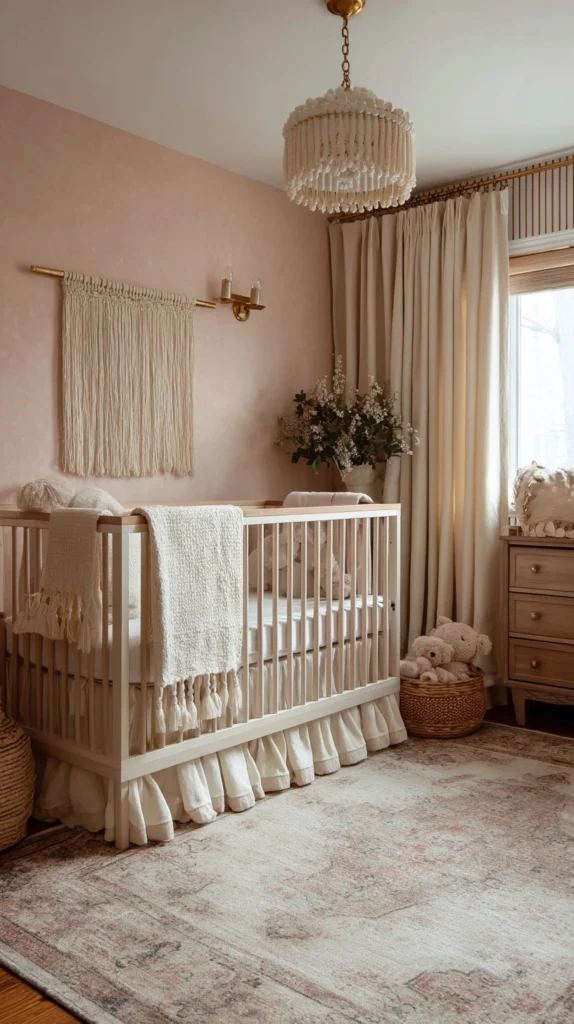
A soft fringe or tassel trim, in cream or a muted accent color, along the bottom edge of a crib skirt or the leading edge of curtains adds a playful, circus-tent-inspired detail without introducing any bright colors or bold patterns. Standard trim yardage needed depends on the specific piece, though a crib skirt typically requires 6-8 feet of trim to span the crib’s perimeter.
Budget: $15-35 for quality fringe or tassel trim, plus basic sewing supplies or fabric glue if attaching it yourself. This is one of the more affordable, detail-oriented additions on this list, adding a specific circus-tent reference through texture rather than color or pattern.
Choosing a trim in a muted tone that closely matches or subtly complements the crib skirt or curtain’s base fabric keeps this detail feeling like a considered accent rather than an attention-grabbing element competing with the rest of the room. This small textural touch works particularly well alongside the striped tent wall and bunting described earlier in this list, reinforcing the overall canvas-tent visual theme through a few connected details.
This is a good finishing touch to add once the room’s larger elements (wall treatment, curtains, rug) are already in place, since it’s easier to choose a coordinating trim color once the rest of the palette is established.
14. Display a Small Collection of Vintage Circus Tickets or Ephemera
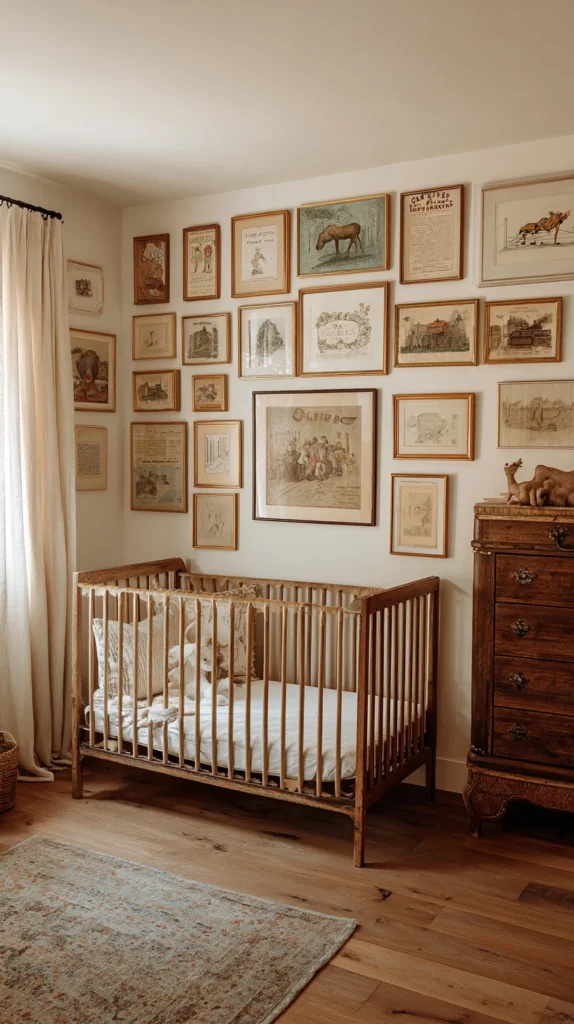
Framed reproduction circus tickets, vintage postcards, or old advertisement clippings, displayed in a small cluster, add a subtle, detail-oriented nod to the theme that rewards a closer look. Standard framed ephemera pieces run 4×6 to 8×10 inches, easily grouped together on a wall or shelf.
Budget: $10-25 per framed piece for reproduction prints, significantly less than sourcing genuine vintage originals, which can be considerably more expensive and harder to find in good condition. Choosing pieces with muted, aged coloring rather than bright, newly printed reproductions keeps this detail consistent with the rest of the room’s soft, vintage palette.
Grouping 3-5 of these smaller pieces together, rather than displaying a single isolated piece, creates a more collected, intentional-feeling display similar to a small curated gallery wall. This is one of the more understated additions on this list, appealing especially to parents who want a subtle, detail-rich version of the theme rather than a more overt, obviously circus-themed room.
This detail works particularly well combined with the vintage poster described earlier, creating a small cluster of related vintage circus imagery within one section of the nursery.
Quick Start Shopping List
This weekend, under $150:
- A fabric bunting banner: $30
- Two or three wood animal figures: $50
- A small reproduction circus print: $40
- Aged brass star or moon accents: $25
Budget-Friendly Version
Lowest-cost ways to start:
- A DIY striped wall using painter’s tape instead of wallpaper
- Homemade fabric bunting instead of a purchased banner
- Secondhand wood animal figures from thrift stores
- Reproduction ephemera prints instead of genuine vintage originals
Nursery Safety Considerations
Keep the crib area free of hanging decor, including bunting, mobiles once baby can reach up, and any string-based decorations, once a baby begins pulling up or reaching within the crib.
Choose non-toxic, baby-safe paint for any walls or furniture within the nursery, confirming the product is specifically labeled low-VOC or zero-VOC and safe for use in a room where an infant will spend significant time.
Secure any freestanding furniture, including trunks, dressers, and shelving displaying wood animal figures, to the wall with an anti-tip strap once the baby becomes mobile and begins pulling up on furniture.
Success Indicators
- The room feels calm and gentle, not overstimulating for a baby
- Colors stay muted and coordinated rather than bright or clashing
- At least a few pieces carry genuine vintage character or age
- Guests describe it as “whimsical” rather than “busy”
- The theme can evolve gracefully as the baby grows into a toddler
Remember
Choose muted, soft colors over the bright primary tones typical of a modern circus theme, prioritize safety in every decorative choice, particularly around the crib and any small or hanging pieces, mix genuine vintage or secondhand finds with a few new pieces for an authentically aged feel, keep the overall visual volume calm and gentle given that this is fundamentally a room meant for rest and sleep, and plan for a few elements (the rocking horse, alphabet prints) to grow in usefulness right alongside the child as they move from infancy into toddlerhood.