7 Wedding Place Card Ideas for Creative Guest Seating
Ask any couple mid-planning what task they’ve procrastinated on longest, and the seating chart usually comes up before the cake tasting even gets mentioned.
It’s genuinely one of the hardest parts of the whole process, sorting feuding relatives and mismatched friend groups into a room full of round tables.
The place card is the very last step of that whole struggle, the moment all that behind-the-scenes negotiation finally becomes something a guest actually sees.
Here are 7 ways to make that final step feel as considered as the seating logic that led up to it.
Why the place card carries more weight than its small size suggests
It’s the physical proof that a lot of thought went into where every single guest ended up.
- A well-designed card reflects the wedding’s overall style, giving guests one more small, tangible detail to notice
- It solves a genuine logistical problem, guiding guests to their seats quickly without any awkward hovering near the entrance
- Creative seating displays specifically can double as a genuine design moment near the reception entrance, not just a functional list
Once the format is chosen, it tends to be one of the more enjoyable stationery decisions in the whole planning process.
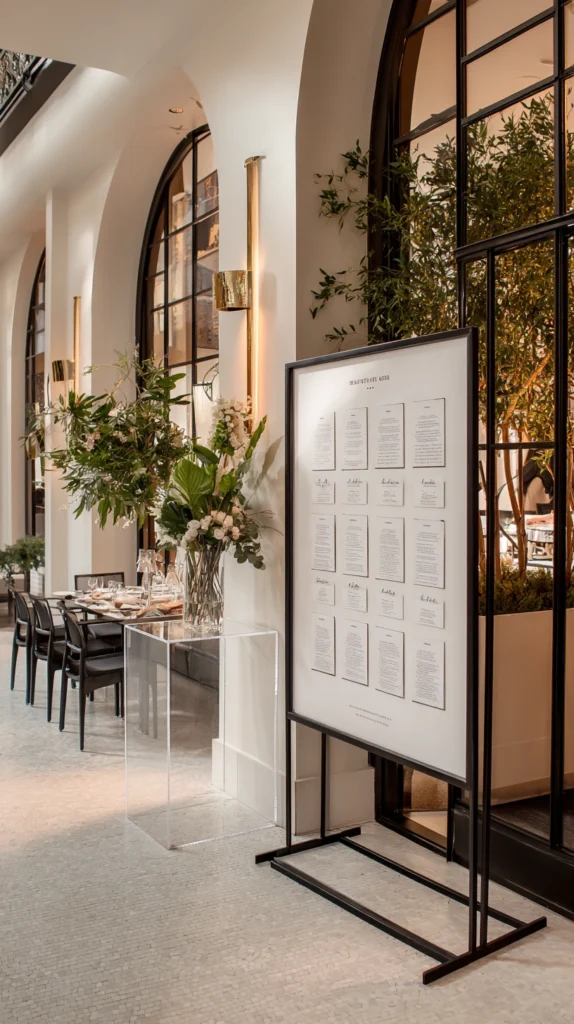
1. A Calligraphy Escort Card Display Wall
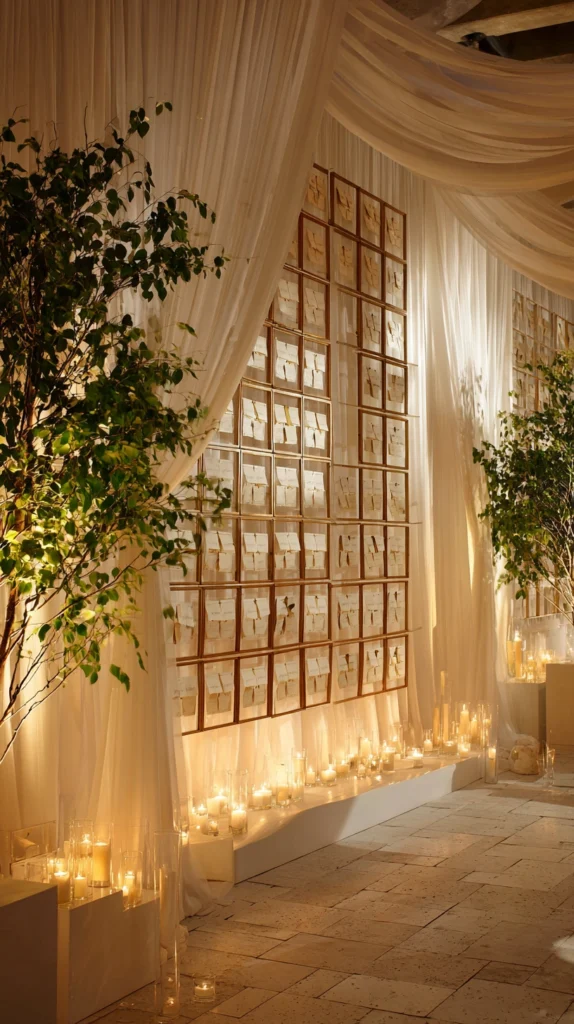
A large-scale, visually striking alternative to individual table cards.
Build it:
- A grid of small cards, each hand-lettered or printed with a guest’s name and table number, arranged on a large board or wall
- Cards attached with small pins, clips, or a light adhesive, organized alphabetically for easy guest navigation
- Positioned near the reception entrance with enough space for several guests to browse at once without creating a bottleneck
Why a full display wall suits larger guest counts particularly well:
- It avoids a single long table of individual cards, which can become crowded and slow-moving with a large guest list
- The wall format doubles as a genuine design feature, often becoming a backdrop guests photograph on their way in
- Alphabetical organization helps guests find their name quickly, reducing congestion at the entrance
Cost breakdown: A calligraphy display wall runs $200 to $600 depending on guest count and whether the lettering is hand done or printed.
2. Pressed Flowers Sealed Into Each Place Card
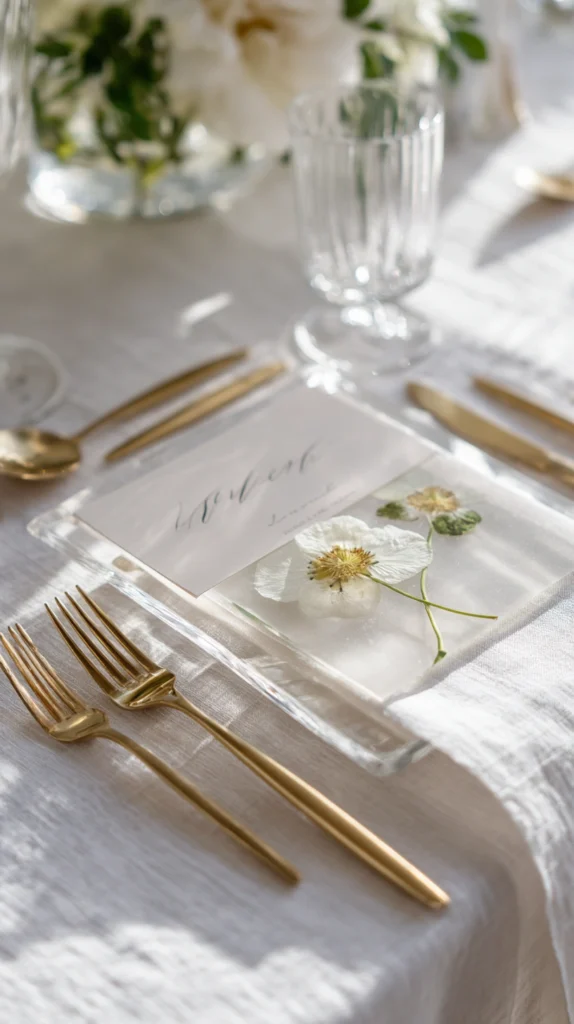
Botanical detail incorporated directly into the card material itself.
Build it:
- Small pressed flowers or petals sealed between two layers of clear card stock or vellum
- A guest’s name printed or hand-lettered on the front layer, visible through or alongside the pressed botanical detail
- Cards produced well in advance, since pressing flowers properly takes one to two weeks before they’re ready to seal
Why pressed florals add a genuinely personal touch beyond typography alone:
- It ties the place card directly to the wedding’s live floral choices, extending that same botanical detail to the table setting
- Each card ends up slightly unique, since pressed flowers vary naturally in shape and color even from the same batch
- It gives guests a small keepsake they’re likely to actually take home, unlike a card they might otherwise discard
Cost breakdown: Pressed flower place cards run $2 to $5 each depending on complexity, typically $150 to $500 for a full guest list.
3. Wax-Sealed Place Cards Tied to Napkins
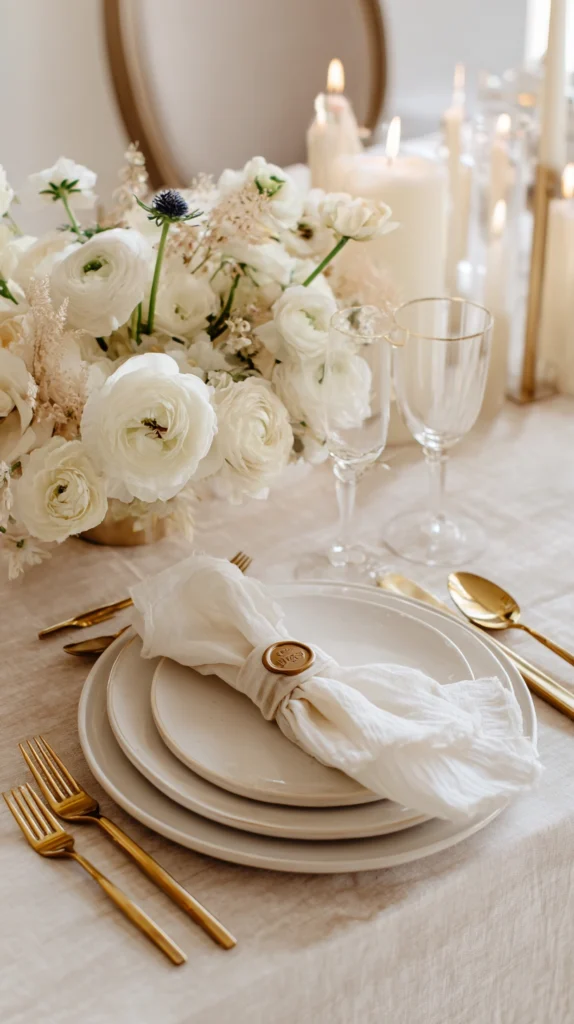
Combining the place card directly with the table setting rather than a separate display.
Build it:
- A small folded card with each guest’s name, sealed shut with a wax stamp in the wedding’s color palette
- Tied or tucked directly into the napkin fold at each place setting rather than displayed separately near the entrance
- Wax seals applied in batches ahead of time, allowing the wax to fully harden before the cards are transported to the venue
Why integrating the card into the place setting itself works well for smaller weddings:
- It removes the need for a separate escort card table entirely, simplifying setup logistics
- Guests discover their specific seat assignment right as they sit down, adding a small moment of personal discovery at the table
- The wax seal detail reinforces a formal, traditional aesthetic already present elsewhere in the stationery suite
Cost breakdown: Wax seal stamps and card stock run $30 to $60 total for the supplies, reusable across the full guest list.
4. Mini Potted Succulents or Herbs as Place Card Holders
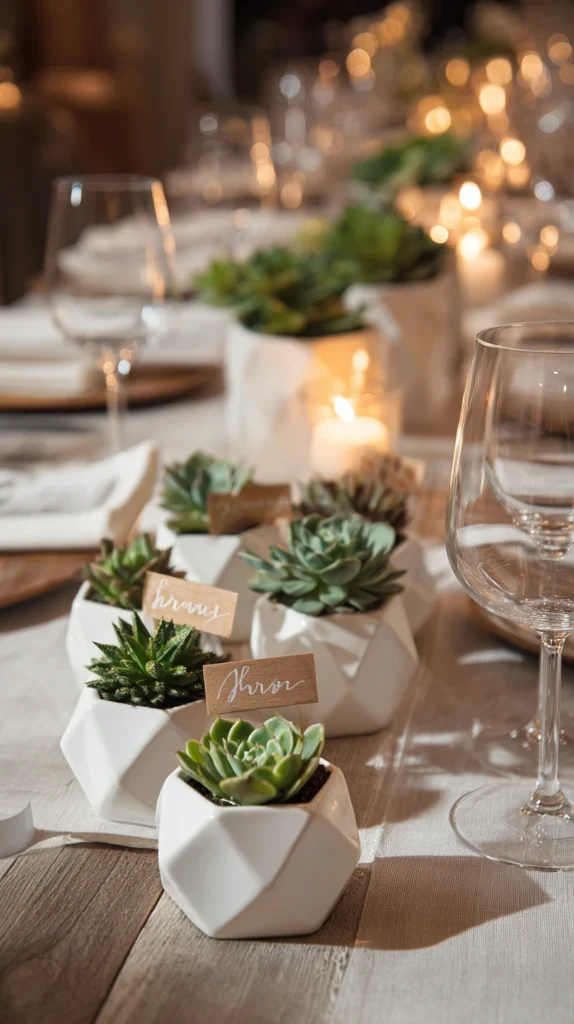
A living favor doing double duty as the seating guide itself.
Build it:
- A small potted succulent or herb, like rosemary or thyme, for each place setting
- A guest’s name written on a small wooden stake or tag inserted directly into the pot’s soil
- Pots sized small enough to fit comfortably at each place setting without crowding other tableware
Why a living place card holder adds value beyond the seating function alone:
- It doubles as a genuine take-home favor, giving guests something to keep long after the wedding itself
- The greenery adds a natural, textural detail to the table that a flat paper card alone doesn’t provide
- It suits garden, rustic, or botanical wedding themes especially well, tying the seating detail into the broader design
Cost breakdown: Mini potted plants suited for this use run $3 to $6 each, typically $200 to $500 depending on guest count.
5. A Vintage Map or Travel-Themed Seating Display
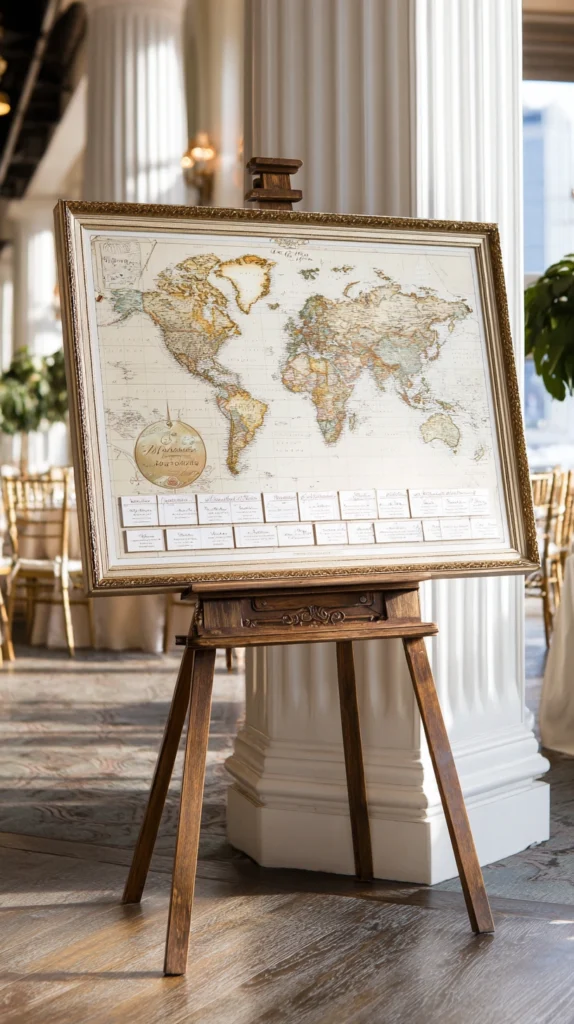
Seating assignments organized around a shared theme rather than a plain alphabetical list.
Build it:
- A large vintage-style map or travel poster used as the backdrop for the seating display
- Tables named after specific destinations rather than numbered, with a small flag or pin marking each guest’s assigned location
- A key or legend nearby explaining how the destination names correspond to actual table numbers for the venue staff
Why a themed display adds personality beyond a purely functional list:
- It reflects a couple’s specific shared interest, like a love of travel, giving the display genuine personal meaning
- It becomes a natural conversation piece and photo opportunity near the reception entrance
- Guests often enjoy searching for their assigned “destination,” turning a purely logistical task into a small moment of fun
Cost breakdown: A large vintage map or travel poster backdrop runs $30 to $80, with small flags or pins adding $20 to $40 for a full guest list.
6. Individually Illustrated Place Cards
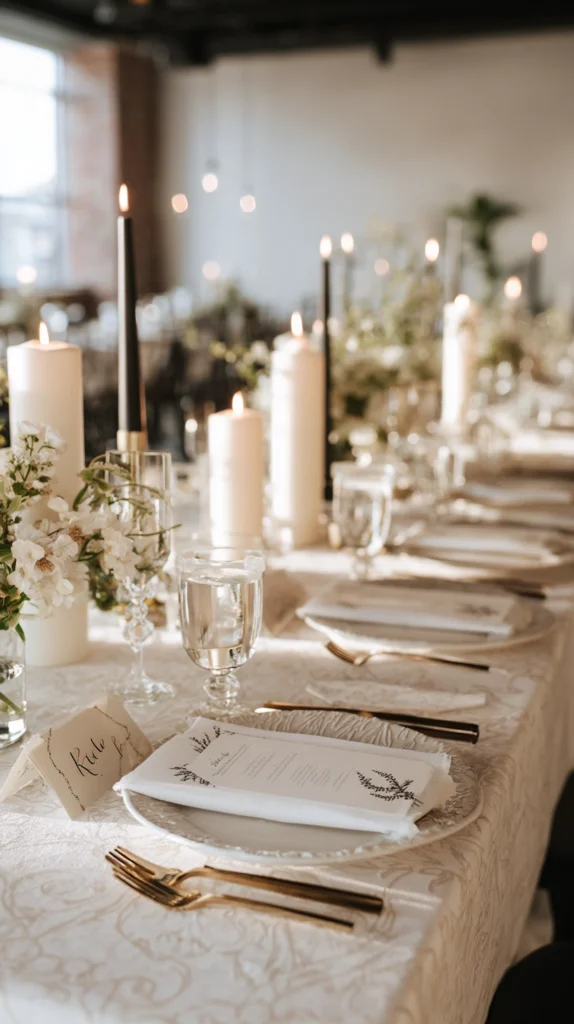
Custom artwork replacing typography as the card’s main visual feature.
Build it:
- A small illustration, like a botanical sketch or a simple line drawing, printed or hand-drawn on each card
- A guest’s name added in a complementary font or hand-lettering style beneath or beside the illustration
- Illustrations varied slightly across different cards, or kept consistent depending on the couple’s preferred level of variation
Why illustrated cards suit couples wanting something beyond standard calligraphy:
- It gives the place card genuine artistic value, something guests are more likely to keep as a small memento
- Custom illustration ties naturally into invitation suites that already feature similar artwork, creating full stationery cohesion
- It’s a detail that stands out specifically because so few weddings incorporate original illustration into this particular piece
Cost breakdown: Custom illustrated place cards run $3 to $8 each depending on the artist and level of detail, typically $250 to $700 for a full guest list.
7. A Digital Seating Display With a Printed Backup
Modernizing the format while keeping a physical fallback in place.
Build it:
- A large screen or tablet displaying a searchable digital seating chart near the reception entrance
- Guests typing or scrolling to find their name and assigned table, similar to an airport departure board
- A simple printed backup list kept on hand at the check-in area in case of any technical issues during the reception
Why a digital display suits a more modern, tech-forward wedding:
- It handles very large guest counts more gracefully than a purely physical card display, since there’s no risk of a card falling or being misplaced
- It can be updated instantly if there’s a last-minute seating change, unlike a printed card that would need to be physically swapped
- The printed backup ensures the system remains fully functional even if the technology has any unexpected issues on the day
Cost breakdown: A digital seating display setup, including screen or tablet rental, runs $150 to $400 for the day.
Getting started this weekend
You don’t need every element finalized before making real progress on this task.
- Start by finalizing the actual seating chart itself, since the place card format depends entirely on having those assignments locked in
- Choose a card style that echoes the invitation suite’s existing fonts and colors, keeping the whole stationery story consistent
- Save a more elaborate display, like a themed map or illustrated cards, for once the simpler logistics are fully confirmed
Most couples find that once the seating chart itself is finalized, choosing how to actually present it becomes one of the more enjoyable remaining planning tasks.
Budget reality
Creative place card options span a wide range depending on guest count and materials chosen.
- Under $100: Wax-sealed napkin cards, a simple vintage map backdrop with basic pins
- $100-300: Calligraphy display wall, digital seating display rental
- $300-500: Pressed flower cards, mini potted plant place settings
- $500+: Fully custom illustrated cards for a large guest list
Most of the creative impact comes from choosing one cohesive format rather than spending the most on any single element.
What actually makes a place card display memorable
It was never really about choosing the single most elaborate format available.
It’s the pressed flower a guest actually keeps, the wax seal that echoes the invitation guests received months earlier, the seating chart guests can actually find their name on quickly instead of hovering awkwardly by the door.
Finalize the seating logic first, then let the format reflect whatever detail already feels most true to the wedding itself.