10 Summer Indoor Plant Ideas That Refresh Your Home
Summer light hits a room differently than any other season, longer, angled lower in the evenings, and strong enough to support plants that would sulk through a gray February.
That extra light is a genuine opportunity, not just a fact about the calendar. It’s the one stretch of the year when almost any houseplant has a real shot at thriving, even in spots that struggle the rest of the year.

Most people use that window to buy one more pothos for the same shelf it’s always lived on.
Here are 10 ways to actually use summer’s light and warmth to refresh the whole house, not just restock the same corner.
Why summer is the season to rethink plants, not just water them more
Longer days and warmer indoor temperatures change what’s actually possible.
- Many houseplants shift into active growth mode during summer, tolerating repotting and division far better than in winter
- Increased light reaches deeper into a room, meaning spots that were too dim in December might now support something new
- Higher humidity, especially near kitchens and bathrooms, benefits tropical varieties that otherwise struggle indoors
Once you treat summer as a genuine planning season, not just a maintenance one, the whole house benefits.
1. Move Shade-Tolerant Plants Into Brighter Summer Spots
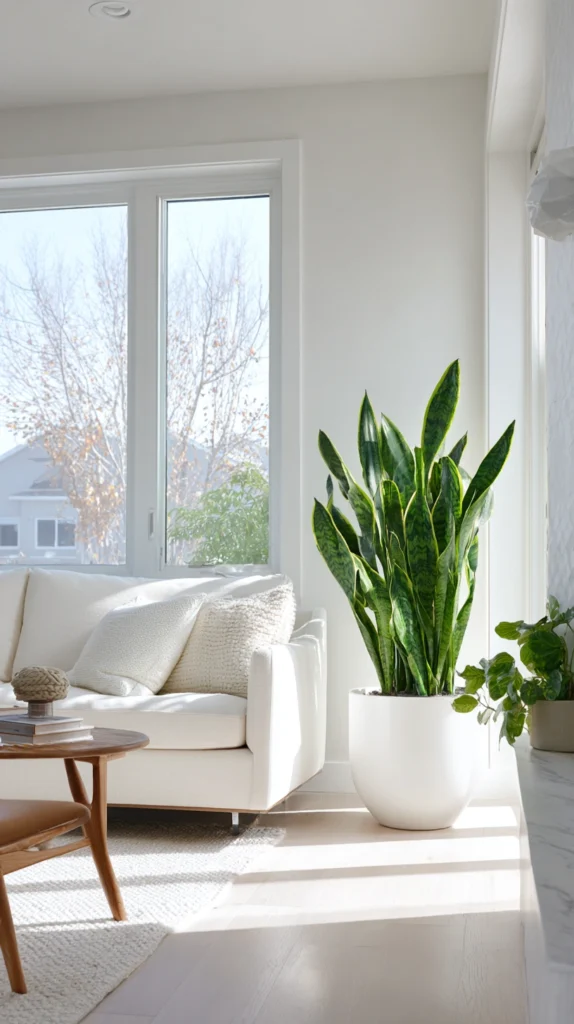
Taking advantage of the season’s stronger light without buying anything new.
Build it:
- Identify plants currently in low-light corners that could handle a temporary move to a brighter window
- Shift pothos, philodendron, or snake plants toward south or west-facing windows for the summer months only
- Rotate them back to their original spots once fall’s lower light levels return
Why relocating existing plants counts as a genuine refresh:
- It costs nothing beyond the time it takes to move a few pots across the room
- Many plants put on visibly fuller, greener growth with just a few extra weeks of stronger summer light
- It’s an easy way to notice which plants have been quietly struggling in too little light the rest of the year
Cost breakdown: Free, since this only requires rearranging plants already owned.
2. Add a Trailing Plant to a High Shelf or Cabinet Top
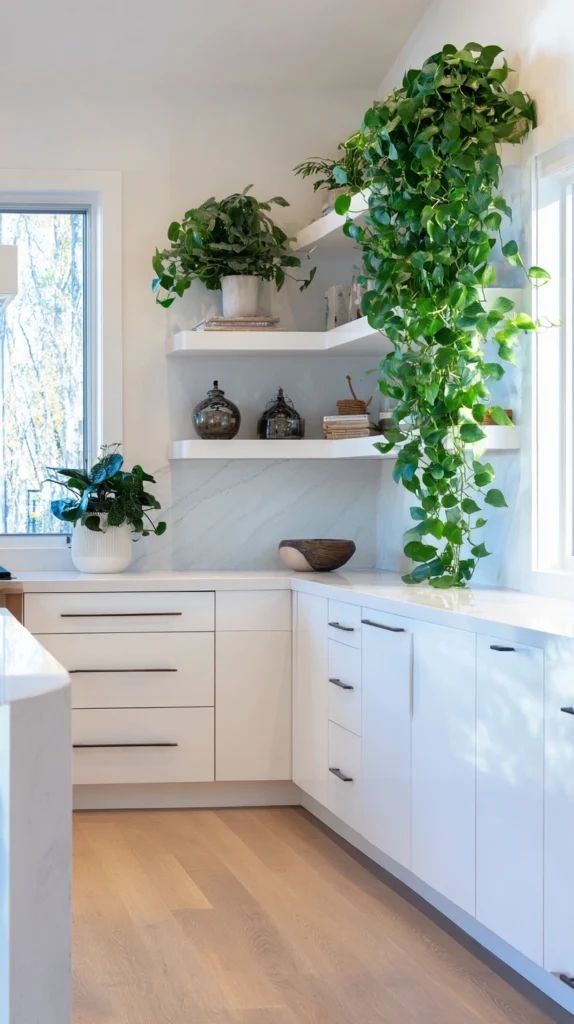
Using vertical space that often sits empty above eye level.
Build it:
- A pothos, string of pearls, or heartleaf philodendron placed in a simple pot on a high shelf or above kitchen cabinets
- Vines allowed to trail down naturally rather than trained along a trellis
- Turned occasionally to keep growth even rather than lopsided toward the light source
Why high shelves are an underused spot for summer greenery:
- It brings life into the top third of a room, an area most home decor completely ignores
- Trailing growth adds movement and softness to otherwise hard, flat cabinet or shelf lines
- These specific varieties tolerate the drier air near ceiling height better than many other houseplants would
Cost breakdown: A trailing plant in a simple pot runs $10 to $20 depending on variety and size.
3. Bring a Few Outdoor Potted Plants Inside for the Season
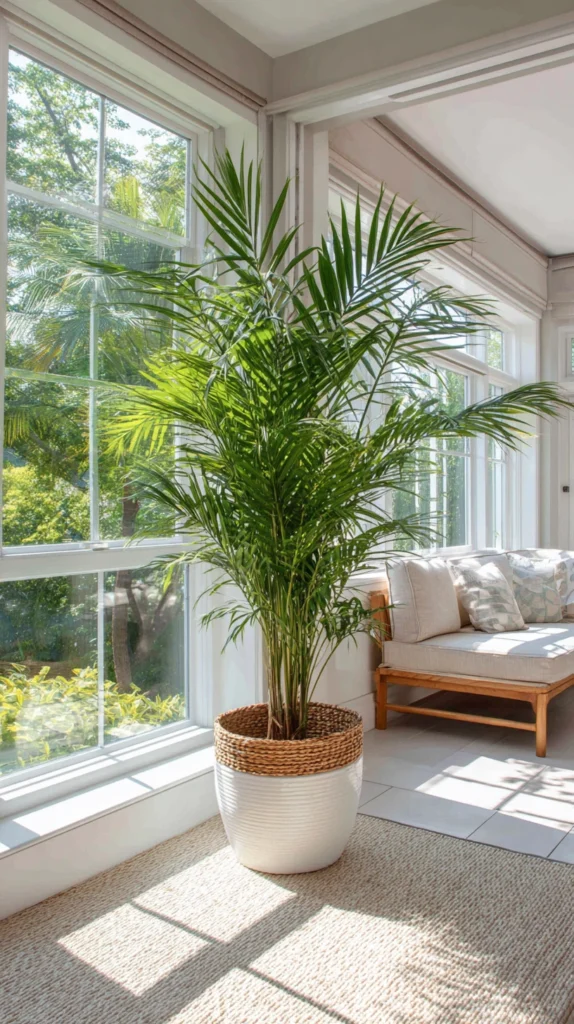
Borrowing directly from the patio or balcony rather than buying new indoor plants.
Build it:
- Select one or two outdoor container plants, like a small palm or a flowering hibiscus, sturdy enough to tolerate a temporary move indoors
- Positioned near the brightest window available, ideally one that gets several hours of direct summer sun
- Checked for pests before bringing inside, since outdoor soil can carry insects into the house
Why this approach adds variety without any new purchases:
- It introduces plant varieties most people don’t typically keep as houseplants, adding genuine visual variety
- It’s fully reversible, since the plant simply returns outside once the season shifts
- It takes advantage of a plant already being maintained anyway, rather than starting care for something new
Cost breakdown: Free if using plants already owned for the patio or balcony.
4. Start a Windowsill Herb Garden for Both Greenery and Cooking
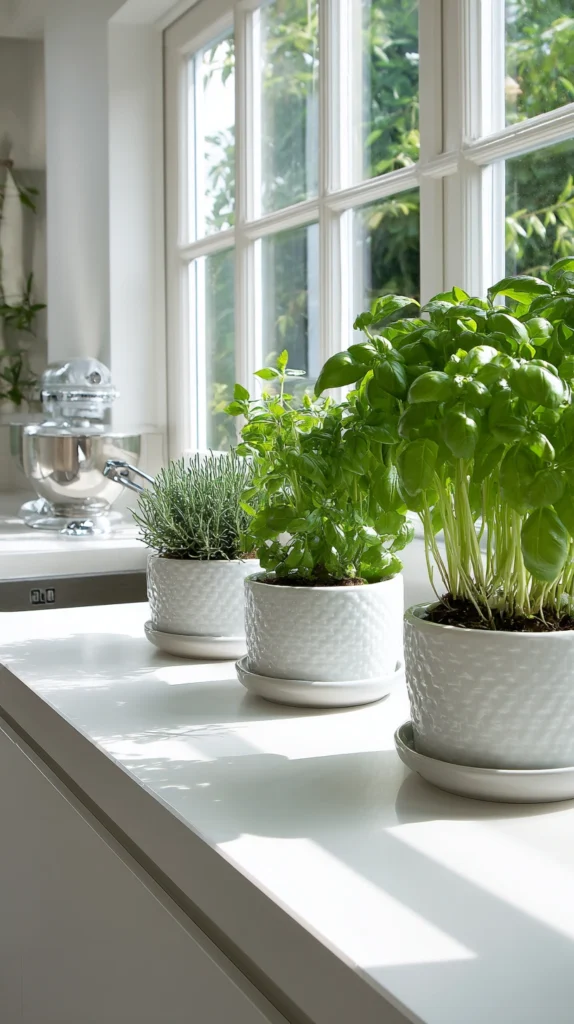
Function layered directly into the season’s plant refresh.
Build it:
- Basil, mint, or chives planted in small pots along the sunniest kitchen windowsill
- Watered slightly more frequently than a typical houseplant, since herbs in small pots dry out faster in summer heat
- Snipped regularly for actual cooking use, keeping the plants bushy rather than leggy
Why herbs make sense specifically during summer months:
- Most culinary herbs are heat and sun-loving, making summer their strongest growing season of the year
- It brings genuine daily function into the plant refresh, not just decoration
- A kitchen windowsill often gets some of the best light in the house, an underused spot for houseplants generally
Cost breakdown: Small herb starts run $3 to $6 each, typically $15 to $25 for a full windowsill garden.
5. Repot Root-Bound Plants While They’re in Active Growth
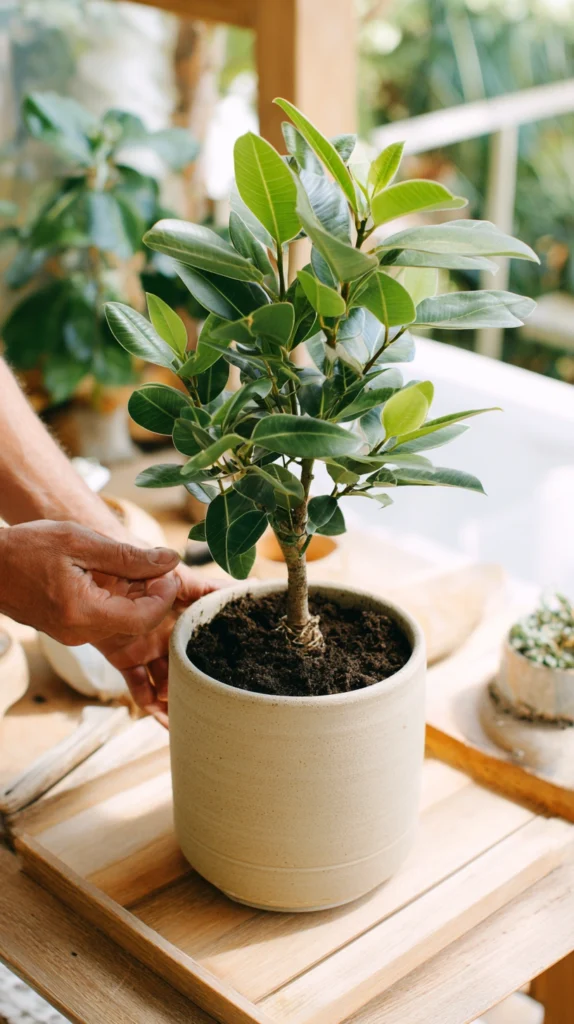
Using summer’s growing season to address a maintenance need most people put off.
Build it:
- Check existing plants for roots circling tightly at the pot’s base, a sign they’ve outgrown their container
- Move each root-bound plant into a pot one size larger, using fresh potting mix rather than reusing old soil
- Water thoroughly after repotting and keep the plant out of direct harsh sun for the first week to reduce transplant stress
Why summer is specifically the right time for this task:
- Plants in active summer growth recover from the stress of repotting far faster than those in winter dormancy
- A plant that’s been quietly root-bound for a year or two often shows a visible growth improvement within weeks of repotting
- It’s a maintenance task that directly improves how full and healthy existing plants look, refreshing the home without new purchases
Cost breakdown: Fresh potting mix and one size-up pot run $10 to $20 per plant repotted.
6. Add a Large Floor Plant to Fill an Empty Summer Corner
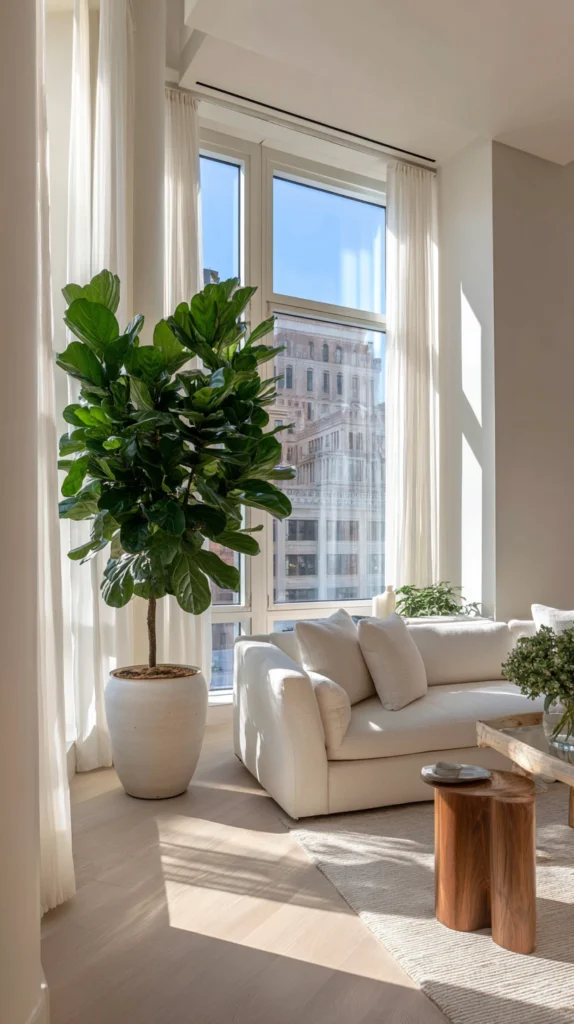
Using the season’s light to finally support a bigger specimen.
Build it:
- A fiddle leaf fig, rubber plant, or bird of paradise, sized to fill a corner that’s felt empty or awkward
- Positioned near, but not directly against, the brightest window in the room
- Rotated every couple of weeks to encourage even growth on all sides
Why a single large plant works better as a summer addition than several small ones:
- Strong summer light gives a larger, more light-demanding specimen its best possible chance to establish well
- One statement plant fills visual space more efficiently than scattering several smaller pots around the same corner
- It’s easier to find healthy, larger plants at nurseries during the summer growing season than in cooler months
Cost breakdown: A large floor plant runs $40 to $120 depending on species and current size.
7. Propagate Cuttings to Fill Multiple Rooms for Free
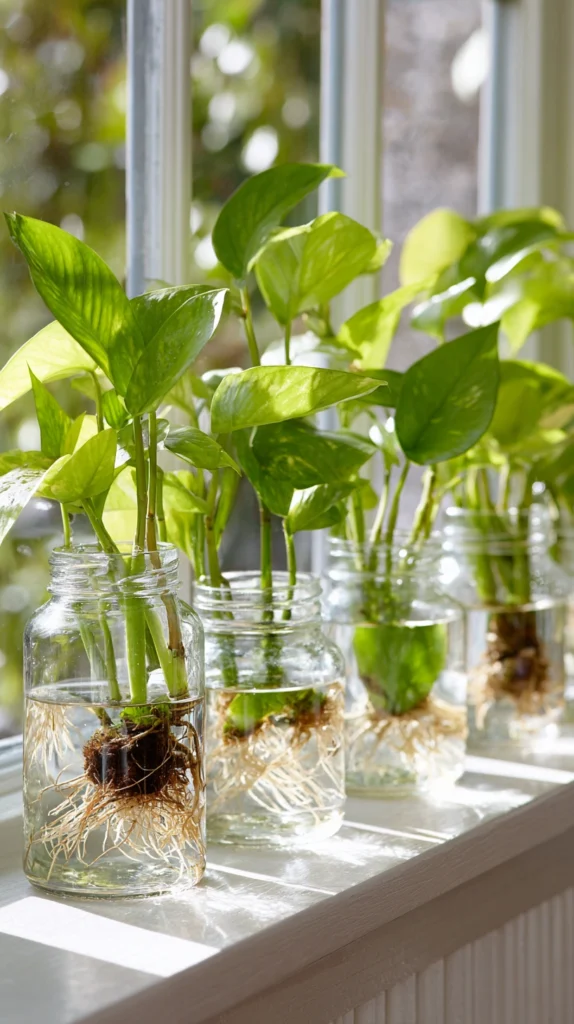
Turning one plant into several without any new purchases.
Build it:
- Take stem cuttings from an existing pothos, philodendron, or spider plant, cutting just below a leaf node
- Root the cuttings in a glass of water positioned in bright, indirect light
- Transplant into soil once roots reach one to two inches long, then distribute the new plants to other rooms
Why summer is the easiest season to propagate successfully:
- Warmer temperatures and longer daylight hours speed up root development considerably compared to winter propagation attempts
- It’s the most budget-friendly way to add greenery to multiple rooms at once, using a single parent plant as the source
- Watching the roots develop in a glass of water is also a genuinely satisfying, low-effort project for anyone new to plant care
Cost breakdown: Free, using cuttings taken from a plant already owned.
8. Introduce a Flowering Houseplant for Seasonal Color
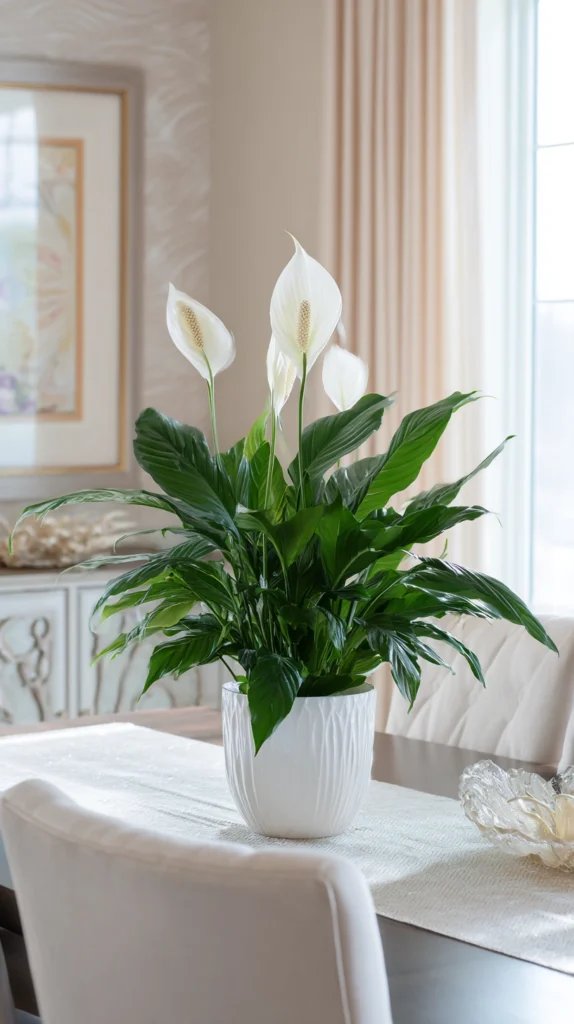
Adding bloom color that most year-round greenery doesn’t provide.
Build it:
- A flowering variety like African violet, peace lily, or orchid, chosen based on the room’s specific light conditions
- Positioned somewhere it’ll be seen regularly, like a dining table or entryway console, rather than a rarely visited corner
- Deadheaded as blooms fade to encourage the plant to continue producing new flowers through the season
Why flowering plants add something the usual green foliage doesn’t:
- Color from actual blooms reads as a more noticeable seasonal refresh than another leafy green addition
- Many flowering houseplants bloom most reliably with the extra light and warmth summer provides
- It gives visitors an immediate, obvious sign that the room’s plant styling has been intentionally updated for the season
Cost breakdown: A blooming houseplant runs $15 to $35 depending on variety and pot size.
9. Create a Grouped Plant Vignette Instead of Scattering Pots
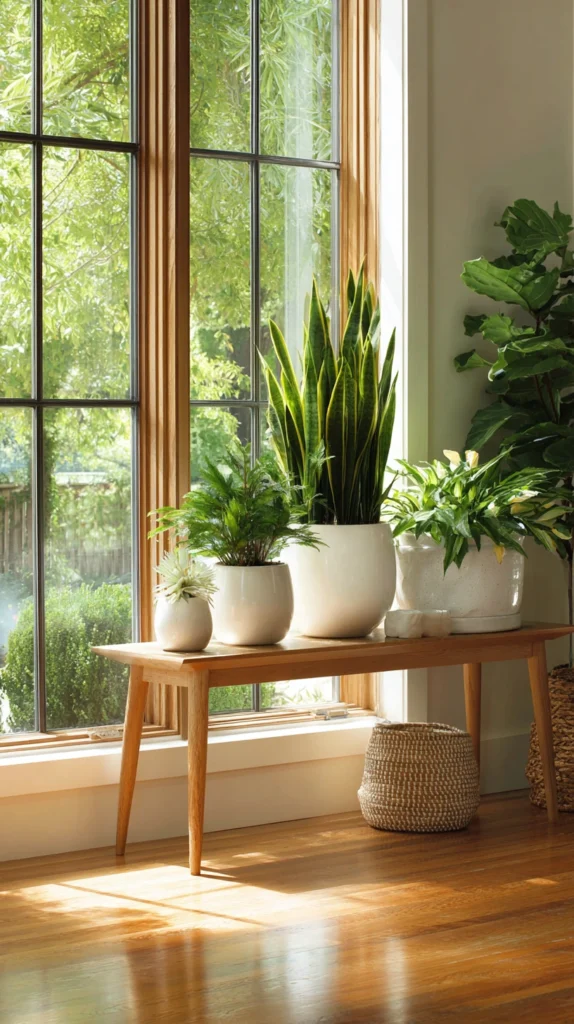
Using arrangement, not new plants, to make an existing collection look considered.
Build it:
- Gather three to five existing plants of varying heights onto a single table, shelf, or plant stand
- Arrange with the tallest plant toward the back and progressively shorter ones toward the front
- Vary pot materials slightly, mixing terracotta, ceramic, and woven basket covers for textural interest
Why grouping plants reads as more intentional than spreading them around the house:
- A cluster of varied heights creates the same layered visual interest found in professional plant styling
- It makes a modest existing plant collection look considerably fuller and more curated than the same plants scattered individually
- It’s entirely free, requiring only a rearrangement of what’s already on hand
Cost breakdown: Free, since this only requires regrouping existing plants and pots.
10. Swap Winter Pot Covers for Lighter, Woven Summer Textures
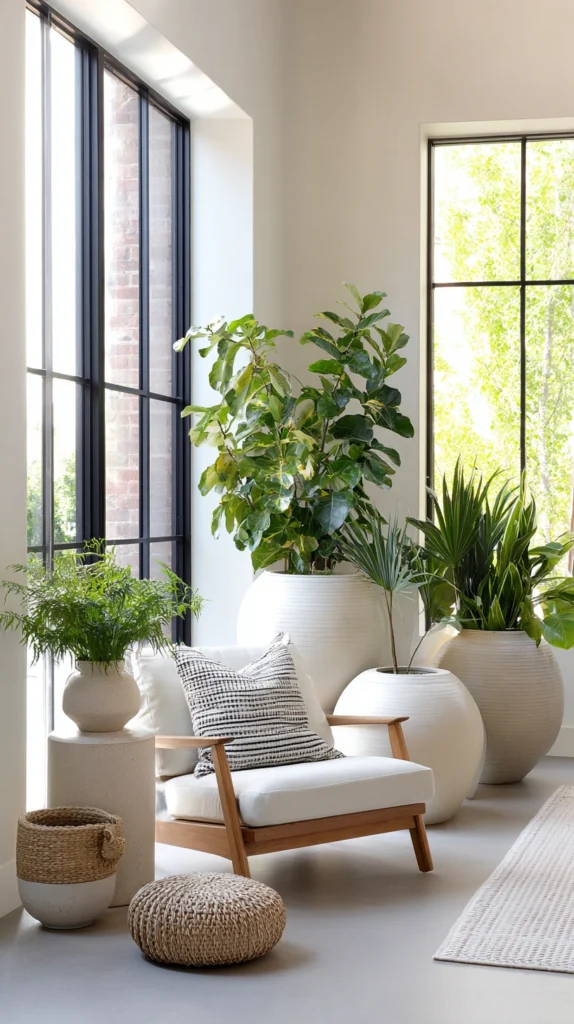
A small material change that shifts the whole room’s seasonal feel.
Build it:
- Replace heavier ceramic or dark metal pot covers with woven rattan, seagrass, or light-toned ceramic alternatives
- Sized to fit the existing plastic nursery pots without needing to repot the plants themselves
- Stored winter pot covers away for a simple seasonal swap back in fall
Why the pot itself matters as much as the plant inside it:
- A lighter, woven material immediately signals a summer refresh even if the plant itself hasn’t changed at all
- It’s one of the fastest and least disruptive ways to update a room’s plant styling without touching the plants themselves
- Rotating pot covers seasonally extends the life of the covers, since they see only half a year of daily wear at a time
Cost breakdown: Woven summer pot covers run $8 to $20 each depending on size.
Getting started this weekend
You don’t need new plants before the house starts to feel refreshed.
- Start by relocating a shade-tolerant plant to a brighter summer window and repotting anything visibly root-bound
- Add a grouped vignette and swap in lighter pot covers once the basic light and root needs are addressed
- Save larger additions like a big floor plant or flowering variety for a second pass once you know where the light actually supports it
My own summer refresh usually starts with just moving three plants to better windows before I even think about buying anything new.
Budget reality
A summer plant refresh can be done almost entirely with what’s already in the house.
- Free: Relocating plants to brighter windows, repotting, propagating cuttings, grouping into a vignette
- Under $30: Herb garden, woven pot covers, a trailing plant for a high shelf
- $30-75: Flowering houseplant, large floor plant at a smaller size
- $75+: A larger statement floor plant combined with new pots across several rooms
Most of the refresh comes from light, arrangement, and basic maintenance, not new purchases.
What actually refreshes a home for summer
It was never really about buying an entirely new plant collection each June.
It’s the pothos finally given a brighter spot to grow into, the root-bound fern repotted before it stalls out completely, the existing plants regrouped so they finally look like a collection instead of scattered afterthoughts.
Start by giving what you already have the light and room it needs, then let new additions fill in wherever gaps remain.