13 Beautiful Fish Pond Backyard Ideas for a Peaceful Outdoor Escape
The pond changed how my backyard functioned more than any other single addition I have made to it. Not the new patio. Not the outdoor kitchen. Not the fire pit or the pergola or the carefully chosen perennial beds.
The moving water and the fish living in it.
Because a genuine pond did something no purely decorative garden feature ever managed. Before it: a backyard that looked nice but offered nothing to actually watch, nothing that moved or changed or responded on its own. After it: a corner of the yard that became the place everyone gravitated toward, coffee in hand in the morning or a drink in the evening, simply watching the fish move and the water catch the light.
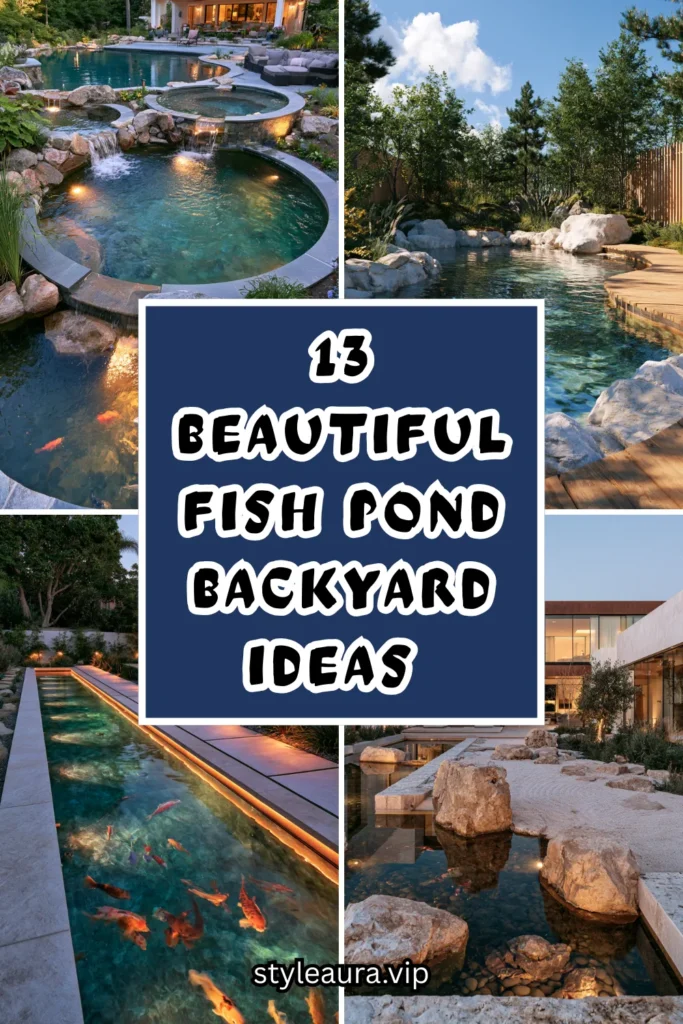
A fish pond is not just a water feature with some koi added for visual interest. It is a genuine small ecosystem, and the ponds that succeed most fully as peaceful retreats are planned as complete systems from the start — proper filtration, appropriate fish selection, real planting, and a design that invites lingering rather than a quick glance. The backyard: no longer just landscaped, but genuinely alive.
Here are 13 beautiful fish pond backyard ideas for a peaceful outdoor escape — from the simplest container pond to the most fully developed koi habitat — built on that understanding.
Why a Genuine Pond Creates Calm in a Way Other Water Features Do Not
The living-system difference
A fountain or a purely decorative water feature offers movement and sound, but a genuine pond with fish adds an actual living system to observe — behavior, feeding, seasonal changes — providing a depth of engagement static water features cannot replicate.
The sensory layering
Without a genuine pond:
A backyard with visual landscaping but no moving water, no fish, and no sound beyond whatever ambient noise exists naturally.
The yard: pleasant, but offering nothing that actively draws sustained attention.
With a genuine pond:
Moving water’s sound, fish visible beneath the surface, and the specific play of light across the water’s surface, engaging sight and sound simultaneously in a way that consistently draws people to linger nearby.
The yard: gaining a genuine focal point that people are drawn to sit beside rather than simply walk past.
The seasonal engagement case
A living pond changes throughout the year — fish activity slowing in cold water, plants blooming and fading, ice forming in winter — giving the feature genuine seasonal interest a static hardscape feature does not offer.
The planning-first principle
The single most common mistake in pond building is treating fish and plants as decoration added after the hole is dug, rather than planning the pond’s size, depth, and filtration around their actual biological needs from the very beginning.
The Five Core Elements of a Successful Backyard Pond
Before digging or building anything:
Proper sizing and depth
A pond genuinely sized for its intended fish population, with adequate depth for winter survival in colder climates.
The foundational planning decision every other element depends on.
Requires research specific to the fish species intended and the local climate.
Filtration and circulation
A pump and filter system, keeping the water clean and adequately oxygenated for fish health.
Not optional for any pond intending to support genuine fish life long-term.
Sized appropriately to the pond’s actual volume.
Appropriate fish selection
Species chosen for the specific pond’s size, depth, and climate, rather than an impulse purchase.
Koi and goldfish are the most common choices, each with different space and care requirements.
Worth researching before any fish are purchased.
Aquatic and marginal planting
Water lilies, submerged oxygenating plants, and marginal plants at the pond’s edge.
Provides both genuine ecological function and significant visual beauty.
Balances the pond’s biological system alongside its aesthetic appeal.
A seating or viewing area
A bench, a deck extension, or simple seating positioned specifically to view the pond.
Ensures the pond is actually used and enjoyed, not just installed and glanced at occasionally.
The detail most responsible for whether the pond becomes a genuine daily retreat.
1. The Classic Backyard Koi Pond
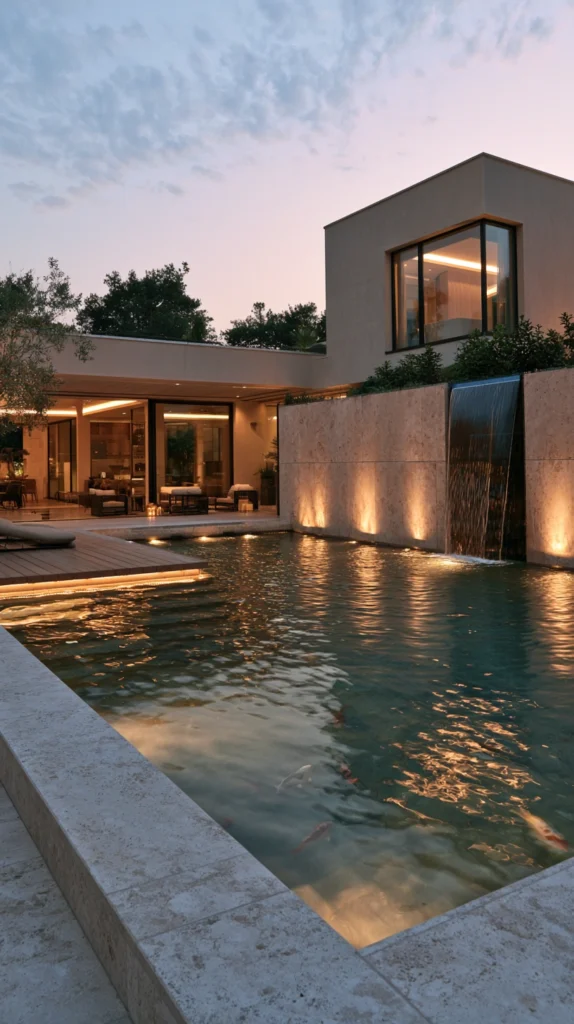
A substantial, properly filtered pond specifically designed and sized to support genuine koi, the classic centerpiece fish for a serious backyard water feature.
Why koi specifically require more substantial planning than a simple goldfish pond
Koi grow considerably larger than goldfish, often reaching well over a foot in length, and require genuinely substantial water volume and depth to thrive long-term, making proper initial sizing especially critical for this specific fish choice.
The sizing requirement
A minimum of roughly 1,000 gallons and at least 3 feet of depth, providing adequate space for koi to grow to their full mature size and adequate depth for winter survival in colder climates.
The filtration system
A robust filtration and pump system, sized specifically to the pond’s actual volume, essential given koi’s significant waste production relative to smaller fish species.
The koi selection
Young koi purchased from a reputable dealer, chosen with their eventual mature size in mind rather than only their current small size at purchase.
The winter consideration
A pond deep enough that the bottom does not freeze solid in colder climates, allowing koi to survive winter in a dormant state at the pond’s lower, unfrozen depths.
The overall effect
The classic, most visually striking backyard pond centerpiece, koi’s vivid coloring and genuine personality providing years of engaging observation once properly established.
Cost breakdown: Pond excavation and liner (1,000+ gallons): $2,000–5,000 Filtration system: $500–1,500 Koi (5–8 young fish): $150–500 Total: $2,650–7,000
2. The Small Container Goldfish Pond
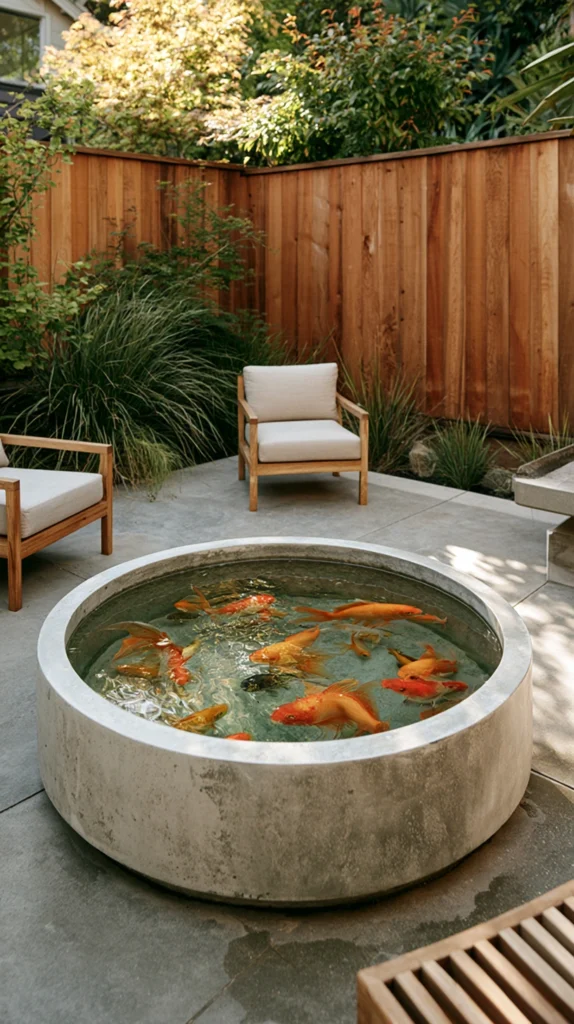
A pre-formed or container-based small pond, sized appropriately for goldfish rather than koi, offering a genuine fish pond experience at a considerably smaller scale and lower cost.
Why goldfish suit a smaller, more accessible pond scale
Goldfish remain considerably smaller than koi and require less water volume and depth, making them a genuinely appropriate choice for a household wanting real fish without the substantial investment a full koi pond requires.
The container option
A large half whiskey barrel, a stock tank, or a pre-formed rigid pond liner, requiring minimal excavation and construction relative to a full in-ground pond.
The sizing
A minimum of roughly 50 gallons for a small goldfish population, providing adequate space for several fish without requiring the substantial volume koi demand.
The filtration
A smaller, appropriately sized pump and filter, still essential even at this reduced scale, though considerably less expensive and complex than a full koi pond’s filtration requirements.
The goldfish selection
Common or comet goldfish varieties, chosen for their hardiness and suitability to a smaller container environment, rather than fancy varieties requiring more specialized care.
The overall effect
A genuine, functioning fish pond achievable within a fraction of a full koi pond’s cost and space requirement, well suited to a smaller yard or a household testing whether pond ownership suits them before a larger investment.
Cost breakdown: Container or pre-formed liner: $80–250 Small filtration system: $60–150 Goldfish (4–6): $10–30 Total: $150–430
3. The Naturalistic Wildlife Pond
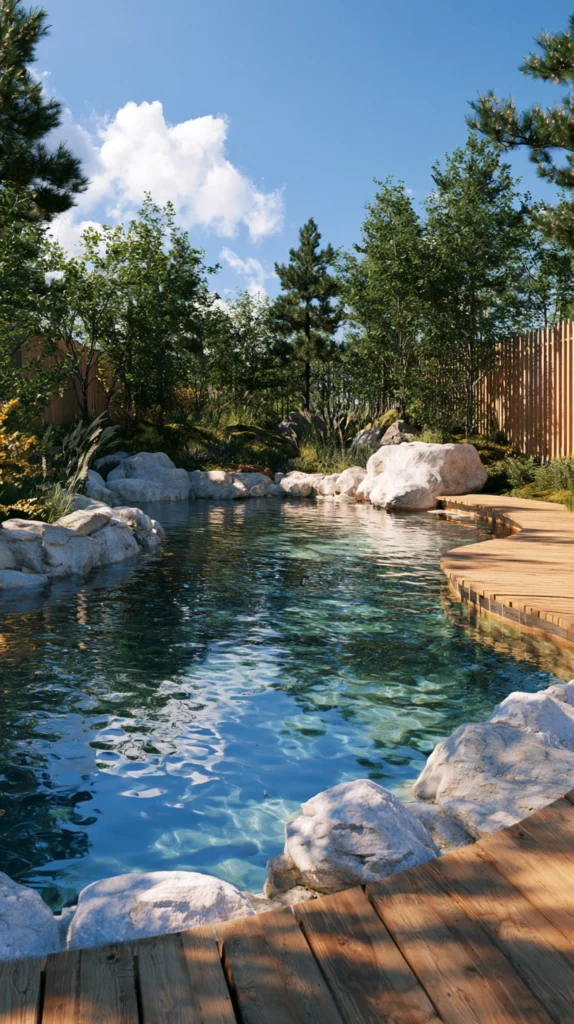
A pond designed to attract and support local wildlife — frogs, dragonflies, birds — alongside or instead of ornamental fish, prioritizing ecological function and naturalistic design over a formal koi or goldfish display.
Why a wildlife-focused pond offers a genuinely different kind of peaceful engagement
Rather than centering entirely on ornamental fish, a naturalistic pond becomes a small local ecosystem, drawing frogs, dragonflies, and birds, offering a broader and often more dynamic range of activity to observe than fish alone.
The design approach
Irregular, natural-looking edges rather than a formal geometric shape, with varied depths creating shallow marginal areas alongside deeper zones, mimicking a genuine natural pond’s varied structure.
The planting
Native aquatic and marginal plants, chosen specifically for their appeal to local wildlife rather than purely ornamental value, providing both habitat and a natural food source.
The fish consideration
Fish either excluded entirely, or limited to a small number of hardy varieties, since a heavily fish-stocked pond can sometimes reduce the amphibian and insect life a more naturalistic design aims to attract.
The shallow access points
Gently sloped edges in at least one section, allowing birds to safely access the water for drinking and bathing, and providing an easy entry and exit point for any amphibians the pond attracts.
The overall effect
A pond functioning as a genuine small wildlife habitat, offering the peaceful engagement of observing frogs, dragonflies, and birds alongside or instead of a more traditional ornamental fish display.
Cost breakdown: Naturalistic pond excavation and liner: $1,000–3,000 Native aquatic and marginal plants: $80–200 Total: $1,080–3,200
4. The Raised Pond With Integrated Seating Wall
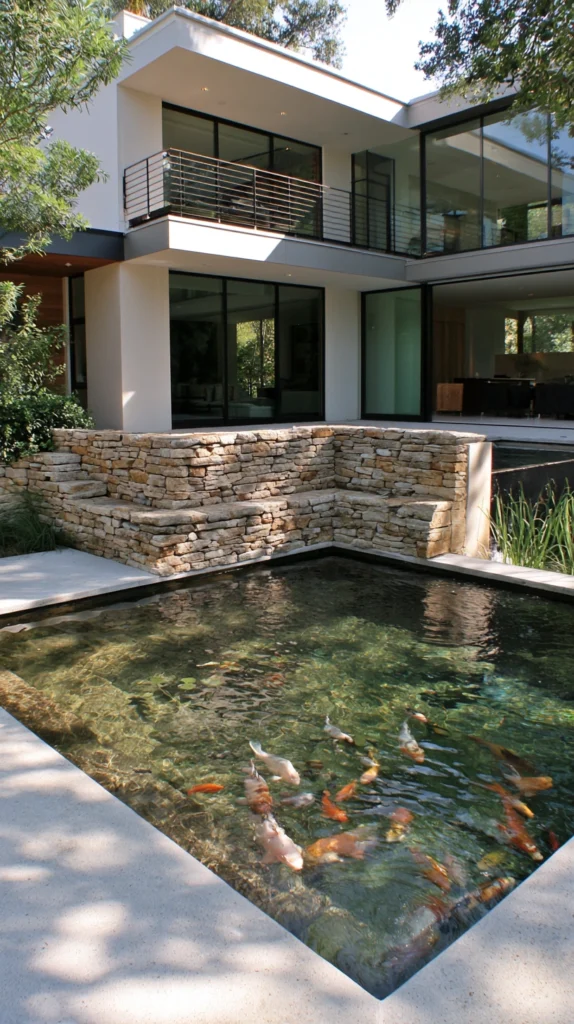
A pond built above ground level, with its retaining wall doubling as seating, bringing the water and fish closer to eye level for seated viewing.
Why a raised design changes the viewing experience significantly
A traditional in-ground pond requires standing or crouching to see the fish clearly, while a raised pond brings the water surface and fish much closer to a seated person’s natural eye level, encouraging longer, more comfortable observation.
The raised wall construction
A stone, brick, or concrete block retaining wall, built up from ground level to create the pond’s raised basin, with the wall’s flat top surface wide enough to also function as a bench.
The seating width
At least 16 to 18 inches of flat wall width, providing genuinely comfortable seating rather than a narrow ledge unsuited to actual sitting.
The viewing height
The raised water level bringing fish and surface activity much closer to a seated viewer’s natural sightline, compared with the more distant, downward view a standard in-ground pond requires.
The safety benefit
A raised edge also providing a clearer physical boundary, worth considering specifically for a household with young children, since the raised wall makes the water’s edge more visually and physically obvious than a flush, in-ground pond edge.
The overall effect
A pond designed specifically around comfortable, extended seated viewing, the integrated seating wall directly supporting the peaceful, lingering engagement a backyard pond is ultimately meant to provide.
Cost breakdown: Raised stone or block wall construction: $1,500–4,000 Pond liner and filtration: $800–2,000 Total: $2,300–6,000
5. The Pondless Waterfall Feature
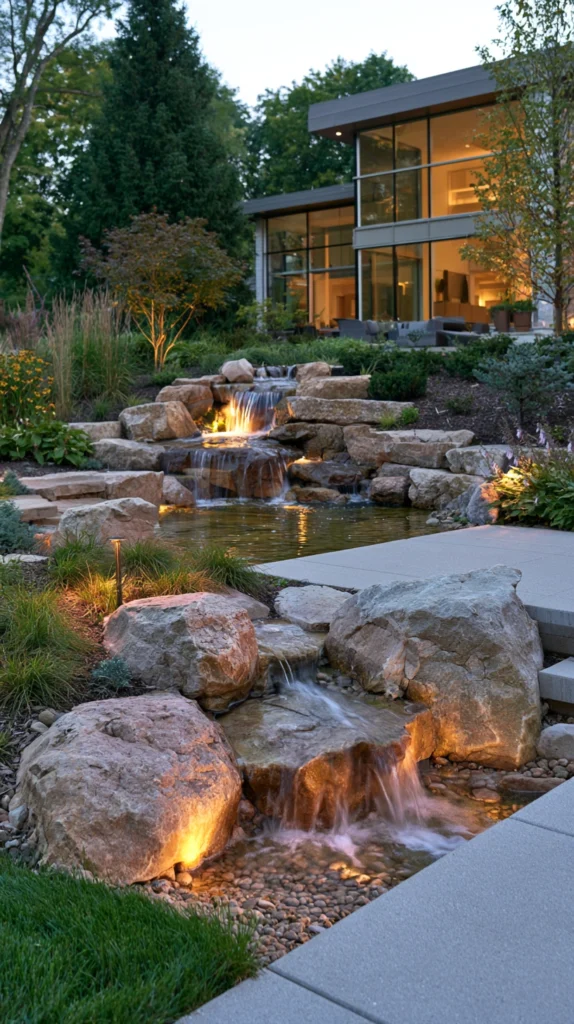
A water feature providing the sound and movement of a waterfall and stream, without an open pond basin, using a hidden underground reservoir instead.
Why a pondless design suits a household prioritizing safety or lower maintenance over fish-keeping specifically
A pondless waterfall provides much of a traditional pond’s sensory appeal — moving water, sound, a naturalistic stream feature — without an open water basin, addressing both child-safety concerns and reducing the ongoing maintenance a fish-stocked pond requires.
The construction
A recirculating pump drawing water from a hidden underground reservoir, sending it up through a stream or waterfall feature that then flows back down into the same concealed reservoir, with no standing open water pool at any point.
The safety benefit
No open water basin for a young child to fall into, addressing a genuine safety concern that leads some households to avoid a traditional pond altogether.
The maintenance reduction
Without fish or standing open water, this design requires considerably less ongoing maintenance than a full stocked pond, avoiding water quality management, fish feeding, and algae control associated with an open fish habitat.
The sound and movement retention
The same moving water sound and visual appeal a traditional pond offers, achieved without the fish-keeping and open-water elements some households specifically want to avoid.
The overall effect
A genuinely peaceful water feature addressing the core sensory appeal of a pond, suited specifically to households prioritizing safety and lower maintenance over an actual fish-keeping hobby.
Cost breakdown: Pondless waterfall construction and pump: $1,500–4,000 Total: $1,500–4,000
6. The Formal Geometric Reflecting Pond
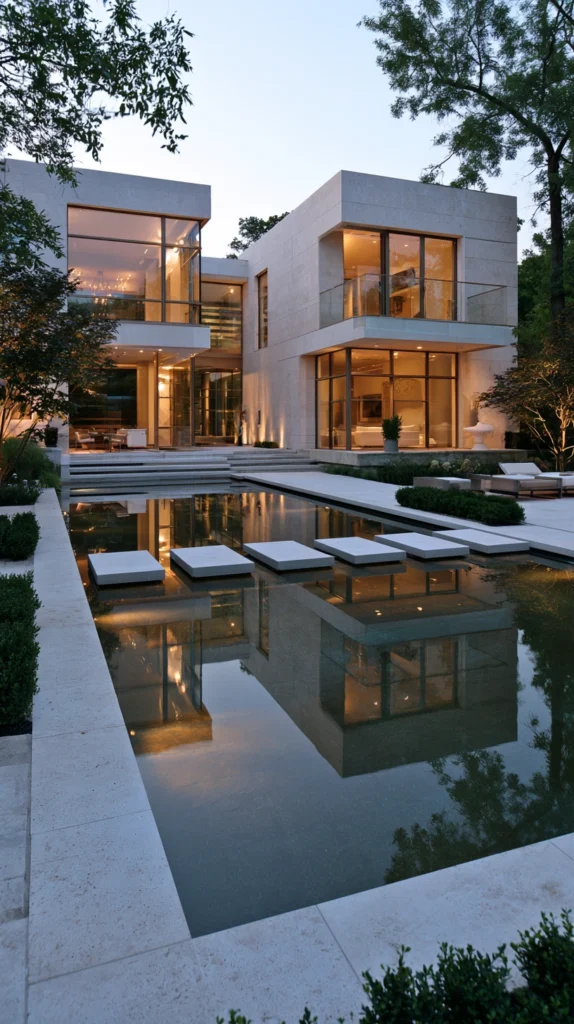
A pond built in a precise geometric shape — a rectangle, a circle, or a symmetrical form — with minimal planting, prioritizing a clean, architectural reflecting surface over a naturalistic design.
Why a formal, minimal design suits a more contemporary garden style
Where a naturalistic pond suits a cottage or woodland-style garden, a precise geometric pond with a clean, unobstructed water surface suits a more contemporary or formally landscaped backyard, using the water’s reflective quality as the design’s central feature.
The shape
A precise rectangle, square, or circle, built with clean, straight or perfectly curved edges rather than the irregular, organic shape a naturalistic pond favors.
The minimal planting
A restrained planting approach, perhaps a single specimen plant or none at all, keeping the water’s surface largely open and unobstructed for maximum reflective quality.
The fish selection
A small number of koi or goldfish, chosen and positioned to remain visually secondary to the pond’s overall clean, architectural composition rather than the primary focus.
The surrounding hardscape
Clean stone or concrete edging, continuing the same precise, geometric design language established by the pond’s own shape.
The overall effect
A pond functioning as much as a piece of garden architecture as a fish habitat, the water’s reflective surface and the composition’s overall precision providing a different, more contemporary kind of peaceful visual interest than a naturalistic pond’s organic abundance.
Cost breakdown: Geometric pond construction and liner: $1,500–4,000 Minimal planting and edging: $150–400 Total: $1,650–4,400
7. The Multi-Level Cascading Pond System
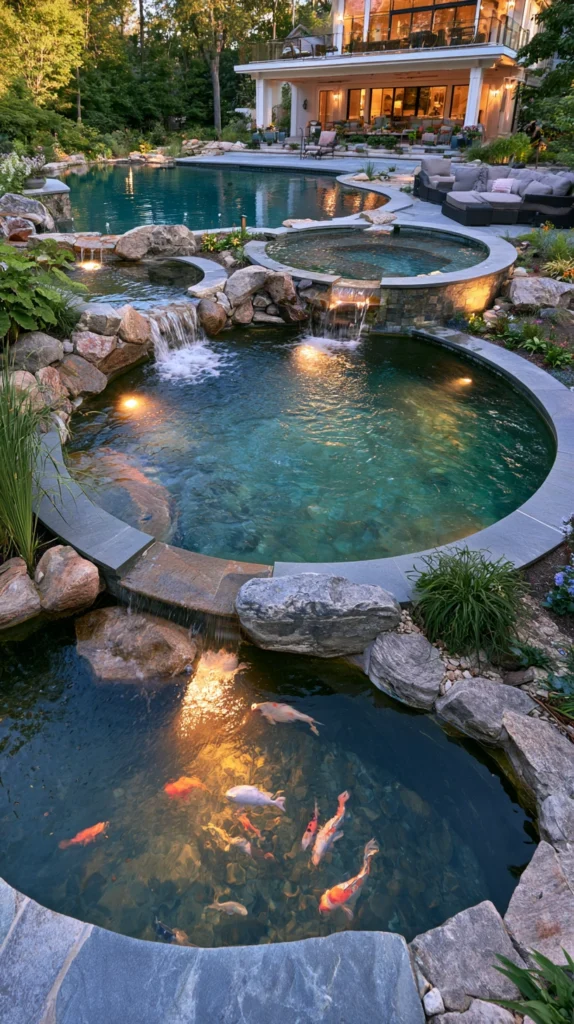
Several connected ponds at different elevations, linked by small waterfalls or streams, creating a cascading system rather than a single pool.
Why multiple connected levels add both visual and functional complexity
A cascading, multi-level system provides considerably more visual and auditory interest than a single pond, the water’s movement between levels creating multiple distinct viewing points and sound sources throughout the yard.
The level design
Two or three ponds positioned at different elevations, connected by small waterfalls or a running stream, following the yard’s natural slope where one exists or built up artificially where it does not.
The circulation system
A single pump moving water from the lowest pool back up to the highest point, then allowing gravity to carry it back down through the cascading system, requiring careful planning of pump capacity relative to the total system’s volume and height.
The fish distribution
Fish generally kept in the lower, larger, and deeper pool, with the upper smaller pools functioning primarily as visual and auditory features along the cascade’s path.
The planting integration
Marginal plants positioned along each level’s edges, softening the transitions between pools and integrating the cascading system into the broader garden’s planting.
The overall effect
A significantly more dynamic and visually complex water feature than a single pond, the multiple levels and cascading movement providing several distinct points of interest throughout the yard.
Cost breakdown: Multi-level excavation and construction: $3,000–7,000 Pump and plumbing for cascading system: $600–1,500 Total: $3,600–8,500
8. The Pond With an Integrated Bridge
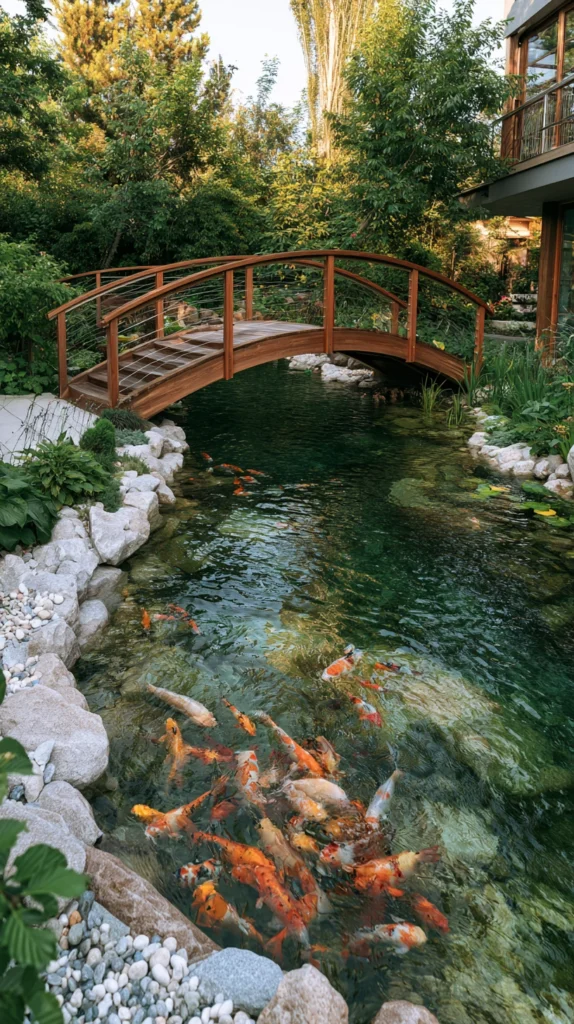
A pond, often in a figure-eight or elongated shape, spanned by a small footbridge, allowing genuine crossing access and a distinctive elevated viewing point.
Why a bridge adds both function and a specific viewing perspective a pond’s edge alone cannot provide
A bridge crossing the pond provides genuine functional access across the water, along with a specific elevated vantage point directly over the fish, offering a different and often more engaging viewing angle than observation from the pond’s edge alone.
The pond shape
An elongated or figure-eight shape, specifically designed with a narrower crossing point where the bridge will span, rather than a single open, unbroken pool.
The bridge construction
A simple wood or stone footbridge, sized appropriately to the pond’s specific width at the crossing point, with genuine railings if the bridge height or household composition (young children, for instance) warrants that additional safety measure.
The viewing benefit
Standing directly on the bridge provides a genuinely different, more intimate view of the fish below, compared with the more distant perspective typical from a pond’s surrounding edge.
The planting relationship
Plants positioned to frame the bridge itself, creating a considered, picturesque composition around this specific structural feature.
The overall effect
A pond with genuine functional crossing access and a distinctive, elevated viewing experience, the bridge becoming both a practical garden pathway element and the pond’s specific visual focal point.
Cost breakdown: Pond construction (elongated shape): $1,800–4,500 Footbridge: $400–1,200 Total: $2,200–5,700
9. The Zen-Inspired Pond With Rock Composition
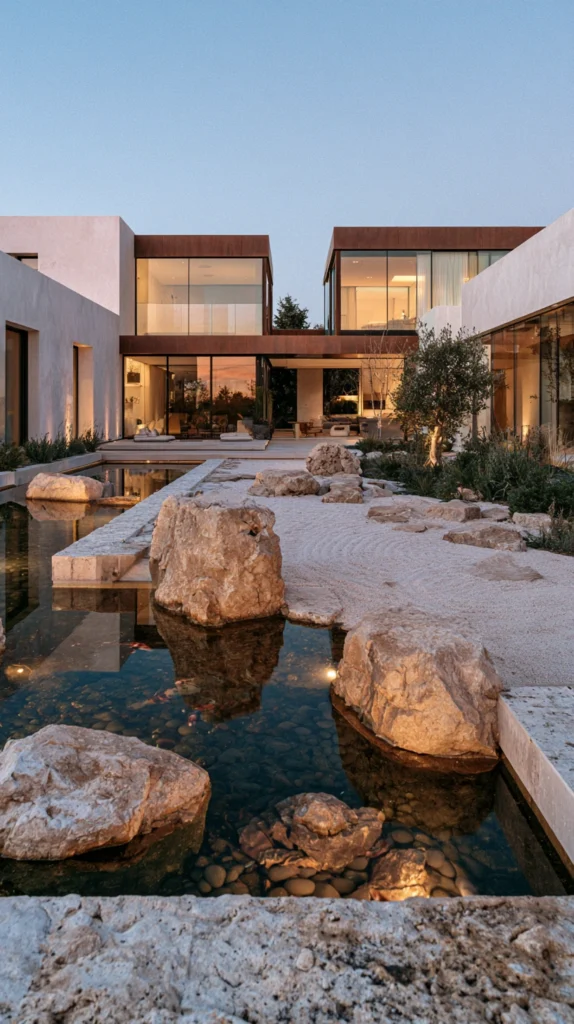
A pond styled with the restrained, considered rock and gravel composition characteristic of Japanese garden tradition, prioritizing careful stone placement and minimal planting.
Why a Zen-inspired approach suits a household seeking maximum visual calm
Japanese garden tradition places significant emphasis on considered rock placement and restraint, and a pond built within that same design philosophy prioritizes calm, deliberate composition over abundance, suited to a household specifically seeking visual and mental quiet.
The rock composition
Carefully selected and positioned stones, varying in size and placed with genuine intention rather than scattered randomly, following the traditional principle that each stone’s placement carries deliberate compositional weight.
The gravel and edging
Raked gravel or smooth stone edging surrounding portions of the pond, providing a textural contrast to the water itself and reinforcing the overall considered, minimal aesthetic.
The restrained planting
A small number of specifically chosen plants — Japanese maple, moss, or a single specimen shrub — rather than dense, abundant planting, maintaining the same restraint central to this design tradition.
The fish selection
Koi remain traditional and appropriate within this specific design approach, their movement providing the composition’s primary source of activity against the otherwise still, considered stone and plant arrangement.
The overall effect
A pond designed specifically around calm, deliberate visual composition, the restrained planting and careful stone placement creating a genuinely meditative garden space.
Cost breakdown: Pond construction: $1,500–4,000 Selected stones and gravel: $200–600 Restrained specimen planting: $100–300 Total: $1,800–4,900
10. The Pond With a Dedicated Deck Extension
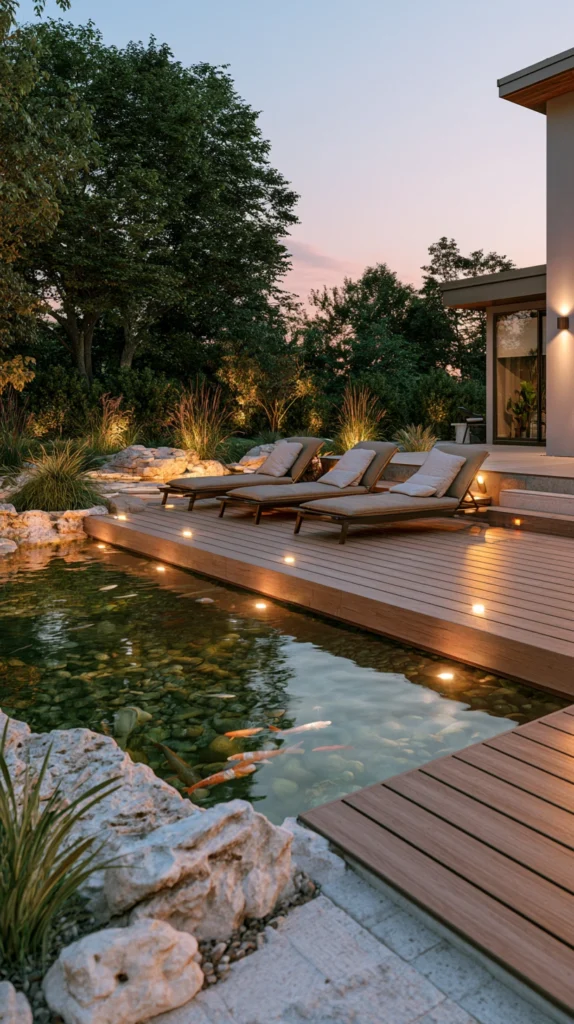
An existing or new deck extended specifically to overhang or sit adjacent to the pond, providing substantial, comfortable seating directly beside the water.
Why a deck extension provides more substantial daily-use seating than a simple bench
A full deck extension offers considerably more comfortable, flexible seating capacity than a single bench, supporting genuine daily use — morning coffee, evening gatherings, extended relaxation — directly beside the pond.
The deck design
A wood or composite deck extension, built adjacent to or slightly overhanging the pond’s edge, providing a substantial, level surface for furniture and daily use.
The furniture
Comfortable outdoor seating and a small table, positioned specifically to face the pond, ensuring the deck’s primary orientation supports genuine pond-watching rather than facing away from the water.
The railing consideration
A railing along any overhanging or elevated section, particularly important for safety if the deck extends over deeper water or sits at any meaningful height above the pond’s surface.
The lighting integration
Deck-mounted lighting, extending the space’s usability into the evening, allowing the pond and its underwater lighting, if included, to be enjoyed after dark as well as during the day.
The overall effect
A substantial, comfortable daily-use space directly integrated with the pond, ensuring the water feature becomes a genuine part of the household’s regular outdoor living pattern rather than a feature simply viewed in passing.
Cost breakdown: Deck extension: $2,000–6,000 Outdoor furniture: $400–1,200 Total: $2,400–7,200
11. The Underwater and Edge Lighting System
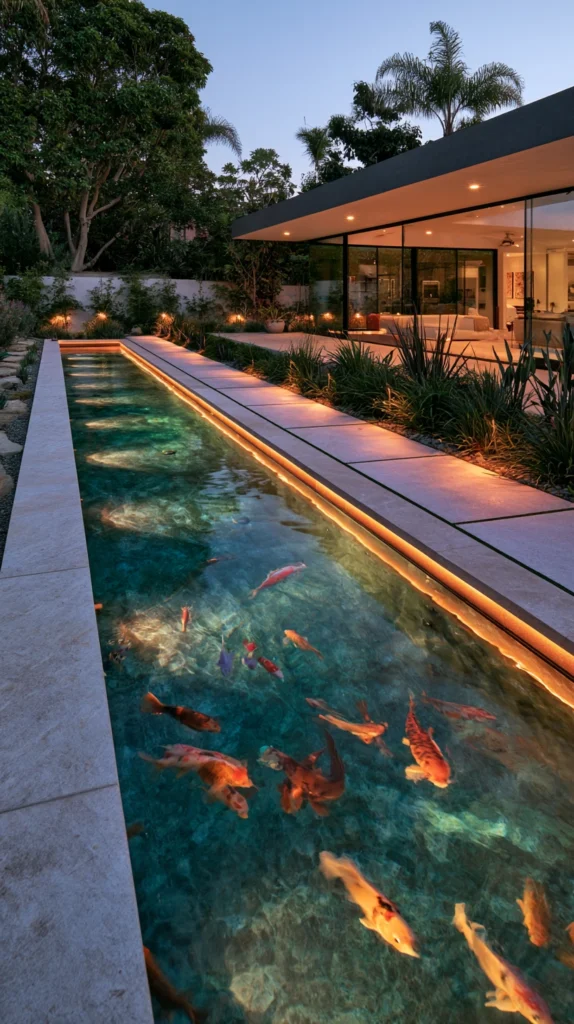
A pond fitted with submersible LED lighting and edge-mounted fixtures, extending the feature’s visual appeal and usability into the evening hours.
Why lighting extends a pond’s peaceful value well beyond daylight hours
A pond enjoyed only during the day misses a significant portion of its potential use, and a well-planned lighting system extends the feature’s calming visual appeal into the evening, when many households actually have the most available time to relax outdoors.
The submersible lighting
LED lights installed within the pond itself, illuminating the water from below and highlighting fish movement and any underwater plant life after dark.
The edge lighting
Small path or edge-mounted lights along the pond’s perimeter, both for genuine safety around the water’s edge in low light and for additional atmospheric illumination.
The waterfall or fountain highlight
A light specifically positioned to illuminate any moving water feature, such as a small waterfall, adding dramatic visual interest to the water’s movement after dark.
The control system
A timer or smart control, activating the lighting automatically at dusk, ensuring the pond’s evening atmosphere is consistently available without requiring a manual switch each night.
The overall effect
A pond that remains genuinely engaging and beautiful well past sunset, extending its role as a peaceful retreat into the hours many households most need one.
Cost breakdown: Submersible and edge lighting system: $200–600 Total: $200–600
12. The Container Water Garden Without Fish
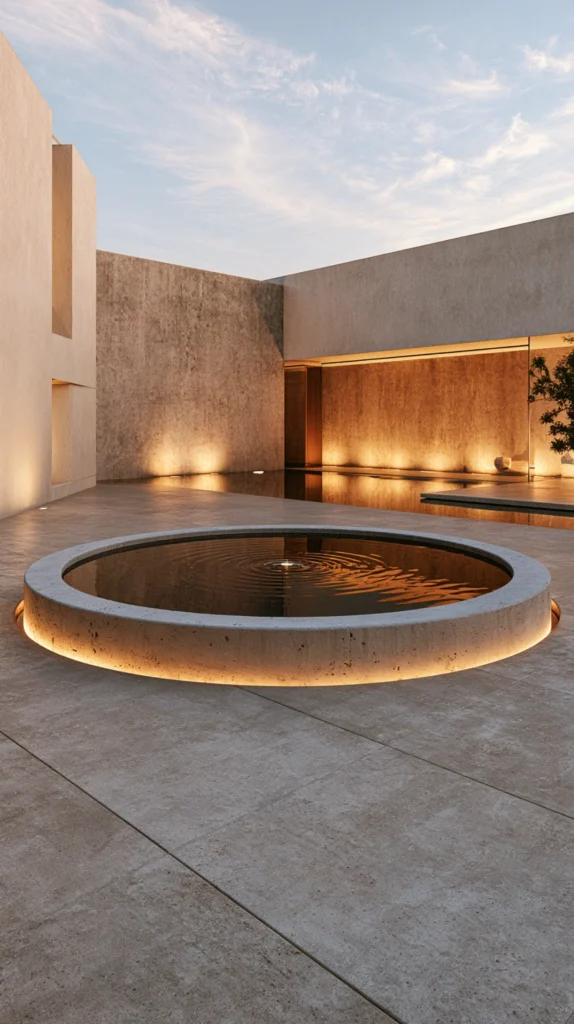
A smaller water feature, styled with aquatic plants but no fish at all, for a household wanting the visual calm of water and plant life without the ongoing commitment fish care requires.
Why excluding fish entirely can still provide a genuinely peaceful water feature
Fish care requires genuine ongoing commitment — feeding, water quality monitoring, and seasonal management — and a household not ready for or interested in that responsibility can still achieve much of a pond’s visual and auditory calm through a fish-free water garden.
The container
A large pot, half barrel, or small pre-formed liner, filled with water and planted with aquatic species, without any fish added at all.
The plant selection
Water lilies, water hyacinth, and other floating or submerged aquatic plants, providing genuine visual interest and natural water movement (through leaf and flower activity) without requiring fish.
The mosquito consideration
A small solar-powered aerator or fountain pump, keeping the water moving specifically to discourage mosquito breeding, an important practical consideration for any standing water feature without fish to naturally consume larvae.
The maintenance simplicity
Considerably lower ongoing maintenance than a fish-stocked pond, requiring only basic plant care and periodic water changes rather than the water quality monitoring fish keeping demands.
The overall effect
A genuinely calming water feature achievable with significantly less ongoing commitment than fish-keeping requires, well suited to a household wanting water’s visual and auditory benefits without the added responsibility.
Cost breakdown: Container and liner: $30–80 Aquatic plants: $30–70 Small solar aerator: $20–50 Total: $80–200
13. The Complete Backyard Pond Retreat (The Fully Realized Peaceful Escape)
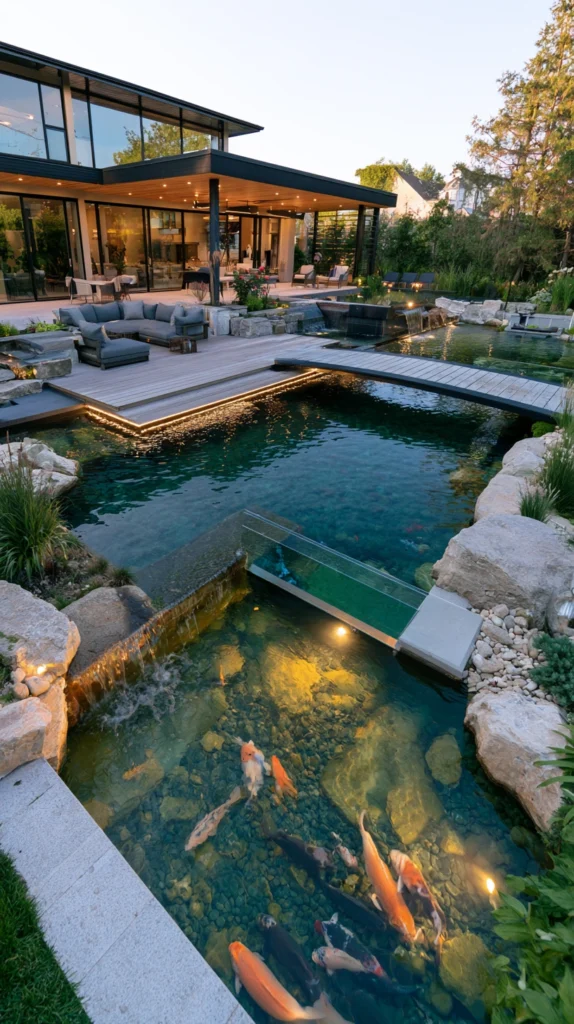
A complete pond combining several of the approaches above — proper sizing and filtration, thoughtful fish and plant selection, integrated seating, and evening lighting — treating the water feature as the backyard’s genuine centerpiece rather than a single decorative addition.
What separates the complete pond retreat from a simple hole filled with water and a few fish
A basic pond with fish added and no further planning: a start, and still genuinely engaging. A complete backyard pond retreat: every element — sizing, filtration, planting, seating, and lighting — working together, creating a space the household genuinely returns to daily rather than a feature simply glanced at occasionally from a distance.
The elements of the complete backyard pond retreat
The foundation
A pond properly sized and filtered for its intended fish population, whether koi, goldfish, or a naturalistic wildlife-focused design.
The planting
Aquatic and marginal plants providing both genuine ecological function and significant seasonal visual beauty.
The seating
An integrated seating wall or a dedicated deck extension, ensuring the pond is genuinely used and enjoyed rather than only viewed in passing.
The lighting
Submersible and edge lighting, extending the pond’s appeal into the evening hours.
The finishing details
A bridge, considered rock composition, or another distinctive structural element, giving the pond its own specific character beyond a generic water feature.
The complete design in action
A full year in the finished backyard:
Spring: Water lilies beginning to bloom, fish becoming more active as the water warms, the household drawn back outside after winter specifically to check on the pond’s progress.
Summer evenings: The underwater and edge lighting activated at dusk, dinner or drinks enjoyed on the adjacent deck, the pond’s moving water and illuminated fish providing the evening’s genuine focal point.
Fall: The surrounding planting shifting into its autumn color, the household still gathering pondside for the season’s cooler but still pleasant evenings.
Winter: The pond’s deeper water sustaining the fish through dormancy, ice forming decoratively across the surface, the feature remaining a point of quiet visual interest even in the coldest months.
The complete backyard pond retreat: not a hole filled with water and a few fish added afterward, but a genuinely planned small ecosystem and gathering space, becoming the backyard’s most consistently used and most consistently peaceful destination.
Cost breakdown for the complete pond retreat: Assuming a starting point of an empty backyard corner: Pond construction and filtration (mid-size koi or goldfish pond): $2,000–5,000 Aquatic and marginal planting: $150–400 Integrated seating or deck extension: $1,500–6,000 Lighting system: $200–600 Bridge or distinctive structural element: $400–1,200 Total: $4,250–13,200
Phased over two or three seasons:
Season one ($2,000–5,000): The core pond construction, filtration, and initial fish stocking
Season two ($1,650–6,400): Seating or deck extension, and full planting
Season three ($600–1,800): Lighting system and any distinctive structural addition, such as a bridge
The complete backyard pond retreat: not a weekend project but a genuine small ecosystem and gathering space, built with intention over time into the backyard’s most consistently peaceful destination.
The Question Before Any Backyard Pond Decision
Before digging or building anything:
What is the primary reason for wanting a pond in this backyard?
If the answer is: a serious, long-term fish-keeping hobby — the classic koi pond, planned and sized properly from the outset.
If the answer is: water’s calming sound and movement, without the fish-care commitment — the pondless waterfall or the fish-free container water garden.
If the answer is: attracting broader local wildlife — the naturalistic wildlife pond, prioritizing habitat over ornamental display.
If the answer is: testing the concept before a larger investment — the small container goldfish pond, providing a genuine but lower-cost and lower-commitment starting point.
The design follows the household’s actual goals and willingness to commit to ongoing fish and water care, more than any single universal pond template. Every idea on this list serves a genuinely different balance of commitment, cost, and peaceful engagement. The question is which particular balance fits this household’s actual interest and capacity.
The small container goldfish pond, properly filtered and stocked: still provides a genuine, engaging living water feature. The complete pond retreat, planned and built with real intention across sizing, planting, seating, and lighting: a backyard’s most consistently peaceful and most consistently used destination, year-round.
That daily peaceful return: the whole point of building a genuine pond rather than simply adding a decorative water feature.
Getting Started This Weekend
The immediate backyard pond solution:
Research the specific fish species under real consideration before any digging begins.
Koi and goldfish have meaningfully different space and depth requirements — knowing the answer first prevents a costly mismatch later.
Start small with a container pond if uncertain about long-term commitment.
A lower-cost, lower-risk way to genuinely test whether pond and fish care suits the household before a larger in-ground investment.
Plan the pond’s location specifically around where the household will actually want to sit and view it.
The seating relationship matters as much as the pond’s own construction for whether the feature actually gets used and enjoyed regularly.
Confirm filtration needs based on the pond’s actual planned volume and fish population before purchasing any equipment.
The rest of the design: the elaboration of this moment.
The water: the beginning. The pond retreat: what gets built, planted, and gathered around it.