13 Lace and Doily Decor Ideas for a Romantic, Feminine Space
Lace and doilies bring a soft, handmade quality to a room that’s hard to replicate with any printed pattern, since the actual texture and openwork of the material does most of the visual work. Done thoughtfully, this look feels romantic and collected rather than overly fussy or dated, especially when paired with simpler, calmer surfaces elsewhere in the room.

Below are 13 ways to bring lace and doily decor into a space, from full textile commitments to small styling accents, with real numbers on cost and specifics so the romantic, feminine look feels intentional rather than overwhelming.
Working With Lace and Doilies
What keeps it feeling romantic, not dated:
- Pairing lace with simple, solid surfaces
- Choosing cream or ivory over stark white
- Mixing in some modern or minimal elements
- Using texture as an accent, not covering every surface
What tips it into feeling cluttered:
- Doilies on every single surface in a room
- Mixing too many different lace patterns at once
- No calm, solid-colored surfaces to balance the texture
- Overly bright white lace against warm-toned furniture
1. Layer a Lace Table Runner Over a Solid Tablecloth
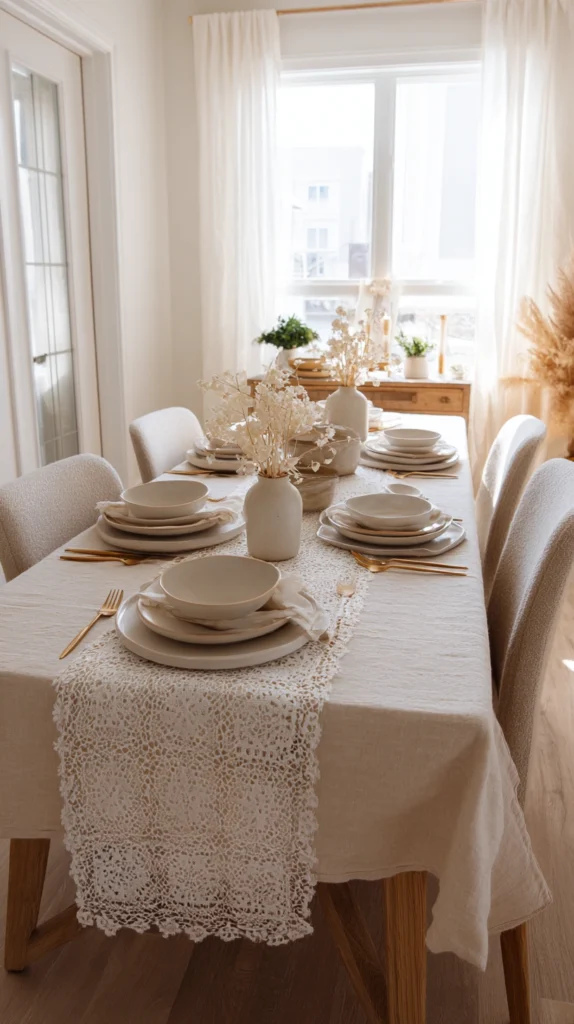
A lace table runner, layered over a solid cream or linen tablecloth, adds texture and romance to a dining or console table without covering the entire surface in pattern. Standard table runners run 14-16 inches wide and 70-90 inches long, sized to drape a few inches over each end of the table.
Budget: $20-45 for a quality lace table runner, with vintage or antique pieces commanding a similar or sometimes lower price than new reproductions, depending on the source. Choosing an ivory or ecru lace, rather than a stark white one, pairs more naturally with warm wood furniture and creates a softer, more romantic effect overall.
This layered approach — solid tablecloth as the base, lace runner as the accent — keeps the table from feeling overly busy while still delivering the textural impact lace is known for. Adding a simple centerpiece, like a small vase of dried or fresh flowers, on top of the runner completes the vignette without requiring additional lace elements elsewhere on the table.
This is one of the lowest-commitment ways to test this aesthetic, since a runner can be easily removed or swapped if your styling preferences shift later.
2. Add Vintage Doilies to a Dresser or Console Top
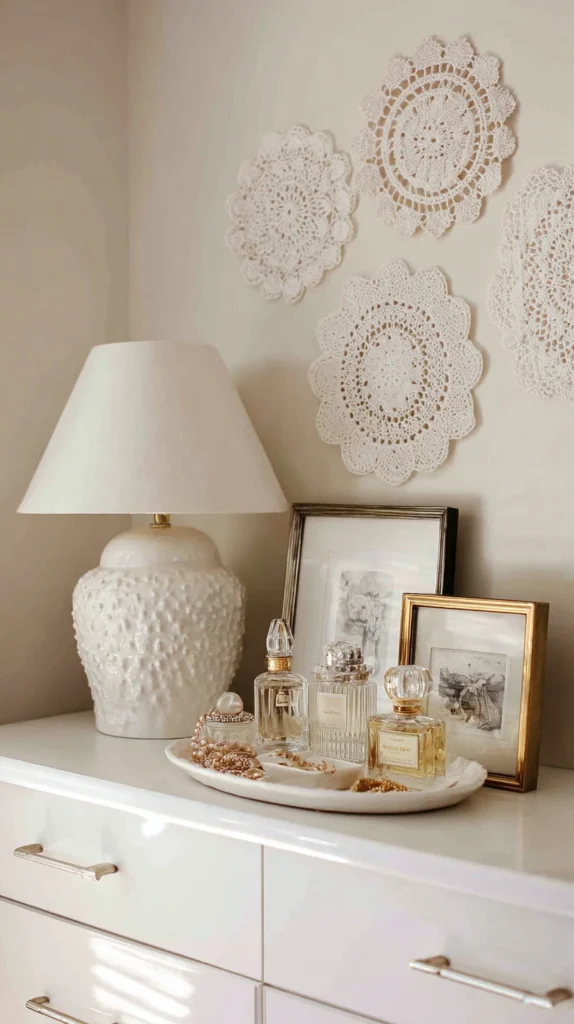
A cluster of vintage crochet or lace doilies, placed under a lamp, a small mirror, or a collection of trinket dishes, brings handmade texture to a dresser or console top. Standard doilies run 6-12 inches in diameter, easily layered or grouped in a small cluster.
Budget: $5-20 per doily if sourcing secondhand from thrift stores, estate sales, or antique shops, making this one of the most affordable ways to build this aesthetic gradually over time. Building a small collection of mismatched doilies, rather than buying a single matched set, gives the display a more genuinely collected, heirloom feeling.
Placing one doily under each object on the surface — a lamp base, a small dish, a framed photo — rather than covering the entire surface in overlapping doilies keeps the look feeling intentional rather than cluttered. Choosing doilies in slightly varying shades of white and cream, rather than a uniformly bright white set, mimics the natural variation found in a genuinely collected, vintage grouping.
This is one of the easiest elements on this list to source secondhand, since handmade doilies are widely available at very low cost through thrift and antique shops.
3. Use Lace Curtains for Soft, Filtered Light
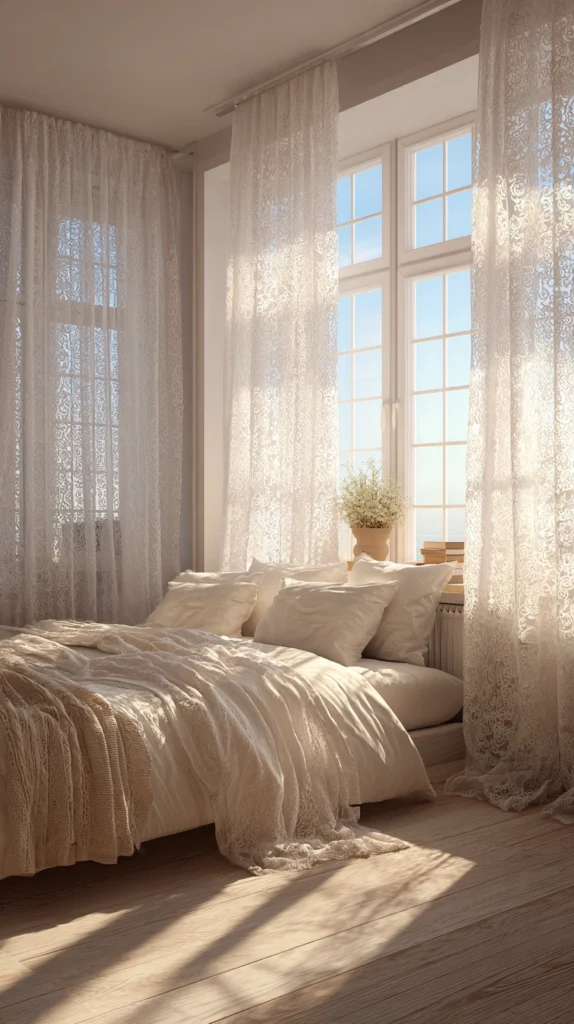
Sheer lace curtain panels filter natural light with a soft, dappled pattern throughout the day, bringing romance and texture to a window without blocking out light entirely. Standard lace curtain panels run floor-length, sized to 1.5-2x the window width per pair for a properly gathered look.
Budget: $40-90 for a quality lace curtain pair, with vintage lace panels sometimes available at a similar or lower cost through antique shops and estate sales. Choosing a smaller-scale, more delicate lace pattern tends to read as more elegant and less overtly costume-like than a very large, bold floral lace design.
Layering these sheer lace panels behind a heavier solid curtain provides flexibility, allowing the soft, filtered lace effect during the day while still offering full privacy and light-blocking in the evening. This is one of the more atmospheric elements on this list, since the pattern the lace casts across the floor and walls changes throughout the day as the angle of sunlight shifts.
Hand-washing vintage lace curtains, rather than machine washing, helps preserve delicate stitching and prevents the material from tearing or becoming misshapen over time.
4. Add a Crochet or Lace Bedspread
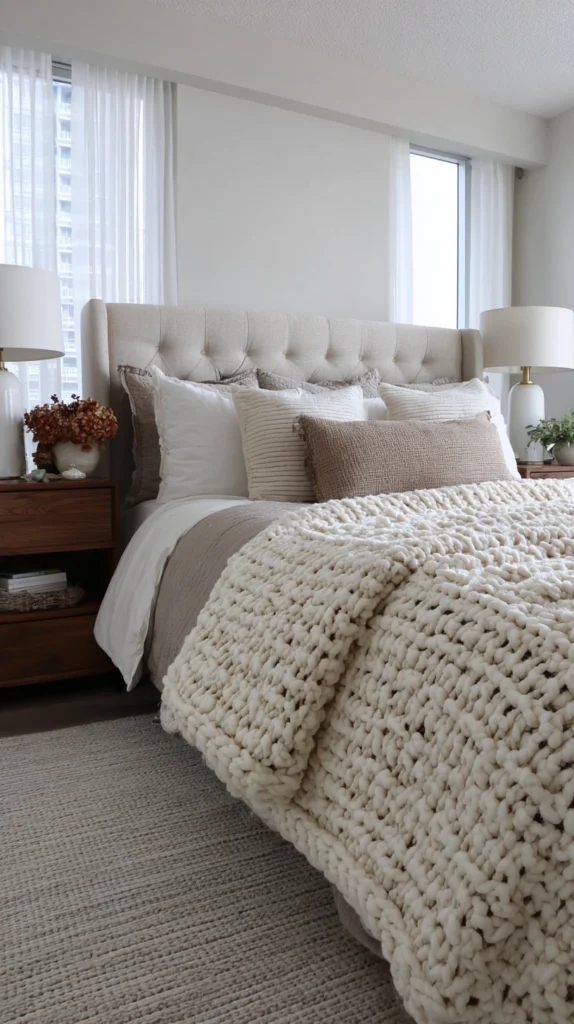
A crochet or lace-trimmed bedspread, whether a genuine vintage piece or a new reproduction, brings the romantic, handmade texture central to this aesthetic to the bed itself, one of the room’s largest and most visually prominent surfaces. Standard bedspreads for a queen bed run about 100×110 inches to allow for proper overhang on both sides.
Budget: $80-250 for a quality crochet or lace-trimmed bedspread, with genuinely vintage pieces sometimes available at a comparable or lower price than new reproductions through estate sales and antique textile dealers. Layering the bedspread over a simple solid-colored duvet or quilt, rather than using it as the sole bedding layer, adds practical warmth while still showcasing the lace texture prominently.
Choosing a bedspread in ivory or a soft, muted color rather than bright white keeps the overall bedding feeling warm and cohesive with other cream and neutral tones typically used throughout this aesthetic. This piece functions as one of the room’s primary anchors for the look, meaning smaller lace accents elsewhere in the room can stay more restrained without the space feeling under-styled.
Vintage crochet bedspreads in particular can be quite delicate, so checking for any weak spots or small tears before regular use helps avoid further damage over time.
5. Display a Collection of Lace-Trimmed Pillows
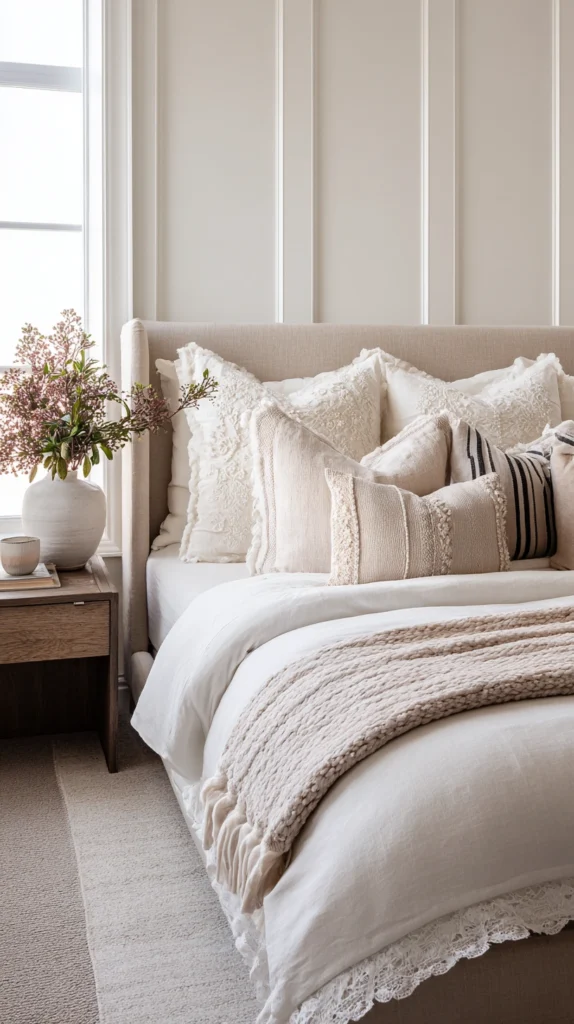
Throw pillows with lace trim, lace overlay, or lace-inset panels bring texture to a bed or seating area without requiring a full bedspread or upholstery commitment. Standard throw pillows run 16-20 inches, with 3-5 typically enough to introduce lace texture without overwhelming a full pillow arrangement.
Budget: $20-50 per lace-trimmed pillow cover, depending on the amount and quality of lace detail. Mixing lace pillows with solid-colored linen or velvet pillows in a complementary neutral tone keeps the arrangement feeling balanced rather than overly textured throughout.
Varying the specific lace style across a few pillows — one with a delicate trim edge, another with a fuller lace overlay — adds subtle variation that makes the grouping feel more collected than a single matched set. This is one of the more flexible, lower-cost elements on this list, since pillow covers can be swapped out seasonally or as your styling preferences evolve without a larger investment.
Positioning the lace pillows toward the front of a pillow arrangement, with solid pillows layered behind, lets the texture be the visual focal point of the grouping.
6. Add a Lace-Trimmed Lampshade
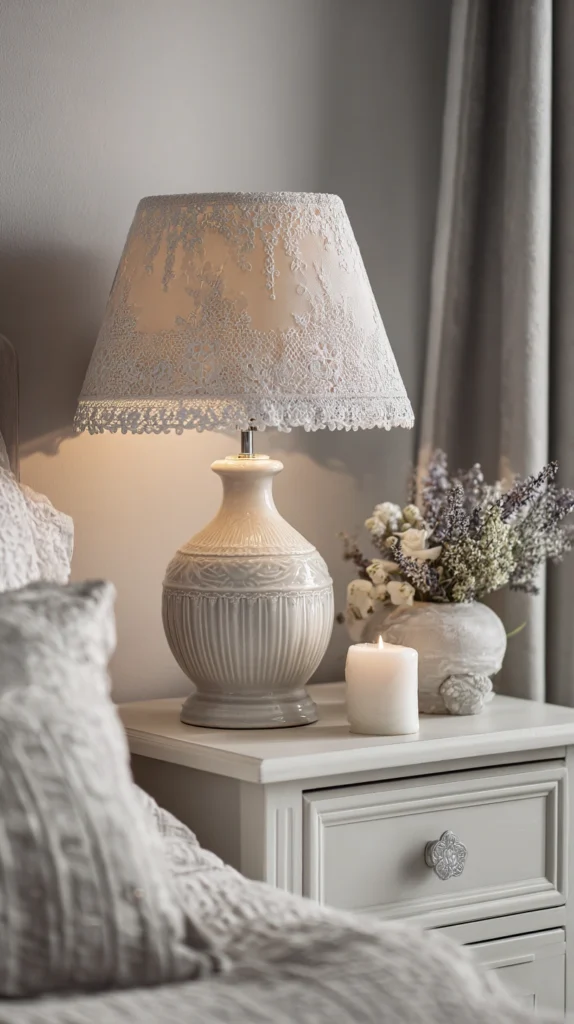
A lamp with a fabric shade featuring lace trim or a full lace overlay softens the quality of light in a room while adding a delicate, romantic detail to a functional object most rooms already include. Standard table lamp shades run 10-16 inches in diameter, depending on the base lamp’s overall size.
Budget: $30-80 for a quality lace-trimmed lampshade, or less if adding lace trim to an existing plain shade as a simple DIY project using fabric glue or a needle and thread. This is one of the more affordable, high-impact additions on this list, since a single lampshade update can meaningfully change how a whole corner of the room feels.
The lace pattern often casts a soft, delicate shadow on nearby walls and ceilings when the lamp is lit, adding an atmospheric quality beyond just the shade’s visual appearance during the day. Pairing this shade with a simple, unadorned lamp base — brass, ceramic, or glass — keeps the overall piece feeling balanced rather than overly ornate throughout.
This is a good starter project for anyone wanting to test a DIY approach to this aesthetic before investing in larger pre-made lace textile pieces elsewhere in the room.
7. Use Doilies as Wall Art
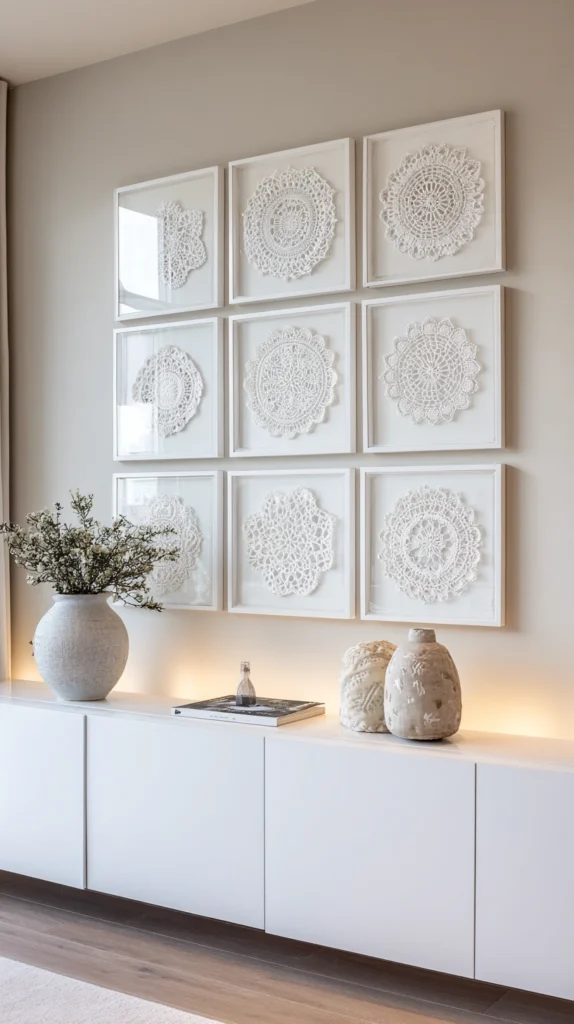
Framing a few especially beautiful or sentimental doilies, rather than only using them as surface coverings, turns them into wall art that highlights their intricate handmade patterns. Standard doily frames run 8×10 to 12×12 inches, sized to fit the doily with a small margin of matting around the edges.
Budget: $15-30 per frame if using shadow box style frames that allow the doily’s texture to be visible in three dimensions, plus the cost of the doilies themselves if not already part of an existing collection. Grouping 3-5 framed doilies together in a small cluster on a wall creates a more interesting display than a single isolated piece.
Choosing doilies with particularly detailed or unusual patterns for framing, rather than simpler everyday pieces, makes the most of this display method’s ability to highlight fine handmade needlework. This is a particularly meaningful option if the doilies have personal or family history, since framing turns a small textile into a lasting, displayed keepsake rather than an item stored away in a drawer.
A shadow box frame with some depth, rather than a flat frame that presses the doily against glass, better preserves the material’s natural texture and dimensionality.
8. Add Lace Detail to a Vanity or Dressing Area
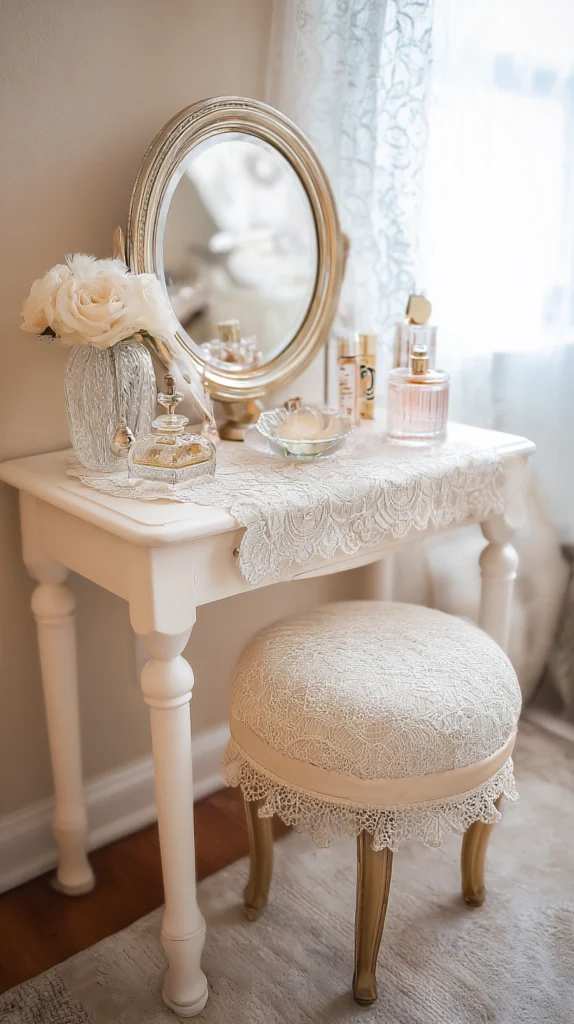
A vanity styled with a lace runner, a scattering of doilies beneath perfume bottles and jewelry dishes, and perhaps a lace-trimmed stool cushion creates a dedicated, romantic dressing corner within a bedroom. Standard vanity surfaces run 36-48 inches wide, providing ample room for this kind of layered styling.
Budget: $60-150 for a full vanity styling update including a runner, a few doilies, and a cushion cover, building gradually from secondhand and thrifted pieces where possible. This area works well as a concentrated styling moment, allowing the rest of the bedroom to stay comparatively simpler while this one corner carries more of the aesthetic’s textural detail.
Positioning a small collection of perfume bottles, jewelry dishes, and a hand mirror atop the lace runner creates a cohesive vignette that feels both functional and decorative. A cushioned vanity stool, reupholstered or covered in a lace-trimmed fabric, ties the seating into the same aesthetic as the surface styling above it.
This is one of the more contained, achievable projects on this list, since it focuses styling effort on a single defined area rather than requiring changes throughout the whole room.
9. Layer Lace Over a Mirror Frame or Headboard
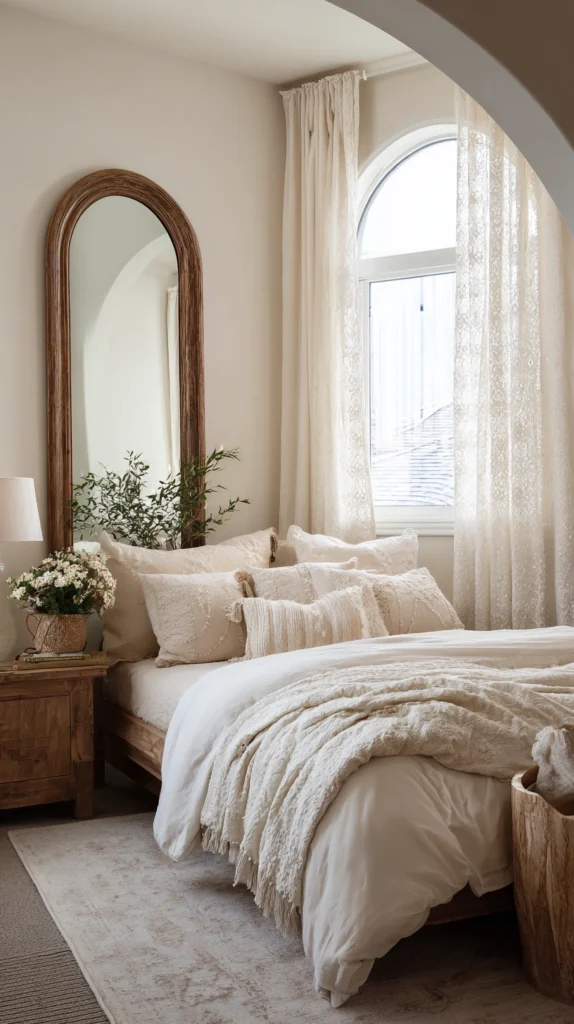
Draping a length of lace fabric loosely around a mirror frame, or attaching lace trim along the edge of an upholstered headboard, adds a soft, romantic detail to two of a bedroom’s most visually prominent fixtures. Standard mirror frames and headboards vary widely in size, so lace yardage needed depends on the specific piece being decorated.
Budget: $15-40 for a few yards of quality lace trim or fabric, plus basic supplies like fabric glue or a needle and thread if attaching the lace permanently rather than simply draping it loosely. This is one of the more DIY-friendly projects on this list, requiring only basic sewing or crafting skills.
Draping lace loosely around a mirror frame, rather than attaching it flush and taut, creates a softer, more natural-looking effect that echoes how vintage lace pieces are often found casually draped over furniture in older homes. Attaching a lace trim along just the top edge of a headboard, rather than the entire perimeter, adds a subtle accent without requiring extensive fabric or attachment work.
This technique works well as a lower-cost alternative to purchasing a fully lace-upholstered headboard, achieving a similar visual effect with significantly less material and cost.
10. Add a Lace Canopy Over the Bed
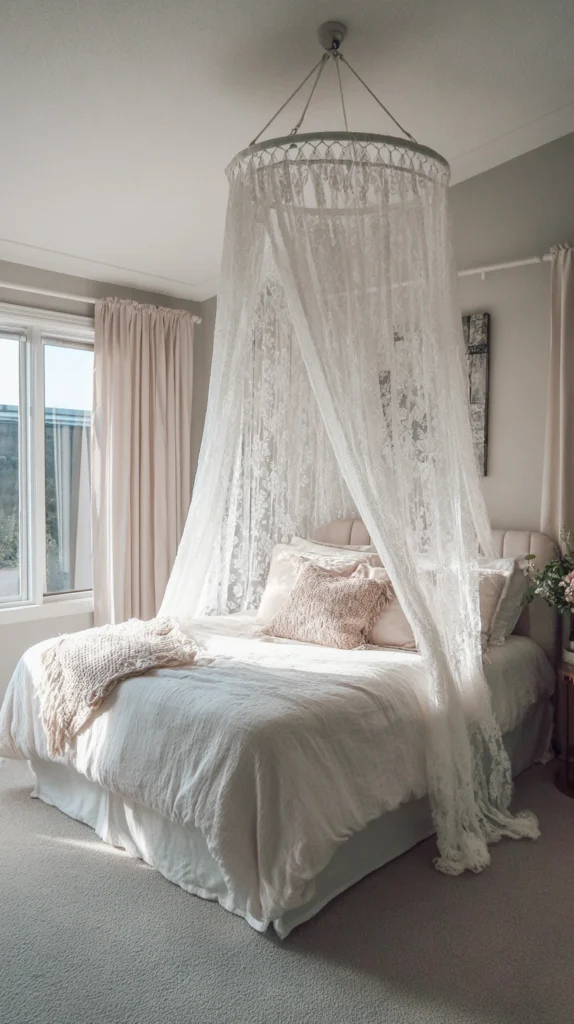
A sheer lace canopy, draped from a ceiling-mounted ring or a simple frame above the bed, creates a dramatic, romantic focal point reminiscent of a Victorian-era bedroom. Standard canopy fabric requires roughly 6-10 yards depending on the bed size and desired fullness of the drape.
Budget: $60-150 for quality lace or sheer fabric plus a ceiling-mounted canopy ring or simple frame hardware. This is one of the more dramatic, higher-impact additions on this list, transforming the overall feel of the bed and the room around it significantly.
Mounting a simple metal ring to the ceiling directly above the center of the bed, then draping the lace fabric to fall naturally on either side, is one of the more straightforward installation methods compared to a full four-poster frame structure. Choosing a lighter-weight, more sheer lace fabric allows natural light to still filter through during the day, keeping the room from feeling overly dark or enclosed.
This is one of the bigger commitments on this list both visually and in terms of installation, so it’s worth considering after testing smaller lace elements elsewhere in the room first to confirm the aesthetic genuinely suits your taste.
11. Use Lace as a Decorative Table Centerpiece Layer
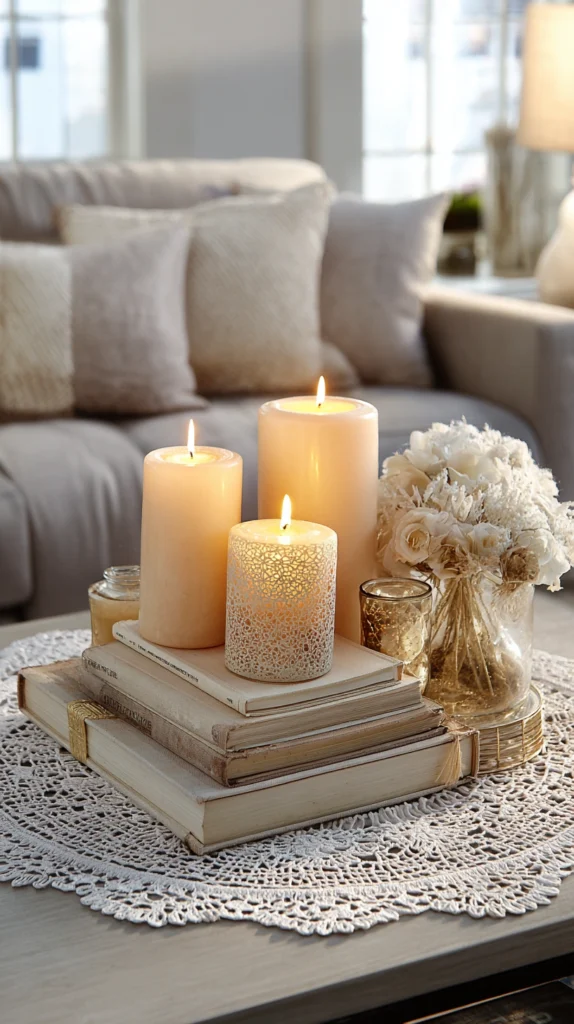
A round or square piece of lace fabric, placed beneath a centerpiece of candles, flowers, or a small collection of vintage objects, adds texture to a coffee table or side table display. Standard centerpiece lace pieces run 12-24 inches, sized to sit beneath the display without extending too far past its edges.
Budget: $10-25 per centerpiece lace piece, one of the more affordable individual elements on this list. This works particularly well layered beneath a candle arrangement, since the flickering light interacts nicely with the lace’s openwork pattern, casting soft shadows across the surrounding surface.
Choosing a lace piece slightly smaller than the table surface itself, rather than one that drapes over the edges, keeps the centerpiece contained and prevents the lace from getting caught or disturbed during regular use of the table. This is a quick, low-cost way to add a lace accent to a room without needing to commit to bedding, curtains, or larger furniture pieces.
Rotating this centerpiece styling seasonally, pairing the lace with different flowers or candle colors throughout the year, keeps the display feeling fresh without requiring new lace pieces each time.
12. Add Lace Trim to Curtains or Roman Shades
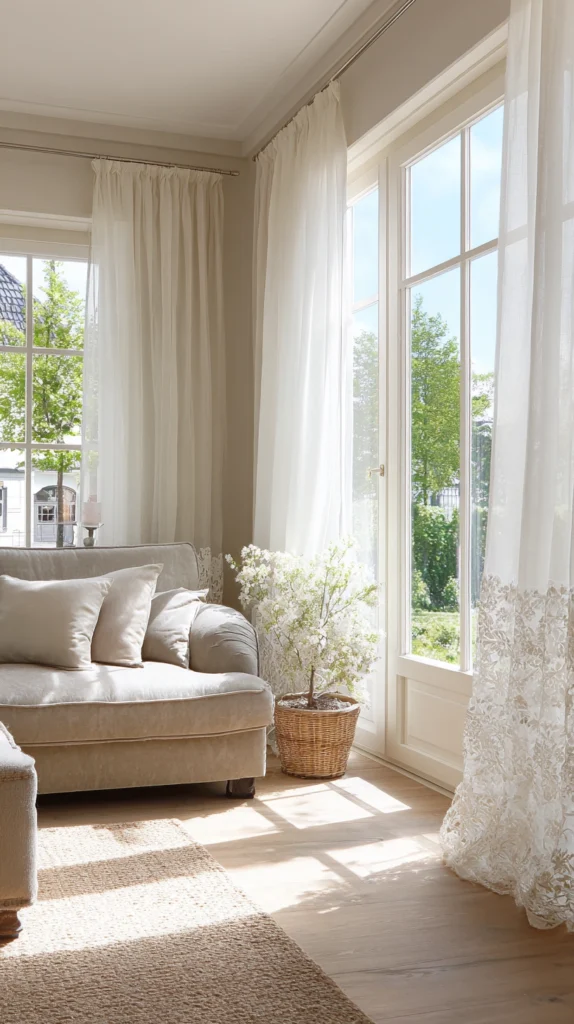
Rather than a full lace curtain panel, adding a simple lace trim along the bottom edge of a solid linen or cotton curtain brings a subtle textural detail without the full sheer, filtered-light effect of an all-lace panel. Standard lace trim runs $3-8 per yard, with most standard curtain panels needing 2-4 yards depending on width.
Budget: $10-30 in lace trim per curtain panel, plus basic sewing supplies or fabric glue if attaching the trim yourself rather than having it professionally added. This is one of the more subtle, budget-friendly ways to introduce lace texture into a room already using solid-colored window treatments.
This detail is particularly effective on roman shades, where the trim becomes visible along the folded edge each time the shade is raised, adding a small but consistently noticeable romantic touch. Choosing an ivory or cream lace trim that closely matches or gently contrasts with the curtain’s base fabric keeps the overall look feeling cohesive rather than mismatched.
This is a good option for anyone who likes the idea of lace but wants a more restrained, subtle version than a full sheer lace panel throughout the whole window.
13. Build a Small Curated Collection of Antique Lace Pieces
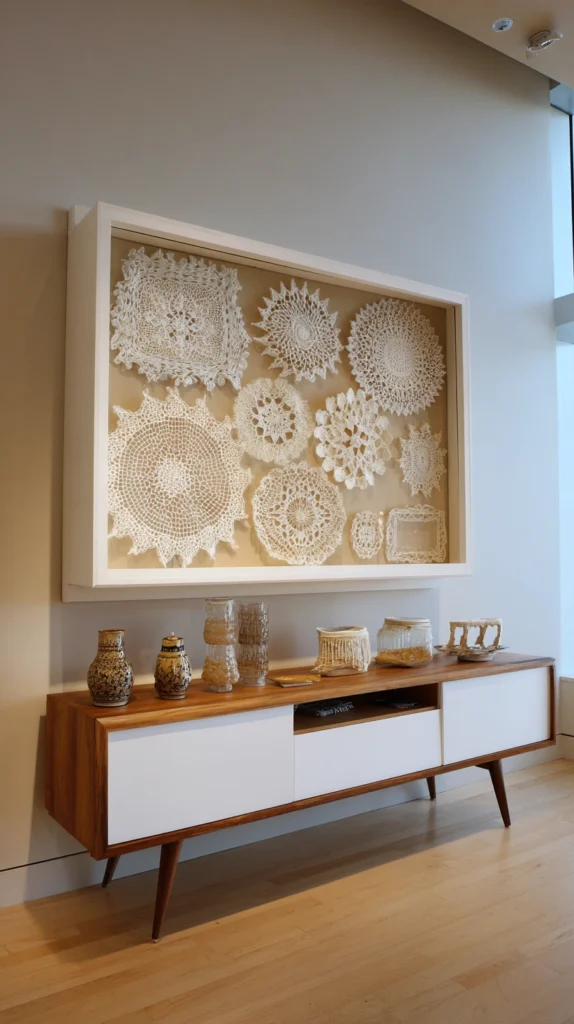
Rather than treating lace as a single decorating choice, building an actual small collection of antique lace pieces — collars, handkerchiefs, small doilies, trim scraps — displayed together in a shadow box or small dish, celebrates the material itself as a meaningful, collected object. Standard antique lace pieces vary widely in size, from small 2-3 inch trim scraps to larger collar or handkerchief pieces around 6-10 inches.
Budget: $5-25 per piece if sourcing from antique shops, estate sales, or specialty textile dealers, building the collection gradually over time in the same way any other collected hobby might develop. Displaying the pieces in a shallow shadow box, arranged with some negative space between each piece, allows the intricate handwork of each item to be genuinely appreciated rather than overwhelming the eye.
This approach treats lace not just as a decorating material but as a genuine object of interest and history, which adds a layer of personal meaning beyond the purely visual impact found in the other ideas on this list. Researching the specific type or origin of lace pieces as you collect them (Chantilly, Battenberg, Irish crochet, and others each have distinct patterns and histories) can become a meaningful part of the collecting process itself.
This is one of the more thoughtful, slower-building projects on this list, appealing especially to anyone who enjoys the research and hunting involved in building a genuine collection over time.
Quick Start Shopping List
This weekend, under $150:
- A lace table runner: $30
- A handful of secondhand doilies: $30
- A lace-trimmed pillow cover or two: $50
- A small vintage lace piece for framing: $20
Budget-Friendly Version
Lowest-cost ways to start:
- Secondhand doilies from thrift stores and estate sales
- DIY lace trim added to an existing plain lampshade or curtain
- A single lace table runner rather than a full bedspread
- Vintage lace scraps collected gradually rather than bought as a set
Success Indicators
- Lace reads as romantic and collected, not overly fussy or dated
- Solid, calm surfaces balance the textured lace elements
- At least one piece has genuine age or personal history
- Guests notice the handmade quality without the room feeling cluttered
- The collection continues to grow gradually rather than being purchased all at once
Remember
Pair lace and doily elements with simple, solid surfaces rather than covering every inch of a room in texture, choose ivory or cream tones over stark white for a warmer, more cohesive look, mix vintage and secondhand pieces with a few newer items rather than buying an entirely matched set, treat lace as an accent within the room rather than the only material present, and build the collection gradually over time, since a slowly gathered assortment of pieces reads as far more genuine than one assembled in a single shopping trip.