14 Fall Outdoor Lighting Ideas to Extend Your Evenings
Most outdoor lighting gets installed once, for safety more than ambiance — a motion light over the garage, a single fixture by the front door, maybe a string of lights left over from a summer party. It does the minimum job of letting someone find their keys in the dark.
That minimum stops being enough once fall arrives. When the sun sets at six instead of nine, the backyard, patio, and porch don’t get less use because of the cold alone — they get less use because the evening that used to happen in daylight now happens in the dark, and most outdoor spaces simply weren’t lit for it.
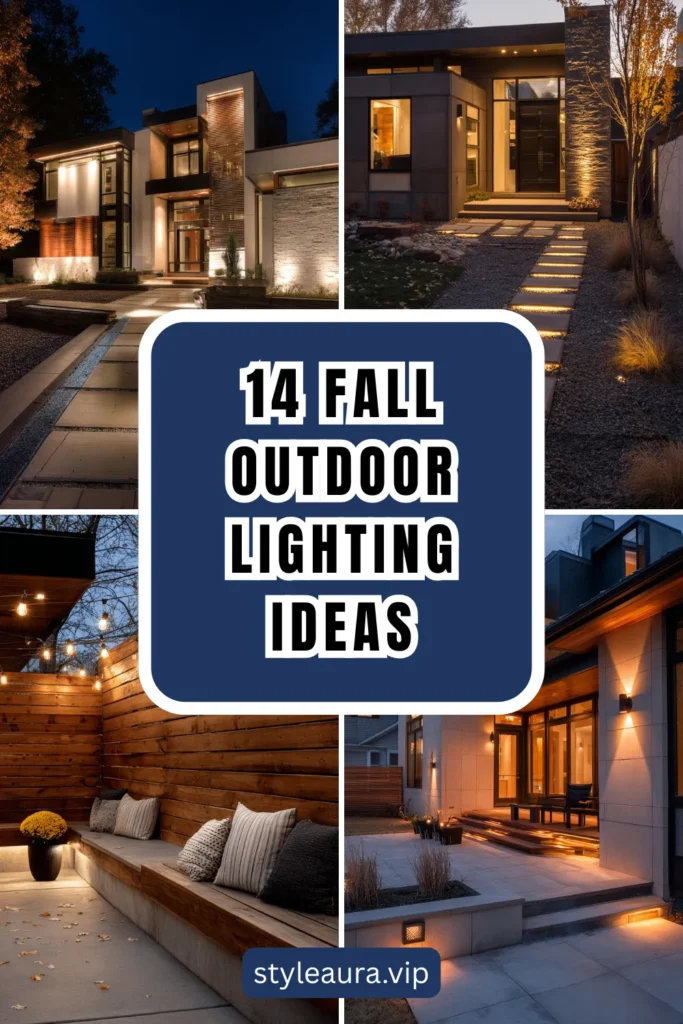
A yard that was usable until nine o’clock in July can feel finished for the day by six in October, unless the lighting was actually planned to carry it further.
Fall outdoor lighting isn’t about adding more fixtures. It’s about layering light deliberately across the whole property — overhead, at eye level, and underfoot — so that the hours after sunset feel like an extension of the evening rather than the end of it. Get that layering right, and the outdoor spaces that used to go dark by dinner stay genuinely usable well past it.
Here are 14 ideas for lighting a yard specifically to extend fall evenings, not just to find the door in the dark.
Why Fall Outdoor Lighting Plays by Different Rules Than Summer
The rules are not the same for every season of outdoor lighting:
Summer Outdoor Lighting Advantages:
- Long daylight hours mean lighting only has to cover a short stretch after sunset
- Mild evening temperatures mean people are already outside before any lights are needed
- Lighting functions mostly as decoration, since the evening itself doesn’t depend on it
The summer lighting comparison: decoration for a season that doesn’t need much help
Fall Outdoor Lighting Advantages and Realities:
- Lighting becomes the deciding factor in whether an outdoor space gets used at all after an early sunset
- Shorter days mean more of the evening’s actual activity — dinner, conversation, a fire — happens entirely under artificial light
- Outdoor lighting has to do the full job a porch or patio light did only partially in summer, extending real, comfortable use rather than just marking an exit
The key insight:
- Summer outdoor lighting rewards a few decorative touches
- Fall outdoor lighting rewards a complete, layered system that can carry an entire evening on its own
- These are different lighting problems, not the same string lights simply turned on earlier
The Layering and Power Reality
The most important principle in fall outdoor lighting:
The three-layer system:
- Ambient light (string lights, a pergola fixture, overhead glow) sets the space’s overall mood and baseline visibility
- Task light (path lights, stair lights, a spotlight near a workspace) covers the practical job of seeing where to step or what to do
- Accent light (uplighting on a tree, a lantern, a halo around a window) adds depth and a sense of occasion without doing any of the heavy lifting
- A yard lit by only one of these layers always feels unfinished, regardless of how many fixtures are involved
The “power source before fixture” calculation:
- Hardwired low-voltage lighting is the most reliable and most consistent option, but requires the most upfront installation
- Solar lighting needs real, unobstructed daily sun to recharge, which becomes less reliable as fall days shorten and the sun’s angle changes
- Battery-powered fixtures are the easiest to install and reposition, but require the most ongoing maintenance to keep charged or replenished
- Decide on a power source for each zone before choosing a specific fixture, since the wrong pairing causes more frustration than any style choice would
Most outdoor lighting systems get built in layers, not all at once:
- The functional, safety-driven lighting — paths, stairs, entries — comes first, since it has the clearest immediate payoff
- The ambient layer — string lights, a pergola fixture, sconces — comes next, once the basics are reliably working
- The smallest accent touches — lanterns, candles, uplighting on a single feature — come last, refining a system that already functions on its own
1. The Pergola or Patio String Light Canopy (The Centerpiece of Most Outdoor Lighting Plans)
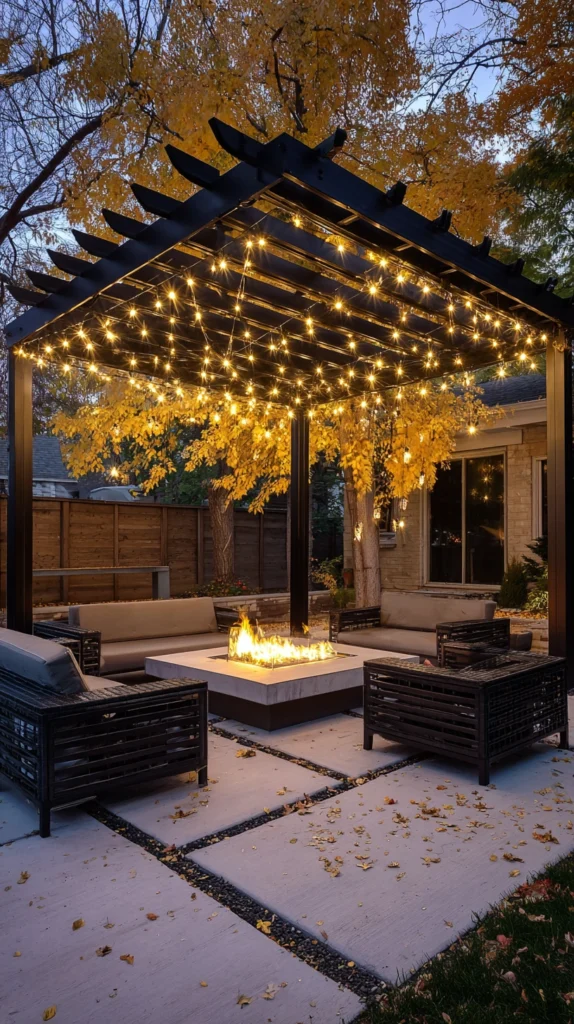
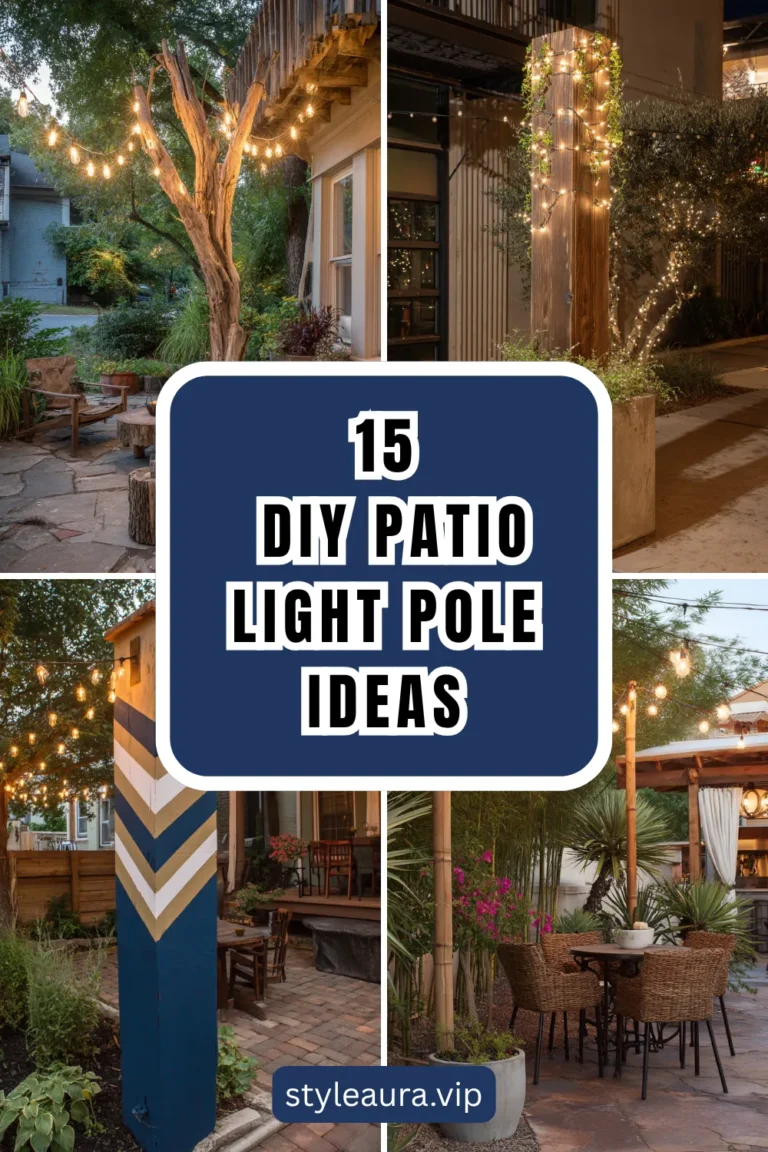
Warm white string lights, strung overhead across a pergola, patio cover, or between fixed points like trees or posts — the single addition most responsible for turning an open outdoor area into a defined, usable evening space.
Why overhead string lights anchor nearly every other idea on this list
- The room-defining function: light strung overhead marks the edges of an outdoor “room” the way a ceiling does indoors, giving the space below it a clear sense of boundary
- The early-darkness case fall creates specifically: as daylight hours shorten, this overhead layer becomes the primary light source for a larger share of the evening than it would in summer
- The flexible installation it allows: string lights can run between a pergola’s beams, across a patio cover, or simply between two trees, adapting to whatever structure already exists
The options
- Warm white LED string lights, the most versatile option, closest in tone to firelight
- Edison-style bulb string lights, heavier and more decorative, well suited to a fixed pergola or patio structure
- A zigzag or crisscross pattern, for a more open patio without a single overhead structure to follow
- Dimmable string lights, paired with a smart plug or in-line dimmer for adjustable brightness through the evening
The practical execution
- String from at least three points where possible, rather than a single straight line, for a fuller overhead canopy effect
- Hang high enough to clear anyone standing, generally 7 feet or more, especially over a walking or seating area
- Use outdoor-rated, weatherproof lights and connections throughout, since this layer stays up through changing fall weather
Cost breakdown
- String light set, outdoor-rated: $20–50
- Mounting hooks or hardware, if needed: $10–30
- Total: $20–80 per run, with cost scaling by how much overhead space is covered
The patio canopy lit for the first cold evening of the season: the layer every other idea on this list ends up working alongside.
2. The Pathway and Landscape Lighting (Function That Doubles as Atmosphere)
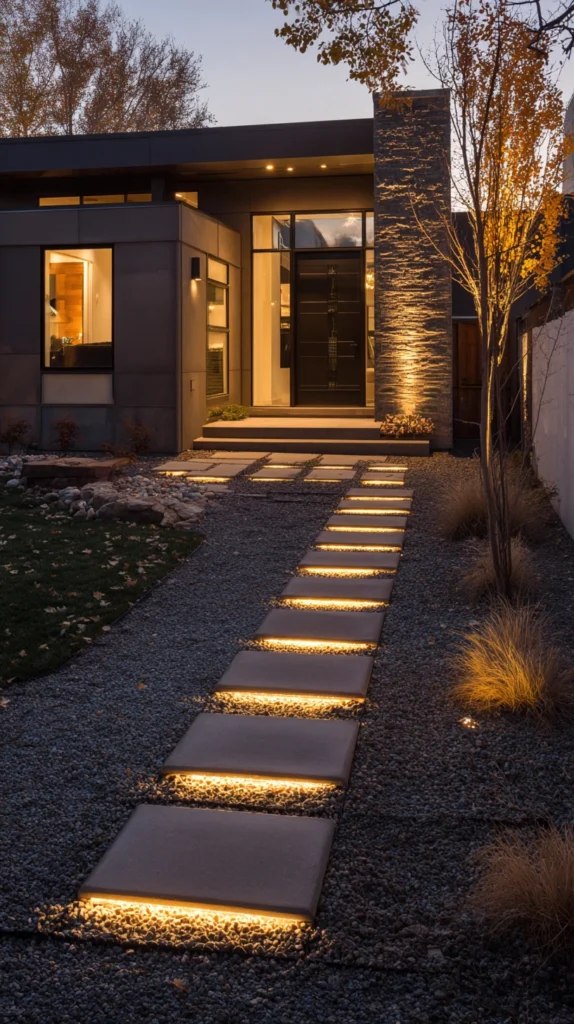
Low path lights, staked along walkways and garden bed edges, marking the route between the driveway, the door, and any outdoor gathering spaces — the lighting layer that solves a genuine safety issue while extending the evening’s mood beyond just the seating area.
Why the path deserves its own dedicated lighting plan
- The safety case fall makes more urgent: a dark, leaf-covered path becomes a real tripping hazard once the sun sets early, in a way it simply wasn’t during summer’s longer daylight
- The atmosphere it extends past the patio itself: a lit path makes the walk to and from any gathering spot feel like part of the evening, not just the approach to it
- The flexible, low-commitment installation most options offer: unlike a hardwired overhead system, path lights can often be staked, repositioned, or expanded without any electrical work
The options
- Low-voltage hardwired path lights, connected to a transformer for the most consistent, reliable performance
- Solar-powered stake lights, requiring no wiring at all, though less reliable as fall daylight shortens
- Lanterns set along the path, battery-powered or with flameless candles, easy to move or remove seasonally
- Recessed or in-ground lights, for a more minimal, nearly invisible-by-day path lighting option
The practical execution
- Space lights close enough together that no stretch of the path is left fully dark, while still leaving some shadow between fixtures for a more natural look
- Keep path lights low and angled downward, illuminating the ground rather than glaring into anyone’s eyes
- Clear fallen leaves from both the path and any solar panels regularly, since accumulated leaves both hide the path’s edge and reduce a solar light’s charging ability
Cost breakdown
- Solar path lights, a set of 6–8: $30–70
- Low-voltage wired landscape lighting kit: $100–300
- Total: $30–300, depending on the system chosen
3. The Uplighting for Trees and Architecture (Drama From the Ground Up)
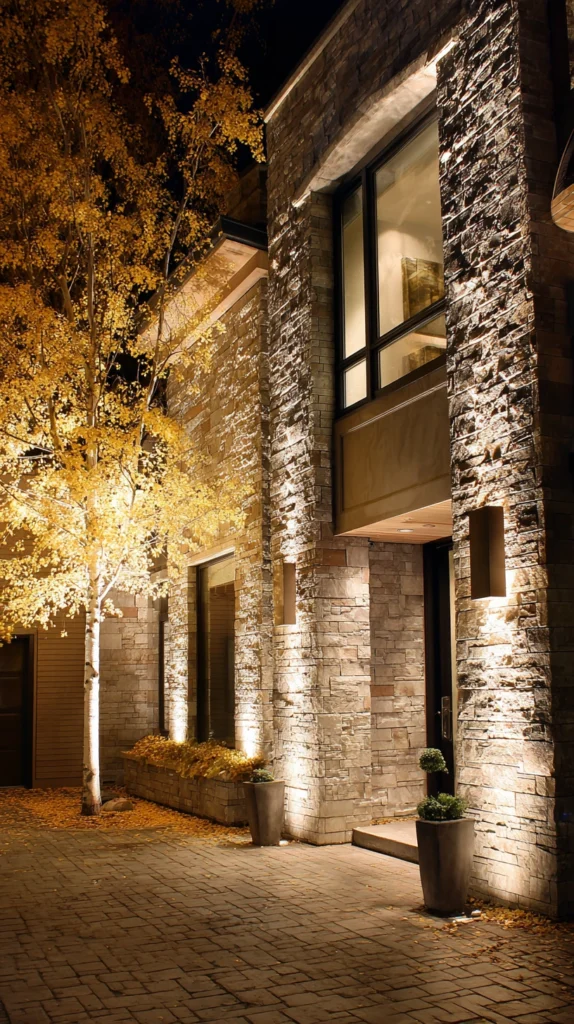
Small spotlights or well lights, installed at the base of a tree, a column, or another architectural feature and aimed upward — the technique that turns a yard’s existing structure and landscaping into its own evening lighting display.
Why uplighting creates an effect no other technique replicates
- The dramatic shadow and silhouette it produces: light aimed upward through tree branches or along architectural lines creates shifting shadows and texture that downward-facing lighting can’t achieve
- The use of what’s already there: this technique doesn’t require adding any new structure or object to the yard, simply lighting what already exists in a new way
- The focal-point function it provides: a single well-lit tree or architectural feature gives the eye somewhere specific to land in an otherwise dark yard, anchoring the whole space visually
The options
- In-ground well lights, recessed flush with the ground for a nearly invisible daytime appearance
- Spike-mounted spotlights, easier to install and reposition than a recessed fixture
- Color-temperature-adjustable LED uplights, allowing the same fixture to shift between a warmer or cooler tone depending on the season or occasion
- A cluster of two or three uplights on a single large tree, for more dramatic, layered shadow and texture than a single fixture alone provides
The practical execution
- Position uplights close enough to the trunk or base of the feature being lit to avoid excessive glare visible from a distance
- Choose a beam angle appropriate to the height of the feature, narrower for a tall, narrow tree and wider for a broad architectural element
- Aim for two or three uplit features maximum in a typical residential yard, rather than lighting everything, to keep the effect feeling intentional rather than overdone
Cost breakdown
- Spike-mounted LED spotlight, each: $20–45
- In-ground well light, each: $35–80
- A small uplighting setup (2–3 fixtures): $60–200
- Total: $60–200
4. The Deck and Stair Lighting (Safety Built Into the Structure Itself)
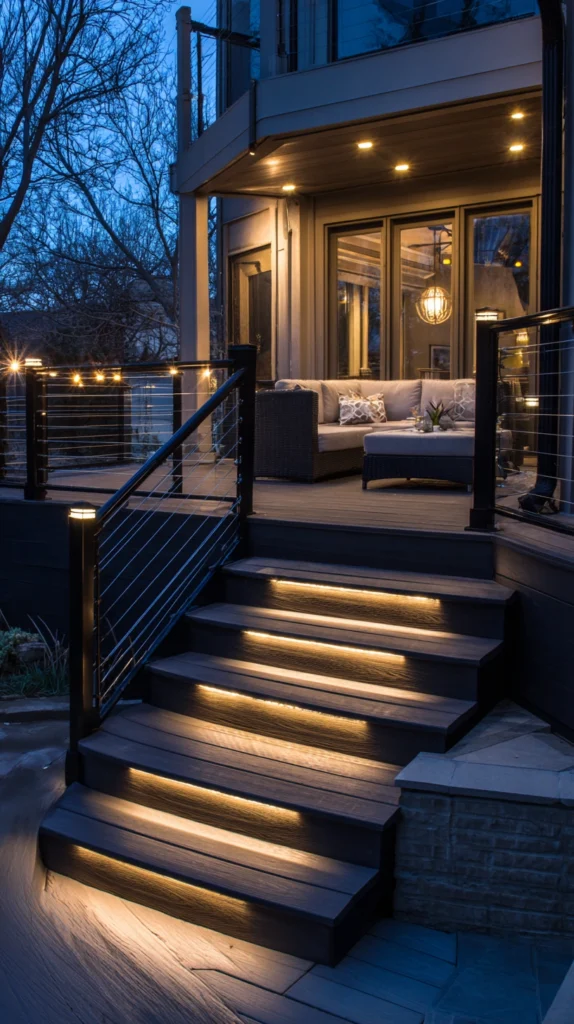
Small LED lights integrated directly into deck posts, stair risers, or railing caps — the lighting layer that addresses one of the most common fall and winter outdoor safety hazards: a dark, uneven set of steps.
Why stairs and decks need lighting built into the structure, not just nearby
- The elevation-change hazard it directly addresses: stairs and deck edges present a specific tripping and falling risk that flat pathway lighting doesn’t fully cover, especially once leaves or early frost make surfaces less predictable
- The integrated, low-profile look it achieves: unlike a freestanding fixture, lights built into the structure itself disappear into the architecture during the day and only become visible once lit
- The year-round value beyond just fall: once installed, this lighting continues to serve the same safety function through winter ice and snow, extending its usefulness well past the season that prompted the upgrade
The options
- Post cap lights, fitted directly onto existing deck or railing posts
- Recessed riser lights, built into the vertical face of each stair step
- Under-rail LED strip lighting, running continuously along the underside of a railing
- Deck post lights with a solar option, for stairs or decks too far from existing wiring to run a hardwired connection easily
The practical execution
- Light every change in elevation consistently, rather than only the first or last step, since an inconsistently lit staircase can be more confusing than one with no lighting at all
- Choose a low, downward-focused light output specifically for riser and post cap fixtures, avoiding any glare that could affect someone’s ability to judge the step’s actual edge
- Test the full staircase or deck lighting at night before considering the installation finished, walking the path the way an actual guest would after dark
Cost breakdown
- Post cap light, each: $15–35
- Recessed riser light, each: $20–45
- A full staircase or deck lighting set: $100–350
- Total: $100–350
5. The Outdoor Wall Sconces (Architectural Light Without Using Any Floor or Surface Space)
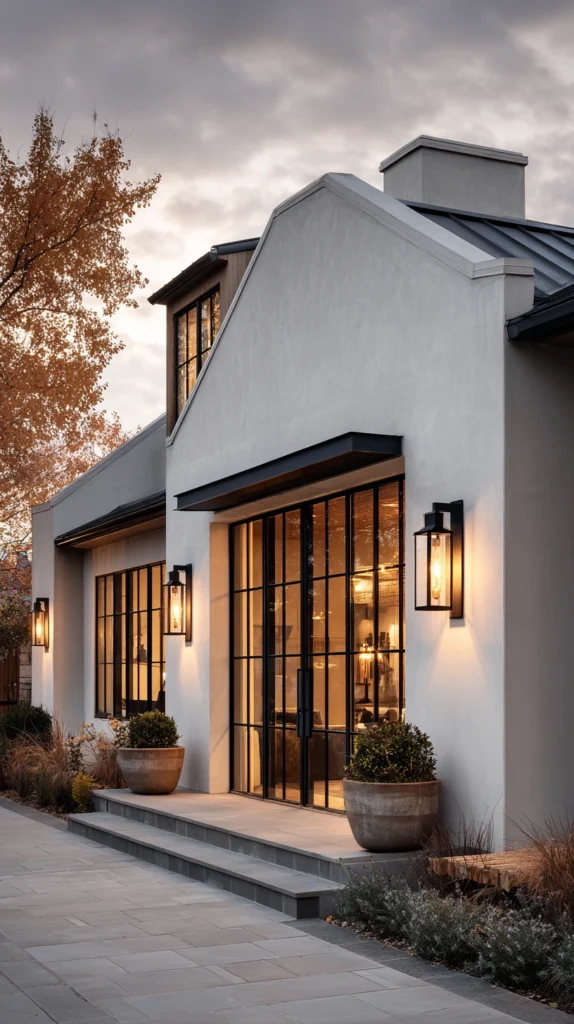
A pair or series of wall-mounted sconces, installed along an exterior wall, beside a door, or flanking a window — the fixture that adds genuine architectural lighting without occupying a single inch of patio, deck, or garden space.
Why sconces solve a problem floor or string lighting can’t
- The space-efficient layer they provide: sconces add a full lighting layer using only wall space, valuable in a yard where every other surface is already accounted for by furniture or landscaping
- The architectural framing they create: a matched pair of sconces flanking a door or window creates symmetry and a sense of considered design that a single overhead fixture can’t replicate
- The reliable, low-maintenance power source most sconces offer: as hardwired fixtures, sconces avoid the battery and solar-charging concerns that affect many of the more portable lighting options elsewhere on this list
The options
- Glass lantern-style sconces, a classic exterior choice flanking a front or back door
- Modern, minimal sconces, for a more contemporary exterior lighting look
- Sconces with a built-in photocell, switching on automatically at dusk without requiring a manual switch
- Dimmable sconces, paired with an indoor dimmer switch for adjustable evening brightness
The practical execution
- Mount at a consistent height across any matched pair, typically 60–66 inches from the ground, for visual balance
- Choose a fixture rated specifically for fully exposed outdoor use, not just a covered porch, if the sconce won’t be protected from direct rain or snow
- Pair with a warm-toned bulb (2700–3000K) for the same cozy effect recommended throughout the rest of this list
Cost breakdown
- Budget sconce pair: $40–90
- Mid-range sconce pair: $100–250
- Professional installation, if new wiring is needed: $150–350
- Total: $40–600
6. The Fence and Railing String Lights (Low, Linear Light Along the Yard’s Edges)
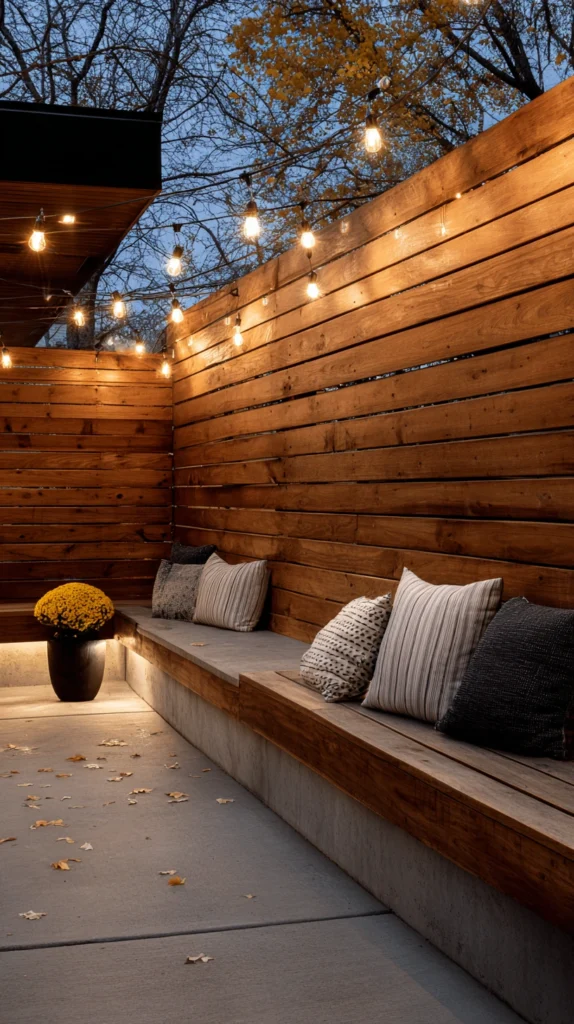
String lights run horizontally along a fence line or railing, rather than overhead — the lighting approach that defines the yard’s boundaries at eye level instead of from above.
Why a horizontal line of light works differently than an overhead canopy
- The boundary-marking function at a different height: where overhead string lights define a space from above, fence and railing lights outline its edges, creating a complementary rather than redundant lighting layer
- The flexibility for yards without overhead structure: not every patio or yard has a pergola, tree canopy, or other structure to string overhead lights from, and a fence or railing offers a reliable mounting option in those cases
- The lower installation height it requires: running lights along an existing fence or railing is often simpler and safer to install without a ladder than a true overhead canopy
The options
- Warm white string lights, run in a straight line along the top of a fence or railing
- A draped, slightly loose installation, alternating between higher and lower points along the run for a softer, less rigid look
- Lights woven through fence slats or railing balusters, for a more integrated, textural look than lights simply laid along the top edge
- Net or curtain-style lights, draped down the face of a fence for a fuller, denser glow
The practical execution
- Secure lights at regular intervals along the fence or railing’s length, using clips or zip ties rather than relying on the lights’ own weight to hold their position
- Match the color temperature to any overhead string lights already in use, keeping the whole yard’s lighting consistent
- Choose a weatherproof rating appropriate to how exposed the fence or railing is, since this installation often sees more direct weather exposure than an overhead canopy under a roof or pergola
Cost breakdown
- String light set, outdoor-rated: $20–50
- Mounting clips or hardware: $10–20
- Total: $30–70 per run
7. The Fire Feature Glow (Letting an Existing Flame Do Double Duty as Lighting)
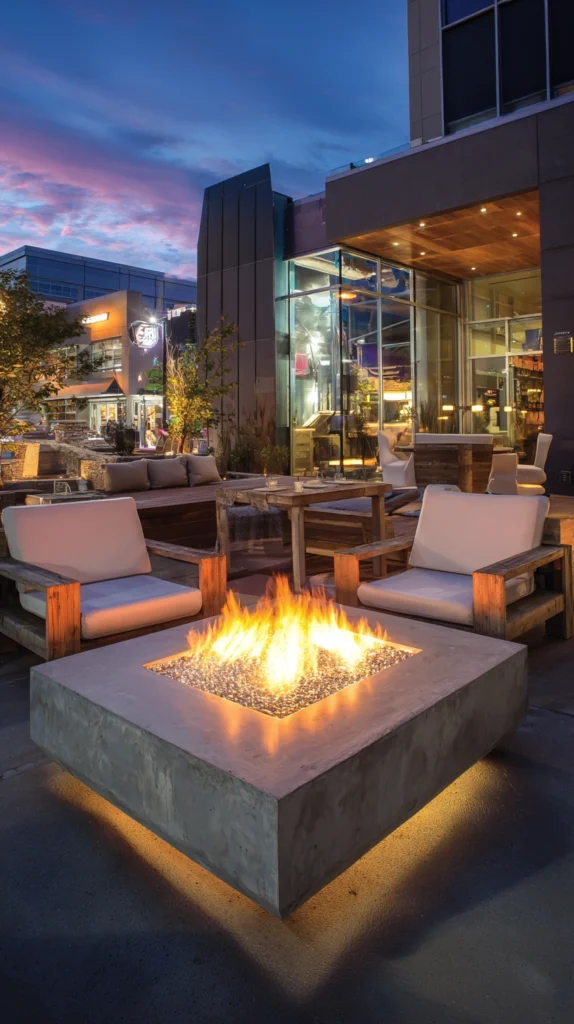
A fire pit, chiminea, or outdoor fireplace, positioned and used as a genuine lighting source for the seating area around it, rather than treated purely as a heat feature separate from the rest of the lighting plan.
Why a fire feature deserves a place on a lighting list, not just a heating one
- The dual-function value it offers over a single-purpose fixture: a fire pit provides both warmth and light simultaneously, making it one of the most efficient single additions on this entire list relative to what it accomplishes
- The unmatched quality of light it produces: no string light or sconce replicates the actual flicker, warmth, and movement of real firelight, and a fire feature brings that exact quality directly into the evening’s main gathering spot
- The natural draw it creates toward the center of the lighting plan: people gather around a lit fire instinctively, which means this single feature does as much to organize the evening’s actual activity as any structural lighting decision
The options
- A wood-burning fire pit, providing the most authentic light and warmth combination
- A propane or gas fire pit, for instant, adjustable flame without the smoke or ash of a wood fire
- A chiminea, offering a more contained, directional glow than an open pit
- A fire table, combining the flame feature with a usable flat surface around its edge**
The practical execution
- Position the fire feature as the evening’s central gathering point, with the rest of the lighting plan — string lights, path lights, sconces — working to support rather than compete with it
- Check local ordinances and any seasonal burn restrictions before relying on a wood-burning option as a primary lighting source
- Pair with the lowest-intensity surrounding lighting, like dimmed string lights or distant path lights, so the fire itself remains the brightest, most central light source in the immediate seating area
Cost breakdown
- Portable steel fire pit: $80–250
- Propane fire pit: $200–600
- Total: $80–600+, depending on the type and whether one is already in place
8. The Lantern and Candle Layer (Portable Warmth That Goes Wherever the Evening Goes)
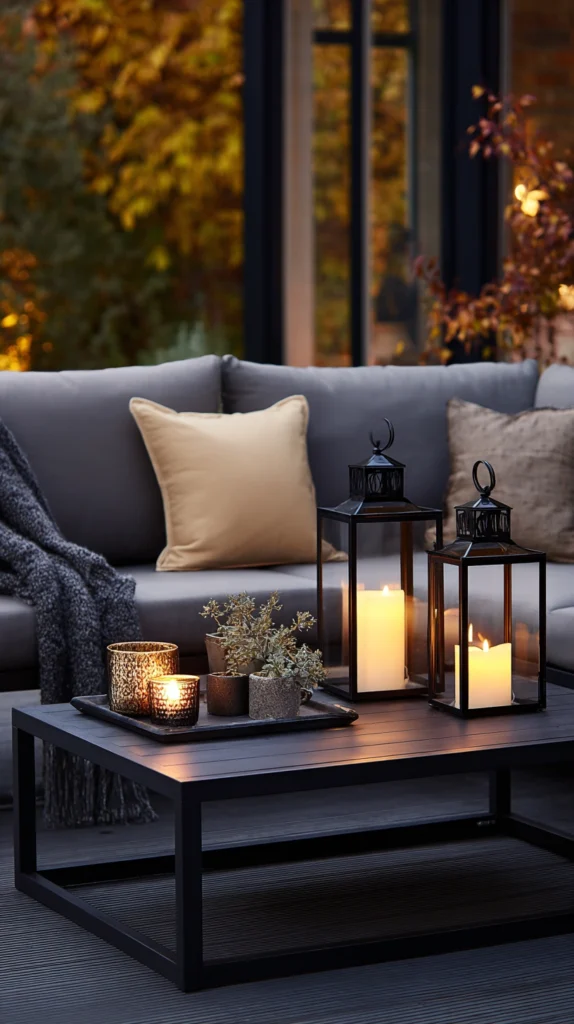
Lanterns and candles, placed on tables, along steps, or grouped on the ground near seating — the only lighting layer on this entire list that can be repositioned in a moment, rather than fixed to a single spot in the yard.
Why portable light still matters in a yard full of fixed installations
- The mobility advantage no fixed fixture offers: every other light on this list is mounted or staked somewhere; lanterns and candles move to wherever the evening’s actual activity is happening
- The backup function they serve: a charged lantern or a candle works even if a hardwired or solar system underperforms on a particular night, providing a reliable layer that doesn’t depend on the rest of the system functioning
- The flicker and warmth quality they share with the fire feature: like real firelight, candles and many battery lanterns provide a quality of light that fixed LED installations don’t fully replicate
The options
- Battery or solar-powered lanterns, set on tables or along steps and pathways
- Flameless LED candles, for a safer option near fabric, dry leaves, or unattended outdoor settings
- Real candles in hurricane-style glass holders, protecting the flame from wind while still providing genuine candlelight
- A mix of lantern sizes, larger ones at key gathering points and smaller ones marking a path or table edge
The practical execution
- Use warm-toned, flickering LED options for any candle placed near dry leaves, fabric, or other flammable material common in a fall yard
- Keep a few lanterns charged and ready as a backup layer, in case the primary lighting system has an issue on a given evening
- Position at varying heights — some on a table, some on the ground, some hung from a hook — for the same layered effect recommended throughout this list
Cost breakdown
- Battery-powered lanterns, a set of 2–3: $25–55
- Flameless LED candles: $20–45
- Total: $45–100
9. The Smart, Timer-Controlled Lighting System (Automation for an Earlier, Less Predictable Sunset)
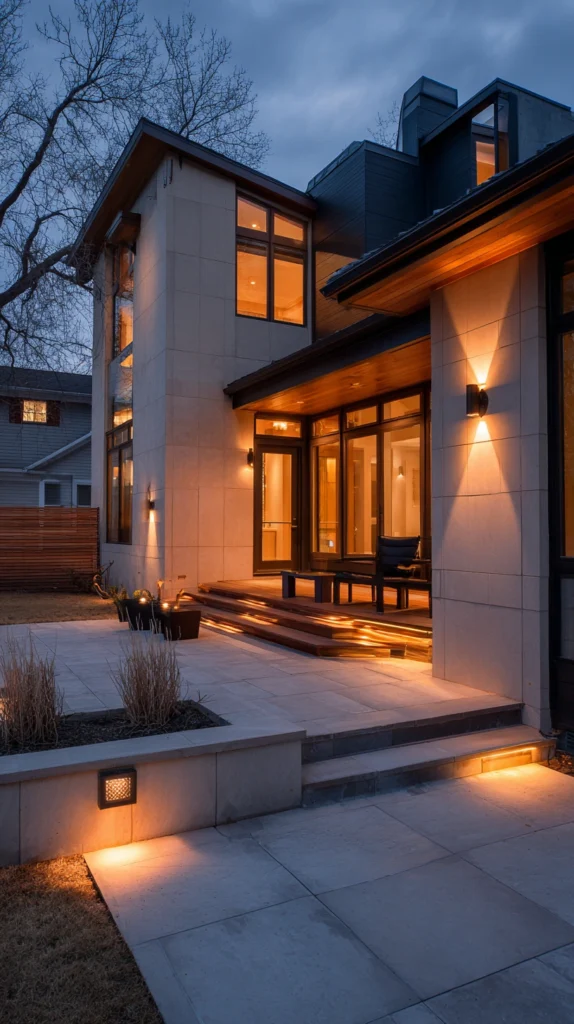
A smart plug, timer, or full smart lighting controller, managing when the yard’s various lighting layers turn on and off — the system that accounts for fall’s shifting, earlier sunset without requiring anyone to remember to flip a switch every evening.
Why automation matters more in fall than in any other season
- The shifting-sunset problem it solves directly: unlike summer, when sunset times stay relatively consistent for weeks, fall’s sunset moves noticeably earlier on a near-daily basis, making a fixed manual schedule quickly out of date
- The consistency it provides across a multi-fixture system: a yard with several different lighting layers — string lights, path lights, sconces — is far easier to manage with a single automated schedule than by manually switching each one
- The energy and battery efficiency it adds: automated systems ensure lights aren’t left running unnecessarily during the day or in the very early evening when they’re not yet needed
The options
- A smart plug, controlling an entire string light or fixture group through an app or voice assistant
- A timer-based outdoor outlet, a simpler, non-smart version of the same automated scheduling
- A full smart lighting hub, managing multiple zones and fixture types from a single control point
- A dusk-to-dawn photocell, the simplest automated option, switching lights on based on actual ambient light levels rather than a fixed clock time
The practical execution
- Choose a photocell-based system for the most accurate response to fall’s shifting sunset time, rather than a fixed-clock timer that needs manual adjustment as days shorten
- Group fixtures by zone — patio, path, sconces — so each area can be scheduled or adjusted independently rather than as a single all-or-nothing system
- Confirm any smart plug or hub used outdoors carries a weatherproof rating appropriate to its actual installation location
Cost breakdown
- Smart outdoor plug: $20–40
- Timer-based outdoor outlet: $15–30
- Full smart lighting hub system: $80–200
- Total: $15–200, depending on the system’s complexity
10. The Specimen Tree or Feature Spotlight (One Dramatic Focal Point)
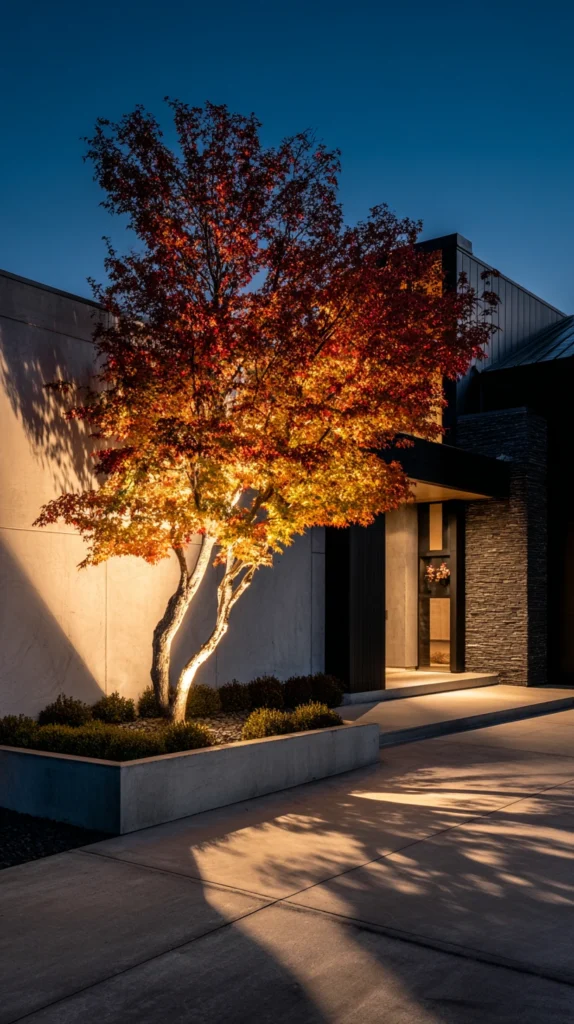
A single, more powerful spotlight, aimed at one specific tree, sculpture, or architectural feature, distinct from the broader uplighting technique in Idea #3 in its singular, more concentrated focus.
Why one strong focal light matters even alongside the rest of a layered system
- The single-point-of-drama function: where the rest of this list builds a broad, even layer of light across the whole yard, one concentrated spotlight gives the eye a single, unmistakable point of visual interest
- The seasonal showcase opportunity it offers: a specimen tree with strong fall color, lit specifically and dramatically, extends the visual impact of that color well into the evening hours when it would otherwise be invisible
- The flexible seasonal repositioning it allows: unlike most of the structural lighting on this list, a single spotlight can be redirected toward a different feature as the seasons or landscaping change
The options
- A directional LED spotlight, mounted on a stake or small pole near the chosen feature
- A spotlight with an adjustable color temperature, allowing the feature’s specific coloring to be matched more precisely
- A spotlight on a timer separate from the rest of the system, allowing it to run for a shorter or different window than the broader ambient lighting
- Two spotlights aimed at the same feature from different angles, reducing harsh single-direction shadow for a more even, dramatic effect
The practical execution
- Choose one feature only as the focal point, resisting the urge to spotlight several different elements at the same intensity, which dilutes the technique’s impact
- Position the fixture far enough from the feature to fully capture its height or shape, rather than too close, which often results in a cone of light that doesn’t reach the top of a taller feature
- Reassess the placement each season, since a tree’s canopy shape and color change considerably between fall and the rest of the year
Cost breakdown
- Directional LED spotlight, single: $30–70
- A two-spotlight setup for more even coverage: $60–140
- Total: $30–140
11. The Solar Stake Lights for Garden Beds (Low-Commitment Light for Planting Areas)
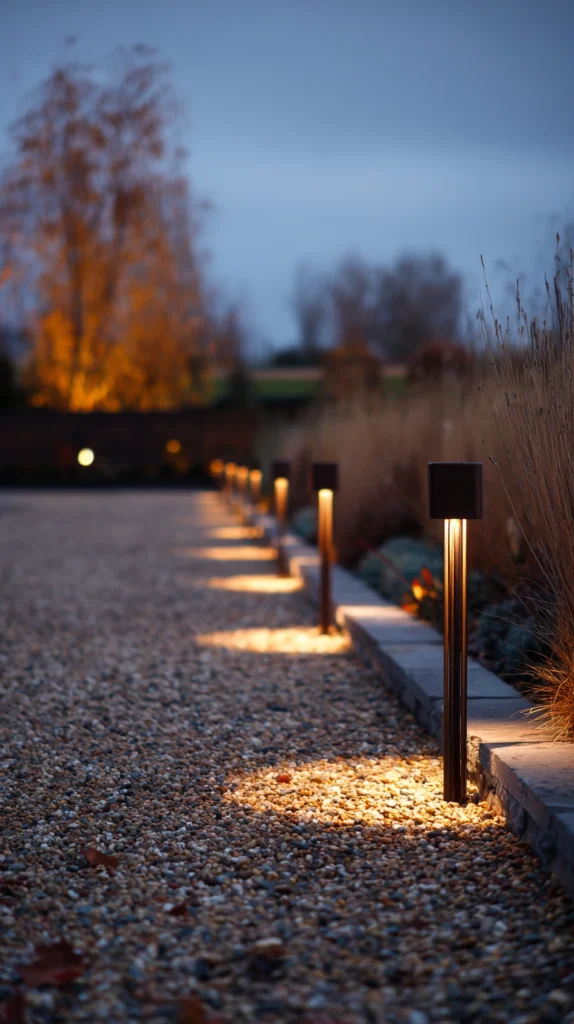
Small solar-powered stake lights, placed throughout garden beds and planting areas rather than just along the main walking path — the lowest-cost, easiest-to-install lighting layer on this entire list.
Why garden beds deserve their own lighting, separate from the path
- The often-overlooked planting areas it brings into the evening’s visual layout: most yards plan lighting around paths and seating, leaving garden beds entirely dark once the sun sets, even when those beds are a significant part of the yard’s daytime appeal
- The lowest barrier to entry of any idea on this list: solar stake lights require no wiring, no professional installation, and minimal cost, making this an easy starting point for anyone new to outdoor lighting
- The seasonal flexibility they offer: stake lights can be moved, added, or removed easily as garden beds themselves change through the seasons, unlike a permanent hardwired installation
The options
- Small solar stake lights, scattered individually throughout a bed for a soft, ambient glow
- Color-changing solar lights, for a more playful, less classic look
- Solar lights with a warm white-only setting, avoiding the harsher cool white mode many budget multi-setting solar lights default to
- A cluster of stake lights around a specific plant or feature, rather than evenly distributed across the whole bed
The practical execution
- Position solar panels for maximum sun exposure, which becomes more challenging as fall’s sun angle lowers and nearby plants or structures cast longer shadows
- Clean panels periodically, since dust and fallen leaves reduce a solar light’s charging efficiency more than is immediately obvious
- Expect reduced runtime on the shortest, cloudiest days of the season, and treat this layer as a supplement to, rather than a replacement for, more reliable hardwired or battery lighting elsewhere in the yard
Cost breakdown
- Solar stake lights, a set of 6–8: $20–45
- Total: $20–45
12. The Covered Porch or Patio Pendant (A Dedicated Fixture for a Defined Outdoor Room)
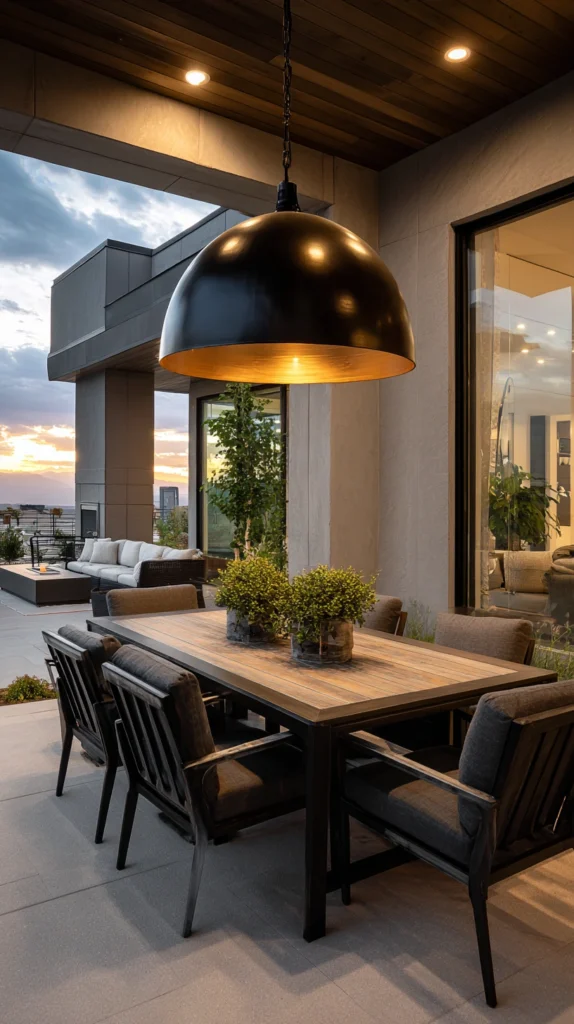
A pendant light or small chandelier, hung from a covered porch or patio ceiling — the fixture that treats a covered outdoor space with the same lighting consideration given to an indoor room.
Why a covered space deserves a real fixture, not just string lights
- The defined-room logic it follows: a covered porch or patio is structurally closer to an indoor room than an open yard, and a proper overhead fixture reinforces that sense of a genuine, finished space
- The focal point it creates over a specific seating or dining area: where string lights provide broad ambient coverage, a pendant draws attention to one specific functional zone, like an outdoor dining table or a primary seating group
- The weather protection a covered structure provides: a covered porch or patio allows for a wider range of fixture types than fully exposed outdoor space, since the structure itself offers protection from direct rain or snow
The options
- A lantern-style pendant, a classic choice for covered porches
- A drum-shade or fabric-shade outdoor pendant, for a softer, more diffused light
- A small outdoor chandelier, for a more substantial covered patio or porch
- A pendant with a built-in dimmer or smart bulb compatibility, for adjustable evening brightness
The practical execution
- Confirm the fixture carries a damp-rated or wet-rated classification appropriate to how much weather exposure the specific covered location actually receives
- Hang at a height that clears anyone standing comfortably, generally at least 7 feet above the floor in any area people walk through
- Pair with a warm-toned, dimmable bulb for the same cozy, adjustable evening quality recommended throughout this list
Cost breakdown
- Budget outdoor pendant: $50–120
- Mid-range outdoor pendant or small chandelier: $150–350
- Professional installation, if needed: $100–250
- Total: $50–600
13. The Window and Door Frame Lighting (A Halo Effect for the House Itself)
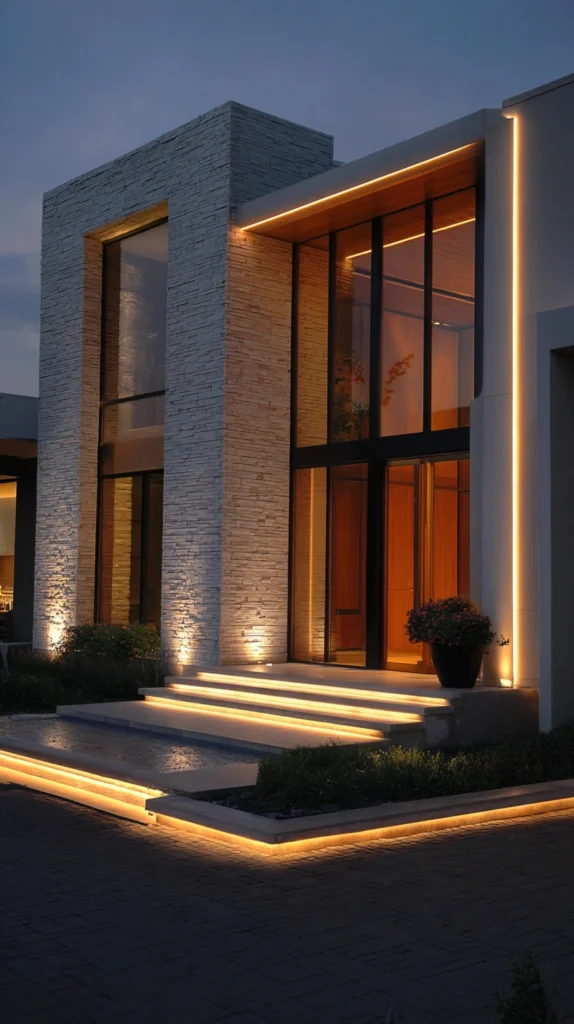
Thin LED strip lighting or small fixtures installed along the trim of windows or doors, creating a subtle glow outlining the house’s own architecture — the technique that extends the lighting plan to the structure itself, not just the yard around it.
Why the house’s own architecture deserves lighting treatment too
- The often-skipped surface it addresses: most outdoor lighting plans focus entirely on the yard, leaving the house’s own exterior architecture completely dark and disconnected from the rest of the lit landscape
- The cohesive, whole-property effect it creates: a house with its window and door trim subtly lit reads as part of the same considered lighting plan as the patio and garden beds, rather than a dark backdrop behind a lit yard
- The seasonal flexibility it offers: this kind of lighting can be installed as a tasteful, understated permanent feature, or used more dramatically and temporarily for the fall and holiday season specifically
The options
- Thin LED strip lighting, run discreetly along window or door trim
- Small clip-mounted fixtures, spaced at intervals along the architectural line being highlighted
- Warm white-only lighting, for the most subtle, architectural version of this technique
- A seasonal, removable version, installed only for fall and the following holiday season and taken down afterward**
The practical execution
- Choose a low-profile fixture or strip that disappears into the trim during the day, so the effect is only visible once lit
- Keep the lighting subtle and warm-toned for a true architectural effect, reserving any bolder or color-changing options for a more overtly decorative, holiday-specific application
- Confirm any product used is rated for the specific exterior surface and weather exposure of the trim it’s being mounted to
Cost breakdown
- LED strip lighting, materials for trim around one or two windows: $20–50
- A full house perimeter treatment: $100–300
- Total: $20–300, depending on scope
14. The Motion-Sensor Security and Entry Lighting (Function That Still Belongs in the Plan)
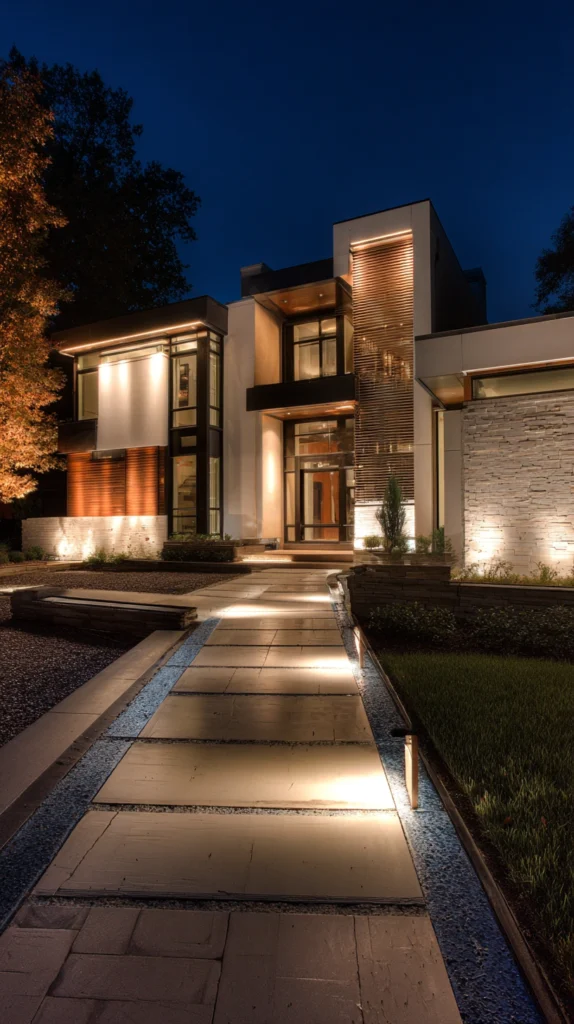
Motion-activated floodlights or entry fixtures, positioned at the driveway, side entrances, and any less-trafficked corners of the property — the lighting layer focused entirely on safety and security rather than ambiance.
Why this purely functional layer still belongs alongside the rest of the list
- The early-darkness security case fall specifically creates: as evenings get darker earlier, the hours when a property sits unlit and more vulnerable simply expand, making security lighting more relevant for more of the day than in summer
- The practical entry-point coverage it provides: not every door or path on a property gets the ambient and accent treatment covered elsewhere on this list, and motion-sensor lighting fills those gaps efficiently
- The energy efficiency it offers over a fixture left on continuously: a motion-activated light uses power only when actually triggered, making it a practical choice for less-trafficked areas that don’t need constant illumination
The options
- A motion-activated floodlight, mounted near a garage, driveway, or side entrance
- A motion-sensor entry fixture, combining a more decorative look with the same functional trigger
- A dual-mode fixture, running on a low, continuous glow with a brighter motion-triggered boost when activity is detected
- A smart motion-sensor light, sending a notification to a connected device when triggered, for an added layer of awareness
The practical execution
- Position to cover the specific entry points and walkways most likely to be used after dark, rather than every corner of the property equally
- Adjust sensitivity and trigger distance carefully, since an oversensitive sensor triggered by every passing animal becomes more of a nuisance than a help
- Pair with, rather than substitute for, the ambient and accent lighting elsewhere on this list, since security lighting alone doesn’t create the cozy, extended-evening effect the rest of this list is built around
Cost breakdown
- Motion-activated floodlight: $25–60
- Smart motion-sensor entry fixture: $50–120
- Total: $25–120 per fixture, with cost scaling by how many entry points are covered
The motion light flicking on as a guest walks up the driveway: the least romantic fixture on this entire list, and the one most directly responsible for making sure the rest of the evening’s lighting actually gets reached safely.
The Fall Outdoor Lighting Roadmap
The work, sequenced:
Phase One (the functional foundation):
- The pathway and landscape lighting (#2)
- The deck and stair lighting (#4)
- The motion-sensor security and entry lighting (#14)
Phase Two (the ambient layer):
- The pergola or patio string light canopy (#1)
- The outdoor wall sconces (#5)
- The fence and railing string lights (#6)
- The covered porch or patio pendant (#12)
Phase Three (the accent and focal layer):
- The uplighting for trees and architecture (#3)
- The specimen tree or feature spotlight (#10)
- The window and door frame lighting (#13)
- The fire feature glow (#7)
Phase Four (the finishing and supporting layers):
- The lantern and candle layer (#8)
- The solar stake lights for garden beds (#11)
- The smart, timer-controlled lighting system (#9)
Getting Started This Weekend
The immediate-impact lighting refresh:
One afternoon, three changes:
- String warm white lights across the main patio or seating area (Idea #1)
- Add solar stake lights to the nearest garden bed (Idea #11)
- Set out a few lanterns or flameless candles near the seating (Idea #8)
Total cost: $65–145. Time: about an hour. The main gathering area will already feel usable well past sunset by the time the work is done.
The structural investment (the next big project):
The pathway and landscape lighting (Idea #2) is the single most important functional investment on this list, since it solves the basic safety problem every other layer is built on top of. Once the path between the driveway, the door, and the main gathering area is reliably lit, every ambient and accent layer on this list adds genuine atmosphere to a yard that’s already safe to actually walk through after dark.
What a fully lit fall yard provides that a single porch light can’t:
The evening that doesn’t end the moment the sun goes down:
- A string light canopy carrying the patio’s daytime use straight into the night
- A fire feature doing double duty as both the evening’s warmth and its central light source
- A covered porch pendant treating an outdoor space with the same care as a room indoors
The safety that lets the rest of the lighting plan actually get used:
- A clearly lit path and staircase removing the season’s biggest after-dark hazard
- Motion-sensor lighting covering the entry points the rest of the plan doesn’t reach
- An automated system adjusting for a sunset that moves earlier by the week
The atmosphere that turns a yard into a genuine destination after dark:
- Uplighting and a specimen tree spotlight giving the eye somewhere dramatic to land
- A subtle halo of light along the house’s own window trim tying the structure into the rest of the lit landscape
- Lanterns and candles adding the one quality of light no fixed fixture fully replicates
A yard that goes dark by six o’clock was never actually finished, just left exactly as it was lit for July. The systems that make a fall evening outside genuinely comfortable aren’t an upgrade to a summer setup; they’re the difference between a yard that gets abandoned at sunset and one that’s still the best room in the house two hours after dark.
The string lights switched on for the first cold night of the season are doing the same job they’ll still be doing in December. The path light staked in October is the reason anyone can still find their way to the door in January.