12 Boho Backyard Ideas to Try This Year
My backyard used to be one gray sectional and a coffee table, the exact same setup as every rental listing photo I’d ever scrolled past.
I kept assuming “boho” was a look that only really worked indoors, macrame and layered rugs and all the things that felt too delicate for an actual outdoor space. Then I started noticing that the backyards I kept saving photos of weren’t avoiding that softness at all, they were just translating it into genuinely weatherproof materials and a much more relaxed, collected layout.
I started small. A rattan chair instead of another matching piece from the same set. A woven textile draped over the back of the bench. Macrame plant hangers made from outdoor-rated cord instead of the delicate cotton kind.
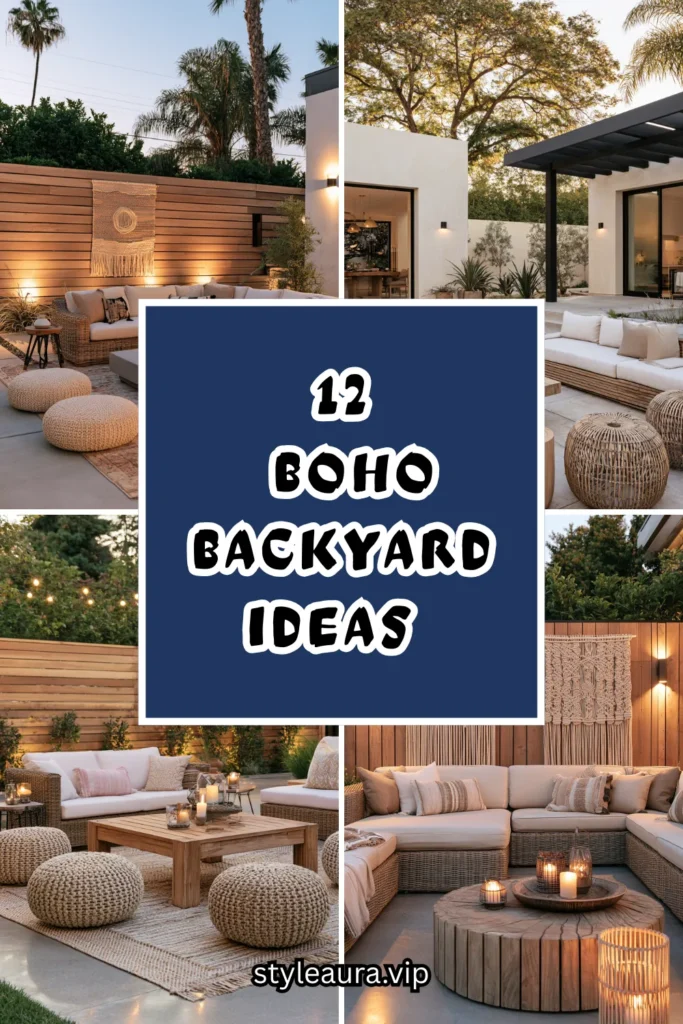
Within a season, that same matched, slightly sterile backyard became the kind of space that photographed like it had been collected over years, even though most of it had come together in a couple of weekends.
Here are 12 ideas that bring genuine boho warmth to a backyard, without any of it falling apart the first time it rains.
Why Most Backyards Never Achieve a Genuine Boho Feel
The common mistakes:
The matched-set approach:
- A single furniture set purchased all at once from one retailer
- Every piece in the same material, same finish, same shape
- A yard that looks put-together but not genuinely collected or personal
- Boho style specifically depends on variety, which a matched set can’t deliver
The indoor-fabric mistake:
- Beautiful macrame, rattan, or textile pieces meant for indoor use, placed outside anyway
- Materials that mildew, fade, or fall apart within a single season of real weather exposure
- A gorgeous initial look that doesn’t survive long enough to actually be enjoyed
- The boho aesthetic’s signature materials chosen without any adaptation for outdoor conditions
The too-sparse or too-cluttered extremes:
- Either a yard with only one or two boho touches lost among otherwise generic furniture
- Or a yard so packed with layered textiles and plants that it reads as cluttered rather than curated
- Missing the specific, relaxed-but-intentional balance that defines the look at its best
- Boho style has real structure underneath its relaxed appearance, and skipping that structure shows
What a successful boho backyard does:
Builds genuine texture and variety with materials made to last outdoors:
- A mix of natural materials, rattan, jute, wood, all specifically rated for weather exposure
- Layered textiles and plants that feel collected rather than purchased as a single set
- A relaxed but genuinely considered layout, not just scattered pillows and hope
- A yard that looks like it grew slowly, even if most of it came together quickly
My revelation: A backyard achieves genuine boho warmth the moment the materials are chosen for both their texture and their ability to actually survive outside, not one or the other.
1. A Rattan or Wicker Seating Anchor
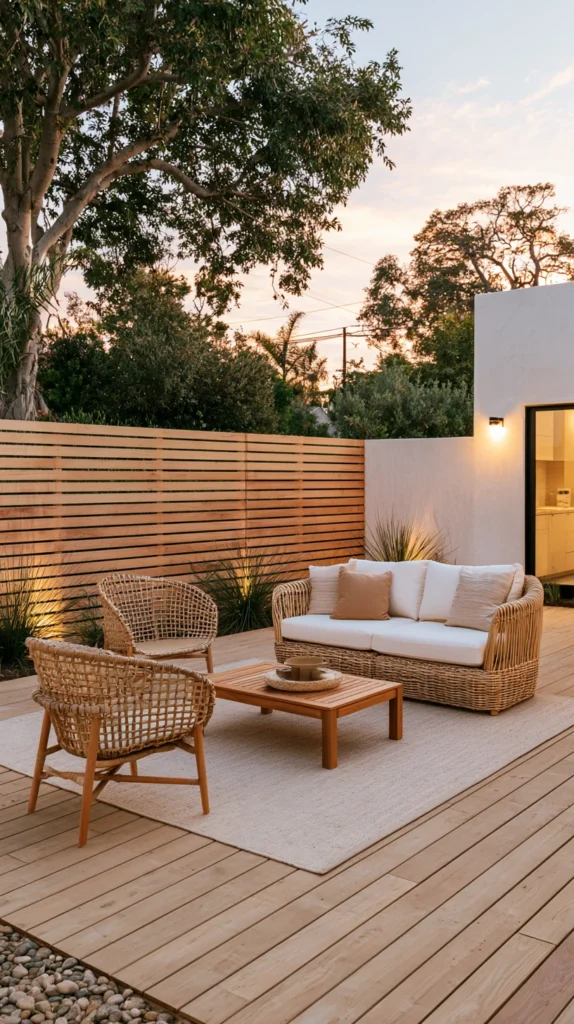
A rattan or all-weather wicker sofa or set of chairs, replacing a standard matched patio furniture set as the seating area’s main anchor.
My matched gray sectional that felt cold and generic:
What I had:
- A standard gray outdoor sectional, identical to what seemed like every third house on the street
- Furniture that was comfortable but visually said absolutely nothing about who actually lived there
- A seating area that photographed like a catalog page rather than a personal space
The rattan seating discovery:
Why swapping to rattan changes the whole visual foundation:
- Natural or all-weather synthetic rattan brings genuine texture and warmth that flat upholstered pieces can’t replicate
- Reads as immediately more personal and collected, even when purchased new from a single retailer
- All-weather wicker specifically is engineered to handle real outdoor conditions without the fading and cracking natural rattan would experience
- Becomes the visual and textural foundation the rest of the boho layering builds on top of
Choosing the right pieces:
Material and style considerations:
- All-weather synthetic wicker for genuine outdoor durability without sacrificing the rattan look
- A mix of a larger anchor piece (a sofa or loveseat) with one or two individually chosen accent chairs
- Natural rattan reserved for a covered patio specifically, given its lower tolerance for direct rain exposure
Cost:
- All-weather wicker loveseat or small sofa: $400-1,000
- Individual rattan-style accent chairs: $150-350 each
My rattan seating: Replacing the matched sectional with an all-weather wicker loveseat and two individually sourced rattan-style accent chairs completely changed the whole yard’s visual foundation, and it’s genuinely the first thing guests comment on now instead of walking right past it.
Rattan Seating Tips
Confirm “all-weather” wicker is specifically rated for your actual climate’s rain and sun exposure:
Durability verification:
- Not every product labeled “all-weather” is rated equally for intense sun versus heavy rain versus both
- Check the specific product’s UV and moisture resistance ratings relative to your actual local climate conditions
- This distinction matters significantly for how long the investment actually lasts outdoors
- A slightly higher-cost, genuinely well-rated piece typically outperforms a cheaper one within the first year or two
Mix at least one individually sourced piece with any matched set purchased:
Avoiding the matched-set trap:
- Even genuinely good rattan furniture can start to look like “just another matched set” if every piece comes from the same collection
- Adding one secondhand or individually chosen accent chair breaks up this uniformity
- This single addition does significant work in making the whole seating area feel collected rather than purchased all at once
- Thrift stores and secondhand marketplaces are worth checking specifically for this one distinctive piece
2. Weatherproof Macrame Plant Hangers
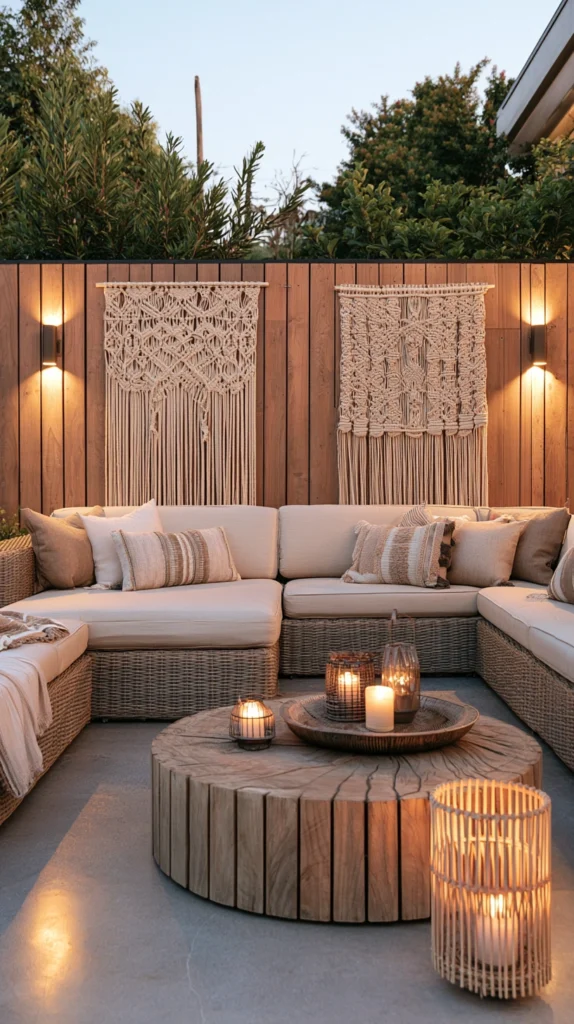
Macrame plant hangers made from outdoor-rated polyester or nylon cord, rather than delicate indoor cotton macrame, suspending plants at varying heights.
My plants all sitting at the same ground level:
What I had:
- A collection of potted plants, all sitting directly on the ground or a low table
- A desire for the layered, hanging macrame look so associated with boho style, without a durable way to achieve it outdoors
- A previous attempt with indoor cotton macrame that had mildewed and unraveled within a single rainy month
The weatherproof macrame solution:
Why outdoor-rated cord solves the exact problem that ruined the first attempt:
- Polyester and nylon cord resist the mildew, rot, and UV fading that destroys cotton macrame outdoors
- Delivers the same visually soft, textural knotted look the boho aesthetic depends on
- Genuinely survives a full outdoor season, unlike the delicate indoor version
- Adds real height variation to a plant collection that would otherwise sit entirely at one level
Choosing and hanging the pieces:
Material and installation:
- Outdoor-rated macrame cord, either purchased pre-made or hand-knotted using weatherproof cord specifically
- Hung from a pergola, a sturdy tree branch, or ceiling hooks installed into a covered porch structure
- Varying the hanging heights across several plants for a genuinely layered look rather than a uniform row
Cost:
- Pre-made outdoor-rated macrame hangers (per hanger): $15-35
- Outdoor macrame cord for DIY versions: $10-20 for enough to make several hangers
My weatherproof macrame: Replacing the failed cotton macrame with outdoor-rated polyester versions, hung at three different heights from the pergola beam, finally delivered the layered plant display I’d wanted from the start, and a full rainy season later, they still look exactly as good as the day they went up.
Weatherproof Macrame Tips
Choose lightweight plants for hanging specifically, since the cord and hanging point both have real weight limits:
Weight consideration:
- A large, heavy ceramic pot filled with wet soil puts genuine strain on both the cord and the mounting point
- Lightweight plastic or resin planters, paired with trailing or compact plants, keep the whole hanging system safer and more stable
- This consideration matters especially for anything hung from a less sturdy structure like a single screw hook
- Test the hanging point’s weight capacity before committing to a heavier plant and pot combination
Rotate hanging plants periodically for even growth and light exposure:
Plant health maintenance:
- A stationary hanging plant often grows unevenly, leaning toward whatever direction gets the most light
- A quarter turn every couple of weeks encourages more even, symmetrical growth
- This small habit keeps the hanging display looking consistently full and balanced over time
- Worth building into a regular garden maintenance routine alongside watering
3. Layered Outdoor Rugs in Global-Inspired Patterns
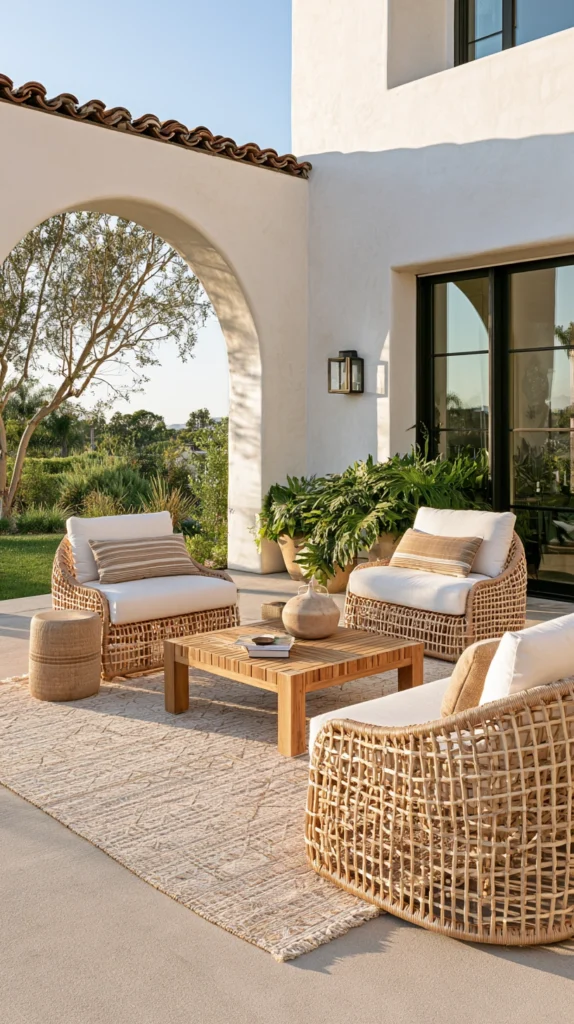
Two or more outdoor rugs, layered and overlapping, in global-inspired patterns like kilim, Moroccan, or Ikat, replacing a single solid-colored rug.
My single flat rug that added no real texture:
What I had:
- One solid gray outdoor rug beneath the seating area, functional but visually unremarkable
- A missed opportunity for pattern and color to do more of the visual work the way they do in genuinely boho-styled spaces
- Uncertainty about mixing patterns without the result looking chaotic rather than intentional
The layered rug solution:
Why layering rugs specifically achieves the collected boho look:
- A base neutral rug topped with a smaller patterned rug mimics how these spaces are genuinely built up over time, rather than purchased as one flat piece
- Global-inspired patterns, kilim, Moroccan, Ikat, bring in the color and geometric texture central to the aesthetic
- The layered approach also adds practical benefit, protecting a nicer patterned rug from the most direct wear by keeping it slightly elevated on the base layer
- One of the more immediately transformative changes available for a seating area’s overall character
Choosing and layering the rugs:
Selection and technique:
- A solid, neutral base rug (jute-look or a plain woven texture) covering the full seating area
- A smaller, more boldly patterned rug layered on top, offset slightly rather than perfectly centered
- Choosing patterns with a shared color thread, even if the specific motifs differ, to keep the layering cohesive
Cost:
- Base neutral outdoor rug (8×10): $80-150
- Patterned layering rug (5×7 or smaller): $60-140
My layered rugs: Adding a smaller kilim-patterned rug on top of the existing solid gray base, offset toward the seating cluster rather than perfectly centered, brought in exactly the color and pattern the space had been missing, and the layered look reads as considerably more intentional than either rug would have alone.
Layered Rug Tips
Choose rugs specifically rated for outdoor use in both layers, not just the top patterned one:
Material consistency:
- It’s tempting to save cost by using an indoor rug as the hidden base layer, but ground moisture will still damage it
- Both layers need genuine outdoor-rated material, even if only the top layer is highly visible
- This consideration prevents an invisible but real problem developing beneath an otherwise beautiful top layer
- Confirm the specific outdoor rating on both rugs before finalizing the purchase
Offset the top rug rather than centering it perfectly on the base layer:
Layout for an intentional look:
- A perfectly centered top rug can look slightly stiff and overly matched
- Offsetting it toward one side or corner mimics how layered rugs are typically styled in professional boho interior design
- This small adjustment significantly affects how relaxed and collected the final layout actually reads
- Experiment with a few different offset positions before settling on the final placement
4. A Mix of Wood Tones and Natural Materials
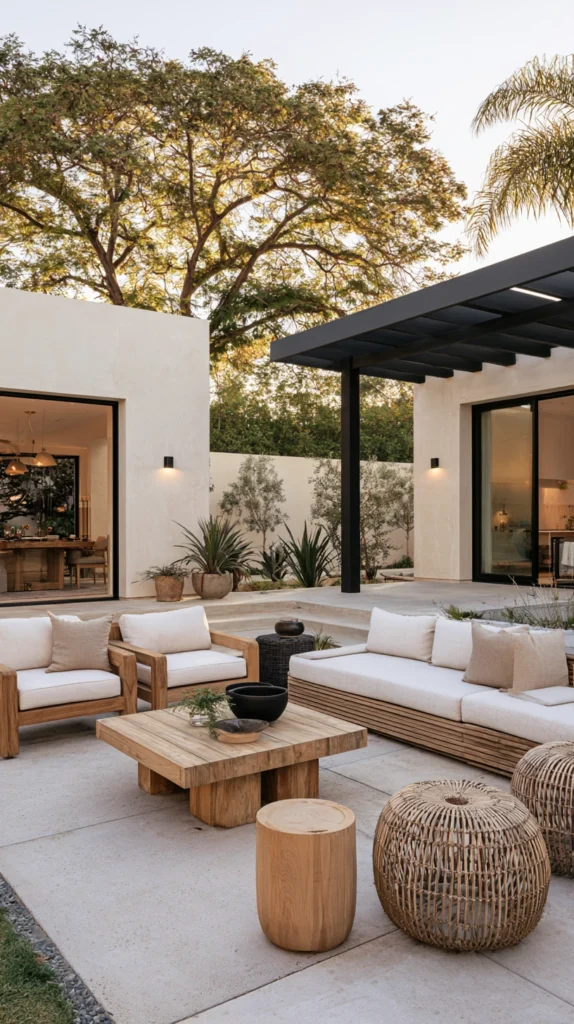
Deliberately combining several different wood tones and natural materials, teak, rattan, bamboo, live-edge slabs, rather than matching every wood surface to the same finish.
My furniture with every wood surface matching exactly:
What I had:
- A coffee table, side table, and planters all in the exact same light oak finish
- A cohesive but visually flat collection that lacked the natural variation genuinely boho spaces tend to have
- Uncertainty about whether mixing wood tones would look intentional or simply mismatched
The mixed wood tone solution:
Why deliberate variation reads as more authentic than perfect matching:
- Genuinely collected outdoor spaces build up over time from different sources, rarely matching perfectly
- Combining teak, rattan, bamboo, and a live-edge wood slab creates the natural, slightly imperfect variation central to this aesthetic
- This mix also adds genuine textural interest beyond what a single uniform wood tone can achieve
- One of the more subtle but consistently effective principles underlying successfully styled boho spaces
Applying the mix:
Practical approach:
- Choose one dominant wood tone to serve as roughly 60% of the visible wood surfaces
- Layer in two or three secondary tones and materials in smaller doses, a side table here, a planter there
- Repeat each secondary material at least twice within the space so it reads as intentional rather than accidental
Cost:
- This is primarily a selection strategy applied to furniture already being purchased, though a live-edge wood slab side table specifically runs $150-400
My mixed wood tones: Pairing the existing light oak coffee table with a darker teak side table and a couple of bamboo planters, rather than trying to match everything to the same finish, gave the space the natural, slightly varied warmth that a single matched wood tone never achieved.
Mixed Wood Tone Tips
Anchor the mix with one dominant tone rather than giving every wood surface equal visual weight:
Establishing hierarchy:
- A space with too many equally weighted, competing wood tones can look genuinely disorganized rather than intentionally varied
- Choosing one tone to dominate, with the others as clear secondary accents, maintains visual order within the variety
- This hierarchy is what separates “collected and intentional” from “mismatched and accidental”
- Step back and assess the overall balance periodically as new pieces are added to the mix
Repeat each secondary wood tone at least once elsewhere in the space:
Avoiding one-off, isolated choices:
- A single dark wood piece surrounded entirely by a lighter tone can look like an outlier rather than a deliberate choice
- Repeating that same darker tone in at least one other item, a small stool, a picture frame, a planter, ties it into the overall scheme
- This repetition principle applies throughout boho styling generally, not just to wood tones specifically
- Consider this before finalizing any single new wood-toned piece for the space
5. A Statement Hanging or Egg Chair
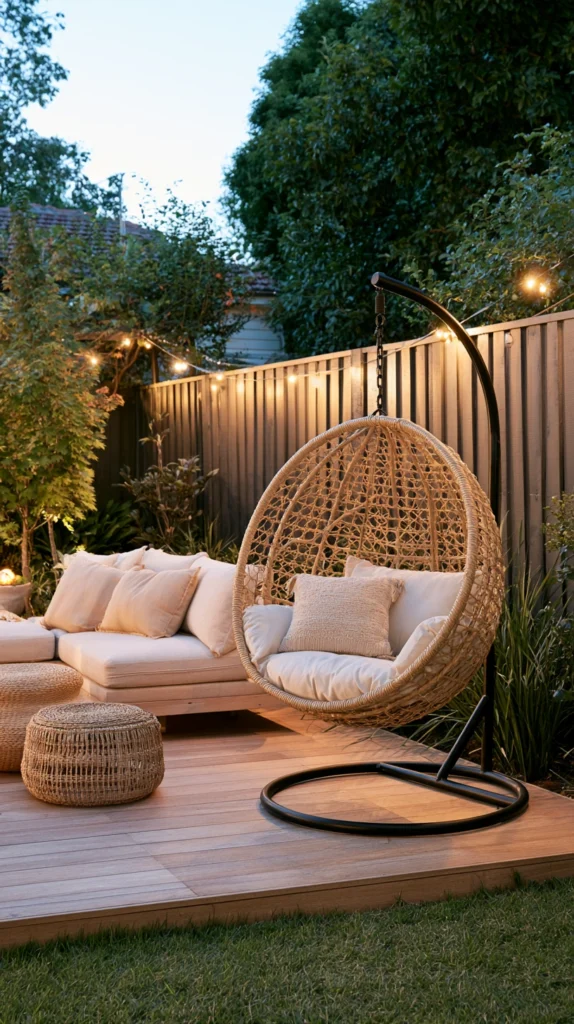
A single dramatic hanging chair or egg-shaped swing chair, suspended from a sturdy frame or pergola beam, serving as the yard’s clear focal seating piece.
My yard with no genuine focal point:
What I had:
- A collection of otherwise nice individual pieces with nothing that actually drew the eye first
- A desire for one dramatic, photograph-worthy element the way many well-styled boho spaces feature
- Available structural support, an existing pergola, that had gone unused for anything beyond basic shade
The hanging chair solution:
Why one dramatic hanging piece anchors the whole space so effectively:
- A suspended egg or hanging chair is one of the most immediately recognizable elements of contemporary boho outdoor styling
- Creates genuine visual drama and movement that standard ground-level seating can’t replicate
- Functions as both a striking design object and a genuinely comfortable, frequently used piece of furniture
- Gives the whole yard a clear focal point that photographs well and draws people toward it
Choosing and installing the chair:
Selection and setup:
- A woven rattan or all-weather wicker hanging chair, paired with a plush weatherproof cushion
- A sturdy A-frame stand if no existing structure can support the weight, or direct mounting to a confirmed structural beam
- Positioned somewhat apart from the main seating cluster, giving it room to function as its own distinct spot
Cost:
- A quality hanging or egg chair with stand: $200-600
- Direct mounting hardware if using an existing structure: $30-60
My hanging chair: Installing a woven rattan hanging chair from the existing pergola beam, with a thick cream cushion, gave the yard the clear focal point it had been missing, and it’s become genuinely the most fought-over seat in the whole space.
Hanging Chair Tips
Have a structural point’s weight capacity professionally confirmed before mounting directly to it:
Safety verification:
- A hanging chair with an occupant represents real, concentrated weight on whatever it’s mounted to
- If mounting to an existing pergola or beam rather than a dedicated stand, confirm its rated capacity before installing
- This is not an area to guess or assume, given the genuine safety stakes involved
- A contractor or the structure’s original installer can typically confirm this if you’re uncertain
Choose a quick-dry cushion specifically, since hanging chair cushions see significant rain exposure given their shape:
Cushion material consideration:
- The cupped, enclosed shape of many hanging chairs can collect and hold water differently than flat furniture cushions
- Quick-dry foam, designed specifically to drain and dry rapidly, prevents this from becoming a mildew or comfort problem
- This distinction matters more for this specific furniture shape than it might for standard flat seating
- Confirm the cushion’s specific drainage design before purchasing, not just its general “outdoor rated” label
6. String Lights Paired With Paper or Rattan Lanterns
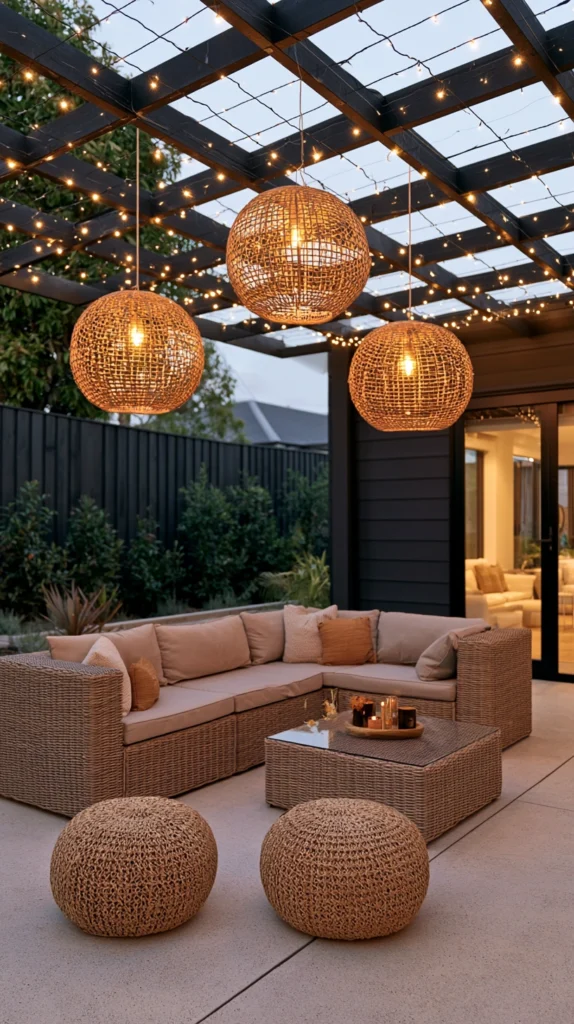
Warm string lights combined with woven rattan or paper lanterns, layered together overhead rather than using string lights alone.
My string lights that felt like the only lighting idea I’d tried:
What I had:
- A single strand of string lights, the same lighting choice used in nearly every backyard regardless of overall style
- A missed opportunity for lighting itself to carry some of the same textural, collected quality as the rest of a boho space
- No layering or variety in the evening lighting beyond the one light source
The layered lantern solution:
Why combining string lights with woven lanterns delivers a much richer effect:
- Rattan and woven lanterns bring the same natural material texture found throughout the rest of the boho aesthetic into the lighting itself
- Layering different light sources and fixture types creates a more dynamic, considered evening atmosphere than a single strand alone
- Paper lanterns specifically add soft, diffused light distinct from the more pinpoint glow of string lights
- A relatively simple addition that meaningfully elevates the whole evening presentation
Building the lighting layer:
Combining fixtures:
- String lights as the base layer, crisscrossed overhead or run along a pergola beam
- Woven rattan pendant lanterns hung at a few intermediate points within the same overhead space
- Paper lanterns in a range of sizes, clustered or spaced for additional textural variety
Cost:
- String lights (100 feet): $30-60
- Woven rattan pendant lanterns (per lantern): $25-60
- Paper lanterns (set of several sizes): $20-40
My layered lighting: Adding three woven rattan pendant lanterns among the existing string lights, at slightly varying heights, gave the overhead lighting the same textural richness as the rest of the yard, rather than leaving lighting as the one flat, single-material element in an otherwise layered space.
Layered Lantern Tips
Choose lanterns with weatherproof electrical components if wiring them for actual bulbs rather than solar or battery lights:
Electrical safety consideration:
- Woven rattan lanterns need specifically weatherproof-rated sockets and wiring if using hardwired or plug-in bulbs
- Confirm this rating before purchasing, since not every decorative lantern is designed for genuine outdoor electrical use
- Solar or battery-powered versions sidestep this concern entirely if electrical rating is unclear or unavailable
- This distinction matters for both safety and the fixture’s actual longevity outdoors
Vary the hanging heights of different lantern types rather than keeping everything at one uniform level:
Layout for visual depth:
- A uniform row of lanterns, however nice individually, reads as flatter and less dynamic than varied heights
- Staggering rattan pendants and paper lanterns at slightly different heights creates genuine visual depth overhead
- This principle mirrors the layered rug and hanging plant techniques used elsewhere in a boho-styled space
- Step back and view the full overhead arrangement from the main seating area before finalizing hanging heights
7. A Low, Floor-Level Lounge Area With Floor Cushions
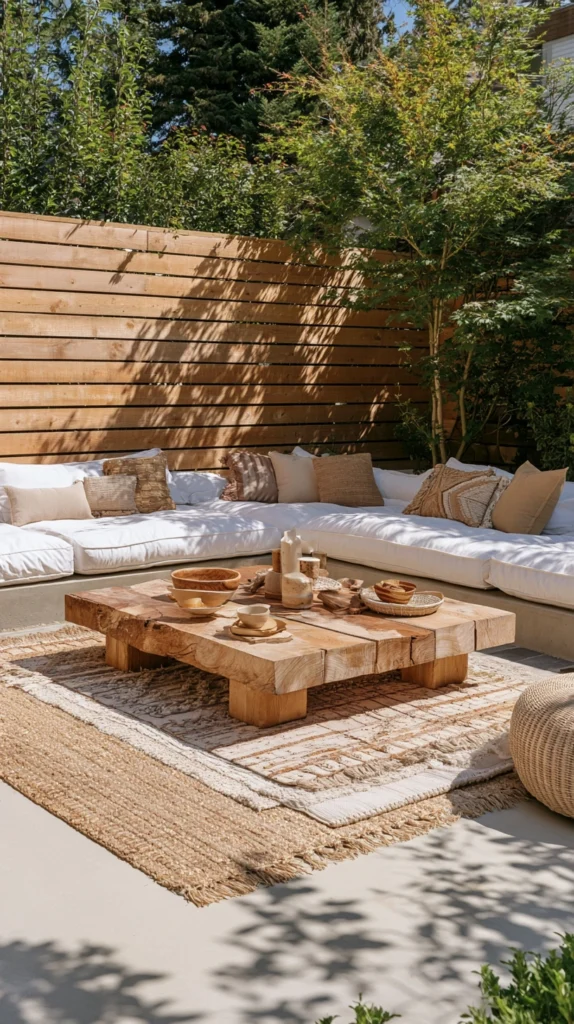
A relaxed, low-seating zone using floor cushions and a low table, positioned as a secondary lounging area distinct from standard chair-height seating.
My yard with only one type of seating available:
What I had:
- Standard chair-height seating throughout the entire yard, with no lower, more relaxed lounging option
- A missed opportunity for the kind of casual, ground-level gathering spot central to boho outdoor styling
- Unused space in one corner of the yard that hadn’t been assigned any particular function
The floor cushion lounge solution:
Why a low seating zone adds genuine boho character beyond just aesthetics:
- Ground-level lounging is a signature element of the aesthetic’s relaxed, unstructured social style
- Creates a genuinely different kind of gathering experience than standard chair-height seating offers
- Works particularly well combined with a fire pit or as a casual secondary zone near the main seating cluster
- Adds another layer of textile and pattern opportunity through the cushion choices themselves
Building the lounge area:
Setup components:
- A weatherproof outdoor rug as the base for the whole low-seating zone
- Several large floor cushions in a mix of patterns and textures, all within a coordinated color palette
- A low wood or rattan table at the center for drinks or shared snacks
- Positioned somewhat separate from standard chair seating, giving it a distinct identity within the yard
Cost:
- Large weatherproof floor cushions (per cushion): $40-90
- A low wood or rattan table: $80-200
My floor cushion lounge: Adding four large patterned floor cushions and a low rattan table in the previously unused corner of the yard created a genuinely different kind of gathering spot, and it’s become the natural place people end up for longer, more relaxed conversations later in the evening.
Floor Cushion Tips
Choose cushions with removable, washable covers specifically for this ground-level application:
Practical maintenance:
- Floor-level cushions are more exposed to dirt, spills, and general ground contact than standard chair cushions
- Removable, machine-washable covers make maintaining this specific seating zone significantly more manageable
- This consideration matters more here than for elevated furniture, given the direct ground proximity
- Confirm this feature specifically before purchasing, since not every outdoor cushion offers easily removable covers
Store floor cushions somewhere accessible for quick setup rather than leaving them out permanently:
Practical storage habit:
- Ground-level cushions are more exposed to weather and general wear than elevated furniture cushions
- A nearby storage bench or deck box makes it easy to bring them out for use and store them promptly afterward
- This habit meaningfully extends the cushions’ usable lifespan compared to leaving them outdoors continuously
- Worth planning storage as part of the initial lounge area setup, not as an afterthought
8. Trailing and Climbing Plants for Softness and Height
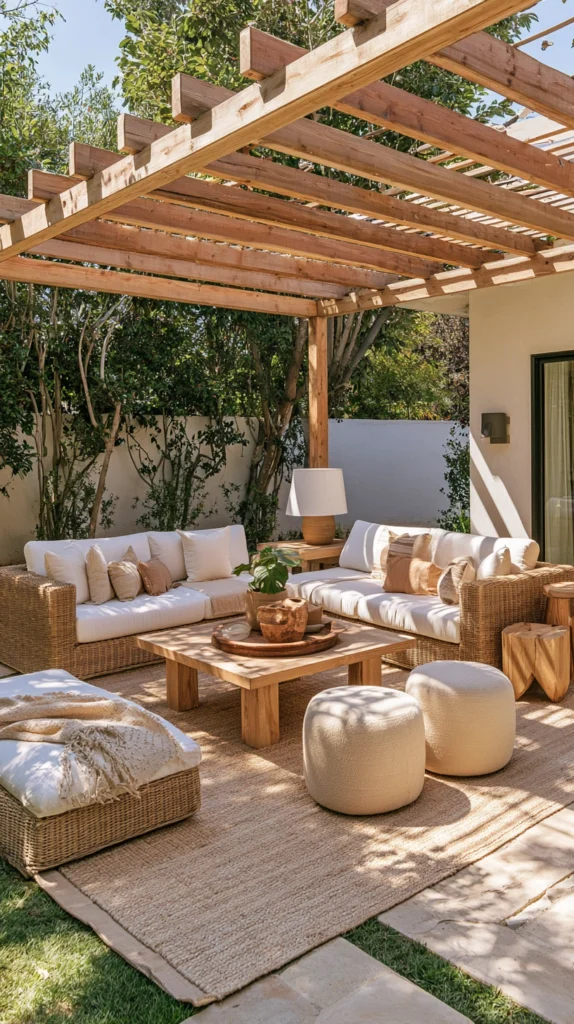
Trailing plants in hanging containers and climbing vines trained up a trellis or pergola, adding the lush, slightly wild greenery central to the boho plant aesthetic.
My plant collection that felt stiff and overly manicured:
What I had:
- A collection of upright, structured plants in matching pots, none of them contributing much softness or movement
- A yard that felt tidy but lacked the genuinely lush, slightly untamed quality found in well-styled boho spaces
- Existing structures, a pergola and a side fence, that could support climbing growth but currently didn’t
The trailing and climbing plant solution:
Why this specific plant style is so central to achieving genuine boho softness:
- Trailing and climbing growth habits create movement and softness that upright, structured plants simply don’t offer
- Uses vertical space effectively while adding to the yard’s overall sense of natural, established lushness
- Works together with the weatherproof macrame hangers described earlier, extending the layered plant display concept
- One of the most reliable ways to shift a yard’s overall feeling from “tidy” to genuinely “lush and collected”
Choosing the right plants:
Plant selection by growth type:
- Trailing plants for hanging containers, like string of pearls, pothos, or trailing succulents depending on climate
- Climbing vines for a trellis or pergola, such as jasmine, climbing hydrangea, or a flowering clematis
- A mix of both growth types throughout the space rather than relying on just one
Cost:
- Trailing plants (per plant): $10-25
- Climbing vines, established starter plants: $20-50 each
My trailing and climbing plants: Training a jasmine vine up the pergola’s side post and adding several trailing pothos plants to the hanging macrame planters transformed the yard’s overall greenery from tidy and structured into genuinely lush and established-feeling within about two growing seasons.
Trailing Plant Tips
Choose climbing vine varieties suited to your specific climate’s growing season length:
Regional plant selection:
- Some popular climbing vines require a longer growing season than certain climates provide to reach their full, established look
- Research varieties specifically known to perform well in your regional climate before committing to a particular vine
- This research step prevents years of disappointing, sparse growth from a variety poorly matched to local conditions
- A local nursery can typically offer specific guidance suited to your exact area
Provide adequate support structure for climbing vines from the very beginning:
Structural planning:
- Vines trained onto an inadequate or unstable support structure can damage both the plant and the structure itself as they mature
- Confirm the trellis, pergola post, or fence section can genuinely support a mature vine’s eventual weight
- This consideration is easier to address at planting time than after a vine has already grown substantially
- A sturdy, well-anchored support structure is worth the upfront investment given how long a climbing vine typically takes to establish
9. A Woven Pouf or Ottoman for Flexible Extra Seating
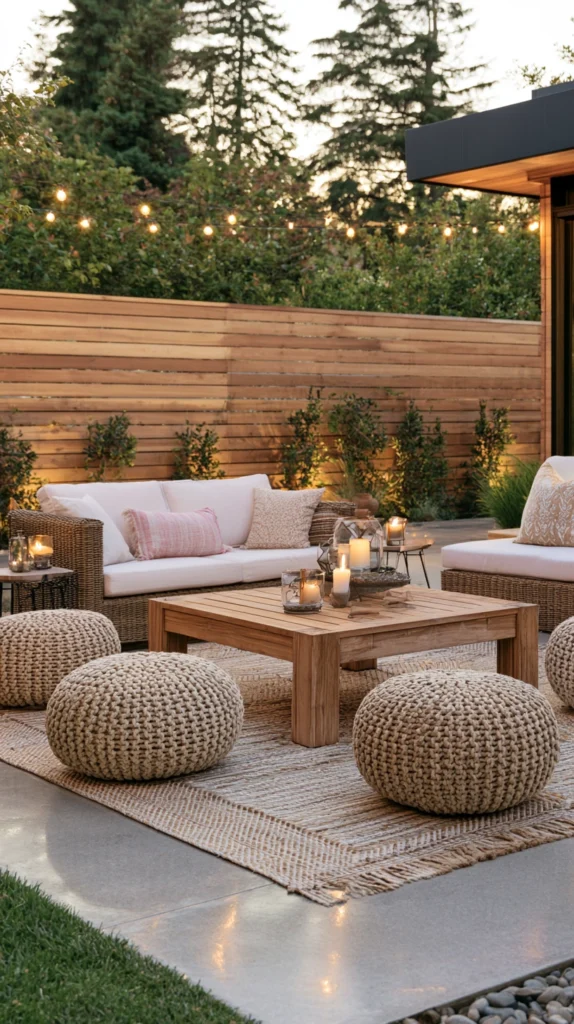
A woven jute, rattan, or braided ottoman, providing flexible extra seating or a footrest that can move easily between different zones of the yard.
My yard with no flexible extra seating option:
What I had:
- Fixed seating capacity exactly matching the number of chairs already purchased
- No easy way to accommodate an extra guest or two without dragging a chair from inside
- A missed opportunity for a piece that could add both function and genuine textural interest
The woven pouf solution:
Why this piece delivers flexibility alongside genuine style:
- Lightweight and easily moved, unlike a full chair, making it simple to reposition wherever extra seating is actually needed
- Woven jute or braided rattan textures bring the same natural material quality found throughout the rest of the boho palette
- Doubles as a footrest during regular use, adding function beyond just occasional extra seating
- One of the more affordable individual pieces on this list relative to how much flexibility it adds
Choosing the right pouf:
Material and style considerations:
- Braided or woven rattan for genuine outdoor durability with real textural interest
- A flat-woven jute-look ottoman as a slightly more budget-friendly alternative
- Sized to comfortably serve as either a footrest or a low extra seat, typically 16-20 inches in diameter
Cost:
- Woven outdoor pouf or ottoman: $60-150
My woven pouf: Adding two braided rattan poufs that move easily between the main seating cluster and the floor cushion lounge area gave the yard genuine flexibility for whatever size group actually showed up, while adding another layer of the natural woven texture running throughout the rest of the space.
Woven Pouf Tips
Choose a pouf with a removable, washable cover if opting for a fabric rather than fully rattan design:
Material maintenance:
- Some poufs use a woven fabric cover over a foam or bead-fill interior rather than being fully constructed from rattan
- A removable, washable cover meaningfully simplifies maintaining this piece given its frequent movement and handling
- Confirm this feature specifically if choosing a fabric-covered option over a fully woven rattan or braided design
- This consideration matters less for a fully rattan pouf, which typically just needs occasional wiping down
Keep at least one pouf easily accessible near the main seating area for quick, spontaneous use:
Practical placement:
- A pouf stored away in a shed or closet is less likely to actually get used for its intended flexible-seating purpose
- Keeping one or two within easy reach of the main gathering area makes it genuinely convenient to grab when needed
- This small placement consideration determines whether the piece delivers on its intended flexibility in practice
- Balance this accessibility against weather protection based on your specific climate’s rain frequency
10. A Mix of Global-Inspired Textiles as Table Runners and Throws
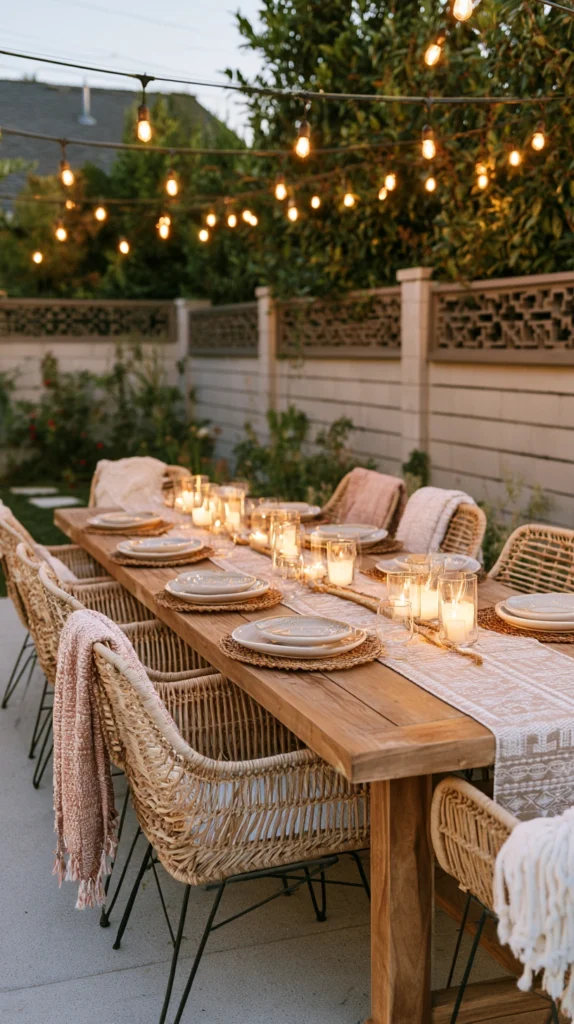
Table runners, throws, and smaller textile accents in global-inspired patterns, block print, Ikat, or kantha, layered across tables and furniture.
My tables and furniture with no textile layer at all:
What I had:
- Bare tabletops and furniture surfaces with no fabric layering beyond the seating cushions themselves
- A missed opportunity for textiles to add color and pattern the way they do throughout the rest of a well-styled boho space
- Uncertainty about which specific textile patterns would suit an outdoor setting without looking out of place
The global-inspired textile solution:
Why this specific layer adds so much character for relatively little cost:
- Block print, Ikat, and kantha textiles bring in the layered global pattern language central to the boho aesthetic
- Table runners and throws are relatively inexpensive compared to furniture, making this an accessible way to add real character
- Easily swapped or rotated seasonally, keeping the space feeling fresh without a larger investment
- Works across multiple surfaces throughout the yard, tying different zones together with a shared textile thread
Choosing and placing textiles:
Application throughout the space:
- A table runner across the low lounge table or a dining table, in a bold block print or Ikat pattern
- A folded throw draped over the arm of the rattan seating, echoing the same pattern family
- Smaller textile accents, like a table runner beneath a plant grouping, extending the pattern into smaller moments
Cost:
- Table runners: $20-45 each
- Throws: $30-60 each
My global textile layer: Adding a bold block-print table runner to the low lounge table and a coordinating kantha throw over the rattan loveseat brought in the color and pattern the space had been missing, tying the different seating zones together with a shared, clearly intentional textile thread.
Global Textile Tips
Choose outdoor-rated or easily washable fabric specifically for anything left outside regularly:
Material practicality:
- Genuine vintage or delicate textiles are beautiful but not well suited to consistent outdoor exposure
- Look for reproduction versions in weather-resistant or easily washable fabric for pieces meant to stay outside
- Reserve any more delicate, genuinely vintage textile pieces for occasions when they can be brought out and put away the same day
- This distinction protects more valuable textile pieces while still achieving the visual look outdoors
Rotate textiles seasonally to keep the space feeling considered rather than static:
Seasonal refresh habit:
- Swapping table runners and throws for slightly different patterns or weights across seasons keeps the display feeling current
- A heavier kantha throw in cooler months, a lighter block print runner in peak summer, mirrors how these textiles are traditionally used
- This rotation is a relatively low-cost habit that meaningfully extends how “fresh” the space feels throughout the year
- Store off-season textiles properly, clean and dry, to preserve their condition for the following rotation
11. A Fire Pit Surrounded by Mismatched, Collected Seating
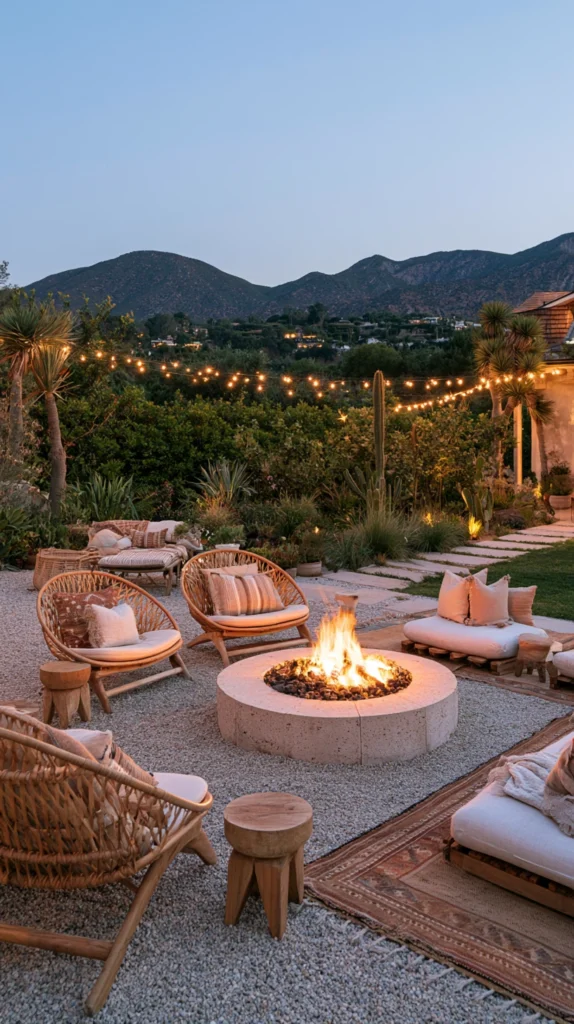
A fire pit ringed by a genuinely mismatched collection of seating, a rattan chair here, floor cushions there, a wood stool nearby, rather than a single matched set.
My fire pit surrounded by identical folding chairs:
What I had:
- A fire pit with four identical folding chairs arranged evenly around it
- A functional but visually flat setup that didn’t reflect any of the collected character being built elsewhere in the yard
- A missed opportunity to extend the boho layering principle to this specific gathering zone
The mismatched fire pit seating solution:
Why deliberately varied seating suits a fire pit gathering particularly well:
- A genuinely collected mix of seating types mirrors how people actually gather informally around a real fire
- Extends the same natural-material, varied-texture principle used throughout the rest of the yard to this specific zone
- Accommodates different comfort preferences, some guests prefer a proper chair, others are happy on a floor cushion or low stool
- One of the more social, natural-feeling seating arrangements available for this specific type of gathering spot
Building the mismatched seating ring:
Assembling the collection:
- One or two rattan or wood-framed chairs as slightly more substantial anchor seats
- A few floor cushions or a low bench for more casual, ground-level seating
- A couple of simple wood or woven stools filling in the remaining gaps around the fire pit’s perimeter
- Keeping all pieces within a shared, coordinated color and material palette despite their varied shapes
Cost:
- This largely reuses pieces already sourced elsewhere in this list, plus $30-80 per additional simple stool if needed to round out the seating count
My fire pit seating: Replacing the four identical folding chairs with a mix of two rattan chairs, a low bench, and a couple of simple wood stools around the fire pit gave that specific gathering zone the same collected, natural character as the rest of the yard, and it’s become a noticeably more popular spot for guests to actually linger.
Mismatched Fire Pit Seating Tips
Maintain a consistent color palette across the mismatched pieces even as shapes and materials vary:
Cohesion within variety:
- Genuinely random, uncoordinated seating can tip from “eclectic and collected” into simply looking disorganized
- Keeping every piece within the same broad color family, warm neutrals and natural wood tones, maintains cohesion
- This principle is the same one underlying the mixed wood tone and layered textile ideas described elsewhere on this list
- Assess the full seating grouping together, not each piece individually, before finalizing the collection
Ensure every seating option provides adequate distance and safety clearance from the fire itself:
Safety consideration:
- Lower seating, floor cushions in particular, needs the same safety distance from an open flame as standard chairs
- Measure and test actual comfortable, safe distances with the fire lit before finalizing permanent seating placement
- This matters especially for ground-level seating, which sits closer to the fire’s heat and any potential spark risk
- Don’t compromise this safety margin for the sake of a tighter, more visually clustered arrangement
12. A Dreamcatcher or Woven Wall Hanging as a Statement Piece
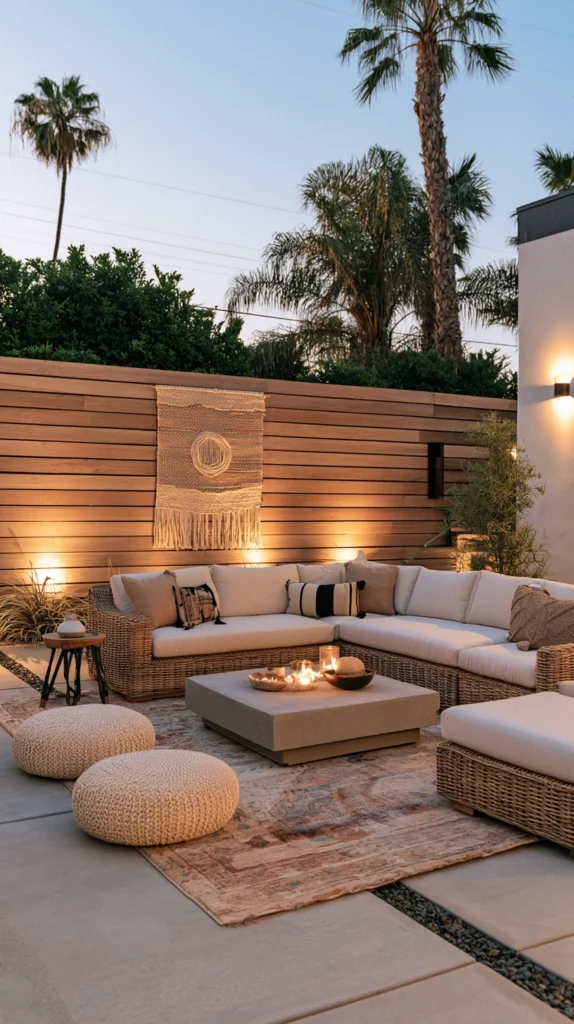
A large woven wall hanging or dreamcatcher-style piece, mounted on a fence or exterior wall, serving as a genuine art statement within the yard.
My fence with nothing breaking up its blank expanse:
What I had:
- A long, entirely blank fence line running along one side of the yard
- A missed opportunity for genuine wall art the way an indoor boho space would typically feature
- A desire for one piece that felt like a real artistic statement rather than another functional item
The woven wall hanging solution:
Why this piece functions as genuine art within the outdoor space:
- A large, well-made woven wall hanging is a legitimate piece of textile art, not just a decorative afterthought
- Brings texture and pattern to vertical wall space that ground-level furniture and plants don’t address
- Serves as a natural backdrop for photos and a clear focal point for that section of the yard
- One of the more distinctly boho-specific statement pieces available, instantly signaling the aesthetic
Choosing and installing the piece:
Selection and placement:
- A large woven wall hanging, whether a genuine macrame piece or a woven textile tapestry, in a size proportional to the fence or wall section
- Weatherproof or easily removable materials specifically for anything staying outdoors long-term
- Positioned as a clear focal point, ideally visible from the main seating area
Cost:
- A large woven wall hanging or tapestry: $80-250
My woven wall hanging: Mounting a large, outdoor-rated woven wall hanging on the previously blank fence section directly behind the main seating area gave the yard a genuine art statement, and it’s become the natural backdrop for nearly every photo taken back there since.
Woven Wall Hanging Tips
Choose a piece specifically rated or treated for outdoor use rather than an indoor textile art piece:
Material durability:
- A beautiful indoor macrame or tapestry piece will deteriorate quickly with direct sun and rain exposure
- Look specifically for outdoor-rated versions, or apply a fabric-appropriate weatherproofing treatment to an indoor piece before installing it outside
- This distinction protects what’s often a meaningful individual investment from premature damage
- Consider a covered or partially sheltered mounting location if a genuinely outdoor-rated version isn’t available for the specific design you want
Secure the piece at multiple mounting points to prevent wind damage:
Installation for wind resistance:
- A large hanging piece secured at only one or two points is vulnerable to wind catching and damaging it over time
- Multiple secure mounting points along the piece’s top edge, and ideally the bottom as well, distribute wind load more safely
- This consideration matters significantly for a larger piece in an exposed yard location
- Budget for proper mounting hardware as part of the total project cost rather than treating it as an afterthought
Choosing Your Boho Backyard Projects
By Priority
Establish the foundational materials:
- A rattan or wicker seating anchor (idea 1)
- A mix of wood tones and natural materials (idea 4)
- Layered outdoor rugs (idea 3)
Add height, softness, and greenery:
- Weatherproof macrame plant hangers (idea 2)
- Trailing and climbing plants (idea 8)
- A statement hanging or egg chair (idea 5)
Build out flexible, social gathering zones:
- A low, floor-level lounge area (idea 7)
- A fire pit surrounded by mismatched seating (idea 11)
- A woven pouf for flexible extra seating (idea 9)
By Effort Level
Lowest effort:
- A mix of global-inspired textiles (idea 10)
- A woven pouf or ottoman (idea 9)
- Weatherproof macrame plant hangers (idea 2)
Medium effort:
- Layered outdoor rugs (idea 3)
- String lights paired with woven lanterns (idea 6)
- A low, floor-level lounge area (idea 7)
Higher commitment:
- A rattan or wicker seating anchor (idea 1)
- A statement hanging or egg chair (idea 5)
- Trailing and climbing plants, established over time (idea 8)
- A woven wall hanging statement piece (idea 12)
By Budget
Under $150:
- A mix of global-inspired textiles (idea 10)
- Weatherproof macrame plant hangers, a few pieces (idea 2)
- A woven pouf (idea 9)
$150-400:
- Layered outdoor rugs (idea 3)
- String lights and woven lanterns combined (idea 6)
- A low lounge area with floor cushions (idea 7)
- A woven wall hanging (idea 12)
$400+:
- A rattan or wicker seating anchor (idea 1)
- A statement hanging or egg chair (idea 5)
- Trailing and climbing plants, established specimens (idea 8)
Maintenance Through the Seasons
Spring:
- Inspect all-weather wicker and rattan pieces for any winter wear before the season’s regular use begins
- Begin training new growth on climbing vines as the growing season restarts
Summer:
- Rotate and wash removable cushion and pouf covers regularly given peak outdoor use
- Check hanging plant weight and mounting points periodically given increased summer growth
Fall:
- Store more delicate textiles and floor cushions ahead of colder, wetter weather
- Prune climbing vines as growth slows to maintain the support structure’s health
Winter:
- Store or cover rattan and woven furniture pieces if the climate sees significant winter weather
- Plan the next season’s additions during the quieter winter months
My Complete Boho Backyard Journey
What I built across two summers:
Summer one ($680):
- All-weather wicker loveseat and rattan accent chairs
- Layered outdoor rugs
- Weatherproof macrame plant hangers
- Learned that the material choice mattered more than any individual furniture piece for achieving the genuine aesthetic
Summer two ($920):
- A hanging rattan chair suspended from the existing pergola
- The floor cushion lounge area in the previously unused corner
- A large woven wall hanging on the main fence line
- Learned that adding genuine focal points, the hanging chair and the wall hanging specifically, did more for the space’s overall character than filling in smaller individual details
Total investment: $1,600 across two summers Most important lesson: Genuine boho character comes from material variety and weatherproof durability together, not from either alone Single highest-impact change across both summers: The rattan seating anchor from summer one, since it set the material and textural foundation everything else was layered onto
Getting Started This Weekend
Start with material, not accessories.
This weekend:
Step 1 — Assess your current furniture’s material variety, or lack of it:
- Notice if everything currently matches in finish and shape
- This assessment informs where the biggest opportunity for change actually is
Step 2 — Add one rattan, wicker, or woven piece, even a small one:
- A single accent chair or a woven pouf is enough to start establishing the textural foundation
- This doesn’t require replacing existing furniture entirely to see a real difference
Step 3 — Layer a patterned rug or textile over something currently plain:
- A table runner, a throw, or a smaller layered rug
- One of the fastest, lowest-cost ways to introduce genuine color and pattern
Step 4 — Add one plant with height or trailing growth, not just another upright potted plant:
- A hanging planter or the start of a climbing vine on an existing structure
- This begins building the layered greenery the aesthetic depends on
My recommendation:
Start with one rattan piece and one layered textile:
- Both are achievable in a single weekend without a major furniture overhaul
- Both immediately demonstrate how the material and texture principles change the space’s overall feel
- This foundation makes it much easier to evaluate what the space genuinely needs next
Sit in the space in the evening once both changes are in place and notice how different the overall warmth and texture feels before planning anything else.
Now go build the boho backyard that looks like it’s been collected over years, even if most of it comes together in a couple of weekends.
Quick Summary
The 12 boho backyard ideas to try this year:
Foundational materials:
- A rattan or wicker seating anchor (idea 1): the textural foundation everything else builds on
- A mix of wood tones and natural materials (idea 4): deliberate variation over perfect matching
- Layered outdoor rugs in global-inspired patterns (idea 3): color and pattern underfoot
Height, softness, and greenery:
- Weatherproof macrame plant hangers (idea 2): durable versions of the aesthetic’s signature material
- Trailing and climbing plants (idea 8): genuine lushness and movement
- A statement hanging or egg chair (idea 5): the clear focal point most yards are missing
Flexible social zones:
- A low, floor-level lounge area with floor cushions (idea 7): a genuinely different kind of gathering spot
- A fire pit surrounded by mismatched, collected seating (idea 11): informal, natural social seating
- A woven pouf or ottoman (idea 9): flexible extra seating with real texture
Finishing layers:
- String lights paired with paper or rattan lanterns (idea 6): layered, textural evening lighting
- A mix of global-inspired textiles (idea 10): color and pattern across every surface
- A dreamcatcher or woven wall hanging (idea 12): a genuine art statement outdoors
The universal boho backyard rules:
Always:
- Choose outdoor-rated versions of signature boho materials, macrame, rattan, textiles, specifically made to survive outside
- Mix materials and sources deliberately rather than purchasing a single matched furniture set
- Layer height, rugs, plants, and lighting, rather than keeping everything at one flat level
- Repeat key colors and materials at least twice throughout the space to keep variety feeling intentional
Never:
- Use delicate indoor-only textiles or macrame outdoors without weatherproofing
- Purchase an entire matched furniture set and call the aesthetic complete
- Leave the yard too sparse, with only one or two boho touches lost among generic furniture
- Overcrowd the space to the point that genuine curation reads as clutter instead
Common mistakes:
- Treating boho style as purely aesthetic without adapting the signature materials for real outdoor durability
- Buying a single matched furniture collection instead of building genuine variety over time
- Keeping every element at the same height instead of layering rugs, plants, and lighting
- Skipping a genuine focal point, whether a hanging chair or a wall hanging, and ending up with a space that lacks a clear anchor
- Rushing to finish the whole yard in one trip instead of letting it build gradually and collect real character
Remember: genuine boho character depends on material variety and outdoor durability together, choosing outdoor-rated versions of the aesthetic’s signature materials prevents the beautiful-but-short-lived outcome many first attempts run into, layering height through rugs, plants, and lighting does as much work as any individual furniture piece, one clear focal point anchors a space that might otherwise feel like scattered good ideas, and the best boho backyard is the one that looks like it grew slowly over years, whether or not it actually did.