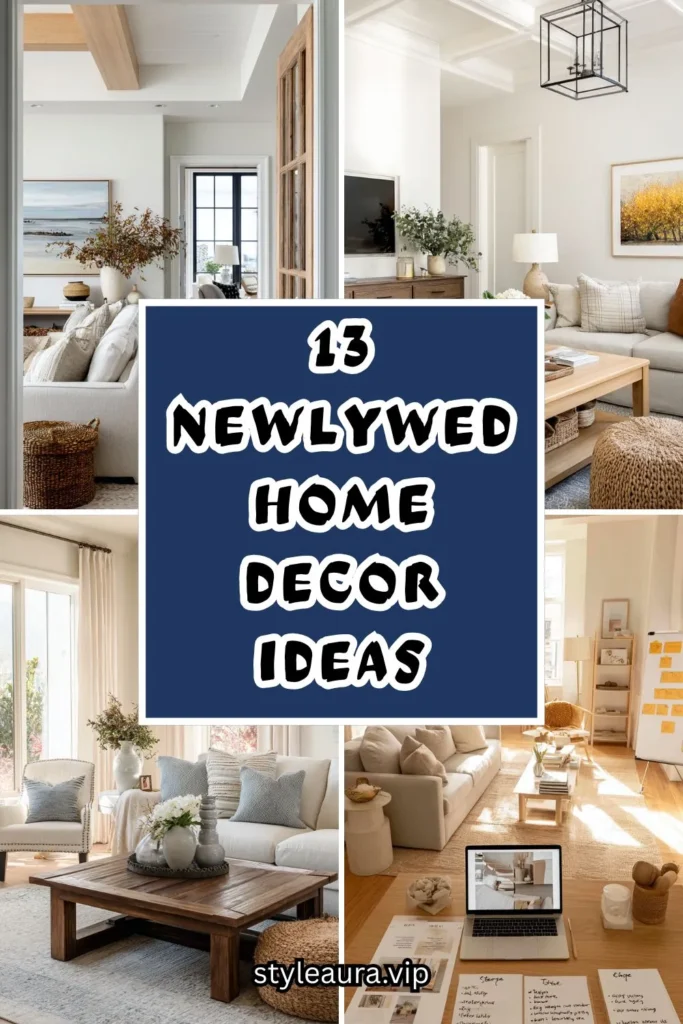
13 Newlywed Home Decor Ideas for Blending Two Styles Together
Merging two people’s individual taste into one shared home is one of the more underrated challenges of early marriage, since most couples arrive with genuinely different furniture, colors, and priorities built up over years of living separately. The goal isn’t picking a winner between two styles, but finding the overlap and building something new that reflects both people.
Below are 13 ways to blend two decorating styles into one cohesive newlywed home, with real numbers on cost and specifics so the process feels collaborative rather than like one partner’s taste simply winning out.
Before You Start: A Quick Style Audit
Identify what each person actually values:
- Colors each partner gravitates toward naturally
- Materials each partner prefers (wood, metal, textiles)
- Which existing pieces feel non-negotiable to keep
- Which rooms matter most to each person individually
Common blending starting points:
- A shared neutral base with each person’s color as an accent
- One room per person to decorate more freely
- A “keep, store, or donate” sort of combined furniture
- A shared Pinterest or mood board built together before shopping
1. Do a Combined Furniture Inventory Before Buying Anything New
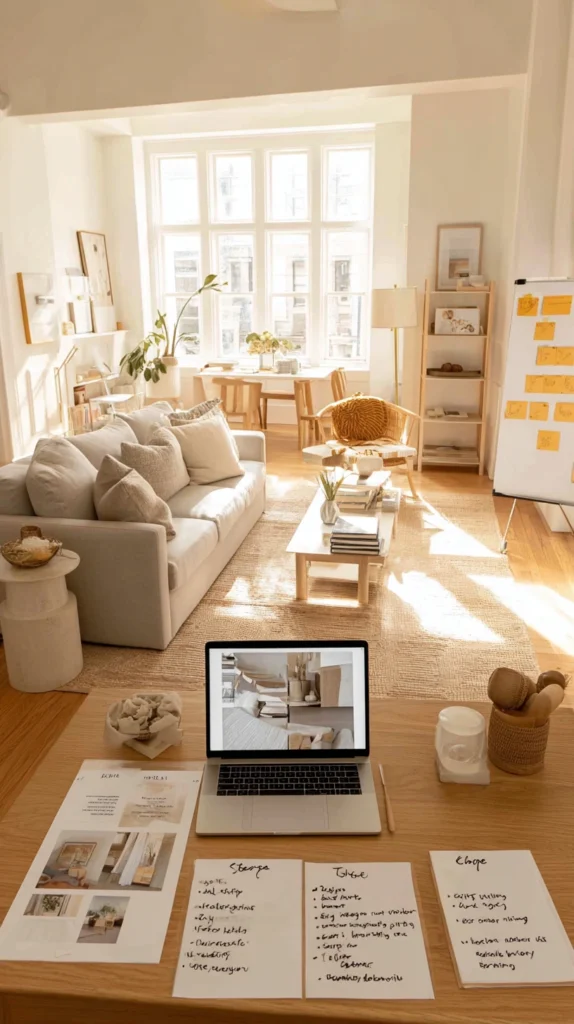
Before purchasing a single new item, laying out everything both partners already own — furniture, art, decor — and sorting it together prevents unnecessary spending and helps surface any emotional attachments early. This process typically takes a full afternoon for a two-bedroom home’s worth of combined belongings.
Budget: $0, though this step often reveals $500-1,500 in potential savings by identifying which existing pieces can stay rather than being replaced immediately after the move. Photographing each item and creating a simple shared list (keep, store, donate, undecided) gives both partners a clear reference during the sorting process.
This step also surfaces disagreements early, in a lower-stakes setting, rather than during an actual shopping trip when frustration or fatigue can make compromise harder. Items in the “undecided” category are worth revisiting after living in the new space for a few weeks, since some pieces become obviously necessary or unnecessary once the couple sees how the home actually gets used day to day.
This inventory process is also a practical way to avoid duplicate purchases, since it’s common for two people combining households to already own two of nearly everything (sofas, dining tables, full sets of dishes).
2. Choose One Shared Neutral Base for Major Furniture
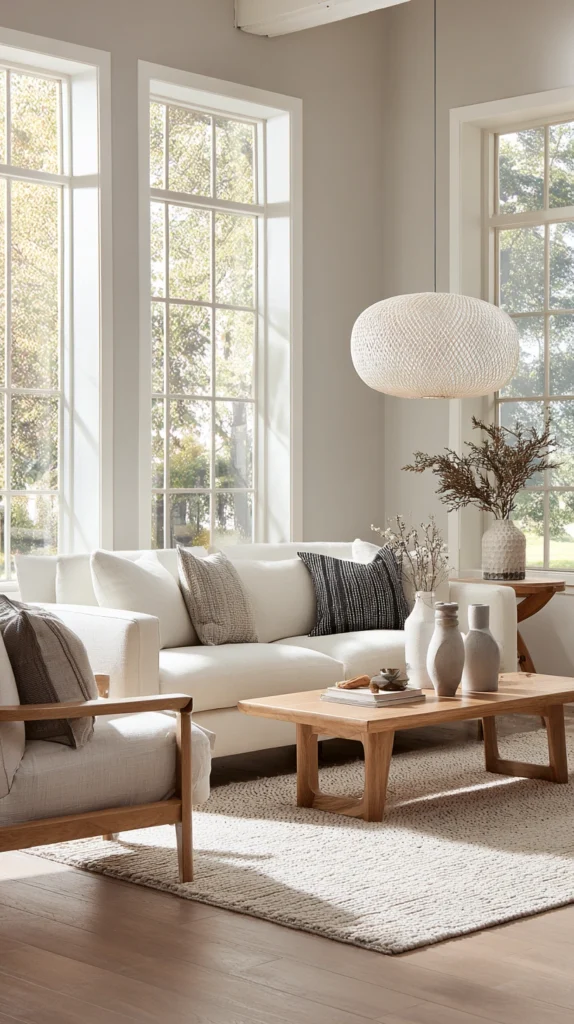
Selecting a single neutral color family — cream, warm gray, soft taupe — for the largest furniture pieces (sofa, bed frame, dining table) creates a calm foundation that both partners’ individual style can layer on top of without clashing. Standard living room sofas and bedroom sets represent the largest furniture investments in most homes, making this the highest-leverage place to establish shared ground.
Budget: this doesn’t require new spending if existing large furniture is already reasonably neutral, though budgeting $300-800 for one or two new anchor pieces (if needed) is common for newlywed households combining two previously furnished homes. Choosing this neutral base together, rather than one partner picking and the other simply agreeing, helps ensure both people feel genuine ownership over the foundational choice.
This approach works because it sidesteps the harder question of whose color preference “wins,” since a neutral base isn’t really either partner’s signature style, making it easier to agree on collaboratively. Each partner’s individual color preferences can then show up in smaller, lower-cost items — pillows, art, a rug — layered on top of this shared neutral foundation.
This is one of the more important early decisions in the blending process, since large furniture pieces are the most expensive and difficult to change later if the choice ends up feeling wrong for one partner.
3. Give Each Partner One Room or Zone to Decorate Freely
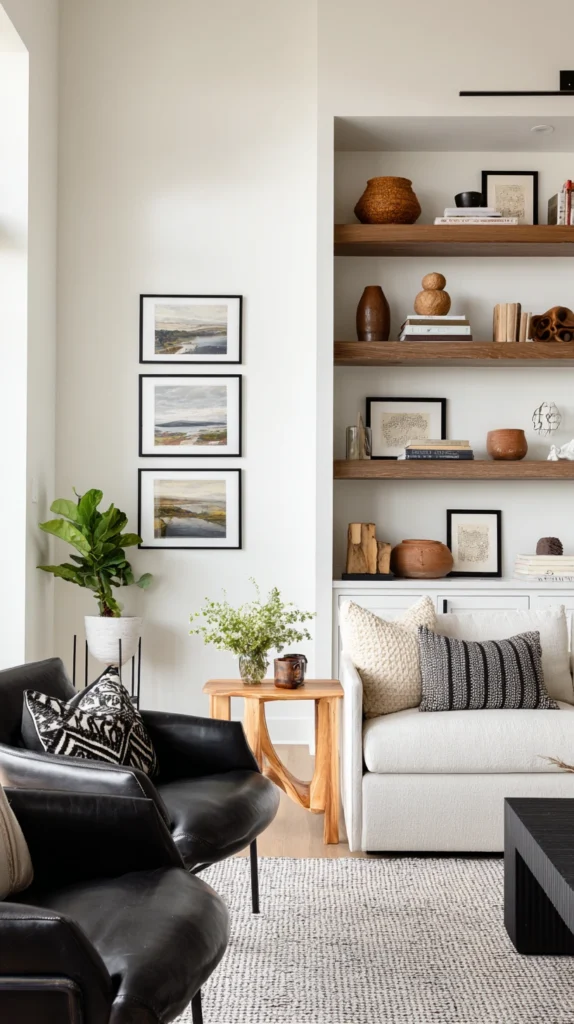
Designating a home office, a reading nook, or even just one wall as a space where one partner has full creative control (with the other simply not vetoing it) can relieve a surprising amount of tension in the broader blending process. Standard home offices or reading nooks need as little as 60-100 sq ft to function as a dedicated personal zone.
Budget: $200-600 per personal zone, depending on what furniture and decor the space needs, and this budget is usually easier for couples to agree on since it’s understood to reflect one person’s taste specifically rather than a joint decision. This arrangement works particularly well when one partner has a much bolder or more specific aesthetic than the other, since it gives that style somewhere to fully exist without needing to be watered down throughout the whole home.
Setting clear boundaries about what “free reign” actually means — a full room versus just one wall or corner — prevents confusion or resentment later, so this is worth discussing explicitly rather than assuming both partners have the same expectation. This approach also means shared spaces (living room, kitchen, primary bedroom) can stay more genuinely collaborative and blended, since each partner already has an outlet for more personal expression elsewhere.
This is one of the more relationship-focused ideas on this list, addressing the emotional side of blending styles as much as the practical decorating challenge itself.
4. Build a Shared Mood Board Before Any Shopping Trip
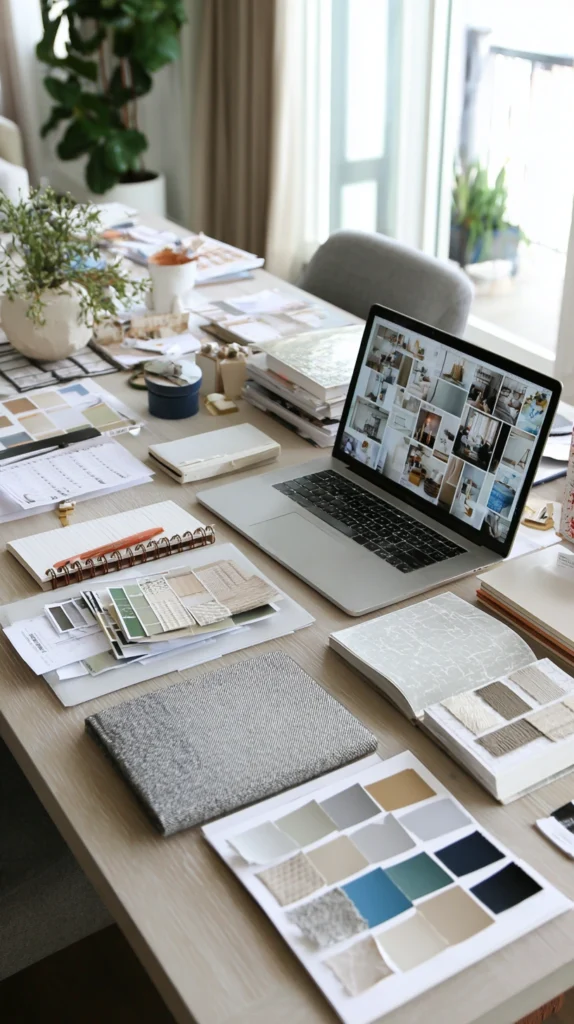
Sitting down together to build a combined Pinterest board, physical clipping collection, or simple shared photo album of styles both partners like (and dislike) creates a reference point that prevents disagreements during in-person shopping. This process typically takes one or two sessions of 30-60 minutes each to feel genuinely complete.
Budget: $0, making this one of the lowest-cost but highest-value steps in the entire blending process. Each partner adding images independently first, then reviewing the combined board together, tends to surface overlap more honestly than trying to agree on every image in real time.
Looking specifically for images both partners saved independently, even if for different reasons, often reveals a shared aesthetic neither person had fully articulated before starting the exercise. This board becomes a genuinely useful reference during future shopping trips, reducing decision fatigue and disagreement by giving both partners a shared visual shorthand for what they’re working toward.
This is one of the most commonly recommended early steps by professional interior designers working with couples specifically, since it front-loads the harder conversations before any money has been spent.
5. Mix Two Wood Tones Intentionally Rather Than Avoiding the Clash
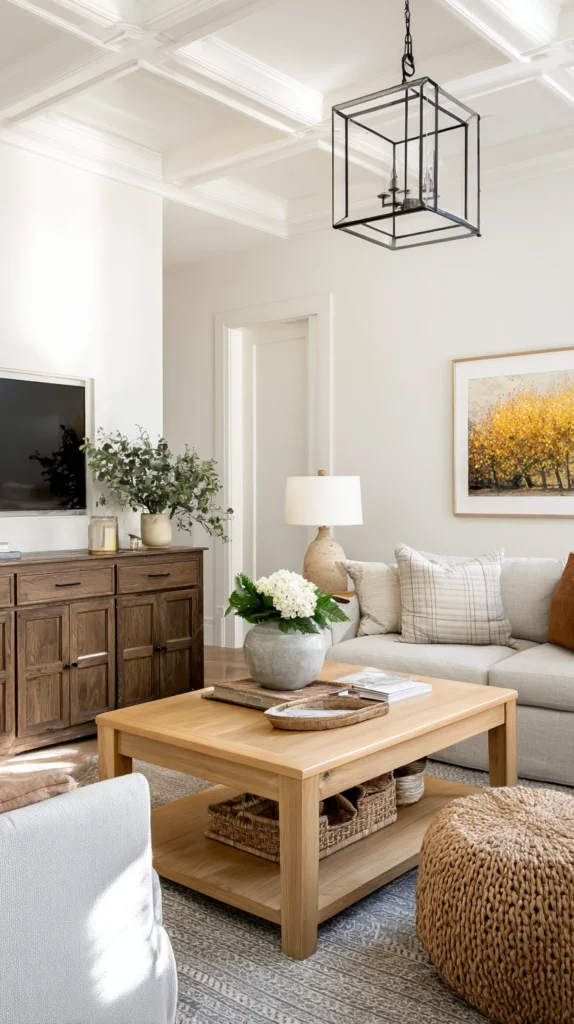
Rather than forcing both partners’ existing wood furniture to match exactly, deliberately mixing two complementary wood tones — say, a warm walnut piece from one partner and a lighter oak piece from the other — can look genuinely intentional rather than mismatched if done with a bit of planning. Standard living rooms can comfortably support two to three distinct wood tones without looking chaotic.
Budget: $0 if working with existing furniture, since this technique is about arrangement and pairing rather than new purchases. Repeating each wood tone at least twice within a room — rather than a single isolated piece of each — helps the mix read as a deliberate choice rather than an accident of two households merging.
This approach directly addresses one of the most common practical problems newlywed couples face, since it’s rare for two individually furnished homes to share the same wood finishes throughout. A shared metal accent color (all-black hardware, or all-brass) across both wood tones is a simple trick that helps visually unify pieces that otherwise don’t match.
This is a good example of reframing a common “problem” (mismatched furniture) into an intentional style choice rather than something that needs to be fixed by replacing furniture immediately.
6. Create a Combined Photo and Memory Wall
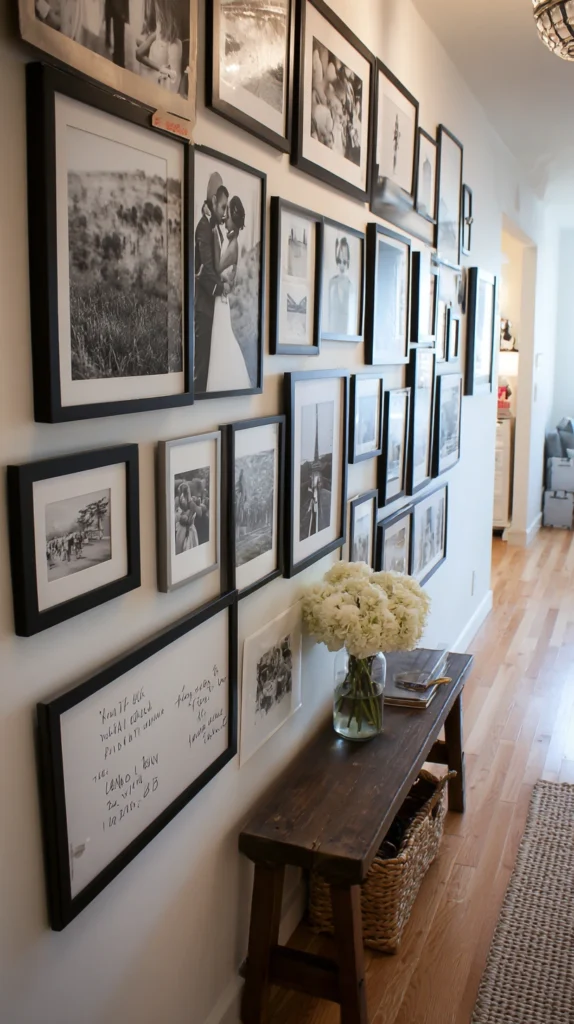
A gallery wall featuring photos, ticket stubs, and small mementos from both partners’ individual pasts as well as their shared relationship creates a genuinely personal space that couldn’t belong to either person alone. Standard memory walls use 8-15 framed pieces across a 4×6 foot area.
Budget: $80-200 for frames and printing, depending on how many pieces are included and whether frames are purchased new or sourced secondhand. Including items from both partners’ lives before the relationship, not just photos of the couple together, makes the wall feel like a genuine blending of two histories rather than purely a couple’s photo display.
This is one of the more emotionally meaningful ideas on this list, since it directly visualizes the concept of blending two individual pasts into one shared future within the physical space of the home. Building this wall together, choosing which items to include as a joint activity, is itself a bonding exercise in addition to the resulting decor.
This works particularly well in an entryway or hallway, spaces that guests see immediately and that benefit from feeling personal and welcoming right away.
7. Combine Registry Gifts With Existing Pieces Thoughtfully
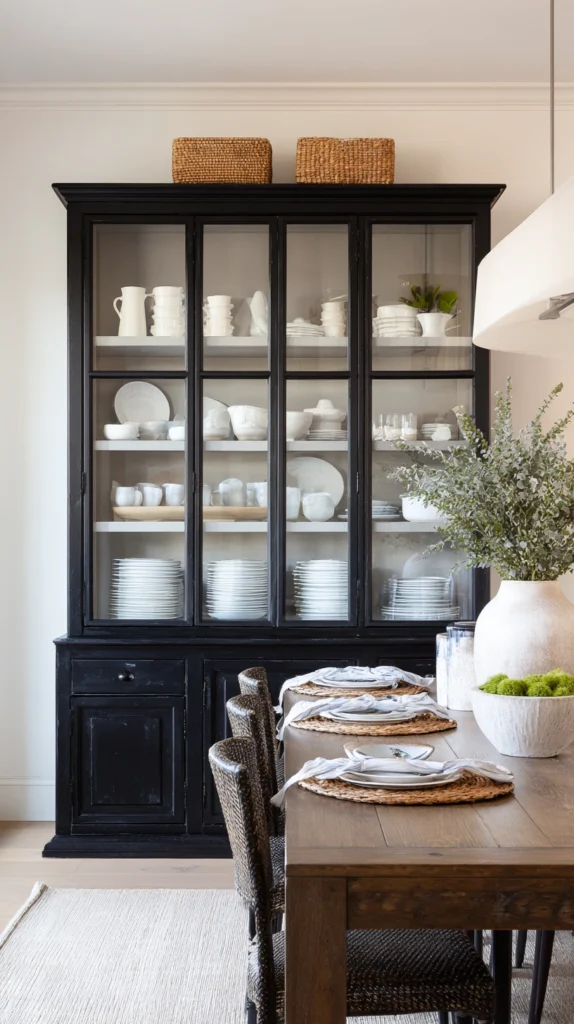
Wedding registry items, often chosen jointly during engagement, provide a natural starting point for shared taste, but blending these new pieces with existing furniture from both partners requires some intentional planning to avoid a mismatched, half-new-half-old look. Standard registries include anywhere from a few dozen to over a hundred household items across kitchen, bedroom, and living spaces.
Budget: this varies enormously based on registry completion rates, though many couples receive $1,500-4,000 worth of home goods through wedding gifts, which significantly offsets the cost of furnishing a first shared home from scratch. Using registry items as the “shared neutral base” described earlier in this list, then layering in existing personal pieces from each partner, is a practical way to integrate both categories cohesively.
This is a good moment to revisit the combined furniture inventory from the first idea on this list, cross-referencing what’s arriving from the registry against what’s already owned to avoid unintentional duplicates. Returning or exchanging registry items that clearly don’t fit the home’s emerging shared style, rather than keeping everything out of obligation, is worth doing within the store’s typical return window.
This step is unique to newlywed decorating specifically, since most other household transitions don’t come with this particular influx of jointly chosen new items all at once.
8. Use a “His, Hers, and Ours” Approach to Small Decor
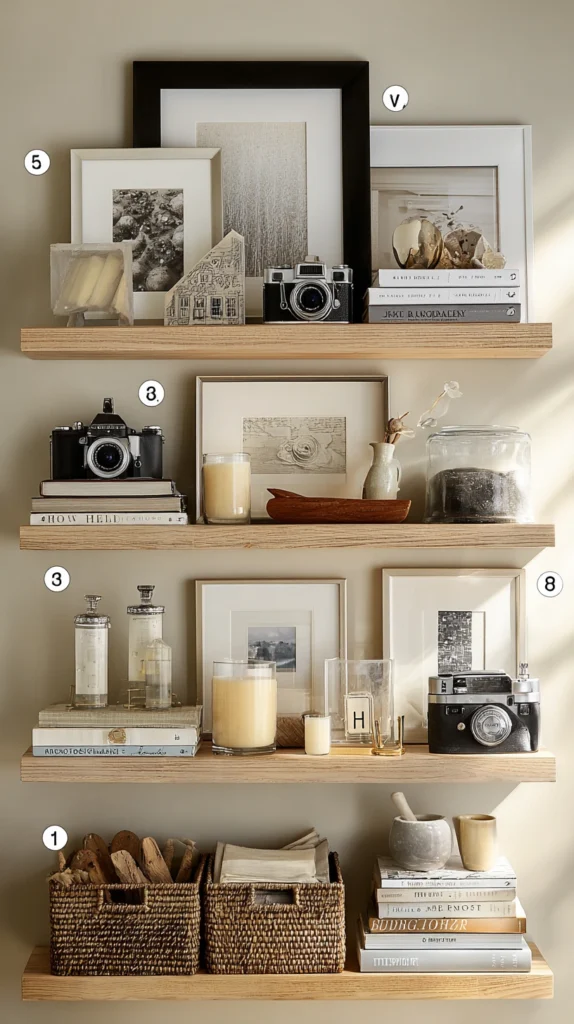
Rather than debating every small decorative object, some couples find it easier to mentally categorize items as belonging to one partner, the other, or genuinely shared, and then distribute them intentionally throughout the home rather than trying to homogenize everything. This mental framework works well for smaller, lower-stakes items like books, art, and personal collections.
Budget: $0, since this is a curation strategy rather than a purchasing decision. Displaying a “his” item next to a “hers” item on the same shelf, rather than separating them into different rooms entirely, visually reinforces the blending happening throughout the home.
This approach reduces the pressure to make every single object work for both partners equally, which can be a genuinely difficult standard to meet and often leads to bland, overly compromised decor that fully satisfies neither person. Over time, as the couple lives together longer, many “his” and “hers” items naturally shift into the “ours” category simply through shared use and memory, and revisiting this categorization occasionally can be a useful check-in.
This is one of the more psychologically practical ideas on this list, addressing the reality that not every object needs to be a joint decision to still feel like it belongs in a shared home.
9. Choose a Shared Textile Language Across Different Furniture
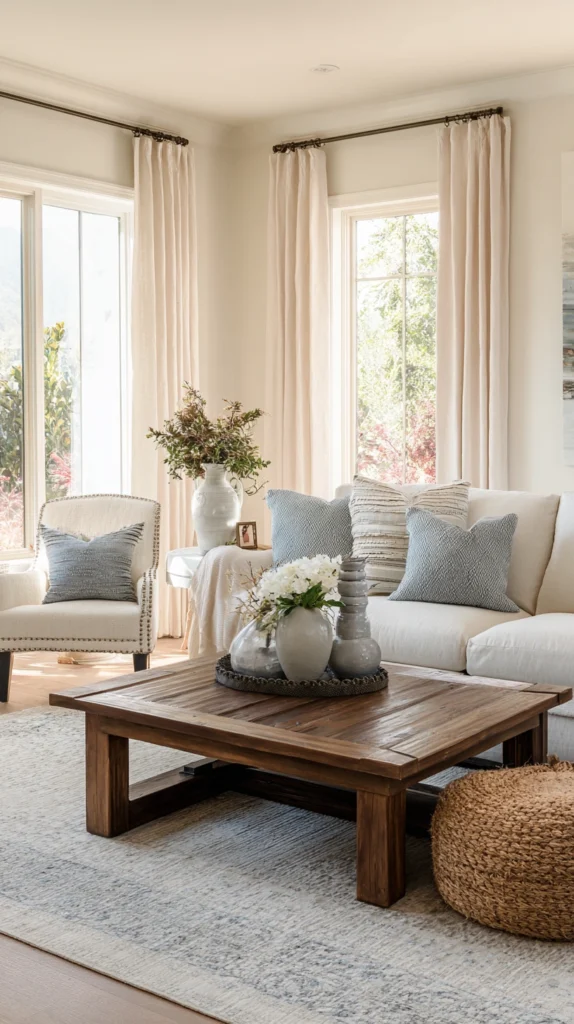
Even when furniture pieces themselves don’t match, using consistent textiles — the same or coordinating throw pillow fabric, a matching set of curtains, one shared rug style — throughout the home ties visually different pieces together under one cohesive thread. Standard homes benefit from repeating one or two textile choices across at least three different rooms or areas.
Budget: $150-400 for a coordinated set of pillows, curtains, and a rug across a few key rooms, a relatively low-cost way to create cohesion compared to replacing mismatched furniture entirely. Choosing textiles in the shared neutral base color, with one accent color both partners agreed on during the mood board process, creates a thread that runs through rooms with otherwise different furniture styles.
This is one of the most cost-effective blending techniques on this list, since textiles are significantly cheaper to update than furniture and can be swapped again later if the couple’s shared taste continues to evolve. This approach also gives both partners a low-stakes way to keep contributing to the home’s evolving style without needing to revisit bigger furniture decisions.
Textiles are also one of the easiest categories to compromise on collaboratively, since patterns and colors offer more middle-ground options than furniture style, which tends to be more fixed once purchased.
10. Address the Kitchen and Dishware Merge Early
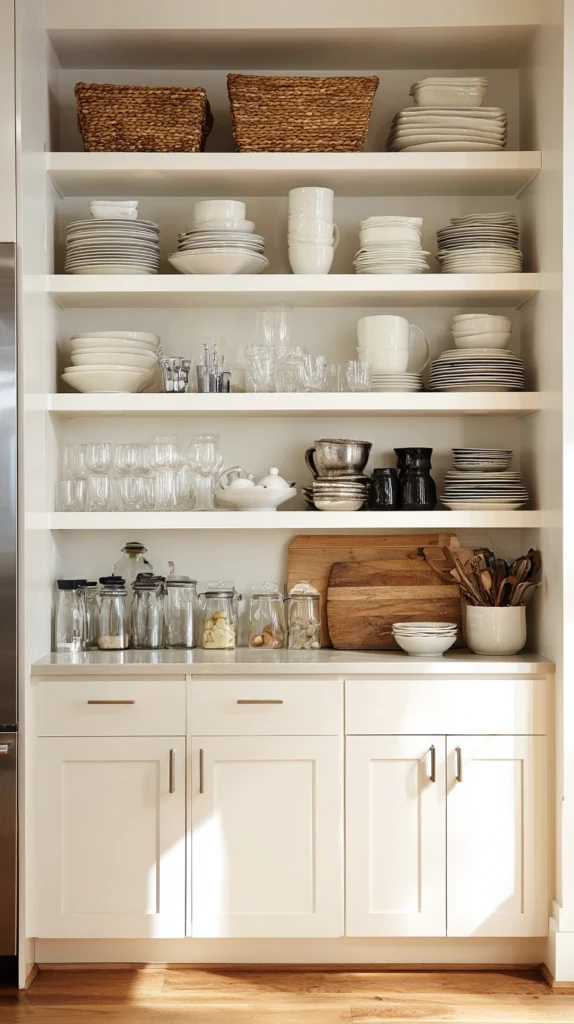
Combining two full sets of dishes, cookware, and kitchen tools is one of the most immediately practical blending challenges newlyweds face, often surfacing within the first week of living together rather than being a more gradual decorating decision. Standard households typically end up with roughly double the necessary kitchen items when two previously independent kitchens combine.
Budget: $0 in most cases, since this is primarily a sorting and donation process rather than a new purchase, though some couples do choose to buy one fresh, jointly selected set of everyday dishware as a symbolic fresh start, typically running $80-200 for a basic set. Testing both partners’ cookware for actual quality and functionality, rather than just keeping whichever set looks nicer, ensures the kept items are genuinely the better performers.
Donating or selling the duplicate set, rather than storing it indefinitely, frees up kitchen storage space that’s almost always at a premium in a shared first home. This is a good practical task to tackle within the first month of living together, since kitchen functionality affects daily life far more immediately than most other decorating decisions on this list.
This process also often becomes a useful, lower-stakes practice round for the bigger furniture and style compromises still ahead, since kitchen items tend to carry less emotional weight than furniture or art.
11. Create a Shared Playlist or Ritual Around Home Projects
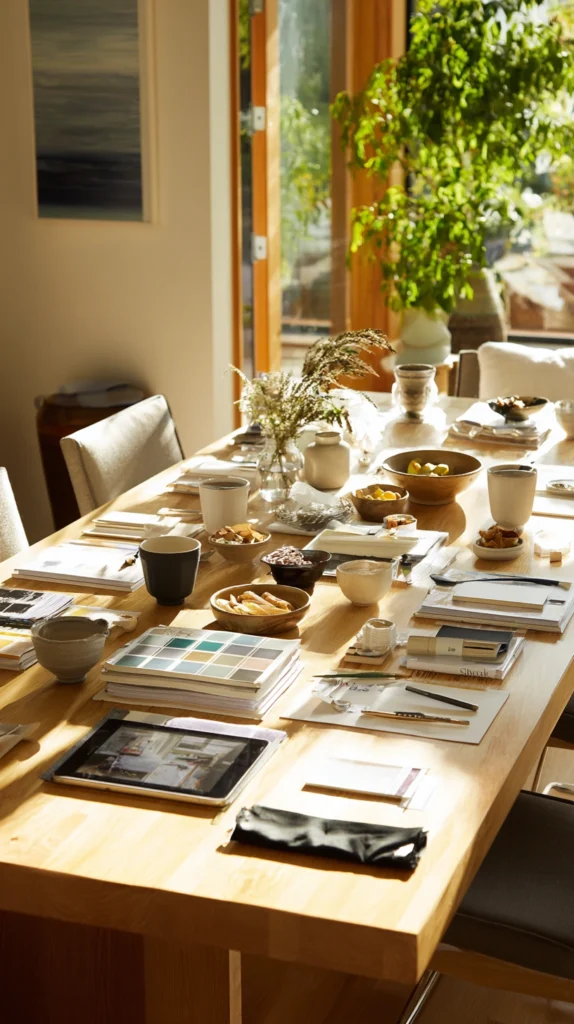
While not a decor item itself, establishing a shared ritual — a specific playlist, a regular Sunday project time, a takeout order that becomes tradition — around the process of decorating together turns what could be a source of friction into a positive shared memory. This costs nothing but does require intentional scheduling amid an otherwise busy early-marriage period.
Budget: $0-30 depending on whether the ritual includes something like a favorite takeout order or a bottle of wine during project sessions. Approaching decorating as an ongoing collaborative activity, rather than a series of individual tasks completed separately, tends to produce a home that feels more genuinely shared by the time it’s finished.
This is one of the more overlooked aspects of newlywed home decorating, since most practical advice focuses on the physical outcome rather than the process of getting there, but the process itself often shapes how satisfied both partners feel with the resulting shared space. Couples who report the most satisfaction with their blended home decor frequently describe enjoying the process itself, not just the finished result.
This idea is less about a specific decorating technique and more about protecting the collaborative spirit that makes blending two styles successful in the first place.
12. Revisit and Adjust the Blend After Living in the Space
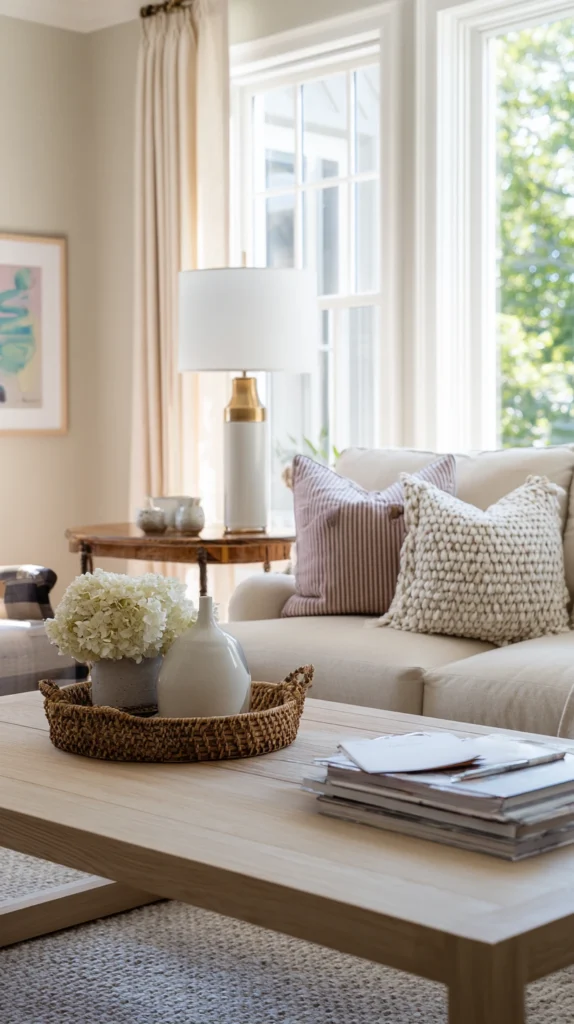
Giving the home three to six months before finalizing every decorating decision allows both partners to discover what actually works in daily life, rather than trying to get everything perfect immediately after moving in together. This is less a specific project and more a mindset shift about timeline expectations.
Budget: this approach actually saves money over time, since it prevents the common mistake of making expensive decisions too quickly, only to realize later that a piece doesn’t suit how the couple actually lives. Scheduling an informal check-in conversation a few months after moving in, specifically about how the shared space is working, gives both partners a structured opportunity to raise small frustrations before they become bigger sources of tension.
This is particularly useful for larger, harder-to-change decisions like a sofa or bed frame, where living with a choice for a few months reveals comfort and functionality issues that aren’t always obvious during the initial purchase. This patience-based approach also naturally allows the “his, hers, and ours” categories described earlier to shift organically as the relationship and shared taste continue developing.
This final mindset ties together every other idea on this list, since a home built through genuine collaboration over time tends to feel more successfully blended than one rushed to completion in the first few weeks of marriage.
13. Don’t Force a Perfect 50/50 Split in Every Room
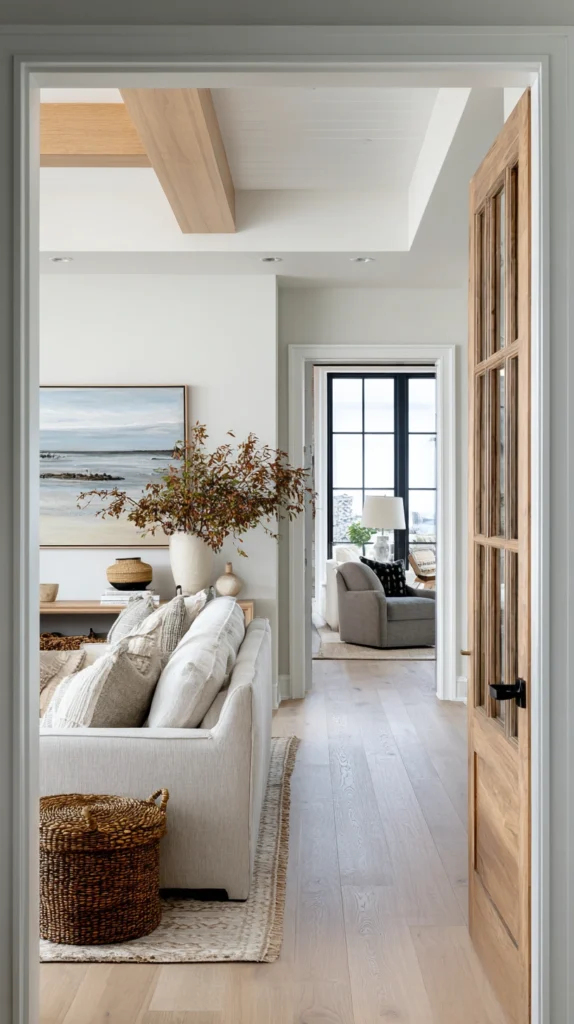
One of the more freeing realizations for many newlywed couples is that a genuinely blended home doesn’t require exact equal representation in every single room, and it’s often more successful when certain spaces lean more toward one partner’s taste while others lean toward the other’s. This is a mindset principle rather than a specific purchase or project.
Budget: $0, since this reframing costs nothing but can meaningfully reduce the friction involved in decorating every single room as an equally negotiated compromise. Allowing the kitchen to lean toward one partner’s practical preferences while the living room leans toward the other’s aesthetic instincts, for example, often produces a more genuinely successful home than insisting on equal input in every category throughout.
Over the course of a whole home, these leanings tend to average out naturally, meaning neither partner ends up feeling like their taste was systematically overlooked even though no single room was a perfect 50/50 split. This principle works especially well paired with the earlier idea of giving each partner one fully personal zone, since it acknowledges that total equality in every micro-decision isn’t actually necessary for a home to feel shared and fair overall.
This final idea is really a permission slip more than a decorating technique, and it’s often the single most stress-reducing realization for couples navigating this process for the first time.
Quick Start Weekend Project List
This weekend, together:
- Complete the combined furniture inventory
- Start a shared mood board or Pinterest collection
- Sort duplicate kitchen items into keep, donate, and undecided
- Choose one shared textile color or pattern to build around
Budget-Friendly Version
Lowest-cost ways to start blending styles:
- Use existing furniture with a shared textile thread rather than buying new
- Build the mood board and inventory process, which cost nothing
- Donate duplicate items rather than storing two of everything
- Reframe mismatched wood tones as intentional rather than replacing furniture
Success Indicators
- Both partners can point to at least one element in shared spaces that feels like “theirs”
- Disagreements about decor decrease as the shared style becomes clearer over time
- The home doesn’t feel like it belongs to just one partner’s taste
- Personal zones give each partner an outlet without needing every room to be a compromise
- The process itself felt collaborative, not like one person managing the other’s preferences
Remember
Start with a combined inventory and shared mood board before spending any money, choose one shared neutral base for large furniture and let individual style show up in smaller, lower-cost items, give each partner at least one zone or room to decorate more freely, don’t force a perfect equal split in every single room, and give the home several months to settle before finalizing every decision, since a genuinely blended style usually reveals itself gradually rather than being achieved all at once.