14 Dreamy Garden Ideas for a Relaxing Summer Vibe
There is a version of a garden that exists in the specific hours between five in the afternoon and nine at night, when the light goes warm and low and the air loses the day’s sharp heat and becomes something softer. Most gardens are pleasant in that hour almost by accident. The dreamy garden is pleasant by design — arranged, planted, and lit in ways that make those particular hours the best version of what a garden can be.

None of what follows requires a large space or a significant budget. It requires the specific intention of making the garden feel good rather than simply look good, which is a different project and often a cheaper one.
1. The Wildflower Meadow Patch
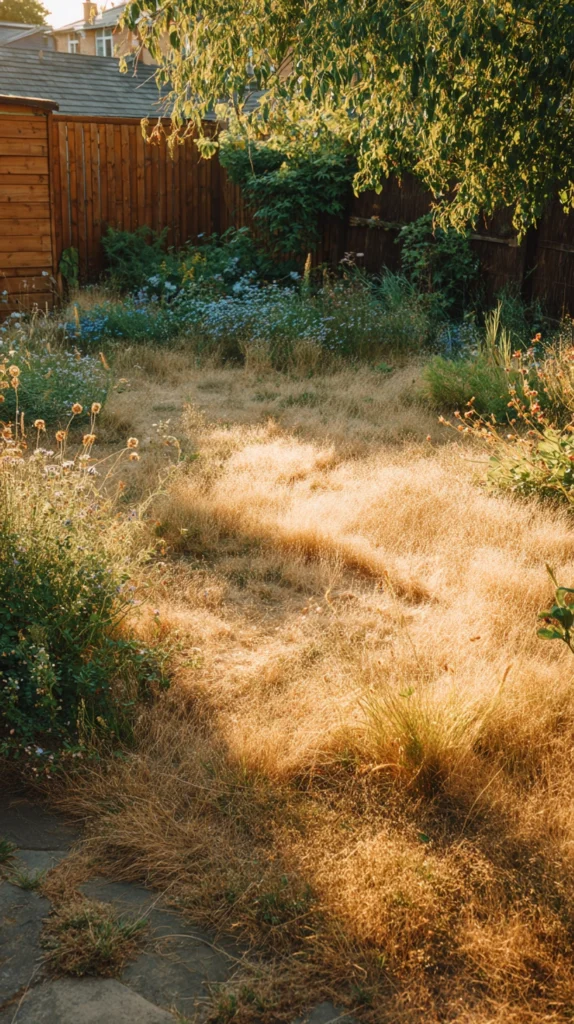
Budget: $5 – $30
Sow a wildflower seed mix into a cleared patch of soil — even a small one, even a metre square — and by midsummer you have something that no planted border of purchased plants achieves: the particular beauty of things that grew rather than things that were placed. Cornflowers, poppies, ox-eye daisies, and grasses moving together in a light breeze look more like a dream than anything designed.
A wildflower seed mix costs $3–$10 per packet. Scatter directly onto cleared, raked soil in spring and resist the urge to weed what appears in the first weeks — the wildflowers and the weeds are indistinguishable until the first flowers open. Cut the whole patch to the ground in autumn and the seeds will self-sow for the following year.
Style tip: Leave the seed heads standing through winter rather than cutting them immediately after flowering. The dried stems and seed heads have their own beauty in low winter light, they provide habitat for beneficial insects, and they produce next year’s sowing without any additional effort — a garden detail that earns its space in every season rather than only one.
2. The Hammock Between Two Trees
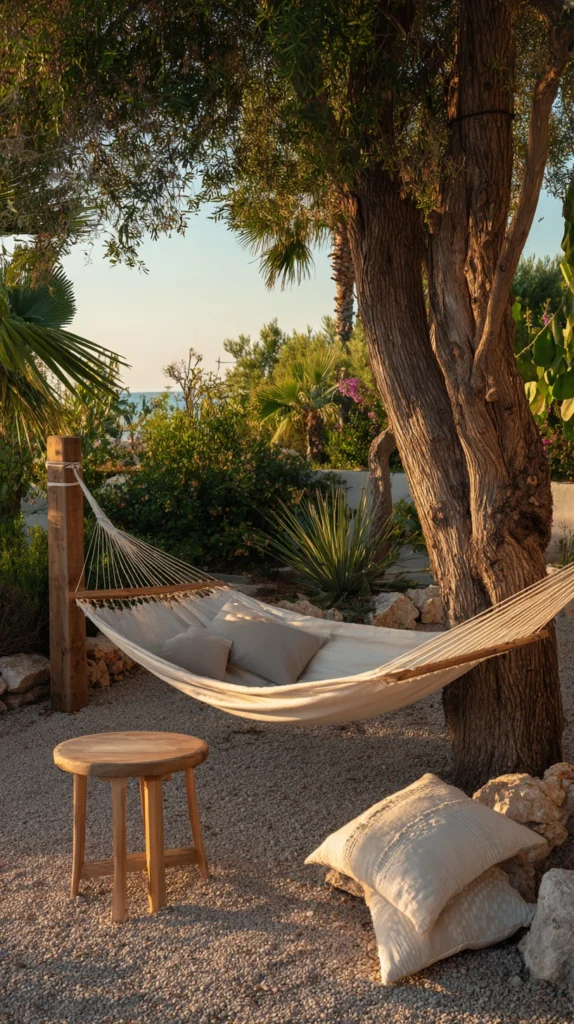
Budget: $25 – $80
A cotton hammock strung between two established trees is the purest expression of summer relaxation available to any garden — horizontal, suspended, gently moving, entirely without purpose beyond the pleasure of being in it. No chair achieves the same physical release, no daybed provides the same quality of afternoon disappearance.
A cotton hammock costs $25–$60. Tree straps protect the bark and cost $10–$20 per pair. Hang it lower than instinct suggests — a fix height of 120–150 centimetres produces the right curve when occupied without the hammock approaching the ground. Position it in dappled shade rather than full sun for the long summer afternoon sessions it is made for.
Style tip: Face the hammock toward the most open and interesting view the garden offers rather than toward a fence or a wall. The view from a hammock — slow, horizontal, requiring no effort — is experienced more completely than almost any other garden view, and a hammock that looks at something beautiful makes that something beautiful in a way that passing it on foot never quite does.
3. The Evening Scent Garden
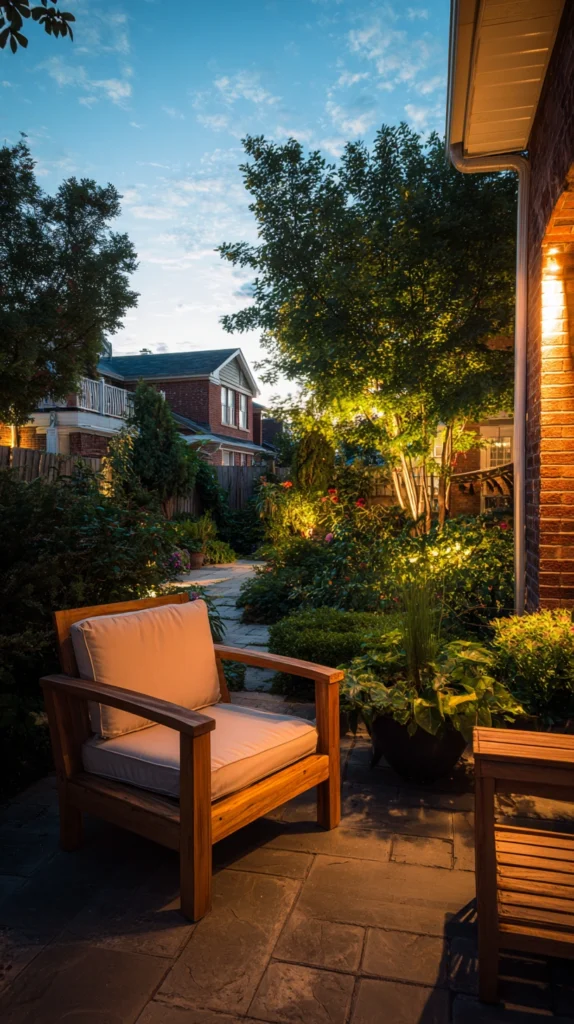
Budget: $20 – $80
Plant a cluster of evening-scented species beside the most-used seating area — night-scented stock, tobacco plant, jasmine, sweet peas — and the garden after six o’clock acquires a quality that no visual improvement can replicate. Evening-scented plants release their fragrance as the temperature drops, performing precisely when the garden is most used and most worth being in.
Night-scented stock seeds cost $2–$4 per packet. Tobacco plant costs $3–$6 per plant. Jasmine in a 3-litre pot runs $8–$20. Position the fragrant cluster on the side of the seating area that the prevailing breeze crosses first so the scent is carried toward rather than away from where people are sitting. One well-positioned fragrant plant does more for a summer evening than ten planted at the far end of the garden.
Style tip: Include at least one plant that contributes scent even when not in flower — lemon thyme, scented-leaf geranium, or rosemary release their fragrance whenever their foliage is brushed or warmed by the sun. A garden that smells good without being touched is pleasant; one that releases scent when you brush past it on the way to your chair is something better and more alive.
4. The Fairy Light Garden Canopy
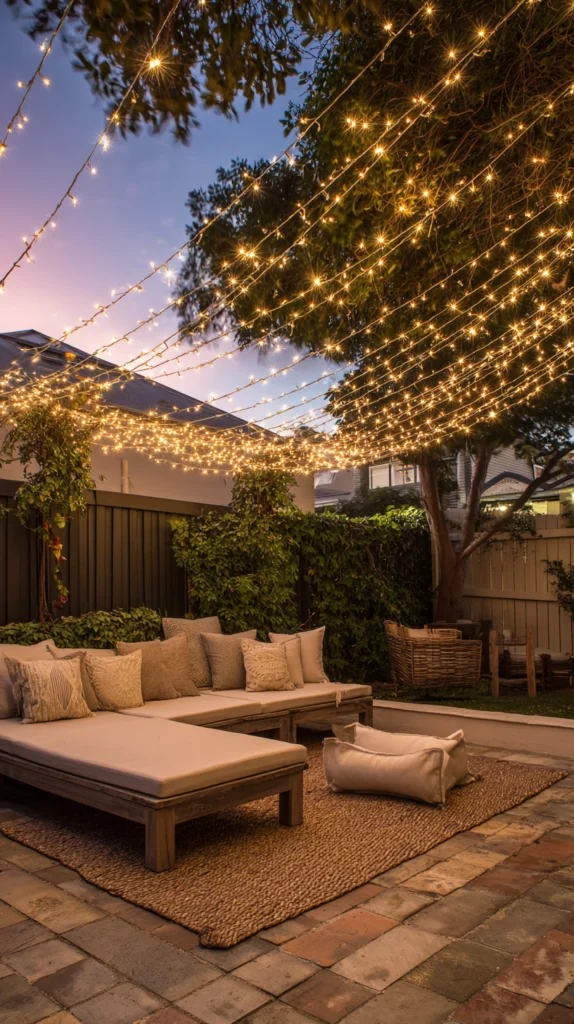
Budget: $20 – $80
Warm white fairy lights strung between two or more anchor points above the primary outdoor seating area create the single most transformative change available to a garden for the least expenditure. Overhead light that is warm, low, and diffuse — that comes on at dusk and turns the garden into its evening self — changes the quality of an outdoor space more profoundly than furniture, planting, or any other single element.
A 10-metre reel of outdoor warm white fairy lights costs $10–$25. Fix anchor points with weatherproof screw hooks ($3–$8 for a pack) to fence posts, walls, or tree branches. Connect to an outdoor socket via a timer ($8–$15) so the lights come on at dusk automatically — lights that must be consciously activated are activated less reliably than those that simply appear.
Style tip: Allow a sag of 20–30 centimetres between anchor points rather than tensioning the lights taut. A relaxed curve overhead reads as a canopy; a straight line reads as a cable. The sag is the difference between outdoor lighting that looks installed and outdoor lighting that looks like it grew there.
5. The Low Seating Garden
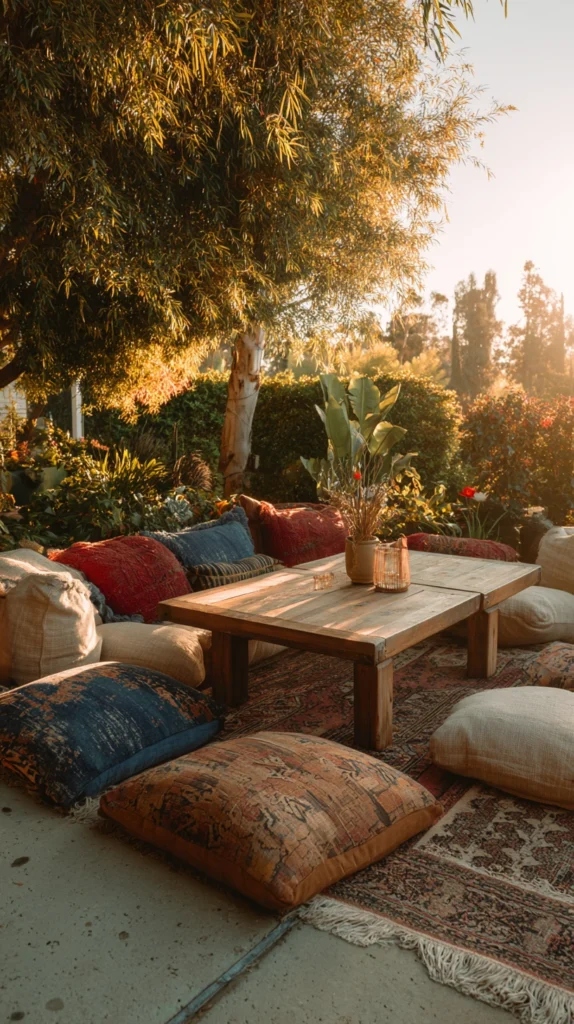
Budget: $50 – $200
Replace standard garden chairs with low seating — floor cushions, poufs, low slung rattan chairs, or a wooden platform with a thick outdoor cushion — and the entire experience of the garden changes. Lower seating brings you closer to the planting, which means the garden is experienced from within rather than above, and the low vantage point makes the garden feel larger and more enveloping simultaneously.
Large outdoor floor cushions cost $20–$50 each. Outdoor poufs run $30–$80. A low-slung rattan chair costs $60–$150. A timber platform built from two pallets stacked and topped with an outdoor cushion costs $15–$40 in total. The lower the seating, the more likely guests are to stay in it for extended periods — the posture of low sitting, slightly reclined, is the posture of someone who has decided to remain.
Style tip: Add one slightly higher element — a standard-height side table, a tall lantern on a post — to the low seating arrangement. An entirely low arrangement can feel like a camping setup; one low element elevated slightly reads as a considered choice. The single taller element gives the arrangement a scale reference that makes everything else in it feel deliberately low rather than simply close to the ground.
6. The Water Feature Corner
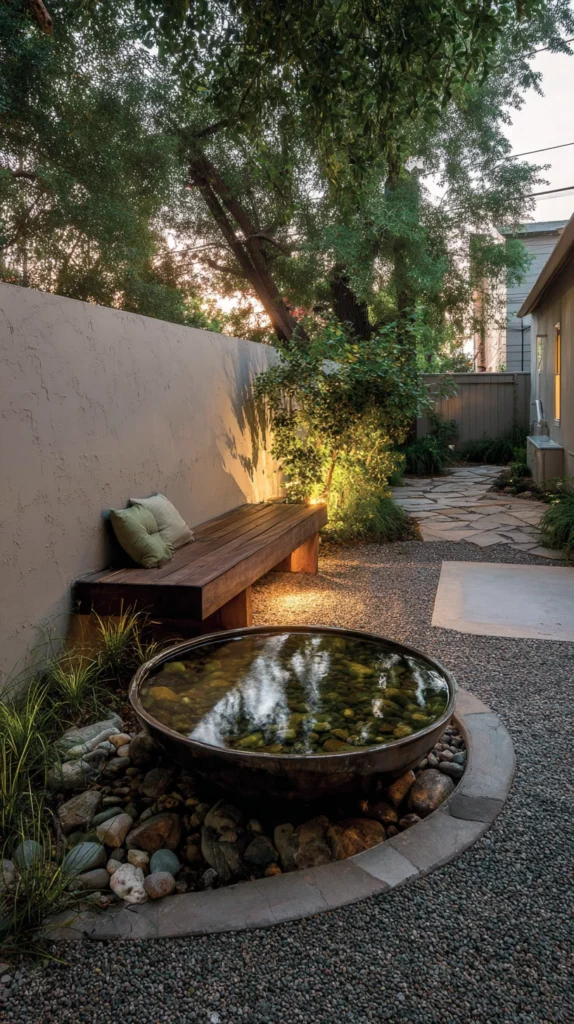
Budget: $30 – $200
A small water feature — a self-contained fountain, a bowl with a solar pump circulating the water, a half barrel with aquatic plants and still water — introduces the two things that transform a garden on a hot day: the sound of moving water, and the particular coolness that a water surface brings to the air around it. Neither requires a pond, a pump system, or any construction beyond placing the vessel and filling it.
A self-contained solar fountain bowl costs $30–$80. A half barrel water garden runs $20–$50 plus plants. Aquatic plants — water lily, water hyacinth, water mint — cost $5–$15 each and provide both beauty and water surface coverage that reduces algae growth. Position the water feature within earshot of the primary seating area — water heard without being seen has a cooling, atmospheric quality; water seen without being heard is simply a reflective surface.
Style tip: Add one emergent plant — something that grows up through the water surface, like a water iris or a rush — as well as one floating plant. The vertical element of an emergent plant gives the water feature a scale and a structure that floating plants alone lack, and it creates movement above the water surface in a breeze that reflects in the water below.
7. The Outdoor Bathtub Garden Feature
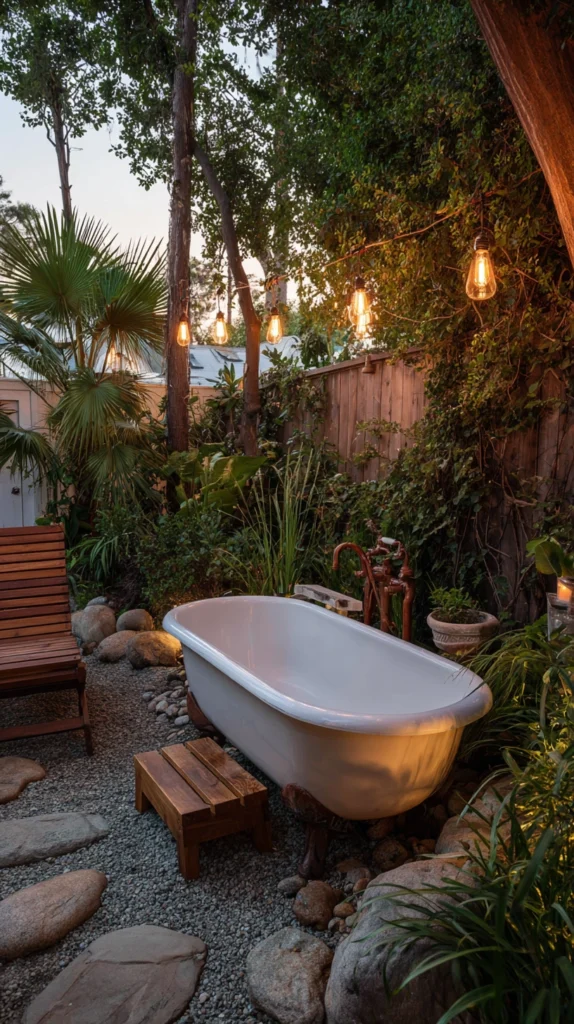
Budget: $50 – $200
A reclaimed cast iron or deep steel bathtub positioned in a sheltered corner of the garden — planted with trailing flowers over the rim, filled with water plants, or used as a genuine outdoor soaking bath connected to a garden hose — is the most unexpectedly romantic garden feature available. It transforms a corner from an unused space into an object of curiosity and beauty that guests always approach and often remember.
A second-hand cast iron bath costs $0–$80 from online classifieds, house clearances, or salvage yards. A repurposed steel trough runs $20–$60. For a planted version, fill with a mix of compost and grit and plant with trailing plants over the rim. For a water garden version, waterproof the base with pond liner ($15–$25), fill with water, and add aquatic plants. For a genuine soaking bath, connect to the outdoor tap with a hose fitting and drain into the garden.
Style tip: Partially screen the bathtub with a planted trellis or tall grasses on two sides rather than leaving it fully open. A completely visible bathtub is a garden feature; one partially glimpsed through foliage is a discovery — and the quality of discovering something beautiful in a garden corner is the quality that most reliably produces the word dreamy.
8. The Canopy Bed Garden Room
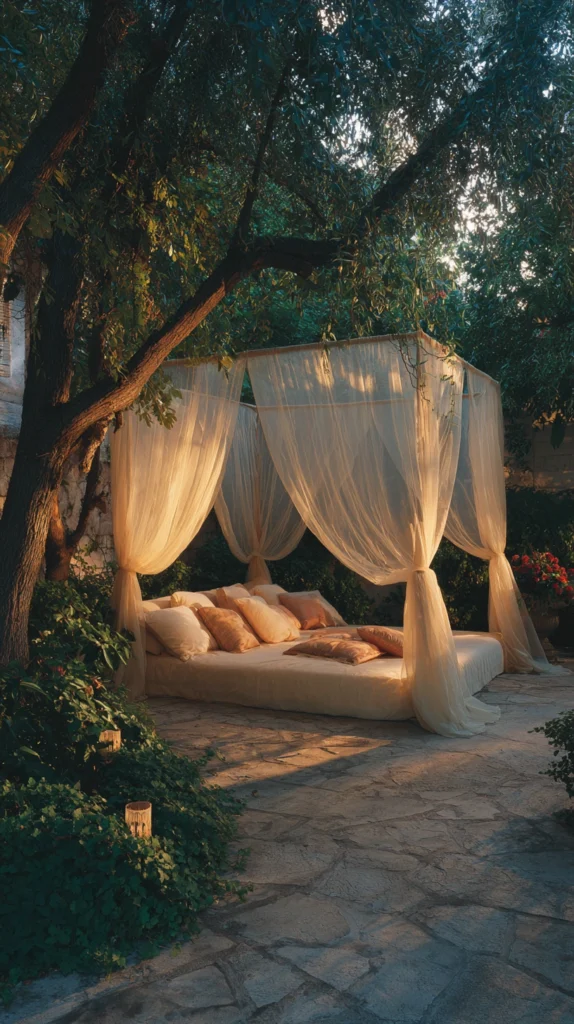
Budget: $80 – $400
A simple four-posted canopy frame — built from timber uprights and a lightweight roof structure of timber or bamboo, draped with sheer fabric that hangs to near-ground level on three sides — creates an outdoor bedroom in the garden that is one of the most genuinely dreamy things a summer backyard can contain. Inside it: a wide daybed or a collection of floor cushions, a lantern, and nothing that connects to the indoors.
Four timber posts of 200 centimetres in height cost $5–$15 each. A lightweight roof frame of batten timber runs $10–$25. Sheer outdoor fabric for the curtain sides costs $8–$20 per panel — three panels for three sides. A large outdoor daybed or cushion collection costs $80–$250. The canopy bed garden room is the idea that requires the most construction of anything on this list and produces the most consistent and most lasting impression on everyone who sees it.
Style tip: Place the canopy bed so the open front faces the most beautiful view of the garden — the flower border, the lawn, the water feature — rather than facing the house wall or the fence. The open side is the direction the space looks toward, and the view from inside a fabric canopy on a summer evening is experienced with an intensity that no other garden position provides.
9. The Potted Rose Arch
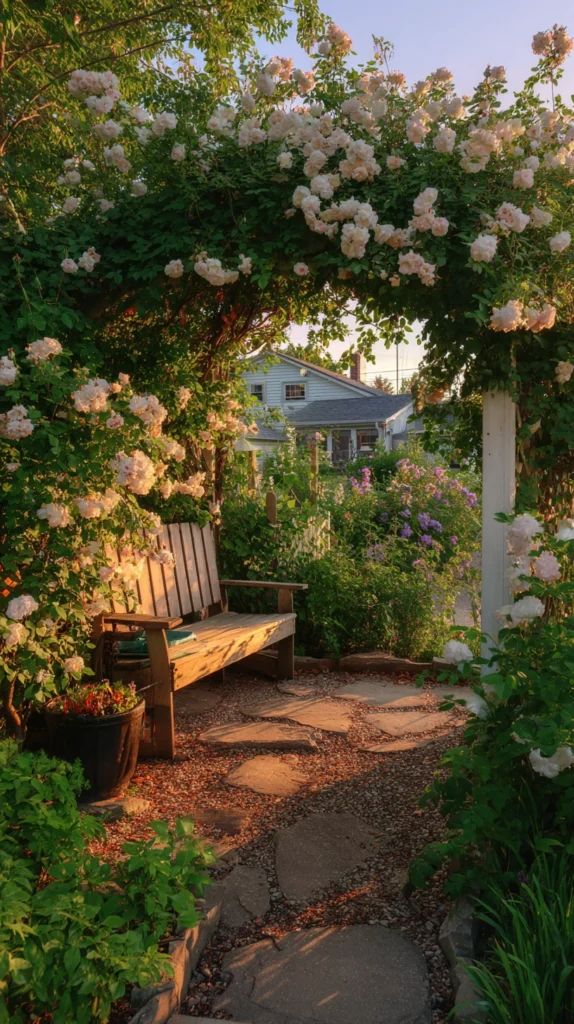
Budget: $40 – $150
A simple metal or timber arch positioned at the entrance to the garden seating area, with two large pots of climbing roses — one on each side, trained upward and across the arch — creates a floral gateway that makes arriving in the garden feel like arriving somewhere worth reaching. Roses in full bloom on an arch in July, with the evening light behind them and the scent reaching you before you pass through, is a garden moment of genuine beauty.
A metal garden arch costs $30–$80. Two large pots of 40-centimetre diameter cost $15–$40 each. Climbing roses in a 5-litre pot run $15–$35 each. Train the roses upward along the arch sides from the first season and tie in new shoots horizontally across the top — horizontal training produces more flowering shoots than vertical, which produces mostly foliage.
Style tip: Choose repeat-flowering climbing roses rather than once-flowering varieties. A rose that blooms once in June and then produces only foliage for the remaining five months is beautiful for four weeks and structural for the rest; one that repeats from June through to October earns its arch position across the full season that the seating area is in use.
10. The Moon Garden
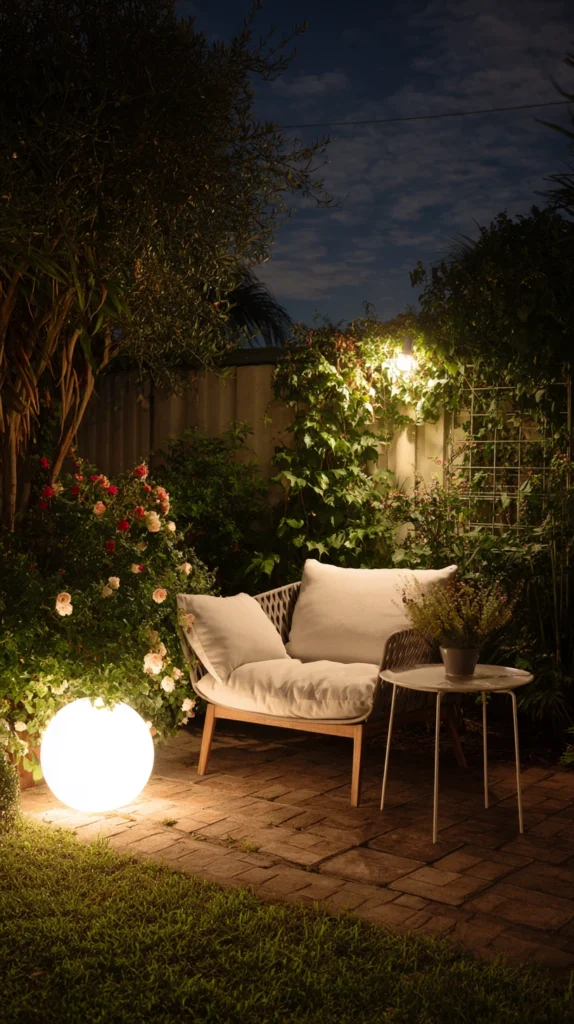
Budget: $25 – $100
A moon garden — a planting of exclusively white and pale-toned flowers and silver-leaved foliage — is the garden idea that sounds the most eccentric and works the most reliably in practice. White flowers glow in the low light of evening and in the half-dark of a summer night in a way that coloured flowers do not; they reflect moonlight and lantern light back into the garden and make the planting area luminous after dusk when the rest of the garden has gone to shadow.
White flowering plants — white cosmos, white sweet peas, white petunias, white nicotiana — cost $2–$5 each. Silver-leaved foliage plants — Stachys byzantina, artemisia, white-leaved sage — run $4–$8 each. A simple planting of five to seven white-flowered species in a border or a container grouping costs $15–$40 in plants. Position the moon garden within the lit zone of the garden so the evening light reaches it and the white flowers have something to reflect.
Style tip: Include at least one white flower that is also fragrant — white sweet peas, white nicotiana, white jasmine, Philadelphus. A moon garden that is beautiful and fragrant in the evening is experiencing both its visual and olfactory performance simultaneously, which is the combination that produces the particular dreamy quality the idea is reaching for.
11. The Outdoor Lantern Collection
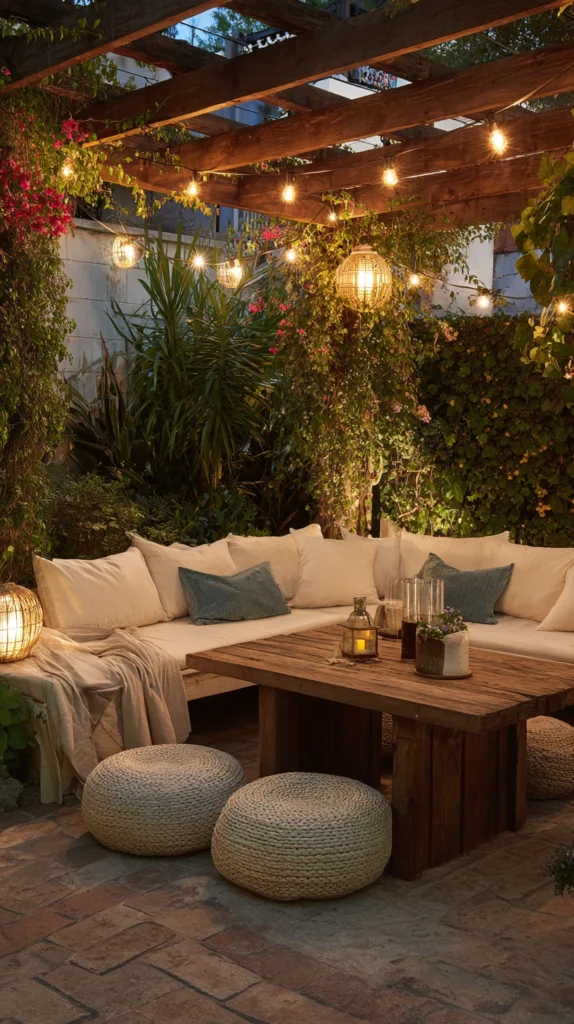
Budget: $30 – $150
A deliberately assembled collection of outdoor lanterns — in varying heights, in a consistent material family, placed at different levels throughout the garden — creates the warm, flickering, multi-source light that transforms a garden after dark more completely than any fixed installation. Lanterns on the ground, lanterns on low walls, lanterns hanging from branches, lanterns on the table — the distribution of warm light through the garden at multiple heights is the lighting condition that makes a garden feel dreamy rather than simply lit.
Glass lanterns cost $8–$25 each. Moroccan punched metal lanterns run $10–$30. A collection of eight to ten lanterns distributed through the primary garden areas costs $80–$200 total. Use pillar candles rather than tea lights in most lanterns — a pillar candle burns for eight to twelve hours and lasts the full evening; a tea light burns for four and requires replacing mid-evening, which is the interruption most likely to break the atmosphere it was creating.
Style tip: Position at least two lanterns at ankle height or lower — on the ground beside the path, at the base of a planter, along the edge of the lawn. Low lanterns create a glow that rises from the ground upward, which is the lighting direction that produces the most atmospheric and most beautiful garden after dark. The low position is the one most people overlook and the one that makes the most immediate and most noticeable difference.
12. The Outdoor Dining Bower
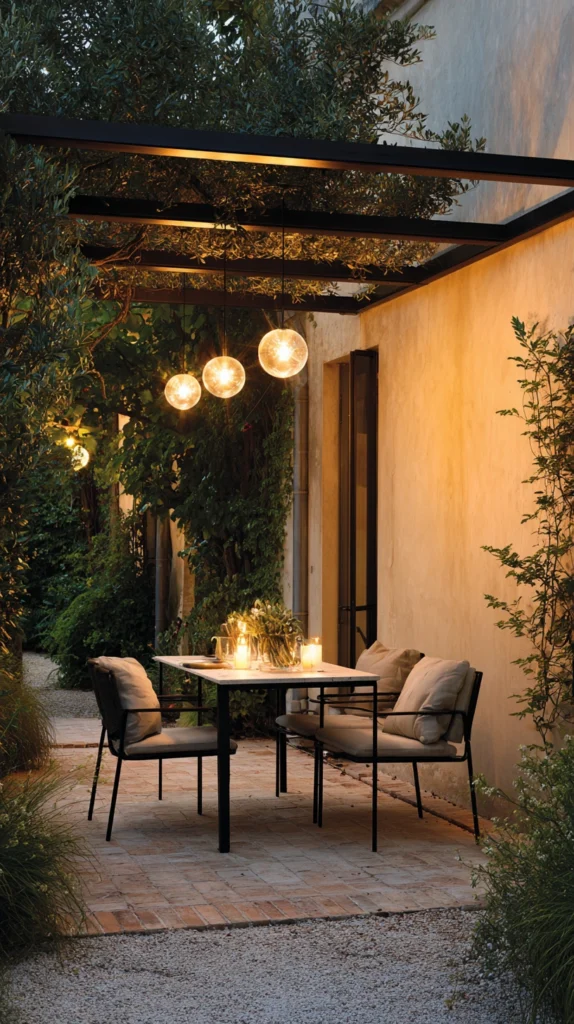
Budget: $60 – $300
A small dining table positioned beneath an established or fast-growing flowering climber — a wisteria, a climbing rose, a white jasmine — creates the most romantically situated outdoor dining experience available without any construction beyond planting and training. Eating beneath something in bloom on a summer evening, with the flowers above and the candles below and the scent between, is the dreamy garden at its most specific and most achievable.
An outdoor dining table for two to four costs $60–$200. A climbing plant in a 5-litre pot runs $12–$35. Training wire for the climber costs $8–$15. The bower requires the climber to be established above the table — ideally on a pergola beam, an arch, or a wall directly behind and above — which means the planting needs to precede the dining by at least one growing season for a fast-growing climber and two for a slower one.
Style tip: Use a tablecloth in a colour that relates to the flowering climber above. White tablecloth beneath white wisteria, soft pink beneath climbing roses, cream beneath jasmine — the colour relationship between the table and the canopy above it is the styling detail that makes the bower feel like it was designed as a complete space rather than a table positioned near a plant.
13. The Pebble and Moss Path
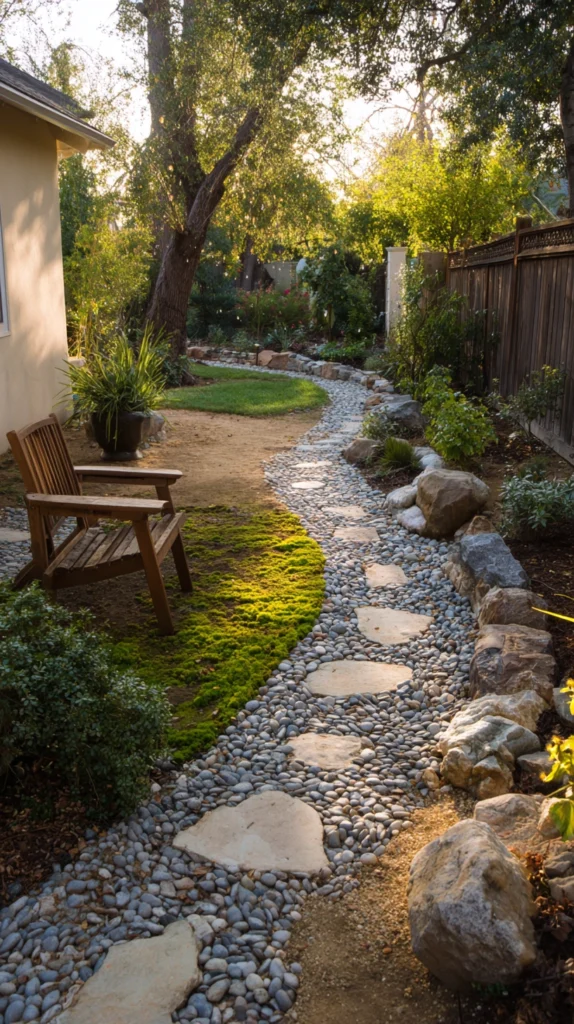
Budget: $20 – $80
A path of smooth pebbles set in sand, with moss allowed to establish in the joints, winding through the planted areas of the garden rather than running in a straight line between two functional points, changes the garden from a space to pass through into a space to wander in. A winding path through planting is the most reliable way to make a small garden feel larger — it extends the journey without extending the distance.
River pebbles cost $8–$15 per kilogram. Sharp sand for the setting bed runs $5–$10 per bag. Moss spores for introducing into the joints can be painted on as a buttermilk and moss mixture ($3–$5 for a small pot of natural yogurt as the carrier). A winding path of 3–4 metres requires two to three hours to lay and produces an immediate visual result that improves as the moss establishes and the pebbles weather.
Style tip: Make the path wide enough for two people to walk side by side — at least 60 centimetres, ideally 75. A path that requires single-file walking produces a different experience from one that allows two people to walk together, and the wider path, used more naturally and more frequently, becomes the garden’s main route rather than a decorative element that everyone walks beside rather than on.
14. The Golden Hour Seating Corner
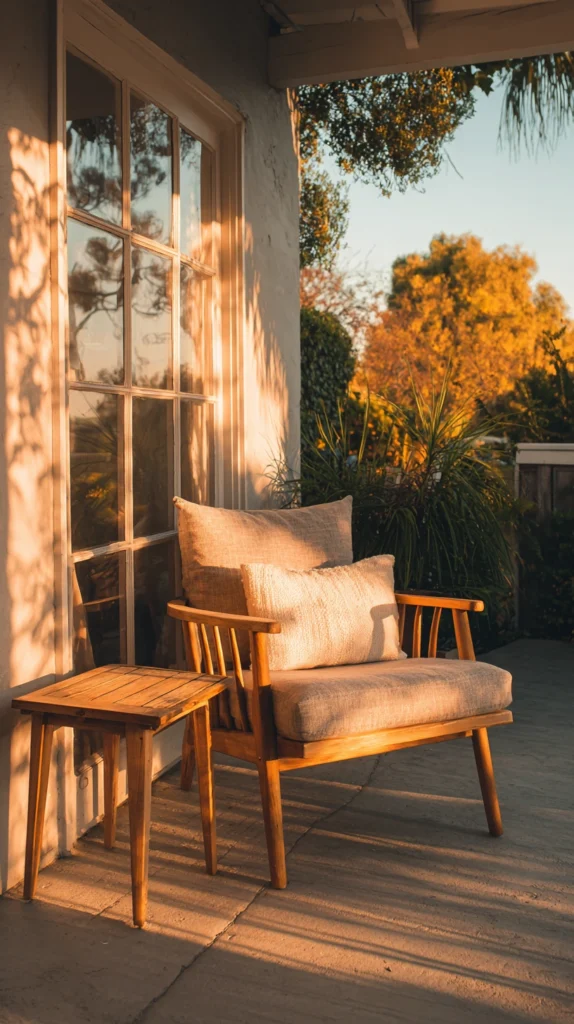
Budget: $30 – $150
A chair — or two — positioned in the exact location where the late afternoon sun arrives in the garden between five and seven, facing the direction that captures it most fully, with a small table and a cold drink and nothing that requires any decision or any effort. The golden hour seating corner is not a design project. It is the result of spending one July evening walking around the garden at six o’clock and noting where the light is best, and then putting a chair there.
An outdoor chair costs $30–$100. A side table runs $20–$50. A cold drink costs whatever it costs. The observation — noticing where the light falls and at what time — is free and is the most important part of the exercise. A chair positioned in the wrong place in the garden, however comfortable and however well-styled, is a chair that competes with the light rather than receiving it.
Style tip: Mark the position of the chair before buying or moving furniture by placing a temporary marker — a pot, a stone — in the spot identified during the golden hour observation and returning to it at the same time the following evening to confirm. The light changes with the season and what is perfect in July may be different in September, but July is the month to get it right for, and an evening spent observing before a penny is spent produces a better result than any amount of planning that happens indoors.
The dreamy garden is the one that was arranged for the specific pleasure of the specific hours when it is most used. Not every hour — just the good ones. The golden hour, the evening, the moment when the light drops and the scent rises and the day is far enough behind you that the garden is the only thing there is.
Find those hours, arrange the garden for them, and then do nothing more difficult than show up.