15 Opalescent Home Decor Ideas for an Iridescent, Dreamy Look
Opalescent decor brings a soft, shifting shimmer into a room — the kind of surface that looks slightly different depending on the angle and the light, like the inside of a shell or the surface of an actual opal. Done well, it reads as dreamy and elevated rather than gaudy, since the effect relies on subtlety rather than obvious sparkle.
Below are 15 ways to bring an opalescent, iridescent look into a home, from full material commitments to small styling accents, with real numbers on cost and specifics so the shimmer feels intentional rather than overwhelming.

Opalescent Style Considerations
Where it works best:
- Bathrooms and powder rooms (tile, fixtures, mirrors)
- Accent pieces in a living room or bedroom
- Small-scale objects (vases, trays, glassware)
- Anywhere catching natural or lamp light directly
Where to use restraint:
- Avoid covering every surface in shimmer
- Pair with matte, calm materials to balance the shine
- Limit iridescent finishes to 1-2 focal points per room
- Choose one dominant undertone (pink, blue, or green) rather than mixing all three
1. Add an Iridescent Glass Tile Backsplash
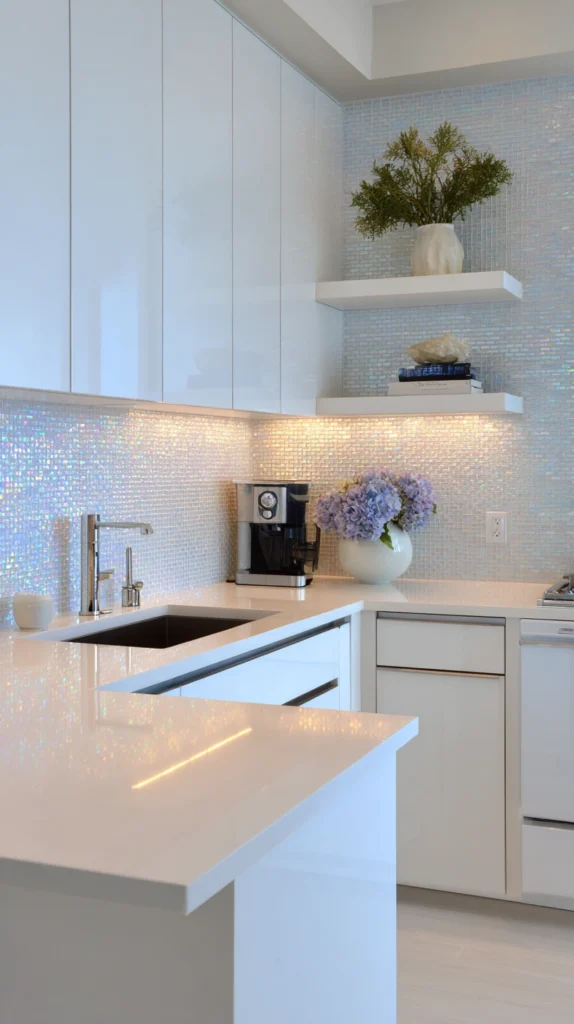
Iridescent glass tile in a kitchen or bathroom catches light throughout the day, shifting subtly between blues, greens, and pinks depending on the angle. Standard backsplash tile covers 15-30 sq ft in a typical kitchen application.
Budget: $10-20 per sq ft for quality iridescent glass tile, or $300-600 for a full kitchen backsplash installation. This sits at a higher price point than standard ceramic subway tile, reflecting the more specialized glass manufacturing process behind the iridescent coating.
Pairing the tile with simple white or cream countertops and cabinetry lets the iridescent shimmer be the room’s main visual event rather than competing with other bold colors or patterns. Installing this tile in a smaller, contained area — just behind the range or a bar cart nook — is a good lower-cost way to test the look before committing to a full kitchen wall.
Cleaning iridescent glass tile with a non-abrasive cleaner preserves the coating’s finish, since harsher abrasive scrubbing can dull the surface shimmer over time.
2. Use Opalescent Paint for a Subtle Wall Shimmer
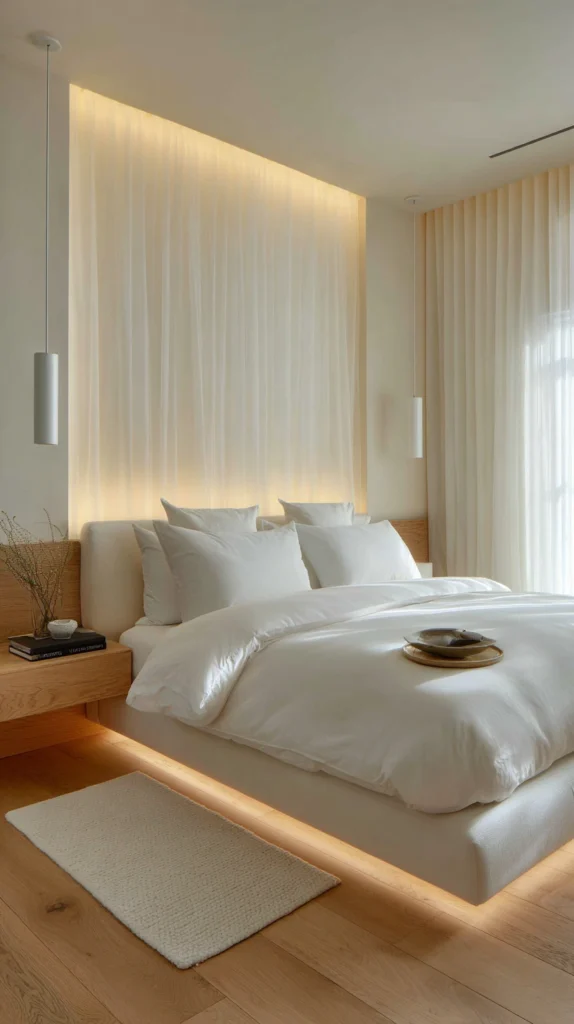
Specialty paints with a pearlescent or opalescent additive create a wall finish that shifts subtly with the light, offering a much more restrained shimmer than glitter paint while still adding genuine dimension to a flat wall. Standard pearlescent paint covers similarly to regular paint, with one gallon covering roughly 350-400 sq ft.
Budget: $50-90 per gallon for a quality pearlescent or opalescent paint, somewhat more than standard flat or eggshell paint due to the specialty mica or pearl additive in the formula. This finish reads dramatically different depending on lighting, so testing a large sample swatch under both daytime and evening light is especially important before committing to a full wall.
This finish works particularly well on a single accent wall or within a powder room, where the smaller, more contained space makes the shimmer feel like a considered design choice rather than an overwhelming full-room effect. Pairing the wall with simple, unfussy furniture and decor keeps the paint finish as the star of the room rather than one shimmering element among many competing for attention.
Applying the paint in consistent, even strokes matters more with this finish than with standard flat paint, since visible roller or brush marks can catch and reflect light unevenly once the pearlescent finish is dry.
3. Add Mother-of-Pearl Inlay Accents
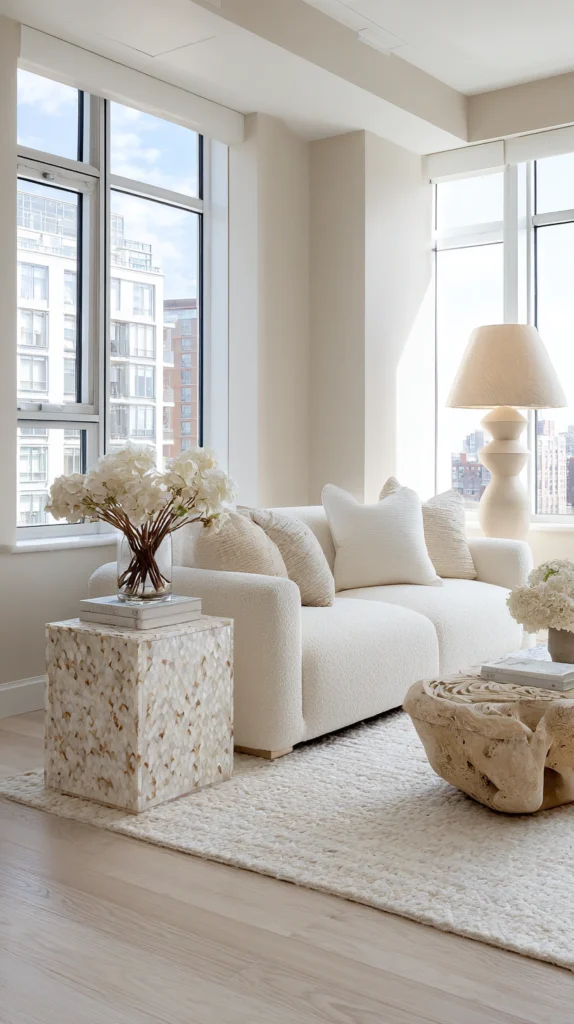
Furniture or decor items featuring genuine mother-of-pearl inlay — small side tables, jewelry boxes, or picture frames — bring an authentic, naturally occurring iridescence rather than a manufactured shimmer effect. Standard mother-of-pearl inlay pieces range from small 6-8 inch boxes up to larger side tables around 18-24 inches.
Budget: $80-300 for a smaller mother-of-pearl inlay piece, depending on the intricacy of the inlay pattern and the size of the object. Larger furniture pieces with extensive inlay work command significantly higher prices, often running into the thousands for a fully covered table or cabinet.
This material’s natural iridescence comes from the same nacre layer found inside oyster and abalone shells, giving it a more organic, varied shimmer than a synthetic iridescent coating. A single well-chosen inlay piece, rather than several scattered throughout a room, tends to read as more intentional and allows the material’s natural beauty to be genuinely appreciated rather than lost among competing shimmer elements.
Dusting mother-of-pearl pieces with a soft, dry cloth rather than harsh cleaning chemicals preserves the natural shell surface, since some cleaning products can dull or damage the delicate nacre layer over time.
4. Use Abalone Shell Decor Objects
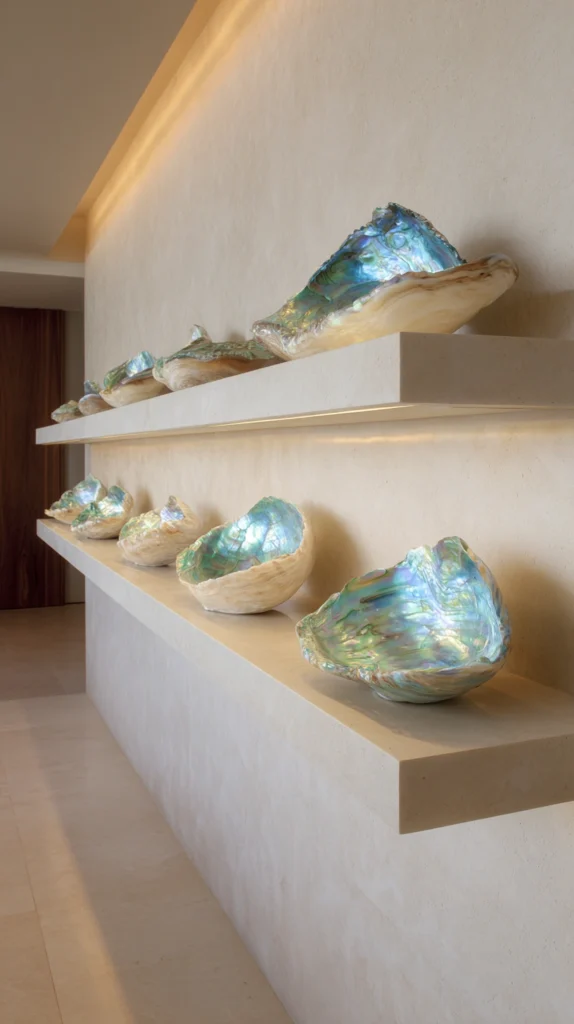
Genuine abalone shells, whether displayed whole or used as small catch-all dishes, bring one of the most dramatically iridescent natural materials into a home without any manufactured coating or treatment. Standard decorative abalone shells run 4-8 inches across, easily incorporated into a shelf, dresser top, or bathroom vanity.
Budget: $15-50 per shell depending on size and quality, typically sourced through home decor retailers, specialty shell shops, or coastal gift stores. A cluster of 2-3 shells of varying sizes on a single surface creates more visual interest than a single isolated piece.
The natural blue-green-pink shimmer inside an abalone shell shifts dramatically depending on the viewing angle, making these pieces particularly effective when placed somewhere they’ll catch direct light throughout the day, such as a windowsill or a spot near a lamp. Using a cleaned, polished shell as a small ring dish, key catch-all, or candle holder adds function alongside the decorative shimmer.
This is one of the more affordable, authentic ways to bring genuine iridescence into a home, since the material itself does all the visual work without any need for special lighting or manufactured finishes.
5. Add Iridescent Glass Vases and Vessels
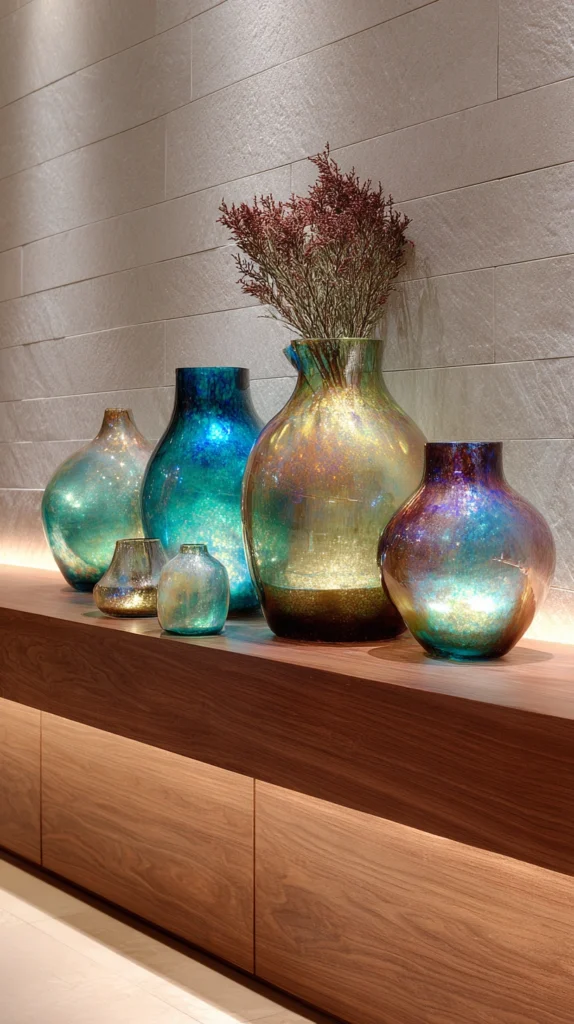
Vases and decorative vessels in iridescent or opalescent glass bring shimmer to a shelf or table without requiring any permanent installation or renovation. Standard decorative vases run 8-16 inches tall, sized to work as a standalone piece or as a container for fresh or dried flowers.
Budget: $30-100 per vase depending on size and glass quality, with hand-blown or artisan pieces commanding higher prices than mass-produced versions of similar size. Vintage or secondhand iridescent glass, particularly carnival glass from the early-to-mid 20th century, is often available at antique shops for prices comparable to new mass-produced pieces.
Positioning these vases near a window or a light source lets the iridescent coating catch and reflect available light throughout the day, which is when this material looks its most dramatic and dreamy. Grouping 2-3 vases of varying heights together on a single shelf or console creates a stronger visual moment than scattering single vases throughout different rooms.
Filling these vases with simple white or cream flowers, rather than brightly colored blooms, keeps the focus on the vessel’s shimmer rather than competing with a bold floral color.
6. Use Opalescent Tile in a Bathroom Shower
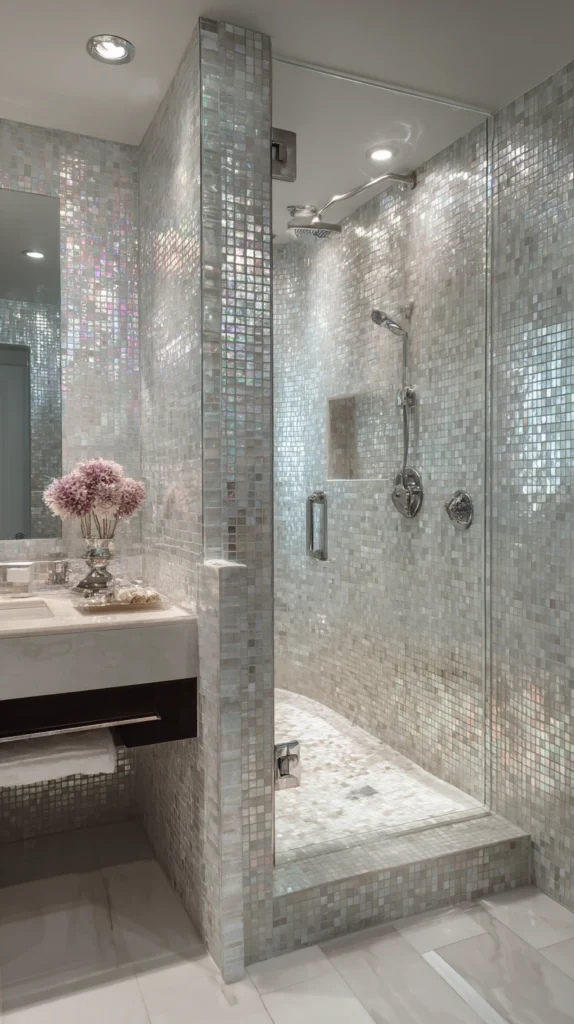
A shower wall or floor tiled in iridescent glass or ceramic tile creates a genuinely dreamy, almost underwater feeling bathroom, particularly effective in a space that gets good natural light. Standard shower wall coverage runs 60-100 sq ft depending on the shower’s size and configuration.
Budget: $15-25 per sq ft for quality iridescent tile plus installation, or $1,000-2,500 for a full standard shower. This is one of the larger investments on this list, best undertaken as part of a bathroom renovation rather than a standalone weekend project.
Choosing a tile with a subtle rather than intensely reflective iridescent coating keeps the shower feeling calm and spa-like rather than visually overwhelming in an enclosed space. Pairing the tile with simple matte black or brushed nickel fixtures provides a grounding contrast that keeps the overall bathroom design balanced rather than entirely shimmer-focused.
This is a particularly strong choice for a smaller bathroom without much natural light, since the tile’s reflective quality can help bounce available light around the space more than a flat matte tile would.
7. Add a Holographic or Iridescent Mirror Frame
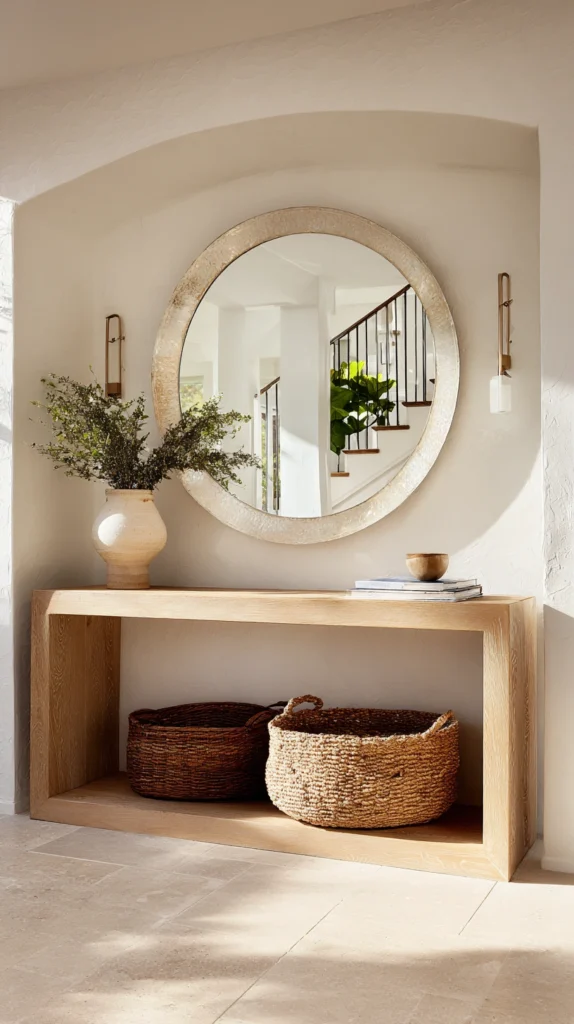
A mirror with an iridescent or holographic-finished frame brings shimmer to a functional piece already common in most homes, making it an easy entry point into this aesthetic. Standard decorative mirrors run 24-36 inches for a dresser or entryway piece, larger for a statement living room mirror.
Budget: $60-200 for a quality iridescent-framed mirror, depending on size and frame material. Choosing a mirror with a more subtle, pearlescent frame finish rather than an intensely rainbow, holographic coating tends to age better stylistically and feels more broadly versatile across different room styles.
Positioning the mirror where it reflects a light source (a window or a lamp) doubles the shimmer effect, since the mirror both has an iridescent frame and reflects any other light or shimmer elsewhere in the room. This is one of the more functional pieces on this list, providing genuine everyday use in an entryway or bedroom in addition to its decorative shimmer.
A single statement mirror like this can serve as a room’s primary opalescent element, allowing everything else in the space to stay more neutral and calm by comparison.
8. Use Iridescent Throw Pillows and Textiles
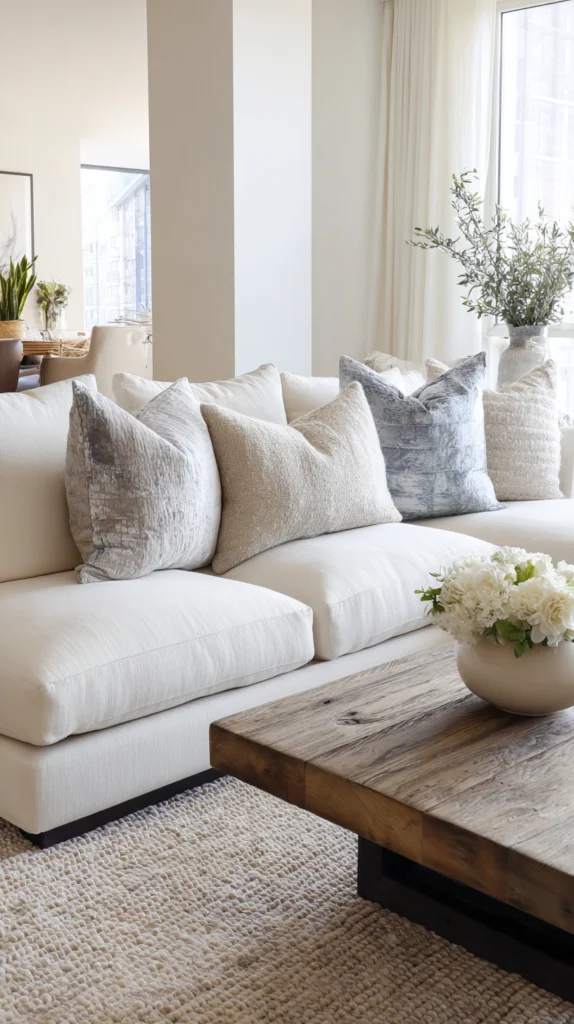
Throw pillow covers in an iridescent or shot-fabric material (fabric woven with two different colored threads that shift depending on the angle) bring shimmer to a sofa or bed without any permanent commitment. Standard throw pillows run 18-20 inches, with 2-3 typically enough to introduce this material without overwhelming a full pillow arrangement.
Budget: $25-60 per pillow cover depending on fabric quality, with silk or silk-blend shot fabric commanding a higher price than a polyester iridescent alternative. Limiting iridescent pillows to 2-3 within a larger grouping of solid, calmer pillows keeps the shimmer feeling like an accent rather than the dominant element.
Shot fabric, traditionally woven with a warp thread in one color and a weft thread in a different color, creates a natural iridescent shift that’s more subtle and sophisticated than a synthetic metallic or sequined fabric. This is one of the lowest-cost, most flexible ways to test this aesthetic, since pillow covers can be easily swapped out if your taste shifts or you want to introduce the look seasonally rather than permanently.
Pairing these pillows with solid linen or cotton pillows in a complementary neutral tone lets the iridescent pieces stand out as a clear accent within the larger arrangement.
9. Add an Opalescent Light Fixture
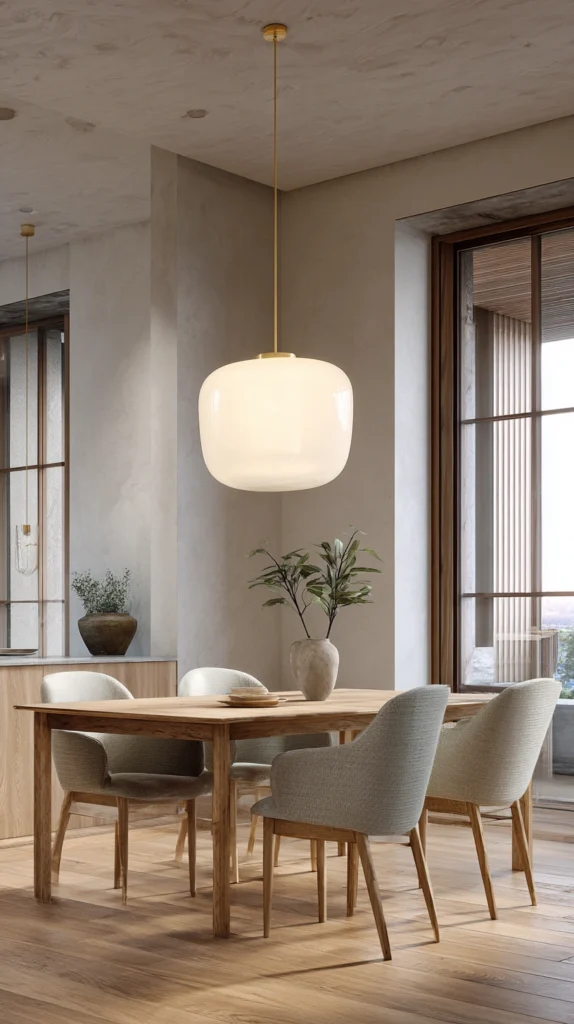
A pendant light or table lamp with an opalescent or iridescent glass shade diffuses light with a soft, shifting quality that a plain glass or fabric shade can’t replicate. Standard pendant fixtures hang 30-36 inches above a table or kitchen island.
Budget: $100-350 for a quality opalescent glass pendant light, depending on size and glass quality. This fixture does double duty as both a functional light source and a decorative object, since the iridescent quality is visible whether the light is on or off.
The glass shade’s iridescent quality is often most visible when the light is off during the day, catching ambient natural light, while at night the glow through the glass takes on its own soft, shifting quality depending on the specific glass treatment used. This is a particularly good choice for a dining room or entryway, where the fixture becomes a natural focal point that guests notice upon entering the space.
Choosing a warm white bulb, rather than a cool or daylight-toned one, complements the soft, dreamy quality most opalescent glass fixtures are meant to evoke.
10. Use Iridescent Ceramic or ceramic Glaze Decor
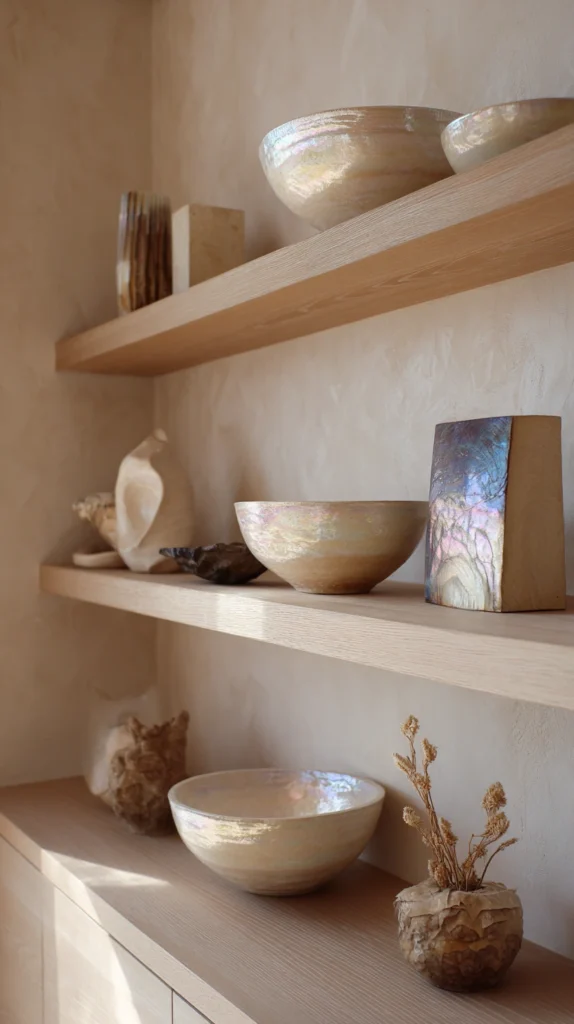
Ceramic vases, bowls, and decorative objects finished with an iridescent or “raku” style glaze bring an organic, kiln-fired shimmer that differs subtly from glass or synthetic iridescent coatings. Standard decorative ceramic pieces run from small 4-6 inch bowls up to larger 12-16 inch vases.
Budget: $30-100 per piece for quality iridescent-glazed ceramics, with handmade, small-batch pottery commanding a higher price than mass-produced versions of similar size. Raku firing, a traditional technique that produces a distinctively metallic, iridescent glaze, is one of the more sought-after and higher-priced options within this category.
Each piece produced through this glazing process carries some natural variation, meaning no two pieces are ever perfectly identical, which adds to the sense that these are genuinely handmade, considered objects rather than mass-manufactured decor. Displaying these pieces on a simple, uncluttered shelf or console lets the glaze’s shimmer and variation be the clear visual focus.
This is one of the more tactile ways to bring iridescence into a home, since the glaze’s texture is often as noticeable to the touch as it is to the eye.
11. Add a Geode or Crystal Display With Iridescent Coating
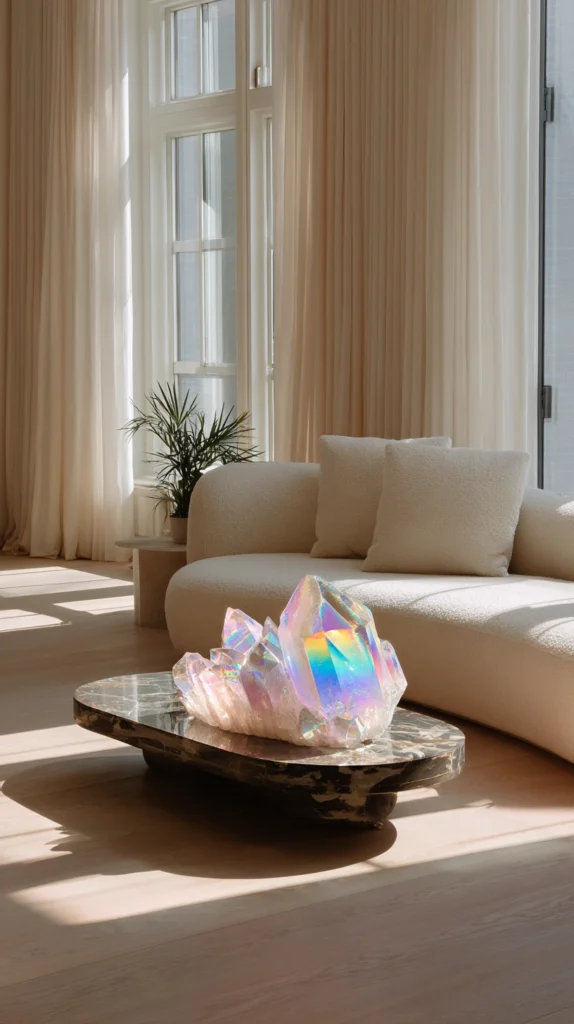
Iridescent-treated quartz or agate geodes, often labeled “aura” or “titanium-coated” crystals, bring a dramatic, colorful shimmer to a shelf or coffee table display. Standard decorative geodes run 3-6 inches for a smaller piece, up to 10-12 inches for a larger statement specimen.
Budget: $20-80 for a smaller iridescent-coated geode, or $100-300 for a larger statement piece, depending on size and the specific coating quality. These pieces are widely available through home decor retailers, specialty crystal shops, and online marketplaces.
A single larger geode functions well as a standalone coffee table object, while a small cluster of 3-4 smaller pieces works nicely grouped together on a shelf or windowsill where they can catch available light throughout the day. This is one of the more dramatic, saturated iridescent options on this list, so pairing it with otherwise calm, neutral surroundings prevents the piece from feeling like just one of many competing shimmer elements.
Positioning the piece somewhere it receives direct light for at least part of the day maximizes the visual impact of the coating’s color-shifting quality.
12. Use Iridescent Wallpaper for an Accent Wall
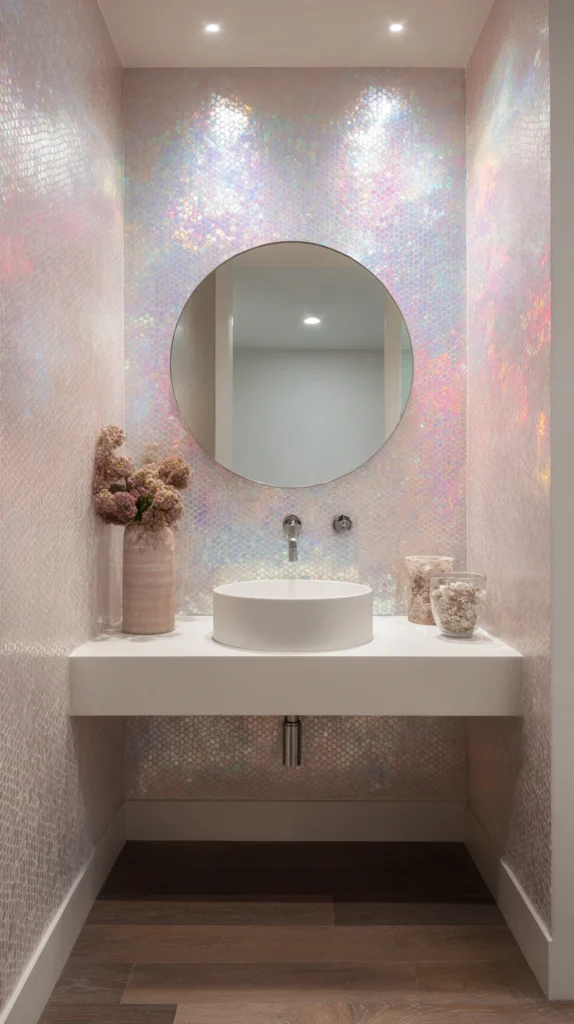
Wallpaper with an iridescent or pearlescent finish, often in a subtle geometric or scalloped pattern, brings shimmer to a wall without the specialty painting skill required for a pearlescent paint finish. Standard wallpaper rolls cover 33-56 sq ft, with 2-3 rolls typically needed for a standard accent wall.
Budget: $40-90 per roll for quality iridescent wallpaper, somewhat more than standard printed wallpaper due to the specialty finish. Choosing a subtle, tonal iridescent pattern rather than a bold, high-contrast rainbow effect keeps the wall feeling elegant and dreamy rather than overly bold or juvenile.
This treatment works particularly well in a powder room or entryway, where the smaller, contained space makes a shimmering wall feel like a considered design statement rather than an overwhelming choice for a larger, more frequently used room. Testing a sample swatch of the wallpaper under different lighting conditions in the actual room helps confirm the shimmer reads the way you want before committing to the full wall.
Pairing the wallpaper with simple, unadorned trim and fixtures lets the wall’s shimmer remain the room’s clear visual focus.
13. Add Iridescent Drapery or Sheer Curtains
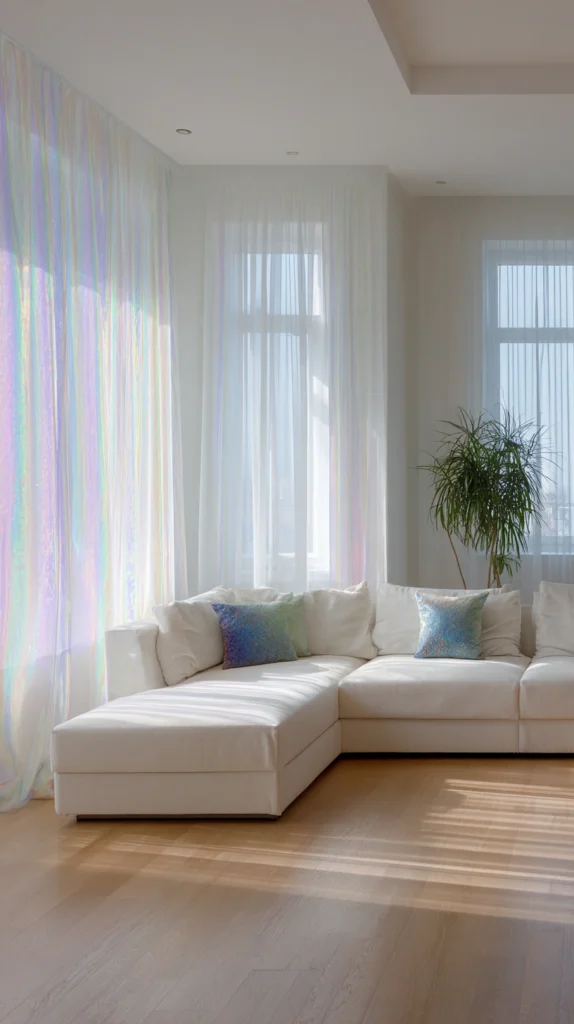
Sheer curtains with an iridescent or shot-fabric quality diffuse natural light with a soft, shifting shimmer throughout the day, changing subtly as the sun moves and the light hits the fabric from different angles. Standard sheer curtain panels run floor-length, sized to 1.5-2x the window width per pair for a properly gathered look.
Budget: $60-150 for a quality iridescent sheer curtain pair, depending on fabric quality and window size. This effect is most visible during daytime hours when natural light passes directly through the fabric, making it a particularly good choice for a room with strong natural light exposure.
Layering these sheer iridescent panels behind a heavier, solid-colored curtain allows for flexibility, keeping the shimmer effect available during the day while still offering full light-blocking privacy in the evening when the heavier panel is closed. This is one of the more subtle ways to introduce this aesthetic, since the effect is genuinely most visible in specific lighting conditions rather than constantly on display.
Choosing a subtle, tonal shot-fabric (two closely related colors rather than two starkly contrasting ones) keeps this element feeling elegant rather than overly bold for everyday living spaces.
14. Use Iridescent Accents in a Bathroom Vanity
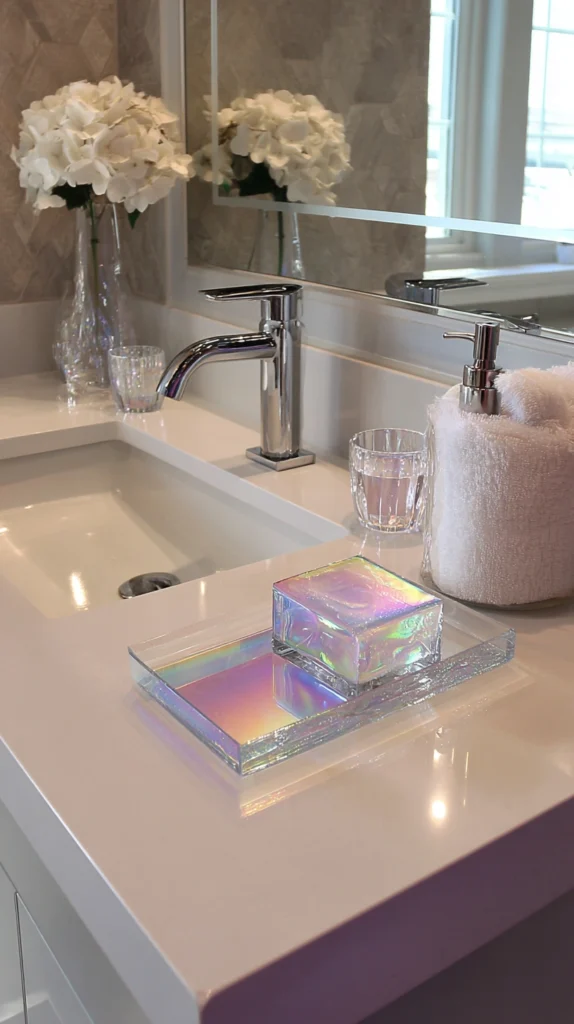
A vanity countertop, sink basin, or set of bathroom accessories (soap dispenser, tray, tumbler) in iridescent glass or ceramic brings shimmer to one of the smaller, more contained spaces in a home, where a bolder finish feels appropriately special rather than overwhelming. Standard vanity accessory sets include 3-5 coordinating pieces.
Budget: $15-40 per individual accessory piece, or $60-150 for a full coordinating vanity set. This is one of the more affordable ways to introduce this aesthetic, particularly compared to a full tile or fixture renovation.
A powder room or guest bathroom is a particularly good candidate for this treatment, since these smaller, less frequently used spaces can support a bolder, more dramatic design choice than a primary, daily-use bathroom might comfortably handle. Pairing iridescent glass accessories with simple white or cream bath towels keeps the overall look feeling elegant rather than overly busy.
This is one of the easiest and most affordable entry points into the opalescent aesthetic, since a full accessory set can be swapped in without any renovation or permanent installation at all.
15. Add a Statement Iridescent Console or Side Table
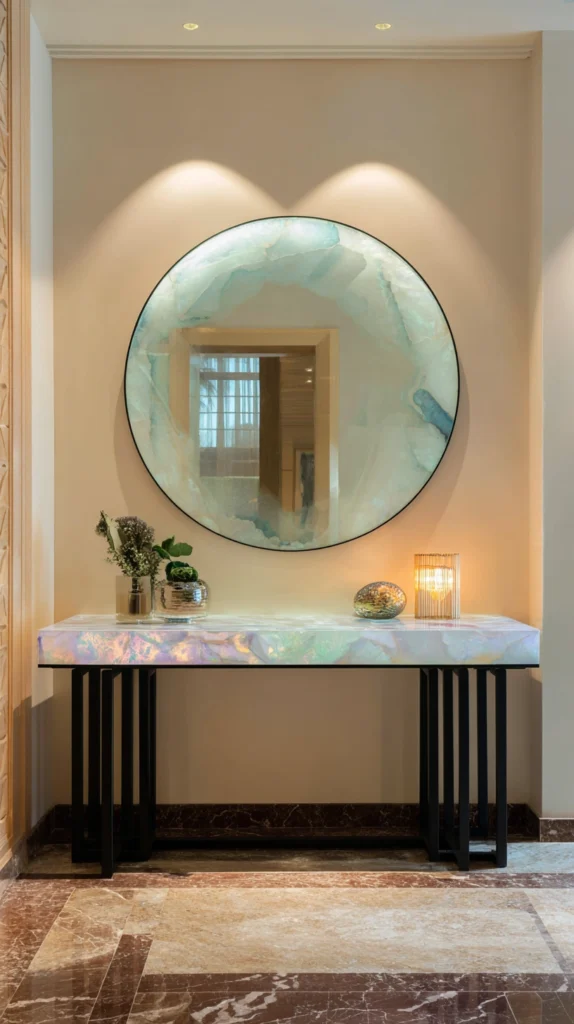
A console table or side table with an iridescent resin top, mother-of-pearl inlay, or an opalescent glass surface serves as a functional furniture piece that also functions as the room’s primary shimmer statement. Standard console tables run 40-60 inches wide, standard side tables run 18-24 inches.
Budget: $200-600 for a quality iridescent-topped console table, depending on size and the specific material used for the shimmering surface. Choosing a piece with a simpler, more neutral base (black metal, natural wood) lets the iridescent top do the visual work without the whole piece feeling overly ornate.
This piece works well as a room’s single dedicated opalescent statement, allowing the rest of the furniture and decor to stay calm and neutral by comparison, which is generally the more successful approach to this aesthetic than spreading shimmer thinly across many smaller pieces. Positioning the piece where it catches natural light from a nearby window maximizes the visual impact of the iridescent surface throughout the day.
This is one of the larger investments on this list, but it also delivers one of the most consistently visible, everyday opportunities to enjoy the shimmering effect, since a console or side table gets seen constantly rather than only in specific lighting conditions.
Quick Start Shopping List
This weekend, under $150:
- A small iridescent glass vase: $40
- An abalone shell catch-all dish: $25
- Two iridescent throw pillow covers: $60
- A small iridescent-coated crystal: $25
Budget-Friendly Version
Lowest-cost ways to start:
- Natural abalone shells instead of manufactured iridescent decor
- Secondhand or vintage carnival glass vases
- Iridescent pillow covers instead of reupholstering furniture
- A single small crystal or geode rather than a large statement piece
Success Indicators
- The shimmer reads as dreamy and soft, not overly bold or costume-like
- At least one calm, matte surface balances each shimmering element
- The room has a clear focal point rather than shimmer scattered everywhere equally
- Guests notice the effect changes depending on where they’re standing or the time of day
- The look feels elevated and considered rather than overwhelming
Remember
Choose one or two focal opalescent elements per room rather than covering every surface in shimmer, pair iridescent pieces with calm, matte materials to keep the overall look balanced, position shimmering objects where they’ll actually catch natural or lamp light throughout the day, stick to a consistent undertone (pink, blue, or green) across pieces in the same room rather than mixing all three, and remember that this aesthetic relies on subtlety and restraint just as much as it relies on the shimmer itself.