15 Moody Olive Green Kitchen Ideas That Feel Rich and Organic
Moody olive green kitchens represent contemporary sophistication where earthy complex greens create the kind of warm, naturalistic character that transcends trendy design, establishing instead timeless spaces that age beautifully while celebrating organic materials and sustainable aesthetics.
This nuanced color provides the kind of visual richness that basic greens cannot achieve, instead delivering the sophisticated depth that suggests intentional design knowledge and commitment to authentic character over obvious trend-following. Strategic olive green kitchen design incorporating complementary warm metals, quality natural materials, and thoughtful lighting creates spaces that feel simultaneously modern and organically rooted in natural inspiration.
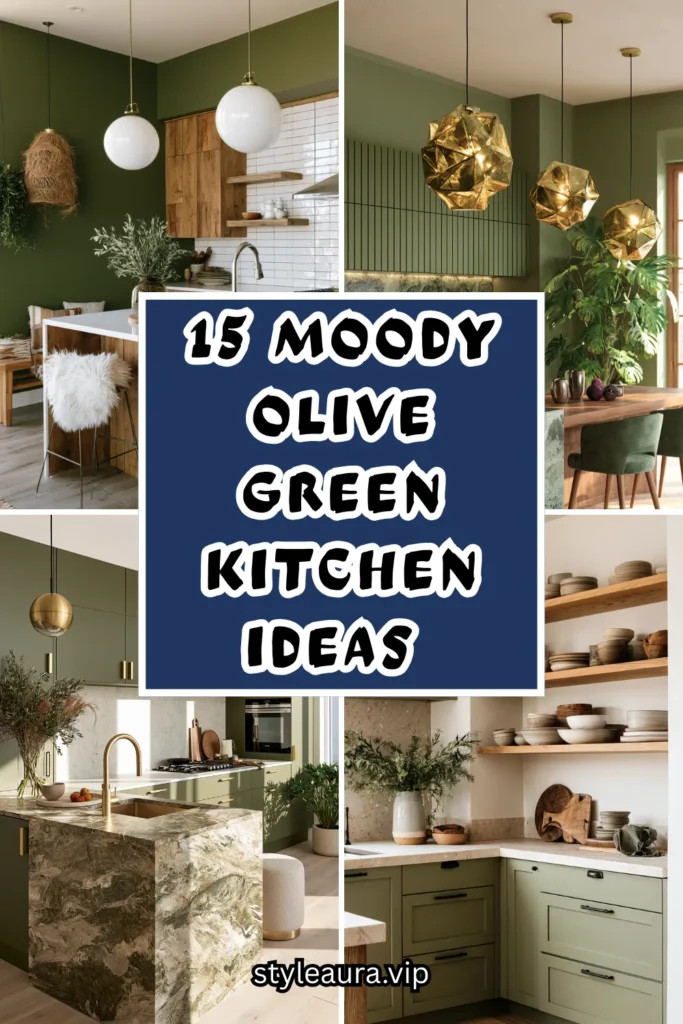
Understanding which shades of olive read as sophisticated versus dated, how to balance the complex color with complementary materials, and what constitutes genuine organic character ensures kitchen investments deliver lasting beauty worthy of sustained daily use.
These fifteen moody olive green kitchen ideas demonstrate practical approaches from cabinetry through wall treatments, each proving that thoughtful olive green application creates kitchens that feel designed with purpose rather than casually assembled around trendy color choices.
1. Matte Olive Green Cabinetry with Warm Metal Hardware
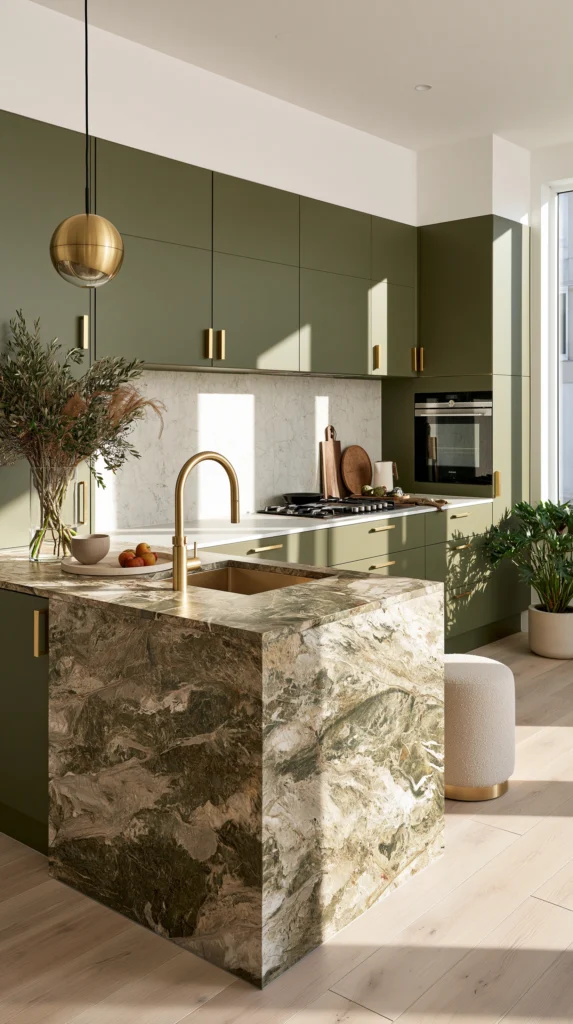
Establish kitchen foundations through substantial matte olive green cabinetry coordinated with warm brass or copper hardware, creating the kind of sophisticated organic character that defines contemporary luxury kitchens. Paint custom cabinetry in deep, complex olive, avoiding yellow-leaning versions that read as dated, coordinate all hardware in brushed brass or warm copper, establishing a consistent metal presence, and ensure adequate lighting, revealing color complexity.
The matte finish prevents the shine that can feel plastic-like, instead creating authentic organic character. The warm metals enhance olive warmth, creating the kind of inviting sophistication that chrome or silver cannot provide.
2. Two-Tone Cabinet Design with Olive Green Uppers
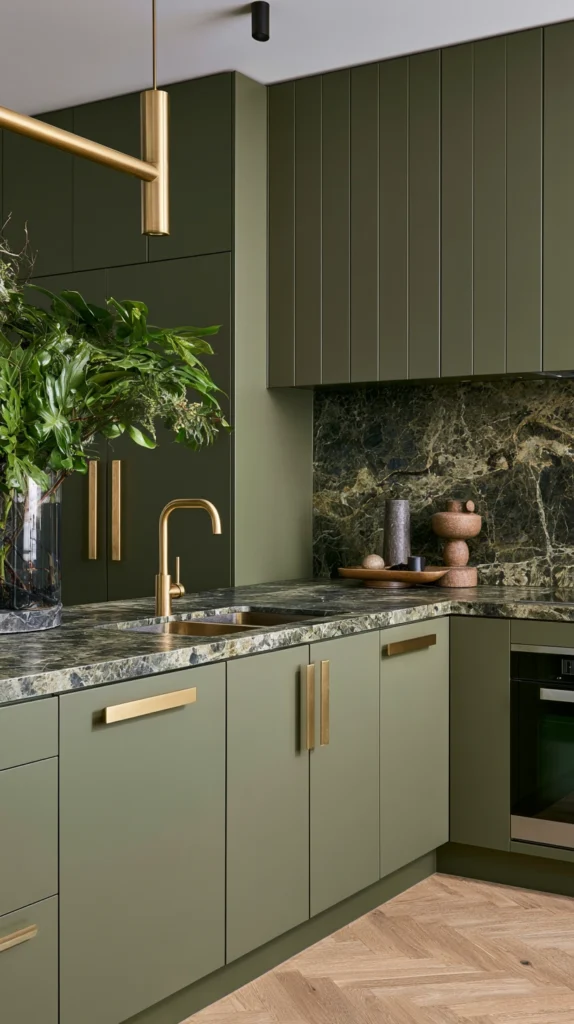
Create visual interest through strategic color combinations where olive green upper cabinetry contrasts with white or cream lower cabinets, establishing balance and preventing overwhelming darkness.
Install olive green uppers providing rich color where visual weight matters less, use white or cream lowers maintaining brightness in primary work zones, and create intentional composition through thoughtful coordination. The two-tone approach delivers olive character without complete saturation. The contrast creates visual sophistication while the varied tones prevent monotony.
3. Olive Green Feature Wall with White Subway Tile
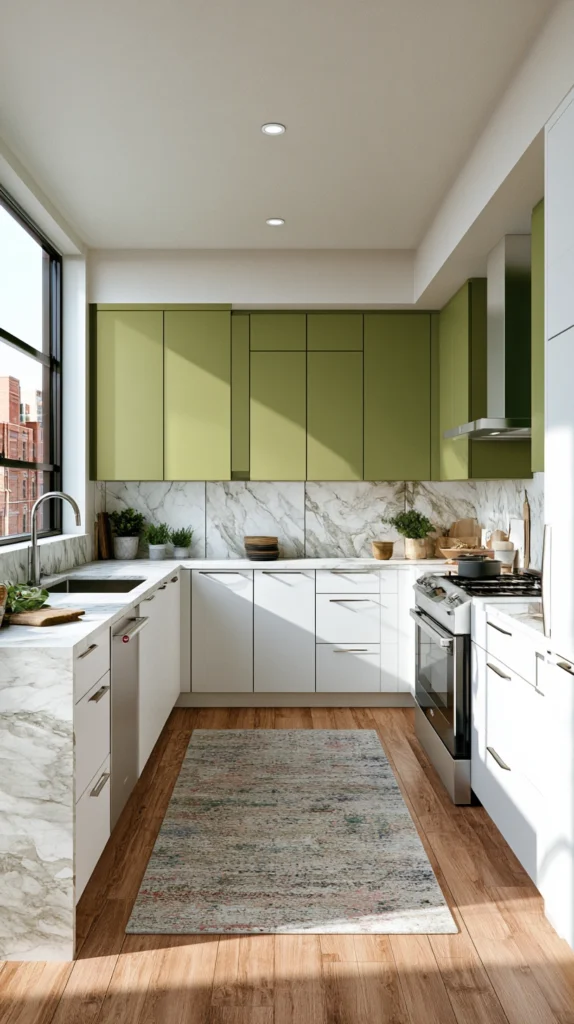
Develop visual richness through moody olive accent walls complemented by crisp white subway tile, establishing the kind of material contrast that creates sophisticated depth. Paint one wall or a partial section in deep olive green, coordinate with white subway tile backsplash, and appreciate how the contrast creates visual drama and balance.
The white tile prevents overwhelming darkness while the olive establishes clear design character. The contrasting materials create the kind of intentional composition that distinguishes designed kitchens.
4. Natural Wood Countertops with Olive Cabinetry
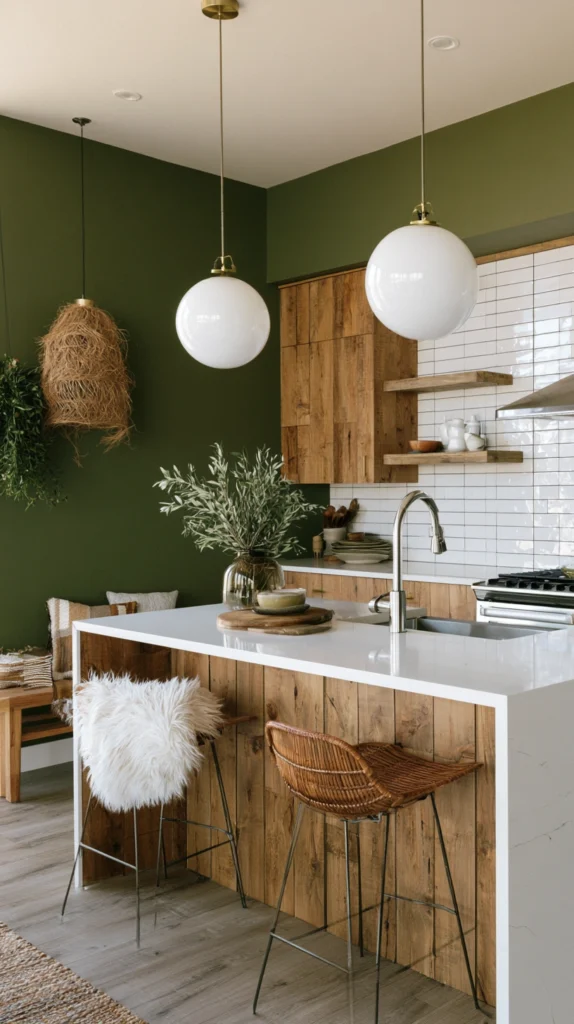
Establish organic richness through genuine wood countertops coordinating with olive green cabinets, creating the kind of natural material authenticity that defines sophisticated contemporary kitchens.
Choose substantial wood in warm tones, including butcher block or live-edge designs, appreciate how natural material enhances olive’s organic character, and ensure proper maintenance to protect wood investments. The wood material adds essential warmth while olive deepens the natural palette. The authentic materials communicate quality and intentional design commitment.
5. Warm Brass Lighting Against Olive Green Backdrops
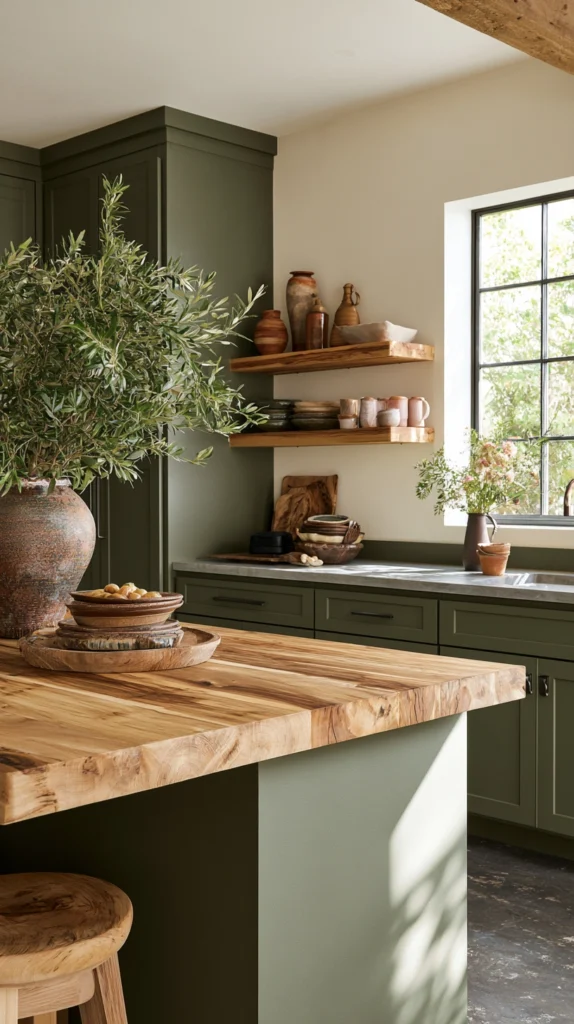
Create visual drama through substantial brass or gold-finished lighting fixtures positioned against olive green walls or cabinetry, establishing the kind of material contrast that elevates design character.
Install oversized brass pendants, choose fixtures with intentional artistic design, and position them where the metallic warmth contrasts with moody backgrounds. The brass luminosity adds luxury while the green deepens perceived richness. The coordinated metals and colors create the kind of sophisticated harmony that distinguishes designed kitchens.
6. Stone or Marble Countertops Complementing Olive Tones
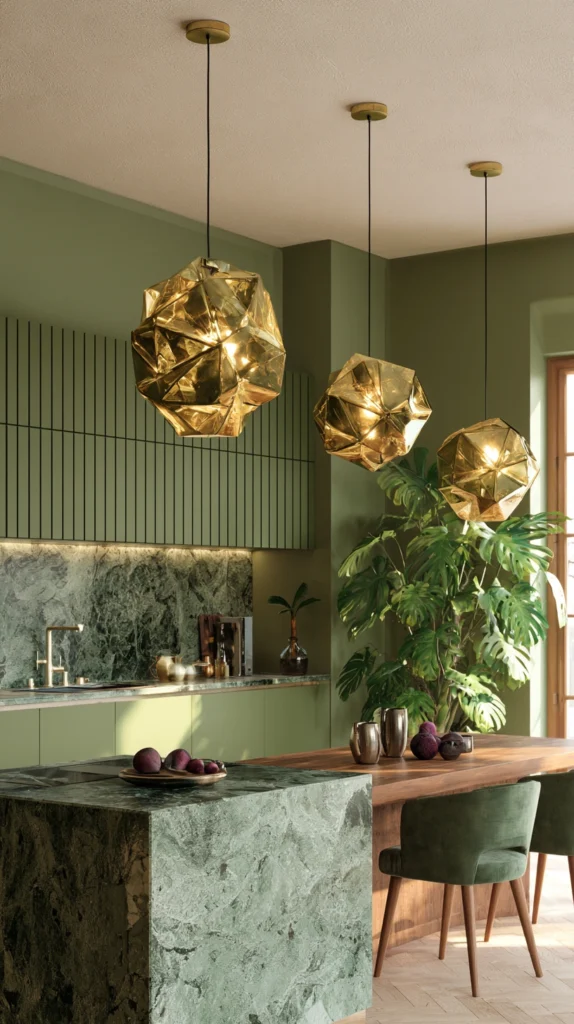
Incorporate substantial natural stone, including marble or granite, with subtle green or neutral tones coordinating with olive cabinetry, establishing the kind of authentic luxury that manufactured alternatives cannot provide.
Choose stone featuring natural variation and authentic geological character, coordinate colors complementing rather than exactly matching olive tones, and appreciate how genuine materials enhance perceived richness. The natural stone authenticity elevates the entire kitchen design. The organic materials coordinate beautifully with olive’s natural inspiration.
7. Open Shelving Displaying Warm-Toned Dishware
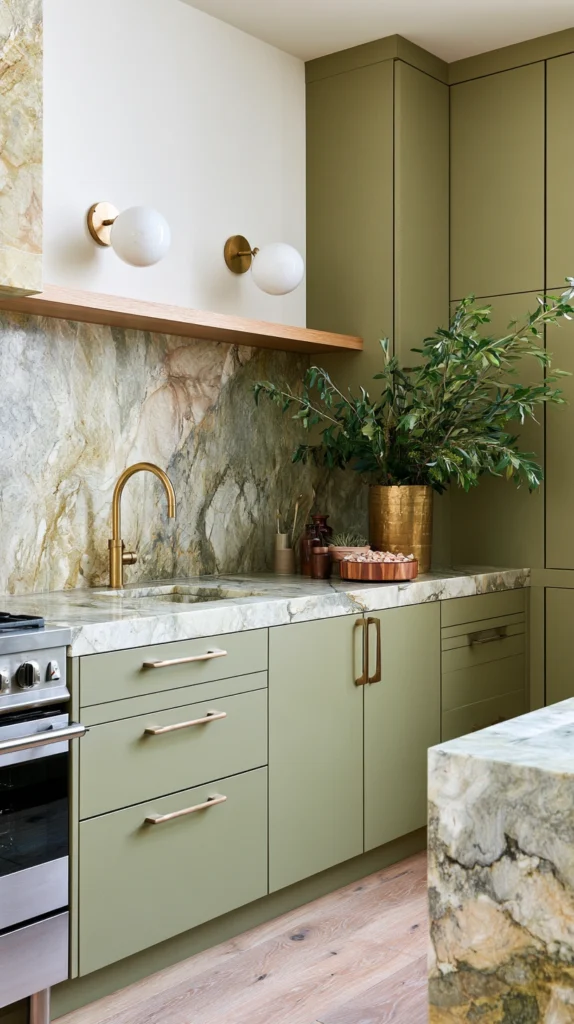
Create visual interest through open shelving showcasing carefully selected dishware and objects in warm tones, including terracotta, cream, and natural ceramics, establishing the kind of curated aesthetic that defines designed kitchens.
Install open shelving in natural wood or white, display dishware thoughtfully, creating intentional compositions, and maintain organization, ensuring visual coherence. The displayed items add color and personality, while the warm tones complement olive beautifully. The styling demonstrates intentional curation rather than random display.
8. Warm White Paint with Olive Green Lower Cabinetry
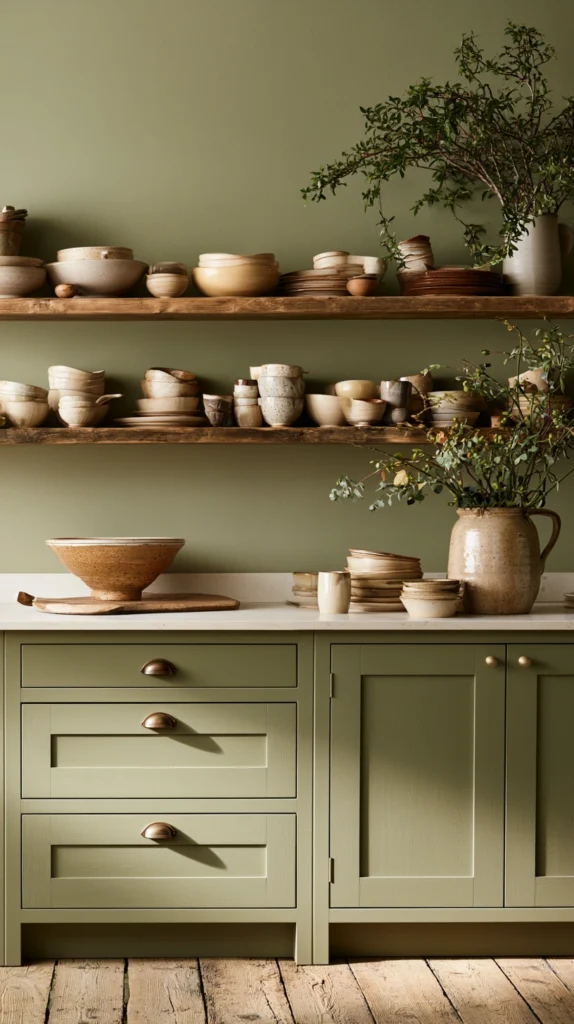
Establish brightness and balance through white or cream upper walls paired with olive green lower cabinets, creating the kind of proportional harmony that prevents overwhelming color dominance. Paint walls in warm whites, maintaining brightness, install olive cabinetry at the base level where weight and richness enhance the workspace, and coordinate materials, creating an intentional design.
The upper brightness maintains openness while the lower olive establishes sophisticated character. The vertical separation creates the kind of balanced composition that distinguishes professional design.
9. Textured Wallpaper in Olive Tones Creating Depth
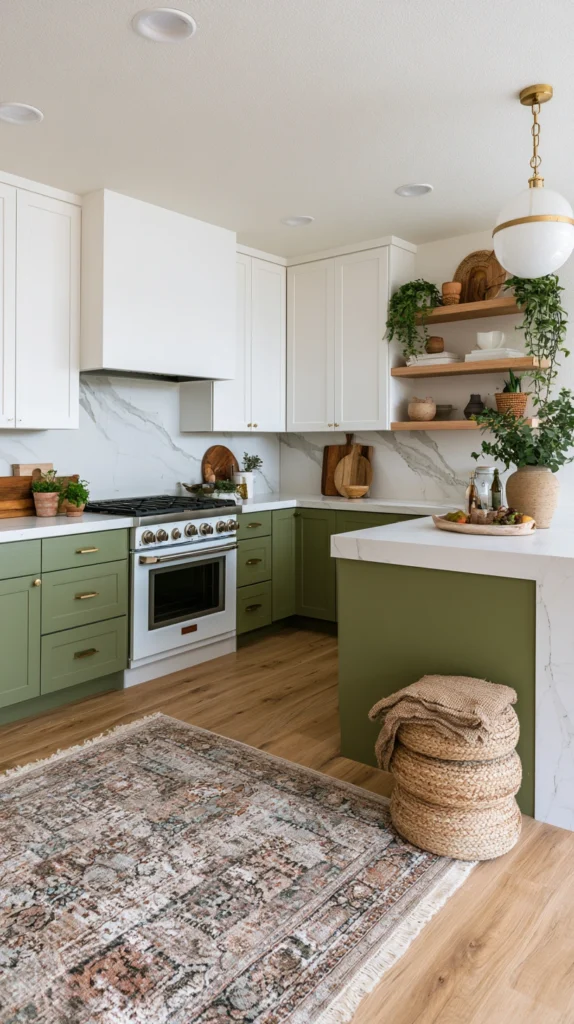
Develop dimensional richness through quality textured wallpaper in varied olive tones, establishing visual complexity while the subtle variation prevents flatness. Select wallpapers with organic patterns or textured surfaces suggesting natural inspiration, choose colors in varied olive intensities creating depth, and coordinate with coordinating cabinetry, establishing cohesion.
The textured surface adds sophistication while the organic patterns reinforce a natural aesthetic. The varied tones create a dimensional character despite a monochromatic color foundation.
10. Black Metal Fixtures Providing Contrast
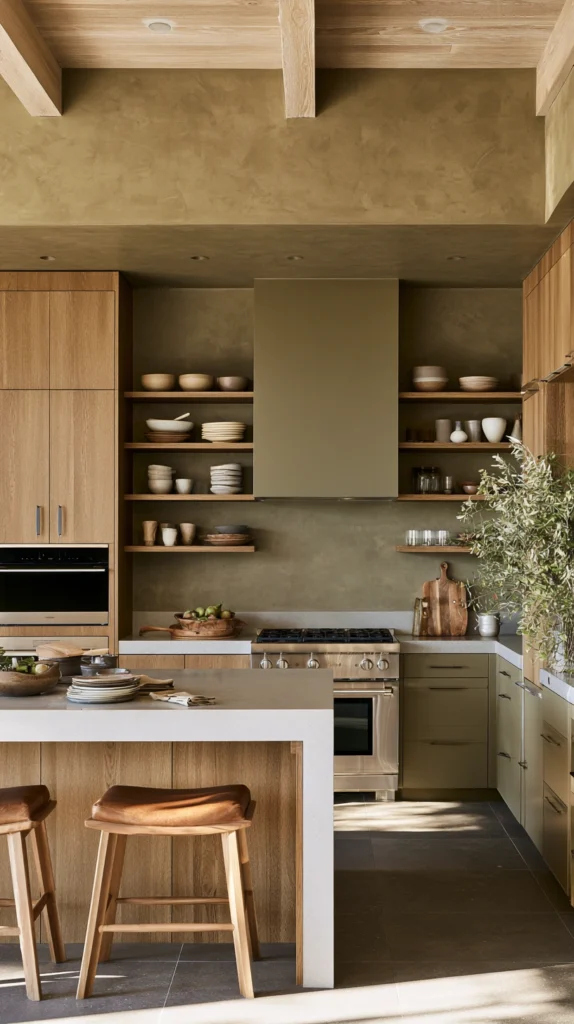
Create architectural definition through black metal elements, including hardware, fixtures, and structural details, providing necessary contrast against moody green, establishing the kind of visual clarity that sophisticated kitchens require. Install black hardware coordinating across cabinet handles and fixtures, choose black-framed windows or architectural details, and appreciate how dark metals enhance olive’s organic character.
The black contrast prevents the green from overwhelming, while the coordinated application creates intentional design. The varied metals demonstrate sophisticated coordination.
11. Warm Terracotta or Ochre Accent Color Introduction
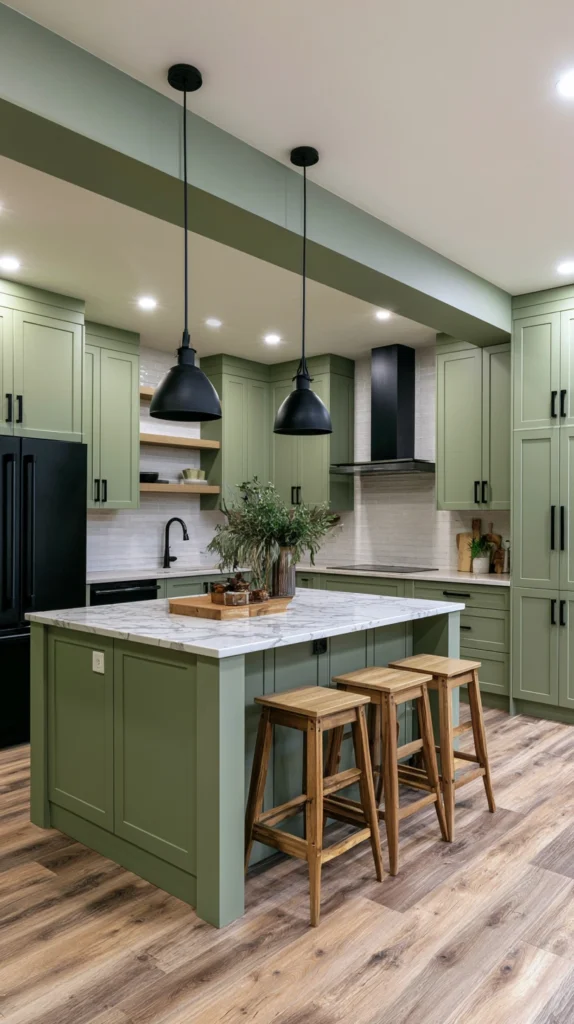
Add warmth through complementary accent colors in warm terracotta or ochre tones, introduced through textiles, artwork, or accessories, establishing the kind of warm layering that prevents cool olive from feeling sterile. Include terracotta dishware, warm-toned textiles, or artwork featuring warm accent colors, and appreciate how the warmth enhances olive’s organic character.
The color introduction prevents the moody quality from becoming cold or institutional. The warm accents create the kind of inviting richness that sophisticated kitchens require.
12. Natural Wood Open Shelving in Warm Tones
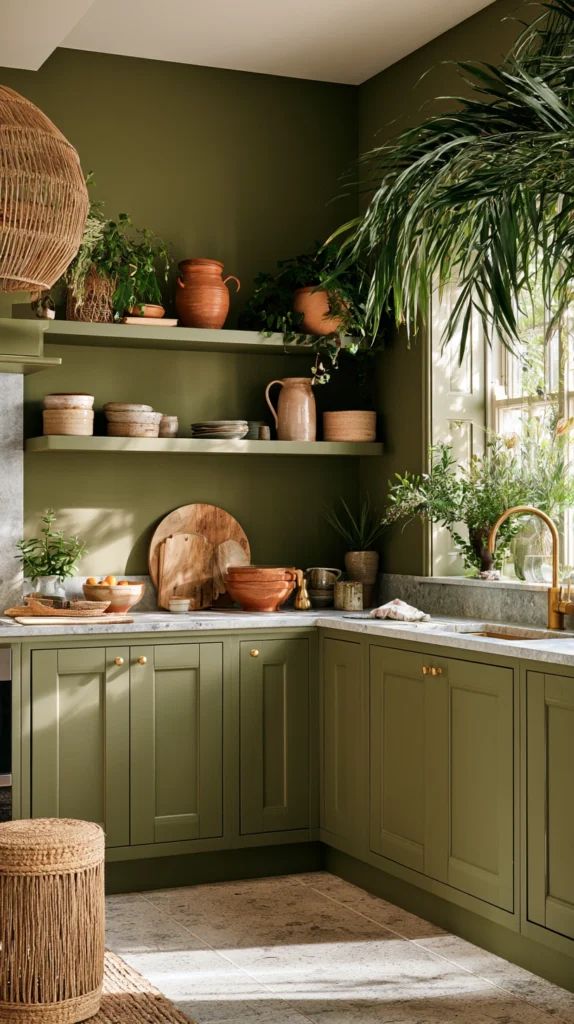
Incorporate substantial natural wood shelving in warm honey or amber tones coordinating with olive establishing the kind of organic material richness that creates authentic character. Choose quality wood shelving in complementary warm finishes, display thoughtfully creating intentional arrangements, and appreciate how natural wood enhances organic aesthetic.
The warm wood tones coordinate beautifully with olive creating cohesive warmth. The natural material authenticity elevates entire kitchen design perception.
13. Ambient Lighting Creating Warmth and Depth
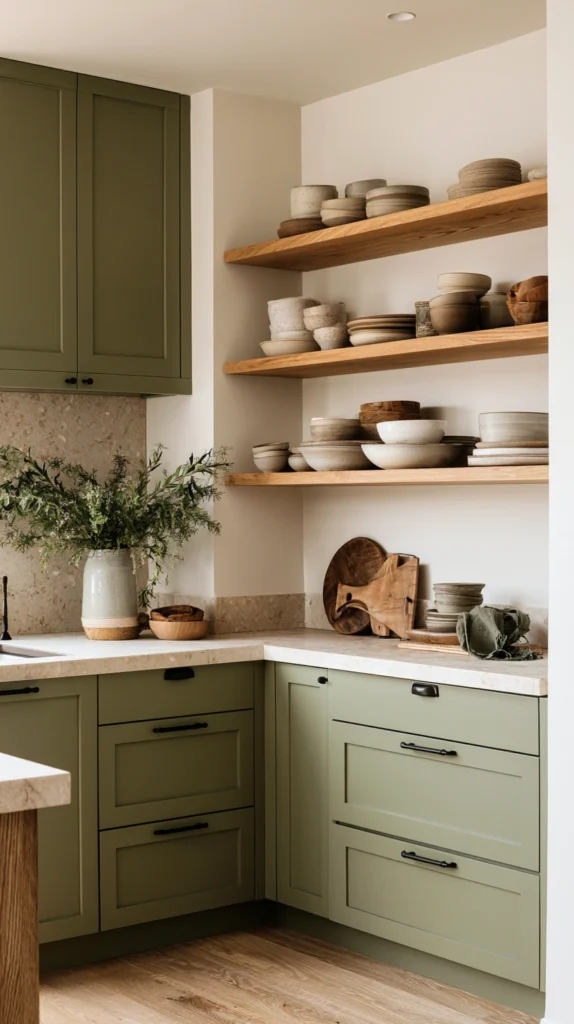
Install warm-toned ambient lighting revealing olive green’s complexity and creating the kind of welcoming warmth that bright white lighting cannot achieve. Choose warm LED bulbs with color temperatures around 2700 Kelvin, install dimmers allowing brightness adjustment, and layer lighting creating varied illumination levels.
The warm light reveals olive’s richness while the controllable brightness accommodates varied activities. Professional kitchens use warm lighting understanding its significance for perceived luxury and comfort.
14. Integrated Appliances Maintaining Visual Continuity
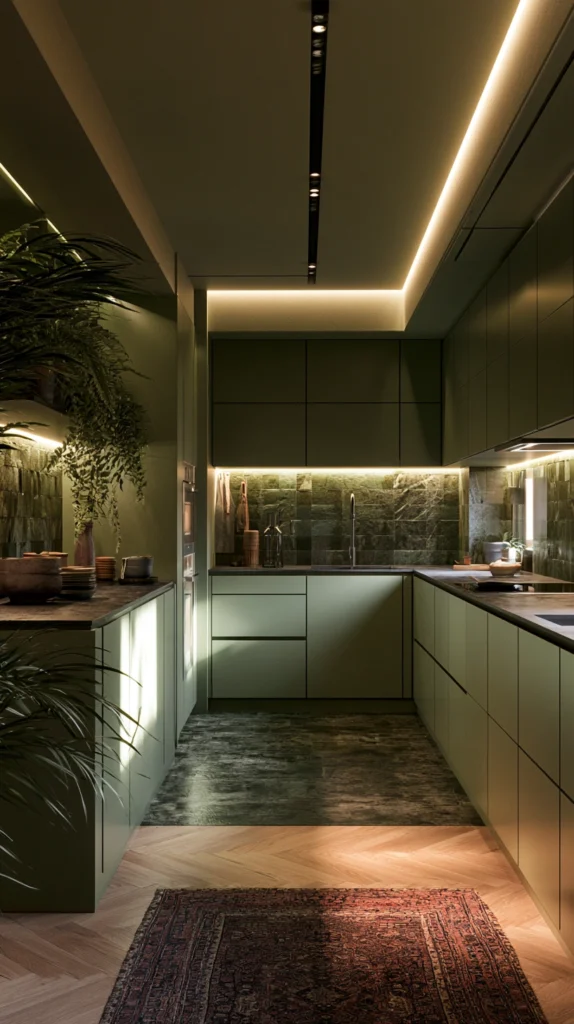
Maintain design coherence through panel-ready appliances hidden behind matching olive green cabinetry creating seamless lines and preventing visual fragmentation. Choose appliances accepting custom panels matching cabinet finishes, ensure proper ventilation and functionality despite concealment, and appreciate the sophisticated continuity seamless integration provides.
The hidden appliances maintain focus on design elements rather than stainless steel prominence. The integrated approach demonstrates professional design commitment and sophistication.
15. Botanical Artwork and Plant Styling
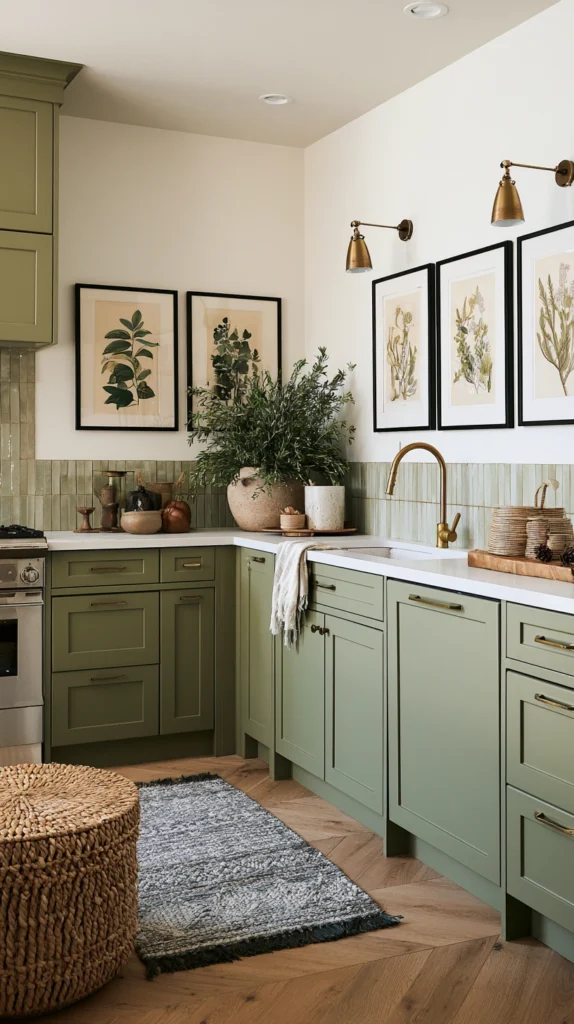
Create thematic cohesion through botanical artwork and fresh or faux plants establishing the kind of organic connection that reinforces olive green’s natural inspiration. Display botanical prints in quality frames, incorporate fresh herbs in attractive containers, and add potted plants creating living elements.
The botanical styling creates intentional thematic consistency while the living elements add genuine organic presence. The coordinated approach creates kitchens that feel thoughtfully designed around natural themes rather than casually assembled around color choices.
Successfully creating moody olive green kitchens requires selecting the right olive shade avoiding yellow-leaning or overly muted versions that read as dated, ensuring adequate lighting revealing color complexity and preventing oppressive darkness, and coordinating complementary materials establishing organic richness rather than sterile minimalism. Balance moody color with sufficient brightness through varied lighting sources and lighter cabinetry sections.
Incorporate genuine natural materials including wood and stone establishing authenticity. Maintain organization and cleanliness ensuring design sophistication remains visible. Consider long-term commitment understanding that moody colors represent intentional choice requiring sustained dedication.
Most importantly, recognize that moody olive green kitchens succeed through authentic commitment to organic aesthetic where sophisticated color choices coordinated with natural materials and thoughtful lighting create the kind of rich designed character that makes kitchens genuinely beautiful spaces proving that complex challenging colors deliver extraordinary results when applied with design knowledge and material quality ensuring that olive green kitchens remain beautiful for years transcending fleeting trends through timeless organic sophistication.