14 Keeping Room Ideas for a Cozy Space Off the Kitchen
The keeping room solved a problem that had quietly existed in every open kitchen I have ever cooked in: the person cooking is always somewhat alone, even in a house full of people. Not a bigger kitchen island. Not more bar stools crowded around the counter. Not a louder conversation shouted from the next room over.
A small room, just off the kitchen, built for exactly one purpose.
Because giving the cook’s companions their own dedicated spot did something an island’s bar seating never quite managed. Before it: guests perched on stools, half in the kitchen’s way, or scattered into the living room, too far to really talk. After it: a small adjoining room, a sofa and a low table, close enough to the stove for real conversation, far enough to stay out from underfoot.
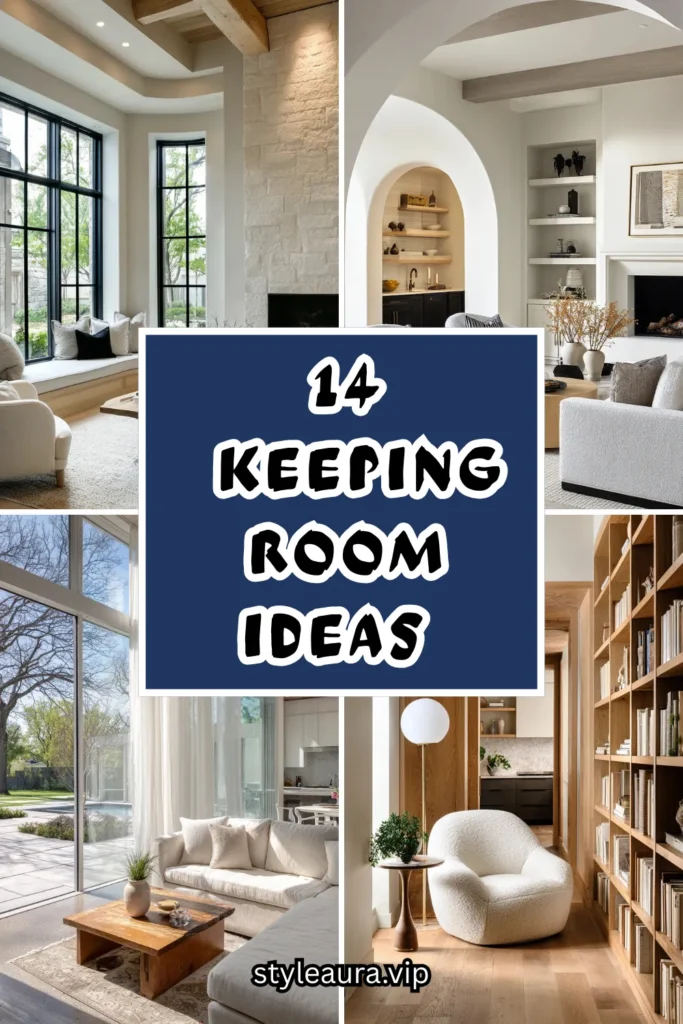
A keeping room is not simply a small sitting area near the kitchen. It is a specific historical answer to a specific problem, the room traditionally kept warm by the kitchen’s own fire, used by whoever needed to be near the cooking without being directly in it. The kitchen: no longer an isolated workspace, but a room with genuine company built into its floor plan.
Here are 14 keeping room ideas for a cozy space off the kitchen — from the simplest fireside nook to the most fully furnished secondary sitting room — built on that understanding.
Why a Keeping Room Solves a Problem Open-Concept Kitchens Often Create
The isolation paradox
Open-concept kitchens were popularized partly to keep the cook connected to guests and family, yet a person actively cooking is still frequently isolated at the stove or counter, facing away from the room, unable to fully participate in conversation happening at a distance.
The proximity-without-crowding solution
Without a keeping room:
Guests either crowded at the island, in the cook’s direct workspace, or seated at a distance in a separate living room, too far for easy conversation.
The kitchen: forcing an uncomfortable choice between crowding and isolation.
With a keeping room:
A small adjoining sitting area, close enough for real conversation across the open threshold, but physically separate from the actual cooking workspace.
The kitchen: allowing genuine company without anyone standing directly in the way of hot pans and sharp knives.
The historical throughline
The keeping room’s traditional function — warmed by the kitchen’s own hearth, used for the household’s daily activities that needed to stay near that warmth — directly informs its modern equivalent: a small space benefiting from the kitchen’s energy and activity without requiring its own separate heating or entertainment infrastructure.
The scale advantage
A keeping room does not require the square footage a full separate family room would need. Often modest in size, it succeeds through genuine coziness and proximity rather than scale, making it achievable even in a home without room for a large additional living space.
The Five Core Keeping Room Elements
Before designing any specific layout:
A defined but open threshold
A doorway, an archway, or simply a change in flooring or ceiling height, marking the keeping room as its own space while remaining visually and acoustically connected to the kitchen.
The single most important design decision.
Distinguishes a genuine keeping room from an unremarkable extension of the kitchen itself.
Comfortable, informal seating
A loveseat, a pair of armchairs, or a window seat, prioritizing comfort over the more formal seating a separate living room might include.
Scaled to the room’s typically modest size.
Suited to quick, casual use rather than extended formal entertaining.
A source of warmth
A fireplace, a wood stove, or simply warm lighting and layered textiles, echoing the room’s traditional connection to the kitchen hearth.
Reinforces the room’s cozy, gathering character.
Not always a literal fire, but always some deliberate warmth.
Proximity to the kitchen’s activity
Positioned to allow real conversation with whoever is cooking, without requiring anyone to stand in the actual workspace.
The core functional purpose the room exists to serve.
Worth prioritizing over other design considerations if a choice must be made.
A small, specific secondary function
A reading nook, a homework spot, or a coffee station, giving the room a specific daily use beyond purely passive sitting.
Ensures the room gets genuine daily use rather than remaining decorative.
Varies considerably based on the household’s actual routines.
1. The Fireside Keeping Room
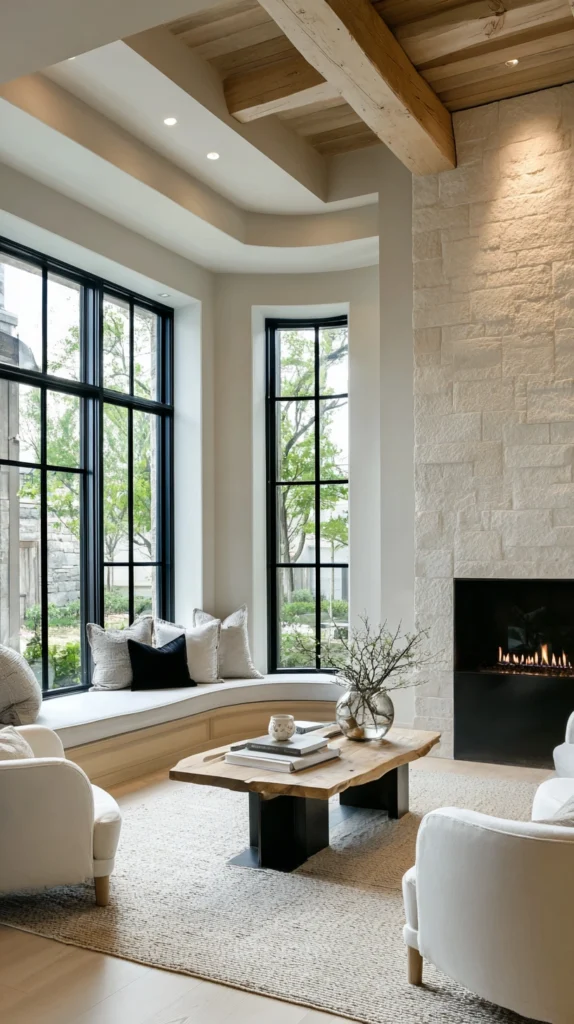
A small sitting area built directly around a fireplace or wood stove, positioned just off the kitchen, using genuine fire warmth as the room’s central draw.
Why a literal fire source most directly honors the keeping room’s traditional function
The keeping room’s name and original purpose come specifically from its proximity to warmth. A genuine fireplace or wood stove most directly recreates that original function, rather than only its modern social benefit.
The fireplace
A wood-burning or gas fireplace, sized appropriately to the room’s modest scale, rather than an oversized feature that would overwhelm a genuinely small space.
The seating
Two chairs or a small loveseat, positioned to face the fire directly, prioritizing the fireside experience as the room’s clear central activity.
The kitchen sightline
Positioned so anyone seated by the fire maintains a clear visual and conversational connection to the kitchen, rather than a fireplace orientation that would face seating away from the kitchen entirely.
The warmth practicality
A genuine fire source providing real, functional warmth, particularly valuable in an older home or a colder climate where the kitchen and keeping room combination might otherwise run cool.
The overall atmosphere
A space that most closely recreates the keeping room’s historical origin, warmth and conversation combined in one small, dedicated spot.
Cost breakdown: Fireplace or wood stove installation: $2,000–6,000 Seating (loveseat or two chairs): $400–1,200 Total: $2,400–7,200
2. The Window Seat Keeping Room
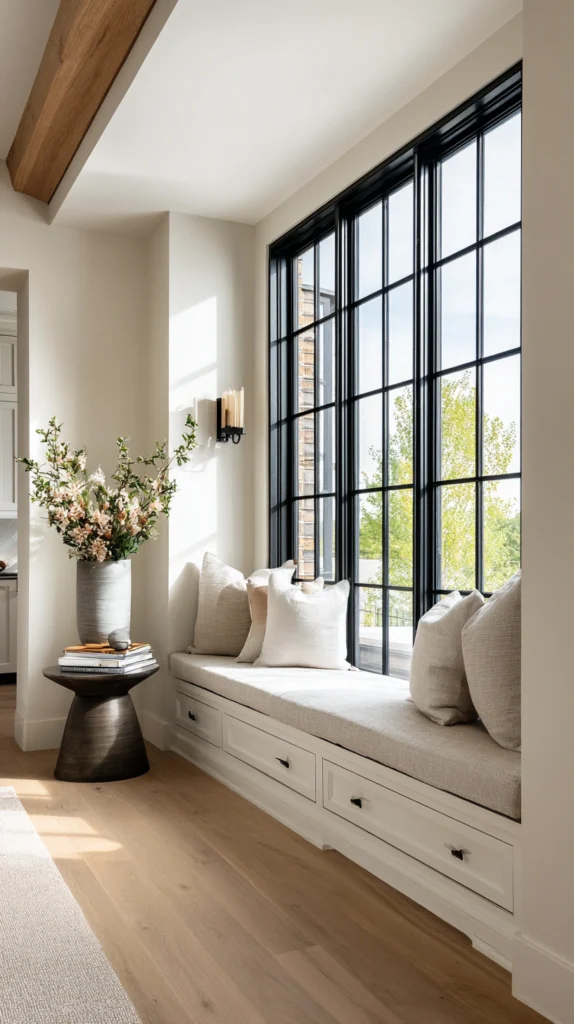
A built-in window seat, positioned in a small nook just off the kitchen, providing seating that takes advantage of natural light without requiring additional furniture in a tight space.
Why a window seat suits a keeping room with genuinely limited square footage
Where floor space is too tight for a full loveseat or armchair pair, a built-in window seat provides comfortable seating without consuming any additional floor footprint beyond the window bay itself.
The construction
A built-in bench seat fitted to the window’s width, cushioned generously for comfortable extended sitting.
The storage option
A hinged seat lid, providing hidden storage beneath, particularly valuable in a small space where every additional storage opportunity matters.
The proximity to the kitchen
Positioned directly adjacent to or visible from the kitchen’s main workspace, maintaining the keeping room’s core function of easy conversation with whoever is cooking.
The cushioning and pillows
Deep cushions and a few pillows, softening the built-in bench and adding the same coziness a more traditional loveseat or armchair would provide.
The overall space efficiency
A genuine seating solution requiring minimal floor space beyond the window’s own footprint, making this one of the most space-efficient keeping room approaches available.
Cost breakdown: Built-in window seat construction: $300–800 Cushions and pillows: $80–180 Total: $380–980
3. The Breakfast Nook Keeping Room
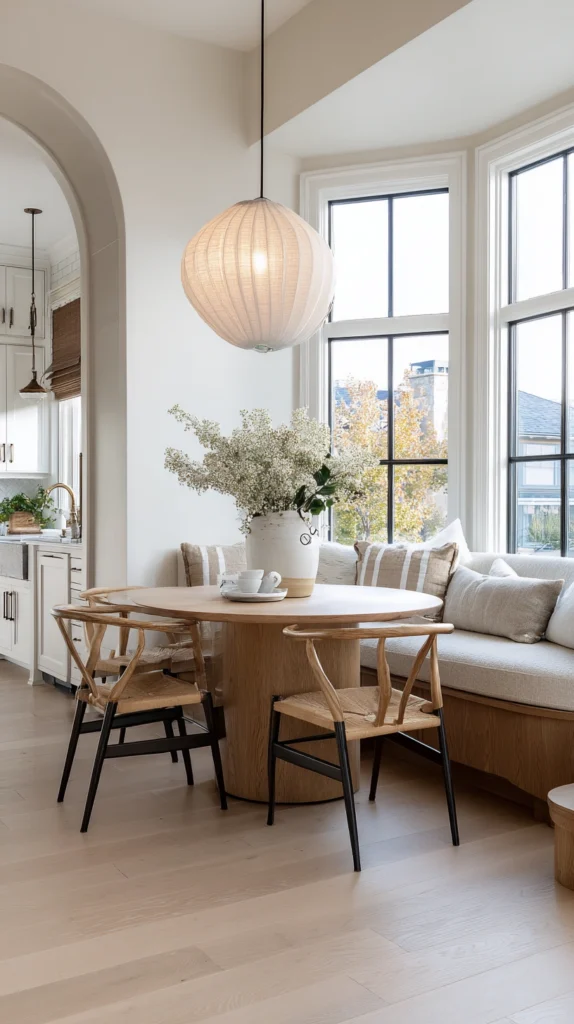
A small table and bench seating, positioned in a keeping room just off the kitchen, combining the room’s conversational function with genuine daily dining use.
Why a dining-focused keeping room suits a household’s actual daily routine
Rather than purely passive sitting, a breakfast nook gives the keeping room a specific, repeated daily function — actual meals eaten there — ensuring the space earns genuine regular use.
The table
A small table, sized for everyday meals rather than formal entertaining, positioned close enough to the kitchen for easy food transport.
The bench seating
A built-in bench along one or two sides of the table, maximizing seating capacity within the room’s typically modest footprint.
The window integration
Positioned near a window if the room’s layout allows, combining the nook’s dining function with natural light for the household’s everyday breakfast or casual meal routine.
The kitchen connection
Close enough to the stove and counters that food can be plated and carried directly to the table, without requiring a lengthy walk through a separate dining room.
The overall daily value
A keeping room used every single day for actual meals, rather than reserved only for occasional sitting or conversation, ensuring the space integrates fully into the household’s daily rhythm.
Cost breakdown: Small table and bench seating: $300–800 Total: $300–800
4. The Library-Style Keeping Room
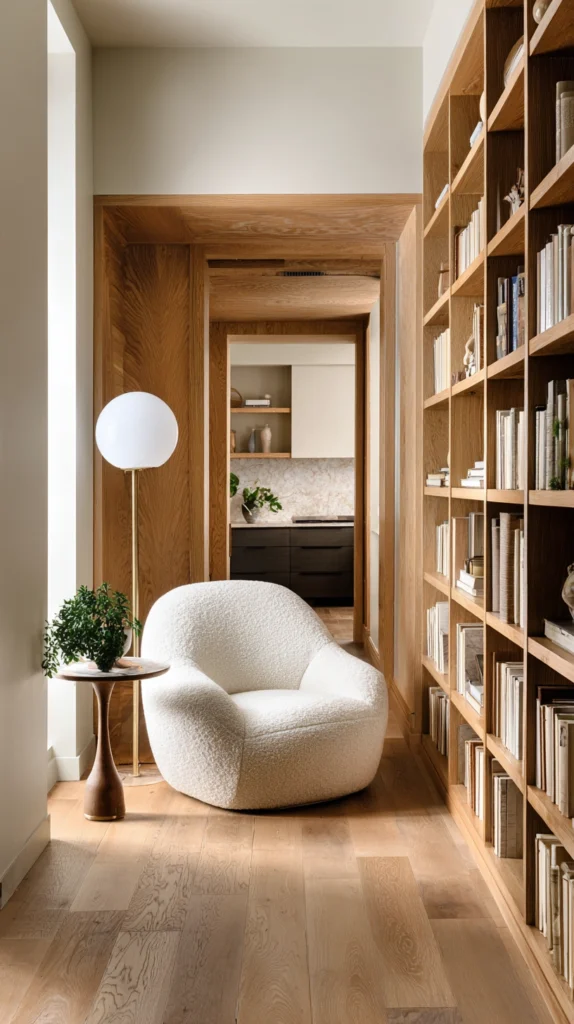
A small keeping room lined with bookshelves, combining a cozy reading spot with genuine book storage and display, positioned just off the kitchen for a quiet retreat within earshot of household activity.
Why book-lined walls suit a keeping room’s typically intimate scale
A keeping room’s modest size mirrors a traditional small home library’s own scale, making bookshelves a natural fit that also addresses genuine storage needs beyond pure seating.
The shelving
Built-in or freestanding bookshelves lining one or more walls, providing both storage and a considered backdrop for the room’s seating.
The reading chair
A single comfortable chair with a reading lamp, positioned to take advantage of the room’s quieter, more contained character relative to the open kitchen beyond it.
The kitchen proximity benefit
Close enough to hear kitchen activity and conversation, while offering a slightly more removed, quieter spot than sitting directly at the island or in the kitchen’s main flow of movement.
The styling
Books arranged with genuine variety in height and color, alongside a few considered decorative objects, following the same styling principles relevant to any well-curated shelving display.
The overall character
A keeping room with a slightly more contemplative, quieter character than a purely social fireside version, suited to a household valuing a small reading retreat as much as conversational proximity to the kitchen.
Cost breakdown: Built-in or freestanding bookshelves: $400–1,200 Reading chair and lamp: $150–400 Total: $550–1,600
5. The Coffee Bar Keeping Room
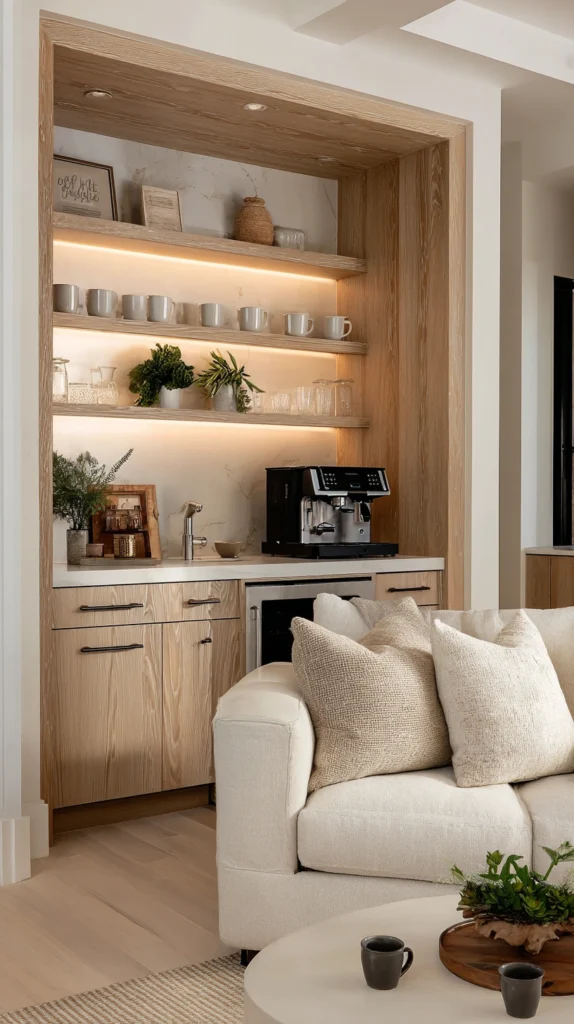
A small keeping room outfitted with a dedicated coffee and beverage station, giving the space a specific morning-routine function alongside its general conversational role.
Why a coffee-focused keeping room suits a household’s actual morning rhythm
Mornings are often when a household most wants to be near, but not directly underfoot of, whoever is preparing breakfast — a coffee station within the keeping room gives that morning gathering a specific, comfortable spot.
The coffee station
A small counter or cart holding a coffee maker, mugs, and supplies, positioned within the keeping room rather than crowding the main kitchen counter.
The seating
A small loveseat or two chairs, positioned for easy morning conversation while coffee is prepared and consumed.
The proximity to the kitchen
Close enough that the coffee station can share the kitchen’s water and electrical infrastructure without requiring extensive separate plumbing or wiring.
The daily use case
A genuine daily ritual spot — morning coffee, a quiet moment before the household’s day fully begins — giving the keeping room a specific, repeated function distinct from its evening or weekend uses.
The overall value
A keeping room that earns its place in the daily routine specifically through the morning ritual it supports, in addition to its broader conversational role throughout the rest of the day.
Cost breakdown: Coffee station cabinetry or cart: $150–500 Seating: $300–800 Total: $450–1,300
6. The Sunken or Raised Keeping Room
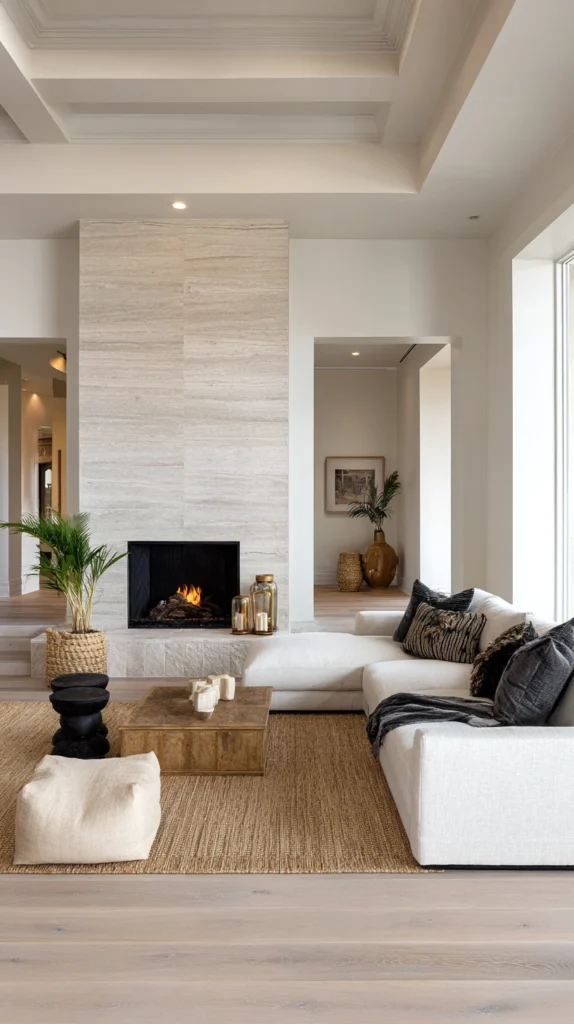
A keeping room positioned at a slightly different floor level than the adjoining kitchen, using a step down or step up to reinforce the room’s distinct identity despite its open connection.
Why a level change can define a keeping room more effectively than an open floor plan alone
Where a doorway or archway is not architecturally feasible, a change in floor level creates a physical, rather than purely visual, distinction between the keeping room and the kitchen, reinforcing the sense of a separate space without requiring a full wall.
The level change
A single step down or up, connecting the two spaces, providing a clear physical transition that a flush, single-level floor plan would not offer.
The safety consideration
A single step, rather than several, generally reads as more intentional and safer to navigate, worth confirming with a contractor if considering this approach, given the genuine trip-hazard consideration any level change introduces.
The seating orientation
Furniture arranged to take full advantage of the level change, often with seating positioned to look slightly down or up into the kitchen’s activity, adding a subtle sense of vantage point to the room’s conversational function.
The flooring distinction
A different flooring material at the keeping room’s level, further reinforcing the sense of a distinct space even while remaining open and visually connected to the kitchen.
The overall effect
A keeping room with genuine architectural identity, the level change providing definition that an open floor plan without any physical transition would lack.
Cost breakdown: Level change construction: $800–2,000 Flooring for the raised or sunken area: $400–1,000 Total: $1,200–3,000
7. The Exposed Beam and Rustic Keeping Room
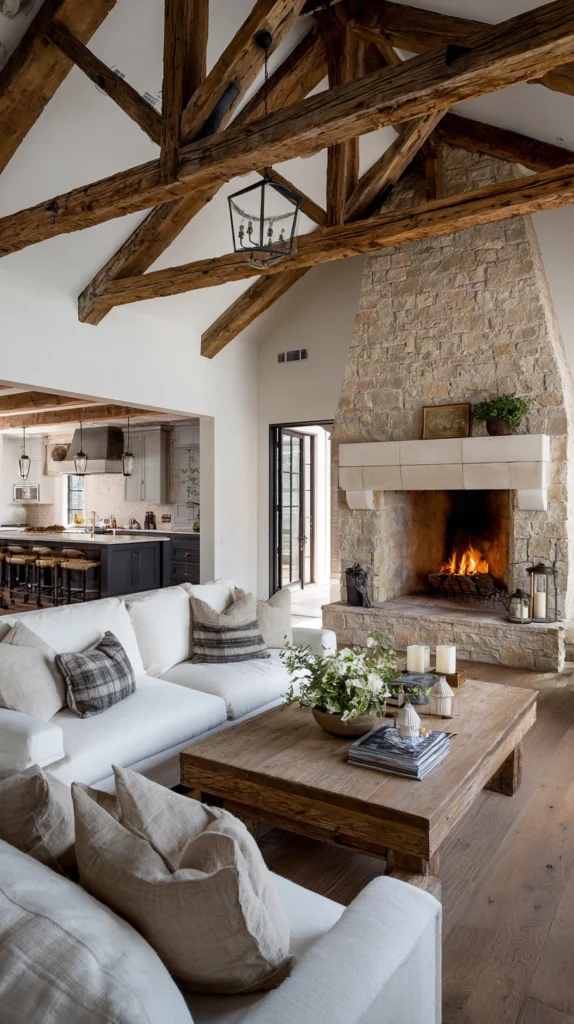
A keeping room finished with exposed wood beams, a stone or brick accent wall, and rustic furnishings, echoing the room’s traditional farmhouse origins directly.
Why a rustic material palette suits the keeping room’s historical character
The keeping room concept originates in early American and English farmhouse architecture, and leaning into that rustic material language — exposed beams, natural stone, aged wood — connects the modern version directly to its actual historical roots.
The beams
Exposed or added wood beams across the ceiling, reinforcing the room’s cozy, low-key architectural character.
The stone or brick wall
A single accent wall in natural stone or exposed brick, adding genuine textural warmth and material history to the space.
The furniture
Simple, sturdy furniture in natural wood and warm textiles, avoiding anything overly polished or contemporary that would work against the room’s intentionally rustic character.
The lighting
Warm, low lighting — wall sconces, a simple pendant — continuing the room’s overall historical, farmhouse-inspired atmosphere.
The overall effect
A keeping room that reads as genuinely tied to the concept’s actual historical origin, rather than a purely contemporary small sitting area that happens to share the keeping room’s name and general function.
Cost breakdown: Exposed or added beams: $250–700 Stone or brick accent wall: $500–1,500 Rustic furniture: $400–1,000 Total: $1,150–3,200
8. The Glass-Walled Keeping Room
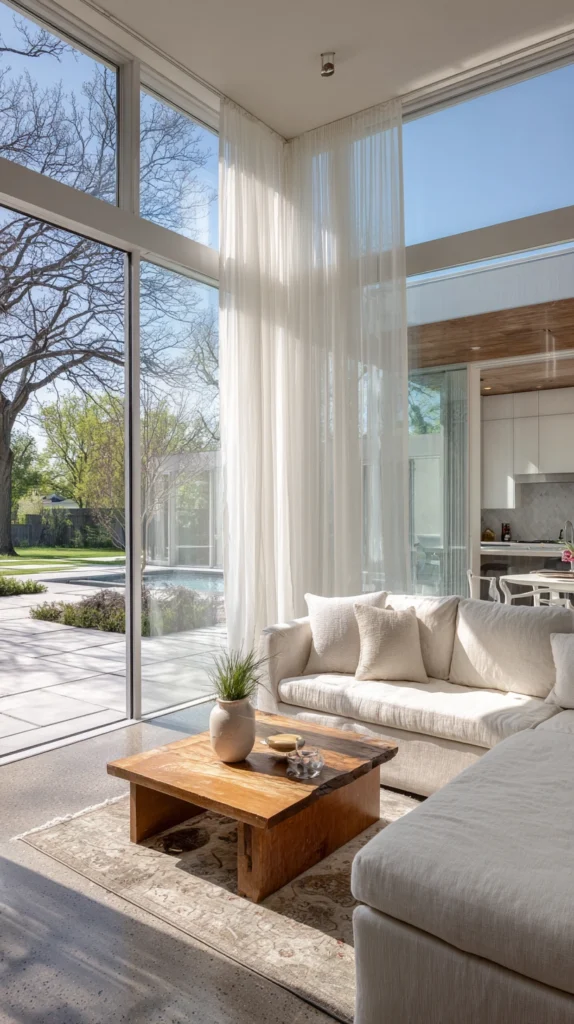
A keeping room enclosed partially or fully in glass, maximizing natural light and a visual connection to an adjoining outdoor space, while maintaining the acoustic and conversational proximity to the kitchen.
Why glass walls suit a keeping room positioned near a garden or patio
Where a keeping room’s location happens to border an outdoor space, glass walls extend the room’s sense of connection beyond just the kitchen, borrowing both light and view from whatever lies just outside.
The glass application
A full or partial glass wall, either as a genuine architectural addition during a renovation or through large windows if the room’s existing structure allows.
The furniture selection
Comfortable seating positioned to take advantage of both the kitchen sightline on one side and the outdoor view on the other, situating the room at a genuine crossroads of the home’s indoor and outdoor life.
The light management
Sheer curtains or a simple blind, providing light control and privacy adjustment without sacrificing the room’s overall bright, airy character.
The seasonal use
Particularly valuable in a temperate climate where the adjoining outdoor space itself sees regular use, the glass-walled keeping room functioning almost as a transition zone between the kitchen and the garden or patio beyond it.
The overall effect
A keeping room with genuine light and view in addition to its core conversational function, borrowing value from both the kitchen and whatever outdoor space it happens to border.
Cost breakdown: Glass wall addition (partial or full): $2,000–6,000 Curtains or blinds: $60–150 Total: $2,060–6,150
9. The Multi-Generational Keeping Room
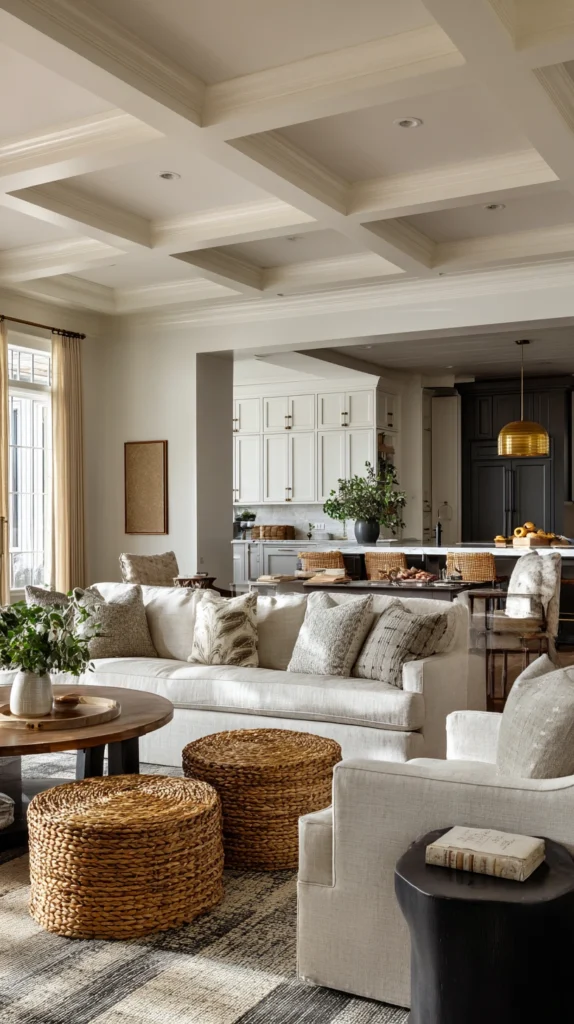
A keeping room specifically furnished to accommodate an aging parent or grandparent, with comfortable, accessible seating positioned to allow easy, ongoing conversation with whoever is in the kitchen throughout the day.
Why the keeping room concept suits multi-generational households particularly well
An older family member spending significant time in the home benefits from a comfortable spot that keeps them genuinely included in household activity without requiring them to stand in the kitchen itself — precisely the keeping room’s original social function, applied directly to a modern multi-generational living situation.
The seating
A supportive, comfortable chair, sized and cushioned specifically for extended daily sitting, rather than a purely decorative or occasional-use piece of furniture.
The accessibility consideration
Clear pathways, adequate lighting, and furniture positioned to avoid any trip hazards, worth prioritizing specifically given the room’s intended regular use by an older or less mobile family member.
The proximity value
Positioned as close as possible to the kitchen’s main activity, maximizing the sense of inclusion and easy conversation throughout the day.
The personal touches
A small side table for a book, reading glasses, or a cup of tea, and perhaps a small television or radio, tailored to the specific family member’s actual daily habits and preferences.
The overall social value
A keeping room that directly addresses a genuine household need — keeping an older family member included and comfortable — through the same basic proximity principle the keeping room concept has always served.
Cost breakdown: Supportive, comfortable chair: $300–800 Side table and lighting: $60–150 Total: $360–950
10. The Homework and Family Activity Keeping Room
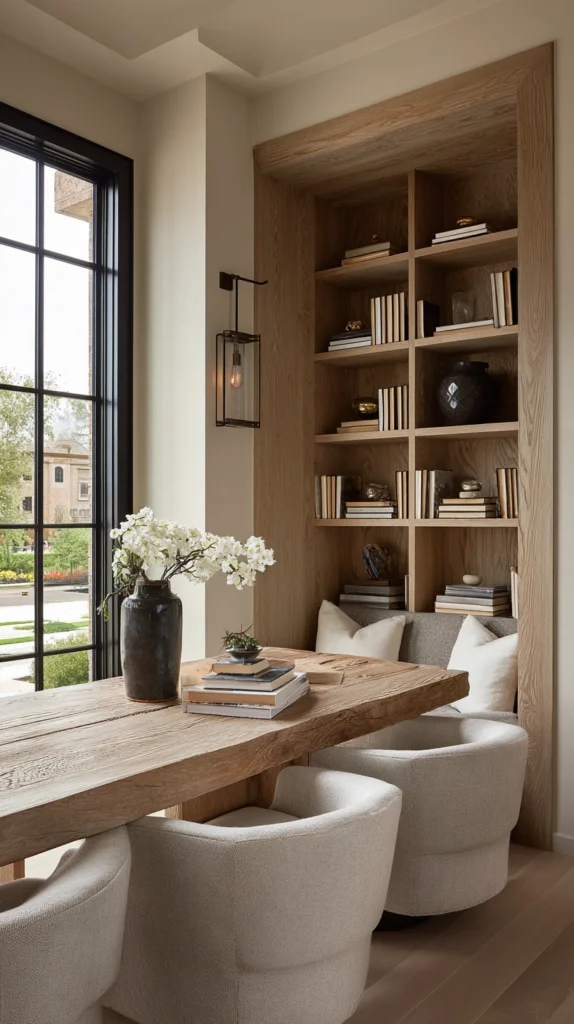
A keeping room outfitted with a small table or desk suited to children’s homework or craft activities, positioned close enough to the kitchen for a parent to supervise while cooking.
Why a keeping room suits a household with school-age children particularly well
A parent cooking dinner while children do homework nearby is one of the most common daily household scenarios, and a keeping room positioned specifically for this purpose gives that routine a proper, comfortable spot rather than the kitchen table itself, which is often needed for actual food preparation.
The table or desk
A small table sized for homework or craft activities, positioned within easy conversational and supervisory distance of the kitchen.
The storage
A small shelf or bin system for school supplies, craft materials, or books, keeping the room organized for its specific daily function.
The lighting
Good, genuinely functional task lighting suited to reading and writing, rather than only the softer, more ambient lighting a purely conversational keeping room might otherwise rely on.
The flexibility
The same table and seating doubling as adult conversational seating in the evening, once the homework or craft activity for the day has concluded.
The overall daily value
A keeping room that solves one of the most common daily household tensions — supervising children while cooking — directly through its specific furnishing and placement.
Cost breakdown: Small table or desk: $150–400 Storage and lighting: $60–150 Total: $210–550
11. The Bar Nook Keeping Room
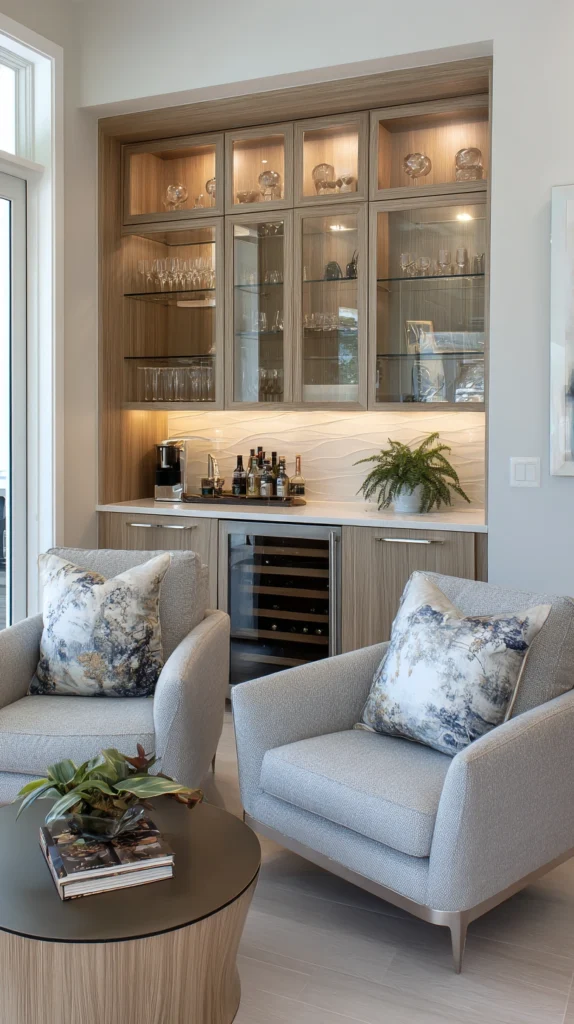
A keeping room fitted with a small wine or cocktail bar, positioned for easy drink service during cooking and entertaining, extending the kitchen’s hosting function into a dedicated adjoining space.
Why a bar-focused keeping room suits a household that regularly entertains
During a dinner party, guests naturally gather where drinks are being poured, and a keeping room specifically outfitted for this purpose gives that gathering point its own defined, comfortable space rather than crowding the kitchen counter itself.
The bar setup
A small counter or cabinet holding wine, spirits, and glassware, positioned within the keeping room rather than on the kitchen’s own limited counter space.
The seating
A small loveseat or a couple of chairs, positioned near the bar setup for guests to sit and converse while drinks are prepared and served.
The proximity to the kitchen
Close enough that the bar area shares in the kitchen’s overall activity and energy during a gathering, without requiring guests to stand directly in the cook’s active workspace.
The everyday function
The same bar setup used for an everyday evening drink, not reserved purely for entertaining, ensuring the keeping room earns regular use beyond only hosting occasions.
The overall value
A keeping room that extends the kitchen’s hosting capacity specifically, giving a dinner party’s drink-and-conversation phase its own dedicated, comfortable spot.
Cost breakdown: Bar cabinet or counter: $200–600 Seating: $300–800 Total: $500–1,400
12. The Minimalist Two-Chair Keeping Room
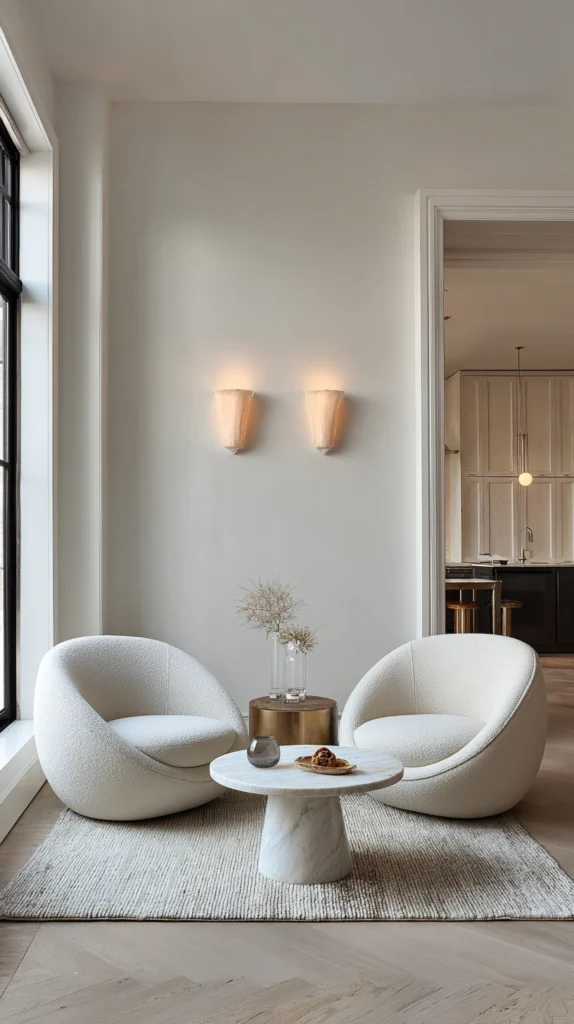
A genuinely small keeping room furnished with just two chairs and a small side table, embracing minimal furnishing for the tightest possible available space.
Why the smallest possible footprint can still deliver a genuine keeping room function
Not every home has room for a full sitting area off the kitchen. Two chairs and a small table, fitted into even a very modest nook, still deliver the room’s core function — proximity and conversation — without requiring substantial square footage.
The chairs
Two simple, comfortable chairs, chosen for a scale genuinely suited to a small space rather than oversized furniture that would overwhelm the nook.
The side table
A small table between the two chairs, providing a spot for a drink or a book without requiring additional floor space beyond what the chairs themselves occupy.
The proximity maximization
Positioned as close as the available space allows to the kitchen’s main activity, since this minimal approach depends specifically on genuine proximity to deliver its full value, having little else to offer beyond that core function.
The lighting
A single small lamp or a wall sconce, providing enough warm light for the two-chair nook without requiring elaborate lighting planning.
The overall value
A keeping room achieved in the smallest possible footprint, proving the concept does not require substantial dedicated space to deliver genuine daily value.
Cost breakdown: Two chairs: $150–500 Small side table: $30–80 Total: $180–580
13. The Layered Textile Cozy Keeping Room
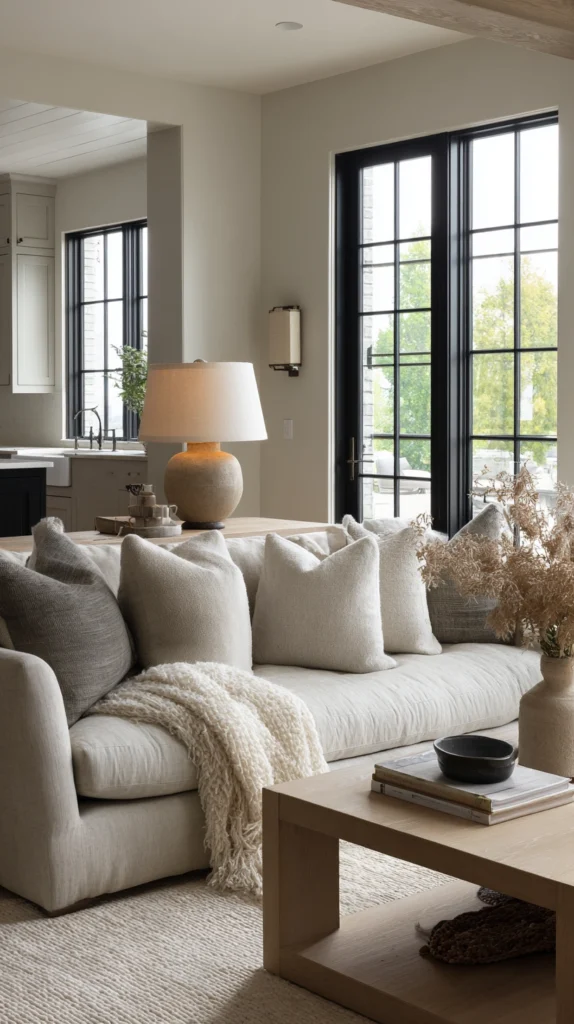
A keeping room styled specifically around soft, layered textiles — a deep sofa, abundant cushions, heavy throws, and a plush rug — prioritizing tactile comfort above any other design consideration.
Why textile layering can define a keeping room’s character as effectively as architecture
Where a fireplace, exposed beams, or a level change require genuine construction, a keeping room can achieve the same sense of cozy distinction purely through soft furnishing, a lower-cost and lower-commitment route to the same essential atmosphere.
The seating
A deep, oversized loveseat or a pair of substantial armchairs, chosen specifically for how enveloping and comfortable they feel rather than for a particular formal style.
The cushions and throws
Abundant cushions in varied textures, and at least one heavy knit or wool throw per seat, layering softness generously rather than sparingly.
The rug
A plush, substantial rug beneath the seating, grounding the space and adding another layer of tactile comfort underfoot.
The lighting
Warm, low lamp light rather than any bright overhead fixture, reinforcing the room’s overall soft, enveloping character.
The overall effect
A keeping room defined entirely through comfort and texture rather than architecture, achievable in nearly any home regardless of whether structural changes are feasible or desired.
Cost breakdown: Deep seating (loveseat or armchairs): $500–1,500 Cushions and throws: $100–200 Rug: $80–250 Total: $680–1,950
14. The Complete Keeping Room (The Fully Realized Space Off the Kitchen)
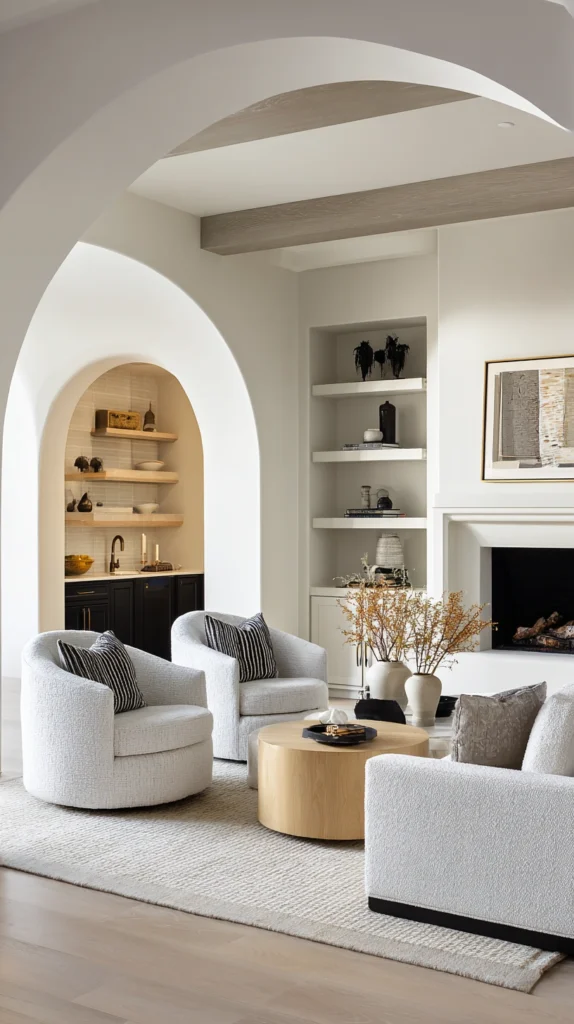
A complete keeping room combining several of the approaches above — a defined threshold, comfortable seating, genuine warmth, and a specific daily function — treating the space as a fully considered extension of the kitchen rather than a single loveseat placed in whatever adjoining space happens to exist.
What separates the complete keeping room from a chair placed near the kitchen
A single chair positioned in an open corner near the kitchen: a start. A complete keeping room: every element — the threshold, the seating, the warmth, and the daily function — deliberately planned together, so the space serves its full traditional purpose rather than simply occupying nearby square footage.
The elements of the complete keeping room
The threshold
A doorway, archway, or level change, giving the room a genuine sense of its own identity while remaining open to the kitchen.
The seating
Comfortable, appropriately scaled furniture — a loveseat, a pair of chairs, or a built-in bench — prioritizing coziness over formality.
The warmth
A fireplace, wood stove, or simply warm, layered lighting and textiles, echoing the room’s traditional hearth-adjacent function.
The daily function
A specific, repeated use — morning coffee, homework supervision, evening reading — ensuring the room earns genuine daily use rather than sitting purely decorative.
The kitchen proximity
Positioned and oriented specifically to maintain easy conversation with whoever is cooking, the core function the entire room exists to serve.
The complete design in action
A weekday evening:
5pm: A child doing homework at the small table, a parent visible and audible from the stove just steps away.
6pm: Dinner nearly ready, a partner settled into the loveseat with a glass of wine, easy conversation carrying between the two spaces.
7pm: After the meal, the family gathered in the keeping room for a few minutes before dispersing, the small fire or warm lamp light making the transition from dinner feel unhurried.
The complete keeping room: not a chair placed wherever space allowed near the kitchen, but a genuinely planned small room, serving the same core function keeping rooms have served for centuries — proximity, warmth, and company, all within easy reach of the household’s actual daily activity.
Cost breakdown for the complete keeping room: Assuming a starting point of an empty adjoining space off the kitchen: Threshold or level change (if applicable): $0–3,000 Seating: $400–1,200 Warmth source (fireplace or layered textiles and lighting): $150–6,000 Daily function furnishing (table, coffee station, or shelving): $150–800 Total: $700–11,000 depending on scope
Phased over a renovation or furnishing timeline:
Phase one: Seating and basic warmth (lighting, textiles), the lowest-cost foundational layer
Phase two: The specific daily function furnishing, tailoring the room to the household’s actual routine
Phase three: A genuine architectural threshold or fireplace addition, if the budget and renovation scope allow
The complete keeping room: not a large addition, but a small, well-considered space that solves a genuinely common problem in the modern open-concept kitchen.
The Question Before Any Keeping Room Design
Before choosing a specific layout:
What is the primary reason this household wants a space like this off the kitchen?
If the answer is: the cook feels isolated from guests and family during meal prep — start with the simplest fireside or two-chair version, prioritizing proximity above all else.
If the answer is: children need supervision while a parent cooks — the homework and family activity keeping room.
If the answer is: the household entertains regularly — the bar nook keeping room.
If the answer is: an older family member needs to feel included in daily household life — the multi-generational keeping room, prioritizing comfort and accessibility.
The design follows the household’s actual daily routine and specific reason for wanting the space, more than any single traditional keeping room template. Every idea on this list serves a different specific version of the same core proximity function. The question is which particular daily need matters most for this household.
The simple two-chair nook, positioned as close to the kitchen as the available space allows: still delivers the keeping room’s essential value. The complete space, planned with real attention to threshold, warmth, and daily function: a room that genuinely earns its place in the household’s everyday life, just as it has for centuries.
That everyday inclusion: the whole point of building a keeping room in the first place.
Getting Started This Weekend
The immediate keeping room solution:
Identify the specific corner or adjoining space closest to the kitchen’s main activity.
Proximity is the single non-negotiable requirement every other design decision depends on.
Bring in two chairs, even before any construction or major purchase.
Test how the space actually gets used before committing to a larger furnishing or renovation plan.
Add one layer of warmth — a lamp, a throw, a candle — even without a full fireplace.
The rest of the design: the elaboration of this moment.
Identify the household’s specific daily routine this space could support, and furnish toward that use first.
The proximity: the beginning. The keeping room: what gets gathered, and lived in, just steps from the stove.