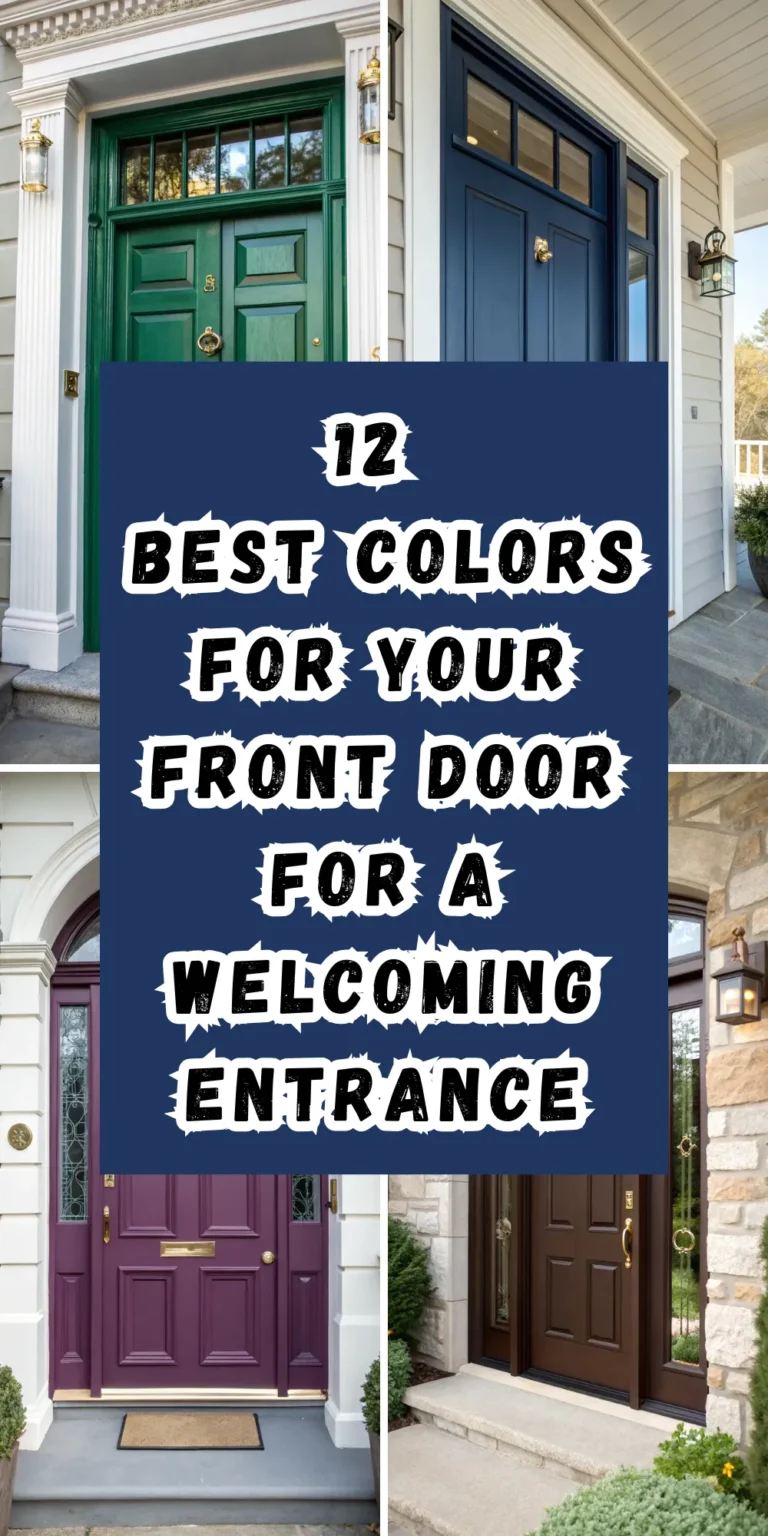
7 Bohemian Outdoor Party Ideas for a Relaxed Celebration
Boho style gets flattened into “macrame and fairy lights” more often than any other party aesthetic, which is exactly how a genuinely relaxed, layered look ends up feeling like a themed party instead of a real one.
Real boho styling is about texture, imperfection, and warmth, not a specific shopping list of props. Done well, it feels unplanned even though every layer was actually chosen with intention, which is a harder balance to strike than it sounds.
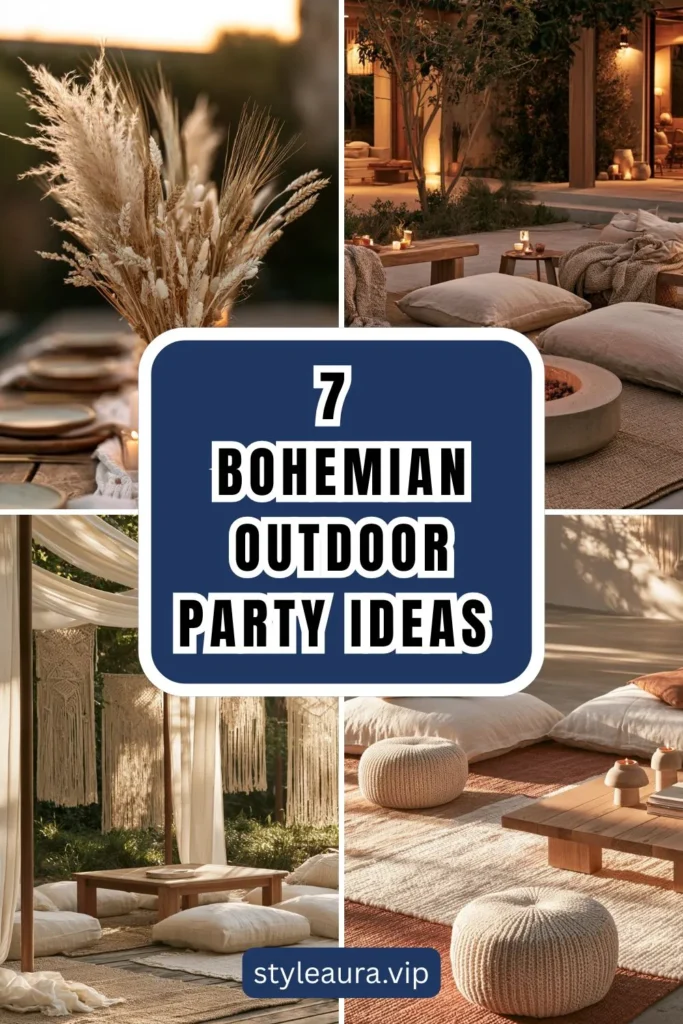
Here are 7 ideas built around that distinction, each one showing the generic version most people default to and the more considered version that actually captures the aesthetic.
What Separates Genuine Boho From the Themed Version
A few consistent qualities show up in boho styling that actually works, and it’s worth understanding these before shopping for a single item.
- Layered textures over matched sets — mixing rattan, macrame, and linen rather than one uniform material
- Warm, earthy color palettes — terracotta, rust, and cream instead of bright, saturated tones
- Low seating and ground-level styling — floor cushions and low tables over standard chairs
- Imperfect, asymmetrical arrangement — nothing perfectly centered or evenly spaced
- Natural materials specifically — real wood, jute, and dried botanicals over plastic or glossy synthetic versions
1. Floor Seating With Layered Rugs and Cushions
The generic version: A single flat rug with a few mismatched throw pillows scattered on top.
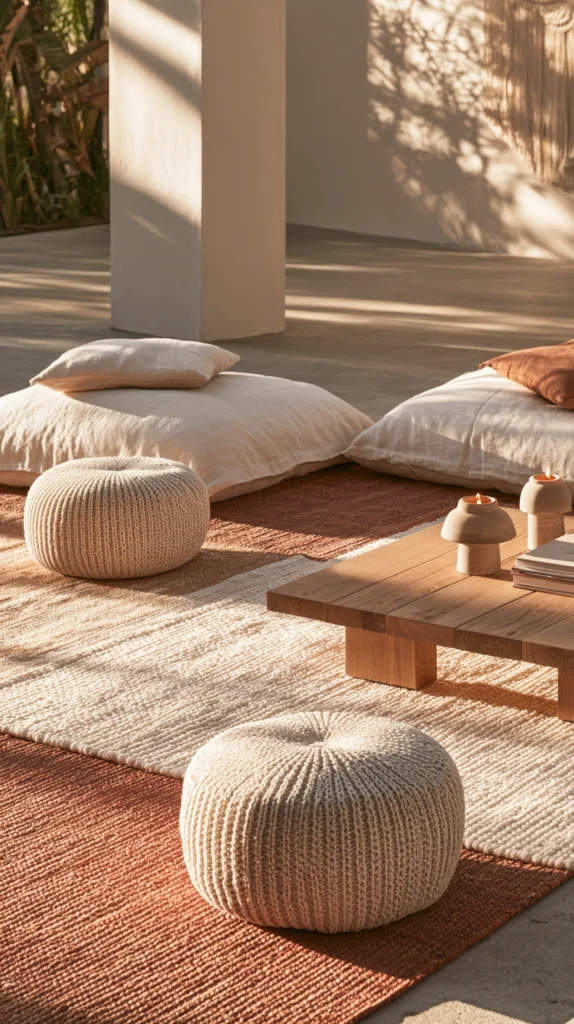
The considered version: Two or three overlapping rugs in different patterns, layered with floor cushions and low poufs at varying heights.
Building it:
- Layer a jute or woven base rug first, then add one or two smaller patterned rugs on top, slightly offset rather than centered
- Mix cushion covers in complementary but not matching patterns, favoring natural fabrics like linen and cotton
- Add a few low poufs or floor pillows at a slightly different height than the main cushions for visual variation
- Position seating in a loose circle or cluster rather than a straight line
Why it works: The layering itself, not any single rug or pillow, is what creates the lived-in, gathered-over-time feeling boho styling depends on.
Cost: $80–$180 depending on how many rugs and cushions are sourced new versus secondhand.
2. A Macrame and Fabric Canopy Instead of a Standard Tent
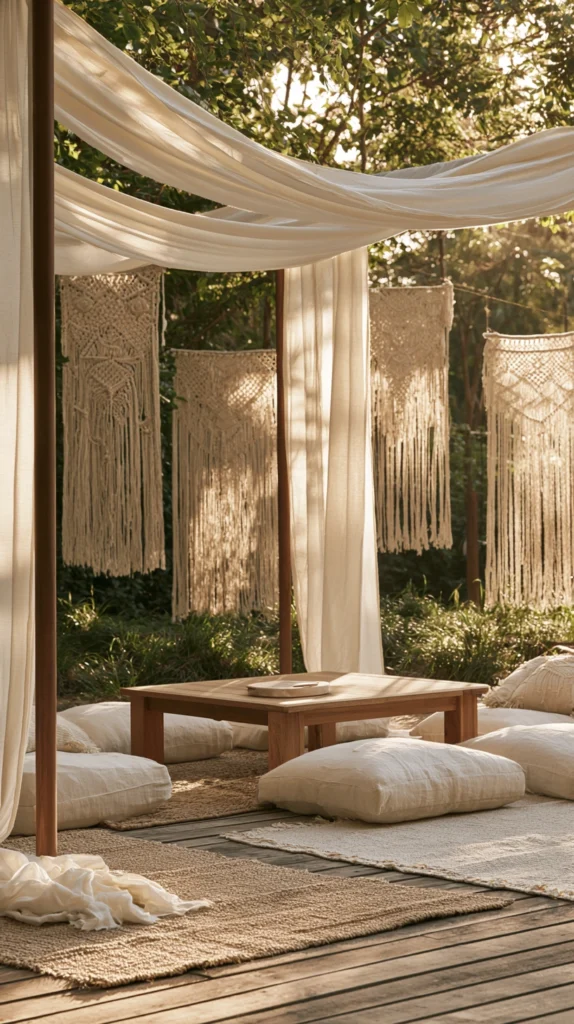
The generic version: A plain white event tent with no additional styling.
The considered version: Sheer fabric panels and macrame hangings draped between posts or trees, creating dappled shade without a fully enclosed structure.
Building it:
- String fabric panels in cream, rust, or muted terracotta between two anchor points, letting them drape loosely rather than pulling taut
- Hang macrame panels or wall hangings at varying heights along the fabric for texture
- Add trailing greenery or dried florals woven through the canopy’s edges
- Keep panel spacing uneven rather than perfectly symmetrical
Why it works: The looseness and slight asymmetry of draped fabric reads as organic, while a taut, uniform tent structure reads as rented equipment no matter how it’s decorated.
Cost: $60–$140 for fabric and macrame panels, less if sourced secondhand or handmade.
3. A Low Wooden Table Spread Instead of Standard Height Tables
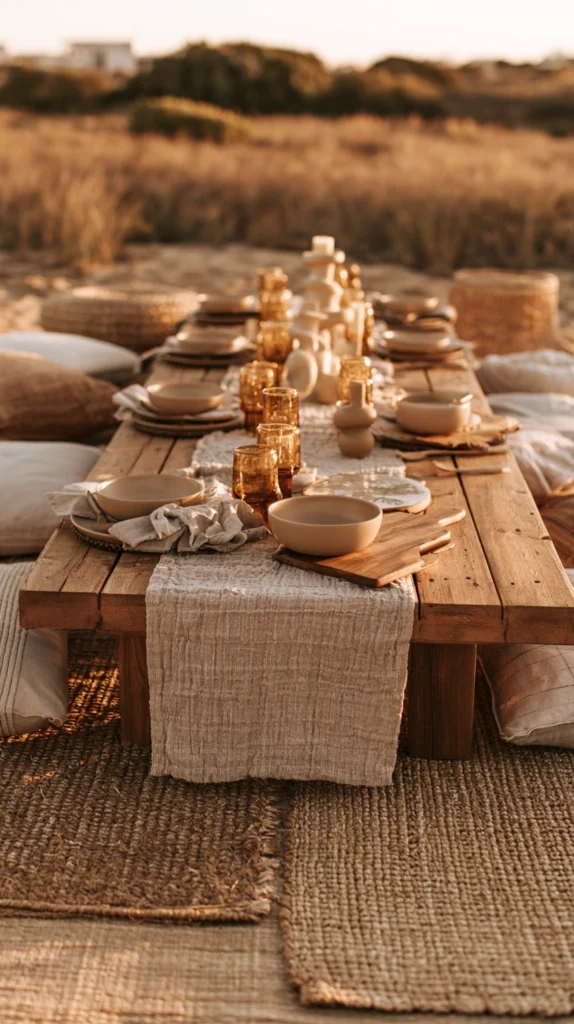
The generic version: Standard-height folding tables with a plain tablecloth.
The considered version: Low wooden tables or a series of connected crates, styled at floor-adjacent height to match the seating.
Building it:
- Use low wood coffee tables, crates, or a repurposed door on short legs as the serving surface
- Layer a woven table runner rather than a full tablecloth, letting some wood grain show through
- Add candles in varying heights, mixed with small potted succulents or dried florals
- Keep serving dishes in natural materials like wood, ceramic, or woven baskets rather than plastic or glass
Why it works: Matching table height to the low floor seating keeps the whole space visually connected, rather than having tall tables interrupt an otherwise ground-level layout.
Cost: $40–$100 depending on whether low tables are purchased, built, or borrowed.
4. Warm String Lighting Layered at Multiple Heights
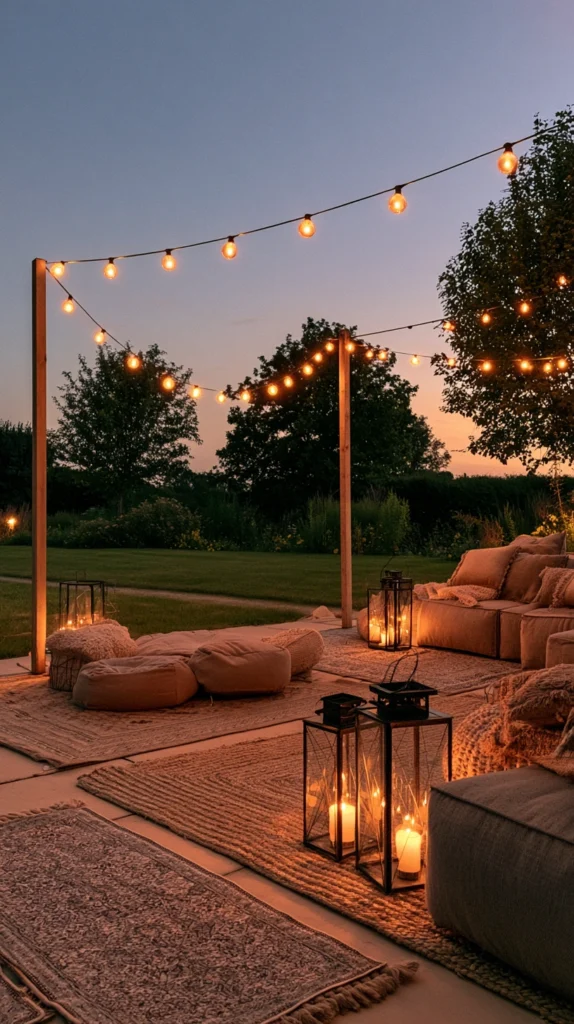
The generic version: A single strand of white string lights hung in a straight line overhead.
The considered version: Warm amber string lights layered at several heights, combined with lanterns and candles closer to the ground.
Building it:
- Run string lights in a loose, slightly uneven pattern between posts or trees, avoiding a perfectly straight single line
- Add a second, lower layer using lanterns or string lights wrapped around low furniture or plant stands
- Include candles in glass holders scattered at seating level for a warmer, more intimate glow
- Choose warm amber-toned bulbs specifically, since cool white light works against the earthy palette boho styling depends on
Why it works: Multiple lighting heights create the layered depth that a single overhead strand can’t replicate, and warm tones support the earthy color palette central to the whole aesthetic.
Cost: $35–$75 for string lights, lanterns, and candles combined.
5. A Dried Floral and Pampas Grass Centerpiece Instead of Fresh Arrangements
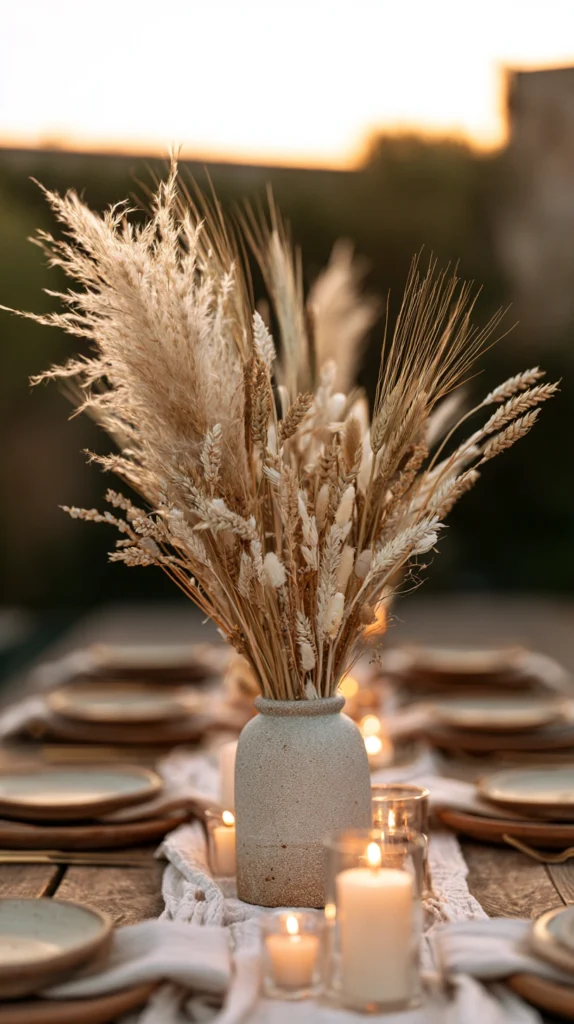
The generic version: A standard fresh floral centerpiece in a plain glass vase.
The considered version: Dried pampas grass, wheat, and preserved florals in a textured ceramic or woven vessel.
Building it:
- Source dried pampas grass, bunny tail grass, or dried wildflowers as the base texture
- Use a textured, earth-toned vessel like unglazed ceramic or a woven basket rather than clear glass
- Let arrangements lean loosely to one side rather than standing perfectly upright and centered
- Group a few smaller arrangements at different heights rather than one large centralized piece
Why it works: Dried, textural materials read as more consistent with the earthy, natural palette than bright fresh flowers, and they hold up far longer in an outdoor setting without wilting.
Cost: $25–$55 depending on how much dried material is purchased versus grown or foraged.
6. A Relaxed Drink Station Built From Natural Materials
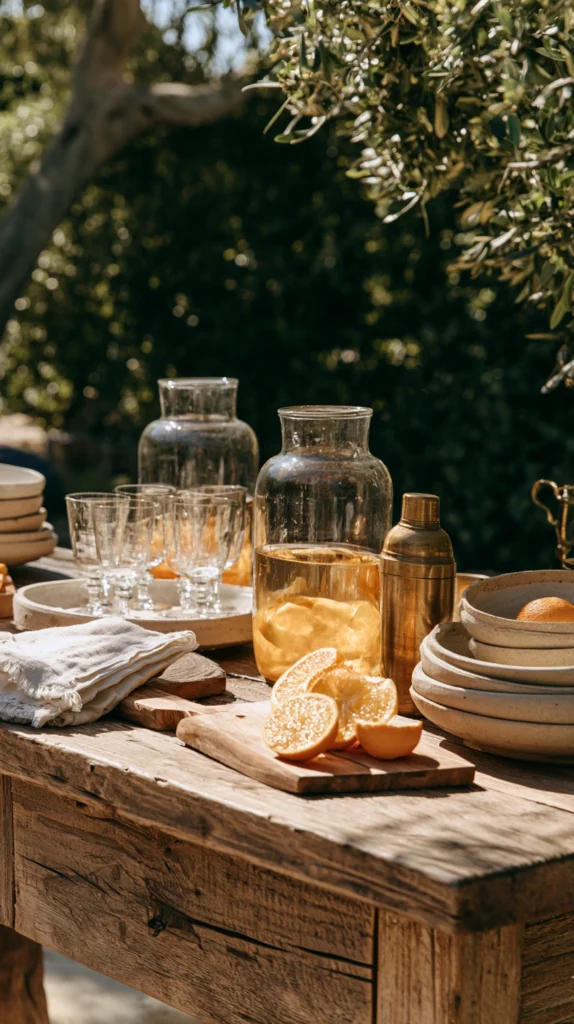
The generic version: A folding table with a cooler of canned drinks sitting beside it.
The considered version: A styled station using a wood barrel or crate as the base, with glass dispensers and natural garnishes.
Building it:
- Use a wood barrel, crate, or low table as the drink station’s base rather than a standard folding table
- Serve from glass dispensers or pitchers rather than cans or plastic bottles where possible
- Garnish with fresh herbs, citrus slices, or edible flowers for color against the earthy palette
- Add a small woven basket nearby for napkins and cups, keeping materials consistent with the rest of the space
Why it works: Natural materials and glass read as considerably more elevated than plastic and metal cans, even when the actual drinks being served are simple.
Cost: $30–$70 depending on the base structure and glassware sourced.
7. A Bonfire or Fire Pit as the Evening’s Natural Focal Point
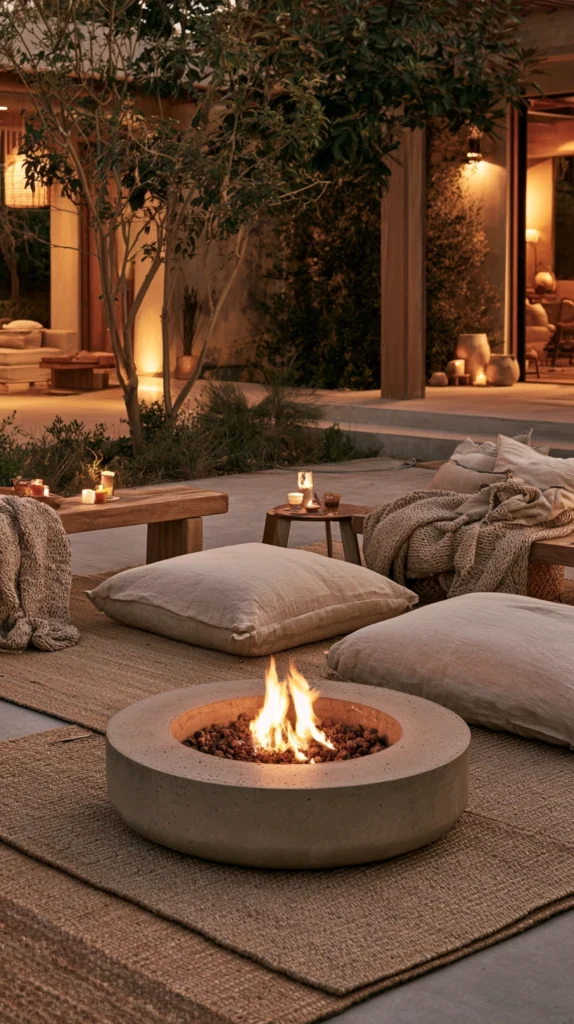
The generic version: A fire pit with standard patio chairs arranged in a circle around it.
The considered version: A fire pit surrounded by floor cushions, low benches, and layered blankets for a genuinely lounge-like gathering spot.
Building it:
- Position floor cushions and low wood benches around the fire pit rather than standard patio furniture
- Add woven or knit blankets draped over seating for both texture and practical evening warmth
- Include a small side table or crate nearby for drinks, kept within easy reach of the seated area
- Keep the arrangement loosely circular but not perfectly symmetrical, allowing for natural clustering as guests settle in
Why it works: A fire pit surrounded by boho-styled low seating becomes the evening’s natural gathering point, extending the party’s energy once the sun goes down without needing any additional structured activity.
Cost: $50–$120 for cushions, blankets, and a side table, assuming the fire pit itself is already available.
Daytime vs. Evening Styling Adjustments
A few of these ideas shift slightly depending on whether the party runs during daylight hours or into the evening.
- Daytime gatherings can lean more on the canopy for shade and skip heavy lighting investment, prioritizing the floor seating and centerpiece instead
- Evening gatherings should prioritize the layered lighting and fire pit seating first, since these carry more of the atmosphere once natural light fades
- All-day events spanning both benefit from planning the lighting setup early in the day, even before it’s needed, so it’s not a rushed addition once the sun starts going down
Comparing the Generic vs. Considered Cost Difference
Here’s how each idea’s basic and elevated versions compare side by side.
| Idea | Generic Version Cost | Considered Version Cost |
| Floor seating | $30 (single rug, mismatched pillows) | $80–$180 |
| Canopy | $0 (bare tent, if already owned) | $60–$140 |
| Table spread | $20 (folding table, plain cloth) | $40–$100 |
| Lighting | $15 (single string light strand) | $35–$75 |
| Centerpiece | $25 (fresh flowers, glass vase) | $25–$55 |
| Drink station | $10 (cooler and cans) | $30–$70 |
| Fire pit seating | $0 (existing patio chairs) | $50–$120 |
What this shows: The centerpiece and drink station ideas cost roughly the same either way, meaning the biggest cost jump comes specifically from the seating and canopy upgrades, which also happen to carry the most visual weight.
Choosing Which Ideas to Prioritize on a Tight Budget
If doing all seven isn’t realistic, a few carry more visual impact than others.
- Highest impact for the cost: floor seating and layered lighting, since these two elements do the most to establish the overall mood
- Lowest additional cost: the dried floral centerpiece, since it costs roughly the same as a standard fresh arrangement while lasting the whole event without wilting
- Best for an evening event specifically: the fire pit seating area, since it becomes the natural gathering point once the sun sets
Matching Ideas to Your Actual Guest Count
| Guest Count | Priority Ideas |
| Under 15 | Floor seating, centerpiece, fire pit area |
| 15–30 | Add layered lighting and the drink station |
| 30+ | Add the canopy and low table spread for a more structured layout |
Sourcing These Materials Without Overspending
Several of these ideas depend on materials that don’t need to be purchased new.
- Rugs and cushions are often available secondhand through thrift stores or online marketplace listings, and mismatched sourcing actually supports the layered, collected look better than a matching new set
- Macrame panels can be found secondhand or handmade with basic beginner techniques, since simple knotted patterns don’t require advanced skill
- Low wood tables are frequently available through furniture resale or even borrowed from a friend’s patio setup for the day
- Dried florals can often be grown and air-dried at home over the preceding weeks rather than purchased already finished
Weather Planning for an Outdoor Boho Setup
Several elements of this aesthetic specifically depend on outdoor conditions, which makes weather planning worth thinking through ahead of time.
- Fabric canopies and macrame panels should come down or be secured tightly if wind is in the forecast, since loose draped fabric catches wind more than a taut standard tent
- Floor cushions and rugs need a dry surface underneath, so plan for a tarp or moisture barrier if morning dew or recent rain is a concern
- Dried florals hold up far better than fresh ones in unpredictable outdoor conditions, reinforcing why this choice makes practical sense beyond just aesthetics
- String lights and lanterns should be rated for outdoor use specifically, since indoor-only string lights can be a safety hazard if exposed to any moisture
Choosing a Cohesive Color Palette Across All Seven Ideas
Consistency across every element is what ties the individual ideas together into one cohesive look rather than seven disconnected decisions.
| Element | Suggested Palette |
| Rugs and cushions | Rust, terracotta, cream, muted mustard |
| Canopy fabric | Cream, dusty rose, warm white |
| Table styling | Natural wood tones, unglazed ceramic |
| Lighting | Warm amber, avoiding cool white entirely |
| Centerpiece | Neutral tan, soft gold, muted green |
| Drink station | Clear glass paired with warm wood |
| Fire pit textiles | Deep rust, warm brown, cream |
Why consistency matters: Even with secondhand and mismatched sourcing, keeping every element within this same warm, earthy family is what prevents the space from looking like a random assortment of unrelated decor pieces.
A Simple Setup Order for the Day
Working through these ideas in a specific sequence avoids having to redo earlier steps once later ones are in place.
- First: Set up the canopy or shade structure, since everything else gets arranged underneath or around it
- Second: Place the low tables and seating, establishing the overall layout before smaller details go in
- Third: Add lighting, running strands and placing lanterns before it gets dark enough to need them
- Fourth: Style the centerpiece and drink station last, since these are the most detail-oriented steps and benefit from a clear, already-arranged space to work within
Setting the Right Atmosphere Beyond Just Decor
Visual styling only carries a party so far, and a few non-visual elements round out the relaxed, boho feeling the decor is working to create.
- Music matters more than people expect — favor acoustic, world music, or lo-fi genres over anything high-energy or pop-heavy, since the mood here is unhurried rather than a dance-focused event
- Keep volume conversational rather than loud, supporting the lounge-like, low-seating layout rather than working against it
- Scent contributes too — a few candles in warm, earthy fragrances like sandalwood or amber reinforce the palette beyond just the visual elements
- Encourage guests to actually sit and stay, rather than a standard mingling flow, since the floor seating and fire pit areas are specifically designed for longer, slower conversation
What to Avoid That Undermines the Whole Look
A few common additions work directly against genuine boho styling, even when well-intentioned.
- Bright, saturated party decor, like primary-colored balloons or streamers, which clashes hard against the earthy palette
- Plastic disposable serveware, which reads as a standard backyard party rather than the natural material focus this style depends on
- Perfectly matched furniture sets, which undo the collected, layered feeling that mismatched sourcing creates
- Overly structured seating rows, which fight against the loose, clustered arrangement that makes floor seating feel genuinely relaxed rather than staged
A genuinely relaxed boho outdoor party comes down to texture and warmth more than any specific decoration. Layer a few of these ideas together, keep the palette consistent, and let the arrangement stay a little imperfect rather than trying to make everything match.
The parties that actually capture this aesthetic successfully are rarely the most expensive ones. They’re the ones where every element, however it was sourced, shares the same warm, natural thread running through it.
Start with the two or three ideas that fit your space and budget best, get the palette consistent across them, and add the rest gradually rather than trying to execute all seven perfectly on the first attempt.