14 Ways to Give Your Home That “Gathered Over a Lifetime” Look
The most inviting homes rarely look like they were furnished in a single weekend. They look like they evolved — a flea market find here, a hand-me-down there, a souvenir that still smells faintly like the trip it came from. That layered, unhurried quality is what interior designers call a “collected” look, and it’s one of the hardest aesthetics to fake convincingly.
The good news is that you don’t need decades or a huge budget to get there. You need a handful of deliberate techniques, a willingness to mix rather than match, and the patience to let a room breathe instead of filling every surface at once.
Why “Collected” Beats “Coordinated”
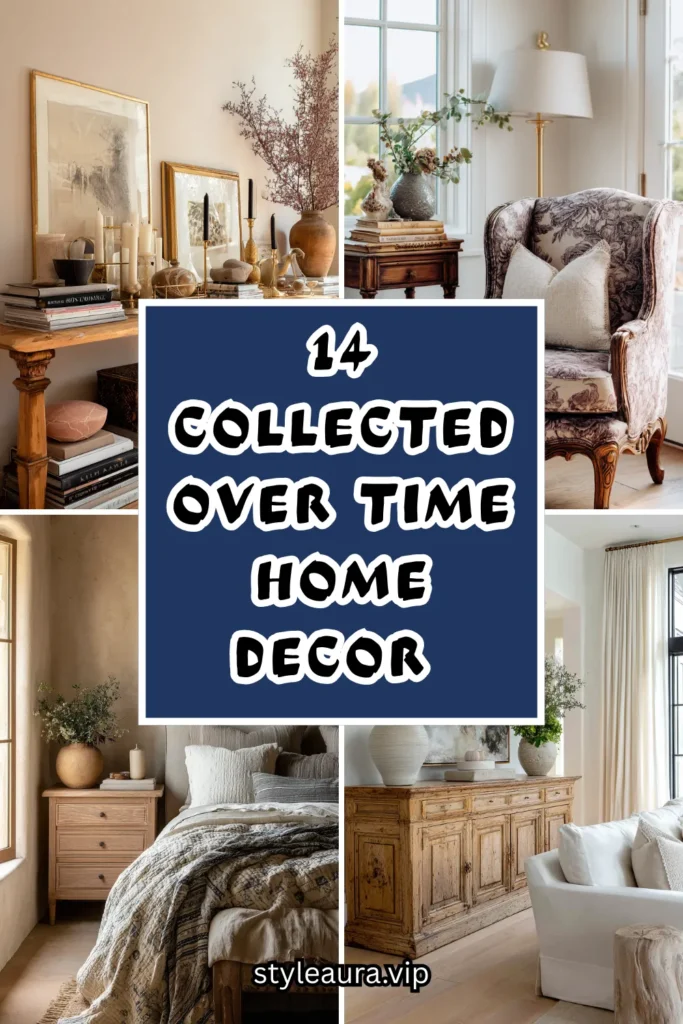
A home that looks assembled from a single catalog often feels sterile, no matter how expensive the pieces are. A collected home feels lived-in because it tells a story through contrast — old next to new, rough next to polished, inherited next to intentional. The following ideas break that story down into achievable steps.
1. Start With One Genuinely Old Piece Per Room

Every collected-feeling room usually anchors around at least one object with real age on it — a chest, a mirror, a side table with visible patina. This piece doesn’t have to be expensive; estate sales, auction sites, and secondhand shops regularly turn up solid wood furniture for $40–$150 that new pieces can’t match in character.
Budget tip: Set aside roughly 15–20% of your total room budget for one true vintage anchor piece before shopping for anything else.
Once that anchor is in place, everything else in the room gets easier to choose, because you’re now matching a mood rather than starting from a blank slate.
Resist the urge to restore it to a flawless finish. Chips, worn edges, and slightly mismatched hardware are part of what reads as authentic rather than staged.
2. Layer Rugs Instead of Choosing Just One
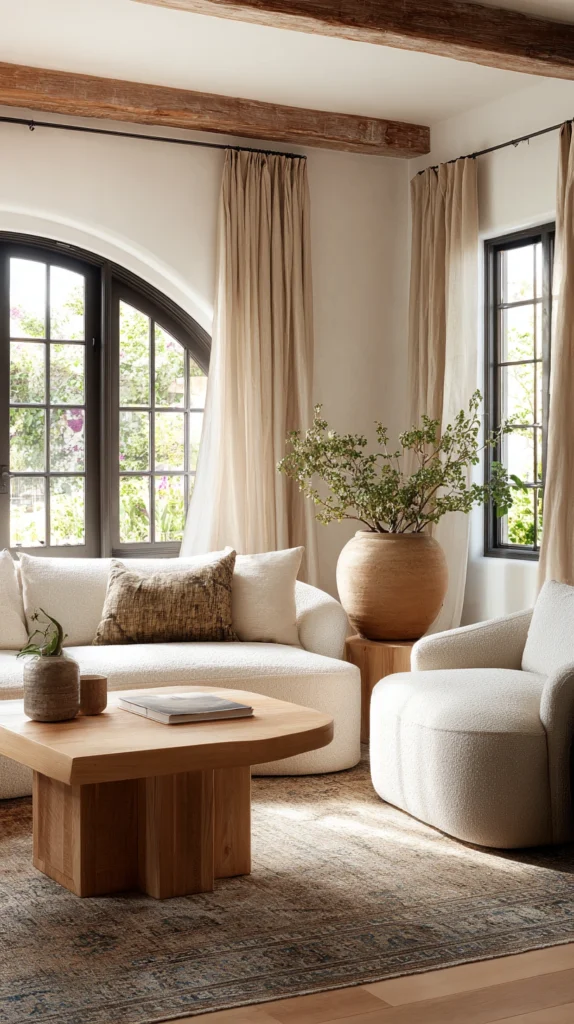
Placing a smaller vintage or patterned rug on top of a larger, more neutral one instantly adds visual depth and looks like something acquired over multiple trips rather than a single store run. This works especially well in living rooms and reading nooks where furniture legs can help anchor both layers.
Style tip: Keep the bottom rug a solid, low-pile neutral (jute or a flat weave works well) and let the top rug carry the pattern and color.
A double-layered rug setup also solves a practical problem in older homes: it covers scuffed or uneven flooring without requiring a full refinish.
Thrifted Persian-style or kilim rugs in the 4×6 range are the easiest size to layer and are often the most affordable to find secondhand.
3. Mix Wood Tones Instead of Matching Them
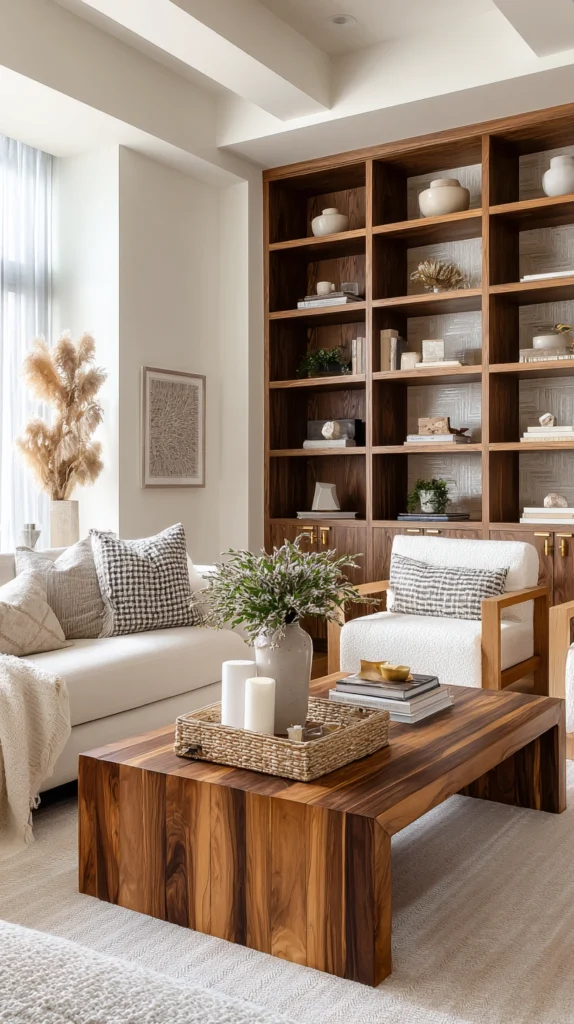
A room where every wood surface matches exactly — same stain, same finish — tends to look like a furniture showroom. Mixing two or three distinct wood tones (say, a warm walnut table, a lighter oak shelf, and a dark-stained frame) is what most naturally aged homes actually look like, since furniture gets added over years, not ordered as a set.
Budget tip: Aim for a 60-30-10 split, where one wood tone dominates roughly 60% of visible wood surfaces and the other two fill in the rest.
The key is repetition, not matching. If a warm walnut tone appears in the coffee table, let it reappear once more elsewhere in the room, even in a small accent.
This also makes it far easier to add secondhand furniture later, since you’re no longer restricted to a single exact finish.
4. Display Books With Their Spines Facing In
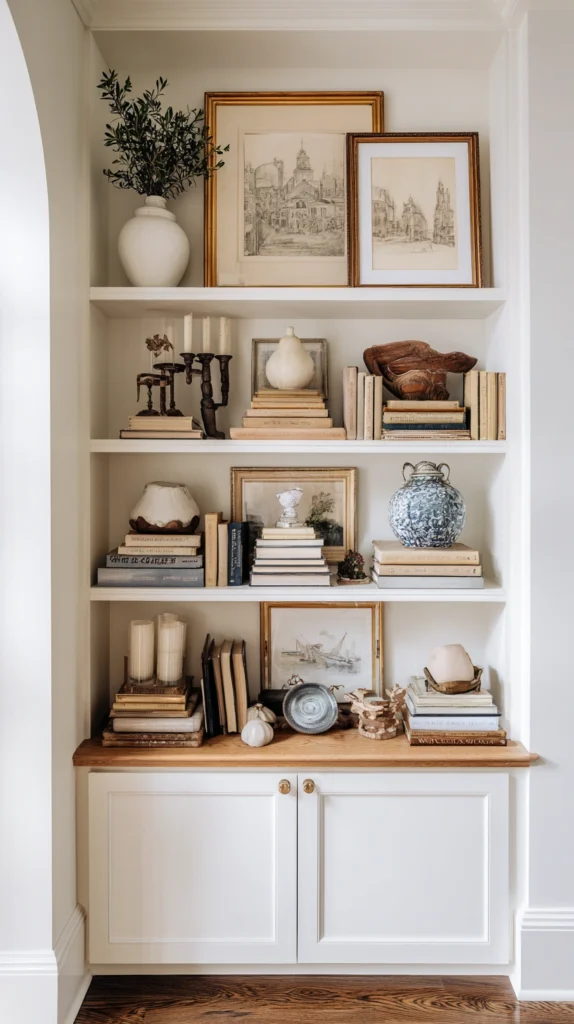
Turning a portion of your bookshelf so the pages face out rather than the spines instantly softens the look of a shelf and gives it a quieter, more collected-over-time texture, especially when mixed with the occasional spine-out row for practicality.
Style tip: Reserve this technique for about a third of your shelving, mixed with stacked books and small objects, rather than doing an entire wall this way.
It also solves a real design problem — mismatched, brightly colored book covers can make a shelf look cluttered. Turning the pages outward creates a calmer, more neutral palette instantly.
Tuck small objects like stones, ceramics, or old postcards between stacks to break up the rhythm further.
5. Frame Family Photos in Mismatched Frames
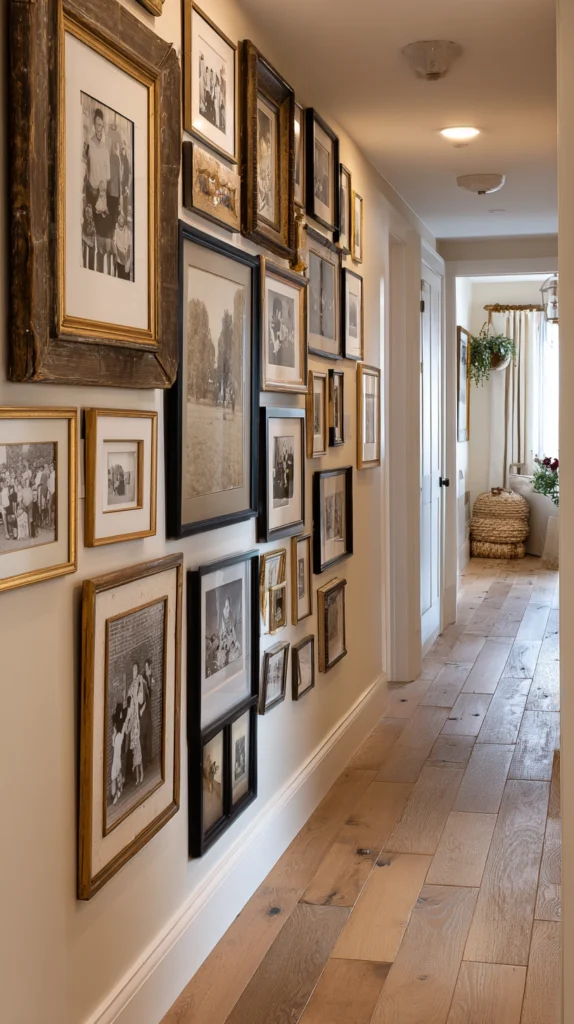
A gallery wall of identical black frames reads as a single purchase. A gallery wall built from frames collected across different stores, finishes, and eras reads as a family history, which is exactly the effect most people are chasing with this style.
Budget tip: Thrifted frames typically run $2–$8 each, meaning a 10-frame gallery wall can be built for $30–$60 including new glass where needed.
Keep the photos themselves in a consistent tone (all black-and-white, or all warm-toned color) even while the frames vary — this is what keeps the wall cohesive instead of chaotic.
Arrange the frames on the floor first and photograph the layout before hanging anything, so adjustments don’t leave extra nail holes.
6. Reupholster One Chair in an Unexpected Fabric

A single reupholstered chair in a bold or vintage-inspired fabric can do more to age a room than any amount of new furniture, because upholstery work itself signals that a piece has been cared for and kept rather than replaced.
Budget tip: A simple accent chair reupholster typically runs $150–$400 depending on fabric choice and chair size, which is often less than buying new.
Choose a chair with real bones — solid wood legs, a sturdy frame — since these tend to be the pieces worth the investment.
Look for fabric remnants at upholstery shops, which are often sold at a steep discount and are perfect for a single-chair project.
7. Hang Curtains Higher Than the Window Frame
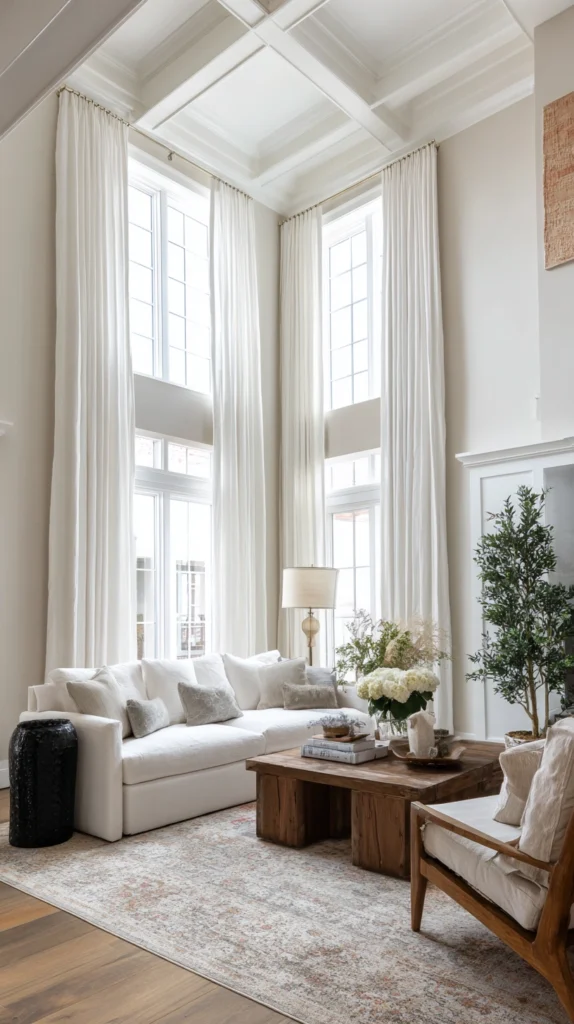
Mounting curtain rods 4–6 inches above the window frame, rather than directly on it, is a trick used in older, well-proportioned homes to make ceilings feel taller and windows feel more generous than they actually are.
Style tip: Extend the rod 4–8 inches beyond each side of the window as well, so curtains can fully clear the glass when open.
This single adjustment often does more visual work than replacing the curtains themselves, and it costs nothing beyond moving a few screws.
Linen curtains in particular pick up a slightly rumpled, well-worn quality over time that suits this aesthetic better than crisp synthetic fabrics.
8. Introduce Brass or Aged Metal Hardware
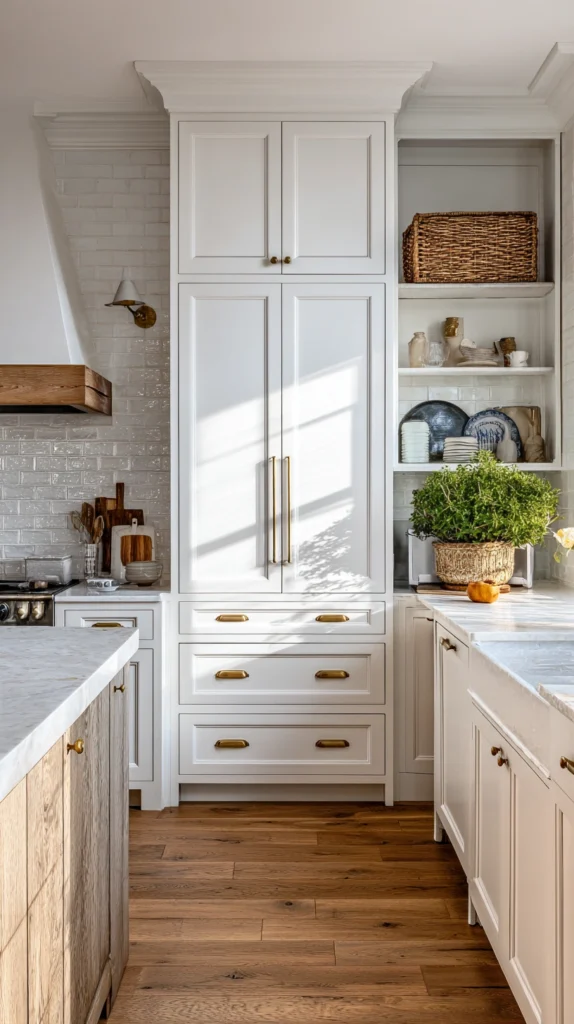
Swapping plain cabinet knobs and drawer pulls for aged brass, bronze, or hand-forged iron hardware is one of the fastest ways to make even brand-new furniture look like it’s been around for years.
Budget tip: Hardware swaps typically cost $3–$12 per knob, meaning a full kitchen of 20–30 pulls can be updated for $80–$250.
Unlacquered brass is worth the slightly higher price, since it’s designed to tarnish and darken naturally with handling, deepening the aged look over time rather than staying artificially shiny.
Mixing two finishes — say, brass pulls with iron hinges — reads as more authentic than a single uniform metal throughout.
9. Collect Ceramics From More Than One Source
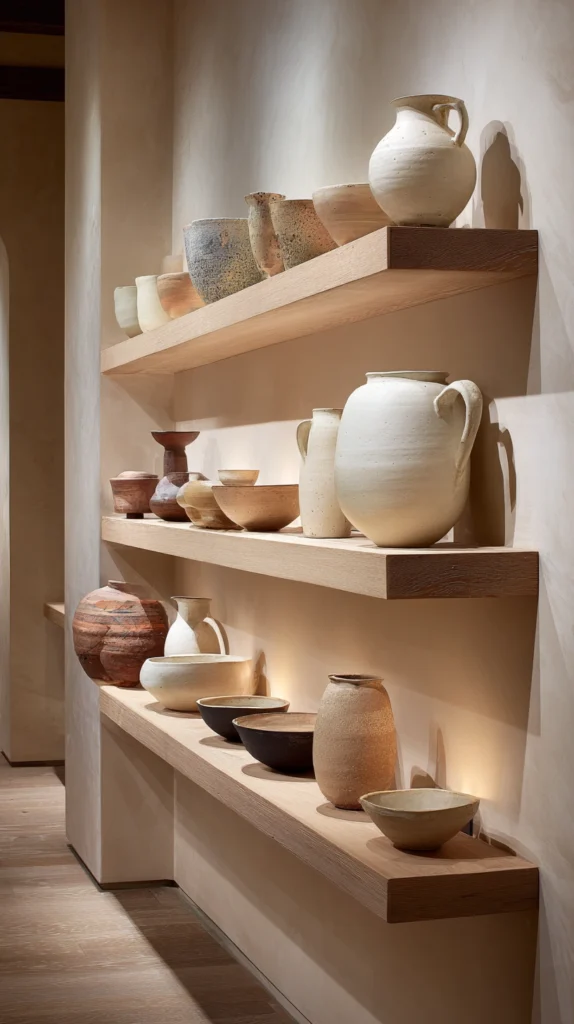
A shelf of vases and bowls that all came from the same store tends to look like a display, while a shelf built from pieces picked up at different markets, trips, and shops over time looks like an actual collection, which is the entire point of this aesthetic.
Style tip: Group ceramics by color family rather than by matching set, so five unrelated pieces in similar cream or terracotta tones read as intentional.
Pottery studios, estate sales, and even hotel gift shops from past trips are all good sources, and price points can range from $5 secondhand finds to $60 handmade pieces.
Leave a small amount of negative space around each grouping so the shelf reads as curated rather than crowded.
10. Let One Room Feature a Bold Wallpaper Moment

A single wallpapered room — often a powder room, entryway, or reading nook — gives a home the kind of personality that comes from personal taste built up over years, rather than a single neutral palette applied everywhere.
Budget tip: A small powder room typically needs just 2–3 rolls, keeping total material cost around $80–$220 depending on the pattern chosen.
Choose a pattern with some age to its design language — botanical prints, faded stripes, or classic block prints tend to hold up better stylistically than trend-driven graphics.
Because it’s contained to one small room, this is also one of the lowest-risk ways to experiment with a bolder look.
11. Use Vintage Textiles as Throws, Not Just Blankets
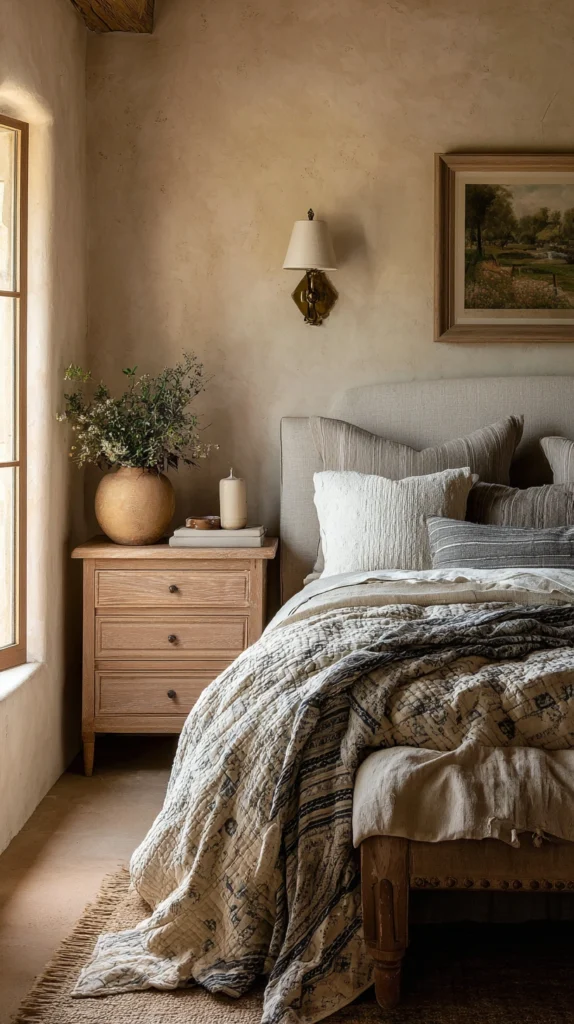
Draping a vintage quilt, kantha throw, or woven blanket over the arm of a sofa or the foot of a bed adds texture and a sense of history that new throws, however soft, rarely replicate on their own.
Style tip: Fold the throw loosely rather than perfectly, and let one corner drape lower than the other — a too-neat fold reads as staged.
These textiles are widely available secondhand, and slight wear or a small repaired patch only adds to the sense that the piece has a past.
Rotating two or three throws seasonally also keeps the look from feeling static room to room.
12. Add a Library Ladder or Rolling Step Stool
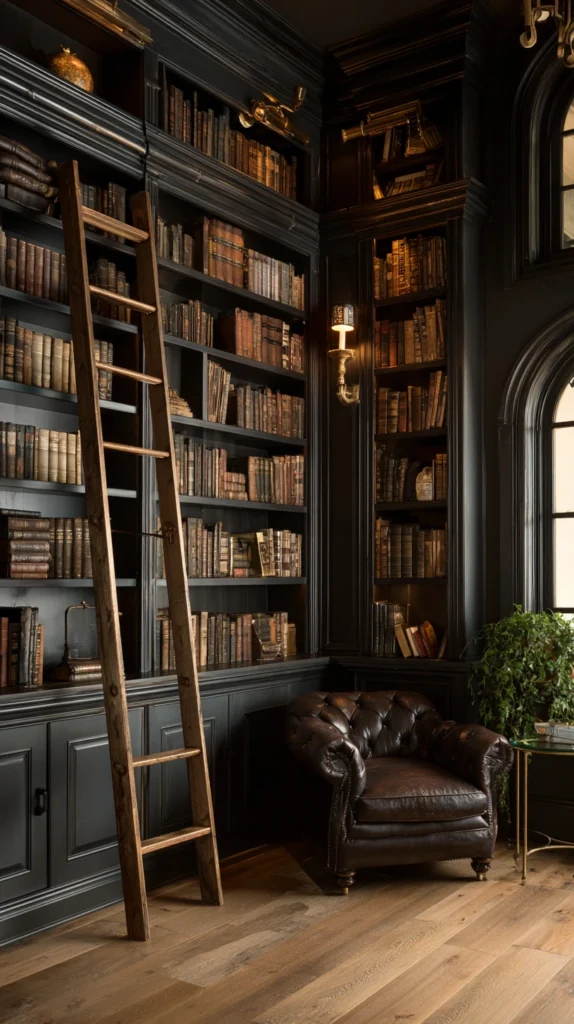
Even in homes without floor-to-ceiling shelving, a small library ladder or vintage rolling step stool tucked into a corner suggests a home built around books and objects gathered over years, functioning as both a useful tool and a decorative anchor.
Budget tip: New reproduction ladders typically run $150–$350, while genuine vintage versions can sometimes be found for less at architectural salvage yards.
Choose a finish that’s slightly distressed rather than glossy new wood, since this piece works best when it doesn’t look freshly manufactured.
It also doubles as practical storage-adjacent decor, useful for reaching high shelves without looking purely functional.
13. Display Everyday Objects as Decor
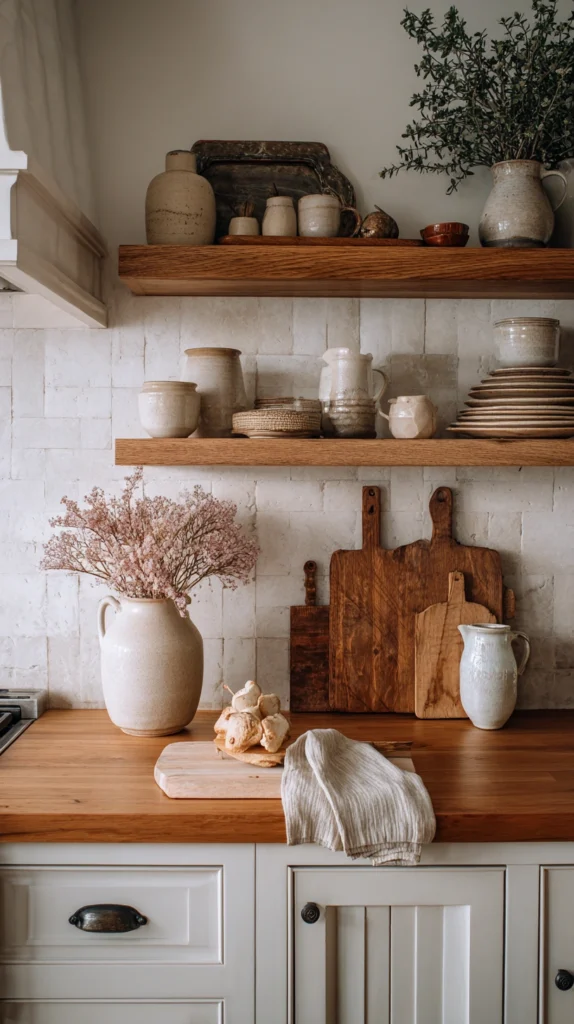
Leaving out a well-used cutting board, a stack of linen napkins, or a favorite ceramic pitcher on the counter — rather than hiding every object in a cabinet — signals that a home is actively used and loved, which is central to the collected aesthetic.
Style tip: Choose three to five everyday objects per space to display, and rotate them occasionally rather than leaving the same items out indefinitely.
This works especially well in kitchens, where open shelving can hold mismatched but complementary dishware instead of a matching set tucked behind cabinet doors.
The goal isn’t clutter — it’s choosing which used objects are attractive enough to double as decor, and clearing the rest away.
14. Let Plants Vary in Pot Style and Age
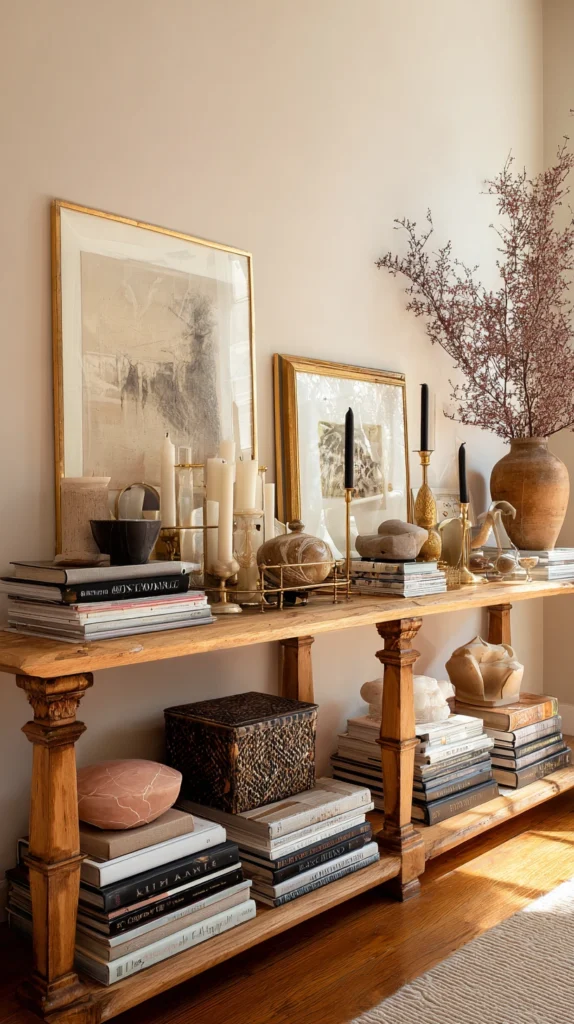
A row of identical planters can look as staged as matching furniture. Using a mix of terracotta, ceramic, and even repurposed vintage containers for plants throughout a home adds the same layered, gathered-over-time quality as mismatched frames or ceramics.
Budget tip: Terracotta pots are among the cheapest options at $3–$15 each and actually improve with age as they weather and stain naturally outdoors.
Group plants in odd numbers — three or five — of varying heights rather than a single uniform row, which mimics how a plant collection naturally grows over time.
Older, slightly root-bound plants in worn pots often suit this look better than perfectly manicured new additions from a garden center.
Remember
Building a home that looks collected rather than purchased comes down to patience and contrast — choosing one true vintage anchor per room, mixing wood tones and metal finishes instead of matching them, layering rugs and textiles with a slightly imperfect hand, sourcing ceramics and frames from more than one place over time, and being willing to leave a shelf or wall slightly unfinished so the story of the room can keep growing.