Petals and Pearls: 15 Dusty Rose Wedding Ideas for an Elegant Atmosphere
There is a pink that belongs to elegance in a way that brighter, more saturated pinks do not — a pink that has been softened by grey, warmed by age, and refined by the particular quality of light that falls through tall windows in the late afternoon. Dusty rose is that pink. It is the colour of dried petals and old silk, of antique glass and the particular warmth of a room that has been beautiful for a long time.
It is romantic without being girlish, warm without being obvious, and specific enough in its tone to communicate genuine aesthetic intention rather than a default choice from the first page of a wedding colour guide.a
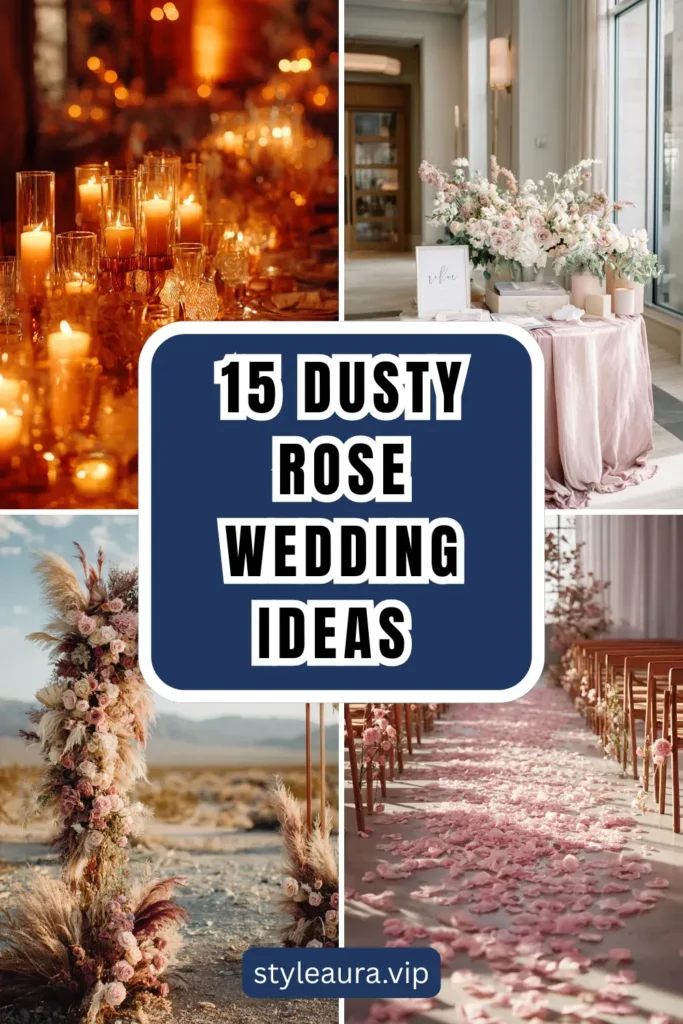
A dusty rose wedding done with genuine thought — with a palette that runs from pale petals through warm mauve to the deeper antique rose of a garden left to its own devices — is one of the most enduringly beautiful and most specifically elegant wedding aesthetics available.
It ages well in photographs, it produces a quality of atmosphere that guests describe in terms of feeling rather than appearance, and it rewards the investment of genuine care with a beauty that grows deeper rather than diminishing the longer the day is considered.
The fifteen ideas below cover every element of the dusty rose wedding from the ceremony space to the final send-off.
1. The Dusty Rose and Sage Palette
Budget: $50 – $300
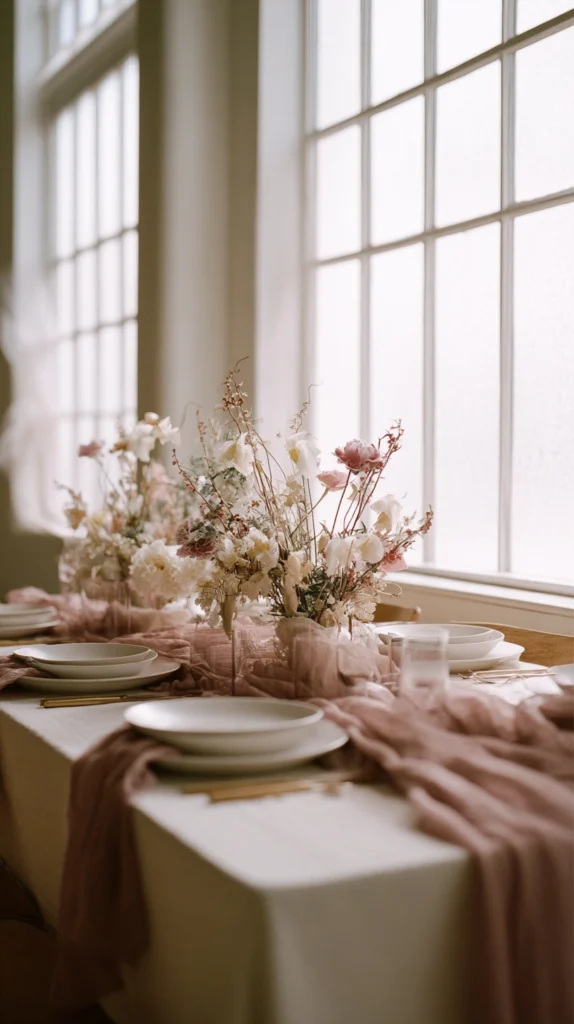
The dusty rose wedding palette finds its most naturally harmonious partner in sage green — the grey-muted, slightly dusty green of olive leaves and lavender stems, a green that belongs to exactly the same muted, natural tonal family as the rose it is paired with. Together they produce a palette that references the botanical world — the garden in late summer, the herb patch at dusk, the particular combination of flower and foliage that no florist improves upon by adding anything else.
Dusty rose napkins beside sage green foliage centrepieces — $2 – $5 per napkin. Sage ribbon beside dusty rose stationery — $3 – $8 per reel. A sage and dusty rose mixed floral palette — the most naturally resolved version of the combination — needs no additional accent colour to feel complete. Table linens in a warm ivory ground the two colours without competing with either.
Styling tip: Use the same muted tonal quality throughout every element of the dusty rose and sage palette — ensuring that the sage is grey-toned rather than yellow-toned and that the rose is grey-toned rather than warm-toned. A muted sage beside a warm hot rose and a grey dusty rose beside a bright chartreuse are colour temperature conflicts that register as slightly wrong without the observer being able to identify the precise cause. Consistent mutedness is the palette’s defining quality and must be maintained across every element of the day.
2. The Dusty Rose Floral Scheme
Budget: $200 – $4000
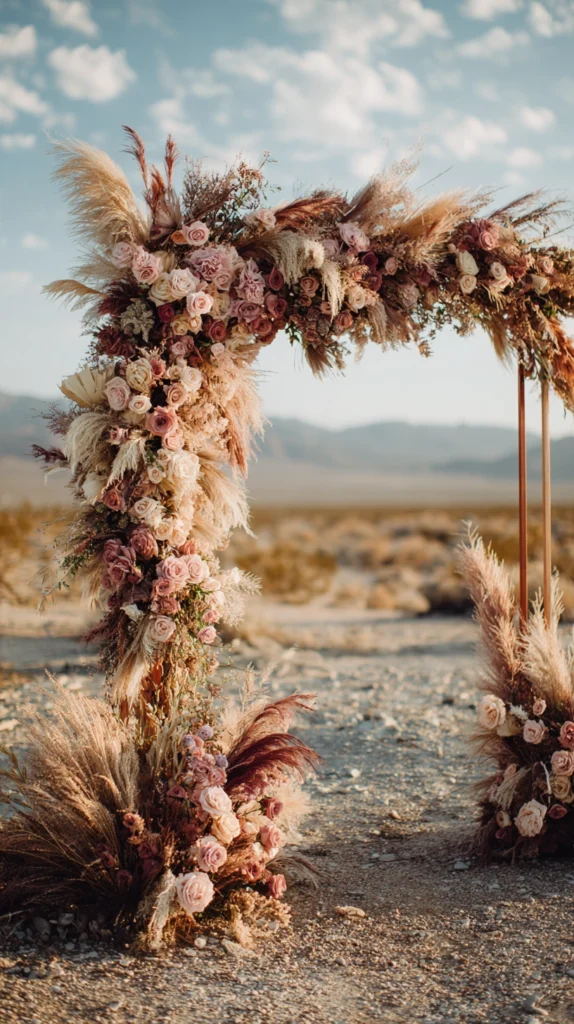
Flowers in the dusty rose wedding — dried garden roses, antique spray roses, lisianthus in pale mauve, dusty miller for foliage, eucalyptus, and pampas grass as the dried botanical accent — produce the most specifically beautiful and most consistently photographed floral palette of any wedding colour scheme. Dusty rose florals read as genuinely romantic rather than generically pretty because the muted tone of the colour communicates a deliberate aesthetic choice rather than a default one.
A bridal bouquet of dried garden roses, lisianthus, and eucalyptus in dusty tones — $80 – $200 from a wedding florist. Bridesmaid bouquets — $40 – $80 each. A ceremony arch in dried rose, pampas, and sage foliage — $300 – $800. Reception centrepieces in varying heights with the dusty rose palette — $80 – $250 per table.
Styling tip: Mix dried and fresh florals within the same arrangement rather than choosing exclusively one or the other. Fresh dusty rose garden roses beside dried pampas and preserved eucalyptus produces a centrepiece with two different textures, two different qualities of light reflection, and a visual richness that a single floral type cannot achieve. The dried elements also extend the life of the arrangement throughout a long wedding day in ways that fresh flowers alone cannot guarantee.
3. The Dusty Rose Table Setting
Budget: $40 – $200 per table
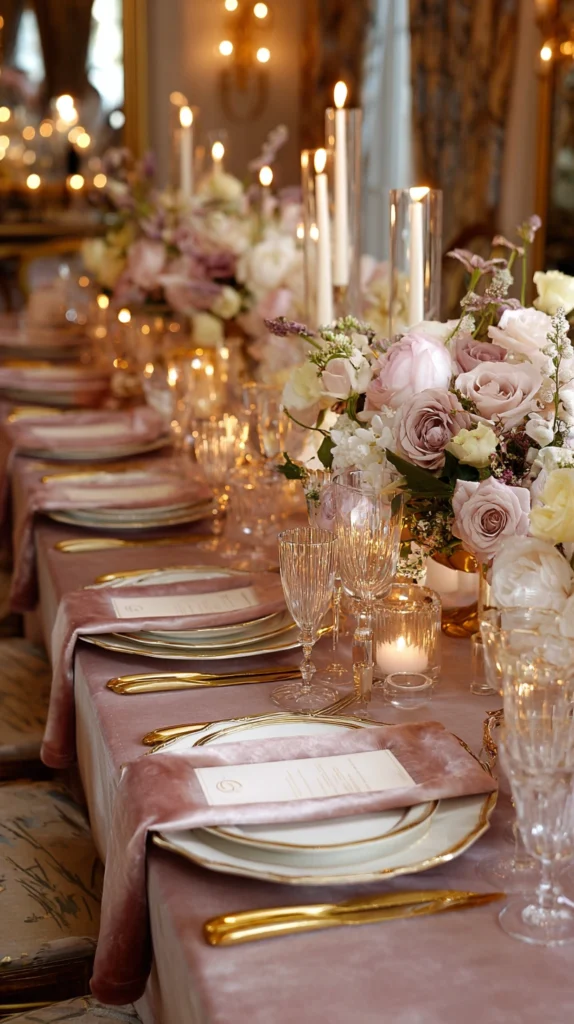
A dusty rose table setting — a warm ivory or champagne linen cloth, dusty rose napkins folded into a pocket or tied with a length of velvet ribbon in the same tone, gold-rimmed white ceramic plates, crystal stemware, and a single dried rose or a sprig of eucalyptus at each place — produces a table of genuine elegance that communicates individual care at the most intimate level of the reception.
A champagne linen tablecloth — $15 – $40 per table. Dusty rose linen napkins — $3 – $8 each. Gold-rimmed white ceramic plate hire — $3 – $8 each. Crystal stemware hire — $2 – $5 per glass. A single dried rose or botanical sprig per place — $0.50 – $2. A handwritten place card in a calligraphy font — $0.30 – $0.80 each.
Styling tip: Use a velvet ribbon in the exact dusty rose tone of the napkins to tie each napkin rather than a satin ribbon in the same colour. Velvet and dusty rose are natural material partners — the slight pile of the velvet absorbing light in the same slightly muted way as the dusty pink tone it is wrapping, producing a combination that reads as quietly luxurious rather than simply colour-coordinated.
4. The Dusty Rose Wedding Cake
Budget: $200 – $1500
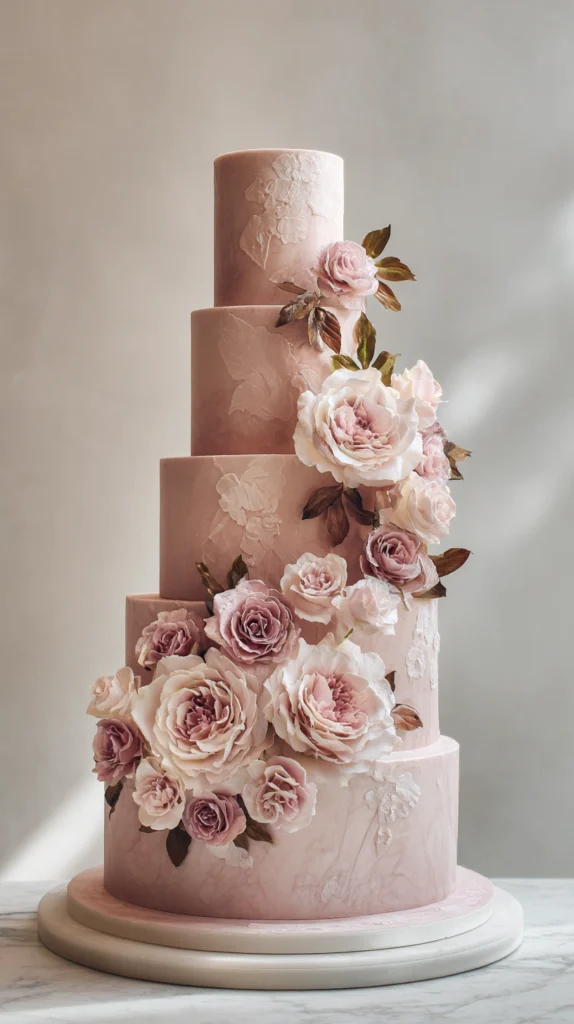
A dusty rose wedding cake — tiers in a smooth antique rose buttercream with a palette knife texture, a semi-naked cake with dried rose petals pressed into the frosting, or a tiered fondant cake with hand-painted watercolour roses in dusty tones — is the reception’s most photographed object and the one that communicates the wedding’s colour palette to every guest with the most direct and the most beautiful visual statement.
A three-tier dusty rose buttercream cake costs $300 – $800. A semi-naked cake with dried rose petals — $200 – $600. A fondant cake with hand-painted watercolour roses — $400 – $1000. A tiered cake decorated with fresh and dried dusty rose florals cascading from the top — $350 – $900. Each communicates the palette at the day’s central food moment with a different and specific beauty.
Styling tip: Place the wedding cake on a natural timber or marble cake stand rather than a standard white or silver version. A dusty rose cake on a warm oak or marble stand reads as a designed presentation — the warmth of the timber or the cool elegance of the marble providing the material contrast that makes the cake’s dusty tone appear richer and more specifically beautiful than the same cake on a plain standard stand.
5. The Ceremony Arch in Dried Botanicals
Budget: $200 – $1200
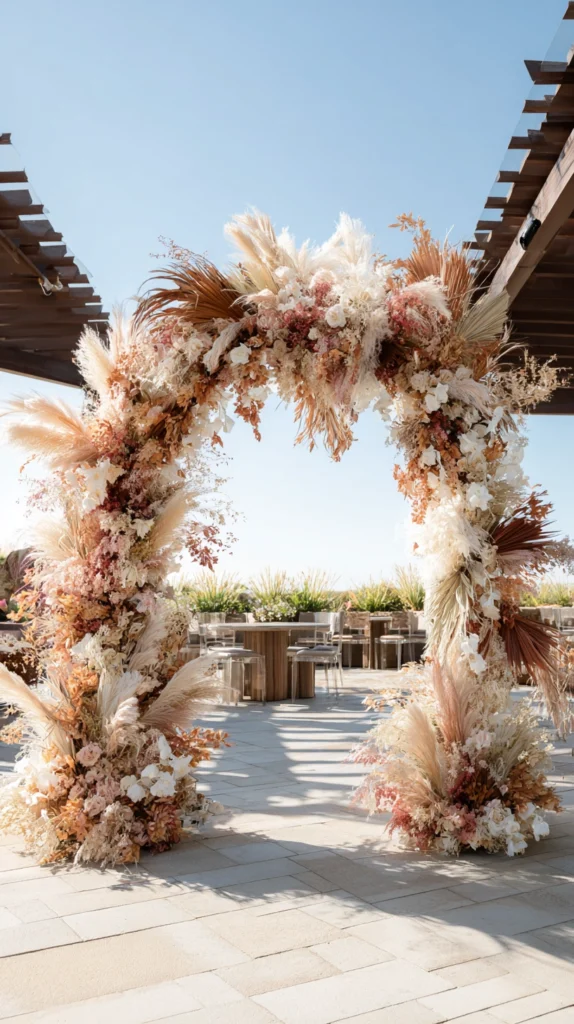
A dried botanical ceremony arch — pampas grass, dried roses in dusty and antique tones, preserved eucalyptus, dried lavender, and bleached seed heads arranged on a timber or iron arch frame — is the dusty rose wedding’s most architecturally significant and most enduringly beautiful installation. Unlike fresh flower arches that must be assembled on the morning of the day and begin wilting by the afternoon, a dried botanical arch can be assembled in advance, transported carefully, and remains at peak beauty throughout the full duration of the day and beyond.
A dried botanical ceremony arch assembled by a wedding florist — $300 – $1000. A DIY version using purchased dried botanicals and an iron arch frame — $150 – $500 in materials. Pampas grass bundles — $15 – $40 each. Dried rose bundles — $10 – $30 each. Preserved eucalyptus — $15 – $40 per bunch. An iron arch frame — $50 – $150 from a wedding hire company or purchased.
Styling tip: Arrange the dried botanical arch asymmetrically — denser and more elaborate on one side and trailing more loosely on the other — rather than in a symmetrical arrangement that distributes the botanicals equally on both sides. An asymmetrical arch reads as naturally abundant — as though the botanicals grew into position rather than being placed there. A symmetrical arch reads as formally arranged, which is a different and less specifically romantic quality.
6. The Dusty Rose Bridesmaid Palette
Budget: $80 – $300 per dress
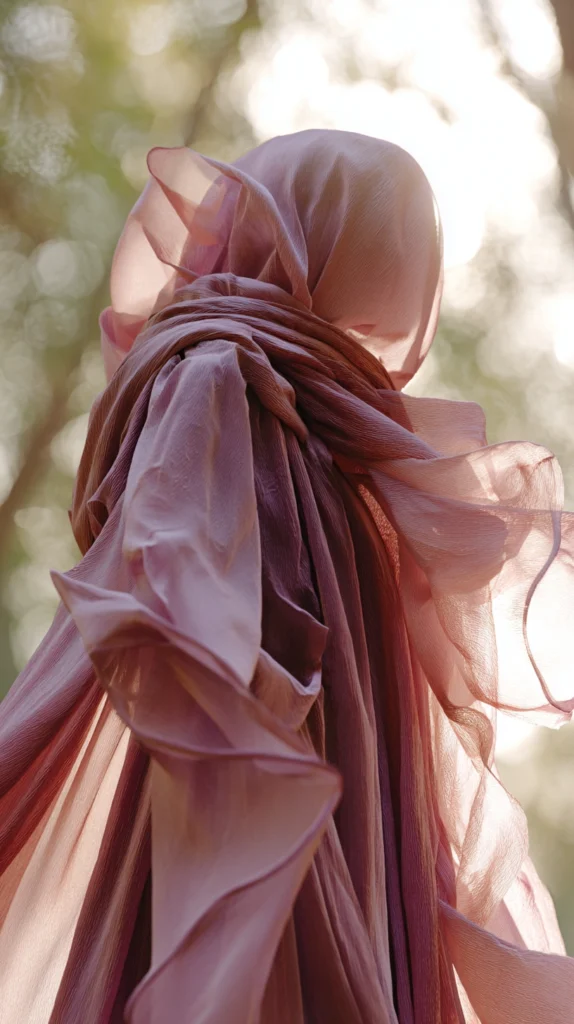
Bridesmaids in dusty rose — all in the same muted antique pink but in individually chosen silhouettes that suit each person’s body and style — is the most elegantly resolved version of the dusty rose bridal party. The tonal consistency across the group creates a visual coherence in photographs that varied colours cannot produce, while the silhouette variety communicates individual consideration rather than uniformity imposed for aesthetic convenience.
Bridesmaid dresses in dusty rose from a specialist supplier cost $80 – $250 each. A mismatched dusty rose scheme — each bridesmaid in a different style within the same palette — costs the same per dress and produces a more personal and more contemporary result. Dusty rose hair accessories — dried flower clips, pearl pins, sage leaf hair pieces — add $15 – $40 per bridesmaid.
Styling tip: Pair dusty rose bridesmaid dresses with bouquets that contain sage and eucalyptus foliage as the primary element — with dusty rose flowers as the accent rather than the dominant botanical. A bridesmaid in dusty rose holding a primarily foliage bouquet with dusty rose accents produces a photograph where the dress colour and the bouquet colour read as distinct elements in genuine relationship. A dusty rose dress with a dusty rose bouquet produces a single undifferentiated mass of the same colour.
7. The Dusty Rose Candle and Ambient Lighting
Budget: $60 – $400
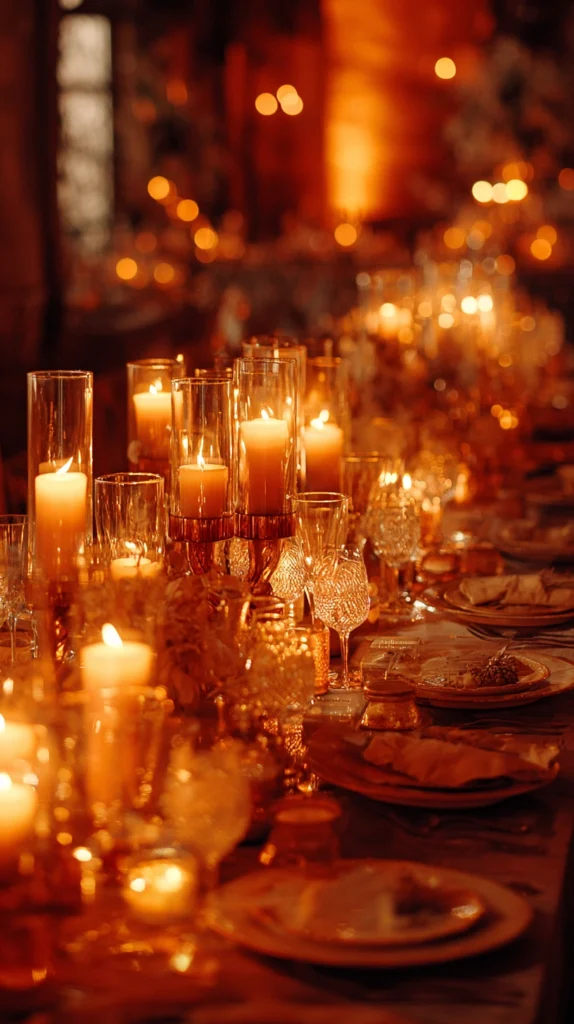
Candles throughout the dusty rose reception — pillar candles in antique rose and ivory at varying heights along every table, taper candles in dusty rose in gold candlesticks at the ceremony, and votives in glass holders distributed between the florals — produce the most specifically beautiful light source available for this palette. Candlelight warms dusty rose in a way that overhead artificial lighting cannot — deepening the pink into something almost mauve in the shadows and warming it toward apricot in the direct flame.
Pillar candles in dusty rose and ivory — $5 – $15 each. A cluster at varying heights per table — $15 – $45 per table. Gold candlesticks — $10 – $25 each. Glass votive holders — $2 – $5 each. Dusty rose taper candles for ceremony candlesticks — $3 – $8 per pair. Total candle investment for a reception of fifteen tables: $225 – $675 for the light source that most directly enhances the palette’s quality.
Styling tip: Supplement the table candles with floor-level candlelight — clusters of pillar candles on the floor beside the ceremony arch, votives lining the aisle, and lanterns at the entrance — to create a layered lighting environment that extends the warm ambient glow from table height down to ground level. A reception lit only at table height has warm pools of light separated by darker zones. A reception lit at multiple heights has a continuous warm glow that fills the full volume of the room.
8. The Dusty Rose and Gold Stationery Suite
Budget: $100 – $600
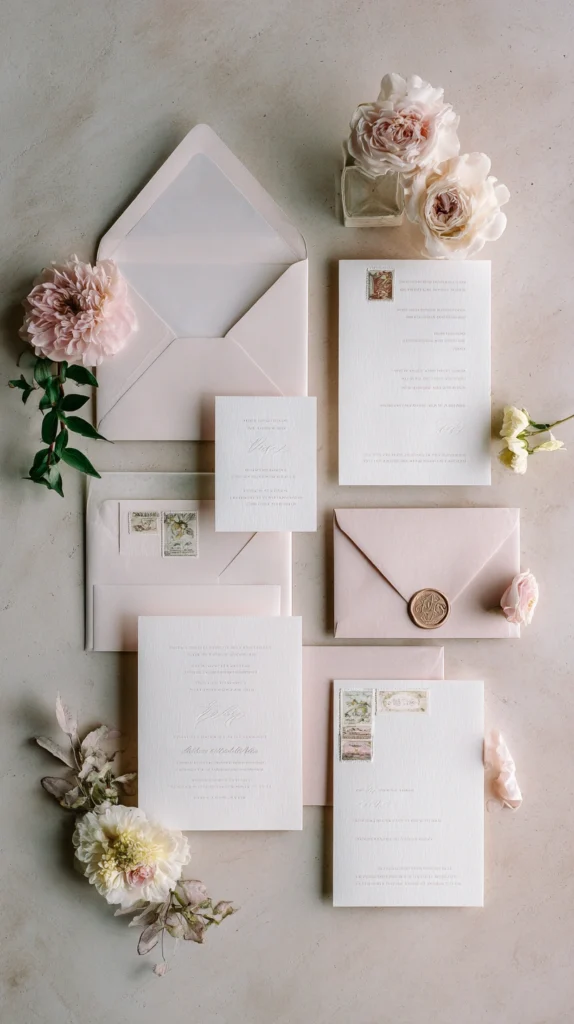
A dusty rose stationery suite — invitations, RSVP cards, envelopes, and day-of stationery in the dusty rose and gold palette, with a calligraphy script font, gold foil printing details, and a design that communicates the day’s quiet elegance before a single guest arrives — is the couple’s first and most widely distributed communication of the wedding’s aesthetic intention. The stationery tells the guest what kind of wedding they are attending before they have experienced a single element of it.
A full stationery suite for eighty guests from an independent stationer — $150 – $500 printed. A digital suite from an online design platform — $30 – $80 for the download, printed locally for $50 – $150. Day-of stationery — menus, place cards, order of service — adds $60 – $200 for a full reception. A dusty rose wax seal on each envelope — $15 – $30 for the seal kit — is the finishing detail that elevates the invitation from stationery to keepsake.
Styling tip: Use a calligraphy or brush script font for the couple’s names and the primary invitation text, and a clean serif or minimal sans-serif for the practical information — date, venue, RSVP details. The combination of a flowing script and a clean secondary font produces an invitation that reads as both romantic and resolved — the script carrying the emotional register of the day and the secondary font ensuring that every practical detail is legible without competing with the beauty of the primary typography.
9. The Dusty Rose Aisle and Ceremony Space
Budget: $80 – $600
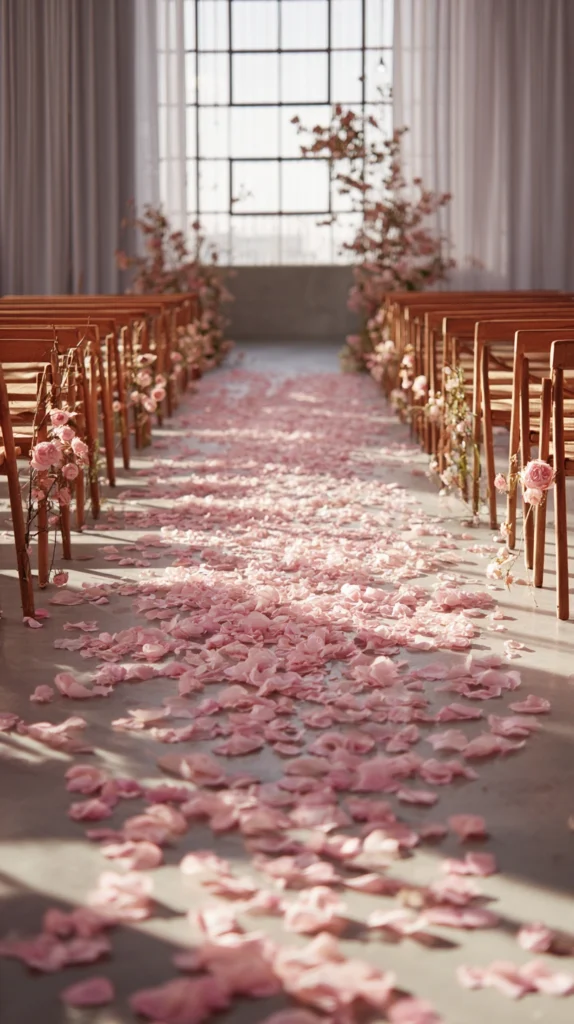
A dusty rose ceremony space — dried petal scatter on a white aisle runner, small bud vase aisle markers with a single dried rose and eucalyptus sprig at each row, a dried botanical arch at the altar, and candlelight on both sides of the aisle — creates a ceremony environment of genuine, specific, and enduring beauty. Every photograph taken from the rear of the ceremony space — the couple framed by the arch, the aisle extending toward the camera — will be one of the day’s most beautiful images.
Dried dusty rose and ivory petals for the aisle scatter — $15 – $40. A white aisle runner — $20 – $50. Small bud vase aisle markers — $5 – $15 each, twelve to fourteen required for a standard aisle. A dried botanical ceremony arch — $150 – $500 as detailed above. Lanterns on either side of the altar — $15 – $40 each.
Styling tip: Place the bud vase aisle markers on the ceremony chairs or pews rather than on the floor at the end of each row. Floor-level aisle markers are stepped over, kicked aside, and missed by guests seated beyond the first few rows. Chair-mounted markers are at sitting eye height — visible to every seated guest throughout the ceremony and visible to the processional party as they walk the aisle. The same small arrangement seen by everyone produces a significantly greater cumulative visual impact.
10. The Dusty Rose Photo Booth
Budget: $60 – $300
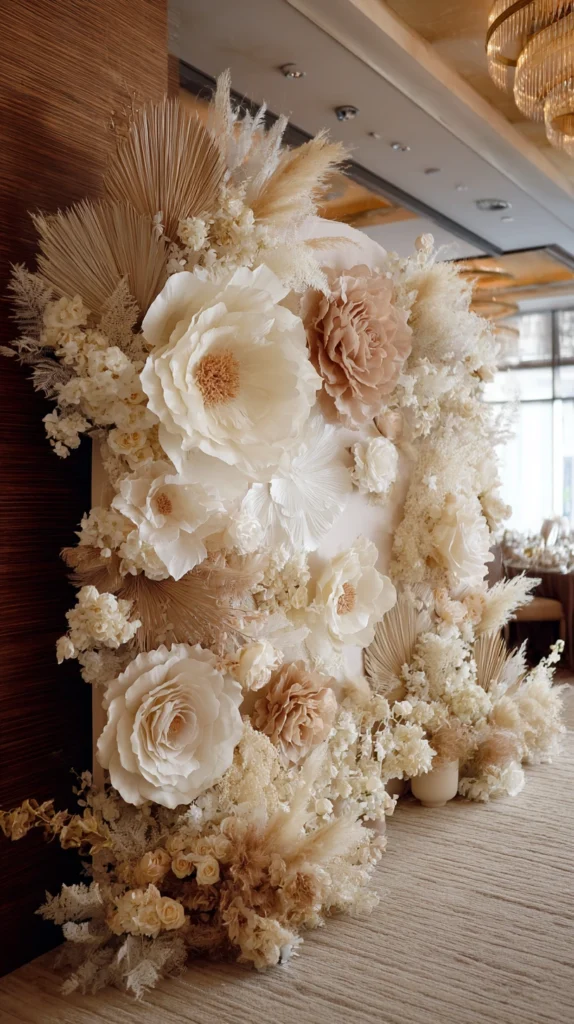
A photo booth in the dusty rose palette — a dried floral backdrop of pampas, dried roses, and preserved eucalyptus, or a balloon arch in dusty rose and champagne, with a vintage mirror, antique-style props, and warm lighting — is the dusty rose wedding’s most social installation and the one that produces the most consistently beautiful guest photographs. A beautifully designed dusty rose photo booth backdrop produces images that guests treasure because they are genuinely beautiful rather than merely documentary.
A dried floral backdrop — pampas, dried roses, eucalyptus — costs $150 – $400 to build or hire. A dusty rose and champagne balloon arch — $60 – $150 in materials. A vintage-style ornate mirror as a prop — $20 – $60 from a secondhand source. Antique-style props — pearl accessories, vintage fans, floral crowns — $20 – $50 for a set. A warm-toned ring light — $20 – $50.
Styling tip: Use the dried floral backdrop rather than balloons if the wedding aesthetic is leaning toward the antique and the specifically romantic rather than the celebratory. A dried botanical backdrop in dusty tones reads as entirely consistent with the day’s palette and atmosphere. A balloon arch in the same palette reads as celebratory — which is beautiful but in a slightly different register from the quiet elegance that the dusty rose wedding is working toward.
11. The Dusty Rose Welcome Table
Budget: $50 – $300
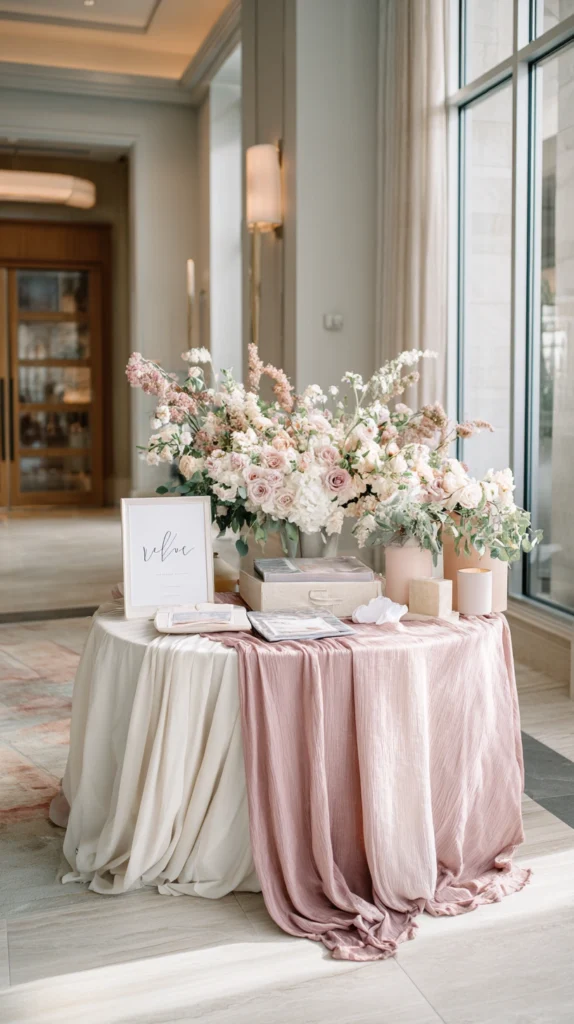
A welcome table at the ceremony or reception entrance — dressed in a dusty rose and ivory linen, with a calligraphy welcome sign, a small floral arrangement in the palette, the escort cards or seating plan in the stationery font, and a personal detail that communicates the couple’s specific character — is the first impression of the day’s styling that every guest encounters. It sets the tone for every visual experience that follows.
A welcome sign in dusty rose calligraphy — $30 – $100. A small dusty rose floral arrangement — $40 – $100. A dusty rose linen table runner — $15 – $30. Escort cards in the stationery suite design — $0.30 – $0.80 each. A personal detail — a framed photograph of the couple, a small candle — $10 – $30 additional.
Styling tip: Include something living on the welcome table — a potted herb, a small plant, or a single fresh stem in a bud vase — alongside the dried elements that appear elsewhere in the day’s decor. A welcome table with one living element communicates that the couple noticed the difference between the living and the preserved and chose to include both — which is a more sophisticated botanical statement than either exclusively fresh or exclusively dried florals.
12. The Dusty Rose Favour
Budget: $2 – $10 per guest
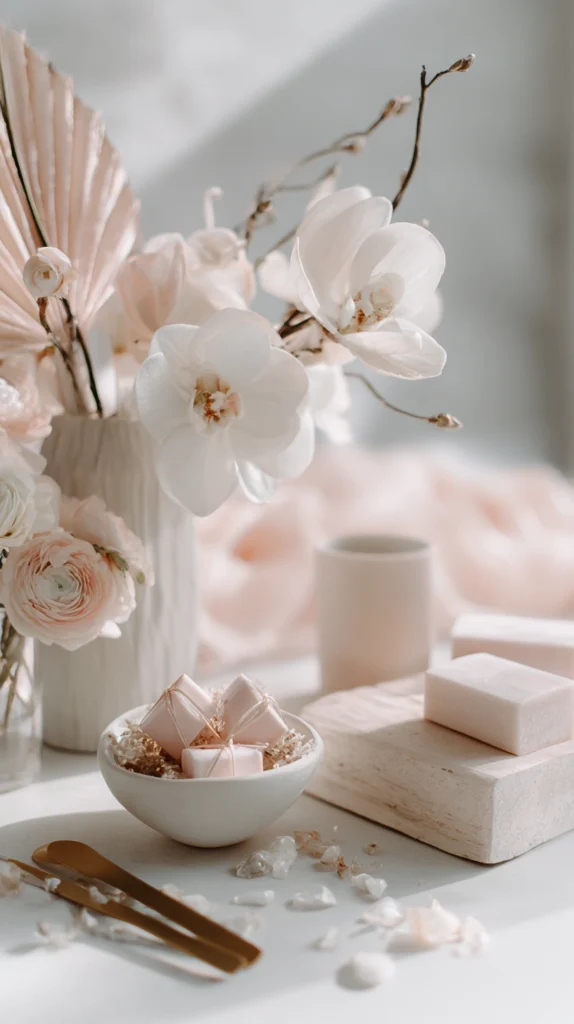
A dusty rose wedding favour — a small ceramic or terracotta pot of dusty rose seeds, a small jar of rose petal jam with a calligraphy label, a mini dried rose tied with velvet ribbon, a small soy candle in rose and patchouli in a blush ceramic pot, or a pressed flower card with a handwritten note from the couple — is the guest’s take-home piece of the day’s beauty and the object most likely to be displayed rather than stored after the wedding.
A mini dried rose tied with dusty velvet ribbon — $1 – $3 per guest. A small blush ceramic soy candle — $3 – $8 per guest. A rose petal jam jar with a calligraphy label — $2 – $5 per guest. A seed packet in a dusty rose envelope — $1 – $3 per guest. A pressed flower card — $1 – $3 per guest. A personalised thank you note from the couple on each favour — $0.10 – $0.20 per guest — turns any of the above into a specifically personal rather than a generically beautiful gift.
Styling tip: Display the favours as part of the welcome table or the table setting rather than on a separate favour table at the exit. Favours integrated into the tablescape are encountered, admired, and taken throughout the reception. Favours on an exit table are taken by some guests, forgotten by others, and left in a diminishing pile at the end of the evening — which is not the impression a carefully considered favour is designed to create.
13. The Dusty Rose Evening Atmosphere
Budget: $100 – $1000
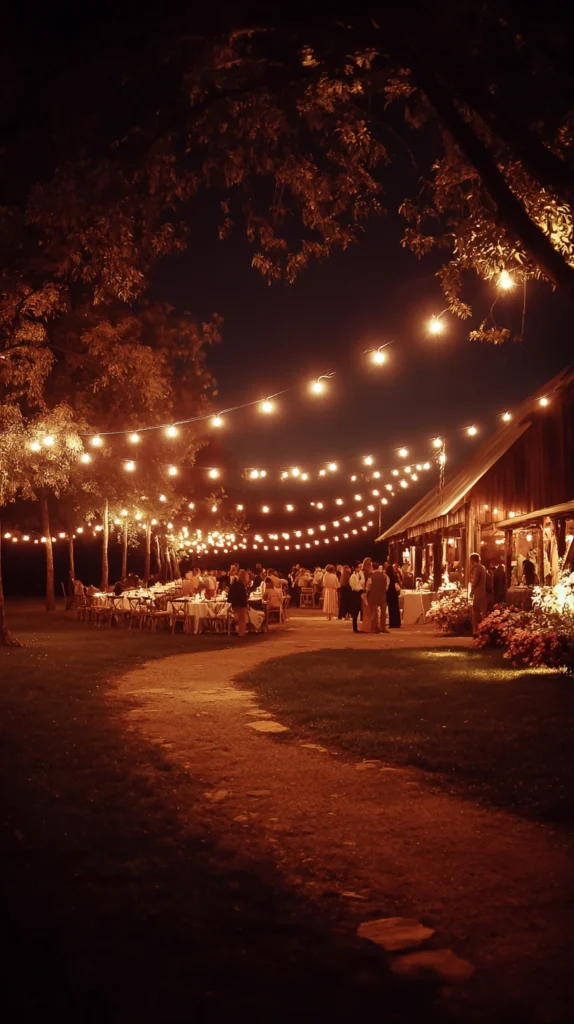
The dusty rose wedding’s evening atmosphere — dim amber lighting across the dance floor, a string light canopy above the outdoor dancing space, a signature dusty rose cocktail at the evening bar, and the transition from the formality of the dinner to the warmth of the dancing — is the moment when the palette’s quality of light performs most beautifully. Dusty rose in candlelight and amber lamplight at 10pm is a different and deeper colour from dusty rose in natural afternoon light, and the evening of a dusty rose wedding is often its most specifically beautiful hour.
A string light canopy above the outdoor dancing space — $30 – $80 in lights. Dusty rose gel lighting on the dance floor — $100 – $400 from a lighting hire company. A signature cocktail in a dusty rose tone — butterfly pea flower and rose lemonade in a coupe glass — $5 – $10 per guest. Paper lanterns in dusty rose and champagne — $3 – $8 each, distributed through the evening space.
Styling tip: Introduce the signature dusty rose cocktail at the beginning of the evening rather than as a late-night option. A cocktail that every guest receives at the moment of transition from dinner to dancing establishes the evening’s colour and mood from its first moment and ensures that the most beautiful version of the dusty rose evening begins as a collective shared experience rather than an individual optional one.
14. The Dusty Rose Getaway
Budget: $80 – $600
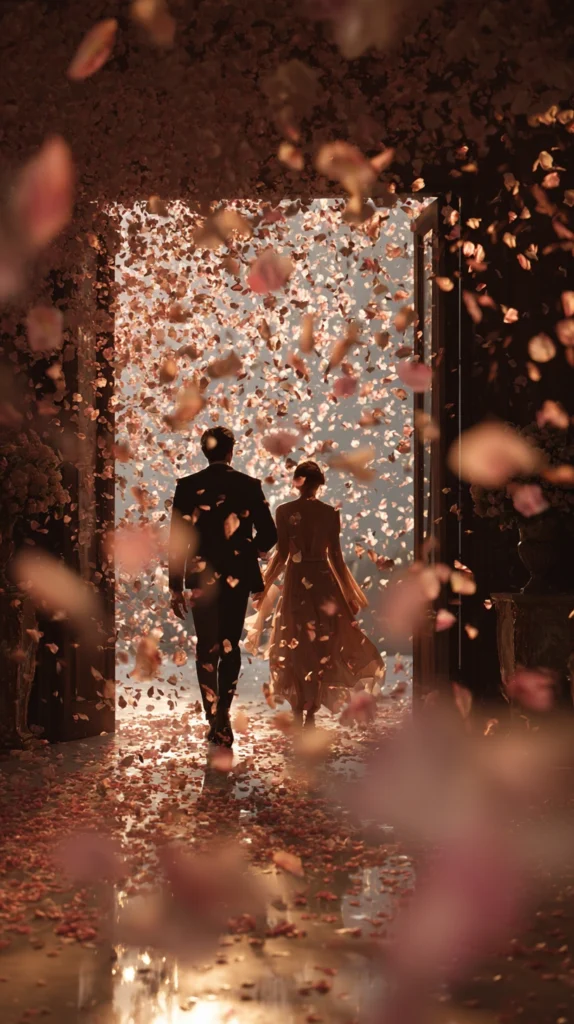
A dusty rose getaway — the couple’s departure from the reception through a tunnel of guests with dried petal confetti in dusty rose and ivory, a vintage car dressed with ivory ribbon and a small dried botanical arrangement on the bonnet, and a personalised “just married” sign in the calligraphy font of the stationery suite — gives the day its most romantic and most specifically personal final image.
Dried rose and ivory petal confetti — $15 – $40 for a party of eighty guests. A vintage or classic car hire — $200 – $500 for a half-day. Ivory ribbon for the car — $5 – $15 per reel. A small dried botanical arrangement for the bonnet — $30 – $80. A calligraphy “just married” sign — $10 – $25 printed.
Styling tip: Brief the photographer to capture the petal confetti moment from a low angle — the camera at approximately hip height, pointed upward — so that the falling petals are visible against the sky and the couple is framed within the shower of confetti. A photograph taken from this angle shows the petals in mid-air, the couple at the centre of the shower, and the faces of the surrounding guests at the frame’s edges — which is the most complete and the most specifically beautiful version of the send-off image.
15. The Fully Designed Dusty Rose Wedding
Budget: $5000 – $50000
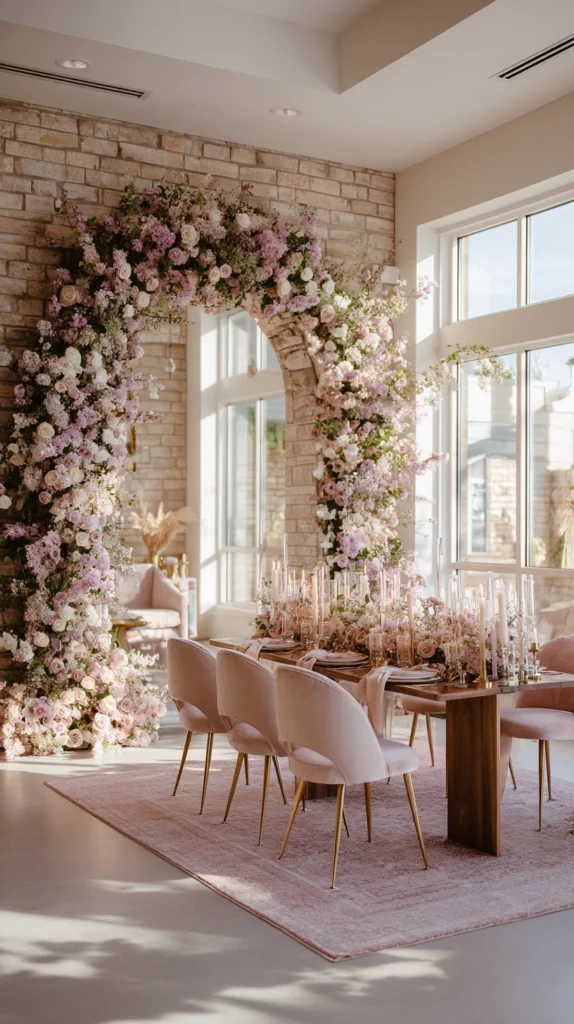
The fully designed dusty rose wedding — a palette of antique rose and sage consistent across every element from the wax-sealed invitation to the petal send-off, a dried botanical ceremony arch, dusty rose and sage mixed florals throughout, a semi-naked cake with dried rose petals, a tonal bridesmaid scheme in individually chosen silhouettes, candlelight at every height throughout the reception, handwritten place cards, a dried floral photo booth backdrop, personalised rose petal favours, and an evening of amber-lit dancing beneath a string light canopy — is a wedding that has been designed as a complete and coherent aesthetic experience from first to last.
The investment across all elements varies with guest numbers, geographic location, and supplier tier. The principle that produces the fully designed dusty rose wedding is not a specific budget but a specific consistency — every element assessed in relation to the palette, the tonal quality, and the specific elegance of the atmosphere being created, with no element admitted that contradicts the muted, warm, specifically beautiful world the wedding is building.
Styling tip: Brief every supplier — the florist, the cake maker, the stationer, and the lighting designer — with a physical palette board rather than a digital colour reference. Colours that appear consistent on a screen often diverge when rendered in physical materials under the specific lighting conditions of the venue. A physical board with swatches of the actual dusty rose fabric, the actual sage ribbon, and the actual dried botanical samples ensures that every supplier is working from the same physical colour reference — which is the only reference that matters in a room lit by candlelight on the wedding day itself.
The dusty rose wedding is not a wedding that announces itself at high volume. It is a wedding that reveals its beauty gradually — in the particular warmth of the candlelight on the centrepiece, in the depth of the dried rose in the aisle marker, in the quality of the palette that deepens and softens as the afternoon moves into evening and the evening moves into the hours when the dancing begins.
It is a wedding remembered not as a specific decoration or a specific moment but as a feeling — the particular quality of an afternoon and an evening that was warm, that was beautiful, and that felt, in every element from the first to the last, as though it had been made with genuine care for something genuinely worth celebrating.
That is what a dusty rose produces at its best. It is enough. It is more than enough.