14 Textured Wall Finish Ideas Beyond Paint and Wallpaper
The plastered wall changed how my living room felt more than any paint color I have ever chosen. Not the perfect shade of white. Not the accent color everyone recommended. Not the wallpaper pattern I kept debating between.
The texture.
Because a wall you could actually feel did something flat color never managed. Before it: a room finished in careful, correct paint, technically well-chosen but visually silent, the same in every light and from every angle. After it: a wall that changed depending on the hour, catching morning light differently than evening lamplight, texture doing work no single color ever could.
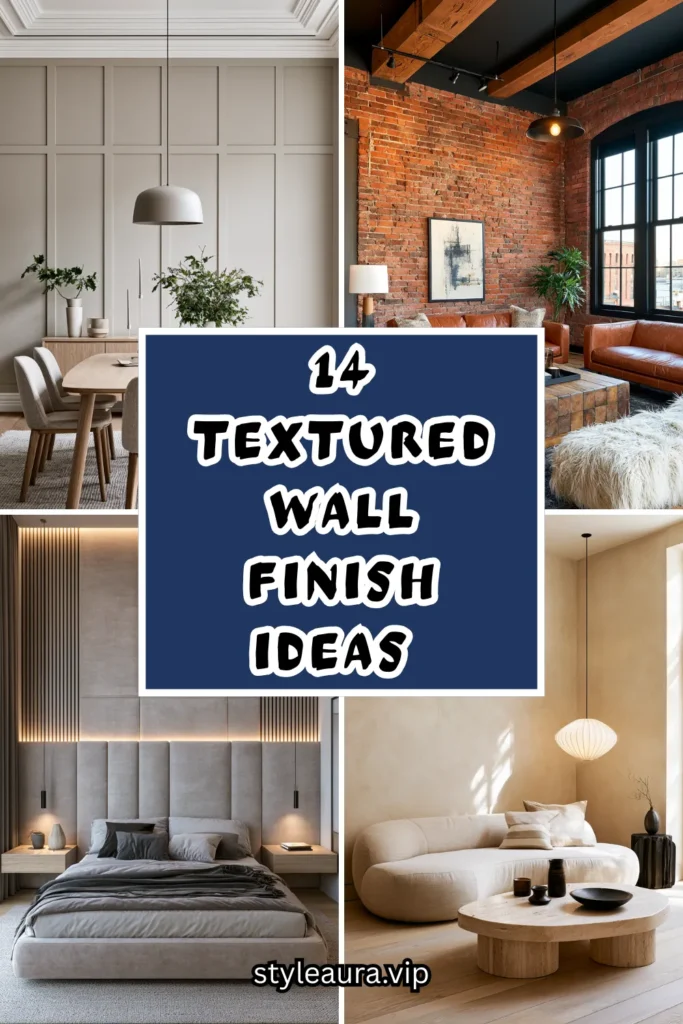
A textured wall finish is not a paint color pushed slightly further. It is a genuinely different material decision — plaster, wood, stone, fabric, tile — chosen for how it catches light and how it feels underhand, not simply for its color. The wall: no longer a flat backdrop, but a surface with its own dimension.
Here are 14 textured wall finish ideas beyond paint and wallpaper — from the simplest limewash to the most fully dimensional treatment — built on that understanding.
Why Texture Does Something Flat Paint Cannot
The light interaction principle
A flat painted wall reflects light uniformly across its surface. A textured wall reflects light unevenly, creating subtle shadow and highlight that shift as the light itself shifts through the day. This is the core reason texture reads as more alive than color alone.
The tactile dimension
Without texture:
A wall that looks the same whether seen or touched, offering only one sense any real information.
The room: visually complete, but missing an entire dimension of how humans actually experience material.
With texture:
A wall with genuine surface variation, inviting touch as much as sight.
The room: engaging more than one sense, adding a dimension flat paint cannot replicate regardless of color choice.
The imperfection allowance
Nearly every textured finish on this list embraces some degree of natural variation and hand-applied irregularity — a quality flat paint, by design, specifically eliminates. This imperfection is not a flaw in these finishes; it is central to why they read as more organic and less manufactured.
The investment consideration
Textured finishes generally cost more and take longer to apply than paint, and are harder to fully reverse. This is worth weighing honestly before committing, though many of the finishes on this list offer lower-commitment, partial-application versions for exactly this reason.
The Five Categories of Textured Wall Finishes
Before choosing any single treatment:
Plaster-based finishes
Venetian plaster, limewash, and clay plaster, applied by trowel or brush in thin, textured layers.
The most historically established category, with centuries of precedent.
Ranges from a subtle, barely-there texture to a dramatically dimensional one.
Wood-based finishes
Shiplap, wood paneling, and reclaimed wood, applied as a dimensional wall covering.
Adds genuine physical depth beyond a plaster’s surface-level texture.
Suits a wide range of styles from rustic to contemporary.
Stone and masonry finishes
Exposed brick, stone veneer, and concrete, either genuine or applied as a veneer treatment.
The most substantial and structural-feeling of the textured options.
Often the most expensive and most difficult to reverse.
Fabric and soft finishes
Upholstered walls, grasscloth, and other woven or fabric-based coverings.
Adds acoustic softening alongside visual texture.
Suits a bedroom or a room where sound absorption is a genuine benefit.
Tile and dimensional finishes
Textured ceramic tile, 3D wall panels, and other manufactured dimensional products.
The most contemporary and most precisely repeatable category.
Offers texture with more consistency than the hand-applied finishes.
1. The Venetian Plaster Wall
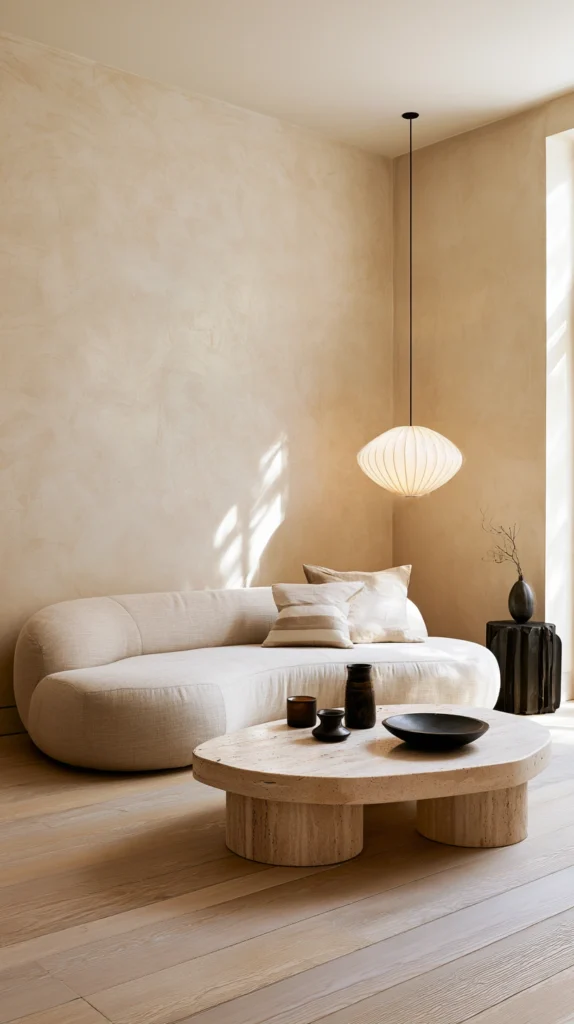
A thin, hand-troweled layered plaster finish, built up in multiple passes to create subtle depth and a soft, marble-like sheen.
Why Venetian plaster remains the benchmark textured finish
No other finish on this list offers quite the same combination of subtle texture and genuine light-catching depth — the layered application technique creates a surface that shifts in appearance as the viewing angle and light source change.
The application
Applied in thin layers with a metal trowel, each layer partially burnished into the one beneath it, building up texture and a soft sheen over several coats.
The color
Typically a warm, earthy neutral — cream, ochre, or a soft terracotta — though the technique works in nearly any color, with the texture itself carrying more of the visual interest than the color choice.
The skill requirement
Genuinely difficult to execute well without either professional application or considerable practice, worth budgeting for skilled labor rather than treating as a casual weekend DIY project.
The wall selection
Often applied to a single feature wall given both the cost and skill involved, rather than an entire room, though full-room application delivers a more immersive result where the budget allows.
The maintenance
Genuinely durable and washable once properly sealed, holding up well to normal household wear despite its more delicate, artisanal appearance.
Cost breakdown: Venetian plaster material: $80–200 (one wall) Professional application: $400–1,200 Total: $480–1,400
2. The Limewash Finish
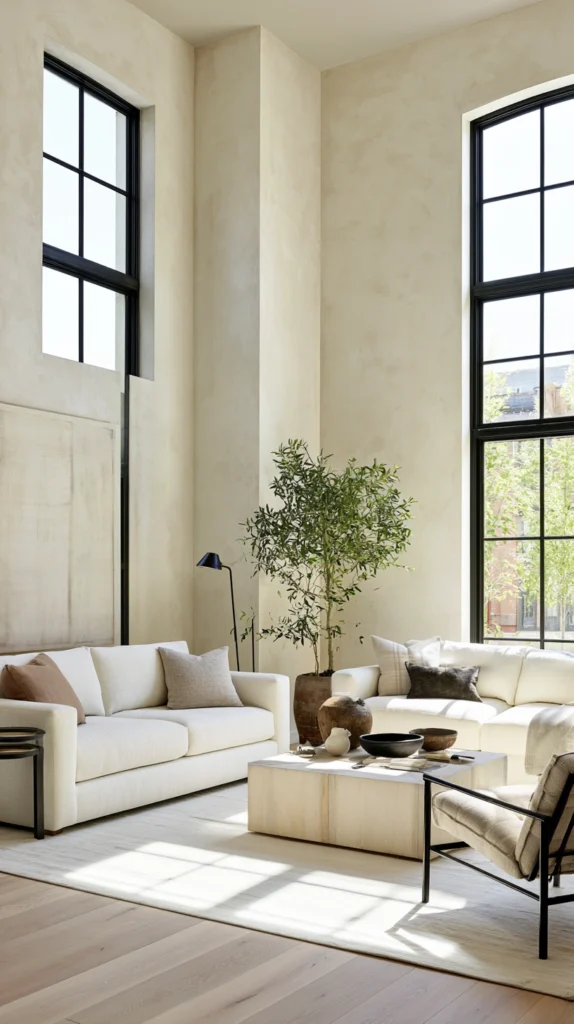
A breathable, mineral-based paint alternative applied in thin, translucent layers, creating a soft, cloudy, variegated texture distinctly different from flat paint’s uniform coverage.
Why limewash reads as more textured than paint despite being a similarly thin application
Limewash dries with natural, cloud-like variation in opacity and tone across the wall’s surface, an effect no flat paint achieves regardless of the specific finish or sheen chosen.
The application
Applied with a natural bristle brush in a loose, cross-hatched motion, allowing the variation between thicker and thinner areas of pigment to show through naturally rather than being smoothed to uniformity.
The color range
Traditionally chalky whites and soft earth tones, though contemporary limewash products are available in a broader range of colors while maintaining the same characteristic soft, variegated texture.
The surface requirement
Best suited to a porous surface — plaster, brick, or unfinished drywall — since limewash depends on some absorption into the wall material for its characteristic effect, unlike paint which sits primarily on the surface.
The DIY accessibility
More approachable for a confident DIY attempt than Venetian plaster, since limewash’s characteristic imperfection is part of its intended look rather than a flaw to avoid.
The breathability benefit
A genuinely breathable, mineral-based finish, allowing moisture to pass through the wall rather than trapping it, a practical benefit in older homes or humid climates alongside the aesthetic appeal.
Cost breakdown: Limewash paint (one room): $60–150 Total: $60–150
3. The Clay Plaster Wall
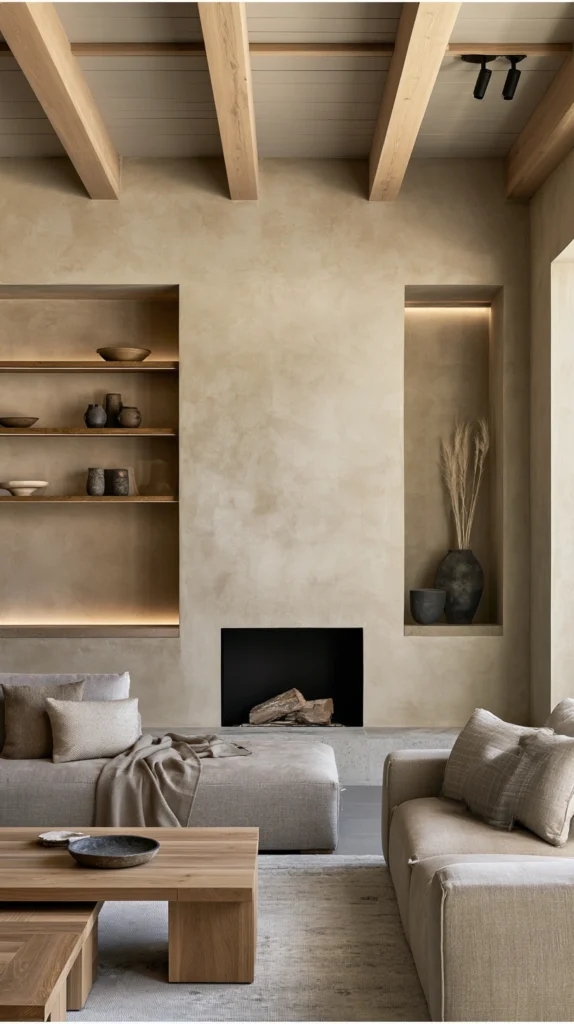
A natural clay-based plaster finish, applied in a thicker layer than limewash, offering a matte, deeply textured surface with genuine earthy color variation.
Why clay plaster suits a room aiming for genuine warmth over polish
Unlike Venetian plaster’s polished sheen, clay plaster dries to a completely matte, softly textured surface that reads as more rustic and grounded, suited to a room where warmth matters more than refinement.
The application
Applied by trowel in a single thicker layer, or in a base coat and a finish coat for more texture, typically finished with a light hand-troweled or sponge-textured surface rather than the burnished polish of Venetian plaster.
The color
Natural earth tones drawn directly from the clay’s own mineral content — warm ochres, soft greys, and deep terracottas — rather than a separately applied pigment layer.
The texture options
Ranging from a relatively smooth, sponge-finished surface to a more deliberately rough, hand-troweled texture, depending on the specific tool and technique used during application.
The air quality benefit
Clay plaster naturally regulates humidity and is free of the synthetic compounds found in many conventional paints, an increasingly valued practical benefit alongside its aesthetic appeal.
The repair ease
Genuinely easy to patch and repair compared with a painted wall, since small clay plaster repairs blend into the surrounding texture more forgivingly than a paint touch-up blends into a flat painted surface.
Cost breakdown: Clay plaster material (one wall): $100–250 Professional or DIY application: $150–500 Total: $250–750
4. The Shiplap Wall Treatment
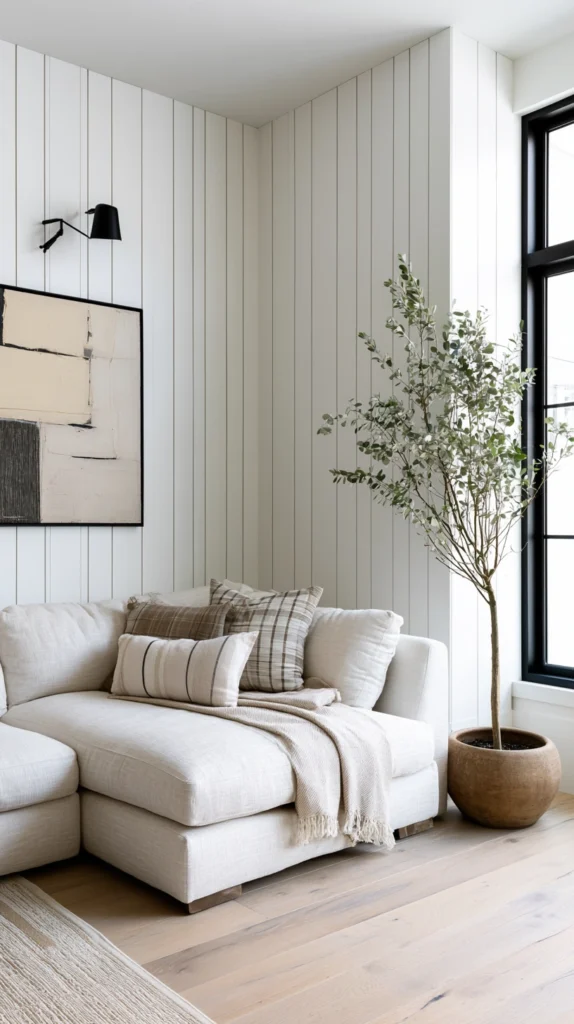
Horizontal wood boards installed with a small gap between each board, creating a distinctly ridged, dimensional wall surface, either painted or left in a natural wood finish.
Why shiplap remains a durable choice despite its trend-driven popularity
Genuine dimensional depth from the gapped board installation, not just a printed or painted texture, gives shiplap real physical shadow lines that shift with the room’s lighting throughout the day.
The boards
Tongue-and-groove or simple square-edge boards, installed horizontally with a consistent small gap (often around a quarter inch) between each board, creating the treatment’s signature ridged shadow line.
The finish
Painted in a single color for a clean, more contemporary look, or left in a natural or lightly stained wood finish for a more rustic result.
The installation
Nailed directly to the wall studs, or over furring strips if the existing wall surface is uneven, requiring basic carpentry skill more than specialized plastering technique.
The wall selection
Frequently applied to a single accent wall — behind a bed, in a bathroom, along a fireplace — though full-room application is increasingly common in more country or coastal-styled interiors.
The material cost range
Real wood shiplap costs meaningfully more than MDF or engineered alternatives, worth weighing against the specific room’s moisture exposure and the household’s priority between authenticity and budget.
Cost breakdown: Shiplap boards (one wall, real wood): $150–400 Or MDF shiplap: $80–200 Installation hardware: $20–50 Total: $100–450
5. The Reclaimed Wood Plank Wall
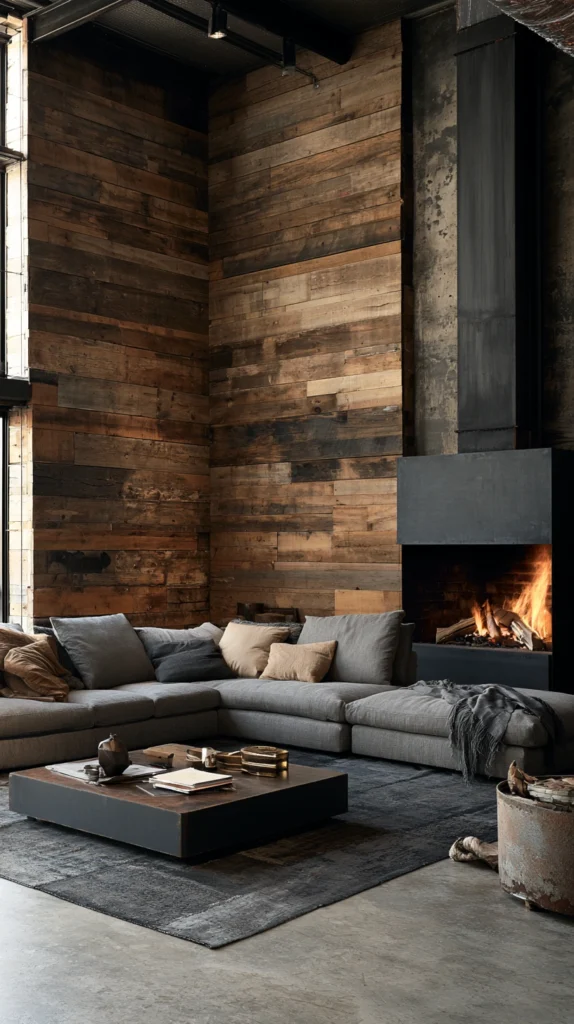
Salvaged or reclaimed wood boards installed as a wall covering, retaining their natural, varied aging, nail holes, and old paint traces rather than a uniform new finish.
Why reclaimed wood offers texture no new material can fully replicate
Decades of genuine weathering, old nail holes, and variation in tone between individual boards create a level of authentic texture and history that distressing new wood can only approximate.
The sourcing
Salvage yards, architectural reclamation centers, or barns and structures being demolished, offering boards with real age and character rather than a manufactured “reclaimed-look” product.
The preparation
Cleaned and lightly sanded only enough to remove any risk of splinters or contamination, while carefully preserving the original surface character — over-sanding removes the very texture and patina that make reclaimed wood valuable in the first place.
The installation
Boards installed with intentional variation in width and length, rather than uniformly cut to match, reinforcing the collected, salvaged character of the material itself.
The sealing
A clear matte sealant, protecting the wood without adding shine or altering its natural, aged appearance.
The wall suitability
Particularly effective as a fireplace surround, a headboard wall, or an accent wall in a room already leaning toward a rustic or farmhouse aesthetic.
Cost breakdown: Reclaimed wood boards (one wall): $150–500 Cleaning supplies and sealant: $30–60 Total: $180–560
6. The Exposed Brick Reveal
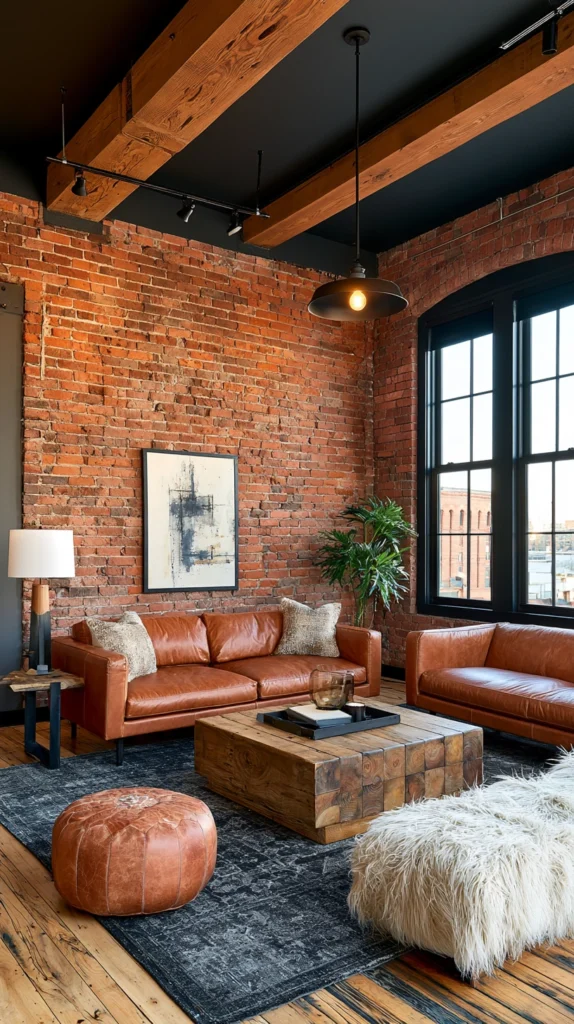
Existing brick uncovered from beneath drywall or plaster, or a new brick veneer applied, exposing the raw, textured masonry surface as an intentional design feature.
Why exposed brick remains one of the most substantial textured finishes available
Unlike an applied surface treatment, exposed brick reveals the building’s actual structural material, offering a level of genuine physical depth and historical authenticity no surface-applied texture can match.
The reveal process
In an older home, existing brick often exists behind later drywall or plaster layers, requiring careful demolition and cleaning to expose without damaging the underlying masonry.
The cleaning and sealing
Old mortar and brick dust cleaned away, with a clear masonry sealant applied to prevent ongoing dust shedding from the exposed surface into the room.
The veneer alternative
A thin brick veneer product, applied over an existing wall rather than requiring genuine structural demolition, achieving a similar visual and tactile effect in homes without existing brick to reveal.
The color and pattern variation
Genuine old brick offering natural variation in color, texture, and even individual brick size that a uniform veneer product may only partially replicate, worth considering when weighing authenticity against cost and effort.
The insulation consideration
Exposed exterior-facing brick can reduce a wall’s insulation value, worth discussing with a contractor if the wall in question is an exterior one rather than an interior partition.
Cost breakdown: Reveal and cleaning (existing brick): $500–1,500 Or brick veneer installation: $600–1,800 Sealant: $40–80 Total: $540–1,880
7. The Natural Stone Veneer Accent
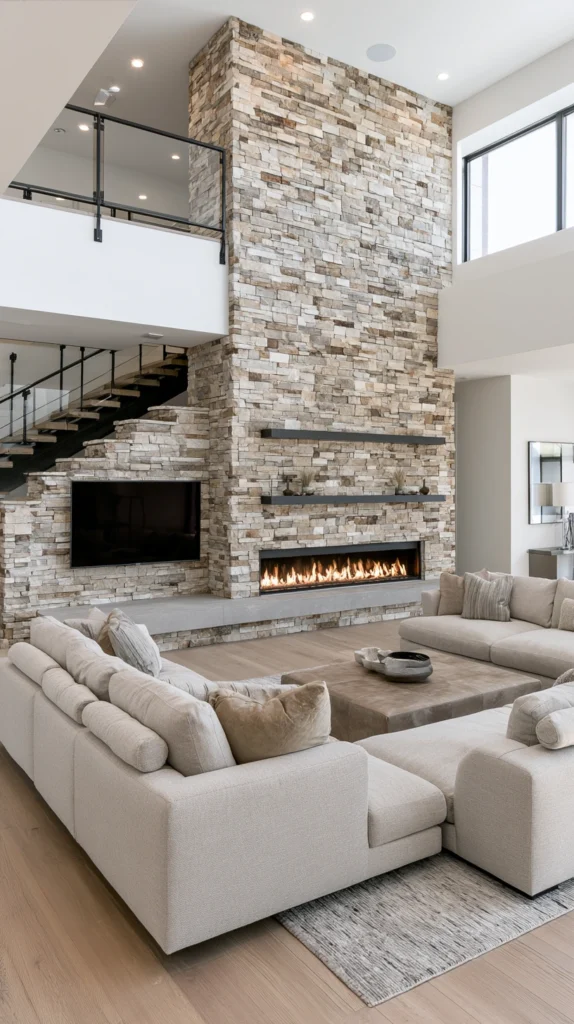
Thin natural stone veneer panels applied to a single wall, providing genuine stone texture and dimension without the structural weight of full-depth stone masonry.
Why veneer achieves much of solid stone’s effect at a fraction of the structural requirement
Full structural stone walls require substantial foundation support most interior renovations cannot accommodate. A thin veneer product delivers the same visual and tactile stone texture while adding comparatively little weight to the existing wall structure.
The stone selection
Natural stone veneer in a variety of styles — a stacked ledge stone, a more traditional fieldstone pattern, or a smoother river rock — chosen to suit the room’s overall aesthetic direction.
The installation
Adhered directly to a properly prepared wall surface using a mortar-based adhesive, requiring the wall to be structurally sound and appropriately braced for the veneer’s weight, lighter than full stone but still meaningfully heavier than paint or wallpaper.
The grout treatment
Grouted between individual stone pieces for a more finished, traditional look, or installed with a tight dry-stack technique leaving minimal visible grout for a cleaner, more contemporary appearance.
The wall suitability
Particularly effective around a fireplace, as a kitchen backsplash accent, or as a single feature wall, rather than typically applied across an entire room given both cost and visual weight considerations.
The lighting interaction
The stone’s natural texture creating genuine shadow and highlight variation under both natural and artificial light, one of this finish’s most compelling qualities beyond its color alone.
Cost breakdown: Natural stone veneer (one wall): $400–1,000 Mortar adhesive and grout: $60–120 Professional installation: $300–700 Total: $760–1,820
8. The Polished Concrete Wall Finish
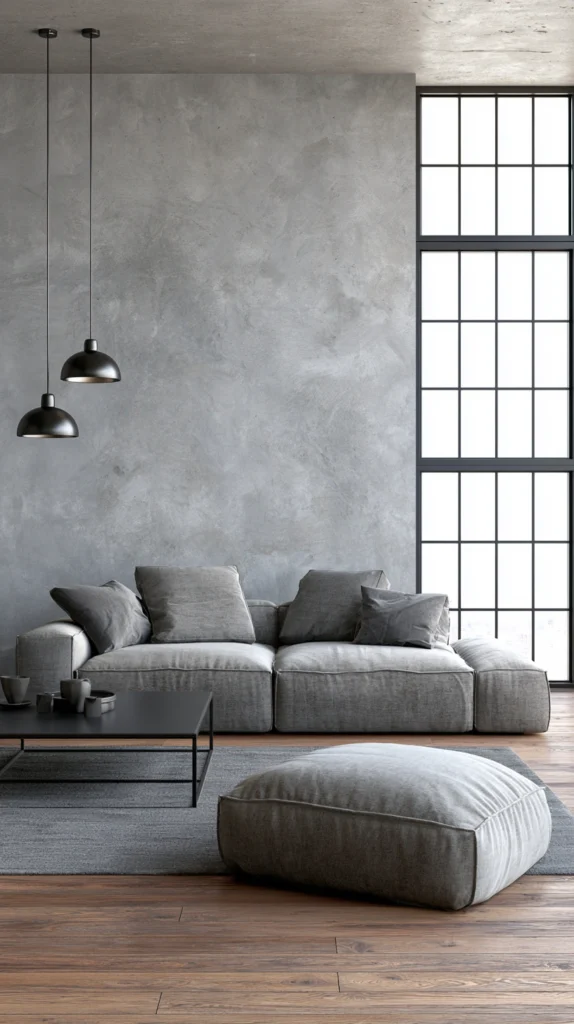
A troweled concrete or concrete-look microtopping applied over an existing wall, creating an industrial, smooth-yet-textured surface distinct from both paint and plaster.
Why concrete occupies a different textural category than plaster or stone
Concrete’s surface offers a cooler, more industrial texture and light interaction than the warmer plaster or stone finishes on this list, suited to a home aiming for a more minimalist or urban-industrial aesthetic.
The application
A thin concrete microtopping product, applied by trowel over an existing wall surface in one or more layers, achieving genuine concrete texture without the structural requirements of a true poured concrete wall.
The finish variation
Ranging from a highly polished, smooth surface to a more deliberately textured, hand-troweled finish, depending on the specific technique and final burnishing applied.
The color
Natural grey concrete tones, or a pigmented version in a warmer or cooler custom shade, depending on the room’s broader palette.
The sealing
A penetrating sealant essential for both durability and to prevent the porous surface from absorbing stains, particularly important in a kitchen or bathroom application.
The room suitability
Especially effective in a bathroom, a modern kitchen, or a home office aiming for a minimalist, materials-forward aesthetic, less commonly suited to a traditionally styled or particularly warm, cozy room.
Cost breakdown: Concrete microtopping material: $150–400 (one wall) Sealant: $40–80 Professional application: $400–900 Total: $590–1,380
9. The Upholstered Fabric Wall Panel
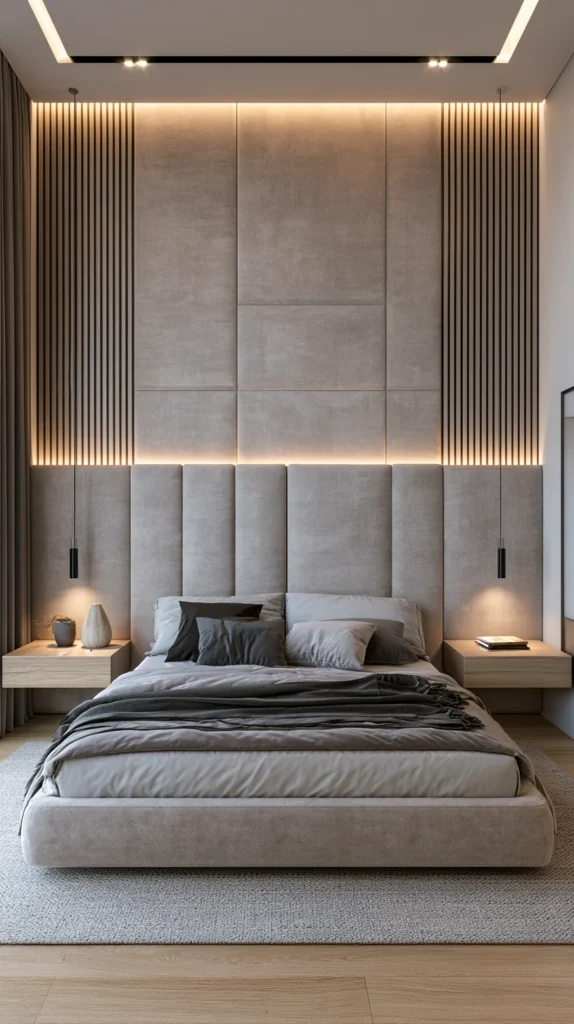
Wall panels covered in fabric — velvet, linen, or a woven textile — installed as discrete sections rather than a single continuous surface, adding both visual softness and genuine acoustic benefit.
Why upholstered walls solve a problem texture alone does not address
Every other finish on this list is a hard surface. Upholstered fabric panels are the one textured wall treatment that genuinely absorbs sound, a meaningful practical benefit in a bedroom, home theater, or any room where noise reduction matters alongside visual interest.
The panel construction
Individual foam-padded panels, wrapped in fabric and mounted to the wall, either as a full continuous wall of panels or as a smaller accent grouping.
The fabric selection
Velvet for a richer, more luxurious texture; linen or a woven natural fiber for a softer, more understated result, chosen for both visual appeal and durability given the wall’s ongoing exposure.
The pattern option
Panels arranged in a geometric pattern — a herringbone or diamond tufted layout — adding structural visual interest beyond the fabric’s texture alone.
The maintenance consideration
Fabric walls require more careful cleaning than a hard surface finish, worth choosing a stain-resistant or treated fabric particularly in a high-traffic or food-adjacent room.
The acoustic benefit
Genuinely reduces echo and sound reflection in the room, a benefit worth prioritizing specifically for a media room, a home office used for calls, or a bedroom in an otherwise noisy building.
Cost breakdown: Fabric-wrapped panels (one wall): $300–800 Or DIY panel construction: $150–400 Total: $150–800
10. The Grasscloth Wall Covering
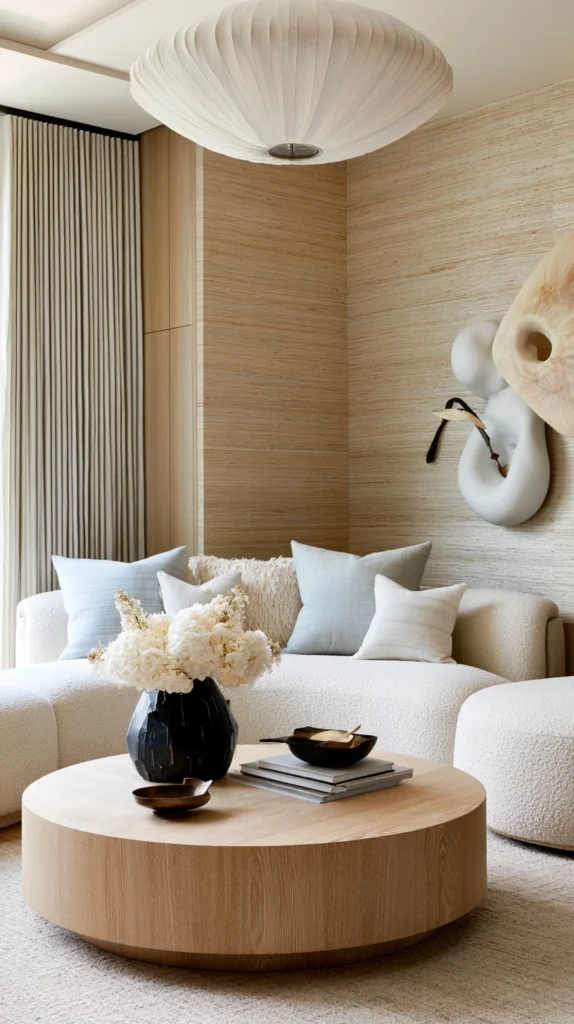
A natural woven material — grasscloth, jute, or a similar plant-fiber wallcovering — applied like wallpaper but offering genuine three-dimensional texture rather than a flat printed surface.
Why grasscloth reads as texture rather than pattern despite its wallpaper-like application
Unlike printed wallpaper, which represents texture visually through a flat printed image, grasscloth is the actual woven material itself, providing real tactile depth beneath a coat of paint or left in its natural, unfinished state.
The material
Natural grasscloth, jute, or a similar woven plant fiber, sold in rolls and installed using a wallpaper-style paste application.
The natural color option
Left in its natural tan or beige tone for a warm, organic look, or painted over once installed for a colored version that still retains the underlying woven texture.
The installation
Requires more careful, experienced installation than standard wallpaper, since the natural material seams and reacts to paste differently than a uniform printed paper product.
The durability consideration
More prone to staining and moisture damage than vinyl or standard wallpaper, generally better suited to a living room, bedroom, or dining room than a bathroom or kitchen with regular moisture and grease exposure.
The overall effect
A subtly textured, warm wall surface that reads as considerably more organic and tactile than even a high-quality printed wallpaper, while requiring similar general installation skills.
Cost breakdown: Grasscloth wallcovering (one room): $150–400 Professional installation: $300–700 Total: $450–1,100
11. The 3D Geometric Wall Panel System
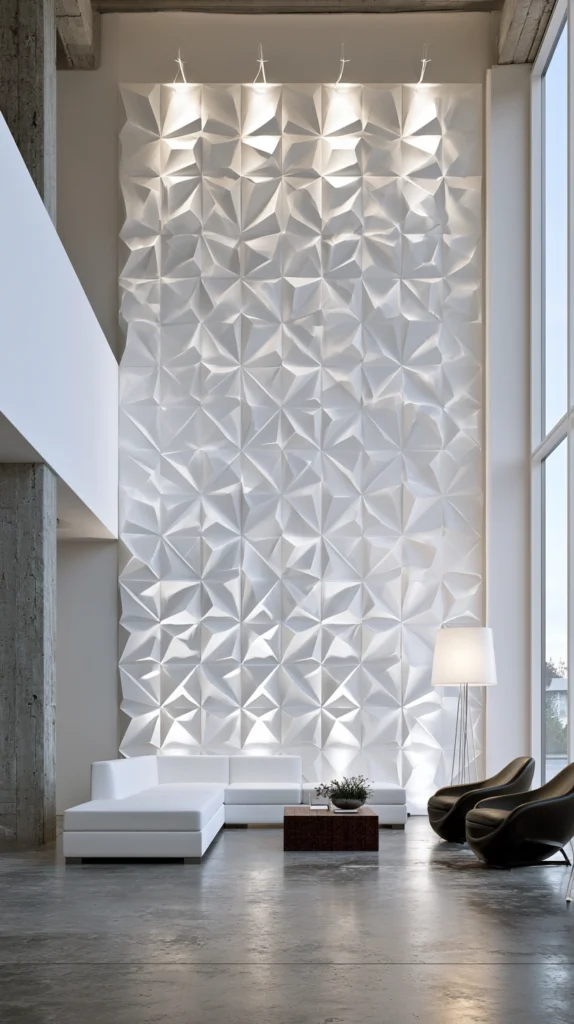
Manufactured dimensional panels — in a repeating geometric, honeycomb, or wave pattern — installed across a wall for a highly consistent, contemporary textured surface.
Why manufactured panels offer a different value than hand-applied finishes
Where plaster and clay depend on hand-applied variation for their appeal, 3D panel systems offer the opposite: precise, consistent, repeatable texture, suited to a more contemporary aesthetic prioritizing clean geometric repetition over organic variation.
The panel material
PVC, MDF, or gypsum panels, manufactured in a specific repeating pattern, sold as individual tiles or panels that interlock or align during installation.
The pattern selection
Ranging from a simple honeycomb or brick-like relief pattern to a more elaborate wave or geometric design, chosen to suit the room’s specific style direction.
The finish
Typically installed unfinished and then painted a single color, allowing the pattern’s shadow and light interaction to carry the visual interest rather than relying on a printed or pre-colored finish.
The installation
Adhered directly to a prepared wall surface, generally more straightforward than plaster or stone veneer application, suited to a confident DIY approach with basic tools.
The room suitability
Particularly effective in a contemporary or modern-styled room, a media wall, or a feature wall behind a bed or sofa, where the pattern’s consistency and geometric precision complement a similarly clean overall room design.
Cost breakdown: 3D panel system (one wall): $150–450 Paint for finishing: $30–60 Total: $180–510
12. The Textured Ceramic Tile Wall
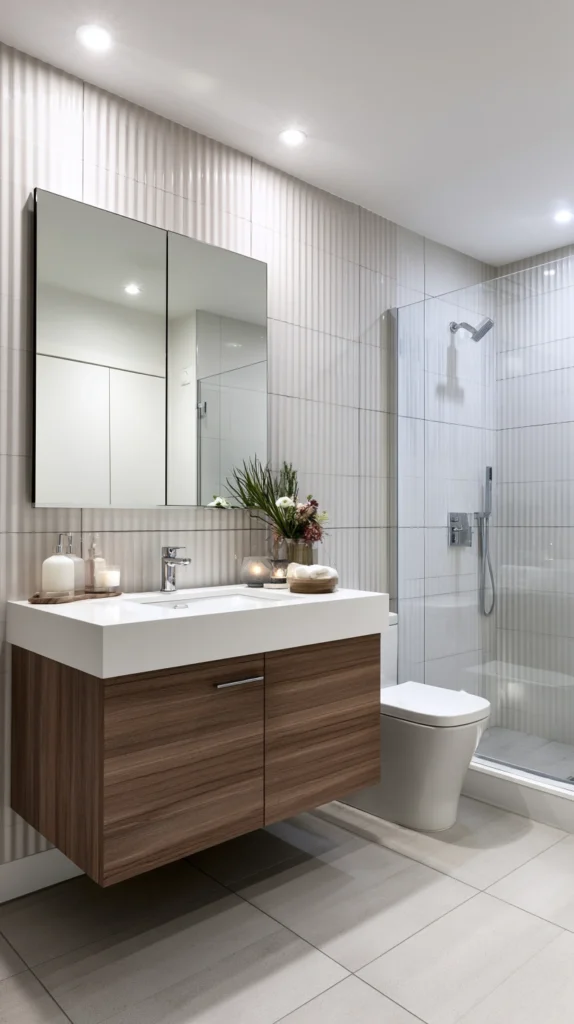
Dimensional ceramic or porcelain tile, manufactured with a raised, rippled, or fluted surface texture, applied as a wall covering in a bathroom, kitchen, or feature wall elsewhere.
Why textured tile suits rooms where moisture resistance matters alongside texture
Unlike plaster, wood, or fabric finishes, tile offers genuine textural interest while remaining fully water-resistant, making this category of finish uniquely suited to a bathroom or kitchen application where the other textured options on this list would be impractical.
The tile style
Fluted, scalloped, or rippled ceramic tile, manufactured with the dimensional pattern built directly into the tile itself rather than applied as a surface coating.
The grout consideration
A grout color chosen to either recede into the tile’s own color for a more unified textural look, or contrast intentionally to emphasize the tile’s individual pattern lines.
The lighting interaction
The tile’s raised surface creating genuine shadow lines that shift throughout the day and under different artificial lighting, one of this finish’s most compelling qualities, particularly in a bathroom where the tile is often the room’s largest single surface.
The application area
Common as a full shower surround, a bathroom accent wall, or a kitchen backsplash, taking advantage of the material’s water resistance in exactly the rooms where that property matters most.
The maintenance
Genuinely low-maintenance and easy to clean despite the dimensional surface, since ceramic and porcelain both resist staining and moisture absorption regardless of their textured profile.
Cost breakdown: Textured tile (one wall or shower surround): $300–800 Grout and installation materials: $60–150 Professional installation: $400–900 Total: $760–1,850
13. The Board-and-Batten Wall Treatment
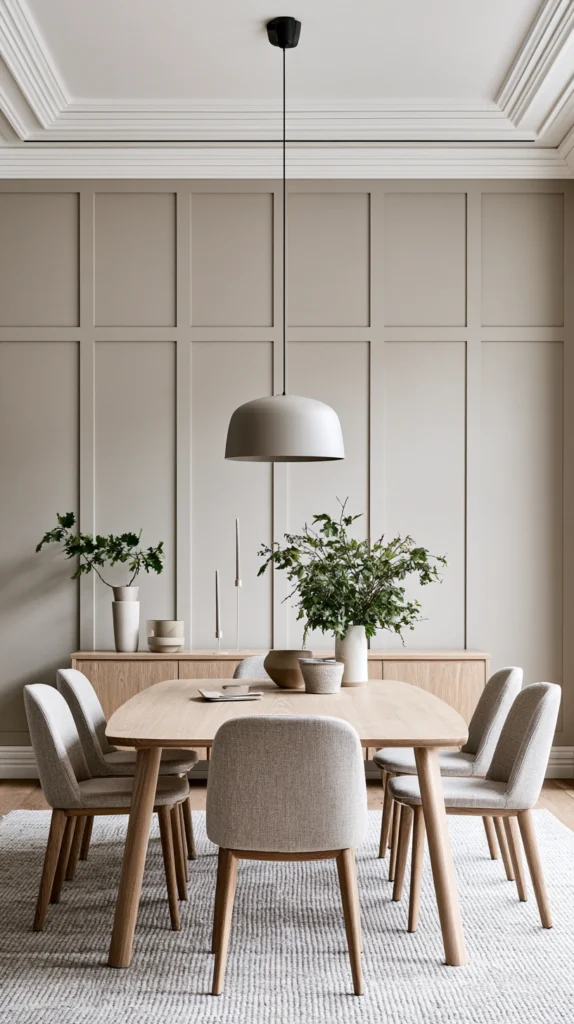
Vertical wood battens installed over a flat base panel or directly onto drywall, creating a rhythmic, ridged vertical texture distinct from horizontal shiplap.
Why board-and-batten offers a different visual rhythm than horizontal shiplap
Vertical battens draw the eye upward, adding a sense of height to a room, in contrast to shiplap’s horizontal lines which tend to widen a space visually — the choice between the two often comes down to which effect a specific room actually needs.
The construction
Thin vertical wood strips (battens) installed at even intervals over either a flat panel base or directly onto the existing wall, creating a raised, ridged texture running floor to ceiling or to a defined chair-rail height.
The spacing
Typically spaced evenly, with the specific interval chosen based on the wall’s width to ensure the pattern divides evenly rather than ending awkwardly at a corner.
The finish
Usually painted a single color across both the battens and the base panel, allowing the raised batten lines to create shadow and texture rather than relying on any color contrast between the two elements.
The height application
Often applied only to the lower half of a wall, up to chair-rail height, with a different treatment above, echoing traditional wainscoting proportions while achieving a more contemporary, cleaner result.
The room suitability
Particularly popular in entryways, dining rooms, and bedrooms, suited to both traditional and modern interiors depending on the specific batten width and spacing chosen.
Cost breakdown: Battens and base panel material: $150–350 (one wall) Paint: $30–50 Total: $180–400
14. The Complete Textured Wall Room (The Fully Dimensional Space)
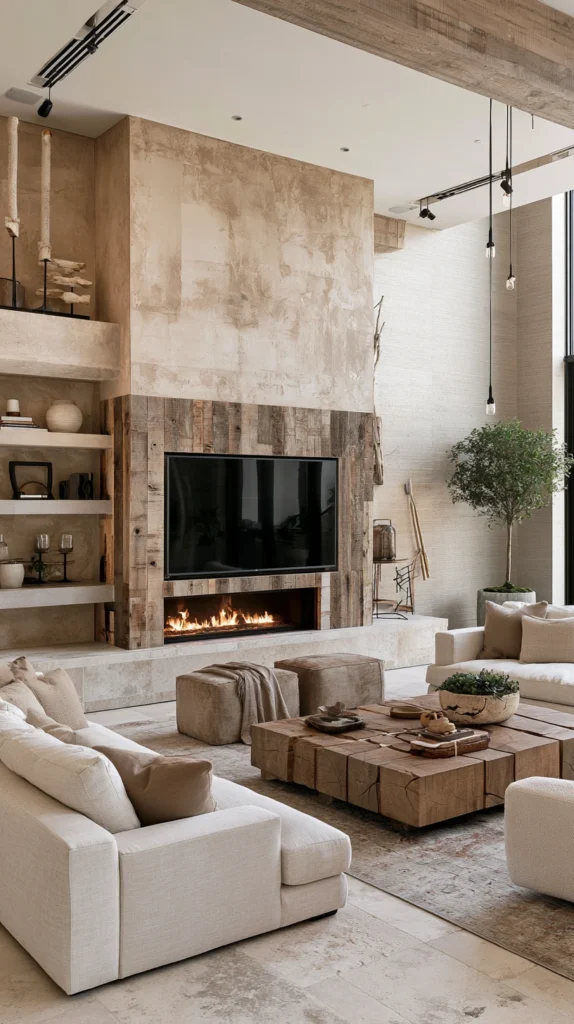
A room combining several of the approaches above — a plastered feature wall, a wood-textured accent, and a fabric or tile detail elsewhere — treating multiple textured finishes as a considered, layered material palette rather than a single isolated experiment.
What separates the complete textured room from a single feature wall
A single plastered wall: a strong start. A complete textured room: multiple genuine material textures working together — hard and soft, smooth and rough, warm and cool — creating a space with real tactile depth in every direction rather than one flat room punctuated by a single interesting surface.
The elements of the complete textured wall room
The primary wall
A Venetian plaster or clay plaster treatment on the room’s main feature wall, providing the space’s most substantial textural statement.
The secondary texture
Shiplap, board-and-batten, or reclaimed wood on a second wall or the lower portion of the room, offering genuine dimensional contrast to the plaster’s more subtle surface variation.
The soft counterpoint
A grasscloth or upholstered fabric element somewhere in the room, adding acoustic softening and a different textural register than the harder plaster and wood surfaces.
The material discipline
No more than three distinct textured treatments in a single room, avoiding a space so busy with competing textures that none of them individually registers clearly.
The color coordination
A cohesive, generally neutral or tonal color palette carried across the different textured materials, letting the texture itself, rather than color contrast, carry most of the room’s visual interest.
The lighting plan
Warm, layered, and adjustable lighting, since textured finishes depend on light and shadow interaction to fully register, more so than a flat painted wall which looks essentially the same under any lighting condition.
The complete design in action
A living room built on this principle:
The main wall: A warm clay plaster finish behind the sofa, catching afternoon light differently than it does in evening lamplight.
The secondary wall: Reclaimed wood paneling around the fireplace, offering genuine physical depth in contrast to the plaster’s more subtle surface variation.
The soft layer: A grasscloth-covered accent wall in the adjoining reading nook, softening the room acoustically while extending the textural theme.
The complete textured wall room: not a room with one interesting wall and three flat ones, but a space where every surface offers something for both the eye and the hand.
Cost breakdown for the complete room: Assuming a starting point of a plain painted room: Primary plaster wall: $480–1,400 Secondary wood texture wall: $180–560 Soft textile accent: $150–800 Total: $810–2,760
Phased over two or three projects:
Project one: The primary plastered or clay-finished feature wall, establishing the room’s main textural statement
Project two: A secondary wood-textured wall or accent, adding dimensional contrast
Project three: A soft fabric or grasscloth element, completing the room’s full textural range
The complete textured wall room: not a single renovation, but a considered material palette built one genuine texture at a time.
The Question Before Any Textured Wall Decision
Before choosing a finish, a wall, a technique:
What is the primary quality the room is currently missing?
If the answer is: warmth and softness of light — Venetian plaster, limewash, or clay plaster.
If the answer is: rustic character and genuine history — reclaimed wood or exposed brick.
If the answer is: acoustic softening alongside texture — upholstered fabric panels or grasscloth.
If the answer is: clean, contemporary geometric interest — a 3D panel system or board-and-batten.
The design follows what the specific room is actually lacking, more than any single finish’s popularity. Every idea on this list solves a different combination of visual, tactile, and practical needs. The question is which combination this particular room and household actually needs most.
The single limewashed accent wall: still changes how a room catches light through the day. The complete textured room, built with intention across multiple genuine materials: a space with real depth in every direction, not just one interesting surface among flat ones.
That depth: the whole point of choosing texture over paint alone.
Getting Started This Weekend
The immediate textured wall solution:
Choose the single wall in the room that gets the most light through the day.
Texture depends on light to fully register — the wall that already catches the most natural light will show the effect most clearly.
Start with limewash or clay plaster if this is a first attempt.
Both are more forgiving and more DIY-accessible than Venetian plaster, letting the household test the broader concept before committing to a more difficult technique.
Touch a sample of the material before committing to the full wall.
Order a small sample or test patch, since texture, unlike color, cannot be fully judged from a photo or a paint chip alone.
Plan the room’s lighting alongside the wall finish, not after it.
The rest of the design: the elaboration of this moment.
The texture: the beginning. The dimensional room: what gets built, and felt, around it.