15 New Orleans Home Decor Ideas Full of History and Color
New Orleans style pulls from Creole cottages, French Quarter ironwork, and a color palette bold enough to hold its own against humidity, history, and Mardi Gras season. It’s a look built on layered pattern and saturated color rather than restraint, and it translates surprisingly well outside Louisiana.
Below are 15 ways to bring New Orleans character into a home, from full paint commitments to small styling swaps, with real numbers on coverage, material pairings, and budget so the look is easy to actually pull off.
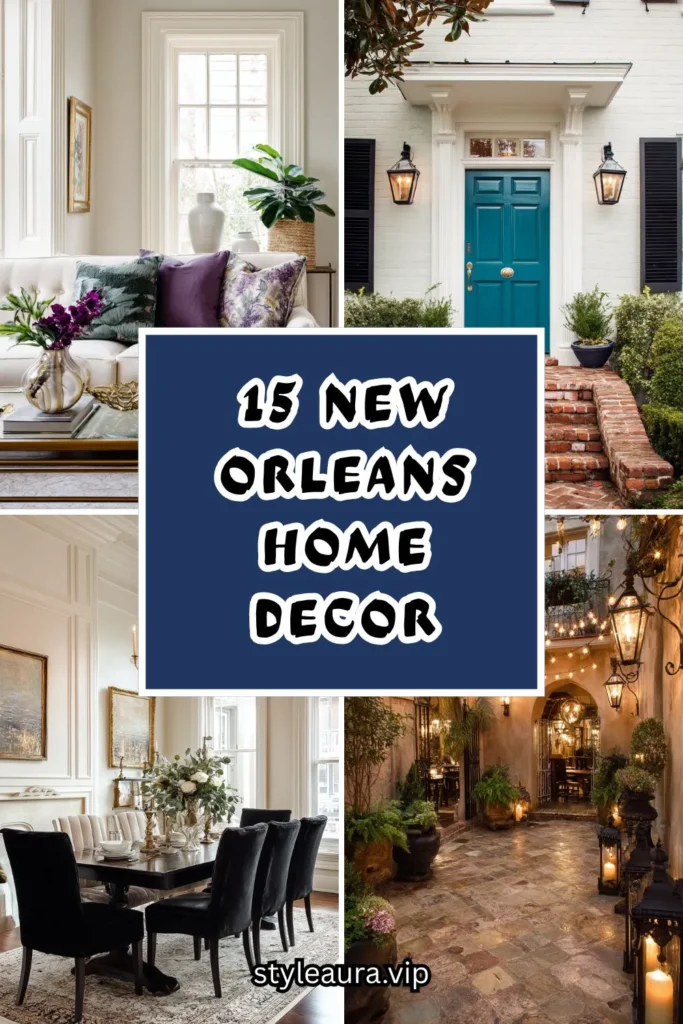
Style Considerations
Creole cottage (bold saturated color):
- Pairs with black shutters, white trim
- Reads playful and historic
- Best on exteriors or a single bold interior wall
- Works well with purple, teal, or mustard
French Quarter (wrought iron, balconies):
- Pairs with black metal, greenery
- Reads romantic and old-world
- Best with climbing plants and lanterns
- Works well indoors through metal furniture and fixtures
Jazz Age (velvet, brass, deep jewel tones):
- Most formal of the three
- Pairs with brass, dark wood, patterned wallpaper
- Best in a dining room or parlor space
- Works well as a smaller, curated room rather than throughout
1. Paint the Front Door a Bold Jewel Tone
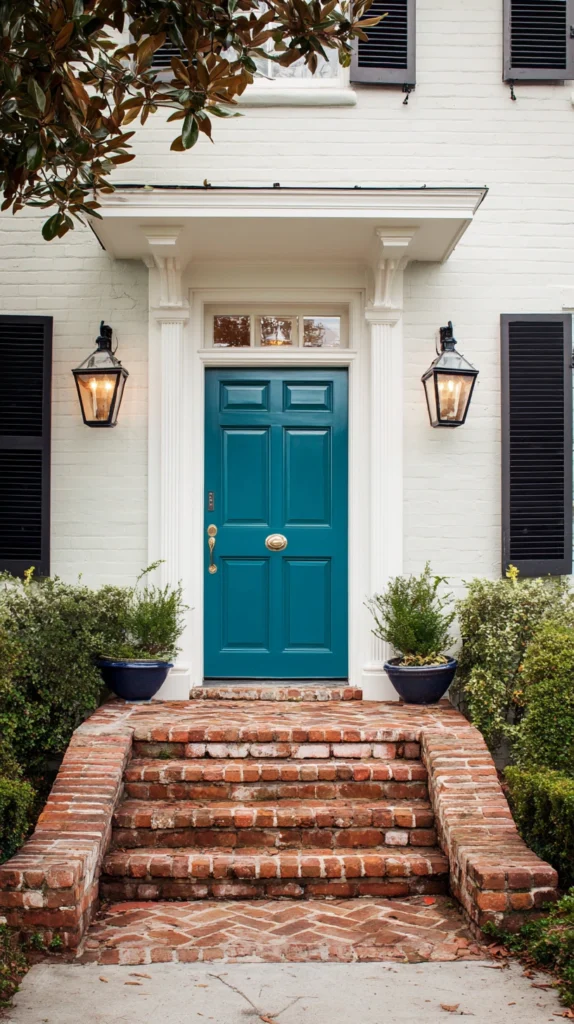
A saturated purple, teal, or deep red front door is one of the most recognizable New Orleans exterior details. Standard exterior doors are 36 inches wide, so this project needs less than a quart of paint.
Budget: $25-40 for a quart of quality exterior door paint. Choose a gloss or semi-gloss finish specifically for exterior doors — the higher sheen holds up better against weather and gives the color more depth in direct sunlight.
Historically, Creole cottages used bold door colors partly as a practical matter — saturated pigments were more colorfast in humid, sun-heavy conditions than pastels, which is part of why the tradition stuck. If painting the actual door feels like too big a commitment, start with just the door’s trim and molding in the bold color while keeping the door itself a neutral tone, then upgrade to the full door once you’ve lived with the color for a season.
2. Add Black Wrought Iron Railings or Accents
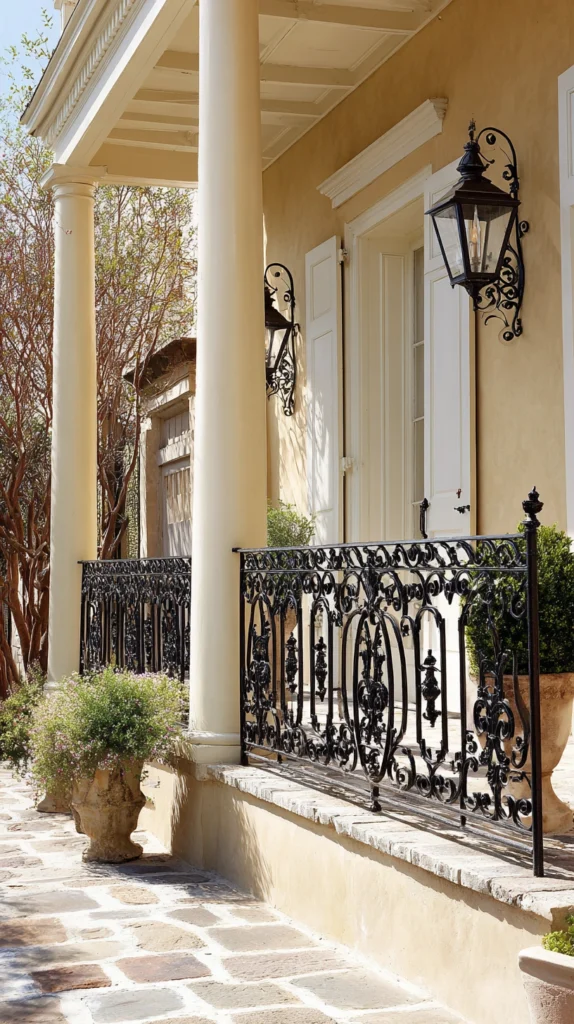
Wrought iron detailing on a porch railing, balcony, or even a garden gate brings in the French Quarter’s signature ironwork. Standard porch railings run 36 inches tall per code in most areas.
Budget: $150-500 for custom or pre-made wrought iron railing sections, depending on length. Powder-coated black iron holds up better against outdoor weather than painted iron, which matters if the railing faces direct sun or rain regularly.
If a full custom railing isn’t in the budget, many hardware and home stores carry modular wrought-iron-style panel sections that bolt together, which cuts installation cost significantly compared to a custom-welded piece. Scrollwork patterns with a repeating fleur-de-lis or spiral motif read most authentically “French Quarter,” so it’s worth choosing a patterned panel over a plain vertical-bar style even if the plain version costs less.
3. Hang Ferns and Climbing Plants From a Porch
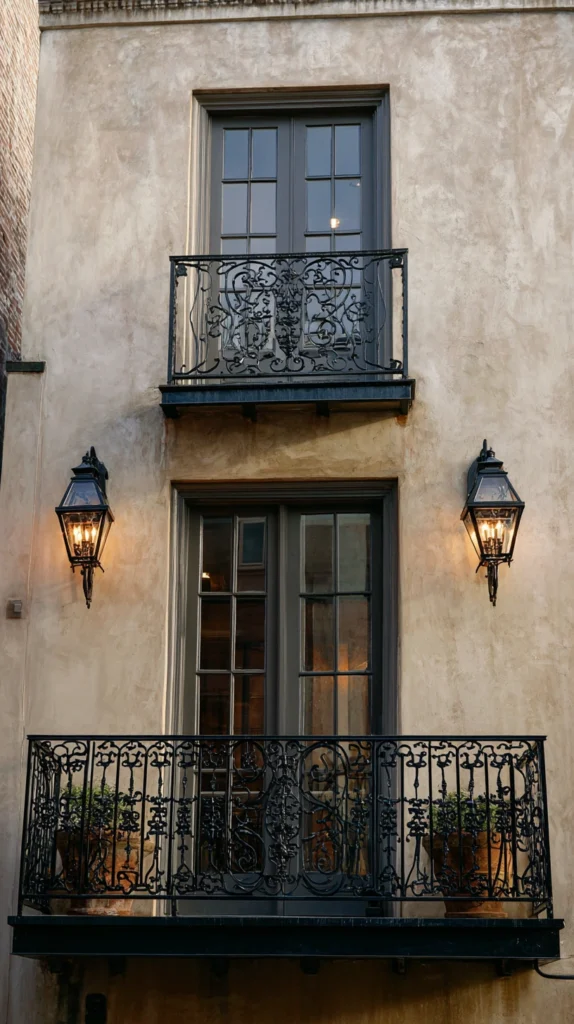
Boston ferns in hanging baskets and climbing vines like jasmine or wisteria on a trellis recreate the lush, layered greenery seen on French Quarter balconies. Standard hanging baskets run 12-14 inches in diameter.
Budget: $60-120 for 4-5 hanging ferns and a climbing vine starter. Boston ferns specifically need consistent moisture and indirect light, so a covered porch with filtered sun is the ideal spot rather than full direct exposure.
Space the hanging baskets 18-24 inches apart along a porch beam or railing so the fronds have room to fill out without crowding each other. If you’re working with a balcony rather than a full porch, a single trailing vine trained up a lightweight trellis against the railing can create the same layered green effect in a much smaller footprint, and jasmine in particular adds fragrance in addition to the visual.
4. Paint an Interior Wall in Deep Purple or Aubergine
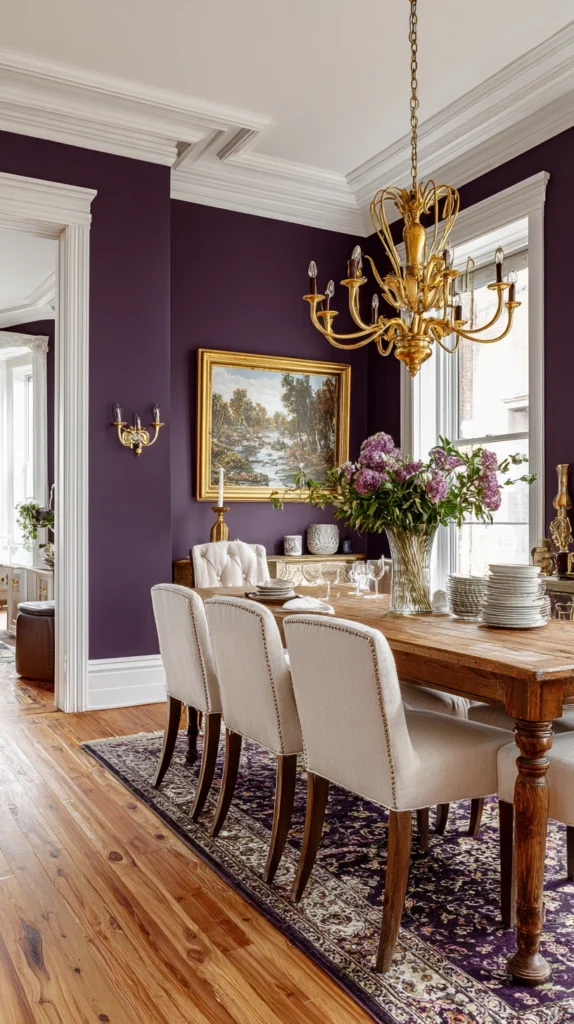
A single wall in a deep purple, echoing the colors seen throughout Mardi Gras and Creole architecture, adds drama to a dining room or entryway. A standard 10×9 wall (about 90 sq ft) needs roughly one gallon of paint.
Budget: $45-70 for one gallon of quality eggshell paint. Pair with brass or gold hardware and trim to nod to Mardi Gras’s traditional purple, green, and gold palette without going overboard on all three colors at once.
Dining rooms and entryways are the best candidates for this particular wall because they’re typically used for shorter stretches of time than a living room or bedroom, which means a saturated color reads as dramatic rather than overwhelming. If the room already has crown molding or wainscoting, keep that trim painted white or cream rather than matching the wall color — the contrast is part of what gives this look its historic, architectural feel.
5. Add a Vintage Brass Chandelier
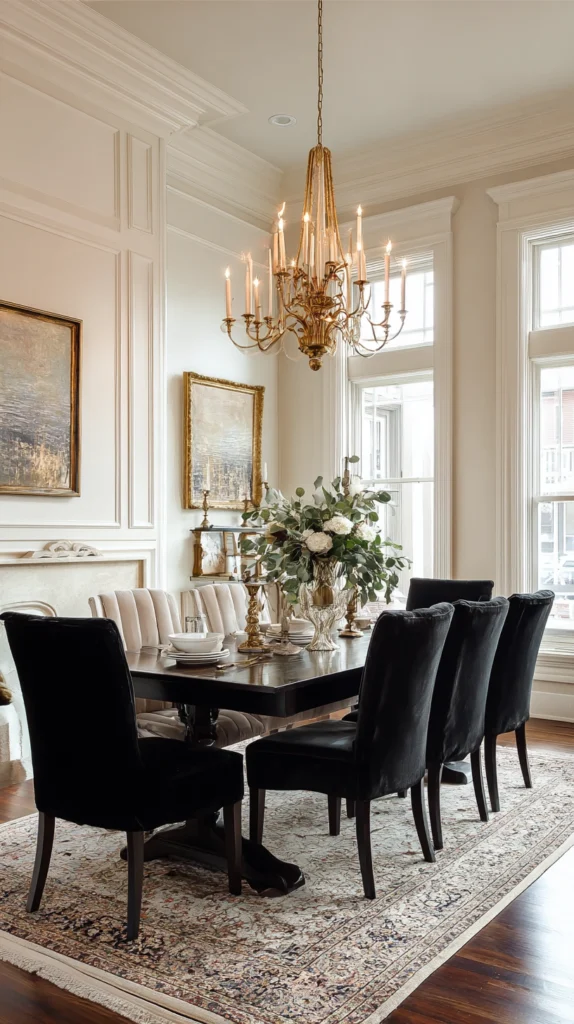
A brass or antique gold chandelier in a dining room or entryway brings old-world glamour reminiscent of a French Quarter parlor. Standard dining room chandeliers should hang 30-36 inches above the table.
Budget: $200-500 for a quality vintage-style brass chandelier. Unlacquered brass develops a natural patina over time, which actually suits this look better than a bright, newly polished finish.
When shopping for a fixture, look specifically for candelabra-style arms and etched or seeded glass shades rather than a clean modern silhouette — the slightly irregular, handmade look of vintage-inspired glass is what separates this from a generic “gold chandelier” found in most big-box lighting aisles. If the ceiling height in your dining room is under 8 feet, choose a flatter, closer-to-ceiling style (a flush or semi-flush mount) instead of a hanging chandelier so the fixture doesn’t feel oversized for the room.
6. Use Wrought Iron Furniture on a Porch or Patio
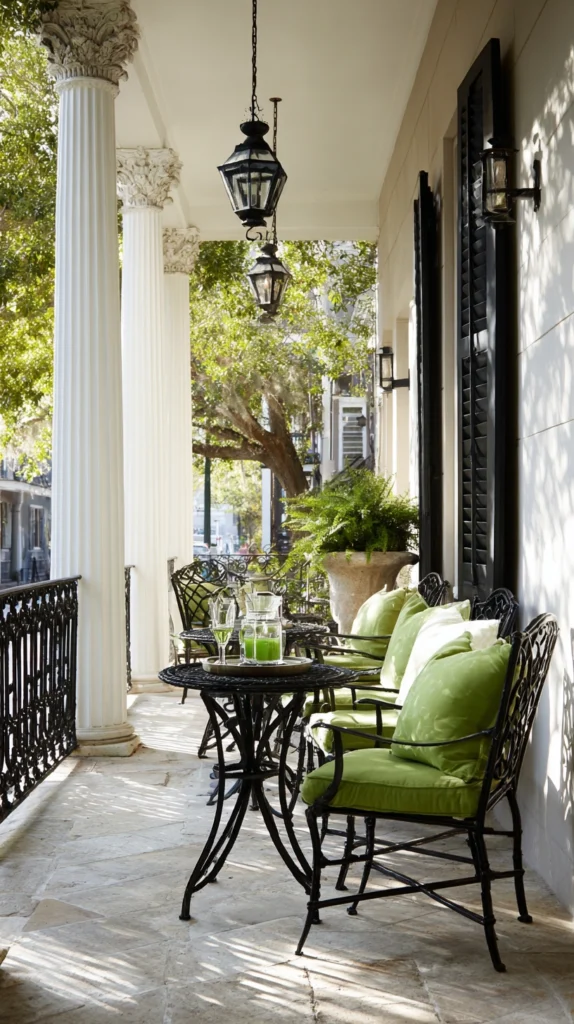
A wrought iron bistro set or bench brings the look indoors to outdoor living spaces without needing structural changes. Standard bistro sets fit comfortably in 4×4 foot spaces.
Budget: $150-350 for a quality wrought iron bistro set. Add a weatherproof cushion in a bold jewel tone (emerald, teal, or purple) to soften the iron and tie in the broader color palette.
Wrought iron furniture holds up well in humid climates, but it should still be treated with a rust-inhibiting spray annually if it’s left outdoors year-round, which is a five-minute maintenance task that meaningfully extends its life. For a small balcony where a full bistro set won’t fit, a single wrought iron accent chair paired with a small side table achieves a similar effect in about half the footprint.
7. Add Patterned Encaustic or Cement Tile
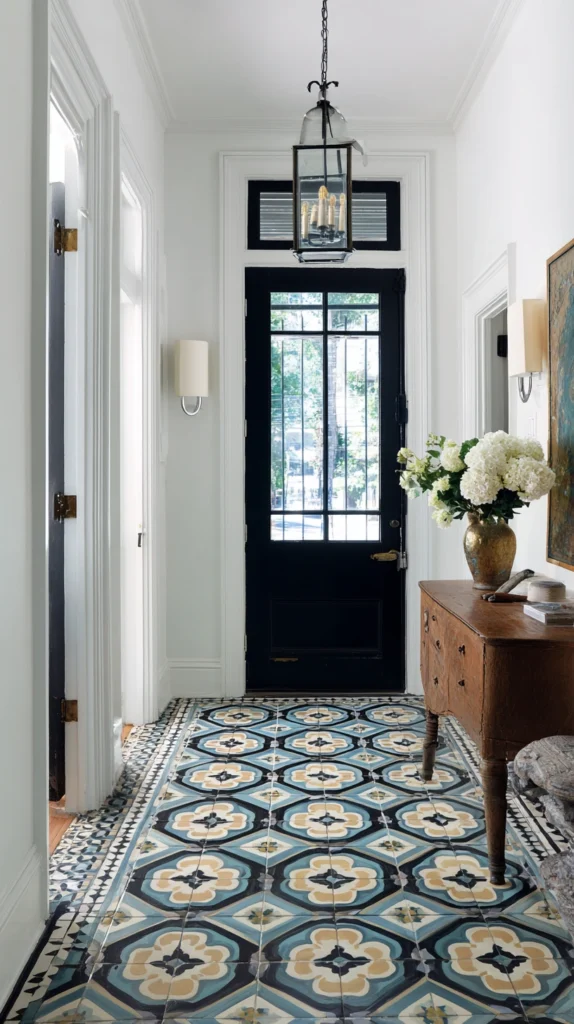
Colorful patterned cement tile, often seen in New Orleans entryways and kitchens, brings historic character to a floor or backsplash. Standard entryways need 30-50 sq ft of tile depending on size.
Budget: $300-700 for cement tile plus installation, or $150-250 for tile alone if installing yourself. Cement tile needs to be sealed after installation and periodically after that, so factor in a sealant product (roughly $20-30) as part of the budget.
An entryway is the ideal place to start with this tile if you’re not ready to commit to a full kitchen floor, since it’s a contained area that makes a strong first impression without a large material investment. Look for patterns with a repeating geometric motif in two or three colors (often black, cream, and a deep red or blue) rather than a single busy print — the repetition is what reads as historic rather than trendy.
8. Hang Vintage-Style Street Signs or Iron Wall Art
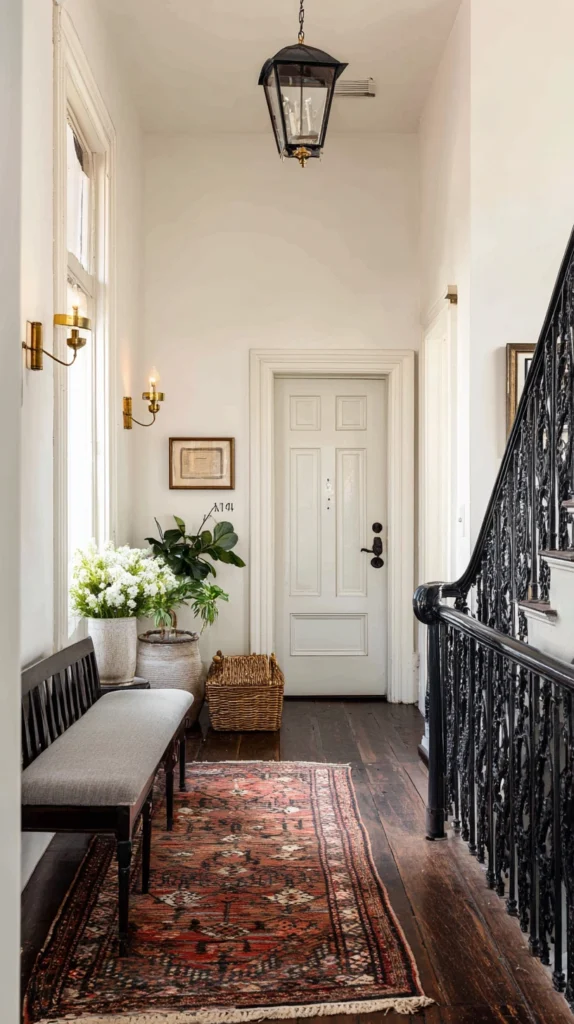
Reproduction French Quarter street signs or iron scrollwork wall art add a sense of place to an entryway or hallway. A single piece of scrollwork art typically spans 18-30 inches.
Budget: $40-100 per piece for quality reproduction signage or iron wall art. Choose black iron finishes to match any wrought iron already used elsewhere in the home, keeping the metal tones consistent room to room.
If you’ve actually visited New Orleans, a reproduction sign referencing a specific street (Bourbon, Royal, or Chartres, for example) adds a more personal layer than generic decorative iron. Hang these pieces at eye level in a hallway or stairwell landing, spaced 24-36 inches apart if using more than one, so each piece gets room to be seen individually rather than blurring together.
9. Add Green Shutters to Match Creole Cottage Style
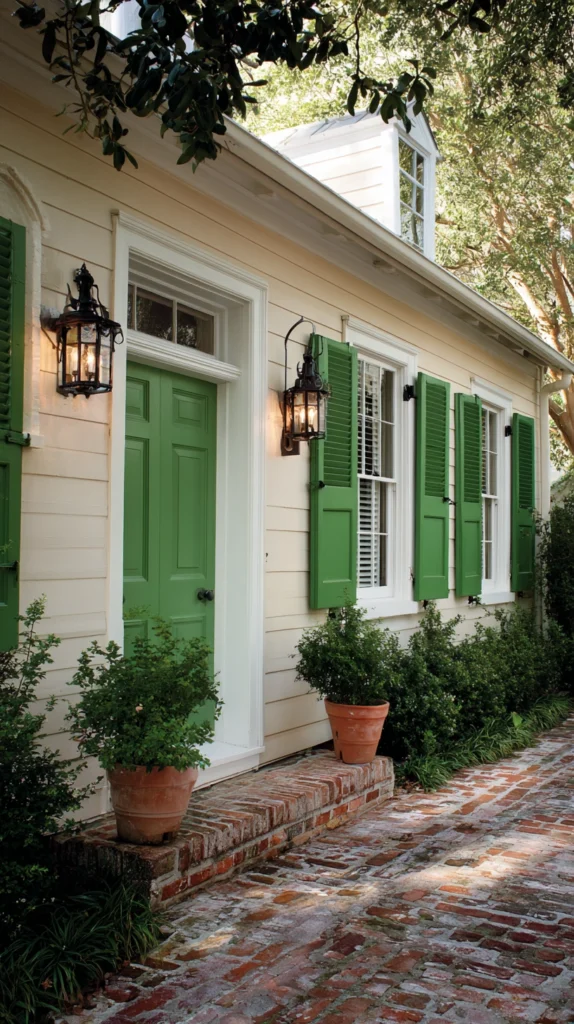
Painted wood or composite shutters in forest green or black frame windows in classic Creole cottage style. Standard shutters are sized to half the window width per pair.
Budget: $200-500 for a set of quality composite shutters per window, including hardware. Composite shutters specifically resist warping better than solid wood in humid climates, which matters if the home sees regular rain or moisture.
Traditional Creole cottages typically paired dark green or black shutters with a lighter, often white or pastel, exterior wall color, so the contrast between the wall and the shutter is a bigger part of the effect than the shutter color alone. If your exterior is already a neutral tone, this is one of the highest-impact, lowest-disruption projects on the list, since it doesn’t require any structural or plumbing changes.
10. Use Deep Jewel-Toned Velvet in a Parlor or Living Room
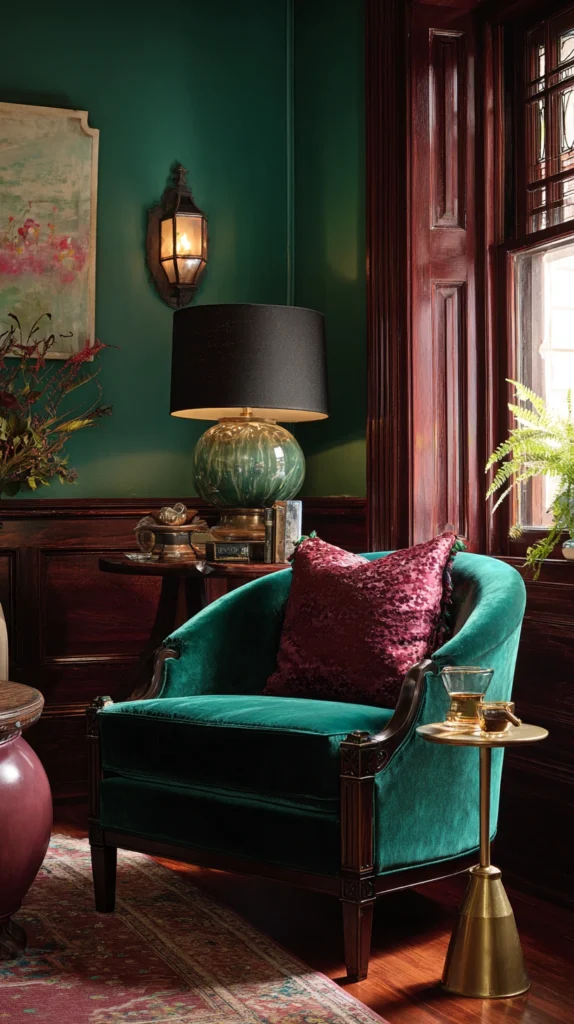
A velvet sofa or armchair in emerald, sapphire, or deep purple brings Jazz Age glamour into a living space. Standard armchairs run 30-35 inches wide.
Budget: $400-900 for a quality velvet armchair. Velvet in a deep jewel tone also photographs and reads richer under warm lamp light than under overhead lighting, so plan at least one floor or table lamp nearby.
A single statement chair is often more effective than a full velvet sofa if you’re testing this look for the first time, both because of the lower cost and because it reads as an intentional accent rather than a full room commitment. Pair the chair with a small brass side table so the metal and fabric echo the same Jazz Age pairing seen in the chandelier and hardware elsewhere in the home.
11. Add a Gallery Wall of Vintage Jazz and Music Prints
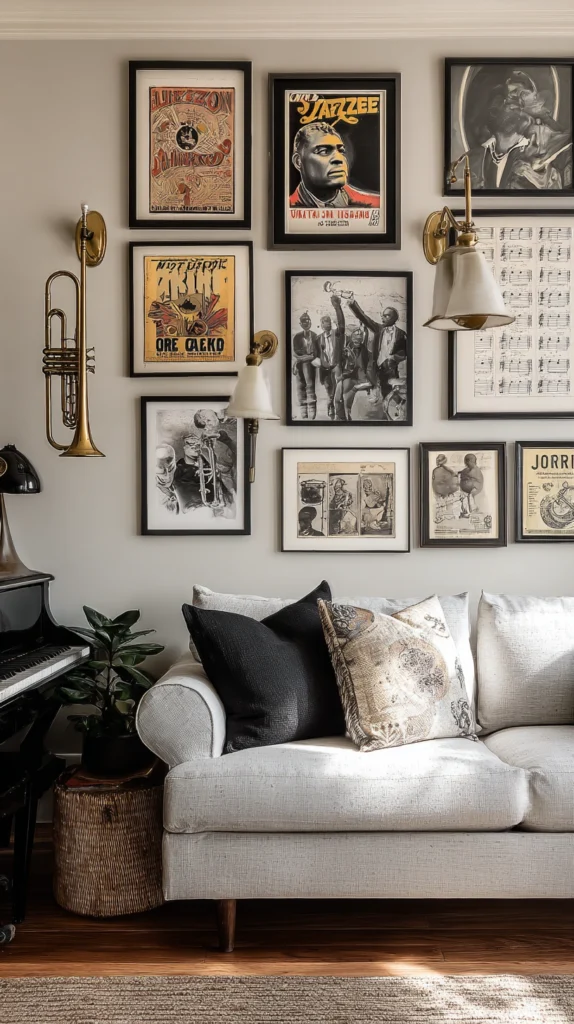
A curated gallery wall featuring vintage jazz posters, sheet music, or black-and-white musician photos nods to New Orleans’s musical history. Plan for a grouping of 6-9 frames in an area roughly 36×48 inches.
Budget: $100-200 for frames and reproduction prints. Mix frame finishes (black and brass together) rather than matching them exactly, which gives the wall a collected-over-time feel.
Reproduction sheet music covers from the early jazz era are widely available through print shops and make an especially fitting addition given New Orleans’s role as the birthplace of jazz. Arrange the grouping with the largest piece slightly off-center rather than dead-center, and leave 2-3 inches between frames, which keeps the wall feeling gathered rather than gridded and formal.
12. Use Mardi Gras Colors as Small Styling Accents
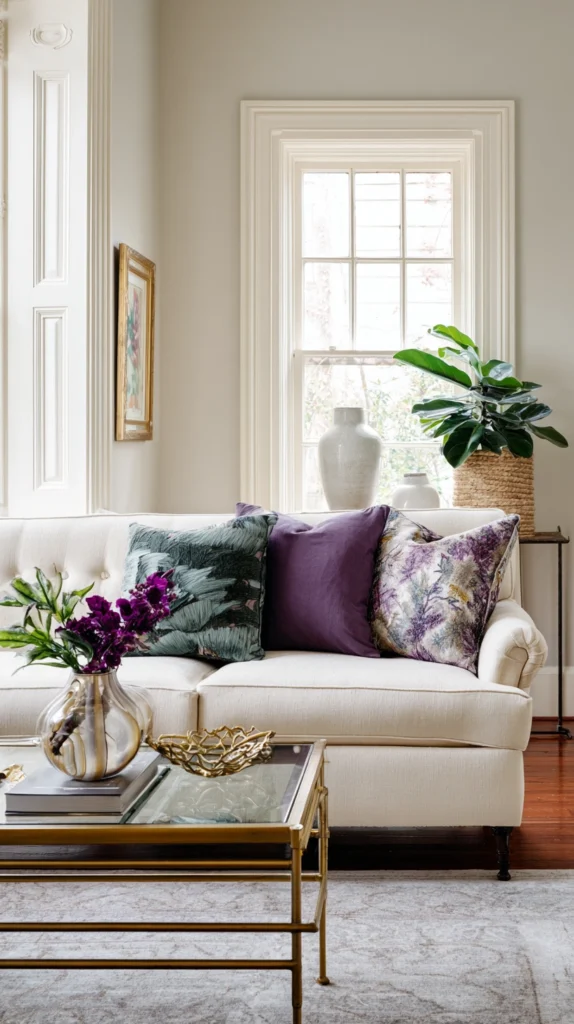
Purple, green, and gold accent pillows, table linens, or ceramics bring in Mardi Gras’s signature palette without a full room commitment. This works well as a rotating seasonal styling choice.
Budget: $40-80 for a small set of accent pieces in the three colors. Use these colors in odd numbers throughout a room (one purple pillow, one gold vase, one green accent) rather than pairing them evenly, which keeps the palette from feeling like a costume theme.
This is one of the easiest ways to bring seasonal flexibility into the home, since these small accents can be swapped out or packed away outside of Mardi Gras season if you want the rest of the year to feel calmer. If you’d rather keep the look year-round, choosing deeper, more muted versions of the three colors (a dusty gold rather than bright gold, a forest rather than kelly green) makes the palette read as sophisticated rather than tied to a specific holiday.
13. Add a Courtyard-Style Fountain or Water Feature
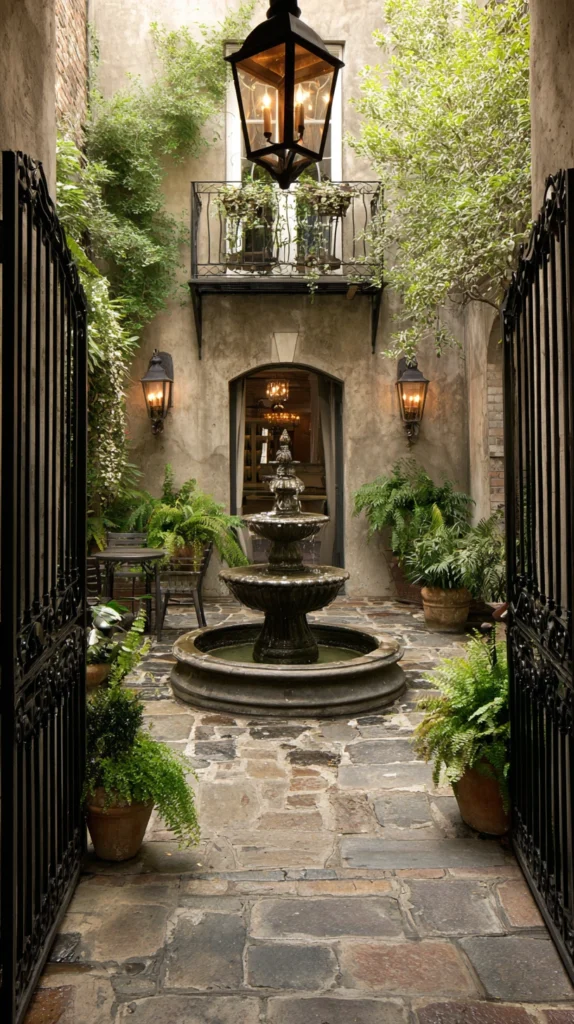
A small tiered fountain in a courtyard or garden nook recreates the quiet, hidden courtyards found throughout the French Quarter. Standard tabletop or small garden fountains run 18-24 inches tall.
Budget: $100-300 for a quality small garden fountain. Position the fountain somewhere it can be heard from a nearby seating area, since the sound is as much a part of the effect as the visual.
French Quarter courtyards are traditionally tucked behind buildings and enclosed by walls or greenery, so if your outdoor space is more open, surrounding the fountain with potted ferns or a small trellis of climbing vines helps recreate that enclosed, private feeling even in a more exposed yard. Cast stone or concrete fountains hold up better long-term outdoors than resin versions, though they do cost more upfront.
14. Use Exposed Brick Paired With Bold Color
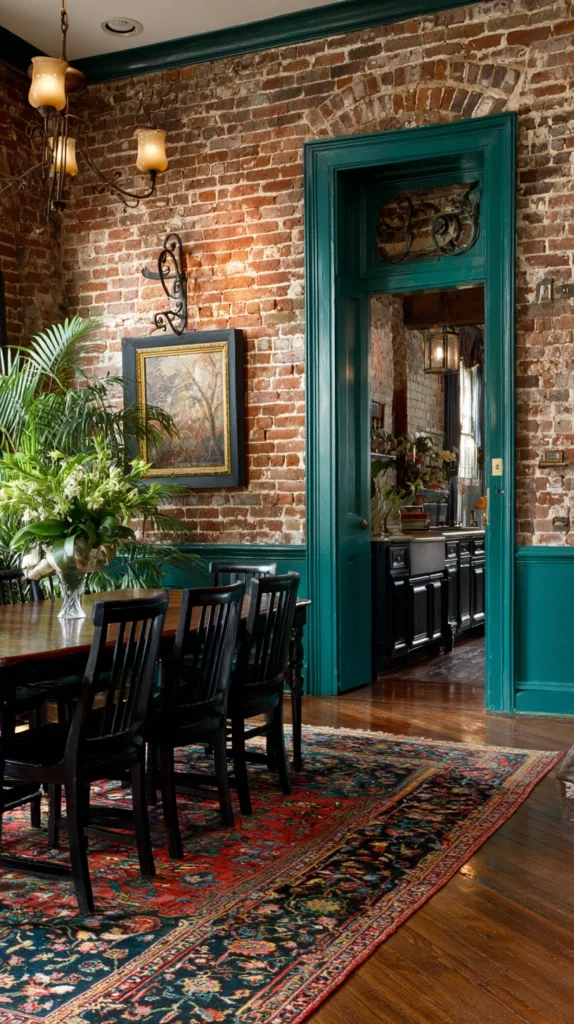
Exposed or brick-look wallpaper paired with a bold painted trim or door nearby recreates the layered, historic feel of a Creole townhouse. A standard accent wall needs 2-3 rolls of brick-pattern wallpaper if not using real exposed brick.
Budget: $80-150 for quality brick-look wallpaper covering one wall. Pair the brick tone with black iron or brass fixtures nearby rather than chrome, which keeps the finish feeling historic rather than industrial.
This pairing works especially well in an entryway, stairwell, or dining room where you want texture without a full renovation. If your home already has real exposed brick in one area, extend the look with a wallpaper version in an adjoining space rather than trying to match brick tone exactly — a slight variation between the real and printed brick actually reads as more natural than a perfect match would.
15. Add String Lights or Lanterns to an Outdoor Space
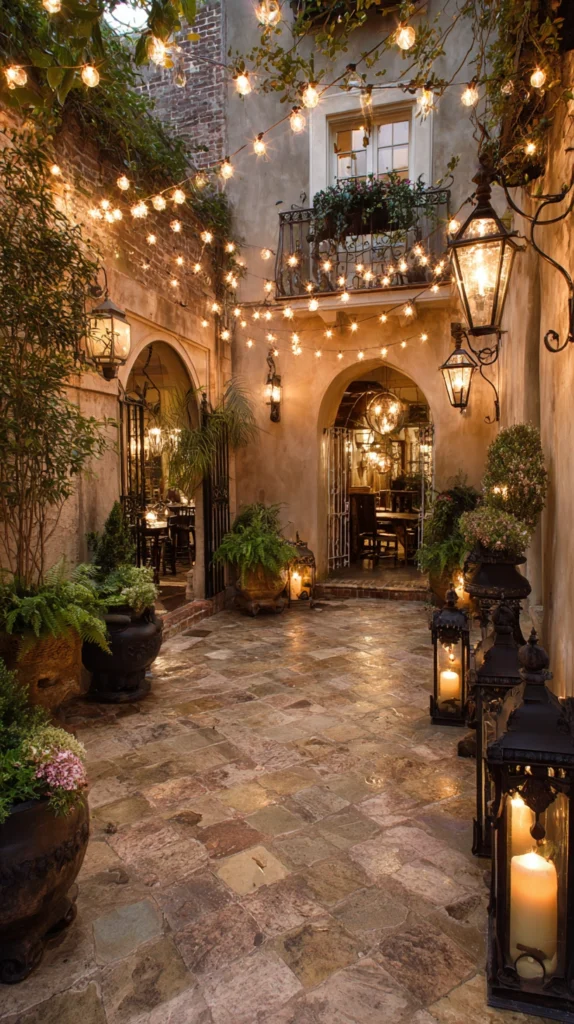
Warm string lights or wrought iron lanterns strung across a courtyard or porch recreate the glowing, festive feel of a French Quarter evening. Standard string light runs cover 25-48 feet depending on the space.
Budget: $30-70 for a quality outdoor string light set, or $50-120 for a few wrought iron lantern fixtures. Choose warm white (not cool white) bulbs specifically, since warm tones are what give this look its cozy, historic glow after dark.
For a courtyard or patio, stringing lights in a crisscross pattern overhead (rather than a single straight run along one edge) creates a more enclosed, café-like atmosphere and is the pattern most associated with French Quarter courtyards and balconies. Wrought iron lantern sconces mounted at entryways add the same warm glow at a smaller scale and pair naturally with any railings or ironwork already used elsewhere on the exterior.
Quick Start Shopping List
This weekend, under $150:
- Sample-size exterior door paint: $15
- Small brass or iron wall accent: $40
- Mardi Gras-toned accent pillow: $25
- String lights for a porch or patio: $40
- Boston fern for a hanging basket: $20
Rental-Friendly Version
No-paint options:
- Wrought iron-style furniture and accents
- Removable brick-look wallpaper for a small wall
- Hanging plants and climbing vines in pots
- Mardi Gras-toned pillows and table linens
- String lights and lanterns for outdoor spaces
Success Indicators
- Home feels layered and collected, not costume-like
- Metals and colors feel coordinated across rooms
- At least one neutral surface breaks up the boldest colors
- Guests describe it as “historic” rather than “themed”
- The look holds up in both daylight and evening light
Remember
Start with one bold element (a door, a wall, or a light fixture) before committing to a full room, use Mardi Gras colors as accents rather than the whole palette to avoid a themed-party look, pair bold color with black iron or brass to keep the feel historic rather than costume-like, choose weather-resistant materials for anything outdoors given humidity and rain exposure, and treat this as a look you build in layers over time rather than all at once.