15 Tall Wedding Centerpiece Ideas for Grand Receptions
My cousin’s wedding reception had ceilings over 20 feet high, and her first centerpiece mockup, a lovely low garden arrangement, looked almost lost in that much vertical space.
The florist adjusted with a tall arrangement on the second try, and the entire room suddenly felt intentional instead of like the ceiling height was working against the decor.
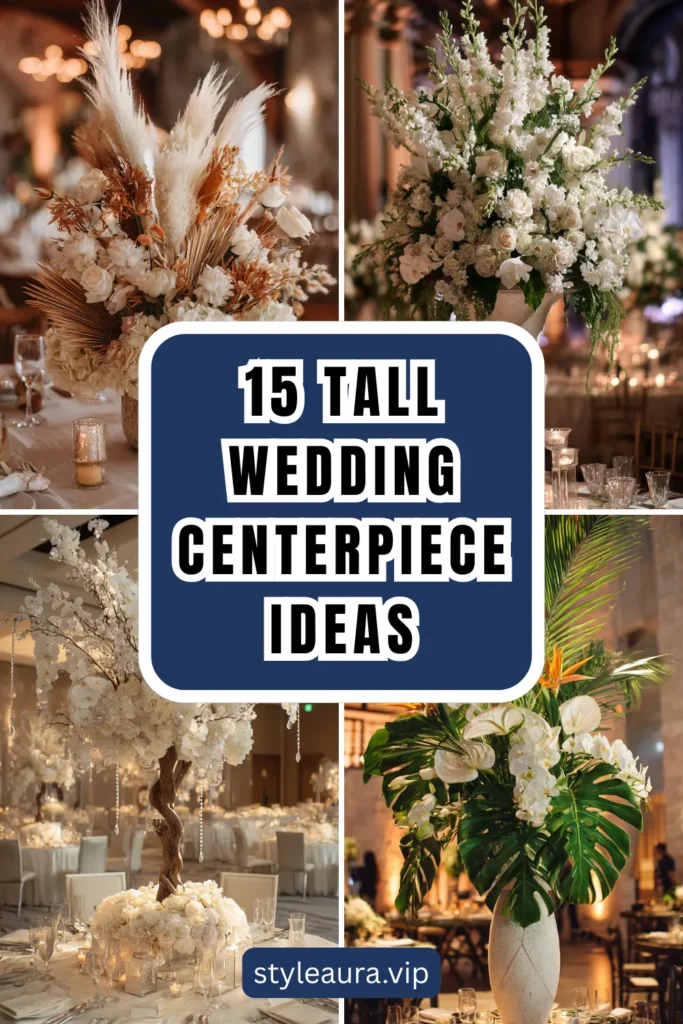
Tall centerpieces get a bad reputation for blocking conversation, but done correctly, they’re actually built specifically to let guests see and talk past them at eye level, while filling grand, high-ceilinged rooms the way low arrangements simply can’t.
I paid close attention to hers, plus several other large receptions since, and pulled together the ideas that actually deliver drama without becoming the thing guests have to awkwardly duck around all night.
Here are 15 tall centerpiece ideas built specifically for grand reception spaces, along with what makes each one work and what it actually costs.
The One Rule That Makes Tall Centerpieces Actually Work
Before getting into specific ideas, there’s a single design principle that separates a tall centerpiece guests love from one that ruins dinner conversation.
- Keep the visual mass either below 14 inches or above 30 inches, leaving a clear open band at eye level for seated guests to see through
- Vary the transparency of materials used in that eye-level zone, favoring open branches, thin candle stands, or clear glass over dense floral clusters
- Match the scale of the arrangement to the actual ceiling height and room size, since a tall centerpiece in a low-ceilinged room can feel oppressive rather than grand
- Weight the base properly, since top-heavy arrangements are a genuine safety risk on tables that will be bumped throughout a long reception
- Reserve tall centerpieces for round or square tables generally, since the height reads awkwardly on long banquet-style tables built for a different visual rhythm
Every idea below is built around that open eye-level band, which is what makes tall centerpieces work at a dinner table instead of just looking dramatic in a photo before guests sit down.
1. A Manzanita Branch Arrangement With Suspended Blooms
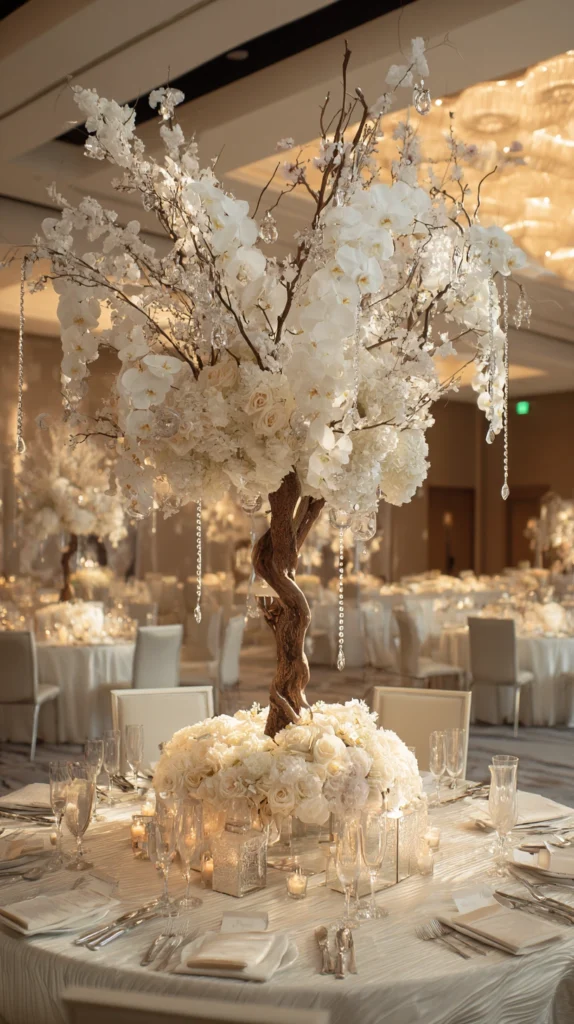
Manzanita branches, with their natural, sculptural twisting shape, create height and drama while leaving the eye-level sightline almost entirely open.
How it comes together:
- Source a manzanita branch arrangement, either as a full standing piece or mounted into a weighted base, standing at least 30 inches tall
- Attach small flower clusters, like orchids or spray roses, along the upper branches using floral wire or small water tubes
- Add hanging elements, like crystal strands or ribbon, cascading from the upper branches for extra visual interest
- Weight the base generously with sand, stones, or a filled floral foam block to keep the tall branch structure stable
Where it works best:
- Round tables in rooms with ceilings at least 12 feet high, where the branch’s natural height can be fully appreciated
Watch out for:
- Using a base that isn’t heavy enough, since manzanita branches are lightweight but still create a top-heavy structure prone to tipping
Budget: $60–$150 per centerpiece depending on branch size and floral additions
2. A Tall Glass Cylinder Filled With Submerged Florals and Topped With Blooms
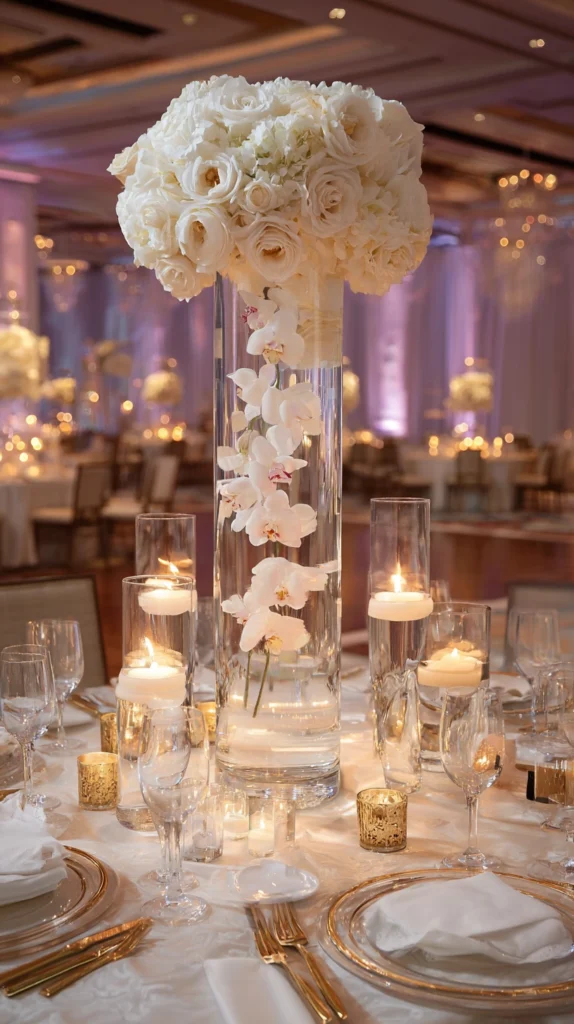
A tall glass cylinder, filled partway with water and submerged flowers, then topped with an arrangement at the rim, creates height with a clean, modern look.
How it comes together:
- Use a glass cylinder vase, generally 18 to 24 inches tall, filled about a third of the way with water
- Submerge a few flower heads, like orchids or hydrangea, low in the water for visual interest at the base
- Top the cylinder’s opening with a compact floral arrangement using a flower frog or foam ring designed to sit at the rim
- Keep the topped arrangement relatively contained rather than letting it spread too wide, preserving the clean vertical line
Where it works best:
- Modern or glamorous wedding styles, where the clean glass lines suit a more contemporary reception aesthetic
Watch out for:
- Choosing a cylinder with too narrow a base relative to its height, which creates real tipping risk once the table gets bumped
Budget: $50–$100 per centerpiece depending on cylinder size and floral topper
3. A Candelabra With Cascading Florals
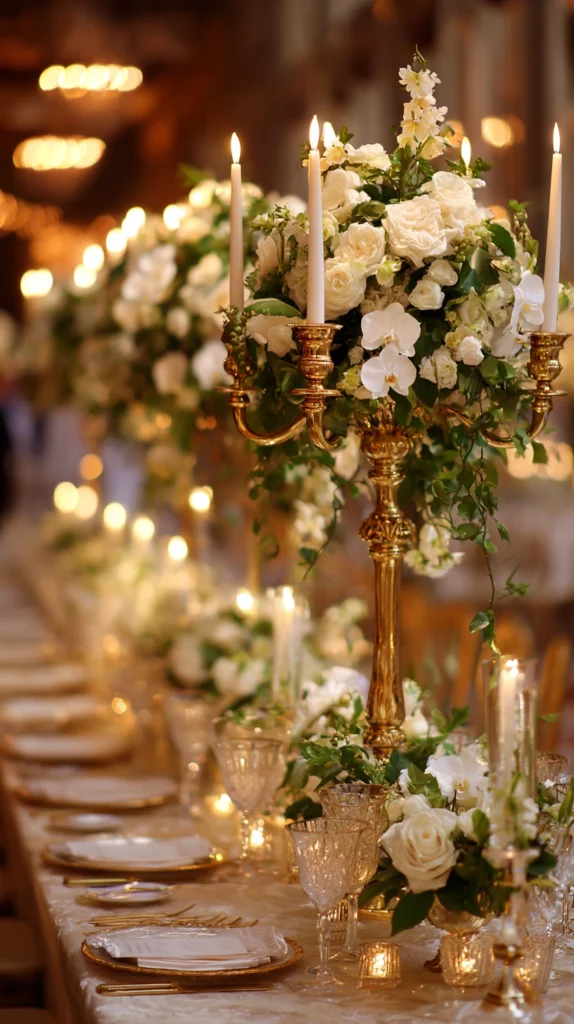
A traditional candelabra, dressed with trailing greenery and flowers woven through its arms, brings both height and candlelight to a grand table in one combined piece.
How it comes together:
- Choose a metal or crystal candelabra, generally 24 to 36 inches tall, in a finish matching your overall metal palette
- Wrap greenery, like smilax or jasmine vine, loosely around the base and lower arms
- Tuck small flower clusters into the greenery at the base and along the candle arms, keeping the upper reaches largely open for the candlelight itself
- Use taper candles in a color matching your palette, keeping flame height consistent across the full arrangement
Where it works best:
- Formal, elegant receptions, particularly evening events where candlelight is a central part of the atmosphere
Watch out for:
- Draping greenery too close to the actual candle flames, which creates a genuine fire hazard as the evening progresses
Budget: $70–$180 per candelabra including greenery and floral additions, with rental options often available at a lower cost than full purchase
4. An Arch of Suspended Greenery Above the Table
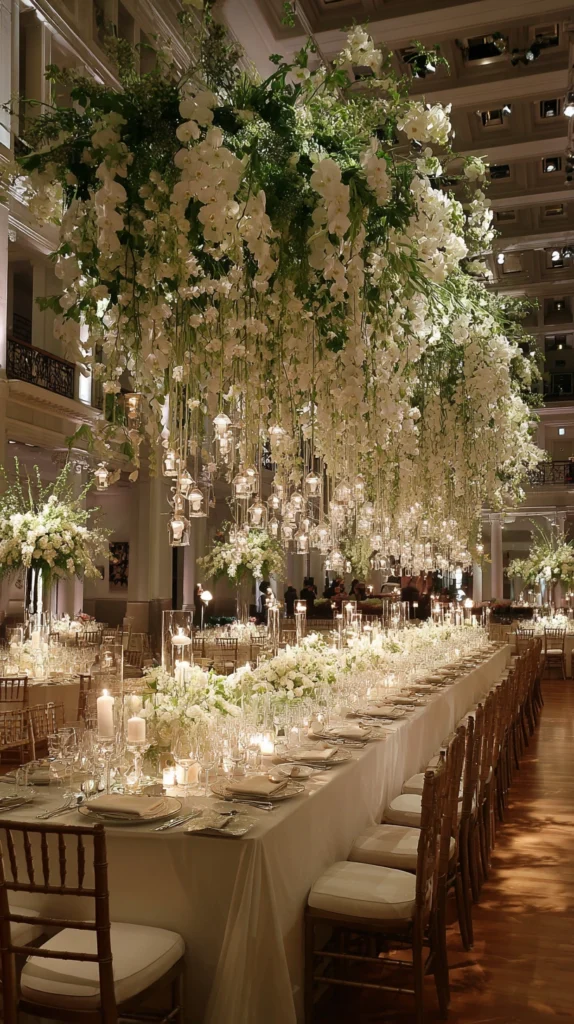
Instead of a centerpiece sitting on the table itself, a suspended greenery installation hanging above creates height and drama while leaving the entire table surface completely open.
How it comes together:
- Work with your venue or a rigging specialist to hang a greenery garland or floral installation from the ceiling above each table
- Choose greenery like eucalyptus, ruscus, or smilax as the base structure, with flower clusters woven through at intervals
- Keep the installation high enough that it doesn’t interfere with tall centerpieces or candle placement on the table below
- Add hanging elements, like suspended candles in glass holders or draped ribbon, cascading down from the greenery for additional depth
Where it works best:
- Venues with very high ceilings and existing rigging points, or those that allow temporary installation hardware
Watch out for:
- Attempting this without proper rigging expertise, since a poorly secured suspended installation is a genuine safety hazard
Budget: $150–$400 per table depending on installation complexity, often requiring a specialized florist or rigger
5. A Topiary-Style Arrangement on a Tall Pedestal
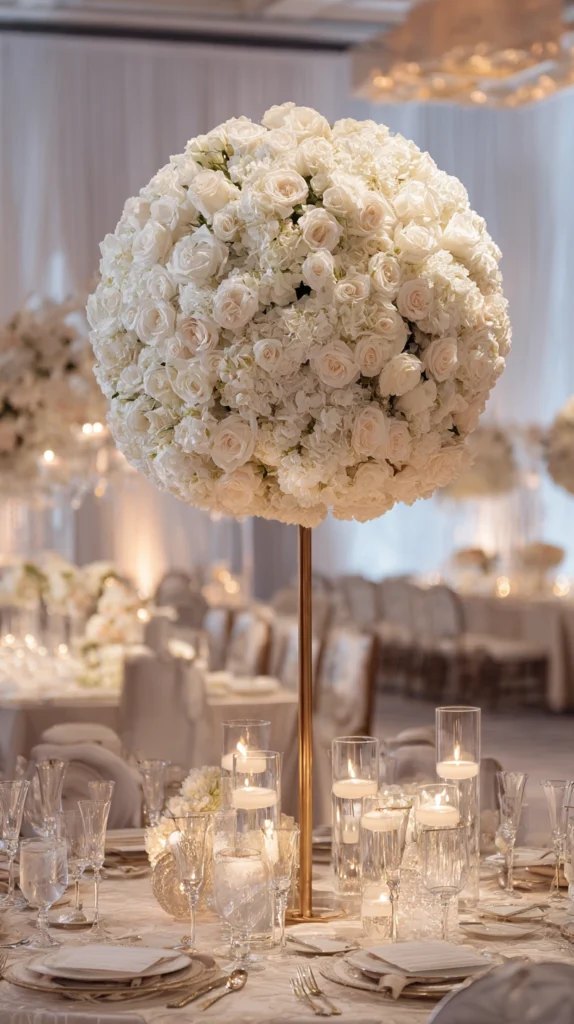
A rounded, topiary-style floral ball mounted on a slim pedestal stand creates a classic, elegant tall centerpiece with a clean, structured silhouette.
How it comes together:
- Use a tall pedestal stand, generally 24 to 30 inches, topped with a floral foam sphere
- Cover the sphere fully with flowers, like hydrangea, roses, or carnations, in a dense, rounded shape
- Choose a stand with a slim profile so the eye-level sightline beneath the floral ball stays open
- Weight the pedestal base or secure it to the table if the venue allows, since a top-heavy floral ball needs a genuinely stable foundation
Where it works best:
- Classic or traditional wedding styles, where the structured, rounded shape suits a more formal aesthetic
Watch out for:
- Choosing an overly wide pedestal base, which can defeat the open sightline this style depends on
Budget: $80–$160 per centerpiece depending on flower density and pedestal rental or purchase
6. A Tall Arrangement in an Urn or Vase With Trailing Greenery
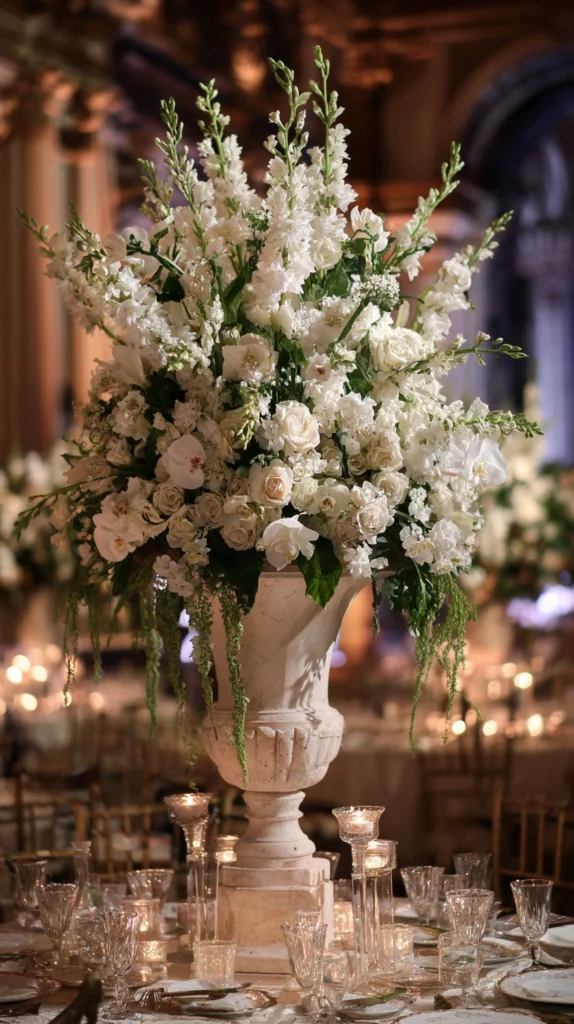
A large decorative urn, filled with a tall, loose arrangement and trailing greenery spilling over the sides, creates a lush, romantic tall centerpiece.
How it comes together:
- Choose a decorative urn or large vase, 16 to 20 inches tall, in a finish matching your table’s metal or material palette
- Build a tall, loose arrangement using branches, tall flower stems like delphinium or snapdragon, and trailing greenery like amaranthus
- Let greenery cascade generously over the urn’s rim, softening the transition between the vessel and the table surface
- Keep the densest part of the arrangement above the eye-level sightline, with the urn’s own body providing the lower visual anchor
Where it works best:
- Romantic, garden-inspired grand receptions, where the loose, cascading shape suits a softer overall aesthetic
Watch out for:
- Overfilling the urn with heavy stems that cause the whole arrangement to lean or tip once positioned on the table
Budget: $70–$140 per centerpiece depending on urn size and flower selection
7. A Tall Arrangement Built Around a Single Dramatic Branch Type
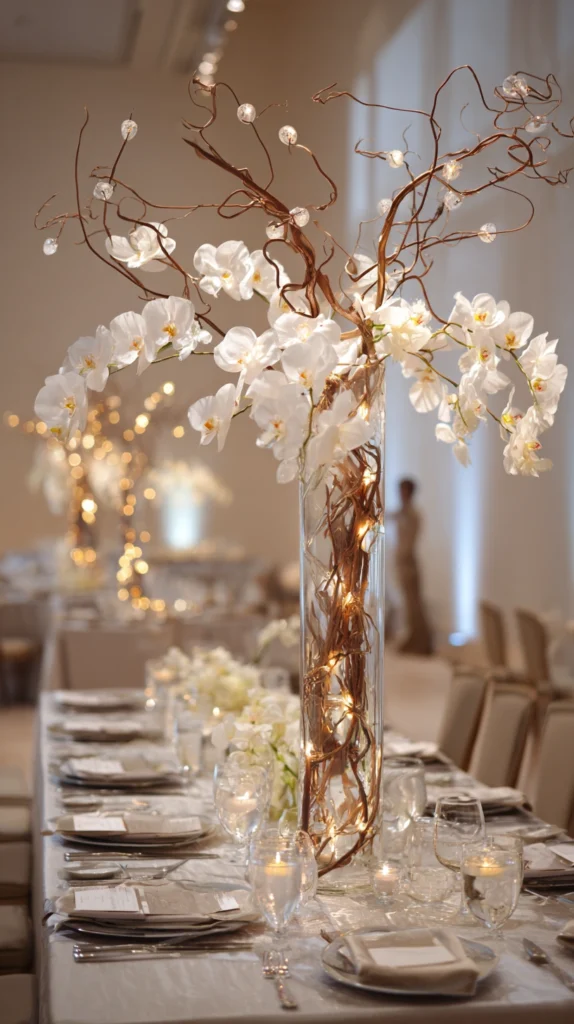
Using a single dramatic branch variety, like curly willow or birch, as the main structural element creates height with a striking, sculptural look at a lower cost than a fully floral tall arrangement.
How it comes together:
- Source curly willow, birch, or a similar structural branch variety, standing at least 30 inches once placed in a base
- Secure branches in a weighted vase or floral foam base, arranging them in a loose, natural spread rather than a tight bundle
- Add minimal floral accents, like a few orchid stems or small flower clusters, at the base and scattered through the upper branches
- Consider adding small string lights woven through the branches for an evening reception
Where it works best:
- Modern, minimalist, or woodland-themed grand receptions, where the branch’s natural sculptural quality is the main visual draw
Watch out for:
- Choosing branches that are too thin or brittle, which can snap or lean under their own weight over a long reception
Budget: $40–$90 per centerpiece, among the more affordable tall options due to lower overall floral volume
8. A Tall Arrangement in a Mercury Glass Vase
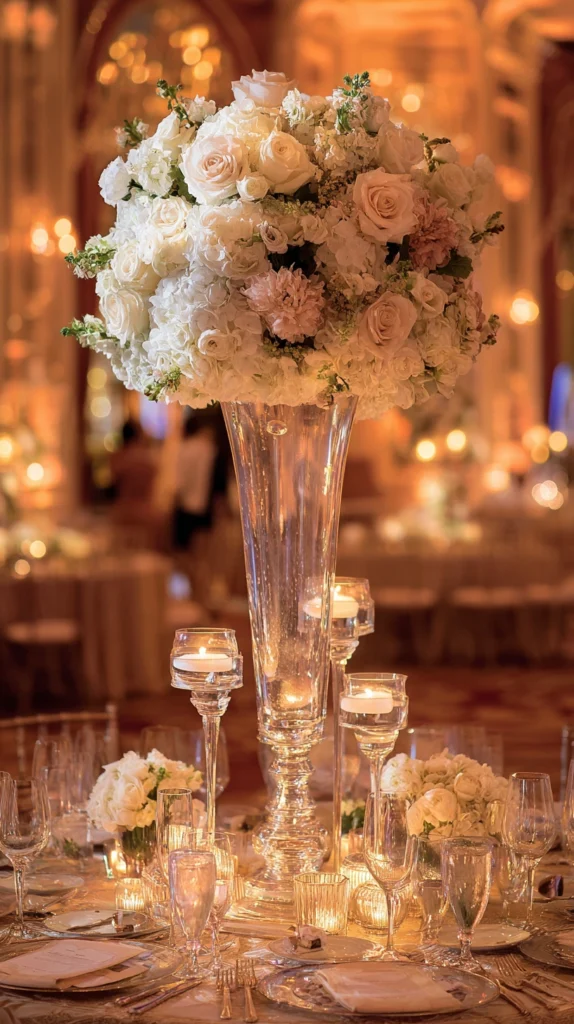
Mercury glass vases add a soft, antiqued metallic shine that catches candlelight beautifully, making them a popular choice for evening grand receptions.
How it comes together:
- Choose mercury glass vases in the 18 to 24 inch range, in silver or gold tone depending on your metal palette
- Build a tall, elegant arrangement using flowers like roses, lisianthus, or hydrangea, keeping the densest cluster in the upper third of the vase
- Add a few trailing greenery pieces near the vase’s rim to soften the transition to the table
- Position candles nearby, since mercury glass is specifically chosen for how it reflects and amplifies candlelight around the room
Where it works best:
- Evening receptions with a glamorous or old Hollywood-inspired aesthetic
Watch out for:
- Placing real flame candles too close to the vase itself, since prolonged heat exposure can affect the glass finish over time
Budget: $60–$120 per centerpiece depending on vase size and flower selection
9. A Tall Arrangement Featuring Dramatic Tropical Foliage
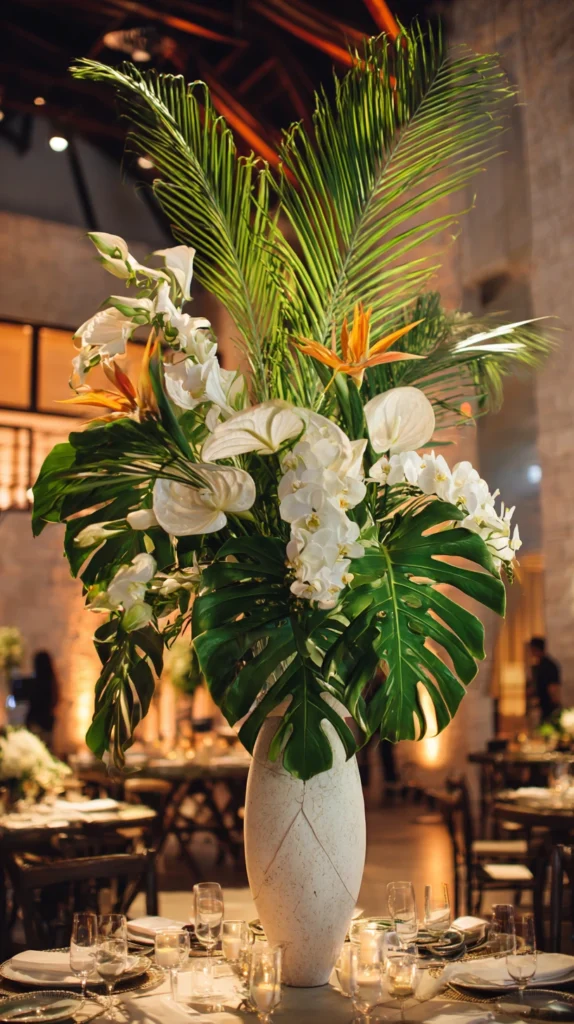
For destination or tropical-themed grand receptions, oversized tropical leaves and blooms create height and drama with a distinctly different visual texture than traditional branch or floral arrangements.
How it comes together:
- Use large tropical leaves, like monstera, banana leaf, or bird of paradise foliage, as the primary structural element
- Add bold tropical blooms, like anthurium or ginger flower, tucked among the foliage for color
- Choose a simple, sturdy vase or vessel that won’t compete visually with the bold foliage shapes
- Keep the arrangement’s densest foliage above the eye-level band, since large leaves can otherwise block sightlines more than flower stems would
Where it works best:
- Destination weddings or tropical-themed grand receptions, where the bold foliage ties directly into the broader aesthetic
Watch out for:
- Sourcing tropical foliage that wilts quickly in air-conditioned indoor venues, which can shorten how long the arrangement holds up through a long reception
Budget: $50–$110 per centerpiece depending on foliage and bloom selection
10. A Tall Arrangement With an Asymmetrical, Editorial Shape
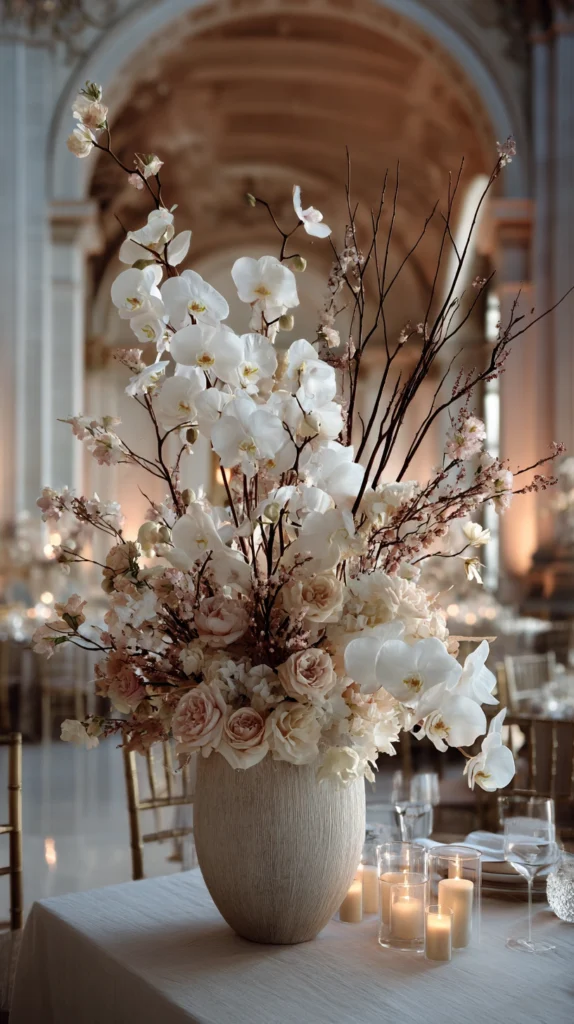
Rather than a symmetrical, evenly balanced tall arrangement, an intentionally asymmetrical design creates a more modern, editorial look popular in current high-end wedding florals.
How it comes together:
- Build the arrangement with an off-center visual weight, letting branches or tall stems lean and extend further to one side
- Mix textures deliberately, combining structural branches, soft florals, and a few unexpected elements like dried grasses or seed pods
- Use a heavier base or weighted vase to counterbalance the arrangement’s asymmetrical top weight
- Photograph the arrangement from multiple angles during setup to confirm it reads intentionally asymmetrical rather than simply uneven
Where it works best:
- Modern, editorial-style grand receptions, particularly those working with a wedding florist experienced in this specific design approach
Watch out for:
- Attempting this style without floral design experience, since the line between intentional asymmetry and an arrangement that looks unfinished is a fine one
Budget: $80–$160 per centerpiece, generally requiring a more experienced florist given the technical skill involved
11. A Tall Centerpiece Built From Stacked Glass Vases
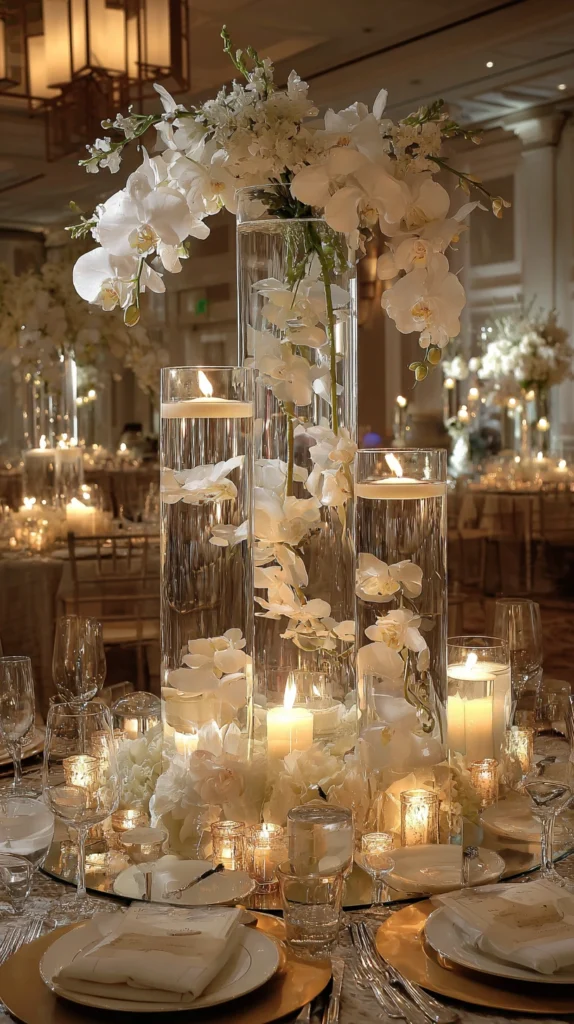
Stacking two or three glass vases of decreasing size creates height through structure rather than floral volume, offering a distinctive look at a moderate cost.
How it comes together:
- Choose two to three glass vases of graduated sizes, stacking the largest at the base up to the smallest at the top
- Secure stacked vases with a bit of floral adhesive or a rented stacking hardware kit to ensure stability
- Fill each vase level with a different element, like submerged flowers in the base and a loose floral topper at the peak
- Add a single candle or small light source at the base level for a warm glow through the glass layers
Where it works best:
- Modern receptions looking for a distinctive structural centerpiece without the cost of a large floral volume
Watch out for:
- Stacking without proper securing hardware, since an unsecured stacked vase arrangement carries real tipping risk
Budget: $45–$90 per centerpiece depending on vase sizes and floral additions
12. A Tall Arrangement Using Dried and Preserved Materials
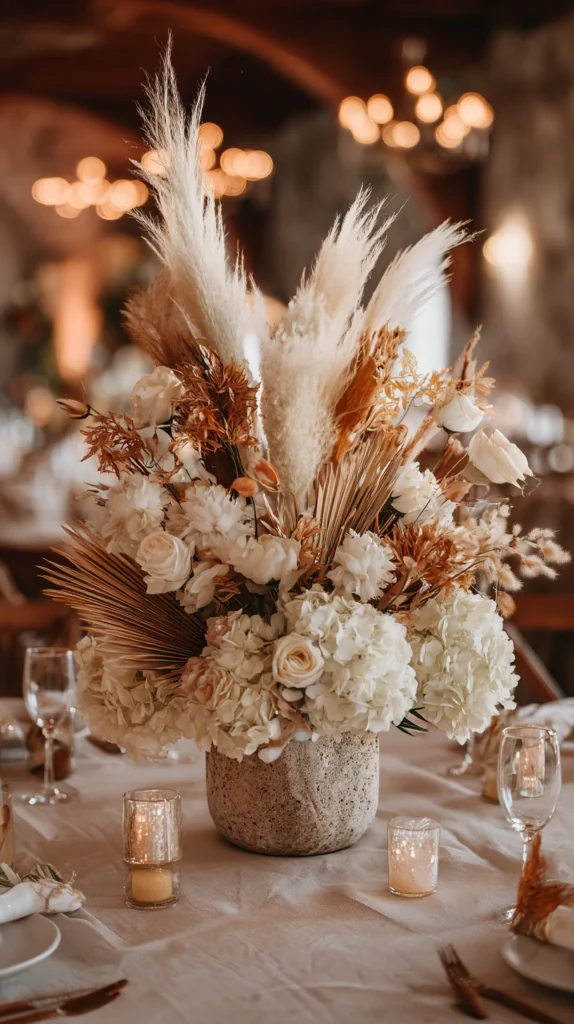
Dried flowers, grasses, and preserved foliage create a tall, textural centerpiece that can often be assembled well in advance of the wedding day, reducing day-of stress.
How it comes together:
- Source dried elements like pampas grass, dried hydrangea, bunny tail grass, and preserved eucalyptus
- Build the arrangement in a sturdy vase or urn, since dried materials are lightweight but can still create an unbalanced top if the base isn’t weighted properly
- Combine varying textures and heights within the dried material palette to create visual depth despite the more muted, neutral color range
- Assemble these arrangements days or even weeks ahead of time, since dried materials don’t require the same fresh-flower timing constraints
Where it works best:
- Boho, neutral-palette, or fall-themed grand receptions, where the dried material’s muted tones fit the broader aesthetic
Watch out for:
- Transporting dried arrangements without adequate protection, since brittle dried stems can shed material or break during setup
Budget: $50–$100 per centerpiece, often more affordable than fresh floral tall arrangements due to lower ongoing material costs
13. A Tall Arrangement Anchored by a Vintage Urn or Pedestal Piece
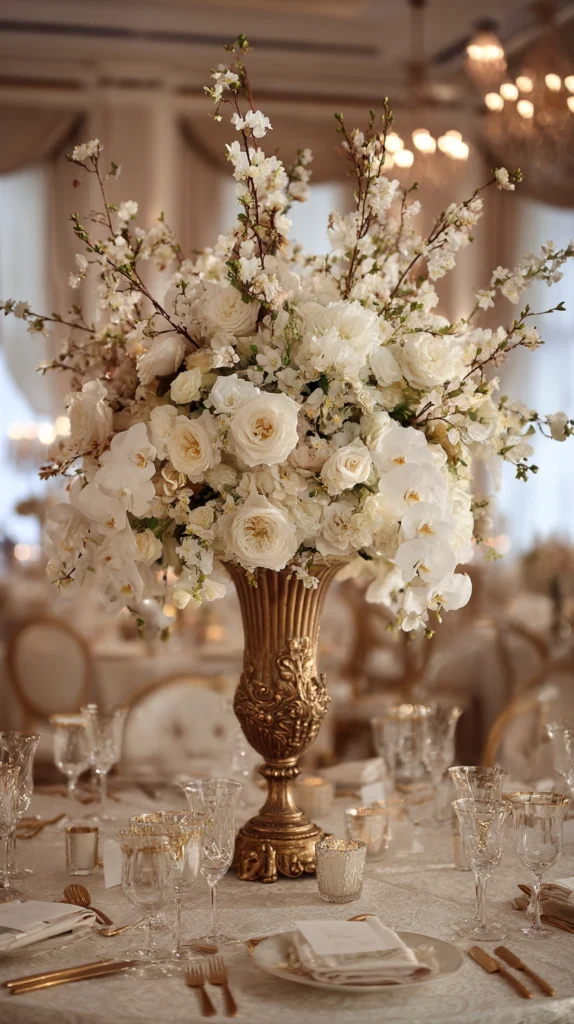
Sourcing a genuine vintage urn or pedestal piece, rather than a new decorative vessel, adds character and a collected, elevated feel to a tall centerpiece.
How it comes together:
- Source vintage brass, silver, or ceramic urns from antique shops, estate sales, or specialty event rental companies
- Build a tall floral arrangement suited to the urn’s specific style, whether that’s a formal, structured look or a looser garden style
- Mix slightly different vintage vessels across tables for a collected, non-uniform look rather than perfectly matching pieces
- Confirm weight and stability with the specific vessel before the event, since vintage pieces vary significantly in base weight and stability
Where it works best:
- Formal or vintage-inspired grand receptions, where the vessel itself becomes as much a design element as the florals it holds
Watch out for:
- Assuming all vintage vessels are equally stable, since older pieces sometimes have warping or structural wear that affects how safely they hold a tall arrangement
Budget: $30–$100 to source or rent each vintage vessel, plus $50–$100 in floral costs per arrangement
14. A Tall Centerpiece Combining Fresh Flowers With Hanging Crystal Accents
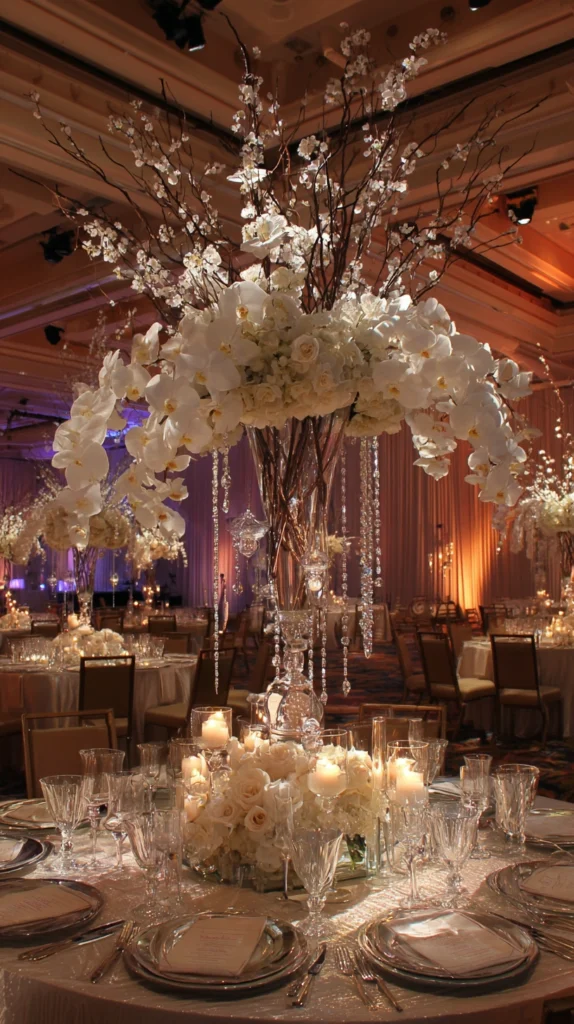
Adding hanging crystal strands or small chandelier-style accents to a tall floral arrangement creates additional sparkle and height, particularly effective under warm reception lighting.
How it comes together:
- Build a tall base arrangement using branches or tall floral stems as the primary structure
- Attach hanging crystal strands or small acrylic gems at varying lengths throughout the upper portion of the arrangement
- Position the arrangement where reception lighting, whether candlelight or string lights, will catch and reflect off the crystal elements
- Keep crystal placement concentrated in the upper two-thirds of the arrangement, preserving the open eye-level sightline below
Where it works best:
- Glamorous, formal grand receptions, particularly evening events with warm ambient lighting to catch the crystal reflections
Watch out for:
- Overloading the arrangement with too many crystal elements, which can visually compete with the florals rather than complementing them
Budget: $70–$150 per centerpiece depending on crystal quantity and floral base
15. A Tall Arrangement Built for Reuse Between Ceremony and Reception
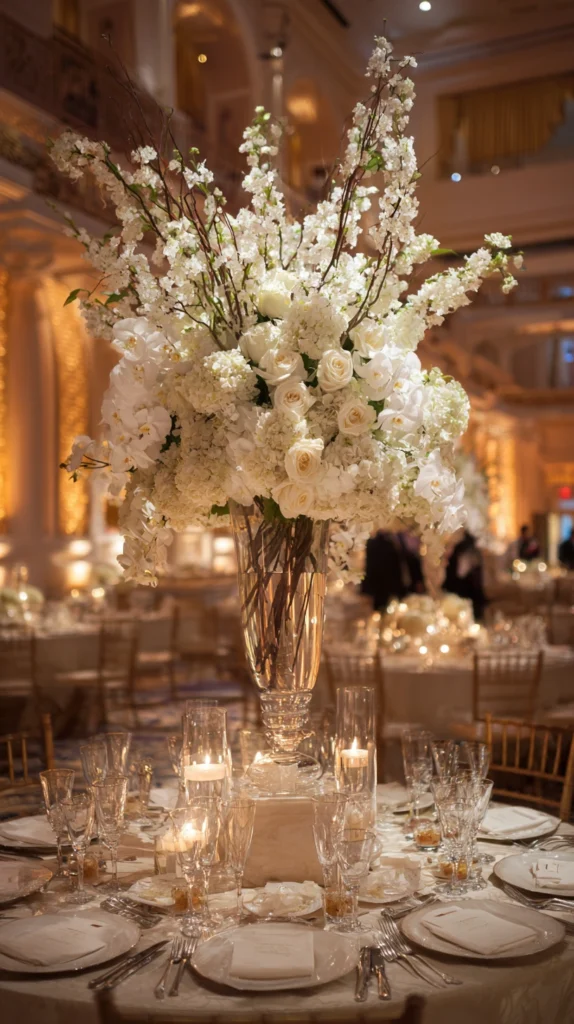
For couples wanting to maximize their floral budget, designing tall arrangements that transition from ceremony altar pieces to reception centerpieces stretches the investment across two parts of the day.
How it comes together:
- Work with your florist to design tall arrangements in vases specifically chosen to look appropriate in both a ceremony aisle or altar setting and a reception table setting
- Plan the physical transport and placement timeline with your florist or a designated helper, since this transition needs to happen during the gap between ceremony and reception
- Choose a design that doesn’t rely on ceremony-specific elements, like an arch attachment, so the same arrangement stands independently on a reception table
- Confirm vase stability for both contexts, since a ceremony platform and a reception table may have different surface stability considerations
Where it works best:
- Weddings with a ceremony and reception happening at the same venue or nearby, since transport logistics become significantly more complex across separate locations
Watch out for:
- Underestimating the transition timeline, since moving and resetting several tall arrangements takes longer than couples typically expect during a tight reception changeover window
Budget: $0 in additional cost beyond your existing ceremony floral budget, making this one of the most cost-effective ways to achieve tall reception centerpieces
Matching Tall Centerpieces to Your Actual Venue
Before committing to any tall centerpiece style, walk through a few practical considerations specific to your actual reception space.
- Measure your venue’s ceiling height, since a tall centerpiece needs enough vertical room above the table to read as proportional rather than cramped
- Check your venue’s policies on hanging installations, open flame candles, and any rigging requirements well before finalizing your florist’s design
- Confirm table sturdiness with your venue or rental company, since some tall arrangements add significant weight that lighter tables may not be rated to support
- Walk through your actual seating chart at eye level, either literally sitting in a chair or having someone photograph the sightline, before finalizing any design
- Ask your venue whether they’ve hosted tall centerpieces before, since staff familiar with the logistics can flag issues, like low-hanging light fixtures or narrow table spacing, that a new venue might not think to mention
Room proportions vary enormously between venues, so a design that looked stunning in your florist’s portfolio photo from a different space may need real adjustment to suit your own ceiling height and table layout.
Working With Your Florist on Safety and Stability
Tall centerpieces carry more logistical considerations than low arrangements, and addressing them directly with your florist prevents day-of surprises.
Ask specifically how each arrangement will be weighted and secured, rather than assuming standard floral foam alone will provide adequate stability for a top-heavy design.
Request that your florist do a full walkthrough setup at least once before the wedding day if you’re working with an unusually tall or complex design, particularly anything involving suspended elements or open flame.
Confirm with your venue coordinator how centerpieces will be handled during any mid-reception table clearing or turnover, since tall arrangements often need more careful handling than staff might expect by default.
Bring a printed or digital reference photo to your final floral consultation, and confirm the actual dimensions in writing, including height, base width, and total weight, so there’s no ambiguity between what was discussed and what actually arrives on the wedding day.
The Long-Term Payoff of Getting This Right
A tall centerpiece done well becomes one of the most photographed elements of a grand reception, but that result depends entirely on getting the structural details right well before guests ever sit down at the table.
The couples whose tall centerpieces actually work, rather than becoming an obstacle guests have to navigate around, are almost always the ones who tested sightlines, confirmed stability, and communicated clearly with their florist about the practical details rather than just the visual mood board.
Grand doesn’t have to mean complicated. A single well-executed idea from this list, matched carefully to your specific venue and table layout, will do more for the room than several competing tall arrangements that were never fully thought through.