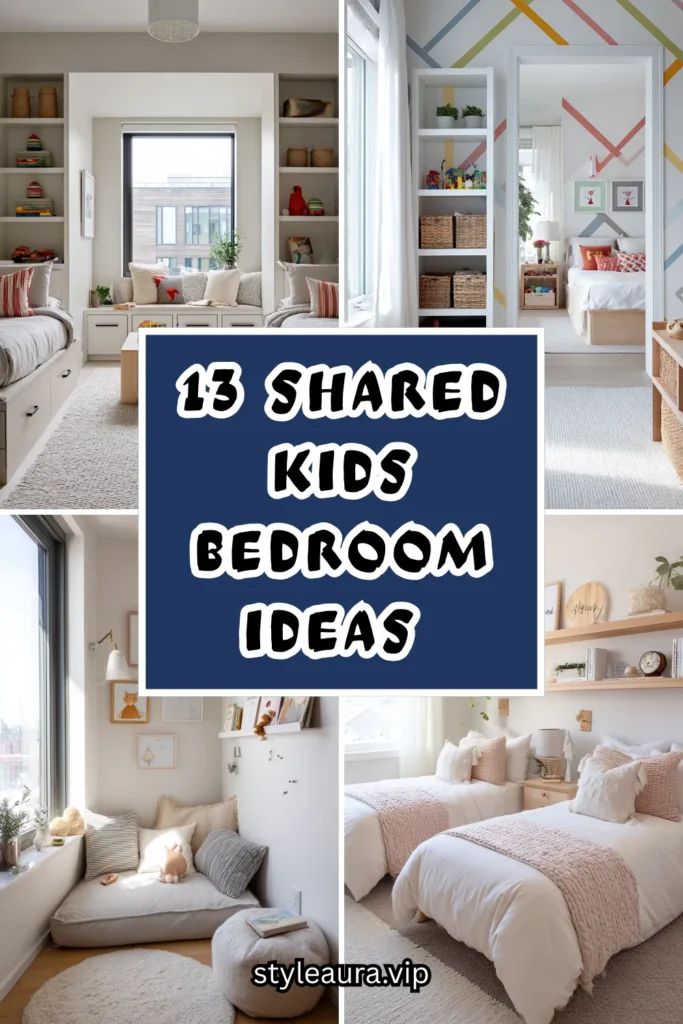
13 Shared Kids Bedroom Ideas That Give Each Child Their Own Space
Sharing a bedroom works best when each child still has a clear sense of ownership over part of the room, even in a fairly small footprint. The goal isn’t dividing the space in half so much as giving each kid their own defined zone, their own storage, and a little bit of personality that’s distinctly theirs.
Below are 13 ways to set up a shared kids bedroom so both children feel like they have their own space, with real numbers on dimensions, furniture pairings, and budget so the room works for the whole family.
Shared Room Planning Basics
Space per child:
- Minimum workable zone: 40-50 sq ft per child
- Comfortable zone: 70-100 sq ft per child
- A standard 12×12 room (144 sq ft) works for two kids with careful planning
- Vertical space (bunk beds, lofts) helps smaller rooms significantly
Age gap considerations:
- Close in age (0-2 years apart): easier to share similar zones and bedtime routines
- Moderate gap (3-5 years apart): benefits from more clearly separated zones
- Large gap (6+ years apart): may need a room divider or curtain for privacy
- Revisit the layout every couple of years as needs and ages change
1. Use a Room Divider to Create Visual Separation
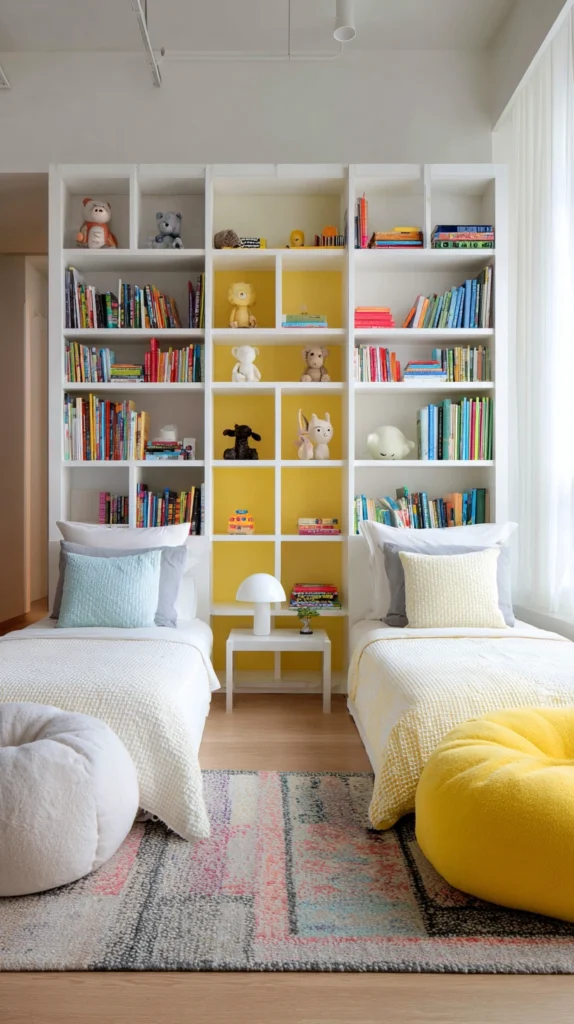
A freestanding room divider, bookshelf, or curtain track splitting the room down the middle gives each child a visually distinct zone without requiring a full wall or renovation. Standard room dividers run 5-6 feet tall and 4-6 feet wide per panel.
Budget: $80-250 for a quality folding screen or freestanding divider, or $150-350 for a ceiling-mounted curtain track system spanning the width of the room. A bookshelf used as a divider adds the bonus of extra storage while still creating the visual separation.
Positioning the divider so each side of the room gets roughly equal window access and floor space prevents one child’s zone from feeling clearly smaller or less desirable than the other’s. This approach works particularly well for kids with a larger age gap, since it allows an older child some visual privacy from a younger sibling without the cost of an actual wall.
A curtain track system offers the most flexibility of the options here, since it can be fully opened during the day for shared play and closed at night or during quiet time for each child’s individual space.
2. Choose Bunk Beds to Maximize Floor Space
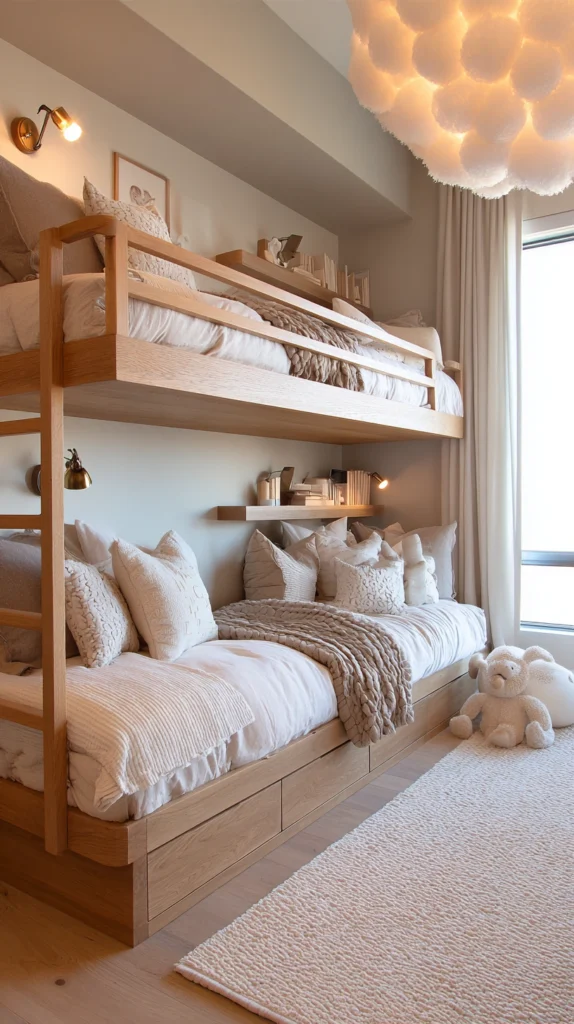
Bunk beds free up significant floor space compared to two separate twin beds positioned side by side, which is often the single biggest factor in making a shared room feel spacious enough for two distinct zones. Standard bunk beds require a footprint of about 42×80 inches, similar to a single twin bed.
Budget: $300-800 for a quality wood or metal bunk bed frame, depending on material and any added features like built-in storage or a trundle. Choosing a bunk bed with a solid, sturdy frame and a properly rated weight capacity for the top bunk is worth prioritizing over a cheaper option, given the safety considerations involved.
Letting each child personalize their own bunk — different bedding, a string of lights, or a small shelf attached to their specific bed level — gives them ownership over their sleeping space even within a shared frame. The floor space freed up by choosing bunks over two separate beds can then be dedicated to individual desks, reading nooks, or storage for each child elsewhere in the room.
Most manufacturers recommend children be at least 6 years old before sleeping on a top bunk, which is worth factoring into the decision if there’s a significant age gap between siblings.
3. Assign Each Child Their Own Wall Color or Accent
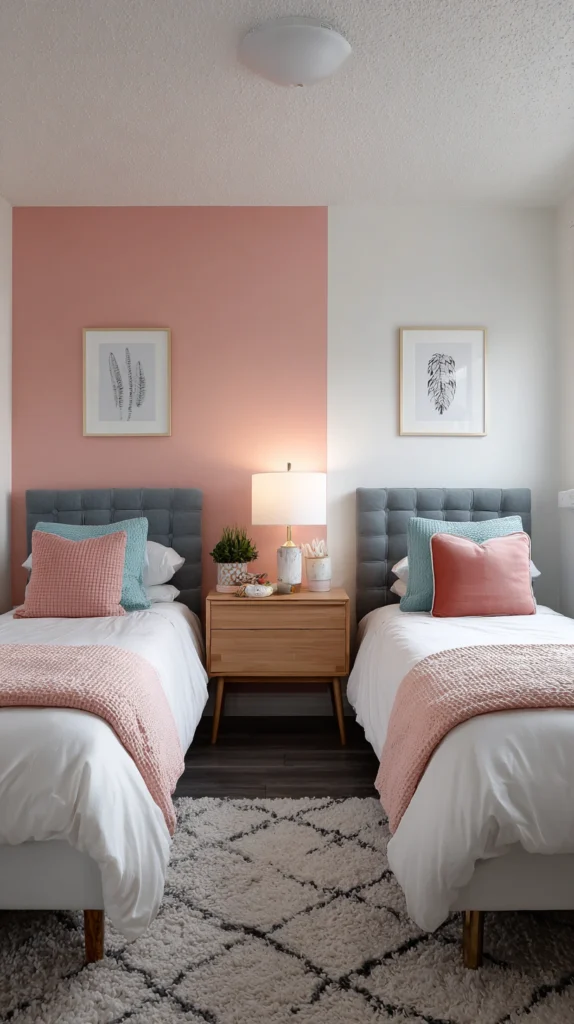
Painting each child’s side of the room in their own accent color, whether a full wall or just a smaller section, gives them a clear, visible sense of personal territory within the shared space. A standard accent wall in a 12×12 room runs about 96-108 sq ft, needing roughly one gallon of paint per wall.
Budget: $45-70 per gallon of quality paint, so budgeting for two colors (one per child) typically runs $90-140 total for both accent areas. Choosing colors that complement each other, even if they’re different, prevents the room from feeling visually disjointed down the middle.
This is one of the most effective low-cost ways to give each child a sense of individual identity within a shared room, since a favorite color often matters enormously to how a child feels about their own space. Letting each child have some input into choosing their own color, within a reasonable set of options, adds to their sense of ownership over the decision.
If a full wall feels like too much of a commitment, painting just the headboard wall behind each child’s bed in their chosen color achieves a similar effect on a smaller scale.
4. Add Individual Reading Nooks for Each Child
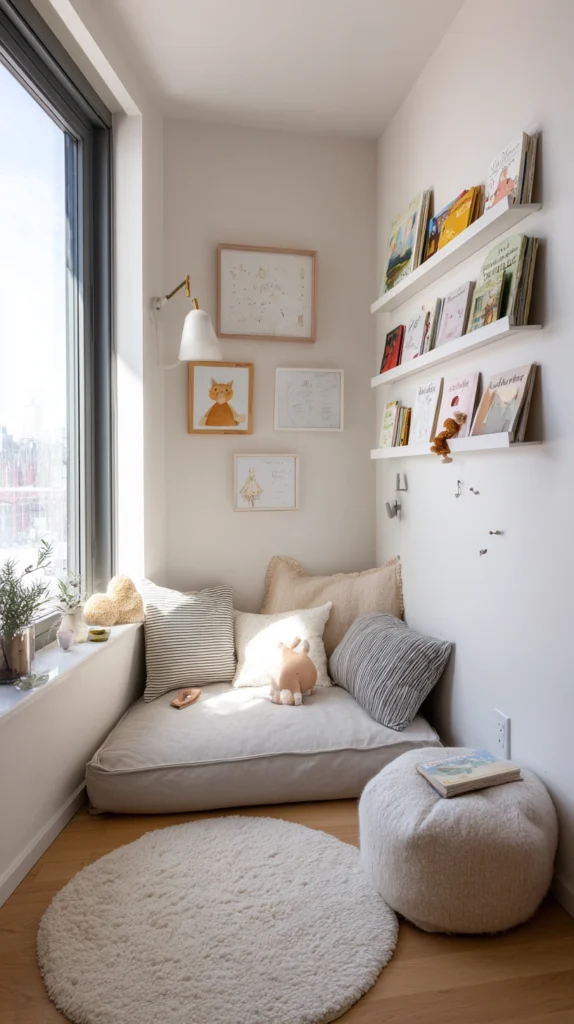
A small reading corner for each child — a cushion, a shelf of their own books, and a reading light — gives them a personal retreat within the shared room, even if space is limited. Standard reading nooks need as little as 3×3 feet of floor space to function well.
Budget: $60-150 per reading nook, including a floor cushion or small chair, a wall-mounted shelf, and a clip-on reading light. Positioning each nook in a different corner of the room, rather than side by side, gives both children a genuine sense of separation even in a small footprint.
Letting each child choose their own cushion color or a few personal decorations for their specific nook reinforces the sense that this corner belongs to them individually rather than being a shared, generic reading spot. This is a particularly good addition for siblings with different reading levels or interests, since each child can stock their own shelf with books suited to their specific age and preferences.
A small reading nook also gives each child somewhere to retreat to for quiet time without needing to leave the shared room entirely, which can help reduce sibling friction during the day.
5. Use Matching Furniture in Different Colors
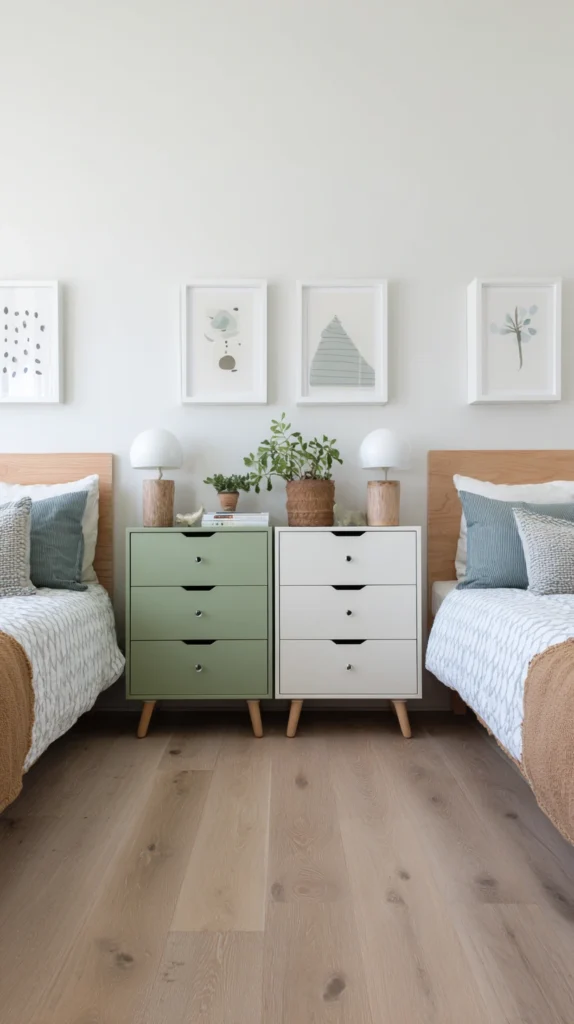
Choosing the same furniture style and size for each child, but in different colors or with different hardware, keeps the room feeling fair and balanced while still allowing for personal expression. Standard kids’ dressers run 30-36 inches wide, easily matched in size while varying in color or finish.
Budget: $150-350 per dresser if buying two matching pieces in different colors, similar in total cost to furnishing the room with two completely different, unmatched dressers. This approach tends to feel more fair to children than one sibling getting a nicer or larger piece than the other, which can become a source of resentment over time.
Adding different colored knobs or drawer pulls to otherwise identical furniture is a lower-cost way to achieve some individual distinction if buying two fully different colored pieces isn’t in the budget. This same principle can extend to other furniture in the room — matching desks, nightstands, or storage bins — keeping the overall look cohesive while still respecting each child’s individual preferences in small ways.
This approach also simplifies future furniture shopping, since matching pieces are easier to source as a set than trying to coordinate two entirely different styles within one room.
6. Add a Shared Activity Zone in the Middle of the Room
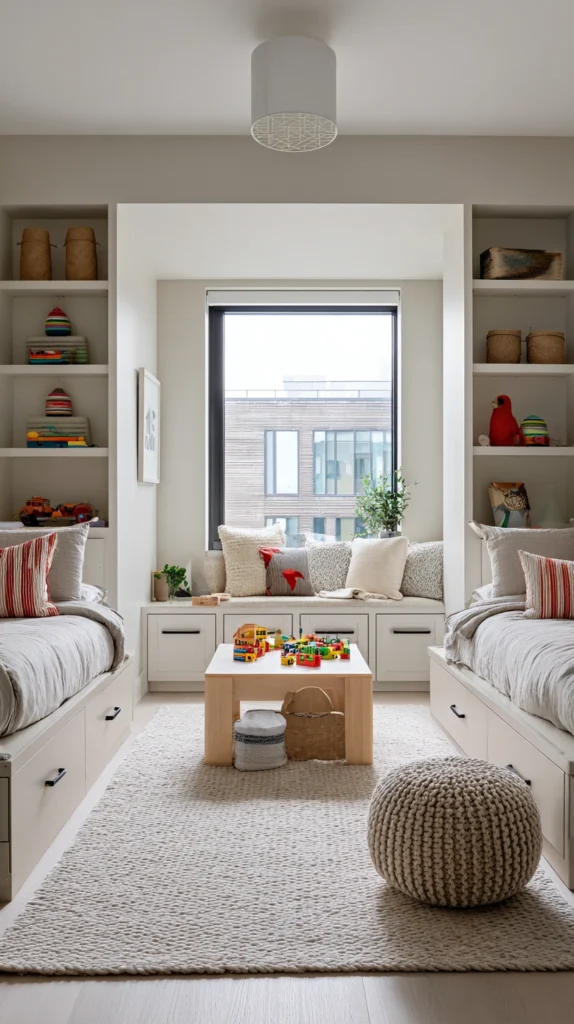
Reserving the center of the room, or the area nearest the door, as shared space for building, playing games, or activities both kids enjoy together helps balance out the individually zoned areas elsewhere in the room. Standard shared play zones benefit from at least 6×6 feet of open floor space.
Budget: $100-300 for a shared rug, a toy storage bin, and any shared play furniture like a small table, depending on what’s already available versus what needs to be purchased new. A durable, easy-to-clean rug in this central zone helps define the shared space visually, similar to how a rug anchors a seating area in a living room.
This shared zone is an important counterbalance to the individually divided areas described elsewhere in this list, since a room that’s entirely split into two separate territories can sometimes discourage the positive aspects of siblings sharing a space, like collaborative play. Storing shared toys and games in this central zone, separate from each child’s individually owned items, also helps clarify expectations around which belongings need to be shared versus which are personal.
Revisiting this zone’s contents periodically as the kids grow, swapping out toys for activities more suited to their current ages and interests, keeps the space genuinely useful rather than becoming cluttered with outgrown items.
7. Give Each Child Their Own Closet Section or Storage Unit
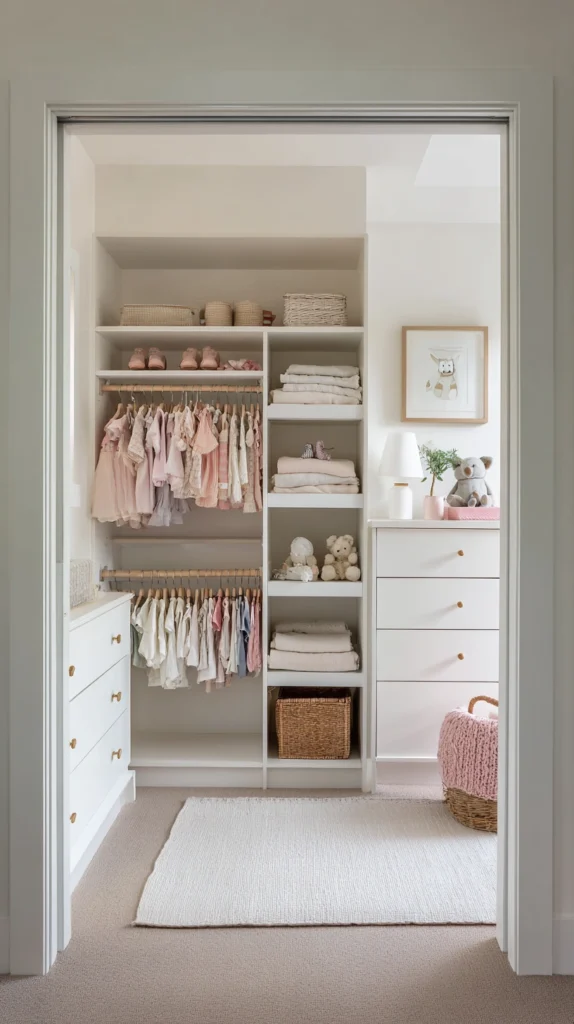
Dividing an existing closet clearly in half, or providing each child with their own separate dresser or storage cubby system, prevents the daily friction that can come from sharing storage space for clothes and personal items. Standard closets benefit from a clear physical marker (a piece of tape, a small sign, or simply an obvious furniture divide) showing where each child’s section begins and ends.
Budget: $50-150 for closet organization inserts to divide an existing closet into two clear sections, or more if adding a fully separate dresser or cubby unit for each child instead. Labeling each section with the child’s name or a small decorative marker helps reinforce the boundary, particularly for younger children still learning to keep their belongings organized.
This is one of the more practical, less visually dramatic changes on this list, but it often has an outsized impact on reducing daily sibling conflict over misplaced or mixed-up belongings. Involving each child in organizing their own section, even if the end result needs some adult guidance, builds a stronger sense of ownership and responsibility over their portion of the shared storage.
Revisiting the storage system every year or two as clothing sizes and needs change keeps the setup functional rather than becoming outdated as the kids grow.
8. Use a Loft Bed With Space Underneath for One Child’s Zone
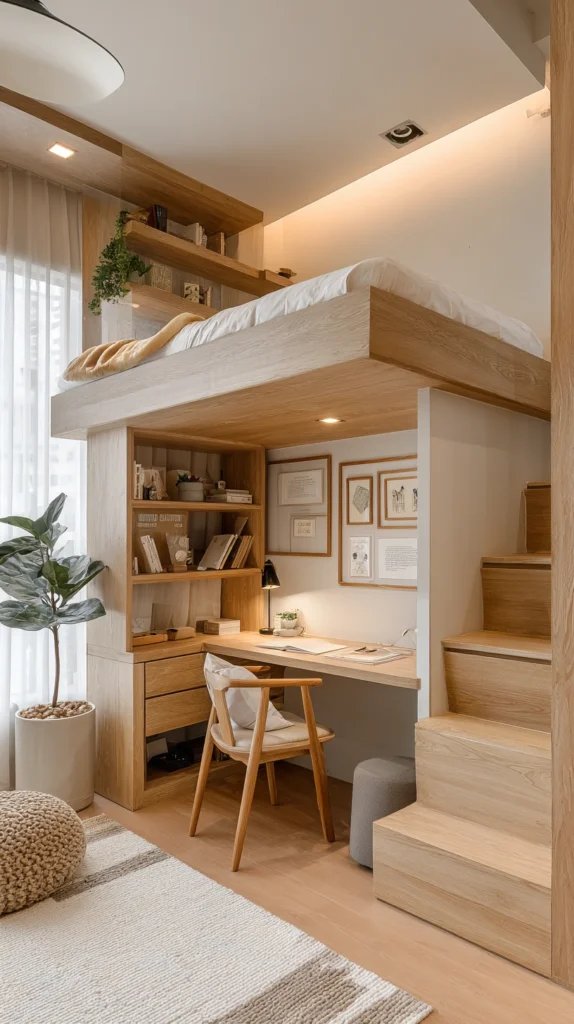
A loft bed, which elevates the sleeping area and leaves the space underneath open for a desk, reading nook, or play area, effectively gives one child both their sleeping zone and a personal activity zone within the same footprint. Standard loft beds require a ceiling height of at least 8 feet to comfortably accommodate an adult-sized loft frame with usable space beneath it.
Budget: $350-900 for a quality loft bed frame, depending on material and any built-in features like a desk or shelving incorporated into the frame’s base structure. This is a particularly space-efficient solution in a smaller shared room, since it essentially creates two functional zones (sleeping and activity) within the vertical footprint of a single bed.
If only one child has a loft bed while the other has a standard bed, alternating which child gets the loft setup every year or two (if both are interested) can help balance out any sense of one sibling having a “better” arrangement than the other. Adding string lights, a curtain, or a personal touch to the space underneath the loft further reinforces that this is a dedicated, personalized zone belonging to that specific child.
This option works particularly well for an only slightly older or more independent child who might appreciate the loft’s more private, elevated sleeping area compared to a sibling who prefers a more traditional, ground-level bed.
9. Add Personalized Name Signs or Wall Decals Above Each Bed
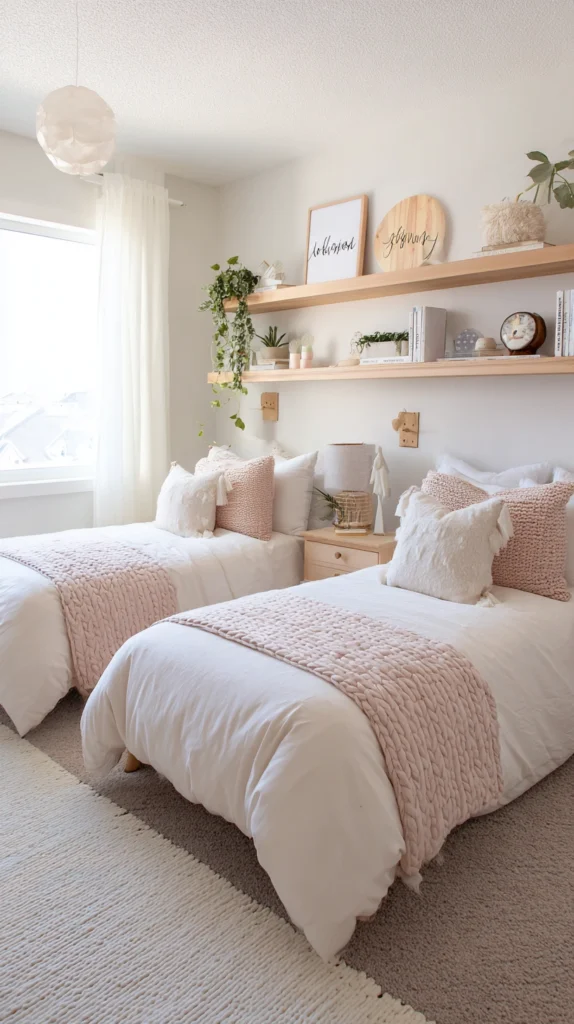
A simple wall decal, wooden sign, or framed print featuring each child’s name above their respective bed creates an immediate, clear visual marker of individual space. Standard name signs run 12-24 inches wide, sized to sit centered above a twin or bunk bed headboard.
Budget: $20-50 per personalized name sign or decal, making this one of the more affordable individual touches on this list. Choosing a consistent style or font across both signs, even while the names and perhaps colors differ, keeps the room feeling cohesive rather than mismatched.
This small addition does a lot of work in reinforcing each child’s sense of ownership over their specific sleeping area, and it’s often one of kids’ favorite personal touches since it feels distinctly theirs in a way shared furniture doesn’t. This is also one of the easiest elements to update as children get older, swapping out a more juvenile design for something more age-appropriate without needing to change anything else in the room.
Positioning the sign at the child’s own eye level, rather than higher up near the ceiling, makes it feel more personally significant and accessible, particularly for younger children.
10. Use Different Bedding for Each Child Within a Shared Palette
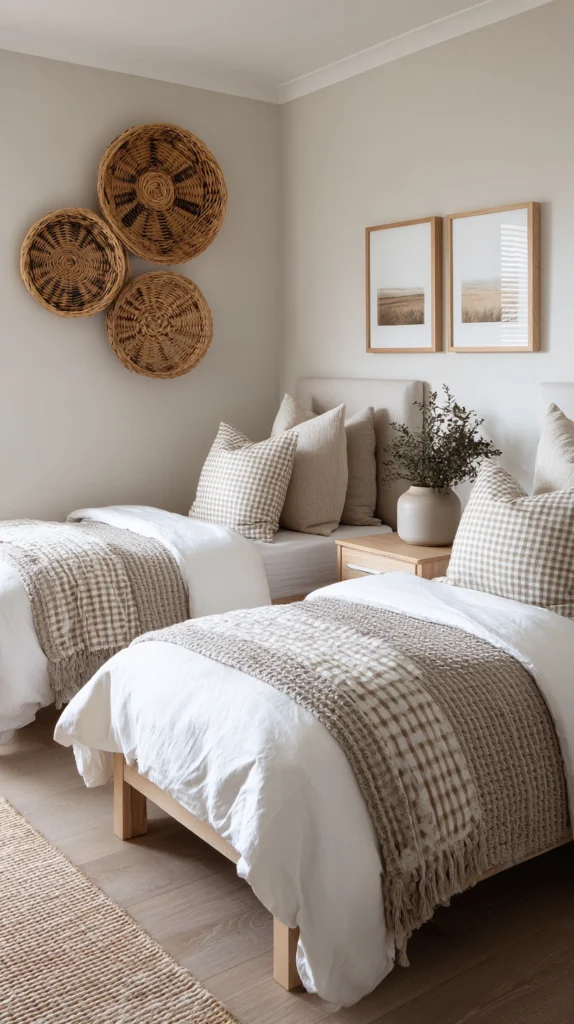
Coordinating rather than exactly matching bedding — same color family, different pattern or a personal favorite character or motif for each child — balances visual cohesion with individual preference. Standard bedding sets for a twin bed include a fitted sheet, flat sheet, comforter or duvet, and one or two pillows.
Budget: $60-120 per child for a quality twin bedding set, choosing patterns or characters based on each child’s specific interests within an agreed-upon overall color scheme. This approach avoids the common pitfall of one sibling feeling like their bedding is less exciting or personal than the other’s simply because everything in the room was chosen to match exactly.
Setting a loose color guideline (for example, both kids choose from blues and greens, but each picks their own specific pattern) gives children genuine choice while still keeping the room from feeling visually chaotic. This is one of the easier elements to update as children’s interests change over time, since new bedding is a relatively low-cost way to refresh a child’s personal space without needing to change furniture or paint.
Letting each child be involved in choosing their own bedding, even within some agreed-upon parameters, is one of the more meaningful ways to give them a genuine sense of ownership over their part of the room.
11. Add a Shared Gallery Wall With Individual Sections
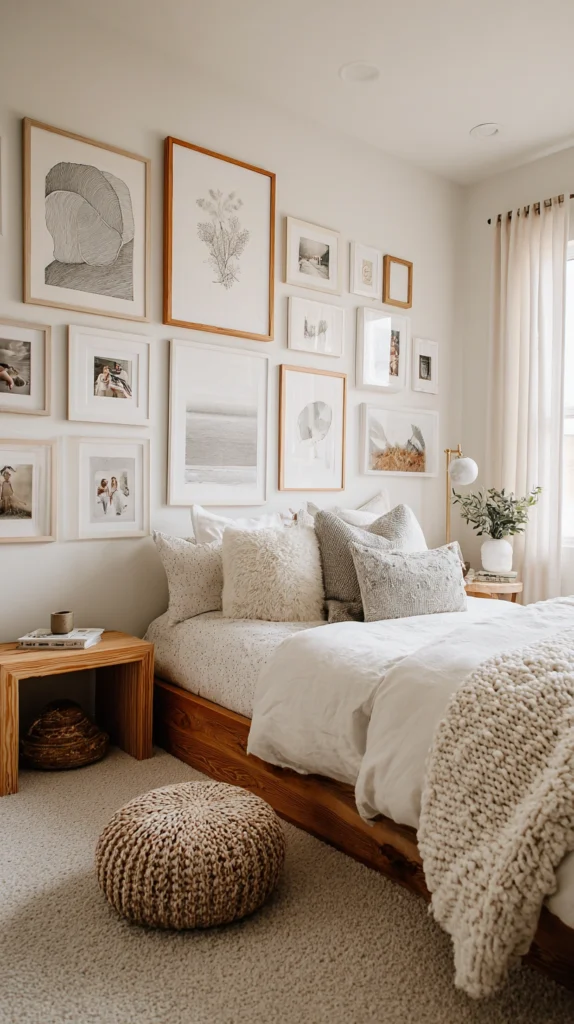
A gallery wall spanning both children’s areas, but with each child’s artwork, photos, or decorations clustered on their own side, creates a unified look while still respecting individual space. Standard gallery walls span 4-6 feet, easily divided into two roughly equal sections for two children.
Budget: $60-150 for frames and display materials for both sections combined, depending on how many pieces each child wants to display. This works particularly well for displaying kids’ own artwork and school projects, giving each child a rotating, personal display space that updates naturally as they create new work.
Using a consistent frame style or color across the whole wall, while letting the actual content within each child’s section be entirely their own choice, balances cohesion with individuality in a similar way to the coordinated-bedding approach described earlier. A simple string-and-clip display system, rather than individually nailed frames, makes it easy for each child to swap out their own artwork regularly without needing help from an adult each time.
This is one of the more collaborative elements on this list, since it visually acknowledges both children as equal contributors to the room’s overall decoration while still preserving clear individual ownership within each section.
12. Create Zone-Specific Lighting for Each Child
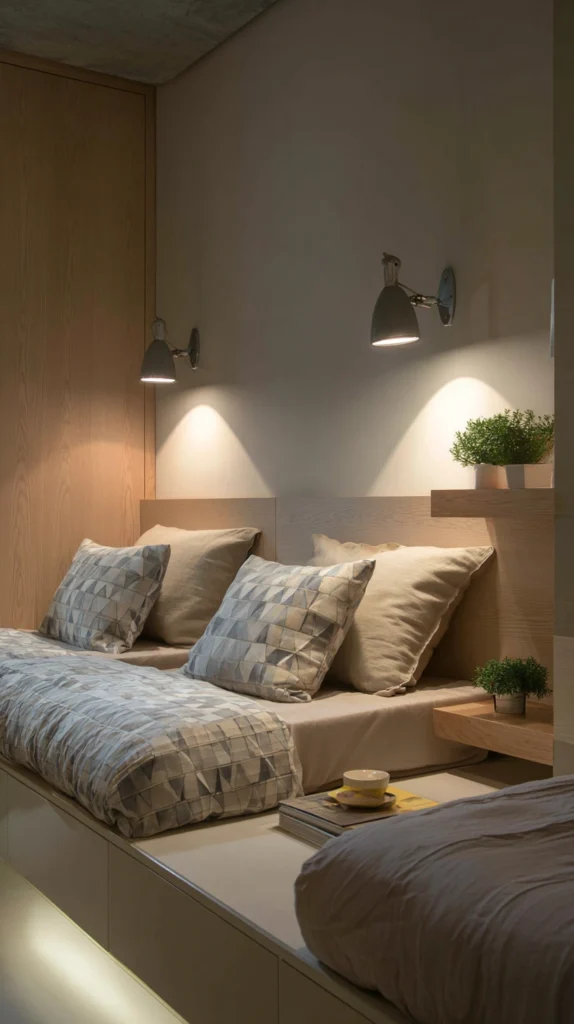
Individual bedside lamps, clip-on reading lights, or even different colored night-lights for each child allow them to control their own lighting without disturbing a sibling who may want to sleep earlier or later. Standard bedside lamps run 12-18 inches tall, sized appropriately for a nightstand or small shelf near each bed.
Budget: $20-50 per lamp or reading light for each child, one of the more functional and practical additions on this list. This is particularly useful for siblings with different bedtimes or reading habits, since one child can continue reading with a focused light while the other sleeps without being disturbed by a shared overhead fixture.
Choosing each child’s own lamp style or color, within a similar overall size and safety standard, adds another small layer of personalization to the room without requiring a large investment. A dimmer or simple on/off clip light gives each child some independent control over their own space, which can also support a smoother bedtime routine as kids get a bit older and more independent.
This is one of the more practically impactful additions on this list, since lighting conflicts are a common source of nighttime friction in a shared room, particularly between siblings with different ages or schedules.
13. Add Removable Wall Decals or Washi Tape Borders to Define Zones
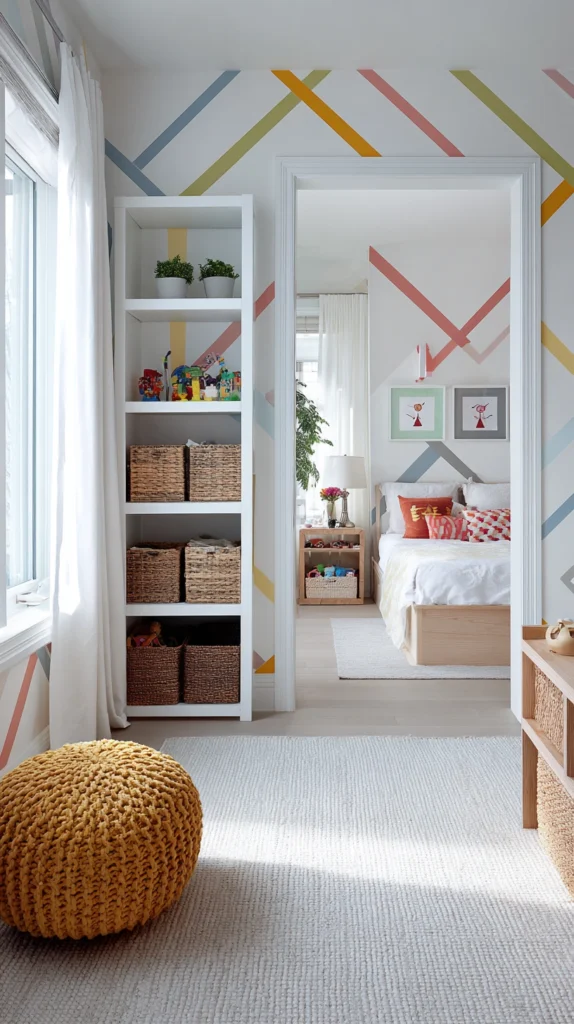
For renters or families not ready to commit to paint, a simple washi tape or removable decal border on the floor or wall marks each child’s zone without any permanent changes to the room. Standard washi tape rolls cover 15-30 feet, more than enough to mark a full zone boundary in most bedrooms.
Budget: $10-25 for a roll or two of quality washi tape, making this one of the most affordable options on this entire list. This approach works particularly well for younger children who benefit from a clear, simple visual boundary to understand where their space begins and ends within the shared room.
A decorative tape border along the floor, in each child’s chosen color, is both a practical zone marker and a small design element that adds visual interest to an otherwise plain floor. This is one of the easiest options on this list to change or remove entirely as the children grow and the room’s needs shift, since washi tape and most decals are designed to come off cleanly without damaging paint or flooring.
This is a good starting point for any family unsure about committing to bigger structural changes like a room divider or bunk bed, offering a low-cost way to test whether a more clearly zoned layout actually helps reduce sibling conflict in the room.
Quick Start Project List
This weekend, under $150:
- Washi tape zone borders: $20
- A personalized name sign for each child: $60
- Individual clip-on reading lights: $40
- A shared rug for the central play zone: $30 (secondhand or budget option)
Budget-Friendly Version
Lowest-cost ways to start:
- Washi tape or decal zone markers instead of a full room divider
- Coordinating rather than fully matching bedding sets
- Repurposing existing furniture with new hardware for individual color
- A curtain instead of a purchased room divider panel
Success Indicators
- Each child can clearly identify what belongs to them within the room
- Sibling conflict over space or belongings decreases over time
- Both children have at least one zone or item that feels distinctly personal
- The shared central area still gets used for activities together
- The room continues to work well as both children grow and their needs change
Remember
Give each child a genuine sense of ownership over part of the room, whether through color, furniture, or a defined zone, balance individually zoned areas with at least one shared space for activities both kids enjoy together, involve each child in choices about their own section wherever possible to build a stronger sense of ownership, revisit the room’s layout every year or two as ages and needs change, and remember that fairness in a shared room is less about making everything identical and more about making sure each child feels their space is genuinely their own.