15 Cozy Sunroom Decor Ideas for the Fall Season
Most sunrooms get decorated once, for summer, and left exactly that way for the rest of the year. Light linen cushions, a few bright throw pillows, maybe a single fan running in the corner. It works perfectly well when the whole point of the room is staying cool and catching a breeze.
That same setup falls flat the moment fall arrives. A room built almost entirely of glass behaves completely differently once the sun sits lower in the sky and the temperature outside starts working against the room instead of for it. The airy, breezy choices that made a sunroom feel relaxed in July can make it feel cold and underused by October.

A fall sunroom is not a summer sunroom with a pumpkin added to the windowsill. It’s a different design problem entirely — one built around trapping warmth instead of releasing it, managing a different quality of light, and turning a room that was a pass-through in summer into the place people actually want to sit once the air outside turns crisp. Get that right, and a sunroom becomes one of the coziest rooms in the house for exactly the months it’s most tempting to abandon.
Here are 15 ideas for decorating a sunroom specifically for fall, not just decorating it once and hoping it still works.
Why a Fall Sunroom Plays by Different Rules Than a Summer One
The rules are not the same for every season in a glass-walled room:
Summer Sunroom Advantages:
- Long, warm daylight that needs very little help from the room itself
- A breeze and open windows doing most of the comfort work
- Light, airy textiles and furniture that match the season’s mood without any extra layering
The summer sunroom comparison: the room does the work on its own
Fall Sunroom Advantages and Realities:
- Lower-angle sun that changes both the glare and the warmth coming through the glass
- A room that loses heat faster than the rest of the house, given how much of it is glass rather than insulated wall
- The shift from a pass-through space to the room people actually want to linger in once it’s too cold to sit outside
The key insight:
- A summer sunroom rewards minimal, breezy styling
- A fall sunroom rewards real warmth — visual and literal — since the room’s glass walls work against comfort rather than for it
- These are different design problems, not the same sunroom with a few pumpkins added
The Light and Temperature Reality
The most important factor in fall sunroom design:
The glass-to-wall ratio:
- A sunroom loses and gains heat faster than almost any other room in the house, simply because of how much glass surrounds it
- That same glass also lets in a lower, more direct angle of fall sunlight than it did in summer, which changes glare and fading concerns
- Know this — it governs nearly every material and furniture choice on this list before style does
The “warmth before brightness” calculation:
- A sunroom already has more natural light than almost any other room in the house, even in fall
- The room rarely needs more visual brightness; it needs warmth, in both color and actual temperature
- Work backward from comfort: a throw blanket and warm-toned cushions do more for a fall sunroom than another bright accent color would
Most fall sunroom updates happen in layers, not all at once:
- The furniture and comfort layer comes first, since it determines whether the room actually gets used through the colder months
- The textile and lighting layer comes next, once there’s something to layer it onto
- The smallest seasonal touches — pumpkins, candles, a fall-specific arrangement — come last, since they’re the easiest to swap again come winter
1. The Layered Throw and Blanket Basket (Warmth Within Arm’s Reach)
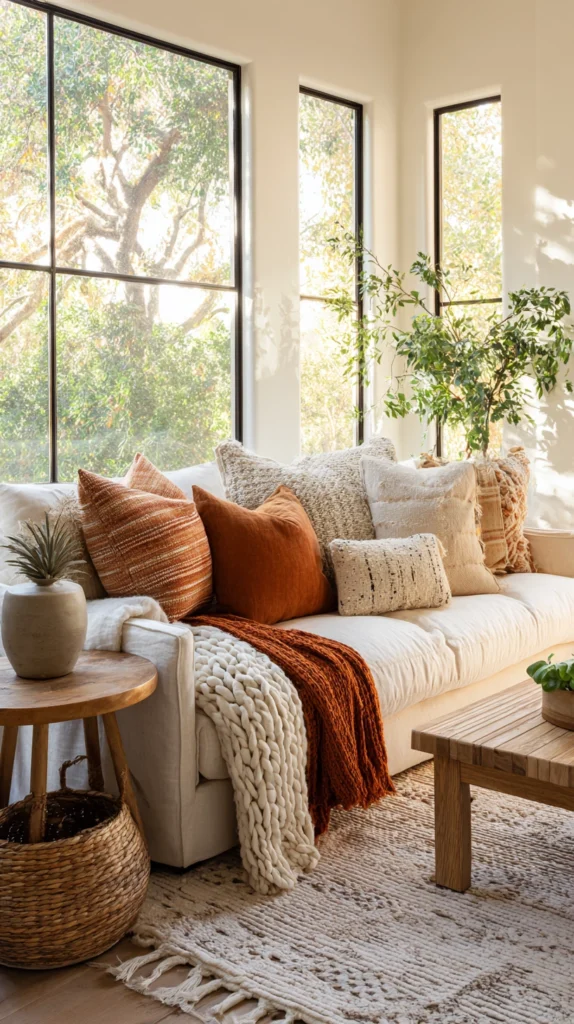
A basket or open shelf holding several folded throw blankets, positioned beside the main seating area — the single addition most directly responsible for making a sunroom usable once the air outside, and inside, turns cold.
Why this is the highest-leverage comfort change available
- The glass-room reality it directly addresses: a sunroom loses warmth faster than an insulated room, and a blanket within reach solves that immediately, without waiting on any structural fix
- The styled-while-functional value: a stack of folded throws in warm, varied tones looks intentional and finished even before anyone wraps up in one
- The low cost relative to the comfort it adds: this is one of the least expensive ideas on the entire list, and arguably the one most responsible for whether the room gets used at all in late fall
The options
- A large woven basket, holding a stack of 3–4 folded throws beside the main seating
- An open shelf or ladder rack, displaying blankets the way a wood ladder displays towels in a bathroom
- A mix of wool and chunky knit throws, offering different weights depending on how cold the room actually gets
- Individual throws draped over each chair, ready before anyone even sits down
The practical execution
- Choose materials that handle some humidity and temperature swing without feeling damp or clammy, since a sunroom’s climate shifts more than the rest of the house
- Position the basket within easy reach of the main seating, not across the room or tucked into a closet
- Rotate in heavier blankets as the season progresses, keeping lighter throws available for the still-mild early weeks of fall
Cost breakdown
- Throw blanket, each: $20–45
- A set of 3–4: $80–180
- Basket or shelf to hold them: $20–60
- Total: $100–240
2. The Reading Nook (A Single Chair That Justifies the Whole Room)
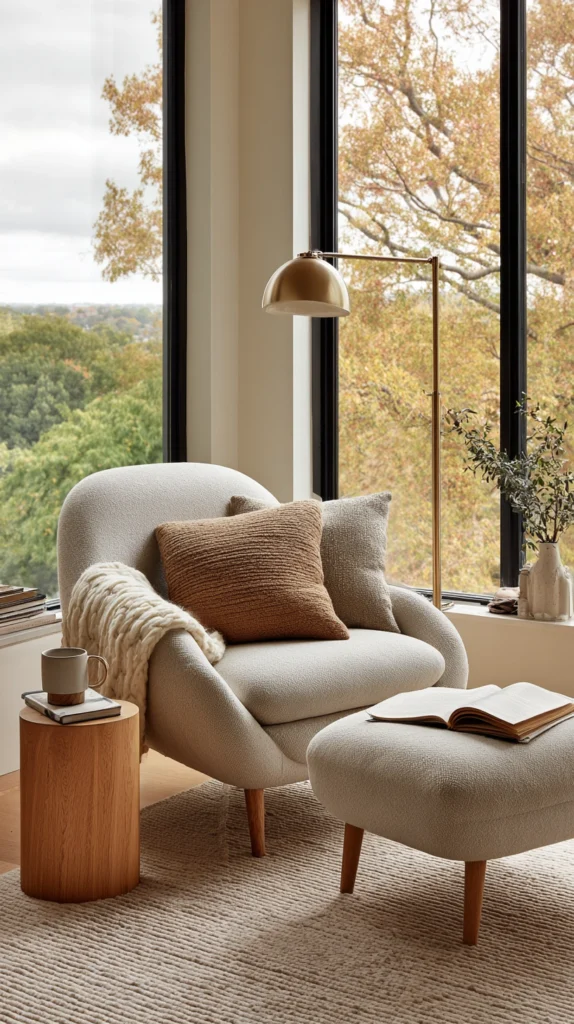
A dedicated armchair, a small side table, and a reading lamp, arranged in the sunroom’s best corner — the vignette that gives the room a clear, specific reason to be used through fall rather than just admired from the doorway.
Why one chair can carry more weight than a whole furniture set
- The single-purpose clarity it provides: a sunroom with several pieces of furniture but no clear focal point often goes unused; one chair set up specifically for reading gives the room an obvious function
- The light-and-comfort overlap unique to this room: a sunroom is one of the only rooms in the house with enough natural light to read comfortably without a lamp during the day, which makes it a genuinely strong reading spot once it’s also made comfortable
- The low commitment, high payoff ratio: this idea requires only one good chair, not a full furniture overhaul, to fundamentally change how the room gets used
The options
- A deep, upholstered armchair, sized for curling up rather than just sitting upright
- A wingback chair, for a more traditional, enclosed feeling that blocks drafts from a nearby window
- A small armchair and ottoman pairing, for stretching out fully
- A chair-and-a-half, wide enough for a blanket and a second person to share occasionally
The practical execution
- Position the chair to take advantage of the room’s light during the day, while still being close enough to a heat source or away from a drafty window for evening comfort
- Add a small side table within reach for a drink, a book, or reading glasses
- Pair with a floor or table lamp rated for warm light, since the room’s natural light won’t carry into the evening hours fall makes longer
Cost breakdown
- Budget armchair: $150–350
- Mid-range upholstered armchair: $400–800
- Side table and reading lamp: $80–180
- Total: $230–980
3. The Rattan and Wicker Furniture Layer (Texture That Belongs in a Glass Room)
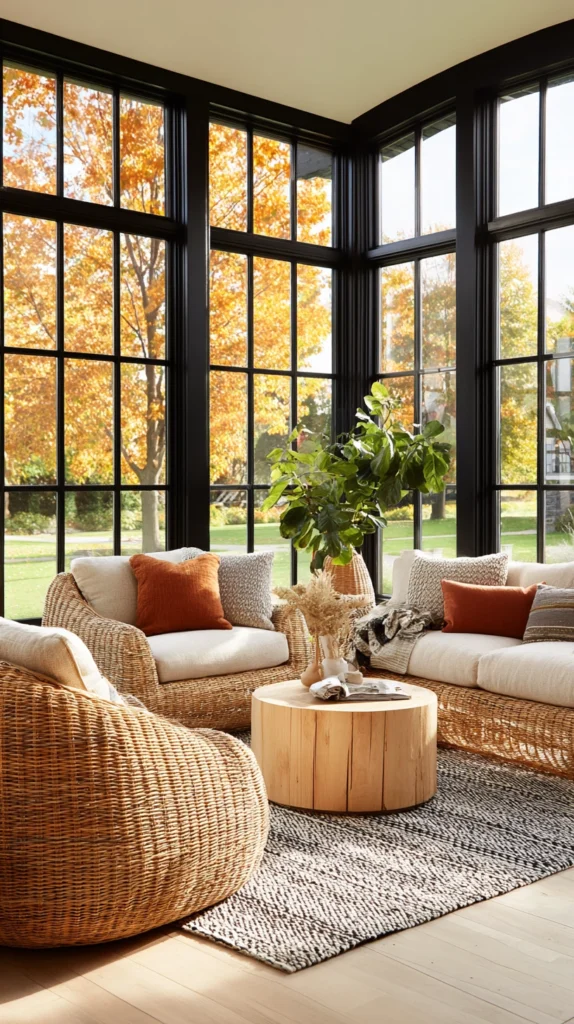
Rattan or wicker seating and accent pieces, chosen specifically for how they pair with a room full of natural light — the furniture material most at home in a sunroom across every season, fall included.
Why this material fits a sunroom better than most others
- The light-and-shadow relationship: rattan and wicker cast distinctive woven shadows when sunlight passes through them, an effect unique to a room with this much natural light
- The texture contribution in a glass-heavy room: a sunroom’s hard, reflective surfaces — glass walls, often tile or stone flooring — benefit from a material as textural as woven rattan
- The year-round versatility: unlike some summer-specific furniture choices, rattan transitions into fall easily once paired with the right cushions and throws, rather than needing to be swapped out entirely
The options
- A rattan armchair, paired with the reading nook from Idea #2
- A wicker loveseat or small sofa, for a slightly larger seating commitment
- A rattan side table or plant stand, adding the material in a smaller, lower-cost way
- Vintage or peacock-style rattan chairs, for a more distinctive, statement-making version of the same material
The practical execution
- Choose cushions in deeper, warmer tones for fall, replacing any bright summer cushion covers that came with the furniture originally
- Check rattan and wicker pieces for any sun damage or fading from a full summer of direct light exposure before the season changes
- Add a sealant or protective finish to any natural, unfinished rattan if it will continue sitting in direct sun through fall and winter
Cost breakdown
- Rattan accent chair: $150–400
- Wicker loveseat: $300–700
- Total: $150–700, depending on scale
4. The Seasonal Pillow Swap (The Fastest Color Change in the Room)
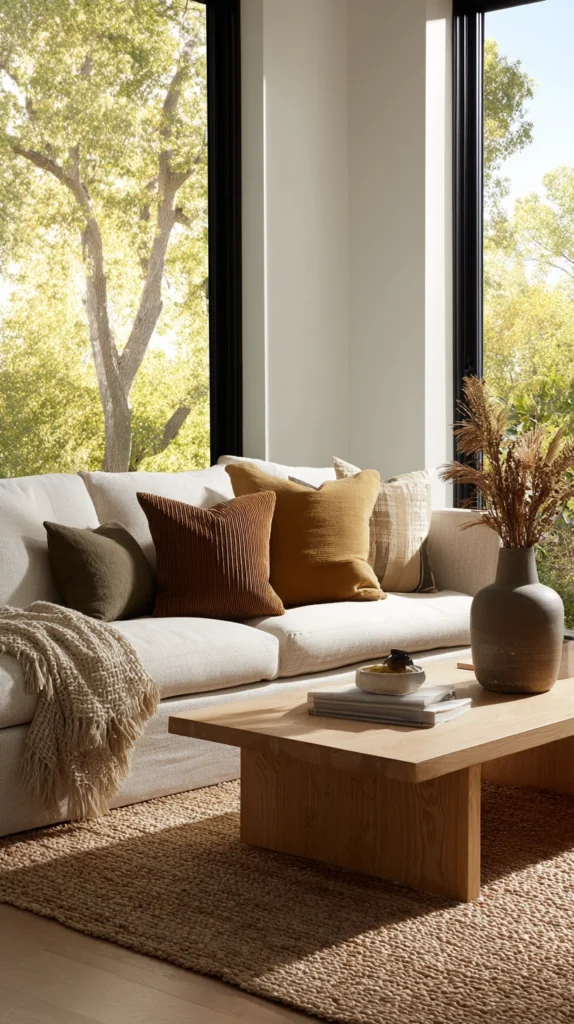
Replacing bright summer throw pillow covers with deeper, warmer tones — rust, olive, mustard, deep plum — the single fastest and least expensive way to shift a sunroom’s entire color story for fall.
Why pillows do more work here than almost anywhere else in the house
- The high-visibility, low-cost ratio: pillows sit directly in the main sightline of any seating area, making this one of the most cost-effective color changes available in the whole room
- The quick-turnaround advantage: unlike repainting or replacing furniture, a pillow cover swap takes minutes per pillow and requires no tools
- The seasonal flexibility it builds in: once a rotation of pillow covers exists, the same furniture can shift from summer to fall to winter without ever buying new pillow forms
The options
- Solid-color covers in deep autumn tones, as a base layer across most of the seating
- A patterned cover or two, in plaid, check, or a subtle botanical print, mixed in among the solids
- Velvet or corduroy covers, adding a textural, tactile warmth that linen and cotton don’t provide
- A mix of sizes, varying from small lumbar pillows to larger square ones for visual interest
The practical execution
- Keep pillow forms separate from covers, storing summer covers for reuse next year rather than buying new forms each season
- Choose two or three colors maximum across the whole room, even while mixing a few patterns and textures
- Wash or air out covers before storage at the end of each season, so they’re ready to use again without smelling musty
Cost breakdown
- Pillow cover, each: $12–25
- A full room refresh (6–8 covers): $80–180
- Total: $80–180
5. The Potted Fall Foliage and Plants (Living Color That Changes With the Season)
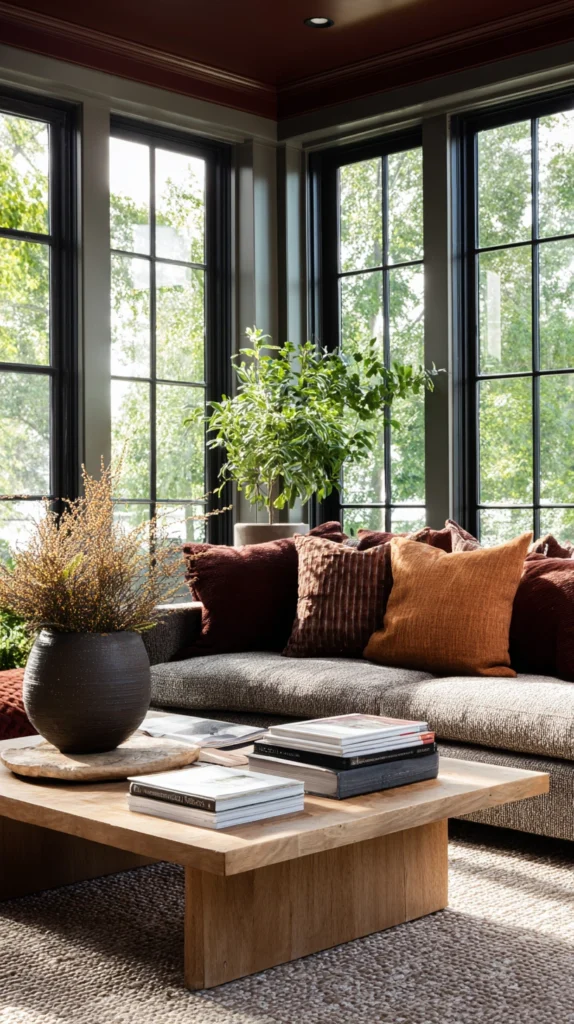
A grouping of potted plants chosen specifically for fall color and texture — ornamental kale, mums, or foliage plants with deep seasonal tones — placed throughout the sunroom’s natural light.
Why a sunroom is the best room in the house for this idea
- The light advantage no other room can match: a sunroom typically receives more consistent natural light than any other indoor space, making it the ideal location for plants that need real sun rather than just ambient room light
- The living-color value: unlike a painted wall or a pillow cover, plants change and grow through the season, giving the room a sense of real time passing that static decor can’t replicate
- The texture and color it adds without paint: deep burgundy, rust, and gold foliage plants introduce fall’s color palette without touching a single wall
The options
- Mums in deep autumn tones, grouped in a cluster near the main seating area
- Ornamental kale or cabbage, for a rosette shape and color reading as almost floral
- Foliage houseplants with naturally deep or variegated coloring, for a more permanent, less seasonal version of the same effect
- A mixed grouping, combining a few flowering or colorful plants with taller green foliage for height variation
The practical execution
- Group plants by height, with taller pieces toward the back or in corners and shorter ones closer to seating
- Watch for temperature swings near the glass, since a sunroom can get colder at night than the rest of the house, which matters for any plant sensitive to cold drafts
- Rotate pots occasionally for even light exposure, since a sunroom’s directional light can cause uneven growth faster than a more diffusely lit room
Cost breakdown
- Mum or ornamental kale, single pot: $8–18
- A full grouping (6–8 plants): $60–150
- Total: $60–150
6. The Layered Area Rug (Grounding a Room That’s Often All Hard Surface)
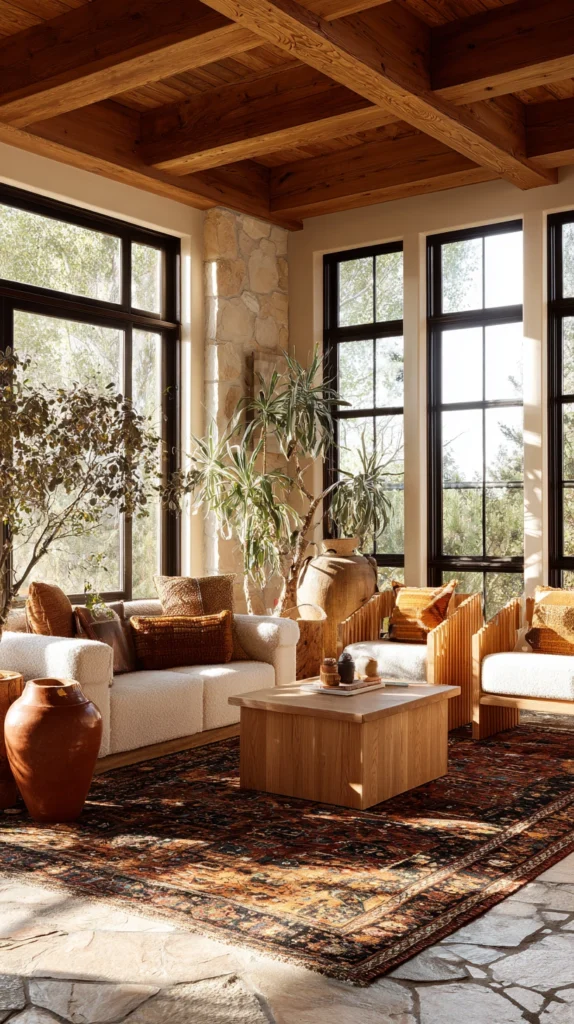
A substantial area rug, often layered over the tile, stone, or wood flooring common in sunrooms — the addition that brings genuine warmth underfoot to a room that loses heat fast through its glass walls.
Why flooring matters more in a sunroom than almost anywhere else
- The cold-floor problem unique to this room: sunroom flooring is frequently tile or stone, chosen for summer durability, and that same flooring turns genuinely cold once fall temperatures drop
- The visual grounding it provides: a room with this much glass and light benefits from a rug that anchors the seating area, the same way a rug defines a living room or foyer
- The sound-softening bonus: hard flooring in a glass-walled room can create more echo than a typical living space, and a rug helps absorb some of that
The options
- A wool or wool-blend rug, durable and genuinely warm underfoot
- A flatweave rug, lower-profile and easier to layer over existing flooring without raising furniture height significantly
- A vintage or distressed-look rug, already forgiving of the wear a high-light, high-use room puts on it
- A smaller layered rug over a neutral jute base, adding pattern without committing the whole floor to one design
The practical execution
- Choose a rug pad rated for the existing flooring material, since tile and stone both benefit from a grip layer underneath to prevent sliding
- Size the rug to extend a few inches beyond the front legs of the main seating, rather than leaving an awkward gap of bare floor between rug and furniture
- Check for fading from direct sun exposure periodically, since a sunroom’s light is more intense and more constant than in most other rooms
Cost breakdown
- Budget area rug: $80–180
- Mid-range wool or wool-blend rug: $200–450
- Total: $80–450
7. The String Light and Lantern Layer (Warmth for the Hours After Sunset)
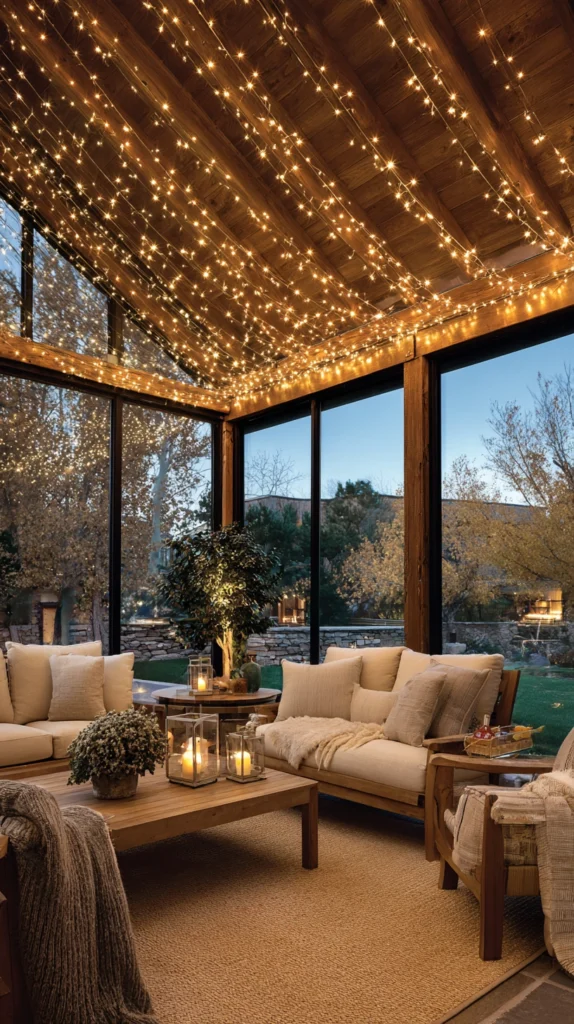
String lights woven along a window frame or ceiling beam, paired with a few small lanterns set on side tables — the lighting layer that carries the sunroom’s coziness past the point where its main asset, natural light, disappears for the day.
Why a room built around daylight needs its own evening plan
- The daylight-dependency problem it solves: a sunroom is the brightest room in the house during the day and one of the darkest once the sun goes down, unless it has its own dedicated lighting plan
- The early-fall-sunset case: as daylight hours shorten, this gap between “bright sunroom” and “dark sunroom” arrives earlier and earlier, making this lighting layer more relevant by the week
- The warm-glow reinforcement: string lights and lanterns extend the same cozy, golden tone the room has during a sunny fall afternoon into the evening hours
The options
- Warm white string lights, run along a window frame, ceiling beam, or the back of a large piece of furniture
- Battery or rechargeable lanterns, set on side tables or the floor near the seating area
- A small floor lamp or two, for a more traditional ambient light source alongside the string lights
- Flameless candles, layered in with the lanterns for a softer, flickering quality of light
The practical execution
- Use warm-toned (2700–3000K) bulbs throughout, matching the cozy feel of the rest of the room’s fall styling
- Mount string lights along existing architectural features — a window frame, a beam — rather than drilling new mounting points into glass-adjacent walls
- Add a dimmer or simply choose lower-wattage options, since a sunroom in the evening should feel soft and low-lit rather than as bright as it is during the day
Cost breakdown
- String lights, one set: $15–35
- Lanterns, a pair: $25–55
- Total: $40–90
8. The Window Treatment Layer (Managing Both Glare and Heat Loss)
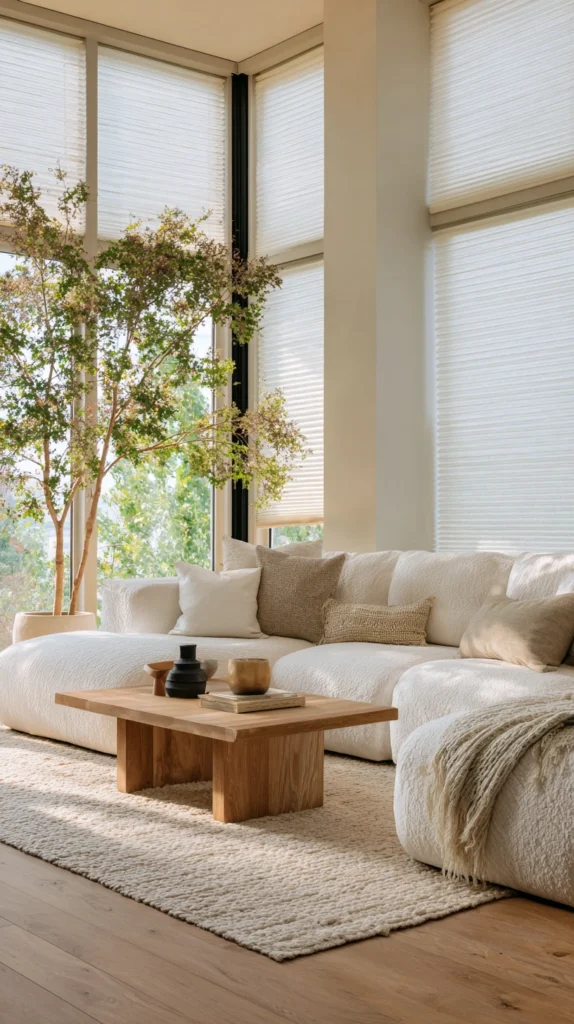
A layered window treatment — a sheer panel for daytime glare, paired with a heavier curtain or cellular shade for evening warmth — the functional upgrade that makes the room’s defining feature, its glass, work for fall instead of against it.
Why window treatment matters more here than in any other room
- The dual problem it solves: a sunroom faces two separate light and temperature issues fall specifically intensifies — lower-angle glare during the day and faster heat loss once the sun goes down
- The glare-specific case: fall’s lower sun angle often creates more direct, harsher glare through sunroom glass than the more overhead summer sun did, even though the room gets less total daylight overall
- The heat-retention function: a heavier curtain or cellular shade, closed in the evening, genuinely helps hold warmth in a room that loses it faster than the rest of the house
The options
- Sheer curtain panels, diffusing daytime glare without blocking the view or the light entirely
- Cellular or honeycomb shades, specifically designed to trap an insulating layer of air against the glass
- A heavier curtain panel, closed only in the evening for warmth, paired with the sheers for daytime use
- A combination treatment, layering sheers behind a heavier curtain on the same rod, switched depending on the time of day
The practical execution
- Measure each window individually, since sunrooms frequently have multiple window sizes and shapes rather than a single standard dimension
- Close heavier treatments specifically in the evening to capture the heat-retention benefit, rather than leaving them open all day out of habit
- Choose washable or easily cleaned fabrics, since sunroom windows accumulate more condensation and dust from temperature shifts than interior room windows do
Cost breakdown
- Sheer curtain panels, per window: $20–40
- Cellular shades, per window, materials: $40–100
- Total: $60–800+, depending on the number of windows and treatment type
9. The Small Space Heater or Electric Fireplace (Real Warmth for a Room That Needs It)
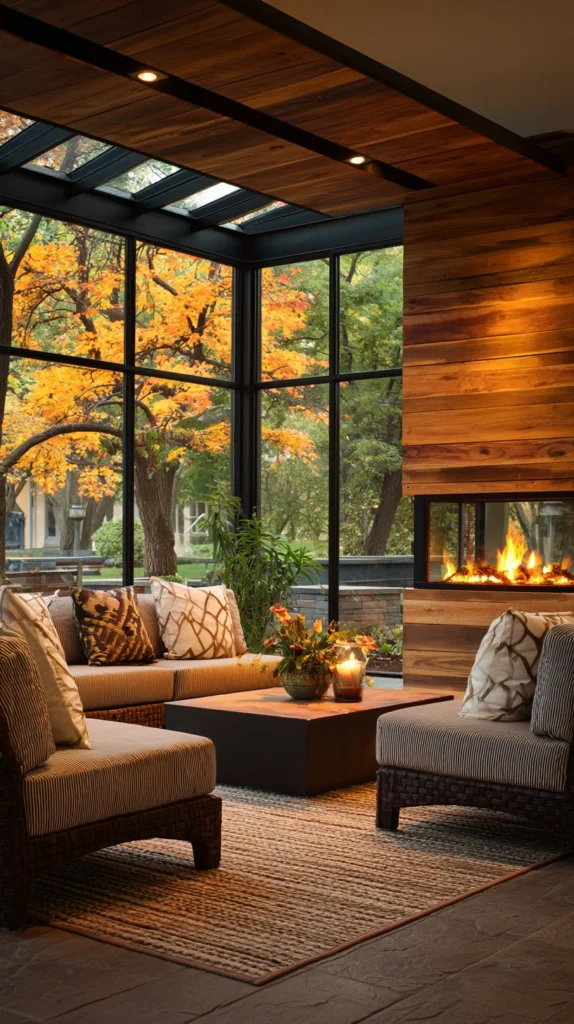
A compact space heater or a freestanding electric fireplace, positioned near the main seating area — the addition that solves the sunroom’s core fall problem directly, rather than working around it with layers alone.
Why this idea addresses the room’s actual limitation, not just its appearance
- The structural reality it accepts rather than fights: a sunroom, by design, has less insulation than the rest of the house, and no amount of styling fully compensates for that once temperatures really drop
- The extended-use payoff: a genuinely warm sunroom gets used for months longer into the fall and winter than one relying on throws and rugs alone
- The ambiance bonus an electric fireplace specifically offers: unlike a space heater, an electric fireplace adds a visual focal point and a sense of occasion to the room, not just function
The options
- A compact electric space heater, the most affordable and flexible option, easily moved or stored
- A freestanding electric fireplace, doubling as a piece of furniture and a genuine heat source
- A wall-mounted electric fireplace, for a more built-in look without the floor footprint
- A radiant infrared heater, for more targeted warmth directed at the seating area specifically
The practical execution
- Confirm the sunroom’s electrical circuit can handle the heater’s draw, especially if other lighting and devices are also running in the same room
- Position any heater with adequate clearance from furniture, curtains, and rugs, per the manufacturer’s safety guidelines
- Use a heater with a built-in thermostat or timer for both safety and energy efficiency, rather than running it continuously at full output
Cost breakdown
- Small space heater: $30–80
- Freestanding electric fireplace: $200–600
- Wall-mounted electric fireplace: $300–900
- Total: $30–900, depending on direction
10. The Wood Accent Wall or Beam (Material Warmth Against All That Glass)
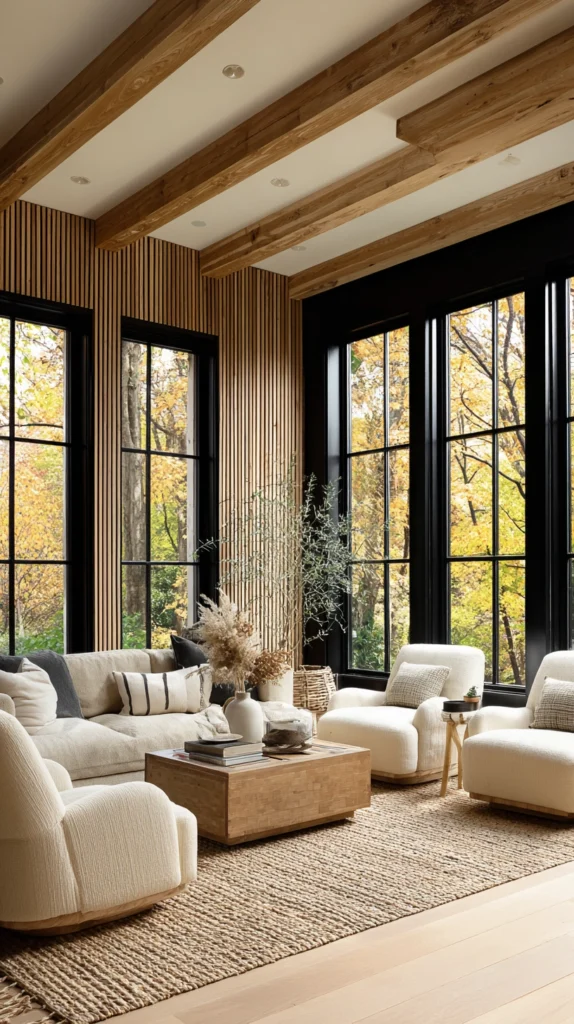
A single accent wall in wood paneling, or an exposed beam added across the ceiling — the structural material change that gives a glass-dominated room a genuine sense of warmth and weight.
Why wood specifically counters what glass does to a room
- The material-balance correction: a sunroom’s walls are mostly glass, and a single wood surface introduces the kind of warmth and texture the rest of the room structurally can’t provide on its own
- The grounding effect on a bright room: wood, especially in a warm tone, visually anchors a space that can otherwise feel slightly untethered given how much of it is transparent
- The architectural character it adds: a beam or paneled wall gives the room a sense of having real structure, beyond just glass panels and a roof
The options
- A shiplap or paneled accent wall, on the one solid wall most sunrooms have, opposite or adjacent to the glass
- A single exposed beam, run across the ceiling for height and architectural interest
- Wood slat paneling, for a more modern, linear take on the same warm-material idea
- A reclaimed or rustic wood feature, for a more textured, weathered version of the same wall treatment
The practical execution
- Confirm the wall chosen for paneling is a true solid wall rather than another glass or screen panel, since most sunrooms have only one or two non-glass surfaces to work with
- Choose lightweight materials for any ceiling beam addition, particularly important if the sunroom’s roof structure wasn’t built to support significant extra weight
- Stain or finish wood in a tone that complements the room’s existing furniture, tying the new material into the rest of the space rather than introducing a competing tone
Cost breakdown
- Wood paneling or shiplap, materials for one wall: $150–500
- Faux beam, single piece: $30–70
- Total: $30–500, depending on scope
11. The Hot Drink Station (Function That Doubles as a Focal Point)
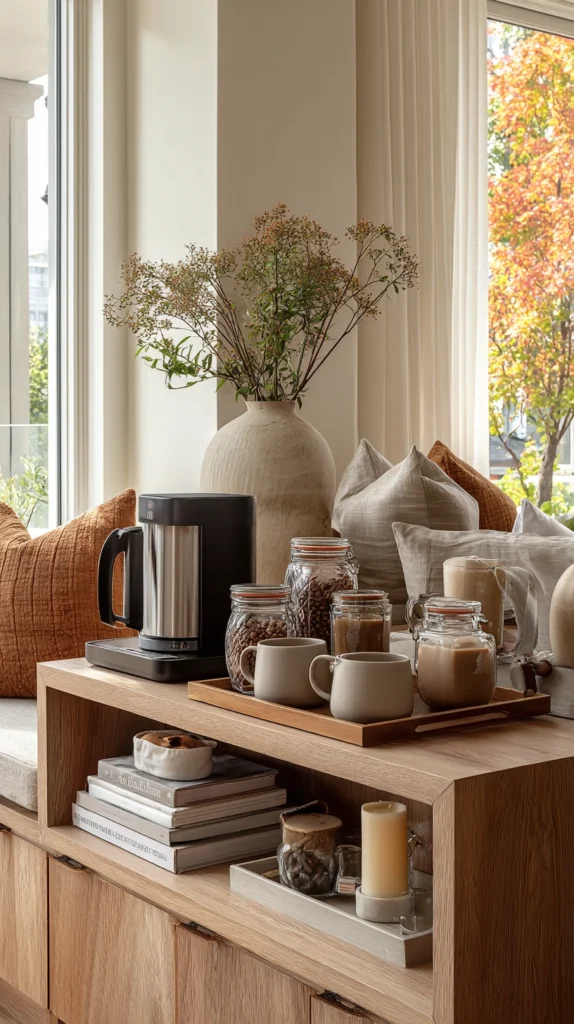
A small bar cart or side table set up with a kettle, mugs, and tea or cocoa supplies — the station that gives the sunroom a specific reason to be the spot for a slow autumn morning or evening.
Why a drink station belongs in this particular room
- The lingering-encouragement function: a sunroom that’s just chairs and a view invites a quick visit; a sunroom with somewhere to make a warm drink invites someone to actually stay
- The repeated-use value: unlike a single decorative object, a drink station gets visited multiple times a day, doing more work relative to its cost than almost anything else on this list
- The natural light pairing: there’s a specific, well-loved appeal to drinking something warm while sitting in a sunlit room on a cold morning, which this idea sets up directly
The options
- A small bar cart, holding a kettle, mugs, and a few tea or cocoa tins
- A side table with a tray, a lower-footprint version for a smaller sunroom
- An electric kettle plugged in directly in the room, for genuinely making drinks on the spot rather than carrying them in from the kitchen
- A small crate of mismatched mugs, echoing the same gathered, not-matching look used elsewhere in farmhouse-style spaces
The practical execution
- Position the station within reach of the main seating, so it’s actually used rather than admired from across the room
- Choose a tray or base that can handle the occasional spill, given the function this piece is meant to serve
- Restock tea, cocoa, or coffee supplies seasonally, so the station stays genuinely useful rather than becoming a stagnant prop
Cost breakdown
- Small bar cart: $80–200
- Side table with tray: $40–100
- Electric kettle and mugs: $30–70
- Total: $70–270
12. The Gallery Wall or Art Display (Personality on the Room’s One Solid Wall)
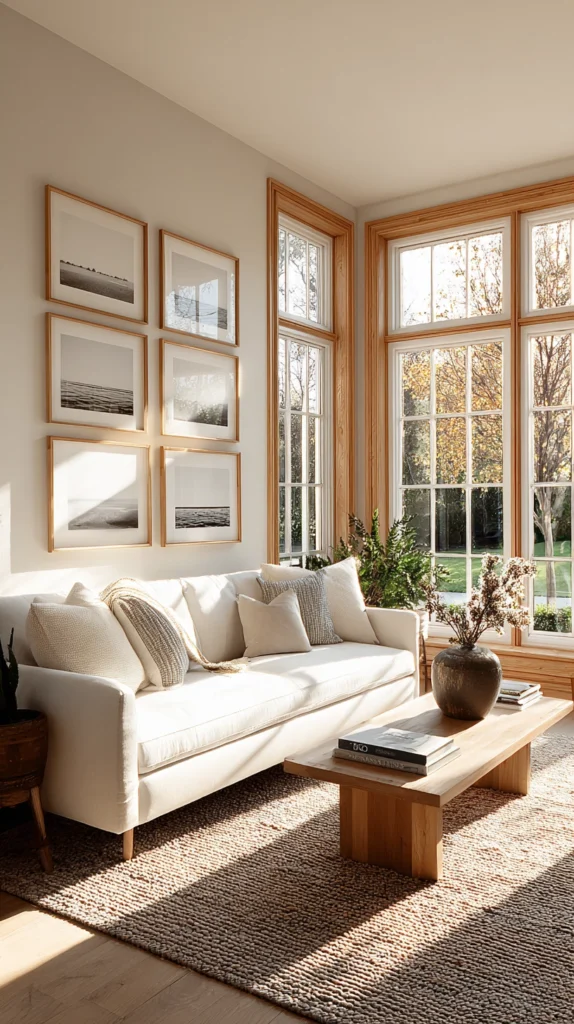
A curated arrangement of art or photos, hung on the sunroom’s single solid wall — the styling layer that gives the room’s one non-glass surface a clear sense of purpose.
Why this wall deserves deliberate attention
- The scarcity of wall space in this room specifically: most sunrooms have only one real wall to work with, which makes whatever goes on it disproportionately important to the room’s overall character
- The personal-touch value: in a room otherwise defined by its view outward, a gallery wall is one of the few places personality gets introduced looking inward instead
- The seasonal flexibility it offers: art and photos can be swapped or added to gradually, much like a gallery wall in any other room of the house, without committing to anything permanent
The options
- A grid layout, uniform frame sizes and spacing, for the most formal and structured option
- A salon-style cluster, mixed frame sizes and a mix of art, photos, and small objects, more forgiving of imperfect spacing
- A single oversized piece, rather than a grouping, if the wall is too narrow for a full cluster
- Botanical or nature-themed art, tying the wall’s content back to the room’s emphasis on natural light and the outdoors
The practical execution
- Lay the arrangement out on the floor before drilling a single hole, adjusting spacing until the layout feels balanced
- Center the visual middle of the whole arrangement at eye level, roughly 57–60 inches, not the top or bottom edge
- Choose UV-protective glass or acrylic for any framed pieces, given how much direct sunlight this particular wall is likely to receive over the course of a day
Cost breakdown
- Frames, assorted budget options: $10–25 each
- A gallery wall of 5–7 pieces: $70–200 total
- Total: $70–200
13. The Candle Layer (The Smallest, Warmest Finishing Touch)
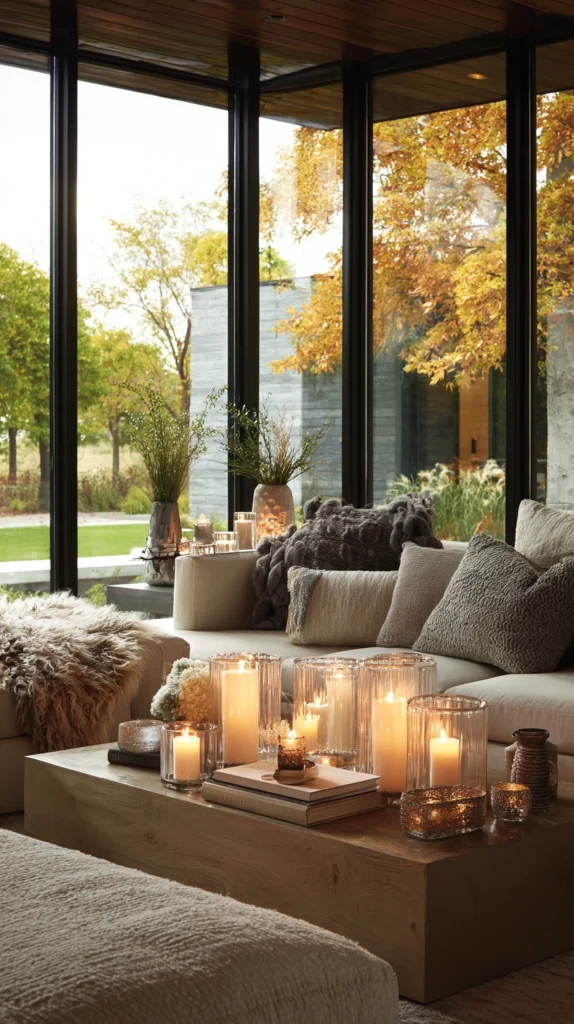
A few candles, grouped on a side table or the drink station from Idea #11, in a warm fall scent — the lowest-cost, most immediately sensory addition on this entire list.
Why candlelight earns its place even in a room full of other lighting
- The flicker effect no fixed light replicates: even alongside string lights and lanterns, a candle adds a moving, organic light quality nothing electric fully matches
- The scent layer it adds for free: a cedar, amber, or spiced fall scent reinforces the same cozy mood the rest of the room’s styling is working toward, at almost no additional cost
- The lowest barrier to entry of any idea on this list: this can be added the same day it’s thought of, with no installation, no measuring, and no tools
The options
- A cluster of pillar candles in varying heights, grouped on a side table or the drink station
- Flameless LED candles, for a safer option in a room with a lot of fabric throws and curtains nearby
- Taper candles in simple holders, for a more formal, elevated version of the same idea
- A scented candle in a stoneware or glass vessel, tying the material back to other accessories used elsewhere in the room
The practical execution
- Keep open flames away from curtains, throws, and anything else that could catch a draft from a nearby window or door
- Group in odd numbers and varying heights for the most natural-looking arrangement
- Choose a single consistent scent across the room rather than several competing fragrances from different candles burning at once
Cost breakdown
- Set of pillar or taper candles: $15–35
- Flameless LED candles: $20–45
- Total: $15–45
The candle lit beside the reading chair as the light outside starts to fade: the smallest object on this whole list, and often the one that makes the room feel finished for the evening.
14. The Pumpkin and Gourd Display (The Most Direct Seasonal Signal in the Room)
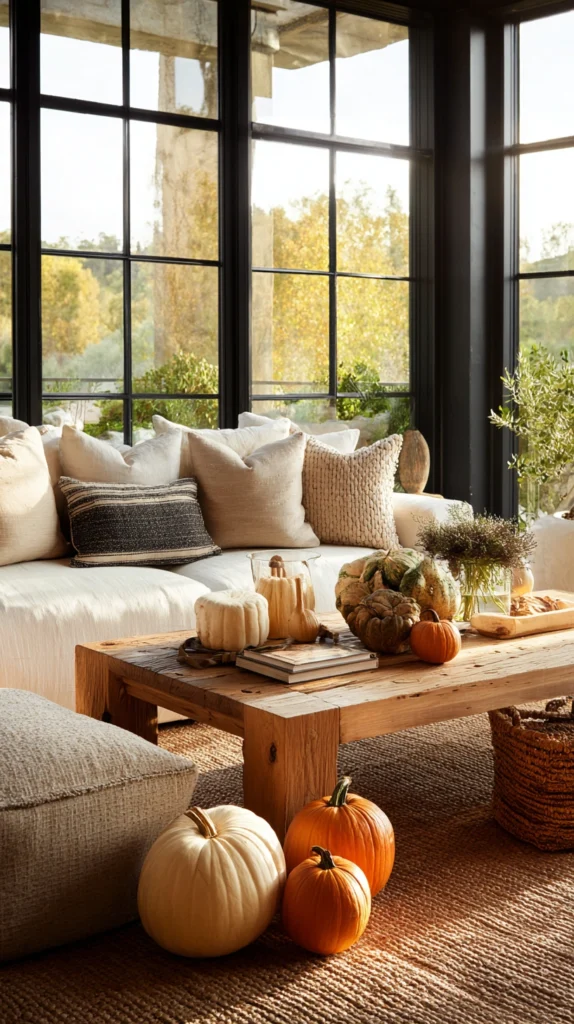
A small cluster of pumpkins and gourds, arranged on the floor, a side table, or a window ledge — the most directly seasonal, lowest-commitment decoration on this entire list.
Why this small display still earns a dedicated spot
- The instant seasonal signal: nothing else on this list announces “fall” as immediately or as recognizably as a small pumpkin cluster
- The temporary-by-design value: unlike most of the furniture and structural ideas on this list, this layer is meant to be swapped out each season, removing any pressure to get it perfectly right
- The natural fit with the room’s light: a sunroom’s abundant natural light shows off the texture and color variation of pumpkins and gourds better than a dimmer room would
The options
- Classic orange pumpkins, in a small graduated cluster
- Heirloom or specialty varieties, for a more curated, less generic look
- A mix of gourds in varied shapes, adding texture variety alongside the pumpkins
- Painted or whitewashed pumpkins, for a softer palette that ties more directly into a neutral sunroom color scheme
The practical execution
- Position near, but not directly in, a high-traffic walking path through the room
- Group in odd numbers for a more natural-looking cluster than an even, evenly spaced arrangement
- Replace any pumpkin that begins to soften, since a sunroom’s direct light and warmth can actually accelerate this more than a shadier room would
Cost breakdown
- Small pumpkin and gourd cluster: $20–45
- Total: $20–45
15. The Hanging Plant Display (Greenery That Uses the Room’s Vertical Light)
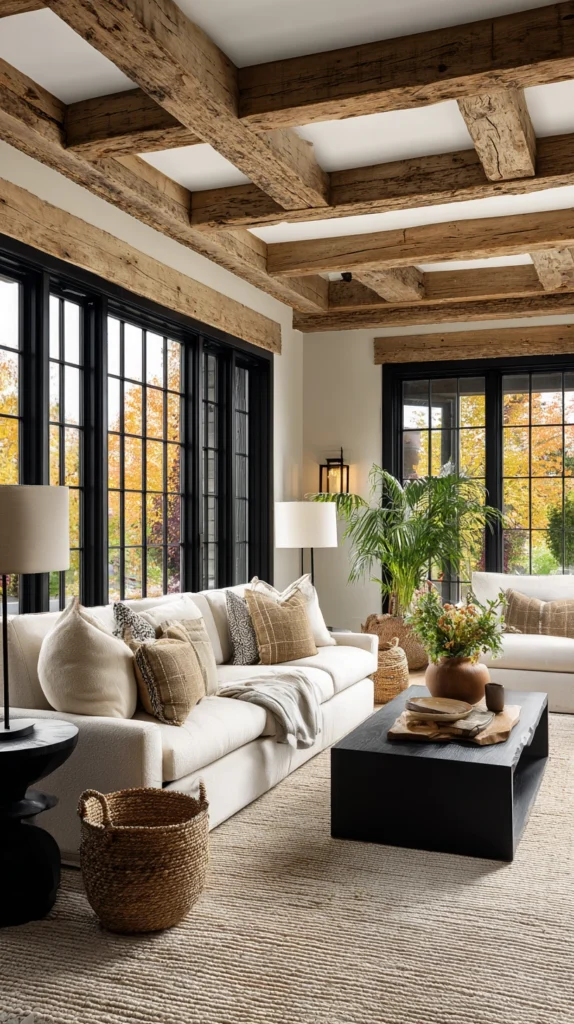
A hanging plant or macramé planter, suspended from a ceiling beam or hook near a window — the greenery idea that takes advantage of a sunroom’s light at a height no floor-level plant can reach.
Why hanging plants belong specifically in this room
- The vertical light advantage: a sunroom’s light often comes from multiple directions, including higher up near the ceiling, which a hanging plant can access in a way a floor or table plant can’t
- The space-efficient greenery it offers: in a room where floor and table space is already being used by furniture and the rug from Idea #6, a hanging plant adds living texture without competing for surface area
- The textural pairing with rattan: a woven macramé or rattan hanger pairs naturally with the rattan furniture from Idea #3, reinforcing the same material language used elsewhere in the room
The options
- A trailing pothos or philodendron, in a simple ceramic hanging planter
- A macramé-hung plant, adding woven texture to the hanger itself, not just the furniture
- A fall-toned trailing plant, chosen for foliage with some red, burgundy, or gold variegation
- A cluster of two or three smaller hanging plants, at slightly different heights, rather than a single isolated pot
The practical execution
- Hang from a genuine structural point — a ceiling beam or a hook anchored into a joist — rather than relying on drywall alone to support the weight
- Position away from the most direct, intense midday sun if the plant species prefers indirect light, even within an already bright room
- Water and check regularly, since hanging plants dry out faster than potted ones at floor level, especially in a warmer, sunnier room
Cost breakdown
- Trailing plant, small: $10–25
- Macramé or ceramic hanger: $15–35
- Total: $25–60
The trailing plant catching afternoon light near the window: the smallest living detail in the room, and one of the few that keeps growing and changing long after every other idea on this list is finished.
The Cozy Fall Sunroom Roadmap
The work, sequenced:
Phase One (the comfort foundation):
- The reading nook (#2)
- The rattan and wicker furniture layer (#3)
- The small space heater or electric fireplace (#9)
- The layered area rug (#6)
Phase Two (the structural and window layers):
- The window treatment layer (#8)
- The wood accent wall or beam (#10)
- The gallery wall or art display (#12)
Phase Three (the textiles and living layers):
- The layered throw and blanket basket (#1)
- The seasonal pillow swap (#4)
- The potted fall foliage and plants (#5)
- The hanging plant display (#15)
Phase Four (the finishing touches):
- The string light and lantern layer (#7)
- The hot drink station (#11)
- The candle layer (#13)
- The pumpkin and gourd display (#14)
Getting Started This Weekend
The immediate-impact sunroom refresh:
One afternoon, three changes:
- Swap in a few warm-toned pillow covers (Idea #4)
- Add a blanket basket beside the main seating (Idea #1)
- Set out a small pumpkin and gourd cluster (Idea #14)
Total cost: $120–270. Time: about an hour. The room will already feel like a different season by the time the work is done.
The structural investment (the next big project):
The small space heater or electric fireplace (Idea #9) is the single most important investment on this list, because it solves the actual problem every other idea is working around. Once the room is genuinely warm, every layer on this list — the throws, the rug, the candles — adds to a comfort that’s already real, rather than trying to fake it on its own.
What a cozy fall sunroom provides that the summer version of the same room can’t:
The warmth that’s the actual point, not just the mood:
- A heater or fireplace solving the room’s real structural disadvantage directly
- A rug and window treatment working together to keep the cold from winning
- A blanket basket meaning the room’s chill never has to end the visit early
The light used differently than it was in July:
- A reading nook that takes advantage of daytime sun no other room in the house can match
- String lights and candles carrying that same glow into the evening once the daylight runs out
- A hanging plant reaching toward light a floor-level pot never could
The reason to actually stay, not just pass through:
- A hot drink station that turns a quick visit into a slow morning
- A chair set up specifically for reading, not just sitting
- A gallery wall and a pumpkin cluster giving the room a personality that holds up against its own view
A sunroom was never going to coast through fall on the same setup that worked in July. The room’s biggest asset, all that glass, is also its biggest seasonal challenge, and the rooms that stay genuinely cozy through the colder months are the ones that planned for both at once. The throw pulled off the basket on a chilly afternoon is doing exactly the job it was put there for. The heater running quietly in the corner is the reason every other idea on this list gets to keep doing its job too.