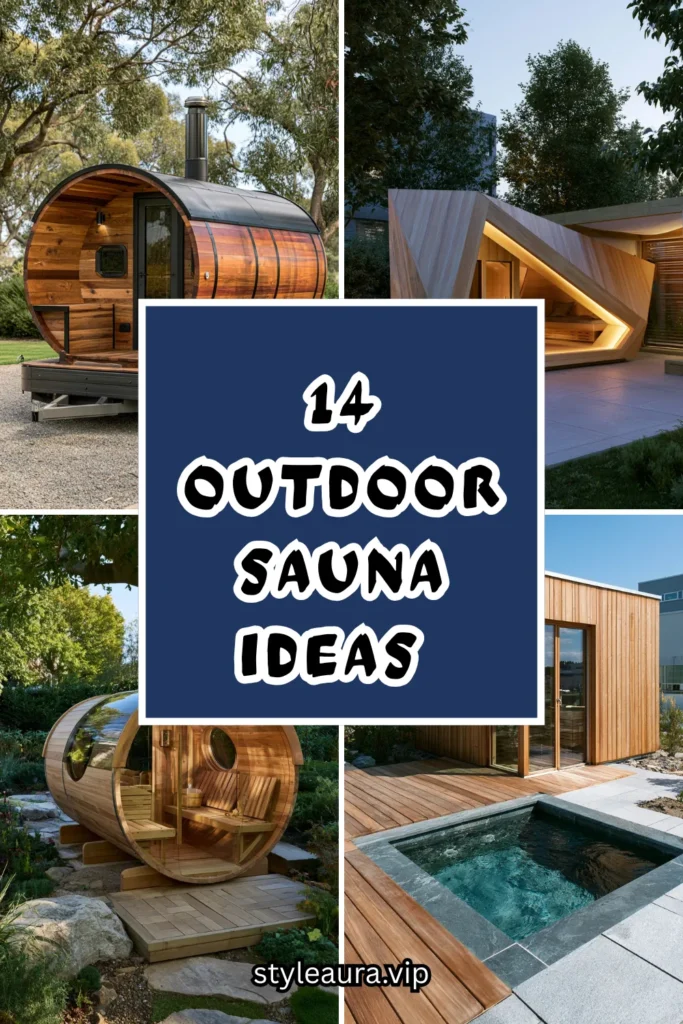
14 Outdoor Sauna Ideas for a Backyard Spa Experience
The outdoor sauna is not a luxury item masquerading as wellness infrastructure.
It is wellness infrastructure that happens to feel like a luxury.
The distinction matters. A luxury item provides pleasure and status. Wellness infrastructure provides measurable, consistent, evidence-based benefits to physical health, mental health, and daily quality of life. The outdoor sauna does both, but it is the second category that justifies the investment in the clearest possible terms.
Regular sauna use reduces cardiovascular disease risk. It reduces inflammatory markers in the blood. It improves sleep quality, reduces cortisol levels, and produces the kind of profound physical relaxation that most people can find no other way to access in daily life. The Finnish, who have been building and using saunas for thousands of years, are not doing it for aesthetic reasons.
The outdoor sauna that you can step into from your own garden whenever the mood or the need arises is a different proposition from the sauna at the gym or the hotel spa. It is yours. It is available without booking, without travel, without other people’s conversations in the changing room. It is available at eleven at night when sleep will not come or at six in the morning before the day begins.
These 14 ideas build that space in your backyard.
Why Outdoor Saunas Belong Outside Rather Than Indoors
The indoor sauna is a compromise.
The outdoor sauna is the real thing.
Not because outdoor saunas are inherently better constructed or more effective as heat spaces. But because the outdoor sauna creates a complete ritual that the indoor sauna cannot match. The transition from the cool outdoor air into the intense heat of the sauna. The exit from the sauna back into that cool air, which is the moment where the body’s heat regulation produces the most significant physiological benefit. The plunge into cold water, the roll in the snow, the walk around the garden in a robe with steam rising from the skin.
This ritual of heat, cold, and rest requires the outside world to participate. The indoor sauna provides heat. The outdoor sauna provides the complete experience.
The Finnish concept of sauna wellbeing is not simply about the hot room. It is about the contrast between the hot room and everything around it. The outdoor sauna, positioned in the garden with cold shower access or a plunge pool nearby and comfortable outdoor seating for the rest periods, provides this contrast. The indoor sauna, exited into a corridor and a changing room, does not.
1. A Traditional Finnish Wood-Fired Barrel Sauna
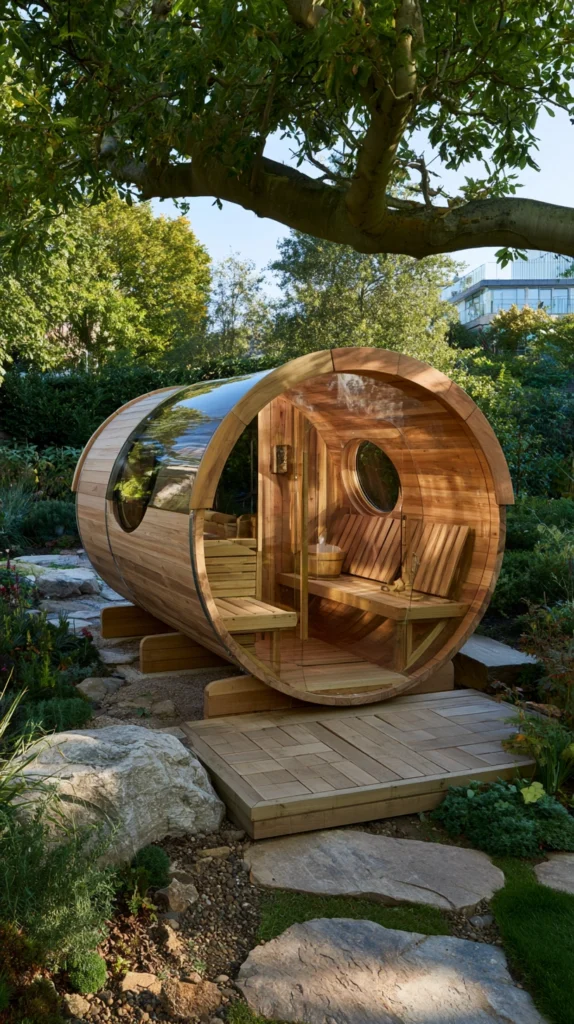
The barrel sauna is the outdoor sauna form that has become most widely associated with the contemporary garden sauna movement.
Its circular cross-section is not purely aesthetic. The curved interior walls and ceiling create a convection pattern that distributes heat more evenly than the rectangular rooms of standard sauna construction. The curved walls also mean the benches are naturally angled toward the centre of the sauna in a way that creates a more sociable and more comfortable sitting position.
The wood-fired option, with a traditional Kiuas stove using split birch or other hardwood, produces the specific heat quality that electric and gas saunas cannot replicate. The mass of the stone-filled stove, the way it radiates heat rather than simply convecting it, and the ability to create löyly, the steam produced by pouring water over the hot stones, all belong specifically to the wood-fired tradition.
A barrel sauna of two hundred and twenty centimetres diameter accommodates four to six people on two levels of bench. It can be installed on any level surface, decked or gravel, without any foundation work. The assembly is a two-person project of a full day. And once installed it requires only the wood supply and the water for löyly to function indefinitely.
Why the traditional wood-fired barrel sauna suits most backyard situations:
- No electrical supply required beyond the lighting circuit, which can be added by an electrician
- The barrel’s circular form sheds water naturally and requires minimal weatherproofing
- Wood firing produces the specific heat quality that serious sauna users value most highly
- Assembly requires no specialist skills or specialist tools beyond a willing helper
- The circular interior distributes heat more evenly than rectangular alternatives
- The aesthetic is simple and natural and suits garden settings without any architectural pretension
2. An Electric Barrel Sauna for Consistent Convenience
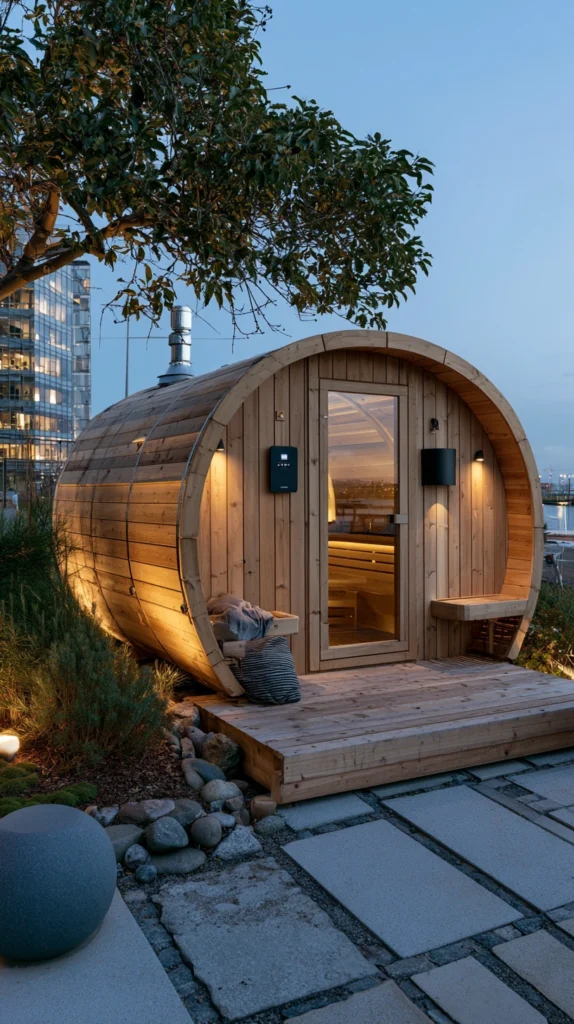
The electric barrel sauna provides the same form and approximately the same experience as the wood-fired version with one significant practical difference.
You set the temperature before you want to use it. You arrive at the sauna when it is already at the correct temperature. You spend no time managing the fire, no time waiting for the stove to reach operating temperature, and no time sourcing and storing firewood.
For the daily sauna user, this convenience is significant. The person who saunas every evening after work benefits from stepping into an already-prepared sauna rather than waiting thirty to forty minutes for the wood-fired stove to reach temperature.
The electric stove also produces a specifically even heat that some users prefer. There is no variation in temperature through the session as the wood fire cycles through its burn. The thermostat maintains a consistent temperature that can be adjusted in real time.
The trade-off is the electrical supply. An electric sauna stove of adequate wattage for a barrel sauna requires a dedicated electrical circuit. This is a professional electrician’s installation and must be compliant with the electrical regulations applicable to outdoor installations in the relevant jurisdiction.
3. A Garden Cabin Sauna With Changing Room
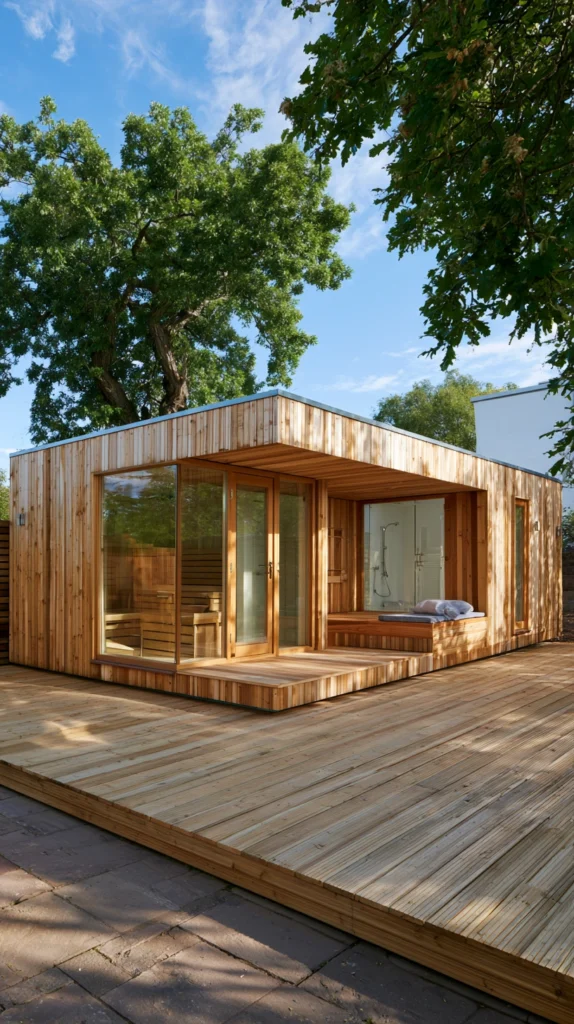
The cabin sauna takes the outdoor sauna beyond the single hot room and creates a complete sauna facility within a single garden structure.
The cabin typically consists of a small changing and rest area, a shower, and the sauna room itself. The rest area provides the place to cool down between rounds in the heat, to sit and drink water, to allow the body to return to a resting temperature before returning to the sauna or ending the session.
This three-room structure mirrors the sauna facilities of the Nordic countries more closely than any single-room barrel sauna can. The changing room means you can undress and dress without returning to the house. The shower means cold rinses are immediately available. The rest area means the full sauna ritual, heat, cool, rest, heat again, can be performed without leaving the structure.
A cabin sauna of approximately six metres by three metres provides all three functions adequately. It requires a level foundation, which may involve laying a concrete base or decked platform. It requires electrical supply for the stove and lighting, and plumbing for the shower.
The investment is significantly greater than a barrel sauna. The result is significantly more complete as a wellness facility.
4. An Infrared Sauna Pod
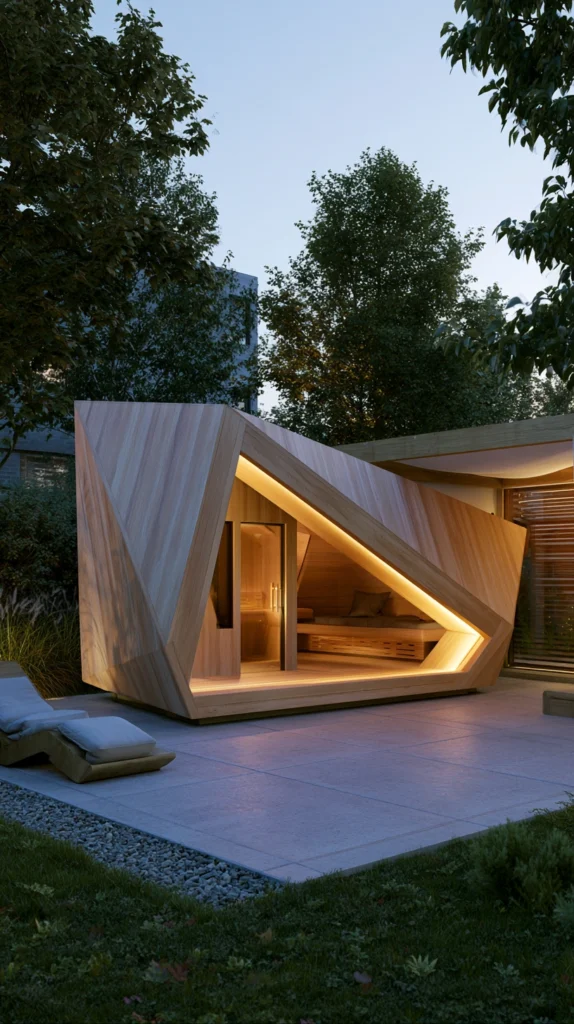
The infrared sauna is a different technology from the traditional sauna and it produces a different, complementary experience.
Where the traditional sauna heats the air around you to temperatures of seventy to one hundred degrees Celsius, the infrared sauna uses infrared radiant heat to warm your body directly at lower ambient temperatures of fifty to sixty degrees. The radiant heat penetrates into the body’s tissues more deeply than the surface heat of a traditional sauna at high ambient temperature.
For users who find the intense heat of a traditional sauna uncomfortable or who have health conditions that preclude very high temperature exposure, the infrared sauna provides many of the same physiological benefits at a more accessible temperature.
The infrared sauna pod, typically a single-person or two-person unit in a compact form, installs as easily as a piece of garden furniture in a sheltered, covered position. It requires a standard electrical connection rather than the dedicated high-wattage supply of an electric traditional sauna stove. And it heats to operating temperature in fifteen to twenty minutes rather than the thirty to forty minutes of a traditional sauna.
5. A Wood-Fired Sauna Hut With a View
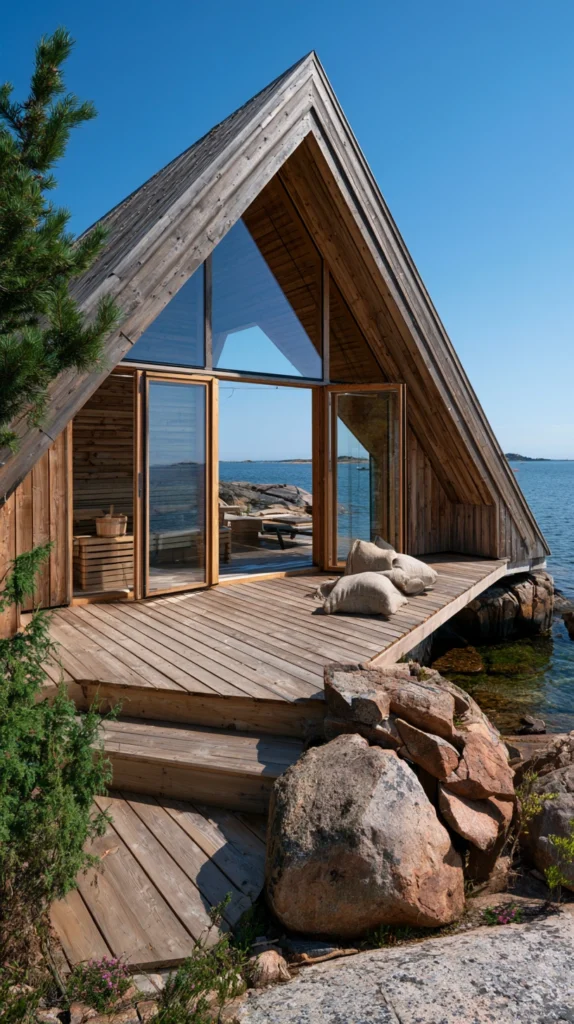
The sauna hut, a small shed-like structure with a pitched roof and simple timber construction, in a position chosen for its view of the garden or the landscape beyond, is the most specifically Nordic and most specifically atmospheric version of the outdoor sauna.
Position matters as much as construction for the sauna hut. The sauna placed at the bottom of the garden with a view back toward the house, the garden, or a borrowed landscape beyond the garden boundary, provides the visual experience during rest periods that makes the sauna hut a destination worth the walk to reach.
The view from outside the sauna during rest periods is as important as the heat experience inside it. Sitting on the sauna hut’s small deck, wrapped in a towel, watching the garden in the evening light or the stars through the trees, is the rest period experience that the sauna hut specifically provides and that the barrel sauna without a deck cannot.
The hut’s small deck, sized to hold two or three chairs and a small table for water and drinks, is as important to the sauna experience as the hot room itself.
6. A Lakeside or Streamside Sauna Where Possible
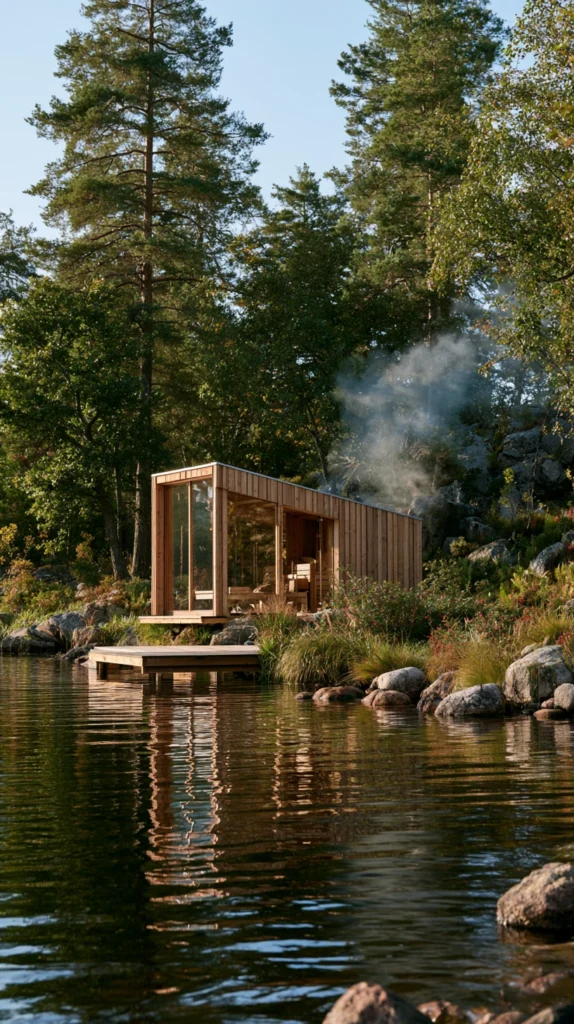
The sauna adjacent to natural cold water is the sauna in its most authentic Nordic context.
For gardens adjacent to a natural stream, a pond, or in the genuinely fortunate few cases a lake, the outdoor sauna positioned to allow direct access to cold water immersion creates the complete heat-cold contrast ritual that is the pinnacle of the sauna experience.
The Finnish tradition of the sauna beside the lake is not accidental. The cold water immersion after the heat is the most physiologically significant element of the Nordic sauna ritual. The acute cold exposure immediately after intense heat produces a cascade of physiological responses, noradrenaline release, improved circulation, improved immune function, that the heat alone cannot create.
Where natural water is not available, a cold plunge pool beside the sauna, or even a large galvanised horse trough filled with cold water and maintained with ice in summer, provides the functional equivalent.
7. A Sauna With an Integrated Plunge Pool
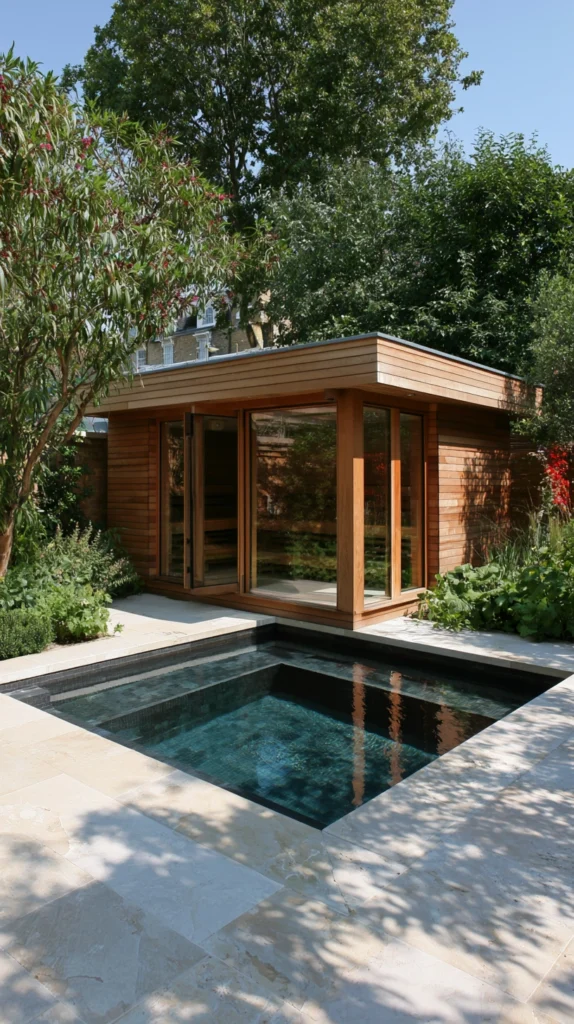
The integrated sauna and plunge pool installation is the most complete backyard spa experience available.
The proximity of the cold pool to the hot room eliminates the distance and the time between the heat exposure and the cold immersion. The transition is immediate. Exit the sauna door, take three steps, and enter the cold water. This immediacy is physiologically significant.
The plunge pool for sauna use does not need to be large. A pool of one and a half metres in diameter and one and a half metres in depth, large enough to immerse the body fully, provides the complete cold exposure that the ritual requires. Smaller pools exist that allow cold immersion in a seated or kneeling position.
The plunge pool requires filtration and, for year-round use, a chiller that maintains the water at a consistent cool temperature regardless of the ambient air temperature. A natural spring-fed or mains-fed pool in cool climates maintains adequate temperature through the cold season without chilling. In warm climates the chiller is essential.
8. A Mobile Sauna on a Trailer
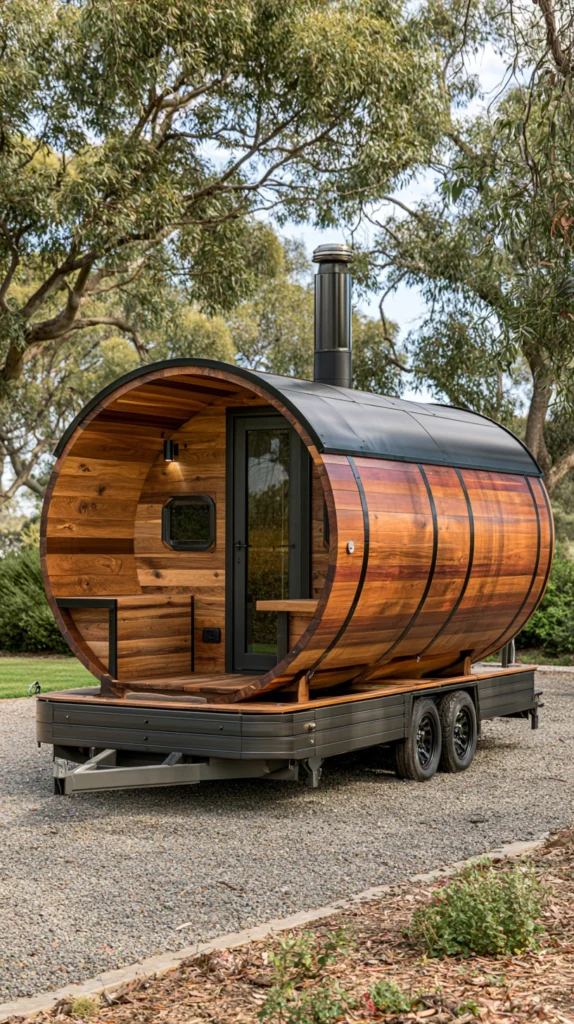
The mobile sauna is the option for the garden situation where a permanent installation is impractical or where the flexibility of a moveable structure is preferred.
A sauna built onto a standard trailer, in the barrel or hut form, can be positioned in any accessible part of the garden, parked under a tree for summer use and moved to a different position for winter, or taken away for camping trips, outdoor events, or loans to friends.
The mobile sauna requires no foundation, no building permit in most jurisdictions, and no permanent modification to the garden. It arrives as a complete, ready-to-use unit that requires only connection to an electrical supply or the wood supply for immediate use.
For renters, for those who plan to move in the medium term, or for those who are uncertain about committing to a permanent garden structure, the mobile sauna is the option that provides the full sauna experience without any of the permanence.
9. A Scandinavian Design Outdoor Sauna
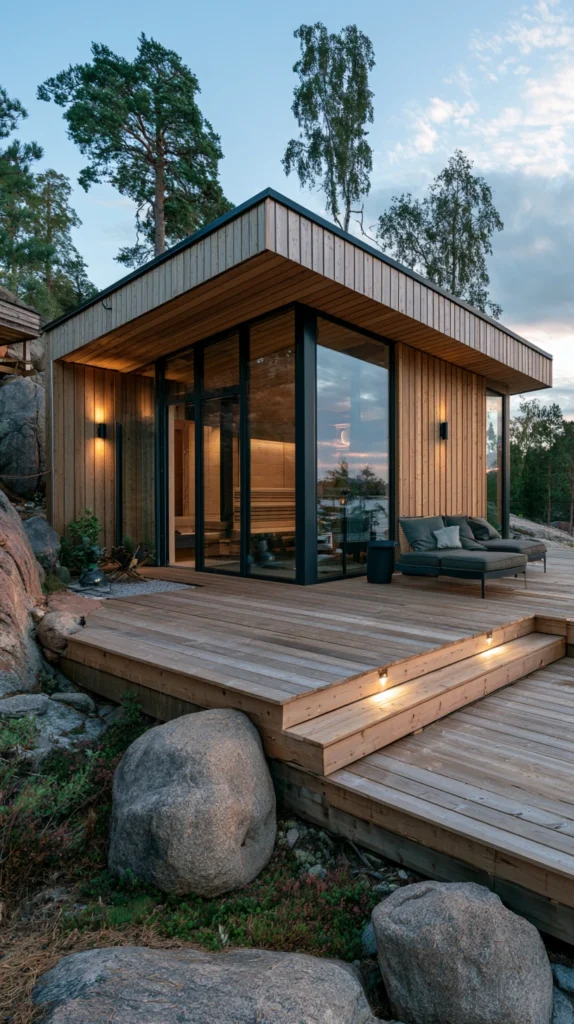
The Scandinavian approach to sauna design produces structures of architectural quality that deserve to be placed prominently in the garden rather than tucked into a corner.
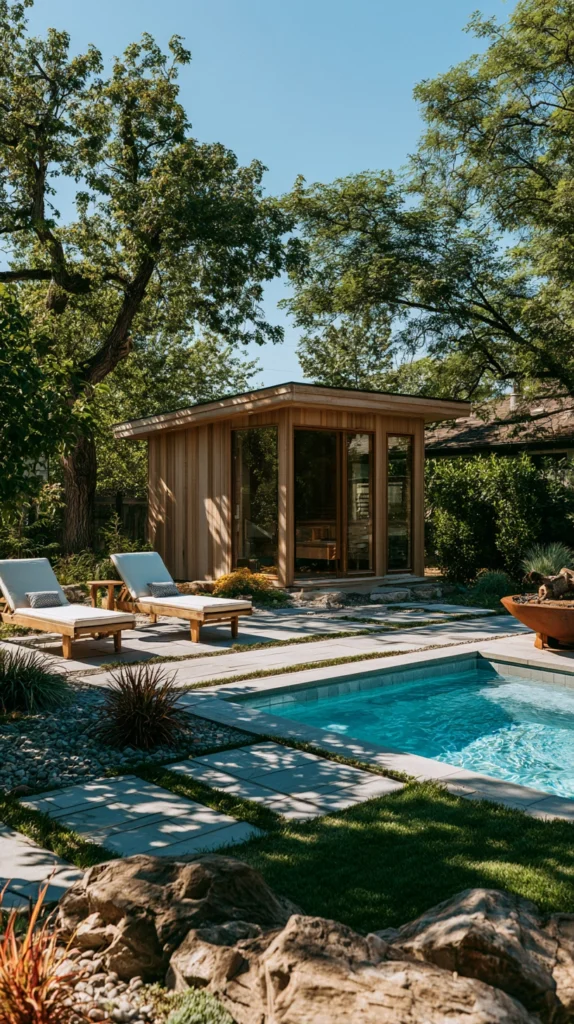
Clean lines. Natural timber in a simple, considered form. A flat or very slightly pitched roof. Large windows or glass panels on the front face that bring natural light into the hot room and provide the view from inside the sauna outward to the garden.
Manufacturers including Kota, Tylö, and Harvia produce outdoor saunas of this quality. The investment is greater than the mass-market barrel sauna but the result is a garden structure that adds to the architectural character of the outdoor space rather than simply providing a functional addition.
A Scandinavian design sauna positioned as a feature building in the garden, with a deck extending from its entrance and plantings that frame its position, can be the most beautiful structure in the entire outdoor space.
10. A DIY Timber Sauna From a Kit
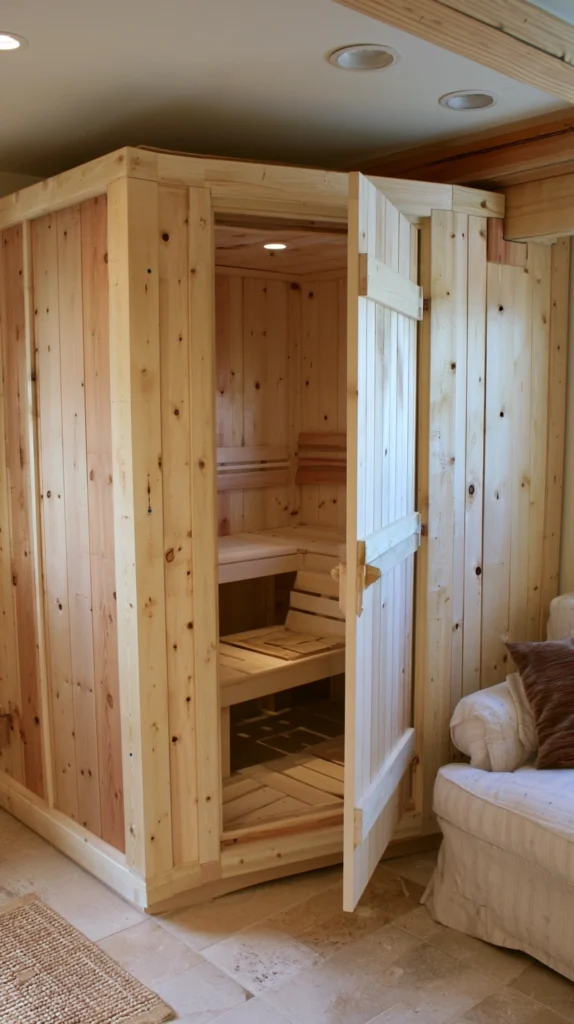
The sauna kit is the most accessible entry point to the DIY outdoor sauna build.
A prefabricated kit providing pre-cut and pre-shaped timber components, assembly instructions, the stove, the stones, the benches, the door, and the interior wall cladding, can be assembled by two moderately skilled people over a weekend with basic tools.
The kit approach eliminates the need for specialist joinery skills while still producing a genuinely customised sauna in the chosen position in the garden. The foundation, the exterior cladding choice, and the finishing details all remain with the builder.
The quality of the kit determines the quality of the resulting sauna. Kits from established manufacturers, Dundalk LeisureCraft, Almost Heaven, and similar, provide properly seasoned timber, quality stoves, and assembly instructions developed from years of production experience.
The kit sauna built over one weekend provides years of daily use at a total cost significantly below any contractor-built equivalent.
11. A Cold Plunge and Sauna Combination Outdoors
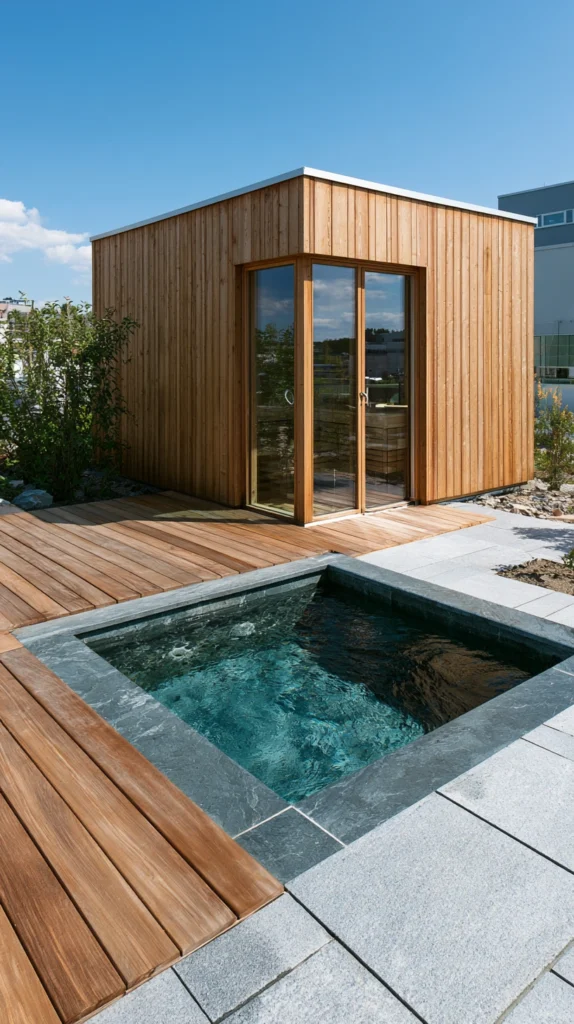
The outdoor wellness circuit of sauna and cold plunge, with rest seating between them, is the complete backyard spa experience.
The circuit works like this. Fifteen to twenty minutes in the sauna at ninety degrees. Exit into the cool outdoor air. Brief rest seated outside. Cold plunge for thirty seconds to three minutes. Exit. Rest in the outdoor air until breathing returns to normal. Return to the sauna. Repeat the cycle two or three times.
This circuit, performed consistently two to four times per week, produces cardiovascular benefits equivalent to moderate exercise, according to the research literature from Finnish sauna studies. The combination of heat and cold stress is the specific stimulus that produces these benefits.
The outdoor circuit requires the sauna, the plunge pool, and comfortable seating between them. The seating can be as simple as two wooden chairs and a small table. The circuit is about the physiological experience rather than the aesthetic of the surrounding environment, though a beautiful environment makes the experience more enjoyable and more likely to become a consistent habit.
12. A Sauna With a Fire Pit for Social Use
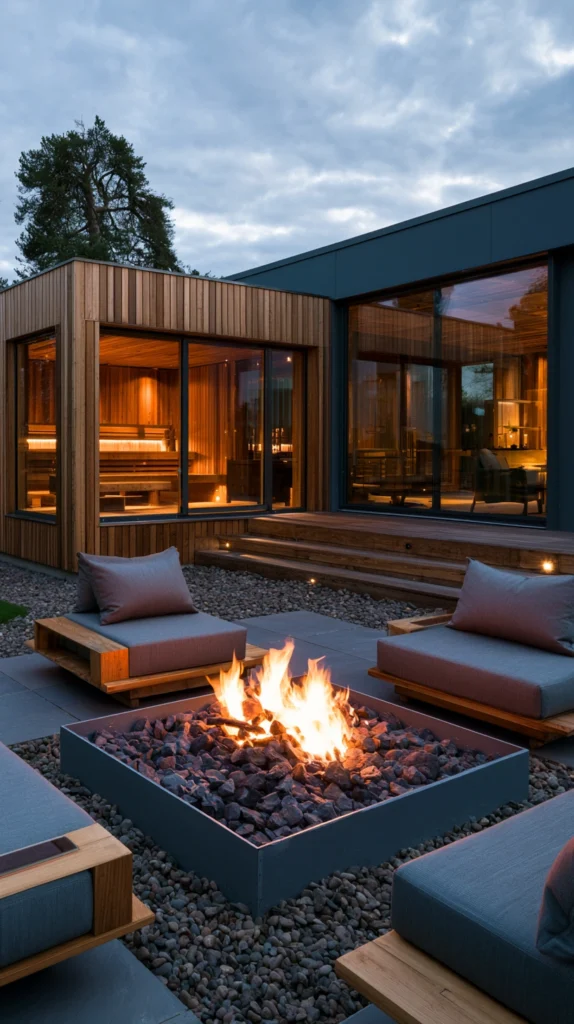
The outdoor sauna is fundamentally social in the Nordic tradition.
The post-sauna gathering around a fire, wrapped in towels and robes, is as central to the Nordic sauna culture as the hot room itself. The fire provides warmth for the rest periods. It provides light for the evening sauna session. And it provides the social gathering point that makes the sauna a community experience rather than a solitary one.
A fire pit positioned between the sauna and the outdoor seating, with comfortable log seating or Adirondack chairs arranged around it, creates the complete outdoor sauna social space. The sauna provides the heat experience. The fire provides the social anchor for everything after.
This configuration suits the hosting situation specifically. Friends invited for a sauna evening, with the fire lit when the first guests arrive, the sauna reaching temperature as the gathering begins, and the rest periods spent around the fire between rounds, creates one of the most specifically memorable and most genuinely restorative social evenings available in any backyard.
13. A Hot Tub and Sauna Combination
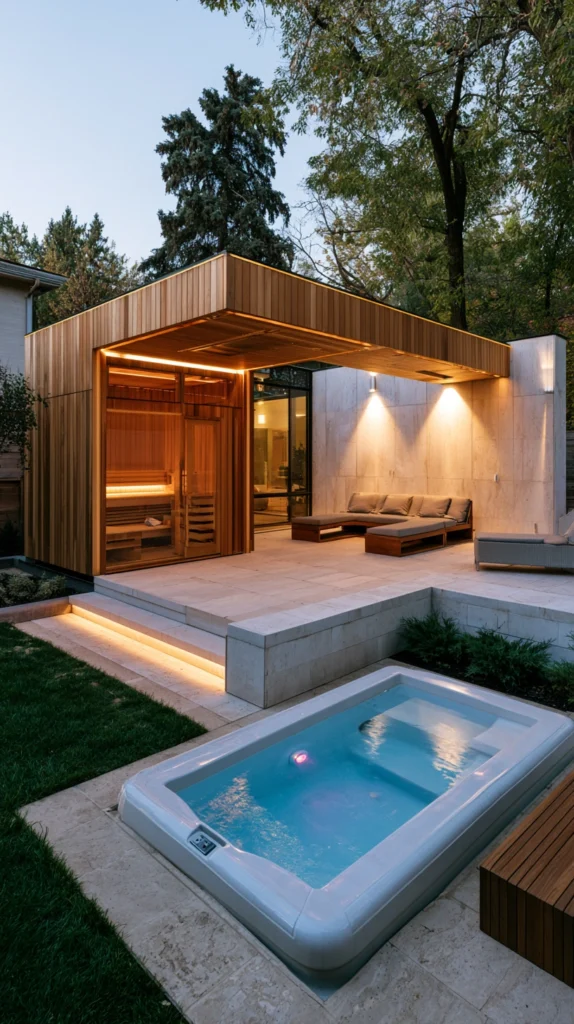
The hot tub is not a sauna alternative. It is a sauna complement.
The hot tub’s sustained warm water immersion, at temperatures of thirty-eight to forty degrees, is a different physiological experience from the dry or steam heat of the sauna. The hot tub relaxes muscles through sustained warmth. The sauna produces the cardiovascular stress response, the heat shock proteins, and the post-heat cooling effect that the hot tub cannot replicate.
Together they provide a full-spectrum heat and immersion experience.
The hot tub beside the sauna, with cold plunge on the other side, creates a three-point outdoor wellness circuit that covers every modality of heat and water therapy available outside a clinical setting.
The hot tub should be positioned for access from the sauna exit. Adjacent but not so close that the hot water raises the ambient temperature around the sauna or creates any cross-contamination between the hot tub’s water chemistry and the sauna environment.
14. The Sauna as the Backyard’s Destination
Every point made in this article serves one underlying principle.
The outdoor sauna works best when it is a destination.
Not an afterthought at the bottom of the garden. Not a structure that was placed wherever there was space. A designed destination that the garden’s layout organises itself toward. That has a path to it. That has seating outside it. That is visible from the main outdoor living area in a way that invites rather than incidentally provides.
A destination sauna is a sauna that gets used. Regular use is the entire point. The health benefits of sauna use are proportional to the frequency of use. A sauna used daily or four times per week produces measurable, significant health outcomes. A sauna used occasionally when motivation is high does not.
Design the sauna into the garden’s layout as a destination. Create the path to it. Build the deck in front of it. Position the cold plunge beside it. Arrange the fire pit near it. Make the walk to the sauna feel like the beginning of a ritual rather than a walk to a garden building.
The outdoor sauna as the backyard’s destination is the sauna that earns its place in the garden, in the daily routine, and in the body’s long-term health.
How to Choose the Right Outdoor Sauna for Your Backyard
The decision between sauna types comes down to four factors.
The available space. A barrel sauna requires a flat area of approximately three by three metres minimum. A cabin sauna requires six by three metres plus clearance. A plunge pool requires additional space beside the sauna.
The available services. A wood-fired sauna requires only a timber supply. An electric sauna requires a dedicated electrical circuit. A cabin sauna with shower requires both electrical and plumbing services.
The frequency of intended use. Daily use favours the electric sauna for its convenience. Weekly or occasional use is well-served by the wood-fired sauna’s superior heat quality.
The budget. A DIY kit barrel sauna is achievable for a modest investment. A complete cabin sauna with plunge pool, deck, and Scandinavian-design structure is a significant investment that belongs in the home improvement budget category.
Common Mistakes in Outdoor Sauna Installation
Inadequate ventilation. The sauna must have a controlled fresh air inlet at floor level and an exhaust at a higher point to create the specific convective airflow that distributes heat correctly and maintains the air quality that comfortable sauna use requires.
Insufficient insulation. An underinsulated sauna stove works continuously to overcome heat loss through the walls and ceiling. The electrical or wood consumption is higher, the temperature is harder to maintain, and the energy cost is greater than in a properly insulated structure.
Not providing cold water access. A sauna without cold water access misses the most physiologically significant element of the sauna ritual. A cold outdoor shower, a plunge pool, or at minimum a garden hose should be part of any outdoor sauna installation.
Placing the sauna too far from the house. The sauna at the far end of a large garden that requires a two-hundred-metre walk in a towel on a winter evening is a sauna that will not be used in winter. Proximity to the house matters for consistent year-round use.
Under-sizing the stove for the room. A stove rated for a smaller sauna room than it is installed in will struggle to maintain adequate temperature. Always size the stove for the room’s volume including a safety margin.
Quick Summary
- A traditional wood-fired barrel sauna provides the best heat quality and the simplest installation for most backyards
- An electric barrel sauna provides convenience and consistency that suits daily habitual sauna users
- A cabin sauna with changing room and shower creates the complete Nordic sauna facility in a single garden structure
- An infrared sauna pod suits users who find high ambient temperatures uncomfortable or who have relevant health contraindications
- A sauna hut positioned for a view creates the full outdoor ritual with rest-period seating and landscape connection
- A sauna adjacent to natural cold water provides the most authentic Nordic sauna experience available
- An integrated plunge pool eliminates the distance between heat exposure and cold immersion for maximum physiological benefit
- A mobile trailer sauna provides the full experience without any permanent garden modification
- Scandinavian design outdoor saunas are garden structures of genuine architectural quality worth positioning prominently
- A DIY kit sauna assembled over a weekend provides a professional result at significantly lower cost than a contractor-built equivalent
- The outdoor wellness circuit of sauna, cold plunge, and rest seating produces measurable cardiovascular and wellness benefits with consistent use
- A fire pit beside the sauna creates the social dimension of the Nordic sauna culture in the backyard setting
- A hot tub beside the sauna provides complementary warm water immersion alongside the dry heat of the sauna
- A sauna designed as a destination with a path, deck, and position in the garden’s layout is a sauna that gets used consistently
- Wood-fired suits occasional use and heat purists, electric suits daily convenience users, infrared suits lower temperature preference
- Always provide cold water access, size the stove correctly, insulate properly, and position within a practical distance of the house
The outdoor sauna is not an addition to the backyard spa experience.
It is the backyard spa experience.
Everything else, the plunge pool, the fire pit, the hot tub, the outdoor seating, organises itself around the sauna as the central element of the outdoor wellness space.
Build it properly. Use it regularly.
The returns compound over time.