13 Pumpkin Display Ideas for Porches and Patios
Most pumpkin displays come down to the same routine: a trip to the nearest patch or grocery lot, a few pumpkins picked mostly by what fits in the trunk, and a quick unload onto the front step on the way inside. It announces the season, technically, but it rarely does much more than that.
A pumpkin display done with even a little more intention does considerably more work. The same handful of pumpkins, arranged with some thought to height, color, and placement, can turn a porch or patio into the kind of display neighbors actually slow down to look at, rather than a pile that happens to be orange and seasonal.
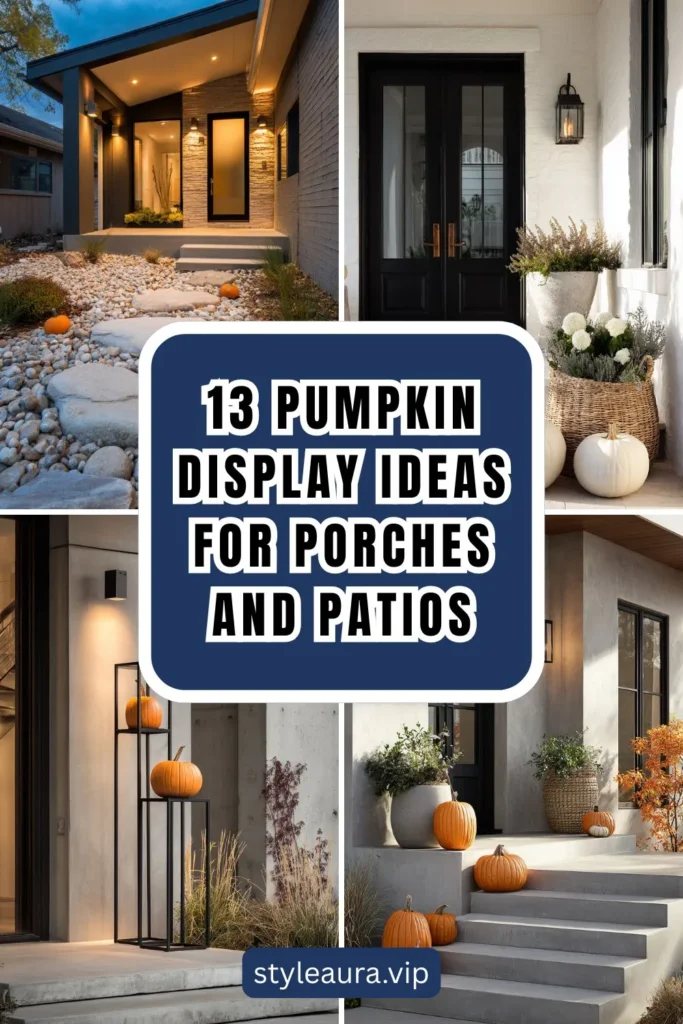
A great pumpkin display isn’t about buying more pumpkins. It’s about composition — varying size and shape, choosing a container or surface that elevates the pumpkins rather than just holding them, and thinking about how the whole arrangement reads from the street, not just up close. Get that right, and a dozen pumpkins can look like considerably more than a dozen pumpkins.
Here are 13 ideas for displaying pumpkins on a porch or patio with real composition in mind.
Why a Composed Display Plays by Different Rules Than a Simple Pile
The rules are not the same for every approach to pumpkin display:
The Simple Pile Advantages:
- Fast and low-effort, requiring no planning beyond unloading pumpkins where there’s room
- No additional materials or containers needed beyond the pumpkins themselves
- Flexible, since a pile can absorb pumpkins of any size or condition without much thought
The simple pile comparison: speed over composition
A Composed Display’s Advantages:
- A clear sense of intention that reads from the street, not just up close
- Better use of height, color, and texture variation, rather than relying on quantity alone
- A display that photographs well and holds visual interest for the full length of the season
The key insight:
- A simple pile rewards convenience
- A composed display rewards a little planning around height, container, and placement before a single pumpkin gets set down
- These are different approaches to the same pumpkins, not the same pile simply photographed from a better angle
The Composition and Longevity Reality
The most important principle in pumpkin display composition:
The height variation rule:
- A display where every pumpkin sits at the same height reads as flat, even with a dozen pumpkins involved
- At least one element taller than the pumpkins themselves — a stand, a stack, a tall planter — gives the eye somewhere to travel
- Know this — it governs nearly every idea on this list before color or quantity does
The “real versus faux” calculation:
- Real pumpkins offer genuine texture, weight, and seasonal authenticity, but have a limited display life before softening or rotting
- Faux pumpkins cost more upfront but can be reused for years and never need to be checked for rot
- Most displays benefit from mixing both: real pumpkins for texture and scent near the door, faux ones for any spot that’s hard to reach or replace mid-season
Most pumpkin displays build in layers, not all at once:
- The structural element — a stand, a cluster of containers, a tiered surface — comes first, since it determines the display’s overall shape
- The pumpkins themselves come next, placed with attention to height, color, and grouping
- The smallest finishing touches — foliage, a ribbon, a few gourds tucked into gaps — come last, filling in whatever the bigger pieces left open
1. The Graduated Step Cluster (The Most Reliable Display for Any Porch With Stairs)
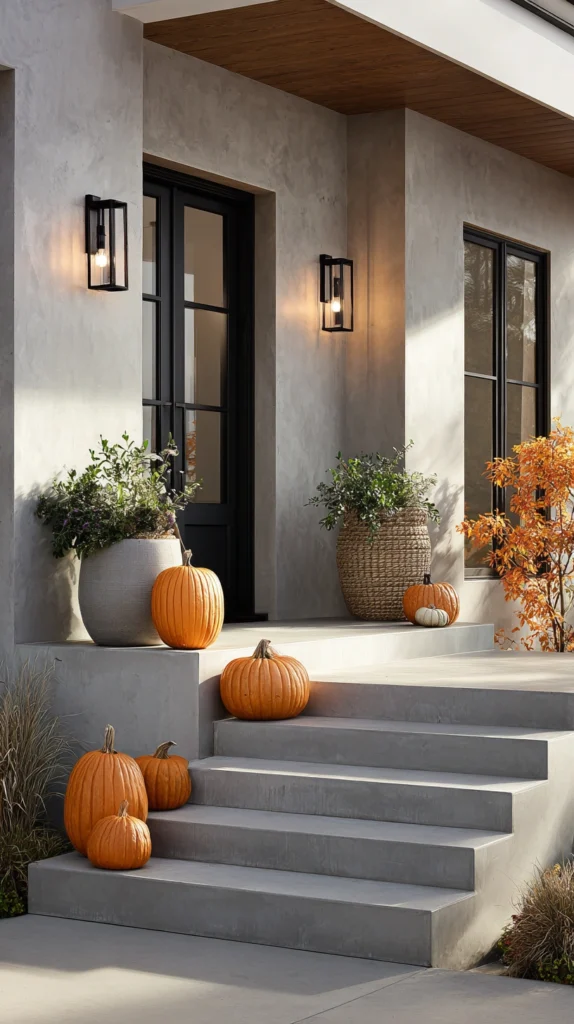
Pumpkins arranged in size order along a set of porch steps, largest at the bottom and smallest near the top — the most widely used and most reliably effective pumpkin display, requiring no additional materials beyond the steps already there.
Why this remains the default for good reason
- The built-in height variation it provides: steps do the structural work other displays need a separate stand or container to achieve, automatically creating the height range a strong display depends on
- The street-visibility factor: a graduated cluster running up a staircase reads clearly from the sidewalk, where a flat ground-level pile often disappears from a distance
- The flexible scale it accommodates: this idea works with as few as three pumpkins or as many as a dozen, adjusting easily to whatever’s actually on hand
The options
- Classic orange pumpkins in three or four graduated sizes, the most traditional version
- A mix of pumpkins and gourds, adding shape variety alongside the size variation
- Pumpkins alternating with small potted mums, breaking up the cluster with color
- One oversized pumpkin anchoring the bottom step, with progressively smaller ones climbing toward the door
The practical execution
- Place the largest, heaviest pumpkin on the bottom step or ground level, both for visual stability and because the lowest step typically has the most width to work with
- Leave a clear, ungated path on at least one side of each step for safe foot traffic
- Replace any pumpkin that begins to soften before it affects the pumpkins around it, since rot spreads faster in a tightly clustered display than in an isolated one
Cost breakdown
- Pumpkins, a cluster of 6–8 mixed sizes: $30–70
- Total: $30–70
2. The Wheelbarrow or Cart Display (A Built-In Container With Instant Charm)
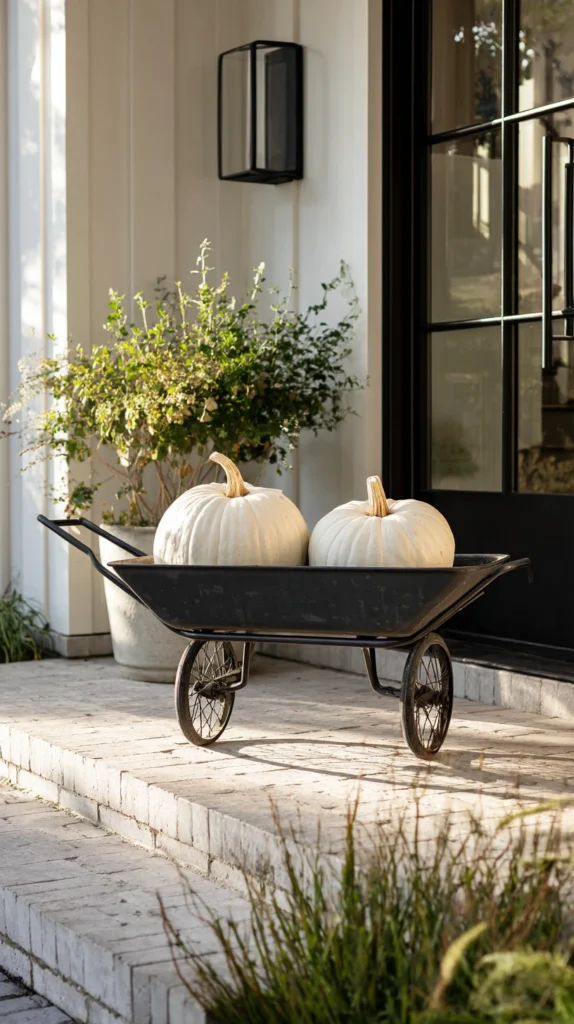
A weathered wheelbarrow or small garden cart, filled with pumpkins and gourds and parked near the front entrance — the display that uses a single found or repurposed object to do most of the visual work on its own.
Why a wheelbarrow earns its popularity beyond simple novelty
- The contained-abundance effect: a wheelbarrow naturally creates the look of a harvest that’s just been gathered, reinforcing the seasonal storytelling a flat pile on the ground can’t match
- The height and tilt it provides automatically: most wheelbarrows sit at an angle and a raised height, giving the display the same kind of natural variation the step cluster achieves through architecture instead
- The reusability across years: unlike pumpkins themselves, a wheelbarrow or cart is a one-time purchase or an item many households already have access to, making this one of the more cost-efficient displays over time
The options
- A real, weathered metal or wood wheelbarrow, for the most authentic, lived-in look
- A small decorative garden cart, built specifically for this kind of seasonal display
- A vintage or secondhand wheelbarrow, sourced for genuine age and patina
- A faux wheelbarrow planter, a smaller decorative version made specifically for porch use rather than actual yard work
The practical execution
- Fill with pumpkins in varying sizes rather than a single uniform size, taking advantage of the container’s natural depth and angle
- Tuck a few smaller gourds or a bundle of dried cornstalks into any visible gaps for a fuller look
- Position on a level surface or with the wheel chocked, since a loaded wheelbarrow on an uneven porch or patio surface can be unstable
Cost breakdown
- Secondhand or repurposed wheelbarrow: $20–80
- New decorative garden cart: $60–150
- Pumpkins and gourds to fill: $25–60
- Total: $45–210
3. The Hay Bale Platform Display (Structure and Texture in One Piece)
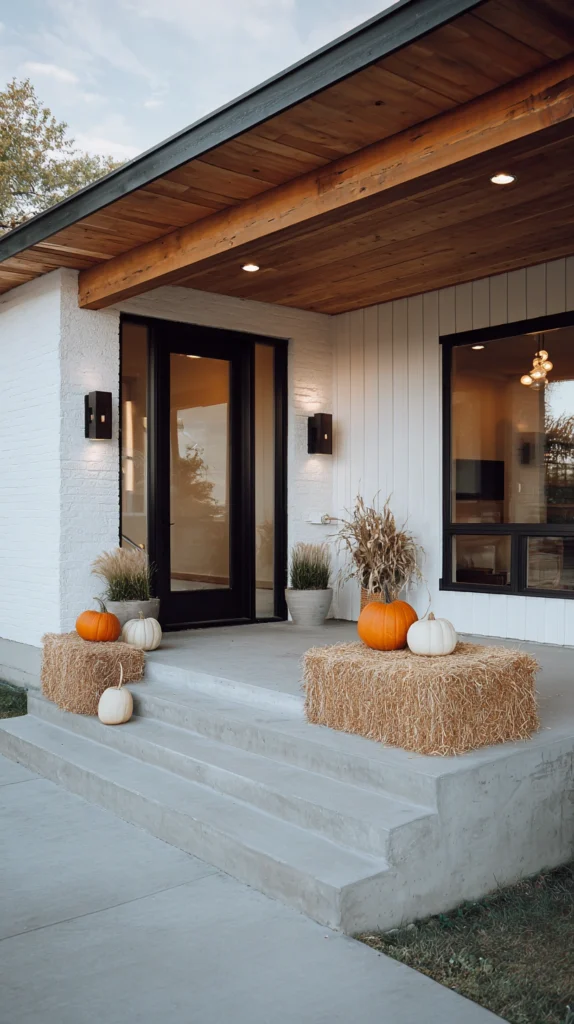
A small hay bale, or a stack of two, used as a raised platform for a pumpkin grouping — the display that adds genuine height and texture contrast without requiring a single additional container.
Why a hay bale solves the height problem so efficiently
- The instant elevation it provides: a single hay bale raises an entire grouping of pumpkins to a new visual plane, achieving in one object what a tiered stand or staged steps require more effort to accomplish
- The texture contrast against smooth pumpkin skin: the rough, golden texture of hay plays directly against the smoother surfaces of most pumpkin varieties, adding visual interest beyond color alone
- The low-maintenance durability: unlike fresh flowers or foliage, a hay bale needs essentially no care through the entire display season
The options
- A single hay bale, topped with a small cluster of pumpkins
- A double hay bale stack, for more height on a larger porch or patio
- A hay bale paired with bundled cornstalks, leaned against it for additional vertical interest
- A hay bale base with pumpkins arranged both on top and around its perimeter, using the full structure rather than just the flat top
The practical execution
- Position where it won’t block a railing needed for support on stairs, or any required clearance around a door
- Secure cornstalks or other added elements with sturdy twine, since wind can shift loosely placed additions over the display’s full season
- Expect some shedding and breakdown by late in the season, refreshing or removing the hay bale as it wears rather than letting it look tired through the whole display period
Cost breakdown
- Small hay bale: $8–15
- Pumpkins to top and surround it: $20–50
- Total: $28–65
4. The Painted and Whitewashed Pumpkin Palette (A Softer, More Curated Color Story)
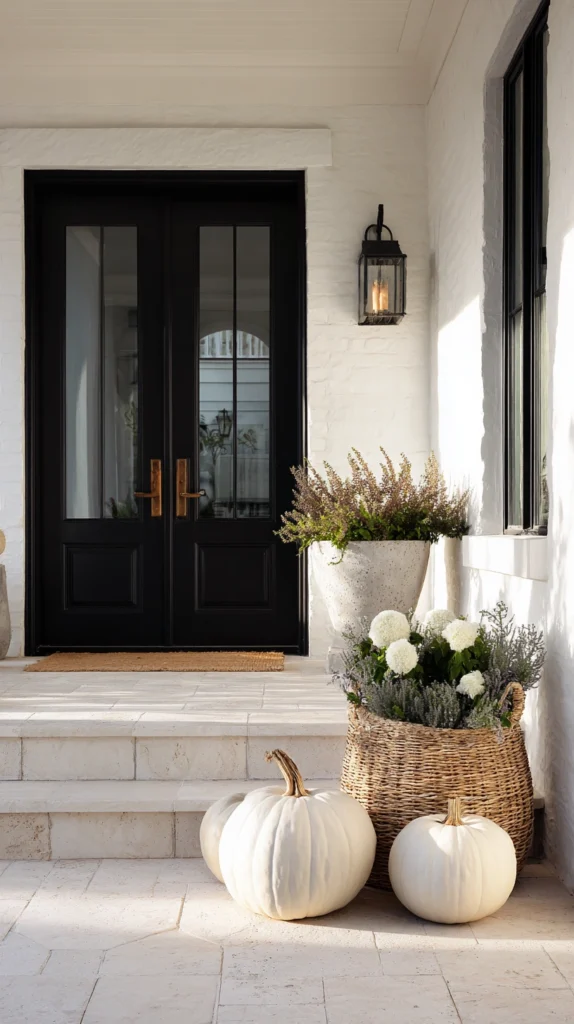
A display built primarily from painted or naturally whitewashed pumpkins, rather than classic orange — the approach that trades the season’s most expected color for a more deliberate, design-forward palette.
Why moving away from orange can read as more intentional, not less seasonal
- The curated-not-generic signal: an all-white, cream, or pastel pumpkin display immediately reads as a considered design choice rather than a quick grab from the nearest lot
- The flexibility it offers with existing exterior colors: a softer palette is far easier to coordinate with a specific porch color scheme than classic orange, which can clash with certain trim or door colors
- The photography and detail advantage: light-colored pumpkins show texture, ribbing, and natural variation more clearly than a uniform orange surface does, rewarding a closer look
The options
- Naturally white or cream pumpkin varieties, sourced directly rather than painted
- Hand-painted pumpkins, in a single soft color or a simple pattern using outdoor-rated craft paint
- A mix of white, cream, and pale blue-gray varieties, layering several naturally muted tones together
- Whitewashed pumpkins, using a diluted white paint wash over the natural surface for a textured, weathered look rather than a fully opaque finish
The practical execution
- Source naturally pale varieties where possible, since they hold up to weather more consistently than a painted surface applied over a standard orange pumpkin
- Seal any painted pumpkin with a clear outdoor sealant if it will be on display for more than a couple of weeks, protecting against fading and moisture
- Mix in a few natural orange or green pumpkins sparingly as accents, rather than aiming for complete uniformity, to keep the display from feeling flat
Cost breakdown
- Naturally white or pale pumpkin varieties: $8–20 each
- Craft paint and sealant for DIY painted pumpkins: $15–30
- A full display of 6–8 pumpkins: $50–140
- Total: $50–140
5. The Urn and Planter Topper (Pumpkins Standing In for Flowers)
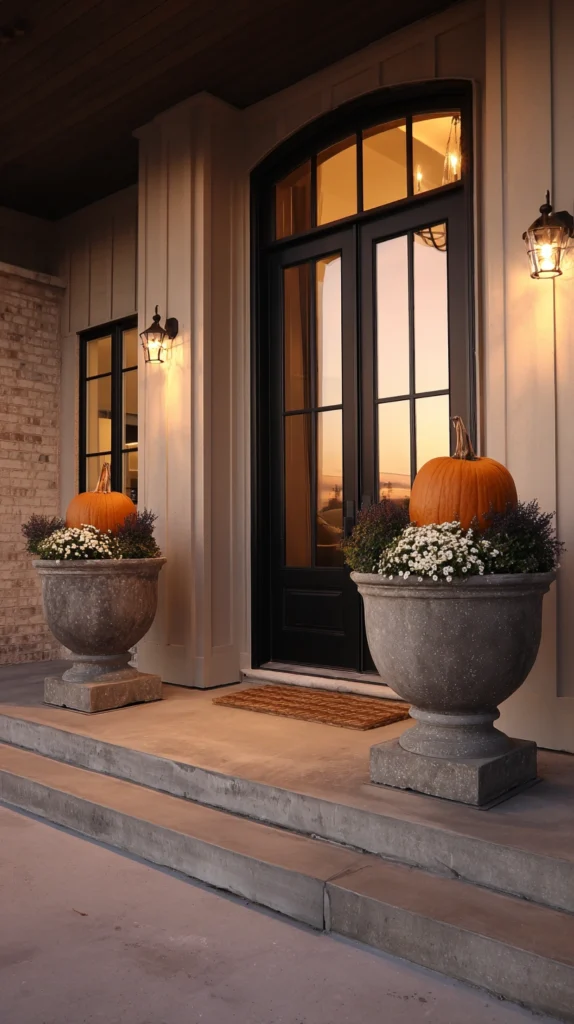
A single large pumpkin, or a small stack of two or three, placed directly into an existing planter or urn in place of late-season flowers — the display that repurposes containers already part of the porch’s permanent setup rather than adding anything new.
Why this idea earns a spot without requiring a single new container
- The seamless seasonal transition it provides: as summer flowers fade, a pumpkin dropped into the same urn keeps that exact spot looking intentional without buying or installing anything additional
- The symmetry opportunity it reinforces: if the porch already has a matched pair of urns flanking the door, this idea extends that same symmetry into the fall display automatically
- The elevated presentation a planter naturally provides: an urn or planter raises the pumpkin to counter height or above, giving it more visual weight than the same pumpkin would have sitting directly on the ground
The options
- A single oversized pumpkin, set directly into the urn’s opening, sized to rest securely without falling in
- A stack of two or three graduated pumpkins, built up out of the planter for additional height
- A pumpkin paired with trailing faux fall foliage, spilling over the urn’s edge around the pumpkin’s base
- Mini pumpkins or gourds tucked around a single larger centerpiece pumpkin, filling the urn’s remaining visible soil or filler material
The practical execution
- Choose a pumpkin sized to rest stably in or on the urn’s opening, rather than one too small that could shift or fall with wind
- Add a layer of floral foam, soil, or filler material inside the urn first if the pumpkin needs additional support or height
- Remove any remaining summer plant material before placing the pumpkin, for a clean transition rather than a pumpkin awkwardly wedged among fading flowers
Cost breakdown
- Pumpkin sized for an urn, each: $8–20
- Faux foliage accent, if adding: $10–25
- Total: $8–45 per urn, with cost scaling by the number of urns being topped
6. The Pumpkin and Mum Layered Display (Color and Texture Working Together)
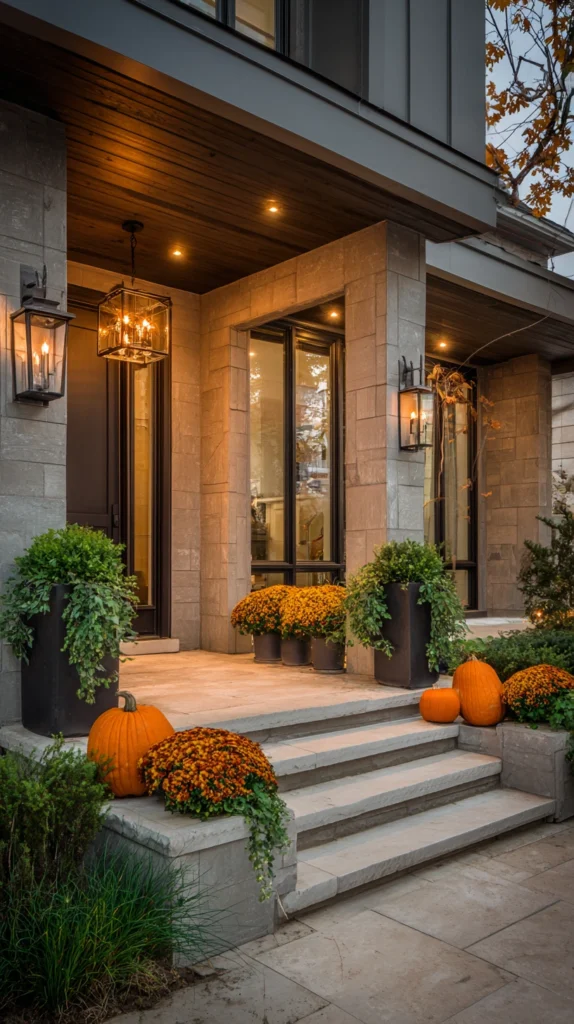
Pumpkins grouped directly alongside potted mums, rather than displayed alone — the pairing that introduces real, living color into what might otherwise be an entirely orange-and-green arrangement.
Why mums specifically complete a pumpkin display
- The color variety pumpkins alone can’t provide: even with a range of pumpkin varieties, most pumpkin displays stay within a fairly narrow orange-to-cream color range; mums introduce burgundy, gold, rust, and white into the same grouping
- The living-versus-static contrast: mums bring movement and gradual change to a display that otherwise consists entirely of static objects, since the blooms continue opening and filling in over the following weeks
- The proven, classic pairing: this combination is one of the most established in fall porch styling specifically because the two elements consistently make each other look better than either does alone
The options
- Mums in matching terracotta pots, clustered directly among the pumpkins rather than separated into their own zone
- Mums in a single dominant color, like deep burgundy or gold, against a mostly orange pumpkin grouping
- A mix of mum colors, echoing the same varied-palette approach used in the painted pumpkin idea
- Mums planted directly into the ground or a garden bed bordering the pumpkin display, rather than kept in pots
The practical execution
- Group several mum pots together rather than spacing them individually, since a cluster reads as a unified mass of color from a distance where individual pots can disappear
- Position pumpkins and mums at varying heights relative to each other, using the mums’ pot height to add to the display’s overall height variation
- Water mums consistently, since potted mums dry out faster than the same plant in the ground and wilted blooms undercut the display’s color contribution quickly
Cost breakdown
- Mum, single pot: $8–18
- A full grouping (4–6 mums) alongside pumpkins: $50–120
- Total: $50–120
7. The Vintage Crate or Bushel Basket Display (A Harvest-Market Look)
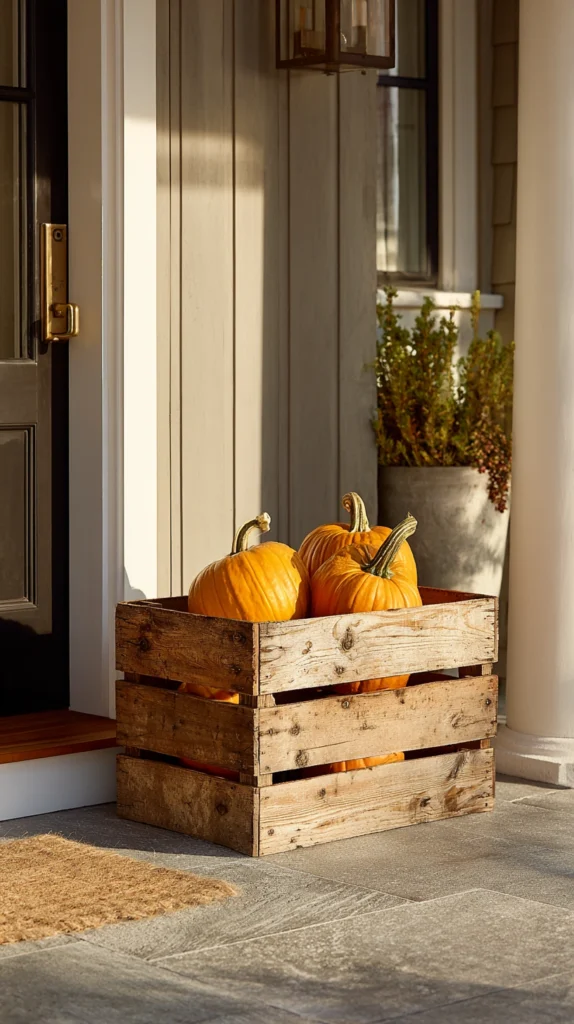
Pumpkins arranged in and around old wooden crates or bushel baskets — the display that borrows directly from the look of a farm stand or apple orchard market table.
Why a crate or basket changes the whole feel of the display
- The harvest-market association it carries: this presentation style draws on the specific visual language of a roadside produce stand, reinforcing a sense of genuine seasonal abundance rather than store-bought decoration
- The structural variety it adds beyond a flat ground display: stacked or staggered crates create natural tiers and levels, similar in effect to the step cluster but built from portable, reusable pieces
- The reusability and secondhand availability: wooden crates and bushel baskets are commonly available secondhand, and unlike pumpkins, they’re a one-time investment that returns every season
The options
- A single large bushel basket, filled to overflowing with a mix of pumpkin sizes
- Several wooden crates stacked at staggered heights, each holding its own smaller pumpkin grouping
- A mix of crates and baskets together, varying both the material and the shape of the containers used
- A single crate turned on its side, with pumpkins spilling out as though recently harvested
The practical execution
- Source secondhand crates and baskets from farm stands, antique shops, or online marketplaces for genuine age and texture
- Stagger heights deliberately when using multiple containers, rather than lining them up at a single uniform level
- Seal or treat any wood that will be exposed to repeated rain through the display season, extending the container’s usable life beyond a single year
Cost breakdown
- Secondhand wooden crate, each: $10–25
- Bushel basket: $15–35
- Pumpkins to fill: $25–60
- Total: $50–120
8. The Pumpkin Tower (Maximum Height From a Single Stand)
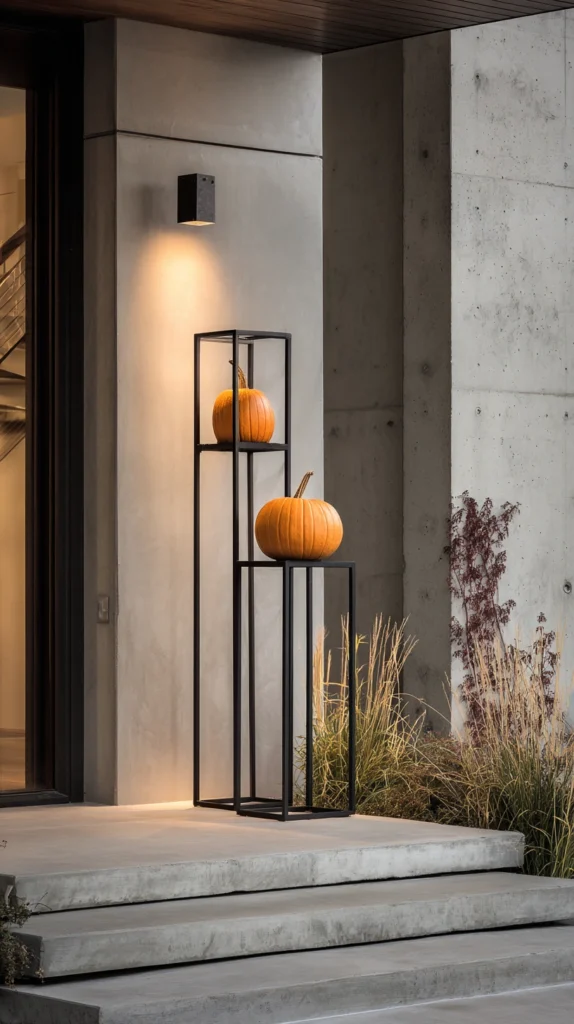
A tiered stand or graduated stack designed specifically to hold pumpkins at multiple heights in a single vertical column — the display that pushes the height-variation principle further than almost any other idea on this list.
Why a true vertical tower stands apart from other height-focused displays
- The most dramatic height range available: where the step cluster and hay bale platform offer moderate height variation, a dedicated tower can stack pumpkins several feet into the air, creating genuine visual drama
- The smaller footprint it requires: for a porch or patio with limited floor space, a tower delivers a large-scale visual impact without spreading pumpkins across a wide area
- The architectural, almost sculptural quality it offers: a well-built pumpkin tower reads less like a casual seasonal display and more like an intentional piece of outdoor decor
The options
- A tiered metal or wood plant stand, repurposed to hold pumpkins instead of plants at each level
- A custom-built wooden frame, designed specifically for graduated pumpkin placement
- A spiral or cone-shaped wire form, with pumpkins and gourds nestled into the structure at intervals
- A simple stacked-pumpkin tower, using a center dowel or rod run through several pumpkins to stabilize a tall stack without a separate stand at all
The practical execution
- Use the largest, heaviest pumpkin at the base regardless of the stand or stacking method, for both visual and literal stability
- Secure any true stacked-pumpkin tower with a central support rod, since stacking pumpkins without reinforcement risks the whole structure toppling in wind or with a light bump
- Choose a stand or structure rated for the actual combined weight of the pumpkins it will hold, particularly for anything taller than a couple of feet
Cost breakdown
- Tiered plant stand, repurposed: $30–80
- Custom-built or purchased pumpkin tower stand: $60–180
- Pumpkins to fill: $25–70
- Total: $55–250
9. The Heirloom and Specialty Variety Showcase (A Display Built Around Rarity)
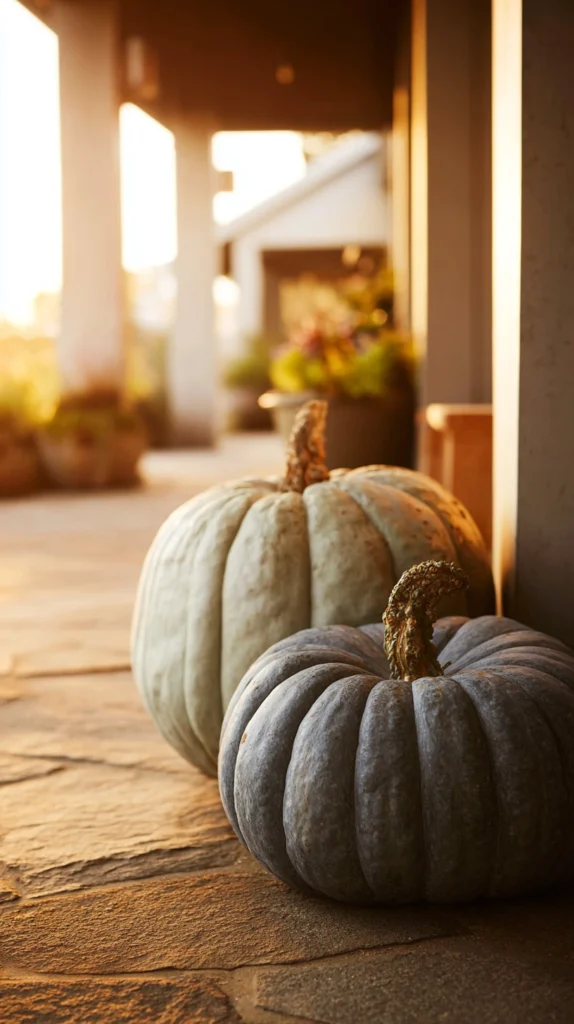
A display composed primarily of heirloom and specialty pumpkin varieties — Cinderella, Fairytale, blue-gray Jarrahdale, warty Knucklehead — rather than standard jack-o’-lantern pumpkins, treating the pumpkins themselves as the main visual interest.
Why variety alone can carry an entire display
- The texture and color range these varieties offer: heirloom pumpkins vary dramatically in shape, ribbing, color, and surface texture, providing visual interest a uniform grouping of standard orange pumpkins can’t match on its own
- The conversation-piece value: unusual varieties are the kind of detail a guest is likely to notice and ask about directly, in a way a standard pumpkin display rarely prompts
- The reduced need for additional props or containers: because the pumpkins themselves carry so much visual variety, this display style often needs less additional styling — fewer mums, less hay, fewer containers — to look complete
The options
- Cinderella pumpkins, deeply ribbed and flattened, in a rich orange-red
- Jarrahdale pumpkins, blue-gray and heavily ribbed, for a striking color departure from standard orange
- Fairytale pumpkins, tan and deeply lobed, with an almost antique appearance
- A mixed heirloom grouping, combining several varieties for maximum textural and color range in a single display
The practical execution
- Source from a specialty farm stand or pumpkin patch rather than a standard grocery lot, since heirloom varieties aren’t always available at typical big-box or supermarket displays
- Arrange with more open space between individual pumpkins than a standard display might use, allowing each variety’s distinct shape and texture to actually be seen
- Expect to pay a premium over standard pumpkins, and budget accordingly, since heirloom and specialty varieties are typically priced higher per pumpkin
Cost breakdown
- Heirloom or specialty pumpkin, each: $10–30
- A full showcase grouping (4–6 pumpkins): $50–150
- Total: $50–150
10. The Carved Jack-o’-Lantern Lighting Display (The Only Idea on This List Built for After Dark)
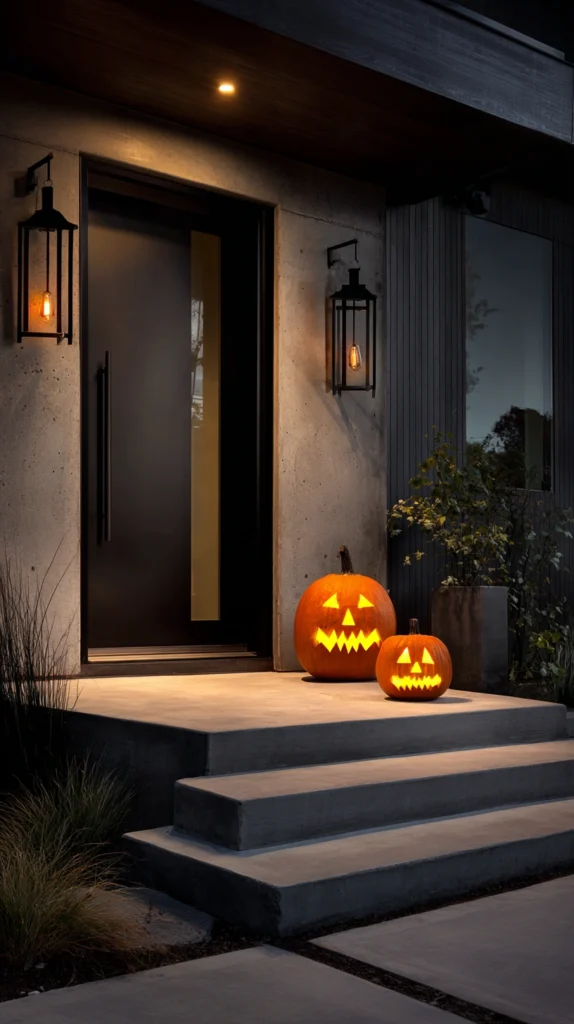
A grouping of carved pumpkins, lit from within by candles or flameless LED lights, positioned along the steps or by the door — the display specifically designed to be seen once the sun goes down rather than just during the day.
Why this idea solves a problem the rest of the list doesn’t address
- The daylight-only limitation most pumpkin displays share: nearly every other idea on this list is designed to be seen and photographed in daylight, while a carved, lit display is built specifically for the hours after sunset
- The trick-or-treat-specific value: this is the one display on the list with a direct, practical tie to actual Halloween night foot traffic, when most visitors are arriving and viewing the porch in the dark
- The interactive, seasonal activity it represents: unlike most ideas on this list, carving is itself a planned activity leading up to the display, not just a purchase and arrangement
The options
- Classic carved jack-o’-lanterns, lit with real tea light candles for an authentic flicker
- Flameless LED candles inside carved pumpkins, a safer option for a porch with significant foot traffic or where wind is a concern
- A mix of carved and uncarved pumpkins, with only some lit, balancing this idea with several others on the list
- Pumpkins carved with simple cut-out patterns, like stars or stripes, rather than full jack-o’-lantern faces, for a more subtle lit effect
The practical execution
- Use flameless LED lights for any pumpkin positioned near fabric, dry leaves, or high foot traffic, given the fire risk a real candle poses in those conditions
- Carve no more than a day or two before the display is needed, since carved pumpkins deteriorate considerably faster than whole ones
- Position lit pumpkins at varying heights along the same steps or platform used elsewhere on this list, rather than isolating this display from the rest of the porch’s styling
Cost breakdown
- Pumpkins for carving, each: $6–15
- Flameless LED tea lights, a set: $15–30
- Total: $30–90, depending on the number of pumpkins carved
11. The Pathway Trail Display (Extending the Display Beyond the Door)
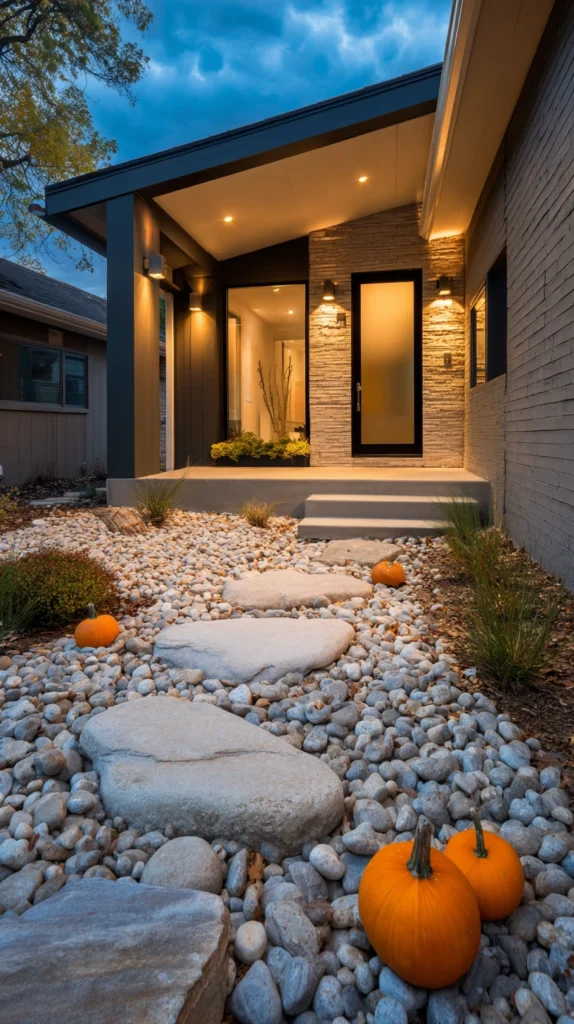
Small pumpkins placed at intervals along the walkway leading up to the porch or patio, rather than concentrating the entire display at the door — the idea that extends the seasonal welcome backward, so the approach itself becomes part of the display.
Why the path deserves its own pumpkins, not just the porch
- The full-journey logic: most pumpkin displays concentrate entirely on the door, leaving the walkway leading up to it completely undecorated and disconnected from the rest of the styling
- The anticipation it builds for a guest: a path lined with small pumpkins signals the season is being celebrated throughout the property, not just at a single concentrated spot
- The visual rhythm it creates: repeated small pumpkins at intervals along a path create a sense of pacing and intention that a single dense display at the door alone can’t replicate
The options
- A single small pumpkin at each step or landing along the walkway, repeating consistently to the porch
- Pumpkins paired with lanterns at intervals, combining this idea with evening lighting along the same path
- Small pumpkins lining both sides of a straight walkway, like a low border
- Pumpkins placed only at turns or transitions in the path, marking specific points rather than running continuously
The practical execution
- Keep each path placement small enough not to create a tripping hazard or block the actual walking surface
- Repeat the same one or two pumpkin sizes consistently along the whole path, rather than varying wildly from one placement to the next
- Check path pumpkins after wind or rain, since this is the most exposed and least protected portion of the entire display
Cost breakdown
- Small pumpkins for the path, each: $3–8
- A full path display (6–10 pumpkins): $20–60
- Total: $20–60
12. The Monochrome Color-Blocked Display (One Tone, Maximum Cohesion)
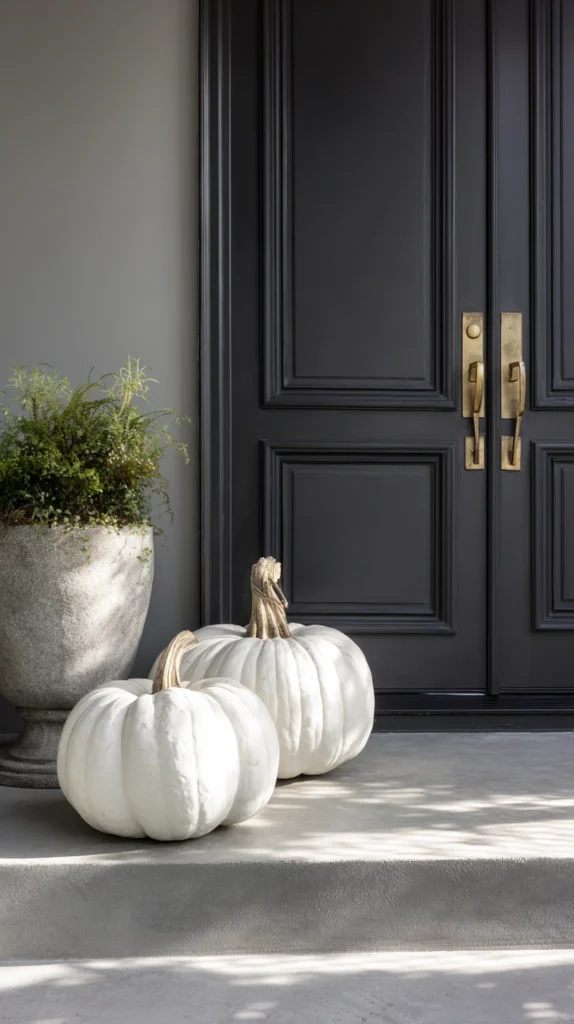
A display built entirely within a single color family — all deep orange, all white, or all green-gray — rather than mixing several different pumpkin colors together, for a more graphic, intentional-feeling result.
Why limiting the color palette can read as more sophisticated than mixing colors
- The gallery-curated effect it produces: a display built from a single tonal family reads as deliberately composed in a way a mixed-color display sometimes doesn’t, even when both involve the same number of pumpkins
- The texture emphasis it creates: with color held constant, variation in size, shape, and surface texture becomes the display’s primary visual interest, rewarding closer attention
- The strong coordination it offers with a specific exterior palette: a monochrome pumpkin display is far easier to match precisely to a porch’s existing trim, door, or planter colors than a display spanning the full range of pumpkin colors
The options
- An all-orange display, varying only in shade from pale apricot to deep burnt orange
- An all-white or cream display, the most common monochrome direction, pairing easily with most exterior color schemes
- An all blue-gray display, using Jarrahdale and similar varieties for a cooler, more unusual monochrome direction
- An all-green display, using unripe or naturally green varieties for the least conventional version of this idea
The practical execution
- Source pumpkins specifically for color consistency, which sometimes requires visiting more than one farm stand or supplier to find enough pumpkins within the same narrow tonal range
- Vary size and shape deliberately within the single color family, since color alone repeated identically in size and shape would read as flat rather than curated
- Add a single contrasting element sparingly, like one dark gourd or a black ribbon, if the monochrome display needs one small point of visual tension
Cost breakdown
- Pumpkins selected for color consistency, a full display of 6–8: $40–110
- Total: $40–110
13. The Door-Flanking Symmetrical Pair Display (Architecture Through Repetition)
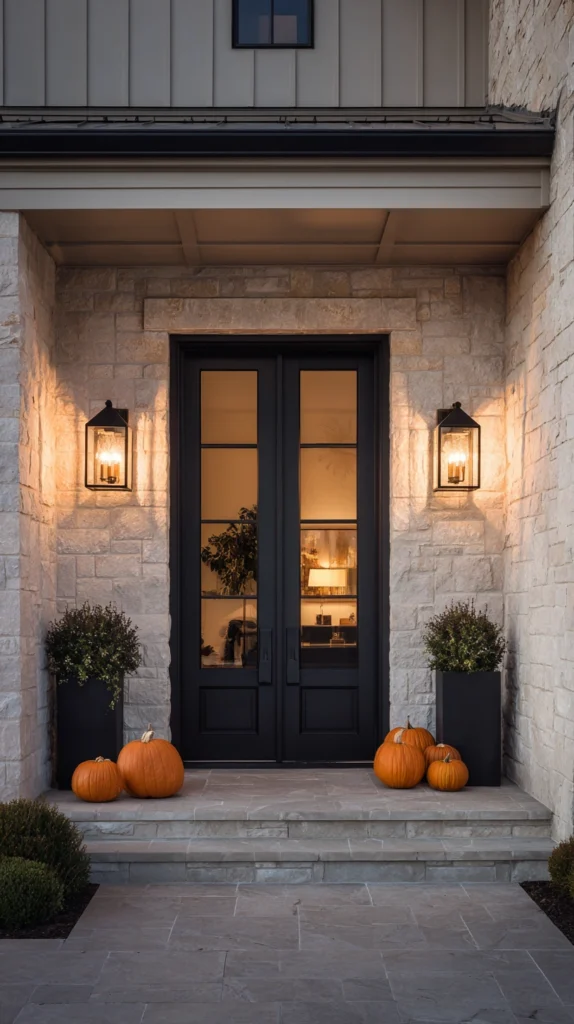
Two identical or closely matched pumpkin groupings, positioned on either side of the front door — the display that uses symmetry itself as the primary design tool, rather than relying on variety or height alone.
Why symmetry creates impact independent of what’s actually displayed
- The architectural framing effect it provides: a matched pair on either side of the door creates an immediate sense of intention and balance, the same way flanking urns or sconces work in other parts of the exterior or interior
- The focal-point reinforcement: symmetry naturally draws the eye toward the center, meaning a matched pair actually helps direct attention to the door itself rather than competing with it
- The simplicity it allows in execution: because the visual impact comes primarily from the repetition, each individual grouping can be relatively simple and still read as a strong, complete display
The options
- Two identical pumpkin clusters, matched in size, color, and arrangement, on each side of the door
- Two matched containers — urns, crates, or baskets — each filled with the same pumpkin combination
- Two single oversized pumpkins, one on each side, for the simplest possible version of this idea
- Two matched hay bale platforms, each topped identically, for a more substantial symmetrical display
The practical execution
- Confirm the pair is genuinely identical in size, color, and arrangement — near-matches read as mismatched rather than intentional, the same risk a flanking urn pair faces elsewhere on the porch
- Position both groupings at an equal distance from the door, even if the porch itself isn’t perfectly symmetrical
- Build each side identically by counting and matching pumpkin sizes and colors directly, rather than estimating by eye, to avoid a subtle imbalance that undercuts the whole effect
Cost breakdown
- Pumpkins for two matched groupings (10–14 total): $60–140
- Matched containers, if used: $40–150
- Total: $60–290, depending on whether containers are included
The two matched pumpkin clusters flanking the door: the display that makes the whole entrance feel considered, often using nothing more than pumpkins already counted out in pairs.
The Pumpkin Display Roadmap
The work, sequenced:
Phase One (the structural decision):
- Choose the primary display method — steps (#1), a container like a wheelbarrow or crate (#2, #7), a platform (#3), a tower (#8), or a flanking pair (#13)
- Confirm placement allows clear, safe foot traffic on every path it sits beside
Phase Two (the pumpkin selection):
- Decide on a color approach — classic mixed orange, monochrome (#12), painted (#4), or heirloom varieties (#9)
- Source pumpkins in a genuine range of sizes, since height and size variation does more for the display than quantity alone
Phase Three (the supporting layers):
- Add mums, foliage, or gourds to fill gaps and introduce color variety (#6)
- Extend the display along the path if there’s room and a desire for a fuller approach (#11)
Phase Four (the finishing touches):
- Carve a few pumpkins and add lighting for an evening-ready display (#10)
- Check and refresh any softening pumpkins through the display’s full run
Getting Started This Weekend
The immediate-impact pumpkin refresh:
One afternoon, three changes:
- Build a graduated cluster on the front steps (Idea #1)
- Tuck a few potted mums in among the pumpkins (Idea #6)
- Add a small pumpkin at each turn along the front walkway (Idea #11)
Total cost: $70–160. Time: about thirty minutes. The display will read as a finished arrangement from the street by the time the work is done, rather than a pile dropped near the door.
The structural investment (the next big project):
A genuine container or stand — a wheelbarrow, a set of crates, or a dedicated tower stand — is the single upgrade most likely to elevate a pumpkin display year over year, since it’s the one piece that gets reused regardless of how many pumpkins go into it each season. Once it’s in place, every other idea on this list has somewhere more interesting to sit than the bare ground or a flat step.
What a composed pumpkin display provides that a simple pile can’t:
The visual impact that holds up from the street, not just up close:
- Height variation that gives the eye somewhere to travel across the whole display
- A container or platform that elevates the pumpkins rather than just holding them
- Color and texture choices that read as a deliberate decision, not a leftover from the nearest pumpkin lot
The seasonal storytelling that goes beyond a single object:
- A wheelbarrow or crate borrowing directly from the look of an actual harvest
- Mums adding the kind of living color and texture pumpkins alone can’t provide
- A carved, lit grouping giving the display a second, completely different life after dark
The flexibility to match any porch, any budget, any level of effort:
- A simple step cluster requiring nothing more than pumpkins already on hand
- A monochrome or heirloom display for anyone wanting something more curated
- A symmetrical pair for a porch that already leans toward architectural balance
A pumpkin display was never really about how many pumpkins get bought. It’s about whether those pumpkins get set down with any thought to height, color, and placement, or simply unloaded wherever there’s room. The graduated cluster built on a Saturday morning is still doing its job a month later, and the wheelbarrow filled once at the start of the season just needs an occasional pumpkin swapped out to keep looking exactly as considered as the day it was first arranged.