15 Low Wedding Centerpiece Ideas for Intimate Tables
At our reception, my new mother-in-law leaned across the table during dinner just to hand me the bread basket.
That small moment only happened because our centerpieces were low enough to see over, something I almost got wrong when the florist’s first mockup came in at nearly two feet tall.
We were doing long farmhouse tables for 60 guests in a space where conversation mattered more than a dramatic floral moment, and a tall arrangement would have split every table into two separate conversations.

I spent weeks afterward collecting the low centerpiece ideas that actually worked, both from our own tables and from friends’ weddings I paid closer attention to than I probably should have.
Here are the 14 ideas that actually keep sightlines open while still making a table feel intentional and finished, along with what each one costs and where it works best.
Why Low Centerpieces Matter More Than People Expect
Low centerpieces get treated as a budget compromise, but for intimate tables specifically, they’re often the better design choice entirely, not just the cheaper one.
- Guests can see and talk to everyone at the table, not just the people directly beside them
- Low arrangements photograph well from a seated guest’s eye level, unlike tall pieces that only look good from a standing angle
- Materials cost less overall, since floral volume needed for a low, wide arrangement is typically less than a tall, dramatic one
- Low pieces read as more intimate and relaxed, which suits smaller guest counts and conversational reception styles
- They’re easier to transport and set up without the stability concerns that come with tall, top-heavy arrangements
Keep these advantages in mind as you go through the ideas below, since a low centerpiece done well often gets more compliments than a tall one people struggle to see around.
1. A Low Compote Bowl With Garden-Style Blooms

A compote bowl, wider at the top than a standard vase, creates a naturally low, spreading arrangement without any special floral training required.
How it comes together:
- Choose a compote bowl six to eight inches tall with a wide bowl top, in glass, ceramic, or metal depending on your table’s material palette
- Use floral foam or a flower frog inside the bowl to hold stems at the low, spreading angle this style depends on
- Select garden-style blooms like garden roses, ranunculus, and scabiosa for a soft, romantic texture
- Add trailing greenery, like jasmine vine or amaranthus, cascading slightly over the bowl’s edge for movement
Where it works best:
- Round tables of six to eight guests, where the wide, circular shape complements the table shape naturally
Watch out for:
- Using floral foam without soaking it fully first, which causes flowers to wilt hours before the reception even starts
Budget: $45–$90 per centerpiece depending on flower selection
2. A Cluster of Bud Vases Instead of One Central Arrangement
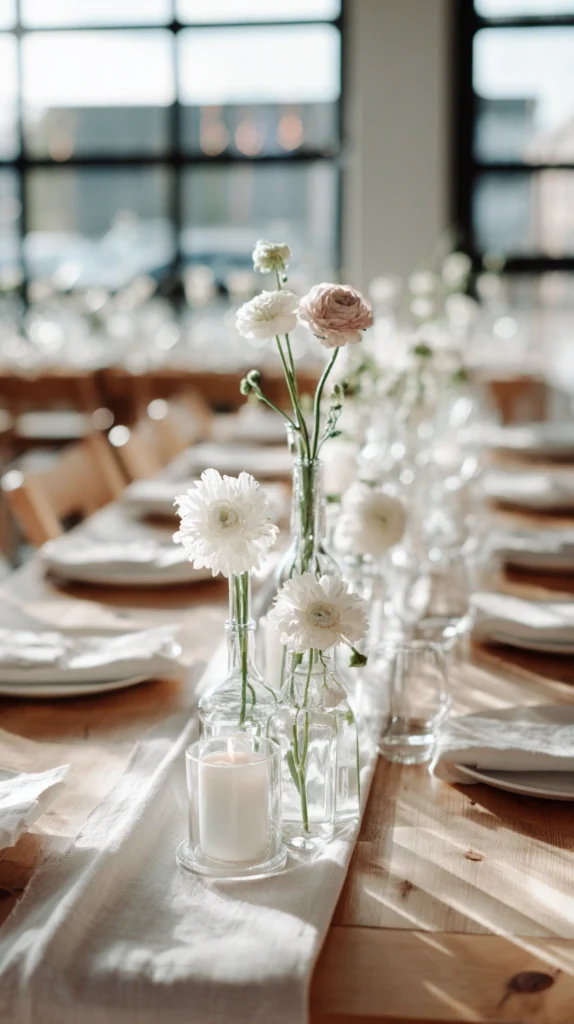
Instead of a single centerpiece, a cluster of small bud vases scattered down the table creates a low, relaxed look that’s genuinely easier to assemble yourself.
How it comes together:
- Use five to seven small glass bud vases per table, varying slightly in height between four and eight inches
- Place a single stem or small grouping of two to three stems in each vase rather than trying to fill them densely
- Mix in a few vases with just greenery, like eucalyptus or olive branch, to break up the visual rhythm
- Cluster vases in small groups of two or three along the table’s centerline rather than spacing them in a single perfectly even row
Where it works best:
- Long farmhouse or banquet tables, where a single centerpiece would need to be unreasonably large to fill the space
Watch out for:
- Using vases so small that even a single stem’s stem length can’t be trimmed short enough to fit proportionally
Budget: $30–$60 per table for vases and flowers combined, making this one of the most budget-friendly options on this list
3. A Low Wooden Box Planter With Mixed Greenery
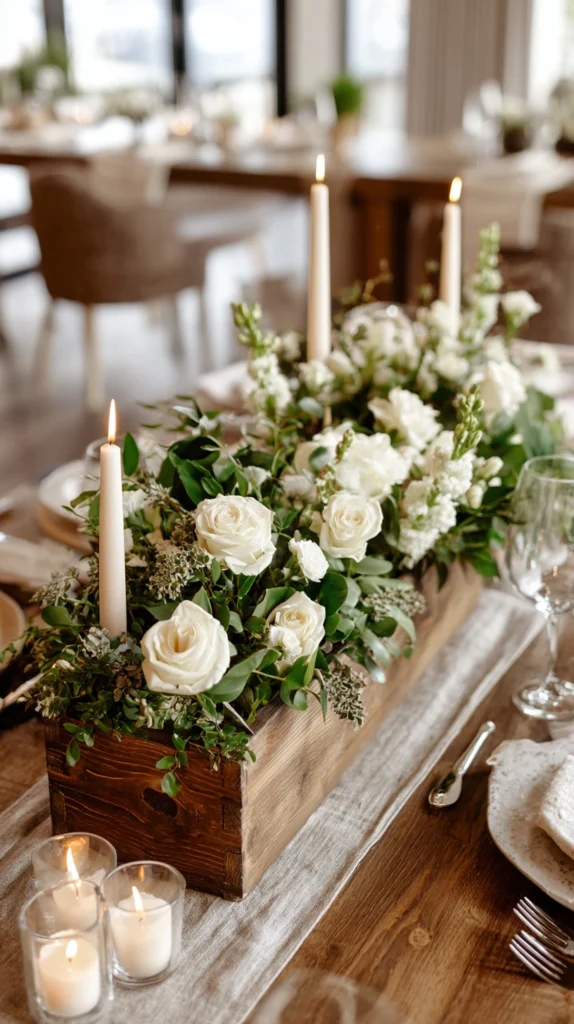
A rectangular wooden planter box filled primarily with greenery rather than flowers creates a lush, low centerpiece that costs significantly less than an all-floral arrangement.
How it comes together:
- Source or build a simple rectangular wood box, roughly four to six inches tall, sized to fit your table width
- Line the interior with a plastic liner or floral foam to protect the wood and hold moisture
- Fill primarily with greenery like eucalyptus, ferns, and trailing ivy, adding just a few flower accents rather than a fully floral design
- Tuck in a few taper candles at varying heights among the greenery for texture and warmth after dark
Where it works best:
- Rustic or farmhouse-style weddings, where the natural wood material fits the broader aesthetic
Watch out for:
- Skipping the liner, which can lead to water damage on unsealed wood boxes over the course of a long reception
Budget: $25–$55 per box depending on greenery volume and whether the box is purchased or built
4. Floating Candles in Low, Wide Bowls
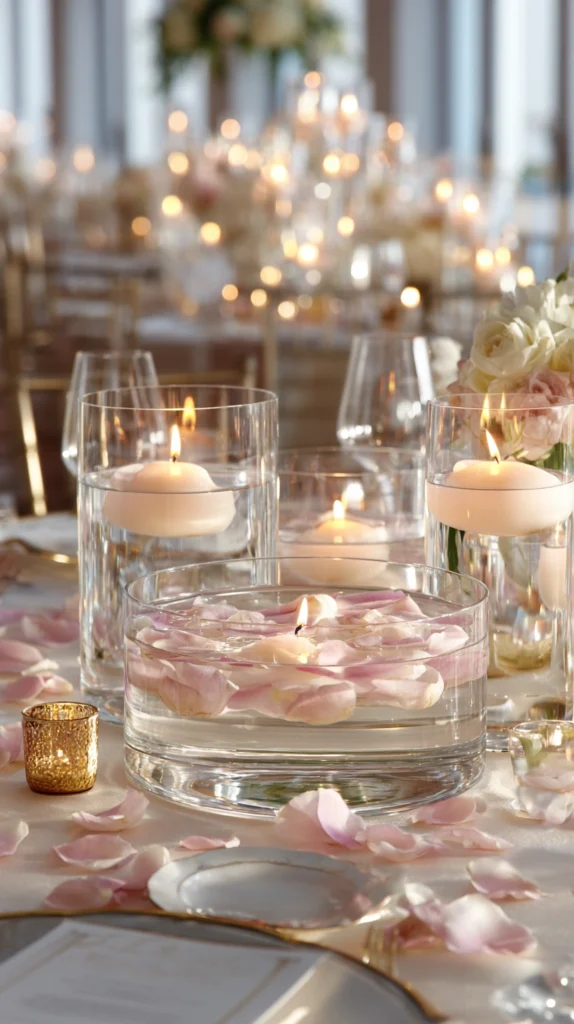
Floating candles in shallow glass or ceramic bowls create ambiance and visual interest without any floral cost at all, making this one of the most affordable centerpiece options available.
How it comes together:
- Use a wide, shallow glass bowl, filled about halfway with water
- Add two to three floating candles per bowl, choosing a size that leaves enough room between them to float freely without touching
- Include a few loose flower petals or small greenery sprigs floating alongside the candles for a bit of color
- Place bowls on a small mirror or wood round base to add a subtle reflective or textural layer beneath
Where it works best:
- Evening receptions where ambiance and candlelight matter more than a strong floral statement
Watch out for:
- Using scented candles, which can compete with the smell of food being served at the table
Budget: $15–$35 per centerpiece, among the least expensive ideas on this list
5. A Low Runner of Loose Flowers and Greenery
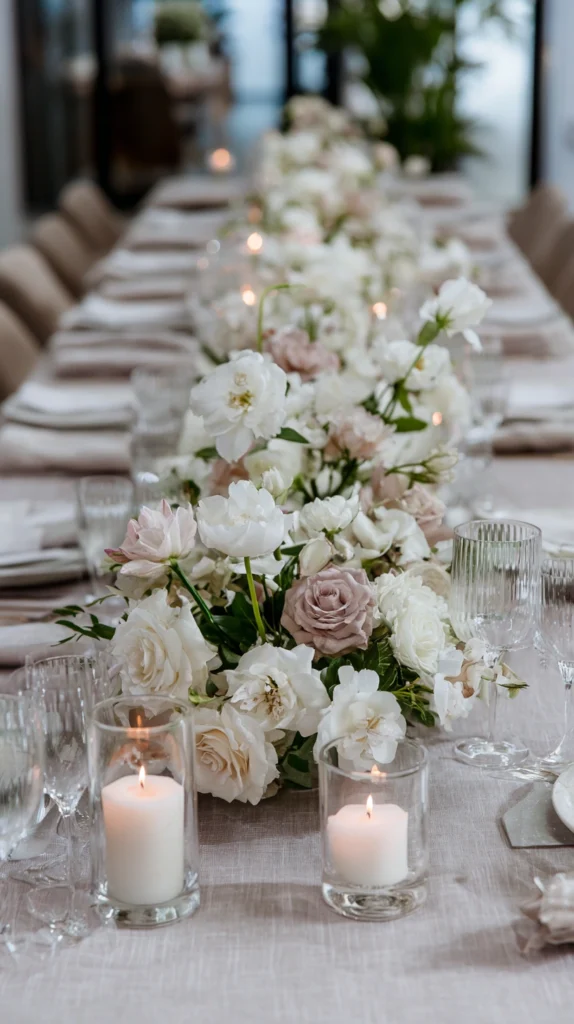
Instead of contained vases, a loose runner of flowers and greenery laid directly along the table’s centerline creates a lush, garden-party feel with a naturally low profile.
How it comes together:
- Lay a base of greenery, like eucalyptus, ferns, or ruscus, directly along the table’s centerline in a loose, slightly asymmetrical line
- Tuck loose flower stems, without vases, directly into the greenery base at varying intervals
- Add a few pillar candles at different heights nestled into the greenery for evening ambiance
- Keep the runner narrow enough, generally under a foot wide, that place settings on either side still have adequate room
Where it works best:
- Long tables with a relaxed, garden-style aesthetic where a more structured centerpiece would feel too formal
Watch out for:
- Cutting flower stems too short before placing them, which limits how easily the arrangement can be adjusted once it’s laid out on the table
Budget: $8–$15 per linear foot of table, making total cost highly dependent on table length
6. Low Terracotta Pots With Seasonal Blooms
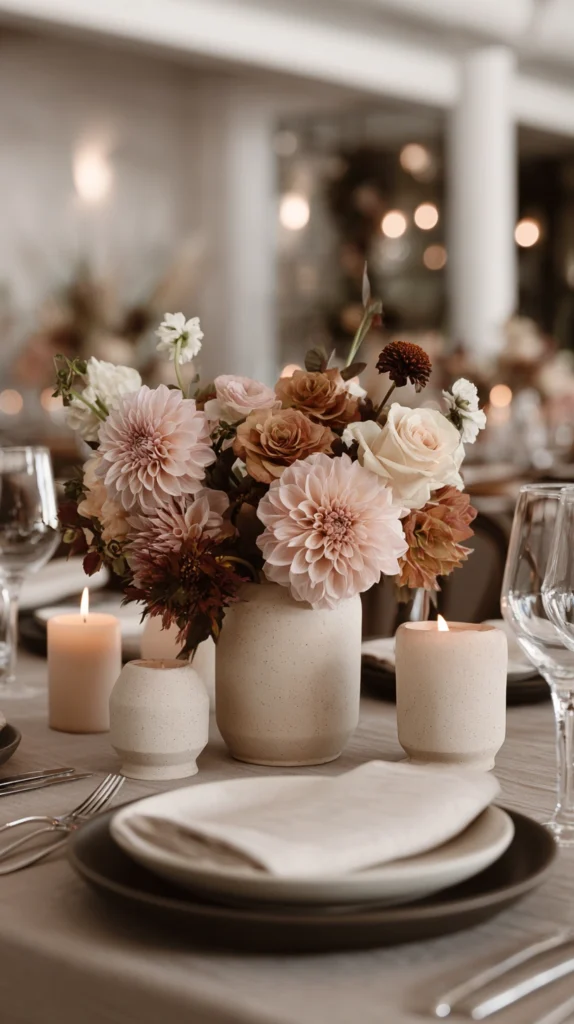
Terracotta pots bring a warm, earthy material into the centerpiece itself, working especially well for fall or rustic-themed intimate weddings.
How it comes together:
- Choose terracotta pots in the four to six inch range, in either natural clay or a painted finish matching your palette
- Use floral foam inside each pot to hold stems securely at a low, compact height
- Select seasonal blooms, like dahlias and marigolds for fall or ranunculus and anemones for spring, to keep the arrangement feeling timely
- Group two to three pots of varying sizes together per table rather than using a single pot alone
Where it works best:
- Fall and early spring weddings, where the natural terracotta material complements seasonal color palettes
Watch out for:
- Leaving terracotta unsealed if pots will sit directly on a linen tablecloth, since unglazed clay can transfer moisture and staining
Budget: $20–$40 per pot depending on size and flower selection
7. A Low Arrangement in a Vintage Silver or Brass Bowl
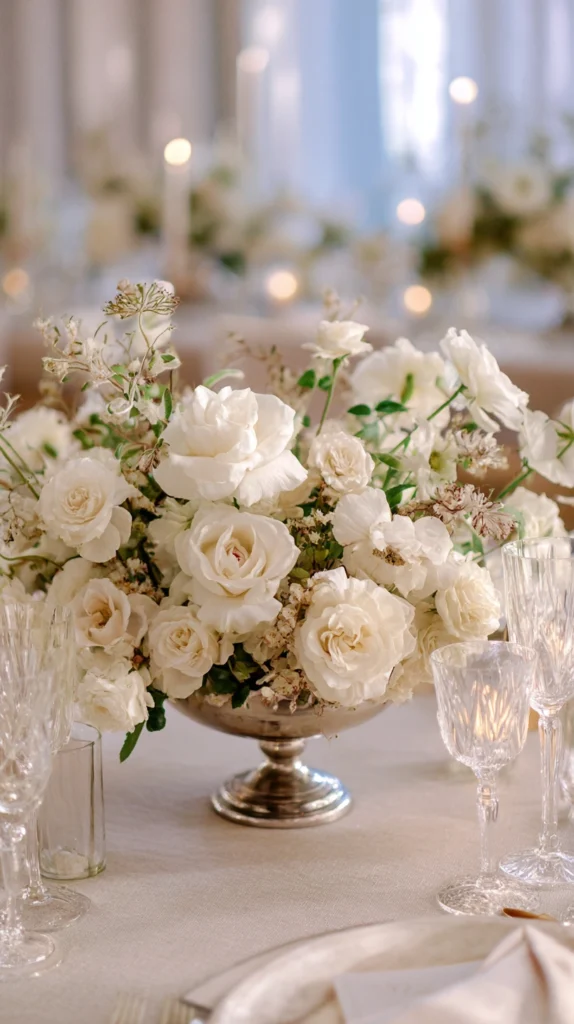
Vintage metal bowls, sourced secondhand, add an elegant, collected texture to a low centerpiece without the cost of new decorative vessels.
How it comes together:
- Source vintage silver-plate or brass bowls from thrift stores, estate sales, or online marketplace listings
- Use floral foam or a flower frog to hold a full, rounded arrangement of mixed blooms at a low, compact height
- Mix metal finishes slightly across different tables for a collected, non-matching look rather than uniform identical bowls
- Polish bowls lightly before the event, since a slightly aged, soft patina reads as elegant while excessive tarnish can look neglected
Where it works best:
- Formal or vintage-inspired intimate weddings, where the metal material adds a more elevated feel than glass or ceramic
Watch out for:
- Over-polishing to a mirror shine, which can look too modern and stark against a soft, romantic floral arrangement
Budget: $10–$25 per bowl secondhand, plus $30–$60 in flowers per arrangement
8. A Low Centerpiece Built Around a Single Bold Bloom
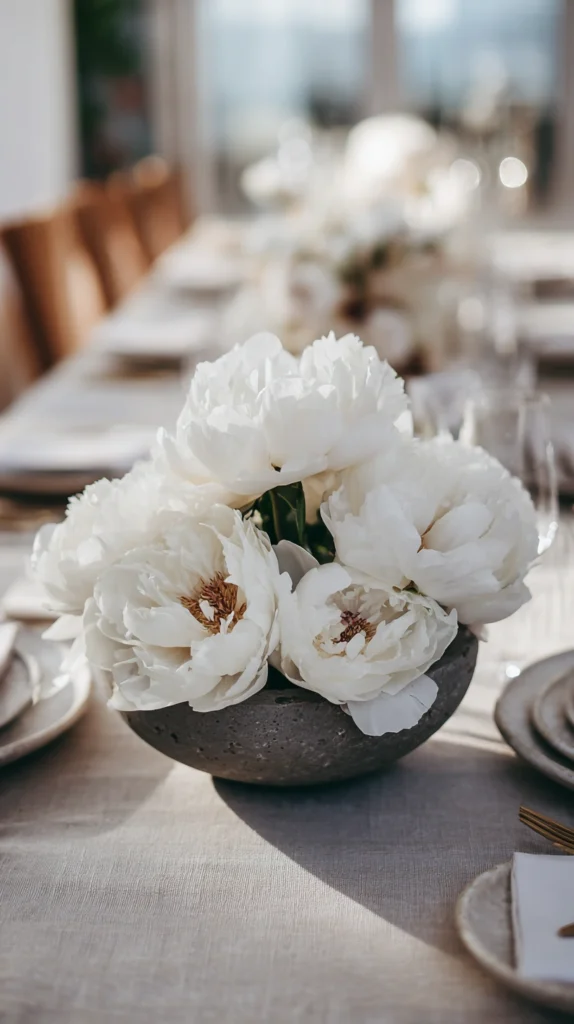
Instead of a full mixed arrangement, building a centerpiece around one dramatic flower variety, like a single large protea or peony, creates visual impact without needing floral volume.
How it comes together:
- Choose three to five stems of a single bold, structural flower variety per arrangement
- Use a simple, low vase or bowl that doesn’t compete visually with the flower’s own dramatic shape
- Add minimal greenery, just enough to fill gaps, rather than layering in additional flower varieties
- Keep the overall arrangement height under eight inches so the bold bloom itself remains the visual focus without towering over the table
Where it works best:
- Modern, minimalist wedding styles where a more curated, editorial look is the goal
Watch out for:
- Choosing a flower variety with a short vase life for this approach, since a single dominant flower wilting is far more visually obvious than in a mixed arrangement
Budget: $35–$70 per arrangement depending on the specific flower variety chosen
9. A Low Wreath Laid Flat as a Centerpiece Base
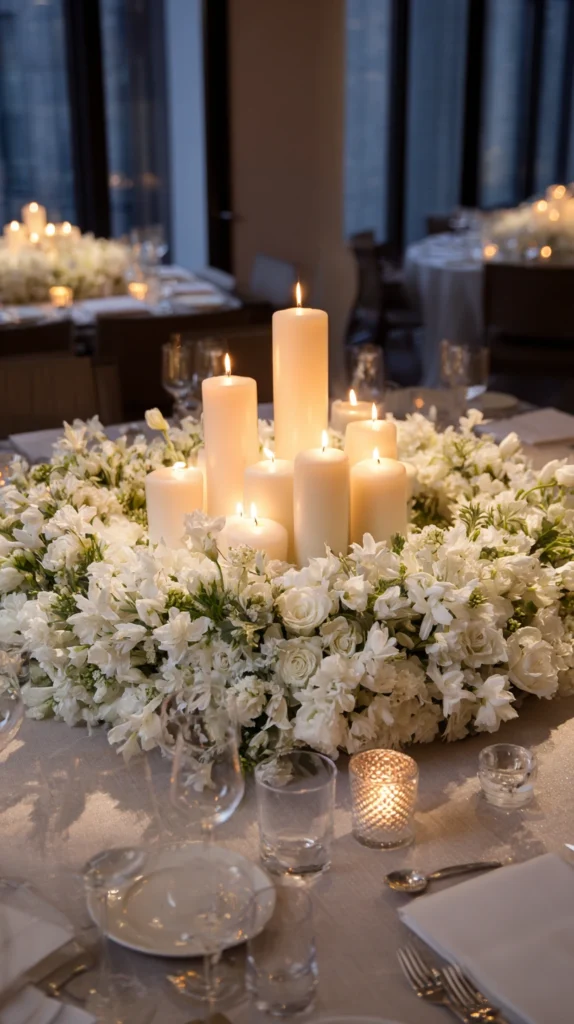
A flat, laid-down wreath, rather than the vertical hanging version, creates a naturally low, circular centerpiece frame that can be built up with candles or small vases in the center.
How it comes together:
- Source or build a simple greenery wreath base, roughly 12 to 18 inches in diameter
- Lay it flat directly on the table rather than hanging it vertically
- Place a cluster of candles or a single low vase in the open center of the wreath
- Tuck a few flower stems directly into the greenery ring itself for color without needing a separate vase
Where it works best:
- Round tables, where the circular wreath shape naturally complements the table’s own shape
Watch out for:
- Using a wreath base that’s too tightly wired, which makes it difficult to tuck in additional flower stems later
Budget: $20–$45 per wreath base, plus $15–$30 in additional flowers and candles
10. Low Glass Cylinders With Submerged Florals
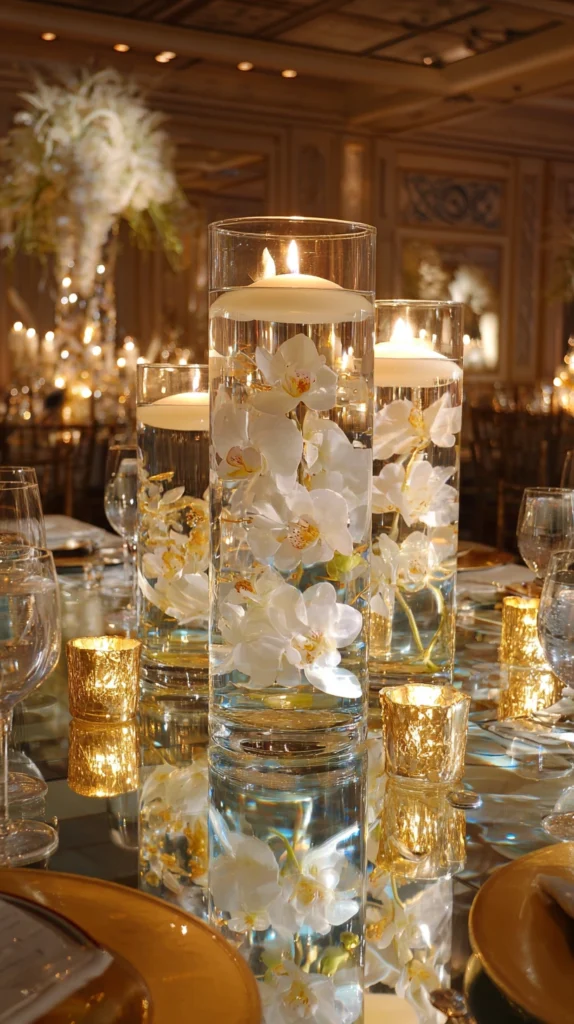
Submerged flower arrangements inside glass cylinders create a unique, low visual effect that photographs beautifully with candlelight from nearby table candles.
How it comes together:
- Use a wide, short glass cylinder, generally under six inches tall, filled with water
- Submerge a single flower head, like an orchid bloom or a full garden rose, fully underwater
- Add a floating candle on top of the water’s surface above the submerged flower
- Group two to three of these cylinders together per table rather than relying on a single one alone
Where it works best:
- Evening receptions where candlelight reflecting through water and glass adds a distinct visual effect
Watch out for:
- Choosing flower varieties that discolor quickly underwater, like anything with a very soft or thin petal structure
Budget: $15–$30 per cylinder including the flower and candle
11. A Low Centerpiece Using Fresh Fruit and Foliage
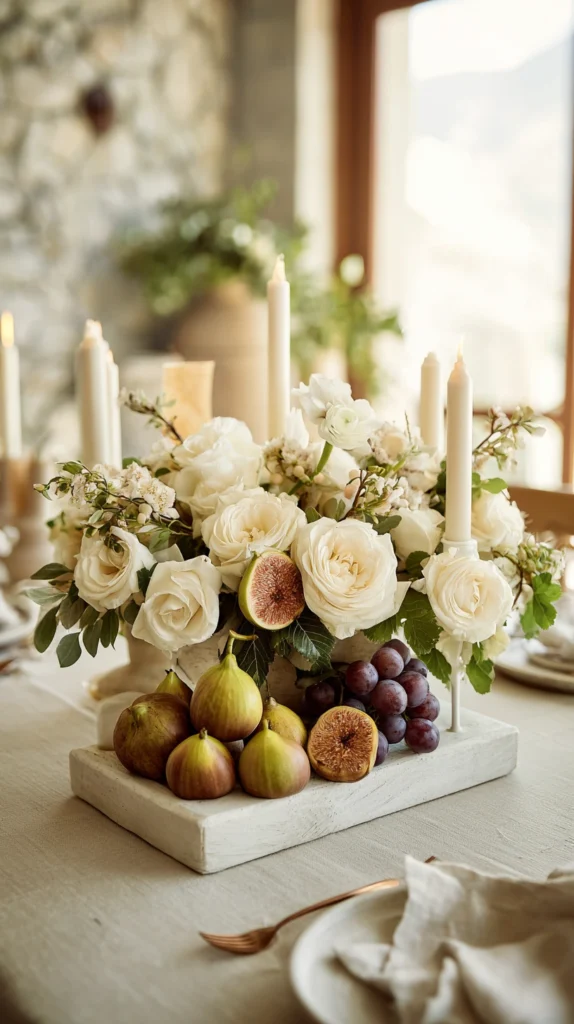
Incorporating fresh fruit, like citrus, figs, or grapes, alongside greenery creates a low, abundant centerpiece with a distinctly warm, harvest-table feeling.
How it comes together:
- Layer a low base of greenery, like grape leaves or eucalyptus, directly on a wood or ceramic tray
- Add fresh fruit, like halved citrus, whole figs, or small grape clusters, nestled into the greenery
- Tuck in a few flower stems for color, keeping fruit as the dominant visual element rather than an accent
- Add a few taper or pillar candles among the fruit and greenery for evening warmth
Where it works best:
- Fall harvest-themed weddings or Mediterranean-inspired receptions, where the fruit ties naturally into the broader aesthetic
Watch out for:
- Using fruit that bruises or browns quickly once cut, like avocado or apple, which won’t hold up through a full reception
Budget: $15–$35 per centerpiece depending on fruit selection
12. A Low Arrangement in a Repurposed Vintage Teapot or Pitcher
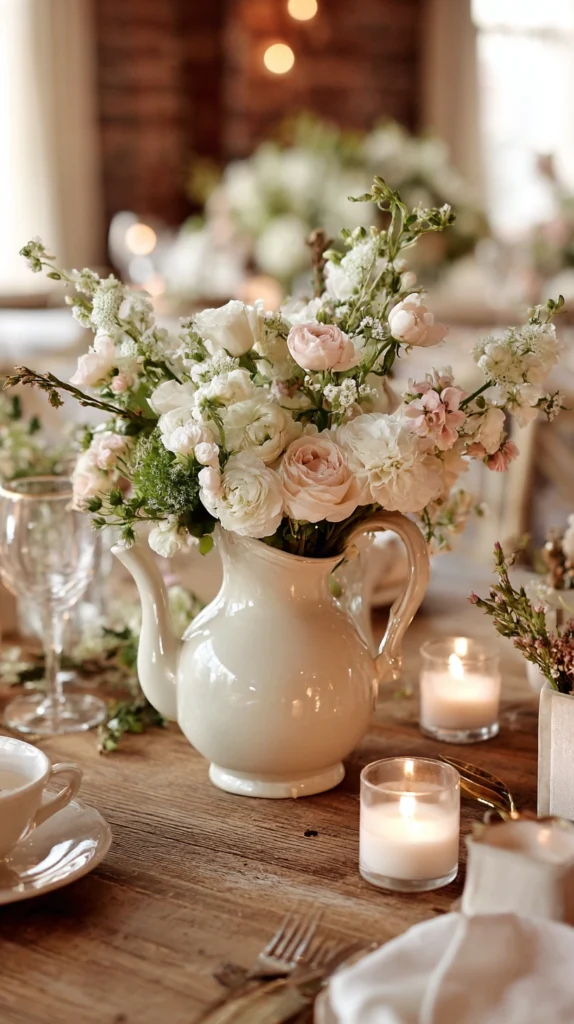
Vintage teapots and pitchers, sourced secondhand, create a charming, collected low centerpiece with genuine character that a new vase simply can’t replicate.
How it comes together:
- Source mismatched vintage teapots or small pitchers from thrift stores or estate sales
- Fill each with a loose, garden-style flower arrangement, keeping the overall height low and proportional to the vessel
- Mix a few different vessel styles across tables rather than using identical pieces at every table
- Add a small handwritten table number tucked into or beside the vessel for a cohesive, personal touch
Where it works best:
- Vintage, cottagecore, or garden-party wedding styles, where mismatched, collected pieces support the broader aesthetic
Watch out for:
- Choosing vessels with narrow openings that make it difficult to achieve the wide, low spreading shape this style depends on
Budget: $5–$15 per vessel secondhand, plus $25–$45 in flowers per arrangement
13. A Low Herb and Wildflower Mix in Mason Jars
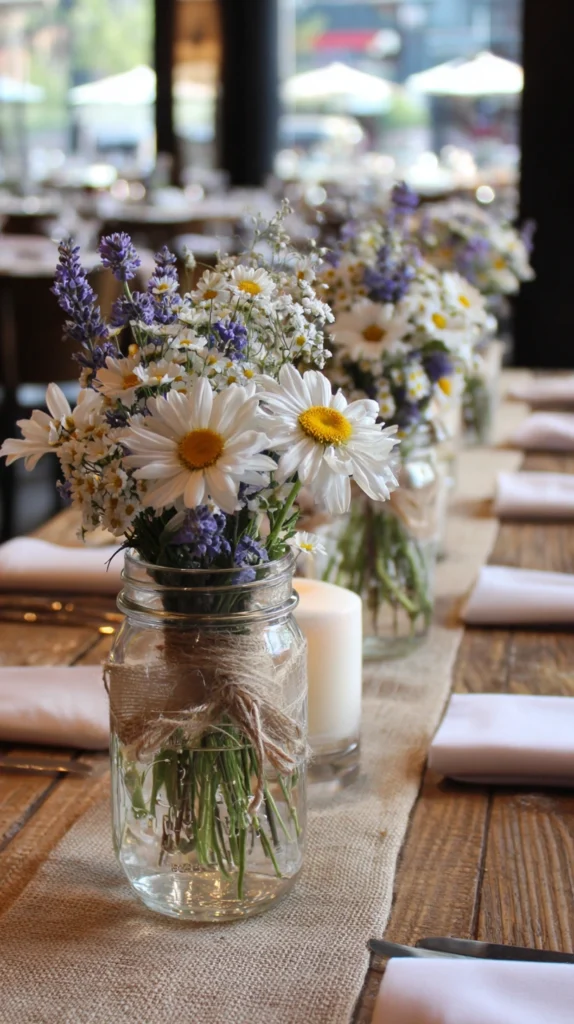
Mason jars filled with a loose mix of herbs and wildflowers create an affordable, rustic low centerpiece that also brings a pleasant natural fragrance to the table.
How it comes together:
- Use standard or wide-mouth mason jars, keeping the overall height low by trimming stems shorter than the jar’s own height
- Mix fragrant herbs, like rosemary, lavender, and mint, alongside simple wildflowers like daisies or cornflowers
- Wrap jars in a simple twine or fabric ribbon matching your color palette for a finished look
- Group three jars per table rather than using a single large jar, which keeps the low, spreading profile consistent
Where it works best:
- Rustic, outdoor, or barn-style weddings, where the casual jar material fits the broader setting
Watch out for:
- Using herbs past their fresh window, since wilted herbs can look unkempt far faster than wilted flowers
Budget: $20–$40 per table for jars, herbs, and flowers combined
14. A Low Centerpiece Built Entirely From Candles and Greenery, No Flowers at All
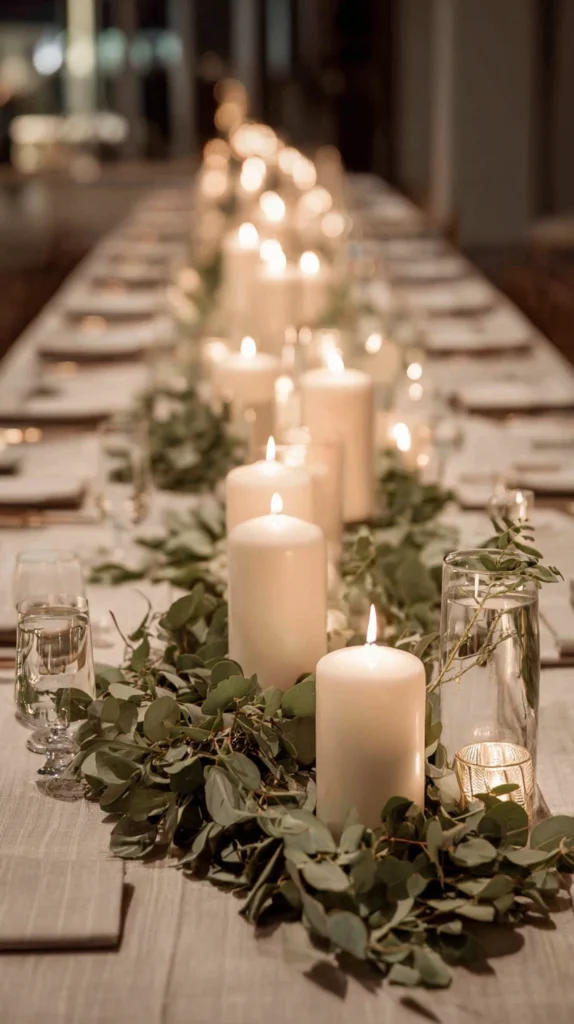
For couples working with a tight floral budget, a candle-and-greenery-only centerpiece delivers a warm, elegant look without any flower cost at all.
How it comes together:
- Lay a simple greenery base, like eucalyptus or ruscus, directly along the table or in a low dish
- Group pillar candles of varying heights, generally between four and ten inches, throughout the greenery
- Add a few dried elements, like pampas grass or dried wheat, for texture without the cost or maintenance of fresh flowers
- Use candles in a consistent color family, like all ivory or all warm amber, to keep the arrangement feeling cohesive
Where it works best:
- Any wedding working with a limited floral budget, since this option delivers strong visual impact with the lowest overall cost on this list
Watch out for:
- Using candles without any drip protection on a linen tablecloth, which can result in wax damage by the end of the reception
Budget: $12–$25 per table, one of the most affordable full centerpiece options on this list
15. A Low Arrangement Built Inside a Hollowed Pumpkin or Squash
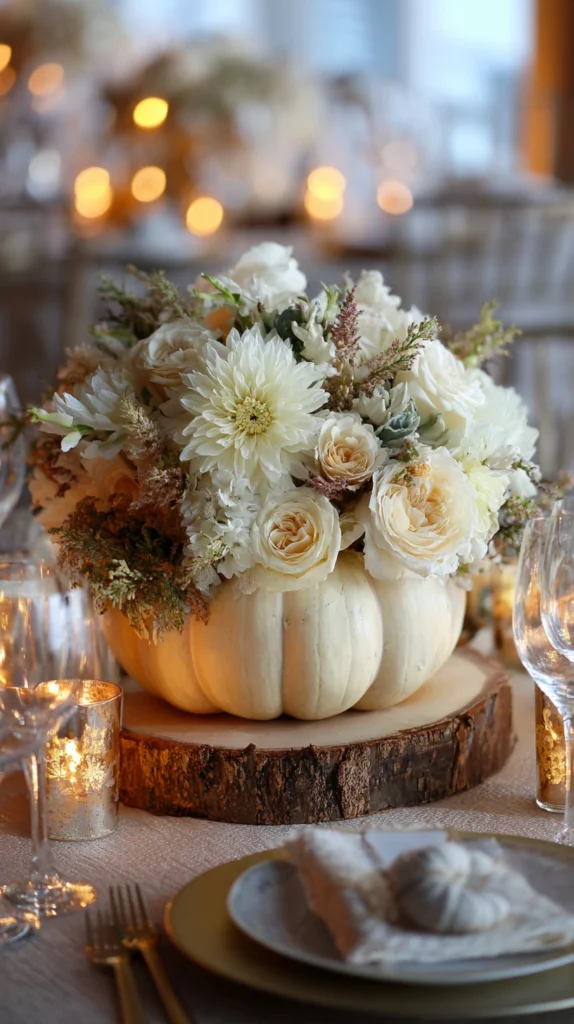
For fall and early winter weddings, a hollowed pumpkin or squash used as the vessel itself creates a distinctly seasonal, low centerpiece that guests immediately recognize as intentional rather than a repurposed prop.
How it comes together:
- Choose a wide, squat pumpkin or squash variety, like a Cinderella pumpkin, which naturally sits low and stable on a table
- Hollow out the top and insert a smaller plastic liner or floral foam block to hold water and stems securely
- Fill with seasonal blooms in warm tones, like dahlias, chrysanthemums, or marigolds, alongside a few trailing greenery pieces
- Set the finished pumpkin directly on a wood round or a bed of loose leaves for an extra layer of seasonal texture
Where it works best:
- Fall or early winter weddings, particularly those with a harvest or rustic theme running through the rest of the decor
Watch out for:
- Assembling these more than a day or two ahead of time, since a hollowed pumpkin begins to soften and can leak once cut open
Budget: $10–$20 per pumpkin, plus $25–$45 in seasonal flowers per arrangement
Choosing the Right Ideas for Your Table Shape and Size
Not every low centerpiece style suits every table shape, so match the idea to your actual reception layout before settling on a final choice.
- Round tables pair naturally with compote bowls, laid-flat wreaths, and clustered vintage vessels, since the circular centerpiece echoes the table’s own shape
- Long farmhouse or banquet tables work best with bud vase clusters, loose flower runners, or mason jar groupings, since these styles can extend along the table’s full length
- Small intimate tables of four to six guests suit single bold bloom arrangements or a simple candle cluster, since these smaller tables don’t need much visual volume to feel finished
- Square or rectangular tables often work well with terracotta pot groupings or submerged floral cylinders, since their contained shape suits a more structured table geometry
- Tables seating ten or more may need two smaller centerpieces spaced along the length rather than a single one, so sightlines stay open across the wider surface
Think through your actual seating chart and table dimensions before finalizing a style, since a centerpiece that looks perfect in a photo might not translate well to your specific table count.
What to Consider If You’re Assembling Centerpieces Yourself
Several of the ideas on this list are genuinely realistic for a couple or a small group of friends to assemble the week of the wedding, without hiring a full florist.
- Order flowers three to four days ahead of the event and keep them in a cool space to condition properly before arranging
- Practice one full arrangement at least a week ahead of time, so you know roughly how long each one takes and can budget your assembly time accordingly
- Buy about ten percent more flowers than your calculated need, since some stems inevitably arrive damaged or wilted
- Assign centerpiece assembly to a specific block of time the day before the wedding, rather than leaving it for the morning of, when time is already tight
Ideas like bud vase clusters, mason jar arrangements, and candle-and-greenery combinations are generally the most forgiving for a first-time DIY arranger, since they don’t require the more advanced technique that a tightly structured compote arrangement demands.
Balancing Cost Across Your Full Reception
If you’re working with a set floral budget across many tables, mixing a few different ideas from this list rather than repeating one single style at every table can actually stretch your budget further.
Reserve a slightly larger, more floral-heavy version of one idea for the head table or sweetheart table, while using a simpler, lower-cost version of the same concept for standard guest tables.
Consider assigning your most expensive centerpiece style to a smaller number of highly visible tables, like those closest to the dance floor or head table, while more budget-friendly options fill out the remaining tables further from the main sightlines.
This approach keeps the overall event feeling cohesive, since it’s the same core idea throughout, while directing more of your budget toward the tables guests will look at most in photos.
A well-chosen low centerpiece rarely reads as a budget decision to guests. It usually just reads as a couple who thought carefully about what actually makes a reception table feel warm, connected, and easy to enjoy a meal around.