15 Cinnamon and Terracotta Room Ideas for Warm Interiors
There is a palette that belongs to the warmest and the most ancient domestic interiors the human world has ever produced — the colours of sun-dried earth, of clay vessels made by hand, of spice markets at midday, of the walls of houses that have been standing in warm climates for centuries and have absorbed so much light that the warmth has become structural. Cinnamon and terracotta are those colours.
They are the colours of the natural world at its most generous and its most specifically beautiful, and they bring to every room they inhabit the particular quality of warmth that no cooler palette can approach — a warmth that is not merely visual but physiological, that the body registers before the mind names it.

Cinnamon and terracotta are not difficult colours. They are confident ones — colours that know exactly what they are and exactly what they do, that require no apology and no hedge, and that reward the interior that commits to them fully with a quality of warmth, life, and genuine beauty that their cooler alternatives consistently promise and consistently fail to deliver.
The fifteen ideas below cover every application of cinnamon and terracotta in the home — from a single painted wall to a fully committed room scheme.
1. The Terracotta Living Room Feature Wall
Budget: $30 – $120
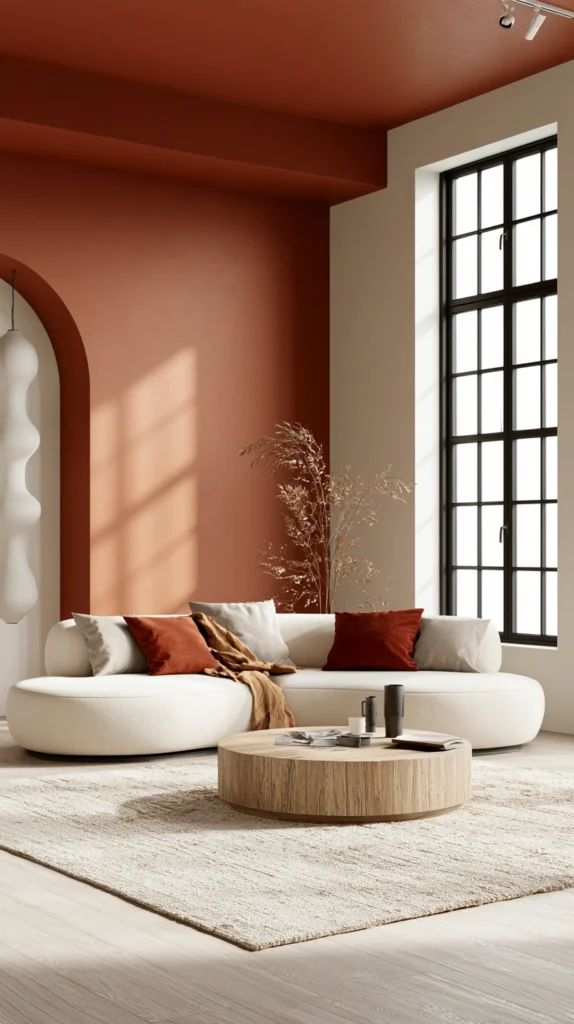
A single terracotta feature wall — behind the sofa, on the chimney breast, or on the room’s most architecturally significant surface — introduces the colour as the room’s primary decorating statement without committing to a full four-wall application.
Against warm white on the remaining three walls, a terracotta feature wall reads as a confident and warm design decision that makes every piece of furniture and every textile in front of it appear more specifically beautiful than it did against a cooler background.
A quality terracotta paint in a flat or eggshell finish costs $20 – $50 per litre. One to one and a half litres covers a standard feature wall in two coats. The remaining walls in a warm white — with a yellow rather than a blue undertone — prevent the terracotta from reading as overwhelming by providing a warm but lighter surround.
Decor tip: Extend the terracotta six to eight inches onto the ceiling above the feature wall rather than stopping precisely at the wall-ceiling junction. The ceiling extension — a technique used consistently in professional interior schemes — makes the colour read as architectural rather than applied, giving the feature wall a depth and a permanence that a colour stopping at a precise right angle cannot achieve. The extended ceiling also reduces the visual sharpness of the wall-ceiling junction, which is particularly valuable in rooms with modern, precise architectural detailing.
2. The All-Terracotta Room
Budget: $60 – $300
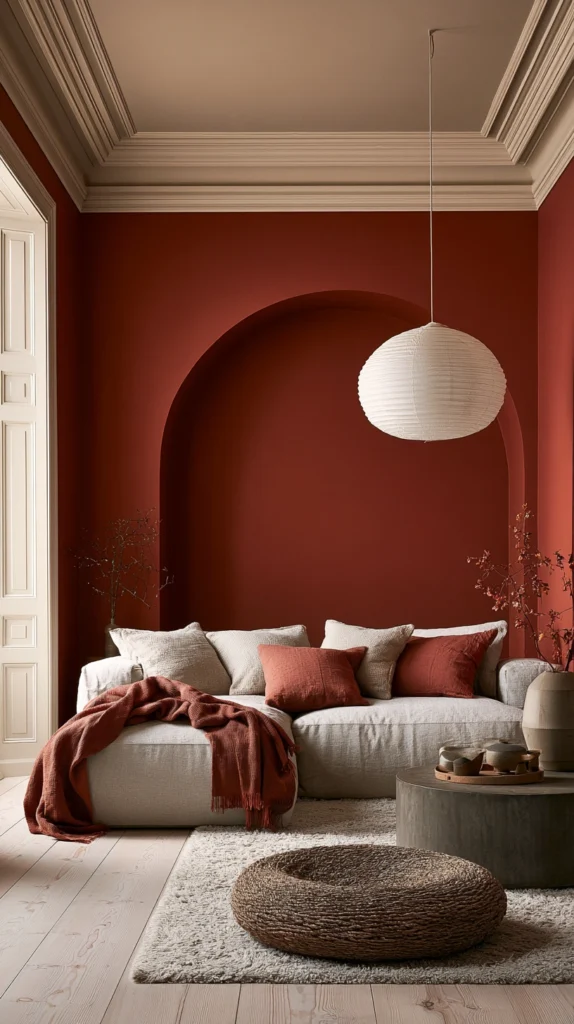
A room painted in terracotta on all four walls — ceiling one tone lighter in a warm sandy cream, woodwork in a warm ivory — is the most committed and the most completely atmospheric version of the terracotta interior. It produces a room that feels genuinely sun-warmed rather than merely decorated, a quality that no single-wall application can approach. The all-terracotta room is the room that people walk into and immediately say is warm even when the temperature is the same as the room they just left.
A standard room requires three to four litres for two coats — $60 – $200 in quality paint. A ceiling in a sandy warm cream — one step lighter than the wall colour — prevents the room from reading as enclosed. Warm ivory woodwork in an eggshell finish — $15 – $30 per litre — provides the contrast that gives the terracotta walls their definition.
Decor tip: Choose a terracotta with a red rather than an orange undertone for a full-room application. A red-toned terracotta reads as warm and earthy — the colour of Mediterranean clay and ancient pottery. An orange-toned terracotta can read as slightly energetic in a full-room application — beautiful in some contexts and slightly intense in others. The red undertone is the safer choice for a colour that will cover all four walls of a room in which a person will spend significant time.
3. The Cinnamon Bedroom
Budget: $40 – $300
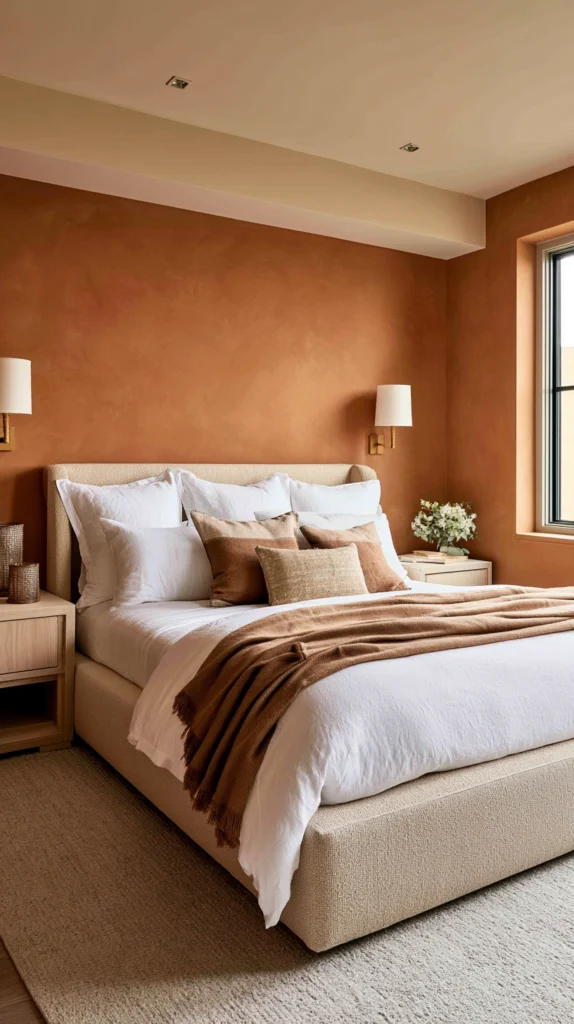
A cinnamon bedroom — walls in the warm, slightly golden-brown tone of ground cinnamon spice, ceiling in a barely-there warm cream, bedlinen in white and natural linen — is the sleeping room that most directly and most honestly communicates the colour’s connection to warmth, rest, and the particular quality of comfort that spice tones carry. Cinnamon brown in a bedroom is simultaneously energising and calming — warm enough to feel genuinely sheltering, muted enough to allow genuine sleep.
A quality cinnamon brown paint costs $20 – $50 per litre. A feature wall application requires one to one and a half litres. A full room application — the most enveloping version — requires three to four litres at $60 – $150. White or natural linen bedlinen against cinnamon walls reads as luminous and fresh — the pale bedding making the walls appear richer and the walls making the bedding appear cleaner and more specifically beautiful.
Decor tip: Use a flat or dead-matt finish on cinnamon bedroom walls rather than any sheen. Cinnamon in a matt finish absorbs light and develops a soft, warm depth that reads as genuinely beautiful in the low artificial light of a bedroom used primarily in the evening. The same colour in an eggshell or satin finish reflects light and can read as slightly plastic under the warm bulbs that a bedroom uses — which is the reverse of the quality the cinnamon bedroom is designed to produce.
4. The Terracotta Kitchen
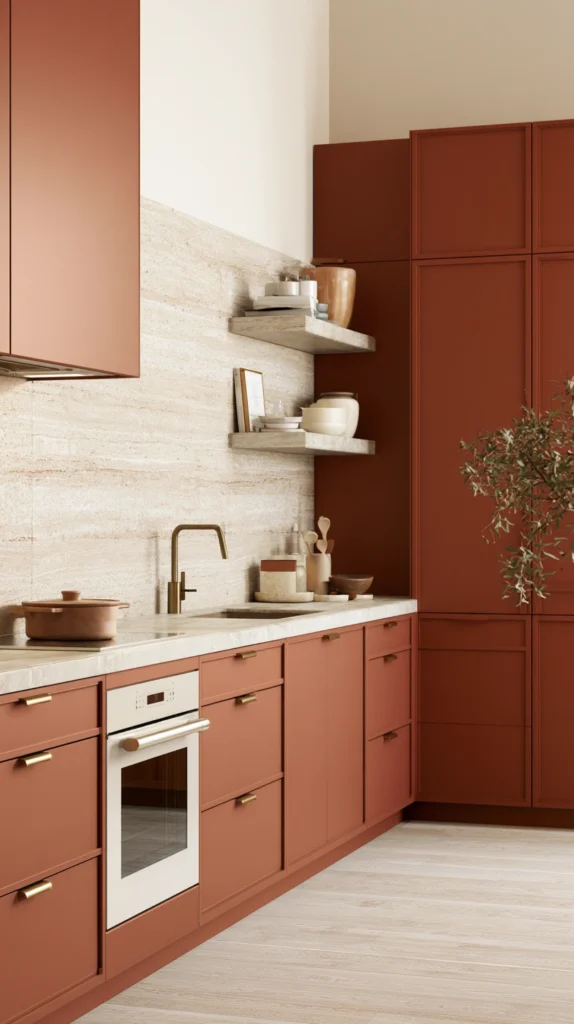
Budget: $80 – $2000
Terracotta kitchen cabinetry — painted in a warm, slightly muted clay tone that belongs to the same material family as handmade pottery and unglazed tile — is the kitchen colour choice that produces the most genuinely warm and the most specifically Mediterranean cooking environment. It belongs with natural stone worktops, brass hardware, and terracotta floor tiles in a way that references the kitchen’s most ancient and most honestly beautiful material traditions.
Repainting existing kitchen cabinetry in terracotta costs $80 – $200 in chalk paint and specialist kitchen paint materials. A professional repaint — $500 – $1500 depending on the number of doors. New cabinetry in a factory-sprayed terracotta — significantly more expensive but producing a depth and durability of finish that brush application cannot match.
Styling tip: Pair terracotta kitchen cabinetry with a worktop in warm white marble, honed limestone, or a pale travertine — materials that belong to the same warm, sun-drenched Mediterranean world as the cabinet colour. Cool engineered stone beside terracotta cabinetry produces a colour temperature conflict that neither element can resolve. Warm natural stone beside the same cabinetry reads as a material conversation between two materials that have always belonged together.
5. The Terracotta Bathroom
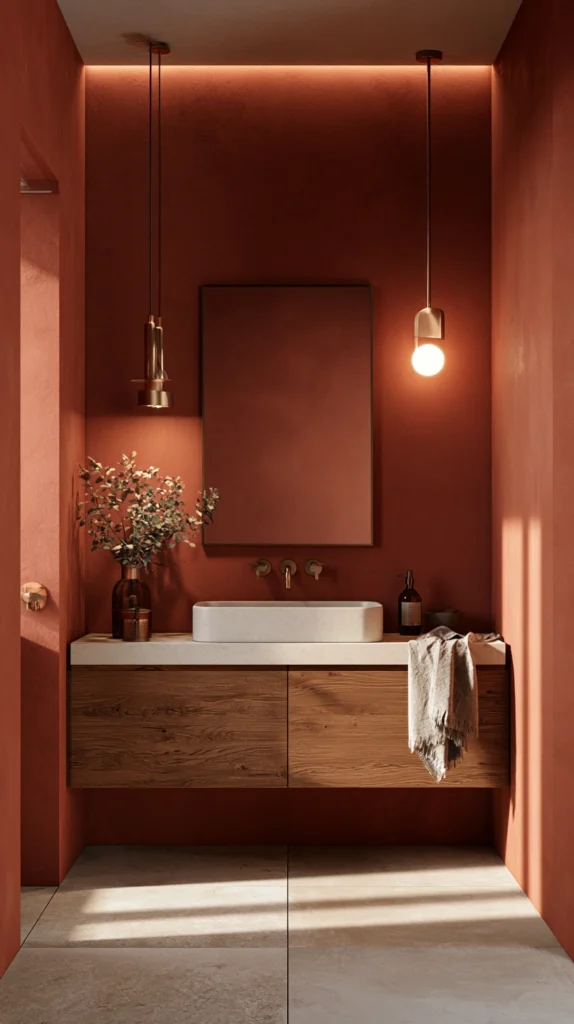
Budget: $30 – $200
A terracotta bathroom — particularly a cloakroom or a small WC where the colour wraps all four walls — is one of the most warmly atmospheric and the most specifically beautiful small room colour decisions available. Terracotta in a bathroom creates an environment that feels genuinely Mediterranean — warm, slightly ancient, and entirely opposed to the clinical white-and-chrome bathroom convention that produces rooms of practical efficiency and no particular pleasure.
Bathroom-specification moisture-resistant paint in terracotta costs $20 – $50 per litre. A standard bathroom requires one to two litres. White bathroom fittings — basin, bath, toilet — read beautifully against terracotta walls, the white porcelain providing the contrast that makes the terracotta appear richer and more specifically warm than it does beside any other surface colour.
Decor tip: Add real, unglazed terracotta pots with moisture-loving plants — a fern, a trailing pothos, or a small peace lily — to a terracotta bathroom rather than standard bathroom accessories in white or chrome. Genuine terracotta pots beside terracotta walls is the material version of a monochrome scheme — the same clay material at the wall scale and the object scale, unified in colour and in material origin, producing a room that reads as genuinely considered rather than simply coloured.
6. The Cinnamon and Cream Pairing
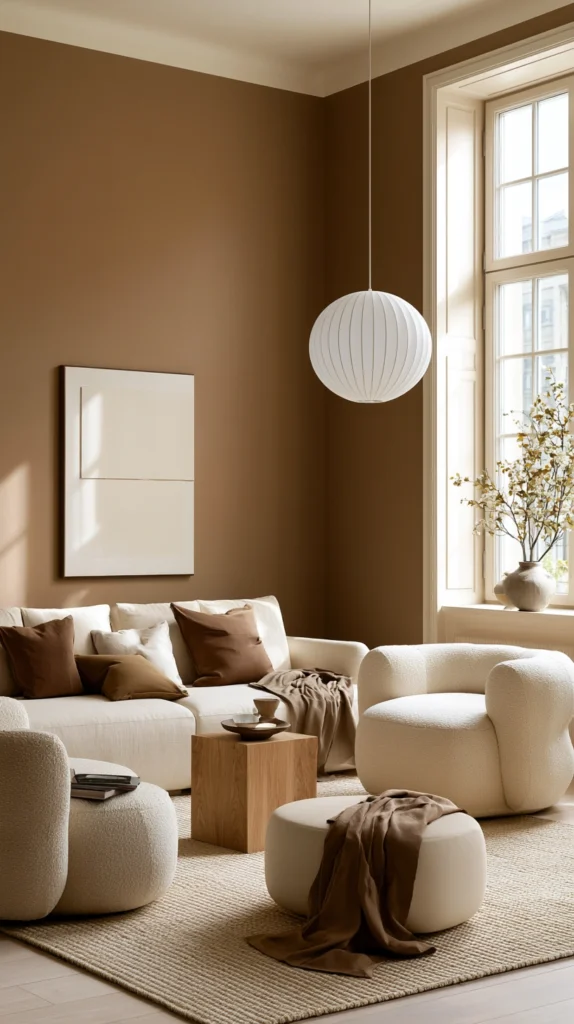
Budget: $50 – $400
Cinnamon and cream — the warm spice brown and the warm near-white of undyed linen and unbleached cotton — is the most naturally harmonious colour combination available to a warm interior. The two colours belong to the same earthy, organic world — the colour of toasted grain and the colour of unprocessed fibre — and their combination reads as resolved and warm without requiring any additional colour or any additional material to feel complete.
Cinnamon walls with cream upholstery — a cream linen sofa, cream cotton armchairs — reads as warm, considered, and entirely at ease. Cinnamon cushions on a cream sofa reads as the restrained version of the same combination at a smaller scale. Natural timber furniture between the two — the third material that completes the scheme — adds the warm golden quality of wood to the spice and cream palette.
Decor tip: Choose cream textiles in natural, unprocessed fibres — undyed linen, unbleached cotton, and raw wool — rather than in bright or synthetic alternatives beside cinnamon walls. Natural cream fibres beside cinnamon read as two honest, earth-derived materials in a genuine relationship. Synthetic white or bright cream beside the same cinnamon reads as a colour contrast rather than a material conversation — which is beautiful but fundamentally different from the quality of warmth that the cinnamon and natural cream pairing produces.
7. The Terracotta and Sage Combination
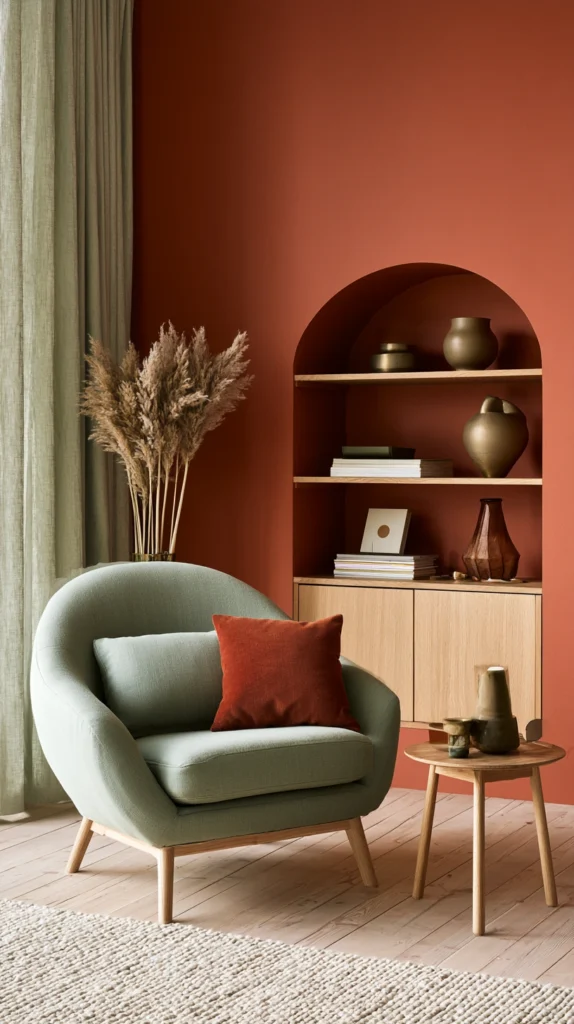
Budget: $50 – $400
Terracotta and sage green — the warm clay red and the muted grey-green of olive leaves and lavender stems — is one of the most specifically beautiful and the most naturally resonant colour combinations available to an interior. The two colours belong to the Mediterranean landscape that produced both of them — the terracotta soil and the sage brush, the clay wall and the olive tree — and their combination in a room produces an atmosphere of genuine warmth and genuine botanical connection.
Terracotta walls with sage green textiles — a sage linen cushion, a sage velvet throw — reads as the most accessible version of the combination. A terracotta living room with a sage green painted bookcase or a sage upholstered chair reads as a bolder and more specifically designed version. Sage curtains against terracotta walls — $40 – $120 per pair — is the combination’s most dramatic and most immediately beautiful application.
Decor tip: Choose a sage green with a grey undertone rather than a yellow undertone beside terracotta walls. A grey-toned sage and a red-toned terracotta are both muted in their own direction — the grey pulling the green toward cool and the red pulling the terracotta toward warmth — and their combination reads as sophisticated and resolved. A yellow-toned sage beside terracotta produces two warm colours competing rather than complementing, which is a less harmonious and less enduringly beautiful outcome.
8. The Cinnamon Home Office
Budget: $30 – $200
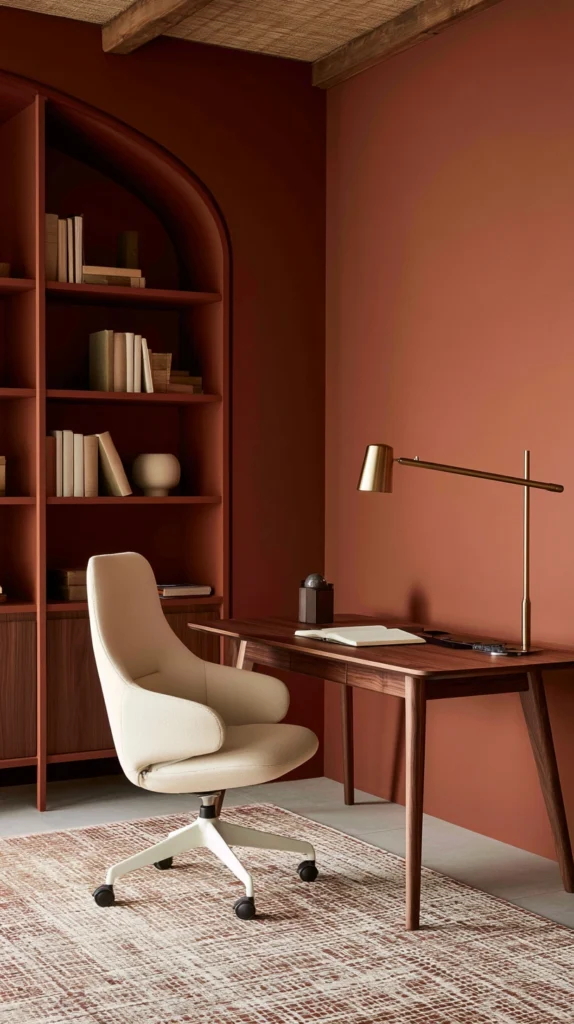
A cinnamon home office — walls in the warm spice brown, natural timber desk furniture, brass desk lamp, and a single large healthy plant in a terracotta pot in the corner — produces a workspace of genuine warmth and genuine individuality that communicates that the work done within it is worth doing somewhere beautiful. Cinnamon in a workspace is warmer than mushroom and less stimulating than terracotta — the moderate spice quality of the colour producing a focused, comfortable working environment.
Paint for a home office costs $30 – $80 for a standard room. A cinnamon home office wall as a video call backdrop — positioned behind the desk chair — produces one of the most warm and the most professionally distinctive backgrounds available for remote working.
Decor tip: Pair a cinnamon home office with natural timber desk furniture — warm oak, honey pine, or a walnut-toned piece — rather than white-painted or black-lacquered alternatives. Warm timber beside cinnamon walls reads as two materials from the same warm, natural world in honest conversation. White furniture beside cinnamon reads as a colour contrast. Black furniture beside cinnamon reads as a dramatic pairing. Only the warm timber reads as a genuinely resolved material relationship.
9. The Terracotta Hallway
Budget: $40 – $200
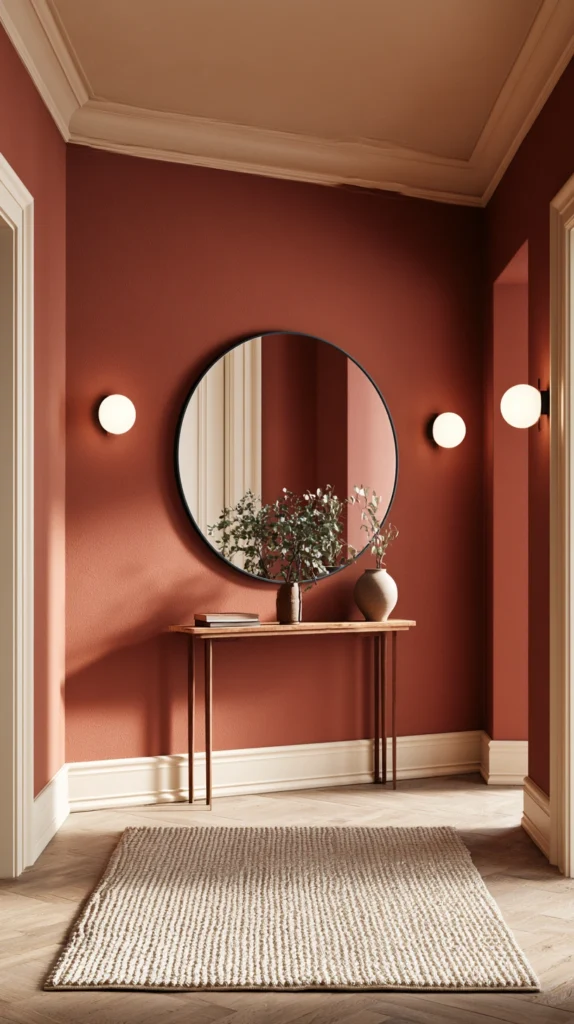
A terracotta hallway — the first interior colour encountered when entering the home — communicates warmth and welcome before any other room has been seen. It is the colour that says the home within has been thought about from the outside in, that the people who live here have made a warm and confident colour decision and are entirely comfortable with it, and that the quality of warmth the hallway promises will be sustained throughout the rest of the house.
A 2.5-litre tin of terracotta covers a standard hallway in two coats — $25 – $60. Warm ivory woodwork in eggshell — $15 – $30 per litre. A natural jute runner — $25 – $60. A large terracotta pot with a statement plant — $15 – $50 — placed at the hallway’s end as the first view from the door.
Decor tip: Install a large mirror in the terracotta hallway — a warm-framed or natural timber framed mirror that reflects the colour and the warmth of the hallway back into the space and makes a narrow hall feel considerably more generous than its actual width. A mirror in a warm-toned hallway doubles the visual warmth and extends the apparent depth of the space — producing a hallway that reads as a genuinely considered and genuinely welcoming entrance rather than a coloured corridor.
10. The Terracotta and Brass Material Story
Budget: $50 – $400
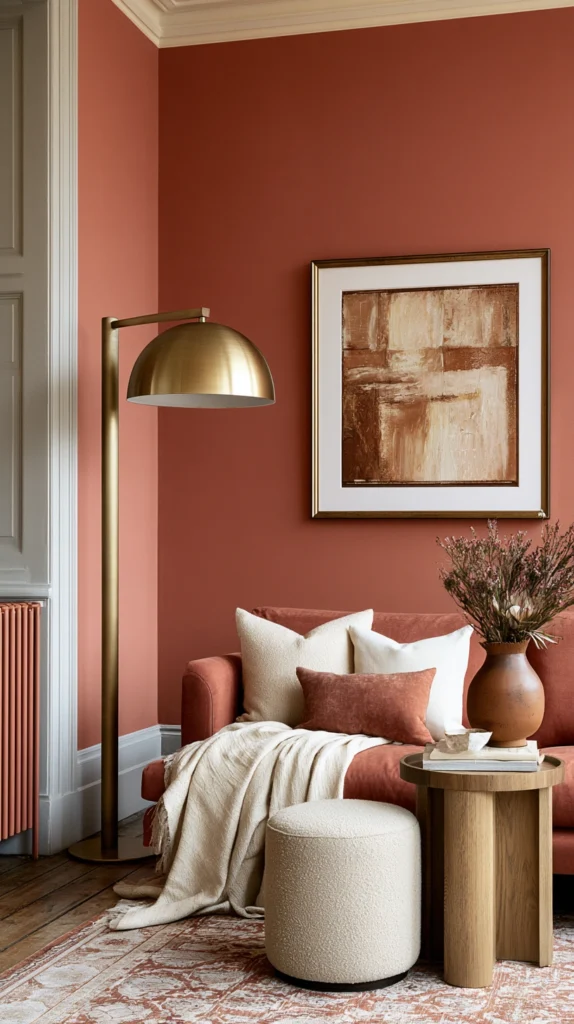
Terracotta and brass — the warm clay of the colour and the warm yellow of aged metal — is one of the most naturally sympathetic material combinations available in interior design. Both materials belong to the same warm, earth-derived colour family — the terracotta of fired clay and the brass of ancient metalwork — and their combination produces a room that reads as genuinely connected to the material traditions of warm-climate domestic architecture across centuries.
Brass picture frames on terracotta walls — $10 – $30 each. A brass floor lamp beside a terracotta sofa — $40 – $120. Brass cabinet hardware on terracotta kitchen cabinetry — $5 – $15 per handle. A brass candlestick cluster on a terracotta painted sideboard — $15 – $40 each. The brass material story distributed across the terracotta interior costs $70 – $205 for individual pieces that collectively transform the room’s material identity.
Decor tip: Use aged or unlacquered brass throughout the terracotta interior rather than polished lacquered gold. Unlacquered brass develops a warm, slightly dull patina over time that is in exactly the same material register as a good terracotta paint — honest, warm, and entirely without pretension. Polished lacquered gold beside terracotta can read as slightly too bright — the high shine of the metal pulling against the matte, earthy quality of the colour in a way that aged brass never does.
11. The Cinnamon and Terracotta Layered Room
Budget: $60 – $400
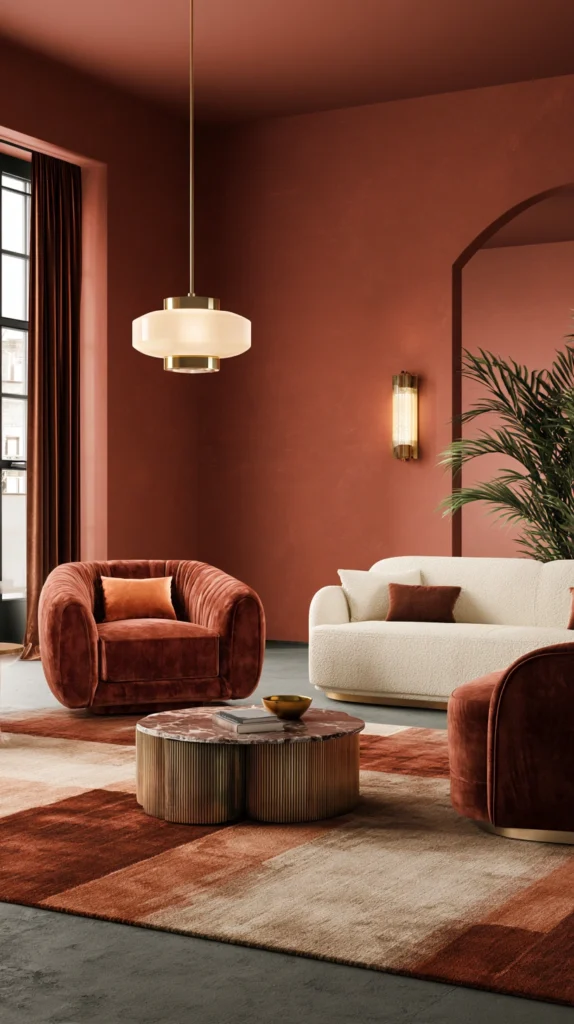
A room that uses cinnamon and terracotta together — one on the walls, one in the textiles, and both reinforced through the natural materials of rattan, jute, and unglazed ceramic — is the warm interior at its most richly layered and its most specifically earthy. The two spice tones belong to the same palette family and their combination produces a depth of warmth that either colour alone cannot achieve.
Terracotta walls with cinnamon cushions and throws — $20 – $80 per cushion. A cinnamon velvet sofa beside terracotta walls — $300 – $800. Terracotta ceramic accessories on cinnamon shelves — $10 – $30 each. A cinnamon-toned jute rug on terracotta kitchen tiles — $60 – $200. The combined cinnamon and terracotta room reads as richer and more specifically beautiful than either colour alone.
Decor tip: Introduce a third neutral between the cinnamon and the terracotta — warm linen, undyed cotton, natural timber, or a pale sandy cream — to mediate between the two spice tones and prevent the combination from reading as dense or overwhelming. Two warm, saturated earth tones without a neutral bridge can feel heavy in a room. The same two tones with a generous neutral layer between them read as a complete, balanced, and genuinely warm scheme.
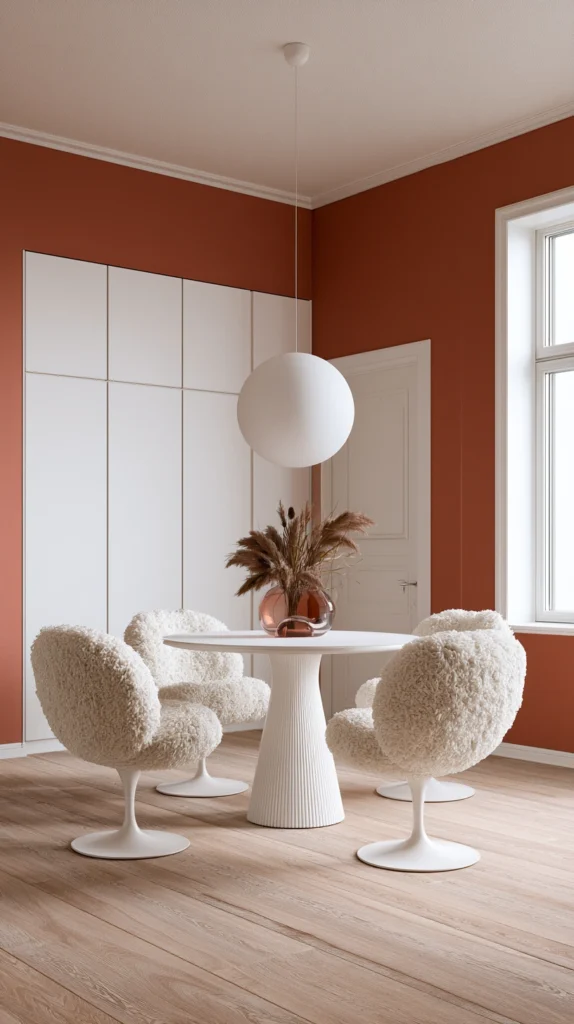
12. The Terracotta and White Minimalist Interior
Budget: $40 – $300
A minimalist interior using terracotta and white exclusively — terracotta on one or all walls, white on every other surface, no additional colour, and the room’s visual interest generated entirely by the quality of the terracotta and the precision of the white beside it — produces one of the most striking and the most specifically contemporary warm colour applications available to a domestic interior. The two-colour scheme has a graphic quality and a confident warmth that a more complex palette does not produce.
Terracotta paint — $20 – $50 per litre. White or warm white for all remaining surfaces — $15 – $35 per litre. Furniture in white, natural timber, or a pale neutral — any additional colour introduced contradicts the scheme’s fundamental premise of two colours and nothing else.
Decor tip: In a terracotta and white minimalist room, vary the textures within the two-colour palette rather than introducing additional colours for visual interest. White linen beside white bouclé beside white ceramic — all white but each with a different surface quality — provides the visual variety that colour restraint does not. Texture is the interest mechanism in a two-colour room. More colour is not.
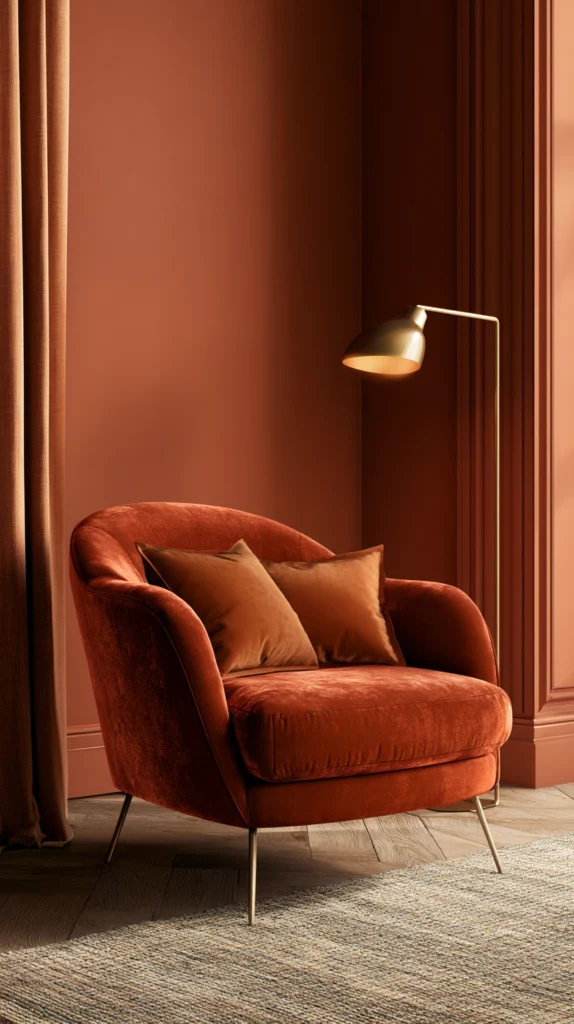
13. The Cinnamon and Rust Autumn Room
Budget: $50 – $300
A room built in cinnamon, rust, and the warm amber of autumn leaves — walls in cinnamon brown, textiles in rust and deep amber, a natural timber floor in a warm honey tone, and botanical greenery in aged terracotta pots — is the warm interior at its most specifically seasonal and its most evocatively natural. It is the room that makes every cold afternoon feel like it was designed for the quality of warmth the season requires.
Cinnamon paint — $40 – $100. Rust-toned cushions and throw — $20 – $60 each. An amber or warm ochre velvet armchair — $200 – $600. Terracotta plant pots with seasonal botanical — $5 – $20 each. A honey-toned jute or wool rug — $60 – $200. Total autumn room investment: $325 – $980 for a room that is warm in every sense.
Decor tip: Bring seasonal botanical material — dried seed heads, autumn leaves pressed and framed, branches of rosehip or dried eucalyptus — into the cinnamon and rust room as the most specifically autumnal decorating layer. Seasonal plant material in an autumnal colour room communicates a genuine connection to the seasonal world — more convincingly and more beautifully than any purchased decorative object in the same colours.
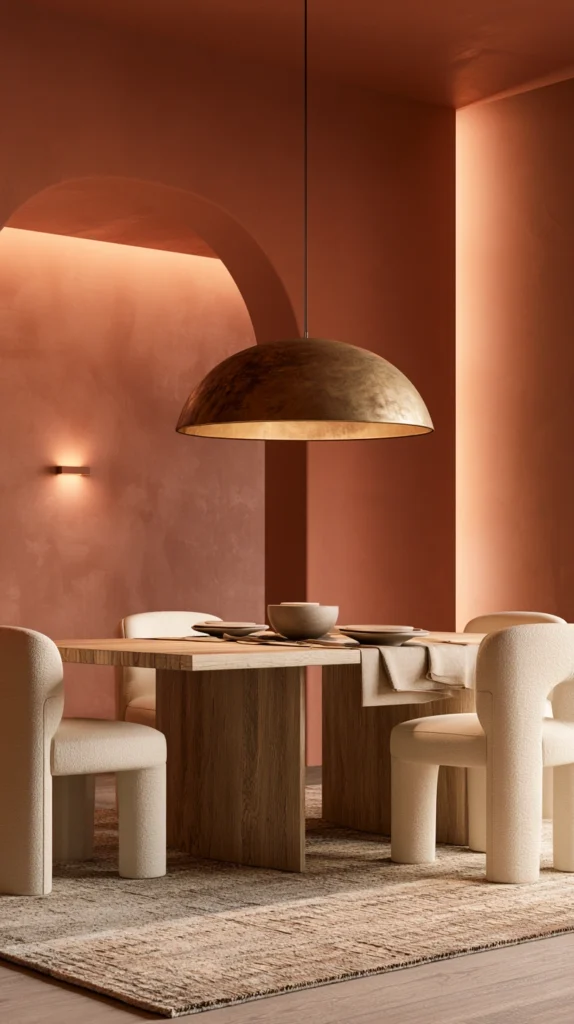
14. The Terracotta Dining Room
Budget: $60 – $300
A terracotta dining room — walls in a warm, medium-depth terracotta, a pendant light in rattan or aged brass above the table, a linen tablecloth in a natural undyed tone, and unglazed terracotta ceramics on the table — is one of the most convivial and most genuinely hospitable dining environments available in a domestic interior. Terracotta makes the food look better, the wine look warmer, and the people sitting around the table look healthy and warm — three qualities a dining room colour should always pursue.
Paint for a standard dining room — $30 – $80 for two coats. A rattan or aged brass pendant above the table — $30 – $100. An undyed linen tablecloth — $20 – $50. Unglazed terracotta plates and bowls — $5 – $20 each. A botanical centrepiece in a terracotta vase — $15 – $40. Total terracotta dining room: $100 – $290 for a room that makes every dinner feel like an occasion.
Decor tip: Dim the dining room lighting to 40 to 50 percent brightness for evening meals in a terracotta room. Terracotta under full artificial brightness in a small dining room can read as slightly intense — the warm, saturated colour responding to bright light with an energy that can feel slightly overwhelming in a room designed for relaxed and extended conversation. The same colour at half brightness reads as deeply warm and enveloping — the quality of a room in which dinner feels like a genuine pleasure rather than a meal consumed under full overhead illumination.
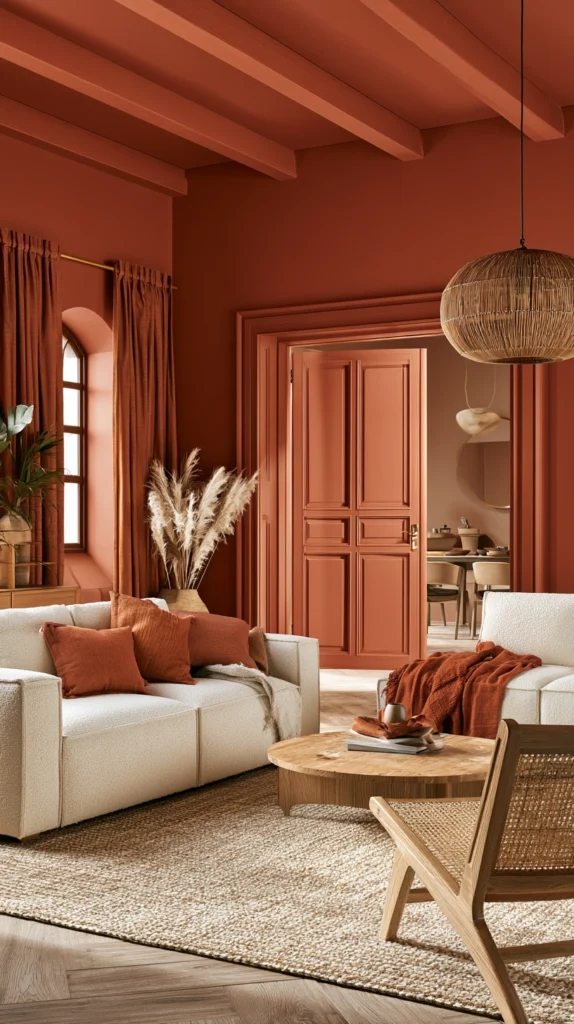
15. The Fully Committed Cinnamon and Terracotta Interior
Budget: $200 – $2000
The fully committed cinnamon and terracotta interior — terracotta walls in a flat finish, ceiling in a warm sandy cream, warm ivory woodwork, natural timber furniture in honey oak or warm pine, cream and natural linen upholstery, aged brass hardware and lighting throughout, unglazed terracotta pots with large healthy plants in every corner, a jute or wool rug in a warm amber or rust tone, rattan pendant lampshades, cinnamon-toned throws and cushions, and no cool or synthetic material anywhere in the scheme — is the room that most completely and most honestly expresses the warmth that cinnamon and terracotta promise and consistently deliver.
Paint: $60 – $200. Natural timber furniture: $200 – $800. Cream and linen soft furnishings: $100 – $400. Aged brass hardware and lighting: $80 – $250. Plants and terracotta pots: $50 – $150. Jute or wool rug: $60 – $200. Rattan lampshades: $25 – $80 each. Cinnamon throws and cushions: $80 – $250. Total: $655 – $2330 for a room built from the inside out on a single warm material principle.
Decor tip: Introduce one unexpected element of cool contrast into the fully committed cinnamon and terracotta scheme — a single large mirror in a plain silver or pale natural timber frame, a white ceramic vessel, or a pale sage green plant in an otherwise terracotta pot collection — so that the room reads as deliberately composed rather than inadvertently warm. A room of entirely warm tones can read as slightly airless without one element that provides a visual breath — a single cool or light detail that makes the surrounding warmth appear richer by contrast.
Cinnamon and terracotta are colours that do not require an explanation or an apology. They simply arrive in a room and make it warmer, more alive, and more specifically beautiful than it was before they came — in the way of the most genuinely generous things, which give more than they take and ask nothing in return except the confidence to use them fully.
Choose the shade that belongs to your room’s light. Layer the natural materials that amplify the warmth rather than undermining it. Bring in the brass and the timber and the unglazed ceramic and the genuinely healthy plants.
And then live in the warmth. It was made for this.