14 Open Concept Summer Decor Ideas for Airy Spaces
There is a reason open concept living has become one of the most enduringly popular architectural choices of the modern era. When walls come down and spaces flow freely into one another, homes feel larger, lighter, and more connected — both to the people living within them and to the world outside.
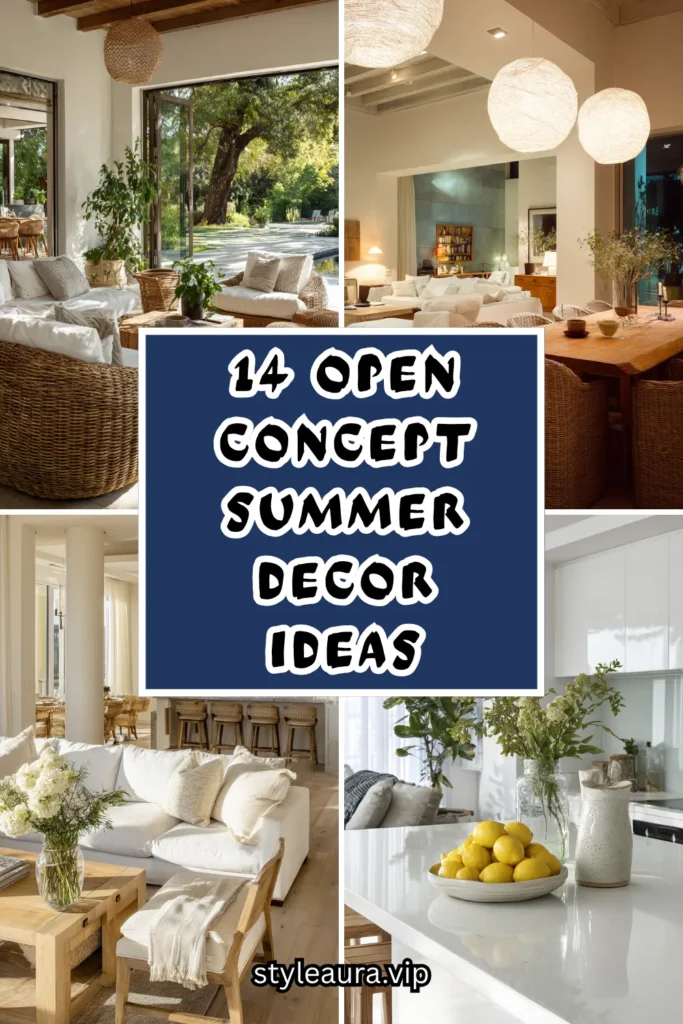
In summer, this quality of openness becomes even more valuable. Natural light pours in from multiple directions, breezes move through the space uninterrupted, and the boundary between indoor and outdoor living begins to blur in the most beautiful way possible.
But decorating an open concept space well — particularly for summer — requires a different kind of thinking than decorating a series of enclosed rooms. Without walls to contain and define each area, you must use other tools to create cohesion, flow, and a sense of intentional design throughout the space.
Color, texture, furniture arrangement, lighting, and natural elements all play a more significant role when the floor plan is open and the eye can travel freely from one end of the home to the other.
The goal of great open concept summer decor is to create a space that feels simultaneously expansive and intimate, breezy and grounded, effortlessly casual and genuinely beautiful. Here are 14 ideas that will help you achieve exactly that.
1. Establish a Unified Color Palette Across All Zones
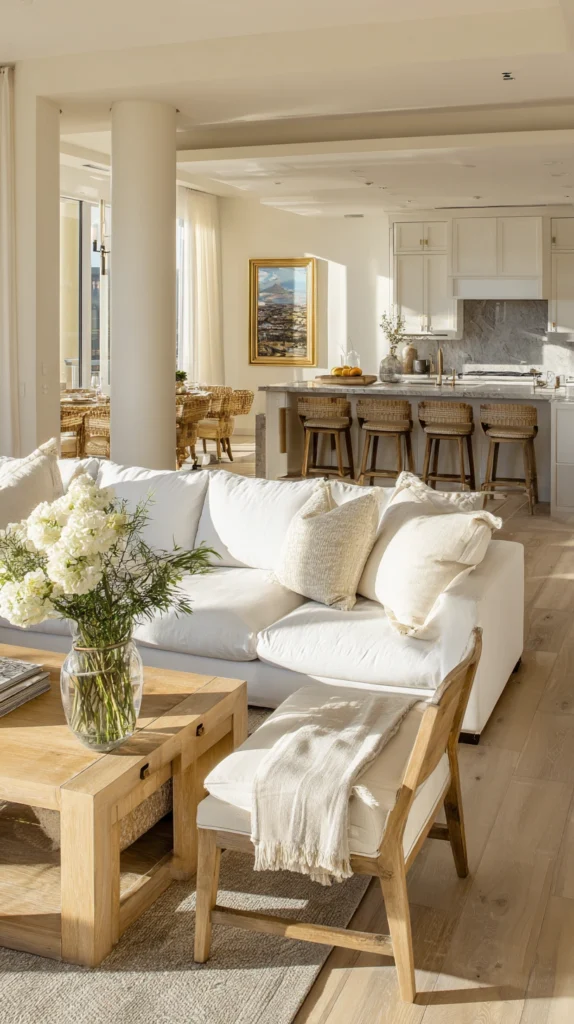
In an open concept space, the absence of walls means that every area is visible from almost every other area simultaneously. This makes color consistency more important than in any other interior situation.
Choose a single, cohesive color palette — ideally one rooted in soft, summery neutrals such as warm white, pale sand, soft sage, and natural linen — and carry it consistently through every zone of the space. This does not mean every surface must be identical, but the tones should relate harmoniously to one another so that the eye moves through the space with ease and pleasure rather than being jarred by sudden shifts in color or mood.
2. Use Large Area Rugs to Define Separate Zones
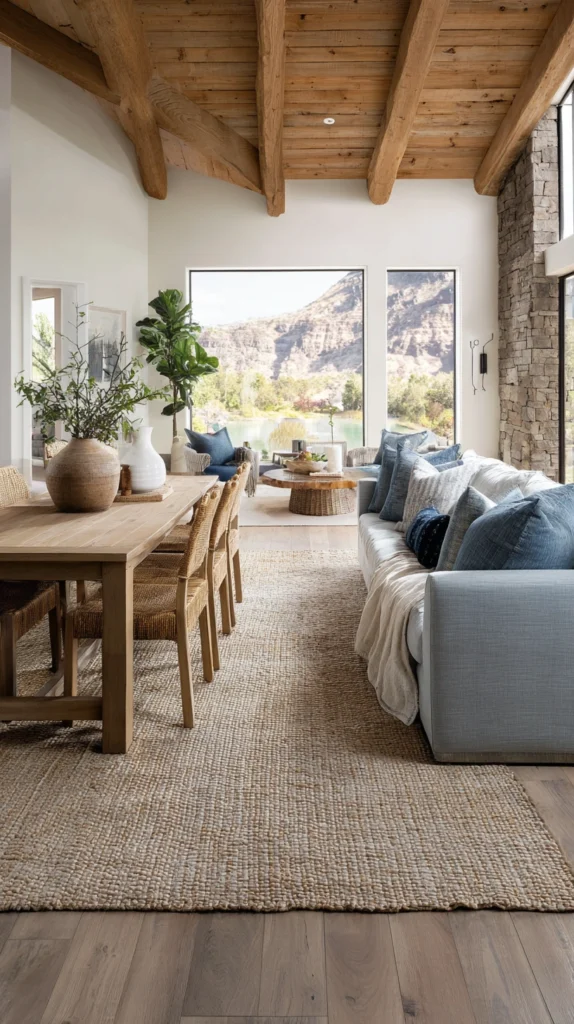
One of the most effective tools for creating definition and structure within an open concept space is the strategic use of large area rugs. Without the physical boundaries that walls provide, rugs perform the essential task of anchoring furniture groupings and signaling where one functional zone ends and another begins. In summer, choose rugs in natural materials — jute, sisal, seagrass, or cotton flatweave — in warm neutral tones that complement the season’s light and palette.
A generous rug beneath a sofa grouping defines the living area, while a different but complementary rug under the dining table creates a distinct dining zone without introducing visual division.
3. Bring the Outdoors In With Generous Greenery
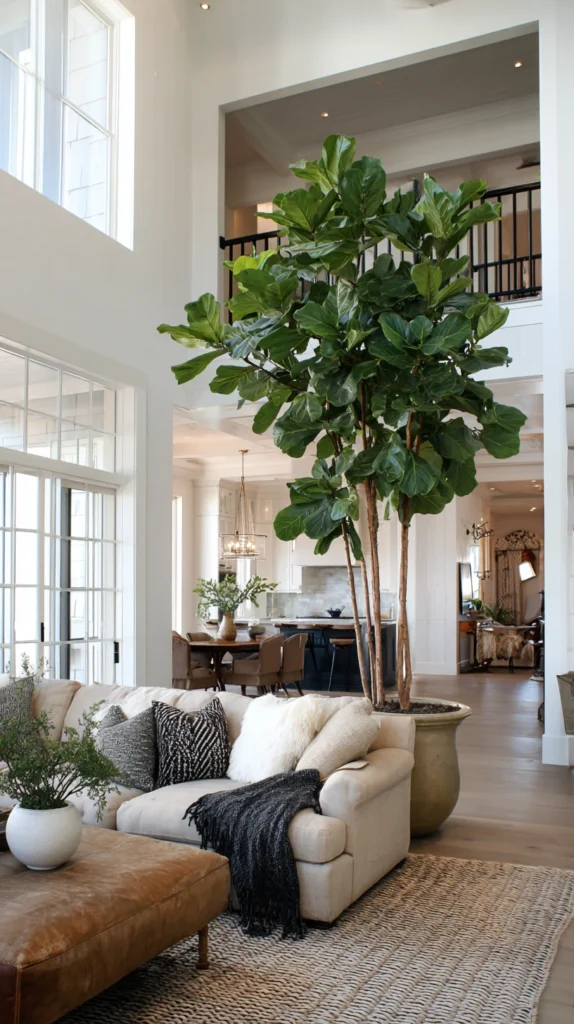
Summer and greenery are inseparable, and in an open concept space, plants have the opportunity to make a truly significant impact. Rather than limiting yourself to small potted plants on shelves and windowsills, think ambitiously. A large fiddle-leaf fig or olive tree in a generous ceramic pot placed at a transitional point between zones creates a living architectural element that adds height, drama, and natural beauty.
Trailing plants cascading from shelving units, clusters of smaller plants grouped on a windowsill, and fresh cut branches arranged in tall vases all contribute to a layered, lush quality that makes the entire open space feel alive and connected to the summer season outside.
4. Choose Lightweight, Movable Furniture
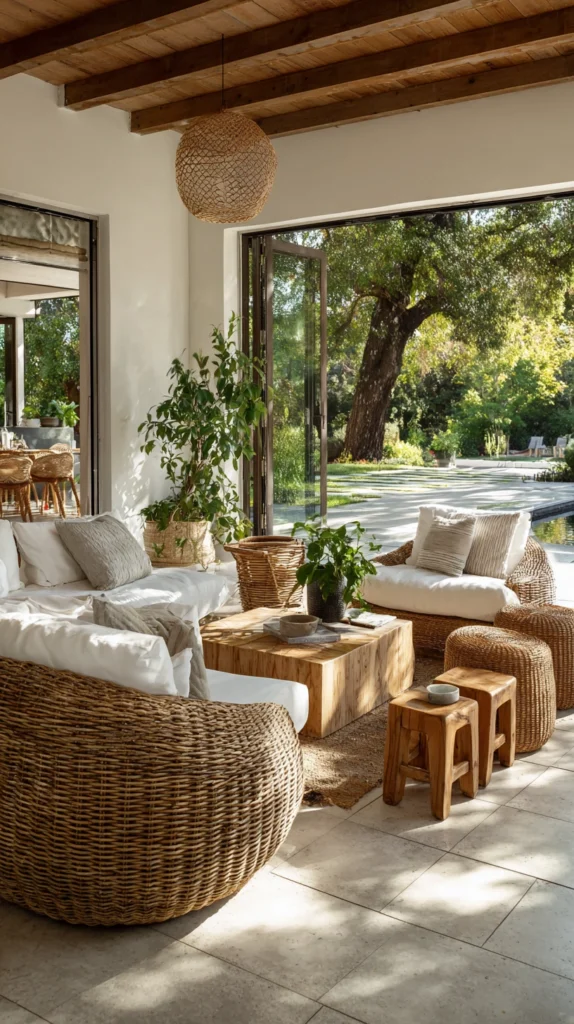
One of the greatest advantages of open concept living in summer is the flexibility it offers in terms of furniture arrangement and indoor-outdoor flow. Maximize this flexibility by choosing lightweight furniture that can be moved easily — rattan chairs that shift from the living area to a sunny spot near the window, lightweight stools that migrate from kitchen counter to outdoor terrace, slim side tables that accompany you wherever you settle.
This ease of movement encourages a relaxed, improvisational approach to living that feels deeply appropriate for the summer months and makes the most of the open floor plan’s inherent adaptability.
5. Install Sheer Curtains Across Large Windows and Doors
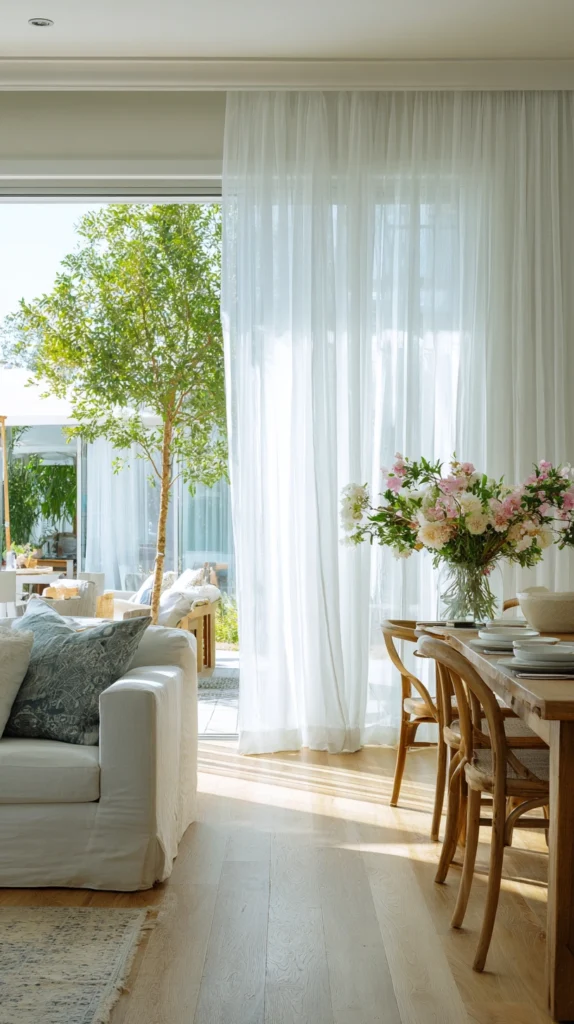
In an open concept summer interior, the windows and doors are not simply functional openings — they are the connection points between inside and outside, and how you dress them matters enormously.
Sheer curtains in white, ivory, or pale linen hung floor to ceiling across large windows and sliding doors serve multiple purposes simultaneously. They filter harsh midday sunlight into a soft, flattering diffused glow, they move gently in summer breezes to create a sense of romance and lightness, and they visually extend the height of the room by drawing the eye upward. Few interventions deliver as much atmospheric impact for as little investment.
6. Embrace Natural Timber Elements Throughout
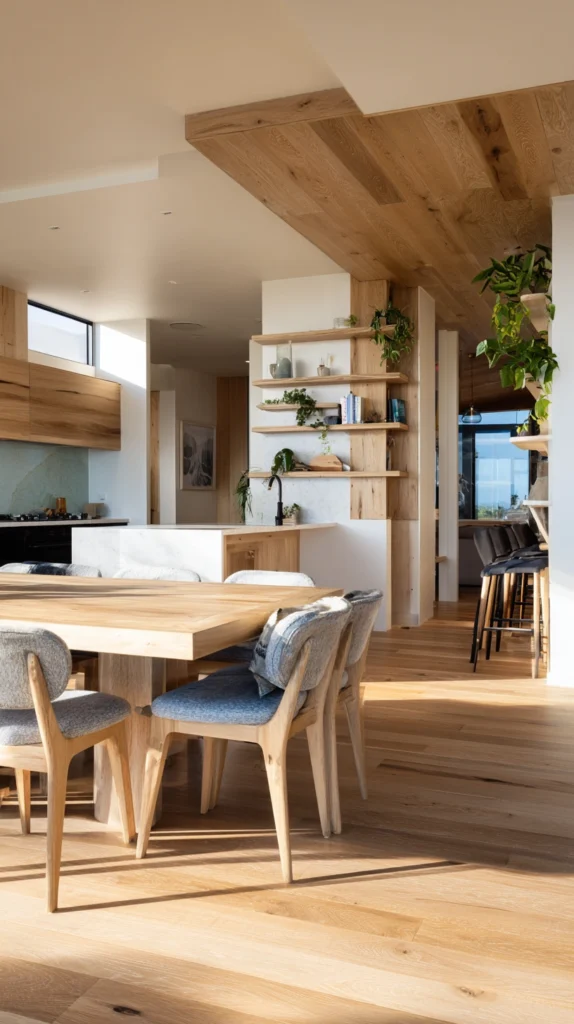
Natural timber — whether in flooring, furniture, shelving, or architectural details — is one of the most unifying and warming materials you can introduce into an open concept summer interior. In a large, open space, timber brings organic warmth and a sense of groundedness that prevents the space from feeling cold or anonymous.
Choose light, natural tones — pale oak, whitewashed pine, or raw ash — that reflect summer light beautifully and complement a soft, neutral color palette. Carry the timber through multiple elements of the space for a cohesive, considered result that feels connected and intentional rather than scattered.
7. Layer Lighting Across Every Zone
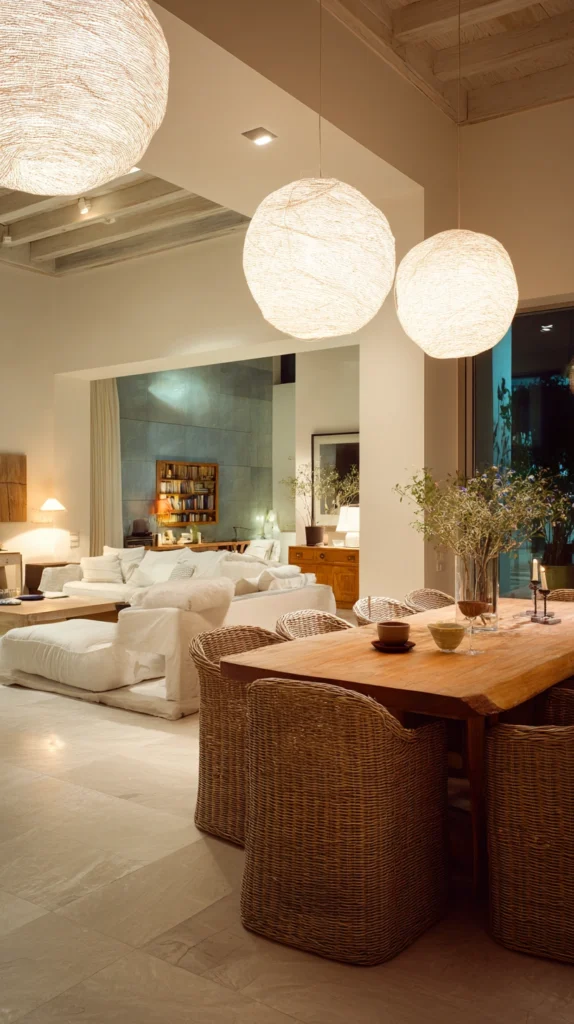
Open concept spaces often suffer from a common lighting problem — a single central overhead light source that illuminates the entire floor plan uniformly but creates no atmosphere, warmth, or sense of intimacy. Summer evenings in an open concept home demand a layered lighting approach that creates distinct pools of warmth and interest across different zones.
Pendant lights over the dining table anchor that zone with focused, atmospheric light. Table lamps on sideboards and side tables add warmth to the living area. Floor lamps in corners fill shadows and create depth. Together, these layered sources transform a large open space into a collection of warmly lit, inviting environments that feel genuinely beautiful after dark.
8. Use Open Shelving to Add Character Without Closing the Space
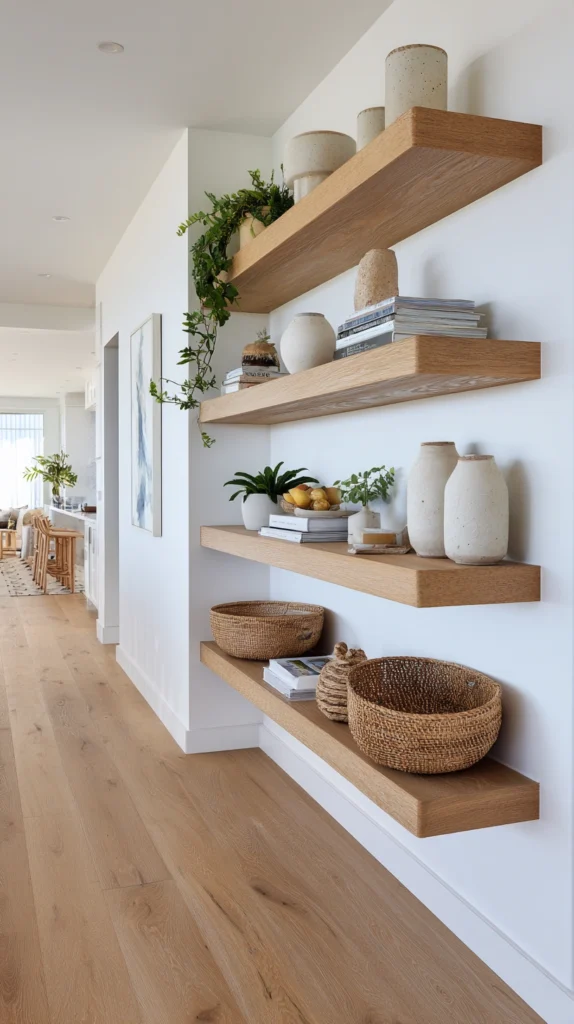
One of the challenges of decorating open concept spaces is finding ways to add personality, storage, and visual interest without introducing elements that interrupt the sense of flow and openness. Open shelving is one of the most effective solutions.
Floating shelves mounted on walls between zones allow you to display books, plants, ceramics, and collected objects in a way that adds enormous character to the space without the visual weight of solid cabinetry.
Style the shelves with a summer sensibility — natural textures, botanical elements, simple ceramics, and light-colored books — and they become a gallery of personal style that enriches the entire open plan without closing it down.
9. Create an Indoor-Outdoor Flow With Consistent Flooring
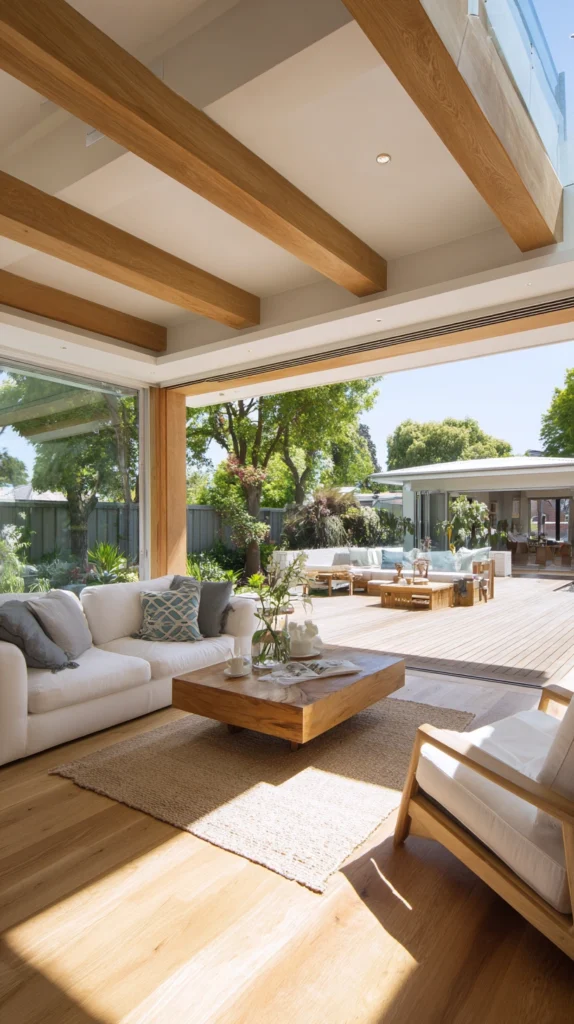
Nothing reinforces the open, airy quality of a summer interior more powerfully than a seamless visual and physical connection between inside and outside. Where possible, extend the same flooring material — or a very similar tone — from your interior into an adjacent outdoor space such as a terrace, deck, or courtyard.
When the floor appears to flow continuously from living room to outdoor terrace, the boundary between inside and outside dissolves in a way that makes the entire living space feel dramatically larger. This simple continuity of material is one of the most powerful spatial tricks available in interior and landscape design.
10. Add a Statement Ceiling Element
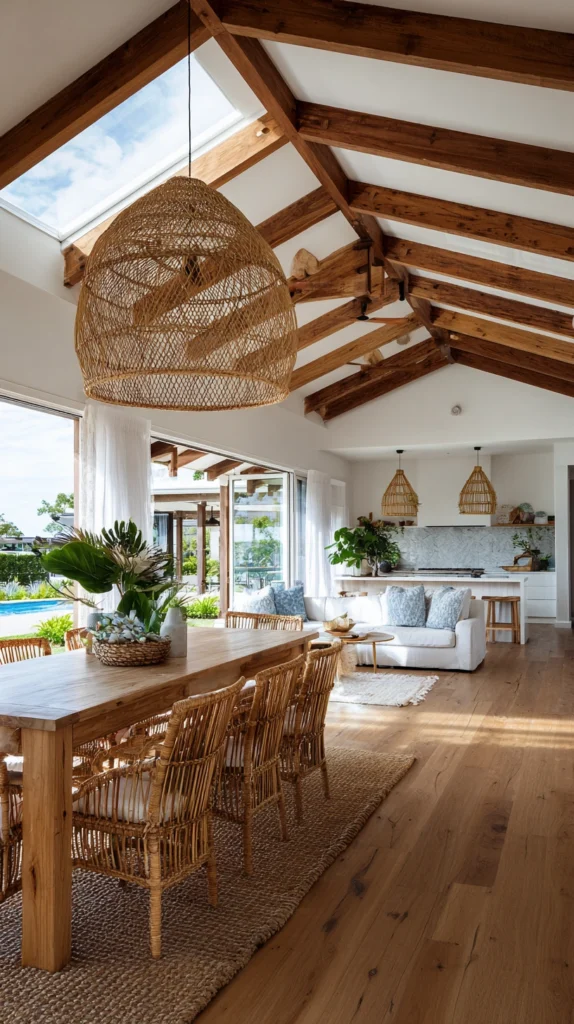
In an open concept space where walls are minimal and floor space is often filled with furniture zones, the ceiling represents an underused design opportunity with significant potential.
A statement ceiling element — whether a large rattan pendant light, a series of pendant lights hung at varying heights over the kitchen island, a painted ceiling in a warm, earthy tone, or even a simple timber beam detail — draws the eye upward and gives the space a sense of architectural interest and vertical dimension.
In summer, a ceiling fan with natural timber or rattan blades adds both visual interest and genuinely practical comfort during warm days and evenings.
11. Incorporate Water Elements for Sensory Freshness
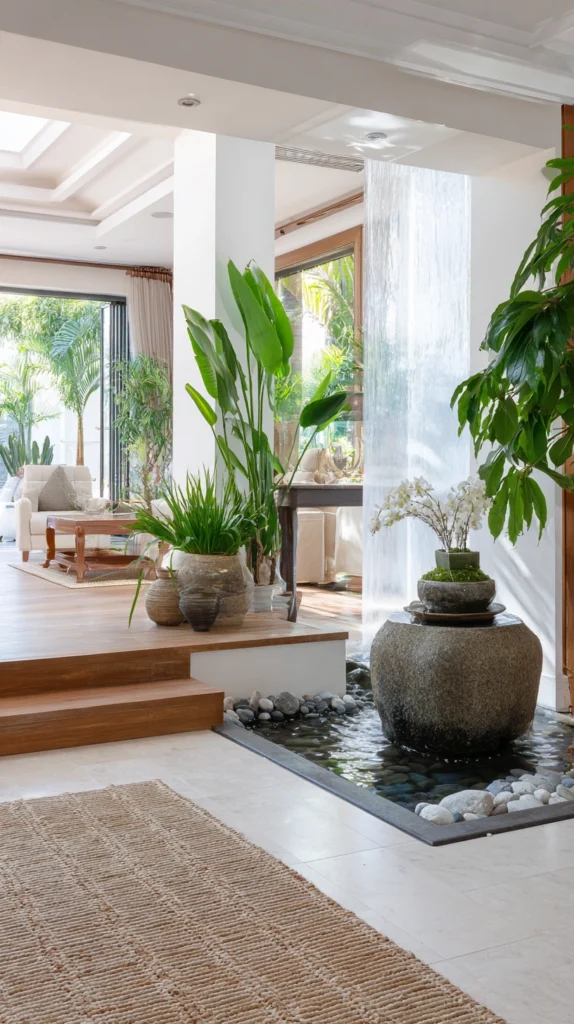
An open concept summer interior engages all the senses, not just the visual. The sound of moving water has a uniquely cooling and calming effect that is particularly welcome during the hottest months of the year.
A small tabletop water feature placed on a console table or sideboard, a simple indoor fountain tucked into a corner, or even a large glass vessel filled with water and floating botanicals introduces the element of water into the interior in a way that feels fresh, serene, and deeply summery. The gentle sound of trickling water carries through an open space beautifully, creating an ambient quality that transforms the overall atmosphere.
12. Keep Kitchen Surfaces Clear and Styled Simply
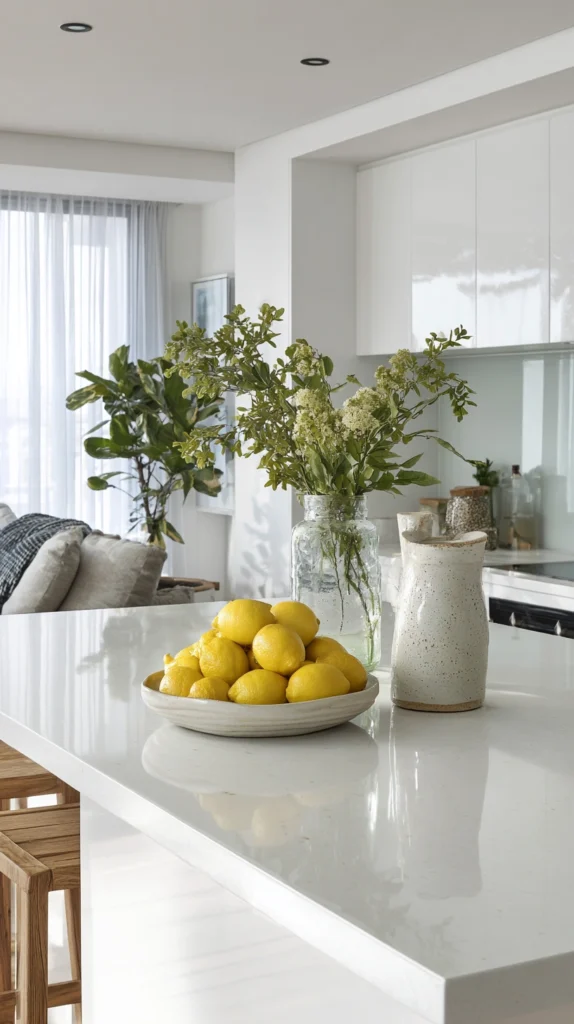
In an open concept home, the kitchen is always visible from the living and dining areas, making its appearance a significant contributor to the overall aesthetic of the space. Summer is the perfect time to strip back kitchen surfaces to their most essential and beautiful elements. Clear away appliances, unnecessary utensils, and accumulated clutter, leaving only a few carefully chosen objects — a bowl of seasonal fruit, a simple vase of fresh herbs, a ceramic jug of water — on the countertop.
This minimal, styled approach makes the kitchen feel like a considered part of the overall open plan rather than a functional area that simply happens to be visible.
13. Choose Sofas and Seating in Breathable Natural Fabrics
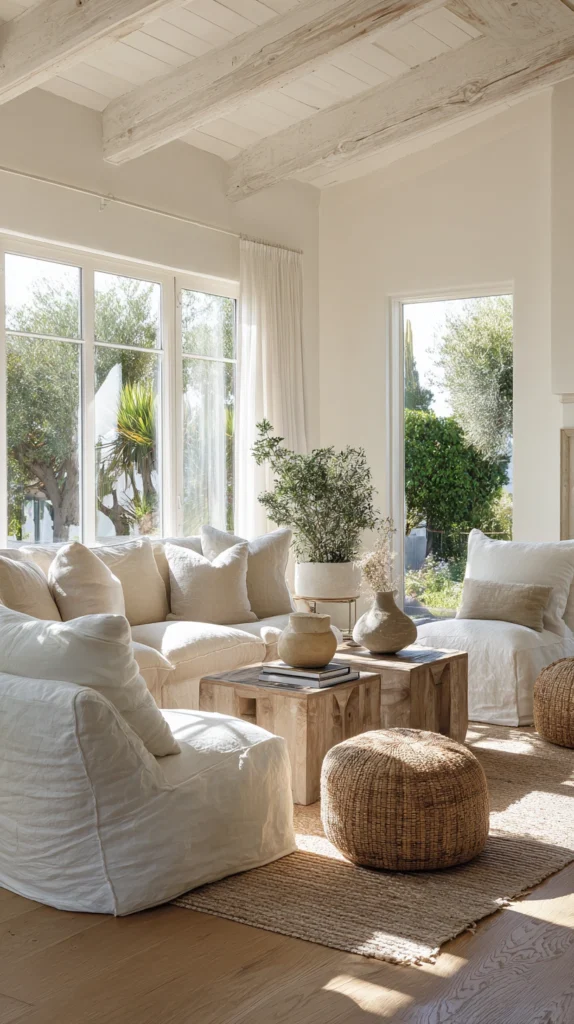
In summer, the tactile quality of upholstery matters enormously. Heavy velvet, synthetic microfiber, and thick wool fabrics that feel comfortable and cozy in winter become oppressively warm and uncomfortable when temperatures rise.
For an open concept summer interior, reupholster or slipcover sofas and chairs in breathable natural fabrics — linen, cotton canvas, or light-weight bouclé — that feel cool and fresh against the skin even on the warmest days. Choose covers in pale, summery tones that reflect light rather than absorbing it, and the seating area will feel genuinely inviting even during the height of the season.
14. Edit Ruthlessly and Let the Space Breathe
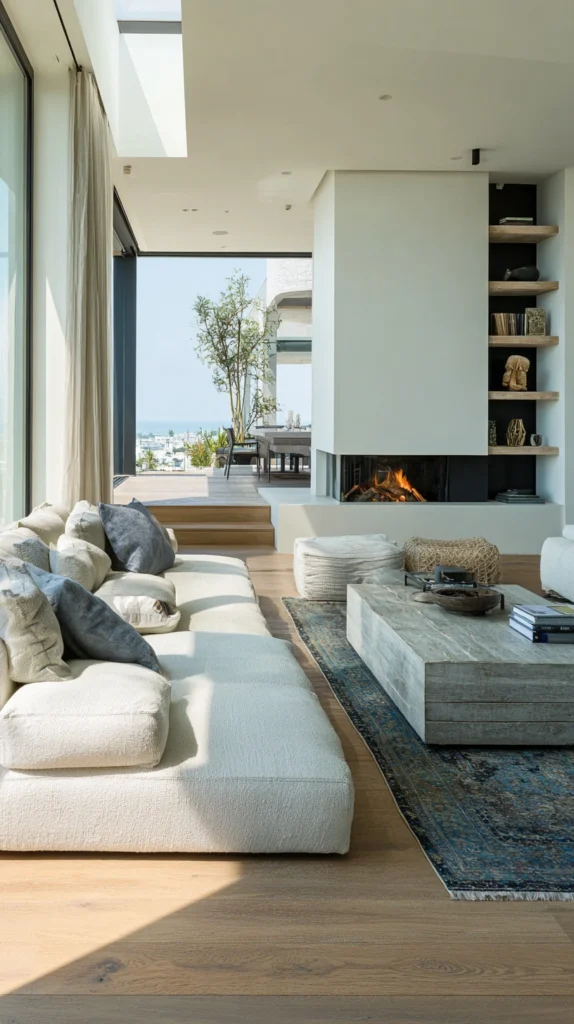
Perhaps the single most important principle of successful open concept summer decorating is the practice of restraint. Open spaces have a natural tendency to accumulate objects, furniture, and decoration that gradually erodes the very quality of openness and airiness that makes them so appealing in the first place. Summer is the ideal time to edit ruthlessly — to remove anything that does not actively contribute beauty, function, or meaning to the space.
Clear surfaces, generous circulation space between furniture pieces, uncluttered sightlines, and deliberate empty spaces are not signs of an unfinished interior. They are the hallmarks of a confident, considered design that understands the profound beauty of space itself.
Final Thoughts
Open concept living at its best is a celebration of light, flow, connection, and freedom — qualities that align perfectly with the spirit of summer. By establishing a unified palette, embracing natural materials, layering light thoughtfully, bringing generous greenery indoors, and practicing the discipline of editing and restraint, you can transform your open concept space into a genuinely extraordinary summer environment. One that feels as expansive and refreshing as a deep breath of warm summer air — and just as necessary.