13 San Francisco Apartment Ideas That Prove Small Spaces Can Still Look Incredible
San Francisco apartments have a specific spatial reality that anyone who has lived in one understands immediately and completely — the Victorian flat with its extraordinary ceiling height and its infuriating lack of storage, the Edwardian studio where the bay window is the room’s single greatest asset and the kitchen is technically a different room only because someone installed a partition wall at some point in the past eighty years, the converted warehouse unit in SoMa where the concrete floors and the industrial windows are magnificent and the square footage is not.
The city’s housing stock is genuinely beautiful in its architectural character and genuinely challenging in its spatial generosity, and the San Francisco apartment dweller who wants to live well within it must develop a design intelligence that cities with more generous residential square footage never quite demand to the same degree.

The reward for developing that intelligence is extraordinary. A small San Francisco apartment designed with genuine skill — with a clear understanding of how light, colour, vertical space, material quality, and the relationship between furniture scale and room proportion interact — can feel more spacious, more characterful, and more genuinely beautiful than a much larger apartment designed without it. These thirteen ideas demonstrate exactly how to achieve that quality in the specific spatial and architectural conditions of the San Francisco apartment.
1. Celebrate the Victorian Ceiling Height Rather Than Ignoring It
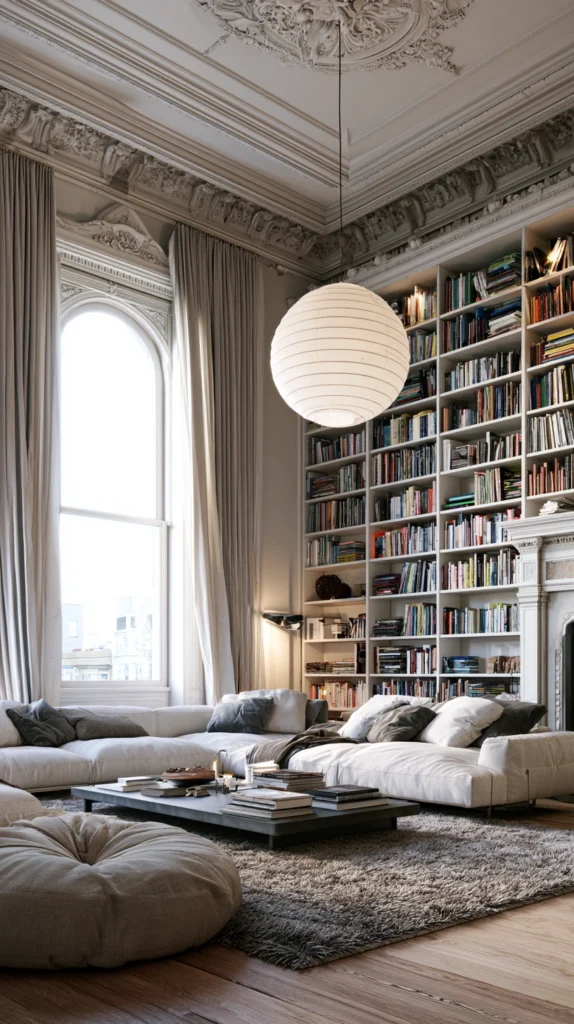
The single greatest spatial asset of a San Francisco Victorian or Edwardian apartment — the ceiling height that typically ranges from 3.2 to 3.8 metres, occasionally higher in grander buildings — is consistently underused by apartment dwellers who furnish and decorate as though the ceiling were at standard contemporary height rather than treating the extraordinary vertical dimension as the room’s primary spatial opportunity and designing specifically to exploit it.
Floor-to-ceiling bookshelves that use every centimetre of the available wall height. Curtains hung from the highest point of the wall rather than from the window frame, their length emphasising the room’s full vertical extent.
A statement pendant light hung low enough to create an intimate zone within the generous volume rather than retreating to the ceiling and leaving the room’s most distinctive spatial quality unacknowledged. The tall ceiling is the Victorian apartment’s greatest gift — design for it rather than around it, and the room becomes genuinely extraordinary rather than simply historic.
2. Use a Single Bold Colour on Every Wall and Ceiling Surface
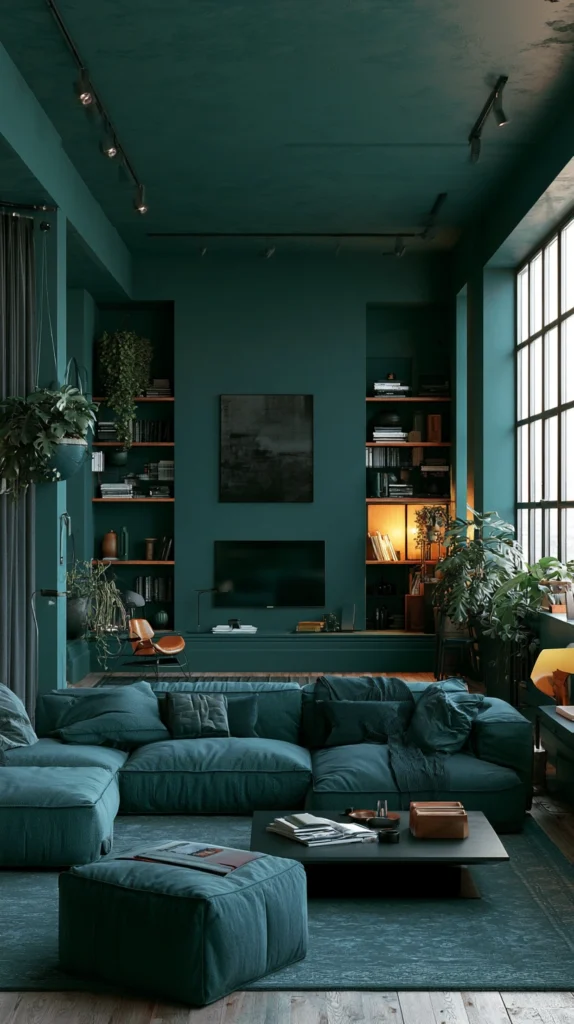
The small San Francisco apartment room that is painted in multiple colours — walls in one tone, ceiling in white, woodwork in a third — creates more visual complexity and more apparent smallness than the same room painted in a single warm, enveloping colour applied to every surface, including the ceiling and the woodwork.
The single colour envelope eliminates every visual boundary between wall and ceiling and wall and trim, creating a continuous coloured space that the eye reads as a composed, atmospheric environment rather than a small room with four walls and a ceiling.
A deep forest green, a rich terracotta, a warm charcoal, or a saturated navy applied to every surface of a small Victorian room creates a colour-drenched intimacy that makes the room feel deliberately designed for the scale it occupies rather than spatially compromised within it. The ceiling painted in the same deep tone as the walls amplifies the room’s height rather than reducing it, pulling the eye upward into a continuous coloured volume.
3. Invest in One Exceptional Piece of Furniture Per Room
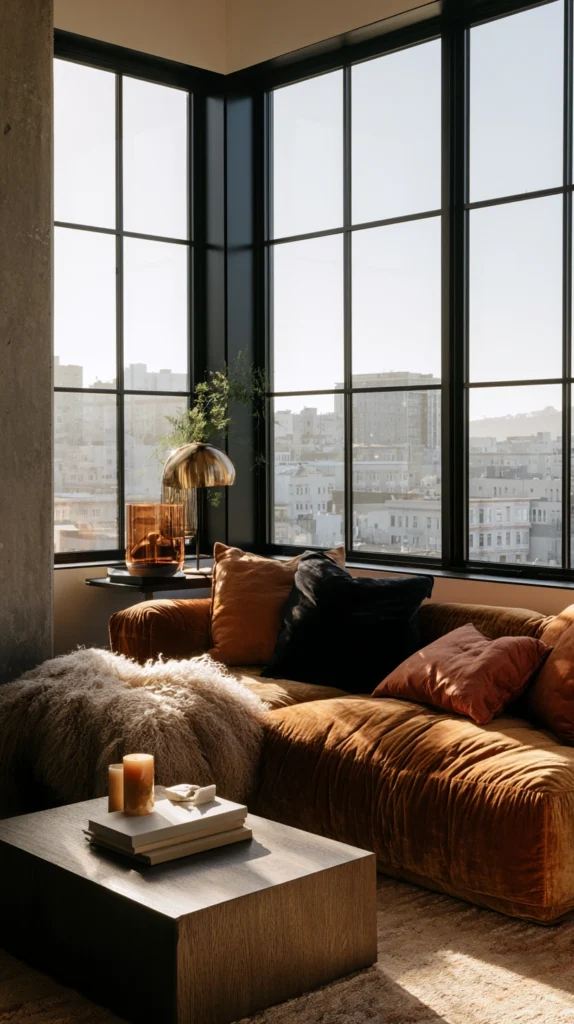
The small apartment furnished with many mediocre pieces of furniture looks smaller, more cluttered, and less considered than the same apartment furnished with fewer pieces of genuine quality and genuine visual presence — because quality furniture, by virtue of its material honesty, its proportional precision, and the specific authority it carries as a designed object, creates a sense of spatial confidence that mediocre furniture, however numerous, cannot assemble from the sum of its parts.
Choose one truly exceptional piece for each room — a genuinely beautiful sofa in a quality fabric, a dining table of real material substance, a bed frame of honest natural timber construction — and build the room’s remaining furniture from simpler, quieter pieces that support rather than compete with the primary statement.
The small San Francisco apartment furnished this way reads as curated and intentional — a room where clear design decisions were made — rather than as a collection of furniture that happened to fit within the available space.
4. Build Storage Into Every Available Wall Cavity and Alcove
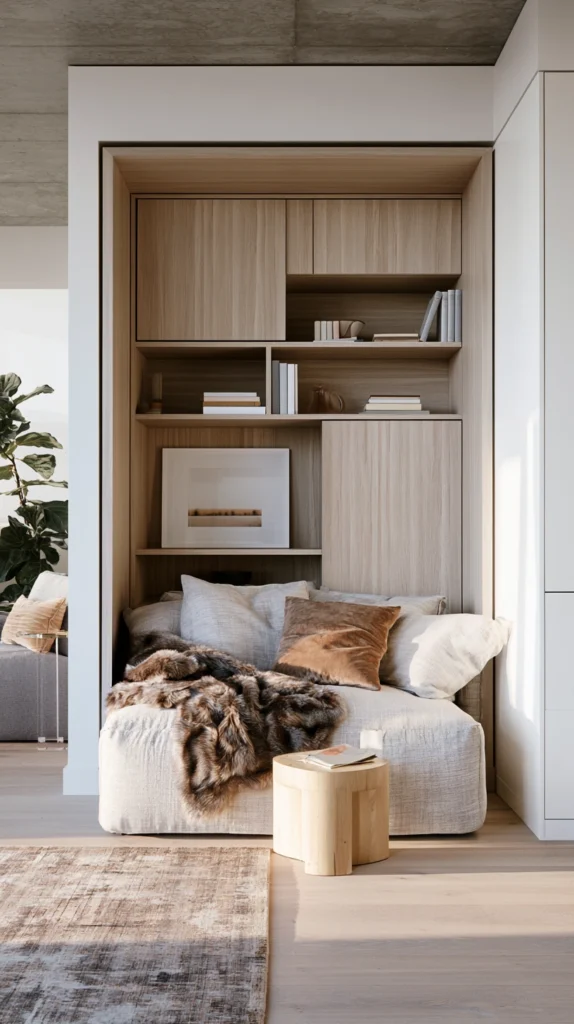
The Victorian and Edwardian buildings that define San Francisco’s apartment stock are full of wall cavities, chimney breast alcoves, under-stair spaces, and the irregular spatial residue of buildings that have been subdivided, reconfigured, and adapted over a century of changing occupancy — and every one of these spaces is a storage opportunity that, when built out properly, contributes meaningfully to the apartment’s spatial organisation and visual clarity without consuming any of the primary living area.
Alcove shelving built to exactly fit the space beside a chimney breast, a built-in wardrobe filling the awkward corner beside the bedroom door, under-bed storage drawers built into a platform bed frame: these interventions require upfront investment and, in a rented apartment, the landlord’s cooperation.
But they deliver a quality of spatial efficiency that transforms a small apartment’s ability to contain a full life without appearing overwhelmed by it. Every object that finds its designated, built-in home is an object that is not visible on a surface, a shelf, or a floor in the apartment’s primary living spaces.
5. Maximise the Bay Window as a Living Feature
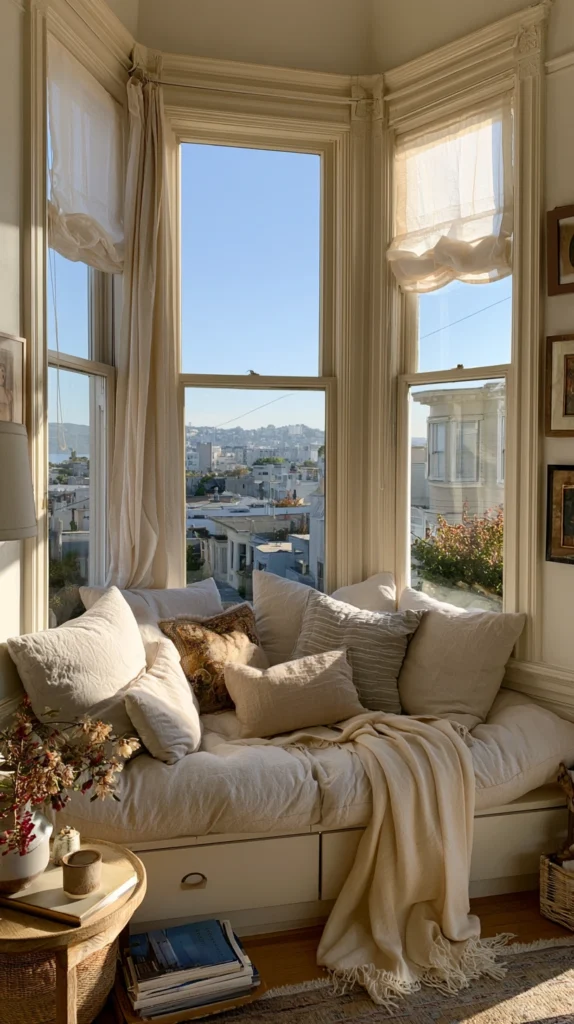
The San Francisco bay window — the projecting triple-window configuration that appears on the facades of Victorian and Edwardian buildings throughout the city’s residential neighbourhoods, with such frequency that it has become definitional to the city’s visual identity .
It is one of the most valuable spatial and light assets available to an apartment dweller, and it is consistently underutilised when treated simply as a window rather than as a distinct spatial zone within the room deserving of dedicated design attention.
A window seat built across the full width of the bay — its cushioned top surface at a height comfortable for sitting, its base providing generous hidden storage — converts the bay window from a light source into a living feature of considerable daily utility and considerable visual charm.
The bay window seat with cushions and throw pillows becomes the apartment’s most photographed and most loved corner — the place where morning coffee happens, where afternoon reading takes place, and where the view of the San Francisco street below is most intimately and most comfortably experienced.
6. Use Mirrors Strategically to Double the Light and Space
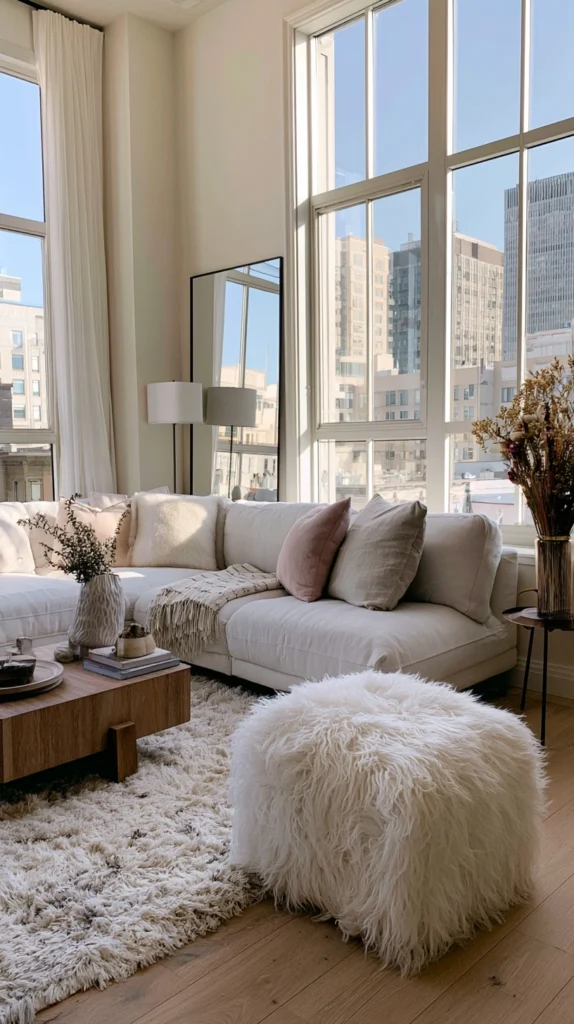
The San Francisco apartment that faces a direction or occupies a position within its building that limits its natural light — and many do, particularly rear-facing units in the city’s densely built residential blocks — benefits from the strategic placement of large mirrors more immediately and more dramatically than any other spatial intervention available without structural work.
A large mirror positioned directly opposite the apartment’s primary light source — the bay window, the main street-facing windows, the light well that serves the building’s interior units — reflects the available natural light through the room and creates the impression of a second light source on the opposite side of the space, effectively doubling the room’s apparent brightness and making its dimensions feel significantly more generous.
Choose mirrors of substantial scale — a full-height leaning mirror, a large framed piece occupying most of the primary wall, or a run of frameless mirror panels — rather than the small decorative mirrors that contribute to the room’s visual interest without meaningfully addressing its light or spatial conditions.
7. Choose a Sofa That Fits the Room Rather Than the Other Way Around
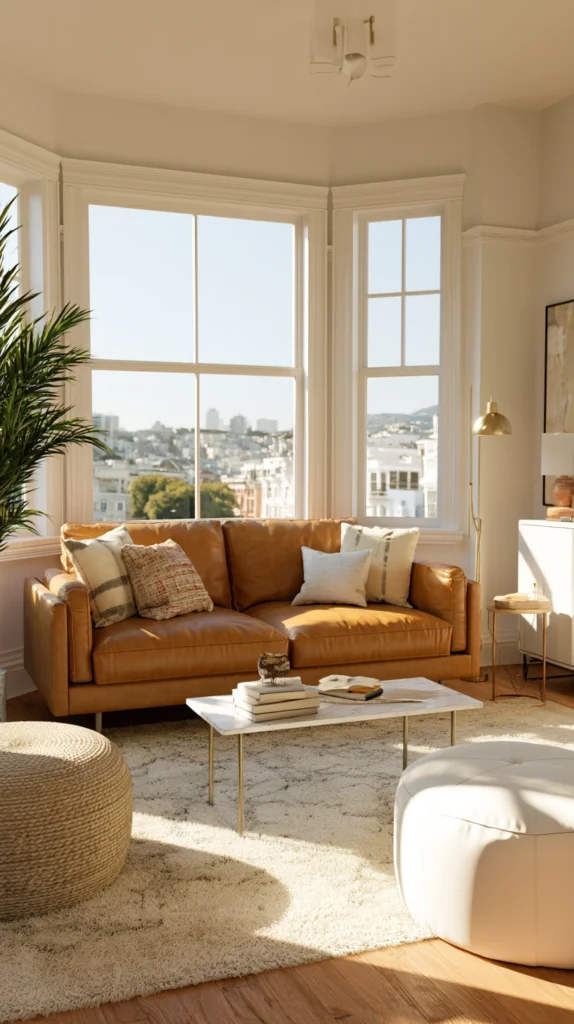
The single most common furniture mistake in small San Francisco apartments is the oversized sofa — the three-seat or L-shaped sectional chosen for the comfort and the visual presence it would provide in a room of generous dimensions, occupying a proportionally excessive share of the small apartment living room and making every other spatial decision in the room a series of accommodations to the furniture rather than to the life being lived within the space.
Measure the living room carefully before purchasing a sofa, allow a minimum of 90 centimetres of circulation space between the sofa’s front edge and the coffee table and between the sofa’s sides and the nearest wall or door, and choose a sofa scaled to the room’s actual dimensions rather than to an aspirational sense of what the room should be able to contain.
A two-seat sofa of quality construction and quality upholstery in a room scaled to receive it is more comfortable, more functional, and more visually generous than an oversized three-seat sofa in the same room where it consumes the space around it.
8. Install Task and Accent Lighting Throughout
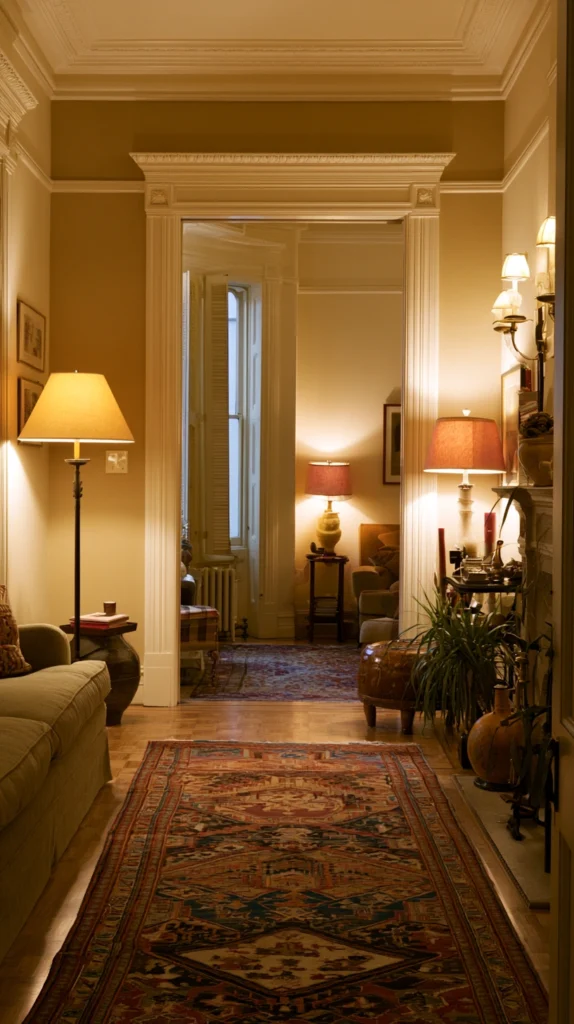
The San Francisco apartment lit exclusively from overhead ceiling fixtures — and Victorian and Edwardian buildings typically have one central ceiling rose per room, a lighting infrastructure designed for gas rather than electric illumination.
It is an apartment where the spatial generosity and the architectural character of the room are consistently underserved by a quality of light that is flat, shadowless, and entirely inadequate to the visual richness and the spatial complexity of the historic building it occupies.
Layer the lighting with floor lamps that create pools of warm light in the room’s corners, table lamps that illuminate surfaces at the level where the room’s objects and textures are most visible and most beautiful, and picture lights or shelf lights that direct warm illumination at the artwork and the books that contribute most directly to the apartment’s visual character.
The Victorian apartment with layered warm lighting at multiple heights and multiple intensities is one of the most atmospherically beautiful residential environments available — and it is entirely achievable without any structural work beyond the installation of additional plug-in light sources on separate circuits.
9. Edit the Kitchen to Its Essential and Most Beautiful Elements
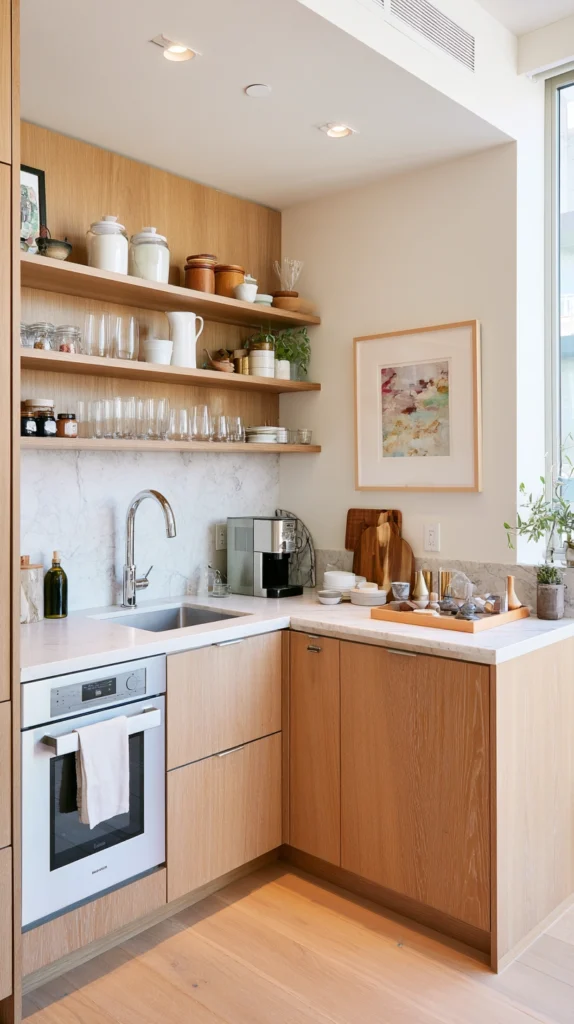
The San Francisco apartment kitchen — typically compact, typically without the luxury of a kitchen island or a generous dining area, typically asked to perform the full range of domestic cooking functions within a footprint that would be considered a galley at best — benefits more from rigorous editing and intelligent organisation than from any aesthetic intervention, because the kitchen that is visually calm and spatially efficient creates the impression of generous, considered design that the cluttered kitchen, regardless of its material quality, entirely fails to deliver.
Decant dry goods into consistent glass or ceramic canisters and store on open shelving where their visual consistency contributes to the kitchen’s composition. Remove every appliance that is not used at least three times a week from the countertop and store in a cabinet. Keep the countertop surface to near-emptiness — one cutting board, one small plant, one quality knife block — and the small apartment kitchen reads as a composed, intentional space rather than a crowded functional necessity.
10. Create a Dining Zone That Doubles as a Work Space
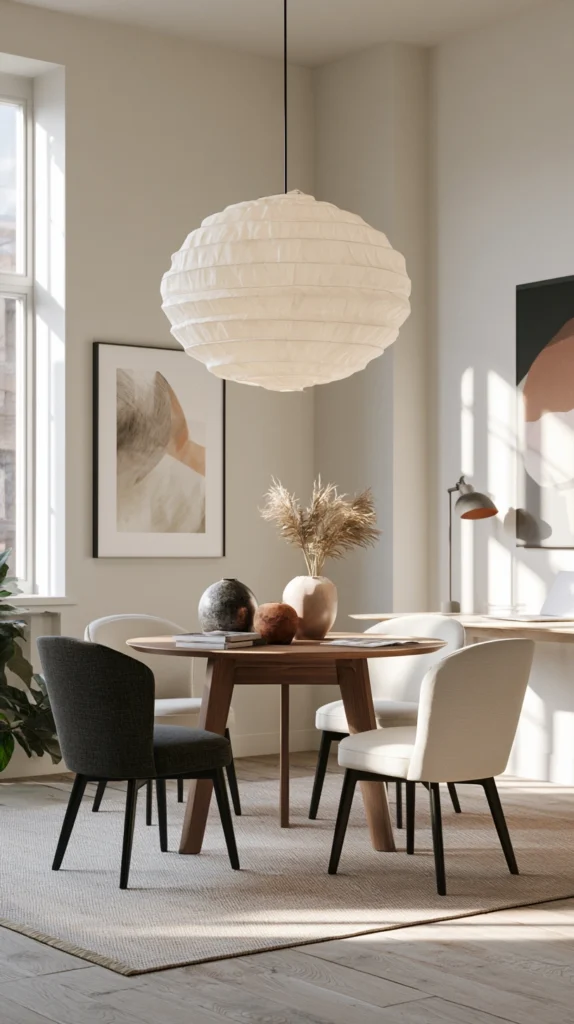
The small San Francisco apartment that must accommodate both dining and working — the reality of the majority of the city’s single and double-occupancy apartments in the remote-work era — benefits from a dining table chosen and positioned to serve both functions genuinely, rather than a table chosen for dining that is conscripted reluctantly into work service or a desk that is pressed into dining duty when guests arrive.
A round dining table of appropriate scale — easier to work at from a single position than a rectangular table, and able to seat more people for its footprint — with two or three quality chairs that are comfortable for both eating and working extended periods, positioned in the best natural light the apartment offers for the working hours of the day and illuminated by a quality pendant above for the dining hours of the evening.
The round table in a San Francisco apartment is simultaneously the most spatially efficient dining configuration available and the most socially generous — it seats people in a genuinely equal, face-to-face arrangement that rectangular tables, with their implicit hierarchy of head and foot, cannot replicate.
11. Treat the Bathroom as a Fully Designed Space
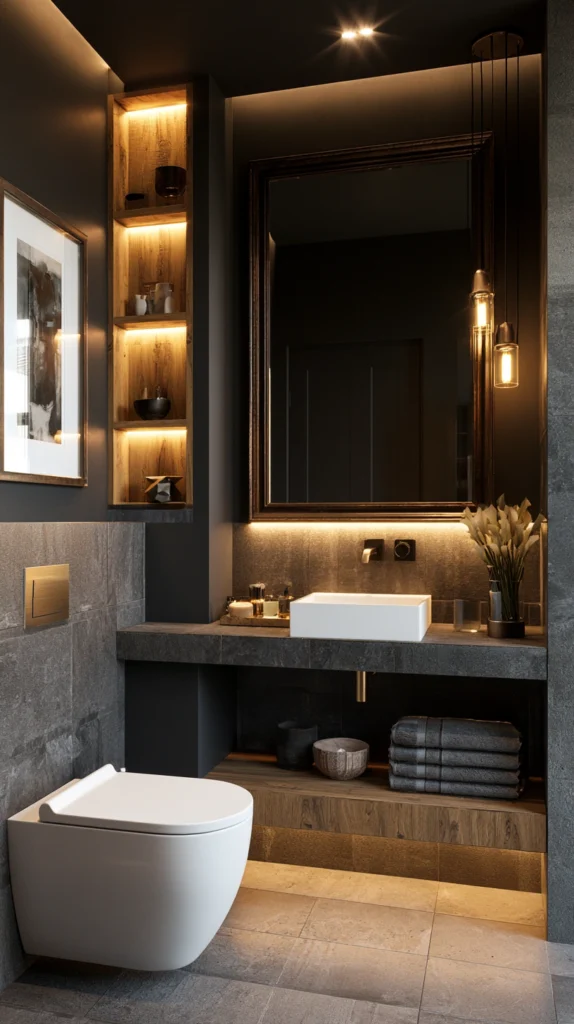
The San Francisco apartment bathroom — typically small, typically original to the building’s construction, typically featuring a combination of genuinely beautiful period details and genuinely inadequate storage — is the room most consistently treated as a spatial afterthought in residential design and most consistently transformed by the application of genuine design intention to its every detail.
Paint the walls in a deep, dramatic colour that makes the small room feel deliberately intimate rather than accidentally constrained. Replace the standard mirror with a large, beautifully framed piece that doubles the room’s apparent depth and provides a quality of visual interest that the functional mirror entirely lacks.
Install open shelving in a warm, natural timber for towels and bathroom objects, displayed with the same editorial discipline applied to every other surface in the apartment. The small bathroom treated as a fully designed space — every surface considered, every object chosen — becomes one of the apartment’s most characterful and most beautiful rooms rather than its most spatially challenging.
12. Use Vertical Planting to Bring Nature Into a Space-Constrained Home
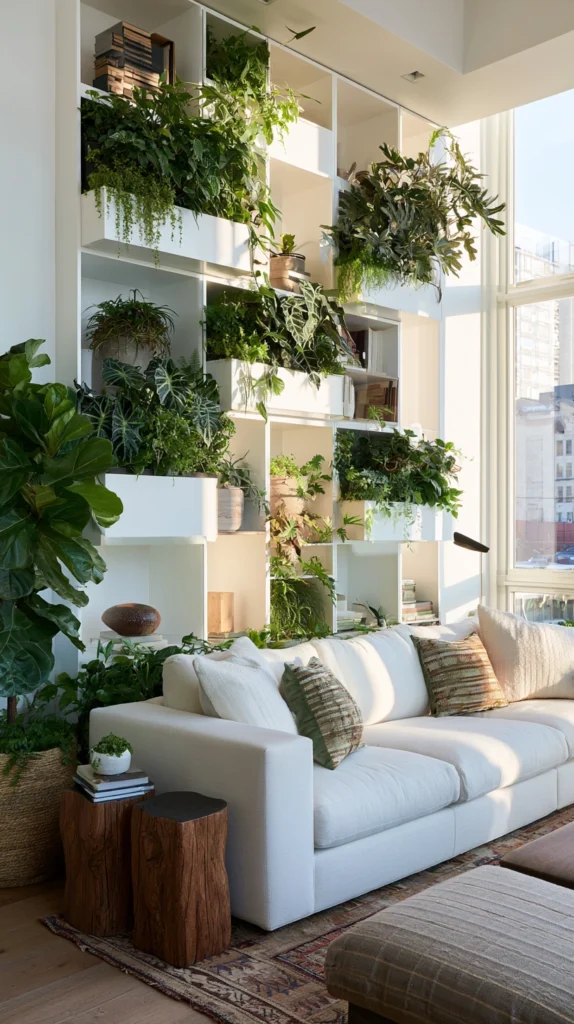
The San Francisco apartment without outdoor space — and many are, particularly the upper-floor units of the city’s Victorian and Edwardian buildings — benefits from a generous indoor planting scheme that brings the quality of natural vitality and organic abundance into the interior in the absence of the garden connection that ground-floor and house-dwelling residents take for granted.
A vertical planting arrangement — a floor-to-ceiling pole system supporting multiple plant pots at varying heights, a wall-mounted planting frame, or simply a tall shelving unit devoted entirely to plants in terracotta and ceramic pots at every shelf level — brings a quality of botanical abundance to a small apartment that a few plants scattered individually across the living space cannot achieve with the same density or the same visual impact.
Choose a mix of trailing varieties that cascade from upper shelves, mid-height bushy species that fill the middle levels, and upright architectural plants at the base, creating a vertical composition of living material that reads as genuinely lush rather than decoratively sparse.
13. Honour the Building’s Architectural Character in Every Decision
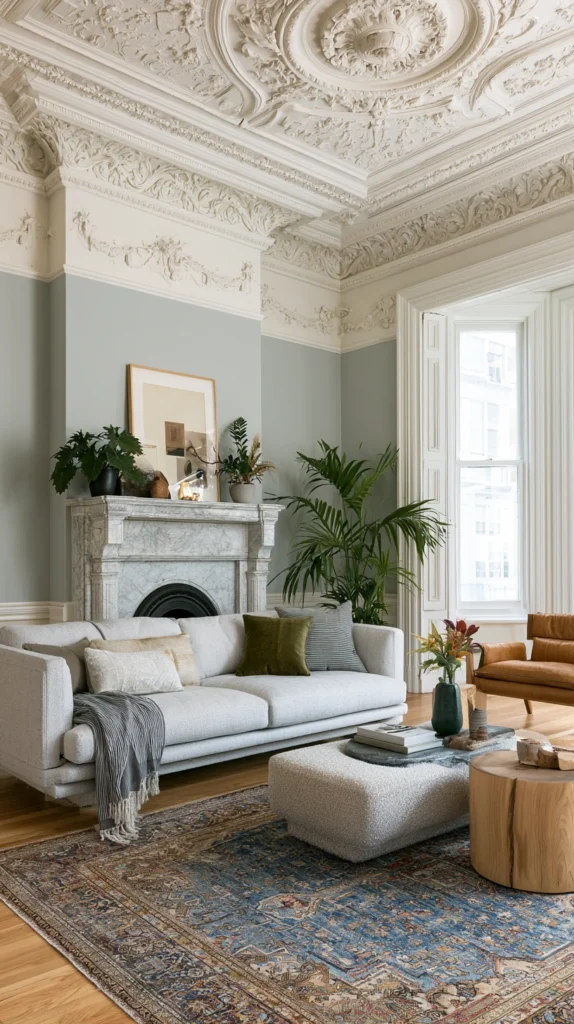
The San Francisco Victorian or Edwardian apartment that fights its own architecture — that covers its original timber floors with wall-to-wall carpet, that paints its elaborate plaster ceiling roses in the same flat white as the ceiling around them, that installs contemporary kitchen cabinetry that contradicts the building’s period detailing in every material and every profile .
It is an apartment working against the most significant design asset it possesses, which is the extraordinary architectural character of the historic San Francisco building it occupies. Restore or preserve original timber floors rather than covering them. Paint ceiling roses and cornice detailing in a tone that makes them visible and appreciated rather than a flat white that erases them.
Choose furniture that complements the building’s period without slavishly imitating it — a Chesterfield sofa in a contemporary fabric beside a Victorian marble fireplace, a mid-century sideboard beneath an Edwardian picture rail — because the best San Francisco apartment interiors are always the ones that honour the architectural conversation between the historic building and the contemporary life being lived within it.
Final Thoughts: Designing the Small San Francisco Apartment With the Confidence It Deserves
The small San Francisco apartment that looks and feels incredible is not the one with the most square footage or the most recent renovation — it is the one whose occupant understood the space’s genuine assets, designed specifically to amplify them, and applied the same standard of design intention to every room, every surface, and every object as the city’s most extraordinary residential interiors apply to spaces ten times the size.
Celebrate the ceiling height, embrace the bay window, invest in one exceptional piece per room, edit every surface to its most beautiful essential elements, and honour the extraordinary architectural character of the building the apartment occupies.
The small San Francisco apartment designed with genuine intelligence and genuine care is not a compromised version of a larger home — it is a specific, characterful, genuinely beautiful place that could not exist anywhere else in quite the same way, and that quality of specificity and belonging is worth more than any number of additional square feet.