13 Warm Desert Modern Living Room Ideas With Arizona Vibes
Desert modern design pulls its warmth from the actual desert landscape — sun-baked clay tones, sculptural cacti, weathered wood, and the kind of clean architectural lines found throughout Scottsdale and Sedona homes. It’s a style that feels both relaxed and intentional, built around natural materials rather than heavy ornamentation.

Below are 13 ways to bring desert modern style into a living room, from full color and material commitments to smaller styling touches, with real numbers on coverage, material pairings, and budget so the look comes together on a realistic timeline.
Desert Modern Color Palette
Warm neutrals (base tones):
- Terracotta, sand, adobe clay
- Reads sun-warmed and grounded
- Works as walls, upholstery, or both
- Best paired with black or rust accents
Desert accent colors:
- Rust, burnt orange, dusty turquoise
- Reads bold but still earthy
- Best used in smaller doses (pillows, art, ceramics)
- Pairs naturally with black metal and light wood
Cool desert contrasts:
- Sage green, dusty blue, bone white
- Balances warmer tones without competing
- Works well in plants, textiles, and ceramics
- Prevents the room from feeling one-note
1. Paint an Accent Wall in Warm Adobe Clay
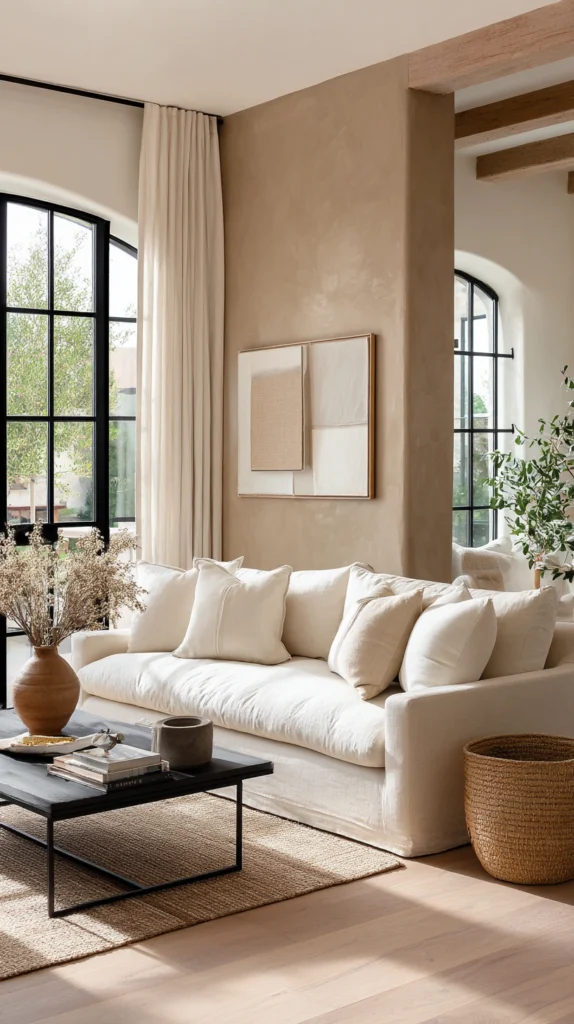
An adobe or terracotta-toned accent wall behind the sofa is one of the fastest ways to bring genuine desert warmth into a living room. A standard 12×9 foot wall (about 108 sq ft) needs roughly one gallon of paint.
Budget: $45-70 for one gallon of quality eggshell paint. Eggshell holds up well against everyday scuffs while still giving the wall a soft, sun-warmed glow rather than a flat, chalky look.
This wall works especially well as a backdrop for black metal light fixtures, woven textiles, or a piece of Southwestern-inspired art, since the warm base tone makes those darker or more textured elements stand out clearly. Testing a large sample swatch (2×2 feet minimum) under both daytime and evening light helps confirm the exact clay tone reads the way you want before committing to the full wall and buying the remaining paint needed.
Keeping the ceiling and trim in a lighter warm white, rather than matching the accent wall exactly, prevents the room from feeling like a single enclosed box of color.
If you’re hesitant to commit to a full wall right away, painting just the section behind a floating shelf or a gallery wall grouping lets you test the tone at a smaller scale before deciding whether to extend it further.
2. Add a Statement Rug in Southwestern Pattern
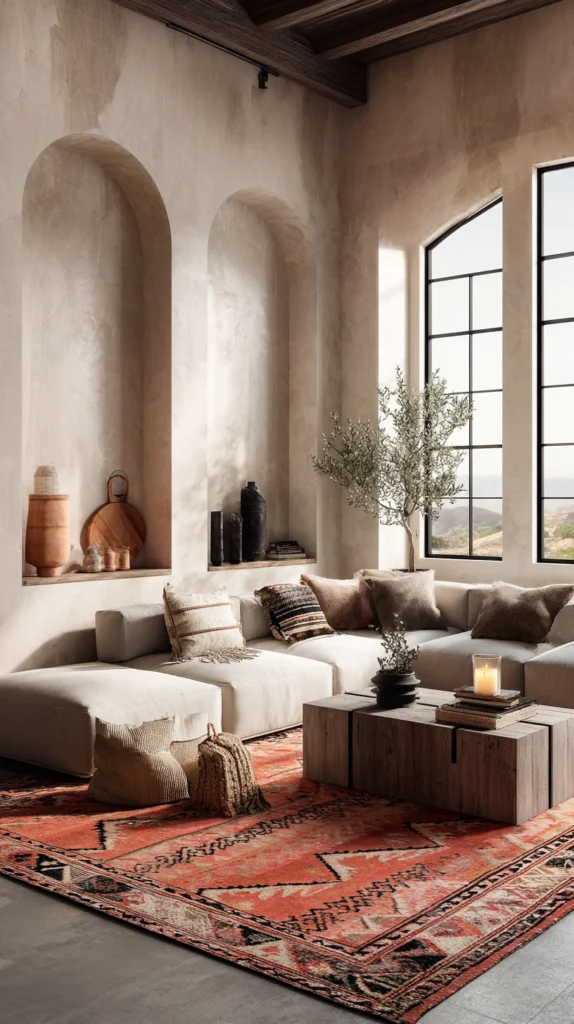
A rug with a bold geometric or Southwestern-inspired pattern anchors a desert modern living room and introduces pattern without requiring patterned furniture or walls. Standard area rugs for a living room run 8×10 or 9×12 feet, sized so all furniture legs sit at least partially on the rug.
Budget: $200-500 for a quality wool or wool-blend rug in that size. Wool holds the saturated rust, black, and cream tones common in Southwestern patterns far better than synthetic fibers, and it wears in rather than out over time.
Choosing a rug with a mix of rust, cream, black, and a hint of dusty blue or turquoise gives the room a color anchor that ties together several other elements on this list, from pillows to wall art. Vintage-style Navajo or Zapotec-inspired patterns are especially popular in desert modern spaces, though a simpler geometric pattern in the same color family achieves a similar grounding effect for a room that wants a bit more restraint.
Sizing the rug correctly matters more than the exact pattern chosen — a rug too small will make the whole seating area look like it’s floating, so measure the full footprint of your sofa and chairs together before ordering.
3. Bring in Large Sculptural Cacti and Succulents
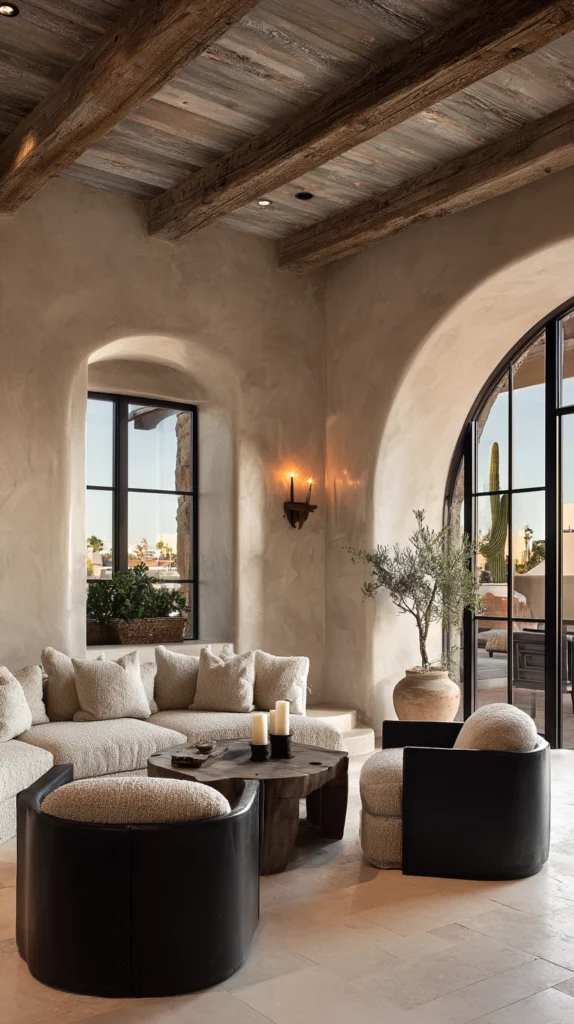
Large potted cacti, agave, or other architectural succulents are one of the most recognizable elements of desert style, adding sculptural greenery without the softness of tropical plants that would clash with the aesthetic. A floor-standing cactus in a 14-18 inch pot works well as a corner accent or flanking a doorway.
Budget: $40-150 per plant depending on size and variety, plus $30-60 for a quality ceramic or concrete planter. Larger, more architectural specimens like a saguaro-style cactus cost more upfront but deliver significant visual impact for the investment.
Pairing a tall, columnar cactus with a shorter, rounder succulent nearby creates visual variety in shape without introducing a different plant family altogether, keeping the overall look cohesive. Most desert plants need bright, direct light and minimal watering, which also makes them a genuinely low-maintenance choice for anyone who doesn’t want to fuss over houseplants.
Positioning at least one large plant near a window where it gets several hours of direct sun daily is important for keeping true desert species healthy indoors, since insufficient light causes leggy, weak growth over time.
Rotating the pot a quarter turn every couple of weeks also helps the plant grow evenly rather than leaning permanently toward its light source, which matters more with tall, columnar varieties than with rounder, more compact succulents.
4. Add Black Metal Fixtures and Hardware
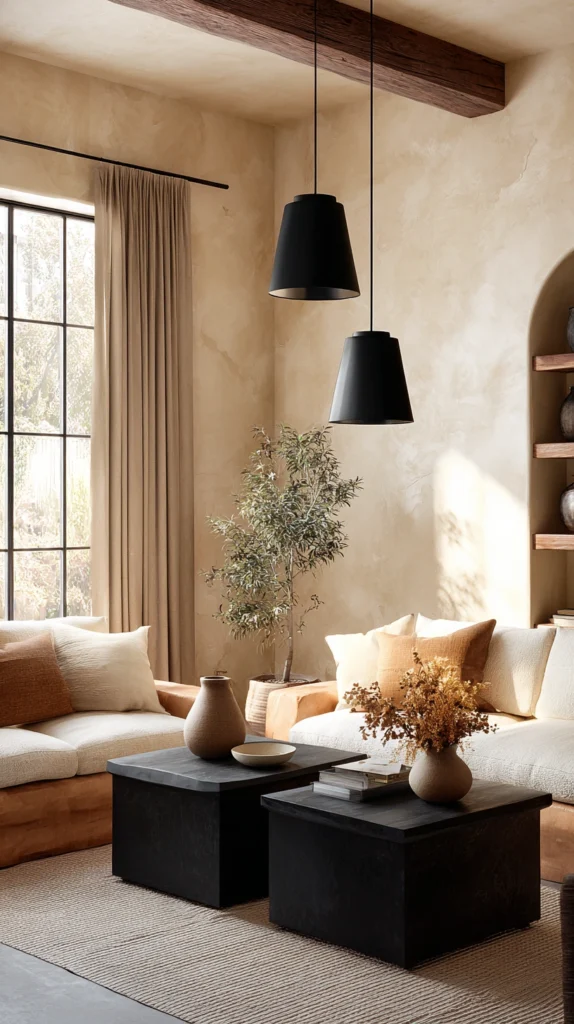
Black metal light fixtures, curtain rods, and furniture frames introduce the crisp, architectural contrast that separates desert modern from a purely rustic Southwestern look. This includes floor lamps, pendant lights, and even picture frames throughout the room.
Budget: $80-250 for a quality black metal floor lamp or pendant light, depending on style and size. Matte black finishes read more modern and intentional than glossy black, which can look more traditional or formal.
This pairing works especially well against warm clay walls or rust-toned furniture, since the cool, matte black creates just enough visual tension to keep the room from feeling entirely one-note in warm tones. Keeping all the black metal finishes in the room consistent, rather than mixing matte black with glossy black or a different dark metal, creates a more cohesive, considered look throughout the space.
Black metal furniture frames, particularly on a coffee table or console, are a popular way to add this contrast at a larger scale beyond just lighting and hardware.
5. Layer in Woven and Textured Throw Pillows
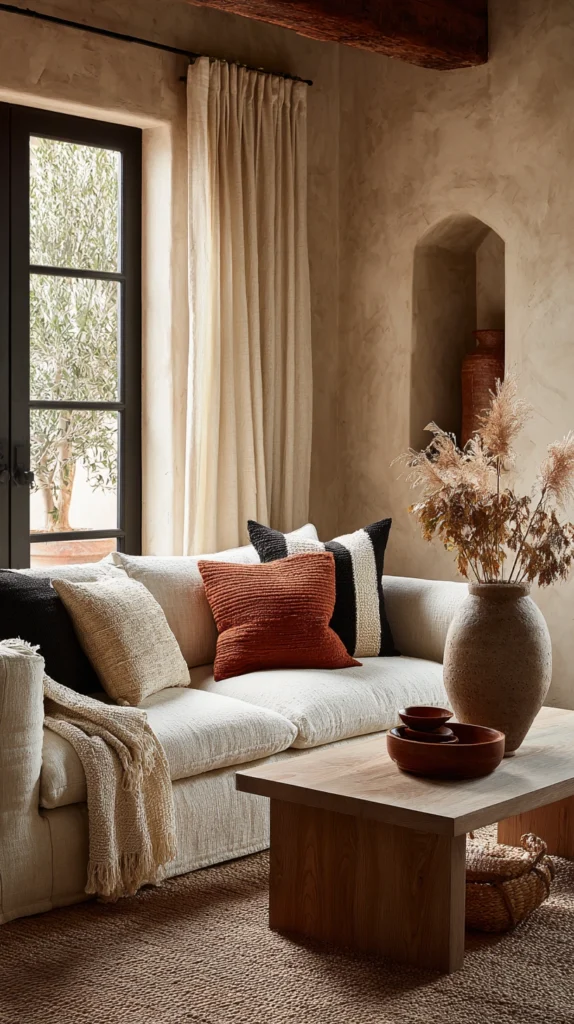
Chunky woven pillows in cream, rust, and black bring texture and warmth to a sofa without requiring any wall or furniture commitment. This is one of the lowest-cost, most flexible ways to test desert modern styling before going further.
Budget: $30-60 per pillow for a quality woven or textured cover, with 3-5 pillows typically enough to style a standard sofa. Mixing two or three different textures — a chunky knit, a woven Southwestern pattern, and a smooth solid — creates more visual interest than matching pillows in a single fabric.
Choosing pillow covers rather than fully upholstered pillows makes it easy to swap the look seasonally or refresh the room without a larger investment down the line. Natural fiber covers like cotton, wool, or jute hold up well to sun exposure, which matters in a desert-style room that typically leans into bright, direct natural light as part of the aesthetic.
Varying the pillow sizes slightly (one or two large 20-inch pillows paired with smaller 16-18 inch ones) creates a more layered, intentional look than a uniform row of identically sized pillows.
Rotating a few pillow covers seasonally, swapping in a slightly cooler tone during summer and a deeper rust in cooler months, is an easy, low-cost way to keep the room feeling fresh without any larger investment.
6. Use Rattan and Woven Natural Fiber Furniture
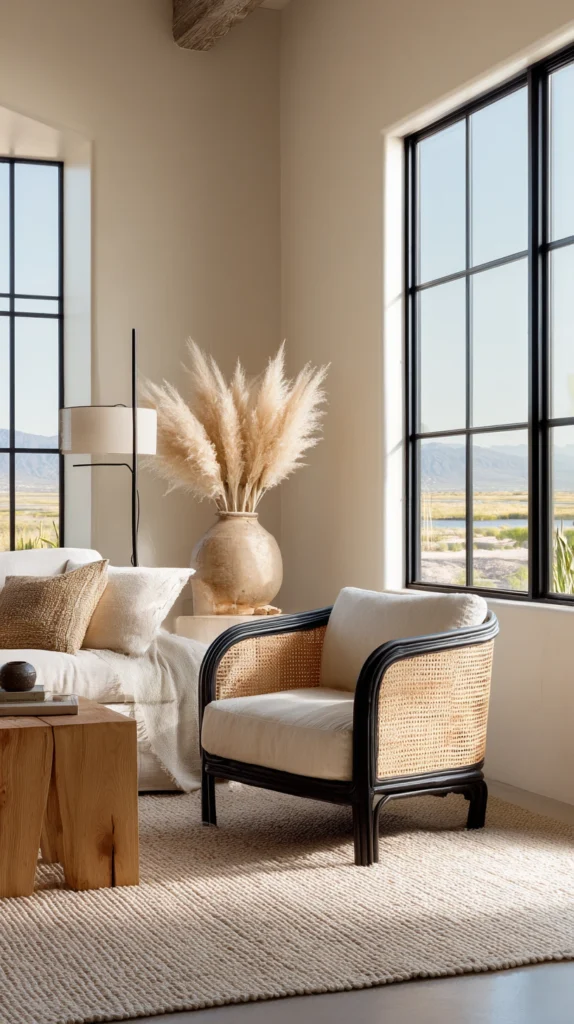
Rattan or wicker accent chairs and side tables bring warmth and organic texture that pairs naturally with the sun-baked color palette of desert modern design. A rattan accent chair typically runs 28-32 inches wide, a comfortable size for a reading corner or as a secondary seating option.
Budget: $200-450 for a quality rattan accent chair, or $80-150 for a smaller rattan side table. Choosing pieces with clean, simple silhouettes rather than heavily ornate wicker patterns keeps the look feeling modern rather than dated or overly traditional.
Pairing a rattan chair with a solid-colored cushion in rust, cream, or black (rather than a busy pattern) helps the piece integrate with the rest of the room instead of becoming a competing focal point. This furniture category also tends to be lightweight, making it easy to reposition seasonally or when rearranging the room for different needs.
Sealing outdoor-rated rattan furniture intended for indoor use isn’t necessary, but checking the specific product’s indoor/outdoor rating before purchasing prevents buying a piece that isn’t suited to indoor humidity and temperature conditions long-term.
A rattan chair also pairs nicely alongside the reclaimed wood coffee table described elsewhere on this list, since both materials share a similar warm, slightly imperfect texture that reinforces the room’s overall organic feel.
7. Add a Reclaimed or Weathered Wood Coffee Table
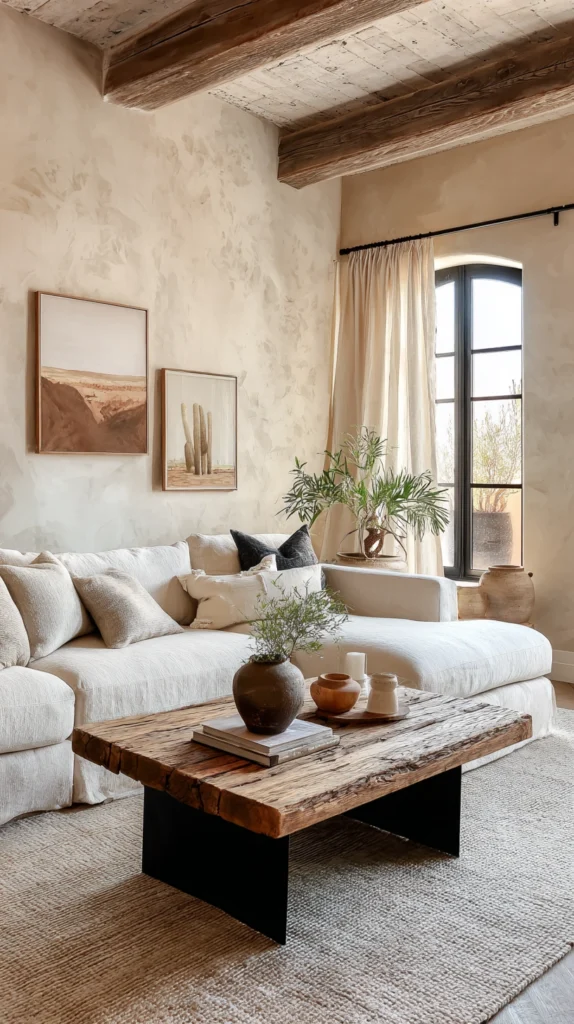
A coffee table in raw-edge or weathered wood, ideally with visible grain and some natural imperfection, grounds the room with the same sun-worn material quality found throughout authentic desert architecture. Standard coffee tables run 40-50 inches long and 20-24 inches deep for a typical living room.
Budget: $300-700 for a quality reclaimed or weathered-finish wood coffee table, with reclaimed wood typically costing somewhat more than new lumber given the sourcing and preparation involved. A raw-edge or live-edge design, where the natural, irregular shape of the wood’s outer edge is preserved, is a particularly popular choice for this style.
Pairing the table with black metal legs, rather than a matching wood base, reinforces the black-metal-and-warm-wood combination that runs throughout desert modern design. If a genuine reclaimed piece isn’t in the budget, a new table with a distressed or weathered finish achieves a similar visual effect for meaningfully less cost.
This piece is worth prioritizing early in the room’s planning, since it typically serves as the visual anchor that other smaller decor choices are built around.
Adding a woven basket or ceramic tray beneath the table, if there’s clearance, provides an additional spot to layer in texture and gives the table a slightly more furnished, lived-in look rather than sitting entirely on its own.
8. Hang Woven Wall Art or a Macrame Piece
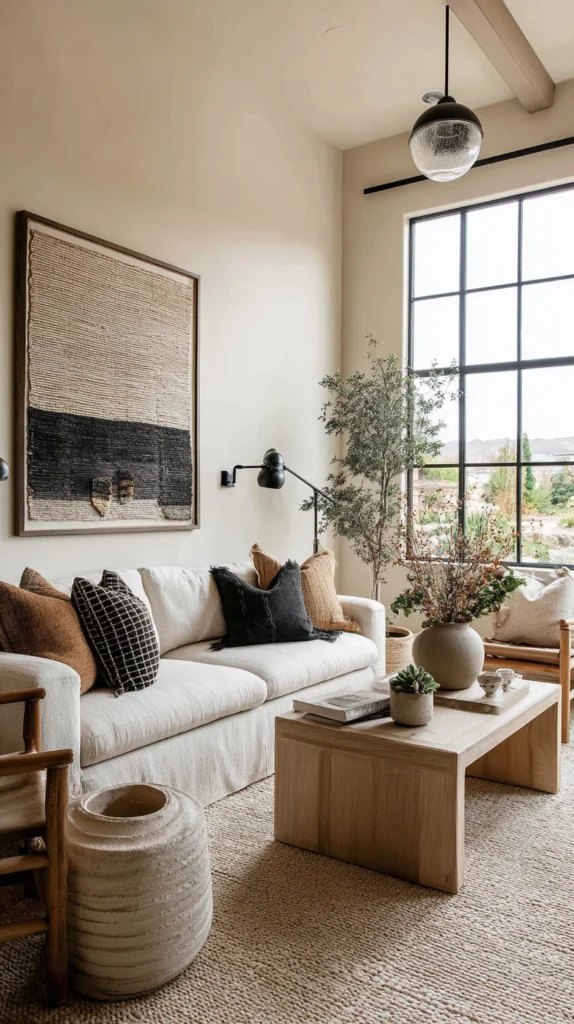
A large woven wall hanging, macrame piece, or textile art panel adds texture and a handmade quality to an otherwise simple wall, echoing traditional Southwestern textile traditions without needing to commit to a full patterned rug or upholstery. Standard statement wall hangings run 24-40 inches wide, sized to fill the space above a sofa or console.
Budget: $60-200 for a quality woven or macrame wall hanging, depending on size and whether it’s handmade or mass-produced. Natural fiber pieces in cream, rust, and black tones fit the desert modern palette most seamlessly.
Positioning the piece at a height where the bottom sits roughly 6-8 inches above the sofa back or console top creates good proportion and prevents the art from feeling disconnected from the furniture below it. This is also one of the easier elements on this list to source secondhand or from independent makers, since woven wall art has become widely available through online marketplaces in recent years.
A single large piece tends to read as more intentional than several smaller pieces scattered across the same wall, particularly in a room already incorporating pattern through a rug or pillows.
9. Add Terracotta and Ceramic Accents
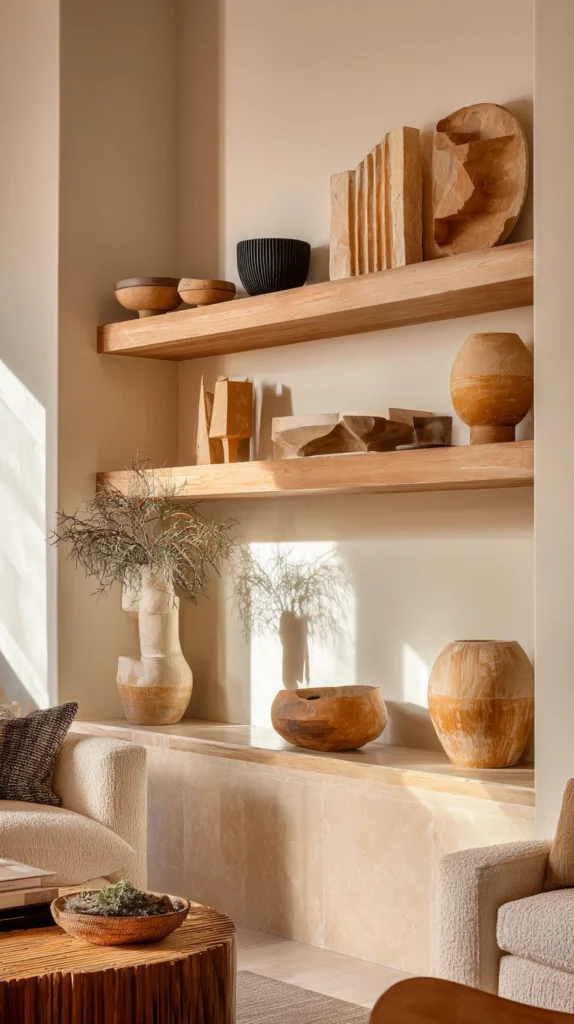
Terracotta pots, ceramic vases, and ceramic table lamps bring in the same warm clay material found throughout actual Southwestern architecture, whether used for plants or purely as decorative objects. Standard terracotta accent pieces range from small 4-6 inch pots to larger 12-16 inch floor vases.
Budget: $15-40 per smaller ceramic or terracotta piece, or $60-150 for a larger floor vase or ceramic table lamp. Building a small collection gradually, rather than buying a full matching set at once, gives the room a more collected, less staged feel over time.
Grouping terracotta and ceramic pieces together on a console or shelf, rather than spreading a single piece per surface throughout the room, creates a stronger visual moment and reads as more deliberately styled. Mixing glazed and unglazed terracotta finishes within the same grouping adds subtle textural variety without introducing an entirely different color or material.
This is one of the more affordable ways to build out the desert modern aesthetic gradually, since pieces can be added over time as you find ones you like rather than needing to complete the look in one shopping trip.
Varying the scale of pieces within a grouping — one taller vase, a couple of smaller bowls, a low dish for keys or trinkets — creates a more visually dynamic display than several pieces of similar height lined up in a row.
10. Use Linen or Cotton Upholstery in Warm Neutrals
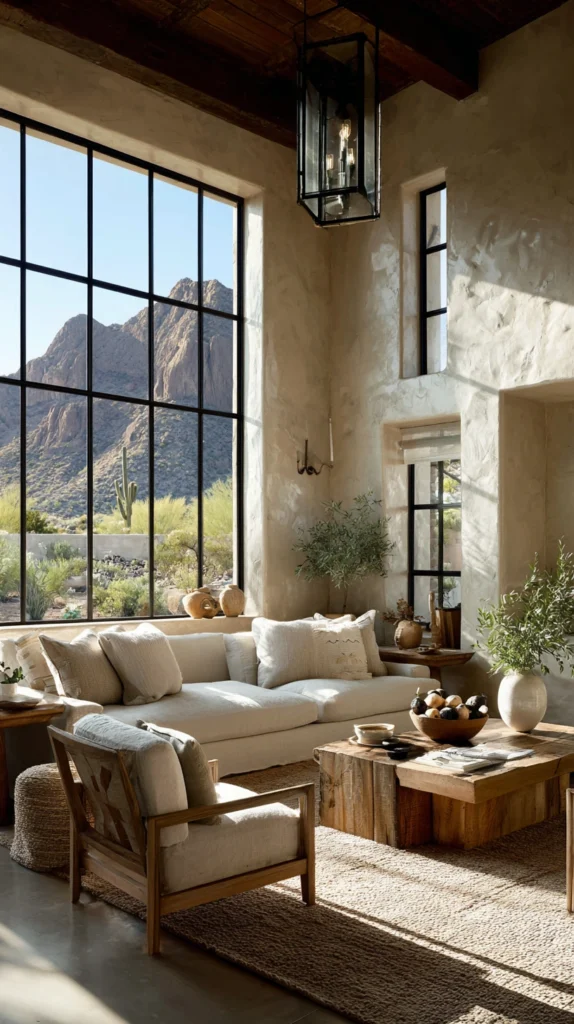
A sofa or accent chair upholstered in warm linen or cotton, in a sand, bone, or light clay tone, provides a calm, neutral base that lets bolder accent pieces (rugs, pillows, art) stand out without competing for attention. Standard sofas run 78-90 inches wide, so measure your space to leave adequate walking clearance.
Budget: $900-2,200 for a quality linen or cotton-blend sofa, depending on size and brand. Choosing a performance fabric blend rather than pure linen is worth the modest upcharge in households with kids or pets, since it resists staining significantly better while keeping the same warm, textured look.
This neutral base approach works particularly well if you’re not ready to commit to a bold rust or terracotta sofa but still want the surrounding room to lean into the desert modern palette through smaller, easier-to-change elements. A warm ivory or sand-toned sofa also photographs and reads richer under the warm, low-angle light common in desert-facing rooms with a lot of natural sun exposure.
If budget allows, ordering physical fabric swatches before purchasing helps confirm the exact warmth or coolness of the neutral tone, since screen colors can shift lighter or grayer than expected once the fabric is in the room.
11. Add Warm Wood Ceiling Beams or Exposed Wood Detail
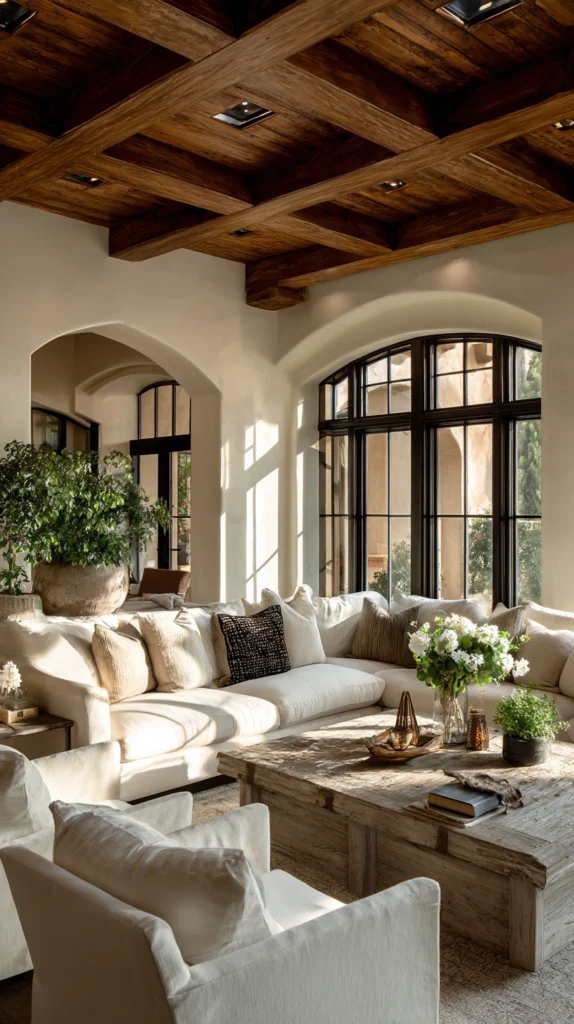
Exposed or faux wood ceiling beams, in a warm walnut or weathered finish, echo the timber-frame construction common in genuine adobe and Southwestern architecture. Standard faux beams run 6-10 inches wide, spaced every 24-36 inches across the ceiling for the most balanced look.
Budget: $300-800 for 3-4 lightweight polyurethane faux beams in a standard living room, significantly less than sourcing and installing real structural timber. Polyurethane beams are lightweight enough to install with basic hardware, simply glued and screwed into the ceiling joists without additional structural support.
This detail works especially well in rooms with 8-foot or taller ceilings, where the added beams create genuine architectural interest rather than feeling like they’re closing in an already-low ceiling. Staining the beams in a rich walnut or weathered gray-brown tone, rather than a lighter wood color, better matches the sun-aged wood tones typical of authentic Southwestern homes.
If a full beam installation isn’t practical, a single exposed wood accent — a mantel, a shelf, or trim around a doorway — can introduce the same warm wood detail on a smaller scale and budget.
Combining the beams with simple, unobtrusive recessed lighting between them, rather than a large overhead fixture, keeps the ceiling looking clean and architectural rather than visually cluttered.
12. Incorporate Southwestern-Inspired Pattern in Small Doses
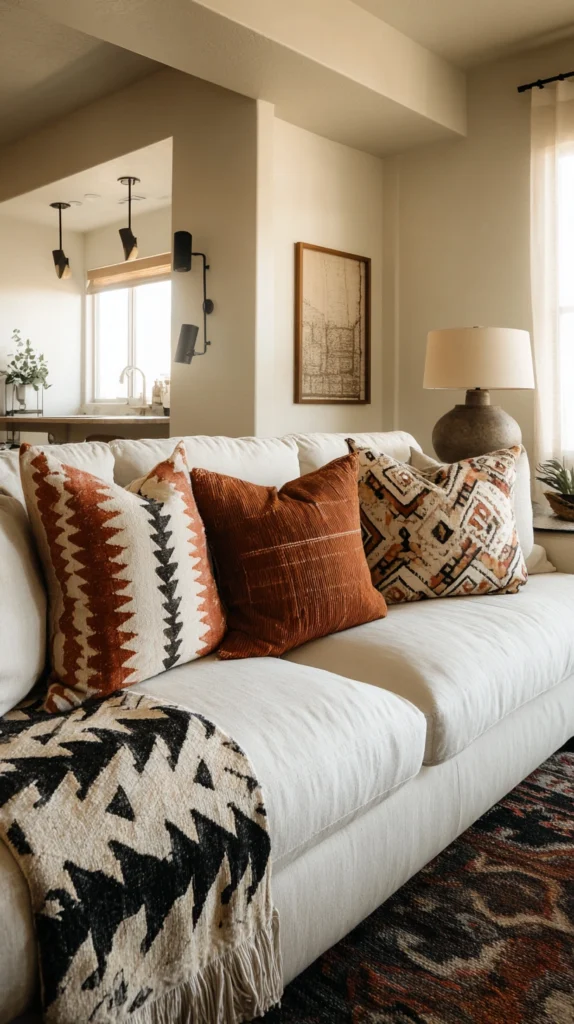
Rather than committing to a fully patterned rug or upholstery, introducing Southwestern geometric pattern through smaller elements — a throw blanket, a set of ceramic coasters, or a single accent pillow — lets the room reference the style without feeling overly themed. This works well as a lighter-touch alternative to idea #2 on this list.
Budget: $30-80 for a patterned throw blanket or a small set of patterned accent pieces, one of the lowest-cost ways to bring in this visual reference. Choosing just one or two patterned elements, rather than several competing patterns throughout the room, keeps the look feeling curated rather than costume-like.
This approach is particularly useful for renters or anyone not ready to commit to a large rug purchase, since these smaller elements can be swapped out easily if your taste shifts or you want to lighten the pattern later. It also works well layered over a plain neutral sofa or a solid-colored armchair without overwhelming the rest of the room’s palette. Pairing a patterned throw with solid rust or cream pillows, rather than multiple patterned pillows at once, keeps the visual balance in the room’s favor.
This is a good starting point for anyone testing whether they like the desert modern aesthetic before investing in larger furniture or wall commitments elsewhere on this list.
Rotating these smaller patterned pieces between rooms, or storing a second set to swap in seasonally, is an easy way to keep the styling feeling fresh without needing to buy anything new very often throughout the year.
13. Add Warm, Layered Lighting With Dimmers
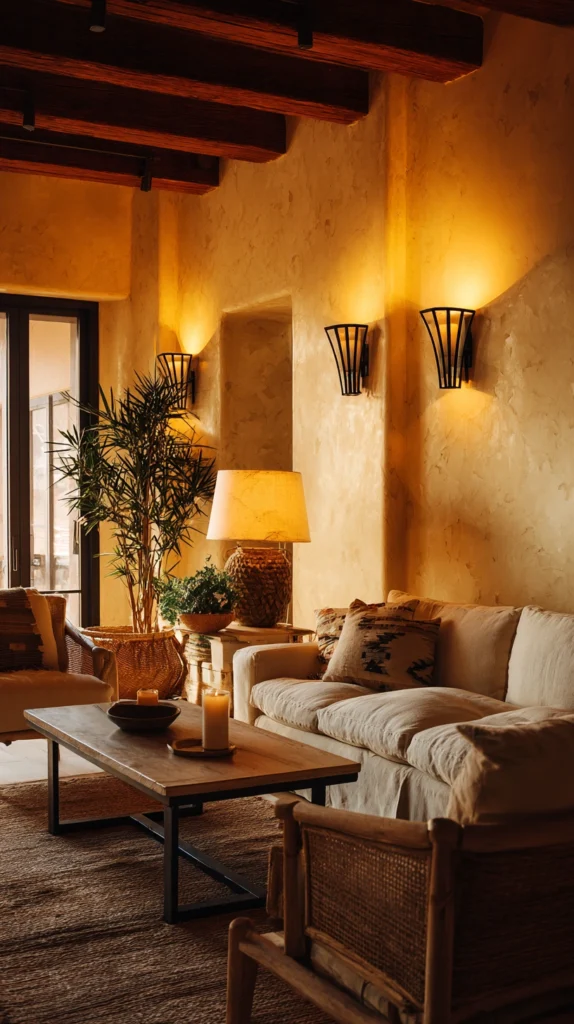
Desert modern rooms rely heavily on warm, layered lighting to recreate the golden, low-angle glow of desert sunlight, rather than a single bright overhead fixture. This includes floor lamps, table lamps, and a dimmer on any main overhead light.
Budget: $150-400 for 2-3 quality floor and table lamps with warm-toned shades, plus $20-40 for a dimmer switch installation on the main overhead fixture if one isn’t already in place. Warm white bulbs (2700-3000K color temperature) are essential here, since cool white or daylight bulbs undercut the warm, sun-baked feeling central to this style.
Positioning lamps at varying heights around the room — a floor lamp in a corner, a table lamp on a console, a smaller accent lamp on a side table — creates the layered, warm glow that makes the room feel inviting in the evening rather than flatly lit from a single source. A dimmer switch on the main overhead light allows the room to shift from bright and functional during the day to a softer, warmer ambiance in the evening, mirroring the natural shift in desert light throughout the day.
This is one of the most impactful, moderately priced upgrades on this list, since lighting quality affects how every other element in the room — the rug, the wood tones, the ceramics — actually reads once the sun goes down.
Choosing lamp shades in a natural linen, rattan, or paper material rather than a stark white plastic shade adds one more layer of texture to the room while also softening and warming the quality of light they cast across the walls and furniture.
Where to Find Desert Modern Pieces
Local pottery studios and Southwestern craft markets, common throughout Arizona and the broader Southwest, are excellent sources for genuine handmade ceramics, terracotta pieces, and woven textiles that carry more character than mass-produced versions found at larger home goods retailers.
Online marketplaces specializing in vintage and handmade goods are worth checking regularly for woven wall hangings, vintage rugs, and ceramic pieces, since inventory turns over often and pricing tends to be more accessible than gallery or boutique pricing for similar items.
Nurseries specializing in cacti and succulents typically offer a far wider selection of mature, architecturally interesting specimens than a standard big-box garden center, and staff can usually offer guidance on which varieties tolerate indoor conditions best and how often they’ll actually need watering.
Salvage yards and reclaimed lumber dealers are a good source for the weathered wood coffee tables, shelving, or accent pieces central to this style, often at a lower cost than new furniture designed to mimic the same aged look, and with the added benefit of genuine history in the material itself.
Quick Start Shopping List
This weekend, under $150:
- Sample-size terracotta or clay paint: $10
- A small terracotta pot and cactus: $30
- Two woven throw pillows: $60
- A patterned throw blanket: $40
Rental-Friendly Version
No-paint, no-permanent-change options:
- Southwestern-patterned rug and throw pillows
- Potted cacti and succulents in ceramic planters
- Removable curtain panels in a warm neutral linen
- Woven wall hangings using command strips
- Floor and table lamps instead of any wiring changes
Success Indicators
- Room feels warm and sun-washed, not dark or heavy
- Black metal, wood, and ceramic tones feel coordinated throughout
- At least one cooler accent (sage, dusty blue) breaks up the warm palette
- Guests describe it as “desert” or “Southwestern” without prompting
- The look holds up in both bright daylight and warm evening lamp light
Remember
Start with one or two elements (a rug, a plant, or a lamp) before committing to a full room repaint, choose warm-toned bulbs and layered lighting sources over a single bright overhead fixture, balance warm rust and clay tones with at least one cooler accent color to prevent the room from feeling one-note, pair black metal fixtures consistently throughout the room rather than mixing several different dark metal finishes, and treat this as a look you build gradually with collected pieces rather than one that needs to be finished in a single shopping trip.