14 Vintage Home Office Ideas for a Charming Workspace
There is a workspace aesthetic that belongs to a different relationship with time — one that understands that the objects surrounding a working person are not merely functional tools but companions in the daily practice of thought, and that a pen holder with a history, a desk with genuine age, and a lamp that has illuminated a hundred thousand working hours are more conducive to serious work than anything that arrived yesterday in a cardboard box. The vintage home office is that workspace.
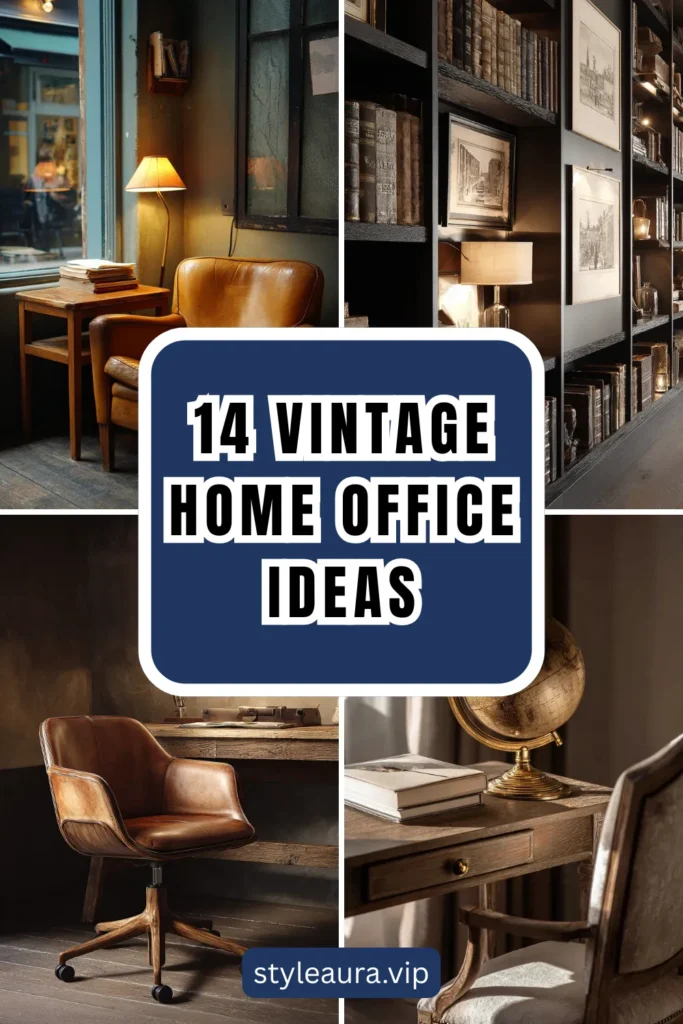
It is the room that has decided to take its cues from the working environments of the past — from the studies of writers who produced their best work at a battered timber desk, from the offices of professionals who thought in rooms that smelled of leather and old paper — and has found in those cues a quality of atmosphere that no contemporary equivalent can reproduce.
The vintage home office does not require genuinely antique objects. It requires the aesthetic intelligence to choose objects with warmth, age, and material honesty — and the patience to find them rather than purchase the first available equivalent. The result is a workspace that communicates genuine character rather than styled appearance, and that makes the work done within it feel like it belongs to a tradition worth continuing.
The fourteen ideas below cover every element of the vintage home office — from the foundational material choices to the finishing details that produce genuine charm rather than merely its simulation.
1. The Antique or Vintage Timber Desk
Budget: $100 – $2000
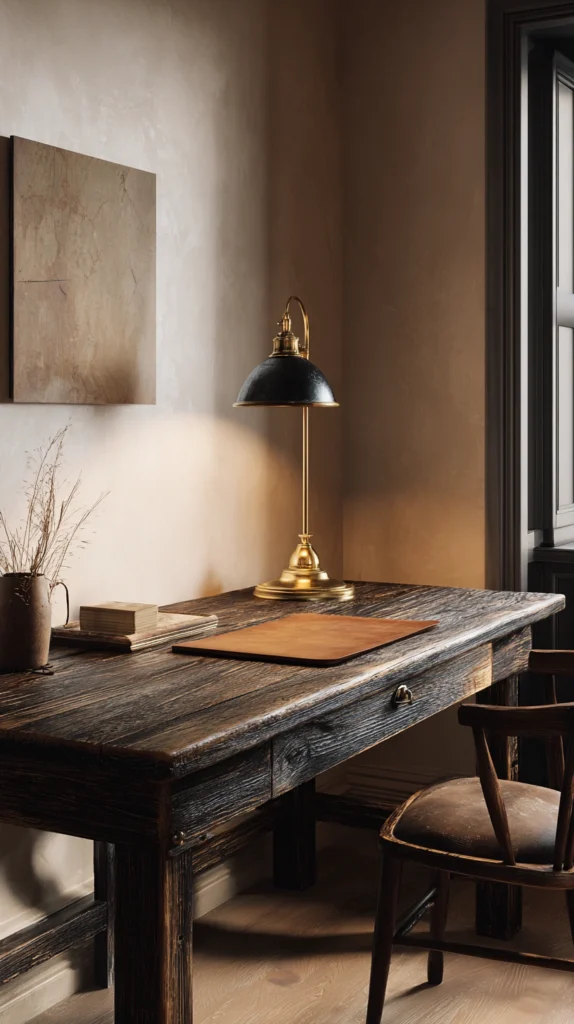
The vintage home office begins with its desk — the piece that determines every other decision and communicates the room’s aesthetic intentions more directly than any wall treatment or accessory. A genuinely antique or vintage timber desk — a Victorian writing bureau, a 1950s partners desk, a Georgian knee-hole, or a simple aged pine farmhouse table repurposed as a workspace — carries the specific quality of aged timber that no reproduction approaches: warmth, patina, the particular beauty of a surface that has held work for decades.
A Victorian writing bureau from an antique dealer — $200 – $800. A 1950s or 1960s mid-century desk — $150 – $600 from a secondhand furniture dealer. A Georgian knee-hole desk — $400 – $2000 from a specialist antique dealer. A simple aged pine farmhouse table repurposed as a desk — $100 – $300 from a secondhand source. Any of these provides the specific material foundation that the vintage office requires.
Decor tip: Source the vintage desk from an antique market, an estate sale, or an online vintage platform rather than from a reproduction furniture retailer. A reproduction desk communicates the appearance of vintage without the material quality — the surface smooth rather than worked, the patina applied rather than earned. The genuine article communicates its age through the specific quality of the timber, the slightly imperfect condition of its joints, and the warmth of a surface that has been touched, used, and occasionally abused for years. That quality is not reproducible. It must be sourced.
2. The Vintage Desk Chair
Budget: $80 – $600
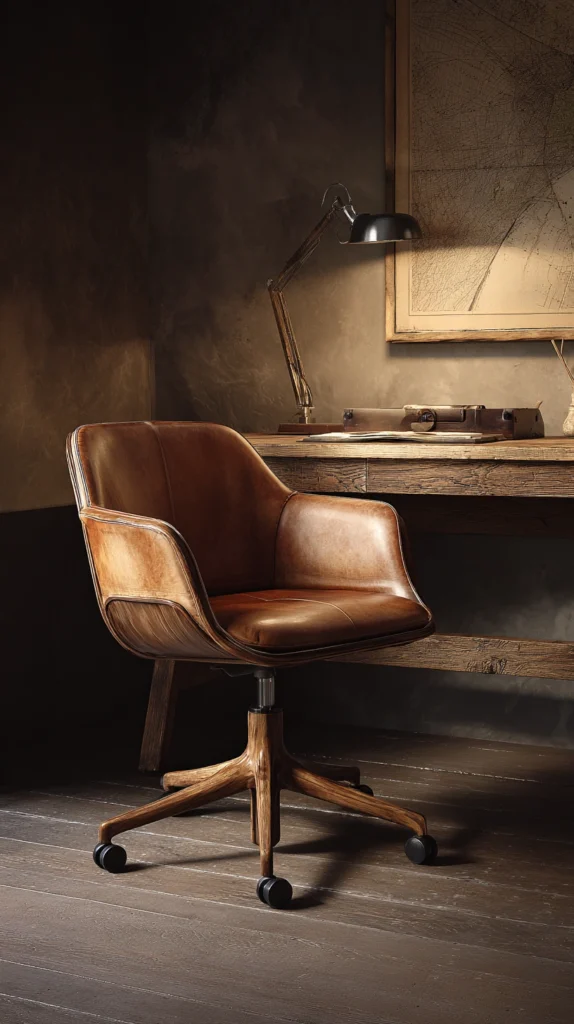
A vintage desk chair — a wooden swivel chair from the early twentieth century, a 1950s office chair in a worn original fabric, a leather-seated Windsor-style armchair repurposed for desk use, or a bentwood chair with a simple cushion — is the vintage home office’s most used and most physically present object. The chair that was made to last and has lasted is the chair that communicates, through its survival, the quality of its original construction.
A wooden swivel desk chair from an antique market — $80 – $300. A 1950s or 1960s office chair in original or reupholstered fabric — $100 – $400. A Windsor armchair with a cushion for desk use — $80 – $250. A bentwood chair — $60 – $200 from a secondhand furniture dealer. A leather-seated captain’s chair — $100 – $350.
Styling tip: Prioritise the ergonomic suitability of the vintage desk chair above its aesthetic quality — a beautiful chair that is genuinely uncomfortable to sit in for extended working periods is not a working chair. It is a decorative object that occasionally gets sat on. If the ideal vintage chair does not provide sufficient lumbar support, add a small timber-framed cushion or a rolled linen support at the lower back rather than abandoning the vintage aesthetic for an ergonomic alternative.
3. The Warm Aged Timber Palette
Budget: $40 – $200
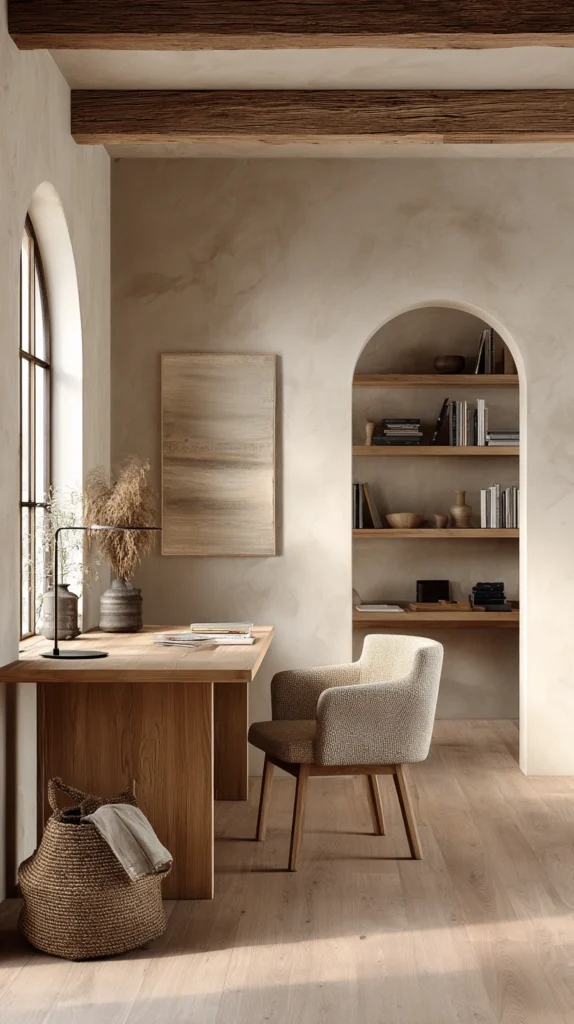
A vintage home office palette of warm aged tones — the honey of old pine, the dark warmth of Victorian mahogany, the slightly golden quality of aged oak, and the warm cream of walls that have been repainted several times and carry the depth of each previous layer in their current surface — produces a room that reads as genuinely old rather than themed. The palette does not require dark, dramatic colours. It requires the specific warmth of colours that have aged.
A warm ivory or aged white paint — $20 – $50 per litre for a quality paint with warm undertones. Woodwork in a warm cream eggshell — $15 – $30 per litre. The aged timber of the desk and the shelving provide the primary warm tone rather than the wall colour.
Decor tip: Choose paint from a heritage or historic colours range rather than from a standard contemporary palette for a vintage home office. Heritage paint ranges are formulated with the specific warm undertones of pre-twentieth century domestic paint — the particular quality of warmth that comes from a higher proportion of coloured pigment and a lower proportion of bright white — and they produce a room quality that standard contemporary paint, however carefully chosen, cannot replicate.
4. The Vintage Desk Lamp
Budget: $40 – $300
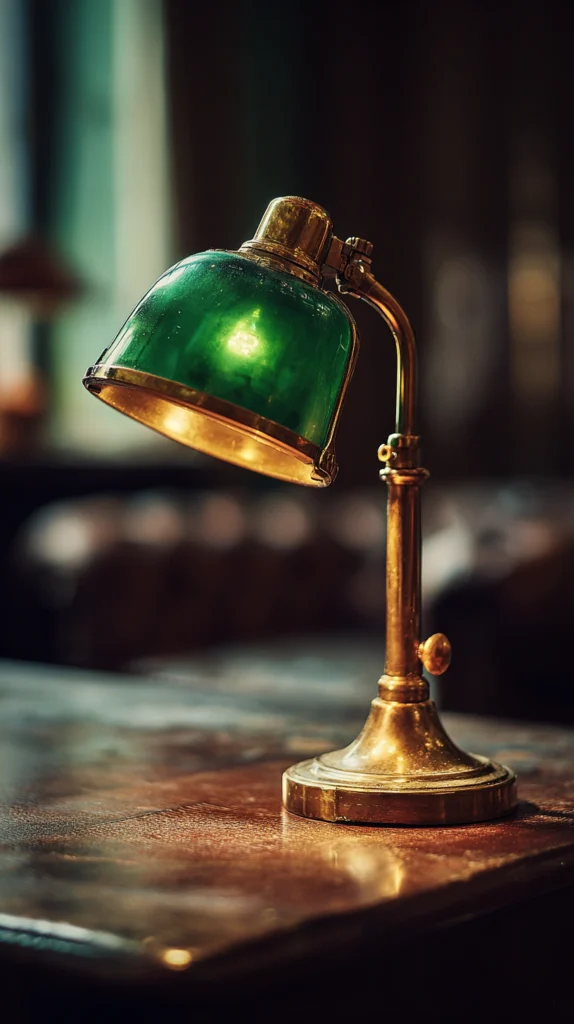
A vintage desk lamp — a genuine Anglepoise original in its characterful aged condition, a 1940s or 1950s bankers lamp with a green glass shade, a brass student lamp with a patinated base, or an early electrical lamp repurposed with a modern bulb — is the vintage home office’s most used and most visually present small object. The desk lamp illuminates the work and the workspace simultaneously, and a lamp of genuine age illuminates both with a quality that contemporary equivalents consistently fail to approach.
A genuine vintage Anglepoise lamp — $60 – $200 from a vintage lamp dealer. A 1940s green glass bankers lamp — $80 – $300. A patinated brass student lamp — $40 – $150. An early brass desk lamp with a modern LED warm bulb — $50 – $200. Any fitted with a warm LED at 2700K — $5 – $10 per bulb.
Styling tip: Fit all vintage desk lamps with a warm LED bulb at 2700K rather than a standard incandescent equivalent — the LED providing the warm colour quality of the original incandescent without the heat, the fragility, or the energy consumption. A warm LED in a vintage lamp is indistinguishable from an incandescent at normal viewing distance and produces a working light quality that is both historically authentic in its warmth and practically superior in its consistency and its longevity.
5. The Vintage Bookshelf and Library
Budget: $50 – $500
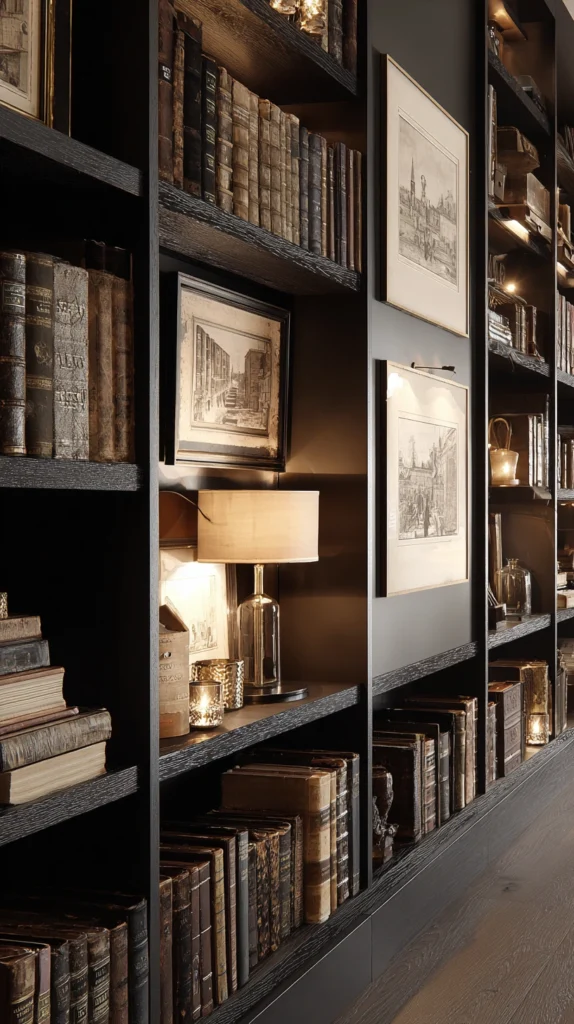
A vintage bookshelf — a genuine Victorian or Edwardian bookcase in a dark timber, a 1950s mid-century open shelving unit in a warm finish, or a set of reclaimed timber floating shelves on a warm-toned wall — holding books arranged by subject matter and personal association rather than by colour or height, is the vintage home office’s most culturally honest and the most specifically atmospheric storage solution. Books in a vintage office are not decorative objects. They are working tools that also happen to be beautiful.
A Victorian or Edwardian timber bookcase — $100 – $400 from an antique dealer. A 1950s mid-century shelving unit — $80 – $300. Reclaimed timber floating shelves — $20 – $60 per shelf installed. Books already owned — free to relocate and to arrange according to personal logic rather than visual principle.
Styling tip: Arrange the vintage office bookshelf with objects between the book runs rather than only books — a small ceramic, an old scientific instrument, a glass paperweight, a framed photograph — placed at irregular intervals rather than at regular spacing. Objects placed between books at irregular intervals read as accumulated naturally over time. Objects placed at regular intervals read as styled — which is the opposite of the quality the vintage bookshelf is working toward.
6. The Typewriter as Decorative and Functional Object
Budget: $30 – $300
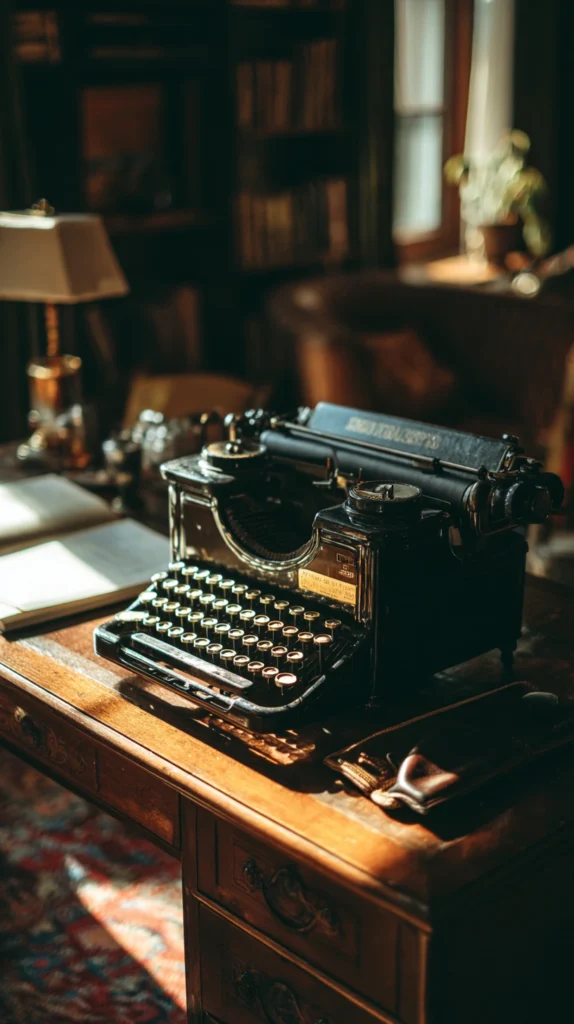
A vintage typewriter — positioned on the desk or on a dedicated side table, either in working condition or as a purely decorative object — is the vintage home office’s most specifically and most universally recognised aesthetic element. The typewriter communicates the history of written work with more directness than any other single object available to the home office decorator. Its presence is both culturally resonant and visually beautiful.
A working vintage typewriter in a warm-toned case — $80 – $300 from a specialist vintage typewriter dealer or an online platform. A non-working vintage typewriter for decorative use — $30 – $100 from an antique market. A portable vintage typewriter in a carrying case — $60 – $200 — particularly beautiful when the case is displayed open beside the machine.
Decor tip: If using a vintage typewriter as a working object rather than purely decorative one, have it serviced by a specialist before use — a typewriter that has sat unused for decades will require cleaning, lubrication, and possibly minor mechanical adjustment before it produces a clean and reliable typed impression.
A working typewriter on a vintage desk is a specifically pleasurable writing experience that no keyboard replicates — the physical resistance of the keys and the sound of the mechanism producing a quality of engagement with the act of writing that digital alternatives consistently fail to approach.
7. The Vintage Map and Print Gallery Wall
Budget: $40 – $300
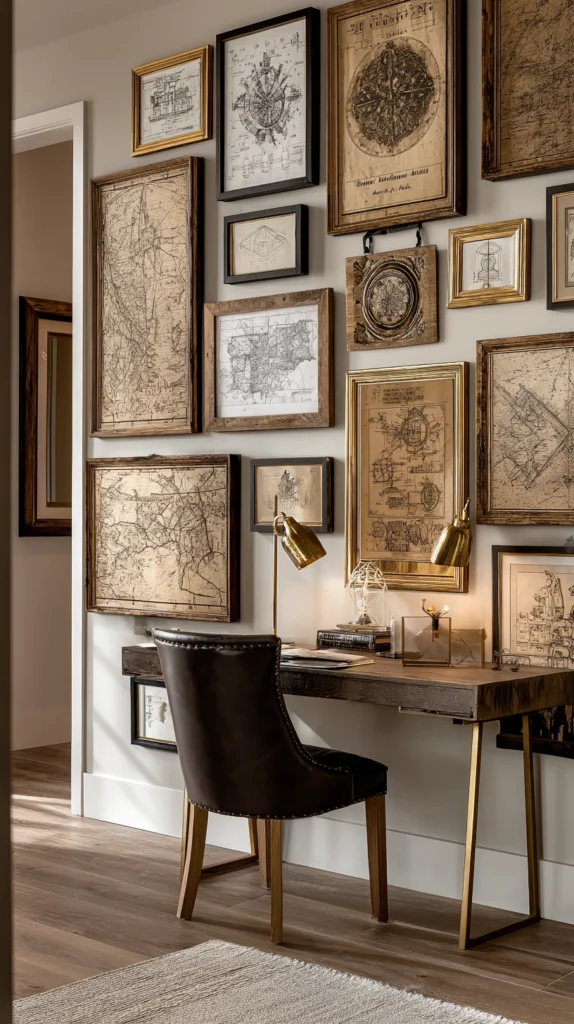
A gallery wall in the vintage home office — dark timber or warm gold frames holding antique maps, botanical illustrations from the eighteenth and nineteenth century, scientific diagrams, architectural engravings, and one or two personal photographs in a sepia or warm-toned print — is the workspace’s most culturally layered and the most specifically atmospheric display surface. Every print communicates a relationship with knowledge, history, and the particular beauty of printed images from before the age of digital reproduction.
Dark timber or warm gold frames — $5 – $25 each. A collection of eight to ten frames — $40 – $200 in total. Antique maps — from public domain archives, free to download and print. Botanical illustrations — available free from the eighteenth and nineteenth century public domain. Scientific diagrams — from historical scientific publications, freely available. Personal photographs in a warm-toned or sepia print — printed through an online service for $3 – $8 each.
Styling tip: Frame all vintage office gallery prints in frames with a slight visual age — a dark timber with worn edges, a gilt frame with a slightly distressed surface, or a dark metal with a slight patina — rather than in crisp new frames that communicate recent purchase. A slightly aged frame around an antique print reads as a consistent material pairing — both the frame and the print belong to the same aesthetic world. A crisp new frame around the same antique print reads as a new object holding an old image — which is a fundamentally different quality impression.
8. The Vintage Globe and Scientific Instruments
Budget: $30 – $300
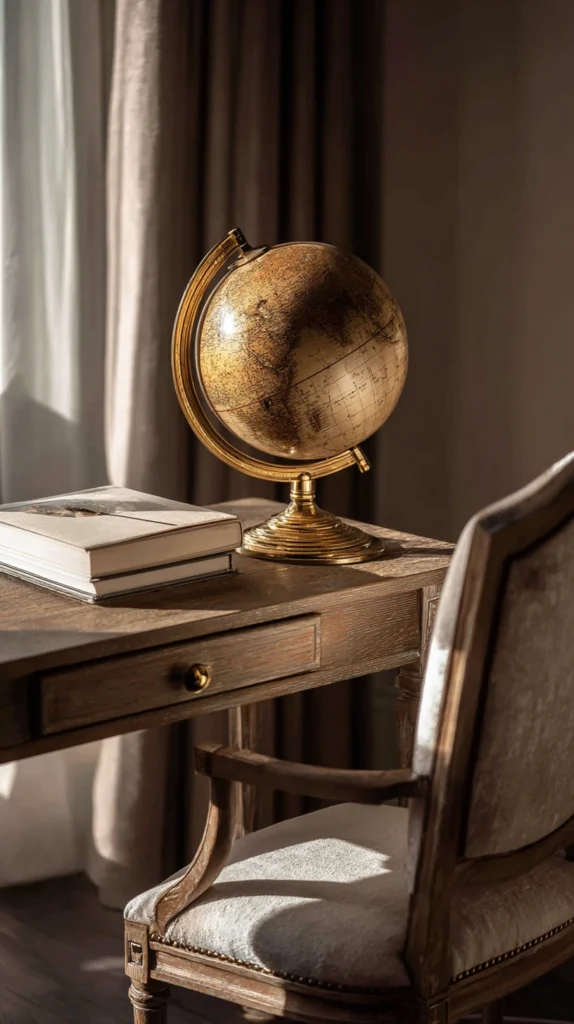
A vintage globe — a floor-standing library globe or a small desk globe in a dark timber or brass mount, positioned beside the desk or on the bookshelf — is the vintage home office’s most specifically intellectual and the most visually beautiful decorative object. The globe communicates curiosity about the world in the most direct and the most specifically beautiful form available, and its presence in a home office states, without words, that the work done in this room is informed by a perspective larger than the immediate.
A floor-standing library globe in a dark timber mount — $100 – $400. A desk globe in a brass or dark timber mount — $40 – $150. A vintage barometer or compass as a complementary scientific instrument — $20 – $80. An old microscope or a set of scientific scales — $30 – $120 from an antique market.
Styling tip: Position the globe in a location where it is visible from the desk’s primary working position — either on the desk surface itself, on a side table at the desk’s edge, or on the bookshelf at eye level from the seated position. A globe seen daily from the working position contributes to the vintage office’s atmosphere continuously. A globe positioned in a corner seen only from the door contributes to the atmosphere of someone entering the room and nothing to the quality of the hours spent working within it.
9. The Vintage Leather Accessories
Budget: $30 – $250
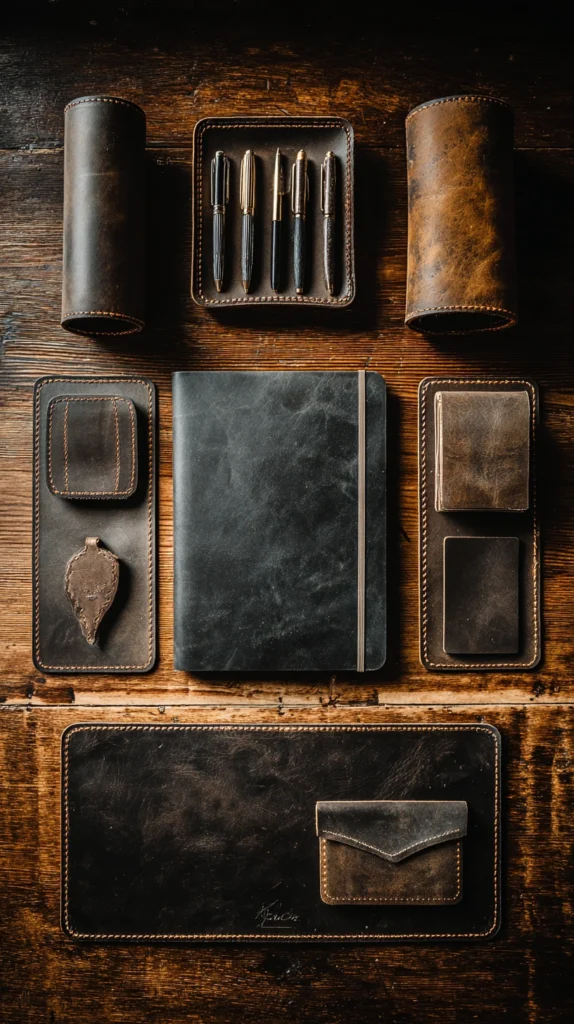
Leather desk accessories in the vintage home office — a worn leather blotter, a leather pen roll, a leather document wallet, a small leather-covered notebook, and a leather letter tray — introduce the material quality and the warm, slightly worn character of genuine leather used over time. Vintage or worn leather on a vintage desk communicates a coherence of material sensibility that new plastic or synthetic desk accessories — however convenient — cannot approach.
A worn leather desk blotter — $30 – $100 from a vintage stationery or antique market. A leather pen roll — $20 – $60. A leather document wallet — $20 – $50. A leather-covered notebook — $15 – $40. A small leather letter tray — $20 – $60. Total leather accessory investment: $105 – $310 for a desk surface of consistent material warmth.
Decor tip: Source at least one genuinely old leather accessory — a blotter with decades of use evident in its surface, a pen roll with the leather softened and slightly darkened from handling — alongside newer leather pieces. A genuinely old leather accessory beside newer ones reads as an assembled collection accumulated over time. An entirely new leather accessory collection, however well chosen, reads as purchased as a set — which is the opposite of the quality the vintage home office is working toward.
10. The Vintage Filing System and Stationery Display
Budget: $20 – $150
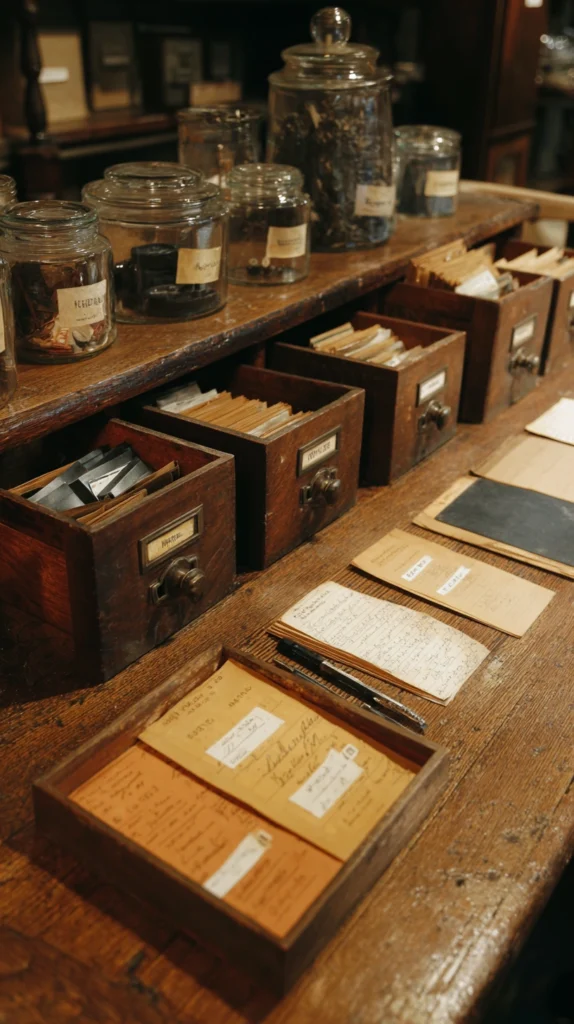
A vintage filing system — a wooden card index cabinet repurposed for document storage, a set of labelled manila folders in an antique wire file holder, a collection of glass specimen jars repurposed as desk organisers, or a wooden stationery rack holding paper, envelopes, and notebooks — communicates that the working systems of the vintage office were designed for the pleasure of the person using them as much as for their functional efficiency.
A wooden card index cabinet — $30 – $80 from an antique market. An antique wire file holder — $15 – $40. Glass specimen jars repurposed as pencil holders — $3 – $8 each. A wooden stationery rack — $15 – $40. Manila folders in warm tones with handwritten labels — $5 – $15 for a box of fifty. Total vintage filing investment: $68 – $183 for a desk organisation system that is both functional and specifically beautiful.
Styling tip: Label the vintage filing system elements in a consistent handwriting rather than with printed labels — the handwritten label communicating personal organisation rather than institutional filing. A card index cabinet with handwritten labels reads as a working organisational system designed by and for the specific person using it. The same cabinet with printed labels reads as a filing system that has been styled rather than genuinely used.
11. The Vintage Reading Chair and Side Table
Budget: $100 – $600
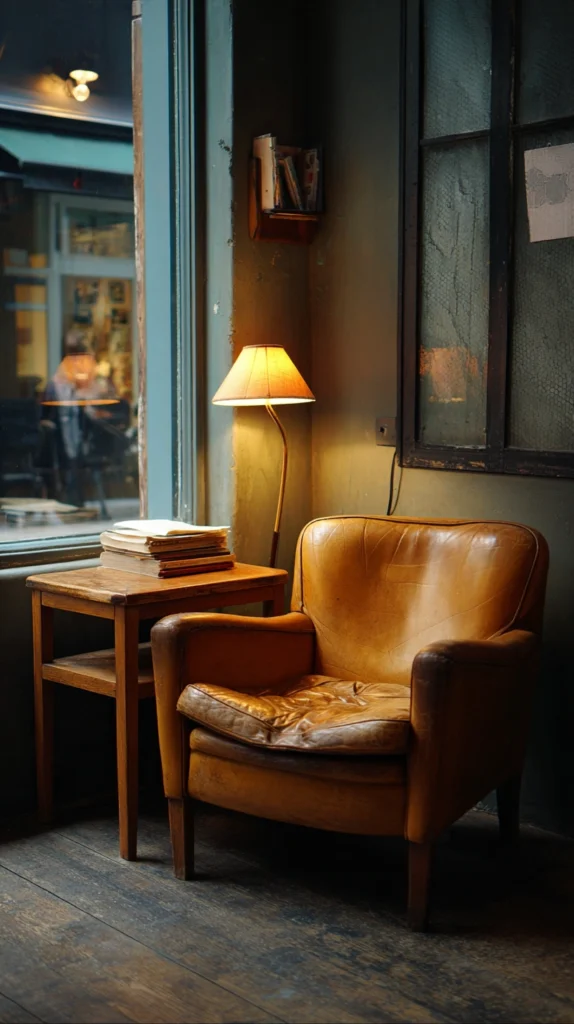
A vintage reading chair in the home office — a worn leather or a faded fabric armchair from the early to mid-twentieth century, positioned beside a small side table holding a vintage desk lamp and a single stack of books — gives the vintage workspace its most specifically humanising and the most genuinely atmospheric secondary furniture piece. The reading chair communicates that the office contains a life of thought beyond the immediate demands of the desk.
A worn leather armchair from a vintage furniture dealer — $150 – $500. A 1930s or 1940s upholstered armchair in original or carefully matched fabric — $100 – $400. A small vintage side table — $30 – $100. A vintage table lamp for the reading position — $40 – $150. Total reading chair investment: $320 – $1150 for the vintage office’s most humanising secondary zone.
Styling tip: Choose a reading chair that shows genuine signs of use — worn arms, softened upholstery, a slight unevenness in the cushion from years of being sat in — rather than one that appears recently reupholstered or artificially aged. A chair that has been genuinely used communicates comfort and welcome in the way that a pristine alternative cannot — the wear of reading as an invitation to add to the history of sitting in it rather than as a reason to leave it undisturbed.
12. The Vintage Rug and Warm Floor
Budget: $100 – $1000
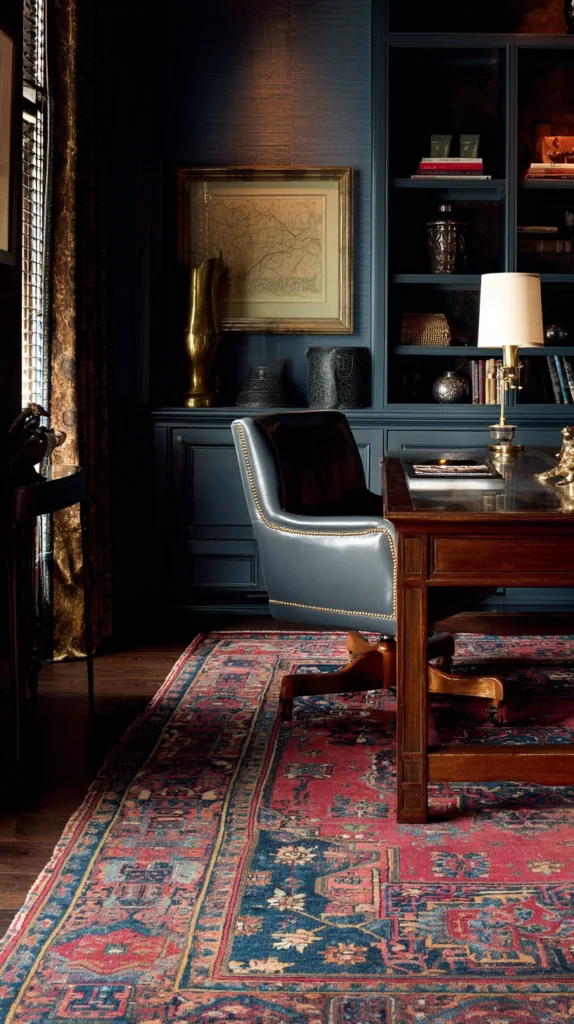
A Persian, Turkish, or European vintage rug — in the warm reds, faded golds, and aged blues of the great carpet weaving traditions — grounds the vintage home office in a layer of floor-level warmth and pattern that communicates the quality of a room assembled over time from sources of genuine cultural value. A faded vintage rug is often more beautiful than a new one — the colours having settled into a particular tonal harmony that years of use and light exposure produce and that no new manufacture replicates.
A genuinely vintage Persian or Turkish rug — $200 – $800 from a specialist rug dealer or an online vintage platform. A faded European needlepoint rug — $150 – $500. A secondhand kilim in warm traditional tones — $100 – $400. Any of these placed so that the desk chair’s front legs rest on the rug’s surface — the rug defining the working zone as a complete and architecturally resolved space.
Styling tip: Choose a rug whose pattern is worn enough at the centre — where the most traffic passes — to reveal the undyed or lightly coloured warp beneath the pile. A rug with this specific quality of central wear communicates decades of genuine use — its age written into its surface as clearly and as honestly as patina in timber or verdigris in copper. This is not wear that diminishes the rug. In a vintage context, it is the rug’s most beautiful and the most authentic quality.
13. The Vintage Plants and Botanical Display
Budget: $20 – $150
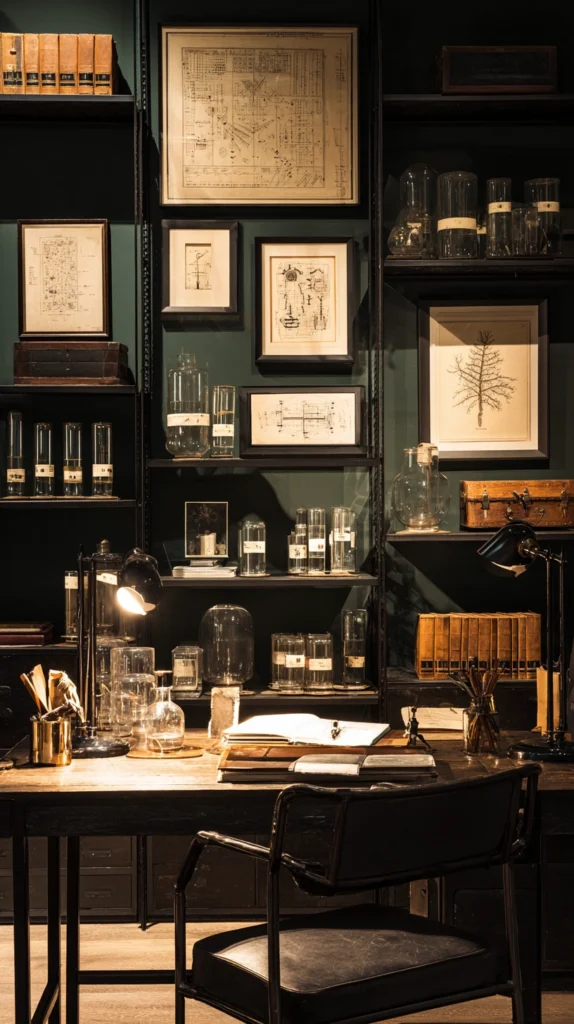
Plants and botanical elements in the vintage home office — a fern in a Victorian-style cast iron planter, a trailing ivy in a simple terracotta pot, pressed botanical specimens in clip frames on the wall, and dried botanical material in glass specimen bottles on the shelf — introduce the natural world into the workspace in the specific form that the Victorian and Edwardian naturalist tradition understood best — as objects of genuine scientific and aesthetic interest.
A fern in a cast iron or pressed metal planter — $20 – $60. A trailing ivy in a terracotta pot — $8 – $20. Pressed botanical specimens in clip frames — $3 – $8 per frame. Dried botanical material in glass specimen bottles — $5 – $15 per bottle. A simple terracotta pot with a small succulent or cactus — $5 – $15.
Styling tip: Display at least one botanical element in a specifically scientific or naturalistic format — a pressed specimen in a frame with a handwritten label, a dried specimen in a glass jar with a cork stopper, or a botanical illustration identified with its species name — rather than as a purely decorative object. A botanical element displayed in a scientific format communicates the vintage office’s connection to the tradition of natural history and intellectual curiosity that characterised the greatest home offices of the nineteenth and early twentieth centuries.
14. The Fully Realised Vintage Home Office
Budget: $600 – $5000
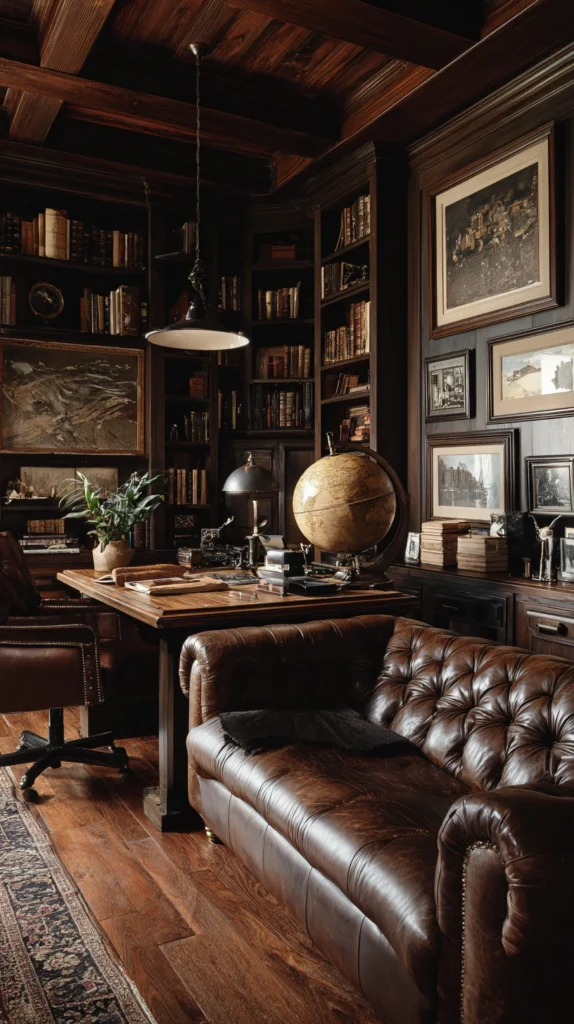
The fully realised vintage home office — warm ivory heritage paint on the walls, an antique timber desk with a worn leather blotter and a patinated brass desk lamp, a vintage desk chair with a simple cushion, floor-to-ceiling dark timber bookshelves holding books in the personal order of the person who reads them, a gallery wall of vintage maps and botanical illustrations in aged frames, a vintage globe on a side table beside the reading chair, a Persian rug with the desk chair’s front legs upon it, a reading corner with a worn leather armchair and a vintage table lamp, a typewriter on a corner of the desk, glass specimen jars holding pencils and scissors, a card index cabinet for document storage, botanical specimens in frames on the wall between the gallery prints, large architectural plants in cast iron or terracotta pots, and warm LEDs throughout at 2700K — is the home office that reads as genuinely inhabited by a person with genuine intellectual life and genuine aesthetic depth.
Heritage paint: $40 – $150. Antique desk: $100 – $2000. Vintage chair: $80 – $600. Bookshelves: $100 – $400. Gallery wall: $40 – $300. Globe and instruments: $60 – $280. Vintage rug: $100 – $800. Reading chair: $100 – $500. Leather accessories: $105 – $310. Typewriter: $30 – $300. Filing system: $68 – $183. Plants: $20 – $150. Lighting: $80 – $300. Total fully realised vintage home office: $923 – $6273 — with the lower end of the range fully achievable through careful sourcing from antique markets, estate sales, and online vintage platforms rather than retail purchases.
Styling tip: Build the vintage home office over time — sourcing each element as genuinely good examples become available rather than assembling the full room in a single purchasing session. The quality that makes a vintage office specifically beautiful — the accumulated character of objects from different periods and different sources that share a material sensibility rather than a catalogue page — is produced by the process of patient, selective accumulation rather than by the result of a complete purchase at once.
A room assembled over two years of attentive collecting reads as the genuine article. The same room assembled in two weekends from whatever was available reads as a room decorated in the vintage style — which is related to but fundamentally different from the quality the vintage office is working toward.
The vintage home office is, in the end, a practice of attention — the daily practice of noticing what has genuine quality, genuine age, and genuine character, and choosing it over what is merely available, merely convenient, and merely new.
The objects assembled through this practice over time produce a workspace that communicates, with an honesty that no amount of styling can fake, that the person who works here takes both the work and the working environment with equal seriousness — and has the patience, the taste, and the specific quality of attention to show it.
Source carefully. Choose honestly. Work surrounded by things that have already proven their worth through time.
The work done in such an environment belongs, almost inevitably, to the same quality as the room that contains it.