13 Stunning Kids Backyard Ideas You’ll Love
My backyard used to be a patch of grass and a rusty swing set.
Nothing to look at, nothing to do, zero imagination.
The kids played for ten minutes then asked to go inside.
Then I stopped thinking of it as “the yard” and started thinking of it as their world.
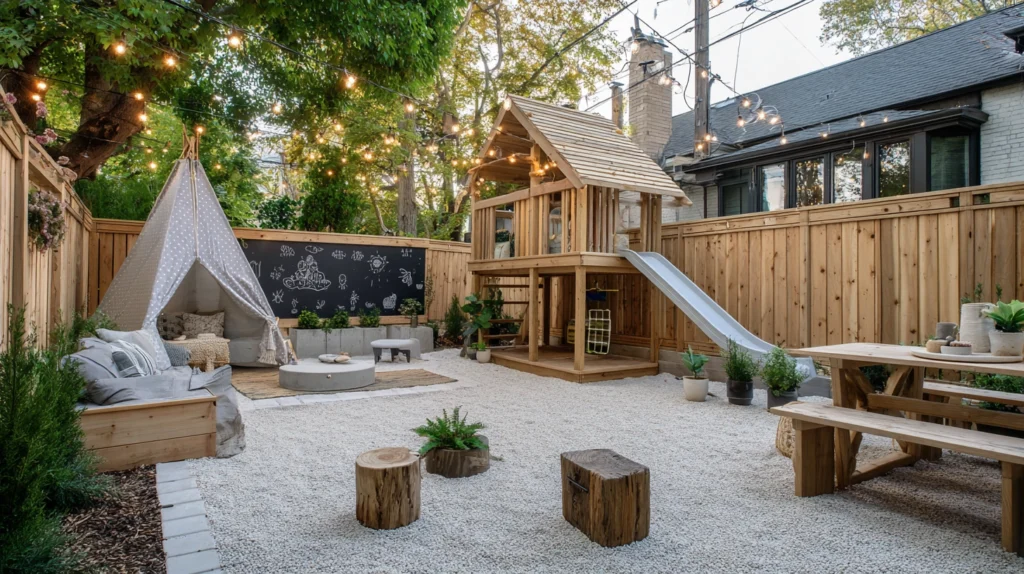
Now they’re out there for hours, mud on their knees, imagination running wild.
Let me show you 13 backyard ideas that turned my kids’ outdoor space into somewhere they never want to leave.
What Makes a Backyard Kid-Approved
The mindset shift:
Adult-focused yard thinking:
- Neat lawn
- Matching furniture
- Look nice for guests
- Keep everything tidy
- Function over fun
Kid-focused yard thinking:
- Zones for play
- Things to climb, dig, build
- Look nice for imaginations
- A little mess is good
- Fun over perfection
My transformation:
- Before: Pretty from the porch, boring up close, kids indoors by lunch
- After: A little wild, endlessly interesting, kids outside until dinner
Same square footage, completely different childhood.
Core Principles Before You Start
What actually matters:
Safety first, always:
- Soft landing surfaces under anything tall
- No sharp corners on structures
- Shade somewhere in every zone
- Line of sight from the kitchen window
Growth in mind:
- Build things that flex as kids age
- Sandbox today, garden bed in five years
- Add rather than replace
Encourage open-ended play:
- Loose parts beat fixed toys
- Sticks, buckets, and boards outlast anything plastic
- Let kids decide what something “is”
Budget realistically:
- Start with one zone
- Add a piece per season
- DIY where you can, splurge where safety matters
I stopped trying to build a finished yard in one weekend. It’s better as a slow-grown thing.
1. The Mud Kitchen
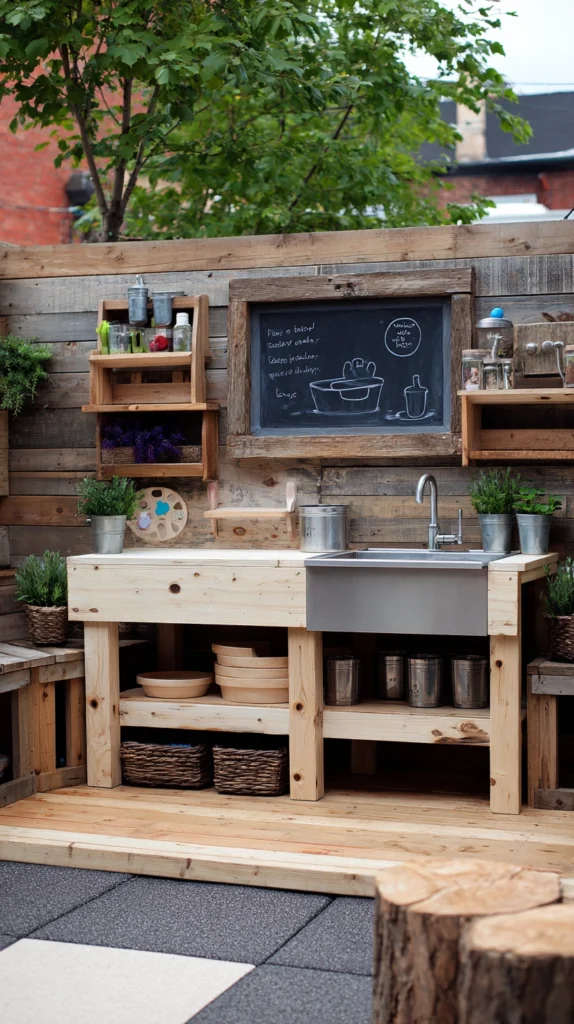
A dedicated station for messy, sensory, pretend cooking.
My setup:
- Old kitchen cabinet, weatherproofed and repainted
- Mismatched pots, pans, and wooden spoons from thrift stores
- A dish tub with a real (cold) water tap nearby
- Buckets of dirt, sand, and gravel within arm’s reach
What the kids “cook”:
- Mud pies with flower petal garnish
- Leaf soup
- Gravel stew
- Whatever the season provides
Why it works:
- Sensory rich: textures, temperatures, smells
- Open-ended: no wrong way to play
- Self-cleaning: hose it down, done
- Cheap: almost entirely secondhand
Cost breakdown: Cabinet $0 (curb find), paint $15, dish tub $8, utensils $10. Total under $35.
2. Backyard Obstacle Course
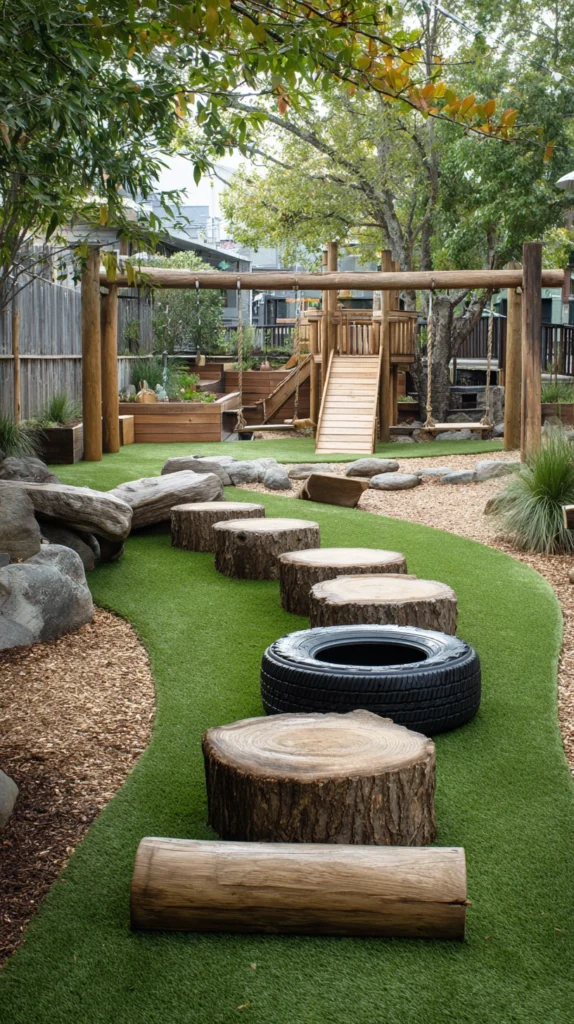
A permanent-ish course for climbing, balancing, and racing.
My layout:
- Tire stepping stones sunk into the ground
- A low balance beam made from a landscaping timber
- A rope swing between two trees
- A crawl tunnel (an old plastic culvert pipe, sanded smooth)
Rotating elements:
- Hula hoops for hopscotch-style jumps
- Pool noodles as “laser beams” to duck under
- Chalk-marked start and finish lines
Why kids love it:
- Changes every week with new arrangements
- Builds real gross motor skills
- Turns into races with siblings and friends
- Costs almost nothing to refresh
Kids don’t get bored of a course that changes shape every Saturday morning.
3. Sensory Garden Path
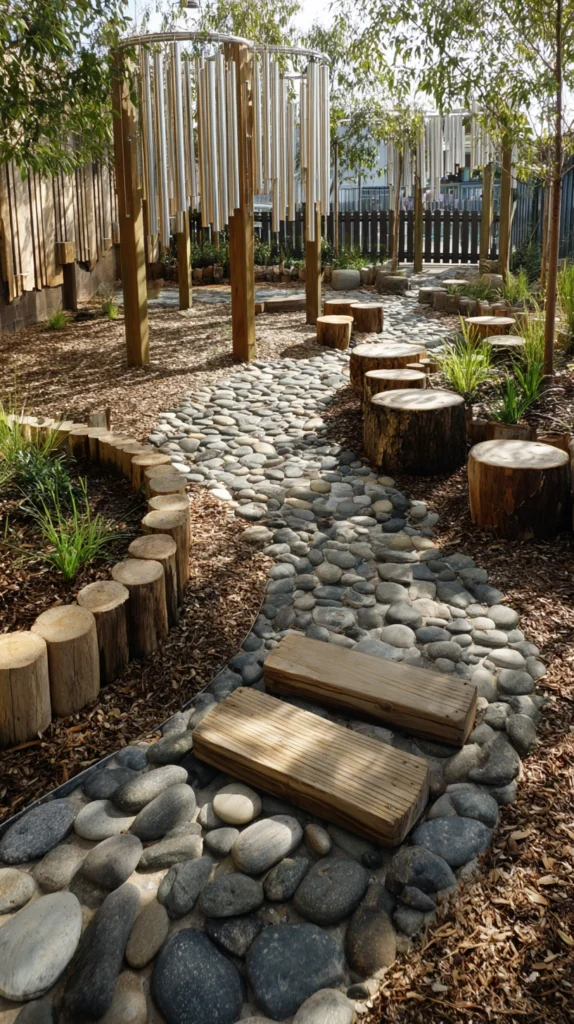
A walking path built entirely around little feet and little hands.
Materials along the path:
- Smooth river rocks (bare feet love these)
- Soft moss patches
- Wood rounds as stepping “islands”
- Wind chimes hanging along the route
Plants to line it with:
- Lamb’s ear (soft, touchable leaves)
- Snapdragons (kids love “talking” to them)
- Mint and lemon balm (crush and smell)
- Sunflowers (track their growth all summer)
Why this beats a plain path:
- Turns a walk to the swing set into an adventure
- Builds sensory awareness
- Doubles as a nature lesson
- Looks beautiful from the porch too
My kids narrate a whole story every time they walk it.
4. Backyard Reading Nook
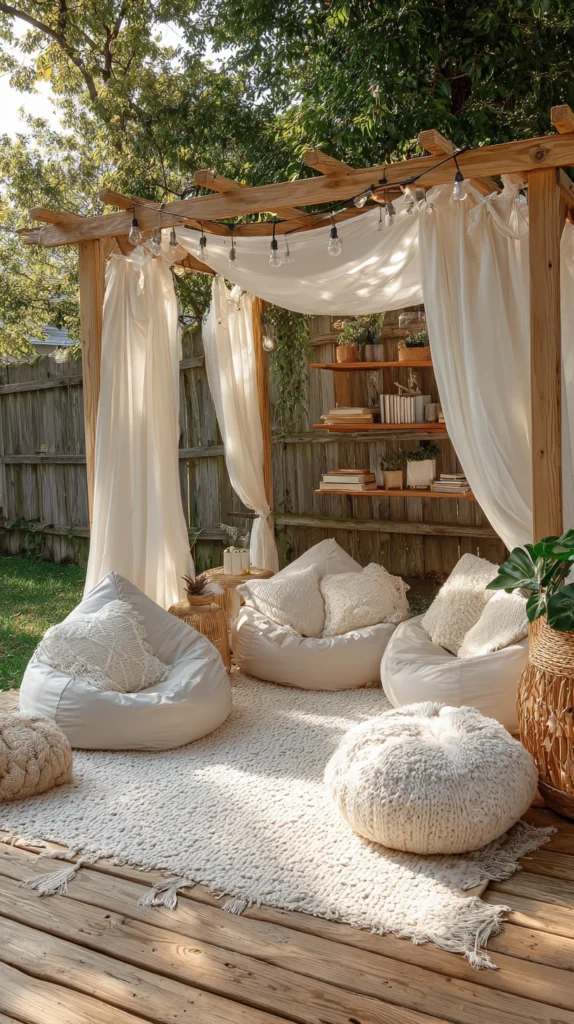
A quiet corner just for books, away from the noisy play zones.
My nook:
- Weatherproof outdoor rug
- Two bean bags under a small canopy
- A weatherproof bin of rotating library books
- A string of solar fairy lights for dusk reading
Why every yard needs one:
- Balances high-energy play with calm time
- Gives introverted kids their own space
- Encourages reading without a screen
- Doubles as a chill-out spot after a fight or a fall
Cost breakdown: Rug $20, bean bags $40 (two), canopy $25, lights $12. Total around $100.
5. Digging Pit
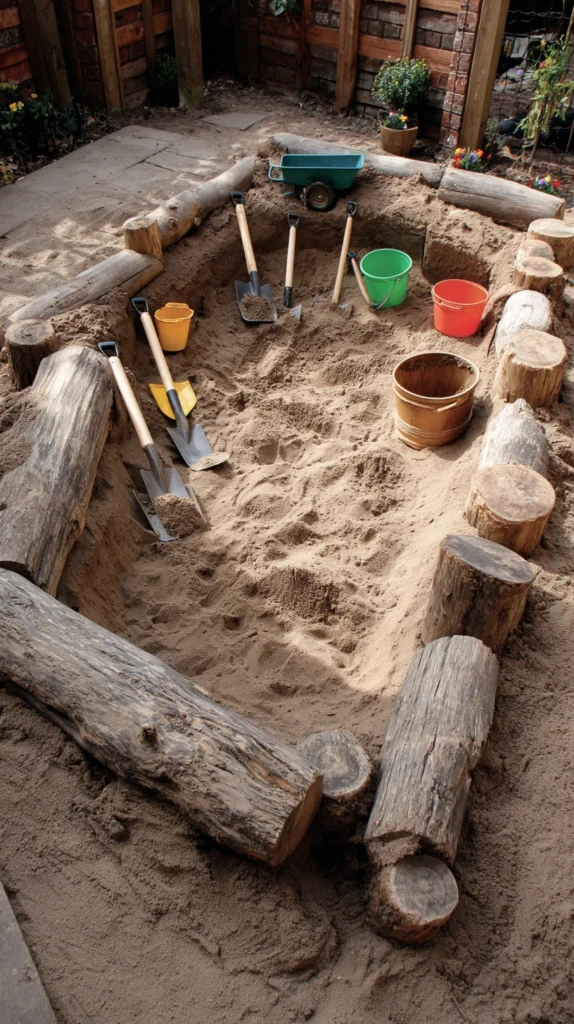
Not a sandbox. An actual dirt pit for real digging.
My setup:
- 6×6 foot section, dug down one foot
- Filled with loose, diggable soil (no rocks, no clay)
- Kid-sized shovels, buckets, and a wheelbarrow
- Border of logs to keep it contained
Rules I set:
- Dig anywhere inside the border
- Water it on hot days for better digging
- Bring worms found here to the garden, not the house
Why a dig pit beats a sandbox:
- Real dirt teaches real gardening later
- Worms and bugs make it a science lesson
- Endlessly renewable, just re-dig
- Cheaper than sand delivery
My son has “found” the same three worms about forty times and it never gets old for him.
6. Treehouse or Ground-Level Fort
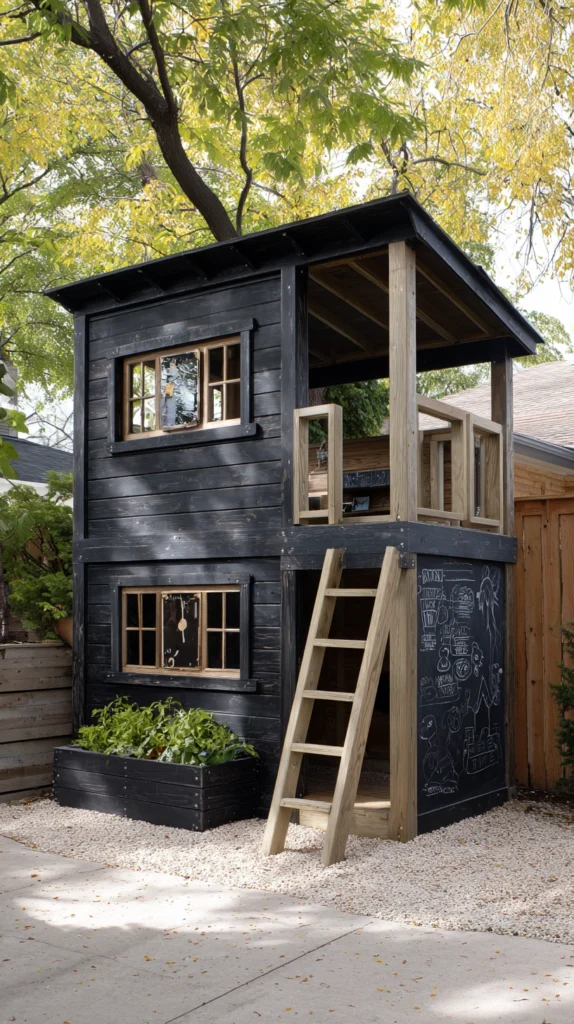
Not every yard has a climbable tree, and that’s fine.
Treehouse version:
- Platform built low, three to four feet up
- Rope ladder instead of a fixed staircase
- Simple railing, no walls needed at first
- Add a roof and walls as budget allows
Ground fort version:
- Repurposed shed or large appliance box, weatherproofed
- Windows cut out for “lookout” points
- A door that actually latches
- Chalkboard paint on one outside wall
Why it matters:
- Gives kids ownership of a space that’s truly theirs
- Encourages independent, unsupervised-feeling play
- Becomes the default hangout spot for friends
- Grows with them into a hideout, clubhouse, or reading fort
A appliance box fort lasted us two full summers before it needed replacing.
7. Backyard Water Play Zone
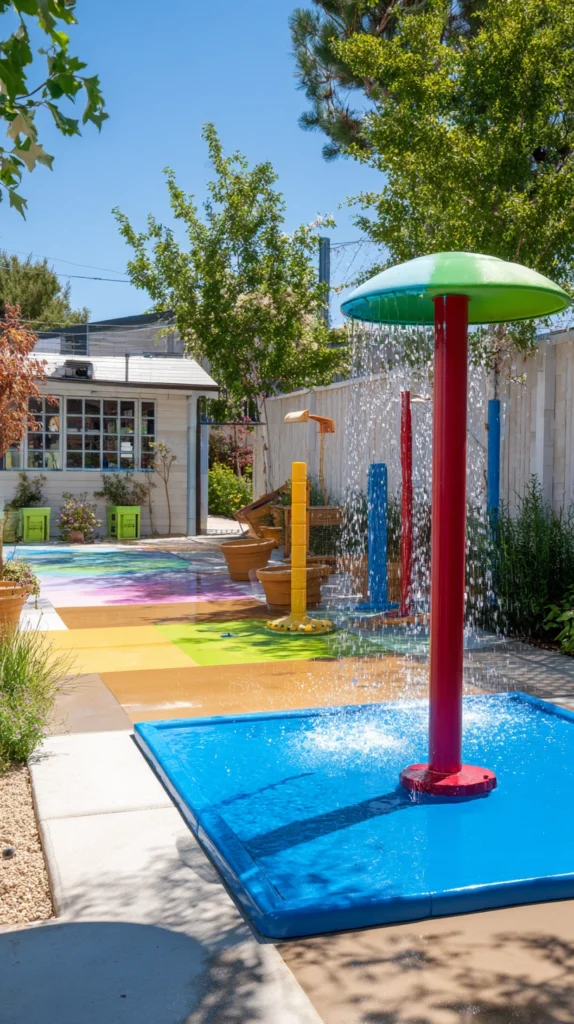
Water is the cheapest entertainment there is.
My setup:
- A splash pad mat connected to the garden hose
- A shallow kiddie pool for the youngest
- A water table with cups, funnels, and a wheel toy
- Sprinkler attached to a timer for surprise bursts
Add-ons that get used constantly:
- Squirt guns in a labeled bin by the door
- A car wash station for bikes and ride-on toys
- A “water wall” made from an old pallet and mismatched pipes
Why it’s worth the water bill:
- Instant cooldown on hot days
- Zero screen time competition in summer
- Works for every age from toddler to tween
- Doubles as chore time when they “wash” their own toys
Cost breakdown: Splash mat $30, kiddie pool $25, water table $40, hose attachments $15. Total under $115.
8. Chalkboard and Art Fence
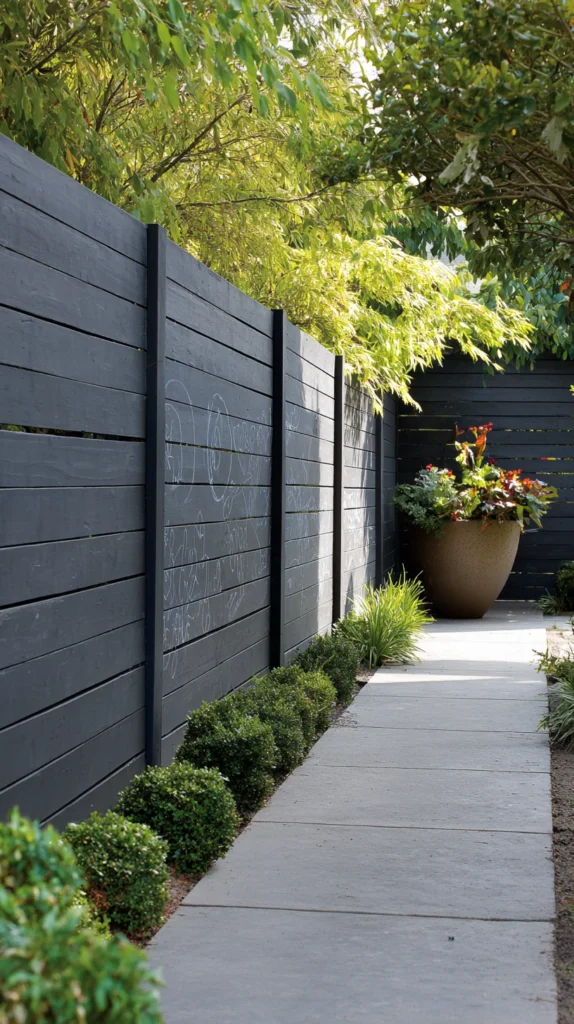
Turn a boring fence into a canvas.
My setup:
- One fence section painted with chalkboard paint
- A hanging bucket of sidewalk chalk nearby
- A separate section for washable outdoor paint on paper clipped up
Why a fence beats an easel:
- Huge surface for big, sprawling art
- Rain washes chalk clean automatically
- No easel to store or fold up
- Group art projects fit multiple kids at once
Rotating themes:
- Weekly “draw your favorite animal” prompts
- A giant collaborative mural for birthdays
- Hopscotch and tic-tac-toe grids drawn at kid height
This is the cheapest upgrade on the whole list and gets used daily.
9. Backyard Stage or Performance Corner
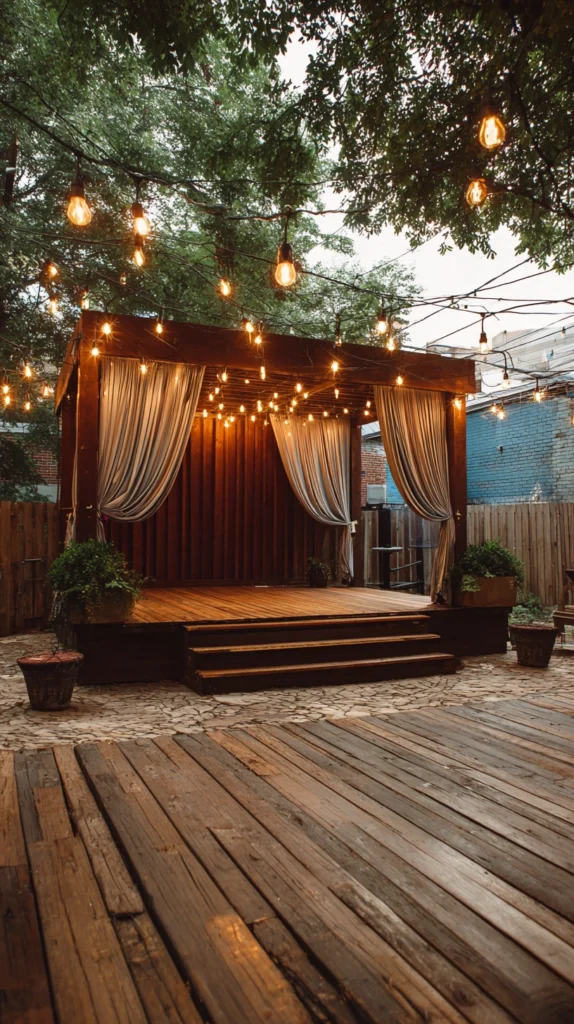
For the kids who want an audience.
My setup:
- A low wooden platform, painted bright
- Curtain made from an old shower curtain on a tension rod
- A dress-up bin with capes, hats, and old costumes
- A small speaker for music, controlled by an adult
What happens here:
- Puppet shows using socks and paint
- Dance recitals for grandparents on video call
- “Concerts” with kazoos and pot-lid cymbals
- Backyard talent shows with neighborhood kids
Why it matters:
- Builds confidence and creative expression
- Gives shy kids a low-stakes way to perform
- Turns family gatherings into built-in entertainment
- Costs almost nothing beyond the platform
My daughter has performed the same three-minute show for every visitor since spring.
10. Nature Scavenger Corner
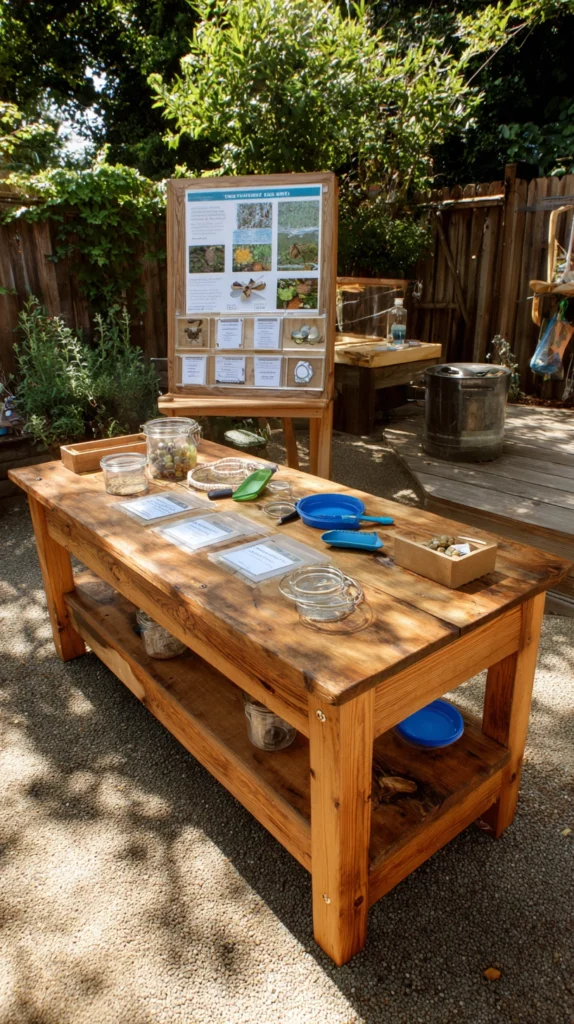
A spot that turns the whole yard into a hunt.
My setup:
- A small “nature table” (an old crate) for daily finds
- Magnifying glasses and a bug jar with holes punched in the lid
- A laminated scavenger hunt list, refreshed by season
- A bird feeder and a simple bird identification chart nearby
Sample scavenger list items:
- A leaf with three points
- Something smooth
- Something that used to be alive
- A bug with more than four legs
Why this works:
- Free, endlessly repeatable entertainment
- Builds real observation skills
- Encourages solo, unsupervised exploring
- Connects the whole yard, not just one zone
We’ve filled the nature table with feathers, shells, and one very confused snail.
11. Bike and Ride-On Track
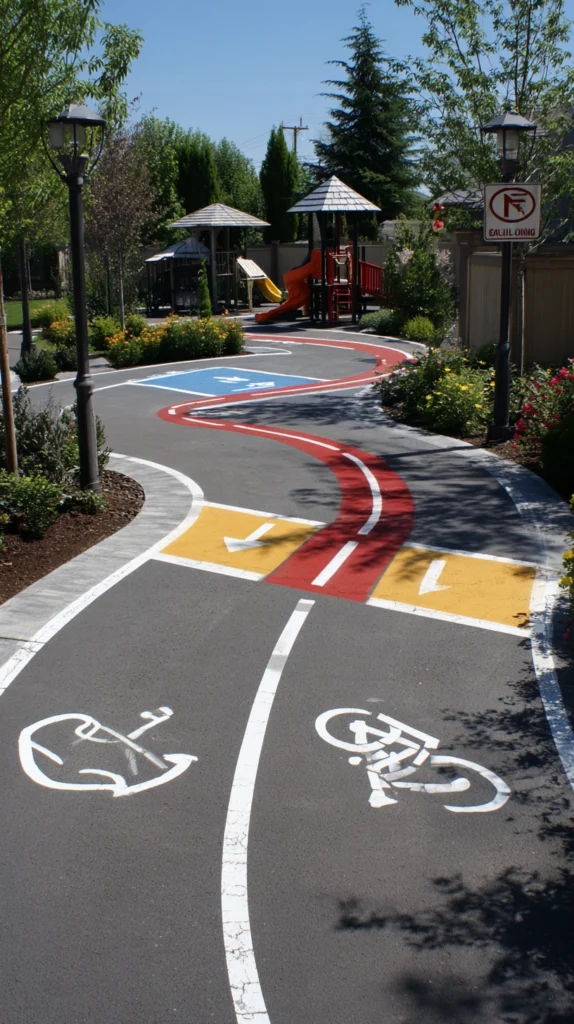
A dedicated loop for wheels of every kind.
My layout:
- A simple painted line looping around the yard’s perimeter
- Small cone “checkpoints” for slaloming
- A gentle ramp built from plywood and bricks
- A designated parking zone for bikes and scooters
Add-ons for older kids:
- Stopwatch races against siblings
- Chalk-marked speed limit signs for pretend play
- A simple traffic light made from painted wood
Why a track beats an open lawn:
- Gives structure to otherwise aimless riding
- Builds coordination and confidence
- Keeps wheeled toys off the driveway and street
- Scales from balance bikes to real bicycles
Kids race the same loop for years, just faster each summer.
12. Campfire and S’mores Circle
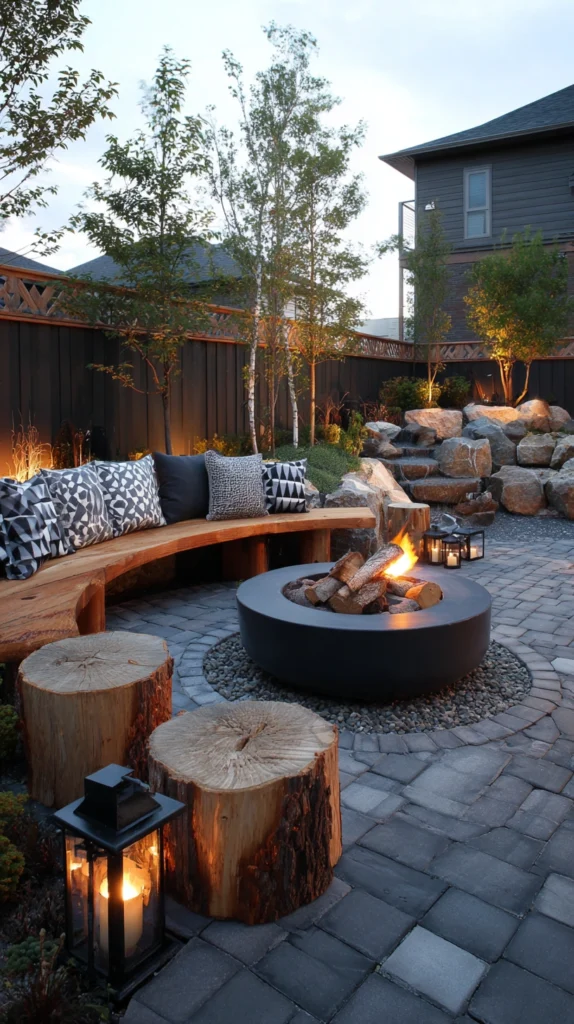
A small, supervised fire zone for evening family time.
My setup:
- A simple metal fire pit, well away from the house
- Log rounds arranged as seating
- A s’mores caddy stocked and ready
- Citronella lanterns for bug-free evenings
Why families love this zone:
- Screen-free evening ritual
- Storytelling naturally happens around fire
- Marks the transition from day play to wind-down
- Works for toddlers to teenagers alike
Safety notes:
- Always supervised, no exceptions
- A bucket of water on standby
- Fire pit far from overhanging branches or fences
Some of our best family conversations have happened over marshmallows, not dinner tables.
13. Backyard Movie Night Corner
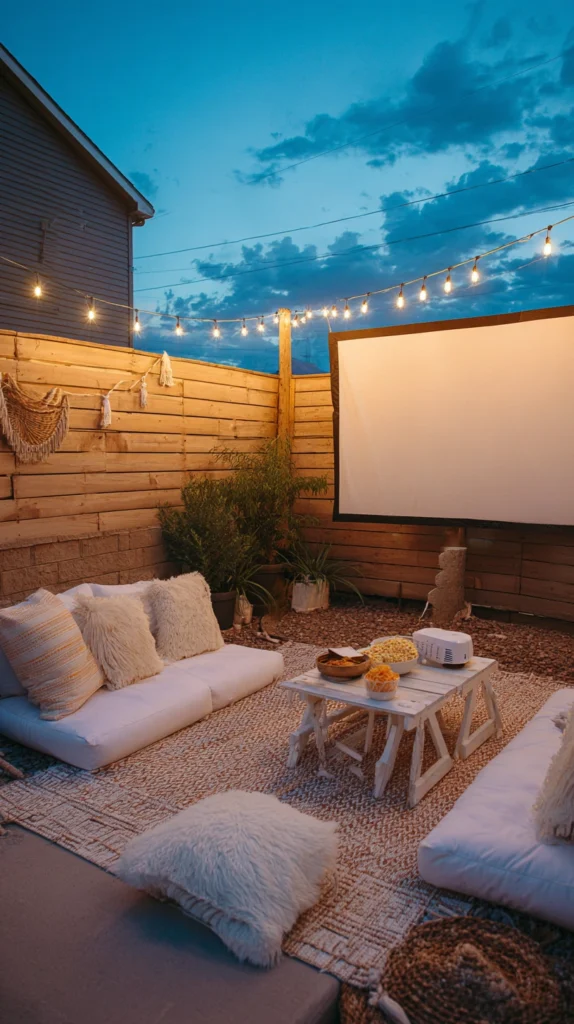
Turn one wall or fence into a screen after dark.
My setup:
- A white bedsheet stretched tight on the fence
- A small projector connected to a laptop
- Blankets and pillows piled on the lawn
- A popcorn station on a folding table
Why it’s worth the setup:
- Feels like a special event, not just “watching TV outside”
- Free after the one-time projector purchase
- Works for family movie nights or friend sleepovers
- Easy to pack away when not in use
Cost breakdown: Projector $60 (budget model), bedsheet $0 (already owned), speaker $25. Total under $85.
Creating Zones That Actually Get Used
Group your ideas by energy level, not just by looks.
High-energy zone:
- Obstacle course
- Bike track
- Water play
Calm zone:
- Reading nook
- Nature scavenger table
- Sensory path
Creative zone:
- Mud kitchen
- Chalkboard fence
- Stage corner
Evening zone:
- Campfire circle
- Movie night corner
Placing calm zones away from high-energy ones means quiet play doesn’t get trampled.
Safety Essentials Across Every Zone
Non-negotiables I follow no matter the project:
- Soft ground cover (mulch, rubber, or grass) under anything with a fall height
- No loose ropes longer than a child’s arm span
- Splinter-free wood, sanded and sealed
- Visibility from at least one window inside the house
- Shade available somewhere by mid-morning
A beautiful backyard idea is only good if it’s also a safe one.
Budget Reality
Kid backyards can be built slowly and cheaply.
Things I spent money on:
- Fire pit: $70
- Projector: $60
- Water table: $40
- Chalkboard paint: $18
Total across major purchases: around $190 over two years.
Things that were free:
- Mud kitchen cabinet (curbside find)
- Fort box (appliance delivery box)
- Nature table (old crate)
- Bike track paint (leftover from a home project)
Most of the magic came from repurposed materials, not new purchases.
My Backyard Transformation
Before:
- Appearance: flat lawn, one swing set, nothing else
- Time outside: 10-15 minutes before boredom hit
- Play style: repetitive, needed constant adult direction
- Mess level: minimal, because nothing invited mess
- Family time: mostly indoors after dinner
After:
- Appearance: zoned, colorful, clearly loved
- Time outside: two to three hours daily, easily
- Play style: independent, imaginative, self-directed
- Mess level: happily higher, easily hosed down
- Family time: evenings now happen around a fire pit or a projector screen
Same yard, same square footage, an entirely different childhood memory in the making.
Starting Your Kid-Friendly Backyard
Don’t try to build all thirteen zones this month.
This weekend:
- Pick the zone your kids ask for most
- Add a mud kitchen or a chalkboard fence first
- See how it gets used before adding the next
My own timeline:
- Year 1: Mud kitchen and chalkboard fence
- Year 2: Obstacle course and water play zone
- Year 3: Fort, reading nook, and bike track
- Year 4: Fire pit and movie corner
Built slowly, each addition felt earned rather than rushed.
Start with whatever your kids already gravitate toward in the yard right now.
The goal isn’t a magazine-perfect backyard. It’s muddy knees, tired legs, and kids who beg for five more minutes outside.
Now go build the backyard your kids will remember forever.
Quick Summary
Core kid backyard principles:
- Safety first: soft surfaces, sanded wood, visible zones
- Loose parts win: sticks and buckets beat fixed plastic toys
- Zone by energy: high-energy, calm, creative, and evening spaces
- Build slowly: one zone per season, not all at once
- Let mess happen: a hose-down beats a spotless, unused yard
13 standout ideas:
- Sensory and messy play: mud kitchen, digging pit, sensory path
- Active play: obstacle course, bike track, water play zone
- Creative outlets: chalkboard fence, stage corner, art projects
- Quiet retreats: reading nook, nature scavenger table
- Family time: campfire circle, movie night corner
- Ownership spaces: treehouse or ground-level fort
Easiest to start:
- Chalkboard fence: paint one section, done in an afternoon
- Nature table: an old crate plus a scavenger list
- Reading nook: a rug and two bean bags under a canopy
- Mud kitchen: a curbside cabinet and thrifted pots
Budget requirements:
- Free or minimal: chalkboard fence, nature table, digging pit
- Under $50: reading nook, mud kitchen, art fence
- $50-150: water play zone, movie night corner, bike track
- $150+: treehouse, fire pit, full obstacle course build
Time commitment:
- Weekend project: chalkboard fence, nature table, reading nook
- One-season project: mud kitchen, obstacle course, water zone
- Multi-season project: treehouse, fire pit circle, full bike track
Space needed:
- Small yard: chalkboard fence, reading nook, mud kitchen
- Medium yard: obstacle course, water zone, digging pit
- Large yard: treehouse, fire pit, bike track, movie corner
What makes it kid-approved:
- Philosophy: independence, imagination, a little bit of mess
- Aesthetic: colorful, zoned, clearly built for small hands
- Practice: open-ended play over fixed toys
- Growth: zones that adapt as kids get older
- Family connection: evening rituals around fire and film
Maintenance reality:
- Less precious upkeep: mud and dirt zones clean up with a hose
- Seasonal refresh: scavenger lists and art themes change often
- Durable choices: sanded wood and weatherproof paint last years
- Shared effort: kids help maintain spaces they helped build
Safety essentials:
- Soft ground cover under anything with height
- No long loose ropes or sharp fence edges
- Shade available in every major zone
- Sightlines from at least one house window
Sound and atmosphere:
- Wind chimes along garden paths
- Music at the stage corner, adult-controlled
- Quiet evenings around the fire pit
- Popcorn and blankets for movie nights
Community and connection:
- Neighborhood kids drawn in by the fort and stage
- Grandparents entertained by backyard performances
- Friends invited for movie nights and s’mores
- A yard that becomes the default gathering spot
Quick start plan:
- This weekend: paint one chalkboard fence section
- This month: build the mud kitchen or nature table
- This season: add an obstacle course or water play zone
- This year: build toward a fort, fire pit, or movie corner
Success indicators:
- Kids ask to go outside instead of asking for screens
- Mess happens and nobody minds
- Friends and neighbors want to come play
- Evenings shift outdoors around fire or film
- The yard feels like theirs, not just yours
Remember: the best backyard isn’t the tidiest one. It’s the one your kids never want to leave.