14 Stunning Small Backyard Patio Designs Ideas You’ll Love
Our patio was barely bigger than a parking space, wedged between the back door and a chain-link fence.
For years I treated it as too small to bother with, just a place the trash cans lived until pickup day.
I finally measured it properly, realized it could fit a real table, and rebuilt the whole thing over one long weekend.
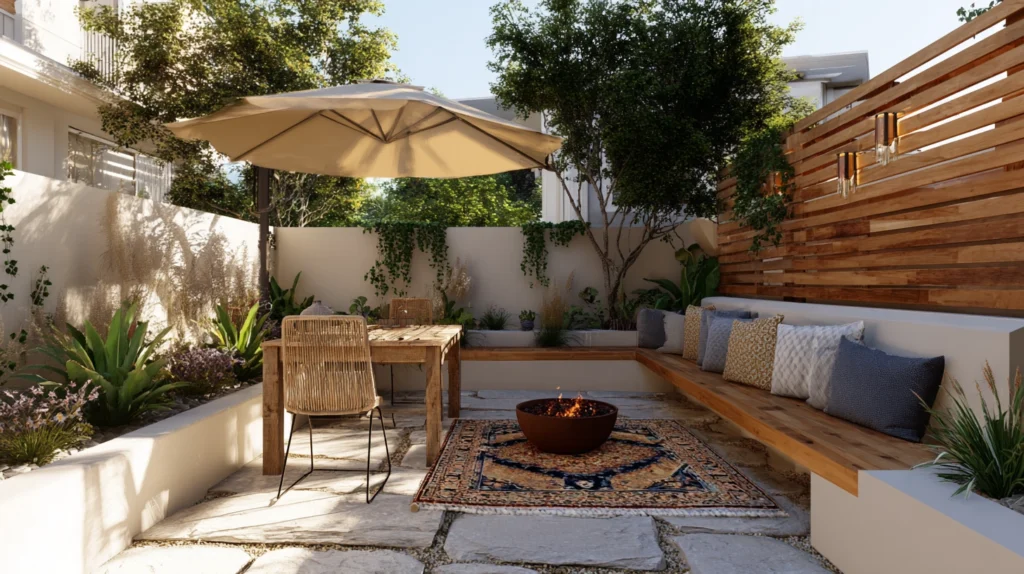
It’s still the same small rectangle of concrete. It just finally works as hard as the rest of the house.
Here are 14 ways to design a small patio so it earns real daily use instead of getting written off as leftover space.
Why small patios need more design intention, not less
A tight footprint has less room for mistakes, which means every choice actually matters more.
- Furniture scale needs to be exact, since even one oversized piece can make the whole space feel cramped
- Vertical space becomes just as important as floor space, since there’s often nowhere else to add storage or greenery
- A clear single purpose, like dining or lounging, tends to work better than trying to fit multiple functions into a small footprint
Once the scale and purpose are locked in, a small patio can feel just as complete as a much larger one.
1. Bistro Set for Two With a Vertical Herb Wall
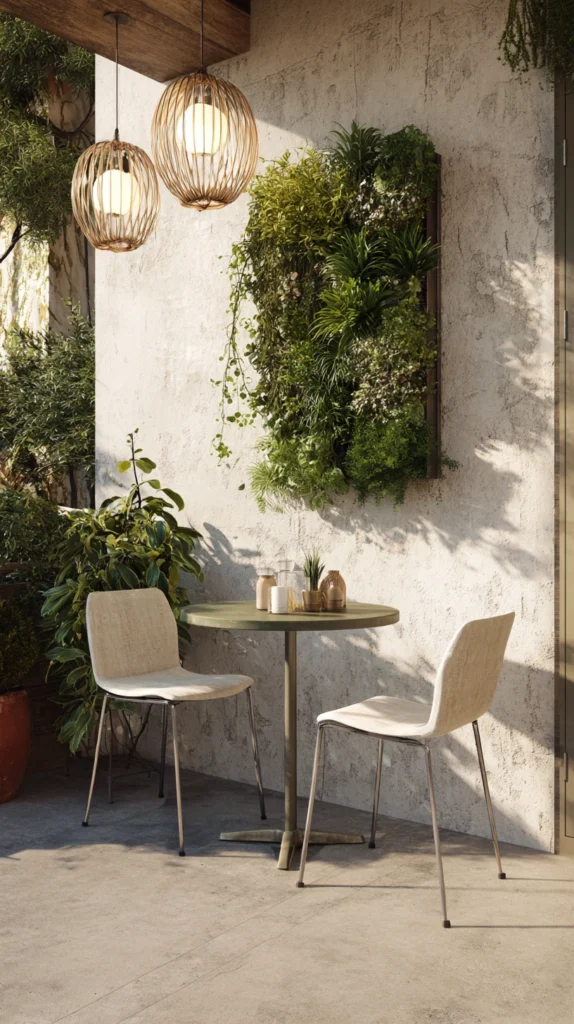
Prioritizing a functional dining spot over open floor space.
Build it:
- A small round bistro table with two chairs, sized to leave at least 24 inches of walking clearance around the setup
- A vertical planter or pocket system mounted on the nearest wall, filled with herbs within easy reach of the table
- A single small pendant or string light overhead, since floor lamps would eat into the already limited space
Why this combination suits the smallest patios especially well:
- A two-person bistro set fits comfortably where a full dining table simply wouldn’t
- Growing herbs vertically uses wall space that would otherwise sit completely empty
- It gives the tiny footprint one clear purpose, morning coffee or a simple meal, rather than trying to be everything at once
Cost breakdown: A bistro set runs $80 to $200, with a vertical herb planter adding $30 to $60.
2. Built-In Bench Seating Along the Perimeter
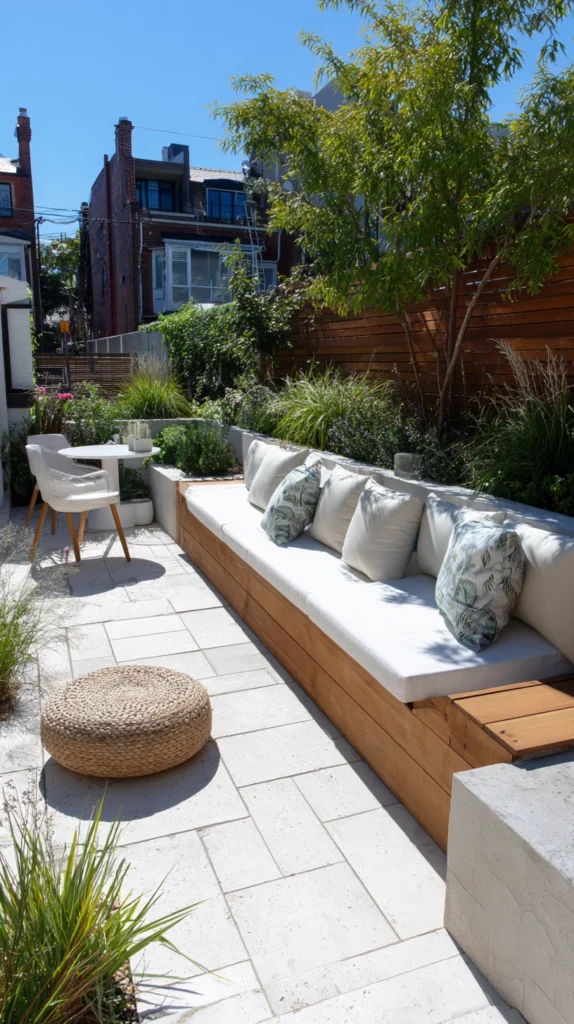
Maximizing seating without sacrificing central floor space.
Build it:
- A simple wood bench built along one or two walls of the patio, sized to the exact available footprint
- Weatherproof cushions along the top for comfort, secured with ties so they don’t blow away
- A small side table or two positioned at the bench’s ends rather than in the open floor area
Why built-in seating outperforms freestanding chairs in a tight space:
- It hugs the perimeter, keeping the center of the patio open for walking or a small coffee table
- A single continuous bench can seat more people than the same footprint filled with individual chairs
- It reads as intentional, permanent design rather than furniture that looks squeezed into leftover space
Cost breakdown: A built-in bench with cushions runs $200 to $500 depending on length and cushion quality.
3. Vertical Garden Wall to Add Greenery Without Losing Floor Space
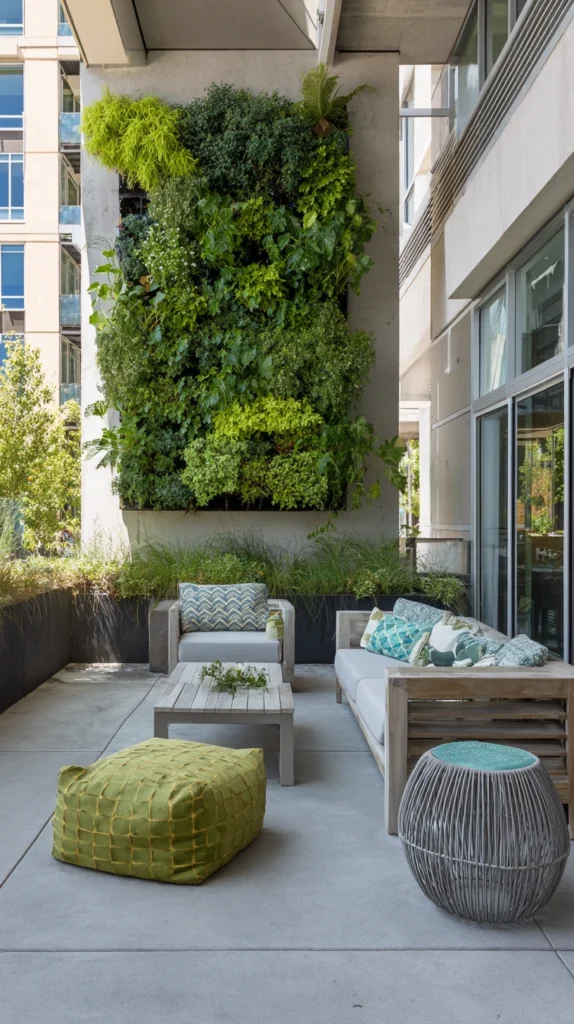
Bringing plants into the design without any pots taking up walking room.
Build it:
- A modular living wall panel or a series of wall-mounted planters covering one full vertical surface
- A mix of trailing and upright plants for varied texture, chosen for the patio’s specific sun exposure
- A simple drip irrigation line if the wall gets consistent use, or manual watering for a smaller setup
Why vertical greenery matters more in small spaces than large ones:
- Floor-standing pots are one of the fastest ways to make an already tight patio feel cluttered
- A wall of plants delivers the same greenery benefit as a garden bed, using zero floor footprint
- It turns a plain fence or wall, often the least interesting surface in a small patio, into the space’s main visual feature
Cost breakdown: A modular vertical garden system runs $80 to $200 depending on size and number of plants included.
4. A Single Statement Rug to Define the Space
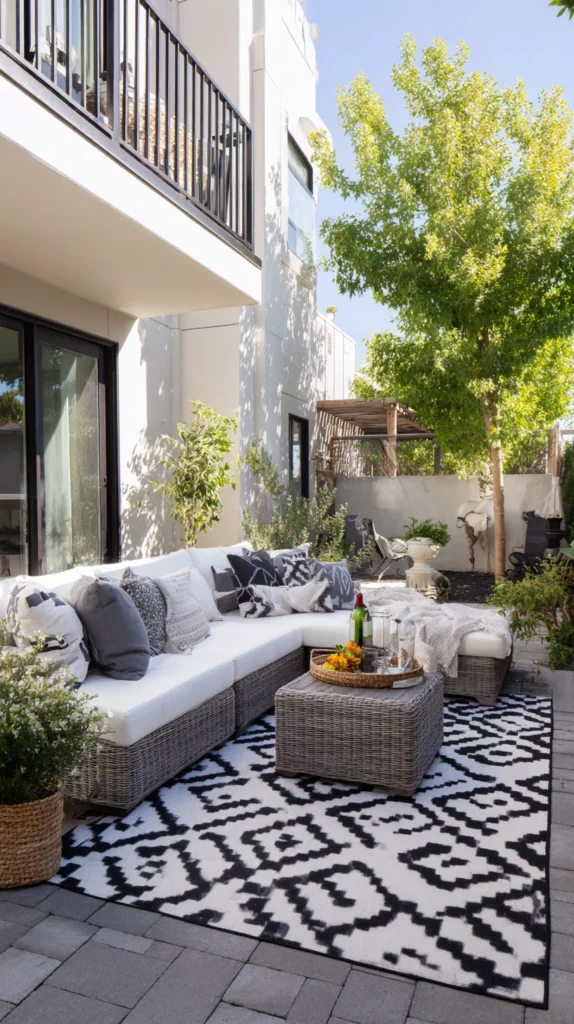
Using floor treatment to visually separate the patio from the surrounding yard.
Build it:
- An outdoor-rated area rug sized to fill most of the patio’s floor space, leaving a small border of bare surface visible
- A bold pattern or color chosen to contrast against the surrounding lawn or hardscape
- Weighted corners or a rug pad rated for outdoor use, keeping it from shifting in wind
Why a defined rug matters more in a small space than a large one:
- It gives the patio a clear visual boundary, making it read as its own distinct room rather than an extension of the yard
- Pattern and color at floor level do a lot of visual work in a space too small for much furniture or decor
- It’s one of the most affordable ways to add a designer touch to a space with limited room for bigger investments
Cost breakdown: An outdoor area rug runs $40 to $100 depending on size and material.
5. Foldable or Stackable Furniture for Flexible Use
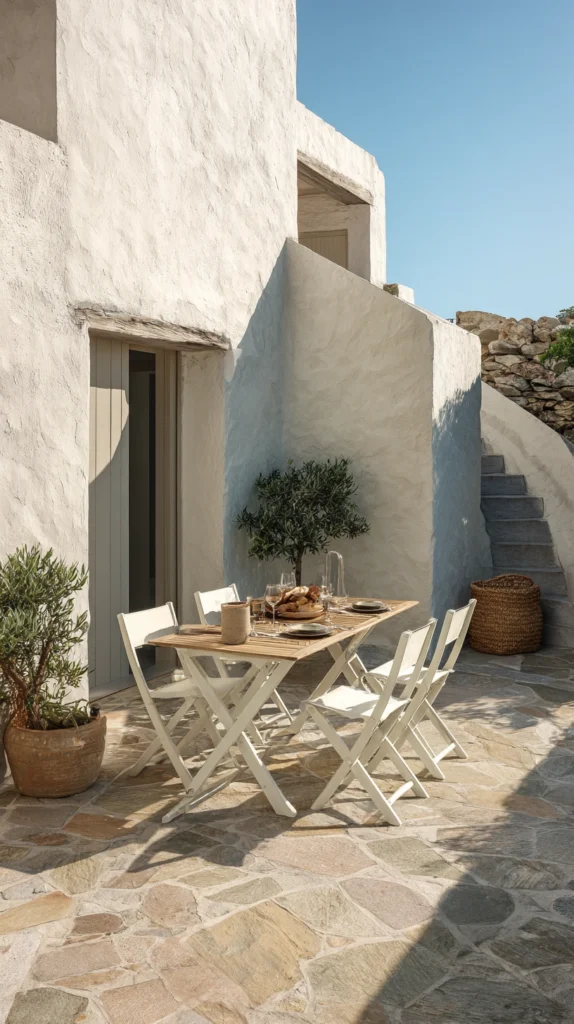
Furniture that can disappear when the space needs to be fully open.
Build it:
- A foldable bistro table and chairs, or a stackable set that tucks against one wall when not in use
- Lightweight materials like aluminum or resin wicker, easy to move without help
- A designated storage spot, like a hook or narrow gap beside the house, for when the furniture is folded away
Why flexibility matters most in the smallest footprints:
- A patio too small for permanent furniture can still host a dinner or a solo coffee break when the furniture folds out only when needed
- It allows the same small space to serve double duty as an open activity area, like yoga or kids’ play, at other times
- Lightweight materials mean rearranging or storing the furniture doesn’t become its own chore
Cost breakdown: A foldable bistro set runs $60 to $150 depending on material and quality.
6. Mirror Mounted on an Exterior Wall to Expand Visual Space
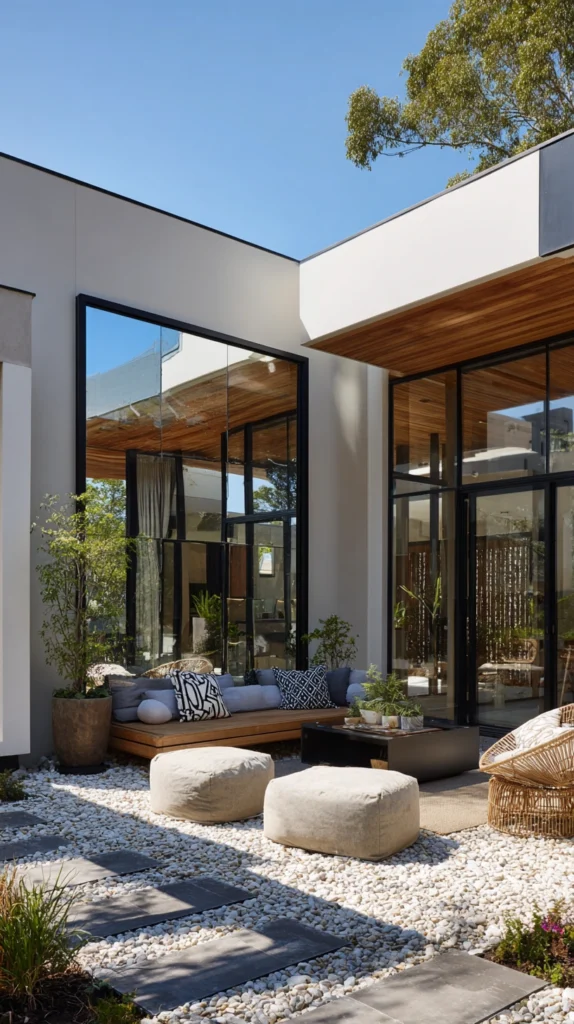
A trick borrowed directly from small interior room design, applied outdoors.
Build it:
- A weatherproof outdoor mirror mounted on the wall opposite the main seating area
- Positioned to reflect greenery or the sky rather than a blank fence, maximizing the illusion of depth
- Sealed and rated specifically for exterior use, since standard indoor mirrors will fog or degrade outside
Why a mirror does real work in a small outdoor space:
- It visually doubles the perceived depth of the patio, similar to how mirrors expand a small interior room
- Reflecting greenery or sky rather than a wall or fence maximizes the illusion rather than just bouncing back another hard surface
- It’s a relatively inexpensive addition relative to how much it changes the space’s perceived size
Cost breakdown: An outdoor-rated mirror runs $40 to $100 depending on size and frame material.
7. Overhead String Lights to Define the Ceiling Plane
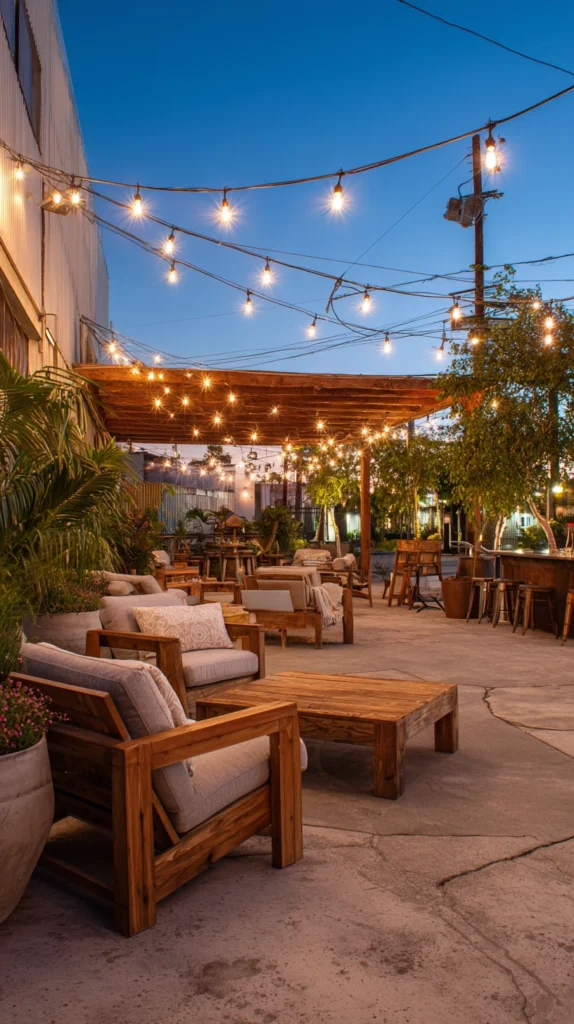
Adding a sense of enclosure without any actual structure.
Build it:
- Outdoor string lights run from the house to a nearby fence post or a single mounted pole, crisscrossing above the patio’s footprint
- Warm-toned bulbs for a cozy evening feel rather than a bright, functional white
- A timer or smart plug so the lights activate automatically each evening
Why overhead lighting matters even without a physical roof structure:
- It creates a visual ceiling plane, giving the small patio a genuine sense of enclosure and intentional boundary
- It extends the patio’s usable hours well into the evening without requiring a larger lighting investment
- It’s one of the lowest-cost upgrades on this list relative to how much atmosphere it adds
Cost breakdown: String lights and basic mounting hardware run $30 to $60 for a standard small patio footprint.
8. A Small Fire Bowl Instead of a Full Fire Pit
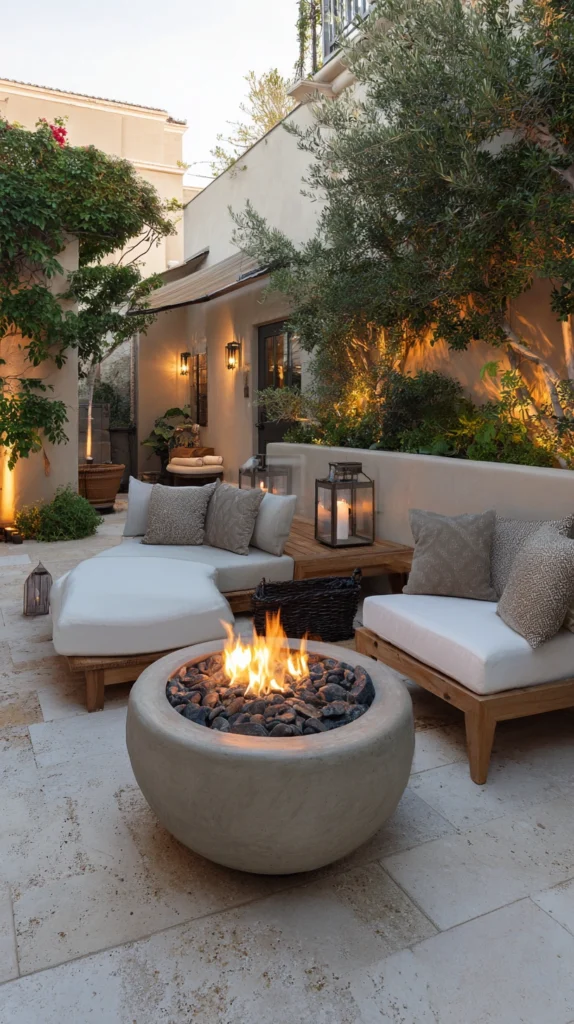
Scaling down a classic backyard feature to fit a compact space.
Build it:
- A tabletop or small standalone fire bowl, fueled by gel canisters or a small propane tank rather than wood
- Positioned centrally or to one side, depending on how much clearance the rest of the furniture requires
- Kept a safe distance from any overhead structure, string lights, or nearby plantings
Why a scaled-down fire feature works where a full pit wouldn’t:
- A small fire bowl requires a fraction of the clearance space a traditional fire pit needs
- It still delivers the same cozy, gathering-point effect on a much smaller and more appropriate scale
- Gel or propane fuel avoids the smoke and spark concerns of a wood fire in a tightly enclosed small space
Cost breakdown: A small tabletop fire bowl runs $40 to $120 depending on size and fuel type.
9. Multi-Level Planters to Layer Greenery Vertically
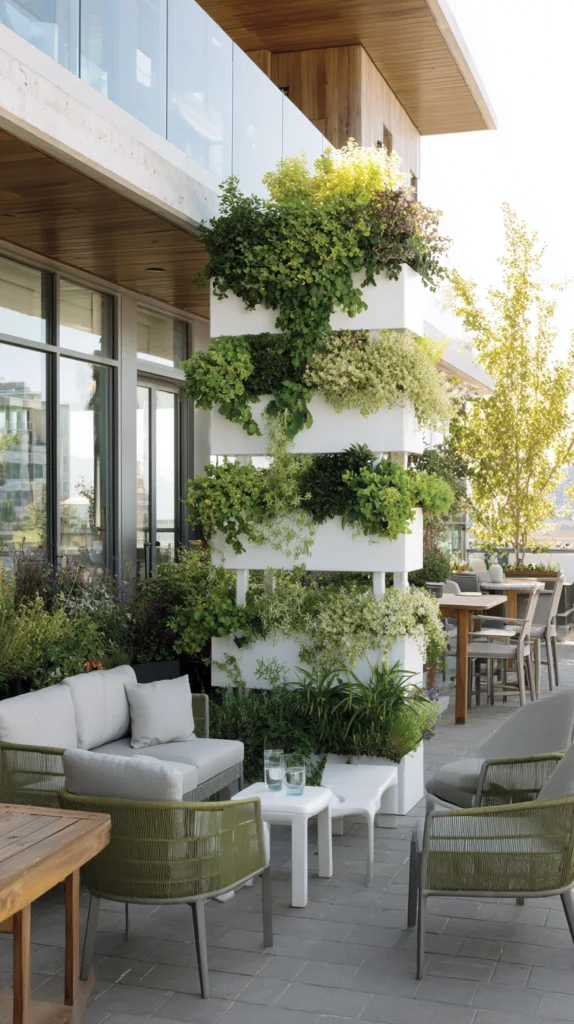
Using height variation instead of floor space to add more plants.
Build it:
- A tiered plant stand or a series of varying-height pots arranged along one wall or corner
- Taller plants positioned at the back or top tier, with trailing or low-growing plants toward the front or bottom
- Grouped into a single corner rather than spread across the whole patio’s limited floor area
Why layered height maximizes greenery without maximizing footprint:
- It uses the same visual layering principle as indoor plant styling, just scaled for outdoor use
- Grouping into one corner keeps the rest of the small floor space fully open for furniture or walking room
- It creates a lush, full look using far fewer individual pots than spreading plants out flat across the whole patio
Cost breakdown: A tiered plant stand runs $30 to $70, with individual plants adding $5 to $15 each.
10. A Fold-Down Wall-Mounted Table for Ultra-Tight Spaces
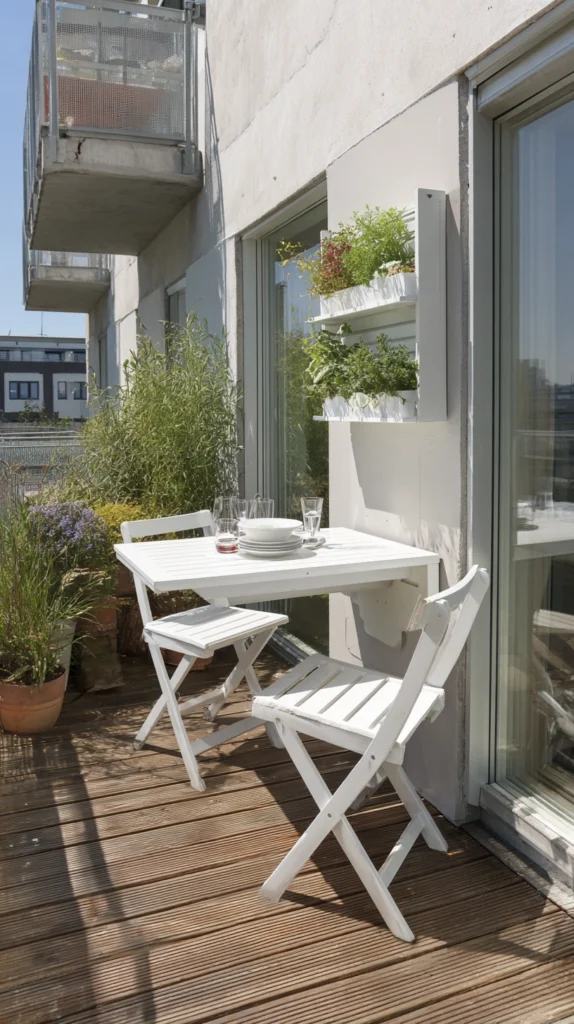
For patios too small for even a compact bistro table.
Build it:
- A hinged, fold-down table mounted directly to the exterior wall
- Folded flat against the wall when not in use, taking up essentially no floor space at all
- Paired with two lightweight folding chairs stored nearby when the table isn’t deployed
Why this solves the smallest possible patio footprints:
- It eliminates the need for any table legs or floor-standing base at all
- The folded-flat profile means the patio can still be used for other purposes, like simply standing and grilling, when the table isn’t needed
- It’s a solution specifically built for spaces too narrow for a standard bistro set to fit comfortably
Cost breakdown: A wall-mounted fold-down table runs $60 to $150 depending on size and material.
11. A Privacy Screen to Create an Enclosed Feeling
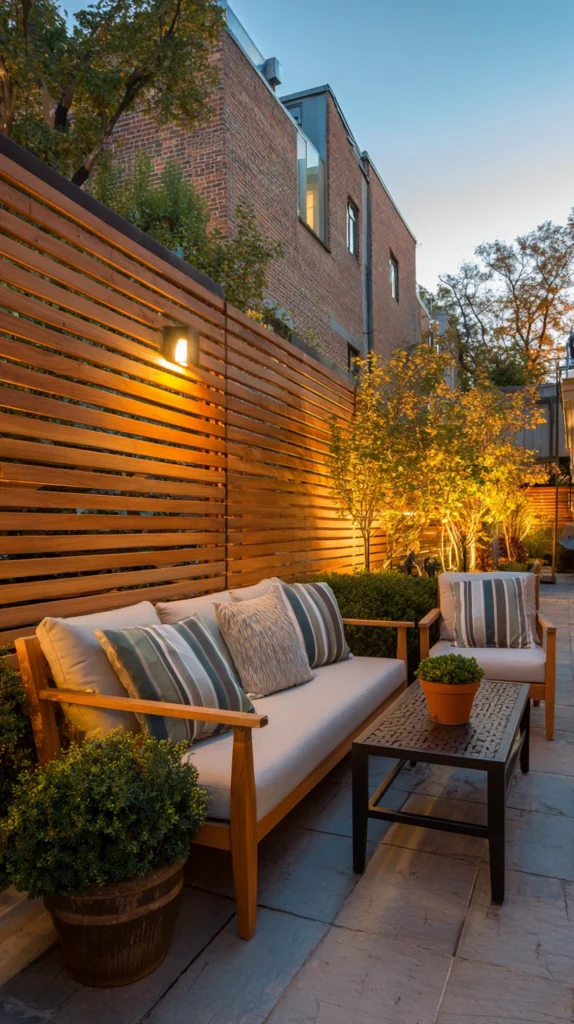
Adding a sense of seclusion without a full fence rebuild.
Build it:
- A freestanding lattice or slatted wood privacy screen positioned along the patio’s most exposed side
- Climbing plants like jasmine or clematis added at the base to soften the screen’s hard lines over time
- Sized to block direct sightlines from a neighboring yard or window without fully enclosing the space
Why privacy changes how much a small patio actually gets used:
- A patio that feels exposed to neighbors or the street often goes unused regardless of how nicely it’s furnished
- A freestanding screen solves this without the cost or permitting hassle of a full fence height increase
- Climbing plants added at the base eventually turn a purely functional screen into a genuine greenery feature
Cost breakdown: A freestanding privacy screen runs $60 to $150 depending on size and material.
12. Coordinated Container Plantings Instead of In-Ground Beds
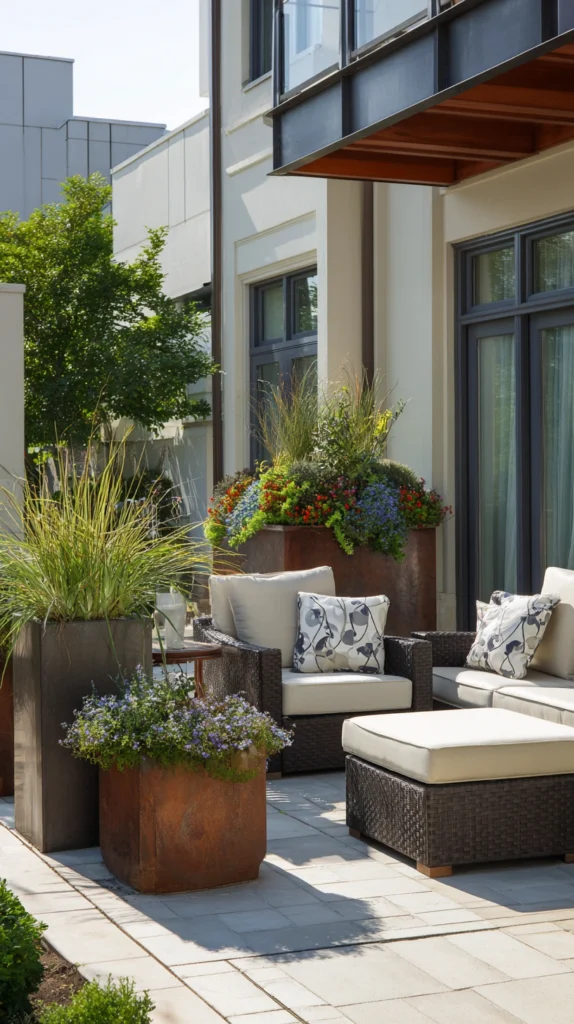
Working entirely in containers when there’s no soil access at all.
Build it:
- A small collection of matching containers in a single material and color, sized appropriately to the patio’s scale
- Plants chosen for a mix of height, texture, and bloom time rather than a single repeated variety
- Grouped rather than scattered individually, keeping the arrangement visually cohesive within the tight space
Why coordinated containers suit patios with no ground-level planting option:
- Many small patios sit entirely on concrete or pavers, making containers the only real planting option available
- Matching pots read as considerably more intentional than a mismatched collection of whatever containers were on hand
- Grouping plants together, rather than spreading them thin, creates a fuller look using fewer total containers
Cost breakdown: A coordinated set of five to six containers with plants runs $60 to $150 depending on pot size and plant selection.
13. A Single Oversized Umbrella Instead of a Full Shade Structure
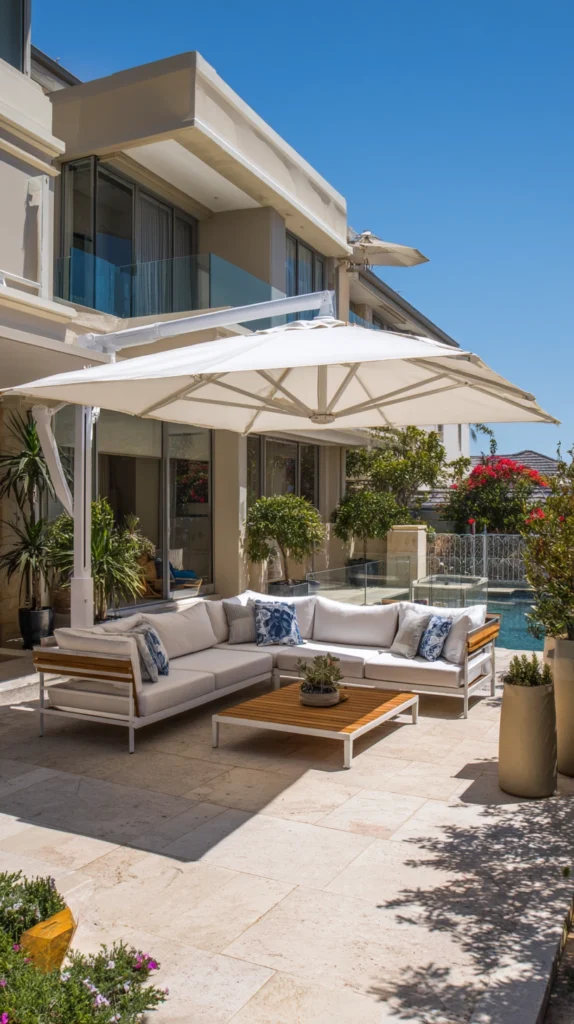
Solving the shade problem without a permanent overhead build.
Build it:
- A cantilever or side-mounted patio umbrella, positioned to avoid a center pole taking up valuable floor space
- Sized generously relative to the patio’s footprint, providing shade across the whole seating area rather than just a small circle
- A weighted or bolted base, since cantilever umbrellas require sturdier anchoring than a standard center-pole design
Why an oversized umbrella suits a small patio better than a built structure:
- It provides genuine shade coverage without the cost or permitting requirements of a pergola or roof addition
- A cantilever design keeps the base out of the main walking and seating area, unlike a traditional table umbrella with a center pole
- It can be closed or removed entirely during storms or off-season storage, unlike a permanent structure
Cost breakdown: A cantilever patio umbrella runs $150 to $350 depending on size and base quality.
14. A Cohesive Color Palette Carried Through Every Element
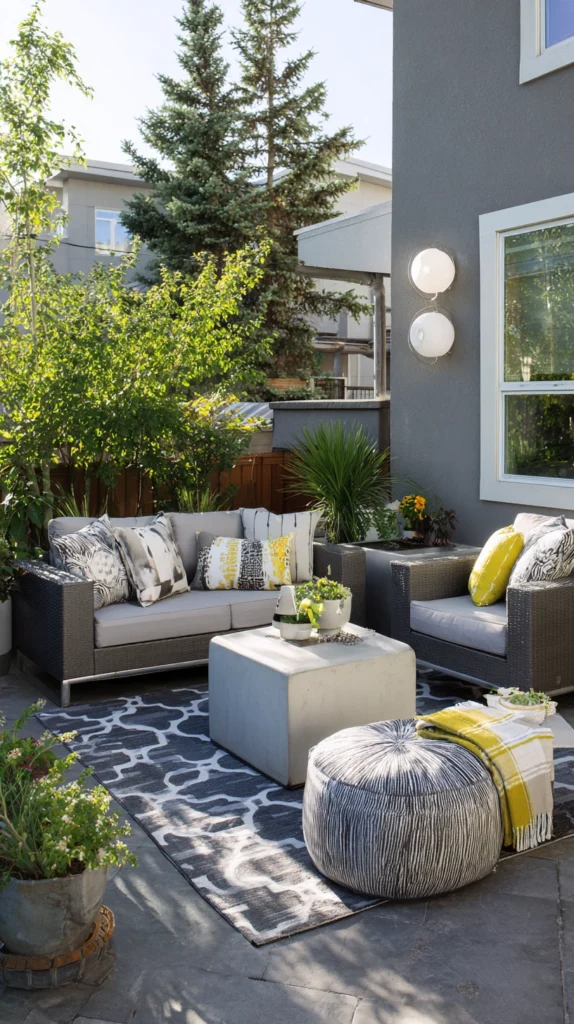
Tying the whole small space together through consistent color choices, not more objects.
Build it:
- A single color story, like terracotta and sage or navy and white, applied across cushions, pots, and any textiles
- Furniture kept in neutral tones, letting the accent color palette carry the visual interest instead
- Repeated consistently across every element on the patio, from the rug to the planters to the seating cushions
Why color coordination matters more in small spaces than large ones:
- A small patio filled with mismatched colors reads as cluttered far faster than a larger space would with the same variety
- A consistent palette makes even a handful of budget pieces look like a single considered, designer-curated set
- It’s a free styling principle, requiring no additional purchases beyond choosing colors intentionally as items are bought over time
Cost breakdown: Free as a planning principle, though it may guide which specific colored items get purchased going forward.
Getting started this weekend
You don’t need to redesign the whole patio before it starts to feel transformed.
- Start with a properly scaled seating piece, whether a bistro set or a built-in bench, sized exactly to the space
- Add string lights and a defining rug once the seating is settled
- Save larger additions like a fire bowl or privacy screen for a dedicated second phase
My own patio took one long weekend to go from an ignored concrete slab to the spot we actually use most evenings.
Budget reality
Small patio design scales from a handful of budget swaps to a fully outfitted space.
- Under $100: Statement rug, string lights, outdoor mirror, coordinated containers
- $100-250: Bistro set, tiered plant stand, wall-mounted fold-down table, small fire bowl
- $250-500: Built-in bench seating, vertical garden wall, privacy screen
- $500+: Cantilever umbrella combined with a full furniture and lighting refresh
Most of the transformation comes from correct scale and a consistent palette, not the size of the total investment.
What actually makes a small patio feel stunning
It was never really about fitting as much as possible into the space.
It’s the furniture sized exactly right for the footprint, the greenery grown vertically instead of crowding the floor, the single rug that finally gives the whole space a defined edge.
Measure the space honestly, choose pieces that actually fit it, and let the small patio do exactly what it was always capable of.