13 Tiny Kitchen Hacks for Easier Fall Camping Meals
My camper kitchen had exactly one small two-burner stove and a counter barely large enough for a cutting board for years, and every fall meal turned into the same awkward shuffle of moving one thing to make room for another. Cooking anything beyond the simplest meal felt like a puzzle with no good solution.
Tried buying one more gadget to solve it once. A small appliance that promised to help ended up taking up the one open counter spot I actually needed for prep, solving nothing about the underlying space problem. Then I stopped buying single gadgets and started rethinking how the whole tiny kitchen actually worked, what tools earned their space, what could multitask, and what process changes solved more than any single product could. Fall camping meals finally come together without the constant counter shuffle.
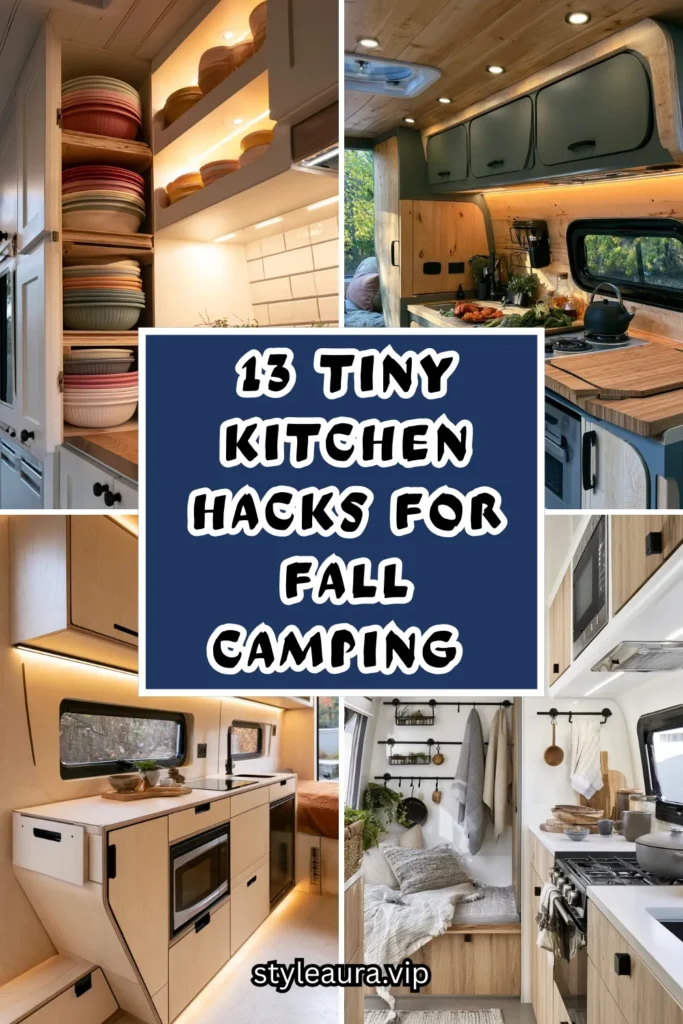
Why Buying More Gadgets Resists Solving a Tiny Kitchen’s Real Problem
The more-stuff problem:
What adding another single-purpose gadget does:
- Takes up scarce counter or cabinet space for a function that may only get used occasionally
- Solves one narrow task while ignoring the broader workflow problem of a genuinely tiny kitchen
- Often duplicates a function a multitasking tool already covers
- Resists the real constraint at play, which is space, not a lack of available products
The process-and-multitasking principle:
- A real tiny kitchen hack changes how a task gets done, or chooses a tool that does several jobs at once
- This matters more in a camper than almost anywhere else, since the space constraint is so much more severe than a home kitchen’s
- This is a different mindset than simply shopping for more kitchen products, and a camper rewards that different mindset specifically
- A single new gadget added without considering what it replaces or how it fits the existing space often makes the kitchen more crowded, not more functional
My revelation: A real tiny camper kitchen hack changes a process or chooses a genuinely multitasking tool, not just adds another single-purpose gadget to an already tight space. The workflow needs to improve, not just the inventory of stuff on hand.
1. A One-Pot Fall Meal Rotation Planned Before the Trip
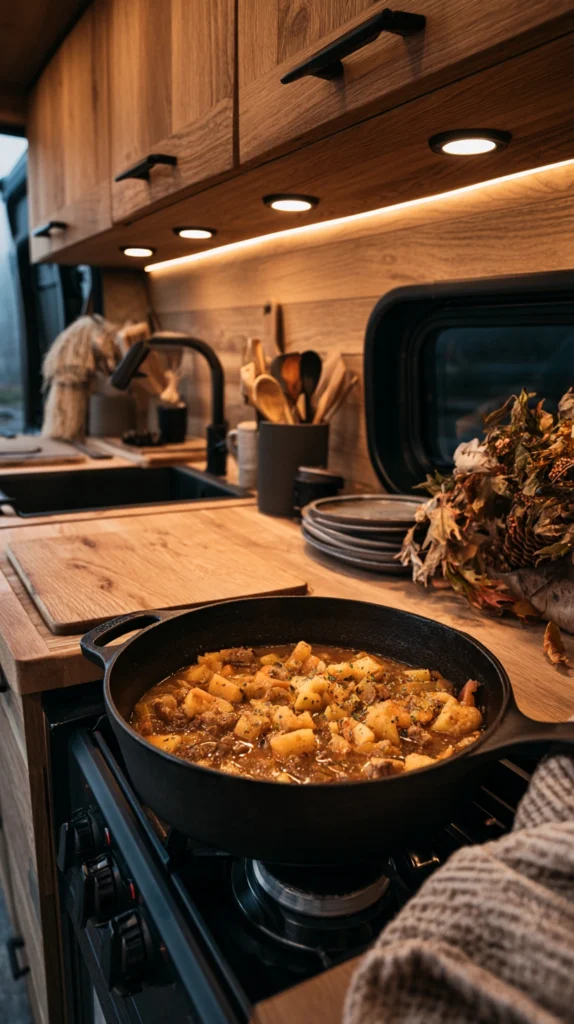
Planning every fall camping meal around dishes that can be fully prepared in a single pot or pan, decided and listed before ever leaving home.
Why planning around equipment limits, not recipes, changes everything
The constraint-first-planning principle:
- Most meal planning starts with what sounds good, then tries to figure out how to cook it in a tiny kitchen afterward
- Planning instead around what a single pot or pan can actually accomplish eliminates the mismatch between ambition and equipment before it ever becomes a problem at the campsite
- This single shift in planning order solves more frustration than any individual tool or gadget could on its own
Best one-pot fall meal types
- A hearty chili or stew, made entirely in one Dutch oven or large pot
- A skillet hash with sausage, root vegetables, and eggs
Budget: free, simply a shift in how meals get planned before the trip
My one-pot planning result
Planning every meal for my last fall trip specifically around what could be made in my single large pot, rather than choosing recipes first and improvising equipment solutions later, eliminated nearly all of the mid-cooking frustration that used to come with every meal.
One-Pot Planning Tips
Write the full ingredient list against the actual pot size before shopping:
- A recipe that looks reasonable on paper can still overflow a smaller camping pot
- Checking ingredient volume against the actual pot’s capacity before buying groceries avoids a frustrating mid-cooking realization
2. A Cutting Board That Doubles as a Stove Cover
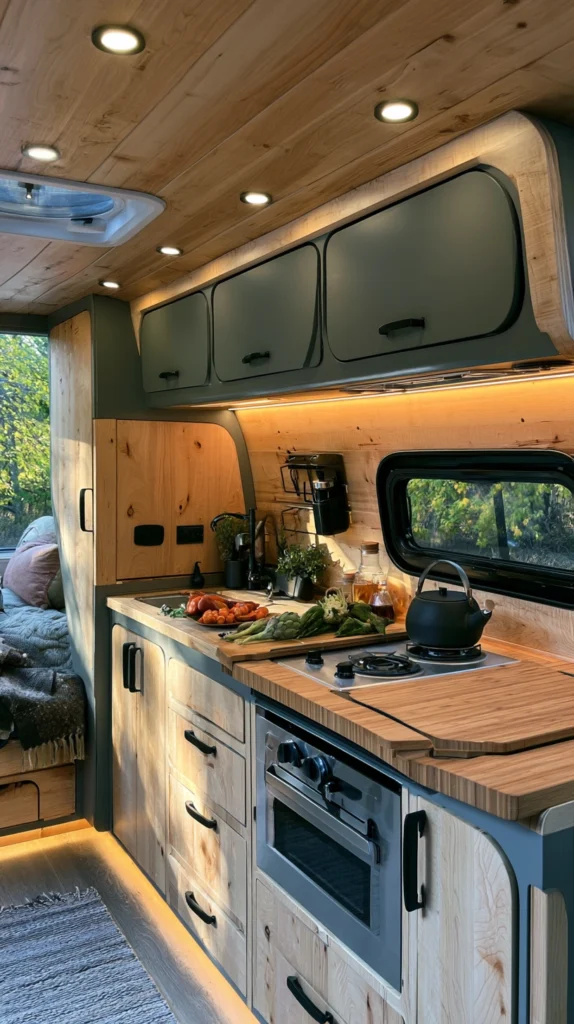
A rigid cutting board, sized specifically to rest over the stovetop burners when not actively cooking, instantly adding usable counter space.
Why this single swap solves the most common tiny kitchen complaint
The dual-surface principle:
- A camper’s stovetop sits unused for much of any given meal’s prep time, yet still occupies valuable counter footprint
- A cutting board sized to rest securely over the burners turns that same footprint into usable prep space the moment the stove is not actively in use
- This is one of the highest-impact, lowest-cost hacks available for any tiny camper kitchen
Best cutting board choices for this dual use
- A rigid bamboo or plastic board, measured precisely against the stovetop’s dimensions
- A board with small rubber feet, preventing it from sliding on the metal stovetop surface
Budget: $15-30 for a properly sized rigid cutting board
My stove cover board result
Measuring my stovetop and buying a cutting board sized to rest securely over both burners doubled my actual usable counter space the moment I am not actively cooking, solving the single biggest space complaint I had with this kitchen.
Stove Cover Board Tips
Confirm the board is heat-resistant if used immediately after cooking:
- A board placed directly onto recently used burners without adequate cool-down time risks warping or scorching
- Allowing a few minutes of cooling, or choosing a board rated for higher heat tolerance, avoids this issue
3. A Magnetic Knife Strip Mounted to the Backsplash
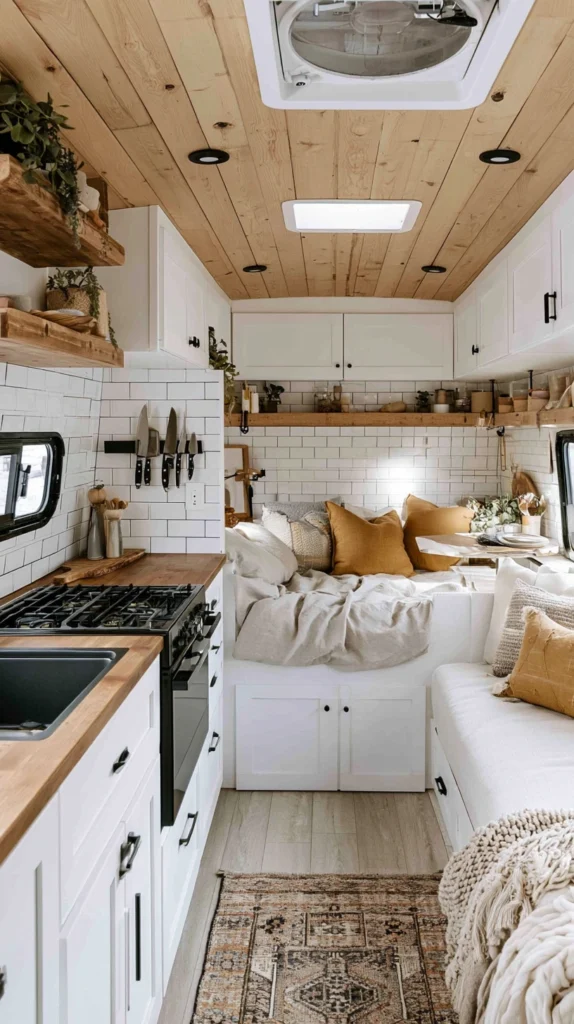
A slim magnetic strip, mounted to any metal trim or backsplash area, holding knives vertically rather than in a drawer.
Why vertical knife storage solves a recurring drawer problem
The drawer-space-recovery principle:
- A drawer holding loose knives in a tiny camper kitchen often becomes one of the most space-inefficient storage spots in the entire unit
- A magnetic strip moves that storage vertically, freeing the drawer for other items while keeping knives both organized and immediately accessible
- This is a particularly safe storage method as well, since knives stay visible rather than buried loose among other utensils
Best magnetic strip placement
- Mounted to any confirmed magnetic metal trim near the stove or prep area
- Positioned at a height that keeps blades safely out of reach of young children if relevant
Budget: $12-20 for a basic magnetic knife strip
My knife strip result
Mounting a magnetic strip to the metal trim beside my stove freed an entire drawer that had been dedicated to a tangle of loose knives, and the strip itself keeps every blade visible and easy to grab without digging.
Knife Strip Tips
Test the trim’s magnetic strength before final mounting:
- Not every metal surface in a camper provides equally strong magnetic hold
- A quick test with the actual knives intended for the strip, not just a small magnet, confirms the mount will hold securely during travel
4. A Collapsible Silicone Mixing Bowl Set
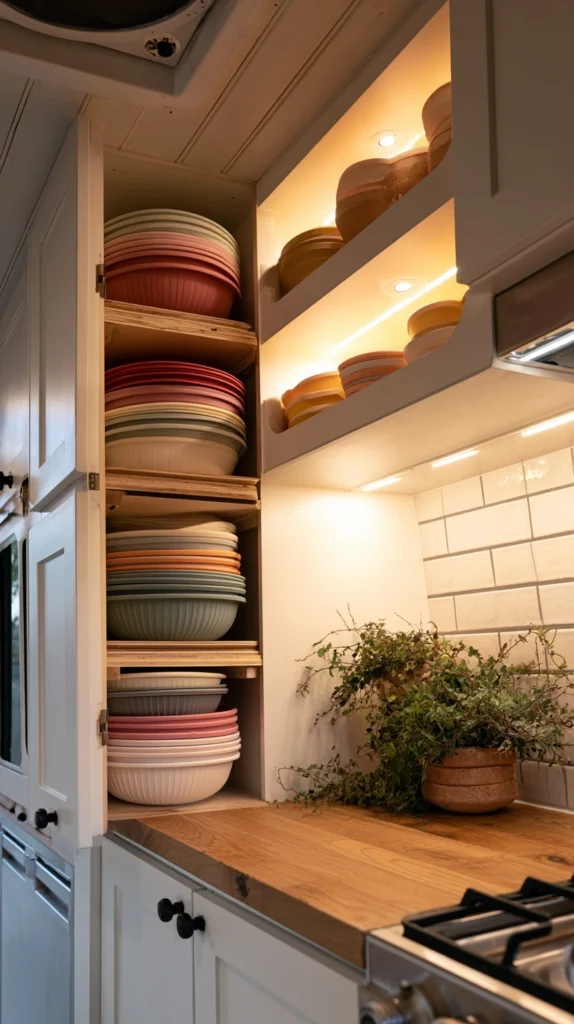
A nested set of collapsible silicone mixing bowls, used for prep and storage, flattening down to a fraction of their expanded size when not in use.
Why collapsible cookware solves storage rather than just function
The expand-and-flatten principle:
- Standard rigid mixing bowls, even when nested, still occupy a fixed cabinet footprint regardless of whether they are in use
- Collapsible silicone versions provide the same mixing and prep function while flattening to a fraction of that footprint when stored
- This single swap can free up meaningful cabinet space across several bowls at once, rather than just one item
Best collapsible bowl set choices
- A nested set of three to four sizes, all collapsible to a similar flat profile
- A set with secure, non-slip bases for stable mixing despite the flexible material
Budget: $20-40 for a quality collapsible silicone bowl set
My collapsible bowl result
Switching from rigid plastic mixing bowls to a collapsible silicone set freed nearly half the cabinet space those bowls previously occupied, all while still functioning exactly the same for actual mixing and prep tasks.
Collapsible Bowl Tips
Check the base for stability before relying on it for vigorous mixing:
- Some collapsible bowls can tip or wobble more than a rigid bowl during energetic stirring or whisking
- A model with a wider, weighted, or non-slip base performs more reliably for active mixing tasks
5. A Single Cast Iron Skillet Used for Stovetop and Campfire
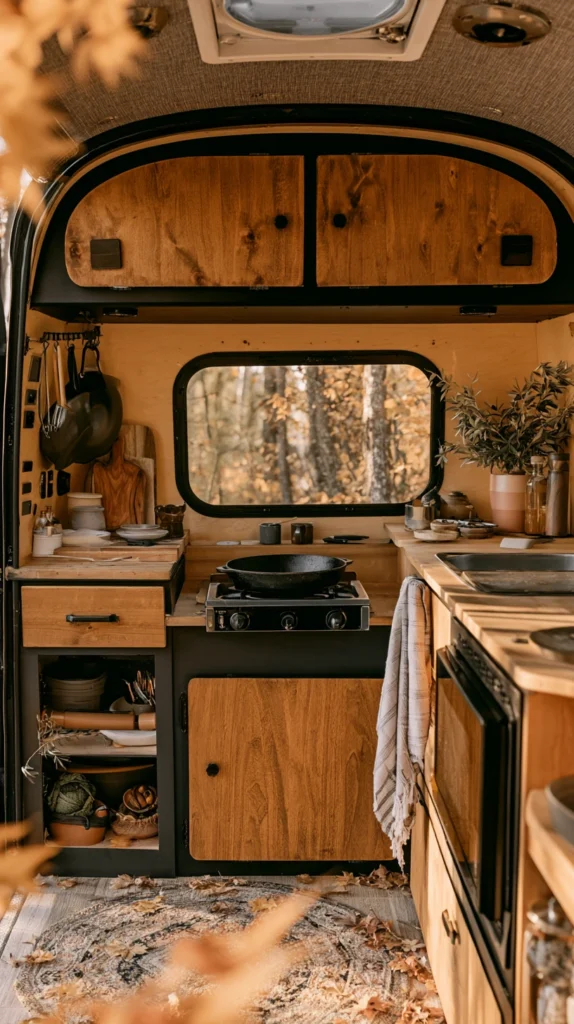
One properly seasoned cast iron skillet, used interchangeably on the camper’s stovetop and directly over a campfire, eliminating the need for separate cookware sets.
Why one versatile pan beats two specialized ones
The single-tool-two-environments principle:
- Many camping kitchens carry separate cookware for stovetop use and campfire use, doubling the storage burden for largely overlapping function
- A single well-seasoned cast iron skillet handles both environments capably, removing the need for a duplicate set entirely
- This consolidation matters more in a camper’s tiny kitchen than it would in a home kitchen with abundant storage
Best cast iron skillet choices for dual use
- A mid-sized skillet, large enough for real cooking but still manageable to lift and clean
- A skillet with a long handle, useful for safely positioning over actual campfire flame
Budget: $25-50 for a quality cast iron skillet suited to both uses
My dual-use skillet result
Replacing my separate stovetop pan and campfire grill grate with one cast iron skillet used for both has cut my cookware storage nearly in half, while still producing better results than either specialized piece managed individually.
Dual-Use Skillet Tips
Re-season after extended use over an open flame:
- Direct campfire heat can be harder on a skillet’s seasoning than a controlled stovetop burner
- A quick re-seasoning step after a trip involving heavy campfire use keeps the skillet performing well for the next outing
6. A Repurposed Mason Jar System for Dry Goods
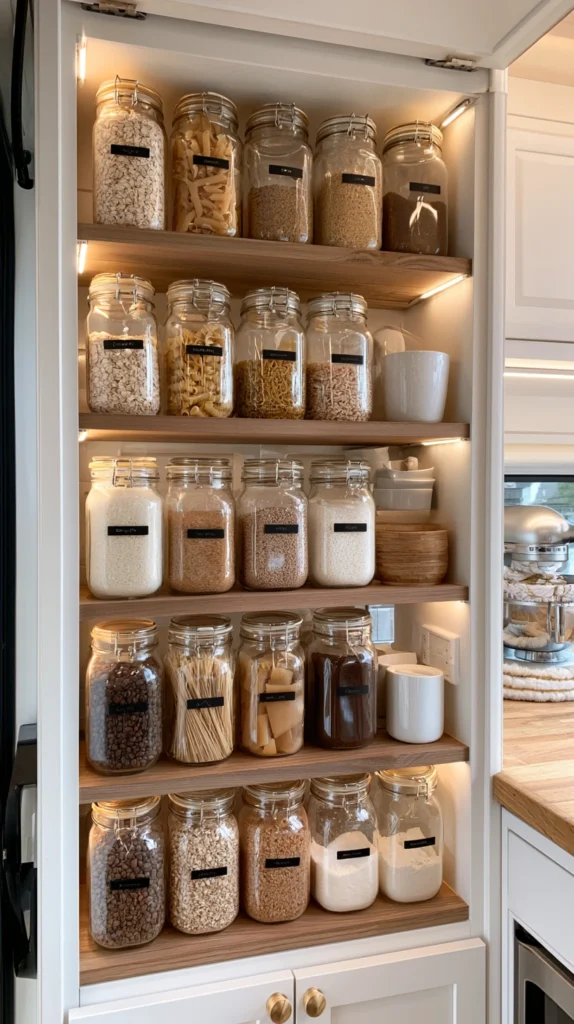
Standard mason jars, already commonly owned, used specifically for dry good storage in place of original bulky packaging.
Why repackaging dry goods solves a volume problem, not just a tidiness one
The volume-reduction principle:
- Original packaging for items like flour, oats, or pasta is rarely designed with space efficiency in mind
- Transferring these items into uniform mason jars often reduces the total volume required for the same amount of food, while also stacking more efficiently in a small cabinet
- This hack requires no new purchase at all if jars are already on hand from regular household use
Best dry goods for jar storage
- Oats, rice, and pasta, all of which compress more efficiently in a jar than original bags
- Coffee grounds or tea, benefiting from the jar’s better seal alongside the space savings
Budget: free, using jars already on hand, or a few dollars for a small new set
My mason jar result
Transferring my camping pantry’s oats, rice, and coffee into uniform mason jars reduced the total cabinet space those items required noticeably, while also keeping everything visibly identifiable at a glance.
Mason Jar Tips
Label jars clearly, even for visually similar dry goods:
- Flour and certain starches can look quite similar once transferred into matching jars
- A simple label on the jar’s lid or side prevents any mix-up during meal prep
7. A Single Multi-Tool Utensil Replacing Several Single-Purpose Tools
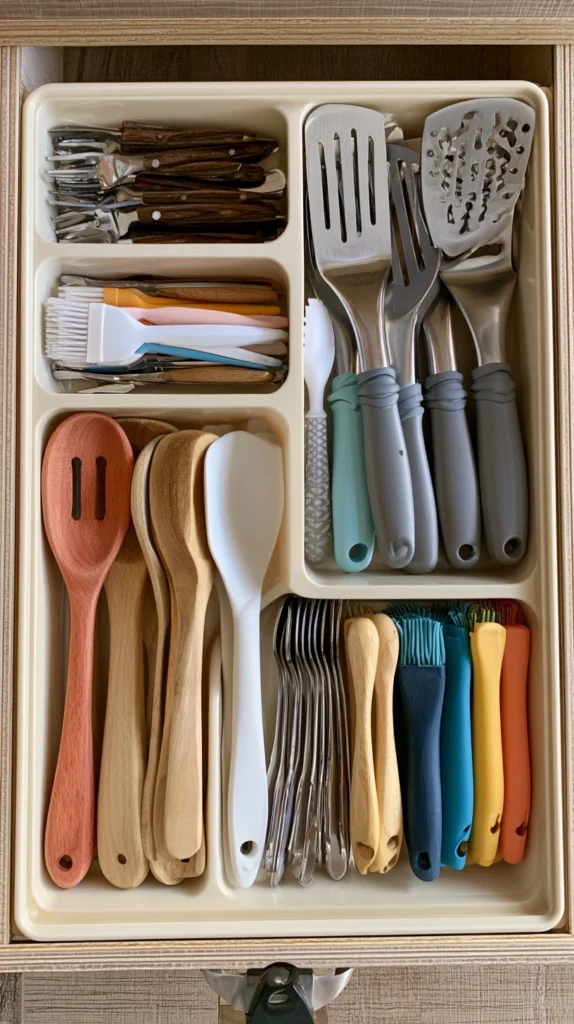
One well-designed multi-purpose kitchen tool, chosen specifically to replace several single-function utensils that would otherwise each need their own storage space.
Why consolidating tools matters more than each tool’s individual quality
The fewer-better-tools principle:
- A drawer full of single-purpose utensils, a dedicated whisk, a separate spatula, a specific tongs, a particular ladle, adds up to significant space in a kitchen that has very little to spare
- Choosing one multi-purpose tool, even if slightly less specialized than a dedicated version, often performs adequately for camping cooking while freeing considerable drawer space
- This principle matters less in a home kitchen with abundant storage and considerably more in a tiny camper galley
Best multi-tool choices
- A combination spatula-tongs tool for flipping and turning
- A multi-function tool combining a can opener, bottle opener, and small blade
Budget: $15-30 for a quality multi-purpose kitchen tool
My multi-tool result
Replacing four separate single-purpose utensils with one well-designed combination spatula-tongs tool freed up enough drawer space to finally store my knife set properly, all without any meaningful loss in actual cooking function.
Multi-Tool Tips
Test the tool’s actual function before fully committing to it:
- A multi-tool that performs every function only adequately may still be worth it for the space savings, but it is worth confirming before relying on it for an important meal
- A quick test at home, before the trip, confirms it will actually work as needed at the campsite
8. A Hanging Mesh Produce Bag for Vertical Storage
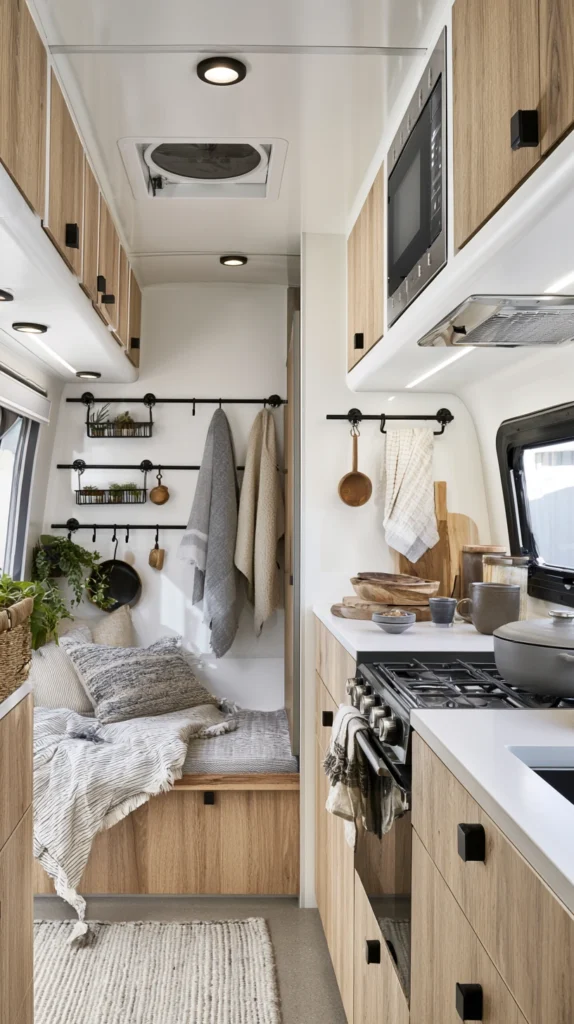
A hanging mesh produce bag or basket, suspended from a cabinet edge or hook, used to store fruits and vegetables vertically rather than on counter or shelf space.
Why vertical produce storage solves a common counter clutter problem
The hanging-storage principle:
- Fresh produce often ends up scattered loosely across whatever flat surface is available, quickly consuming a tiny kitchen’s limited counter space
- A hanging mesh bag moves that storage into unused vertical space, typically beneath a cabinet or in an unused corner
- The mesh material also allows for better airflow than a sealed container, helping produce stay fresh slightly longer
Best hanging produce storage choices
- A tiered hanging mesh basket set for multiple produce types
- A single larger hanging bag for bulkier items like a squash or a bag of apples
Budget: $12-22 for a hanging mesh produce storage system
My hanging produce result
Hanging a tiered mesh basket beneath my upper cabinet for apples, onions, and a small squash cleared my counter of the loose produce that used to crowd out actual prep space, while also keeping everything better ventilated than it had been in a closed bin.
Hanging Produce Tips
Position the hanging basket clear of head height while standing at the stove:
- A basket hung too low in a tight galley can become a constant bump hazard
- Testing the hung height against actual movement around the kitchen before finalizing placement avoids this ongoing annoyance
9. A Pre-Chopped and Frozen Meal Prep Strategy Before Departure
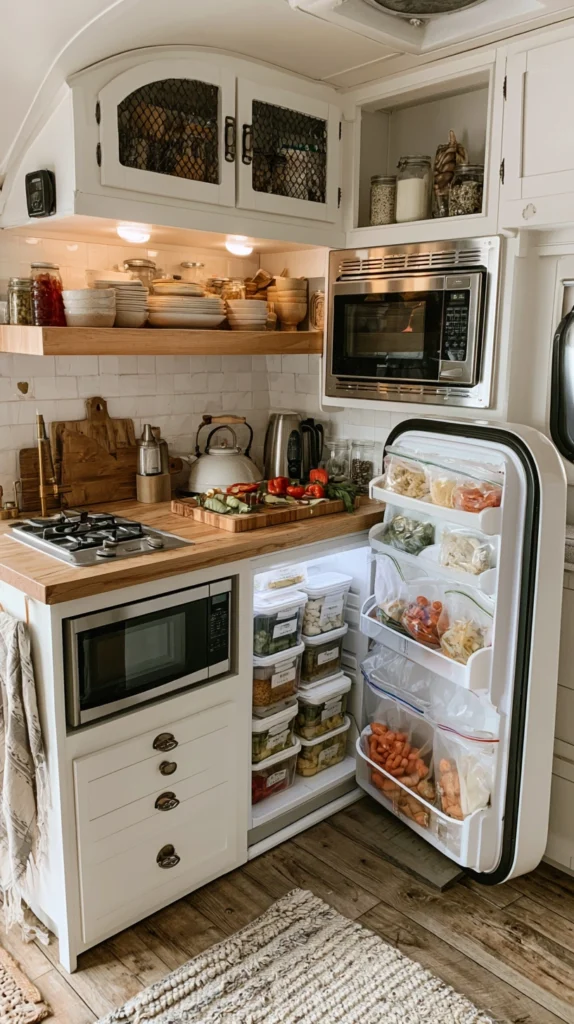
Chopping, portioning, and freezing key ingredients for planned meals before ever leaving home, rather than prepping fresh at the campsite.
Why shifting prep work to before the trip solves a tiny kitchen’s real bottleneck
The prep-location-shift principle:
- A home kitchen has vastly more counter space, better lighting, and more tools than any camper galley
- Doing the bulk of chopping, portioning, and even partial cooking at home, then freezing or refrigerating for the trip, shifts the most space- and time-intensive work to the location best equipped for it
- This single planning shift often does more to ease actual camp cooking than any single tool or gadget purchase could
Best items to pre-prep and freeze
- Diced onions, peppers, and other aromatics, pre-measured per recipe
- Pre-formed burger patties or meatballs, ready to cook directly from frozen or thawed
Budget: free, simply a shift in when and where prep work happens
My pre-prep result
Chopping and freezing pre-measured portions of onions, peppers, and garlic at home before my last fall trip meant camp cooking involved almost no actual chopping at all, just combining pre-prepped components in the pot, freeing my tiny counter for the parts of cooking that actually needed it.
Pre-Prep Tips
Label each frozen portion with both contents and intended recipe:
- Several similar-looking frozen bags can become difficult to distinguish once stored together in a small cooler or freezer
- A simple label noting both the contents and which meal it is intended for prevents mix-ups at the campsite
10. A Single Insulated Cooler Organized by Meal Day, Not by Food Type
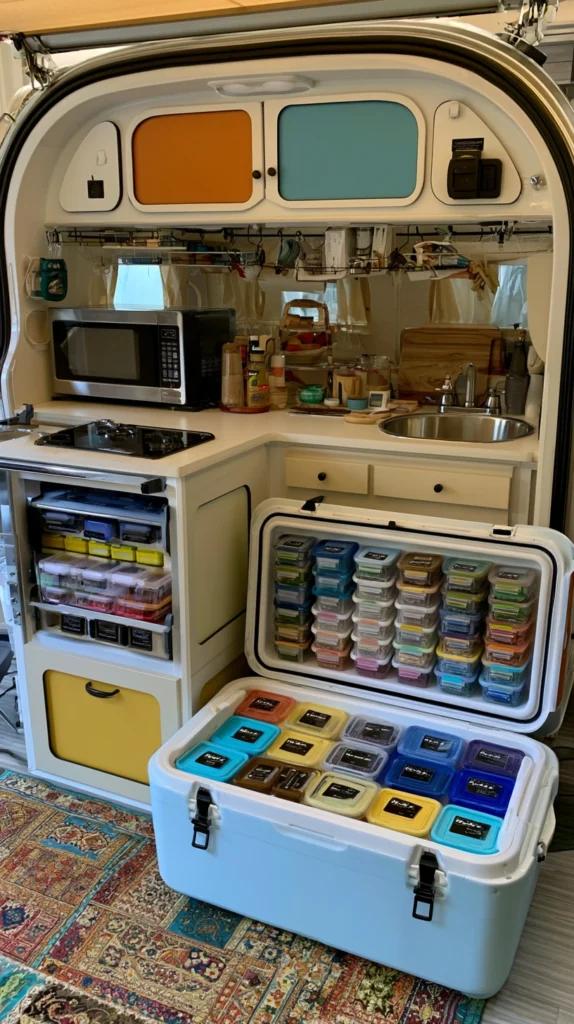
Packing the cooler in layers or sections corresponding to specific meal days, rather than grouping by food category alone.
Why organizing by day solves a different problem than organizing by type
The retrieval-efficiency principle:
- A cooler organized only by food type, all proteins together, all vegetables together, often requires digging through several layers to assemble a single meal
- Organizing instead by which day or meal each item belongs to means everything needed for one meal sits together, minimizing how long the cooler stays open and how much digging is required
- This approach also helps maintain cooler temperature more consistently, since less time is spent with the lid open searching for scattered ingredients
How to organize by meal day
- Group each day’s ingredients into one bag or container before the trip
- Place the earliest-needed day’s meals nearest the top or most accessible section
Budget: free, simply a different cooler packing approach
My meal-day cooler result
Packing my cooler in clearly labeled bags by specific meal day, rather than by ingredient type, has cut down dramatically on how long the cooler lid stays open during meal prep, and the cooler now seems to hold its temperature noticeably longer as a direct result.
Meal-Day Cooler Tips
Place the first day or two of meals at the very top:
- The earliest meals get accessed soonest and most frequently in the trip’s first days
- Positioning these at the top, with later meals deeper in the cooler, minimizes unnecessary digging during the most active early cooking days
11. A Folding Camp Table Used Specifically as Overflow Prep Space
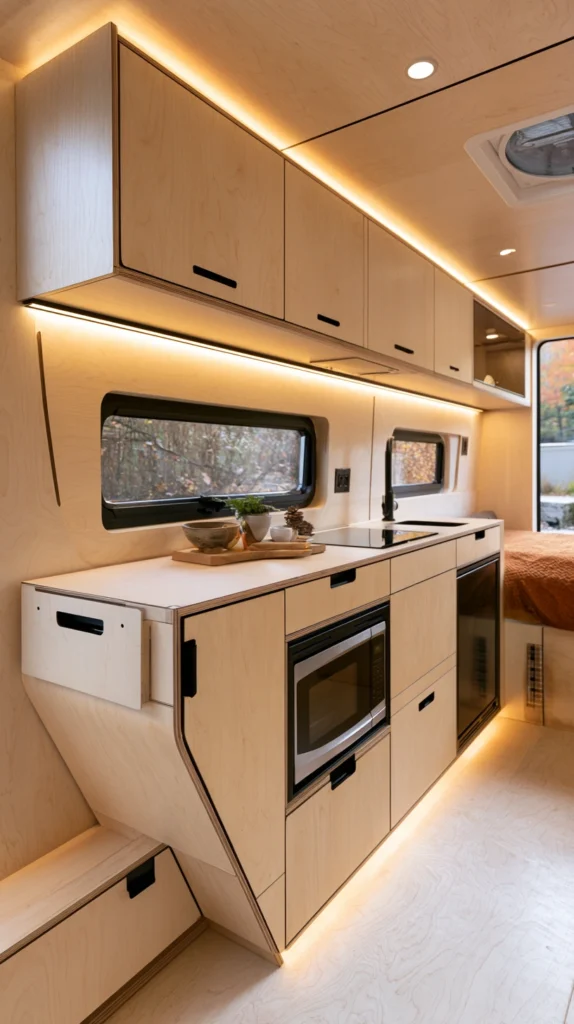
A separate, dedicated folding table, set up just outside the camper specifically for food prep when the interior counter cannot accommodate a larger meal.
Why overflow prep space sometimes belongs outside the kitchen entirely
The outdoor-extension principle:
- No amount of clever interior reorganization fully solves a camper kitchen’s hard physical size limit
- A folding table, set up just outside during actual meal prep, extends usable prep space beyond what the interior kitchen alone can offer
- This solution works particularly well for larger fall meals, such as a full chili spread or a bigger group dinner, that genuinely exceed the interior counter’s capacity
Best folding table choices for this use
- A lightweight, easily stored folding table sized for prep rather than full dining
- A table with a wipeable, food-safe surface
Budget: $25-50 for a basic folding prep table
My overflow table result
Setting up a simple folding table just outside my camper specifically for prep work during larger fall meals has solved a space limitation no amount of interior reorganizing alone ever managed to fully address.
Overflow Table Tips
Bring prep work back inside promptly if weather shifts:
- An outdoor prep setup is vulnerable to sudden rain or wind common during fall camping trips
- Keeping an eye on the forecast and being ready to move prep back inside quickly avoids a disrupted meal
12. A Repurposed Tackle Box for Spices and Small Seasonings
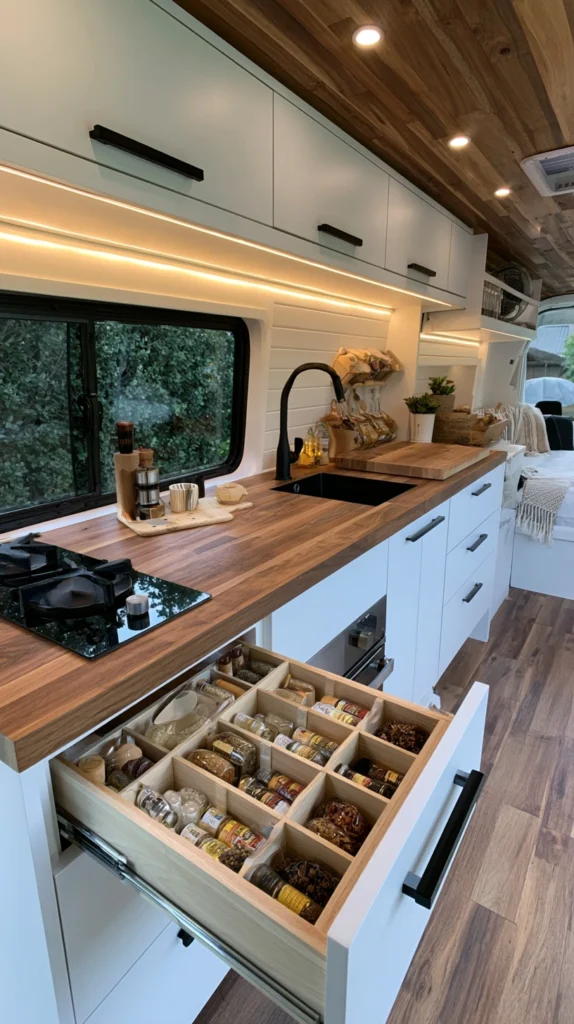
A small fishing tackle box, with its many individual compartments, repurposed specifically to organize spices and small seasoning packets for camp cooking.
Why a tackle box suits this purpose better than a standard spice rack
The compartmentalized-and-stackable principle:
- A standard spice rack assumes a fixed, flat mounting surface that a camper kitchen often cannot spare
- A tackle box’s individual compartments organize many small spice containers within one compact, stackable unit that stores easily in a cabinet
- This repurposed solution also tends to cost considerably less than a camping-specific spice organizer marketed at a premium
Best tackle box and spice combinations
- A tackle box with adjustable compartment dividers, allowing flexibility for different spice container sizes
- Small reusable spice jars or empty pill organizer compartments filled with exactly the seasonings needed for the trip
Budget: $10-20 for a basic tackle box, if not already owned
My tackle box result
Repurposing an old fishing tackle box to organize small spice jars for camp cooking solved my seasoning storage problem completely, and the adjustable compartments mean I can reconfigure it slightly depending on which spices a specific trip’s meal plan requires.
Tackle Box Tips
Wash the tackle box thoroughly before its first food-related use:
- A box previously used for actual fishing gear may carry residue unsuitable for food storage
- A thorough wash with hot soapy water, followed by full drying, ensures the box is genuinely food-safe before its new role begins
13. A Fully Combined Tiny Kitchen Workflow System
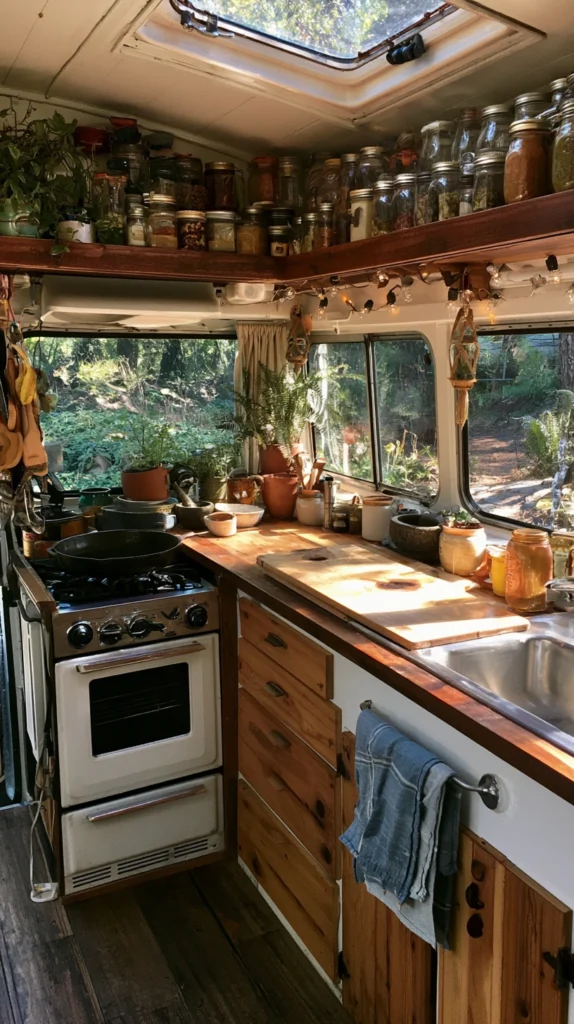
Combining a one-pot meal plan, a dual-purpose stove cover board, pre-trip prep and freezing, and a meal-day organized cooler into one complete, streamlined fall camp cooking approach.
Why combining several workflow changes outperforms any single hack alone
The complete-workflow philosophy:
- Several of the hacks on this list (meal planning around equipment, multi-use surfaces, pre-trip prep, smarter cooler organization) address different stages of the cooking process, from planning through actual execution at the campsite
- Relying on just one hack improves one specific stage but leaves the rest of the process exactly as cramped and inefficient as before
- This is the most complete and most genuinely transformative version of a tiny camper kitchen overhaul, addressing the entire workflow rather than a single bottleneck
How the combination works together
The one-pot meal plan and pre-trip prep (the planning layer):
- Address what gets cooked and how much actual at-camp prep will be required, before ever leaving home
The stove cover board and collapsible bowls (the space-multiplication layer):
- Ensure the limited physical counter and cabinet space stretches as far as possible during actual cooking
The meal-day cooler organization (the retrieval-efficiency layer):
- Minimizes wasted time and open cooler lids during each individual meal
Building the full combined system
- Start with one-pot meal planning and pre-trip prep, since these decisions shape everything that follows
- Add the stove cover board and collapsible bowls to maximize physical workspace during cooking
- Organize the cooler by meal day before departure
- Adjust the system slightly after each trip based on what worked and what did not
Budget: $60-150 for the physical tools involved, since much of this system relies on planning and process changes rather than purchases alone
My fully combined result
Combining one-pot meal planning, pre-chopped frozen ingredients, a stove cover prep board, and a cooler organized by meal day transformed how my fall camping meals come together, less digging, less counter shuffling, and considerably less frustration than any single change had managed on its own in previous seasons.
Full System Tips
Adjust the system slightly after each trip, not just once:
- The first attempt at a fully combined system will likely reveal a few specific adjustments worth making
- Treating each trip as a chance to refine the system slightly, rather than expecting it to be perfect immediately, leads to a noticeably better setup by the second or third attempt
Choosing Your Tiny Kitchen Hack Approach
By the specific problem to solve:
- Not enough counter space: stove cover board (idea 2), folding overflow table (idea 11)
- Too much cookware and gadget clutter: dual-use skillet (idea 5), multi-tool utensil (idea 7)
- Disorganized cooler or pantry: meal-day cooler organization (idea 10), mason jar system (idea 6)
By how much pre-trip preparation time is available:
- Limited prep time: stove cover board (idea 2), tackle box spice organizer (idea 12)
- Ample prep time before departure: pre-chopped frozen ingredients (idea 9), one-pot meal planning (idea 1)
By budget level:
- Lower budget: mason jar system (idea 6), tackle box spice organizer (idea 12), one-pot planning (idea 1)
- Moderate budget: stove cover board (idea 2), collapsible bowls (idea 4), magnetic knife strip (idea 3)
- Higher budget: cast iron skillet (idea 5), folding overflow table (idea 11), fully combined system (idea 13)
The non-negotiable rules across every option:
Always:
- Plan meals around the kitchen’s actual equipment limits, not the other way around
- Choose multi-purpose tools over single-function gadgets whenever a tiny kitchen’s space is the binding constraint
- Shift as much prep work as reasonably possible to before the trip, when a full home kitchen is still available
Never:
- Add a new single-purpose gadget without first confirming it genuinely outperforms a tool already on hand
- Pack a cooler by food category alone if minimizing open-lid time matters for keeping contents cold
- Assume a tool that works well in a spacious home kitchen will automatically suit a much smaller camper galley
Remember: a real tiny camper kitchen hack changes a process or chooses a genuinely multitasking tool, not just adds another single-purpose gadget to an already crowded space, and the fall camping meals that come together most smoothly are the ones planned around the kitchen’s actual limits from the very start.