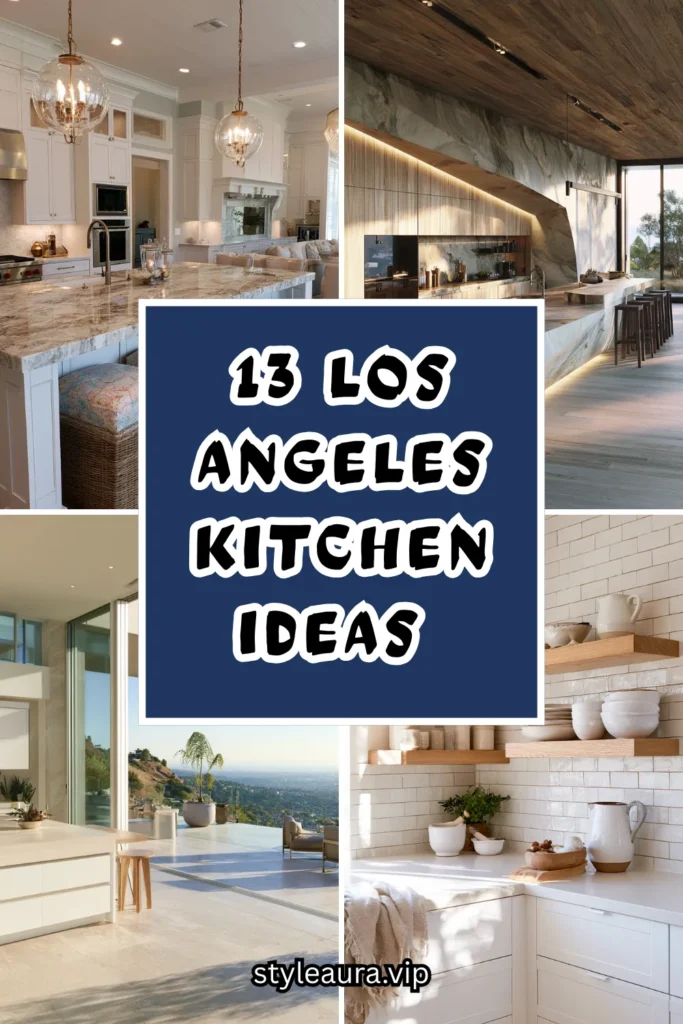
13 Los Angeles Kitchen Ideas That Are Bright, Open, and Built for the California Lifestyle
Los Angeles has a relationship with its kitchens that is unlike any other city in the world — a space where the boundary between cooking and living, between indoor and outdoor, between the functional and the genuinely beautiful has been more thoroughly and more naturally dissolved than anywhere else. The Los Angeles kitchen is not a room that exists separately from the life happening around it.
It is the centre of that life — the space where breakfast happens in morning light that streams through glass doors already open to the garden, where dinner is prepared while conversation flows between the kitchen island and the terrace beyond, where the architecture of the room is as considered and as expressive as any other space in the house because California living demands nothing less.
The climate makes everything possible. The light makes everything look beautiful. And the city’s design culture — shaped by the intersection of Hollywood glamour, modernist architectural tradition, Mexican craft heritage, and the particular aesthetic confidence of a city that has always done things its own way — produces kitchens of extraordinary variety and extraordinary quality. These thirteen ideas draw from the best of the Los Angeles kitchen, each one capturing a specific quality of the California lifestyle in a space designed to receive it completely.
1. Open the Kitchen Fully to the Outdoor Space
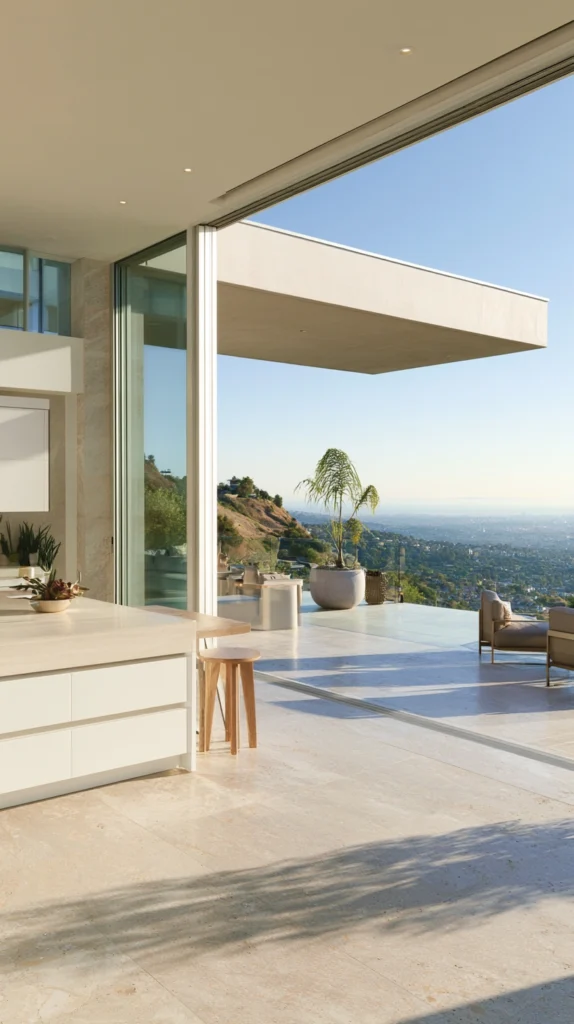
The defining characteristic of the Los Angeles kitchen — the one that distinguishes it most completely from every other kitchen in every other city — is its relationship to the outdoor space beyond it, the seamless connection between interior cooking and living and the terrace, the garden, or the pool deck that California’s climate makes not just possible but genuinely natural and genuinely daily.
Steel-frame folding or sliding glass doors opening the kitchen’s entire rear wall onto the outdoor living area eliminate the boundary between inside and outside entirely, creating a continuous indoor-outdoor living space that functions as a single room through the eight or nine months of Los Angeles weather that makes outdoor living genuinely comfortable.
Even without a full glass wall, a wide pass-through window above the kitchen counter that opens onto the terrace allows food and conversation to flow freely between the cooking space and the outdoor gathering area, achieving much of the same connective quality at a fraction of the architectural intervention.
2. Install a Large Central Island as the Kitchen’s Social Heart
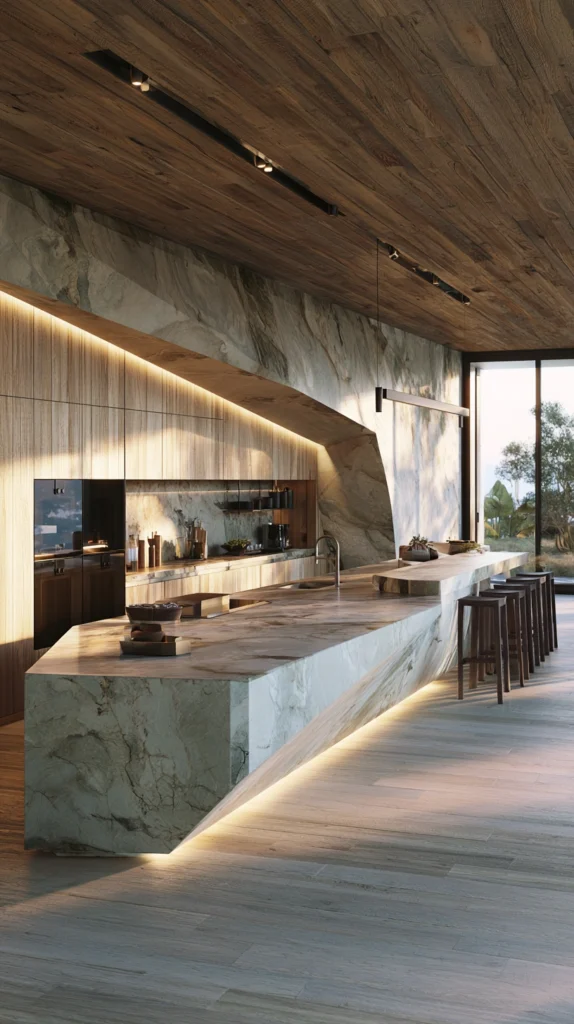
The kitchen island in a Los Angeles home is not a preparation surface with seating attached — it is the social centre of the entire indoor-outdoor living space, the point around which breakfast, lunch, cocktail hour, and casual dinner all organise themselves naturally in a city where the kitchen is genuinely the most important room in the house and the island is the kitchen’s most important element.
Size it generously — a minimum of two metres in length, preferably two and a half or three — in a material that rewards the constant daily contact of a kitchen that is used seriously and used constantly: honed Calacatta marble, warm quartzite, or a thick concrete top that develops patina and character with use rather than requiring careful preservation.
Add bar height seating on the terrace-facing side so guests seated at the island are oriented toward the outdoor space beyond — the view from the island stool in a Los Angeles kitchen should be the garden, the pool, or the sky.
3. Choose White Oak Cabinetry for Warmth and California Character
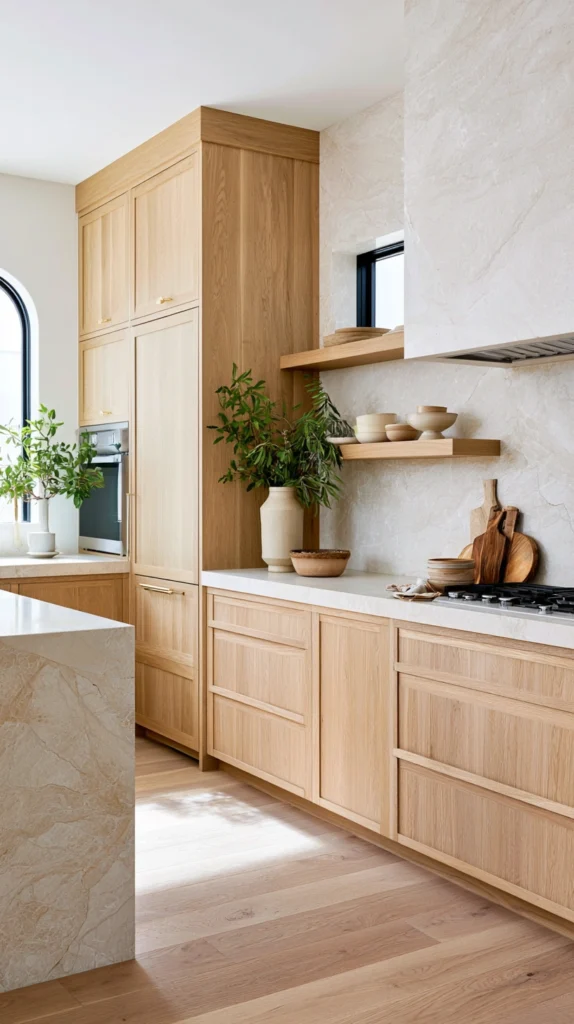
White oak — its grain distinctively straight and open, its colour sitting in the warm zone between pale honey and cool grey depending on the finish applied, its surface developing a beautiful amber warmth over years of use — is the cabinetry material most completely associated with the contemporary California kitchen aesthetic and the one that connects a Los Angeles kitchen to the state’s design identity most naturally and most effortlessly.
Flat-front white oak cabinet doors in a natural or lightly oiled finish, their grain reading clearly across the full cabinet face, create the warm material character that Los Angeles kitchens balance against white or pale stone surfaces with particular skill — the combination of warm timber and cool stone creating the visual tension that defines California kitchen design at its most refined. Keep the hardware minimal — simple integrated pulls or touch-latch mechanisms that allow the timber grain to be the cabinet’s entire visual statement.
4. Install Skylights for Year-Round Natural Light
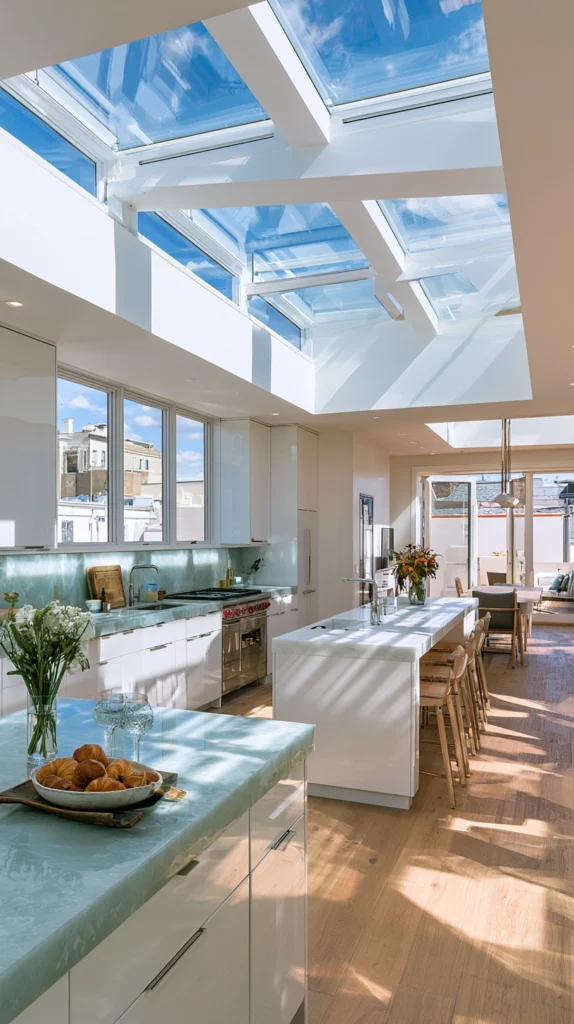
The Los Angeles kitchen that already benefits from the city’s extraordinary natural light can be elevated further still by the addition of one or more skylights positioned above the cooking and preparation zone — introducing a quality of direct overhead daylight that transforms the kitchen’s atmosphere at every hour of the day and that connects the interior space to the movement of the California sky in a way that no wall window, however generously sized, can achieve.
A skylight above the island creates a pool of natural light at the kitchen’s primary work and social surface that varies through the day as the sun moves across the California sky, warm and golden in the morning, bright and clear at noon, amber and directional in the late afternoon.
In a Los Angeles kitchen where natural light is already abundant through wall glazing, the skylight adds a vertical quality of illumination that eliminates the last remaining shadows from the preparation surface and creates a kitchen that is genuinely, completely, beautifully lit by natural light from above and from the sides simultaneously.
5. Use Limewash or Venetian Plaster on the Kitchen Walls
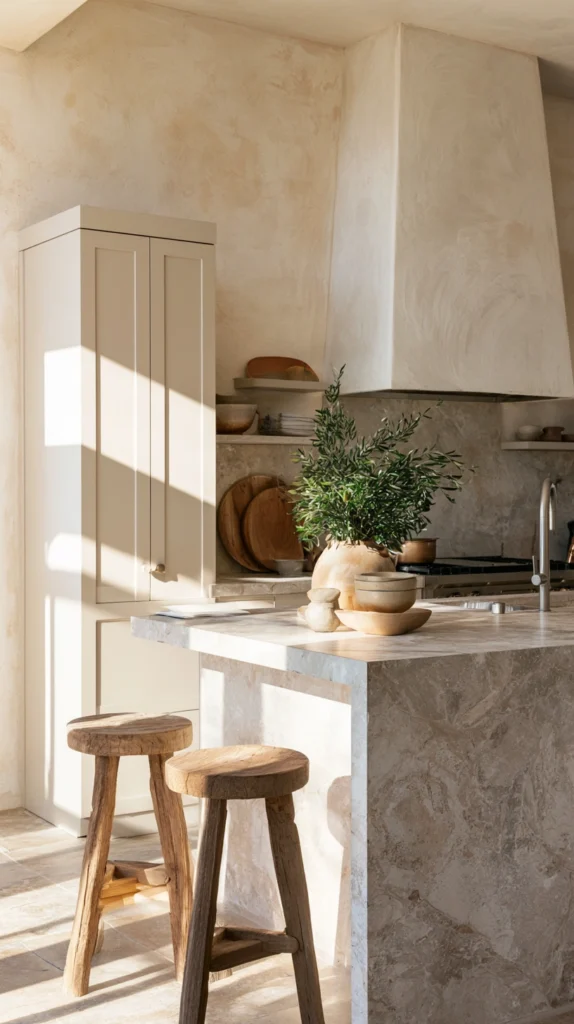
The kitchen walls in a Los Angeles home — the surfaces beyond the cabinetry and the backsplash that are visible from the adjacent living spaces and from the outdoor areas connected to the kitchen — deserve a finish of genuine material character rather than the standard smooth paint that most kitchens default to, and limewash or Venetian plaster provides that character with a depth and a warmth that connects the kitchen to the California design aesthetic with complete naturalness.
A limewash wall in a warm white or the palest dusty terracotta — its characteristic slightly translucent, multi-layered surface absorbing and returning light differently at every hour of the day — gives the Los Angeles kitchen the organic, slightly aged quality of a California farmhouse or a Baja coastal home that has been lived in and loved over a long period.
The material’s ability to be applied quickly, dried rapidly, and sealed for kitchen use makes it a practical as well as an aesthetically ideal wall treatment for the residential Los Angeles kitchen.
6. Incorporate Open Shelving in Natural Timber or Plaster
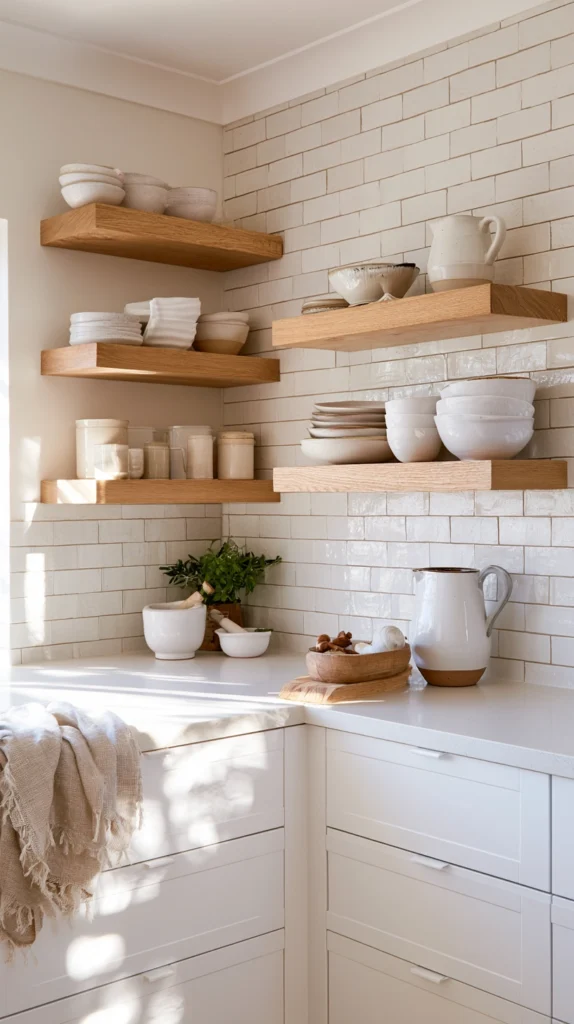
Open shelving in a Los Angeles kitchen — simple floating shelves in white oak, walnut, or a natural plaster finish replacing the upper cabinets on at least one wall of the kitchen — creates the open, airy, visually connected quality that the California kitchen aesthetic demands and that closed upper cabinetry consistently prevents by filling the visual space between the counter and the ceiling with an opaque wall of cabinet doors.
The open shelf creates a visual depth where the closed cabinet created a visual wall, allows the carefully selected everyday objects of the kitchen — ceramic vessels, quality glassware, simple bowls, small plants.
To contribute to the room’s visual character rather than being concealed behind doors, and connects the kitchen visually to the adjacent living spaces in a way that makes the room feel genuinely part of a continuous open-plan living environment rather than a separate functional zone within it. Edit the shelf display with genuine discipline — the open shelf that is beautifully organised is a design asset, and the open shelf that accumulates without curation is the opposite.
7. Choose a Statement Hood as the Kitchen’s Architectural Focal Point
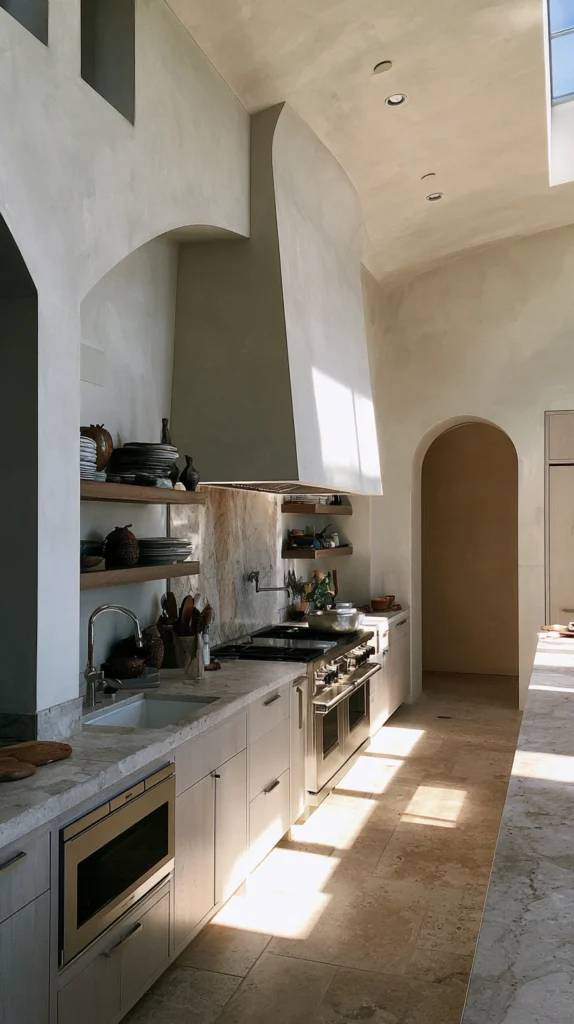
The range hood in a Los Angeles kitchen — the element that occupies the most prominent position in the room’s primary sightline, that rises from the cooking surface to the ceiling above and commands the visual centre of the kitchen wall — is the single element most deserving of genuine architectural ambition and genuine material investment in a space where the standard stainless steel box insert is the most consistently disappointing default option available.
A custom plaster hood — hand-formed, slightly organic in its profile, painted in the same limewash finish as the surrounding walls so it reads as an architectural extension of the room rather than an applied fixture — is the Los Angeles kitchen’s most characteristic and most beautiful range hood design, its smooth, sculptural form anchoring the kitchen’s primary wall with genuine visual authority.
Arched, domed, and barrel-vault hood profiles all suit the California design vocabulary with equal naturalness, each one creating a kitchen focal point of considerable beauty that the standard manufactured hood entirely fails to deliver.
8. Install Terracotta or Zellige Tile on the Backsplash
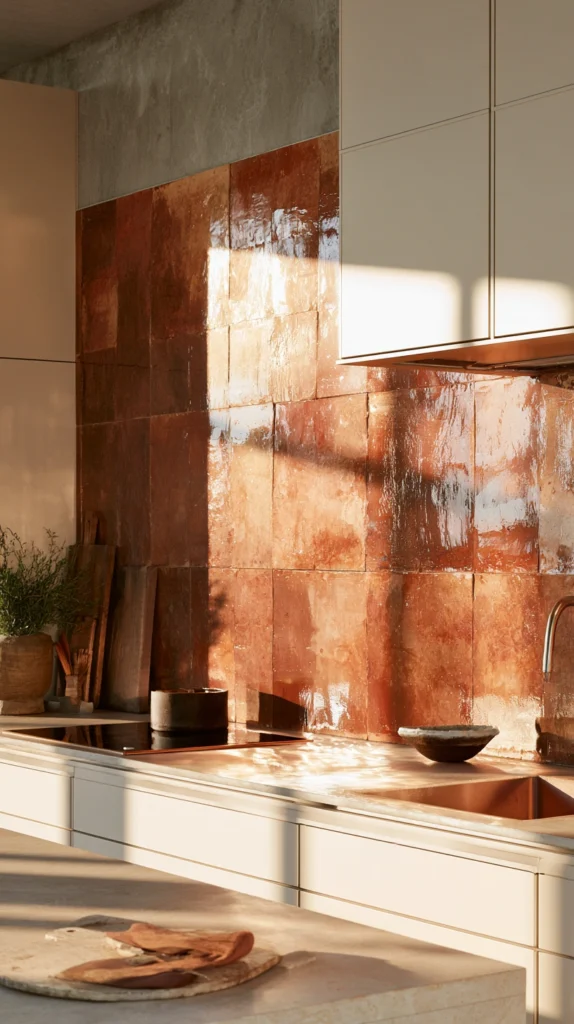
The backsplash in a Los Angeles kitchen — the surface most visible from both the kitchen interior and the adjacent living and outdoor spaces — should be chosen for its material warmth and its connection to the craft traditions of California’s cultural geography as much as for its practical performance.
Handmade terracotta tile in a warm amber tone, its surface slightly irregular with the evidence of the forming and firing process, creates a backsplash of genuine material authenticity that connects the Los Angeles kitchen to the Mexican craft heritage that runs through the city’s design culture with a directness and a beauty that mass-produced tile cannot replicate.
Zellige in a warm white or a sandy cream tone — its characteristic slightly uneven surface catching and fragmenting light through the day in the way that only hand-applied glaze on a textured base can achieve — is an equally beautiful and equally craft-connected alternative that suits the Los Angeles kitchen with the same naturalness and the same sense of geographical and cultural belonging.
9. Bring in Live Herbs and Edible Planting
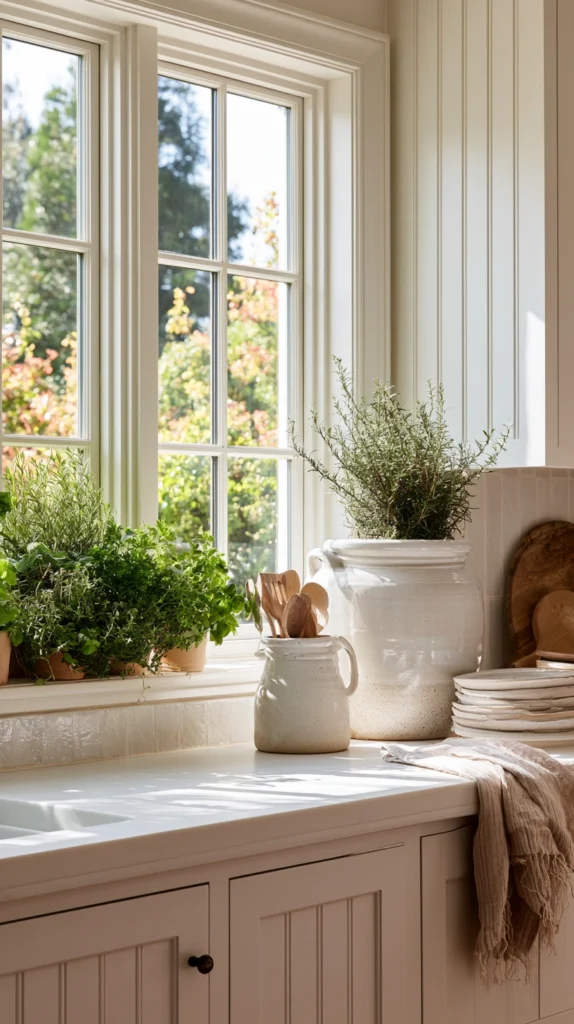
A Los Angeles kitchen without living plants — without the herbs growing on the windowsill above the sink, the small citrus tree in a terracotta pot beside the open glass door, the trailing rosemary cascading from a shelf beside the backsplash — is a kitchen that has not fully committed to the California lifestyle that its architecture and its climate make so completely available.
Fresh herbs growing within arm’s reach of the preparation surface connect the daily act of cooking to the garden and the season in a way that dried herbs in jars cannot approach — the basil torn directly from a pot on the counter, the rosemary stripped from a stem cut thirty seconds before it is needed, the lemon thyme rubbed between the fingers and held to the nose before it goes into the pan.
Install a simple herb shelf above the kitchen window in the most light-filled position available, plant generously in the varieties used most frequently, and replace herbs that become leggy or exhausted with the same ease and the same frequency that cut flowers are replaced on a dining table.
10. Use Concrete Countertops for an Artisanal California Edge
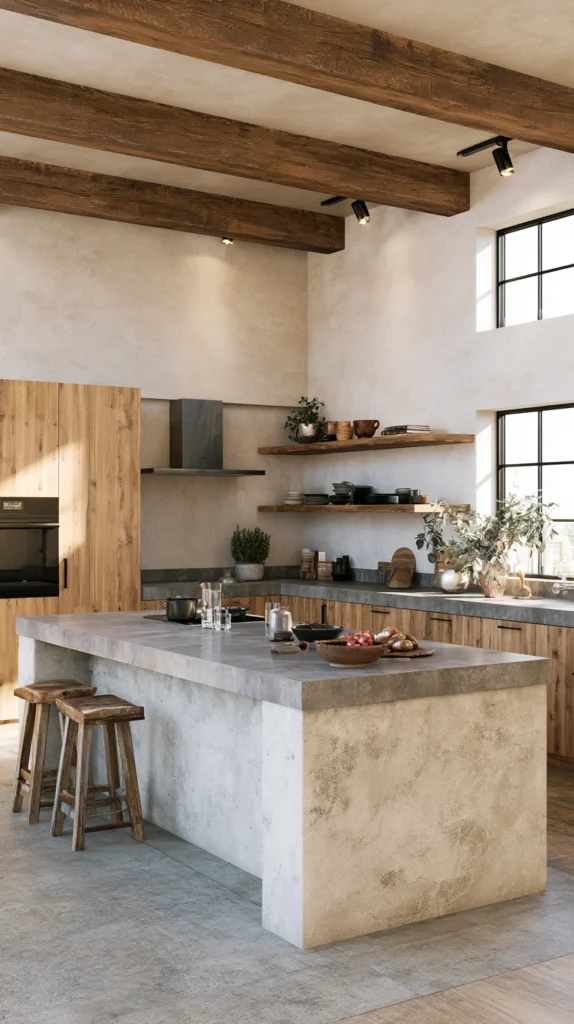
Poured concrete countertops — cast in place or cast and installed as pre-formed slabs, their surface sealed with a penetrating food-safe sealer and finished to a smooth or lightly textured surface — are the countertop material that most directly expresses the artisanal, slightly industrial, genuinely craft-connected dimension of the Los Angeles design aesthetic, a city that has always valued the visible evidence of making and the honest character of materials used without excessive processing or refinement.
The concrete countertop develops a patina over years of kitchen use — slight colour variations from the sealer’s interaction with cooking oils and acids, the occasional hairline crack that the material’s natural movement produces over time — that gives it a quality of lived-in character that polished stone countertops, with their requirement for preservation and their resistance to marking, never quite achieve.
Pair with white oak cabinetry and a warm plaster or limewash wall for the Los Angeles kitchen material combination that reads most completely as genuinely Californian in both its aesthetic sensibility and its material honesty.
11. Design for Casual, Frequent Entertaining
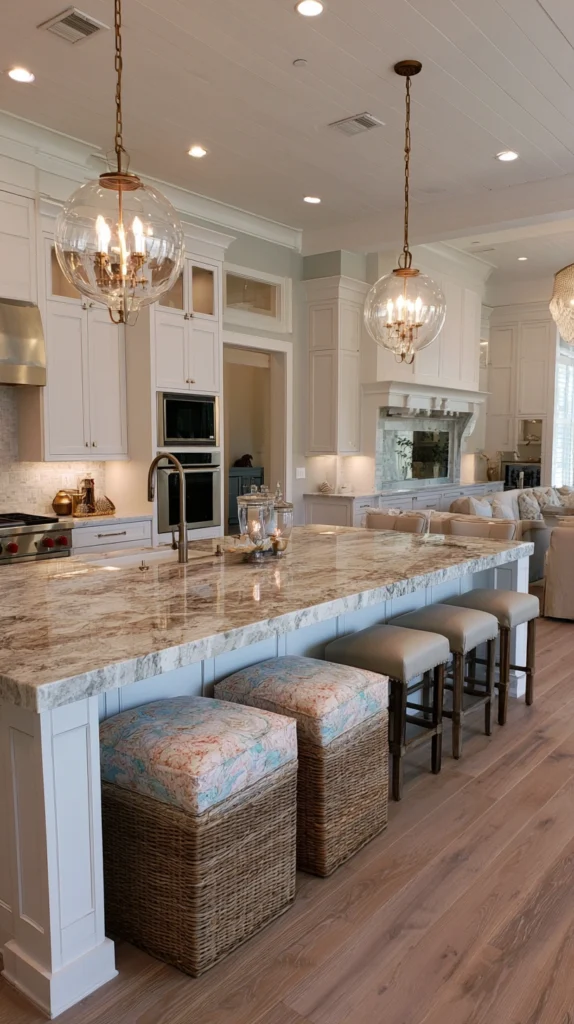
The Los Angeles kitchen is designed around a specific understanding of entertaining — not the formal dinner party of a European dining culture but the casual, frequent, drop-in gathering of a city where people’s social lives happen largely outdoors, where the boundary between a Tuesday evening and a Saturday afternoon is more permeable than in most cities, and where the kitchen’s ability to serve an impromptu gathering of eight with the same ease it serves a family breakfast is a genuine design requirement rather than an aspiration.
This understanding shapes every practical decision in the kitchen — the island sized for six bar stools rather than four, the refrigerator specified with the capacity for generous entertaining rather than daily household use alone, the storage system designed so that entertaining equipment is accessible and organised rather than buried in a sequence of poorly planned cabinets.
The Los Angeles kitchen designed for casual frequent entertaining is the one that makes the transition from ordinary Tuesday evening to impromptu gathering feel effortless — because the space itself has been designed to handle it without friction.
12. Add a Banquette or Breakfast Nook for Morning Ritual
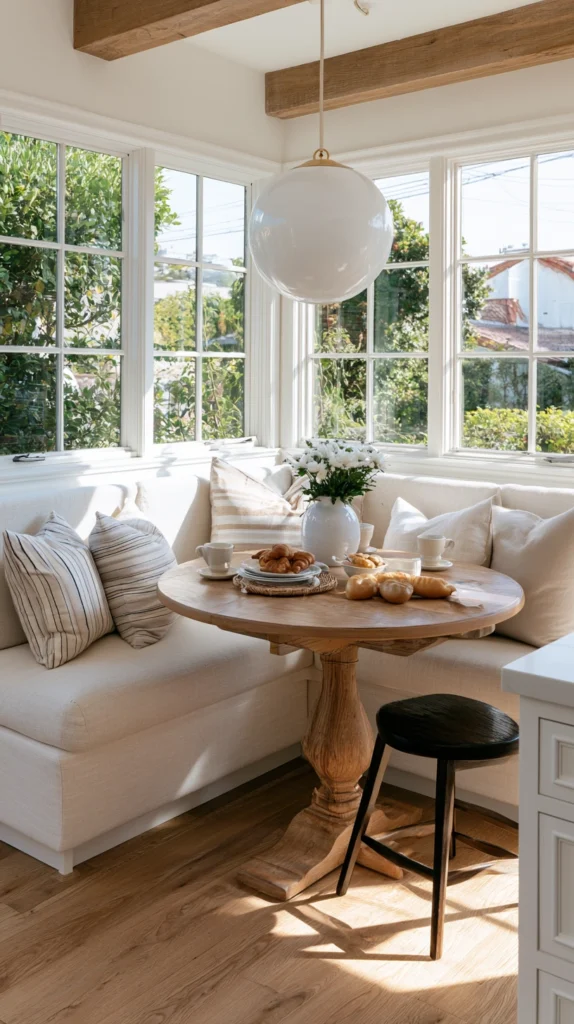
A built-in banquette — a cushioned bench seat set into a corner or against a wall of the kitchen, accompanied by a simple timber table and a pair of chairs or a continuation of the bench on the opposite side — creates the dedicated morning ritual space that the Los Angeles lifestyle demands and that a kitchen island with bar stools, however generously proportioned, does not quite provide with the same quality of settled, comfortable, genuinely seated ease.
The banquette morning nook positioned beside the window or the open glass door to the garden — catching the California morning light, looking out toward the outdoor space that is already beginning its day — is the kitchen space that makes the Los Angeles morning genuinely extraordinary rather than simply convenient.
Upholster the banquette cushion in a durable indoor-outdoor fabric in a warm neutral, add a simple linen pillow against the wall corner, and the breakfast nook becomes the most used and most loved corner of the entire kitchen regardless of the quality or the generosity of every other element surrounding it.
13. Keep the Overall Aesthetic Light, Warm, and Deliberately Unfinished
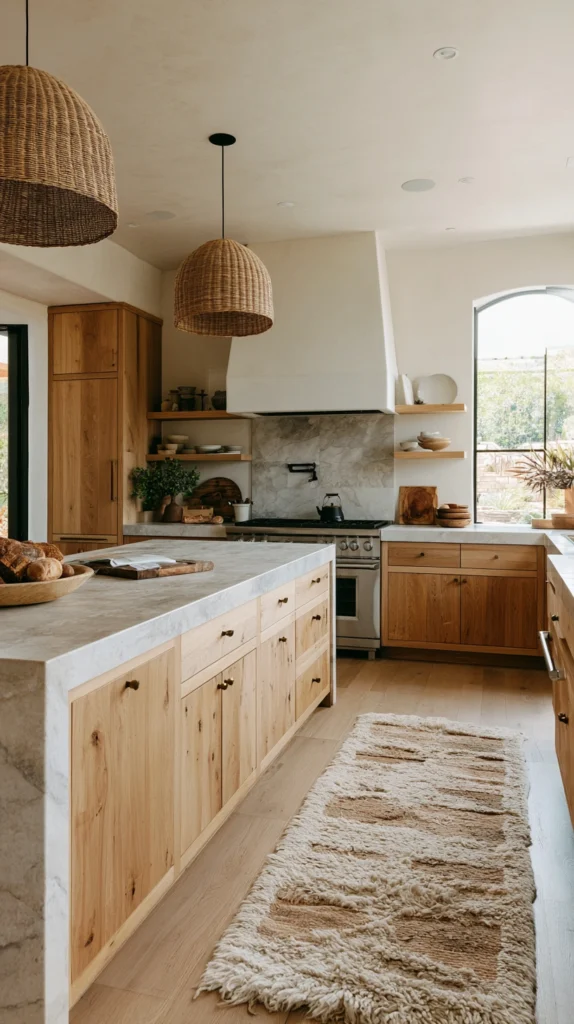
The Los Angeles kitchen that most completely captures the California lifestyle is never the one that looks most perfect — it is the one that looks most genuinely lived in, most naturally beautiful, and most effortlessly assembled from materials that belong to the place rather than imported from a design vocabulary that has nothing to do with the specific quality of California light, California warmth, and California ease.
The limewash wall with its slight imperfections. The concrete countertop with its developing patina. The white oak cabinet whose grain is visible and honest. The terracotta backsplash tile whose slight variations are the evidence of hand-making rather than manufacturing defects. The herbs on the windowsill that need watering. The open shelves that hold beautiful objects and also, frankly, the everyday ones.
This quality of deliberate unfinishedness — the aesthetic confidence to leave things slightly imperfect, slightly organic, slightly alive — is the California kitchen’s most distinctive and most genuinely beautiful quality, and it is achieved not through less design thinking but through more of it.
Final Thoughts: Designing the Los Angeles Kitchen for the Life Being Lived In It
The Los Angeles kitchen that genuinely serves the California lifestyle is the one designed around an honest understanding of how that lifestyle actually unfolds — the morning light, the open door, the casual gathering, the constant movement between inside and outside, the cooking that is done seriously and eaten without ceremony, the kitchen that is never empty and never quite tidy and never anything less than the most important room in the house.
Start with the connection to the outdoor space, establish the material palette in warm timber, pale stone, and honest plaster, size the island for the social life it will actually support, and allow the kitchen’s aesthetic to develop naturally from those foundational decisions.
The Los Angeles kitchen done properly is not a styled room — it is a living one, and the distinction between those two things is the most important design insight available to anyone building or renovating a kitchen in the city where the California lifestyle was invented and where it is still, in the best homes and the best kitchens, most completely and most beautifully expressed.