15 Small Living Room Ideas for New York Apartments
Living in New York City means accepting a fundamental truth about domestic space that residents of most other cities never have to confront quite so directly. the rooms are small, the ceilings are sometimes low, the light can be limited, and the challenge of creating a living room that feels genuinely comfortable, genuinely beautiful, and genuinely functional within a modest footprint is one that every New Yorker navigates with varying degrees of success.

The good news is that a small New York apartment living room, designed with genuine intelligence and genuine design ambition, can feel not just adequate but genuinely extraordinary. a space that punches far above its square footage and creates a quality of domestic life that larger, less thoughtfully designed rooms cannot always deliver. Here are 15 small living room ideas for New York apartments that are modern, practical, and genuinely worth implementing.
1. Choose a Sofa That Fits the Room
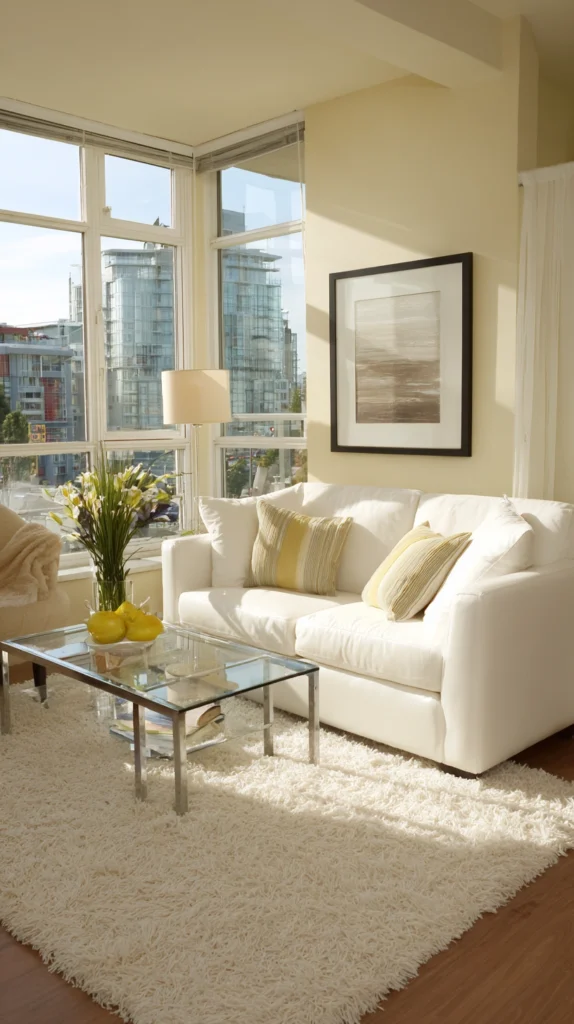
The sofa is the most important furniture decision in a small New York apartment living room and the one most likely to go wrong when the scale of the piece is not rigorously calibrated to the actual dimensions of the room. A standard three-seat sofa in a small New York living room frequently leaves insufficient circulation space, makes the room feel overcrowded, and creates a furniture arrangement that cannot comfortably accommodate any additional seating.
Measure the available floor space precisely before purchasing a sofa and choose a piece whose length, depth, and height are proportional to the specific room. A two-seat sofa or a compact three-seat model in a slimmer depth profile often serves a small living room significantly better than a standard three-seat sofa of generous depth.
2. Use a Light, Unified Color Palette
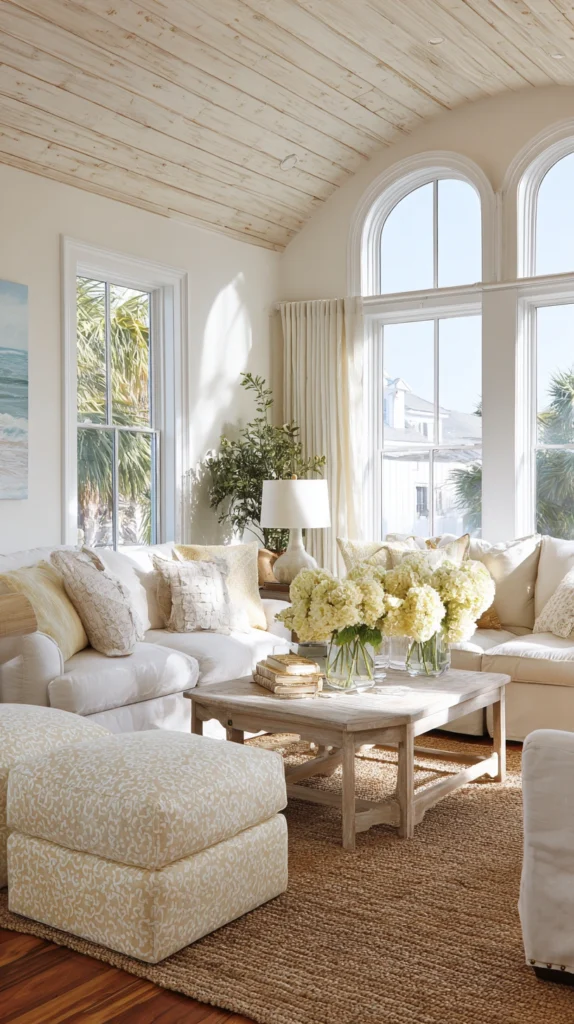
A light, unified color palette is the single most powerful tool available for making a small New York living room feel larger and more generous than its actual dimensions.
When the walls, the ceiling, the trim, and the larger furniture pieces share a close tonal relationship in a warm white, soft cream, or very pale greige, the eye reads the room as a continuous, cohesive space rather than registering each surface as a separate, boundary-defining element.
The unified pale palette pushes the visual boundaries of the room outward and creates a sense of spaciousness and light that a more varied, more contrasted color scheme would actively undermine.
3. Embrace Vertical Space with Floor-to-Ceiling Shelving
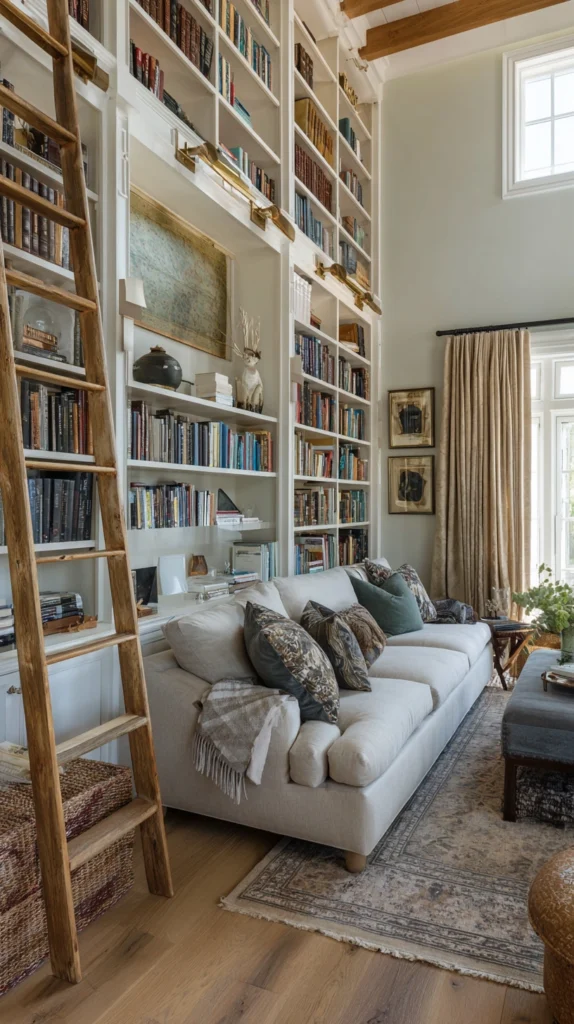
In a small New York apartment living room where floor space is genuinely precious, the vertical dimension of the room represents the most underused and most valuable storage and display real estate available. Floor-to-ceiling shelving along one wall creates a library-like presence of considerable beauty and practical generosity.
Uses the full height of the room rather than leaving the wall above standard shelf height empty, and provides a genuinely generous amount of storage and display capacity without consuming any additional floor area beyond the shelf depth. A rolling library ladder adds both access and a genuinely dramatic architectural detail.
4. Mount the Television on the Wall
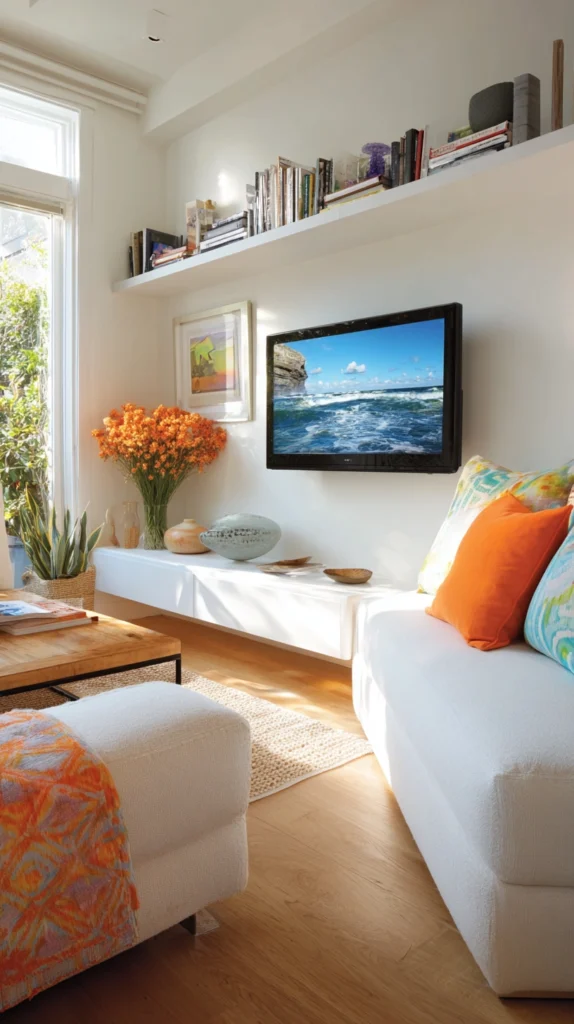
A wall-mounted television eliminates the television unit or console that would otherwise occupy a significant section of the living room floor plan and frees that floor area entirely for other furniture or for the open circulation space that a small room desperately needs. The cables can be managed cleanly within the wall or behind a slim cable conduit that paints over invisibly.
The wall beneath the mounted television becomes available for a lower, slimmer floating shelf that provides the storage benefits of a television console in a fraction of its depth. In a small New York living room, every reclaimed centimeter of floor space is genuinely valuable.
5. Choose Multi-Functional Furniture
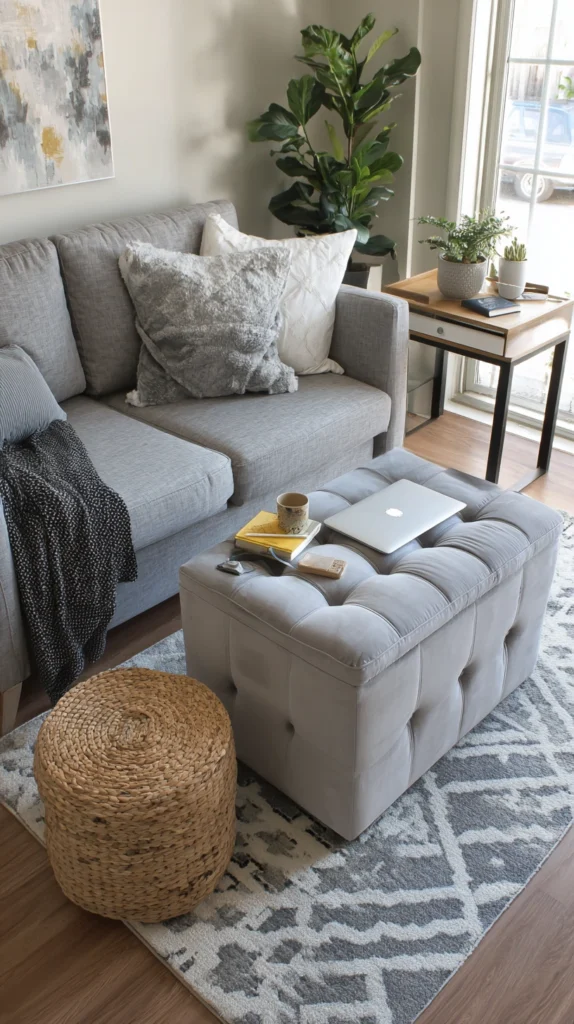
Every piece of furniture in a small New York living room must justify its footprint by serving more than one purpose. A storage ottoman that provides seating, a footrest surface, and concealed storage within its hollow interior. a sofa with built-in storage drawers beneath the seat cushions. a coffee table with a lower shelf for books and accessories. a side table that doubles as a small desk for working from home.
Multi-functional furniture gives a small living room the functional capability of a much larger space in a fraction of the physical footprint, and the discipline of choosing only multi-functional pieces is one of the most genuinely impactful small apartment design principles available.
6. Use Mirrors Strategically
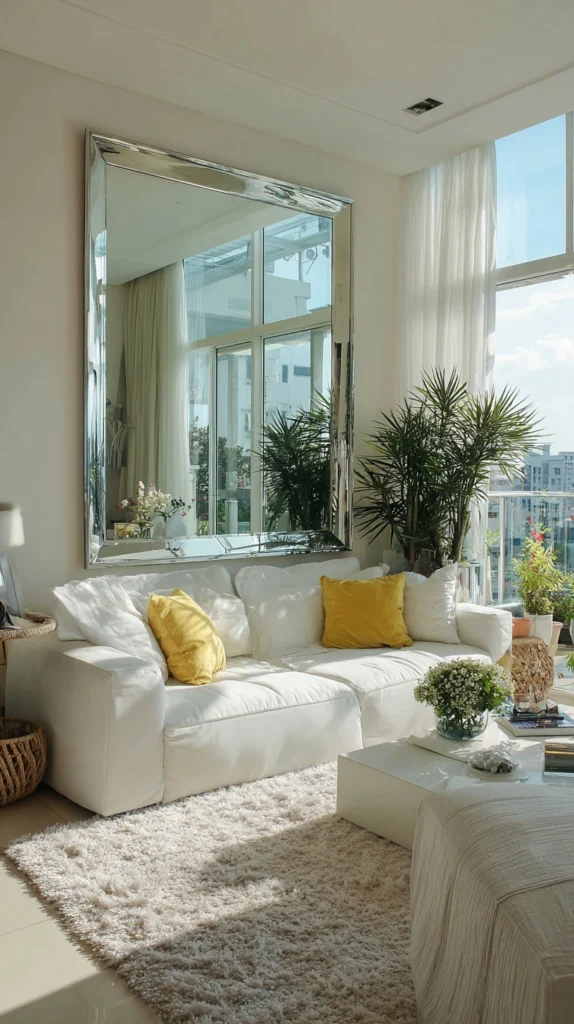
A large mirror on the main wall of the living room reflects the room back at itself, creating the convincing visual impression of a second room beyond the wall and doubling the apparent depth and the available light of the space. In a small New York living room, a large, beautiful framed mirror positioned on the wall opposite the window is one of the most immediately impactful and most cost-effective space-expanding interventions available.
Choose a mirror with a frame that contributes to the room’s aesthetic rather than simply filling the wall. a rattan frame for a warm, organic room. a slim brass frame for a contemporary, considered space. a decorative vintage frame for an eclectic, characterful apartment.
7. Incorporate Built-In Storage
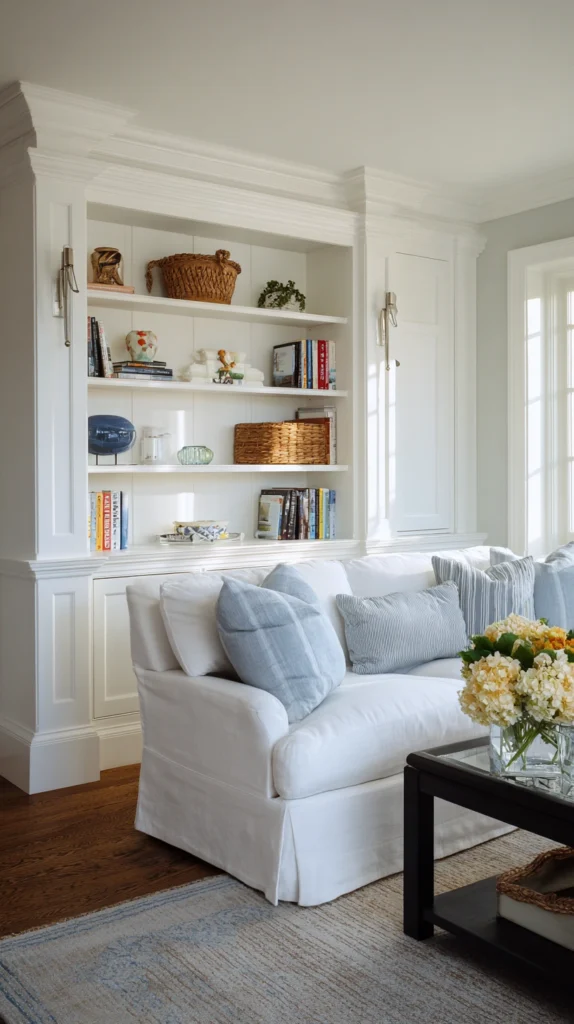
Built-in storage. shelving and cabinets constructed to fit precisely within the specific dimensions of alcoves, recesses, and underused wall zones of the living room. creates the most space-efficient and most architecturally resolved storage solution available for a small New York apartment.
Built-in storage uses every available centimeter of the room’s three-dimensional volume, fitting into spaces that no freestanding furniture could occupy, and creates the seamless, designed quality of a considered interior rather than the accumulated, slightly provisional quality of freestanding furniture arranged without a clear organizational logic.
8. Invest in Statement Lighting
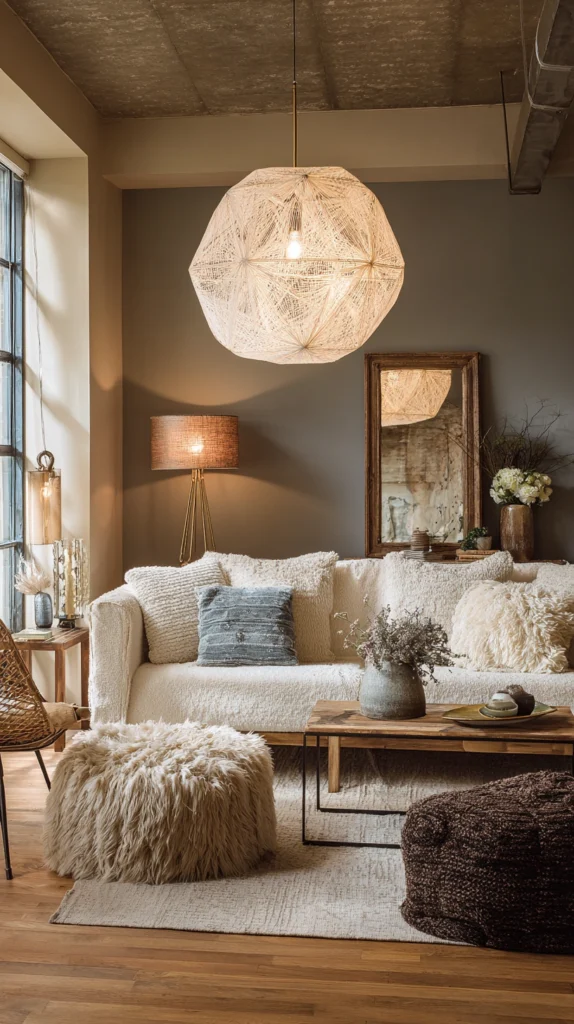
A small New York living room with genuinely considered, genuinely layered lighting feels significantly more spacious, more atmospheric, and more designed than the same room lit by a single ceiling fixture.
A statement pendant light or a beautiful chandelier above the primary seating area creates a visual focal point on the ceiling that gives the room genuine architectural intention. Floor lamps beside the sofa and armchair provide warm, human-scaled light at the most comfortable level for reading and relaxing. Table lamps on side tables create intimate pools of warm light that make the room feel cozy rather than cramped.
9. Create Zones Within the Living Room
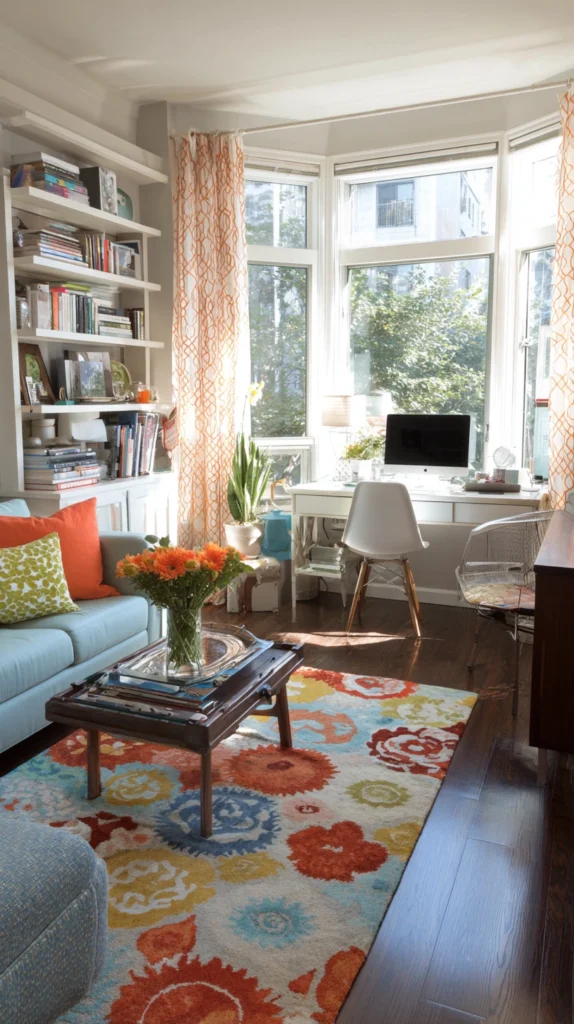
Even in a small New York living room, creating a clear distinction between different functional zones. a primary seating and conversation zone, a working from home zone, and perhaps a small dining zone. creates a room of greater functional complexity and greater perceived spaciousness than a single, undifferentiated living area.
Define zones through the positioning of furniture, the placement of rugs, the direction of lighting, and the specific arrangement of accessories rather than through physical dividers or changes in floor material. A well-zoned small living room feels significantly larger and significantly more genuinely habitable than a room of equal size without clear functional organization.
10. Choose Furniture with Legs
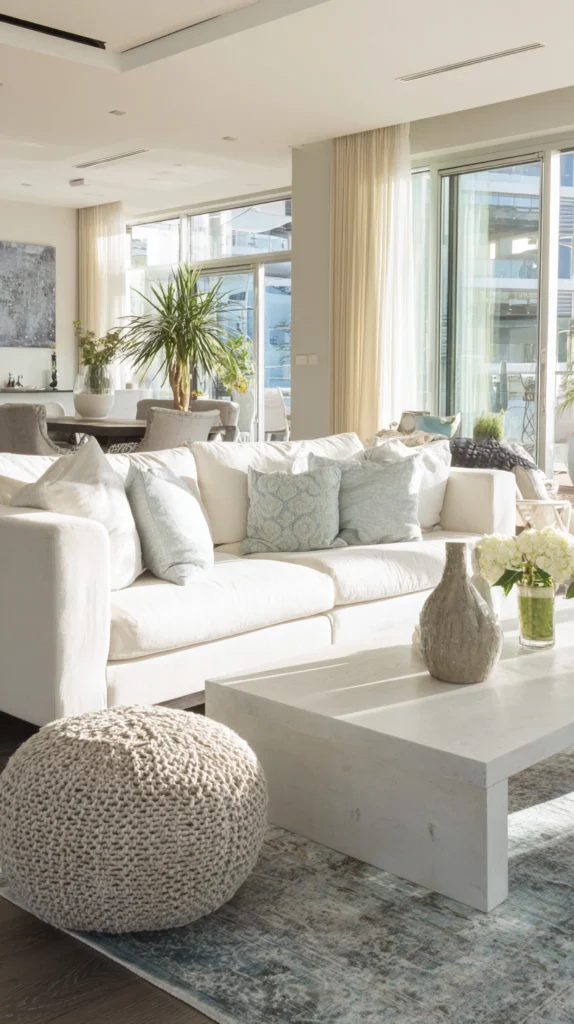
Furniture that sits on visible legs. a sofa on tapered wooden feet, a coffee table on slim metal legs, an armchair on brass casters. allows the eye to travel beneath the furniture and see the floor continuing beyond it, which makes the room feel more open, more airy, and more spatially generous than the same room furnished with pieces that sit directly on the floor.
In a small New York living room, the visual continuity of the floor plane beneath and around the furniture creates a sense of uninterrupted floor area that is significantly more space-enhancing than furniture that creates a series of visual blocks at floor level.
11. Keep Accessories Edited and Intentional
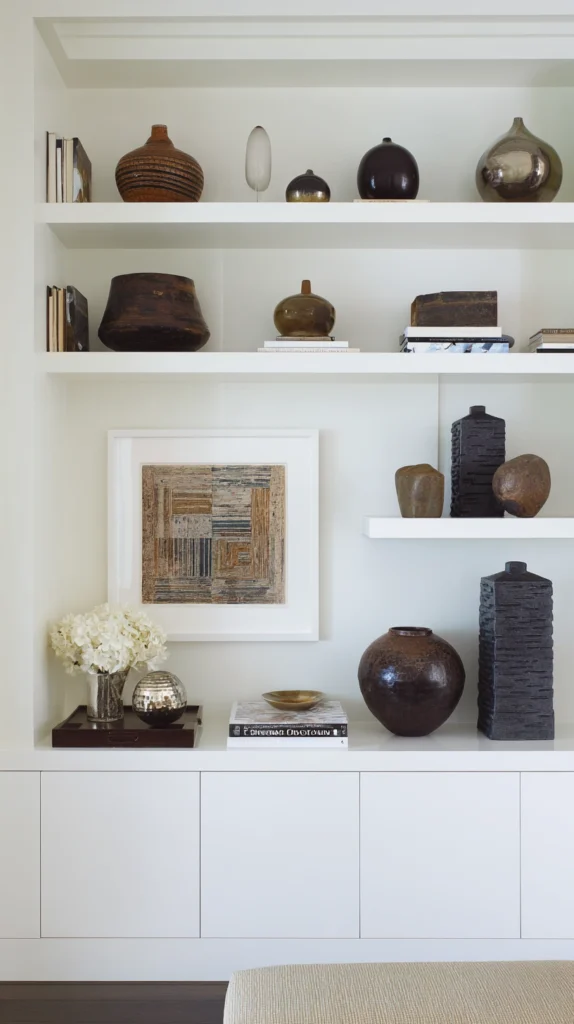
A small New York living room with too many accessories. too many cushions on the sofa, too many objects on the shelves, too many artworks competing for attention on the walls. feels cluttered, anxious, and cramped regardless of how individually beautiful each object may be. The discipline of editing.
Keeping only what is genuinely beautiful or genuinely functional, and removing everything that accumulates without intentional purpose. is one of the most powerful and most consistently impactful small living room design principles available. Every object in a small New York living room should earn its place through genuine beauty or genuine usefulness. everything else should find a home elsewhere.
12. Hang Artwork at the Right Height and Scale
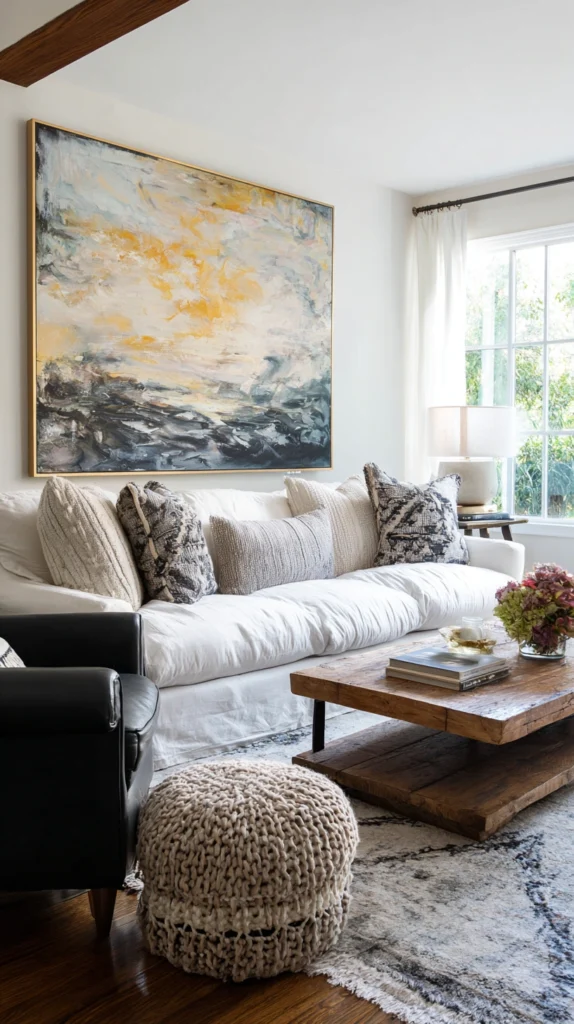
Artwork in a small New York living room must be specified and hung with genuine attention to scale and height. A small print on a large wall looks tentative and lost. artwork that is hung too high creates a visual disconnect between the art and the furniture below it.
In a small living room, a single large-scale artwork of genuine quality and appropriate scale creates more visual impact, more spatial authority, and more genuine design confidence than a collection of smaller works that fragment the wall surface and create visual complexity without visual resolution. Hang artwork with the center of the piece at approximately eye level from a seated position.
13. Use the Window as a Design Feature
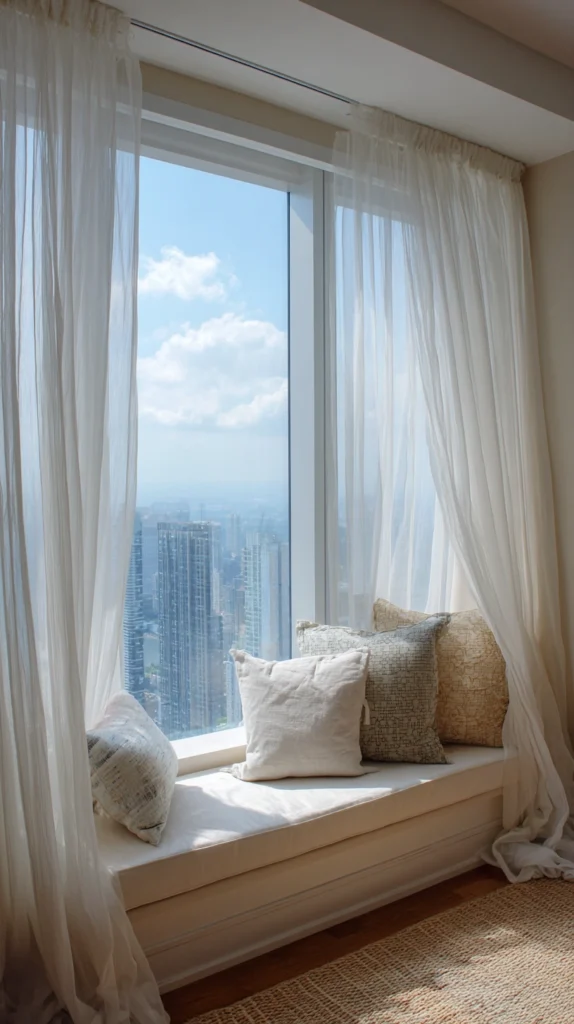
A small New York apartment living room window. whether it overlooks a Manhattan street, a Brooklyn backyard, or a Queens courtyard. is one of the most valuable assets the room contains. Natural light, the borrowed view of the city beyond the glass, and the particular quality of New York sky visible through the window all contribute to the sense of the room extending beyond its physical boundaries.
Dress the window with simple, sheer curtains that maximize light transmission while softening the frame. avoid heavy, light-blocking window treatments that reduce the apparent size and the available light of an already modest room.
14. Invest in One Quality Statement Piece
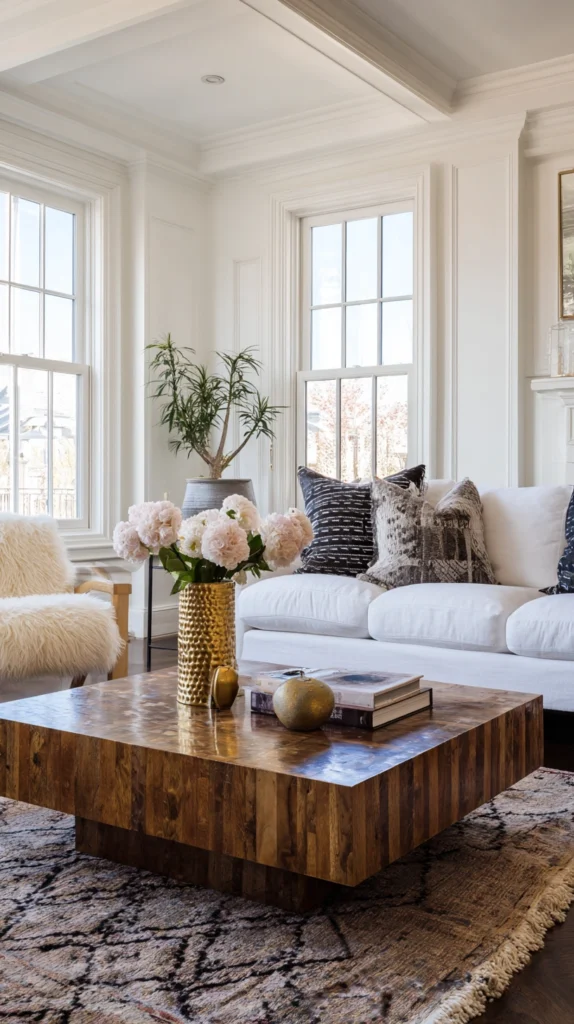
A single piece of genuinely beautiful, genuinely quality furniture. a sofa of exceptional material quality, a coffee table of genuine design distinction, or an armchair of real craftsmanship and considered design. creates a small New York living room of considerably greater perceived quality and considerably greater design confidence than a room furnished entirely with budget pieces of equivalent total cost.
One genuinely extraordinary piece of furniture anchors the room’s aesthetic, sets the design standard for every other element within it, and creates the impression of a deliberately, intelligently designed space rather than a room assembled from whatever was affordable and available.
15. Celebrate the Apartment’s Character
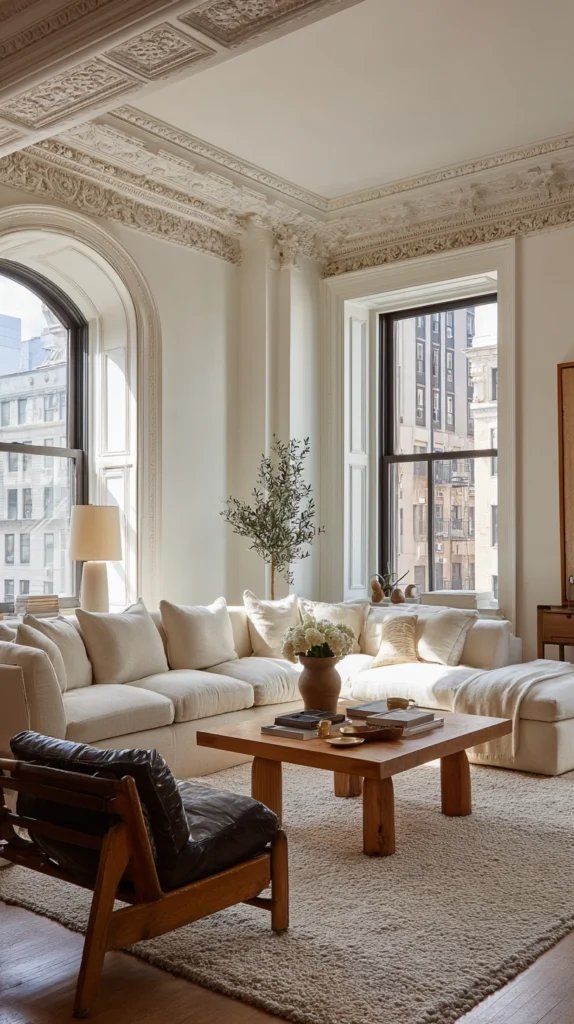
The final and most important small New York living room idea is to embrace and celebrate the specific character of the apartment rather than fighting against it. Pre-war apartments with their original moldings, their generous window proportions, and their particular quality of aged plaster and dark timber deserve a decorating approach that honors their architectural heritage.
Post-war apartments with their simple, clean lines and their honest modernist proportions deserve a design approach that works with that geometry rather than obscuring it with excessive decoration.
New construction apartments with their clean, neutral finishes and their flexible open floor plans deserve the design confidence to create genuine personality within generous blankness. Every New York apartment has a specific character and the living room that responds to that character with genuine intelligence and genuine aesthetic respect will always be more beautiful and more genuinely satisfying than one that ignores it.
The Small New York Living Room as a Design Achievement
A small New York apartment living room designed with genuine intelligence, genuine ambition, and genuine respect for the specific constraints and the specific opportunities of the space is not a compromise. It is one of the most challenging and most genuinely rewarding design achievements available in residential interior design. The constraints of the small New York apartment are not obstacles to good design. they are the conditions that make genuinely good design both necessary and genuinely possible.