14 Moss Green Interior Ideas for a Nature-Inspired Home
There is a green that does not try to be the forest and a green that does not try to be the garden, and then there is moss green, which tries to be neither and succeeds at being something more specific and more useful than either. It is the colour of the ground rather than the canopy, of the stone wall in a damp corner rather than the leaf in full sun.
It is quieter than emerald, warmer than sage, deeper than mint, and more complex than olive. It reads as both ancient and entirely contemporary, which is the quality that makes it the most versatile green available to an interior and the one that works across the widest range of rooms, light conditions, and material combinations.
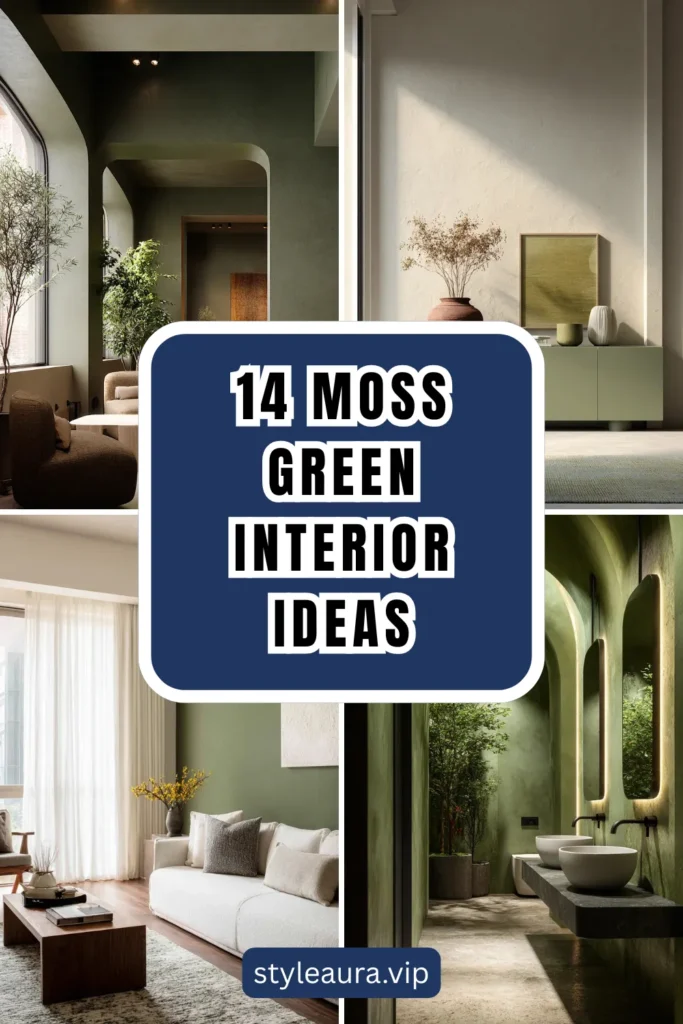
A moss green interior is a room that feels genuinely connected to the natural world — not through the addition of plants or botanical prints, but through the colour of its walls and surfaces, which carry the associations of living, growing, damp, earthy things into the interior without requiring any organic material to do so.
It is also, practically, a colour that makes other colours look better — warm whites more creamy, natural linens more golden, terracottas more vibrant, and brass more aged and beautiful.
The fourteen ideas below cover every application of moss green in the home — from a single painted wall to a fully committed room scheme. Each one covers what you will need, what it will cost, and a practical tip to make it genuinely work in a real room rather than a paint brand’s mood board.
1. The Moss Green Feature Wall
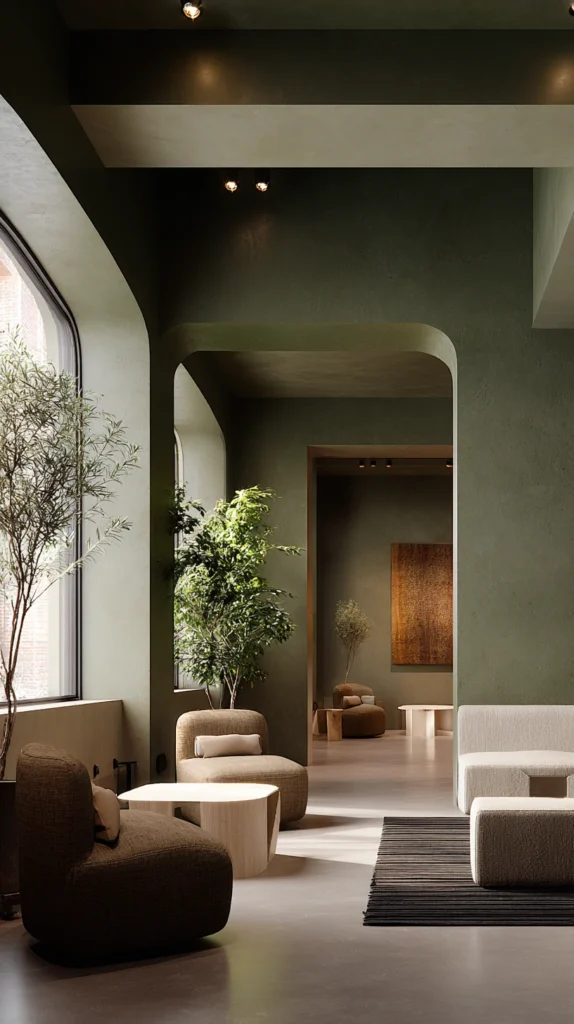
Budget: $30 – $120
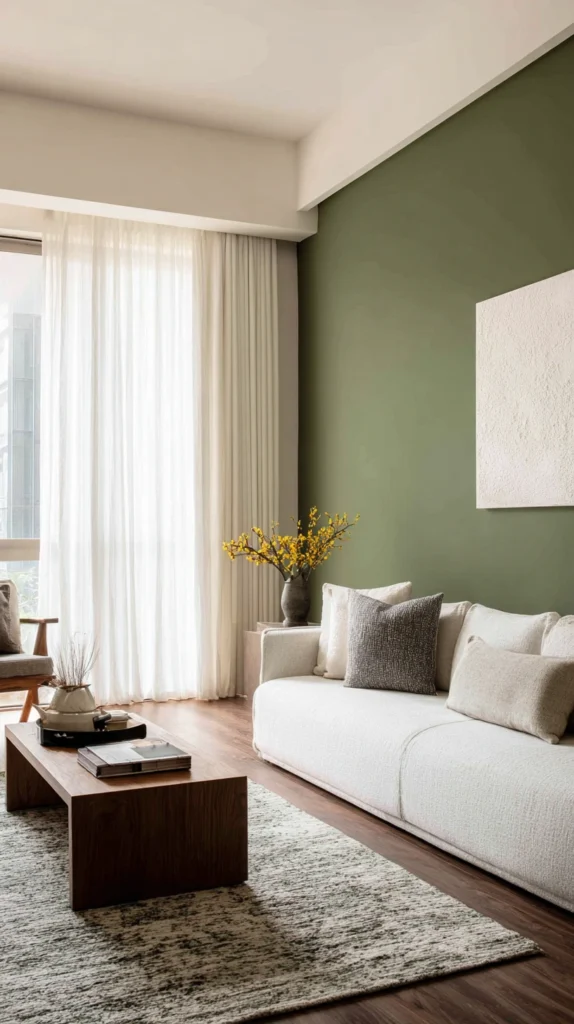
A single moss green feature wall — behind a sofa, behind a bed, or on the chimney breast of a living room — introduces the colour as an architectural backdrop rather than a statement, which is the register in which it does its most effective work. Against warm white walls on the remaining three sides, a moss green feature wall reads as grounded, calm, and deliberately chosen.
A quality moss green paint — Farrow and Ball Mizzle, Little Greene’s Aquamarine Deep, or Earthborn’s Seagrass are all reliable starting points — costs $20 – $50 per litre in premium brands. A single feature wall in a standard room requires one to one and a half litres for two good coats. The remaining walls in a warm white — specifically a white with a yellow or green undertone rather than a blue one — maintain the room’s lightness and complement the moss rather than conflicting with it.
Decorating tip: Paint the feature wall in an eggshell rather than a dead flat finish where the wall receives any physical contact — a sofa leaning against it, hands touching it at a staircase, children passing along it in a hallway. Moss green in a flat finish is beautiful but marks easily and wipes back inconsistently. An eggshell finish in the same colour is indistinguishable at a normal viewing distance and cleans with a damp cloth without lifting the paint film.
2. The Moss Green Kitchen Cabinetry
Budget: $100 – $2000
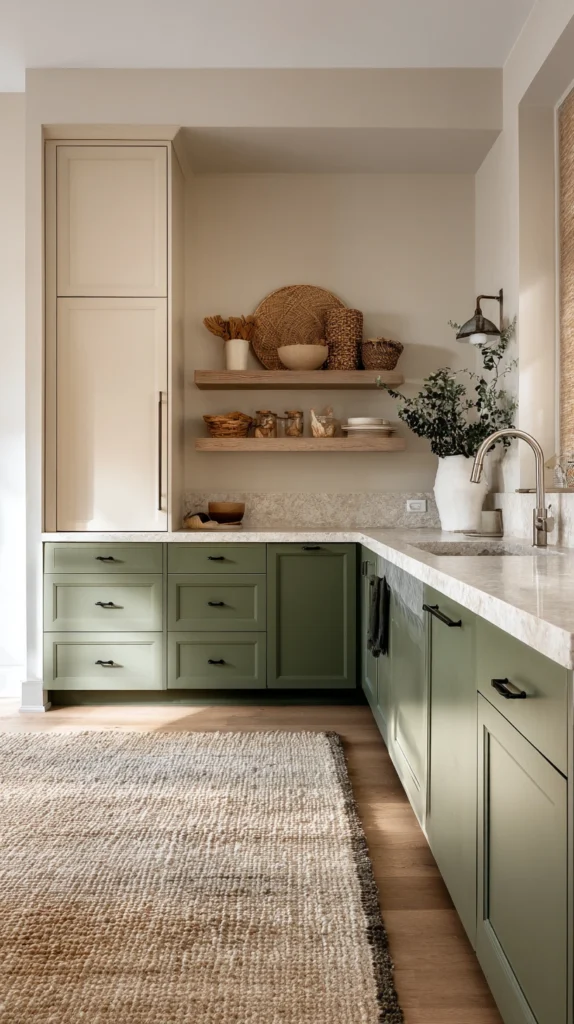
Kitchen cabinetry in moss green — whether all uppers and lowers in a smaller kitchen, or lower cabinets with off-white or cream uppers in a larger one — produces a kitchen that reads as rooted in the natural world in a way that no other cabinet colour quite achieves. It is the colour of a kitchen that has been cooking for decades, that takes its cues from the garden rather than the showroom, and that will look as good in thirty years as it does today.
Repainting existing kitchen cabinetry in a moss green chalk paint or specialist kitchen paint costs $80 – $200 in materials for a standard kitchen. A professional repaint runs $500 – $1500 depending on the number of doors and drawer fronts. New cabinetry in a factory-sprayed moss green finish — from a bespoke kitchen supplier — costs considerably more but achieves a depth of colour and a durability of finish that brush application cannot match. At any budget level, the colour decision costs nothing and is the most significant single improvement available to the room.
Decorating tip: Pair moss green cabinetry with worktops in a natural stone — unlacquered marble, honed limestone, or a concrete-effect composite — rather than engineered quartz in a bright white or grey. The cool, natural quality of stone beside the earthy warmth of moss green produces a kitchen surface combination that references real materials from the natural world. Bright white quartz beside moss green produces a contrast that is too sharp and too clean for the colour’s character.
3. The Moss Green Living Room Walls
Budget: $60 – $300
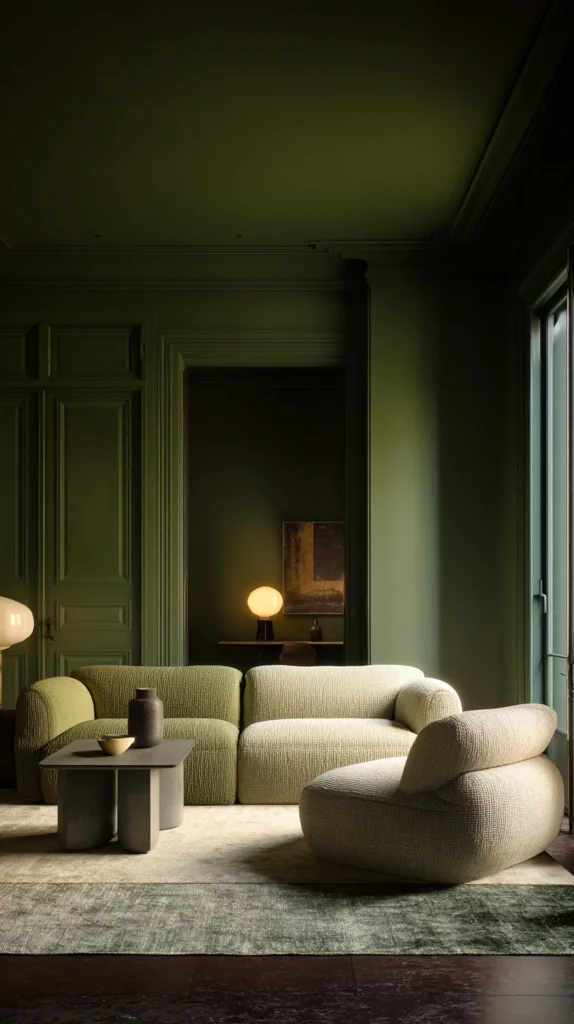
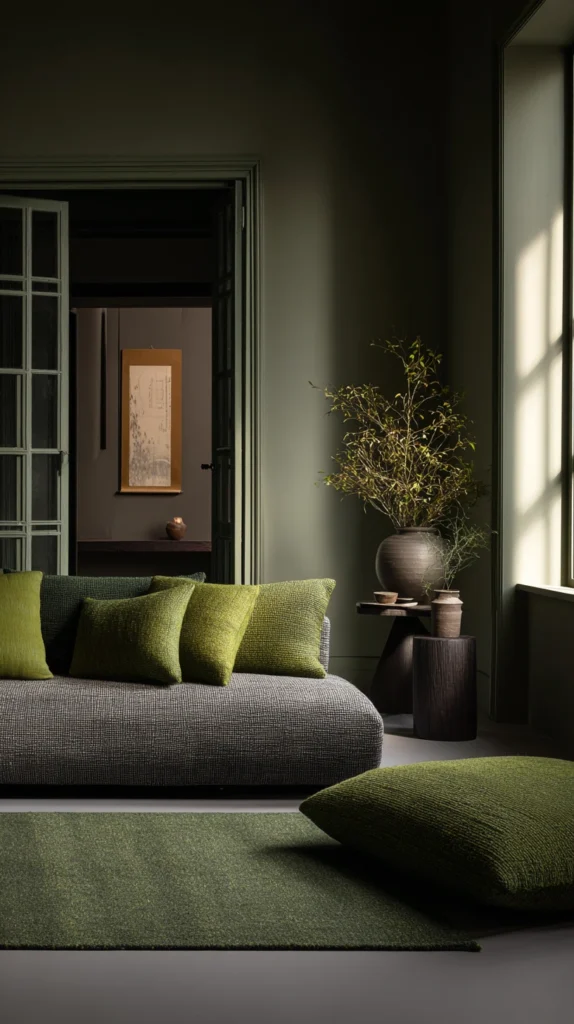
A living room painted in moss green on all four walls — ceiling one tone lighter, woodwork in a warm ivory or a deep contrasting tone — is one of the most atmospherically complete room schemes available to a domestic interior. The enveloping quality of a moss green room is specific and immediate: it feels like being inside something organic, like a room that grew rather than one that was built, and that feeling is one that guests consistently describe as the most relaxing indoor atmosphere they have encountered.
A standard living room requires three to four litres for two coats — $40 – $120 in quality paint. A ceiling in the same moss green taken one step lighter — one additional litre at $15 – $30 — prevents the enveloping quality from tipping into heaviness. A deep ivory or warm cream woodwork — $15 – $30 per litre in an eggshell finish — completes the scheme and provides the contrast that the green walls need to read as deliberate rather than unrelieved.
Decorating tip: Choose furniture upholstery in warm, contrasting tones rather than green-adjacent ones for a full moss green room. A moss green room furnished in sage upholstery reads as entirely one-dimensional. The same room furnished in terracotta velvet, warm ochre linen, or deep rust reads as rich and considered — the furnishings contrasting with the walls rather than blending into them, which is the quality that makes a single-colour room feel like a complete scheme rather than an unresolved one.
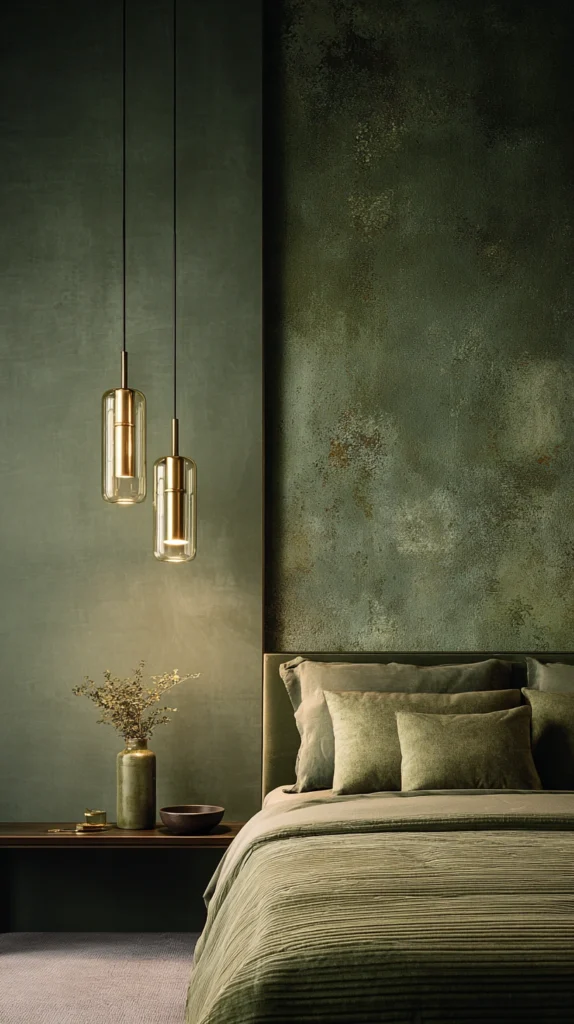
4. The Moss Green Bedroom
Budget: $40 – $300
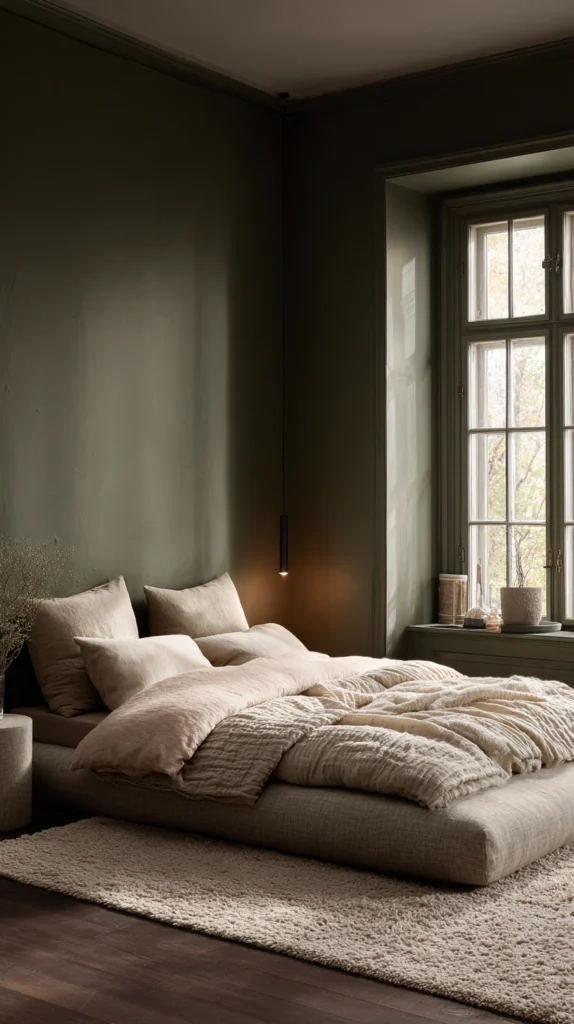
A moss green bedroom — whether one feature wall or a full four-wall commitment — produces a sleeping environment that is genuinely, physiologically calming in a way that most other bedroom colours are not. Green is consistently the colour most associated with reduced stress in human psychological response research, and moss green — with its grey and brown undertones that prevent it from reading as stimulating — is the particular green most suited to the sleeping environment.
A moss green bedroom feature wall requires one to one and a half litres of paint — $20 – $50 depending on brand. The linen chosen for the bed in a moss green bedroom should run in warm, complementary tones — oatmeal, cream, dusty rose, or terracotta — rather than matching green, which produces a bedroom that reads as one-note. A single stem of dried eucalyptus in a terracotta vase on the bedside table — $5 – $15 — ties the bedroom’s colour to its botanical inspiration with a single genuine plant material.
Decorating tip: Use a matt finish rather than any sheen in a bedroom application of moss green. The bedroom is the room in which the colour is seen most often in low and artificial light, and a matt finish absorbs that light rather than reflecting it — producing a surface that reads as soft, deep, and genuinely mossy rather than as a painted wall with a shine. The matt finish also photographs better in the bedroom context, which matters for the room that appears most frequently in personal photography.
5. The Moss Green and Terracotta Pairing
Budget: $50 – $400
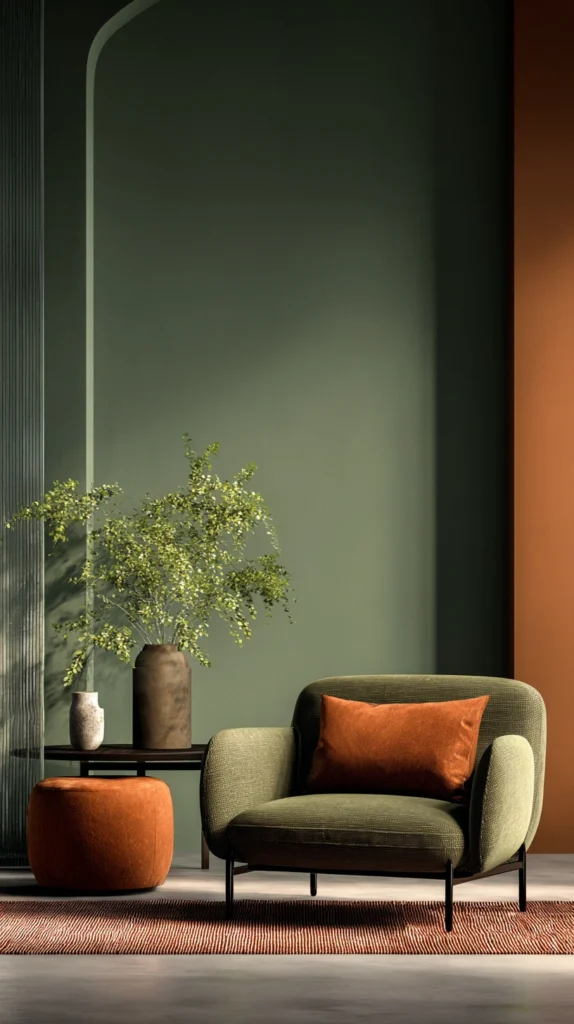
Moss green and terracotta are among the most naturally harmonious colour pairings in the interior palette — the two earth tones that most directly reference the living landscape, where green growth rises from red clay soil. Their pairing in an interior produces a room that feels simultaneously grounded and vital, earthy and alive, and the combination has the quality of genuinely great colour relationships: each colour makes the other look better than it does alone.
Moss green walls with terracotta cushions — $20 – $60 for a complementary pair. Terracotta ceramic plant pots beside moss green painted surfaces — $5 – $20 each. A terracotta-toned rug against a moss green feature wall — $50 – $150. Terracotta and moss green in equal measure across a room produces a scheme of considerable warmth and richness. In smaller quantities — one as the dominant, one as the accent — it produces a more restrained but equally resolved result.
Decorating tip: Add a third neutral — warm linen, undyed cotton, or raw timber — as the mediating material between the moss green and the terracotta. Two earth tones without a neutral bridge can read as busy or competing in a small room. The same two tones with a generous neutral layer — linen curtains, a natural jute rug, timber furniture — read as a complete and balanced scheme in which the green and terracotta are the characters and the neutral is the stage they perform on.
6. The Moss Green Bathroom
Budget: $40 – $250
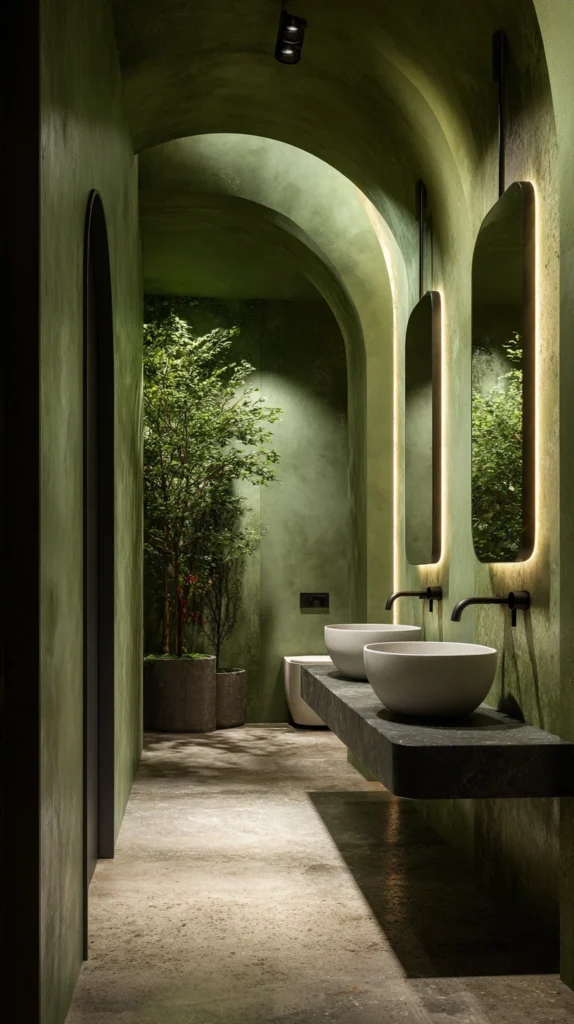
A bathroom in moss green — whether the full room or a single wall behind the bath or vanity — produces a bathing environment that feels connected to water, stone, and the natural world in a way that white tile and chrome fixtures do not attempt. The pairing of moss green with white fixtures and natural stone is the most classically resolved version of this scheme, and it works equally well in a Victorian tiled bathroom, a contemporary wet room, and every bathroom format in between.
Bathroom-specification paint in a moss green tone — moisture-resistant and mould-inhibiting — costs $20 – $50 per litre. A standard bathroom requires one to two litres for two coats. Natural stone soap dishes, wooden bath accessories, and a jute or cotton bath mat — $30 – $80 in total — bring the material palette of the natural world to the bathroom’s functional surfaces. Brass taps and fittings — if a replacement is planned — are the material choice that most completes the moss green bathroom aesthetic.
Decorating tip: Add a large, healthy plant to a moss green bathroom — a fern, a peace lily, or a trailing pothos — to reinforce the connection between the colour and the living world it references. A moss green bathroom with no plants is a colour that refers to nature. A moss green bathroom with one or two genuinely thriving plants is a space that genuinely contains nature, and the difference between the two is immediately and instinctively felt by anyone who enters the room.
7. The Moss Green Home Office
Budget: $30 – $200
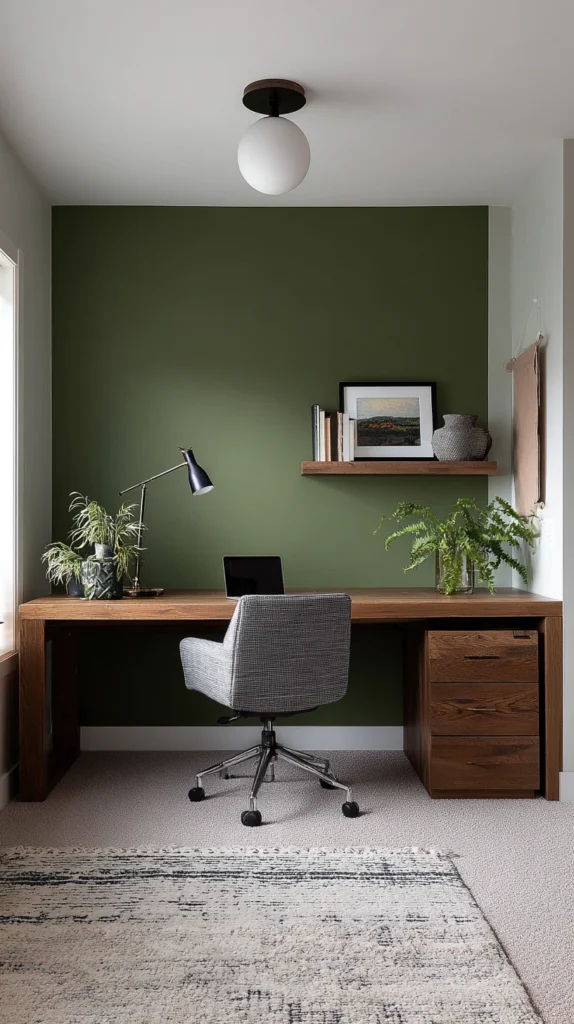
A home office in moss green is a counterintuitive choice that produces consistently positive results. The colour creates a focused, calm environment that is physiologically conducive to sustained concentration — the green reduces eye strain in a way that white walls do not, and the earthy depth of the moss tone prevents the distracting brightness that some home offices suffer from in rooms with large windows and reflective surfaces.
Paint for a home office costs $30 – $80 for a standard room. A moss green office wall as a video call backdrop — positioned behind the desk chair — produces one of the most professional, most flattering, and most distinctive backgrounds available for remote working, communicating seriousness and taste simultaneously. A timber desk, a brass desk lamp, and a small plant on the desk surface complete the office interior in the same natural material language as the wall colour behind it.
Decorating tip: Install blackout or light-filtering blinds in a moss green home office rather than leaving the window uncovered. Moss green seen against bright daylight through an uncovered window can read as significantly lighter and greener than the same colour seen against a neutral background — and in a video call, the window behind the desk provides exactly this unflattering backlighting. A blind that diffuses rather than blocks the light maintains the quality of natural illumination while preventing the colour from reading incorrectly on camera.
8. The Moss Green Hallway
Budget: $40 – $200
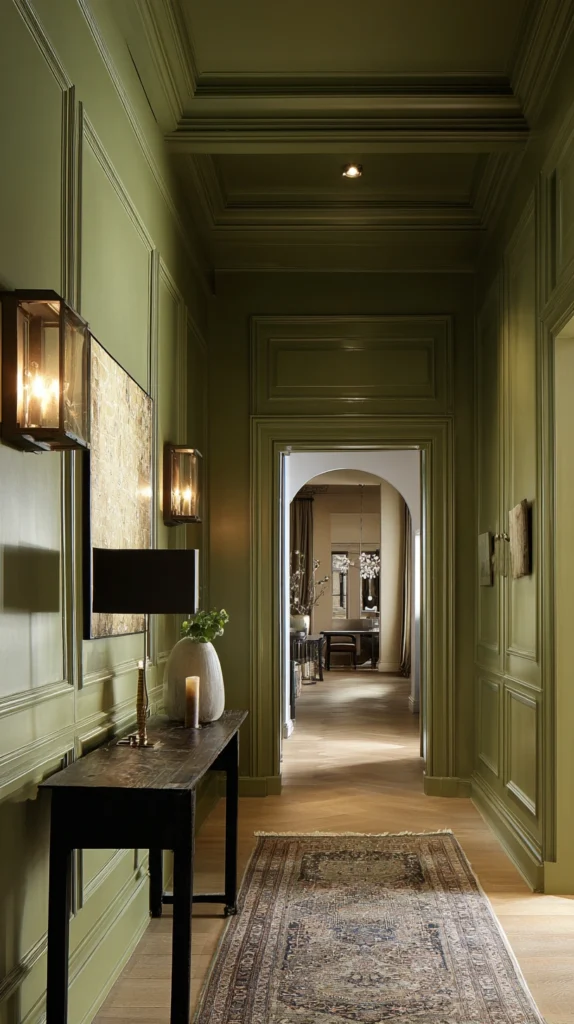
A hallway painted in moss green — all walls, the ceiling taken slightly lighter, the front door painted in the same green or in a deep complementary tone — is the home’s first and most persistent interior impression, and moss green makes that impression one of immediate calm, warmth, and connection to the natural world. It communicates that the home within has been considered rather than simply furnished.
Hallways are typically long and narrow, which means a single 2.5-litre tin — $25 – $60 — covers the space adequately in two coats. Woodwork in a warm white maintains the lightness of a potentially narrow space. A jute or seagrass runner on the floor — $25 – $60 — reinforces the natural material palette at floor level. A single botanical print or a cluster of small pressed plant frames on the moss green wall — $20 – $60 framed — brings the colour’s botanical reference into the decorative layer explicitly.
Decorating tip: Paint the front door in the same moss green as the interior hallway walls if the door faces north or receives limited direct sunlight. A moss green door that is always in shade reads as a deep, complex, beautiful colour from the street. The same door in direct afternoon sun can bleach to a lighter, less interesting tone if the exterior paint specification does not include sufficient UV resistance. Specify an exterior-grade moss green with high UV resistance for any door exposed to direct sunlight for more than two hours daily.
9. The Moss Green Furniture Piece
Budget: $30 – $200
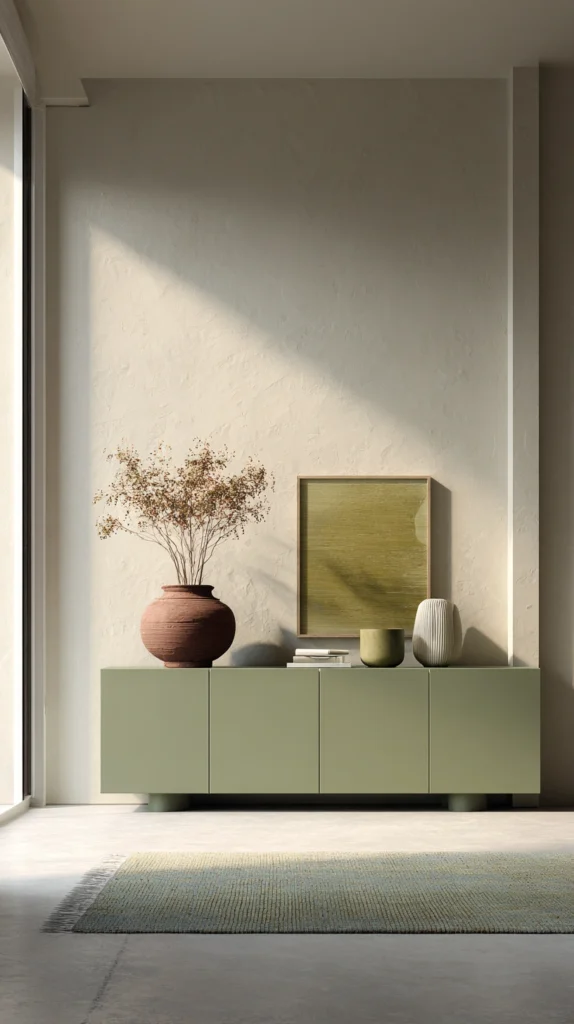
A single piece of furniture painted in moss green — a chest of drawers, a bookcase, a sideboard, a kitchen dresser — introduces the colour into a neutral room without committing to a wall application, and allows the colour to be tested in the room at a scale that reveals how it behaves in the specific light conditions and material context of the space before a larger commitment is made.
A chalk paint or specialist furniture paint in a moss green tone costs $15 – $40 for a 500ml tin — sufficient for a chest of drawers or a small bookcase. Light preparation — sanding and priming if the existing surface is dark or lacquered — adds $10 – $20 in materials. A clear wax or water-based varnish for sealing — $10 – $20 — protects the finished surface from the daily contact a piece of furniture receives. The total cost for a painted moss green furniture piece sits at $35 – $80 — a transformation rather than a purchase.
Decorating tip: Paint the interior back wall of a bookcase in the same moss green as the exterior in a furniture painting project, even if the rest of the bookcase is painted white or left in its original colour. A moss green bookcase interior creates a botanical backdrop against which every object on the shelf — white ceramics, natural linen book spines, small plants — reads with extraordinary clarity and warmth. The inside of a bookcase is visible from across the room and deserves as much consideration as the outside.
10. The Moss Green and Brass Material Story
Budget: $50 – $400
Moss green and brass are among the most naturally sympathetic material combinations in interior design — the warm yellow of the metal and the earthy yellow-green of the moss occupying adjacent positions in the colour wheel, their combination producing a room that reads as warm, aged, and genuinely luxurious without requiring expensive materials to achieve the effect.
Brass picture frames on moss green walls — $10 – $30 each. A brass floor lamp beside a moss green sofa — $40 – $120. Brass cabinet hardware on moss green kitchen cabinetry — $3 – $8 per handle. Brass curtain rods against moss green curtains — $20 – $60 per window. The brass material story distributed consistently across a moss green room costs $73 – $218 in total for a full application and produces a scheme that reads as considerably more expensive and considerably more designed than its individual components suggest.
Decorating tip: Use aged or unlacquered brass rather than polished lacquered brass in a moss green interior. Polished brass beside moss green reads as slightly corporate — the high shine of the metal pulling against the earthy, organic quality of the colour. Aged brass, which has the warm, slightly dull patina of a metal that has been handled and has developed character over time, is in the same material register as the moss green — both suggesting age, authenticity, and the particular beauty of things that have not been over-finished.
11. The Moss Green Garden Room or Conservatory
Budget: $60 – $500
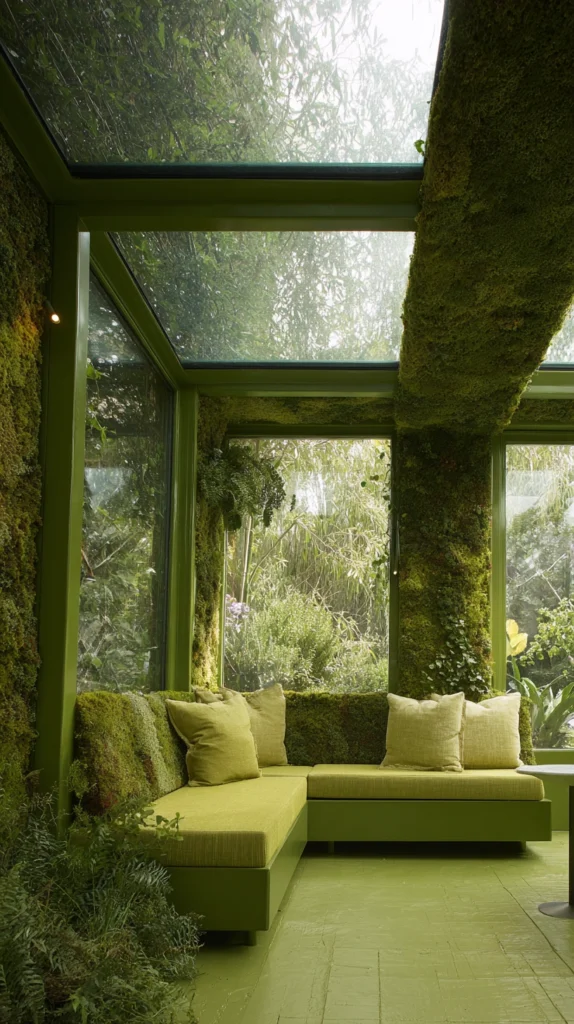
A garden room or conservatory painted in moss green — the walls, the timber frame details, or both — is the most contextually appropriate application of the colour in the home because the room itself is a transitional space between the interior and the exterior, and moss green is a colour that belongs to both worlds simultaneously. A moss green garden room wall seen through glass from the garden beyond reads as an extension of the landscape rather than a contradiction of it.
Paint for a conservatory or garden room — exterior-grade or moisture-resistant where required — costs $30 – $80 for a standard space. Rattan furniture, terracotta pots, and natural linen cushions — $100 – $300 for a furnished garden room — complete the space in the same natural material language as the wall colour. A collection of large leafy plants — monstera, rubber plant, fiddle leaf fig — at varying heights fills the glass-walled space with the living botanical material that the moss green colour is referencing.
Decorating tip: Paint the external face of the conservatory’s timber frame in the same moss green as the interior walls if the frame is timber and the colour is suitable for exterior application. An interior wall colour that continues onto the exterior frame removes the visual boundary between inside and outside and makes the garden room feel genuinely continuous with the garden beyond — which is the ambition of every garden room and the quality most rarely achieved.
12. The Moss Green Dining Room
Budget: $60 – $400
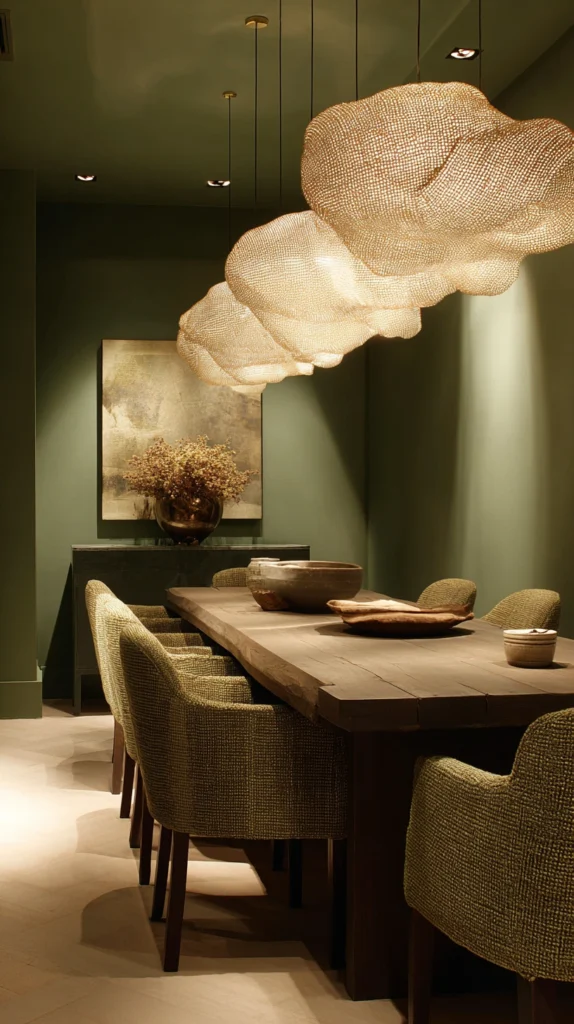
A dining room in moss green — walls in a warm, medium-depth moss tone, a pendant light in aged brass or rattan above the table, dining chairs in a complementary warm material, and fresh or dried botanicals as the table centrepiece — is one of the most convivial and most flattering dining environments available to a domestic interior. Green is genuinely flattering to skin tones in a way that many interior colours are not, and a moss green dining room makes the people sitting in it look warm and well — which is a quality a dining room colour should actively pursue.
Paint for a standard dining room — $30 – $80 for two coats of quality paint. A rattan or brass pendant above the table — $30 – $100 — provides the warm overhead light that a dining room requires. Dining chairs in warm oak, natural rattan, or terracotta velvet — $80 – $250 each — complete the dining space in the material palette the wall colour calls for. A botanical centrepiece — dried grasses, eucalyptus, or fresh seasonal branches in a terracotta vase — costs $10 – $30 and brings the living world to the table surface.
Decorating tip: Dim the dining room lighting in a moss green room to 40 to 50 percent during the evening meal. Moss green under full artificial light can read as vivid and slightly overwhelming in a small dining room. The same colour at dimmed light reads as deep, warm, and enveloping — the dinner party atmosphere that the colour is capable of producing at its best. A dimmer switch is the most affordable and most impactful upgrade available to any moss green dining room.
13. The Moss Green Textile Layer
Budget: $40 – $250
A room refreshed through moss green textiles — a linen sofa throw, a set of velvet cushion covers, a bedroom duvet cover, or a set of dining chair seat pads — introduces the colour warmly and reversibly in a form that can be updated seasonally without significant cost or commitment. The textile version of moss green is softer and more varied than its painted equivalent because natural fabric absorbs and reflects light differently from a flat surface.
A linen throw in moss green — $30 – $80. Velvet cushion covers in a deep moss tone — $20 – $50 each. A moss green cotton or linen duvet cover for the bedroom — $40 – $100. Dining chair seat pads in a natural moss green cotton — $15 – $35 each. The textile introduction of moss green to any room costs a fraction of a painted equivalent and produces a colour change that is immediately perceptible and immediately beautiful in any neutral interior.
Decorating tip: Combine moss green textiles in two different materials — velvet and linen, or woven cotton and bouclé — rather than using a single fabric type throughout. Velvet and linen in the same moss green tone read as two different colours because of the way each material absorbs light — velvet appearing deeper and richer, linen appearing lighter and more muted. The combination of both in the same room produces a more complex and more visually interesting version of the single colour than either material can achieve alone.
14. The Fully Committed Moss Green Interior
Budget: $200 – $2000
The fully committed moss green interior — walls, ceiling, and woodwork all held within the moss-to-deep-green palette, with brass hardware, warm timber furniture, terracotta and linen textiles, and abundant natural plant material — is the room that produces the response that every confident interior decision produces: not “that’s a lot of green” but “this room feels exactly like somewhere I want to stay.”
Paint for all walls, ceiling, and woodwork: $80 – $200. Sofa or bed in a complementary warm upholstery — terracotta velvet or warm linen: $300 – $1200. Curtains in a natural linen or moss green tone: $100 – $300. Brass hardware throughout — lamps, frames, fittings: $80 – $200. Plants in terracotta pots: $40 – $100. Textiles — cushions, throws, rugs in the warm complementary palette: $80 – $200. Total investment for a fully committed moss green interior: $680 – $2200 — the cost of a room that was designed rather than assembled.
Decorating tip: Introduce abundant natural plant material — large, genuinely healthy plants in significant quantities — as the final layer of a fully committed moss green interior. A moss green room without plants is a colour that references the natural world. The same room with a fiddle leaf fig in the corner, a trailing pothos on the shelf, a monstera beside the sofa, and a collection of succulents on the windowsill is a room that genuinely contains the natural world, and the colour of the walls becomes a response to what is living in the room rather than an imitation of what is living outside it. The distinction between those two things is everything.
Whatever combination of these fourteen ideas finds its way into the home, the principle that holds all of them together is the same one that makes moss green such a reliable and enduring interior colour: it is a colour that belongs to the natural world and carries that belonging into every room it inhabits — making the interior feel more grounded, more connected, and more genuinely alive than the neutral alternatives it replaces.
Choose the shade with the right undertone for the room’s light conditions. Test it generously in the actual room before committing. Layer it with the warm, earthy materials it calls for — brass, terracotta, natural linen, aged timber — and then give it the plants it deserves.
A moss green room with thriving plants and warm materials is one of the most beautiful and most genuinely restorative domestic environments a home can contain. It rewards commitment with a depth and a character that no neutral can approach, and it improves with every layer added and every season lived in it.
It is the colour of something alive. Treat it accordingly.