14 Outdoor Living Spaces Perfect for Summer Evenings
There is a specific quality that belongs exclusively to summer evenings outdoors. The air cools slowly and gradually from the heat of the day, the light shifts through amber into the deep blue of late dusk, and the particular combination of warmth, darkness, and open sky produces a sense of ease that no interior room can replicate regardless of how well it has been designed.
A summer evening spent outdoors is a different category of experience from a summer evening spent inside looking out — and the outdoor spaces that make that experience consistently available are among the most valuable things a home can contain.

The fourteen ideas below treat the outdoor living space not as a practical arrangement of furniture on a patio but as a room — a room with weather and stars and the smell of whatever is currently flowering, designed with the same intention that would be given to any interior space that matters. Each idea covers what you will need, what it will cost, and a practical tip to make it genuinely work through a full summer evening rather than just the first hour after sunset.
1. The Candlelit Terrace Dining Room
Budget: $150 – $1000
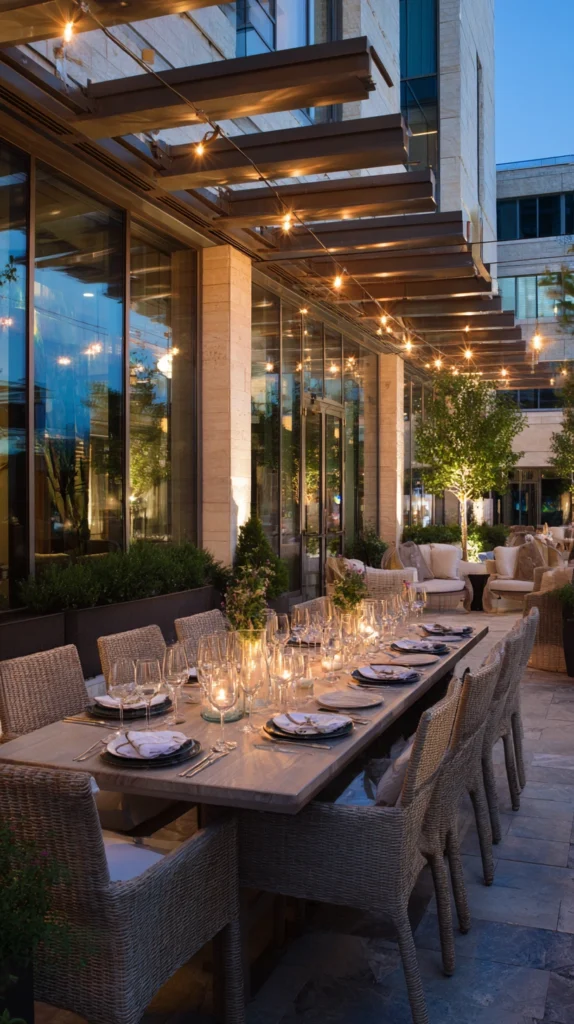
A terrace dining setup — a proper table, proper chairs, proper lighting, and a surface dressed as thoughtfully as any indoor dining table — treats the outdoor meal as the occasion it actually is rather than a practical alternative to eating inside. The candlelit version of this space, specifically, produces a quality of evening that photography can suggest but never fully capture. The movement of multiple candle flames across a table, the way the light catches glassware and the faces of the people around it, the particular warmth of being lit by fire rather than electricity — these are things that happen outdoors in summer and almost nowhere else.
A solid outdoor dining table in teak or acacia costs $200 – $800. Matching chairs — four to six — run $40 – $120 each. A set of pillar candles in hurricane glass holders — $30 – $80 for a table run of four to six — provides the primary evening light. A long linen table runner in a natural or white tone costs $20 – $50 and dresses the table from the first guest’s arrival. String lights or a simple overhead pendant on an outdoor cable above the table — $30 – $80 — provide the ambient light that candles alone cannot sustain through a full evening.
Evening tip: Set the table completely before guests arrive — candles lit, glasses placed, the table runner straight — and allow the candlelight to be the first thing seen when guests step onto the terrace. The impression of a fully prepared candlelit outdoor table, encountered in the warm air of a summer evening, communicates welcome more immediately and more completely than any verbal greeting that follows it.
2. The Firepit Gathering Circle
Budget: $100 – $2000
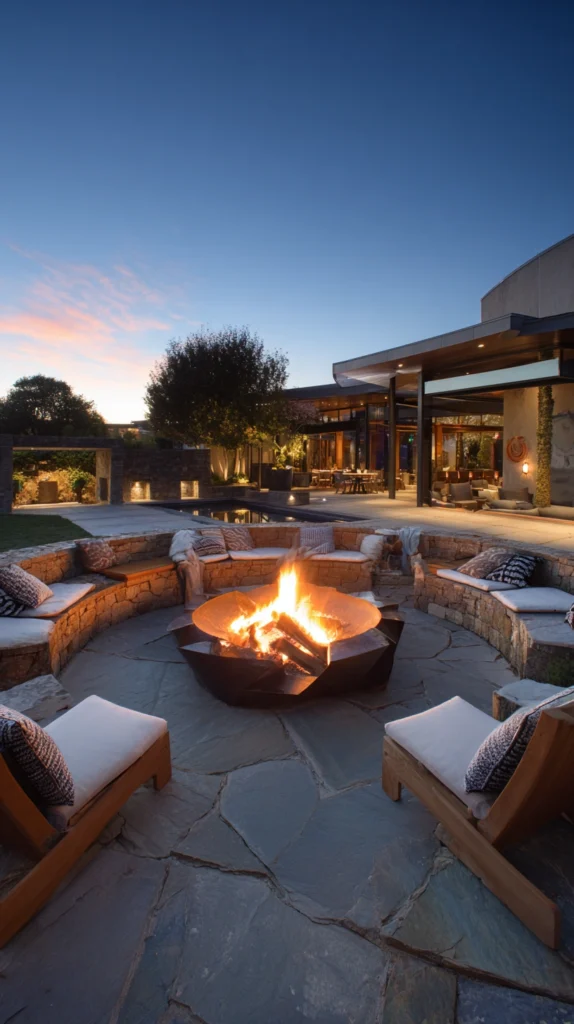
A firepit with seating arranged in a circle around it — close enough for warmth, spaced generously enough for comfort — is the outdoor living space that produces the longest evenings. Something about the combination of fire, the circular arrangement of people, and the open sky above creates a social dynamic that encourages conversation to run later and range more widely than the same group of people seated around a dining table or a living room would allow. A fire has always been the reason to stay.
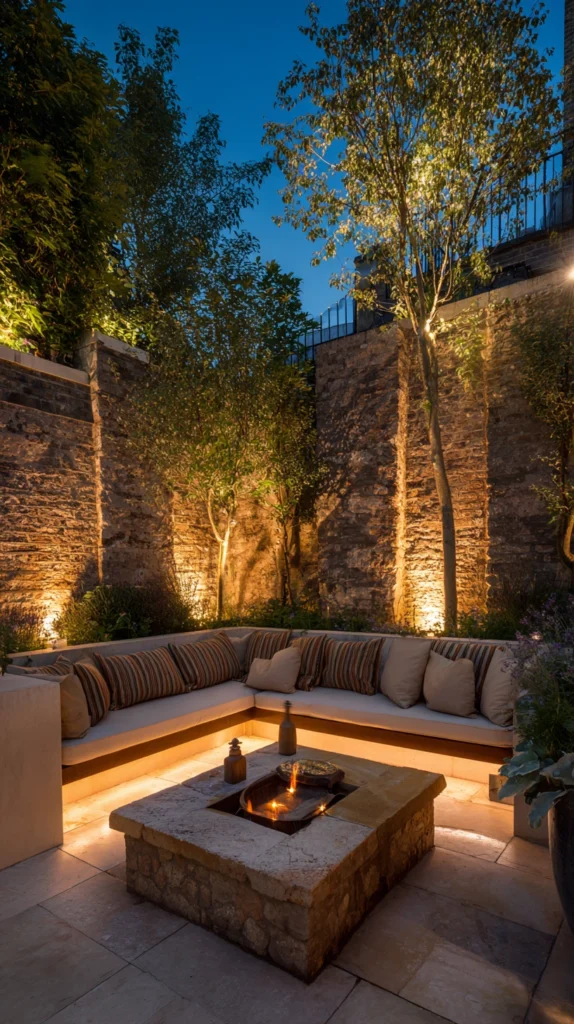
A portable steel firepit costs $40 – $150. A built-in stone or brick firepit runs $500 – $2000 for a permanent installation. Seating around the fire — a combination of fixed timber bench seating, freestanding Adirondack chairs, and low poufs — costs $100 – $600 depending on the combination chosen. A basket of dry firewood, a set of long-handled marshmallow skewers, and a bag of kindling complete the setup for under $30 and provide the raw material for the best part of the evening.
Evening tip: Build the fire an hour before guests are expected to arrive so that by the time the gathering begins, the fire is established and burning steadily rather than being coaxed into life in front of an audience. A fire that requires attention and management throughout the first hour of a gathering divides the host’s attention. A fire that is already burning when the guests arrive needs only occasional tending and allows the host to be fully present with the people rather than the fuel.
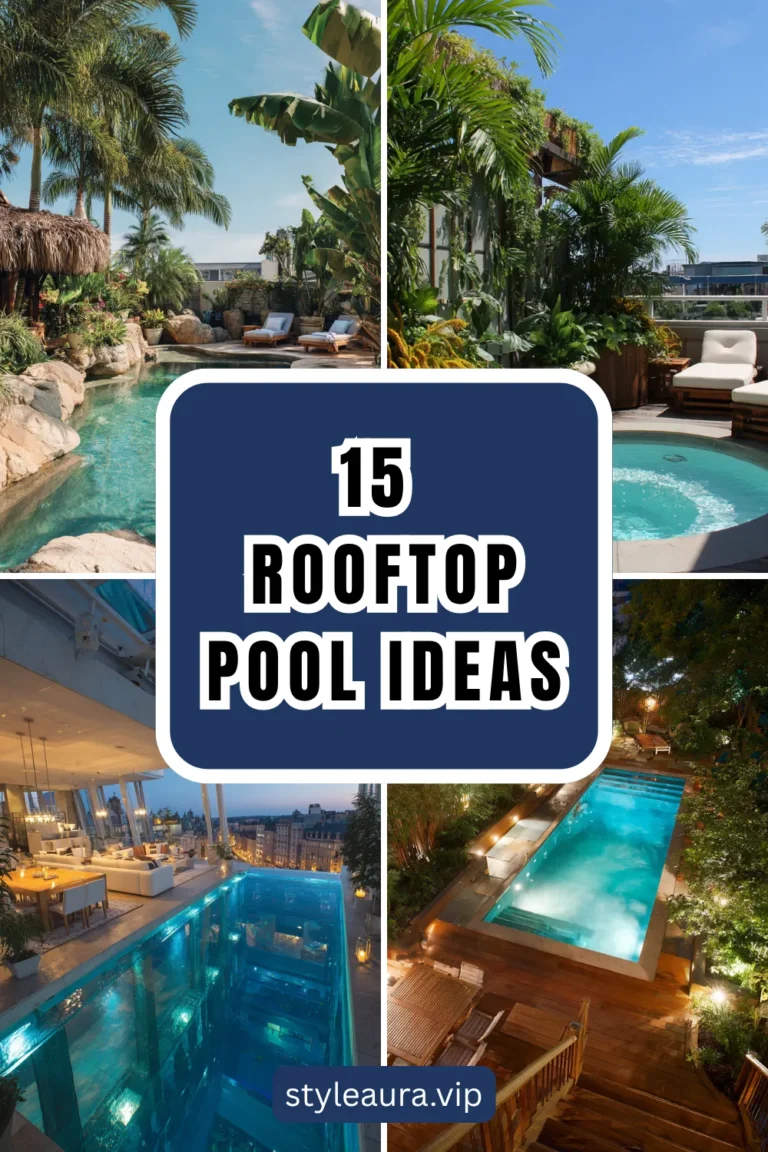
3. The Rooftop Terrace Lounge
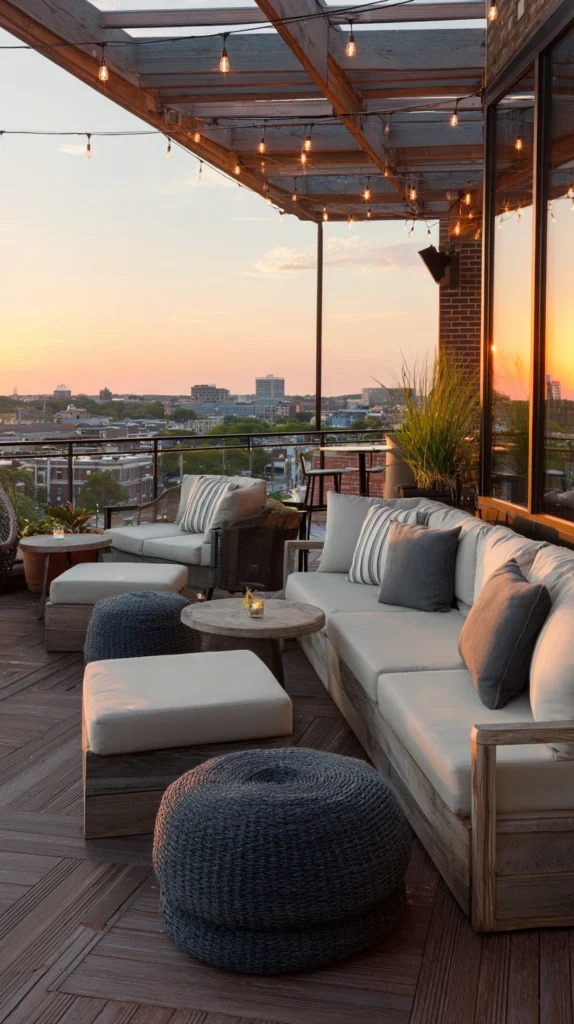
Budget: $200 – $3000
A rooftop or elevated terrace lounge — with low seating, a view of the sky and the surrounding landscape or cityscape, string lights overhead, and the particular quality of air that comes with being above the ordinary level of things — is the outdoor living space with the highest return on investment in terms of the quality of the evening it produces. The elevation itself does most of the work. The furniture, the lighting, and the styling enhance what the position already provides.
Low modular outdoor sofas in a weather-resistant rattan cost $300 – $1200 for a corner configuration. A low outdoor coffee table in teak or concrete adds $80 – $300. String lights strung across the overhead space — from post to post or from the parapet wall in a loose grid — cost $30 – $100 for a generous coverage. Weatherproof floor cushions and throw blankets — $40 – $120 — extend the usability of the space into the cooler hours after midnight when even a summer evening loses its warmth.
Evening tip: Position at least one seat in the arrangement that faces directly upward — a sun lounger, a flat daybed, or a hammock — rather than all seating facing horizontally across the space. A rooftop is one of the few places from which the night sky is accessible in a domestic setting, and a space that provides no position for looking up is a rooftop lounge that has missed its most significant feature.
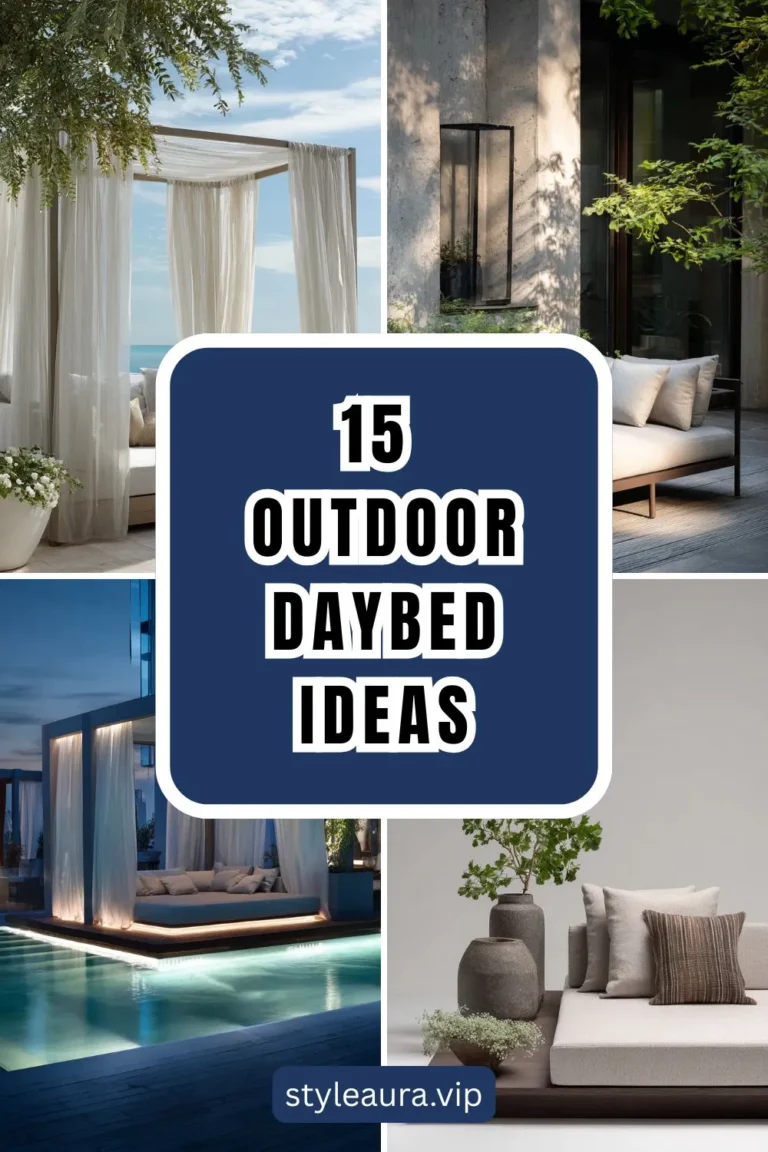
4. The Garden Pavilion
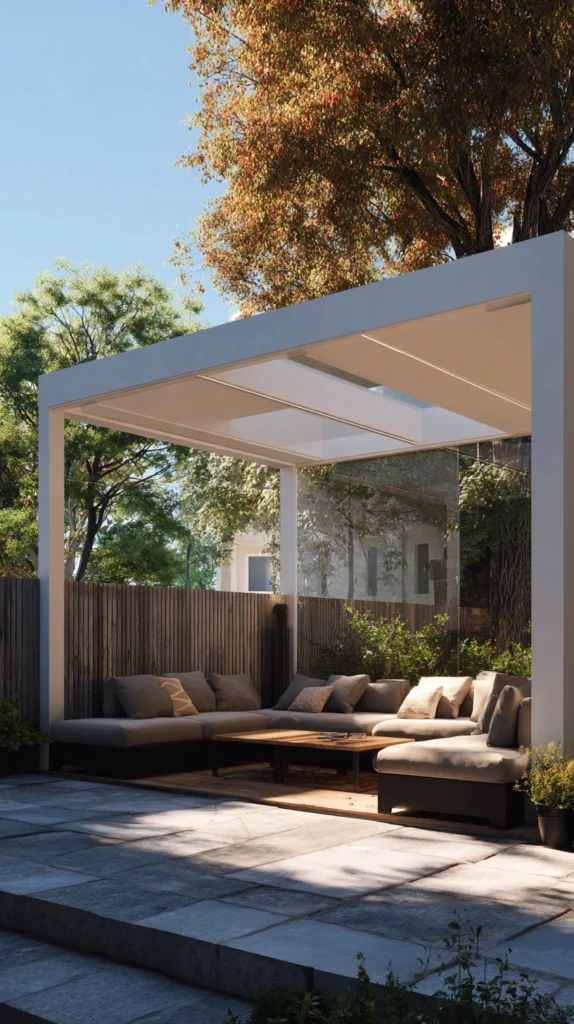
Budget: $300 – $8000
A garden pavilion — a freestanding structure with a roof, open sides, and a defined interior space — is the outdoor living arrangement that most closely replicates the character of an indoor room while maintaining its connection to the garden around it. The roof provides shelter from light rain and evening dew. The open sides maintain the airflow and the scent of the garden. The defined boundaries of the structure create a sense of enclosure that open-plan outdoor furniture arrangements cannot produce, and that enclosure makes the space feel genuinely inhabitable rather than merely usable.
A timber gazebo or pavilion kit in pressure-treated pine costs $400 – $1500. A custom hardwood pavilion — oak, cedar, or iroko — with a polycarbonate or sedum roof runs $3000 – $8000 installed. Furniture within the pavilion — a sofa arrangement, a dining table, or a daybed — is a separate cost. Curtain panels on the open sides — $40 – $120 for a set — allow the degree of enclosure to be adjusted according to weather, wind, and the hour of the evening.
Evening tip: Run an electrical cable to the pavilion during its construction rather than relying on battery-powered or solar lighting as a permanent solution. A pavilion with mains power can be lit properly, can power a speaker system, and can run a small fan or heater for the shoulder months — capabilities that make it a genuinely usable outdoor room for a significantly longer portion of the year than a pavilion lit by solar lanterns alone.
5. The Pergola Dining and Lounging Space
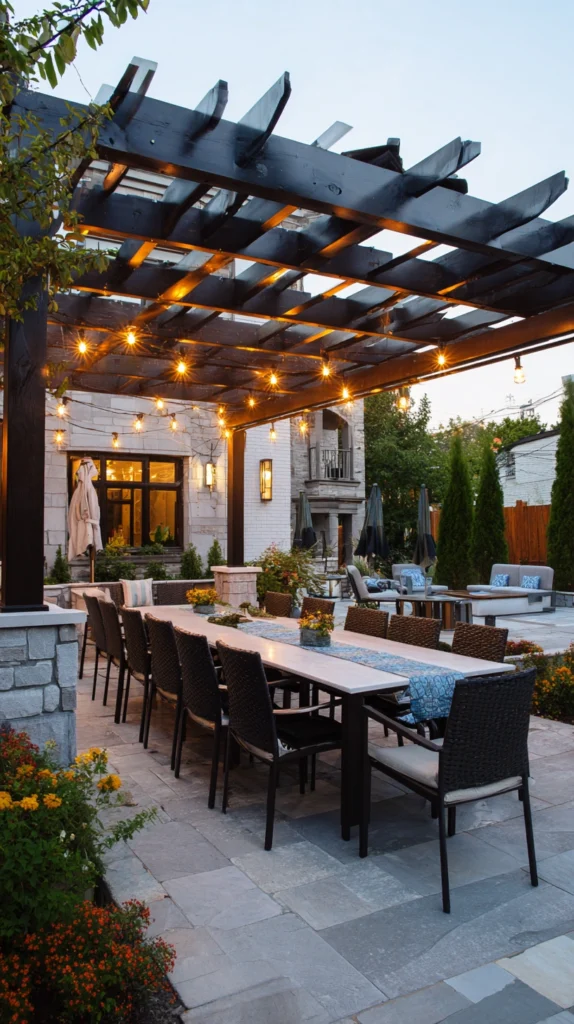
Budget: $300 – $5000
A pergola defines the outdoor room without enclosing it — providing overhead structure, a surface for climbing plants and hanging lights, and a sense of architectural intention that transforms an ordinary patio into a considered outdoor space. In summer evenings, a pergola with string lights woven through its overhead beams and wisteria or jasmine trained across its structure produces a canopy of warm light and fragrance that is genuinely one of the most beautiful environments a domestic garden can offer.
A freestanding timber pergola kit costs $300 – $800 for a standard size. A bespoke hardwood version runs $2000 – $5000 installed. String lights woven through the overhead beams — $30 – $80 for a generous run — provide the primary evening light source. A dining table and bench arrangement beneath the pergola costs $200 – $800 depending on material and size. Climbing jasmine planted at each upright — $15 – $30 per plant — takes two seasons to cover the structure and fills summer evenings with a fragrance that no candle or diffuser can match.
Evening tip: Install a dimmer switch on the string lights above the pergola rather than running them at full brightness throughout the evening. The light quality at 40 percent brightness is entirely different from the same lights at full power — warmer, more atmospheric, more appropriate to the later hours of a summer evening. A dimmer costs $15 – $30 to install and gives the pergola lighting the same range of atmosphere that indoor lighting has had as standard for decades.
6. The Bohemian Outdoor Lounge
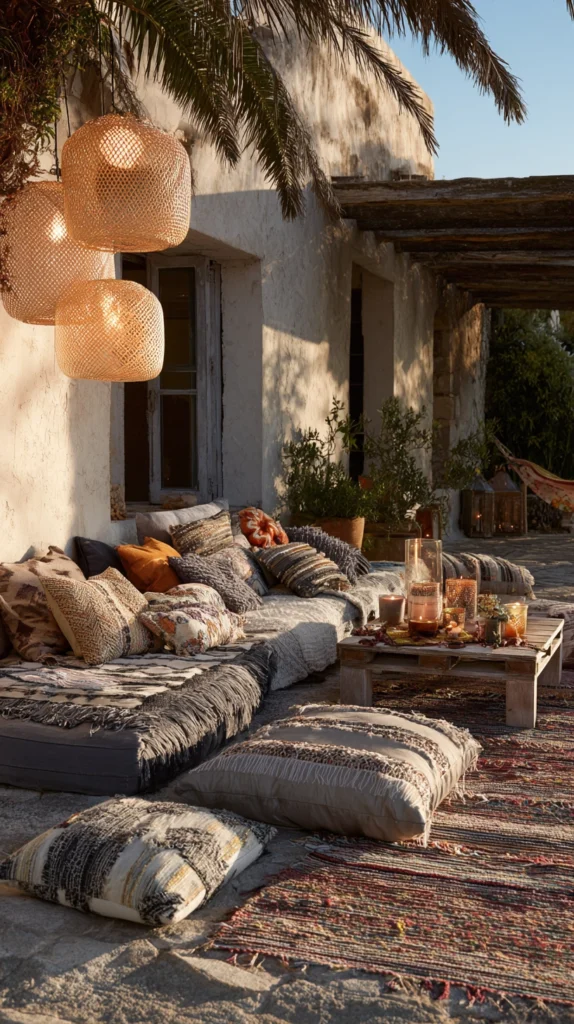
Budget: $100 – $600
A bohemian outdoor lounge — built from a combination of floor cushions, low poufs, hanging lanterns at varying heights, a kilim rug on a weatherproof surface, and a cluster of candles at the centre — is the outdoor living space that requires the least investment and produces one of the most immediately atmospheric results. The low-to-the-ground format encourages a particular quality of relaxation — horizontal, unhurried, and with no particular reason to get up — that higher seating rarely achieves.
Large outdoor floor cushions in weather-resistant covers cost $25 – $60 each. A flatweave outdoor kilim rug runs $40 – $120. Hanging moroccan-style lanterns at varying heights — $15 – $40 each — provide warm, dappled light from above. A central cluster of pillar candles on a low tray costs $20 – $50. The total investment for a complete bohemian outdoor lounge for six to eight people sits at $180 – $500 — less than the cost of a single outdoor sofa — and the result is more visually interesting and more physically comfortable for extended evening use than most furniture arrangements of any price.
Evening tip: Store floor cushions and the kilim indoors or under a weather cover when the space is not in active use. Outdoor cushion fabric — regardless of its weather resistance rating — develops a persistent surface moisture from overnight dew within a few weeks of continuous outdoor exposure. Cushions stored indoors and brought out for use stay genuinely dry, genuinely comfortable, and last several times longer than those left outside throughout the season.
7. The Outdoor Cinema Space
Budget: $100 – $600
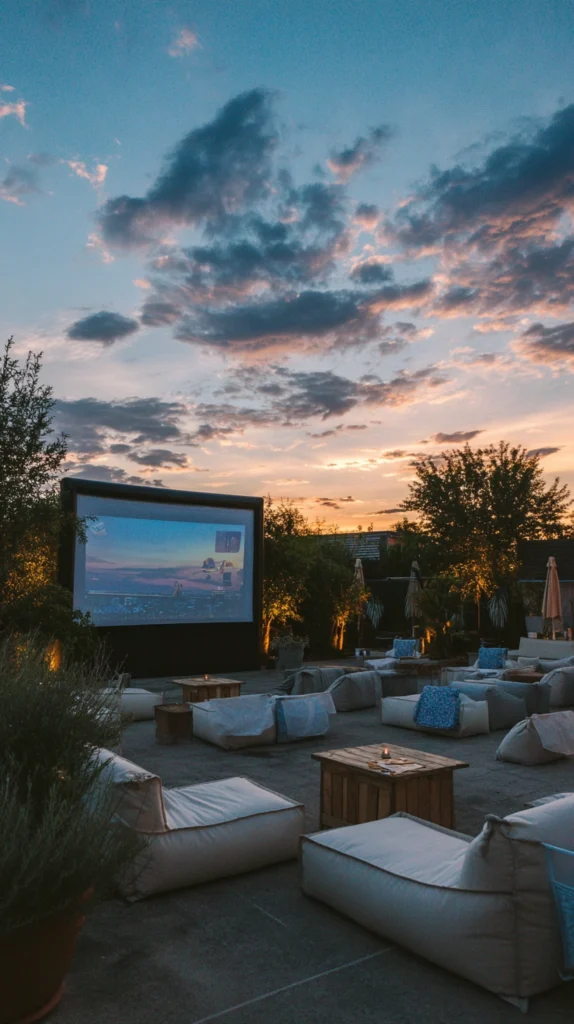
A dedicated outdoor cinema space — a screen or white wall, a projector, a Bluetooth speaker arrangement, and a seating area of blankets and cushions — is the outdoor living space with the most clearly defined purpose and the one that produces the most consistently enjoyed summer evenings. The outdoor film experience is genuinely different from the indoor equivalent: the night air, the ambient sounds of the garden, the sense of being under a sky rather than a ceiling — all of these contribute to an experience that the most technically sophisticated home cinema cannot replicate.
A portable projector costs $80 – $250. An inflatable screen starts at $60 for a 9-foot version. A quality Bluetooth speaker for outdoor audio runs $40 – $120. Seating — a combination of outdoor chairs, floor cushions, and weighted blankets — adds $40 – $150. The full setup sits at $220 – $680 and serves every outdoor film evening through the summer without further investment beyond the cost of whatever is being watched.
Evening tip: Begin the film at least 30 minutes after full dark rather than at sunset. A projector image that appears adequately bright in the pre-dark of twilight becomes washed out within twenty minutes as the sky brightens again on a clear evening — the opposite of what was expected. True darkness, which arrives 30 to 40 minutes after sunset in summer at most latitudes, produces a projector image bright enough to remain readable throughout the film without adjustment.
8. The Walled Courtyard Garden Room
Budget: $200 – $5000
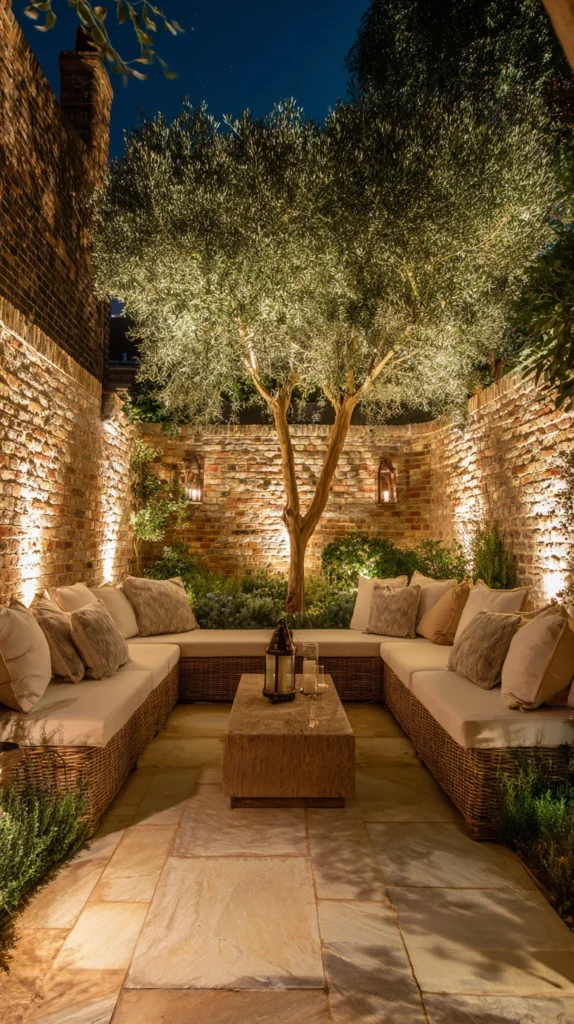
A walled courtyard — a garden space bounded by walls on three or four sides — has a quality of enclosure and shelter that open gardens do not possess, and in summer evenings that enclosure is an asset rather than a limitation. The walls trap the warmth of the day’s sun and release it slowly through the evening, raising the ambient temperature of the space by several degrees compared to an open equivalent. They also provide surfaces for wall-mounted lighting, for climbing plants, and for the kind of intimate, sheltered atmosphere that makes a courtyard the most hospitable outdoor room in the house.
Furnishing a courtyard for evening use — a bistro table and chairs, a set of wall-mounted lanterns, potted plants along the walls, and a string of lights overhead — costs $150 – $600 in furniture and styling. A water feature — a simple wall-mounted spout feeding a low basin — adds the sound of moving water for $100 – $400 and is particularly effective in a walled space where the sound is contained and amplified rather than dispersed.
Evening tip: Paint the courtyard walls in a warm white or pale cream rather than leaving them in their natural brick or render finish if the space feels dark in the evening. Pale walls reflect candlelight and low-level garden lighting far more effectively than dark or unpainted surfaces, multiplying the effect of a modest lighting setup and making the space feel bright and inviting rather than dim and enclosed at the hours when the outdoor room is most used.
9. The Hammock Garden Zone
Budget: $80 – $400
A dedicated hammock zone — one or two hammocks strung between trees or on freestanding frames, with a low side table, a basket of blankets, and a string of lights overhead — is the outdoor living space most associated with the particular pleasure of doing nothing with genuine commitment. The hammock has no other function than rest. It contains the body in a position that is comfortable only when entirely still, which is to say it is a piece of furniture that trains relaxation rather than merely enabling it.
Two hammocks — a cotton rope version and a gathered-end Mayan style — cost $80 – $200 in total. Tree strap suspension systems — $10 – $25 per hammock — avoid damage to the trees and allow height adjustment. A low rattan side table between the hammocks costs $20 – $50. Battery-powered fairy lights woven through the overhead tree branches — $15 – $30 — provide ambient evening light without requiring electrical cable management in the garden. The total hammock zone investment sits at $125 – $305 for one of the most genuinely restorative outdoor living spaces available.
Evening tip: Place the hammocks so that their open ends face each other rather than both pointing in the same direction. Two hammocks oriented identically produce parallel occupants who cannot easily see or converse with each other. Two hammocks facing each other — feet toward feet, with the low table between — create a social arrangement in which conversation is natural, the side table is equidistant from both, and the evening can be spent in the particular quality of companionship that side-by-side outdoor rest produces.
10. The Lakeside or Waterside Platform
Budget: $500 – $10000
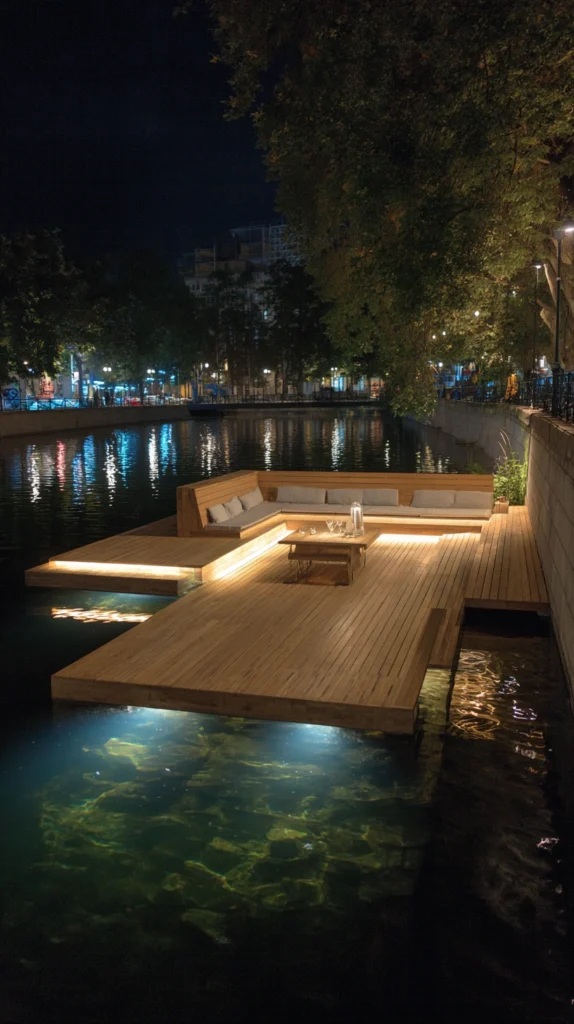
For homes with access to a body of water — a lake, a river, a large pond, a canal — a platform or deck extended over or beside the water is the outdoor living space with the most significant return on investment in terms of the quality of the evening experience it produces. The reflection of evening light on water, the sound of the water’s surface, the cooling effect of water evaporation on the ambient temperature, and the particular stillness of sitting at the edge of a body of water at dusk — these are environmental qualities that no amount of furniture or lighting can produce in their absence.
A simple timber deck platform over or beside water costs $500 – $3000 in materials for a DIY build of a standard size. A professionally engineered and installed waterside platform runs $3000 – $10000 depending on the complexity of the water edge and the structural requirements of the specific site. Furniture on the platform — a pair of chairs, a low table, a portable firepit — adds $100 – $400. The platform itself is the investment. Everything placed on it benefits automatically from its position.
Evening tip: Install low-level lighting along the platform edges — LED strip lights or recessed deck lights — rather than overhead lighting for evening use beside water. Overhead light on a waterside platform reflects harshly off the water surface and produces glare that makes the platform uncomfortable to sit on after dark. Low-level edge lighting casts its illumination downward, creates a warm glow on the platform surface, and allows the water surface and the sky above it to remain visually dominant — which is, after all, the entire reason for being there.
11. The Enclosed Balcony Garden Room
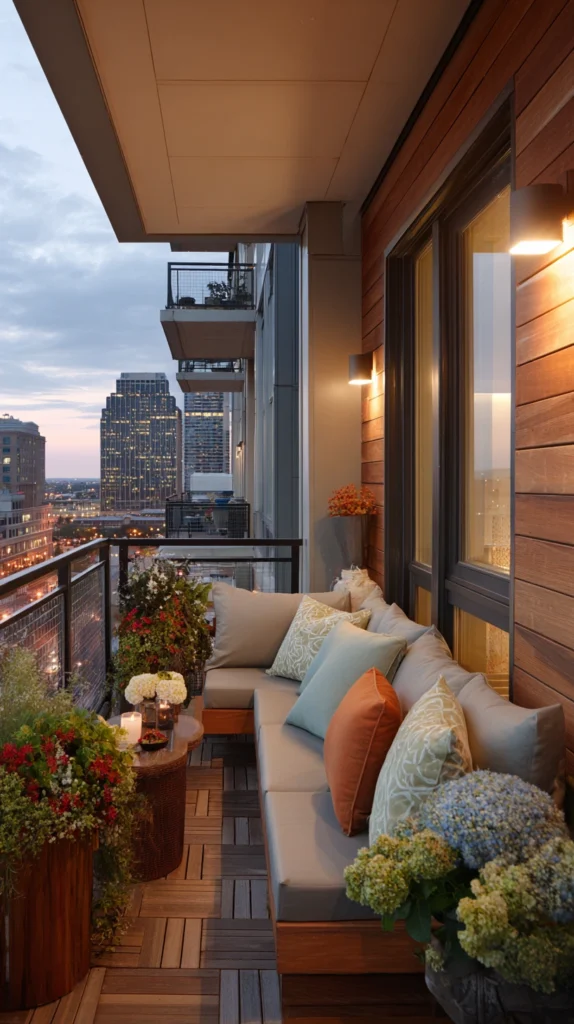
Budget: $100 – $1000
A balcony transformed into an enclosed garden room — with a bamboo or fabric privacy screen on the exposed side, climbing plants on a trellis along the railing, a compact sofa or a pair of chairs with a small table, and string lights overhead — is the urban equivalent of a garden and, in its best versions, produces an evening experience that is more intimate and more private than many ground-level gardens can offer. The height, the view, and the feeling of being above the street in a green-walled, lit space is a specific pleasure available only to balcony living.
A bamboo privacy screen along the railing costs $20 – $60. A compact outdoor loveseat or two folding chairs — $80 – $250 — furnish the space at balcony scale without overcrowding it. Climbing plants in pots along the railing — trailing jasmine, climbing rose, or star jasmine — cost $15 – $30 each and create the green-walled quality within one to two seasons. String lights strung across the overhead space — $20 – $50 — provide the evening light source that makes the balcony as usable at 10pm as at 7pm.
Evening tip: Choose plants for a balcony garden room that release their fragrance in the evening rather than in the daytime — jasmine, nicotiana, and evening primrose all intensify their scent after sunset and produce a fragrant balcony that is specifically better in the evening than at any other time of day. An evening fragrance garden on a balcony is one of the most sensory outdoor living experiences available in an urban setting.
12. The Meadow Garden Picnic Space
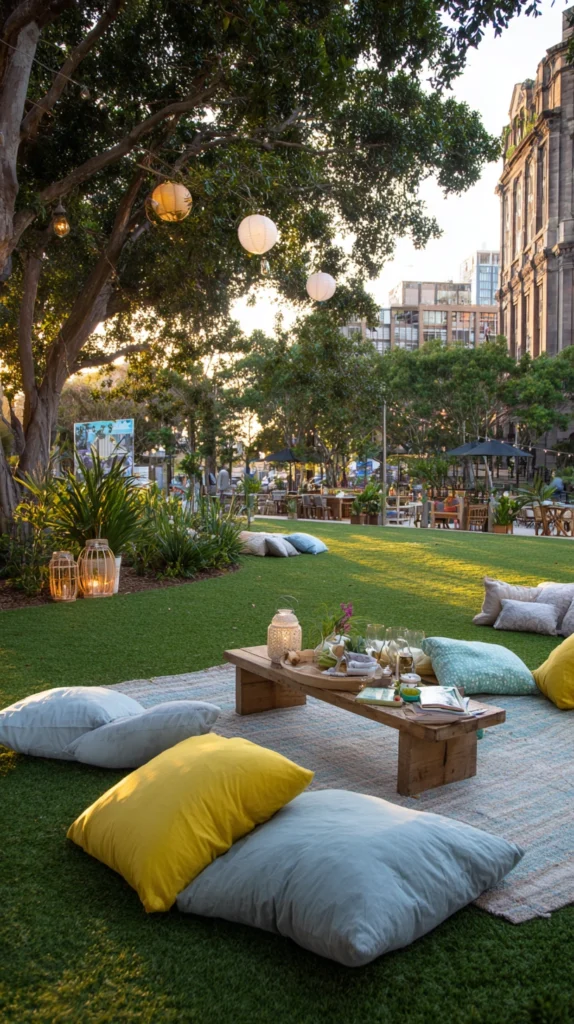
Budget: $40 – $300
A meadow-style garden area — or simply a section of lawn allowed to grow slightly longer and planted with wildflowers at the edges — with a permanent picnic blanket arrangement: a large waterproof-backed outdoor rug, a stack of folded blankets in a weatherproof basket, low lanterns at the corners, and a wicker basket stocked for impromptu evenings — is the outdoor living space with the lowest barrier to use. No furniture to move, no table to set, no preparation required beyond walking to the basket and unfolding a blanket. The evening is available immediately.
A large outdoor rug as the base layer costs $40 – $120. A weatherproof wicker or rattan storage basket for blankets — $30 – $80 — keeps them accessible without requiring retrieval from inside the house. Four corner lanterns — $15 – $40 each — define the edges of the space and provide the evening light source. A wicker picnic hamper stocked with glasses, a corkscrew, and a cutting board — $40 – $120 — completes the arrangement. Total investment sits at $125 – $360 for an outdoor space that is used spontaneously and effortlessly throughout the summer.
Evening tip: Stock the picnic basket permanently with the non-perishable components of an impromptu evening — glasses, a corkscrew, a cutting board, a small candle in a glass, a lighter, and a set of napkins — so that the only decision required for an unplanned outdoor evening is what food and drink to bring from the kitchen. An outdoor space that requires twenty minutes of preparation before use is a space that gets used on planned occasions. One that requires two minutes gets used every warm evening.
13. The Treehouse or Elevated Platform Evening Space
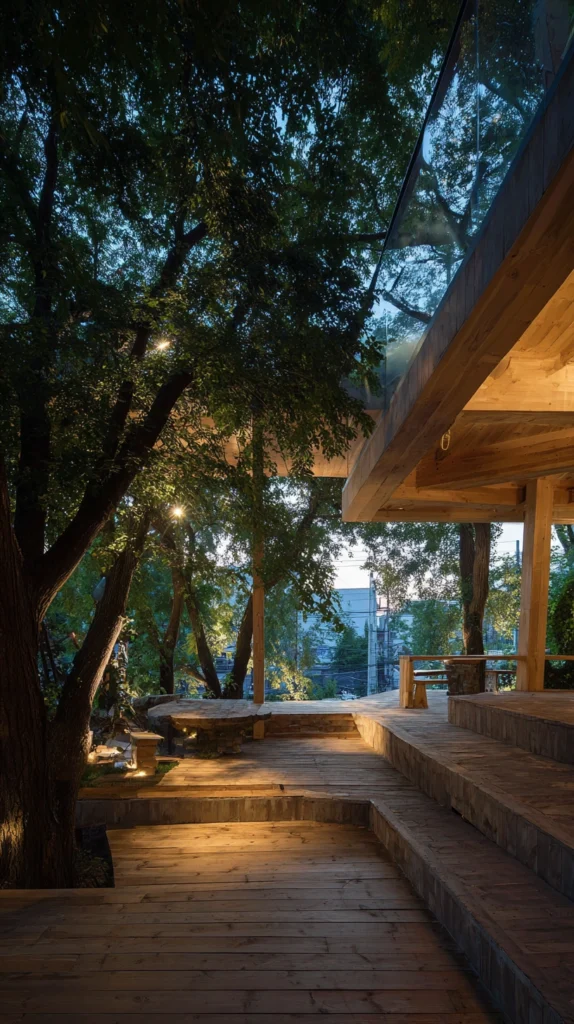
Budget: $500 – $8000
An elevated platform in a mature tree — even a simple decked structure at two to three metres of height — produces an outdoor evening experience that ground-level spaces cannot approach. The view from above the garden, the sound of wind in the leaves at that height, and the particular quality of sitting in a tree rather than beneath one while the sky darkens overhead — these are experiences available only from this format, and they are as rare and as genuinely pleasurable for adults as they are for children.
A basic timber treehouse platform with railing and ladder access costs $500 – $2000 in materials for a competent DIY build. A fully developed platform with weatherproof decking, built-in seating, and solar lighting runs $2000 – $5000. Two folding chairs and a small fold-flat table on the platform add $80 – $200 and are stored on the platform rather than retrieved from the house. Battery-powered fairy lights wrapped around the overhead branches — $15 – $30 — provide the evening light without requiring electrical cable management in the tree.
Evening tip: Equip the treehouse platform with a simple pulley system — a rope and a small basket that can be raised and lowered — so that drinks and food can be sent up from the garden below without either occupant descending. The pulley costs $15 – $30 to install and is one of those small details that makes the platform feel like a genuinely designed evening space rather than a place to sit that happens to be high up. The ritual of pulling up the evening’s provisions is itself one of the pleasures.
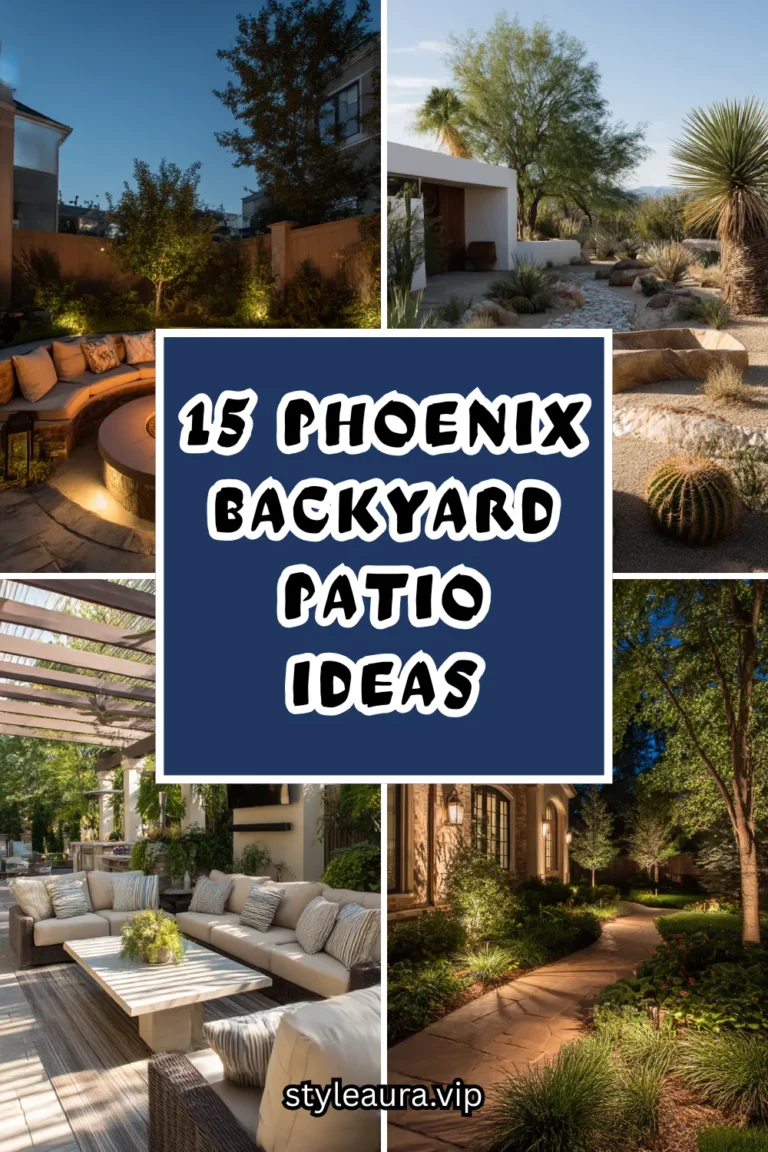
14. The Desert or Xeriscape Garden Lounge
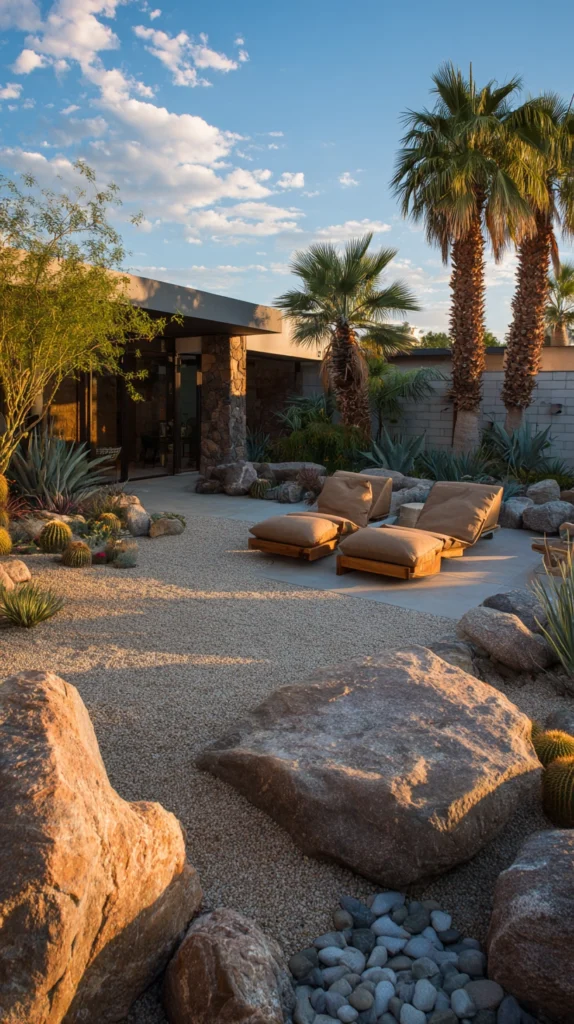
Budget: $200 – $2000
A garden designed around drought-tolerant planting — agaves, ornamental grasses, lavender, rosemary, and sculptural succulents — with gravel or crushed stone as the ground surface and low, considered furniture placed among the planting rather than on a separate patio area, creates an outdoor living space that feels genuinely of a specific landscape rather than simply placed in a garden. In summer evenings, the warm stone surfaces of a xeriscape garden release the heat of the day slowly, the lavender and rosemary release their oils into the cooling air, and the landscape that surrounds the seating feels ancient and considered simultaneously.
Drought-tolerant plants in a range of sizes — agave, lavender, ornamental grasses, and rosemary — cost $10 – $40 each depending on species and maturity. Crushed gravel or decomposed granite as a ground surface costs $30 – $80 per square metre installed. Two to four low chairs or a simple bench placed directly among the planting — $100 – $400 — creates a seating arrangement that feels embedded in the landscape rather than positioned in front of it. Simple corten steel or ceramic lanterns at ground level — $20 – $60 each — provide the evening light in a material that suits the desert aesthetic.
Evening tip: Plant at least one night-blooming or evening-fragrant species within the xeriscape arrangement — evening primrose, night-blooming jasmine, or four o’clock flowers all open or intensify in the evening and transform the scent of the garden at precisely the hours when the outdoor space is being used. A garden that becomes more beautiful and more fragrant as the evening progresses rather than less so is a garden that actively rewards the decision to stay outside.
Whatever combination of these fourteen outdoor living spaces finds its way into the garden or terrace this summer, the principle that holds all of them together is the same one that holds any well-designed room together: the space should be designed for the experience it is meant to contain, not simply furnished for the function it is meant to perform.
A summer evening outdoors is not a function. It is an experience — one of the best the season makes available — and it deserves a space that was designed around it with the same care and intention that the best indoor rooms receive. Plan it before summer arrives. Build it with enough permanence to be there on the first warm evening without preparation. And then use it consistently, because the best outdoor living spaces are not preserved — they are lived in, and they become more themselves with every evening that passes through them.