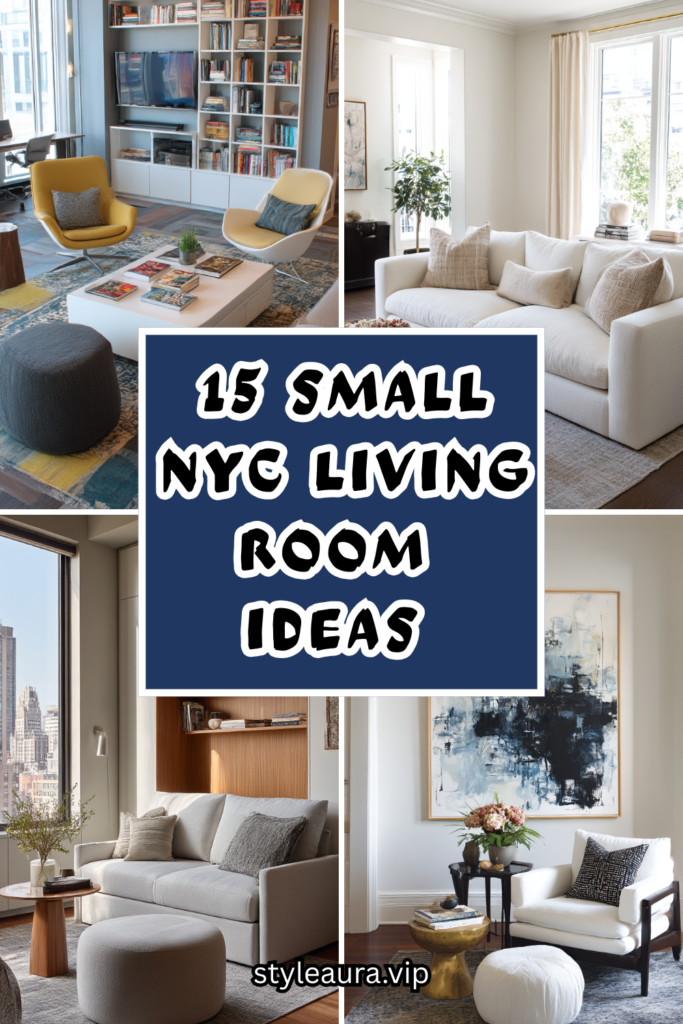
15 Small NYC Living Room Ideas Designers Actually Swear By
New York City living rooms are their own specific, completely fascinating design category — a category governed not by the conventional principles of residential interior design but by the specific, demanding, and genuinely creative constraints of urban density, vertical living, and the particular New York reality that the square footage available for domestic life is always, without exception, less than one would ideally choose and more than one initially feared one could make beautiful. The small NYC living room is not a problem to be solved with apology and compromise.
It is a design challenge of the most interesting and the most rewarding kind — the kind that separates the designers who understand space from the ones who merely understand decoration, and that produces, in the hands of someone with genuine spatial intelligence and genuine creative confidence, interiors of such complete, considered, and genuinely extraordinary beauty that their scale becomes not their limitation but their most defining and most admirable quality.
Here are 15 small NYC living room ideas that designers actually swear by — the strategies, the principles, and the specific interventions that transform the compact Manhattan living room from a source of anxiety into a source of genuine, daily, completely urban pride.
1. Paint the Walls, Ceiling, and Trim the Same Color
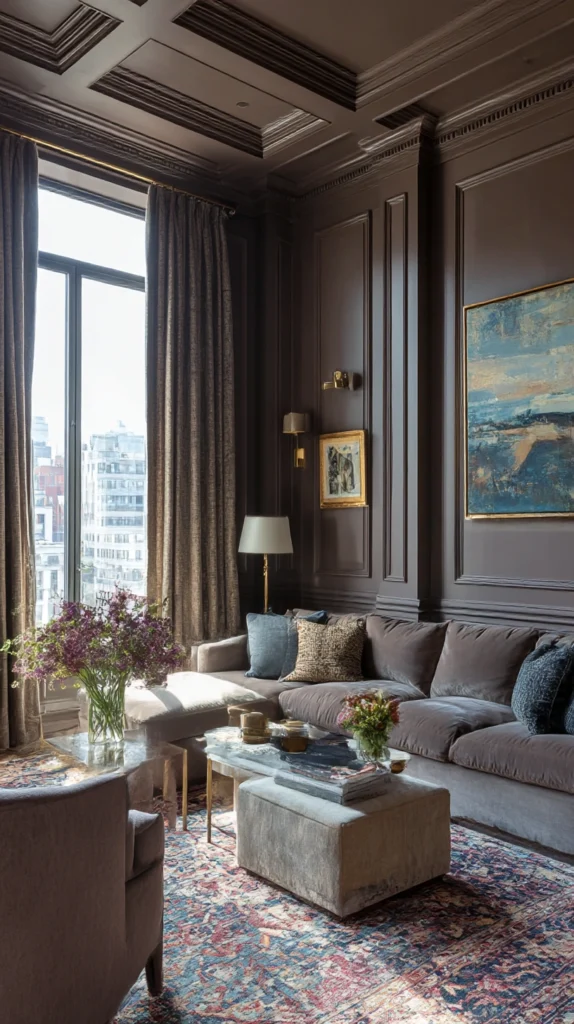
The single most transformative and most immediately effective spatial trick available to the small NYC living room is the one that the most confident and the most spatially intelligent interior designers deploy first and most consistently — the painting of every surface in the room, walls and ceiling and trim alike, in a single, continuous color that eliminates the visual fragmentation produced by the conventional contrast between wall color and ceiling white and creates instead the impression of a seamless, enveloping color environment of considerably greater apparent depth and considerably greater spatial generosity than the room’s actual dimensions would independently suggest.
Choose a color of genuine warmth and genuine decorative interest — a deep, sophisticated olive green, a warm, complex terracotta, a rich, enveloping navy — and apply it with complete consistency to every surface for a small living room that feels not cramped but genuinely, dramatically, and beautifully immersive.
2. Choose Furniture with Exposed Legs Throughout
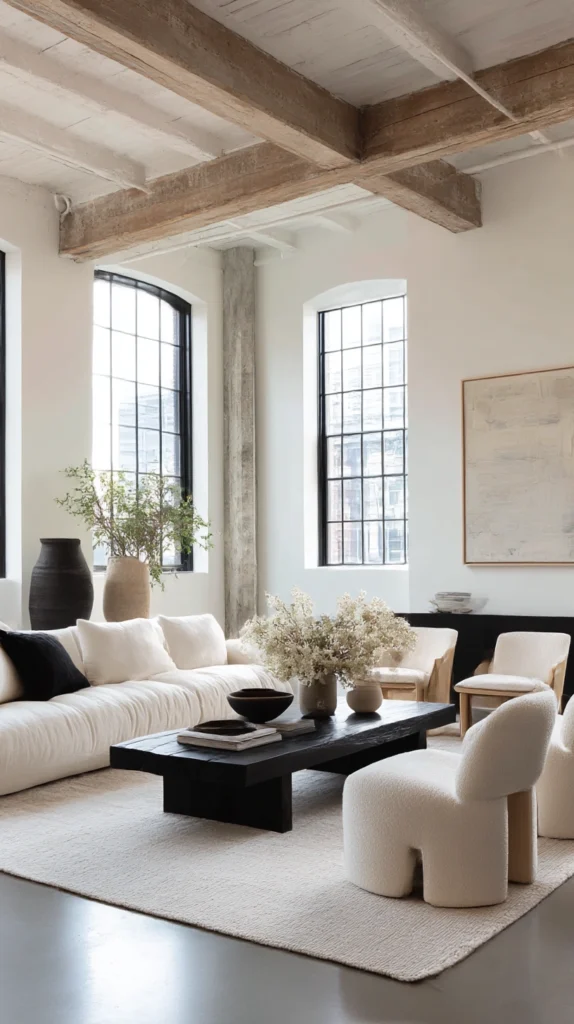
The furniture of a small NYC living room must be chosen with the specific spatial intelligence that compact rooms demand — the understanding that the visual weight of every piece of furniture contributes to the room’s overall sense of either spaciousness or crowding, and that the single most reliable way to reduce the visual weight of any upholstered piece without reducing its actual size or its actual comfort is to expose its legs.
A sofa raised on slim timber or metal legs, a coffee table whose transparent or slender structure allows the floor to be visible through and beneath it, armchairs on tapered wooden legs of genuine mid-century elegance — all of these create the impression of more floor visible beneath the furniture than a skirted or platform equivalent would allow, and more visible floor always reads as more available space in a small room.
3. Install Floor-to-Ceiling Bookshelves on One Full Wall
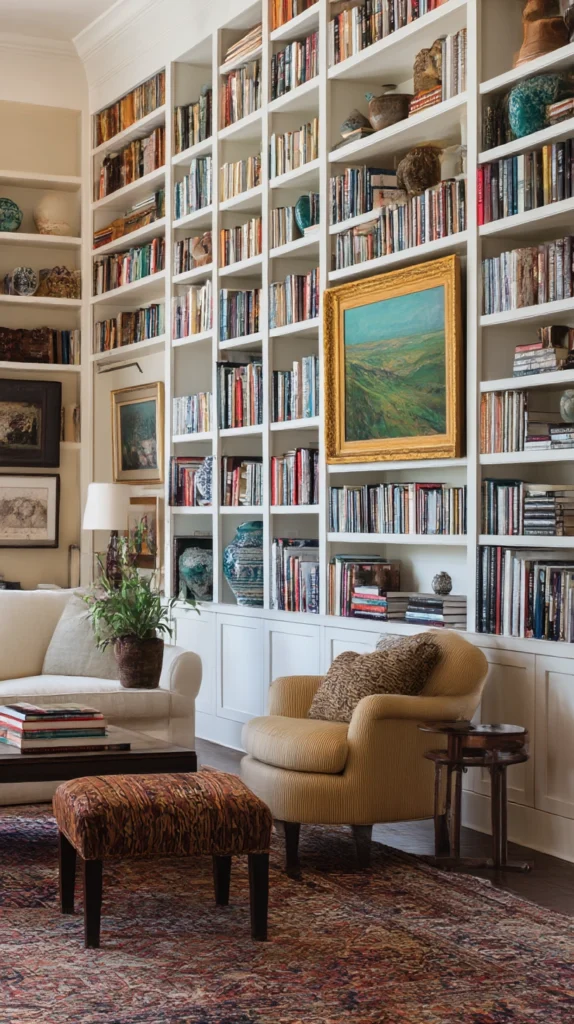
The small NYC living room that dedicates one complete wall to floor-to-ceiling bookshelves — built-in or freestanding, timber or painted, simple or architecturally elaborate — makes a spatial decision of extraordinary intelligence and extraordinary practical reward.
The full-wall bookshelf performs multiple spatial functions simultaneously: it draws the eye to the wall’s full height, creating the impression of greater ceiling height than the room actually possesses. It provides storage of sufficient quantity to eliminate every other storage piece from the room, reducing the total number of furniture items and the total visual complexity of the space.
It creates a richly layered, deeply personal decorative backdrop of books, objects, and botanical elements that gives the small room the quality of a large one — the quality of genuine, accumulated, fully inhabited domestic depth.
4. Use Mirrors Strategically and Generously
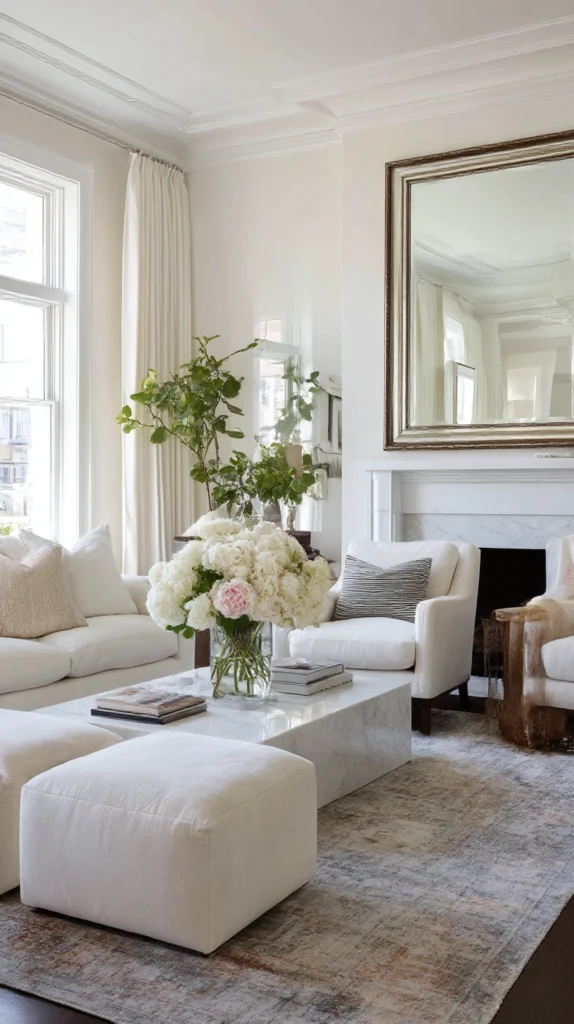
The mirror is the small NYC living room designer’s most reliable and most consistently effective spatial tool — the decorative element that doubles the apparent depth of any wall it inhabits, reflects the room’s available natural light back into the space with doubled luminosity, and creates the specific optical illusion of greater room width, greater room depth, or greater room height depending on the orientation and the positioning of its reflective surface.
A large, floor-leaning mirror on the living room’s darkest wall reflects the window opposite it and creates the impression of a second window of equal size.
A series of smaller mirrors arranged in a gallery-style composition on the wall above the sofa creates a decorative element of considerable visual interest while performing the same spatial amplification as a single large piece.
5. Invest in One Genuinely Great Sofa Rather Than Multiple Lesser Pieces
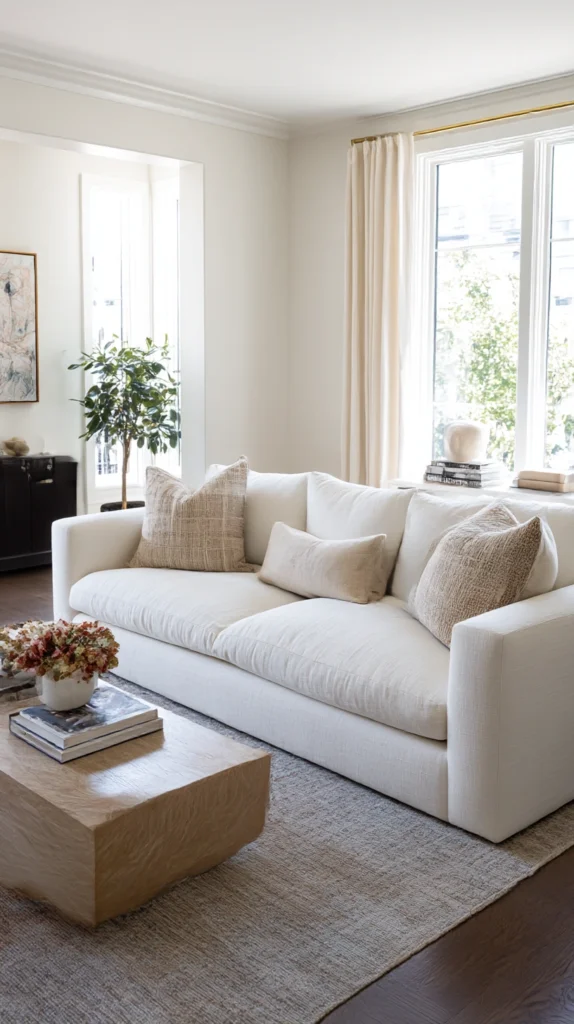
The temptation of the small NYC living room decorator is to furnish with multiple small pieces in the belief that smaller furniture will make the room feel larger — a belief that is, in the experience of every designer who has worked seriously with compact urban spaces, almost always and almost completely wrong.
Multiple small pieces create visual complexity, visual fragmentation, and the specific quality of spatial crowding that comes not from the actual dimensions of the furniture but from the number of individual pieces competing for the eye’s attention within a limited field of view.
One genuinely great sofa — properly scaled for the room, beautifully upholstered in a fabric of genuine quality, positioned with complete spatial confidence — and one or two carefully chosen accompanying pieces creates a living room of greater apparent spaciousness, greater visual calm, and greater genuine comfort than any collection of smaller, individually inadequate furniture could achieve.
6. Take the Curtains from Ceiling to Floor in a Pale, Sheer Fabric
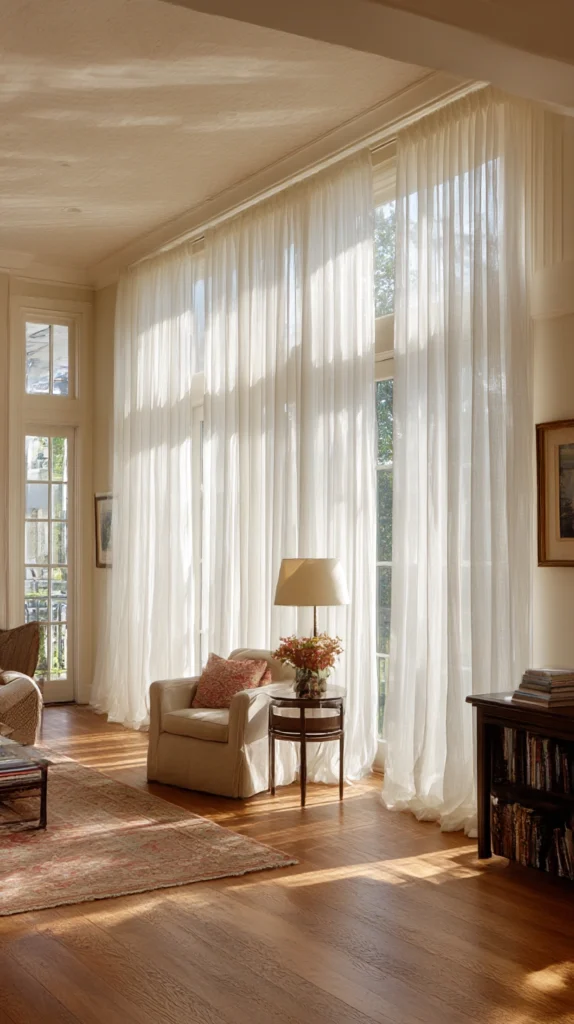
Ceiling-height curtains in a pale, sheer fabric are the small NYC living room’s most powerful and most architecturally sophisticated vertical trick — the window treatment that draws the eye from the floor to the ceiling in a continuous, uninterrupted vertical line that makes the room’s ceiling feel higher, the room’s windows feel larger, and the room’s overall spatial character feel more generous, more gracious, and more genuinely residential than any shorter or heavier curtain treatment could achieve.
Fix the curtain rod at the highest possible point — immediately below the ceiling if the architecture allows — extend it well beyond the window frame on both sides so that the curtains clear the window completely when open, and choose a pale, semi-sheer linen or voile that filters the light into the room without blocking it.
7. Choose a Sofa in the Room’s Dominant Color
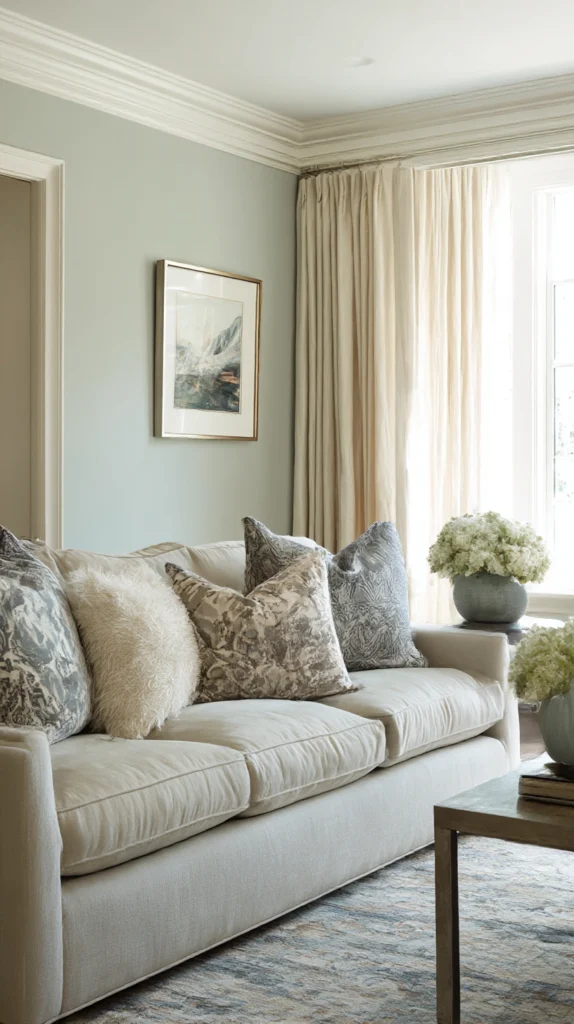
A sofa chosen in the same color family as the room’s walls — not an identical match but a tonal relation, a tone or two darker or lighter than the wall color, or in a complementary fabric texture of the same chromatic register — creates the specific spatial effect that designers call color zoning and that small rooms benefit from enormously.
When the largest piece of furniture in a room does not contrast dramatically with the walls surrounding it, the room reads as a continuous spatial whole rather than a collection of individually competing elements, and the eye moves through the space with a fluidity and a freedom that the high-contrast sofa-against-pale-wall arrangement, however conventional, actively prevents.
8. Embrace Vertical Storage Solutions Throughout
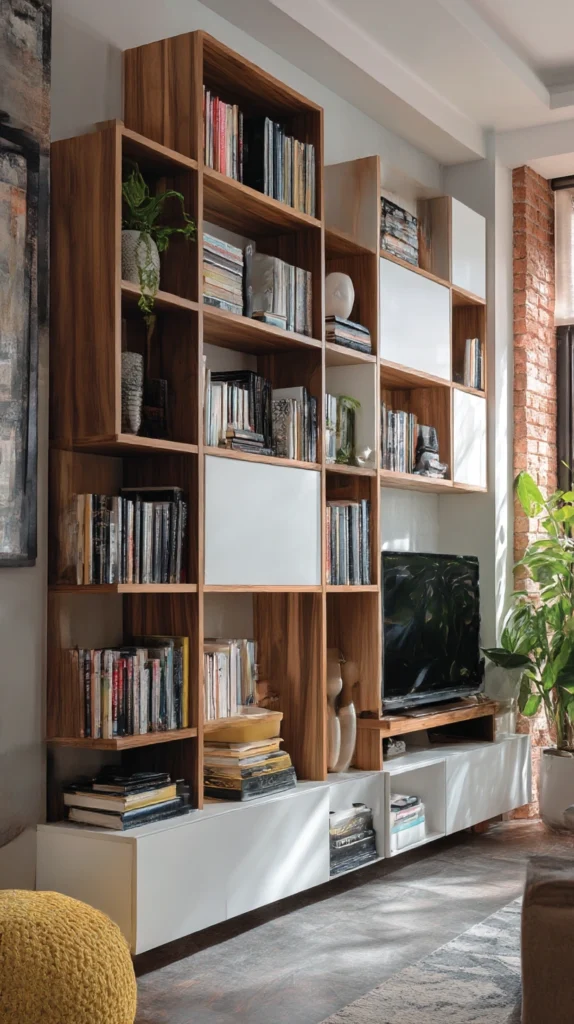
In a small NYC living room where floor space is the scarcest and the most valuable spatial resource available, the vertical dimension of the room — the full height of the wall from floor to ceiling, the depth of the space above every door frame, the potential of every vertical surface from the entry wall to the window wall — is the storage and the decorative resource of most completely underutilised potential and most completely transformative practical reward. Wall-mounted shelving at varying heights.
Tall, slim console tables used as vertical display and storage surfaces. Picture ledges mounted high on the wall for art display that requires no floor space whatsoever. The NYC living room that thinks vertically is the living room that finds space where the horizontally-minded decorator finds none.
9. Use a Lucite or Glass Coffee Table
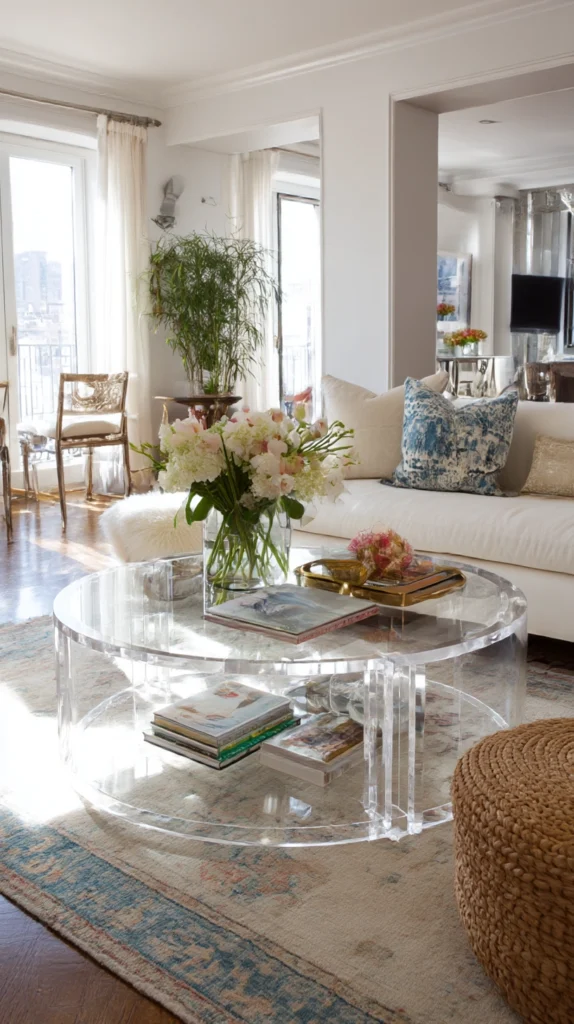
The coffee table of a small NYC living room should be chosen with the specific spatial intelligence that the room’s compact dimensions demand — and the coffee table of most complete spatial intelligence available in any material or any form is the one made of transparent or semi-transparent material whose visual footprint is significantly smaller than its actual footprint.
A lucite or acrylic coffee table in a simple, well-proportioned form takes up the same physical space as a solid timber equivalent of the same dimensions but takes up almost none of the visual space — allowing the eye to travel across and through it to the floor and the furniture beyond with a continuity of spatial flow that no opaque coffee table, however beautifully designed, can provide. The glass or lucite coffee table is the small living room’s great spatial illusionist.
10. Layer Lighting Instead of Relying on Overhead Sources
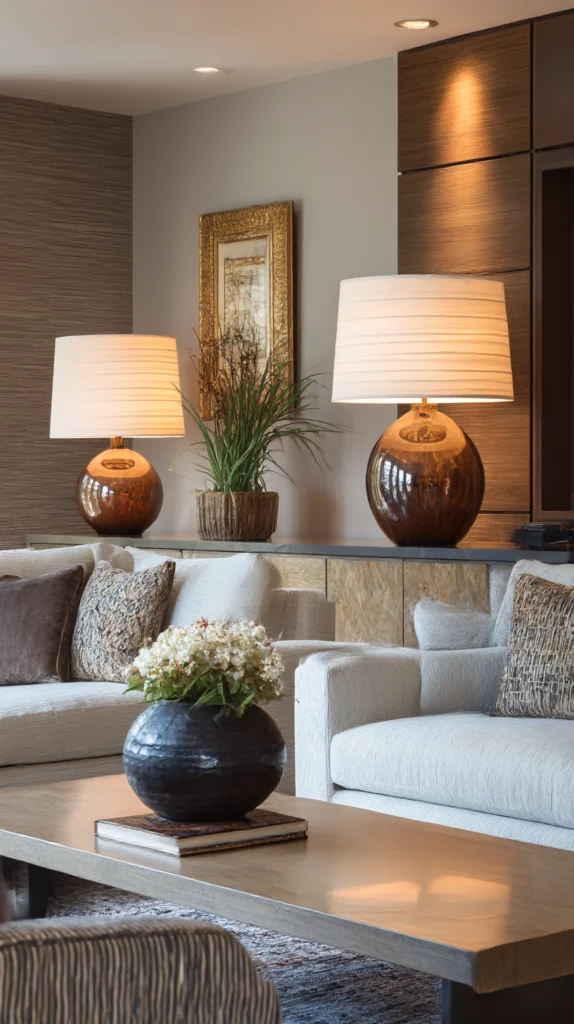
The overhead lighting fixture of a small NYC living room — the ceiling-mounted pendant or the flush fitting that provides the room’s primary illumination — creates, when used alone and at full intensity, a quality of flat, undifferentiated, top-down light that makes a small room feel simultaneously over-bright and spatially shallow.
Layered lighting — the table lamp creating a pool of warm light at the sofa’s end, the floor lamp providing a column of directed warmth in the reading corner, the picture light illuminating the artwork above the bookshelf, the small LED strip behind the television providing bias lighting of atmospheric warmth and depth — creates a small living room of considerably greater spatial complexity, considerably greater atmospheric richness, and considerably greater apparent depth than any single overhead source could produce.
11. Choose Multifunctional Furniture Without Exception
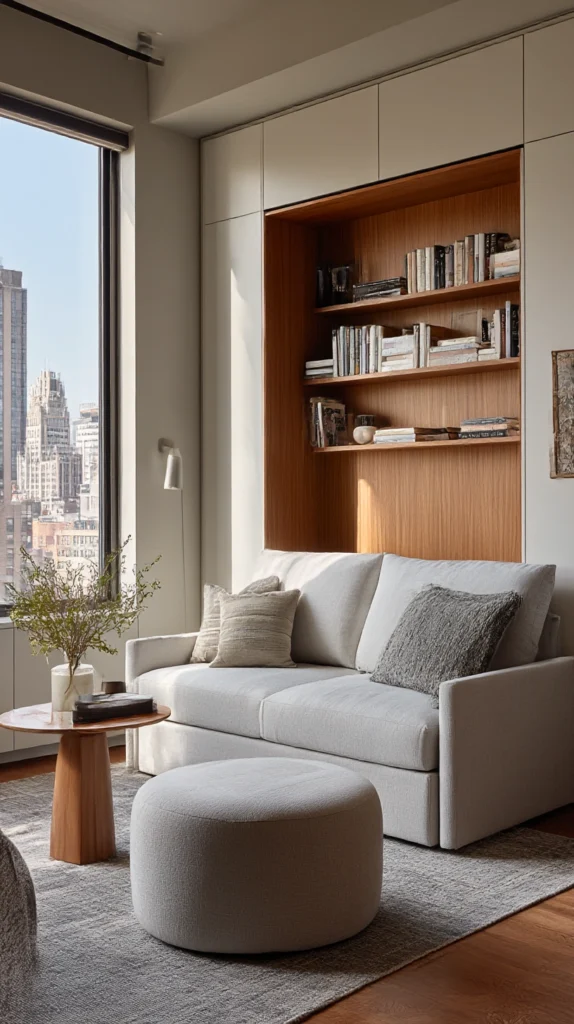
The small NYC living room cannot afford the luxury of single-function furniture — cannot accommodate the ottoman that only rests the feet, the side table that only holds the lamp, or the bench that only provides occasional seating for an additional guest.
Every piece of furniture in the compact urban living room must justify its spatial occupancy through the delivery of multiple functions performed simultaneously and performed well. An ottoman with internal storage. A sofa bed of genuinely comfortable sleeping quality for the overnight guest.
A console table that serves as a desk, a bar surface, and an entry table simultaneously. A side table with a shelf below for book storage. Multifunctional furniture in the NYC living room is not a compromise — it is the most sophisticated and the most spatially intelligent form of domestic design.
12. Keep the Floor as Clear as Possible
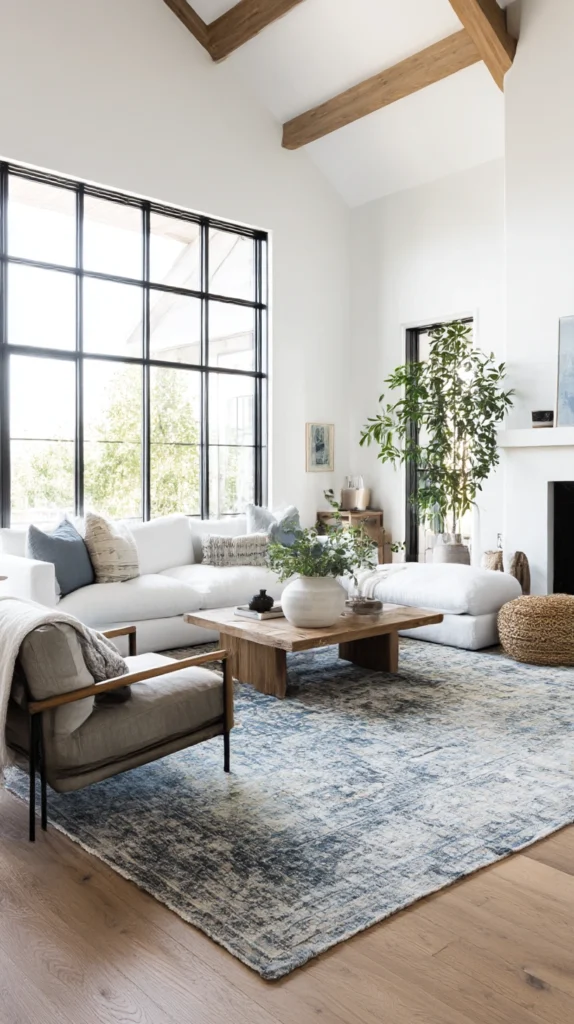
The floor of a small NYC living room is the room’s most spatially critical surface — the horizontal plane whose visible extent most directly and most immediately determines the room’s perceived size, and whose interruption by furniture legs, rugs, and stored objects creates the specific quality of visual crowding that makes compact rooms feel smaller than they are.
Keep the floor as clear as possible, as visible as possible, and as continuous as possible — choosing furniture with exposed legs rather than platforms, selecting a rug of sufficient size to anchor the furniture arrangement without fragmenting the floor into multiple competing zones, and eliminating every floor-level storage solution in favor of vertical alternatives mounted on the walls above the floor. The clear floor is the small living room’s most powerful spatial statement.
13. Edit the Art Collection to a Few Significant Pieces
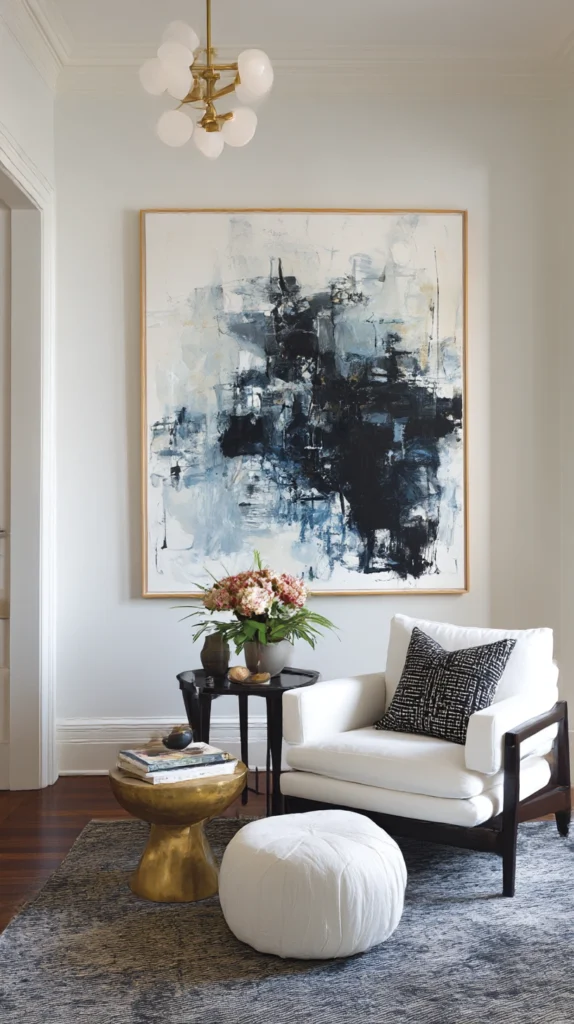
The art of a small NYC living room should be edited with the same spatial intelligence and the same aesthetic discipline applied to every other element of the compact interior — reduced to the pieces of most significant individual impact, hung with complete compositional confidence, and given the breathing room and the wall space that each genuinely significant piece deserves and requires.
A single large-format artwork hung on the room’s most prominent wall creates a focal point of considerable spatial drama and considerable decorative authority that a dense gallery arrangement of smaller pieces, however individually beautiful, cannot match in a small room where wall space is limited and visual competition between multiple elements always reduces the impact of each. In the small NYC living room, one extraordinary piece is always more powerful than ten adequate ones.
14. Design a Dedicated Work Zone That Disappears
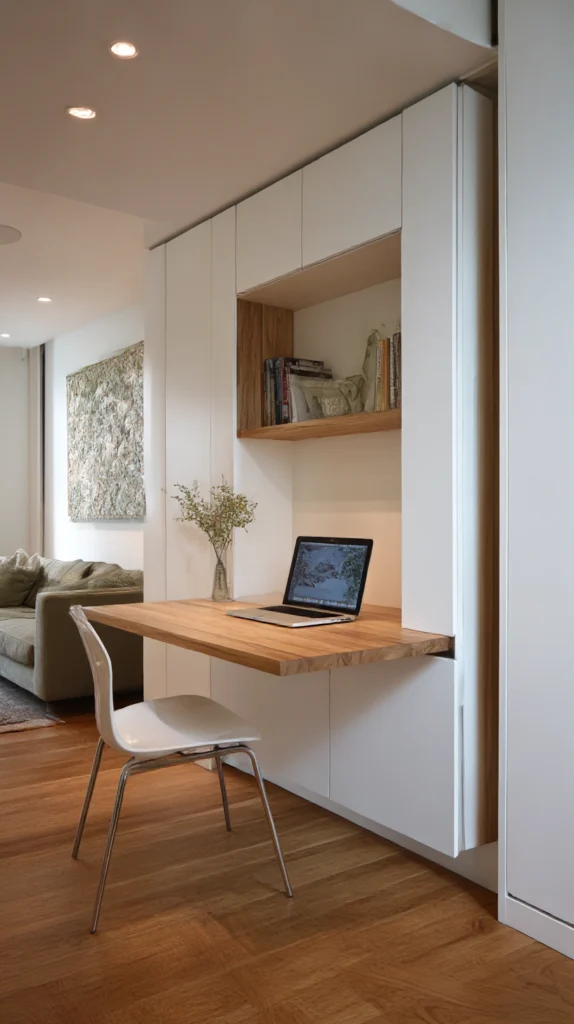
The small NYC living room increasingly serves double or triple domestic duty — as social space, as home office, as occasional dining room — and the design intelligence that accommodates these multiple functions without allowing any of them to permanently colonise the space at the expense of the others is the intelligence of the disappearing work zone.
A slim, wall-mounted desk that folds flat against the wall when not in use. A secretary desk whose working surface closes to reveal a decorative front of complete residential appropriateness.
A console table positioned against the window wall that serves as a desk during working hours and as a display surface during every other hour of the day. The work zone that disappears is the small NYC living room’s most practically important and most spatially considerate design intervention.
15. Design the Room for the Life You Actually Live in It
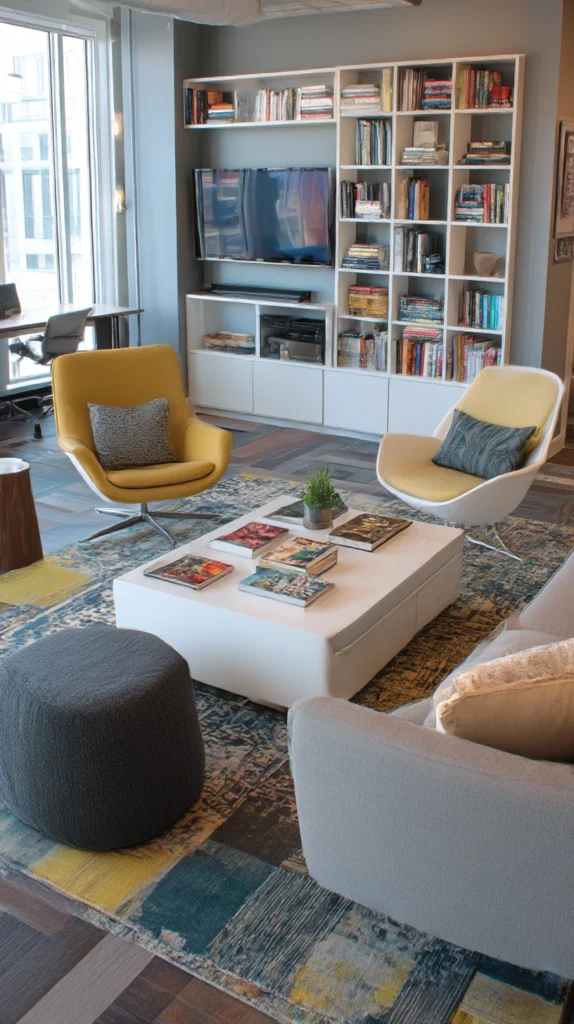
The final and most important small NYC living room idea that designers actually swear by is the one that precedes every other decision on this list — the principle of designing the room not for the life that might be lived in it, not for the hypothetical entertaining occasions or the imagined social gatherings that the conventional living room is designed to accommodate, but for the specific, actual, daily life of the specific person or people who inhabit it every day. A New Yorker who never entertains formally does not need a sofa that seats six. A remote worker who spends eight hours daily at a desk needs that desk designed as a genuine, properly equipped work environment rather than an apologetic fold-out shelf behind the sofa.
A reader who considers their book collection among their most important possessions needs shelving that honours that collection with the generosity, the organisation, and the genuine architectural presence it deserves. Design the small NYC living room for the life you actually live in — and it will be, however modest its square footage, exactly the right size.
The small NYC living room designed with genuine spatial intelligence, genuine design confidence, and genuine knowledge of the specific life it is intended to serve is not a room of compromise or limitation.
It is one of the most completely designed, most rigorously considered, and most genuinely extraordinary domestic environments available in the most creative and most spatially demanding city in the world. Design it with that ambition, that intelligence, and that complete creative commitment — and the room you create will be, every day you live in it, exactly as large as it needs to be.