15 Thanksgiving Guest Room Prep Ideas
A guest room prepared well for Thanksgiving does something a hotel room never quite manages — it makes someone feel expected rather than accommodated.
The difference between a room that was clearly set up for the visit and one that was cleared out and left to fend for itself is felt immediately. Guests notice without being able to articulate exactly what they’re noticing.

These fifteen ideas cover bedding, lighting, storage, small hospitality gestures, and the practical details that actually matter to someone sleeping in an unfamiliar room for two or three nights. Each one is specific enough to act on and budget-conscious enough to be realistic.
1. Layer the Bed with More Than One Blanket Weight
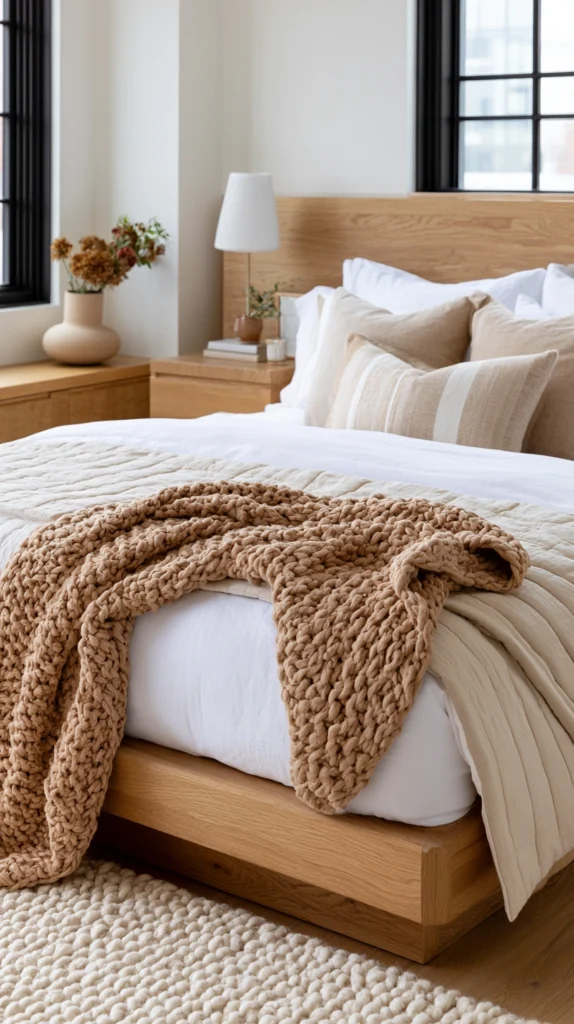
A guest sleeping in your home doesn’t know the room’s temperature patterns. They don’t know whether it gets cold at 2am or warm by 7am.
Layering two or three blanket weights on the bed solves this without requiring a conversation. A thin cotton blanket directly over the top sheet, a medium-weight quilt or duvet in the middle, and a heavier throw folded at the foot of the bed gives the guest everything they need to adjust through the night without getting up to find extra bedding.
For Thanksgiving, choose bedding in warm neutrals — warm white, oatmeal, soft cream, or a muted warm grey. These read as intentional and restful rather than themed.
The throw at the foot of the bed is the most visible element in the layering from the doorway. Choose one with texture and warmth — a chunky knit or woven cotton in a caramel or warm rust tone reads as fall without being seasonal decor.
Tip: Wash all bedding immediately before the guest arrives rather than the week before. Freshly laundered bedding has a distinct quality that guests recognize — it signals preparation rather than convenience.
Budget: $25–$60 for a new throw if needed
2. Clear Genuine Storage Space in the Closet and Dresser
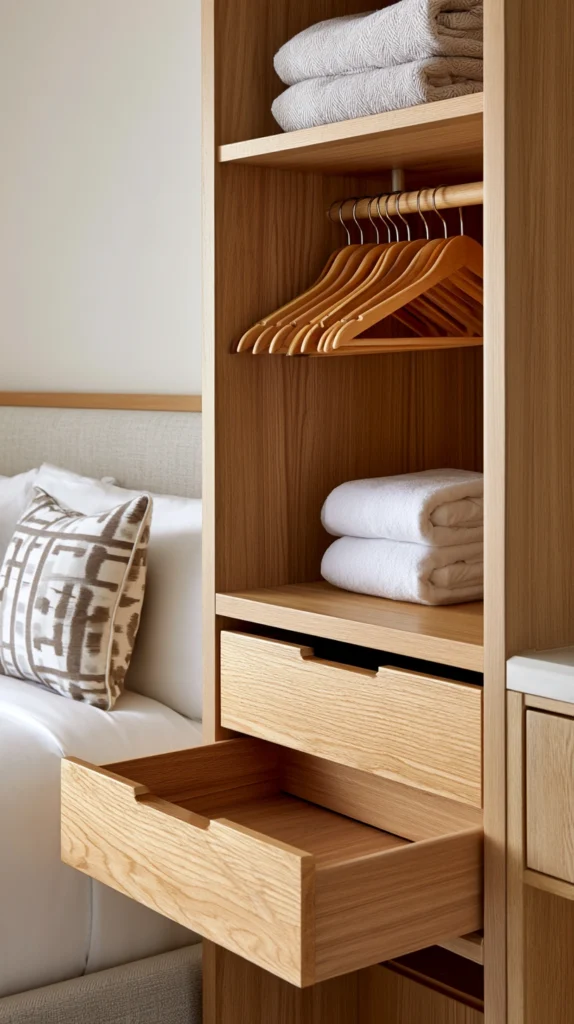
The most common guest room failure is a closet full of the host’s stored items with one or two hangers pushed aside.
A guest staying for two to three nights needs: five to six clear hangers, one shelf or drawer for folded items, and enough floor space to open a suitcase without repositioning it. Nothing more, but nothing less.
Empty one full dresser drawer completely. Remove items from the closet down to five or six empty hangers on a clear rod. If the closet is genuinely full, a freestanding clothing rack beside the bed communicates the same consideration.
The act of creating space signals that the guest’s comfort was thought about before they arrived — which is the core of what makes a guest feel welcome.
Tip: Add a note on the empty dresser drawer or closet shelf — even a small handwritten card saying “for you” — so the guest knows immediately that the space is intentionally theirs and not something they’re taking over.
Budget: $0 — this is preparation, not a purchase
3. Add a Bedside Water Carafe and Glass
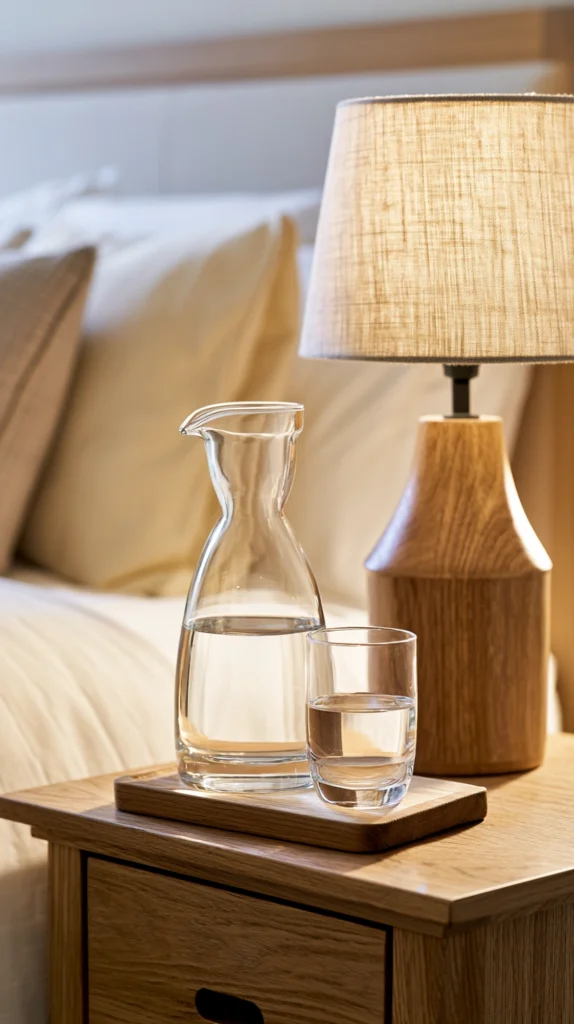
A guest waking at 3am in an unfamiliar house doesn’t always feel comfortable going to find the kitchen.
A small water carafe — or even a simple pitcher — with a glass on the bedside table eliminates that friction entirely. It’s a gesture that reads as thoughtful because it anticipates a need before it’s expressed.
For Thanksgiving, a glass carafe in clear or amber glass on a small wooden tray reads as warm and intentional. A ceramic or stoneware pitcher works equally well and adds a farmhouse quality to the bedside setup.
Refill it fresh on the day of arrival and each morning of the stay.
Glass carafes run $10–$20 on Amazon, TJ Maxx, and kitchen stores. A simple tumbler glass costs $2–$5.
Tip: Add a small ceramic coaster under the glass to protect the bedside surface and to signal that the setup was assembled thoughtfully rather than placed in a hurry.
Budget: $12–$25
4. Provide a Dedicated Towel Set in Fall Tones
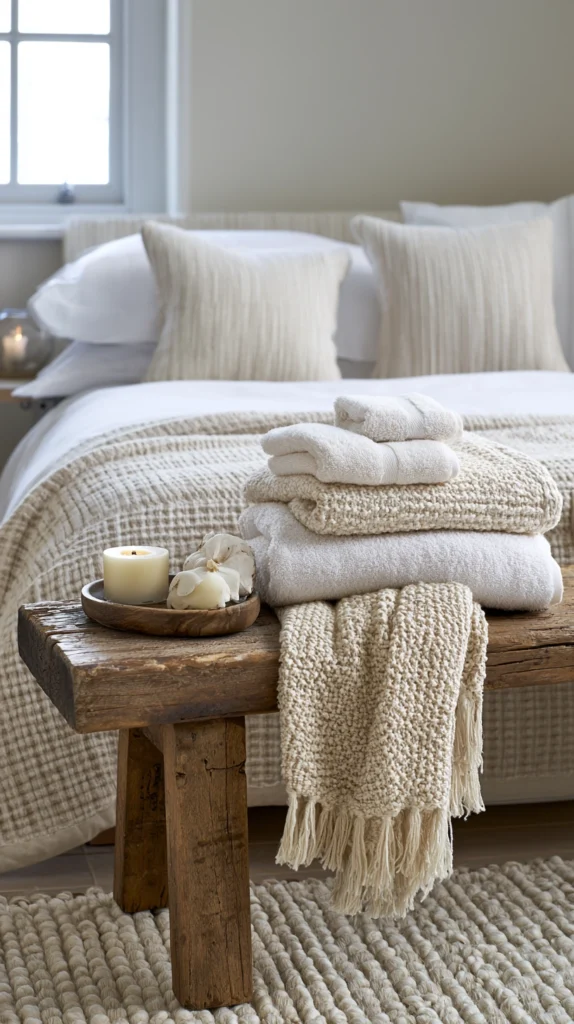
Guests shouldn’t have to ask which towels are theirs. The ambiguity of an open linen closet full of towels in various conditions is one of the small discomforts that accumulates over a stay.
Fold a dedicated set — one bath towel, one hand towel, one washcloth — and place it on the bed, on the dresser, or on a small towel rack in the guest room. The set should be clean, in good condition, and visually distinct from the household’s everyday towels.
For Thanksgiving, towels in a fall-adjacent tone — rust, warm cream, caramel, or terracotta — work as both a hospitality gesture and a small seasonal detail. Tie them with a simple piece of twine or a ribbon to signal they’re a dedicated set.
A matching set of bath, hand, and washcloth towels in a fall tone runs $15–$35 at Target, TJ Maxx, or Amazon.
Tip: Place a small hook on the back of the guest room door or beside the bed if there’s no dedicated towel bar. A hook communicates where the guest should hang their towel between uses — one less thing they have to figure out in an unfamiliar space.
Budget: $15–$35
5. Set Up a Small Bedside Lamp with a Warm Bulb
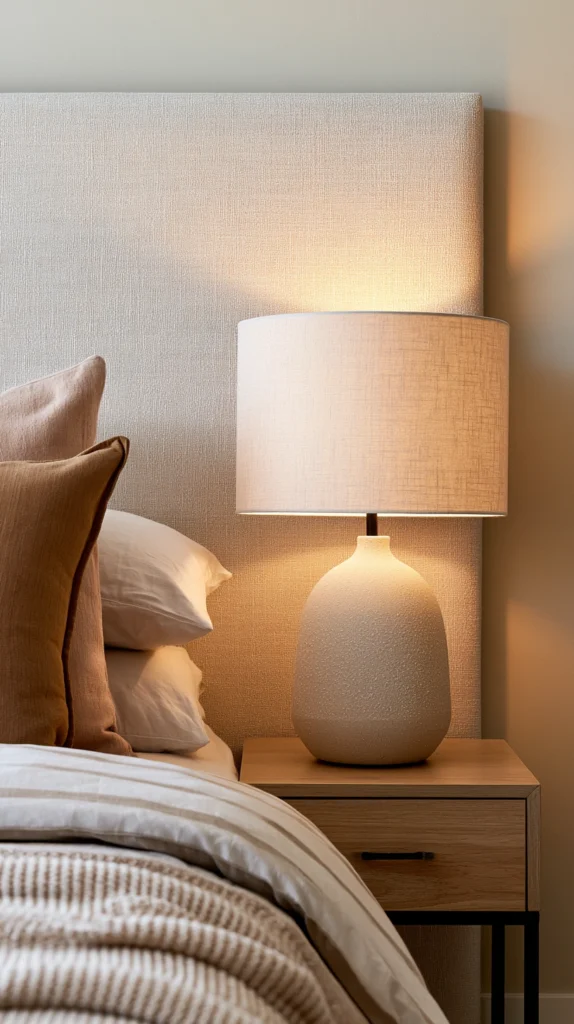
Overhead room lighting at 11pm when someone is winding down for the night is too much. A bedside lamp at the right warmth makes the guest’s evening in the room feel comfortable rather than institutional.
Use a lamp with a fabric shade and a 2700K warm white bulb. If the lamp is already in the room, swap the bulb if it’s anything cooler than 2700K — the difference in warmth quality at close range, used for reading or as a nightlight, is significant.
Position the lamp on the side of the bed most likely to be used — if the room has only one nightstand, center it on the most accessible side of the bed rather than the side closest to the wall.
A simple table lamp with a linen or fabric shade runs $20–$45. A warm white LED bulb is $2–$5.
Tip: Leave the bedside lamp on when the guest first arrives in the room. A lit lamp at arrival creates an immediately welcoming quality that an unlit room with a lamp doesn’t replicate — the warmth is there before the guest even puts their bag down.
Budget: $20–$50
6. Create a Small Welcome Basket for the Bedside or Dresser
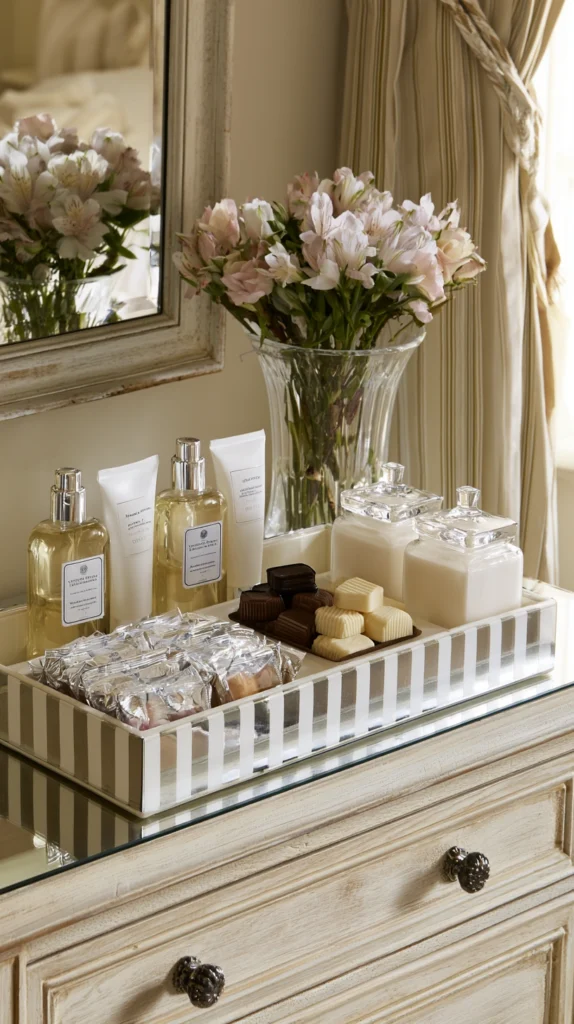
A welcome basket doesn’t need to be elaborate. Three to five thoughtfully chosen items in a small woven basket communicate hospitality more effectively than a larger collection of random objects.
For a Thanksgiving guest room basket: a small hand lotion in a fall-adjacent scent (cedarwood, vanilla, or sandalwood), two or three individually wrapped chocolates or a small bag of mixed nuts, a travel-size hand sanitizer, a sleep mask, and a small notepad and pen. Everything has a use. Nothing feels like filler.
Place the basket on the dresser or nightstand where it’s visible from the doorway on arrival. The guest should see it immediately — a basket tucked in a corner loses most of its welcoming effect.
A small woven or fabric basket runs $4–$10 at craft stores. The basket contents run $10–$20 depending on what’s already in the house.
Tip: Include one item specific to the guest — a favorite snack, a tea variety you know they like, a book you think they’d enjoy. That specific detail is what transforms a welcome basket from a hotel amenity into a personal gesture.
Budget: $15–$30
7. Clear and Organize the Guest Bathroom
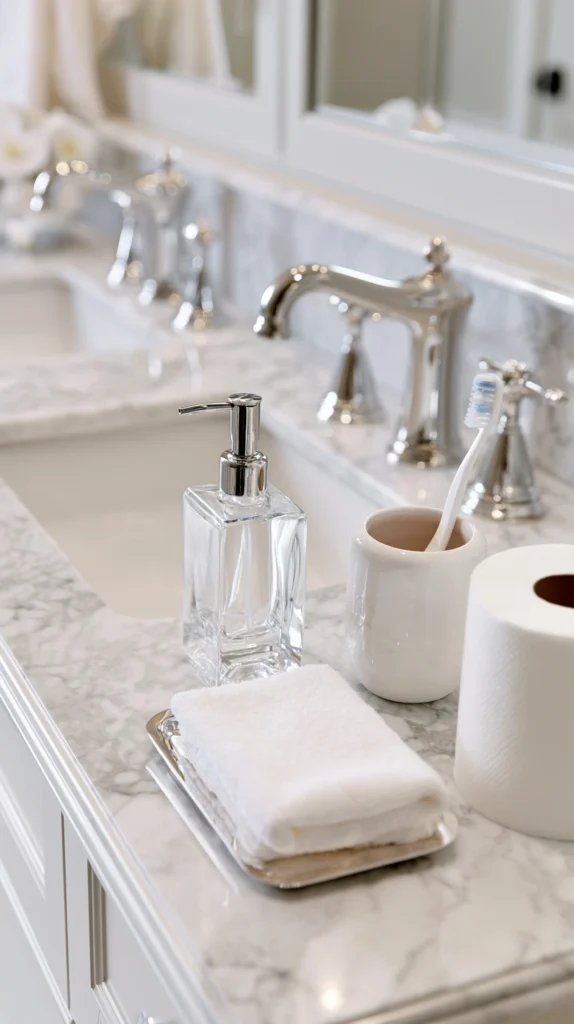
If the guest has a dedicated bathroom, it should be fully cleared of the household’s personal products before arrival.
A bathroom counter covered in the host family’s shampoo, skincare products, and daily-use items is one of the clearest signals that the guest space wasn’t fully prepared. Clear the counter down to nothing, then add only guest-specific items: a clean soap bar or refilled soap dispenser, a clean hand towel, a small cup for the toothbrush, and a roll of fresh toilet paper.
If the guest shares a bathroom, designate one shelf or one section of the counter clearly as the guest’s area and communicate it directly. A small tray with their name on a card, or a dedicated shelf with a note, removes the awkwardness of not knowing where to put things.
Tip: Add a small basket under the sink stocked with travel-size essentials — toothpaste, a disposable razor, a hair tie, cotton rounds, pain reliever. A guest who forgot something at home and finds it here will remember the gesture specifically.
Budget: $10–$20 for a basket of travel essentials
8. Provide a Phone Charger or Charging Station
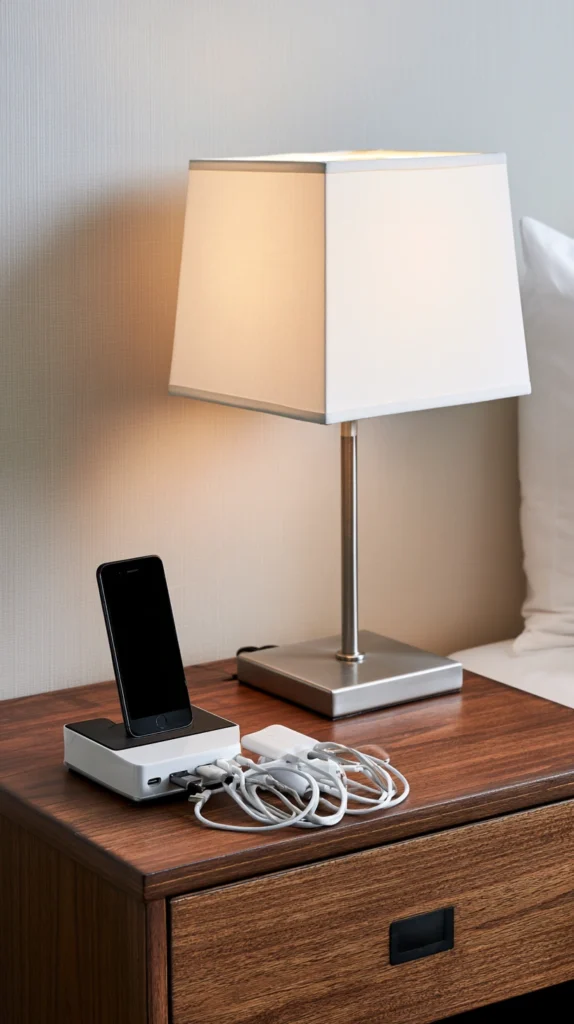
Every guest has a phone that needs charging overnight. Most guests feel slightly awkward asking for a charger or hunting around a room to find one.
A charging station on the nightstand — even a single USB port wall adapter with a short cable — removes that awkwardness and adds a layer of practical consideration that guests remember more than almost any decorative gesture.
For Thanksgiving guests specifically, a multi-port USB hub that accommodates both Lightning and USB-C cables covers most phone types without requiring the guest to produce their own cable.
A simple dual-port USB wall adapter with a 3-foot cable runs $8–$15. A more complete charging station with multiple ports runs $15–$30.
Tip: Label the charger with a small tag that says “for guests” so it doesn’t get repacked accidentally when the guest leaves. A small piece of washi tape on the cable with a note is sufficient.
Budget: $8–$30
9. Add a Fall Scent Element That Isn’t Overpowering
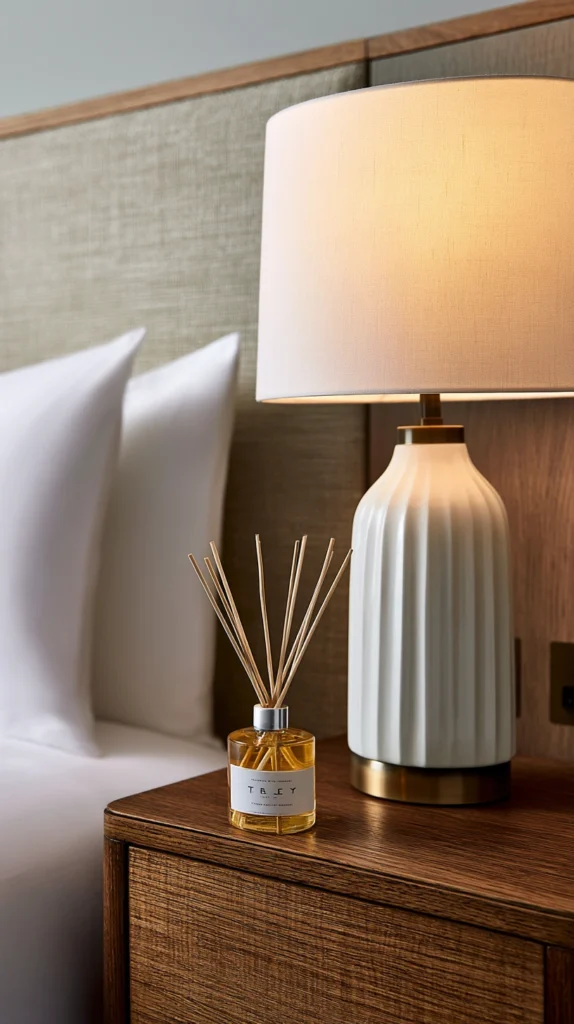
A guest room that smells fresh and faintly seasonal is memorable in the right way. One that smells strongly of air freshener or heavy candle scent is memorable in the wrong way.
The distinction is intensity. A subtle, dry fall scent — cedar, sandalwood, or a faint vanilla — at background level creates atmosphere without announcing itself. A heavily fragranced room makes some guests uncomfortable and can trigger sensitivities.
The most appropriate scent elements for a guest room: a small reed diffuser with 3–4 reeds (not 8–10), a linen spray lightly misted on the bed pillows, or a very lightly scented sachet inside a drawer. All three are low-intensity by design.
Avoid plug-in air fresheners in a guest room — the synthetic fragrance quality at close range, particularly at night, is difficult to ignore in a way that natural scents aren’t.
Tip: Air the room out completely for two hours before adding any scent element. A room that has been closed up smells stale underneath any added fragrance — ventilating first means the scent element enhances a fresh room rather than masking a closed one.
Budget: $8–$20 for a small diffuser or linen spray
10. Make the Bed to Hotel Standard
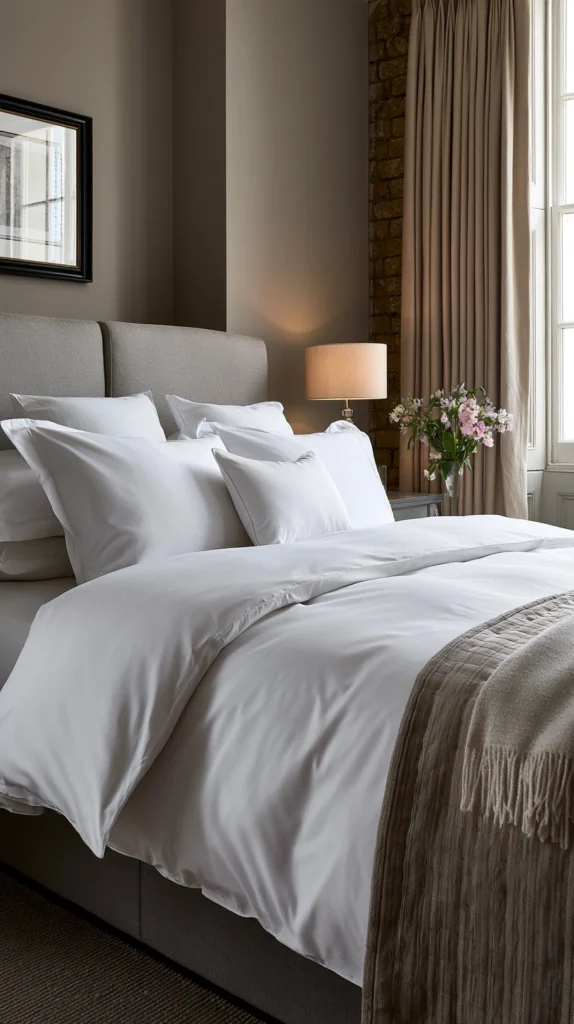
The quality of a made bed communicates more about the preparation of a guest room than almost anything else. A bed that looks like it was made in a hurry — uneven duvet, untucked corners, flat pillows — makes the room feel casually prepared regardless of how much else was done.
Hotel-standard bed making requires three steps most home bed-making skips. First, pull the fitted sheet taut and smooth it completely before adding any other layer — wrinkles in the fitted sheet transfer through all subsequent layers. Second, fold the top sheet and duvet back 6–8 inches at the pillow end to create a neat collar rather than pulling them flush to the pillow edge. Third, stand the pillows upright against the headboard rather than laying them flat.
These three steps alone change the visual quality of the made bed dramatically. They take an additional two minutes and require no new materials.
Tip: Use a duvet with a duvet cover rather than a comforter with a slipcover. Duvet covers can be washed between guests easily — a bare comforter cannot be washed between every stay, which matters more than it might seem for guests who spend seven to eight hours in close contact with the bedding.
Budget: $0 — technique, not a purchase
11. Add a Mirror That Allows Full Getting-Ready Access
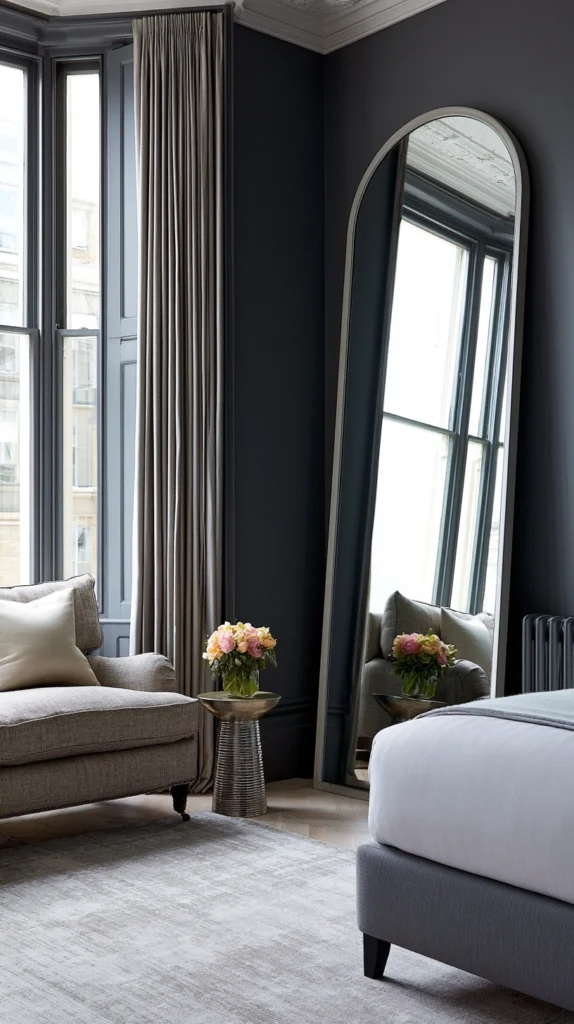
Guest rooms in homes are frequently set up for sleeping but not for getting ready. A guest who needs to do hair, makeup, or check a full outfit before Thanksgiving dinner has to navigate to a bathroom mirror or ask to use a different space.
A full-length mirror leaning against the wall or mounted on the back of the door solves this completely. It gives the guest getting-ready independence — they can prepare for the day in their room rather than competing for bathroom time with other household members.
For Thanksgiving specifically, when multiple guests and family members are likely sharing bathrooms and getting ready simultaneously, a mirror in the guest room reduces congestion significantly.
Full-length mirrors in simple frames run $20–$55 at IKEA, Target, and Amazon. The IKEA NISSEDAL mirror ($40) in white or black works with most guest room aesthetics and stands stably without wall mounting.
Tip: Position the mirror where it catches the most natural light from the window — ideally beside the window rather than across from it. Across from a window creates a bright spot in the mirror’s reflection that makes it harder to see detail. Beside the window uses the light directionally.
Budget: $20–$55
12. Leave a Simple Printed Guide to the House
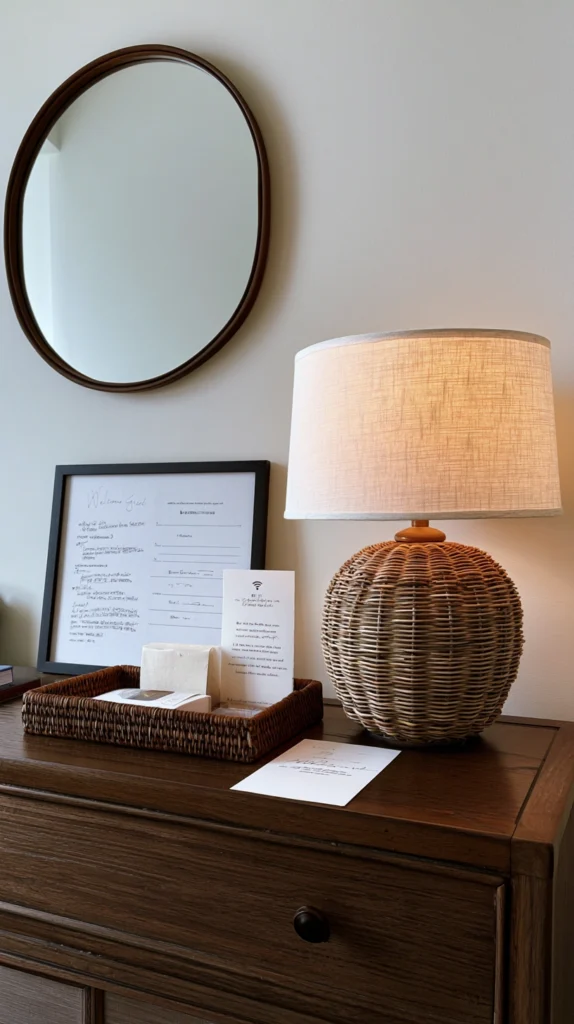
Guests staying for two to three nights navigate a lot of unfamiliar systems: the shower temperature adjustment, the WiFi password, the TV remote input switching, the kitchen cabinet where the coffee is kept, the trash day, whether the door locks automatically.
A single printed card or a small folded note on the dresser with five to eight practical details removes all of that uncertainty. It doesn’t need to be designed or elaborate — handwritten on a notecard is sufficient and feels more personal.
Include: the WiFi network name and password, how to adjust the shower, where to find extra blankets and towels, whether to help themselves to kitchen food and what’s off-limits if anything, the breakfast situation, and one or two house-specific details that would otherwise require asking.
Tip: End the note with something specific to the guest — “we put the coffee you like in the cupboard above the kettle” or “the reading lamp remote is in the top drawer.” That specific detail makes a practical document feel like a hospitality gesture.
Budget: $0
13. Clear a Corner for Luggage
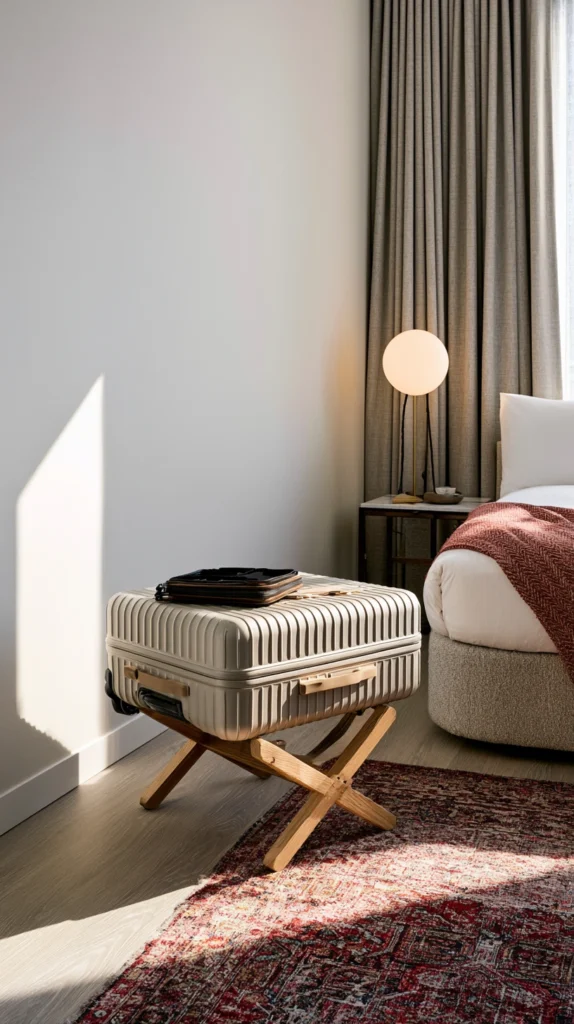
A guest who has nowhere to put their suitcase ends up either leaving it on the floor in a walking path or placing it on the bed — both inconvenient for a two or three night stay.
Designate a corner of the guest room explicitly for luggage. If the room is small, move a piece of furniture temporarily to create the space. Add a luggage rack if one exists in the house — even a folding wooden or metal rack positioned in the corner communicates that the space was thought about.
A clear corner with a luggage rack is one of the simplest hospitality gestures that guests remember specifically. It’s a small thing that eliminates a minor inconvenience entirely.
Folding luggage racks run $20–$45 at Amazon and home stores.
Tip: Place the luggage rack so the suitcase it holds faces the door rather than the bed. A suitcase opened facing the bed drops items toward the sleeping area; one facing the door deposits items away from the sleeping zone and makes the room feel less cluttered during the stay.
Budget: $0 if repurposing existing furniture, $20–$45 for a luggage rack
14. Set the Room Temperature the Night Before

A guest room that’s been closed up is frequently a different temperature from the rest of the house — cooler in fall and winter because it receives less heating traffic, or stuffy if it’s been shut for weeks.
Setting the guest room temperature the evening before arrival — either by leaving the door open to equalize with the house temperature or by running a small space heater to bring the room to the household’s normal temperature — means the guest arrives in a room that feels comfortable immediately rather than one that takes two hours to warm up.
For Thanksgiving specifically, November temperatures in most regions mean a cold guest room is a likely scenario if the room is infrequently used.
Tip: Leave a small, quiet space heater in the room with a note indicating the guest can use it if needed overnight. The reassurance that temperature control is within their reach eliminates the discomfort of being too cold without wanting to ask the host.
Budget: $20–$40 for a basic space heater if not already owned
15. Do a Final Walkthrough From the Guest’s Perspective
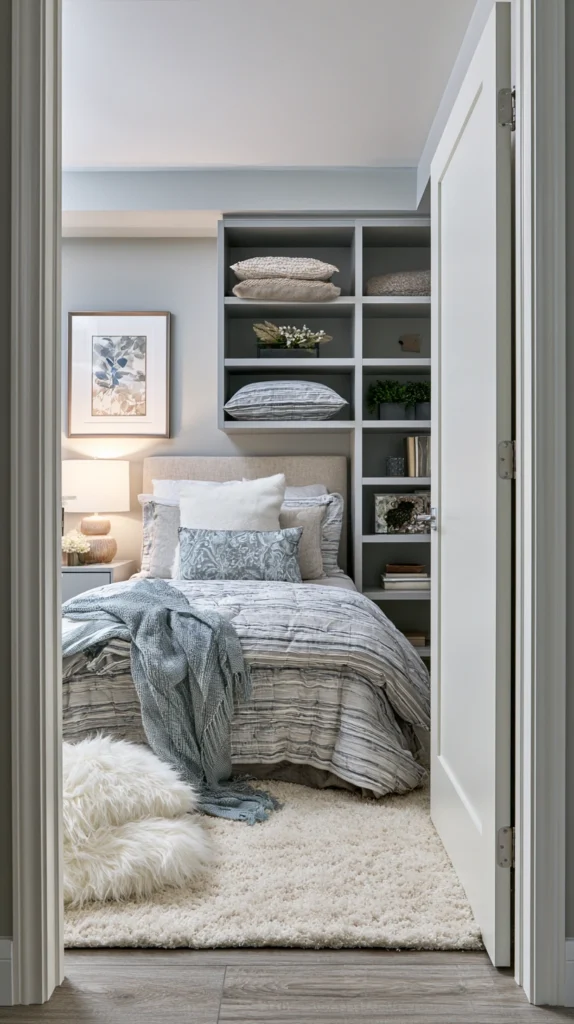
The last step before a guest arrives is a five-minute walkthrough of the room from the perspective of someone who has never been in it before.
Sit on the bed and look around from that angle. Is the lamp within reach? Is there somewhere to put a phone while charging? Is there a hook for tomorrow’s outfit? Is there anything on the floor that would be tripped over in the dark?
Open the closet as if you’re a guest looking for space. Open the dresser drawer you cleared. Turn on the overhead light and the bedside lamp and assess whether the room feels welcoming at that combination.
This walkthrough catches everything that seems obvious to someone who knows the room and is invisible to someone who doesn’t.
Tip: Do the walkthrough in the evening rather than during the day. Guest rooms are used primarily in the evening and overnight — a room that looks fine in afternoon light might have a harsh overhead fixture or a dark corner that only becomes apparent when the natural light is gone.
Budget: $0
Final Thoughts
A well-prepared Thanksgiving guest room communicates one thing above all else: you were expected.
The gestures that do this most effectively aren’t the expensive ones. They’re the ones that required anticipating a specific need — the charger on the nightstand, the designated closet space, the water carafe, the printed house guide. Each one removes a small friction that the guest would otherwise have had to navigate alone in an unfamiliar place.
Start with the bed and the storage. A beautifully made bed with enough blanket layers and a genuinely clear closet covers more ground than any number of decorative additions. Everything else builds from there.