9 Outdoor Rug Ideas to Define Patio and Seating Areas
A patio without a rug tends to look like furniture scattered across a slab, rather than an actual outdoor room.
An outdoor rug does the same job indoors a rug does, grounding a seating area and giving it visual edges, just under considerably harsher conditions.
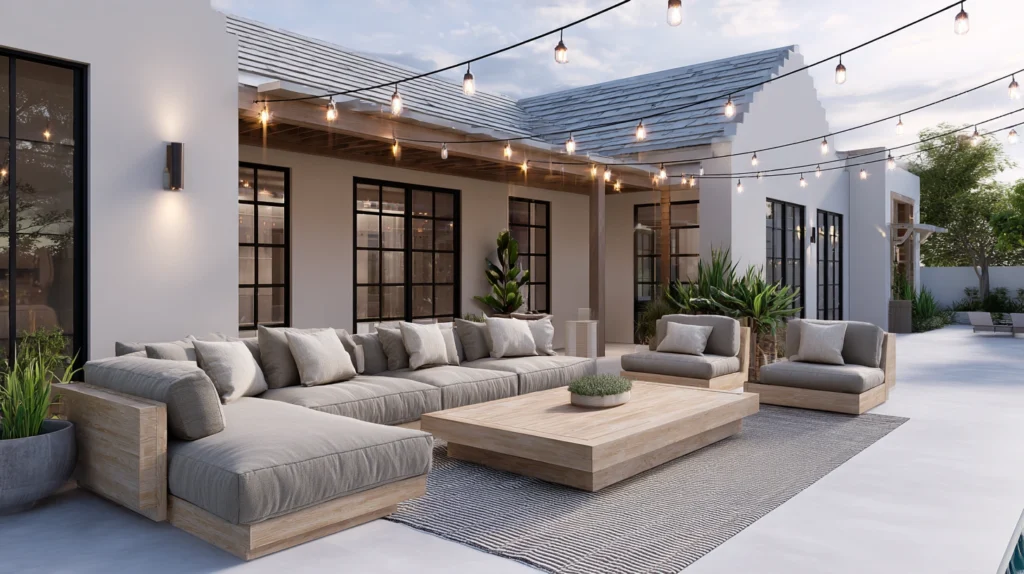
Sun, rain, and dragged furniture all test an outdoor rug in ways an indoor one never has to handle.
Here are 9 ways to use outdoor rugs specifically to define distinct zones on a patio, deck, or backyard seating area.
Every one of these accounts for genuine weather exposure, not just how the rug looks on a showroom floor.
Quick Reference: Matching a Rug to Your Outdoor Space
| Space Type | Best Rug Approach | Key Consideration |
| Covered patio | Natural-look polypropylene rug | Less sun and rain exposure allows more delicate patterns |
| Fully exposed patio | Solution-dyed, UV-resistant rug | Needs to handle direct sun without fading |
| Multi-zone backyard | Several smaller rugs per zone | Defines distinct areas without one oversized rug |
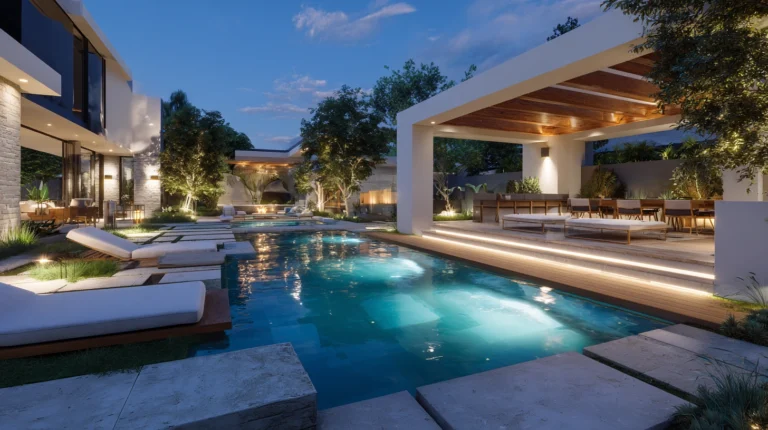
| Poolside area | Quick-drying, mold-resistant rug | Handles chlorine splash and constant moisture |
1. A Single Large Rug Beneath the Main Seating Cluster
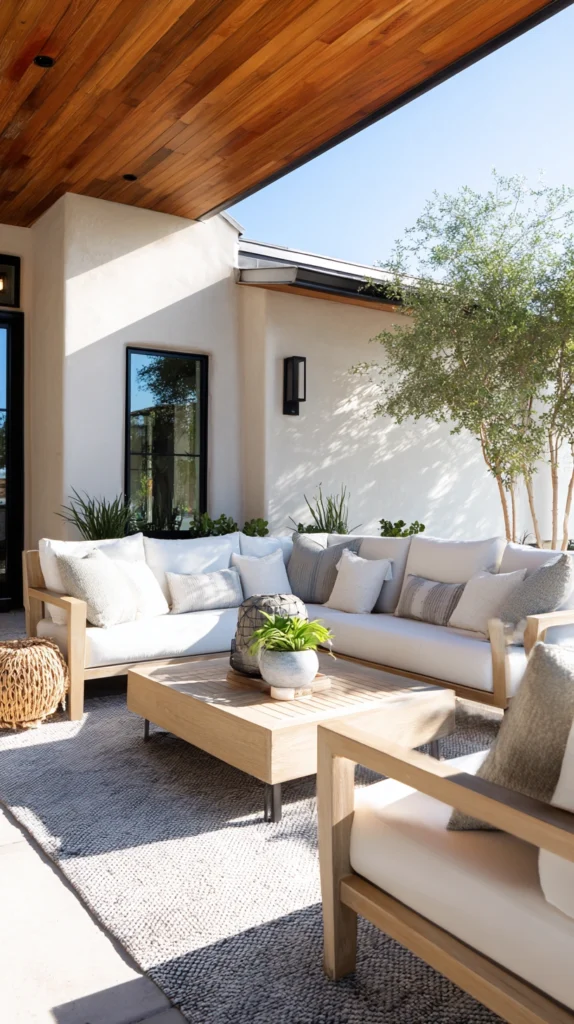
One generously sized outdoor rug placed beneath your primary sofa and chair grouping, similar to how you’d size a living room rug indoors.
This is the most straightforward way to visually ground a patio’s main gathering spot.
I placed a large rug beneath my patio sectional and chairs, and it immediately made the seating area read as one cohesive space rather than furniture just placed on bare concrete.
Budget tip: A large solid-color outdoor rug is often less expensive than a smaller, heavily patterned one, since intricate designs typically cost more per square foot.
A few things worth knowing:
- Size the rug so at least the front legs of every piece of furniture sit on it, following the same rule as indoor rug sizing
- Choose a solution-dyed rug specifically for full sun exposure, since this dyeing process resists fading considerably better than standard printed designs
- Secure the rug’s corners with furniture weight or outdoor-rated rug tape to prevent it shifting in wind
This single large rug approach is the most reliable starting point for anyone defining their first outdoor seating zone.
2. Layered Rugs for a Covered Porch
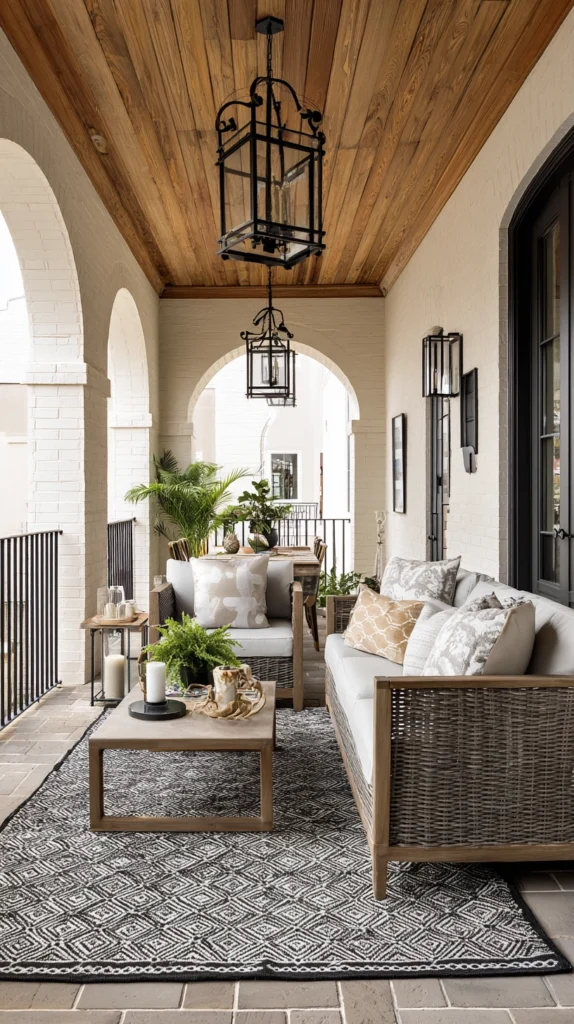
A neutral base rug covering most of the porch floor, topped with a smaller, more decorative rug beneath the main seating cluster, mirroring an indoor layering technique.
A covered porch has enough weather protection that this more delicate layering approach genuinely holds up outdoors.
I layered a large jute-look outdoor rug with a smaller, more patterned one on top, specifically because my covered porch stays dry and shielded from direct sun most of the day.
Style tip: Reserve rug layering specifically for covered outdoor spaces, since two stacked rugs in a fully exposed area trap moisture between them and can develop mold considerably faster.
A few things worth knowing:
- Choose materials rated for outdoor use on both layers, even though the space is covered, since humidity and occasional wind-blown rain still reach a porch
- Check beneath both layers periodically for trapped moisture or debris
- This technique works best on a porch with a solid roof overhead, rather than a pergola or other partially open structure
Layering works outdoors under the right conditions, bringing the same visual depth porches and covered patios can genuinely support.
3. Distinct Rugs for Separate Zones in One Backyard
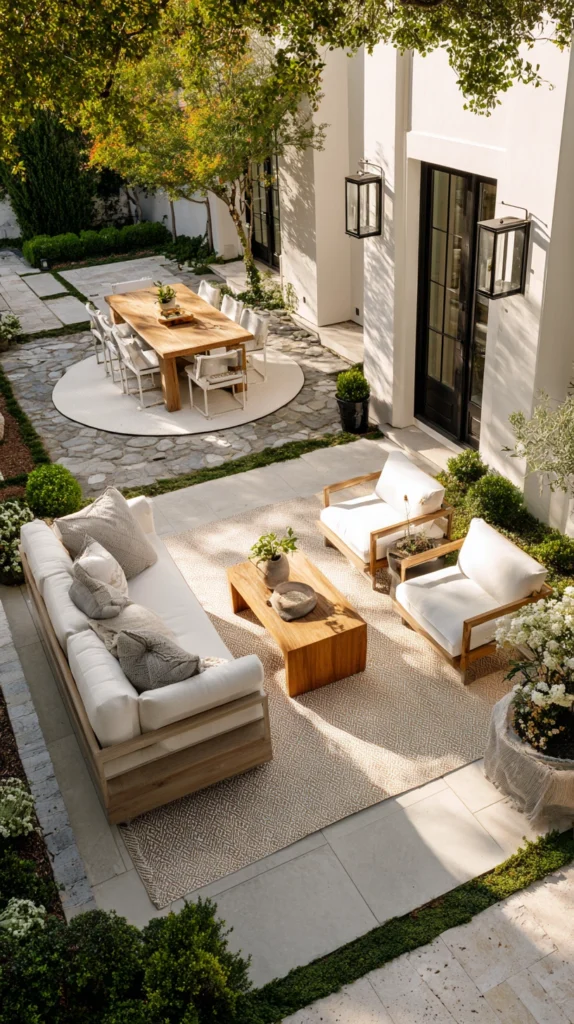
Several smaller rugs, each defining a separate function, a dining area, a lounge area, a fire pit circle, rather than one single rug trying to cover the whole space.
This mirrors how a large open floor plan indoors uses multiple rugs to define separate rooms without any walls.
I use three separate outdoor rugs in my backyard, one beneath my dining set, one under my lounge chairs, and a round one specifically circling my fire pit.
Budget tip: Several smaller rugs often cost less combined than one oversized rug attempting to cover an entire large backyard.
A few things worth knowing:
- Choose noticeably different rug shapes or colors between zones so each area reads as clearly distinct
- Leave visible bare patio or lawn between each rug’s zone, reinforcing the sense of separate areas
- Keep a loose color thread running through all the rugs, even if patterns differ, so the whole yard still feels cohesive
This zoning approach works particularly well for a larger backyard hosting several distinct activities in the same overall space.
4. A Round Rug Specifically for a Fire Pit Circle
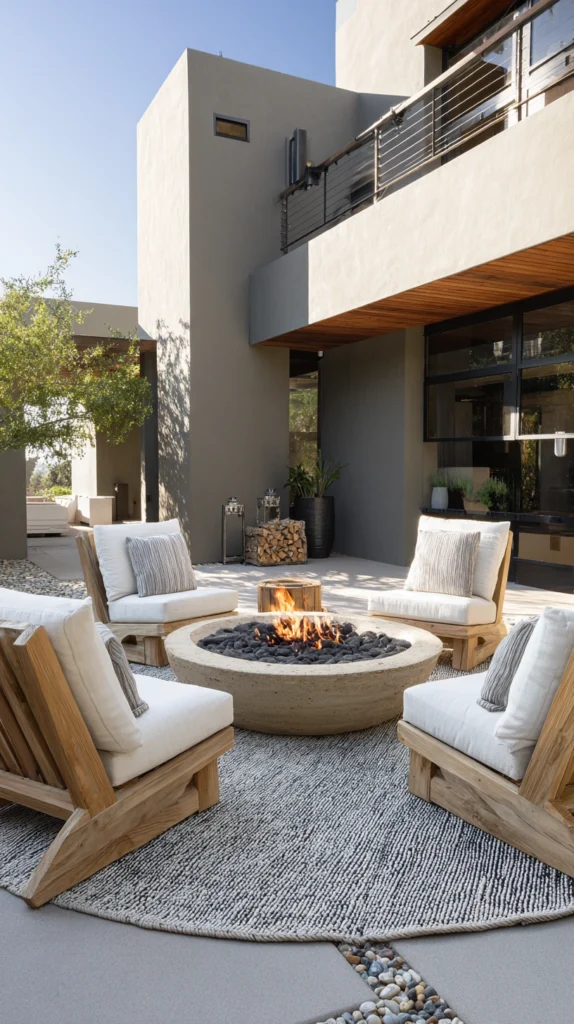
A circular outdoor rug, sized to sit beneath a ring of chairs surrounding a fire pit, reinforcing the circular seating arrangement itself.
The round shape echoes the fire pit’s own circular form, tying the whole gathering area together visually.
I placed a round jute-look rug beneath my fire pit’s seating circle, and it grounds the whole gathering spot far better than the bare gravel underneath did before.
Budget tip: A single round rug for this specific zone costs less than trying to cover a whole backyard, since the footprint required is relatively contained.
A few things worth knowing:
- Keep the rug a safe distance from the fire pit itself, checking local safety guidance for minimum clearance
- Choose a genuinely fire-resistant or heat-tolerant material specifically for this application, given the proximity to open flame
- Size the rug generously enough that all chairs sit at least partially on it, reinforcing the circular seating arrangement
A round rug is one of the more visually satisfying choices for this specific zone, echoing the fire pit’s own shape rather than fighting against it.
5. Runners Along a Narrow Side Patio or Walkway
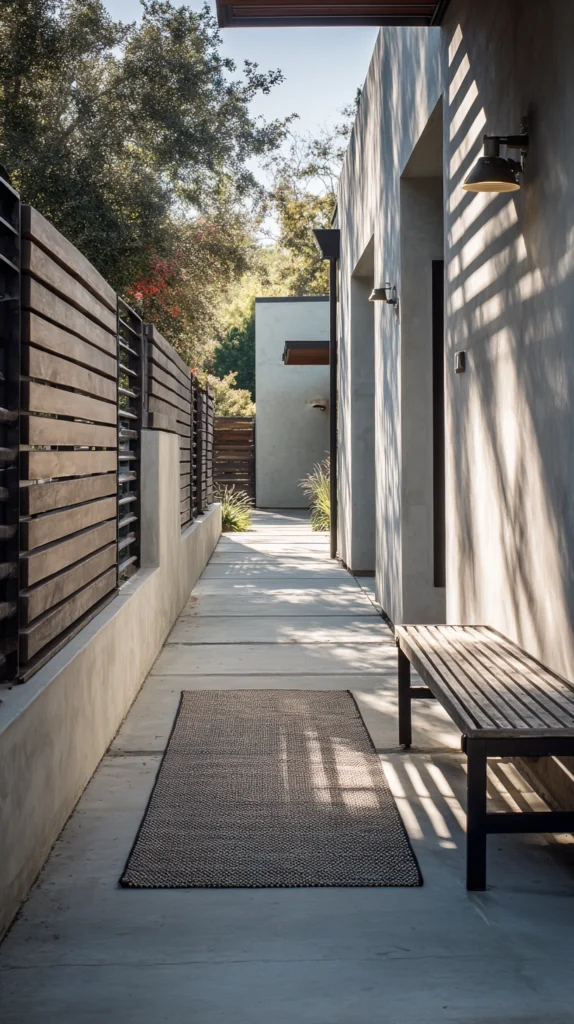
A long, narrow outdoor runner rug used along a side yard patio or a narrow walkway connecting two larger outdoor spaces.
This brings the same zone-defining function to a transitional outdoor space that most people only think to apply to a main seating area.
I added a simple striped outdoor runner along my narrow side patio, and it transformed what used to be just a pass-through space into an actual defined walkway.
Budget tip: Outdoor runners are typically less expensive than a full-sized rug, since the narrower width uses considerably less material overall.
A few things worth knowing:
- Choose a low-pile, flat-woven runner specifically for a walkway, since a plush pile creates an uneven walking surface outdoors
- Secure the runner well, since narrow rugs shift and bunch more easily in wind than larger, heavier ones
- This approach works particularly well connecting a main patio to a secondary space, like a garden or side entrance
A runner is one of the more overlooked ways to bring genuine definition to outdoor spaces that aren’t a primary seating area.
6. A Quick-Drying Rug Specifically for a Poolside Lounge Area
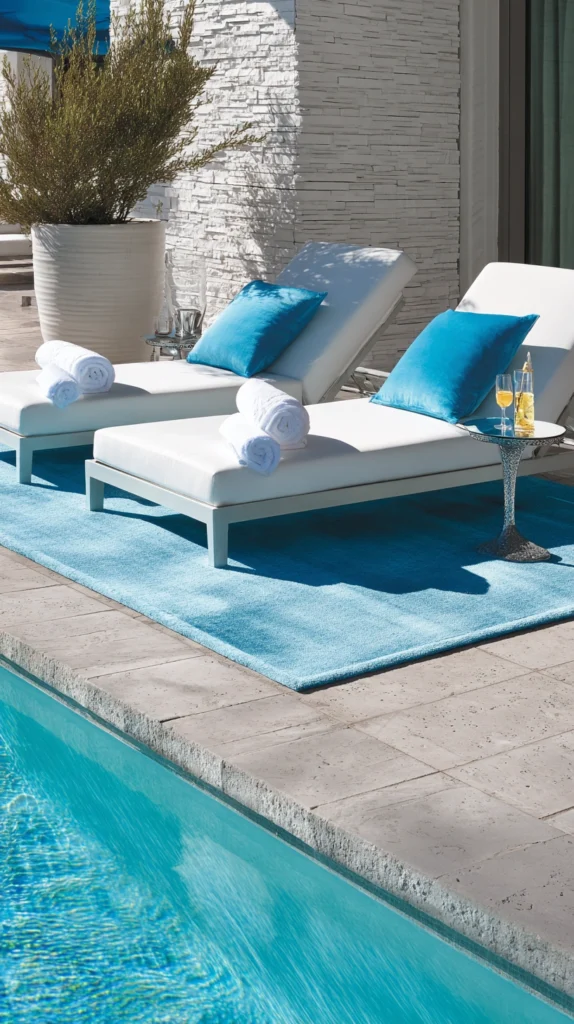
A rug material specifically chosen for fast drying and mold resistance, positioned beneath poolside lounge chairs where consistent moisture and chlorine splash are a given.
Standard outdoor rugs can struggle in this particular environment, making material choice more critical here than almost anywhere else on this list.
I chose a specifically poolside-rated rug for my lounge area, since a standard outdoor rug I tried previously developed mold within a single summer of regular splash exposure.
Budget tip: A poolside-specific rug sometimes costs a bit more upfront than a standard outdoor option, but it avoids the replacement cost of a rug that fails within a single season.
A few things worth knowing:
- Choose a rug specifically labeled for pool or wet-area use, rather than assuming any outdoor rug handles chlorine exposure equally well
- Rinse the rug periodically with fresh water to reduce chlorine buildup over the season
- Elevate the rug slightly if possible, using a breathable pad underneath, to help it dry faster between uses
This is one of the more specialized choices on this list, but genuinely necessary given how differently a poolside area behaves compared to a standard dry patio.
7. A Bold Patterned Rug as the Space’s Visual Anchor
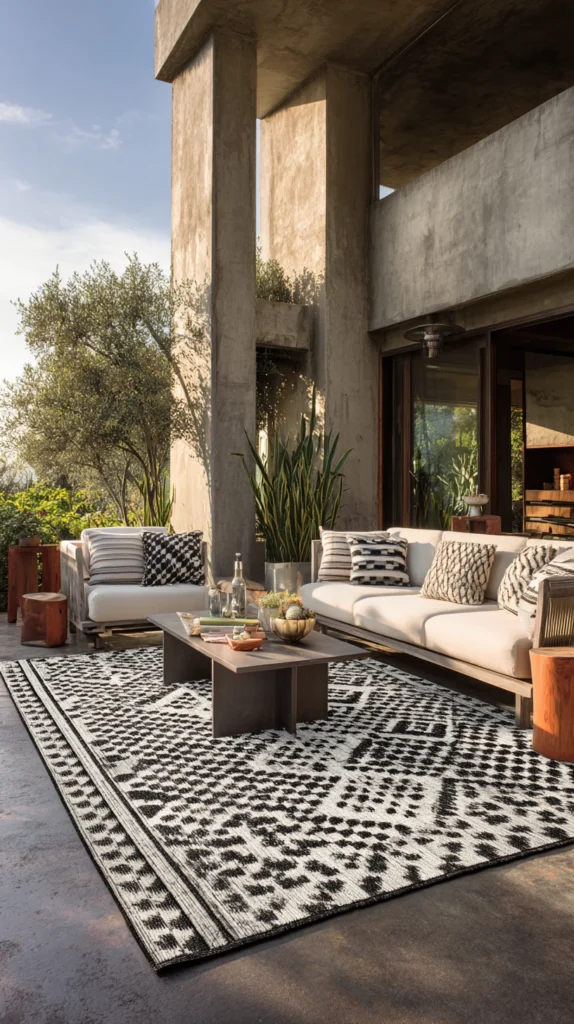
Rather than a neutral base, choosing one genuinely bold, patterned outdoor rug as the space’s clear visual centerpiece, letting furniture and other elements stay simpler around it.
This flips the usual approach, making the rug itself the boldest design choice in the space rather than a neutral background element.
I chose a bold Moroccan-inspired pattern for my patio rug specifically, keeping my furniture in simple solid colors so the rug remains the space’s clear focal point.
Style tip: When the rug is the boldest element, keep cushions, pillows, and other textiles genuinely simple, letting the floor do the visual work rather than competing with it.
A few things worth knowing:
- Choose a solution-dyed pattern specifically for long-term color retention in direct sun exposure
- This approach works particularly well on a patio with otherwise plain or neutral hardscaping
- A bold rug can visually shrink a small space, so reserve this choice for a patio with adequate room to support it
A bold rug as the true centerpiece is a confident design choice that works especially well when the rest of the space stays deliberately understated.
8. A Neutral Rug to Unify Mismatched Outdoor Furniture
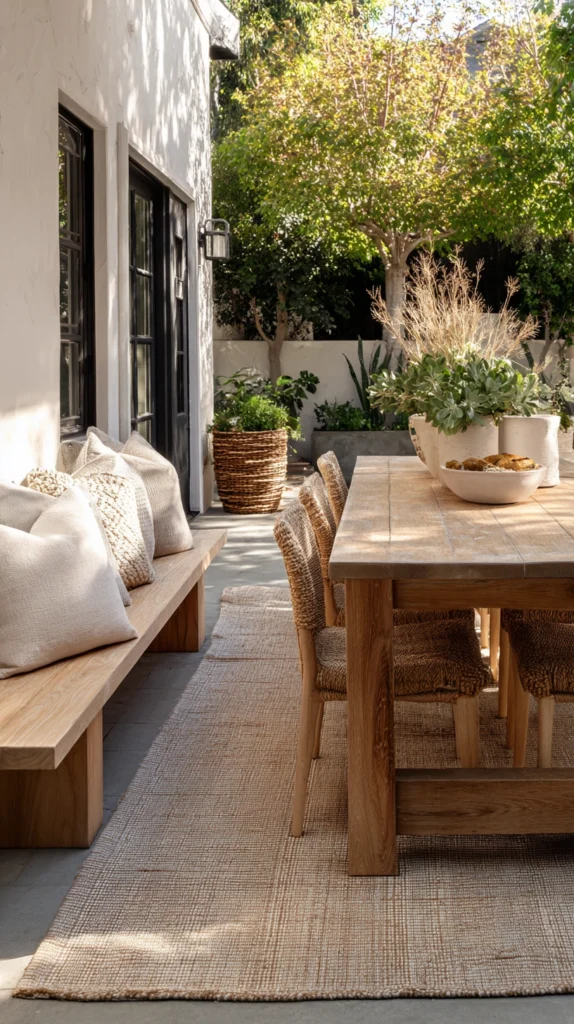
A simple, solid neutral rug used specifically to visually unify furniture pieces that don’t otherwise match, whether collected over time or mixed intentionally.
This solves a genuine practical problem for anyone whose outdoor furniture wasn’t purchased as a single matching set.
I have a mismatched collection of secondhand outdoor chairs and a table I built myself, and a single neutral rug beneath the whole grouping ties them together as one cohesive seating area.
Budget tip: This approach lets you keep using furniture you already own rather than replacing mismatched pieces, since the rug does the unifying work instead.
A few things worth knowing:
- Choose a rug in a color that complements every piece of furniture in the grouping, rather than matching any single piece specifically
- Solid or subtly textured rugs work better for this purpose than a bold pattern, which can compete with already-mismatched furniture
- This is one of the more budget-conscious approaches on this list, solving a design problem without requiring new furniture
A neutral unifying rug is a practical, low-cost way to make a mismatched furniture collection read as an intentional, coordinated space.
9. A Textured Natural-Look Rug for a Garden-Adjacent Patio
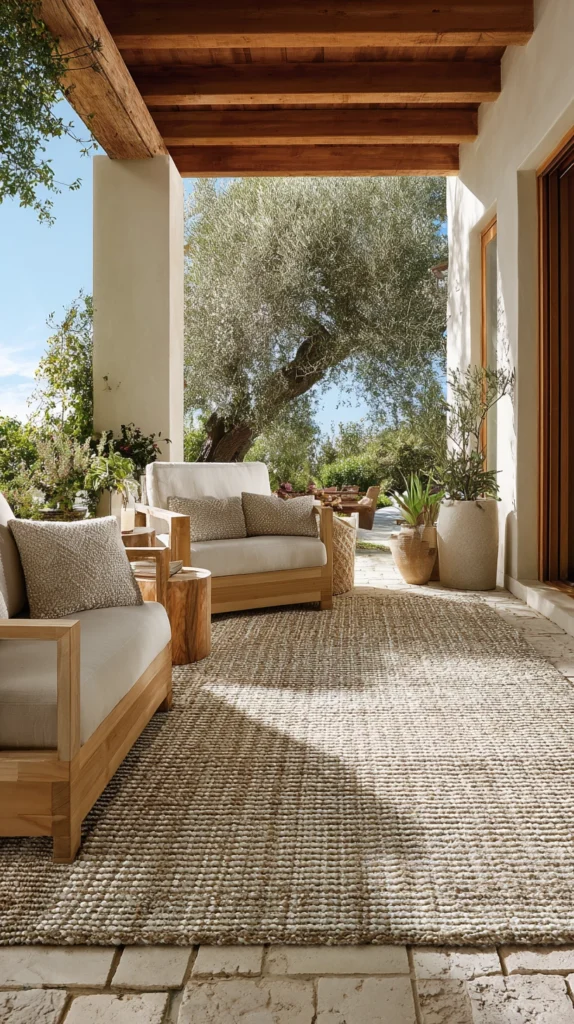
A rug styled to look like natural jute or sisal, but made from weather-resistant synthetic material, used specifically on a patio bordering a garden or lawn area.
This bridges a hard patio surface and a softer garden setting better than a glossy, obviously synthetic rug would.
I chose a natural-look woven rug for my patio specifically because it sits directly adjacent to my garden beds, and the texture feels like a natural extension of that space rather than a contrasting hard surface.
Budget tip: Synthetic natural-look rugs cost less than genuine natural fiber and hold up to outdoor moisture considerably better, without sacrificing much of the visual warmth.
A few things worth knowing:
- Confirm the rug is genuinely synthetic despite its natural appearance, since real jute or sisal doesn’t hold up to consistent outdoor moisture
- This style works particularly well paired with wood or wicker furniture, reinforcing the overall natural, garden-adjacent feel
- Choose a muted, earthy color palette specifically for this application, since bright or bold colors can clash with a garden setting
A natural-look synthetic rug bridges hard and soft landscaping elements in a way few other rug styles manage as effectively.
The Easiest Rug to Start With
A single large, solid-colored, solution-dyed rug beneath your main seating cluster delivers the most immediate visual impact for the least planning effort, making it the best starting point for a first outdoor rug purchase.
A Few Practical Details Worth Confirming Before You Buy
- Confirm the rug is rated for your space’s actual sun and moisture exposure, not just labeled generically as “outdoor”
- Check weight or securing options if your patio experiences regular wind
- Choose quick-drying materials specifically for any space near a pool, hose, or regular water exposure
Why Some Outdoor Rugs Fail Within a Single Season
The most common reason an outdoor rug fails quickly isn’t poor quality, it’s a mismatch between the rug’s actual rating and the space’s real conditions, a standard outdoor rug used poolside, or a covered-porch rug moved into full sun exposure. Matching the rug’s specific rating to your space’s actual weather and moisture conditions matters more than color or pattern in determining how long it genuinely lasts.