12 Cozy Backyard Corners for Summer Nights
There is a corner of almost every backyard that is never quite used. Not the lawn, which gets walked across, and not the patio, which gets sat on occasionally, but the corner — the angle where two fence lines meet, the space beside the shed, the gap between the raised beds and the boundary — that receives indirect light in the evening and has never been given a reason to become anything.

Summer nights make corners valuable in a way that no other season does. The light lingers long enough that a corner with a chair in it becomes a corner worth sitting in, and once a corner has a chair and a light and something fragrant beside it, it becomes the best place in the garden. Not because it is large or because it faces the right direction or because it was planned to be that way, but because it is enclosed on two sides and open on two, which is the spatial condition that most reliably produces the feeling of being outside and sheltered simultaneously.
Each idea below takes a different approach to the backyard corner for summer nights. Each includes what you will need, what it will cost, and a practical tip to make the whole thing work as well as the evening deserves.
1. The Lantern-Lit Reading Nook
Budget: $40 – $180
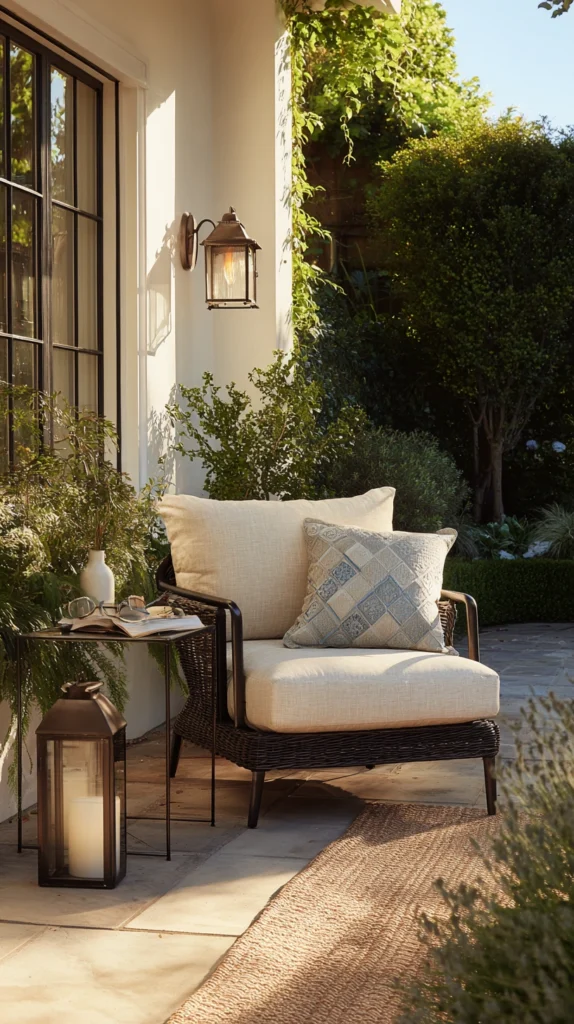
A single comfortable outdoor chair — deep-seated, with arms wide enough to rest a book on — positioned in the corner with a floor lantern beside it and a small side table within reach is the most self-contained version of an outdoor room available to a small space. It asks for nothing beyond the chair, the light, and the table, and it provides everything required for an evening outside that has a specific purpose: to sit alone and read, undisturbed, in the particular quiet of a garden after dark.
An outdoor armchair costs $50–$150. A floor lantern with a pillar candle or an LED candle runs $15–$40. A small side table costs $20–$50. A weatherproof cushion of at least 10 centimetres in thickness ($20–$40) provides the comfort that makes the difference between a chair that is sat in for twenty minutes and one that is occupied for two hours. Position the lantern to the left of the chair if you are right-handed so the light falls over the left shoulder onto the page — the reading light principle applied to the outdoor chair.
Style tip: Add a tall potted plant to each side of the chair rather than leaving the corner fully open. Two plants flanking a chair in a corner create the sense of enclosure that the two fence lines begin — the chair becomes a room within the garden rather than a chair placed in a corner. The plants need not be large: two tall grasses, two standard bay trees, or two bamboos in pots provide the vertical framing at a cost of $20–$60 per plant.
2. The Fire Pit Conversation Circle
Budget: $60 – $300
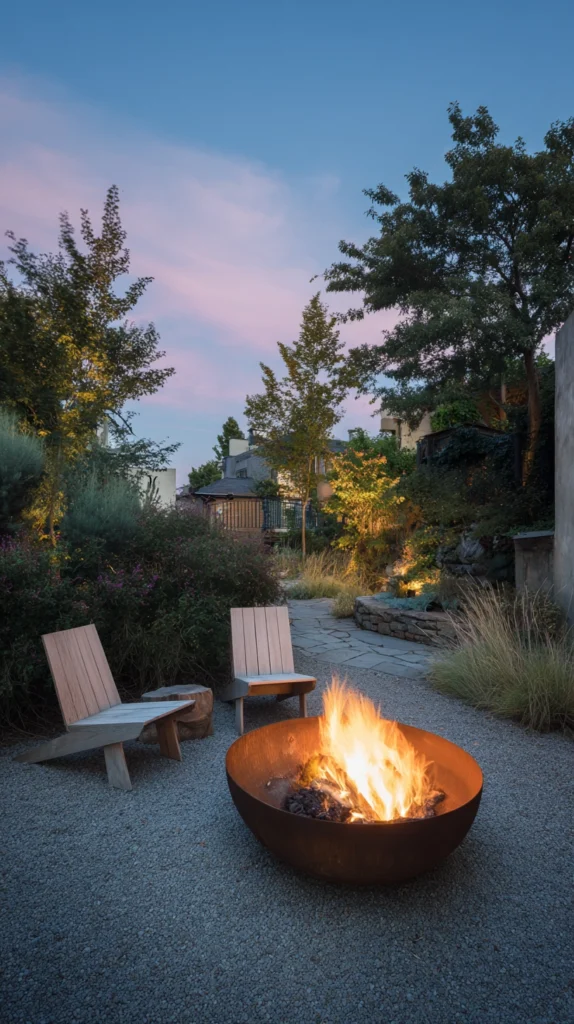
A small fire pit at the centre of a conversation circle — three or four seats arranged in a loose arc around the flame — turns a corner of the backyard into the most social outdoor space possible on a summer night. The fire provides light, warmth, and a focal point that no other garden element can replicate, and the circular arrangement it naturally produces is the configuration in which people talk most easily and most freely.
A portable steel fire pit costs $40–$100. Log round seats cost $3–$8 each from a timber yard. Garden chairs in a consistent material cost $30–$80 each. A spark guard mesh ($15–$25) is worth having if there are children or overhanging branches. Position the fire pit slightly off-centre in the conversation circle rather than at its exact geometric centre — a fire that is perfectly centred reads as formal; one placed slightly toward the back of the circle reads as arrived-at naturally.
Style tip: Build the fire before guests arrive rather than after they are seated. A fire that is already established and glowing when people come outside is part of the welcome; one being coaxed to life while guests stand around in the dark holding drinks is a performance that keeps everyone standing when they should be sitting. The fire needs thirty minutes to reach the steady, glowing stage that makes a conversation circle feel genuinely warm.
3. The Hammock Corner
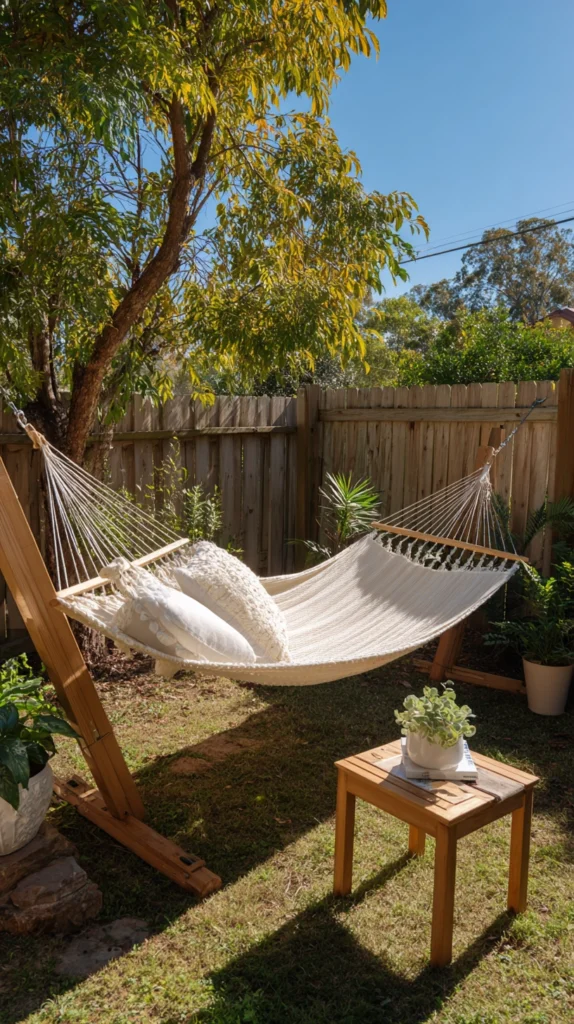
Budget: $30 – $150
A hammock strung between two trees or two posts at the corner of the backyard — low enough to get in easily, with a lantern hung from one of the anchor points and a small table nearby for a drink — is the most effortlessly comfortable outdoor sleeping and lounging option available. A hammock in a corner, where the trees or posts that support it are close to the fence lines, uses no garden space that would otherwise be occupied and produces a space that, on a warm summer night with the stars overhead, is one of the best places in the world to be.
A cotton or rope hammock costs $25–$80. Hammock tree straps ($10–$20 per pair) allow positioning adjustment without tying knots and protect the tree bark. A hanging lantern from the anchor point costs $10–$25. Hang the hammock so the fabric drapes to 40–50 centimetres from the ground at its lowest point when unoccupied — this produces the right curve and sitting height when a person of average weight gets in, without the hammock touching the ground.
Style tip: Face the hammock toward the most open part of the garden rather than toward the corner. A hammock in a corner that faces outward into the garden has the best of both worlds — the enclosed, sheltered quality of the corner behind and the open garden view ahead. A hammock that faces the corner has the feeling of being tucked away without the view that makes being tucked away pleasant.
4. The Outdoor Cinema Nook
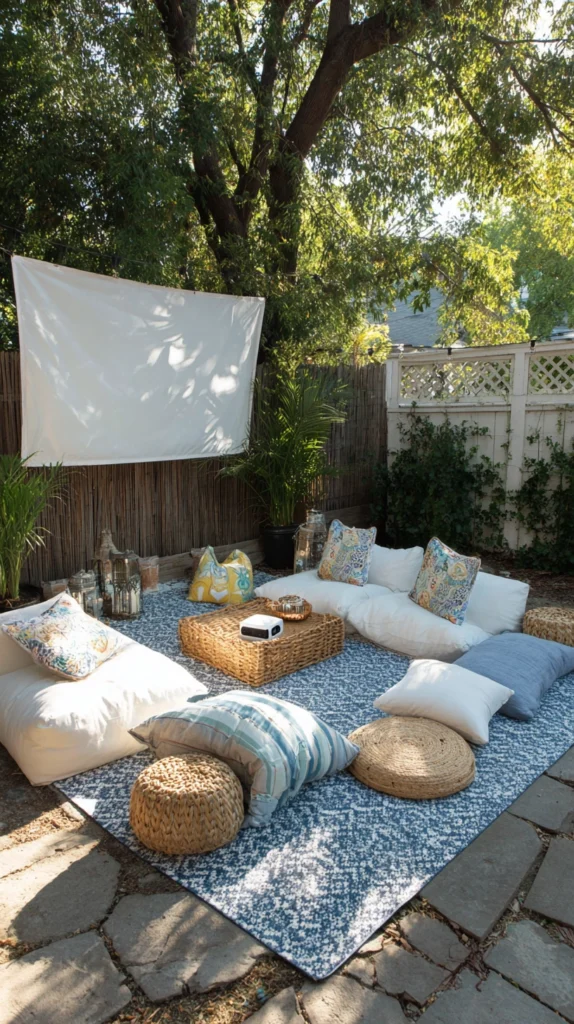
Budget: $80 – $400
A projector aimed at a pale fence panel or a white sheet stretched across the corner, with floor cushions, blankets, and a portable speaker arranged on a rug in front of it, creates an outdoor cinema in the most intimate possible format — small enough for two or three people, close enough to the screen that the image fills the visual field, and contained within the corner in a way that makes the experience feel private and enclosed rather than open and exposed.
A portable projector costs $80–$250. A white sheet or a roll of white outdoor fabric for the screen costs $5–$20. Outdoor floor cushions run $15–$30 each. A portable Bluetooth speaker ($30–$80) handles the audio. A rug beneath the cushions ($30–$80) completes the setup. Begin the film after full dark — a projected image is genuinely vivid only when the ambient light is gone, and starting at dusk produces a washed-out picture that improves slowly rather than beginning well.
Style tip: String fairy lights around the perimeter of the corner — overhead and along the fence lines — but switch them off before the film starts. The fairy lights make the setup of the cinema nook look beautiful before the film; they wash out the projected image during it. A switch that controls the corner lights independently of the house lights allows the pre-film atmosphere and the during-film darkness to coexist in a single space.
5. The Candlelit Dining Corner
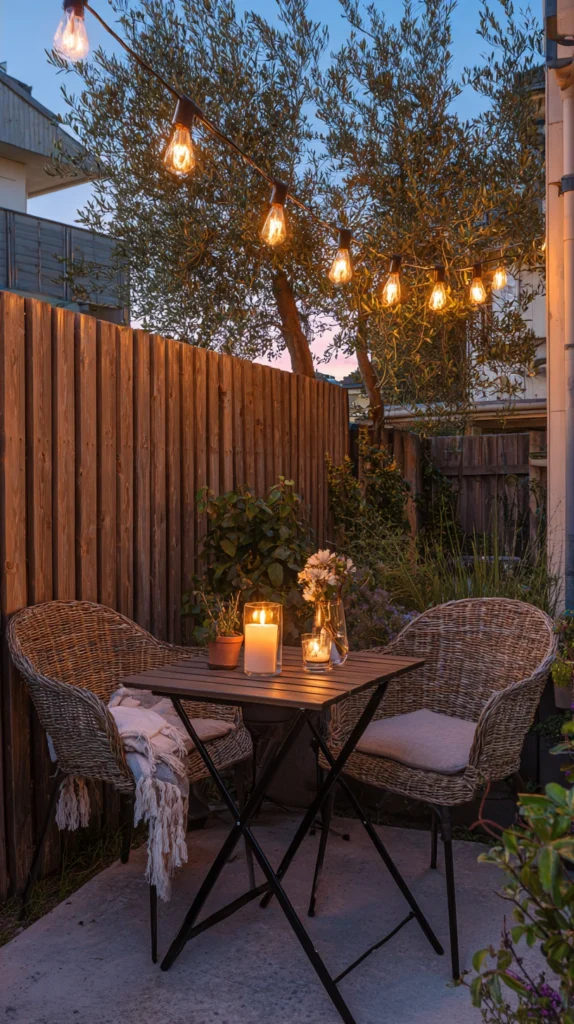
Budget: $60 – $300
A small dining table for two or four — positioned in the corner with candles down the centre, a string of lights overhead, and plants on both sides — creates the most romantic outdoor dining space available to a small backyard. The corner position provides two sides of shelter that an open lawn position lacks, and the combination of candlelight and fairy lights at a table set for the evening is the outdoor equivalent of the best restaurant table in the house — the corner one, with the wall behind it and the room ahead.
A small folding outdoor table costs $30–$80. Outdoor dining chairs run $25–$60 each. Candles in glass holders for the table cost $10–$25 for a set. A string of warm white lights above the corner costs $15–$30. A potted plant on each side of the table costs $20–$60 each. The table setting itself — proper plates, cloth napkins, a small vase of cut flowers — costs whatever it costs in the kitchen and makes more difference to the experience than any other single element.
Style tip: Set the table before guests arrive rather than after. A table that is already set and lit when guests come outside communicates that the occasion was prepared for — that it was anticipated and arranged rather than assembled at the last moment. The set table is the signal that the evening outside was planned, and a planned evening outside is always better than an improvised one.
6. The Stargazing Corner
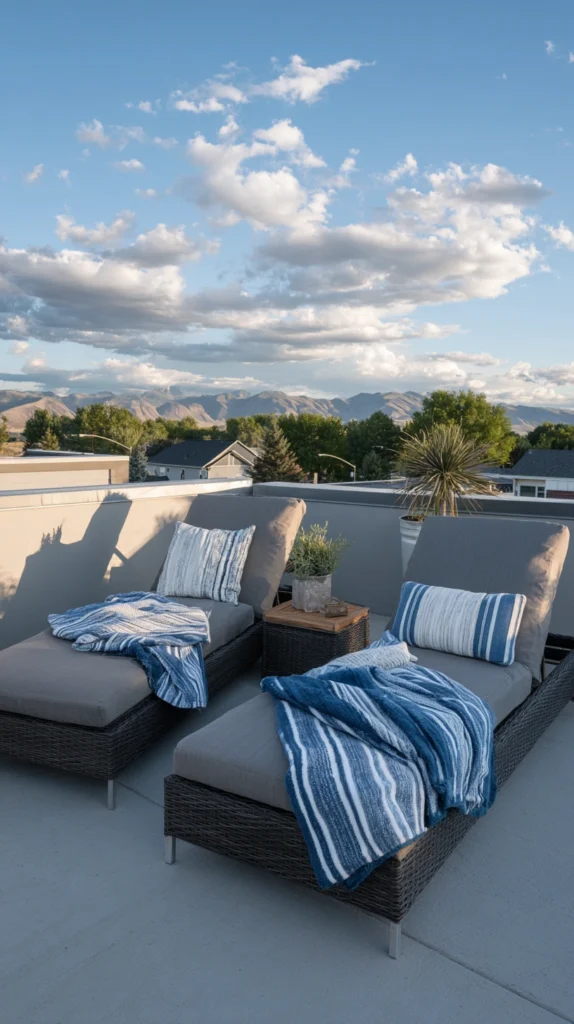
Budget: $20 – $100
A pair of sun loungers or a wide outdoor daybed positioned flat in the corner of the backyard — with a low side table between them, a blanket on each, and all external lights switched off — creates the most specific and most underrated outdoor experience a summer night offers: lying on your back in the dark, looking at the sky, with someone beside you. No fire, no film, no music necessary — just the stars, which are better than all of them on the right night.
Sun loungers cost $40–$120 each. A wide outdoor daybed runs $150–$400. Warm blankets for cool evenings cost $15–$40 each. A star chart printed from a free online source costs nothing. A stargazing app on a phone (most are free or under $5) identifies constellations and planets in real time. The preparation for a stargazing corner takes five minutes; the experience it produces on a clear summer night lasts as long as the sky does.
Style tip: Check the moon phase before planning a stargazing evening. A full moon produces enough light to read by and enough to wash out all but the brightest stars — beautiful in its own right but not a stargazing night. A new moon or a crescent phase gives the darkest sky and the most stars. The lunar calendar is free to consult and the difference in sky quality between a full and a new moon night is the difference between a vaguely starry sky and an overwhelming one.
7. The Cocktail Party Corner
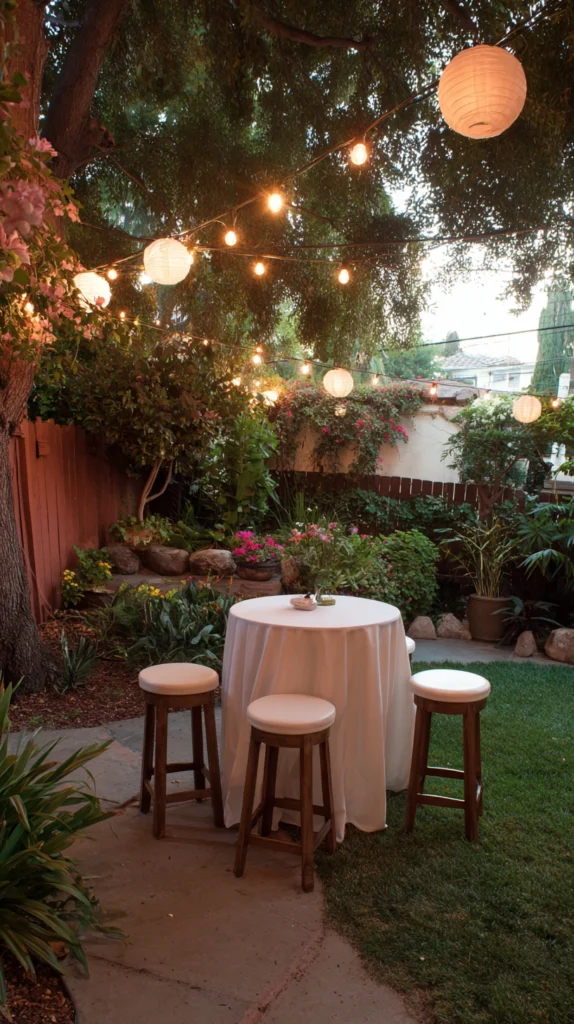
Budget: $50 – $250
A high cocktail table — or a barrel, or a wooden cable reel — with two or three bar stools around it, a small bar cart or tray of drinks beside it, and strings of lights above it creates a standing-and-sitting party zone that concentrates the social energy of the garden into a single defined corner. A cocktail corner is particularly effective in gardens where the main seating area is already occupied — it provides a second social hub that draws part of the group away from the patio and distributes the party across the outdoor space.
A high cocktail table costs $40–$100. Bar stools run $25–$60 each. A small bar cart or drinks tray costs $20–$80. Festoon lights above the corner cost $15–$40. A barrel ($40–$100) used as the cocktail table adds character that no purpose-built table achieves — the curved surface, the metal hoops, the faint smell of the wine or spirit it once held all contribute to an atmosphere that a standard folding table cannot replicate.
Style tip: Keep the cocktail corner stocked before the first guest arrives rather than during the gathering. A bar cart that is fully loaded before the party begins requires no host management during it — guests help themselves, the host participates in the conversation, and the corner runs itself. A bar cart that runs out of ice or glasses during the party creates the interruption that the outdoor bar is specifically designed to prevent.
8. The Outdoor Yoga and Meditation Space
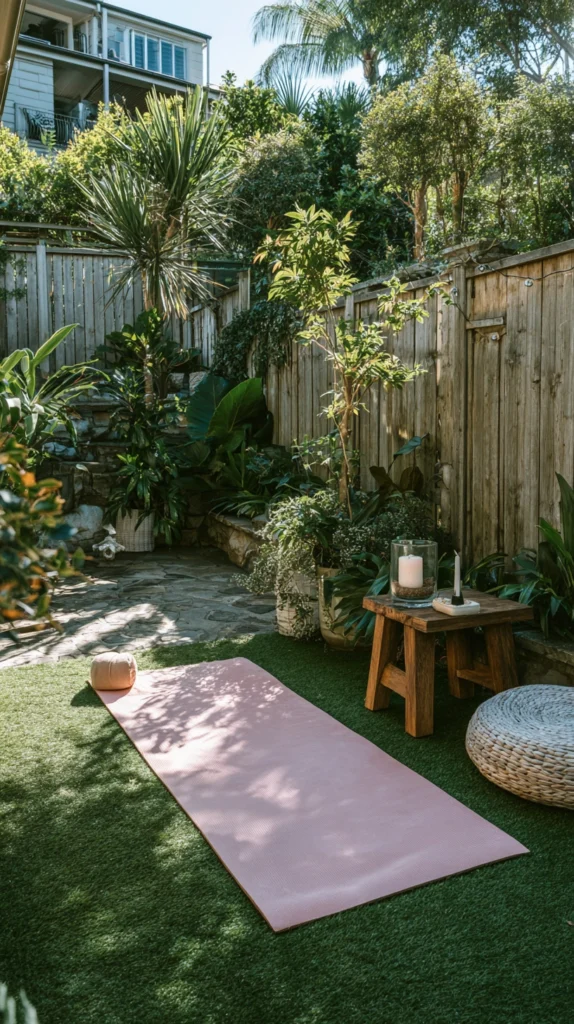
Budget: $20 – $80
A corner of the backyard prepared specifically for morning or evening practice — a yoga mat on a timber base, a small low table with a candle and a plant, a roll of outdoor matting beneath to level the ground — produces a space with a purpose that is entirely different from the rest of the garden and that benefits from the specific quality of a corner: the enclosed, contained feeling of having something behind you and open space ahead. The corner meditation space is the garden’s quietest room.
An outdoor yoga mat costs $15–$40. A timber pallet base to level the ground costs $0–$10. A small low table for a candle and incense costs $15–$30. A waterproof cushion for seated meditation runs $20–$40. A string of solar-powered lights along the fence lines above the space costs $10–$25. The space is most effective when it is designated — kept clear of other uses, set up specifically for its purpose, and understood by the household as a dedicated zone rather than a general area that sometimes accommodates a yoga mat.
Style tip: Face the mat toward the east if the corner orientation allows it. Morning practice in a space that faces the direction of sunrise has a quality of light in the early hours that a north or west-facing space does not, and evening practice that faces east — away from the setting sun — has the particular quality of sky that follows the end of a summer day: deep blue above, pink at the horizon behind.
9. The Children’s Evening Garden
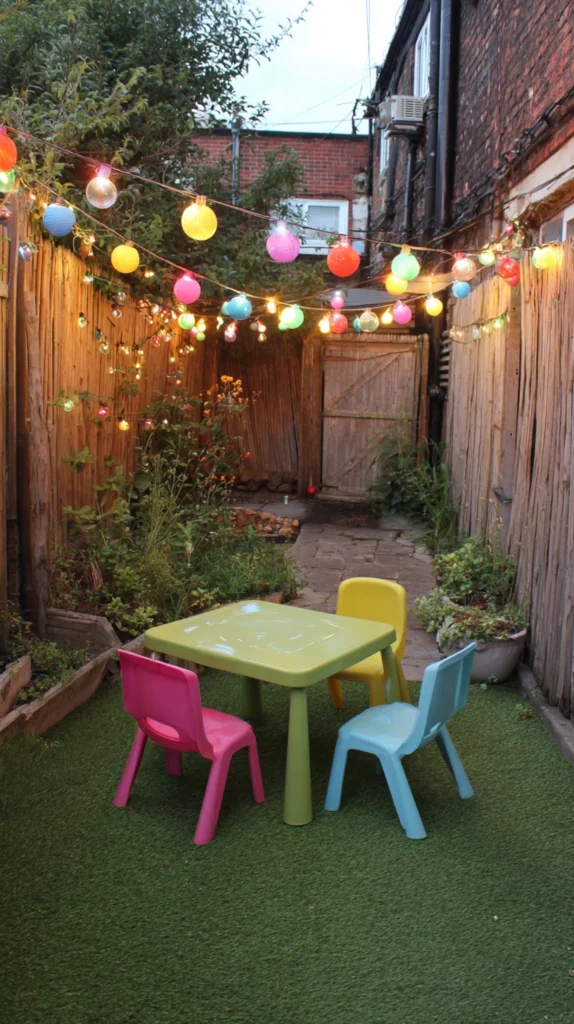
Budget: $30 – $120
A corner of the backyard prepared specifically for children on summer evenings — a patch of soft artificial grass, a low table and small chairs, a string of coloured lights, and a simple activity like a jar of firefly-catching equipment or a stargazing kit — gives children the specific pleasure of being outside after the usual bedtime on warm summer nights, which is one of the particular joys of summer childhood. The corner gives the experience a defined territory that makes it feel like a genuine children’s world rather than a corner of the adult garden.
Artificial grass tiles cost $5–$15 per square metre. Small outdoor children’s chairs cost $10–$25 each. Coloured solar string lights run $10–$20. A bug-hunting kit or a constellation identification guide costs $5–$15. A low activity table costs $20–$50. The enclosed corner provides the containment that makes parents comfortable and children feel independent — they are in their own space within the larger garden, which is the condition that produces the most imaginative and most sustained outdoor play.
Style tip: Include one light source that is operated by the children rather than fixed overhead. A battery-powered lantern that a child controls — switching it on and off, carrying it around the corner — gives the evening garden a quality of adventure that overhead lights alone cannot provide. The child’s control of the light is the detail that makes the corner feel like their space rather than a space in which they are being managed.
10. The Musician’s Garden Corner
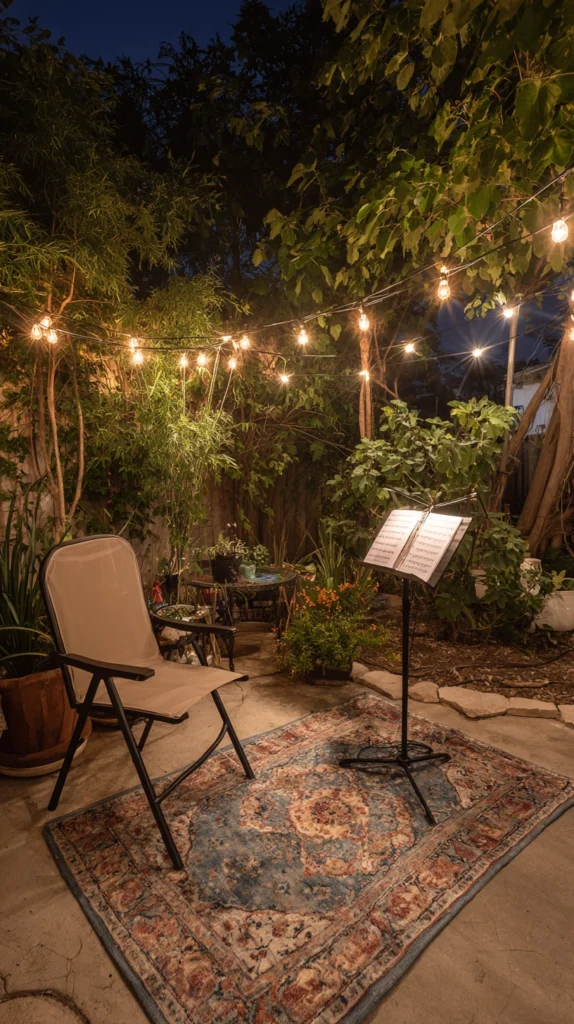
Budget: $30 – $150
A corner set up for outdoor music on a summer evening — a comfortable chair, a music stand, a small rug underfoot, and a string of lights above — creates a performance space and a practice space simultaneously. A guitar played in a corner of the garden on a summer night, with the sound dispersing into the open air rather than bouncing off interior walls, sounds different from the same guitar played indoors — more present, more natural, more appropriate to the instrument.
An outdoor chair suitable for playing an instrument costs $30–$80. A music stand runs $15–$40. An outdoor rug costs $30–$80. Fairy lights overhead run $10–$25. A waterproof instrument case ($30–$80) allows the guitar or ukulele to remain in the corner overnight rather than being carried inside after each session, which removes the friction between the idea of playing outside and the act of doing it.
Style tip: Position the corner so the open side faces the garden rather than the fence or the house. Sound projected toward an open space disperses naturally and pleasantly; sound projected toward a hard surface — a fence, a wall — creates reflection and slight reverberation that is not unpleasant but is not the natural outdoor sound that makes playing in the garden worth doing. The orientation of the playing position within the corner is the acoustic decision as well as the aesthetic one.
11. The Late Night Supper Corner
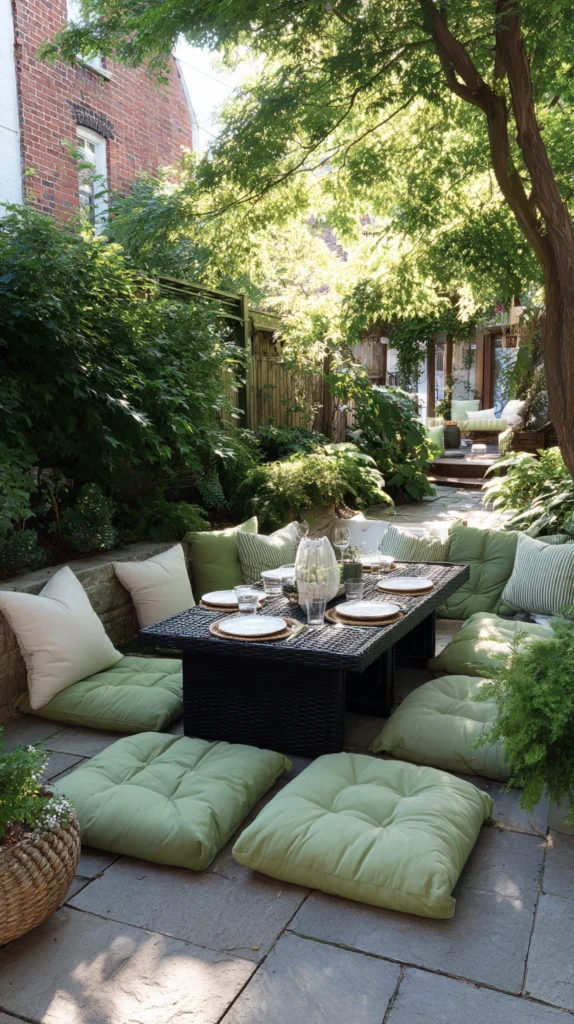
Budget: $40 – $200
A corner set up for late-night eating — a low table surrounded by floor cushions or low poufs, candles clustered at the table centre, a blanket available for each person, and the food already prepared and brought out — creates the most relaxed outdoor dining format available. Late-night garden eating at a low table has a picnic quality that formal outdoor dining does not, and the floor-level seating means guests settle in rather than perching, which is the posture that makes people stay until the food is gone and then stay longer.
A low outdoor coffee table costs $30–$80. Floor cushions or outdoor poufs run $20–$50 each. Blankets for cool evenings cost $15–$40 each. Candles in glass holders for the table cost $10–$25. The food itself — a spread of things that are eaten at room temperature, shared from the centre of the table, requiring no individual plating — is the right format for late night garden eating.
Style tip: Bring the food out in a single trip rather than in stages. A late-night supper corner works best when everything is on the table before anyone sits down — the abundance of a fully spread table is the first visual impression of the meal and it communicates generosity in a way that a table where courses arrive separately does not. Set everything out, light the candles, and call people over when it is ready rather than before.
12. The Midsummer Night’s Dreaming Corner
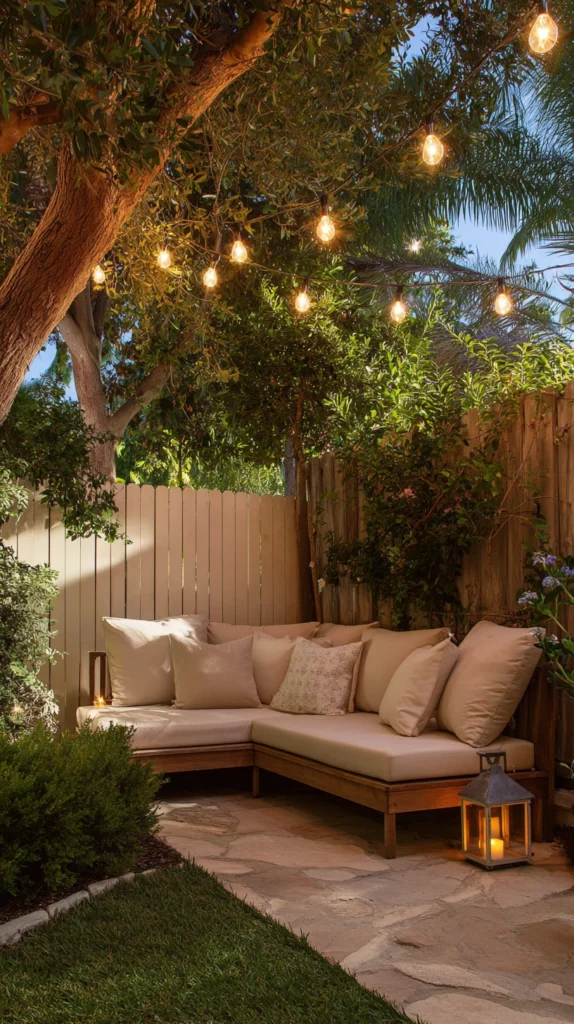
Budget: $50 – $250
A corner of the backyard set up with the deliberate intention of being used for nothing in particular — a comfortable daybed or a pair of deep chairs, a string of lights, a scented plant, a candle, and something cold to drink — is the idea that sounds least like an idea and is in practice the most important one on this list. The corner that has been made comfortable without being made purposeful is the corner that gets used longest and used most freely, because it does not require anything of the person in it beyond being there.
A wide outdoor daybed costs $150–$400. A pair of deep outdoor armchairs runs $80–$200 for the pair. Fairy lights overhead cost $15–$30. A pot of jasmine or night-scented stock costs $8–$20. A candle in a lantern runs $10–$25. The investment in making the corner comfortable is the investment; everything else — the conversation that happens there, the thinking that gets done, the hours that pass without being noticed — is what the corner produces when it is ready for it.
Style tip: Resist adding a screen, a speaker system, or any other entertainment technology to this corner. The midsummer night corner is the one space in the garden that earns its value from the absence of scheduled content rather than the presence of it. A corner with a film or a playlist is a corner with a programme; one without either is a corner where the evening decides for itself what it becomes — which is always, on a good summer night, something better than what was planned.
The best backyard corner for a summer night is not the most designed one or the most expensively furnished one — it is the one that is ready when the evening is.
That has a light already on, a chair already positioned toward the right view, a blanket already within reach, and something fragrant growing beside it. The corner that requires nothing to be done before it can be used is the corner that gets used, and a corner that gets used through the long evenings of a full summer is the most valuable room the garden has.
Find the corner, clear it, make it comfortable, and light it well. The summer nights will find it.