15 Backyard Ideas That Feel Like a Resort
There is a quality that the best resort environments possess and that almost no backyard naturally develops on its own. It is not the pool or the sun loungers or the outdoor shower — though all of these help. It is the sense that the space was designed for pleasure rather than ownership, that every element in it is there because it contributes to the experience of being there, and that the usual domestic pressures and obligations have been architecturally excluded rather than simply ignored.

A backyard that feels like a resort does not require a significant budget or a professional designer. It requires the same thinking that a good resort applies — clarity about what the space is for, removal of everything that contradicts that purpose, and the specific details that signal to anyone entering that this is a place where time passes differently than it does inside the house.
Each idea below is a discrete intervention that moves the backyard closer to the resort quality. Each includes what you will need, what it will cost, and a practical tip to make it work as well as the aspiration it is reaching for.
1. The Resort-Style Plunge Pool or Stock Tank Pool
Budget: $200 – $2,000
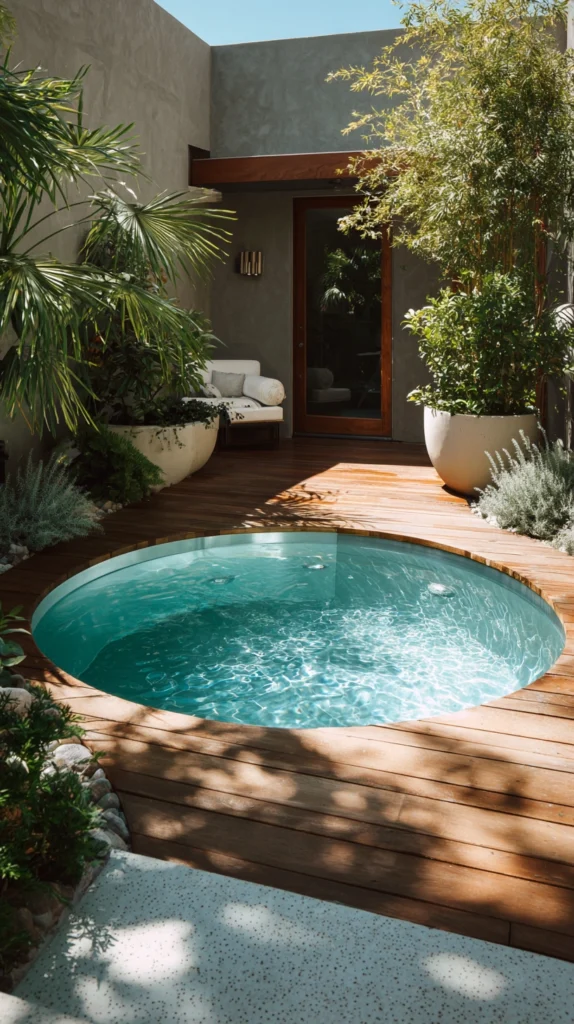
A plunge pool — or a large galvanised stock tank fitted with a filtration system and treated with pool chemicals — brings the defining feature of a resort environment into a backyard of almost any size. The stock tank approach in particular has transformed the accessible ceiling for backyard pool ownership: a 2.4-metre diameter stock tank holds enough water to submerge two or three people, fits on any patio or decked area, and costs a fraction of any in-ground pool installation.
A galvanised stock tank of 2.4 metres in diameter costs $400–$800. A small pool filter system runs $150–$400. Pool chemical starter kit costs $30–$60. A timber deck surround built around the tank — raising it to coping height and creating a surface to step from — costs $100–$300 in materials. Treat the water chemistry before the first use and test weekly thereafter — stock tank water chemistry requires the same management as a conventional pool.
Style tip: Position the stock tank so it is partially shaded by a pergola, a sail shade, or a large potted plant in the afternoon rather than in full sun. A plunge pool in direct afternoon sun becomes too warm to be refreshing within two hours of midday — the appeal of a plunge pool is the contrast between the cool water and the warm air, and that contrast requires the water to remain genuinely cool through the hottest part of the day.
2. The Sun Lounger Zone
Budget: $100 – $600
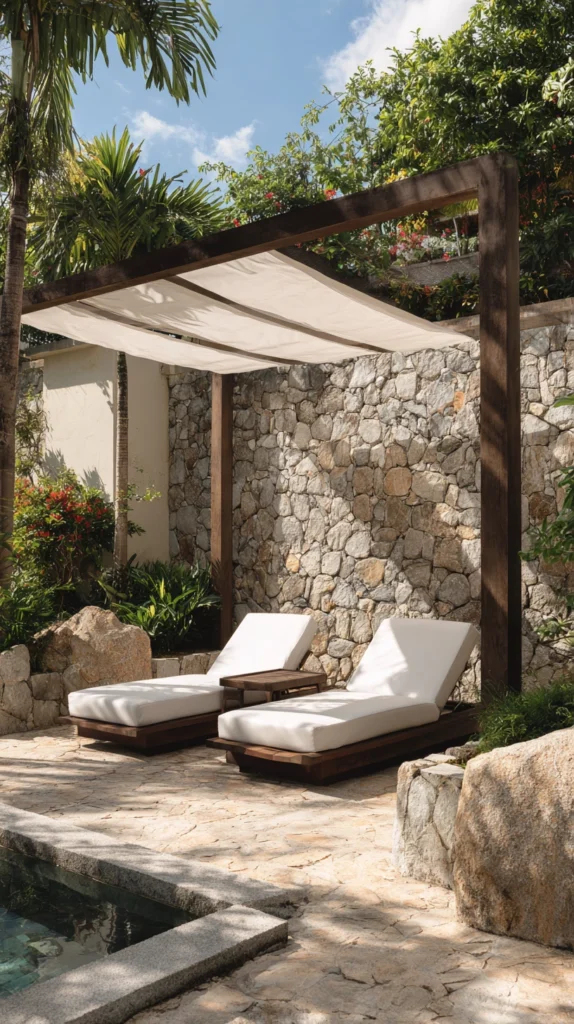
A designated sun lounger zone — two or four quality outdoor loungers on a defined surface, with a side table between each pair, a shade umbrella or sail above, and nothing else — is the resort detail that communicates more clearly than any other that the backyard was designed for leisure. The zone format is the key: a defined area with its own furniture and its own shade is a room, and a room communicates intention in a way that individual pieces of furniture distributed across a space do not.
Quality outdoor sun loungers cost $60–$200 each. A side table between each pair runs $25–$60. A shade umbrella or sail for the zone costs $50–$200. An outdoor rug beneath the loungers ($40–$120) defines the zone boundary and gives the arrangement the visual completeness that bare paving beneath furniture lacks. Choose loungers with adjustable backs so they can recline from fully upright through multiple positions to fully flat — the resort lounger that only reclines to one position is a sun lounger; the one that reclines fully is a daybed.
Style tip: Angle the loungers slightly toward each other — a 15-degree inward angle from parallel — rather than positioning them exactly parallel. Two perfectly parallel loungers look like they were positioned for efficiency; two with a slight inward angle look as if they were arranged for conversation, which is the difference between furniture that was placed and furniture that was arranged.
3. The Outdoor Shower
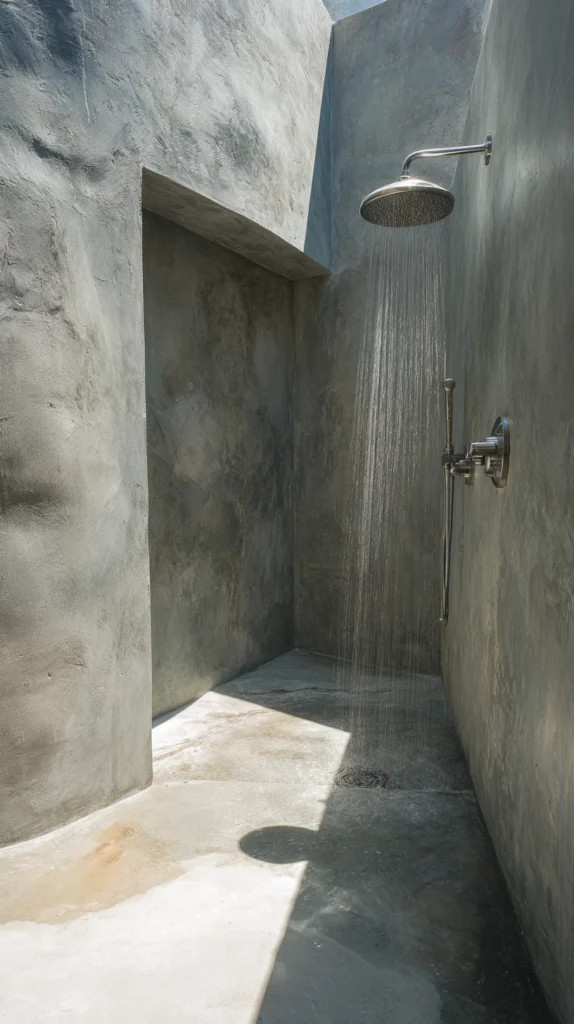
Budget: $60 – $400
An outdoor shower — freestanding, wall-mounted, or incorporated into a pergola post — is the resort detail that produces the most disproportionate impact on the feeling of a backyard relative to its cost. An outdoor shower signals that the space was designed for a full outdoor living experience rather than for occasional visits. It creates a ritual around entering and leaving the pool or hot tub that defines the space as somewhere with its own customs rather than simply an extension of the domestic interior.
A freestanding outdoor shower column with mixer tap costs $150–$350. A simple wall-mounted shower head connected to the cold supply runs $40–$100. A timber privacy screen beside the shower costs $30–$80 to build from reclaimed timber. Use teak or hardwood for any timber components adjacent to the shower — softwood in constant contact with water deteriorates within two seasons regardless of how well it was initially treated.
Style tip: Plant something fragrant beside the outdoor shower — lavender, rosemary, eucalyptus — so the shower experience has an olfactory dimension as well as a sensory one. A shower beside a lavender plant in late July, with the fragrance released by the water and the warm air, is a different experience from the same shower beside bare concrete, and the plant costs $5–$10 and requires no plumbing whatsoever.
4. The Covered Outdoor Dining Area
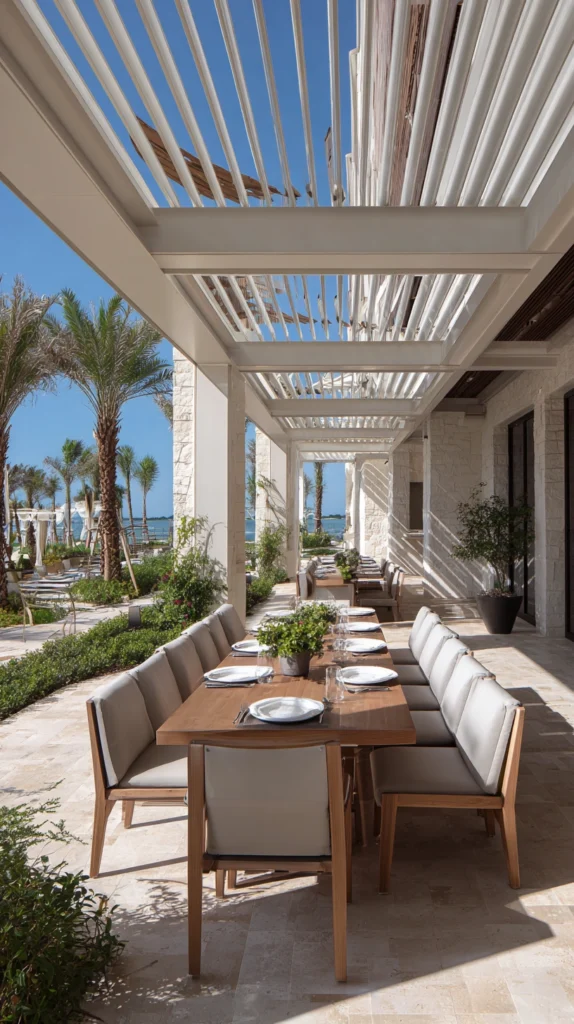
Budget: $200 – $1,500
A covered outdoor dining area — a pergola, an awning, or a louvred roof over a properly sized dining table — is the single structural investment that most changes how a backyard is used. A covered dining area is used in light rain, in direct sun, in the transitional weather of early and late season that accounts for most of the calendar. An uncovered table is used when the weather allows; a covered one is used whenever the household chooses.
A timber pergola over a dining area costs $200–$600. A retractable awning runs $300–$800. A louvred aluminium system costs $800–$2,000. A dining table for six to eight people costs $150–$500. The covered dining area is not about the furniture — it is about the structure that makes the furniture usable across the full season and across varying weather conditions. The structure is the investment; the furniture is the fitting out.
Style tip: Install outdoor speakers inside the pergola or awning structure before any climbing plants are trained across it or any ceiling linings are added. A speaker cable fed through a pergola post before the wisteria grows through it is invisible and permanent; the same cable added after requires either visible surface mounting or dismantling what the plant has built. Infrastructure first, always.
5. The Resort Lighting Plan
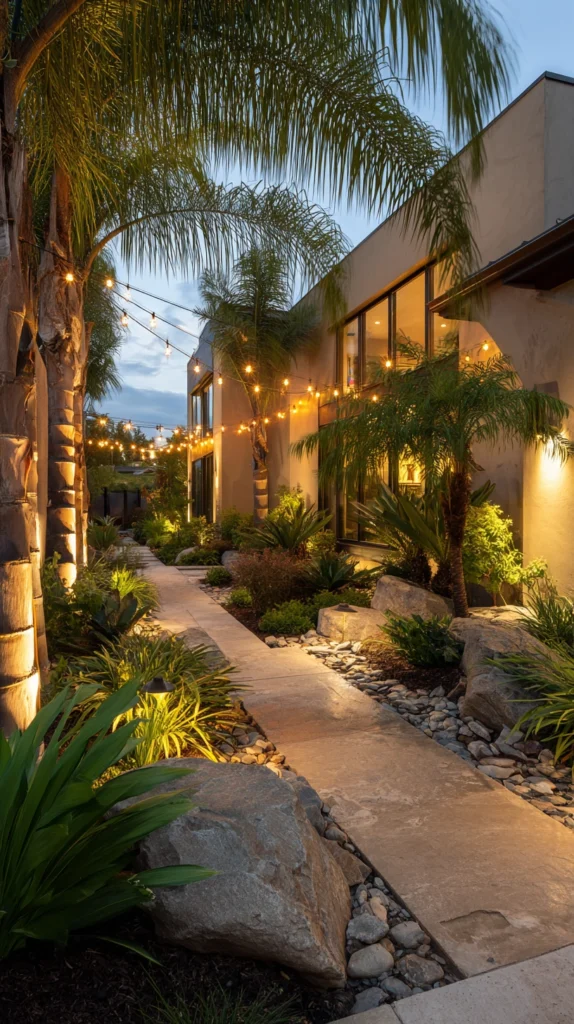
Budget: $60 – $400
A resort environment is lit at every level — uplights at plant bases, in-ground path lights along the approach, underwater pool lights in the water, festoon lights overhead, and candles on every table surface — so that after dark the backyard is more atmospheric than its daylight version rather than simply still visible. Most backyards are lit by a single security light or a single patio light, which is functional and nothing more. The resort lighting plan is the difference between a backyard that closes at sunset and one that opens.
Outdoor uplights at plant bases cost $8–$20 each. In-ground path lights run $5–$15 each. Festoon lights overhead cost $20–$60 for a 5-metre string. Candle lanterns for table surfaces run $10–$25 each. Connect permanent lights to a smart plug or a timer system ($15–$30) so the full lighting plan activates simultaneously at dusk rather than requiring individual switching. A lighting plan that requires six separate actions to activate is a lighting plan that is activated incompletely on most evenings.
Style tip: Set all permanent outdoor lights to the same colour temperature — 2700–3000K warm white — rather than mixing warm and cool sources. A backyard where some lights are warm and some cool has a visual inconsistency that reads as different generations of lighting equipment rather than a considered plan. The uniform warm temperature is the detail that makes a multi-source lighting plan feel designed rather than assembled.
6. The Poolside Cabana or Daybed Canopy
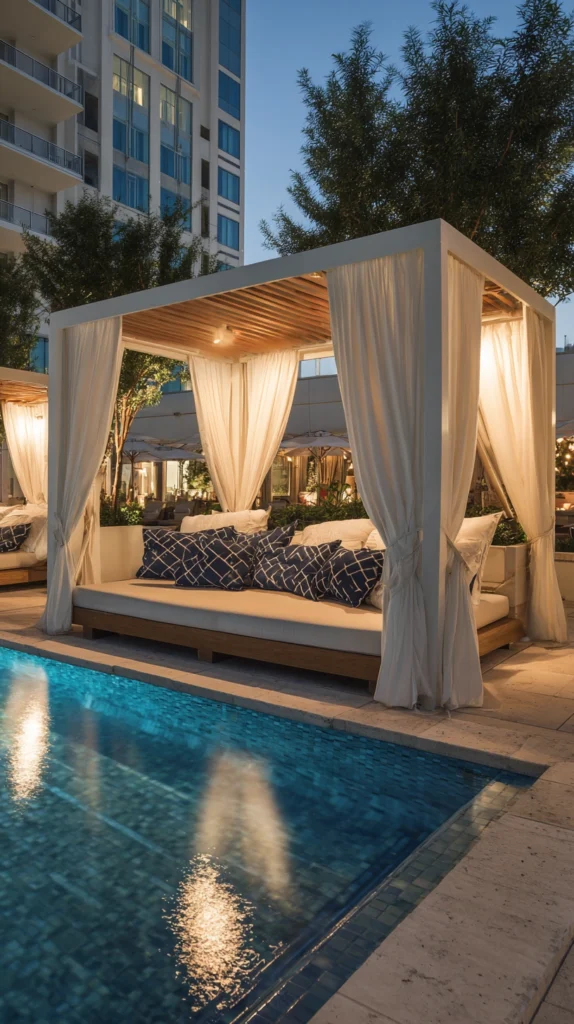
Budget: $150 – $800
A cabana or canopy daybed beside the pool or the primary lounger zone — a covered, curtained structure that creates a private retreat within the larger outdoor space — is the resort furniture element that most reliably produces the aspired-to feeling. The enclosed, canopied position transforms a sun lounger into a destination, and the privacy of a curtained daybed communicates a quality of luxury that an open lounger, however comfortable, does not.
A freestanding canopy daybed costs $150–$400. A purpose-built timber cabana with curtain rails costs $300–$800 in materials. Outdoor curtain panels for the sides run $20–$60 each. A weatherproof mattress topper of at least 8 centimetres in thickness ($60–$120) provides the comfort that makes the structure genuinely usable rather than architecturally interesting but physically inadequate. Fill the interior with cushions and a folded throw rather than leaving it bare — a bare canopy structure reads as unfinished regardless of its architectural quality.
Style tip: Hang the curtain panels so they can be fully drawn on three sides but left open at the front facing the pool. A daybed canopy that is curtained on all four sides produces a closed box; one curtained on three sides with the pool view deliberately preserved creates a private space with an intentional framing of the best available view — the resort room design principle applied to outdoor furniture.
7. The Tropical Planting Scheme
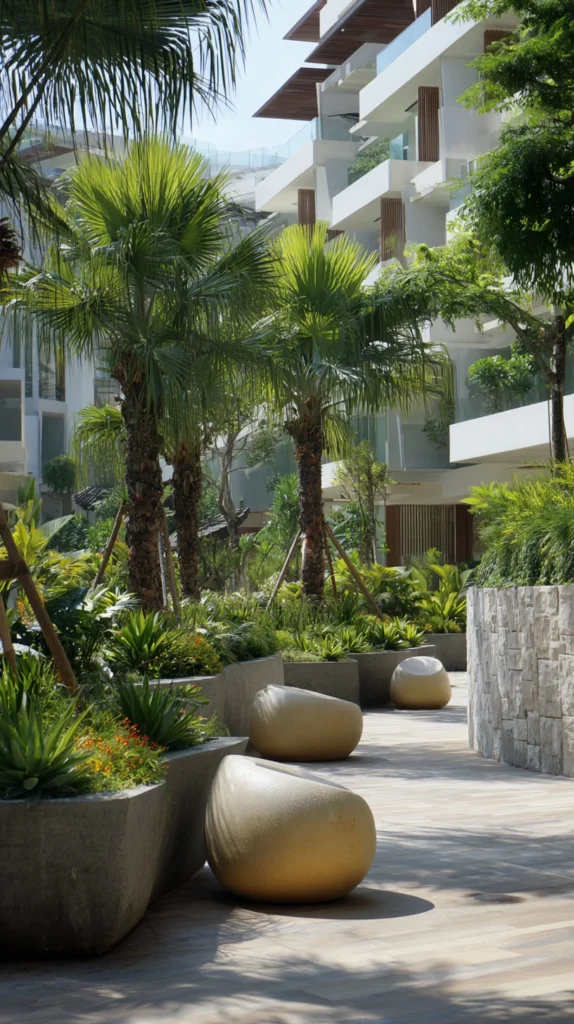
Budget: $80 – $400
A planting scheme that references the tropical resort environment — large-leafed architectural plants, bold foliage, dramatic form and scale — creates the visual impression of a resort landscape without any structural changes. Bananas, cannas, gingers, phormiums, bird of paradise, tree ferns: plants with presence, with exoticism, with the scale and the drama that resorts use to create the sense that the normal world has been left behind.
A banana plant in a 10-litre pot costs $15–$40. A canna lily runs $8–$20. A bird of paradise costs $25–$60. A tree fern starts at $30–$100 depending on trunk height. Group the tropical plants in clusters rather than distributing them individually — a cluster of three large-leafed plants reads as a planted environment; individual specimens spread across the garden read as pot plants. The cluster is the design decision that makes the planting feel like landscape rather than decoration.
Style tip: In colder climates, treat the tropical planting scheme as an annual installation rather than a permanent one — lift and store tender species in autumn, replant in late spring, and accept the seasonal nature of the tropical effect as part of its particular charm. A resort-style planting scheme that arrives each May and leaves each October is a seasonal transformation of the garden that the unchanging permanent planting around it cannot provide.
8. The Outdoor Bar and Drinks Station
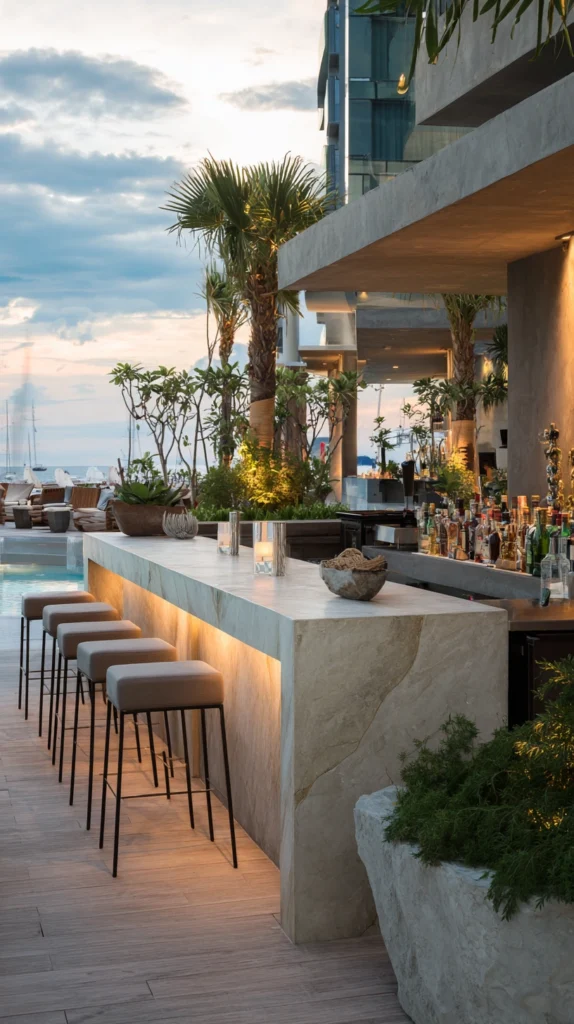
Budget: $80 – $400
A properly equipped outdoor bar — a fixed or mobile counter with everything needed for drinks service within arm’s reach, a dedicated outdoor refrigerator or ice bath for cold drinks, and a bar stool or two for guests to settle beside it — creates the hospitality infrastructure that makes a backyard feel genuinely self-sufficient rather than dependent on the indoor kitchen. The outdoor bar communicates that the backyard was designed for extended stays rather than brief visits.
An outdoor bar counter built from cinder blocks and timber costs $60–$150. A dedicated outdoor refrigerator runs $150–$400. Bar stools cost $30–$80 each. A bar with a chalkboard menu ($10–$20 for a small chalkboard) listing the available drinks communicates a quality of service that a drinks table without a menu never achieves — the menu signals that the bar is a bar rather than a surface with bottles on it.
Style tip: Stock the outdoor bar before guests arrive rather than transferring stock from the indoor kitchen on request. An outdoor bar that is self-contained from the beginning of the gathering requires no host management and no indoor trips — guests help themselves, the host remains present in the garden, and the bar functions as a service point rather than a errand generator.
9. The Hardscape Upgrade
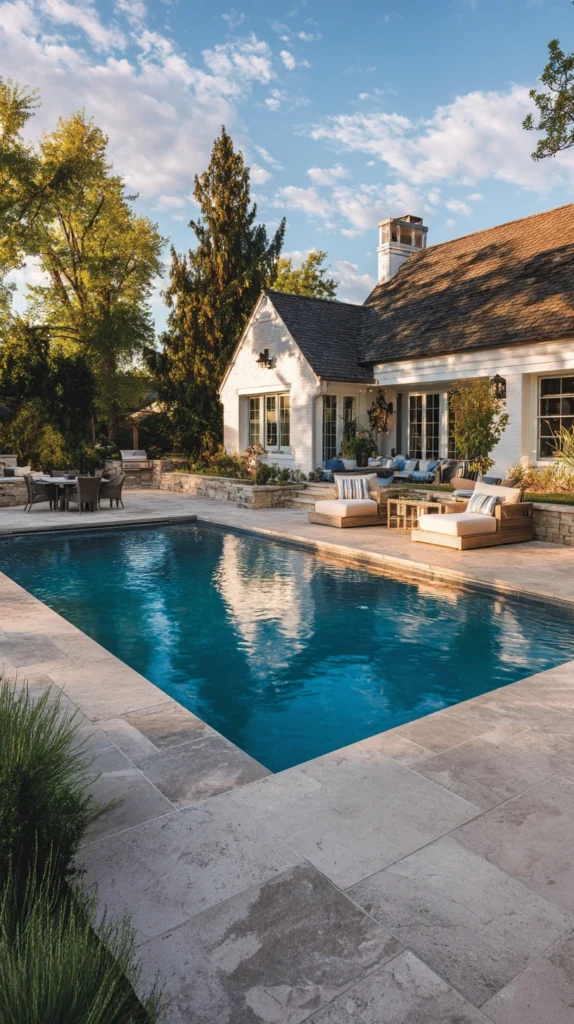
Budget: $100 – $800
Replace, refresh, or extend the primary hard surface of the backyard — the patio, the pool deck, the path to the pool — with a material that communicates quality and intention. Natural stone, large-format porcelain tiles, warm-toned concrete, or rich hardwood decking: the floor of the backyard is its largest surface and its most consistently experienced one, and a floor surface that was chosen for the space communicates a quality that paving laid without consideration cannot approach.
Natural stone paving costs $3–$8 per tile. Large-format porcelain tiles run $4–$10 each. Hardwood decking boards cost $15–$35 per square metre. The hardscape upgrade is the most expensive idea on this list and the one that produces the most lasting and most fundamental change to the resort quality of the backyard — the floor is the foundation of every other element in the space, and a beautiful floor makes every other element look better than it would on an inadequate one.
Style tip: Choose a single paving material and use it consistently across all horizontal surfaces of the backyard — patio, pool surround, path, and step faces — rather than using different materials for different zones. A backyard where every surface is the same stone reads as a designed landscape; one where each area has its own material reads as a series of separate projects that happened in the same garden.
10. The Outdoor Kitchen
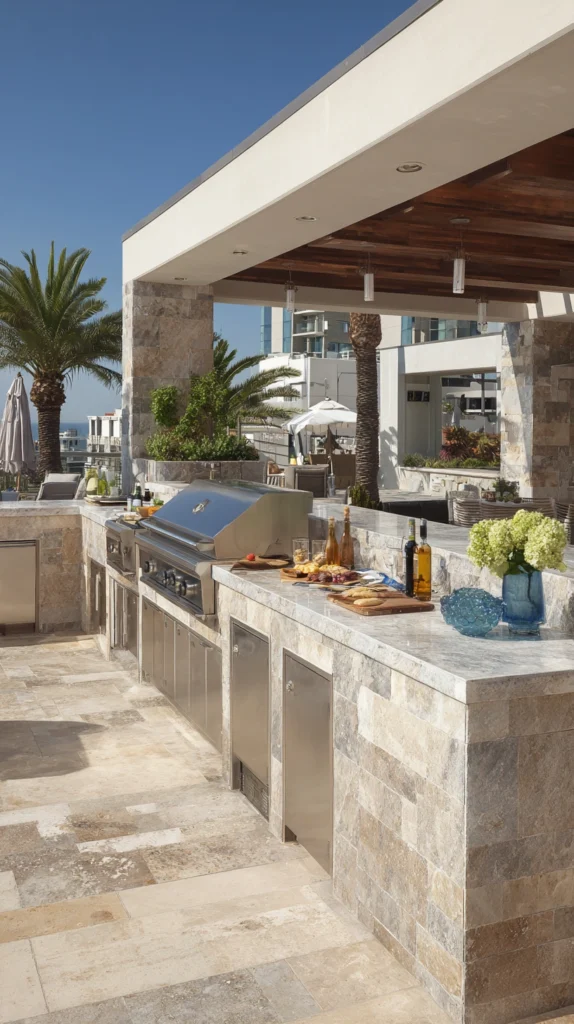
Budget: $200 – $2,000
An outdoor kitchen — with a grill or pizza oven, a prep surface, a sink connected to the water supply, and storage for tools and condiments — keeps the party outside for the full duration of a summer gathering rather than requiring periodic retreats to the indoor kitchen. A backyard with an outdoor kitchen is a backyard that functions as an independent entertainment venue rather than an overflow space for a party that is primarily happening inside.
A built-in outdoor grill costs $200–$600. A prep counter built from cinder blocks and tiles runs $100–$400. An outdoor sink connection costs $80–$200 in materials and basic plumbing. A compact outdoor kitchen providing grill, prep surface, and storage can be built for $400–$800 in total — less than a single appliance from the premium outdoor kitchen ranges and fully functional for everything that makes outdoor cooking a pleasure rather than a logistical challenge.
Style tip: Position the outdoor kitchen so the cook faces the guest seating rather than away from it. A grill that requires the host to turn their back on the party for the duration of cooking is a grill that isolates the cook from the occasion at the moments when being part of it matters most. The orientation of the cooking surface is a social decision as much as a practical one, and a cook who faces the guests cooks in a different and considerably more enjoyable way.
11. The Evening Fire Feature
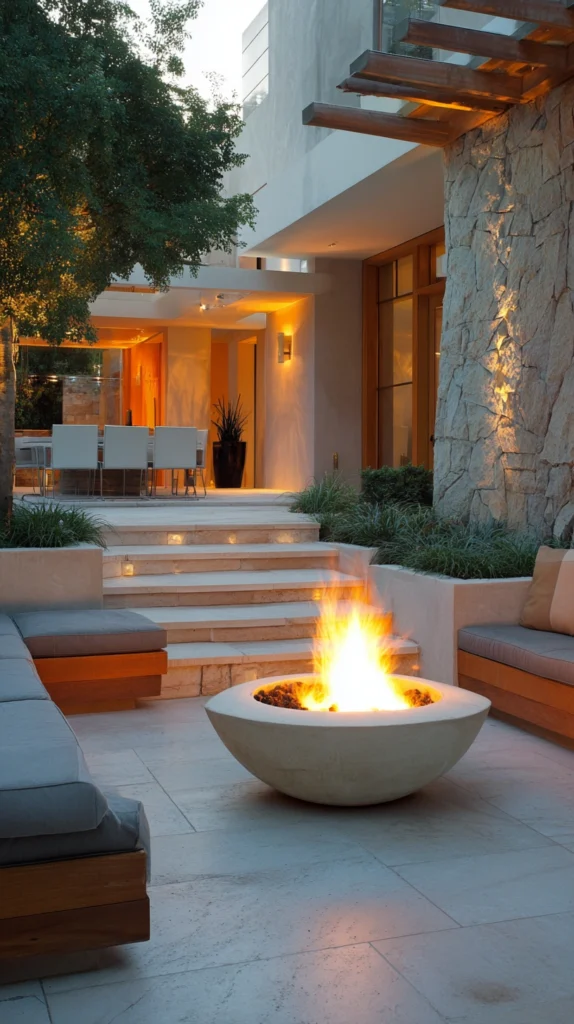
Budget: $60 – $500
A fire feature — a fire pit, a fire bowl, a bioethanol table fire, or a gas flame column — at the centre or edge of the primary outdoor seating area gives the evening backyard a focal point and a warmth that extends the comfortable hours of outdoor sitting well past the point where the temperature would otherwise drive guests inside. A fire is not a heat source that happens to look good; it is a social technology that makes people stay, talk, and look at each other across the flame in ways that no other garden element produces.
A portable steel fire pit costs $40–$100. A cast iron fire bowl runs $60–$200. A bioethanol table fire costs $60–$200 and produces no smoke, making it suitable for enclosed or smaller backyard spaces. A gas flame column — permanently connected to a gas supply — costs $300–$800. Position the fire feature where it is surrounded by seating on three sides rather than pushed to the edge of the terrace where only the nearest seats benefit from the warmth and the light it produces.
Style tip: Light the fire feature before guests arrive rather than as a response to the evening cooling. A fire that is already burning when guests come outside is part of the welcome; one lit at nine o’clock when the temperature has already dropped and guests are considering going in is a last resort rather than an atmosphere. The fire earns its resort quality when it is present from the beginning of the evening rather than the end.
12. The Landscaped Perimeter
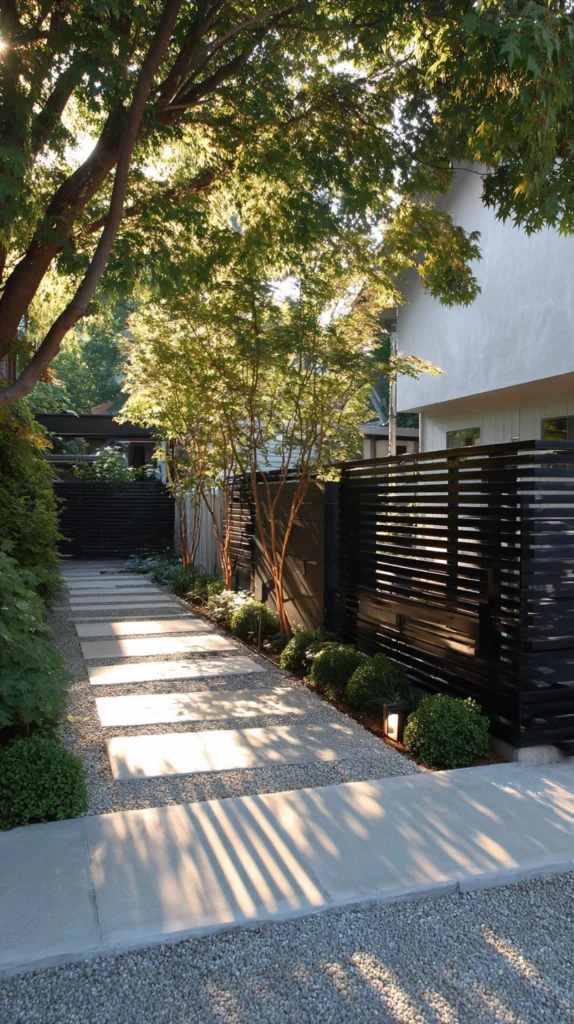
Budget: $80 – $400
A properly planted, properly maintained perimeter — where the boundaries of the backyard are softened by planting rather than defined by bare fencing — changes the character of the space from an enclosed rectangular plot to a garden that has edges rather than walls. Planting at the perimeter creates the sense of depth, the sense of something growing beyond the immediate space, that resort landscapes use to make relatively small environments feel expansive.
Climbing plants for the boundary fence cost $10–$30 each. Tall screening plants — bamboo, Miscanthus, tall evergreen shrubs — run $15–$50 each. A continuous planted border along two or three fence lines costs $80–$200 in plants and an afternoon to establish. The perimeter planting does not need to be elaborate — even a single row of tall grasses in front of the back fence softens the boundary in a way that the bare fence behind them cannot approach.
Style tip: Use the same plant species or the same plant family across the full perimeter rather than different plants at each fence section. A perimeter planted with a single species of ornamental grass — or a consistent combination of two — reads as a designed landscape boundary; one where each section has different plants reads as separate planting decisions that happened to be adjacent to each other.
13. The Wellness Corner
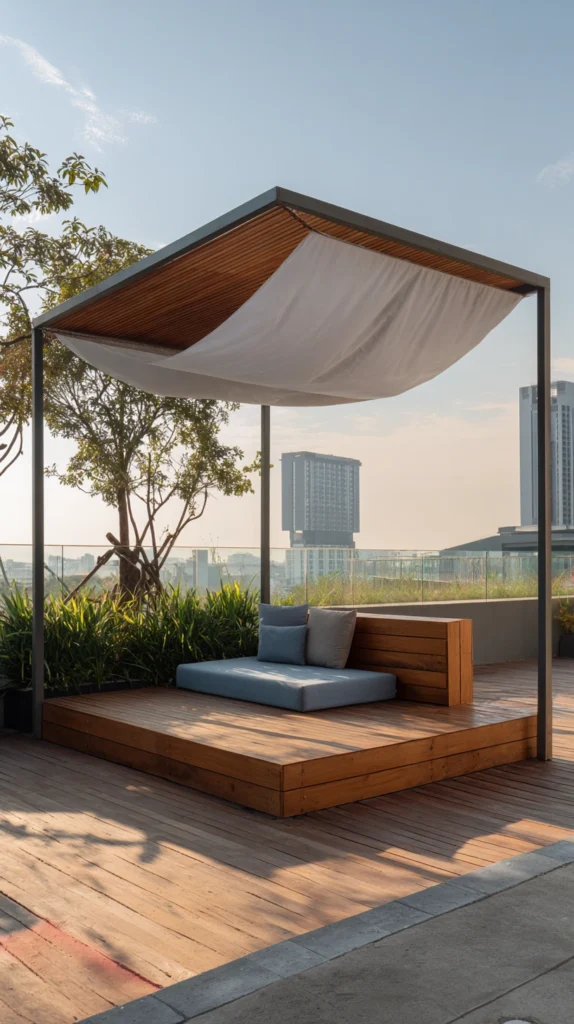
Budget: $40 – $300
A designated wellness corner — a yoga platform, a meditation seat, an outdoor sauna cabinet, or simply a carefully prepared corner with a mat, a lantern, and a scented plant — gives the resort backyard the dimension of intentional restorative practice that distinguishes a destination from a recreation area. Resorts are places where the body is attended to; a wellness corner signals that this backyard has the same aspiration.
An outdoor yoga platform built from two pallets sanded and treated with decking oil costs $15–$40. A meditation cushion on a timber base runs $25–$60. A small outdoor sauna cabin costs $1,500–$4,000 at the aspirational end, but an infrared sauna blanket used in a private corner of the garden costs $150–$300 and produces the same physiological experience. A fragrant plant beside the wellness corner — eucalyptus, lavender, rosemary — contributes the sensory environment that the practice requires.
Style tip: Position the wellness corner in the most secluded part of the backyard — the corner furthest from the house, screened on two sides by planting or a trellis — rather than in the most convenient location. The wellness corner earns its purpose from the quality of the separation it provides from the domestic environment, and a corner that feels genuinely removed from the kitchen window and the back door is more restorative than one in full view of both.
14. The Poolside Refreshment Station
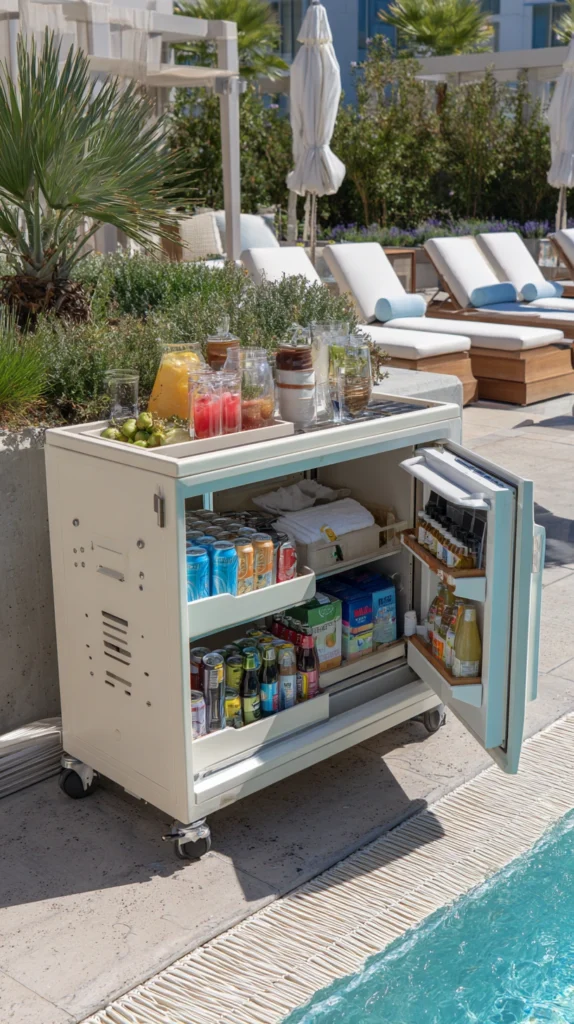
Budget: $30 – $150
A dedicated refreshment station beside the pool or the primary outdoor seating area — a small table or cart permanently stocked with cold drinks, sunscreen, towels, and everything needed for a poolside afternoon — removes the constant domestic friction of retrieving things from the house and replaces it with the self-contained ease of a resort amenity. Every trip inside breaks the spell of being outside; a refreshment station that eliminates those trips maintains it.
A weatherproof side table or cart costs $30–$80. A countertop ice bucket runs $20–$40. A small basket for sunscreen, lip balm, and poolside accessories costs $10–$20. Stock the station before the first guest arrives rather than as needs arise — a station stocked in advance is a service; one assembled in response to requests is a scramble. The difference between the two is visible to every guest within the first fifteen minutes of arrival.
Style tip: Include a small first aid kit in the refreshment station — antiseptic, plasters, after-sun lotion — beside the sunscreen and the cold drinks. A refreshment station that anticipates minor injuries as well as refreshment needs communicates a quality of forethought that guests notice without identifying as the source of their comfort. The first aid kit costs $8–$15 and is the detail that makes the station feel genuinely considered rather than thoughtfully assembled.
15. The Scent and Sound Environment
Budget: $40 – $200
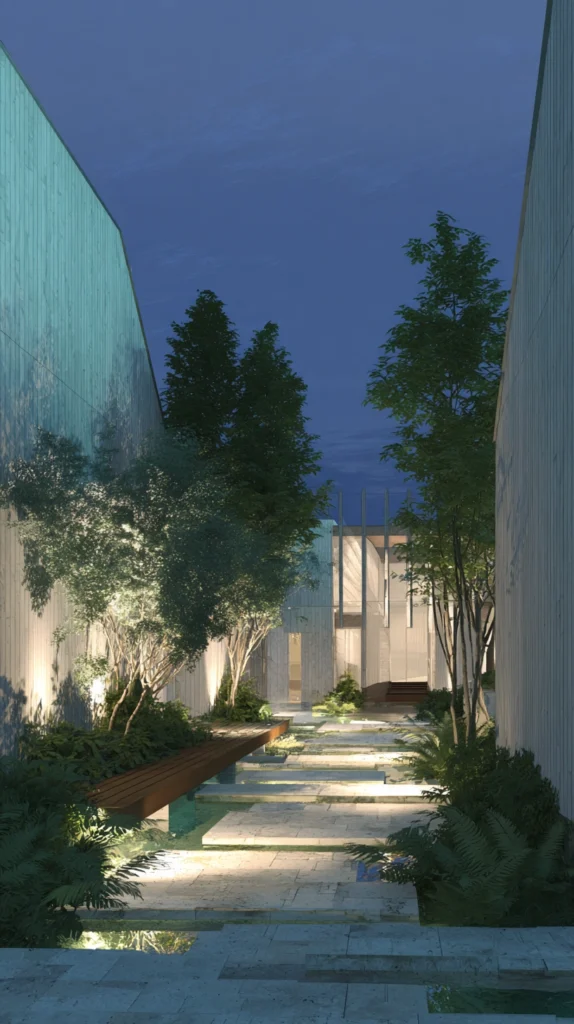
A backyard resort experience is as much about what is heard and smelled as what is seen — the specific combination of warm fragrant air, the sound of water, soft music at the right volume, and the occasional movement of leaves in a breeze creates an environment that operates on the nervous system rather than the aesthetic faculty. Fragrant planting beside the seating area, a water feature within earshot, and a quality outdoor speaker playing music at conversation volume complete the resort environment in its non-visual dimensions.
Fragrant plants — jasmine, lavender, gardenia — cost $8–$20 each. A solar water feature costs $30–$80. A quality outdoor Bluetooth speaker runs $40–$120. The combination of fragrance, water sound, and music produces a sensory environment that no amount of visual investment can replicate through the eyes alone, and the three elements together cost less than most single pieces of outdoor furniture while contributing more to the experience of being in the space than almost anything else that money can provide.
Style tip: Set the outdoor speaker volume so the music is heard as a background presence rather than a foreground feature — audible without effort, ignorable without effort. A resort environment uses music to fill silence rather than to provide entertainment, and a speaker at the wrong volume either fails to reach the far corners of the seating area or competes with conversation in a way that makes both the music and the conversation worse. Test the volume from the furthest seat before guests arrive and adjust from there.
The best backyard resort is not the most expensively equipped or the most completely transformed — it is the one that makes the decision to stay outside easier than the decision to go in, that anticipates what people will want before they want it, and that operates on the body and the senses in the specific way that the best resorts do: not through spectacle but through the accumulated effect of many small things done well.
Clear out what belongs inside, invest in what makes being outside genuinely better than being in, and maintain both the discipline and the pleasure of treating the backyard as the room it is capable of being. The resort feeling is not a style. It is a standard, and the standard is simply that every element in the space earns its place by contributing to the pleasure of being there.