12 Genius Landscaping for Privacy Backyard Ideas You Need to See
Someone finally installs the patio, sets up new outdoor furniture, maybe even adds a hot tub, and then steps back to admire it only to realize a neighbor’s second-story window looks directly down onto the whole setup.
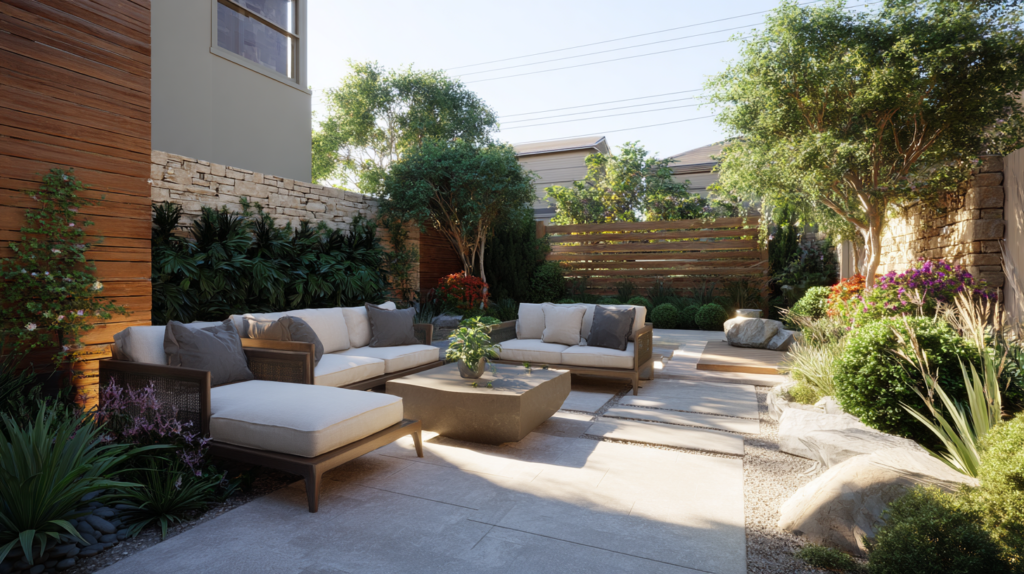
That specific moment, realizing a backyard investment is basically on display to anyone who happens to glance out a nearby window, is what sends most people straight to a fence company for a quote.
A tall wood fence solves the problem, but it’s rarely the only option, and it’s often not even the best one. Landscaping alone, done with the right plant choices and placement, can solve privacy concerns just as effectively, sometimes better, while adding genuine beauty a flat wood wall never provides.
Here are 12 ways to build real, functional privacy using landscaping rather than defaulting straight to a fence.
Why landscaped privacy often outperforms a solid fence
Living screens solve the same problem while adding benefits a fence simply can’t offer.
- Greenery softens sound in a way a hard fence surface doesn’t, since dense foliage actually absorbs noise rather than just reflecting it
- Plant-based privacy can be layered and staggered at different heights, blocking specific sightlines a single flat fence height can’t fully address
- It brings genuine seasonal interest and wildlife activity into the yard, something a static fence never contributes
Once you understand which plants and placements actually block a sightline effectively, landscaping becomes a genuinely competitive privacy solution, not just a decorative afterthought.
1. Plant Fast-Growing Evergreen Screens Along the Property Line
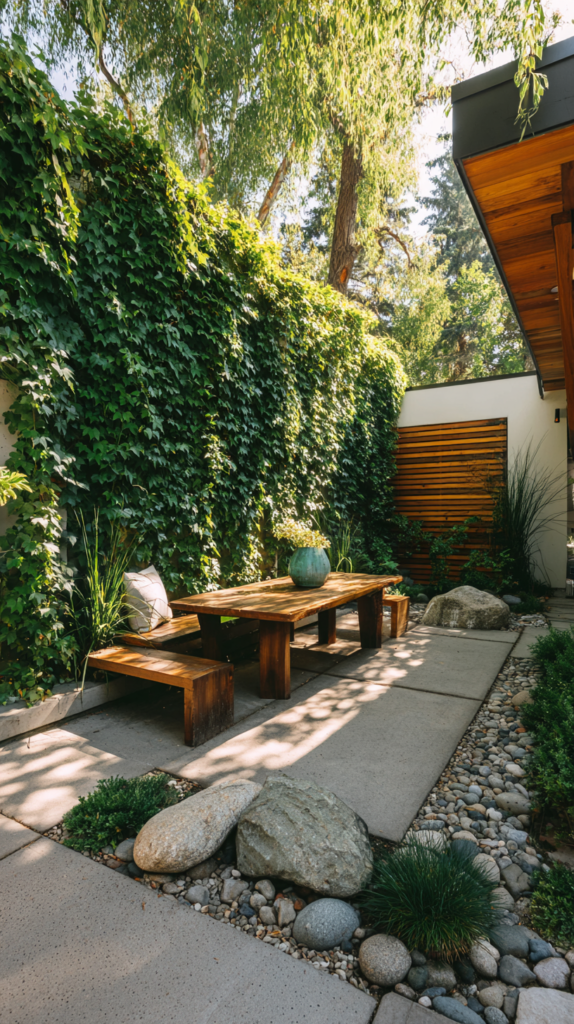
The most direct plant-based alternative to a traditional fence.
Build it:
- Arborvitae, Leyland cypress, or a similar fast-growing evergreen planted in a row along the exposed property line
- Spaced according to the specific variety’s mature width, typically 3 to 6 feet apart depending on the species chosen
- Watered consistently during the first one to two years while the root systems establish, after which most varieties require minimal ongoing care
Why evergreen screening remains the most reliable landscaping-based privacy solution:
- It provides year-round coverage, unlike deciduous plants that lose their screening effect entirely during winter months
- Many fast-growing varieties reach a meaningful screening height within just two to three growing seasons, addressing privacy concerns relatively quickly
- It creates a genuinely living wall, absorbing sound and softening the yard’s overall boundary in a way a flat fence surface can’t replicate
Why choosing the right specific variety matters more than simply picking whatever grows fastest:
Some of the very fastest-growing evergreen options, like certain Leyland cypress varieties, can become genuinely oversized and difficult to maintain within just a few years, eventually requiring more aggressive pruning or even removal if not properly planned for. Choosing a variety suited to the specific available space, considering both the mature width and height relative to the yard’s actual dimensions, prevents the common scenario where a fast-growing privacy screen solves the immediate problem but creates a larger maintenance issue within five or six years.
Cost breakdown: Evergreen screening plants run $30 to $100 each depending on the initial size purchased, with a full property line typically requiring eight to fifteen plants depending on length.
2. Use a Bamboo Grove for Fast, Dense Screening
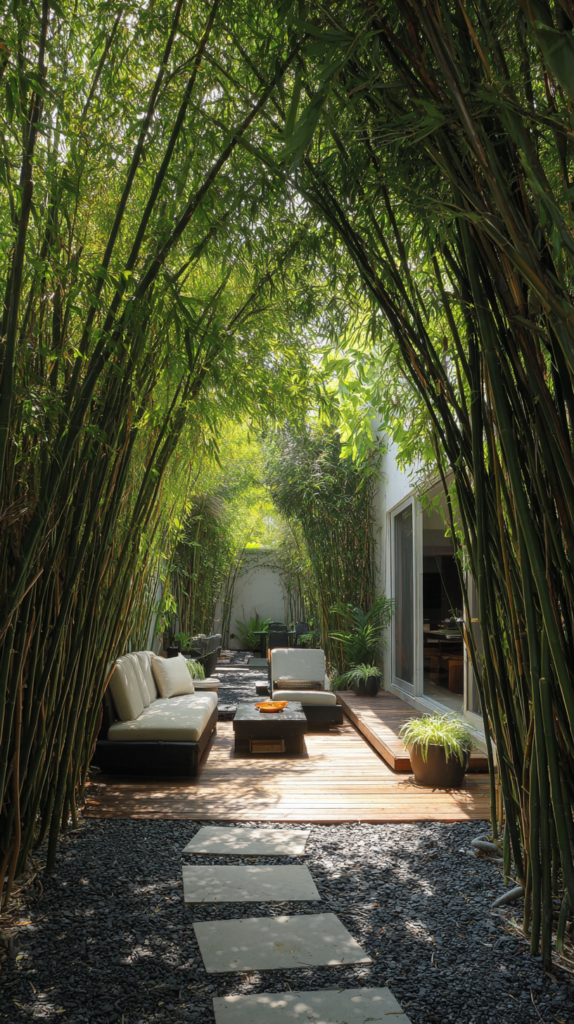
An especially rapid-growing option for anyone needing privacy established quickly.
Build it:
- Clumping bamboo varieties specifically, rather than running bamboo, planted along the desired screening line
- A root barrier installed at planting time regardless of variety, since even clumping types can spread more than expected over years
- Positioned with enough distance from any shared property line or structure to account for the bamboo’s eventual mature spread
Why bamboo delivers privacy screening faster than almost any other planted option:
- Many bamboo varieties can reach a meaningful screening height within a single growing season, considerably faster than traditional evergreen shrubs or trees
- The dense, tall growth pattern blocks sightlines effectively even at a relatively narrow planting width, useful in yards with limited space to spare
- It adds a distinctly different textural and visual element to the yard compared to more common evergreen screening choices
Why choosing clumping over running bamboo is one of the most important decisions in this entire project:
Running bamboo varieties are notorious for aggressive, difficult-to-control spread that can extend well beyond the original planting area, potentially causing genuine conflict with neighboring properties or damaging nearby structures and hardscaping. Clumping bamboo varieties grow considerably more slowly outward and stay much more contained, making them the only genuinely responsible choice for a residential privacy screening application, even though running varieties are sometimes marketed as faster or cheaper options.
Cost breakdown: Clumping bamboo plants run $40 to $120 each depending on initial size, with a root barrier adding $5 to $10 per linear foot of installation.
3. Layer Plantings at Different Heights to Block Specific Sightlines
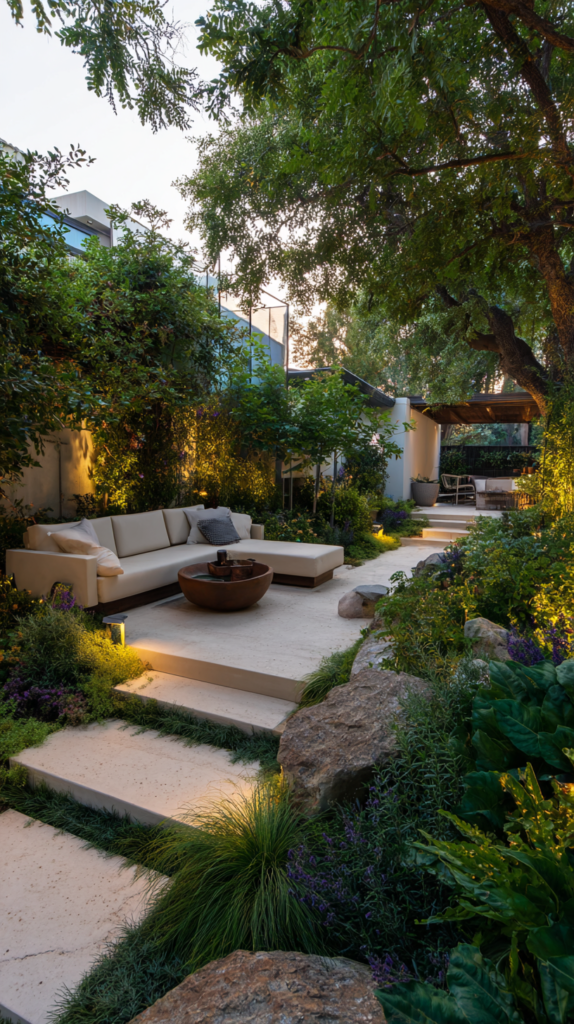
Targeting the exact angle a neighboring window or deck actually looks down from.
Build it:
- A specific problem sightline identified first, like a neighbor’s elevated deck or a second-story window with a direct view into the yard
- Plants chosen and positioned specifically to intercept that exact angle, which may mean a taller plant closer to the house rather than only along the property line
- A mix of heights used together, since blocking an elevated sightline often requires a taller element positioned further from the boundary than a standard property-line screen alone would achieve
Why targeting a specific sightline works better than assuming a standard-height screen solves every privacy concern:
- An elevated neighboring window often sees over a standard property-line planting entirely, since the screening height needed depends on the specific angle involved, not just a general privacy goal
- Positioning a taller element strategically, sometimes even within the yard itself rather than only at its edges, can block a specific problem view more effectively than extending the entire property-line planting taller
- It solves the actual problem directly, rather than assuming a generic privacy planting automatically addresses every specific overlooking angle
Why mapping the actual problem sightlines before choosing any plants makes a meaningful difference in the final result:
Standing in the specific spot where privacy matters most, like a patio seating area or a hot tub, and actually looking up toward any overlooking windows or decks reveals the real angle that needs blocking, which is often different from what intuition alone would suggest. This mapping exercise, done before any plants are purchased, prevents the common mistake of installing a standard-height screening hedge along the property line only to discover it doesn’t actually block the specific window that prompted the whole project in the first place.
Cost breakdown: No additional cost beyond the planting itself, since this is primarily a planning and placement strategy applied to whichever specific plants are chosen.
4. Create a Living Privacy Wall With a Trellis and Climbing Vines
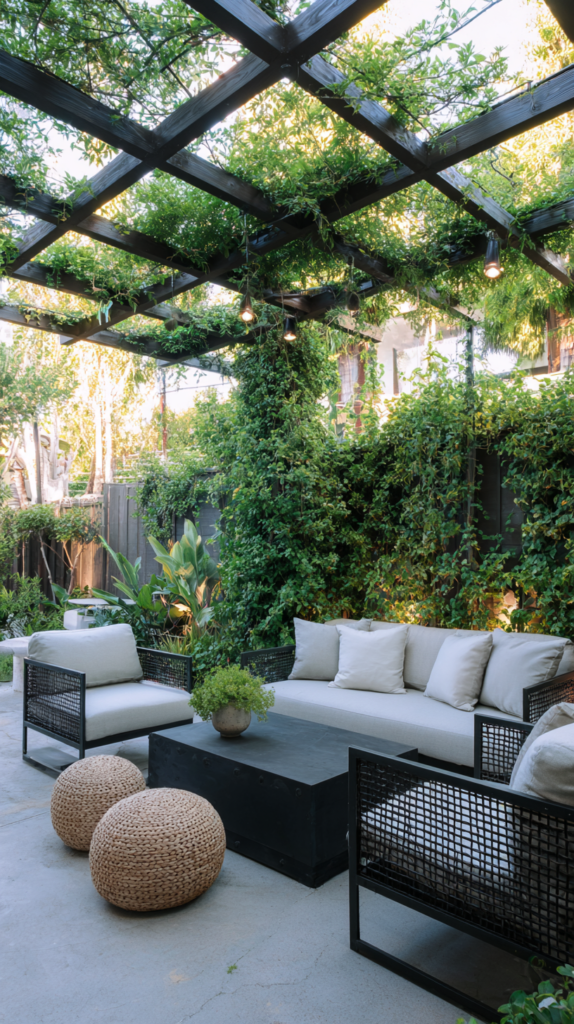
Combining a lightweight structure with fast-growing plants for quicker coverage than shrubs alone.
Build it:
- A simple wood or metal trellis installed along the desired privacy line, sized to the height needed for the specific sightline being addressed
- Fast-growing climbing vines, like clematis, climbing hydrangea, or trumpet vine, planted at the trellis base and trained upward as they grow
- Support ties added periodically during the first couple of growing seasons to help direct the vine’s growth evenly across the full trellis structure
Why a trellis and vine combination often achieves privacy faster than shrubs planted alone:
- Climbing vines frequently grow taller and denser more quickly than a shrub of comparable initial cost, since the vine’s energy goes into climbing rather than building out a full root and branch structure independently
- The trellis itself provides some immediate partial screening even before the vines have fully filled in, unlike a young shrub that offers minimal coverage in its first year or two
- It works particularly well in narrower spaces where a full shrub’s eventual width wouldn’t comfortably fit
Why selecting a vine suited to the specific trellis material and climate matters for long-term success:
Different climbing vines attach to structures in different ways, some twining naturally around a trellis while others need more direct tying and training to climb effectively, and choosing a vine suited to the specific trellis material prevents frustration during the crucial early growing seasons. Additionally, vine hardiness varies considerably by climate zone, so confirming the specific variety chosen will reliably survive the local winter conditions prevents having to restart the whole screening project after an unexpected die-off.
Cost breakdown: A trellis structure runs $30 to $80 per section depending on material and height, with climbing vine plants adding $15 to $40 each.
5. Install a Raised Berm Planted With Layered Greenery
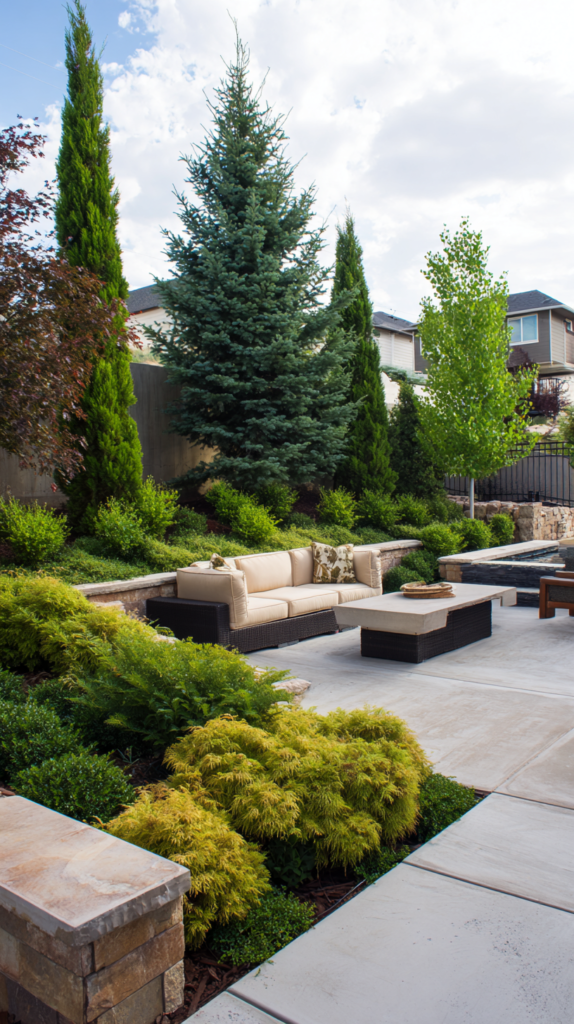
Using elevation itself, not just plant height, to block a sightline more effectively.
Build it:
- A gently sloped mound of soil, typically 2 to 3 feet in height, built along the section of the property needing the most privacy
- Layered plantings installed on top of the berm, combining the elevation gain with the plants’ own height for a considerably taller effective screen
- Erosion control measures, like groundcover planting or mulch, used on the berm’s slopes to prevent soil washout before plantings fully establish
Why adding elevation through a berm can solve privacy problems that plants alone can’t fully address:
- A berm effectively adds several feet of height to whatever’s planted on top of it, without needing correspondingly larger, more mature plants to achieve the same effective screening height
- It can address privacy concerns from an elevated neighboring vantage point more effectively than ground-level plantings alone, since the added elevation directly counters the height difference causing the sightline issue
- It adds genuine topographical interest to an otherwise flat yard, giving the landscaping more dimension beyond a single flat planting bed
Why proper berm construction requires more consideration than simply piling up extra soil:
A poorly constructed berm can create drainage problems, directing water toward a house foundation or a neighboring property in ways that create entirely new issues beyond the privacy concern it was meant to solve. Working with a landscaping professional, or at minimum researching proper berm slope ratios and drainage planning before building, ensures this feature solves the privacy problem without inadvertently creating a water management issue that becomes more costly to fix than the original lack of privacy ever was.
Cost breakdown: A berm project, including soil delivery and grading, runs $300 to $800 depending on size, with layered plantings on top adding $100 to $400 depending on the specific plants chosen.
6. Use Ornamental Grasses for Softer, Seasonal Privacy
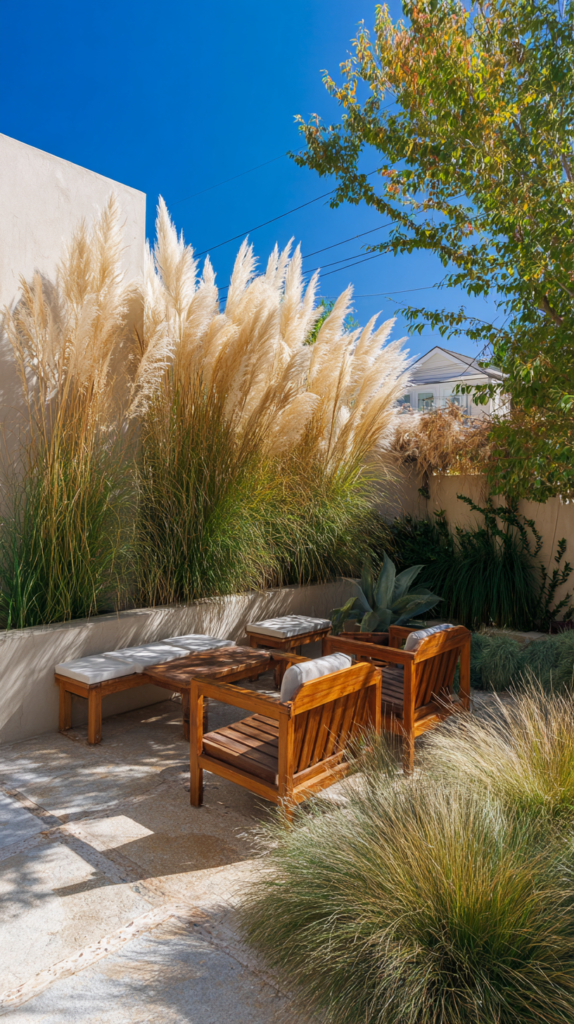
A less permanent, more textural screening option suited to certain sightlines.
Build it:
- Tall ornamental grass varieties, like miscanthus or pampas grass, planted in a dense row along the desired screening area
- Cut back to the ground each winter, regrowing to full height again by mid-summer, meaning this option provides strong screening during the warmer months when the yard sees the most use
- Positioned with enough spacing to allow the grasses’ natural mature width, since overcrowded planting can lead to weaker, less full growth over time
Why ornamental grasses suit specific privacy situations better than a permanent evergreen screen:
- The soft, textural movement of tall grasses adds a genuinely different sensory quality to the yard compared to a solid, static shrub screen
- Many varieties reach an impressive screening height within a single growing season, offering much faster initial coverage than slower-growing shrubs
- It suits situations where privacy is primarily needed during the warmer months the yard actually gets used, since the seasonal dieback in winter isn’t a meaningful loss if the yard sees little use during that period anyway
Why the seasonal nature of this option requires honest assessment of when privacy actually matters most:
Choosing ornamental grasses as a primary privacy solution only makes sense if the specific privacy concern is genuinely tied to warm-weather yard use, like an outdoor dining area or a pool that only sees regular use from late spring through early fall. For a yard where winter privacy matters just as much, whether due to visible indoor sightlines through windows or year-round outdoor activity, ornamental grasses alone would leave a meaningful gap in coverage during the exact months an evergreen alternative would still be providing full protection.
Cost breakdown: Ornamental grass plants run $10 to $30 each depending on variety and size, typically needing six to ten plants for a meaningful screening row.
7. Combine Deciduous Trees With Evergreen Underplanting
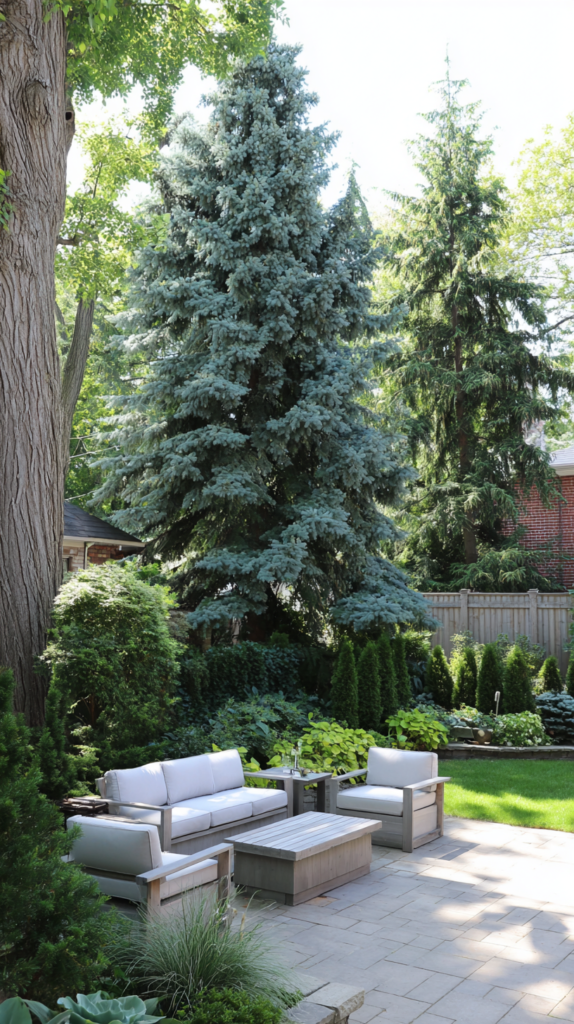
Layering two different plant types to address both immediate and long-term privacy needs.
Build it:
- A row of deciduous trees, like a flowering variety or a fast-growing shade tree, planted along the property line for eventual height and canopy coverage
- Evergreen shrubs planted beneath and between the trees, providing lower-level screening that remains effective even after the trees drop their leaves each fall
- The two plant types spaced to allow both to mature without excessive competition for light and root space
Why combining these two plant types addresses privacy more comprehensively than either alone:
- Deciduous trees typically offer a larger eventual canopy and more dramatic seasonal visual interest than evergreens alone, adding genuine landscape value beyond pure screening function
- Evergreen underplanting fills the gap deciduous trees leave during their leafless winter months, ensuring the screening effect continues year-round despite the trees’ seasonal changes
- It creates a more naturalistic, layered woodland-style privacy screen rather than a single uniform row of identical plants
Why this combination requires more patience than a single fast-growing evergreen screen alone:
Deciduous trees generally take longer to reach a meaningful mature canopy size than fast-growing evergreen shrubs do on their own, meaning this specific approach delivers its full intended effect over a longer timeline. For anyone needing immediate privacy, the evergreen underplanting alone provides some initial screening benefit while the trees mature, but the full combined effect, with both layers working together, typically takes five to ten years to fully develop, making this a longer-term investment rather than a quick fix.
Cost breakdown: Deciduous trees run $80 to $250 each depending on species and initial size, with evergreen underplanting shrubs adding $20 to $60 each.
8. Build a Living Wall Using Modular Planting Panels
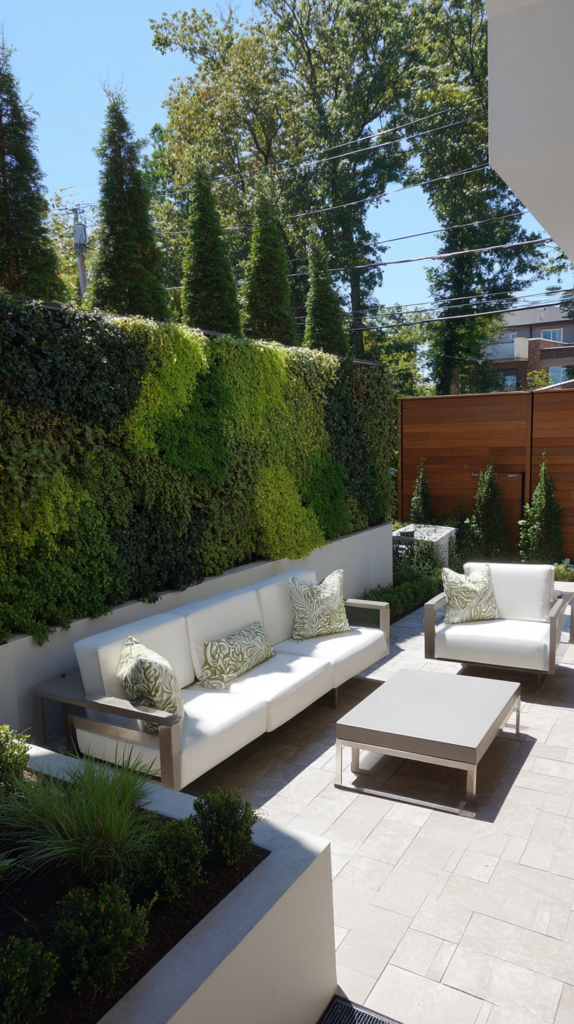
A more structured, vertical planting system for situations needing dense screening in a narrow footprint.
Build it:
- Modular living wall panels, either purchased as a prefabricated system or built from simple wood frames with integrated planting pockets, mounted vertically along a fence or freestanding frame
- A mix of trailing and upright plants filling the individual pockets, chosen based on the specific light conditions the wall receives
- An integrated or manually operated irrigation system, since living walls dry out more quickly than ground-planted screens due to their reduced soil volume per plant
Why a modular living wall suits situations where ground space for traditional screening plants simply isn’t available:
- It delivers genuine dense greenery and privacy screening in situations where there’s no ground footprint available for a traditional planted hedge or shrub row
- The vertical format allows for a considerably denser planting arrangement per square foot of actual yard space than any ground-level planting method
- It works particularly well mounted directly onto an existing plain fence, adding a living green surface without requiring any additional footprint at all
Why the increased maintenance demands of this system need honest consideration before committing to it:
Living walls require considerably more attentive watering and care than ground-planted privacy screens, since the limited soil volume in each planting pocket dries out much faster and offers less buffer against inconsistent watering. Anyone considering this option should honestly assess whether they’re prepared for the more frequent maintenance schedule this system demands, since a neglected living wall can decline considerably faster than a neglected ground-level hedge would under similar conditions.
Cost breakdown: A modular living wall system runs $40 to $100 per square foot of coverage including plants, considerably more per square foot than ground-level screening options.
9. Use Espaliered Fruit Trees Along a Fence Line
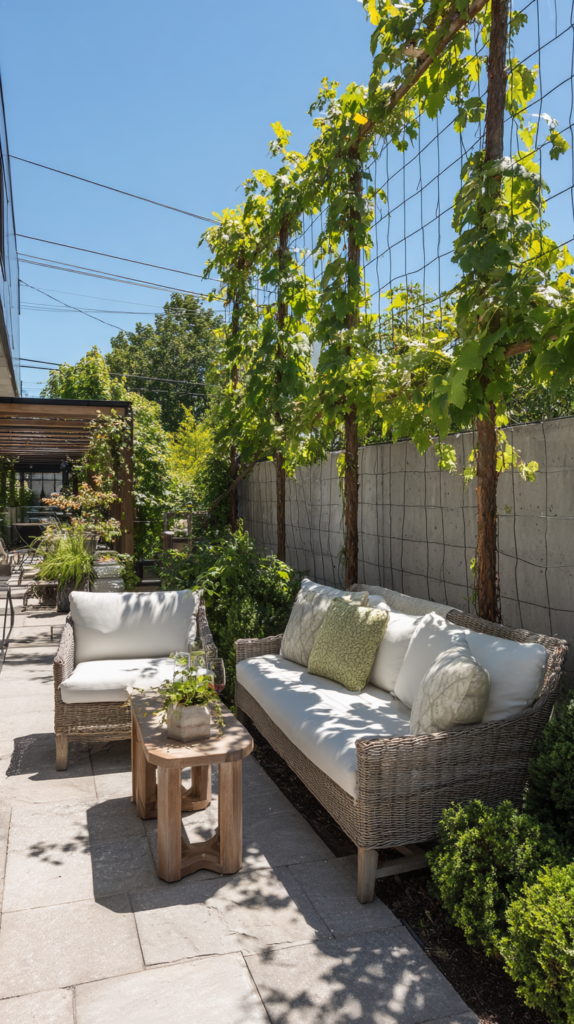
Combining privacy screening with genuine food production in a space-efficient format.
Build it:
- Fruit trees, like apple or pear varieties suited to espalier training, planted along a fence and trained flat against a supporting wire or trellis system
- Branches tied and pruned regularly during the early years to establish the desired flat, horizontal growth pattern
- Positioned along a fence that receives adequate sunlight for fruit production, since espaliered trees still need genuine light exposure despite their trained, flattened shape
Why espaliered fruit trees offer privacy benefits alongside a genuinely productive landscaping choice:
- The trained, flattened growth pattern creates a surprisingly effective screening layer directly against a fence, using minimal additional depth compared to a traditional freestanding tree
- It combines the privacy screening goal with actual fruit production, adding genuine function beyond pure aesthetics or screening
- It suits narrower side yards particularly well, where a traditional round-canopy tree’s width wouldn’t comfortably fit
Why the training and maintenance commitment required for this option is more involved than most other choices on this list:
Espalier training requires ongoing, regular pruning and tying over several years to establish and maintain the desired flat growth pattern, representing a considerably more hands-on maintenance commitment than most other privacy landscaping options. This approach suits someone who genuinely enjoys hands-on garden work and wants the specific combination of screening and fruit production, but it’s worth being realistic about the ongoing time investment required compared to a simpler planted hedge that largely maintains itself once established.
Cost breakdown: Fruit trees suited for espalier training run $40 to $100 each, with wire and post support hardware adding $30 to $80 for a full fence-length installation.
10. Add a Water Feature to Mask Sound From Neighboring Yards
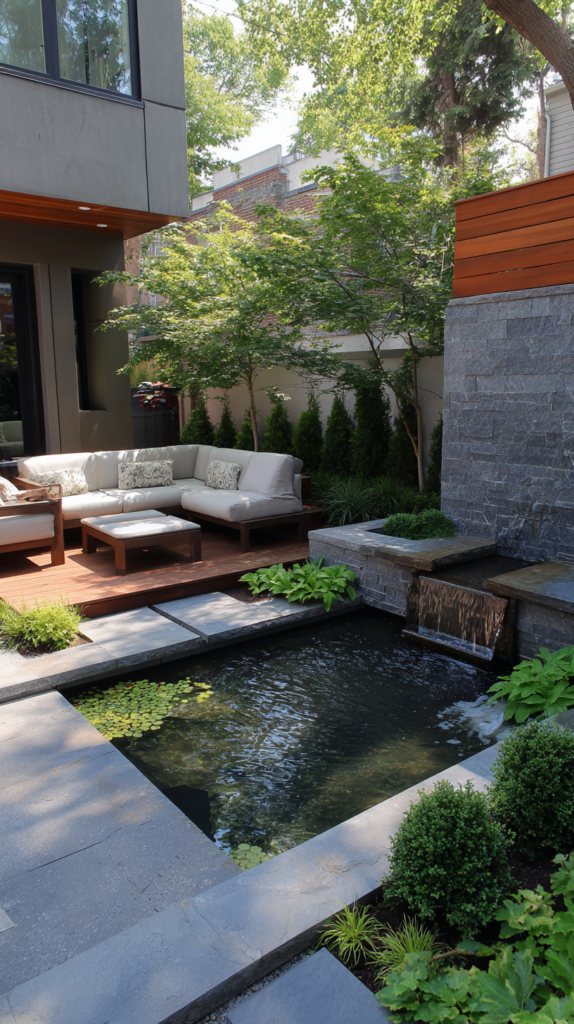
Addressing auditory privacy alongside visual screening.
Build it:
- A fountain or small recirculating water feature positioned near the primary outdoor living area, like a patio or deck
- Sized and positioned to generate enough consistent sound to meaningfully mask nearby conversation or activity from adjacent yards
- Combined with visual screening plants nearby, addressing both the auditory and visual components of privacy together
Why sound matters as much as sightlines in a genuine privacy strategy:
- Even a yard with excellent visual screening can still feel exposed if every conversation is easily overheard by neighbors on either side
- The consistent white noise of moving water genuinely helps mask conversation and activity sound, providing a real auditory privacy benefit
- It adds a pleasant sensory element to the yard regardless of its screening function, making it a worthwhile addition even beyond the specific privacy goal
Why most people overlook sound privacy entirely when planning a landscaping privacy project:
The overwhelming majority of privacy landscaping advice focuses exclusively on visual screening, largely ignoring that sound carries easily between yards regardless of how well the sightlines themselves are blocked. A yard that’s fully screened visually but still allows every word of conversation to carry clearly to a neighboring patio hasn’t actually solved the full privacy concern, which is exactly why a water feature, chosen specifically for its sound-masking properties rather than purely its visual appeal, deserves genuine consideration in any comprehensive privacy plan.
Cost breakdown: A fountain feature suited for sound-masking purposes runs $80 to $250 depending on size and water flow volume.
11. Stagger Plantings in a Zigzag Rather Than a Straight Line
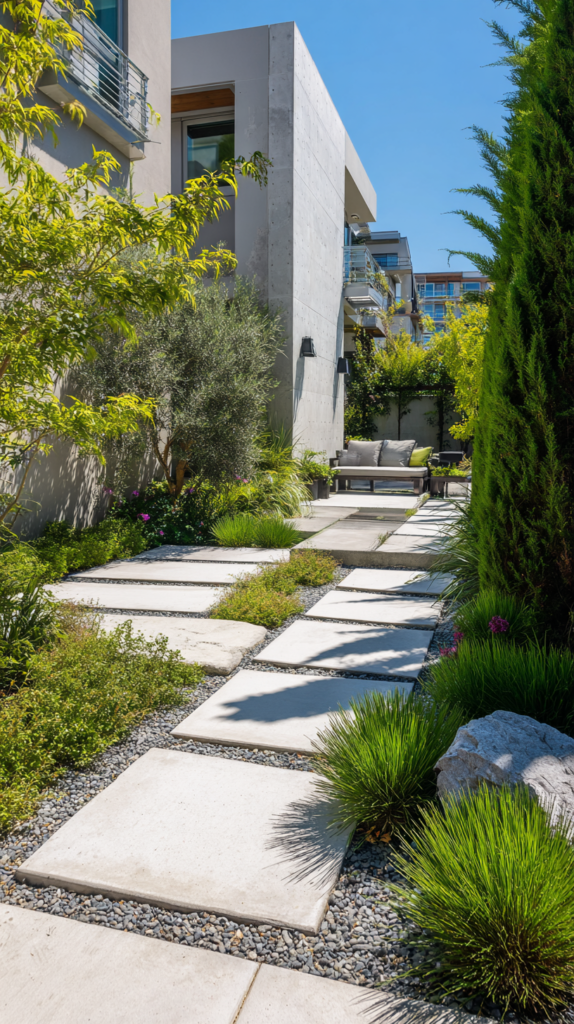
Blocking sightlines from multiple angles rather than relying on one flat screening plane.
Build it:
- Privacy plants positioned in a staggered, offset pattern rather than a single straight row along the property line
- Alternating plants set slightly forward and back from the main line, creating overlapping coverage from multiple angles
- Spacing adjusted to account for the staggered layout, ensuring the offset pattern still provides continuous coverage without noticeable gaps
Why a staggered planting pattern blocks more sightlines than a single straight row:
- A single straight row of plants can still leave gaps visible from certain angles, particularly from an elevated neighboring vantage point looking down and across the row
- Staggering the plants creates overlapping visual coverage, meaning a gap visible from one specific angle is very likely blocked by an adjacent staggered plant when viewed from a slightly different position
- It also creates a more naturalistic, less uniform appearance than a single rigid row, which many people find more visually appealing in a residential landscaping context
Why this technique specifically benefits situations with multiple potential viewing angles to address:
A single straight row of screening plants works reasonably well when there’s only one specific sightline to block, like a single neighboring window directly across the property line. When multiple viewing angles need addressing simultaneously, perhaps a neighbor’s elevated deck on one side and a two-story window on the other, a staggered pattern provides more comprehensive coverage across those varied angles than a straight row could achieve with the same number of plants.
Cost breakdown: No additional cost beyond the planting itself, since staggering is a placement technique rather than a separate purchase.
12. Combine Multiple Privacy Strategies Rather Than Relying on One Alone
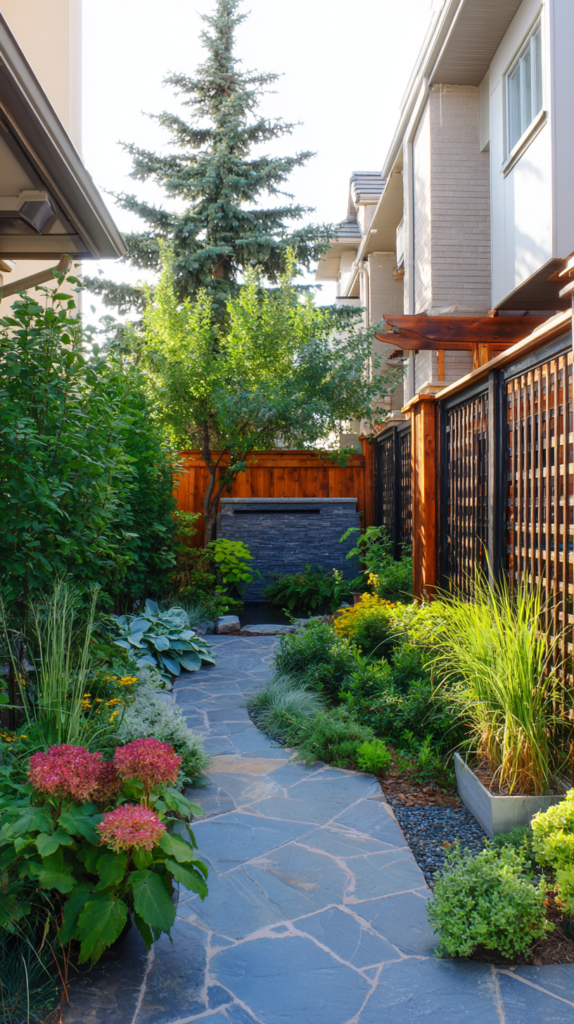
Layering several of the above approaches together for the most comprehensive result.
Build it:
- A combination of at least two or three strategies from this list, chosen based on the yard’s specific privacy challenges and available space
- Each strategy addressing a different aspect of the overall privacy need, like an evergreen screen for year-round coverage, a water feature for sound masking, and staggered planting for multi-angle sightline coverage
- Implemented in phases if needed, prioritizing whichever specific concern feels most pressing first while planning for the additional layers over time
Why combining strategies typically produces better results than committing to any single approach alone:
- Different privacy challenges, visual sightlines, sound carrying between yards, and seasonal coverage gaps, are each addressed more effectively by different specific techniques, and no single strategy from this list solves every one of these concerns simultaneously
- Layering multiple approaches creates genuine redundancy, meaning if one element has a gap or takes a season to fully establish, other elements are already providing at least partial coverage
- It allows the overall privacy plan to be built out gradually over time and budget, rather than requiring one single, large investment all at once
Why prioritizing which strategy to implement first requires an honest assessment of the yard’s most pressing specific concern:
Not every yard needs all twelve strategies from this list implemented simultaneously, and attempting to do so without a clear sense of priority can lead to an unfocused, overly complicated project. Identifying the single most pressing privacy concern first, whether that’s a specific overlooking window, an issue with sound carrying to a neighboring patio, or a need for immediate rather than gradually developing coverage, and addressing that specific concern with the most appropriate strategy first, produces a more successful outcome than trying to implement every idea on this list at once without a clear sense of sequence or priority.
Cost breakdown: Combining multiple strategies varies enormously based on which specific approaches are chosen, though implementing them in phases over one to two years typically spreads the total cost, often totaling $500 to $2,000 across a comprehensive multi-strategy project.
Getting started this weekend
You don’t need every strategy implemented before genuine privacy improvement starts to show.
- Start by mapping the actual problem sightlines from your main outdoor living area, identifying exactly which windows or vantage points need addressing
- Add fast-growing evergreen screening or a trellis and vine combination for the most immediate coverage, since these deliver visible results within a single growing season
- Save more involved projects, like a berm or a full living wall system, for a dedicated second phase once the most pressing sightline concerns are already addressed
Most successfully screened backyards got there by identifying the actual specific privacy problem first, then choosing the landscaping strategy genuinely suited to that problem, rather than defaulting immediately to whatever privacy solution seemed most common or familiar.
Budget reality
Landscaping-based privacy solutions span a considerable range depending on the specific strategies chosen and how quickly coverage is needed.
- Under $200: Ornamental grass screening, a trellis with climbing vines, staggered planting pattern applied to existing plants
- $200-600: Fast-growing evergreen screen, bamboo grove with root barrier, a sound-masking water feature
- $600-1,500: A raised berm with layered plantings, a combination of deciduous trees with evergreen underplanting
- $1,500+: A modular living wall system, or a comprehensive combination of several strategies implemented together
Most of the genuine privacy improvement comes from correctly identifying and targeting the actual problem sightlines, not from the total amount spent on plants or materials.
What actually creates genuine backyard privacy through landscaping
It was never really about planting the tallest or most expensive hedge available.
It’s the sightline actually mapped and targeted before a single plant goes in the ground, the staggered pattern that closes the gaps a straight row would leave open, the water feature quietly masking conversation that a purely visual screen was never going to address in the first place.
Identify the specific problem the yard actually has, choose the landscaping strategy genuinely suited to solving that problem, and the privacy that results tends to feel far more complete than a single tall fence ever quite manages on its own.