11 Bedroom Curtain Ideas for a Polished, Finished Look
Curtains hung wrong are one of the fastest ways to make an otherwise well-decorated bedroom look unfinished.
Too short, too narrow, or mounted at the wrong height, and the mistake is obvious the moment you walk in, regardless of how nice the fabric actually is.
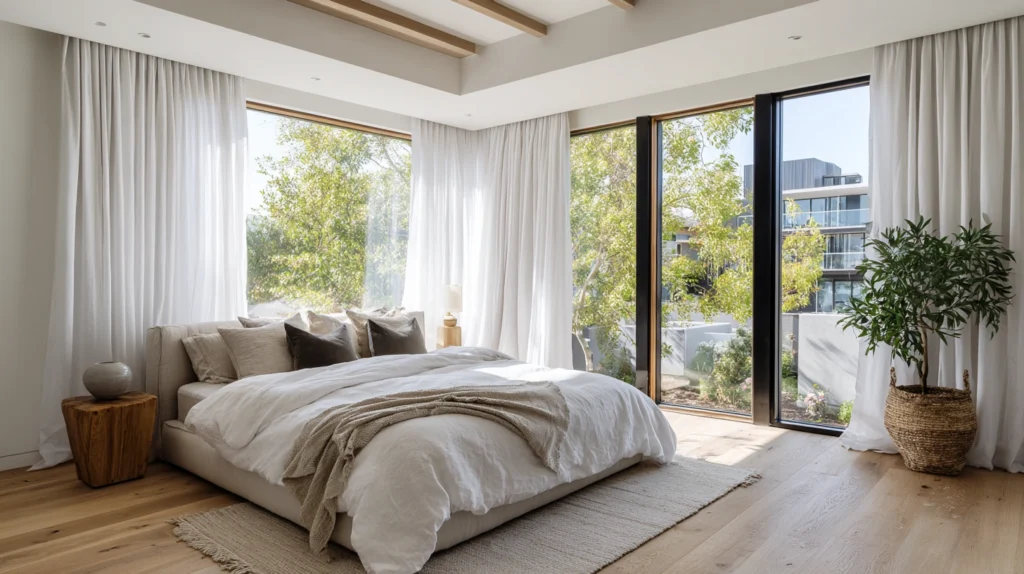
The good news is that most curtain mistakes come down to a handful of fixable details, not fabric choice at all.
Here are 11 ways to get bedroom curtains looking genuinely polished, covering the practical details that actually separate a finished window from an unfinished one.
Every one of these works with curtains you may already own, not just new purchases.
Quick Reference: The Details That Matter Most
| Detail | Common Mistake | The Fix |
| Rod height | Mounted at window frame | Mount 4–6 inches above the frame, or near the ceiling |
| Rod width | Mounted at window width | Extend 4–8 inches beyond the frame on each side |
| Panel length | Stops above the floor | Should just kiss or slightly pool at the floor |
| Fullness | One flat panel per side | Use enough fabric to look gathered when closed |
1. Mount the Rod Higher Than the Window Frame
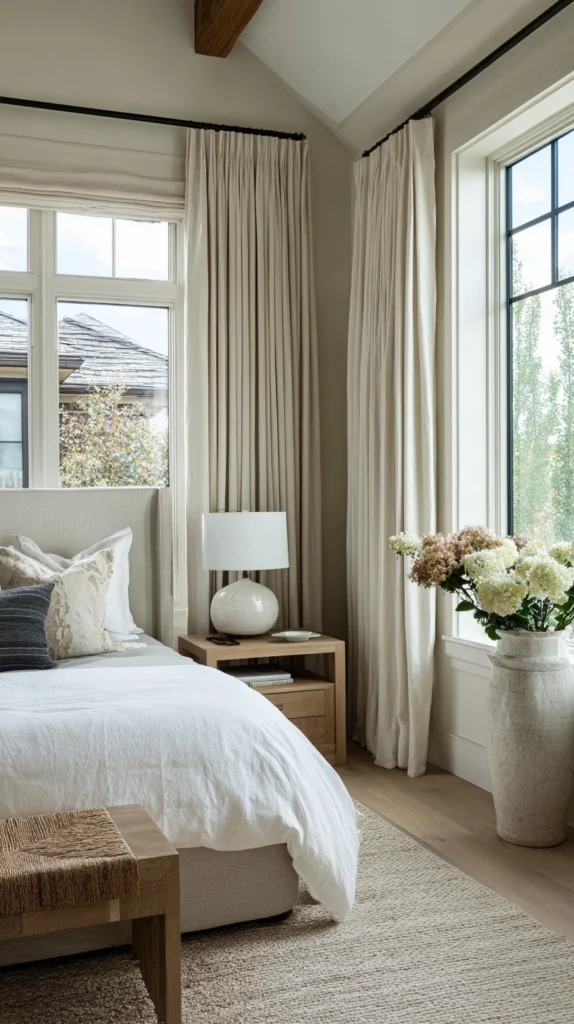
Installing the curtain rod several inches above the actual window frame, rather than directly on top of it, is one of the simplest changes that instantly elevates a bedroom’s look.
This makes the window appear taller and the ceiling feel higher, a trick that costs nothing beyond where you place the mounting brackets.
I raised my bedroom’s curtain rods about five inches above the window frame, and the room immediately felt taller without touching anything else.
Budget tip: This costs nothing extra if you’re already installing new curtains, since it’s purely a matter of bracket placement rather than additional material.
A few things worth knowing:
- A general guideline is mounting the rod roughly four to six inches above the frame, though a genuinely high ceiling can support even more drama
- In a room with very high ceilings, consider mounting near the ceiling line itself rather than close to the window, for maximum height illusion
- Confirm the curtain length still works with a higher rod placement, since raising the rod means the panel needs to be correspondingly longer to still reach the floor
This single adjustment does more to elevate a bedroom’s overall polish than almost any other single curtain decision.
2. Extend the Rod Beyond the Window’s Width
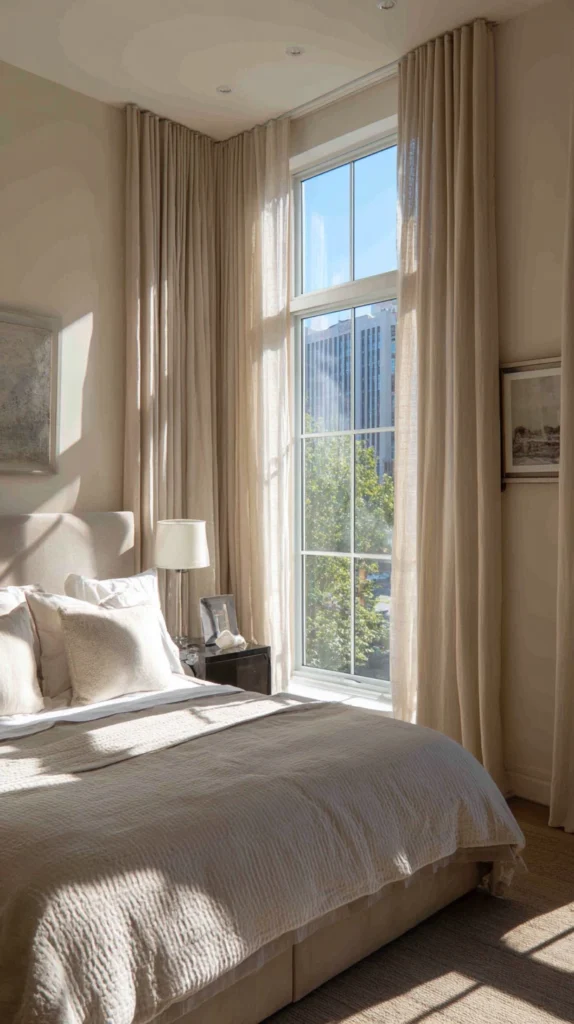
Mounting the rod so it extends several inches past each side of the window frame, rather than stopping exactly at the frame’s edges.
This allows curtains to be pulled fully open during the day without covering any of the actual window glass, letting in maximum natural light.
I extended my bedroom’s curtain rods about six inches beyond each side of the window, and it made a genuine difference in how much daylight comes through when the curtains are open.
Style tip: A wider rod also makes the window itself appear larger, which is a flattering illusion in almost any bedroom, regardless of the room’s actual size.
A few things worth knowing:
- A general guideline extends the rod four to eight inches beyond the window frame on each side, though a narrow wall might limit how far you can extend
- This adjustment requires slightly wider curtain panels than a rod mounted at the window’s exact width, so account for this before purchasing
- Check that any nearby furniture or wall art doesn’t conflict with the extended rod’s actual mounting brackets
Extending rod width solves the common problem of curtains that block window light even when fully opened during the day.
3. Choose a Length That Just Touches or Slightly Pools

Curtains that stop several inches above the floor read as ill-fitting, almost like pants that are too short, regardless of how nice the fabric itself is.
The most polished length either just grazes the floor or pools slightly, roughly half an inch to two inches of extra fabric bunching gently at the base.
I had my bedroom curtains altered to just kiss the floor after years of a shorter, ill-fitting length, and the change alone made the whole room look considerably more finished.
Budget tip: Many ready-made curtains come in standard lengths that don’t match a specific window’s actual height, so budget for potential alterations or choose a made-to-measure option instead.
A few things worth knowing:
- Measure from the rod’s actual mounted height down to the floor, not from the window frame, since your rod placement affects the true length needed
- A slight puddle looks more luxurious and intentional, while curtains that end precisely at the floor can look slightly stiff by comparison
- Avoid curtains that stop noticeably short of the floor, since this is one of the most common and most visible curtain mistakes in bedrooms
Getting length right is arguably the single most important detail on this entire list, since it’s the mistake most immediately obvious to anyone entering the room.
4. Layer Sheers Under Heavier Drapery
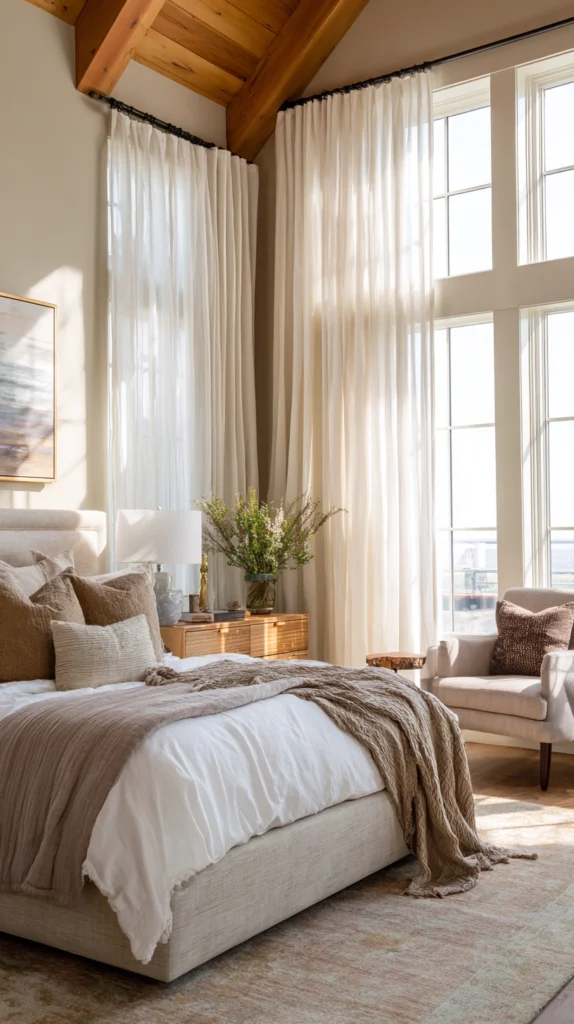
Combining a lightweight sheer panel directly against the window with heavier, more substantial curtains on an outer rod, creating genuine depth and functional flexibility.
This layered approach lets you filter daytime light softly through the sheer while still having full blackout or privacy coverage available for evening.
I layered a simple white sheer under my heavier linen curtains, and having both options gives my bedroom considerably more flexibility throughout the day than either fabric alone.
Style tip: Choose a sheer in a warm off-white rather than a stark white, since a warmer tone typically reads as more cohesive alongside heavier drapery in a richer color.
A few things worth knowing:
- Use a double curtain rod, or two separate rods mounted at slightly different depths, allowing both layers to move independently
- Keep the sheer layer lightweight and unlined, since its purpose is filtering light rather than blocking it entirely
- This approach adds genuine functional value, not just visual layering, since it gives you real control over light and privacy at different times of day
Layering fabric brings both a more finished look and genuine practical flexibility that a single curtain panel alone can’t offer.
5. Choose Curtains With Enough Fullness to Gather Properly
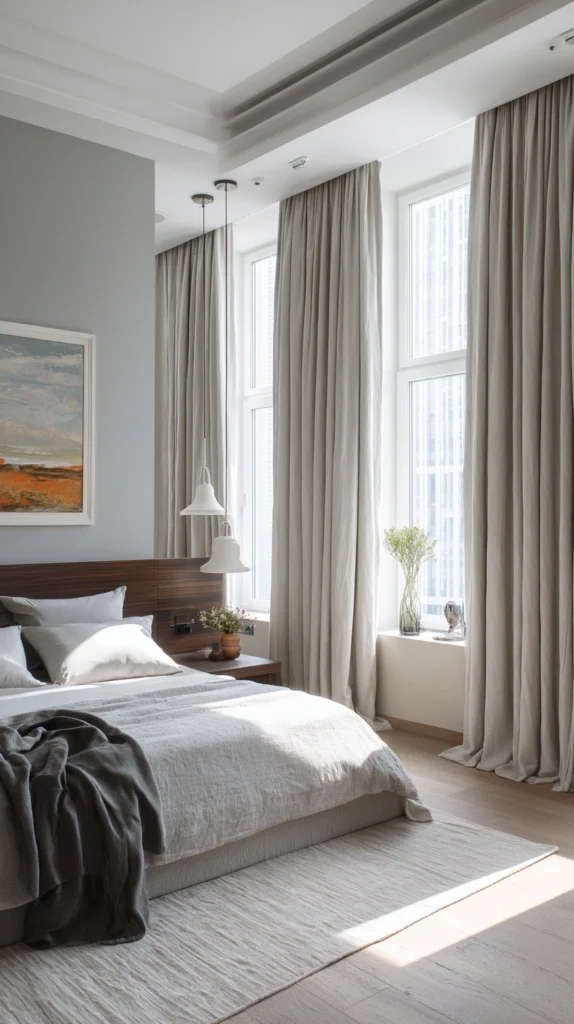
Selecting curtain panels wide enough that they naturally gather into soft folds when closed, rather than hanging as a single flat, stretched piece of fabric.
A flat, understuffed panel is one of the more subtle but noticeable signs of an unfinished window treatment, even when the fabric and color are otherwise well chosen.
I replaced my bedroom’s flat, single-width panels with fuller ones specifically sized for genuine gathering, and the difference in how the fabric actually falls is considerable.
Budget tip: A general rule of thumb is choosing curtain width at least twice the width of your actual window for genuine fullness, so factor this into your total fabric budget from the start.
A few things worth knowing:
- Panels sized only to match the window’s exact width will hang flat rather than gathering into the soft folds that read as more polished
- Heavier fabrics generally need slightly less fullness than very lightweight ones to look properly gathered
- This detail matters most when curtains are closed, so prioritize genuine fullness if you tend to keep curtains drawn overnight or for privacy regularly
Proper fullness is one of the more overlooked details that separates curtains that look intentionally chosen from ones that read as an afterthought.
6. Match Curtain Rod Finish to Existing Bedroom Hardware
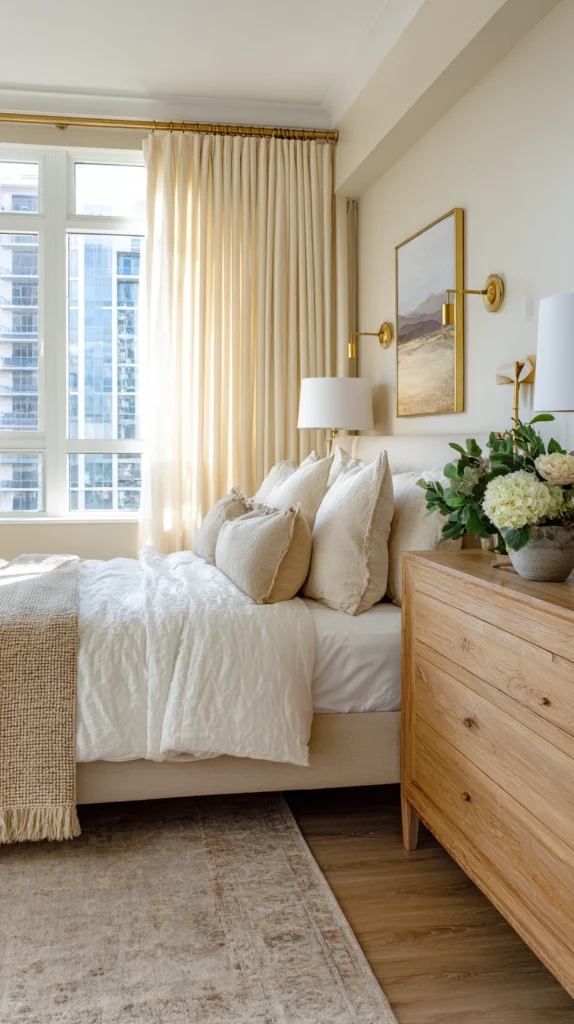
Choosing a curtain rod finish, brass, matte black, brushed nickel, that coordinates with your bedroom’s existing light fixtures, door hardware, or bed frame metal accents.
A mismatched rod finish is a small detail, but it’s one that quietly undermines an otherwise cohesive bedroom, especially in a room with several other visible metal finishes.
I switched my curtain rods from a mismatched silver to a warm brass finish specifically to match my existing bedside lamps and door hardware.
Style tip: You don’t need an exact match across every metal element in the room, but keeping rods within the same general warm or cool metal family avoids an obviously clashing look.
A few things worth knowing:
- Bring a small sample or photo of your existing hardware when shopping for curtain rods in person
- Mixing metals intentionally has become more accepted in recent design trends, though this usually works best when one finish clearly dominates
- This is a relatively inexpensive swap if your existing rods are otherwise in good condition, since only the rod and finials typically need replacing
A coordinated rod finish ties the window treatment into the room’s broader hardware story, rather than treating it as an isolated element.
7. Choose a Consistent Curtain Color Across Multiple Windows
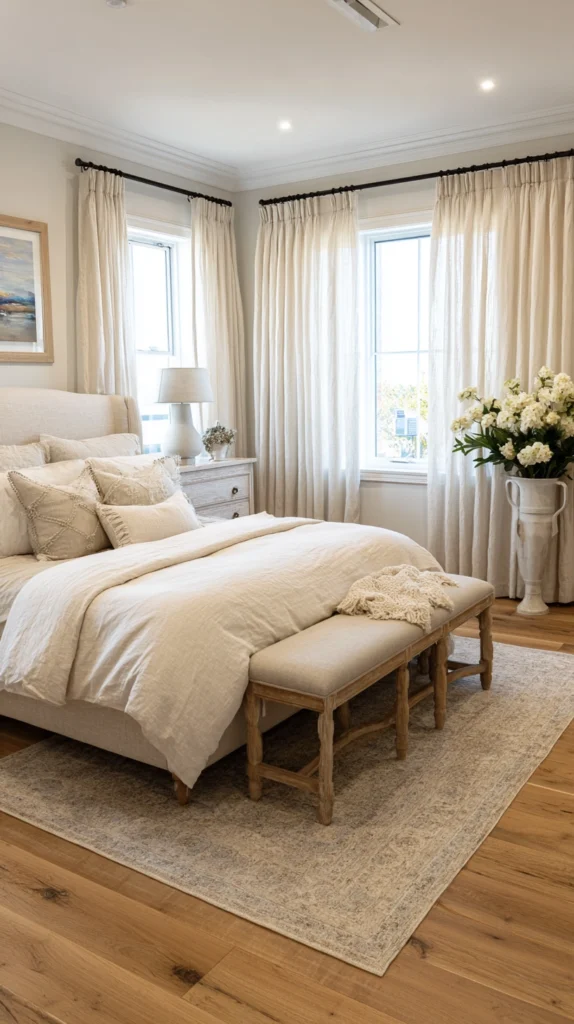
In a bedroom with more than one window, using the exact same curtain color and fabric across all of them, rather than mixing different treatments per window.
Mismatched curtains across multiple windows in the same room is a common and easily avoided mistake that undercuts an otherwise cohesive space.
I made sure both of my bedroom’s windows use identical curtain panels, even though they’re slightly different widths, keeping the overall look unified rather than looking like two separate decorating decisions.
Budget tip: Buying identical curtains for multiple windows at once, rather than adding a second window’s treatment later as an afterthought, often qualifies for a better per-panel price from most retailers.
A few things worth knowing:
- Slight width differences between windows can be addressed with a different number of panels per window while keeping the fabric and color identical
- This consistency matters even if the windows serve different functions, like one facing a street and one facing a private yard
- A single measurement and ordering session for all windows at once reduces the risk of a slightly mismatched dye lot between separately ordered batches
Consistency across multiple windows in the same room is a simple detail that reads as considerably more intentional than mismatched treatments.
8. Add a Decorative Trim or Tape Detail

Finishing plain curtain panels with a contrasting trim, tape, or braid along the leading edge and bottom hem, adding a tailored, custom-looking detail.
This small addition gives even simple, inexpensive curtains a more finished, considered appearance without requiring an entirely custom drapery order.
I added a narrow contrasting trim to the leading edge of my bedroom curtains, and the small detail alone made them look considerably more tailored than the plain panels I’d started with.
Budget tip: Trim tape can be sewn or fused onto existing ready-made curtain panels, delivering much of a custom drapery look without the cost of fully bespoke curtains.
A few things worth knowing:
- Choose a trim color that complements rather than competes with the curtain fabric itself
- Apply trim to the leading edge specifically, since this is the part most visible when curtains are drawn closed
- A fusible hem tape offers a no-sew option if you’re not confident sewing directly onto the curtain fabric
Trim detail is one of the more affordable ways to elevate curtains you may already own, rather than requiring an entirely new purchase.
9. Use Substantial Tiebacks Rather Than the Standard Thin Loop

Replacing the thin fabric loop tieback that often comes standard with ready-made curtains with something more substantial, a metal hook, a tasseled rope, or a fabric-covered band with real presence.
A flimsy, barely visible tieback tends to disappear against the fabric, while a more substantial one reads as a genuine styling decision.
I swapped my bedroom curtains’ original thin loop tiebacks for a simple brass hook style, and the small change gave the whole window a noticeably more finished look.
Style tip: Position tiebacks at roughly one-third of the way up from the floor for the most flattering drape, rather than at the curtain’s exact midpoint.
A few things worth knowing:
- Choose a tieback finish that matches your curtain rod for a cohesive overall look
- Mount tieback hooks securely into the wall, since a heavier decorative tieback needs genuine support to avoid pulling loose
- This is one of the smallest, least expensive updates on this entire list, but one of the more noticeable once you start looking for it
A substantial tieback is a small detail that adds real polish, particularly once curtains are drawn back and this element becomes genuinely visible.
10. Choose Blackout Lining for Genuine Bedroom Function
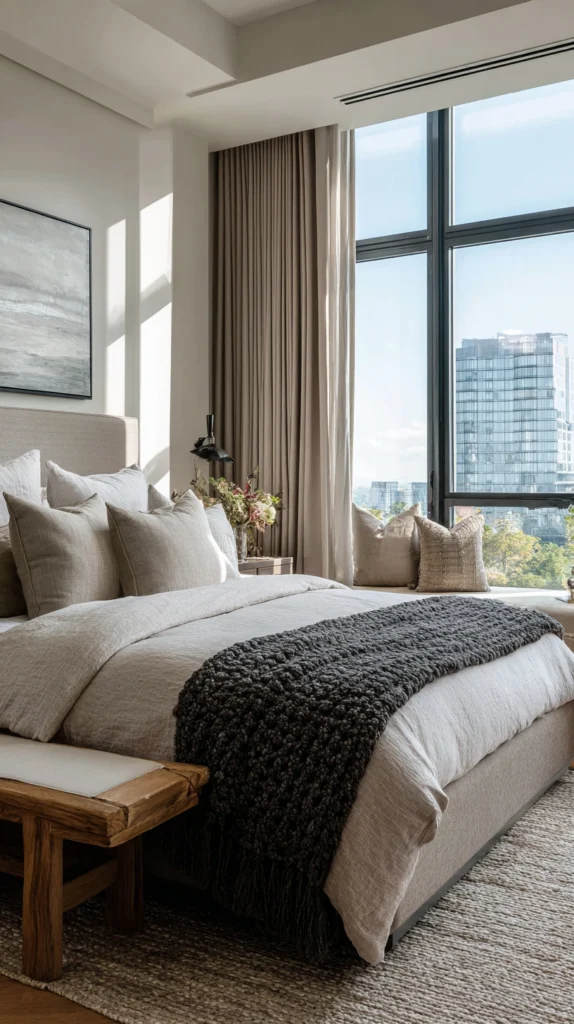
Selecting curtains with a proper blackout lining sewn in, rather than relying on fabric color or weight alone to block outside light.
A bedroom specifically benefits from genuine light control in a way that other rooms often don’t need to the same degree, making this a functional rather than purely aesthetic decision.
I upgraded my bedroom curtains to a genuinely blackout-lined version, and the difference in actual sleep quality has been considerable, especially during summer’s earlier sunrise.
Budget tip: Ready-made blackout-lined panels cost less than having a separate blackout lining added to existing curtains after the fact, so factor this in at the point of initial purchase if possible.
A few things worth knowing:
- Confirm a panel is genuinely blackout-lined rather than simply a dark color, since color alone doesn’t guarantee actual light blocking
- Hang curtains wide enough to fully overlap the window frame on both sides, since gaps at the edges let light through even with proper lining
- This detail matters most for anyone sensitive to early morning light or living somewhere with strong streetlights nearby
Blackout lining is one of the more functionally important details on this list specifically for a bedroom, where light control affects genuine sleep quality.
11. Keep Pattern Scale Proportional to the Window Size

Choosing a curtain pattern scaled appropriately to your specific window’s actual size, rather than a pattern repeat that’s either too large or too busy for the space available.
An oversized pattern on a narrow window can look cut off and awkward, while a very tiny, busy print can look chaotic across a large expanse of fabric.
I chose a moderate-scale botanical print for my bedroom’s fairly standard-sized windows, avoiding both an overly large repeat that would have looked chopped up and an overly tiny one that might have read as visually busy.
Style tip: Request a fabric sample large enough to see at least one full pattern repeat before committing, since a small swatch often doesn’t convey how the scale will actually look across a full curtain panel.
A few things worth knowing:
- Larger windows can generally support a bolder, larger-scale pattern than a narrow or small window can accommodate gracefully
- Solid colors sidestep this issue entirely, which is worth considering if you’re unsure about pattern scale for your specific window
- This detail is easy to overlook when shopping from a small fabric swatch alone, so seek out a larger sample or a photo of the fabric hung at full scale whenever possible
Getting pattern scale right ensures the fabric itself looks intentional and proportional, rather than awkwardly stretched or overwhelming for the specific window it’s dressing.
The Single Fix Worth Making First
If your current curtains only have one problem, check the mounting height first. Raising an existing rod a few inches above the window frame is free, takes only a few minutes, and delivers one of the most noticeable improvements on this entire list.
A Few Measurements Worth Getting Right
- Rod height: four to six inches above the window frame, or higher in a room with genuine ceiling height to spare
- Rod width: four to eight inches beyond the window frame on each side
- Curtain length: measured from the actual mounted rod height down to the floor, not from the window frame itself
Why Curtains Sometimes Look Unfinished Despite Nice Fabric
Most disappointing curtain setups aren’t a fabric or color problem at all, they’re a proportion problem, a rod mounted too low, panels cut too short, or curtains too narrow to gather properly when closed. Getting these measurements right matters more to the finished look than which specific fabric or pattern you ultimately choose.