10 Backyard Tea Party Ideas That’ll Wow Your Guests
Say “tea party” out loud and most people picture a child’s plastic tea set, or a slightly stuffy, overly formal affair that feels more like a performance than an actual gathering.
Done well, a backyard tea party is neither of those things. It’s one of the more genuinely impressive ways to host, precisely because so few people do it anymore, and because it naturally slows an afternoon down in a way most modern entertaining doesn’t.
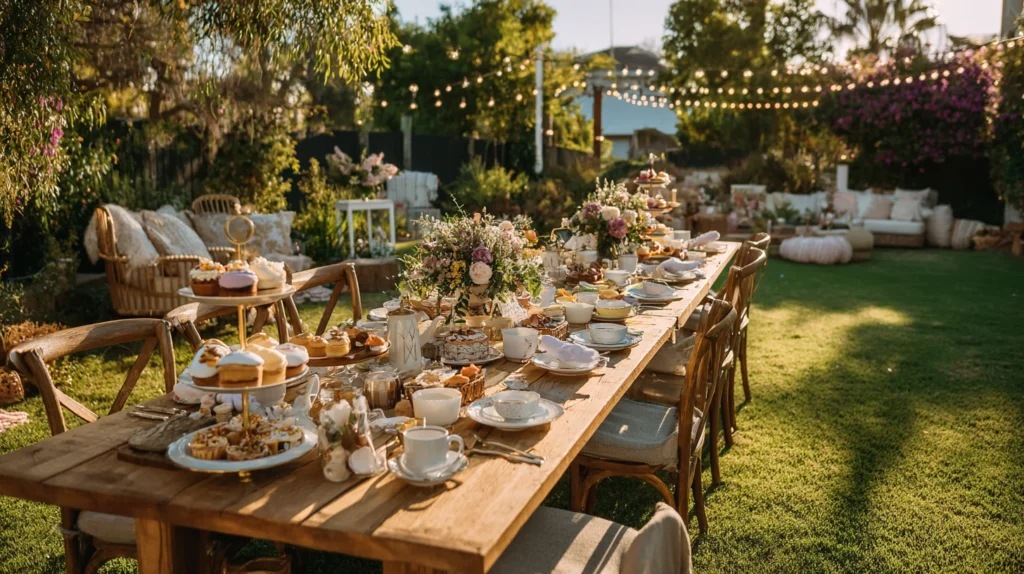
Guests remember a well-executed tea party specifically because it’s unusual. Nobody forgets the time they were handed a proper cup of Earl Grey under string lights in someone’s backyard, in a way they might forget yet another backyard barbecue.
Here are 10 ways to build a backyard tea party genuinely worth remembering, without leaning into anything twee or overly precious.
Why a tea party succeeds or fails on details most other gatherings don’t require
Unlike a casual cookout, a tea party depends on a level of intentional styling that can’t really be improvised.
- The specific serving vessels, cups, saucers, and teapots, carry more visual weight here than at almost any other type of gathering
- Timing matters more than usual, since tea itself needs to be brewed, served, and often refreshed at specific intervals throughout the event
- The food accompanying the tea needs to be genuinely suited to the format, meaning small, elegant bites rather than a full meal spread
Once these specific details are handled with real intention, the whole event reads as effortlessly elegant rather than staged.
1. A Mismatched Vintage China Collection
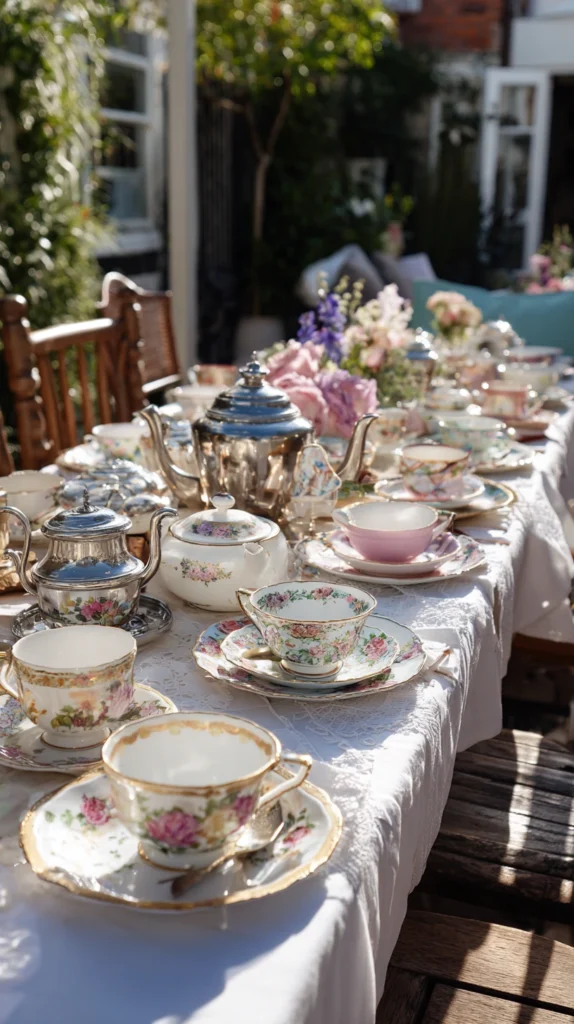
Building the table’s visual foundation from genuinely collected, individually sourced pieces.
Build it:
- A collection of vintage teacups, saucers, and small plates, sourced from thrift stores, estate sales, or inherited family pieces, deliberately left unmatched rather than assembled into a uniform set
- Each guest given a genuinely different cup and saucer pairing, adding a personal, one-of-a-kind element to each place setting
- A shared color or pattern thread, like all pieces including some gold trim or a shared floral motif, keeping the mismatched collection from feeling entirely random
Why mismatched vintage china actually outperforms a matched set for this specific occasion:
- It gives the table genuine character and history, since each piece likely carries its own story rather than a manufacturer’s uniform design
- It’s considerably more affordable to build a full collection this way than to purchase an equivalent matching vintage tea set, which can be expensive when sourced complete
- Guests often genuinely enjoy the small novelty of receiving a unique cup rather than an identical one to everyone else’s
Why sourcing this collection gradually tends to produce a better result than trying to assemble it all at once:
Building a full mismatched collection over several months of casual thrifting almost always produces a more interesting, genuinely varied result than trying to buy an entire set in one shopping trip, since most single stores or sales won’t have enough individually distinct pieces to outfit an entire guest list at once. This approach also keeps the cost spread out and manageable, since a few dollars spent here and there over time adds up to considerably less than one large purchase, while also giving the host something enjoyable to collect and look forward to finding.
Cost breakdown: Vintage teacup and saucer sets run $3 to $12 each at thrift stores and estate sales, typically $40 to $100 for a full collection serving eight to ten guests.
2. A Three-Tiered Serving Stand With Savory and Sweet Courses
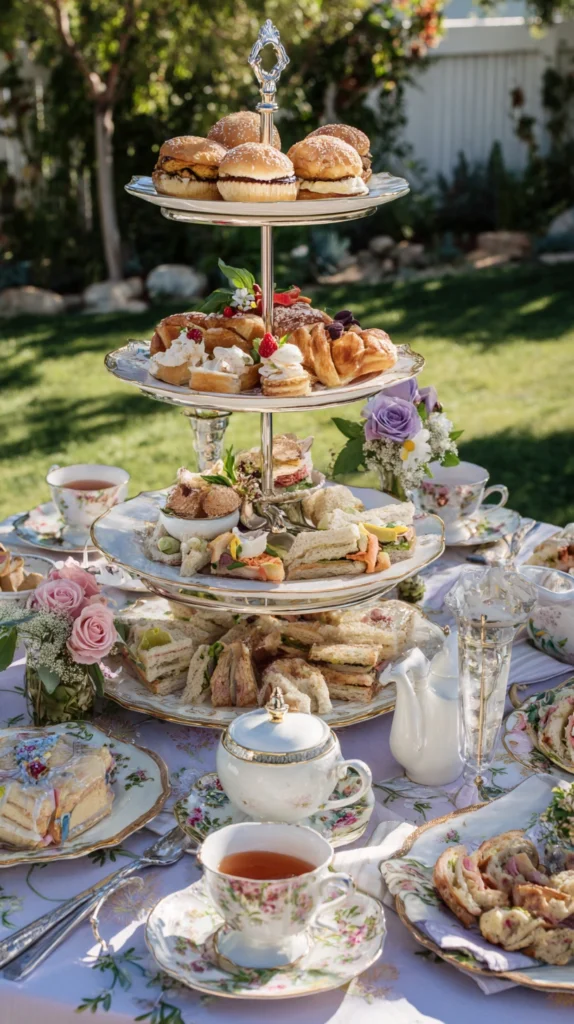
The traditional centerpiece of a proper tea service, built around genuine variety.
Build it:
- A three-tiered serving stand, either purchased or improvised from stacked plates and a simple dowel or cake stand riser
- The bottom tier holding savory items like small finger sandwiches, the middle tier holding scones, and the top tier reserved for sweets like small pastries or cookies
- Portions kept genuinely small and bite-sized throughout, since the format is meant to offer variety across an extended gathering rather than a single large meal
Why the traditional three-tier format still works better than a flat buffet spread:
- It uses vertical space efficiently on what’s often a smaller outdoor table, rather than requiring a large surface area for a spread-out buffet
- The traditional savory-to-sweet progression gives the meal genuine structure and pacing, rather than everything being available and consumed all at once
- It’s visually striking as a centerpiece in its own right, doing double duty as both food service and table decor
Why building your own tiered stand can look just as elegant as a purchased one:
A genuine antique or purchased tiered serving stand can be a meaningful expense, but a very convincing DIY version can be built from three plates of graduating size, a length of wooden dowel, and a drill to create the necessary center holes, assembled with basic hardware to stack securely. This approach costs a small fraction of a purchased stand while still delivering the same visual and functional impact, and it also allows for using plates that already coordinate with an existing vintage china collection rather than needing a separately matched purchased set.
Cost breakdown: A purchased tiered stand runs $25 to $60, while a DIY version built from existing plates and basic hardware runs $10 to $20.
3. A Proper Loose-Leaf Tea Station With Multiple Varieties
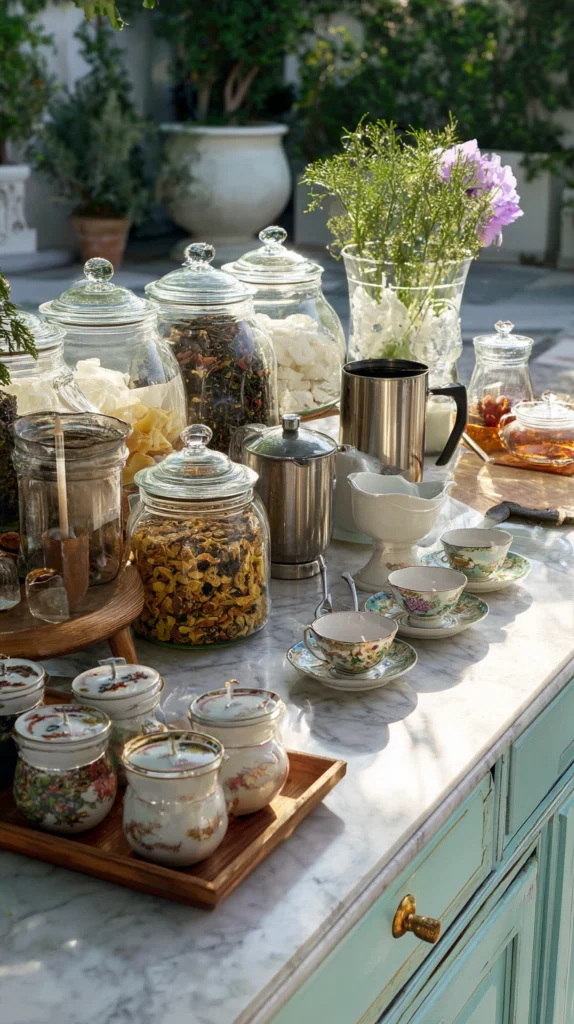
Elevating the tea itself beyond a single pot of one basic blend.
Build it:
- Two or three loose-leaf tea varieties offered simultaneously, like a classic black tea, a floral or herbal option, and a green tea
- Individual tea infusers or a small strainer provided at each variety’s station, allowing guests to brew their own cup to their preferred strength
- Hot water kept genuinely hot throughout the event using an insulated kettle or a small portable warmer, rather than a single pot that cools within the first half hour
Why offering real variety and quality in the tea itself matters more than any other single detail:
- A tea party is, by definition, built around the tea, and offering only a single mediocre bagged variety undercuts the whole premise regardless of how nice everything else looks
- Loose-leaf tea offers a noticeably more complex, higher-quality flavor than most standard bagged tea, genuinely elevating the tasting experience for guests
- Providing multiple varieties respects that not every guest shares the same tea preference, avoiding the common mistake of serving only one option
Why keeping water genuinely hot throughout the event requires more planning than most hosts anticipate:
One of the most common ways a backyard tea party quietly falls short is serving tea that’s gone lukewarm by the second half of the gathering, since a single kettle of hot water cools relatively quickly once poured, especially outdoors. Using an insulated thermal carafe, or a small electric kettle kept warm near an outdoor outlet, solves this specific problem, ensuring that a guest pouring their cup an hour into the event gets water just as hot as the very first guest did.
Cost breakdown: Quality loose-leaf tea runs $8 to $15 per ounce depending on variety, with an insulated carafe or portable warming kettle running $30 to $60.
4. A Floral Table Runner Using Fresh Garden Blooms
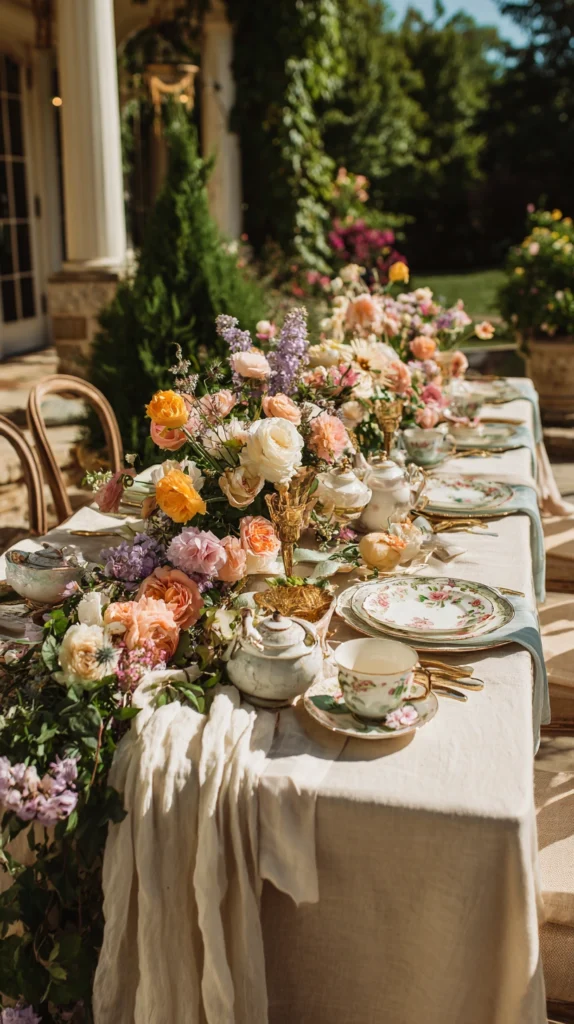
Bringing the yard’s own greenery directly onto the table itself.
Build it:
- A loose runner of fresh flowers and greenery laid directly down the table’s center, using whatever’s currently blooming in the yard or a nearby garden
- Flowers left largely unarranged, simply laid in a natural, slightly informal cluster rather than a tightly structured floral design
- Small votive candles or tea lights nestled among the flowers if the gathering extends into the early evening
Why a loose, garden-sourced runner suits a backyard setting better than a formal purchased arrangement:
- It ties the table setting directly to its actual outdoor setting, using flowers that are genuinely growing steps away rather than store-bought blooms with no connection to the space
- The informal, slightly wild arrangement style suits an outdoor gathering better than a tightly structured formal centerpiece would
- It’s one of the more budget-friendly centerpiece options available, particularly if a home garden can supply most or all of the flowers needed
Why using the actual yard’s flowers adds a layer of meaning beyond pure cost savings:
There’s a specific kind of charm in a table runner built from flowers a host actually grew and cut that morning, rather than flowers purchased from a florist with no connection to the specific location. Guests often notice and comment on this detail more than they would a technically more polished purchased arrangement, since it signals a level of personal effort and connection to the setting that store-bought flowers simply can’t replicate, regardless of how objectively beautiful those purchased flowers might be.
Cost breakdown: Free if sourced from an existing garden, or $20 to $40 if supplementing with a few purchased stems.
5. Individual Place Settings With Handwritten Name Cards
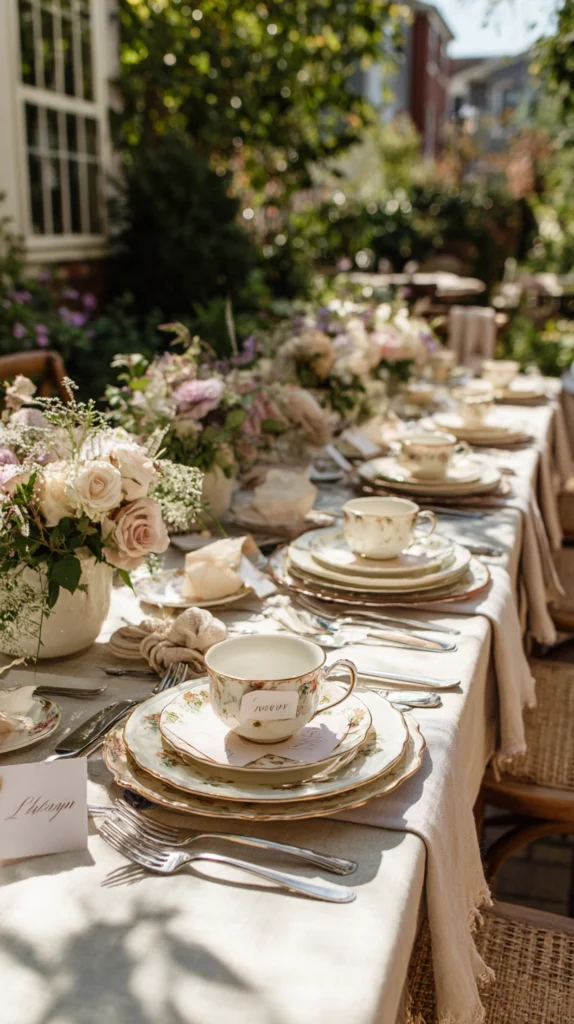
A small formal touch that elevates the whole gathering’s sense of occasion.
Build it:
- A small handwritten or simply printed name card placed at each guest’s setting, positioned beside their teacup and saucer
- Cards made from simple cardstock, potentially paired with a small pressed flower or a sprig of fresh herb tucked alongside
- Seating assigned deliberately rather than left open, giving the host a chance to thoughtfully place guests who might enjoy sitting together
Why place cards matter even at a relatively casual backyard gathering:
- It signals genuine advance thought and care, elevating the whole event beyond a spontaneous, unplanned gathering
- It solves the mild awkwardness of guests hovering while deciding where to sit, particularly useful if the guest list includes people who don’t all know each other well
- It’s one of the more affordable ways to add a formal detail to the table, requiring only cardstock and a few minutes of handwriting or simple printing
Why handwritten cards specifically tend to mean more than printed ones for this particular occasion:
A tea party already leans into a slightly old-fashioned, intentionally slower pace than most modern entertaining, and a handwritten name card reinforces that same spirit in a way a printed one doesn’t quite achieve. The small imperfection and personal effort visible in handwriting suits the occasion’s overall tone, signaling that this event was genuinely planned with individual guests in mind rather than assembled from a template.
Cost breakdown: Cardstock and basic supplies for handwritten place cards run $5 to $15 for a full guest list.
6. String Lights or Lanterns for a Late-Afternoon Transition
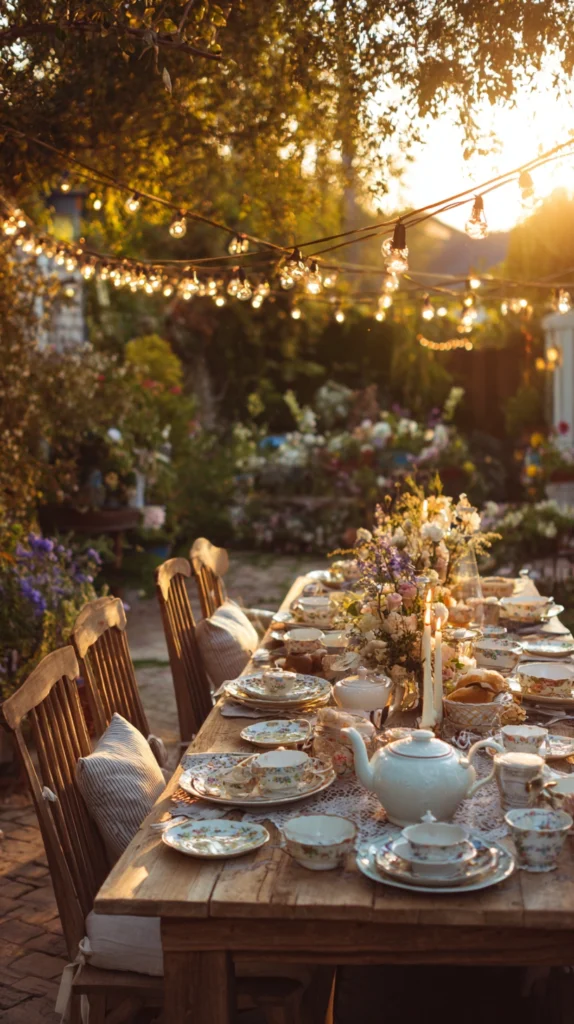
Extending the gathering gracefully as natural light begins to fade.
Build it:
- Outdoor string lights strung overhead across the seating area, or small lanterns positioned along the table’s edges
- Warm-toned bulbs chosen specifically to complement the softer, more romantic feeling appropriate as the gathering moves into early evening
- Lighting turned on gradually as natural light fades, rather than switched on abruptly all at once
Why lighting deserves specific planning even for a gathering that starts in full daylight:
- Many tea parties naturally run long, especially with multiple tea varieties and a full tiered stand of food, meaning the event is likely to extend past the point where natural light alone is sufficient
- Warm lighting maintains the gathering’s elegant, considered atmosphere as the day transitions into evening, rather than letting the mood shift abruptly once it gets dark
- It’s a relatively low-cost addition that meaningfully extends how comfortably long the gathering can naturally continue
Why gradual lighting transitions matter more than people initially consider when planning an afternoon event:
A gathering that starts at two in the afternoon and naturally stretches past five or six o’clock will experience a real shift in available light, and planning for that shift ahead of time prevents an awkward moment where guests are suddenly sitting in near-darkness with no lighting plan in place. Stringing lights before the event begins, even if they’re not turned on until later, means the transition into evening happens smoothly rather than requiring anyone to scramble for a solution once the sun has already started setting.
Cost breakdown: Outdoor string lights run $20 to $40 per strand, with a few small lanterns adding $15 to $30 depending on style.
7. A Signature Tea-Based Cocktail for Adult Gatherings
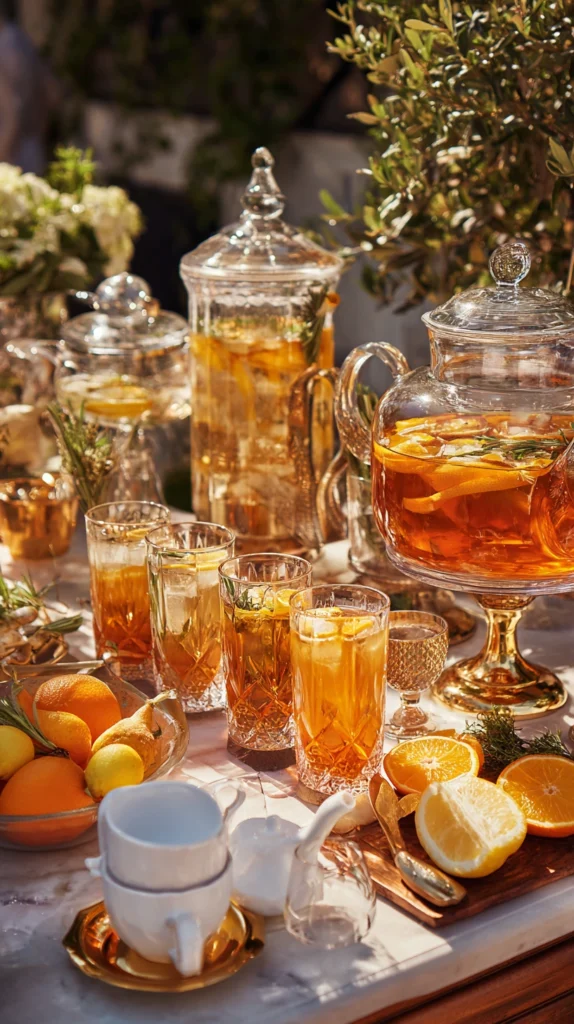
Offering a grown-up beverage option that still ties directly into the event’s central theme.
Build it:
- A simple tea-based cocktail, like an Earl Grey gin fizz or a chilled hibiscus tea spritz, prepared in a large pitcher for easy self-serve access
- A non-alcoholic version of the same drink made available alongside it, using the same tea base without the added spirit
- Garnished simply, with a lemon twist or a small sprig of mint, keeping the presentation consistent with the rest of the table’s understated elegance
Why a tea-based cocktail suits an adult tea party better than serving wine or beer alongside the tea service:
- It reinforces the tea theme throughout the entire gathering, rather than introducing an entirely separate and unrelated beverage category
- It gives guests who might not typically enjoy hot tea an alternative way to still participate in the tea-centered theme
- It signals that the event, while inspired by traditional tea service, isn’t meant to be a stuffy, purely traditional affair
Why offering both an alcoholic and non-alcoholic version matters for genuine inclusivity:
Any gathering serving alcohol benefits from offering an equally thoughtful non-alcoholic alternative, and a tea party is particularly well suited to this since the non-alcoholic version can simply be the same tea base without the added spirit, requiring no separate recipe development at all. This ensures guests who don’t drink alcohol, for any reason, still get an equally considered and delicious beverage option rather than being limited to plain water or a lesser afterthought drink.
Cost breakdown: Ingredients for a large pitcher of tea-based cocktail, including both alcoholic and non-alcoholic versions, run $20 to $40 depending on the specific spirit and tea used.
8. A Dedicated Photo Backdrop Using Natural Greenery
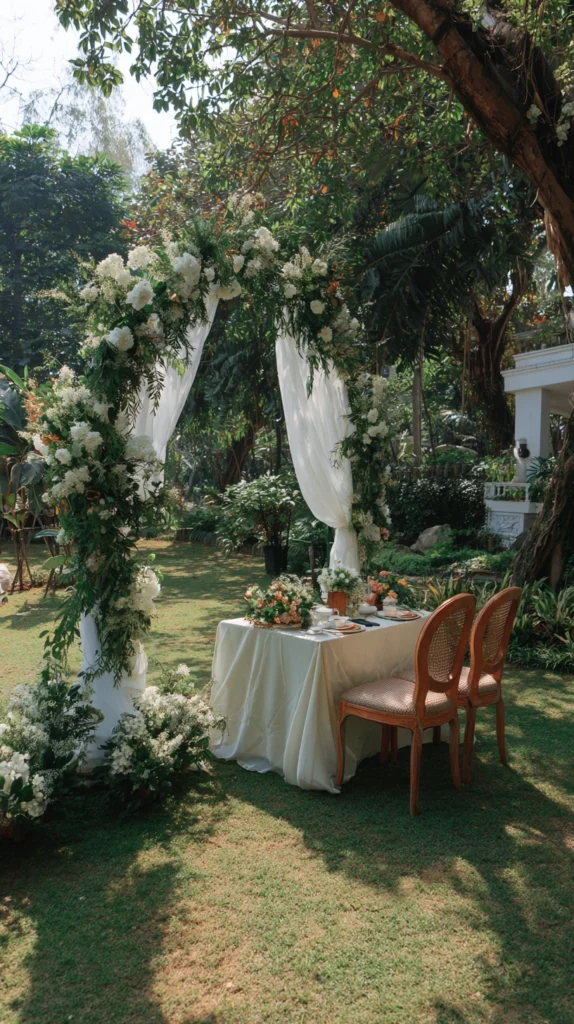
Giving guests a genuine, intentional spot for photos rather than relying on the main table itself.
Build it:
- A simple arch or trellis structure, either purchased inexpensively or built from basic garden stakes, positioned slightly apart from the main seating area
- Draped with greenery, like trailing vines or simple garland, and a few fresh flowers tucked in for color
- Positioned to take advantage of the yard’s best natural light and background, whether that’s a garden bed, a fence, or simply open sky
Why a dedicated photo spot benefits the event beyond just the pictures themselves:
- It keeps guests from crowding around and disrupting the main table setting whenever someone wants to take photos throughout the event
- It gives the gathering a genuine designated moment and location for photos, rather than relying on scattered, inconsistent snapshots throughout
- It’s a relatively low-cost addition, particularly if built from basic materials and existing garden greenery rather than an elaborate purchased structure
Why positioning this backdrop away from the main table specifically improves the overall event flow:
Keeping the photo backdrop as a distinct, separate spot from the tea table means guests aren’t constantly disrupting the actual dining and service area every time someone wants a picture. It also means the main table setting stays intact and photo-ready throughout the event, since it isn’t being repeatedly bumped or rearranged by guests moving around it for photo opportunities elsewhere in the yard.
Cost breakdown: A simple arch or trellis structure runs $30 to $70, with greenery and flowers to drape it adding $15 to $30.
9. A Small Favor Station With Take-Home Tea Blends
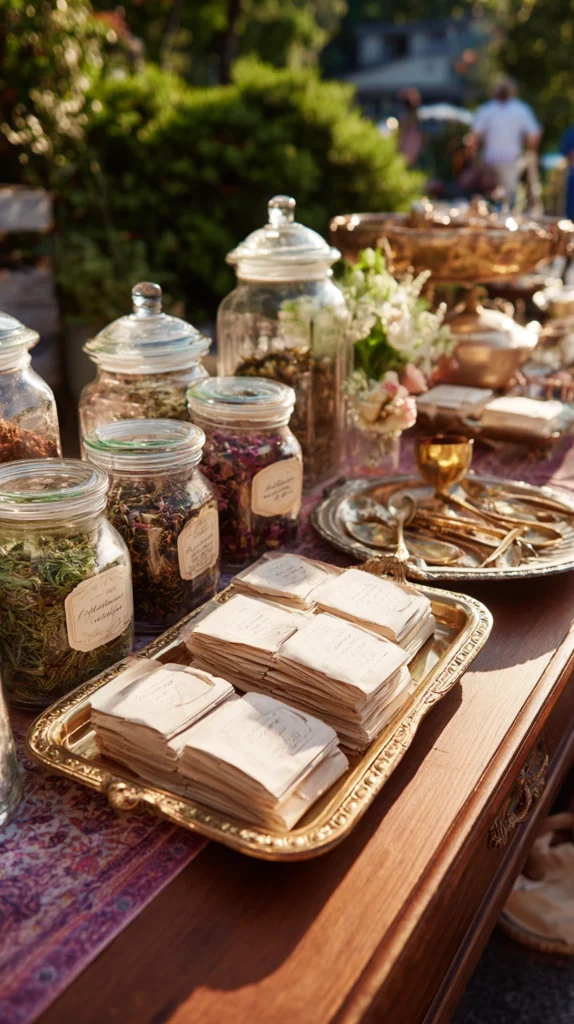
Sending guests home with a genuine keepsake tied directly to the event’s theme.
Build it:
- Small bags or jars of a signature tea blend, either purchased pre-packaged or blended at home from loose-leaf tea and dried botanicals
- A simple handwritten label noting the blend’s name and basic brewing instructions
- Displayed on a small table near the exit, allowing guests to select and take one as they leave
Why a tea-based favor suits this specific gathering better than a generic party favor:
- It reinforces the event’s central theme even after the gathering has ended, giving guests something to actually use rather than a purely decorative trinket
- Blending tea at home is genuinely affordable, particularly when purchased in bulk loose-leaf form rather than pre-packaged individual servings
- It gives guests a specific, memorable takeaway that directly ties back to the day’s specific experience
Why a home-blended signature tea tends to feel more meaningful than a store-bought favor:
Creating an actual custom blend, even something as simple as combining a base black tea with dried lavender and a bit of dried orange peel, gives the favor genuine specificity and a sense that it was made particularly for this event, rather than picked up generically from a store shelf. Guests are considerably more likely to actually use and remember a thoughtfully blended, clearly labeled tea than a more impersonal packaged gift, and the cost of blending your own remains lower than purchasing individual specialty tea favors elsewhere.
Cost breakdown: Loose-leaf tea and dried botanicals for a full batch of take-home blends run $15 to $30 depending on quantity and specific ingredients used, with small favor bags or jars adding $10 to $20 for a full guest list.
10. A Weather Contingency Plan Built in From the Start
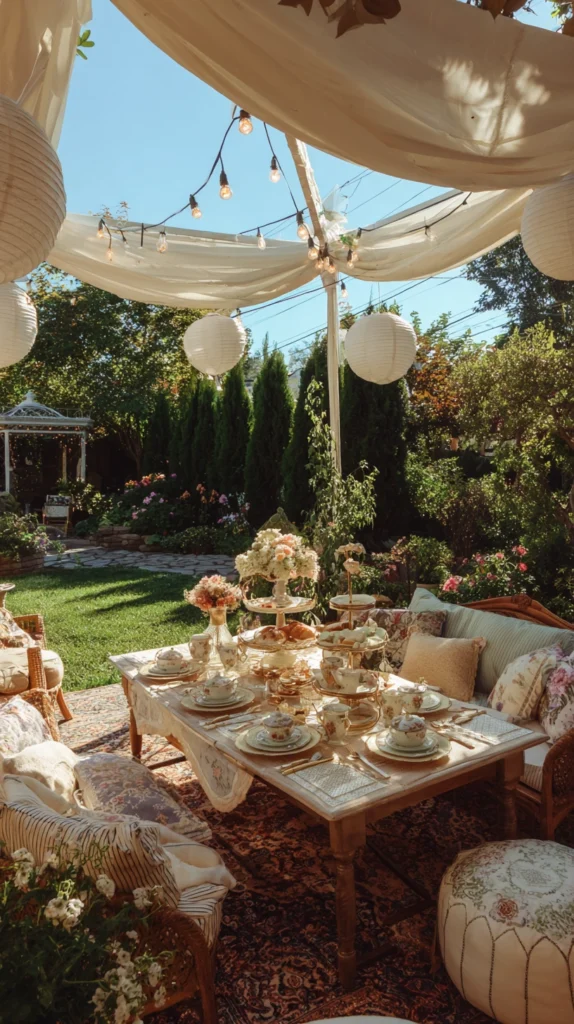
Protecting the whole event from the one variable no amount of styling can control.
Build it:
- A simple pop-up canopy or large umbrella available and ready to deploy if unexpected rain or excessive sun becomes an issue partway through the event
- An indoor backup space, even a garage or a covered porch, identified and lightly prepared in advance in case the weather requires relocating entirely
- Guests informed ahead of time, either in the invitation or a reminder message, that the event has a rain plan, reducing any last-minute anxiety about attendance
Why planning for weather disruption matters more for an outdoor tea party than for many other backyard gatherings:
- Much of the event’s specific appeal, like fresh flowers, delicate china, and paper place cards, is considerably more vulnerable to wind and rain than a typical casual cookout would be
- A sudden weather shift can end an event entirely if there’s no contingency in place, whereas even a modest backup plan allows the gathering to continue with minimal disruption
- Communicating the contingency plan to guests in advance reduces the awkwardness of a last-minute scramble if the weather does turn during the event itself
Why identifying a specific backup location ahead of time, rather than improvising in the moment, makes the biggest practical difference:
The events that recover most gracefully from unexpected weather are the ones where the host already knows exactly where everything will move to and roughly how that transition will work, rather than trying to figure it out during an actual rainstorm with guests already present. Even a simple plan, like designating the garage or a covered porch and having a rough sense of how the tiered stand and tea station will be relocated there, removes most of the panic from an unexpected weather shift and allows the gathering to continue with only a brief pause rather than ending outright.
Cost breakdown: A pop-up canopy runs $50 to $150 depending on size, a cost worth treating as a genuine investment in the event’s overall reliability rather than an optional extra.
Getting started this weekend
You don’t need every detail finalized before beginning genuine preparation for the event.
- Start by sourcing vintage teacups gradually and choosing your two or three tea varieties well ahead of the actual date
- Add the tiered stand, place cards, and floral runner details once the core tea and china elements are settled
- Save the photo backdrop and favor station for closer to the event itself, since these details benefit from knowing the final guest count and confirmed weather forecast
Most backyard tea parties that genuinely impress guests succeed because the host focused real attention on the tea itself and the table setting first, treating everything else as a supporting layer built around that solid foundation.
Budget reality
A backyard tea party can be built at almost any budget level, with the tea and china quality mattering more than the total spent.
- Under $50: Garden-sourced floral runner, handwritten place cards, a home-blended tea favor station
- $50-150: Vintage china collection, loose-leaf tea station, string lighting
- $150-300: A DIY or purchased tiered serving stand, a photo backdrop structure, a weather contingency canopy
- $300+: A fully outfitted event combining premium loose-leaf tea varieties, a larger vintage china collection, and a complete lighting and floral setup
Most of the impressive quality comes from the tea itself and the intentional table styling, not from the total amount spent across the whole event.
What actually makes a backyard tea party genuinely wow guests
It was never really about recreating a stuffy, overly formal affair.
It’s the properly brewed loose-leaf tea kept genuinely hot throughout the afternoon, the mismatched vintage cup that makes each guest’s place setting feel individually considered, the string lights quietly switched on as the gathering gracefully extends into early evening.
Focus real effort on the tea and the table first, let the smaller details layer in around that foundation, and the whole event ends up feeling considerably more special than its actual cost or complexity would suggest.