10 Kids’ Table Ideas That’ll Keep Them Busy All Dinner
A kids’ table with nothing on it but food and place settings buys about ten minutes of quiet before someone’s under the table and someone else is asking to be excused.
The actual fix isn’t more supervision. It’s building the table itself into an activity, so kids stay seated and occupied through the parts of dinner that would otherwise fall apart, whether that’s a slow appetizer course, a long stretch of adult conversation, or the wait between the main meal and dessert.
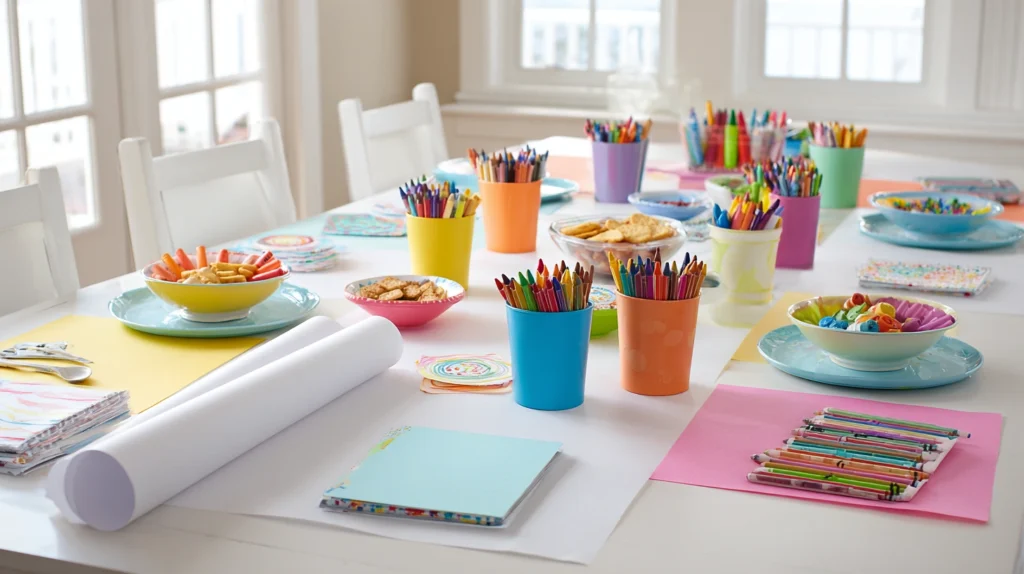
Here are 10 ways to do that, each with the real detail on how to set it up and what actually keeps it working through a full meal, not just the first few minutes after everyone sits down.
1. A Butcher Paper Tablecloth With Crayons Built In
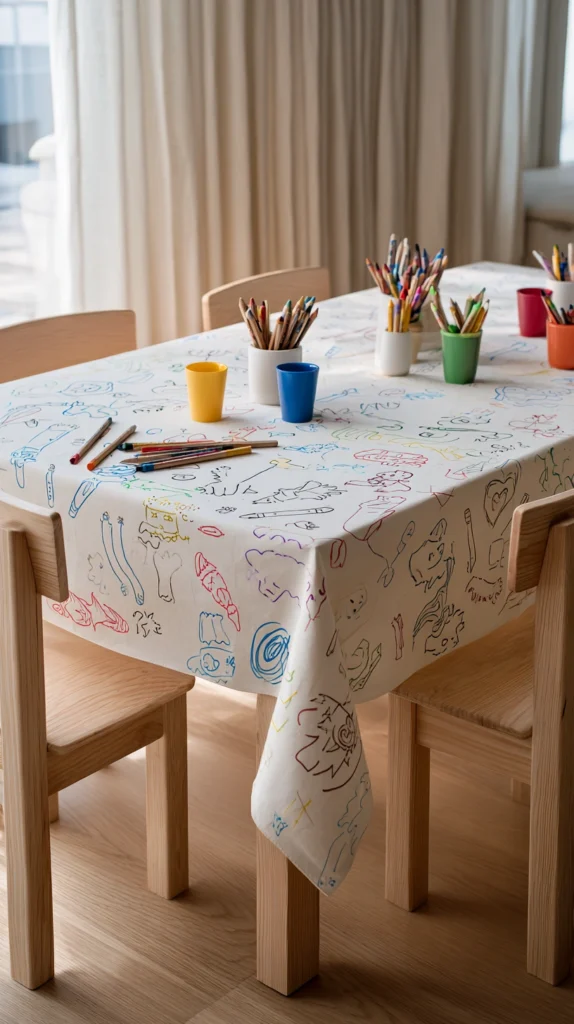
Butcher paper turns the entire table surface into a coloring activity, which occupies kids before food even arrives and gives them somewhere to go during any lull.
How to set it up:
- Roll butcher paper directly over the table, securing the edges underneath with tape or binder clips so it doesn’t shift
- Place a cup of crayons at each seat, using a mix of colors rather than a single shared bin that causes fighting over favorites
- Draw a simple starting doodle in each kid’s spot, like a partial shape or a face missing features, giving younger kids a jumping-off point rather than a blank page
- Write each child’s name at their spot in bubble letters for them to color in as an easy, low-pressure starting task
- Use washable, non-toxic crayons specifically, since younger kids at the table will inevitably end up with some in their mouths at some point during a long meal
Why this works for the full meal, not just the start: Unlike a single activity that finishes in ten minutes, an open paper surface can be returned to throughout the meal, between bites, during a lull in conversation, or after finishing food early.
A tip for larger tables: For tables seating more than 6–8 kids, consider drawing light divider lines on the paper ahead of time, giving each child a loosely defined section, which reduces disputes over territory once several kids start drawing large, sprawling pictures.
Age range: Works well from about age 3 through 10, with older kids often adding more detailed drawings or games like tic-tac-toe with each other across the table.
Cost: $8–$15 for a roll of butcher paper and a set of crayons, reusable across multiple events if crayons are collected afterward.
2. A Build-Your-Own Trail Mix or Snack Bar
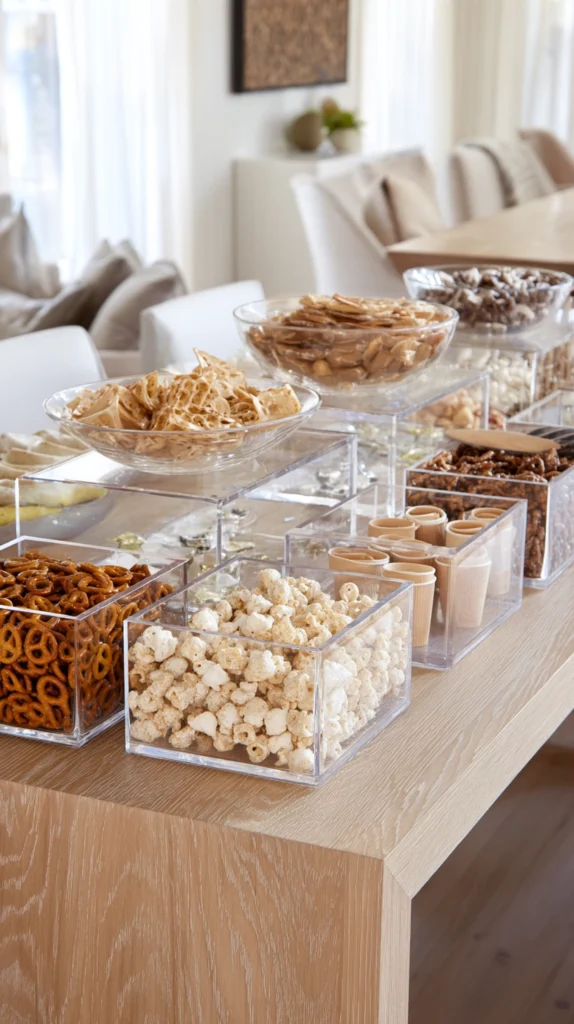
A hands-on food activity keeps younger kids engaged with eating itself, turning a task some kids resist into something closer to a game.
How to set it up:
- Offer 5–6 small bowls of mix-in options: pretzels, cereal, dried fruit, mini marshmallows, and chocolate chips
- Provide small cups or bags for kids to build their own mix, rather than serving a pre-mixed bowl
- Label each option with a simple picture or word for kids who can’t yet read fluently
- Position the station within reach of the kids’ table specifically, rather than requiring a trip to an adult serving area
Why this beats a standard snack bowl: The act of building something themselves holds attention longer than a pre-made snack does, and it gives picky eaters some control over exactly what goes into their mix.
Age range: Best for ages 4 and up, since younger toddlers may need more direct help with the actual assembly.
Cost: $10–$20 depending on how many mix-in options are included and quantities needed.
3. A Small Puzzle or Activity Placed at Each Seat
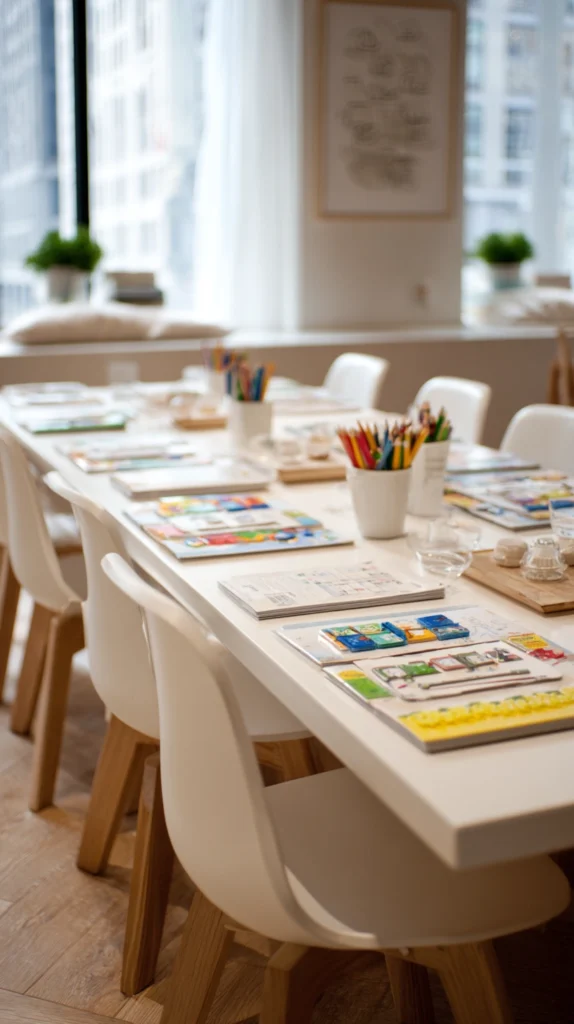
An individual activity waiting at each place setting gives kids something to do the moment they sit down, before food even arrives.
How to set it up:
- Choose small, quiet activities like mini puzzles, activity books, or simple word search sheets appropriate to each child’s age
- Place one at each seat before kids sit down, so it’s discovered immediately rather than distributed later
- Include a small pencil or crayon at each spot specifically for the activity, not shared from a central cup
- Vary the specific activity by age if the kids’ table spans a wide range, giving older kids something more challenging than a toddler’s activity sheet
- Test any puzzle or activity yourself briefly beforehand, since a poorly designed or overly difficult activity sheet can frustrate rather than occupy a young child
Why individual works better than shared: A shared activity often becomes a source of conflict over turns, while an individual one at each seat removes that friction entirely and lets each child work at their own pace.
A note on keeping a few extras on hand: Bring two or three backup activity sheets beyond the exact headcount, since a torn page or a child who finishes unusually fast can otherwise leave a gap in engagement mid-meal.
Age range: Adaptable to nearly any age with the right activity chosen, from simple shape puzzles for toddlers to word searches for older kids.
Cost: $1–$3 per child for small dollar-store puzzles or activity sheets.
4. A DIY Placemat They Decorate Themselves
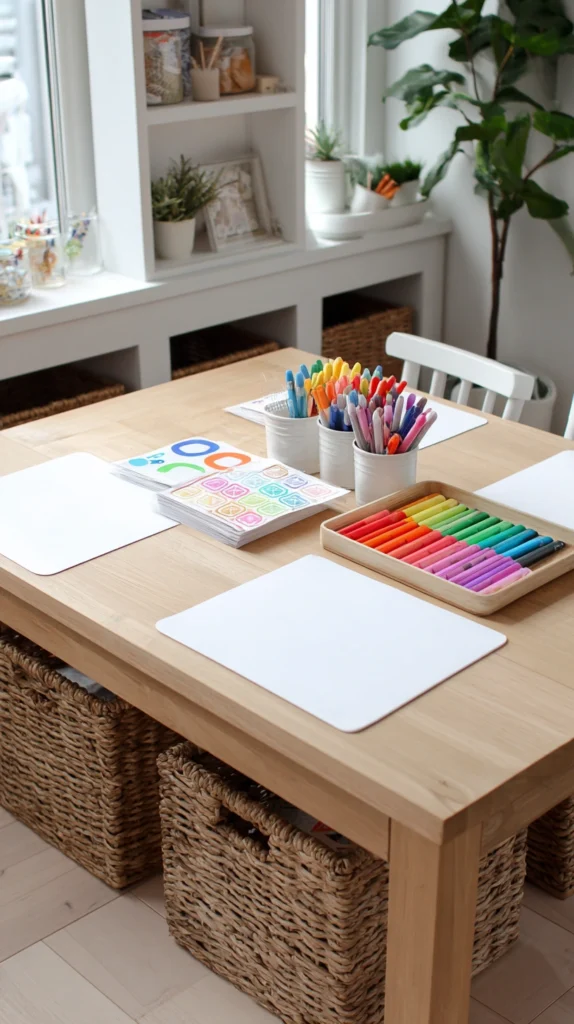
Letting kids personalize their own placemat turns table setup into the first activity of the event, occupying them during the wait before food is served.
How to set it up:
- Provide blank white placemats or cardstock, along with stickers, markers, and a few stamps
- Set a simple prompt, like “decorate your place for the party” or a themed suggestion tied to the event
- Laminate finished placemats if time allows, both to protect them from food spills and to let kids take them home afterward
- Have a few finished examples ready to show younger kids who might need inspiration to get started
Why this specifically helps the transition into dinner: Kids who arrive restless or overstimulated from playing beforehand settle down faster with a calm, seated task like decorating, which naturally transitions them into being ready to sit through the actual meal.
Age range: Works well from about age 4 through 12, with older kids adding more detailed designs.
Cost: $5–$12 for blank placemats and basic decorating supplies.
5. A Simple Scavenger Hunt Card at the Table
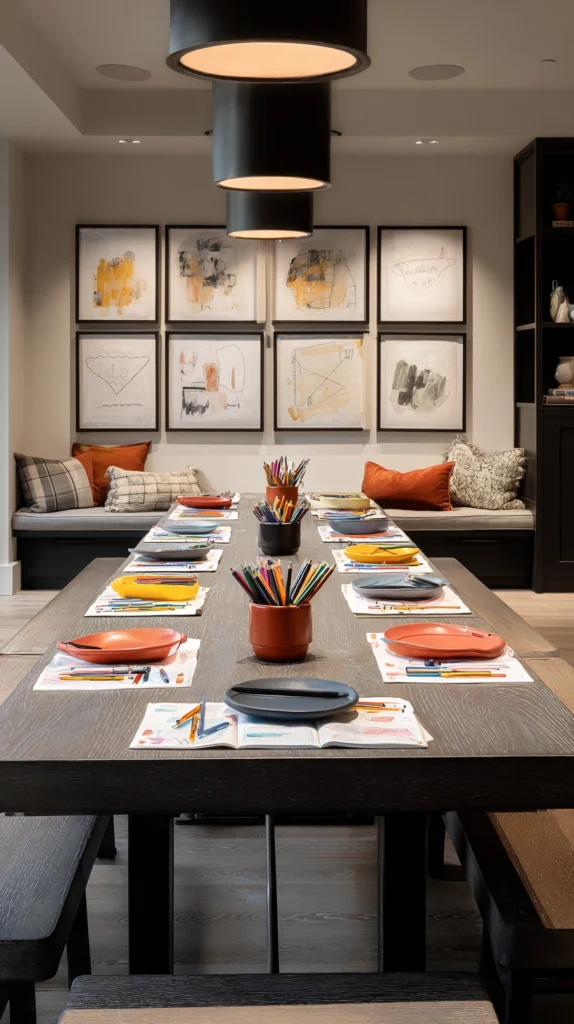
A scavenger hunt gives kids a reason to stay near the table while still having something active to do between courses.
How to set it up:
- Create a simple card listing 5–8 items to find around the event space, like “something red,” “a flower,” or “someone wearing glasses”
- Keep the search radius close to the kids’ table itself, rather than sending kids far across a large venue unsupervised
- Provide a small prize, like a sticker or small treat, for completed cards
- Assign one adult to loosely supervise the hunt area if it extends beyond the immediate table
- Vary the difficulty of items on the card by age, mixing a few very easy finds for younger kids with slightly trickier ones for older kids at the same table
Why this works between courses specifically: Rather than needing kids seated the entire time, this gives them a structured reason to get up and move during the natural gaps in a meal, like between the main course and dessert, then return to the table on their own.
Adjusting for indoor vs. outdoor events: Outdoor scavenger hunts can include natural items like “a pinecone” or “three different leaf shapes,” while indoor versions work better with people-watching or object-finding prompts specific to the venue itself.
Age range: Best for ages 5 and up, since younger kids may need direct adult assistance to complete the hunt.
Cost: $0–$5 for printed cards and small prizes.
6. A Small Whiteboard or Chalkboard at Each Seat
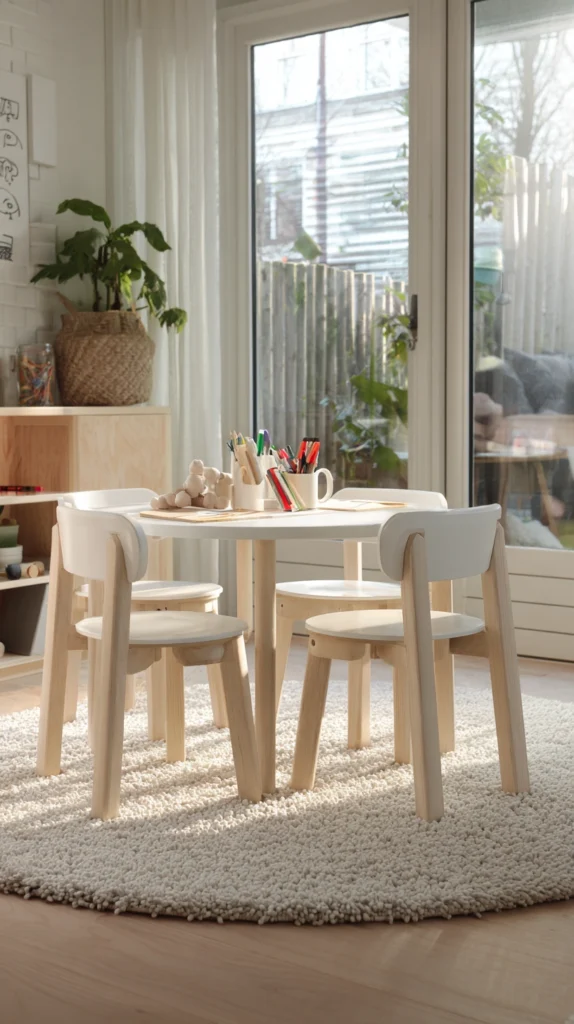
A reusable drawing surface gives kids an activity that doesn’t run out partway through the meal the way a single coloring page can.
How to set it up:
- Provide a small individual whiteboard or chalkboard at each seat, along with markers or chalk
- Suggest simple prompts occasionally, like “draw your favorite animal” or “draw what you want to be when you grow up”
- Include a small cloth or eraser at each seat so kids can reset and start a new drawing without needing to ask an adult
- Collect boards at the end of the meal for reuse at future events, since they’re a durable, one-time purchase
Why reusable beats consumable here: Unlike a coloring page that gets finished and set aside, a whiteboard can be erased and restarted endlessly through a long meal, genuinely holding attention longer than most single-use activities.
Age range: Works well from about age 4 through 10.
Cost: $3–$6 per small whiteboard, a one-time purchase reusable indefinitely.
7. A Themed “Mystery Bag” of Small Toys
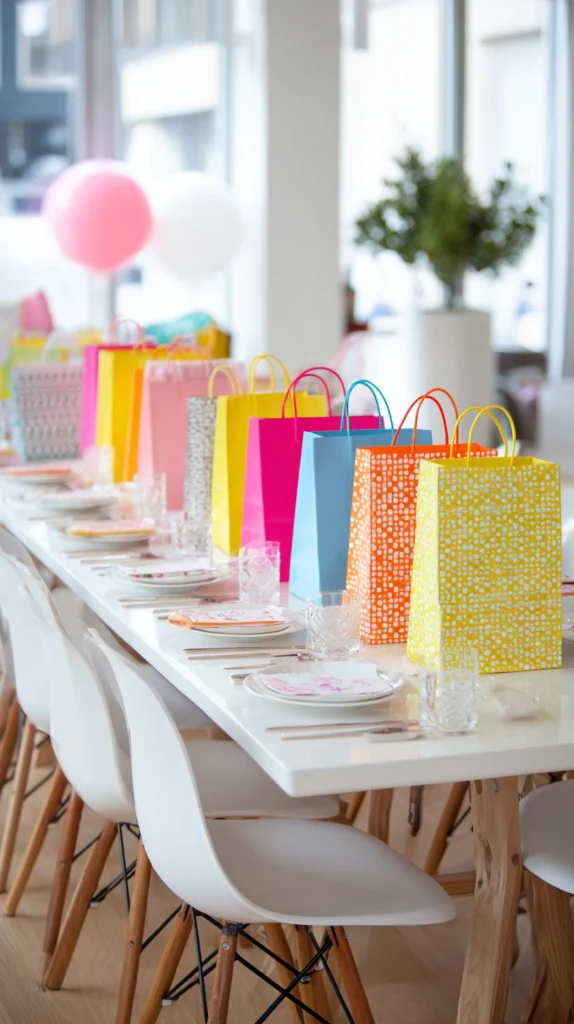
A small wrapped or bagged surprise at each seat creates anticipation and gives kids a reason to stay seated through the meal’s opening minutes.
How to set it up:
- Fill small bags with 2–3 inexpensive items each, like a small toy, a puzzle, and a piece of candy
- Place one bag at each kids’ table seat, allowing them to open it once seated
- Time the reveal with the meal’s actual start, rather than letting kids open bags immediately upon arrival, which uses up the activity’s value before it’s actually needed
- Choose items with low choking risk and broad age appropriateness if the table spans younger children
- Coordinate bag contents loosely with the event’s theme when possible, since a themed surprise tends to generate more excitement than a generic assortment of random small toys
Why timing the reveal matters: Saving the bag opening for when food is actually served gives kids a built-in reason to be excited about sitting down at that specific moment, rather than the bag becoming just another pre-dinner distraction.
Age range: Adaptable to any age with appropriate item selection, though choking hazards need extra care for kids under 4.
Cost: $3–$6 per bag depending on the specific items included.
8. A Coloring Book Themed to the Event Itself
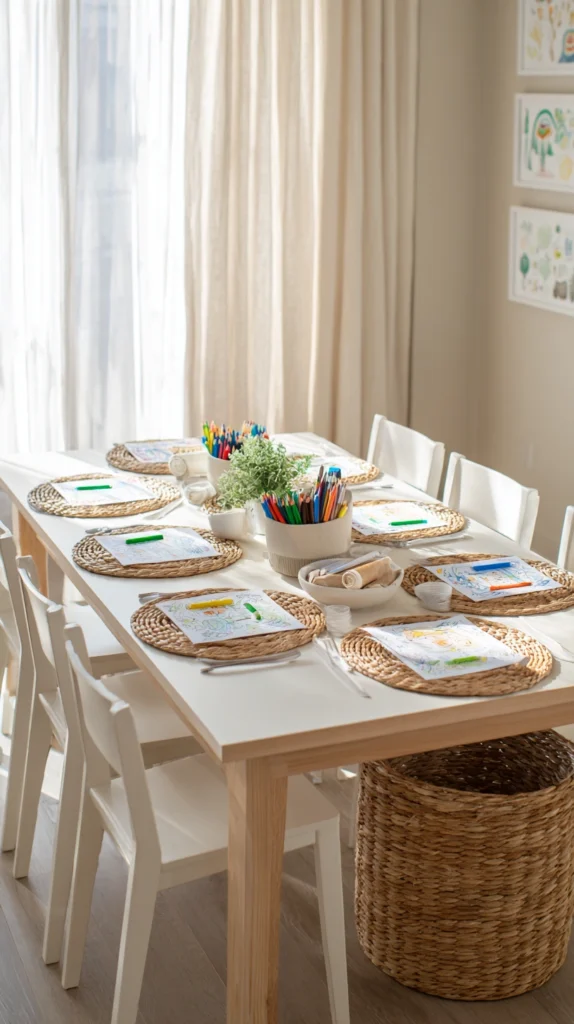
A custom or themed coloring book ties the activity directly to the occasion, making it feel more special than a generic coloring page while still providing the same sustained engagement.
How to set it up:
- Print simple coloring pages themed to the event, like a birthday character, a holiday scene, or a wedding-appropriate design
- Bind pages into a small booklet with a single staple or binder clip, giving kids several pages to work through rather than just one
- Provide a fresh set of colored pencils or crayons specifically for this activity, kept separate from any other coloring materials at the table
- Include a cover page with the child’s name and the event date, turning the finished booklet into a keepsake
Why a themed version outperforms generic pages: Kids engage longer with something that feels specifically made for the occasion rather than a stock coloring page, and the finished booklet becomes something families are more likely to keep rather than immediately discard.
Age range: Works well from about age 3 through 10.
Cost: $5–$15 depending on printing costs and materials, often free if designed and printed at home.
9. A Simple Craft Station With Pre-Cut Materials
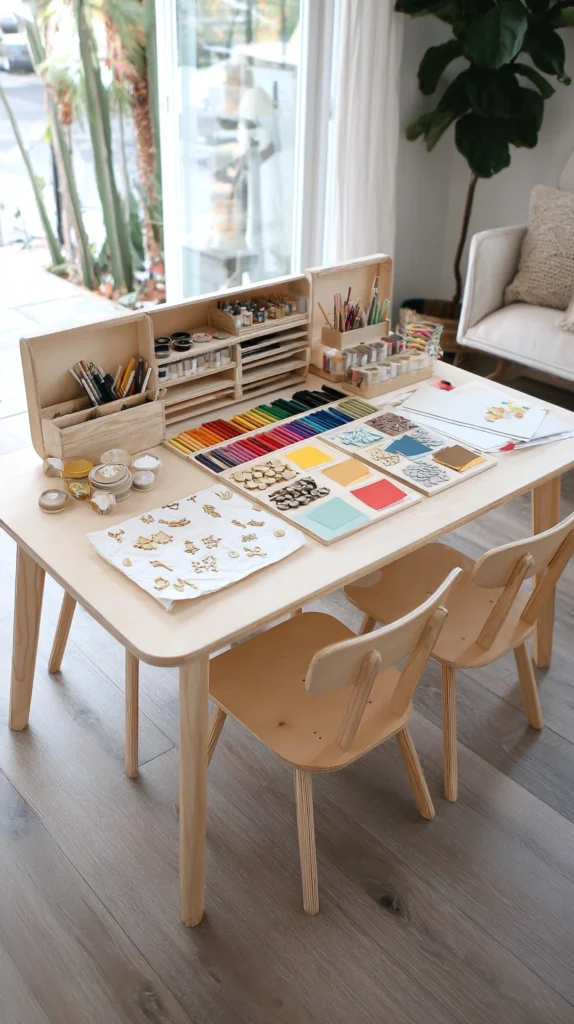
A hands-on craft, with materials already prepped, gives kids a genuine project to complete during the meal rather than a passive activity.
How to set it up:
- Choose a simple craft appropriate to the event, like making a small paper flower, a friendship bracelet, or a themed ornament
- Pre-cut and pre-sort all materials before the event, since kids’ tables don’t have the patience or supervision for kids to cut their own pieces safely
- Provide clear, simple visual instructions, like a small illustrated card, rather than relying on verbal instructions that get lost in table noise
- Have a finished sample displayed at the table so kids know what they’re working toward
- Package individual kits in small bags or trays per child, rather than a shared pile of materials in the middle of the table, which prevents both mess and disputes over supplies
Why pre-cut materials matter specifically: The single biggest reason a craft activity fails at a kids’ table is prep time eating into the activity itself — a craft that requires cutting, measuring, or complex assembly loses kids’ attention before they ever get to the satisfying finished result.
Matching craft complexity to the meal’s length: A shorter, casual meal calls for a craft completable in 10–15 minutes, while a longer, multi-course event can support a more involved project with more steps, since kids will have more total time available to work on it in stages.
Age range: Best for ages 5 and up, since finer motor skills are needed for most simple craft assembly.
Cost: $2–$5 per child depending on craft materials chosen.
10. A Rotating “Table Captain” Role With Small Responsibilities
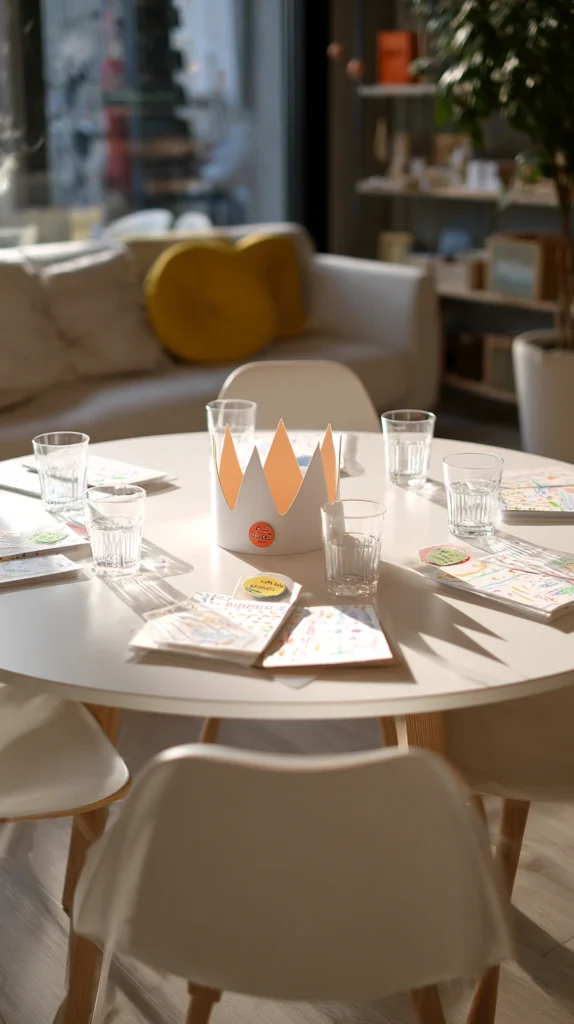
Giving one child at a time a small leadership role creates built-in engagement and gives kids something to look forward to throughout a longer event.
How to set it up:
- Assign a “table captain” role that rotates every 20–30 minutes, giving each kid a turn during a longer event
- Give the captain small, simple responsibilities, like leading a toast, choosing the next activity, or handing out napkins
- Provide a small marker of the role, like a paper crown or a badge, so the responsibility feels tangible rather than abstract
- Keep responsibilities genuinely simple and low-stakes, since the goal is engagement, not real logistical responsibility
Why rotation matters specifically: A single ongoing role can create jealousy or boredom once the novelty wears off, while rotating the responsibility keeps anticipation building throughout the meal as each child waits for their own turn.
Age range: Best for ages 5 and up, since the role requires some ability to follow simple instructions and manage brief responsibility.
Cost: $2–$5 for simple role markers like paper crowns or badges.
A kids’ table that actually holds attention through a full meal almost always combines at least two or three of these ideas rather than relying on just one. Pair something kids do immediately upon sitting down, like a decorated placemat or mystery bag, with something that sustains through the whole meal, like butcher paper or a whiteboard, and the table stays occupied without needing constant adult intervention.
A useful way to think about combining these ideas is by matching them to the actual shape of the meal itself: one activity for the arrival and wait, one for the eating itself, and one that can be returned to repeatedly during any lulls between courses. Covering all three of those windows, rather than just the first ten minutes, is what actually gets a kids’ table through an entire dinner without a parent needing to step in every few minutes.