9 Small Patio Furniture Arrangement Ideas That Work
A sectional looks perfectly reasonable inside a big box store showroom, spaced out with plenty of walking room on every side, nothing else nearby to compete with its footprint.
Get that same piece home to an actual small patio and it suddenly swallows the entire space, leaving no room to walk around it, let alone add a table or a second seat. The furniture wasn’t wrong. It was just measured against the wrong room.
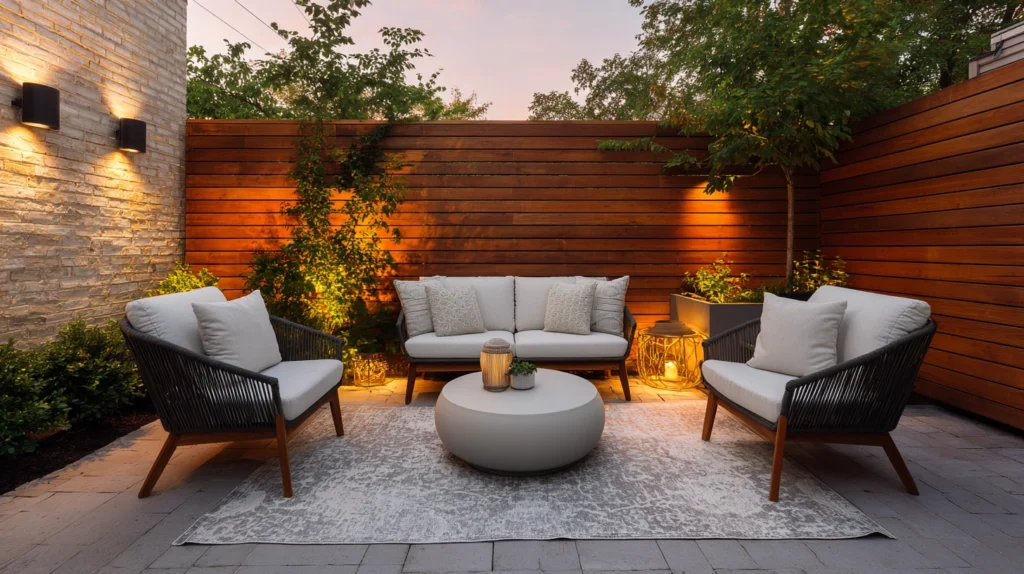
Small patio furniture arrangement isn’t really about finding smaller furniture, though that often helps. It’s about understanding the specific ways a tight footprint behaves differently than a large one, and arranging accordingly rather than applying big-yard logic to a space that can’t support it.
Here are 9 ways to arrange furniture on a small patio so it actually works, rather than just technically fitting.
Why small patios need fundamentally different arrangement logic than large ones
The margin for error shrinks considerably once the available square footage drops.
- Every piece needs to justify its footprint, since there’s no spare room to absorb a slightly oversized or awkwardly placed item
- Traffic flow becomes the primary design constraint, often mattering more than which specific furniture style gets chosen
- Multi-functional pieces carry outsized value in a small space, since a single object doing two jobs effectively doubles the room’s functional capacity
Once you start planning around these specific constraints, a small patio can feel genuinely complete rather than perpetually cramped.
1. Float the Furniture Away From the Walls
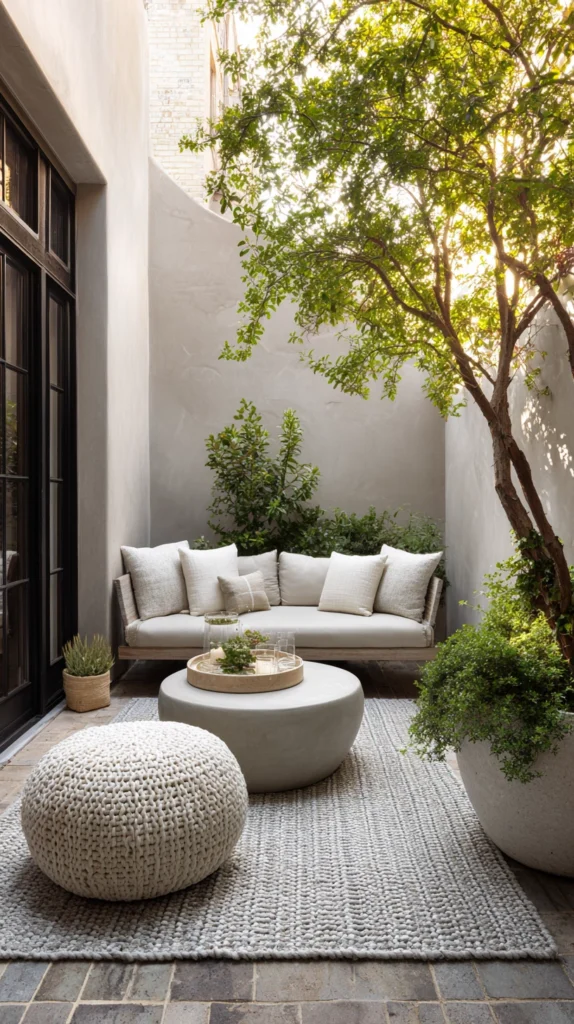
Resisting the instinct to push every piece against the perimeter.
Build it:
- A small seating grouping positioned toward the center of the patio, or angled within it, rather than lined up flush against the walls or railing
- A rug or a defined paver section beneath the grouping, visually anchoring the arrangement as its own zone
- Walking clearance checked on all sides of the furniture, confirming genuine access rather than just technical fit
Why floating furniture works better than the common instinct to push everything to the edges:
- Pushing furniture against every wall can leave a large, awkward empty void in the center of a small patio, which often reads as more wasted than simply having a slightly tighter but more intentional grouping
- A centered or off-center floating arrangement creates a genuine destination within the space, rather than furniture that looks like it’s simply been stored along the perimeter
- It mirrors the same design principle used in small interior rooms, where floating furniture away from walls frequently makes the space feel more considered and complete
Why this approach requires more precise measuring than pushing everything to the walls does:
Floating furniture demands confirming that adequate walking clearance exists on every side of the grouping, not just the side facing the main walkway, since a floated arrangement can inadvertently create a tight squeeze on a side that wasn’t the primary focus during planning. Measuring all four sides of the intended furniture footprint against the patio’s actual dimensions, rather than eyeballing just the most visible approach, prevents an arrangement that looks good in concept but proves genuinely difficult to move around in practice.
Cost breakdown: No additional cost beyond the furniture itself, since this is a placement strategy rather than a purchase.
2. Choose a Bistro Set Instead of a Full Dining Table
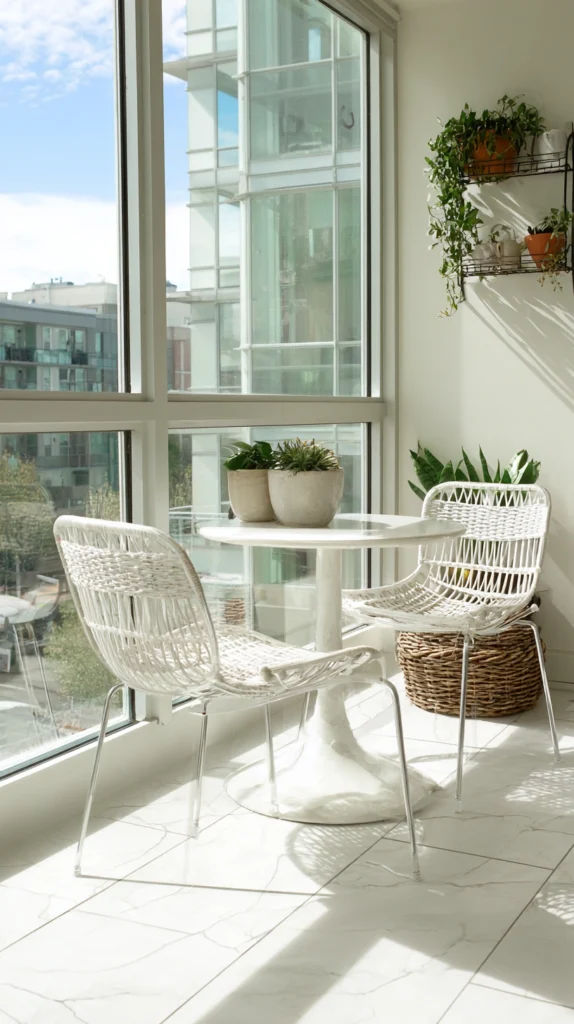
Right-sizing the dining furniture to match the actual available footprint.
Build it:
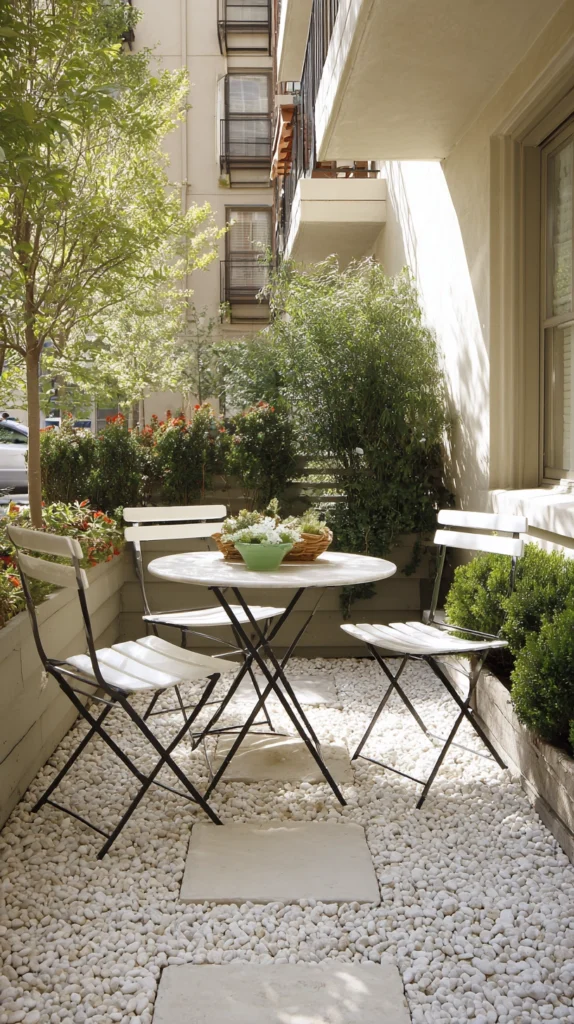
- A small round bistro table paired with two chairs, sized to fit comfortably within the patio’s specific dimensions
- Positioned toward one section of the patio rather than centered, leaving room for a second small zone elsewhere if space allows
- Foldable or stackable versions considered if the patio needs to occasionally clear for other uses
Why a bistro set often outperforms a full-size dining table on a genuinely small patio:
- A standard four to six person dining table frequently doesn’t leave adequate walking clearance on a small patio, forcing guests to awkwardly squeeze past the table to reach their seats
- A bistro set delivers genuine dining function, morning coffee, a simple meal, without demanding a footprint the space can’t comfortably support
- Foldable versions can be stored away entirely when not in use, temporarily returning the full floor space for other activities
Why measuring the table’s actual footprint including chair clearance, not just the tabletop itself, prevents a common miscalculation:
It’s easy to measure only the table’s surface dimensions and assume it will fit, without accounting for how far chairs need to pull out from the table for someone to actually sit down comfortably. Adding at least 24 to 30 inches of clearance beyond each side of the table where a chair will be pulled out, then checking that total footprint against the available patio space, gives a more accurate picture of whether a specific table size will genuinely work.
Cost breakdown: A bistro set runs $80 to $200 depending on material and whether it’s foldable.
3. Use Furniture With Visible Legs Rather Than a Skirted Base
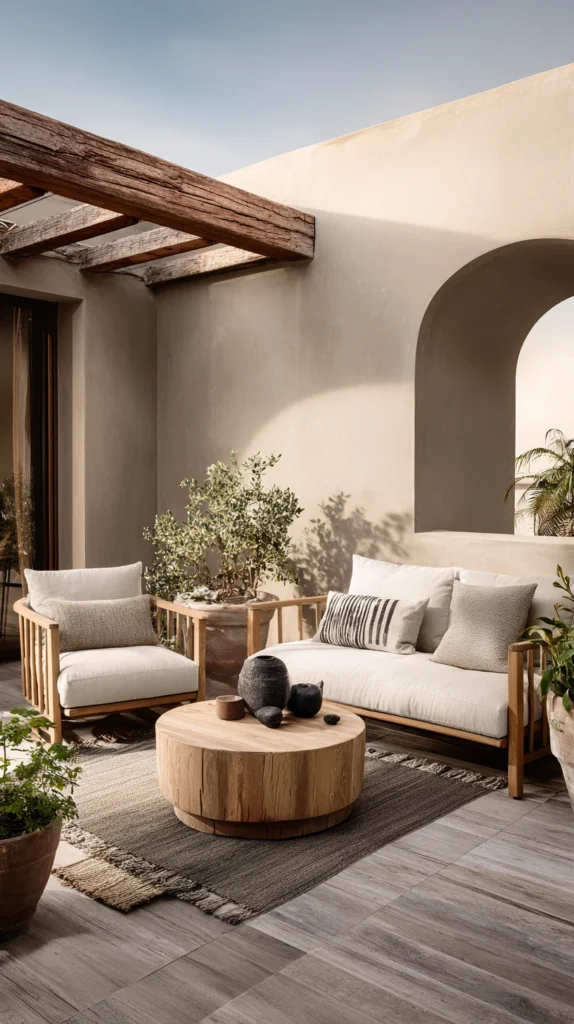
Keeping sightlines open beneath the furniture itself.
Build it:
- Chairs, sofas, and tables chosen specifically for their open leg design, rather than a solid base or a fully skirted upholstered bottom
- Leg material and finish coordinated across pieces, even if the furniture styles themselves vary somewhat
- Positioned so the visible floor beneath each piece remains a genuine part of the patio’s overall visual footprint
Why open-leg furniture makes a small patio feel considerably more spacious than solid-base pieces:
- Visible floor space beneath furniture reads as open, unclaimed area, even though the furniture itself occupies the same physical footprint regardless of its base style
- It reduces the sense of visual bulk each piece carries, since a solid, skirted base reads as a larger, heavier object than the same piece with slender, visible legs
- It’s a technique borrowed directly from small interior room design, where furniture scale and visual weight matter as much as actual physical dimensions
Why this detail matters more on a small patio than it would in a spacious backyard:
In a large yard, furniture with a heavier, more solid base doesn’t meaningfully affect how open or cramped the overall space feels, since there’s ample room regardless. On a small patio, where every visual cue about openness matters considerably more, the choice between visible legs and a solid base can be the difference between a space that reads as airy and one that reads as cluttered, even when the furniture’s actual footprint is identical.
Cost breakdown: No significant cost difference from choosing open-leg furniture versus a solid-base equivalent, since this is primarily a selection criterion rather than an added expense.
4. Add a Multi-Functional Storage Ottoman Instead of a Coffee Table and Extra Seating Separately
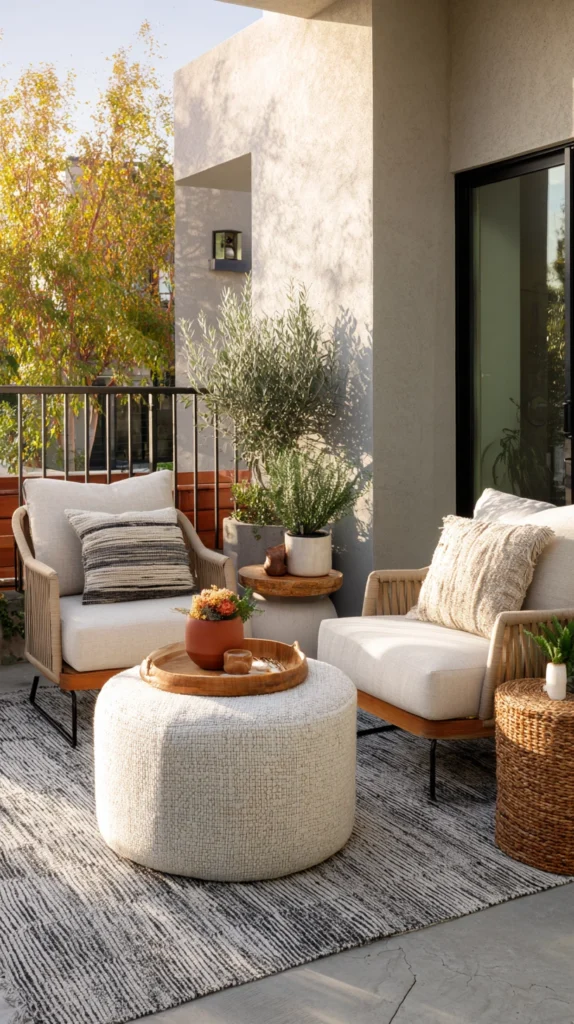
Combining several functions into a single piece to save floor space.
Build it:
- An ottoman with a flat, sturdy top surface suitable for use as a coffee table, combined with hidden interior storage
- Positioned centrally within the seating grouping, doing double duty as both a surface and an occasional extra seat
- Used to store cushions, an outdoor blanket, or other small items that would otherwise need a separate storage solution
Why a multi-functional ottoman solves more than one small-space problem simultaneously:
- It replaces what might otherwise require a separate coffee table and additional seating, consolidating both functions into a single footprint
- Hidden storage addresses a genuine small-patio challenge, since there’s often nowhere else to store cushions or blankets without cluttering the visible space
- It can be easily moved or repositioned as a footrest, extra seat, or surface depending on the moment’s specific need, offering more flexibility than a fixed coffee table
Why choosing genuinely weatherproof materials matters more for this piece than for some other furniture on the patio:
An ottoman with hidden interior storage needs to keep its contents dry, meaning the material choice and construction quality matter even more here than for open furniture pieces that don’t enclose anything. Choosing an ottoman specifically rated for outdoor use, with genuinely weather-resistant fabric and a lid or closure that keeps moisture out of the storage compartment, prevents the frustration of retrieving damp, unusable cushions after a rainy week.
Cost breakdown: A weatherproof storage ottoman runs $60 to $180 depending on size and material quality.
5. Arrange Seating in an L-Shape Along Two Walls Instead of Facing Center
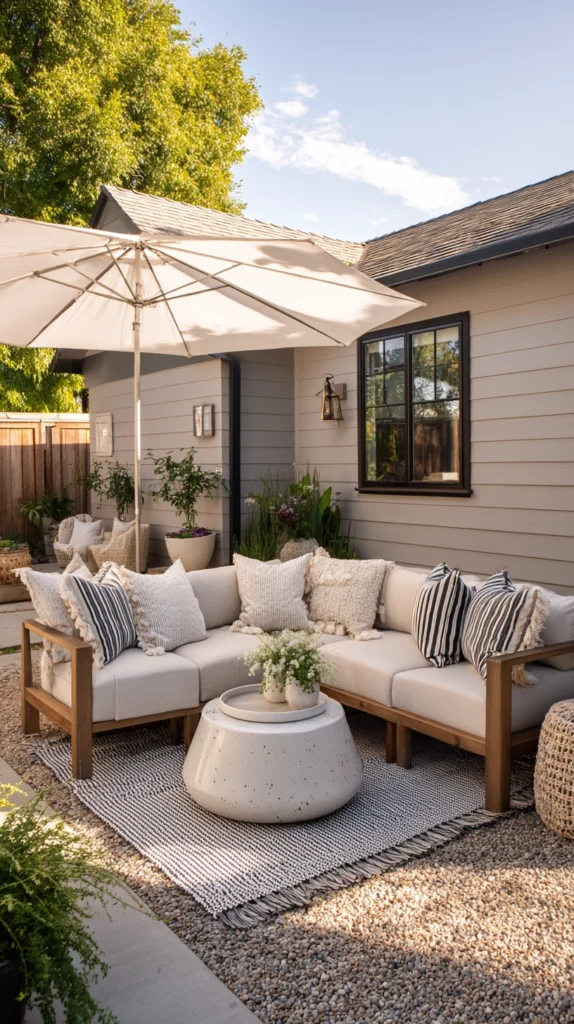
Using the patio’s corners more efficiently than a fully centered furniture grouping.
Build it:
- A loveseat or a couple of chairs positioned along one wall, with a complementary piece positioned along the adjacent wall, forming an L-shape around the patio’s corner
- A small table positioned at the L’s inner corner, within reach of both seating sections
- The remaining open floor space left clear, rather than filled with additional furniture that would crowd the newly created walking area
Why an L-shaped arrangement often uses a small patio’s corners more effectively than a fully centered layout:
- It takes advantage of two walls simultaneously, rather than leaving one wall entirely unused while furniture clusters only in the center
- The resulting open corner or center space remains genuinely usable for walking through or additional activity, rather than being crowded by a furniture arrangement radiating from a single central point
- It naturally encourages conversation between seated guests, since the L-shape angles seating toward each other rather than in parallel rows
Why this arrangement suits a genuinely small, square-shaped patio better than one that’s already long and narrow:
An L-shaped arrangement makes the most sense in a roughly square footprint, where using two adjacent walls captures more of the available perimeter than a single straight arrangement along just one wall would. In a long, narrow patio, a straight arrangement along the longer wall often makes more practical sense, since an L-shape in that specific footprint can end up awkwardly crowding the narrower dimension instead of genuinely improving the space’s usability.
Cost breakdown: No additional cost beyond the furniture itself, since this is a placement strategy applied to existing or newly purchased pieces.
6. Use a Round Table Instead of a Square or Rectangular One
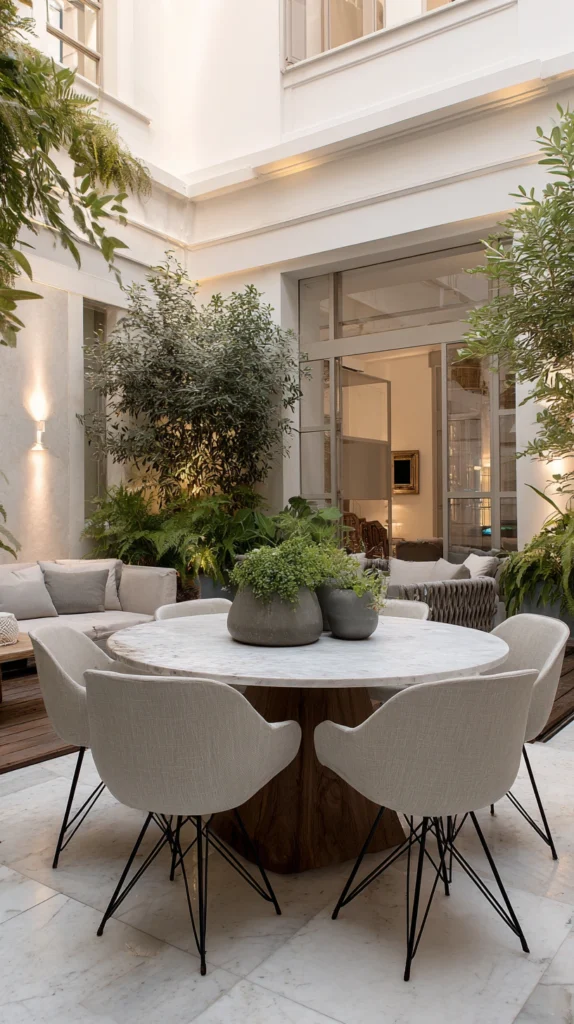
Softening hard corners in a tight footprint where bumping into furniture is a genuine daily concern.
Build it:
- A round dining or side table chosen specifically over a square or rectangular alternative of similar surface area
- Positioned centrally within its designated zone, since a round table’s lack of corners makes it more forgiving of slightly imperfect placement
- Paired with chairs that can be angled flexibly around its curved edge, rather than needing to align with fixed straight sides
Why round tables suit tight patio footprints better than angular alternatives:
- The absence of sharp corners reduces the likelihood of guests bumping into the table while moving through an already tight space
- A round table often allows for slightly closer overall placement to nearby walls or other furniture than a square table of equivalent surface area, since there’s no protruding corner to account for
- It suits an intimate, softer overall feeling that many small patios benefit from, in contrast to the more rigid, structured look angular furniture creates
Why the specific relationship between a round table’s diameter and the available floor space requires its own careful measurement:
A round table with a generous diameter can still end up feeling just as space-consuming as a square table, if the diameter isn’t specifically chosen relative to the patio’s actual available width. Measuring the patio’s narrowest relevant dimension and choosing a table diameter that leaves genuine walking clearance around its full circumference, not just at the widest point of the room, ensures the round shape’s space-saving benefit is actually realized in practice.
Cost breakdown: A round patio table runs $80 to $250 depending on size and material, generally comparable to a similarly sized square or rectangular alternative.
7. Choose Furniture in a Lighter Color Palette
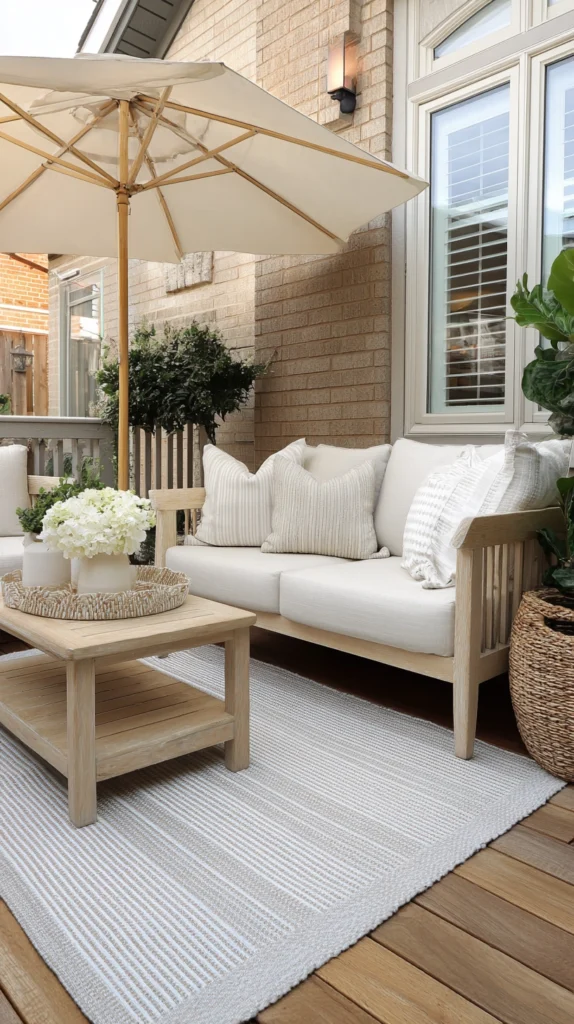
Using color itself as a tool for making a small space feel more open.
Build it:
- Furniture upholstery and frame finishes chosen in lighter tones, like white, cream, or a pale wood, rather than dark, heavy colors
- Cushions and any textiles kept within the same light, cohesive palette rather than introducing a heavily contrasting dark accent
- Reflective or lighter-colored flooring or a light-toned rug added beneath the furniture, reinforcing the overall airy feeling
Why lighter furniture colors genuinely affect how spacious a small patio feels, not just how it looks:
- Dark, heavy furniture colors visually read as larger and more imposing than the same piece in a lighter tone, even when the actual physical dimensions are identical
- Light colors reflect more available natural light back into the space, contributing to a brighter, more open overall atmosphere
- It’s a technique with strong precedent in small interior room design, where light color palettes are consistently recommended specifically for their space-expanding visual effect
Why maintenance considerations matter more with a lighter palette than a darker one in an outdoor setting:
Light-colored outdoor furniture and cushions show dirt, pollen, and general outdoor grime more readily than darker colors would, meaning this choice comes with a genuine tradeoff in how often cleaning is required to keep the furniture looking its best. Choosing genuinely stain-resistant, easily cleanable outdoor fabric specifically for lighter-colored pieces helps offset this maintenance tradeoff, keeping the furniture looking fresh without requiring an unreasonable amount of upkeep.
Cost breakdown: No significant cost difference between light and dark furniture options, since this is primarily a color selection rather than an added expense.
8. Use Vertical Storage or Shelving Instead of Floor-Level Storage Furniture
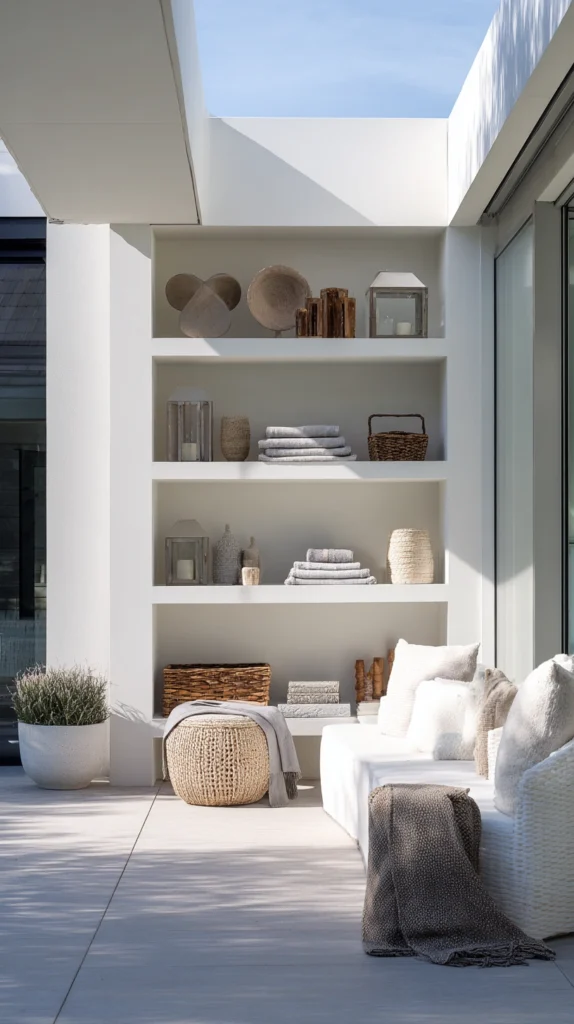
Freeing up floor space by moving storage needs onto the walls.
Build it:
- Wall-mounted shelving or a vertical storage unit installed against one wall, holding items like planters, small decor, or outdoor cushions
- Positioned to avoid interfering with the seating area’s walking clearance, typically along a wall not directly adjacent to the main furniture grouping
- Used specifically for items that would otherwise require a floor-standing storage bench or cabinet, redirecting that need upward instead
Why relocating storage to the walls addresses a genuine competing need on a small patio:
- A small patio often needs both seating and some storage capacity, and floor-standing storage furniture competes directly with seating for the same limited square footage
- Wall-mounted shelving uses vertical space that’s typically unused, resolving this competition without requiring a compromise on either seating or storage capacity
- It keeps storage items visible and accessible without requiring a bulky cabinet or bench that would otherwise crowd the floor
Why choosing shelving rated for outdoor conditions specifically prevents a common and costly mistake:
Shelving intended for indoor use often lacks the weather resistance needed to hold up against direct sun, rain, and temperature swings typical of an outdoor patio environment, leading to warping, rust, or general deterioration considerably faster than an indoor-rated equivalent would experience in the same conditions. Confirming any wall-mounted storage is specifically rated or finished for outdoor use before installation avoids having to replace a failed shelving unit within just a season or two.
Cost breakdown: Wall-mounted outdoor shelving runs $30 to $80 depending on size and material.
9. Test the Arrangement With Painter’s Tape Before Committing to Furniture Placement
Using a low-cost planning technique to avoid a costly rearrangement after the fact.
Build it:
- Painter’s tape laid out on the patio floor in the exact footprint dimensions of each intended furniture piece, based on the actual product measurements
- The full arrangement walked through physically, checking clearance and flow before any furniture is purchased or moved into place
- Adjustments made to the taped layout as needed, testing a few different configurations before settling on a final plan
Why this simple planning step prevents some of the most common and frustrating small-patio furniture mistakes:
- It reveals genuine spatial problems, like inadequate walking clearance or an awkward pinch point, before any furniture purchase or heavy lifting has actually happened
- It allows for testing multiple configurations quickly and at no cost, rather than committing to a single arrangement based on a floor plan sketch or rough estimate alone
- It’s a technique specifically recommended by professional interior designers for exactly this reason, adapted here for outdoor furniture planning on a constrained footprint
Why skipping this step is a more common mistake on a small patio than it would be in a larger space:
In a spacious yard, a slightly miscalculated furniture arrangement rarely creates a genuine problem, since there’s enough surrounding space to simply adjust without much consequence. On a small patio, the same miscalculation can mean the difference between a functional, comfortable space and one where furniture blocks a doorway or leaves no room to actually sit down and get up again, making this simple, free planning step considerably more valuable here than it would be in a more forgiving, larger footprint.
Cost breakdown: Painter’s tape for this planning exercise runs $5 to $10, a genuinely minor cost relative to the furniture mistakes it can help avoid.
Getting started this weekend
You don’t need new furniture before testing whether a different arrangement solves the patio’s current problems.
- Start by taping out your current or intended furniture footprint on the actual patio floor, testing clearance before making any purchase
- Add a multi-functional piece like a storage ottoman once you’ve confirmed the basic layout leaves adequate walking room
- Save a full furniture replacement, like downsizing to a properly scaled bistro set, for once you’ve confirmed layout alone isn’t solving the space constraint
Most small patios that finally feel functional got there by testing the arrangement honestly against the space’s actual dimensions, rather than assuming furniture that looked reasonable in a store or online listing would automatically translate to a tight, real-world footprint.
Budget reality
Small patio furniture arrangement is often more about placement and selection criteria than about the total amount spent.
- Free: Floating furniture away from walls, an L-shaped arrangement, testing the layout with painter’s tape, choosing open-leg over solid-base furniture
- Under $100: Wall-mounted outdoor shelving, painter’s tape planning supplies
- $100-250: A properly scaled bistro set, a multi-functional storage ottoman, a round table sized to the space
- $250+: A full furniture set purchased and arranged around the confirmed layout plan
Most of the improvement comes from genuinely honest measuring and thoughtful placement, not from spending more on furniture itself.
What actually makes small patio furniture arrangement work
It was never really about finding furniture technically small enough to fit.
It’s the grouping floated away from the walls instead of pushed against every edge, the storage ottoman doing the job of two separate pieces, the painter’s tape test that catches a clearance problem before the furniture ever gets carried outside.
Measure honestly against the space you actually have, arrange with the patio’s specific constraints in mind rather than a showroom’s open floor, and a small patio ends up functioning considerably better than its square footage alone would suggest is possible.