Ready, Set, Celebrate: 15 Fourth Birthday Party Ideas for Active Toddlers
There is a specific quality that distinguishes a four-year-old from every other age of child at a birthday party. A four-year-old has opinions, energy, stamina, a competitive instinct that arrives somewhere around the third birthday and intensifies steadily, and an ability to sustain genuine enthusiasm for a well-designed activity for considerably longer than any adult planning the party will have predicted.
They are, in the most generous and accurate sense, a handful — and a party designed for the specific capabilities and the specific energy of a four-year-old is a party that will be talked about for months.
Active toddlers at four need a party that moves. They need something to do with their bodies, something to do with their imaginations, something to eat that will sustain the energy expenditure of being genuinely, fully, entirely present on the best afternoon of the year so far.
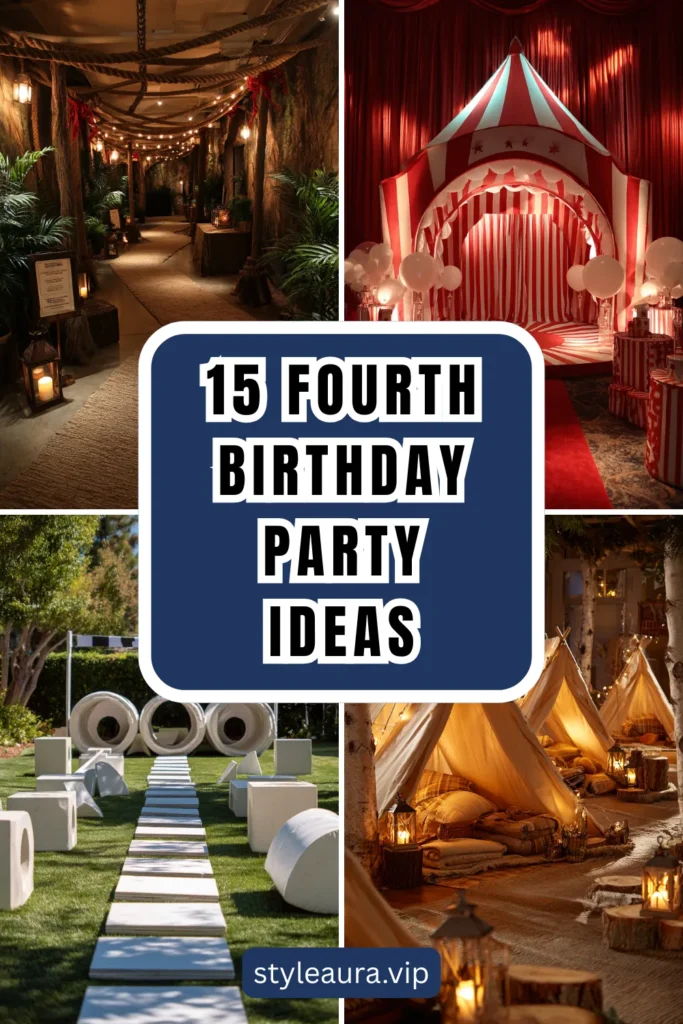
The ideas below are built around the understanding that a four-year-old’s most natural state is in motion, and that the best party for an active toddler is one that gives that motion a direction, a purpose, and a reason to keep going.
The fifteen ideas below cover themes, activities, food, and finishing details for an active fourth birthday party that every child in the room will remember.
1. The Outdoor Obstacle Course Party
Budget: $40 – $200
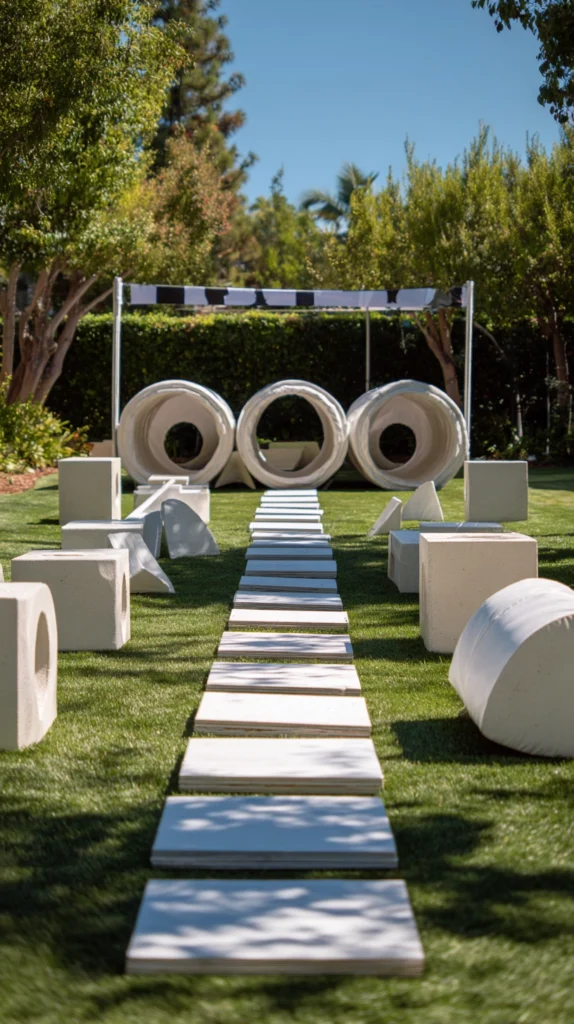
An outdoor obstacle course — a sequence of physical challenges set up in the garden or a park, designed for four-year-old bodies and four-year-old attention spans — is the active fourth birthday party’s most direct and most reliably successful central activity. It gives every child a body-centred purpose, channels the particular energy of a room full of four-year-olds into something structured, and produces the breathless, triumphant quality that only genuine physical effort achieves.
A tunnel to crawl through — $15 – $30 for an inflatable version. Balance beams made from lengths of tape on the ground — free. A target throwing station with beanbags and a hoop — $8 – $20 in materials. A stepping stone sequence of flat cushions — $5 – $15. A finish line ribbon to break through — $2 – $5. Total obstacle course investment: $30 – $70 for a central activity that runs for forty-five minutes and exhausts children in the most productive possible way.
Party tip: Time each child individually through the course with a stopwatch and announce every completion time with equal enthusiasm regardless of the duration. A four-year-old who completes the course in ninety seconds receives the same applause and the same announcement as a four-year-old who completes it in forty-five seconds. The timing creates the occasion. The applause creates the memory. Neither requires the competitive element of a declared winner to produce genuine excitement.
2. The Sports Day Party
Budget: $50 – $250
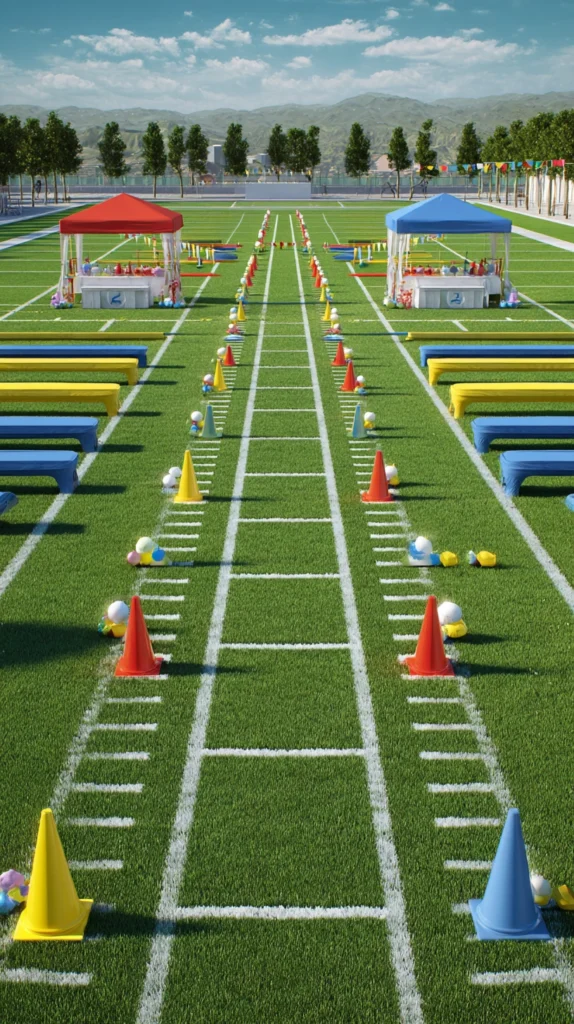
A sports day party — a series of classic outdoor games run as a mini athletics event, with every child competing in every event and every child receiving a medal at the end — is the active fourth birthday’s most socially complete and most energetically generous format. It accommodates the competitive instinct of some four-year-olds and the participation-focused pleasure of others simultaneously, because every event produces both a winner and a finisher and treats both with respect.
Egg and spoon races — spoons and plastic eggs — $5 – $15. Sack races — hessian or fabric sacks — $2 – $5 each. Three-legged race — lengths of soft fabric to tie legs together — $3 – $8. Flat race on a marked track — free. Medals for every participant — $1 – $3 each — presented at the end of the programme. Total sports day investment: $30 – $80 for a party format that occupies twelve children for a full hour of active, structured competition.
Party tip: Appoint the birthday child as the official starter for every race — giving them the flag or the whistle and the responsibility of saying “ready, steady, go” rather than competing in the race itself. A four-year-old who starts every race has a specific role of genuine authority throughout the sports day that produces a quality of pride and engaged participation that winning individual races does not approach.
3. The Superhero Training Party
Budget: $60 – $300
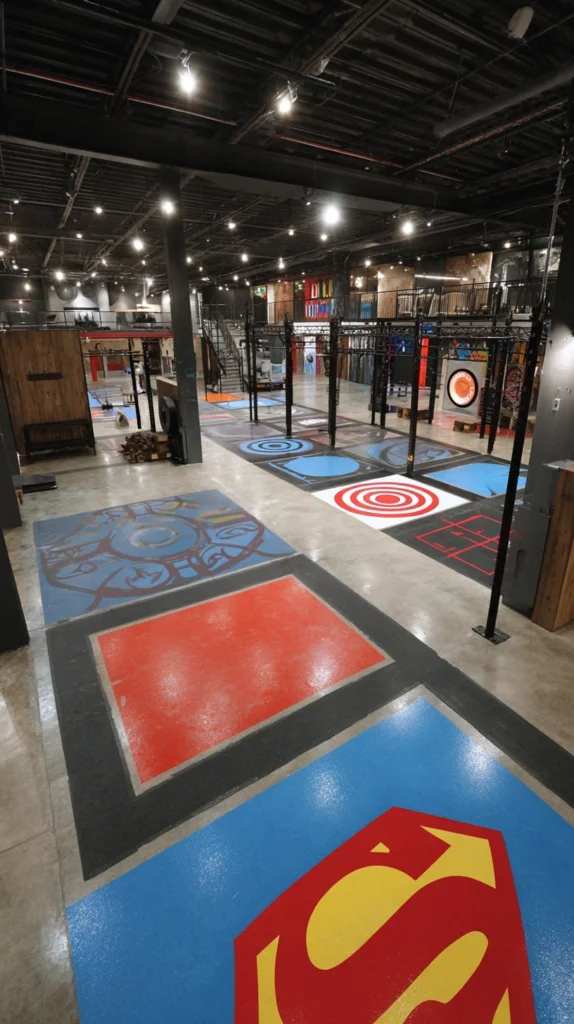
A superhero training academy — where every child arrives as a trainee, completes a physically demanding training circuit, and graduates as an officially certified superhero — is the active fourth birthday party that most efficiently combines physical movement, imaginative play, and the particular pleasure of collective narrative. Every element of the party exists within the same story, and the story never breaks.
A training circuit of five to six physical stations — target practice, strength lifting, speed running, balance walking, and stealth crawling — costs $30 – $60 in materials. A cape and mask for every child — $3 – $6 each. Graduation certificates with each child’s chosen superhero name — $3 – $8 for a printed set. A villain — a large cardboard cutout — to defeat at the end of the circuit as the collective graduation challenge.
Party tip: Ask every child their superhero name at arrival and use only that name for the duration of the party. A four-year-old addressed as Thunderbolt or Captain Fierce or whatever name they have chosen for themselves inhabits the party’s world at a level of engagement that no activity or decoration produces on its own. The name costs nothing and changes the quality of the child’s experience of every subsequent party element.
4. The Mini Olympics Party
Budget: $50 – $250
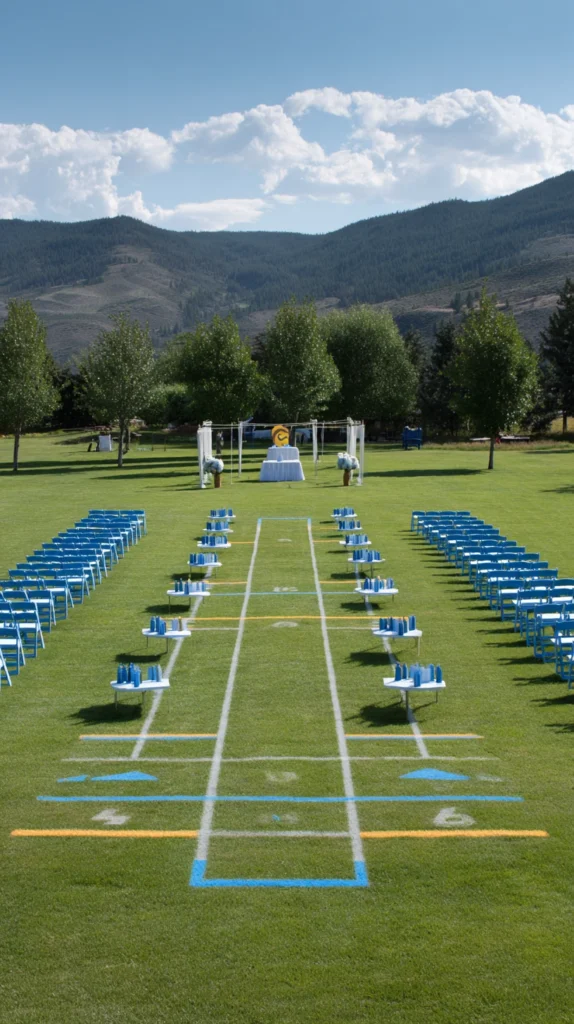
A mini Olympics — individual sports stations set up around the outdoor space, each representing a different “Olympic event,” with every child earning points at each station and a podium ceremony at the end — is the active fourth birthday party’s most internationally themed and most ambitiously structured format. It suits the competitive four-year-old and the participatory one equally, because the points are awarded for completion as much as for performance.
A long jump station — a tape measure and a marked jumping line — free. A javelin throw — foam pool noodles as javelins — $3 – $8 each. A discus station — paper plates as discuses — $2 – $5 for a pack. A sprint track — marked with tape — free. Olympic medals — $1 – $3 each. An Olympic torch made from a cardboard tube and orange tissue paper — $3 – $8 in materials. Total mini Olympics investment: $30 – $80 for a party that runs with the energy and the ceremony of the genuine event at a four-year-old scale.
Party tip: Open the mini Olympics with a torch ceremony — the birthday child carries the torch to a designated lighting point and “lights” the Olympic flame (a battery-powered lantern turned on at the moment the torch touches it) before the first event begins. A four-year-old who lights the Olympic flame at their own party has experienced a moment of specific ceremony and specific importance that a standard party opening cannot produce.
5. The Jungle Explorer Party
Budget: $60 – $300
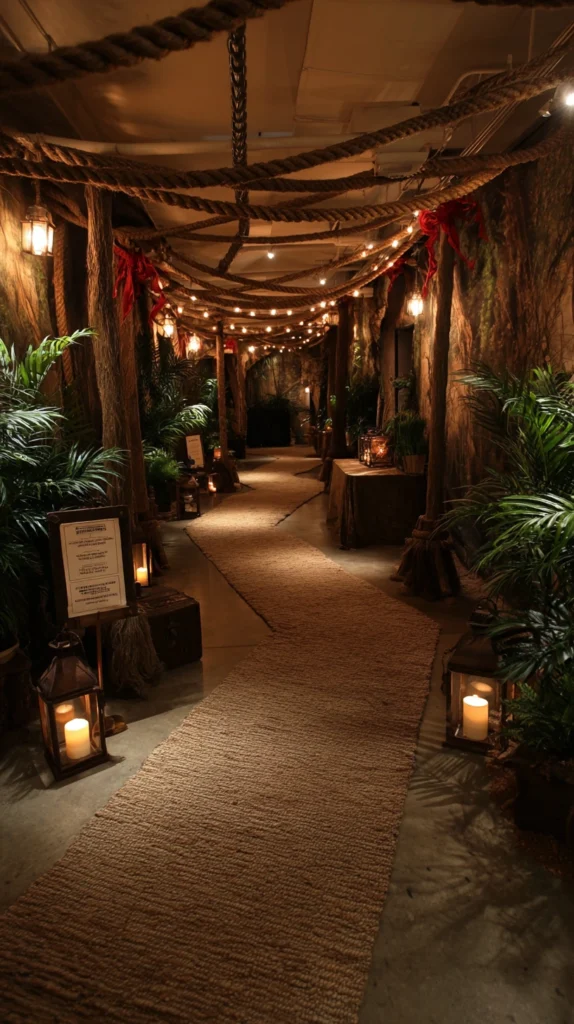
A jungle explorer party — khaki and green palette, explorer kits for every child, a trail through the party space following clues, and a collective discovery of the party’s treasure at the end — is the active fourth birthday’s most narrative-rich and most physically mobile format. Children move through the party space on a genuine mission, which is both the party’s primary activity and its primary decorating principle simultaneously.
Explorer kits — a small binocular, an animal spotting guide, and a khaki bag — $5 – $12 per child. Clue cards hidden throughout the party space — printed at home for $3 – $8. Large tropical leaf decorations defining the jungle zones — $10 – $30. A treasure chest of party bag contents discovered at the trail’s end — $20 – $60 in small prizes. Total explorer party investment: $58 – $140 for a party where the activity is the journey rather than a destination.
Party tip: Make the clue trail genuinely physical — each clue requiring a physical action before the next clue is revealed. Crawl under the table to find the next clue. Jump ten times to unlock the next location. Balance on one leg while the clue is read aloud. The physical requirements between clues maintain the party’s active energy and prevent the trail from becoming a reading exercise rather than an adventure.
6. The Water Play Party
Budget: $40 – $200
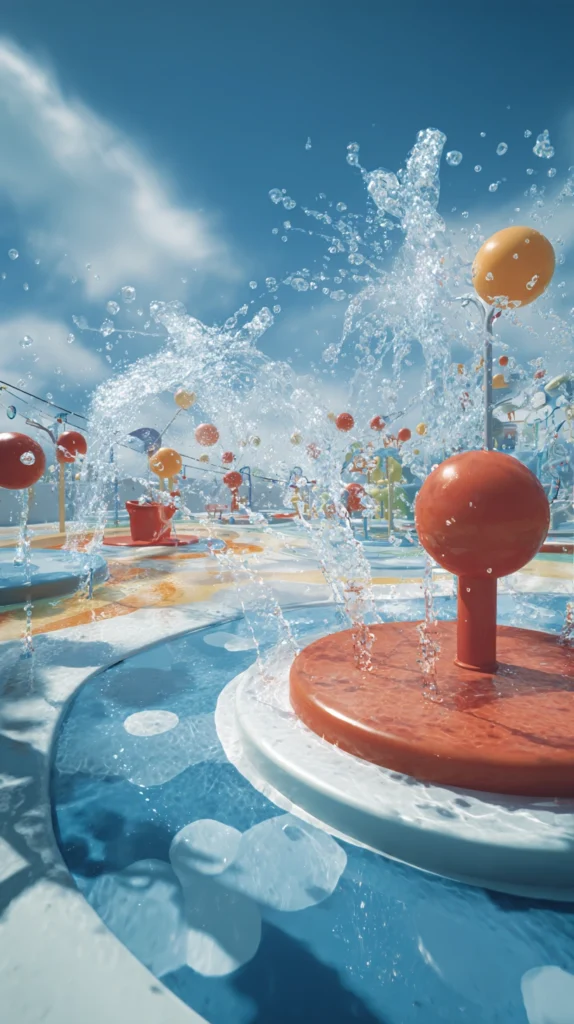
A water play party — water pistols, a paddling pool, water balloon games, and a sprinkler run — is the active fourth birthday’s most specifically summer format and the one with the highest satisfaction-to-cost ratio of any party on this list. Four-year-olds in water are among the most genuinely happy creatures in the domestic world, and a party that gives them structured permission to be wet for two hours produces a quality of collective joy that any amount of indoor decoration cannot approach.
A paddling pool — $15 – $40. Water pistols for every child — $2 – $5 each. Water balloons — $5 – $10 for a fill kit of one hundred. A sprinkler connected to the garden hose — $10 – $25. A water bucket relay race — standard buckets from a hardware store — $3 – $8 each. Dry towels and a change of clothes requested in the invitation for every child.
Party tip: Send the water play party invitation with specific preparation instructions — swimwear, a towel, and a change of clothes — stated clearly rather than implied. Parents who arrive at a water party without a change of clothes for their child are parents who leave early, which shortens the party’s active window and creates a logistics problem in the final thirty minutes that a single line of invitation text prevents entirely.
7. The Dance Party
Budget: $30 – $150
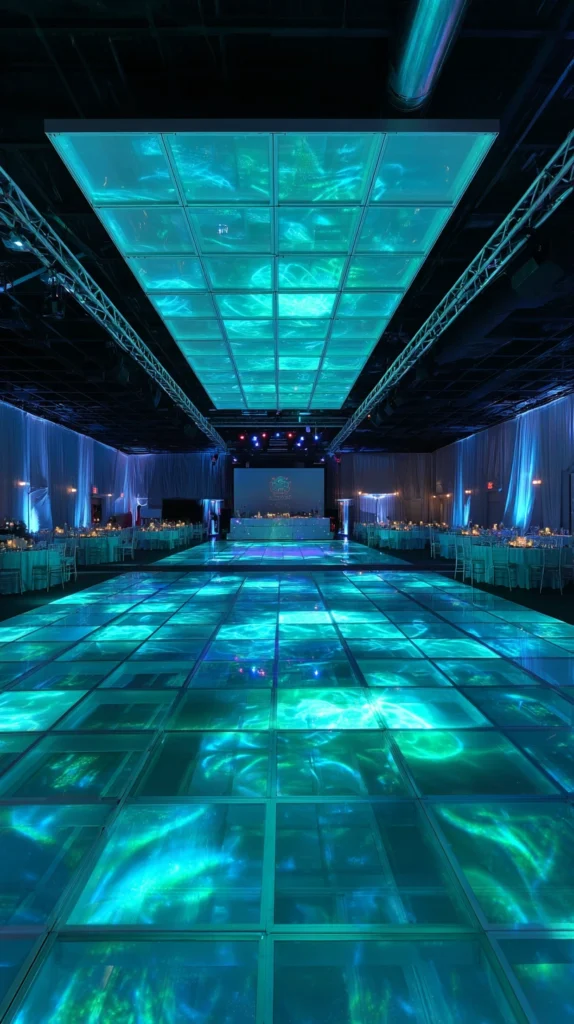
A dance party — a cleared space, a playlist built entirely from four-year-old favourites, structured dance games alternating with free dancing, and a disco light or a bubble machine to establish the atmosphere — is the active fourth birthday party’s indoor equivalent of the outdoor obstacle course. It requires almost no setup, almost no budget, and produces a level of physical activity and genuine musical joy that a room of four-year-olds sustains with remarkable consistency.
A bluetooth speaker — $20 – $50 if not already owned. A disco ball or LED party light — $10 – $30. A bubble machine to run during the free dance sections — $15 – $30. Dance game props — scarves for ribbon dancing, pompoms for a cheer routine — $5 – $15 in materials. Total dance party investment: $50 – $125 for a party that requires one room, one speaker, and a willingness to dance alongside the children.
Party tip: Include at least three structured dance games — freeze dance, musical statues, and a follow-the-leader dance chain with the birthday child at the front — within the free dance programme rather than running an unstructured two-hour disco. Structured games provide the rhythm and the shared purpose that a group of four-year-olds needs to sustain engagement. Free dancing alone loses the group’s collective energy within twenty minutes.
8. The Treasure Hunt Party
Budget: $40 – $200
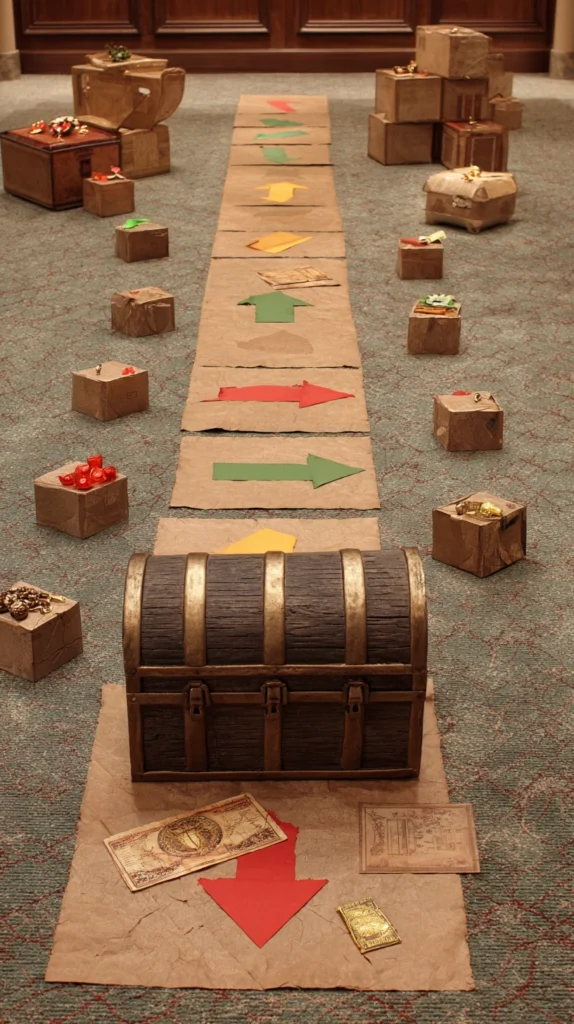
A treasure hunt party — where the entire party is structured around finding the treasure through a sequence of clues, physical challenges at each clue location, and a collective final discovery — gives the active fourth birthday its most narrative-coherent and most physically mobile format. Every child is active for the full duration of the hunt, and the collective nature of the search produces a social cohesion that individual competitive games do not generate.
Clue cards — printed and laminated at home — $5 – $15. A treasure chest — a cardboard box decorated with gold paint — $5 – $15 in materials. Treasure contents — gold coin chocolates, small toys, and party favours — $20 – $50. Physical challenges at each clue location — free to design and run. A treasure map given to each child at arrival — $3 – $8 for a printed set.
Party tip: Position the physical challenge at each clue location so that it relates thematically to the treasure’s story — a bridge balance to cross the moat, a dragon (hula hoop jump) to defeat, a mountain (cushion pile to climb) to summit. Challenges that exist within the narrative of the hunt produce a more absorbed and more sustained engagement than challenges that are physical exercises imposed on a story they do not belong to.
9. The Circus Party
Budget: $60 – $300
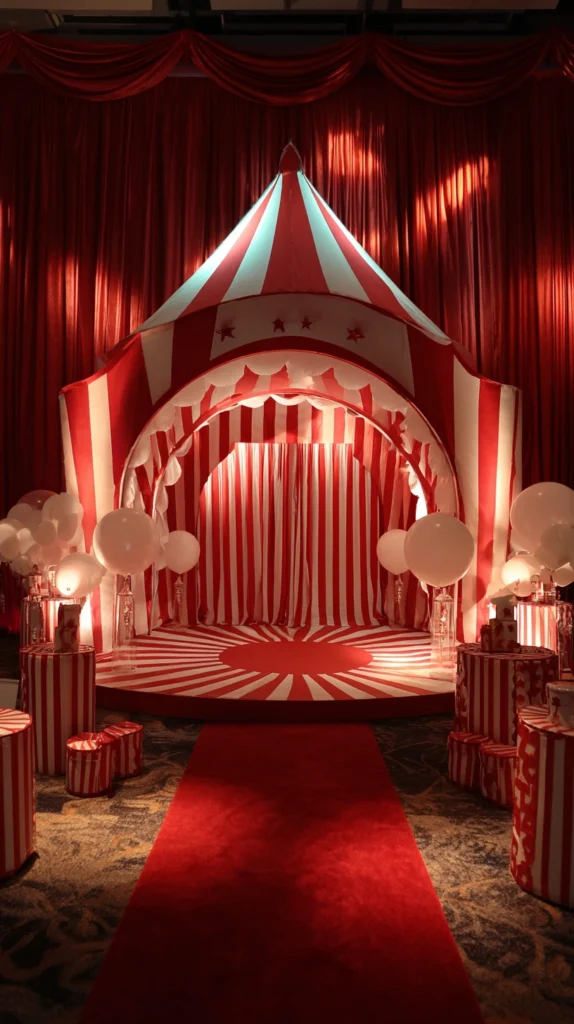
A circus party — with circus skills stations, a ringmaster birthday child, and the collective performance of a mini circus show at the end — gives the active fourth birthday its most performative and most skillfully structured format. Four-year-olds attempting circus skills — plate spinning with paper plates on pencils, juggling with scarves, tight-rope walking along a floor tape — produce the particular combination of effort, laughter, and genuine achievement that the best party activities generate.
Circus skill props — juggling scarves, hula hoops, and spinning plates — $15 – $40 in a basic kit. A ringmaster hat for the birthday child — $5 – $15. A circus tent entrance arch made from red and white balloons — $20 – $50 in balloon materials. A small “show” programme printed at home — $3 – $8 for a full set. A final circus show where every child performs their chosen skill for the assembled parents — free to run and genuinely wonderful to watch.
Party tip: Run the circus skills stations for thirty to forty minutes and then dedicate the final fifteen minutes to the circus show — in which every child performs their chosen skill for one minute while the audience (parents and non-performing children) applauds. A four-year-old who performs at their own birthday party circus — however chaotically — experiences a quality of pride and public celebration that the most beautifully designed passive party cannot produce.
10. The Ninja Training Party
Budget: $50 – $250
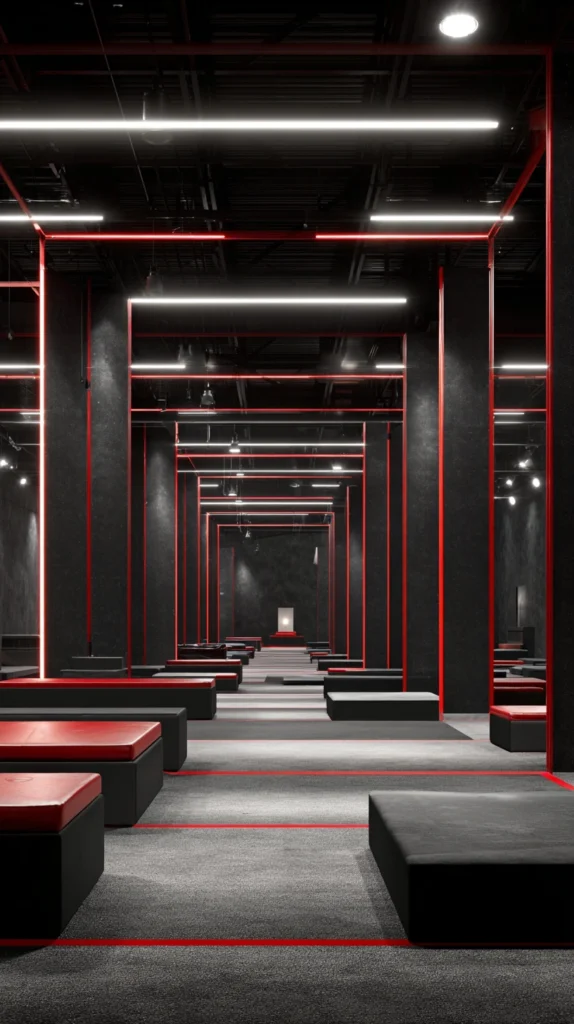
A ninja training party — black and red palette, training dojo setup, stealth challenges, and a black belt ceremony at the end — is the active fourth birthday party for the child who runs with the particular focused intensity of someone who has a mission. Ninja training gives that intensity a framework, a vocabulary, and a ceremony that four-year-olds embrace with the seriousness the theme deserves.
Black and red balloons — $15 – $35. A training dojo marked with black tape on the floor — free. Ninja challenges — balance beam, stealth crawl, target break (cardboard rectangles to karate chop) — $10 – $25 in materials. Black bandanas for every child — $2 – $4 each. Black belt certificates awarded at the ceremony — $3 – $8 for a printed set.
Party tip: Teach every child one specific ninja move at the beginning of the party — a specific hand gesture, a specific stance, a specific quiet “ninja breath” — and require its use at designated moments throughout the afternoon. A party where every child knows and uses the same specific ritual movement has a collective physical vocabulary that produces a genuine sense of team identity and shared purpose within the first fifteen minutes.
11. The Camping Adventure Party
Budget: $50 – $250
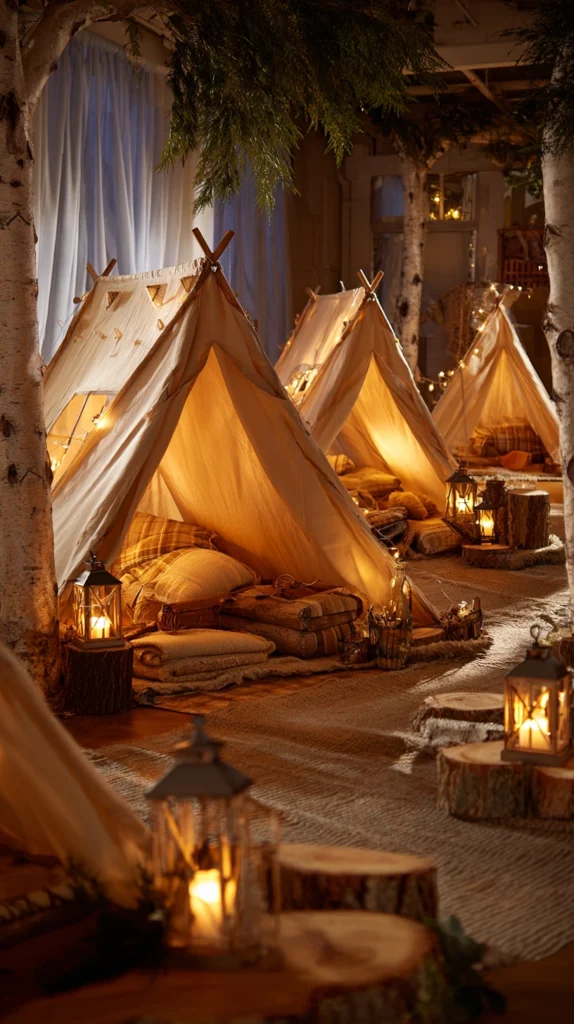
An indoor or outdoor camping adventure party — tents set up in the garden or the living room, a campfire of battery-powered lanterns and arranged logs, s’mores over a real or simulated fire, and active outdoor games between campfire sessions — is the active fourth birthday party that most effectively combines physical activity with the cosy, atmospheric quality of a genuine adventure.
Small pop-up tents — $15 – $40 each. A campfire arrangement of logs with battery-powered lanterns — $10 – $30 in materials. S’mores ingredients — marshmallows, chocolate, and digestive biscuits — $8 – $15 for a party quantity. Outdoor games — a stick relay, a nature scavenger hunt, a stargazing activity — $5 – $15 in materials. Bug hunting kits for every child — a small pot and a magnifier — $2 – $5 each.
Party tip: Begin the camping party with a brief “ranger training” session — teaching every child three simple outdoor skills: how to identify a bird call, how to make a nature rubbing with paper and a crayon, and how to read a simple compass. A child who has been given genuine outdoor skills at a camping party has experienced something more lasting than a themed activity. The skills cost nothing to teach and produce the particular pride of knowing how to do something real.
12. The Bounce and Play Party
Budget: $100 – $500
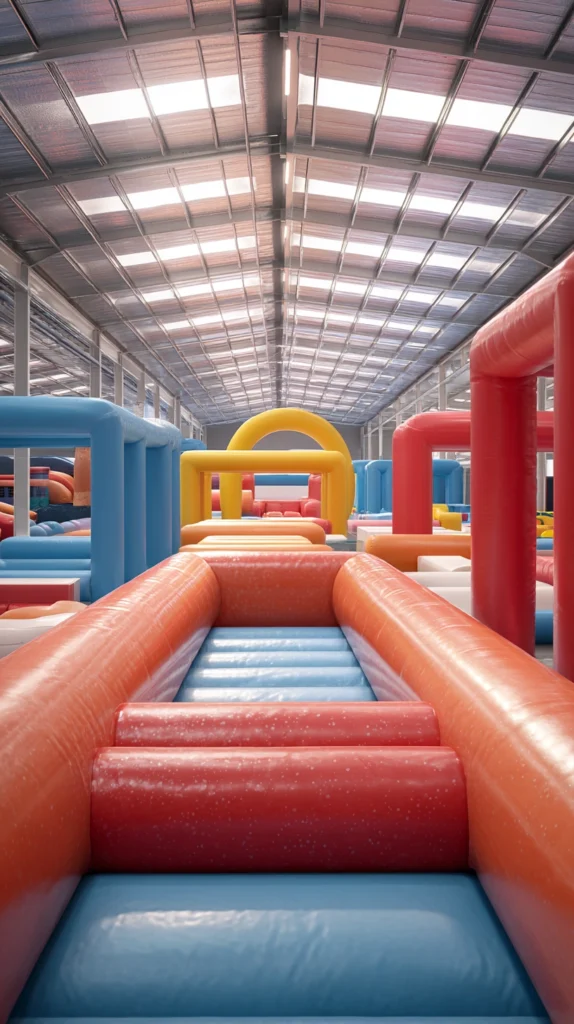
A bounce and play party — held at a trampoline park, an indoor soft play centre, or a home garden with a hired bouncy castle — is the active fourth birthday party at its most directly physical and its most straightforwardly joyful. Four-year-olds on a bouncy castle or a trampoline are four-year-olds in their natural state of being, and the unstructured physical freedom of a bounce session produces a quality of happiness that structured activities can supplement but not replace.
A hired bouncy castle for a garden party — $100 – $300 for a half-day hire. Entry to a trampoline park — $8 – $15 per child. A private room at an indoor soft play centre — $100 – $400 for a party package. The food, the cake, and the decorations remain the host’s responsibility in most venue hire situations, adding $50 – $150 to the total party cost.
Party tip: If using a home bouncy castle, designate a specific adult as the castle supervisor for the full duration of the party — responsible only for managing the number of children on the castle simultaneously and ensuring that the activity remains safe throughout. A bouncy castle without a dedicated supervisor requires the host to divide attention between the activity and every other aspect of the party, which produces a quality of supervision that the physical activity requires and the party cannot provide without the specific role.
13. The Science Experiment Party

Budget: $40 – $200
A science experiment party — where every child is a junior scientist completing a series of supervised experiments — is the active fourth birthday party’s most intellectually engaged and most physically interactive format. Four-year-olds mixing, pouring, combining, and observing the results are four-year-olds at peak engagement — their hands busy, their attention focused, and their responses to the results entirely genuine and entirely un-self-conscious.
Baking soda and vinegar volcanoes in themed colours — $5 – $10 in materials. Slime making with PVA glue and contact lens solution — $10 – $20 for a party quantity. Non-Newtonian fluid — cornstarch and water — $5 – $10. Lab coats — white adult shirts worn backwards — free if already owned. Safety goggles — $2 – $4 each. Printed experiment cards for every station — $3 – $8 for a full set.
Party tip: Name every experiment in the language of the party’s theme rather than in its scientific description. The baking soda volcano is “The Birthday Eruption.” The slime is “Professor [Birthday Child’s Name]’s Secret Formula.” The non-Newtonian fluid is “The Mystery Matter.” A named experiment within a narrative is a story the child is participating in. An unnamed experiment in a bowl is a sensory activity. The naming costs nothing and doubles the engagement.
14. The Rainbow Sports Party
Budget: $50 – $250
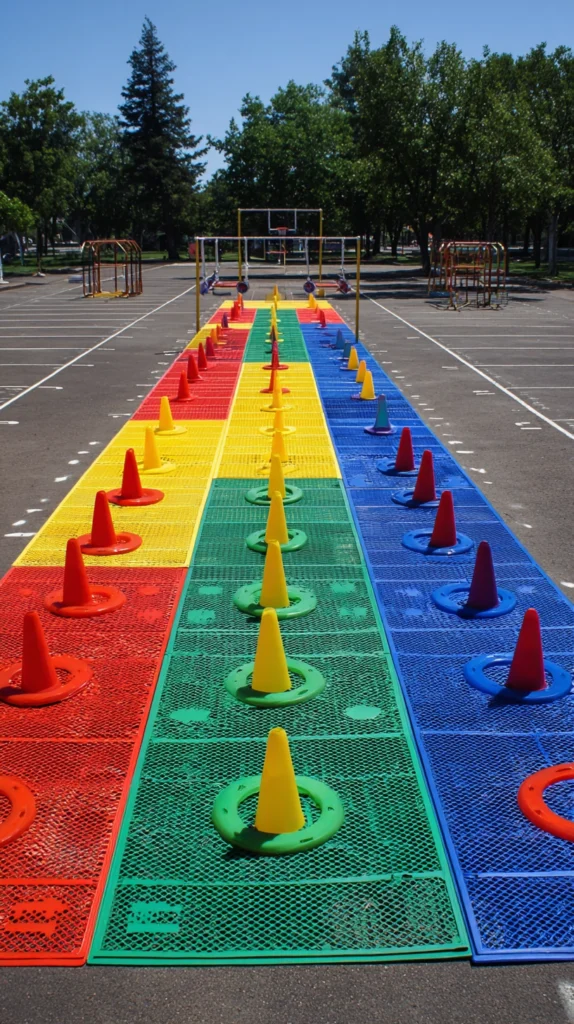
A rainbow sports party — every game and every activity in a different colour of the rainbow, with every child assigned a colour team, and the final colour revealed as the birthday cake’s hidden interior — is the active fourth birthday’s most visually spectacular and most structurally clever format. The rainbow provides the colour palette, the team structure, the food organisation, and the cake’s surprise moment in a single creative decision.
Rainbow balloon bunting — $15 – $40. Coloured bibs or sashes for each team — $2 – $5 each. Coloured sports equipment in each team’s colour — coloured beanbags, coloured hoops, coloured cones — $15 – $40 in materials. A rainbow cake with a hidden interior in the birthday child’s favourite colour — $50 – $150 from a cake maker. Coloured water in each team’s colour for the water relay — free with food colouring.
Party tip: Reveal the birthday cake’s hidden interior colour as the party’s final surprise — cutting the cake with every child watching and the reveal of the colour inside corresponding to the birthday child’s team colour from the sports programme. A four-year-old who has been competing for their colour all afternoon and then discovers that the birthday cake is their colour inside experiences a moment of narrative completion that is specific to this party format and genuinely delightful.
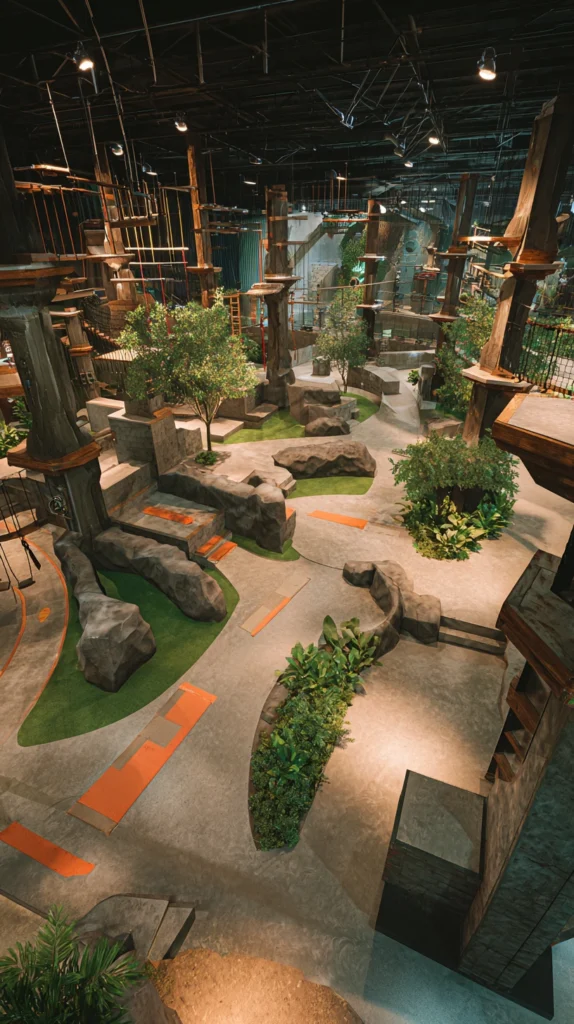
15. The Adventure Course Grand Finale Party
Budget: $80 – $400
A party built around a grand finale adventure course — every earlier activity serving as training for a final combined obstacle course that incorporates elements from every other party game into a single concluding challenge — gives the active fourth birthday its most structurally complete and most energetically satisfying format. The children spend the first hour learning skills and the second hour deploying them. The party has an arc. The arc has an ending. The ending is magnificent.
All earlier activity materials repurposed into the final course — no additional investment required beyond the individual activity budgets. A finish line ribbon for the birthday child to break — $2 – $5. A trophy or a medal for every child completing the final course — $2 – $5 each. An announcement of the course — “You have been training all afternoon for this moment” — made by the host with the gravity the occasion deserves.
Party tip: Run the birthday child through the final course last — after every other child has completed it — so that the birthday child’s run is the event’s finale rather than one of many. Every child who has completed the course becomes an audience for the birthday child’s final run, cheering from the finish line. The birthday child running the course to the cheers of every friend they have invited to their party is the fourth birthday’s most complete and most genuinely celebratory ending.
Whatever combination of these fifteen ideas makes it into the final party plan, the principle beneath all of them is the same one that makes any fourth birthday party genuinely successful: give the active toddler something genuinely active to do, give the activity a narrative that makes it matter, and give the birthday child a role within that narrative that is specific, central, and unmistakably theirs.
A party where a four-year-old has run, jumped, crawled, thrown, balanced, discovered, and performed — and where every one of those actions happened within a story that was built specifically around them — is a party that uses the full capability of a four-year-old body and a four-year-old imagination simultaneously.
That is what four deserves. Plan it with energy. Run it with commitment. And then watch a four-year-old use every bit of their considerable capability on the afternoon that was designed to contain it.