14 Backyard Graduation Party Ideas on a Budget
There is a particular quality to a party that was made rather than hired. The bunting that was cut and strung the night before, the food that was prepared in the kitchen that morning, the photographs arranged on a table in frames from the charity shop — these things communicate something that a venue with a package cannot. They say that the person being celebrated is known and loved specifically, not generically, and that the occasion was prepared for rather than contracted out.

A backyard graduation party on a budget is not a lesser version of a catered event. Done well it is a better one — more personal, more relaxed, more genuinely the kind of afternoon or evening that the graduate and their guests will actually remember. The investment required is time and thought rather than money, and both produce returns that money alone consistently fails to.
Each idea below includes what you will need, what it will cost, and a practical tip to make the whole thing work as well as the occasion deserves.
1. The Photo Timeline Display
Budget: $15 – $60
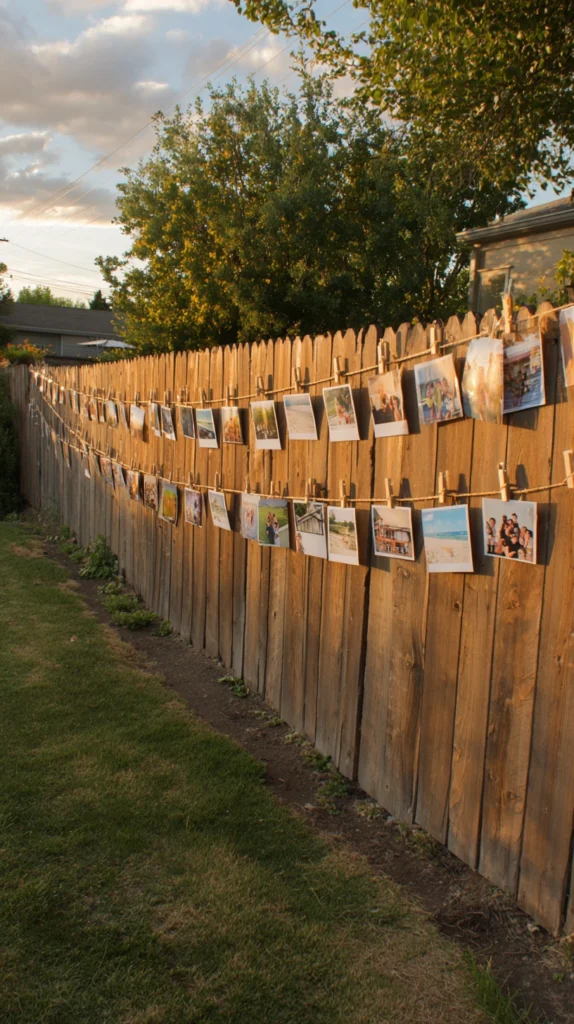
String a washing line or a length of jute twine between two fence posts, two trees, or a post and a wall, and clip photographs along it in chronological order — from the earliest available childhood photo to the most recent graduation portrait. The timeline display is the most personal decoration available to a graduation party and the one guests engage with longest, standing along the line and finding themselves in the photographs or asking about the ones they are not in.
Printed photographs cost $0.10–$0.30 each at a pharmacy or print kiosk. Wooden pegs cost $3–$8 for a pack. Jute twine runs $3–$6 per reel. Print in a consistent size — all 6 by 4 inches or all 5 by 5 inches — rather than mixing sizes along the line. A consistent size produces a gallery; a mixed size produces a notice board.
Style tip: Add a small label beneath each photograph with the year and a brief caption — “age 4, first day of school” or “year 10 sports day” — written on a luggage tag or a piece of card stock. The captions transform the timeline from a display into a story, and a display that tells a story is one that guests return to rather than passing once and moving on.
2. The DIY Graduation Balloon Arch
Budget: $20 – $60
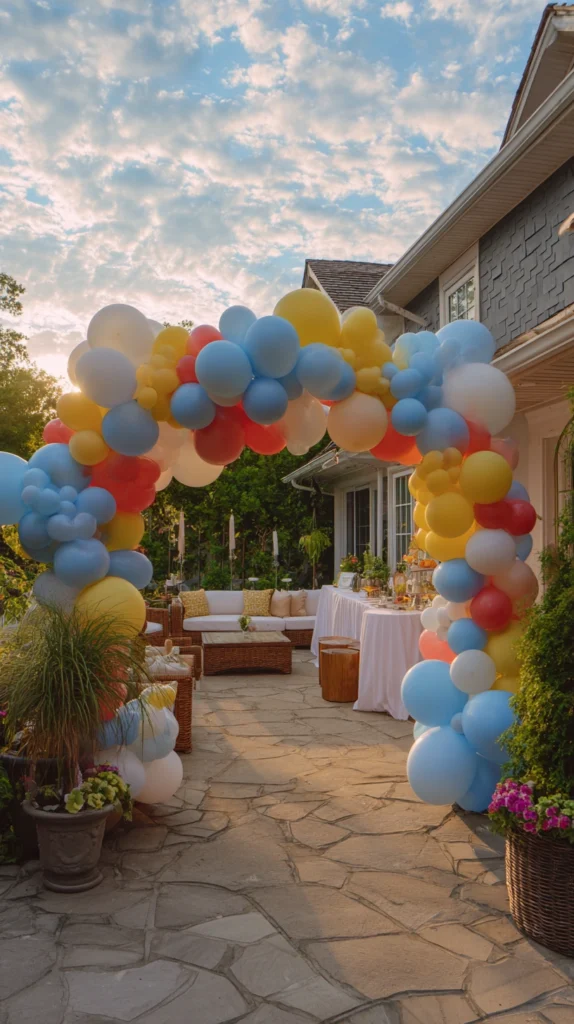
A balloon arch in the graduate’s school or university colours — positioned above the main entrance to the party, behind the food table, or framing the photo area — creates an immediate visual statement that communicates celebration more legibly than any other single decoration. A well-executed balloon arch looks considerably more expensive than it costs and produces the photographs that guests share.
A balloon arch strip kit costs $8–$15. Balloons in two coordinating colours run $5–$12 per bag of 100. A balloon pump ($5–$10) makes inflation practical. Fill the arch densely rather than loosely — a dense arch reads as intentional and professional; a loosely filled one reads as incomplete. Build on the arch strip, alternating colours in a consistent pattern, and fix to a fixed point on each side with clear adhesive hooks ($3–$8).
Style tip: Add one accent colour in a smaller proportion alongside the two main colours — two-thirds of the dominant colour, one-third of the secondary, and a handful of the accent distributed throughout. The three-colour combination has more visual interest than two and the small proportion of accent colour reads as considered rather than random.
3. The Graduation Colours Table Setting
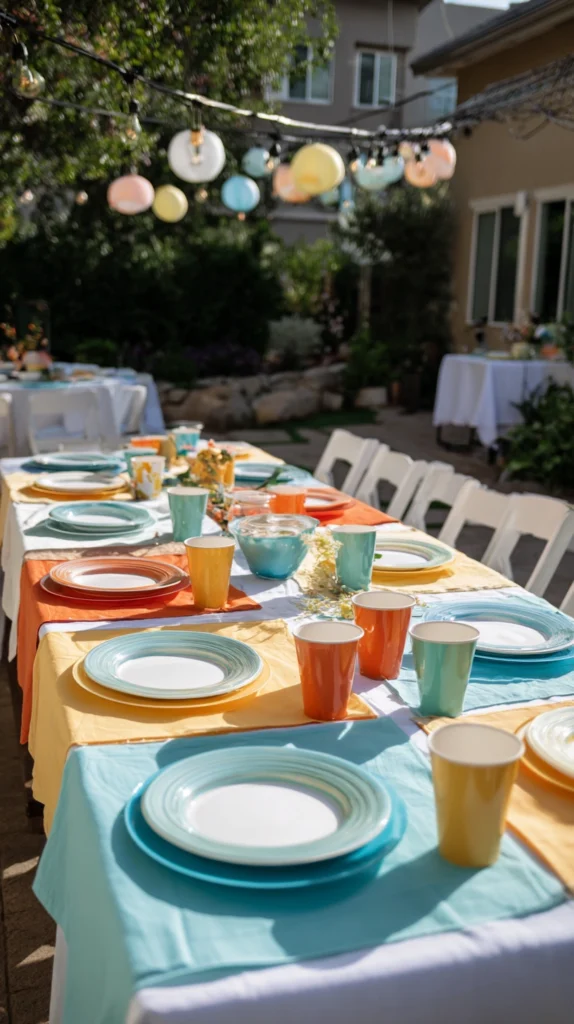
Budget: $20 – $80
Set the main food or dining table in the graduate’s school or university colours — tablecloth, napkins, cups, and plates all coordinated — and the outdoor table becomes a deliberate celebration rather than a spread of food on a surface. The coordinated setting costs almost nothing if the colours are common enough to find in standard party supply ranges and produces a result that reads as thought-about from across the garden.
A paper tablecloth in the primary colour costs $3–$8. Paper plates and napkins in matching or complementary tones run $4–$10 per pack. Solid-colour cups cost $3–$8 per pack. Add one fresh element to the table — a small vase of flowers in the accent colour, a potted plant in a matching pot — to give the setting a living quality that paper and plastic alone never quite achieve.
Style tip: Use one cloth tablecloth in the dominant colour rather than a paper one, even if everything else is disposable. A cloth tablecloth beneath paper plates and disposable cups elevates the overall impression of the table setting disproportionately to its cost — it reads as a table that was dressed rather than covered, which is the distinction that makes a paper-plate party feel considered rather than casual.
4. The Garden Games Zone
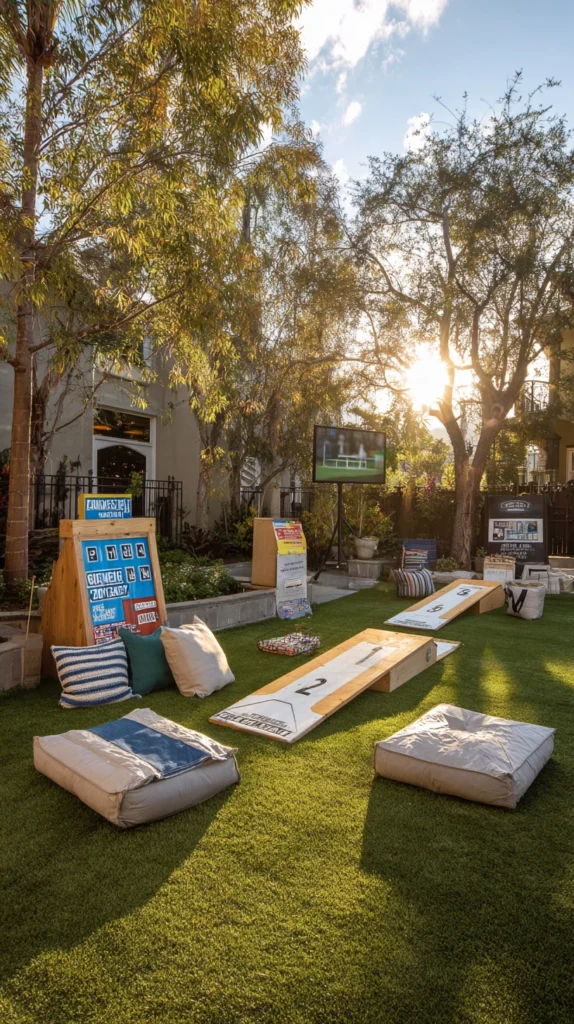
Budget: $20 – $100
A designated games zone in one section of the backyard — with giant Jenga, a bean bag toss, a ring toss, or a badminton net — gives the graduation party an activity that bridges the gap between guests who know each other well and those who are meeting for the first time. Games make strangers into players, which is a social category that comes with less pressure than stranger, and a games zone that is set up and ready before guests arrive is used far more consistently than one assembled on request.
Giant Jenga costs $15–$40 to build from a length of 90 by 90 millimetre timber cut into 54 equal pieces. A bean bag toss board costs $15–$30 to build from plywood. A badminton set runs $15–$35. Set the games zone at the far end of the garden from the food table — it distributes guests across the outdoor space, prevents crowding around the food, and gives people a reason to walk through the garden and discover its different areas.
Style tip: Keep a small scoreboard near the games zone — a chalk slate or a whiteboard ($8–$15) with a running tally of tournament results. A scoreboard turns casual games into a light tournament and gives the games zone a social life of its own that continues throughout the party without requiring host management.
5. The DIY Graduation Cap Centrepiece
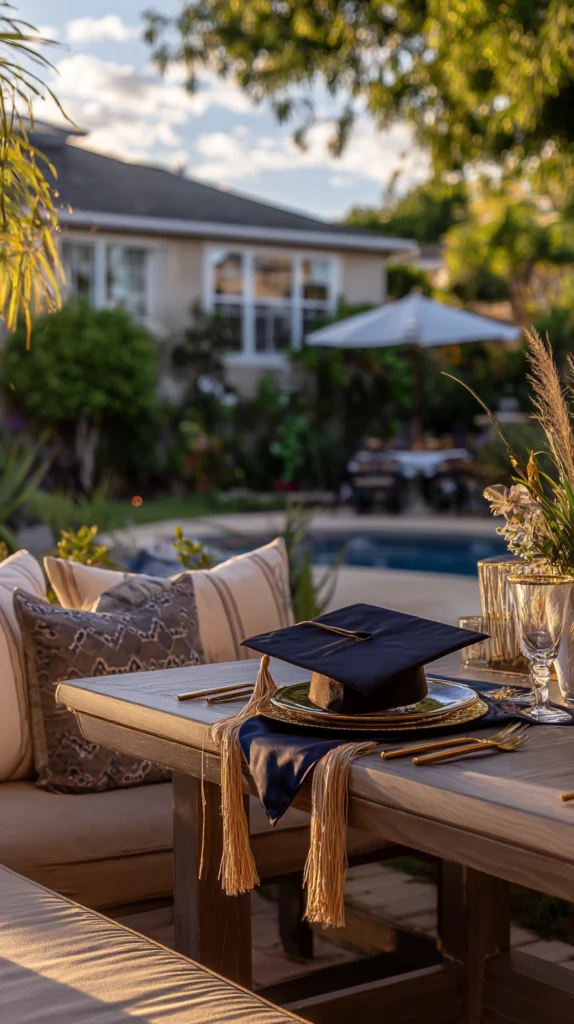
Budget: $10 – $30
Cardboard graduation caps — made from black card stock with a yellow or gold tassel — placed at the centre of each table or scattered along the food table serve simultaneously as decoration and as the visual language of the occasion. They cost almost nothing to make, take fifteen minutes per cap, and communicate the graduation theme more clearly and more cheerfully than any purchased decoration.
Black card stock costs $3–$8 for a pack. Yellow or gold ribbon for tassels runs $2–$5 per reel. A hot glue gun ($8–$15 if not already owned) assembles the caps in minutes. Make a few larger caps for the food table centrepieces and smaller ones for individual table decorations — the scale variation gives the display interest that a uniform size lacks.
Style tip: Write the graduate’s name and graduation year on the top of each cap in gold pen ($3–$5 for a metallic marker). The personalisation takes twenty seconds per cap and transforms a generic graduation decoration into one specific to this graduate and this occasion — the detail that makes a DIY decoration feel intentional rather than assembled from a craft tutorial.
6. The Buffet Table Setup
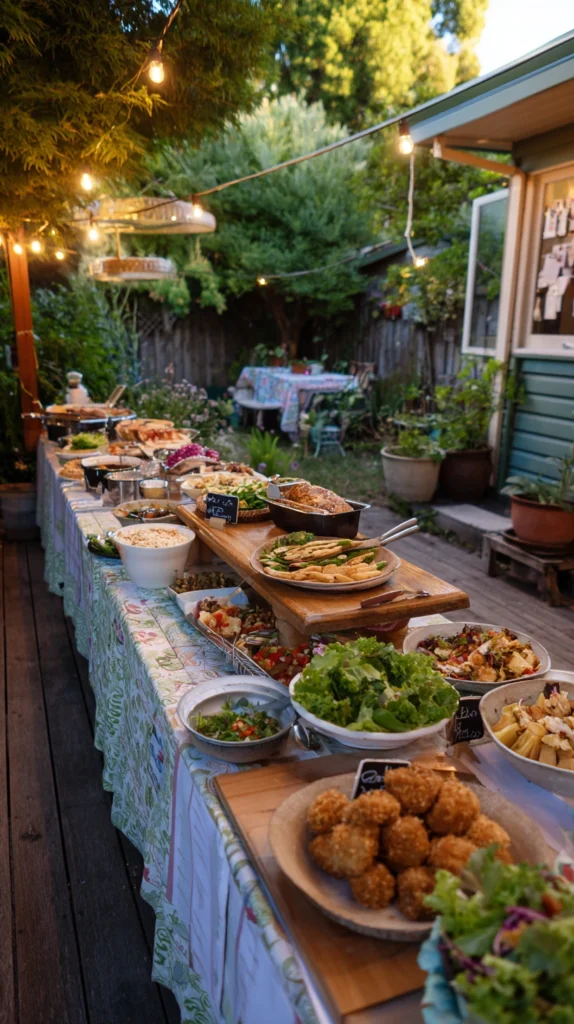
Budget: $40 – $150
A properly considered buffet table — with serving dishes at varying heights, labels for every dish, a logical flow from one end to the other, and a decoration that relates to the occasion — feeds a large group efficiently and looks like food that was prepared with care. The buffet table is the hardest-working piece of furniture at a garden party and the one most consistently underestimated in terms of its effect on the overall impression of the occasion.
Serving dishes at varying heights require only books, boxes, or upturned bowls covered with cloth to create the risers ($0). Small label cards for each dish can be made at home for pennies. A fresh flower arrangement at one end of the table costs $8–$20 from a florist or garden. Cover the table with a cloth before arranging the food — a bare table beneath serving dishes looks like a kitchen surface; a clothed table looks like a buffet.
Style tip: Arrange the buffet flow so plates and cutlery are at one end, food items proceed in the natural eating order — savoury first, salads and sides in the middle, bread at the end — and napkins are at the far end after the food has been served. Guests who have to reach back for napkins after loading a plate create congestion that holds up the whole buffet line.
7. The Outdoor Photo Booth
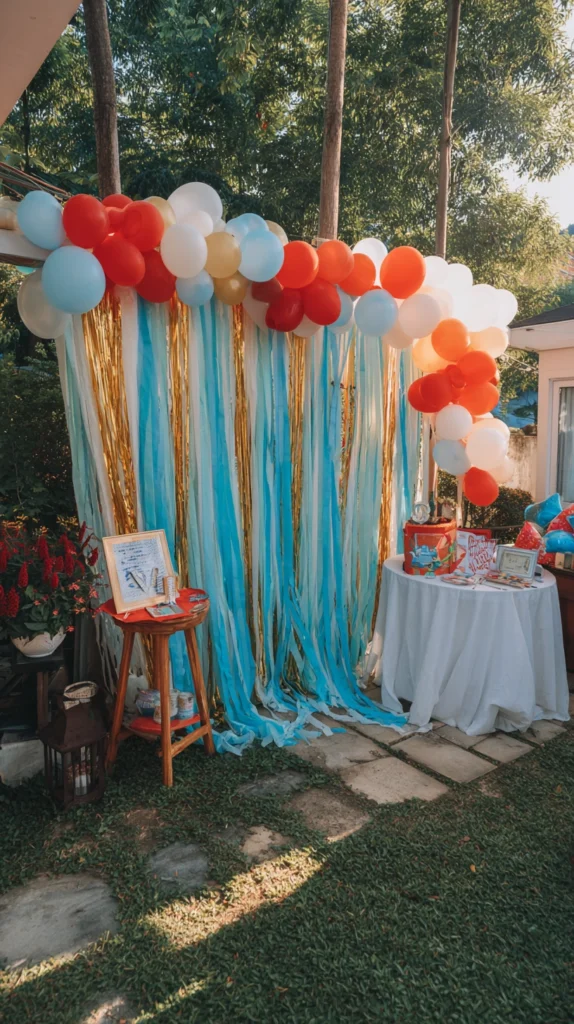
Budget: $15 – $60
A designated photo booth area — a backdrop of balloons, bunting, or a curtain of streamers in the graduation colours, with a box of props (mortarboard hat, diploma scroll, oversized glasses, graduation year numbers) and a sign indicating the hashtag for sharing — produces the photographs that define the party in social memory. A photo booth is used more consistently than almost any other party feature and requires only a backdrop and a prop box to function.
A balloon backdrop costs $15–$30 in balloons and adhesive hooks. A paper streamer curtain runs $8–$20. Props made from card stock cost $5–$10 in materials. A printed sign for the hashtag or the graduate’s name costs $2–$5 at a print shop. Position the booth where the light is consistent — ideally in shade rather than direct sun, which creates harsh shadows — and where there is enough space for three or four people to stand together.
Style tip: Include a Polaroid camera or an instant print camera beside the photo booth and a display board where printed photos can be immediately added throughout the party. A wall of Polaroids that builds during the event is a live document of the party rather than a retrospective one, and guests who see their photograph added to the wall within minutes of taking it engage with the booth repeatedly rather than once.
8. The Signature Graduation Cocktail
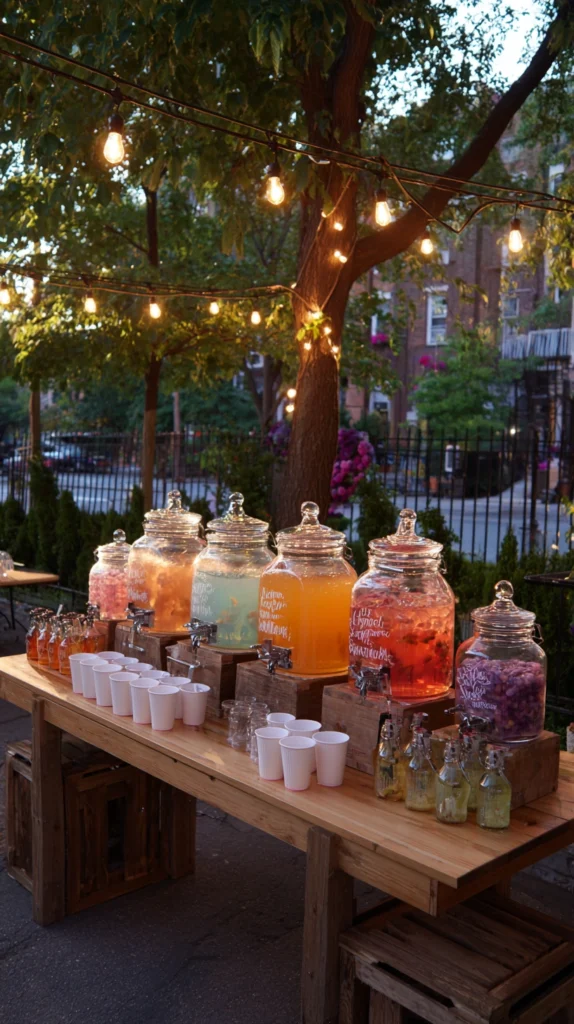
Budget: $15 – $50
A named signature drink — alcoholic or non-alcoholic — made in a large batch before the party and served from a dispenser, a large jug, or a punch bowl with a label identifying it as the graduation cocktail, elevates the drinks offering from a drinks table to an experience. The named cocktail is one of the most consistently appreciated party details and requires only a simple recipe, a large vessel, and a hand-written label.
A large glass dispenser costs $15–$30. A jug of cocktail or mocktail in a large batch requires $10–$25 in ingredients for twenty servings. A hand-written label for the dispenser costs nothing. Name the cocktail after the graduate — “The [Name] Celebration” or a reference to the subject studied — and include the recipe on the label for guests who want to make it at home. The named recipe detail communicates that the drink was created for the occasion.
Style tip: Pre-batch two options — one alcoholic and one non-alcoholic — in identical dispensers with matching labels, positioned side by side. Guests who do not drink alcohol often navigate a party drinks table with mild awkwardness; two equivalent dispensers presented with equal ceremony remove the distinction entirely and make every guest equally catered for from the moment they arrive.
9. The Memory Jar
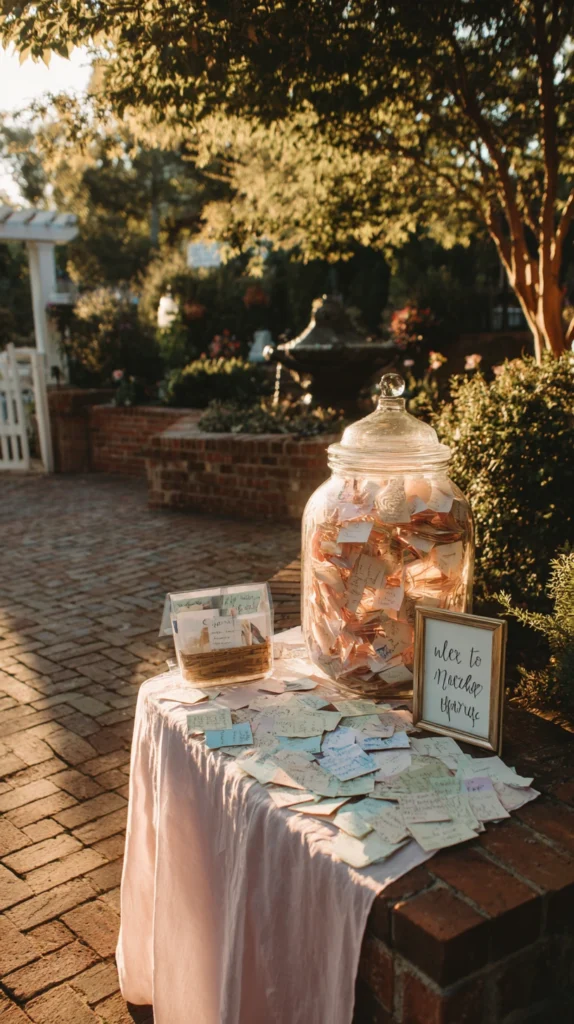
Budget: $5 – $20
A large glass jar placed on a table near the entrance with a stack of small cards and a pen beside it — with a label asking guests to write a memory, a wish for the future, or a piece of advice and place it in the jar — gives every guest a way to contribute to the occasion beyond their physical presence. The jar is given to the graduate at the end of the party as a gift that costs nothing to make and that is read and reread over the following months.
A large glass jar costs $5–$12. Small cards cut from card stock run $2–$5 for a stack. A pen on a ribbon tied to the jar costs nothing. A label on the jar with a specific prompt — “write a memory of [name]” or “write your wish for [name]’s next chapter” — produces more thoughtful responses than a generic invitation to write anything. The specific prompt is the detail that determines the quality of what goes in the jar.
Style tip: Seed the jar with two or three entries before guests arrive — written by family members with specific memories and genuine warmth. A jar that already has entries in it when guests encounter it communicates that participation is normal and expected; an empty jar can feel like an invitation that nobody has yet accepted, which inhibits some guests from being the first.
10. The String Light Canopy
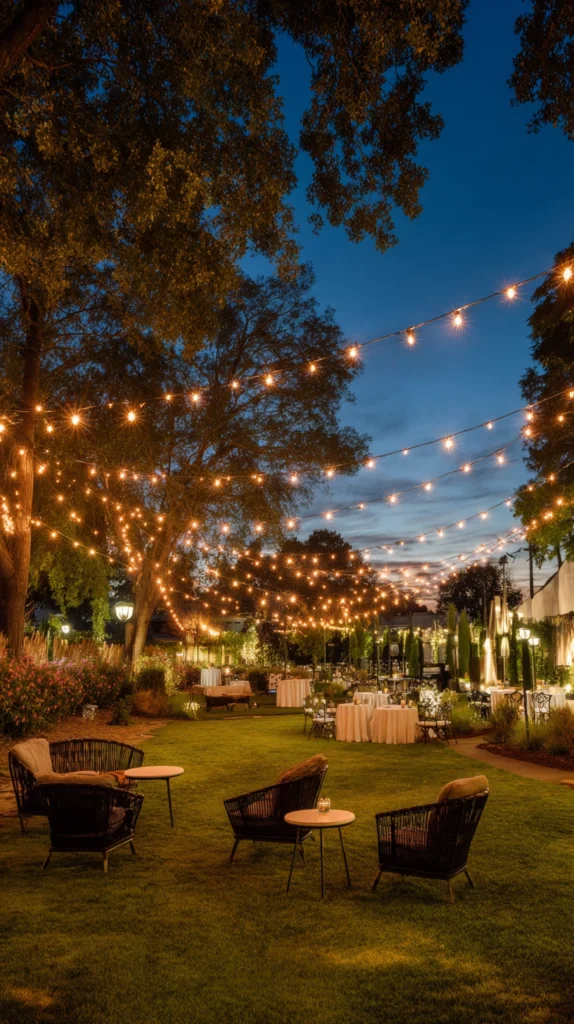
Budget: $20 – $80
Warm white string lights or festoon lights strung between fence posts, trees, or a simple timber frame above the main gathering area creates the lighting condition that makes an outdoor party feel genuinely special after the sun goes down. A graduation party that begins in the afternoon and extends into the evening requires a lighting plan that carries the party through the transition, and string lights are the most reliable and most atmospheric way to provide it.
Outdoor string lights on a 10-metre reel cost $10–$25. Festoon lights with globe bulbs run $20–$60 for a 5-metre length. A timber frame of four posts with connecting wire if no natural anchor points exist costs $20–$40 in materials. Connect to a timer ($8–$15) so the lights come on automatically as the sky darkens rather than requiring management at the moment when the host is least available to provide it.
Style tip: Add a secondary light source at table and floor level alongside the overhead string lights. Candles on the food table, a lantern on the drinks table, a floor lantern at the garden entrance — the combination of overhead and lower light creates the layered warmth that string lights alone, however beautiful, do not fully provide. The secondary lights cost $10–$25 in total and make a considerable difference to the atmosphere of the evening.
11. The Decorated Graduation Cake Display
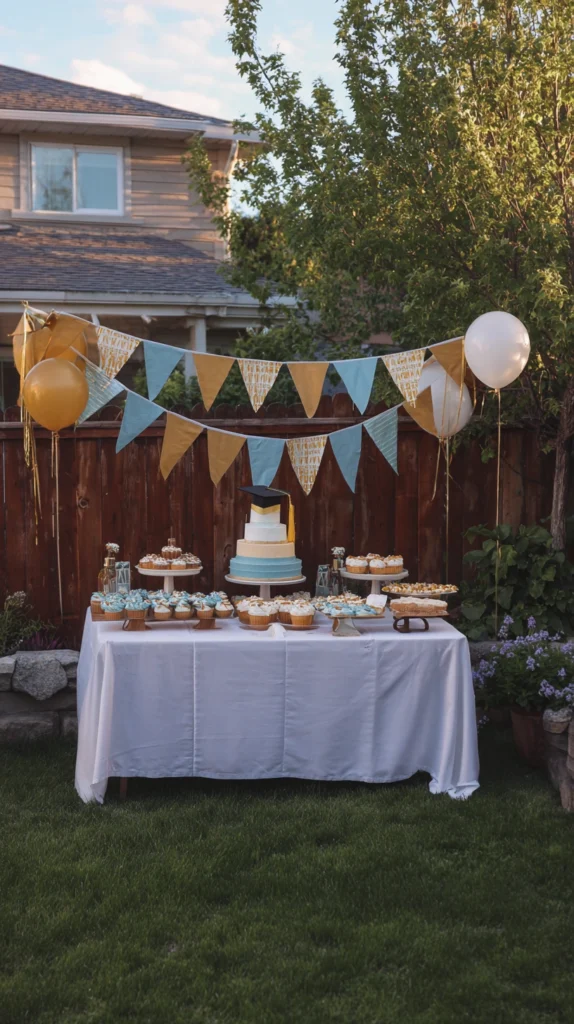
Budget: $20 – $80
A home-made or bakery-purchased graduation cake on a decorated cake stand — surrounded by matching cupcakes with mortarboard toppers, on a table with a banner above it — creates the dessert centrepiece that marks the occasion as a celebration rather than a party. The cake table is the focal point of the graduate’s moment and deserves the same consideration as the food table and the decoration.
A simple layered cake from a supermarket bakery costs $20–$50 and can be personalised with a name and year for a small additional charge. Mortarboard cupcake toppers made from card and cocktail sticks cost $3–$8 in materials. A cake stand costs $10–$30. A paper banner above the table reading “Congratulations” or the graduate’s name runs $3–$8. Position the cake table where it is the most photographed spot at the party — near the photo booth, under the string lights, against the balloon arch.
Style tip: Photograph the cake table before guests arrive rather than after. A cake table in its complete, untouched state — before the cupcakes have been taken, before the banner has been disturbed, before the afternoon light has shifted — is the most photogenic version of itself and the one worth capturing properly. The moment guests arrive the table begins its natural process of being consumed, and the photograph taken after is always less complete than the one taken before.
12. The Outdoor Cinema Finish
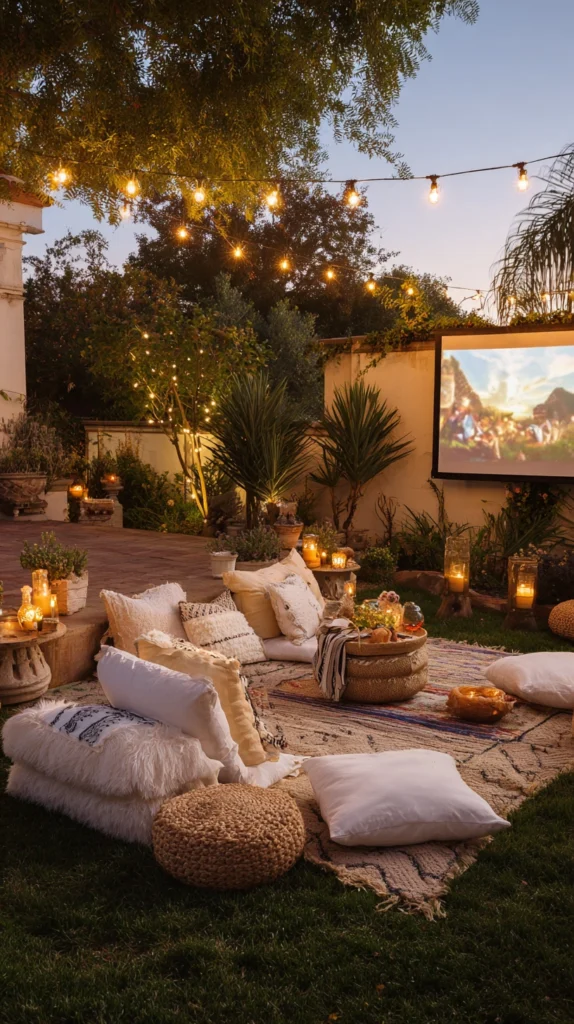
Budget: $60 – $250
End the graduation party with an outdoor film screening as the final act of the evening — a projector on the patio, a screen or a white sheet at the garden end, blankets and floor cushions for the guests who are still there, and a film chosen either by the graduate or by a group vote earlier in the evening. The outdoor cinema closing gives the party a defined ending that produces the particular closeness of watching something together in the dark.
A portable projector costs $80–$250. A white sheet for the screen costs $5–$20. Blankets and floor cushions already in the house cost nothing. Choose a film before the party rather than during — a group vote held at nine o’clock when people are tired and the party is winding produces disagreement rather than enthusiasm. The film announced on the invitation as the closing act gives guests the choice to stay for it from the outset.
Style tip: Begin the film after full dark rather than at the first available opportunity after sunset. A film started at dusk produces a washed-out picture for the first twenty minutes while the sky completes its darkening, which is the worst opening act for a film that should be the highlight of the evening. Starting after full dark — typically 45 minutes after sunset in midsummer — produces a properly vivid image from the first frame.
13. The Graduate’s Favourite Food Menu
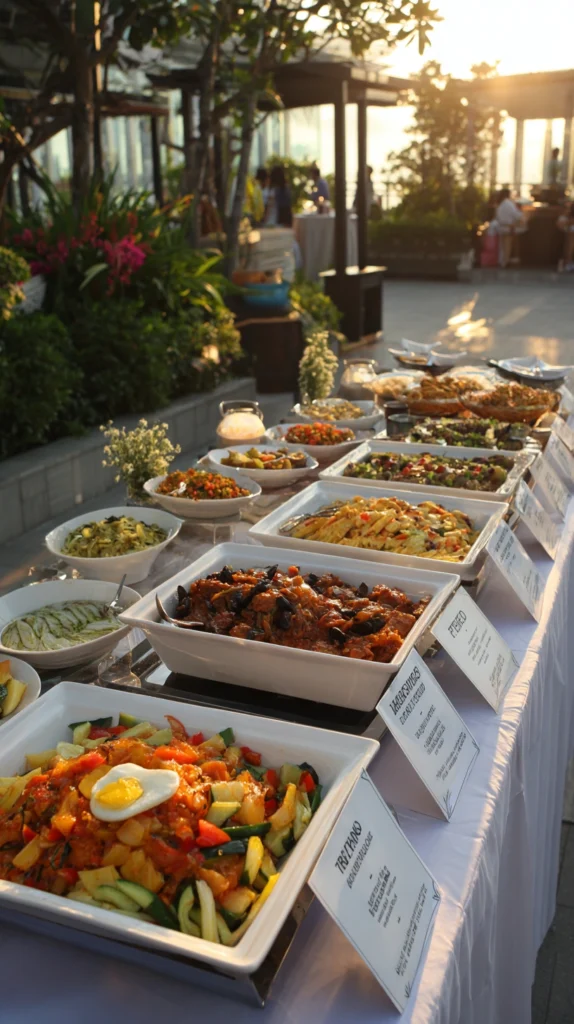
Budget: $30 – $150
Build the menu entirely around the graduate’s favourite foods rather than the most practical, most crowd-friendly, or most easily catered options. A party where the food is the graduate’s specific preferences — where the pizzas are the ones they have requested since childhood, where the cake is the flavour they always choose, where even the snacks reflect something specific about the person being celebrated — communicates a quality of knowing and loving that a generic party menu cannot approach.
A homemade pizza selection for twenty people costs $20–$50 in ingredients. A selection of the graduate’s favourite snacks runs $15–$40. A cake in the chosen flavour costs $20–$60. Print a small menu card for each table that lists the dishes with a note about why each one was chosen — “this is [name]’s order every time we go for Thai” or “this is the birthday cake recipe from every year since age 6”. The context makes the menu a portrait of the graduate rather than a list of food.
Style tip: Ask the graduate to contribute one dish they have cooked themselves to the party menu, and label it with their name on the buffet table. A graduation party where the graduate’s cooking is among the food being served gives them an active role in their own celebration and produces a dish that guests always ask about — which is the best possible catalyst for the graduate to tell the story of learning to make it.
14. The Time Capsule Table
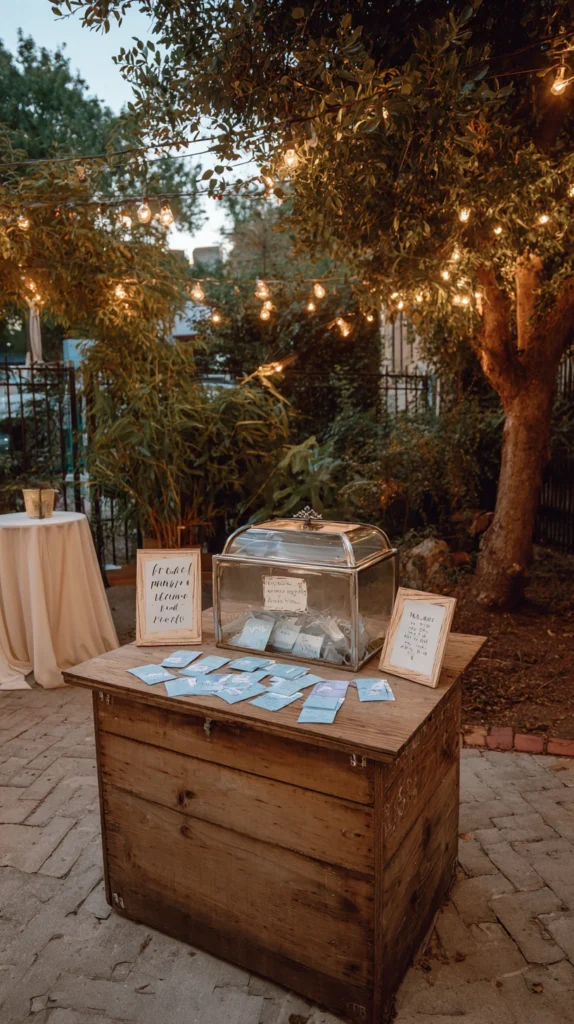
Budget: $10 – $40
Set up a small table at the party with a collection of items going into a time capsule — a newspaper from graduation day, a printed photograph from the party, the menu card, a list of current prices for common items, the top songs and films of the year — and ask each guest to add one item or write one prediction for where the graduate will be in ten years. Seal the capsule at the end of the party and give it to the graduate with instructions not to open it until a specified future date.
A tin or a sealed box for the capsule costs $5–$15. A newspaper on the day costs $1–$3. Card stock for prediction cards runs $2–$5. The time capsule table requires a host to explain it as guests arrive — a small sign beside the table helps, but a brief verbal mention at the start of the party produces better participation than a sign alone. The time capsule is the party element that the graduate will value most, and it is one of the least expensive things at the party to create.
Style tip: Include a sealed letter from the graduate’s parents or closest family member among the time capsule contents — written before the party and placed in the capsule without being shown to the graduate. A letter from a parent written on graduation day, to be read ten years hence, is the time capsule content that produces the most significant moment when the capsule is eventually opened. It costs nothing to write and is worth more than everything else in the box combined.
The best backyard graduation party is not the most elaborately decorated or the most expensively catered — it is the one where the graduate feels specifically celebrated rather than generically honoured, where the food and the decorations and the activities reflect something true about the person at the centre of the occasion, and where the guests leave feeling they attended something that mattered.
Make the decorations personal, make the food the graduate’s own, and make the ending something worth staying for. The garden provides the setting and the occasion provides the reason — everything else is the expression of knowing someone well enough to celebrate them properly.