14 Formal Living Room Ideas That Still Feel Livable
The formal living room stopped being the room nobody entered the moment I stopped decorating it like a museum. Not a bigger budget. Not more furniture. Not a fresh coat of paint or a new rug or another round of careful, untouchable styling.
Permission to actually use it.
Because a formal room built with genuine daily comfort in mind did something the plastic-covered, occasion-only version never managed. Before it: a beautifully appointed room, admired from the doorway but functionally off-limits, its good furniture reserved for guests who rarely came. After it: the same level of formality and polish, but with cushions that could be sat on without anxiety, surfaces that welcomed an actual cup of coffee, and a room that finally earned its square footage every single day.
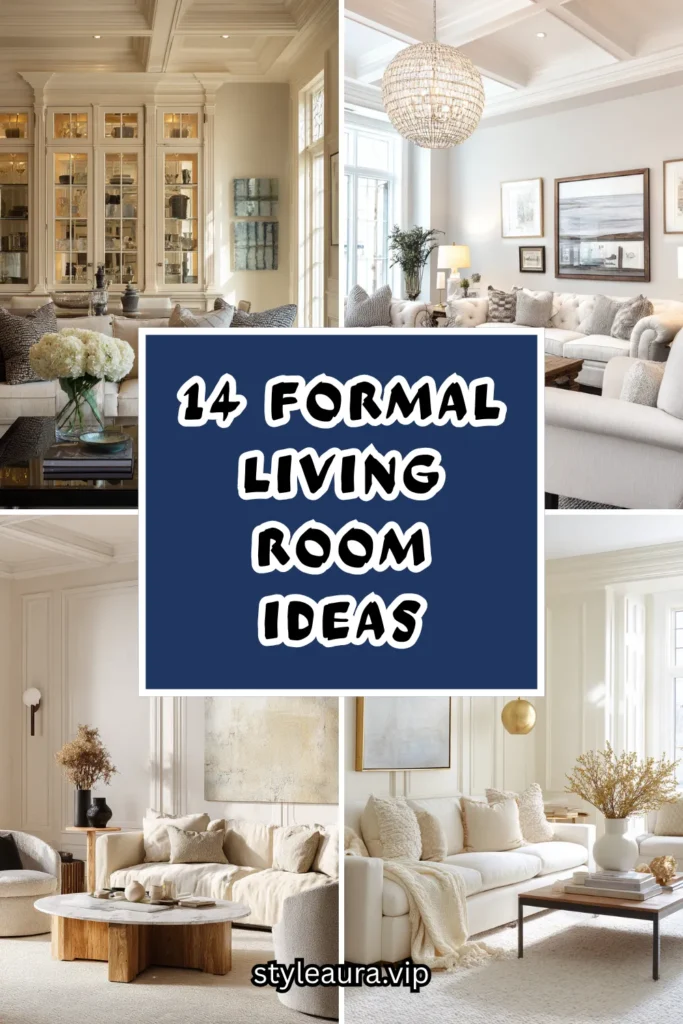
A formal living room does not have to choose between looking elevated and feeling livable. The two qualities are not actually in conflict; the conflict exists only when formality is pursued through fragility and precious, off-limits rules rather than through genuine material quality and considered design. The room: no longer a museum exhibit of the household’s good taste, but proof that elegance and comfort were never really opposites.
Here are 14 formal living room ideas that still feel livable — from the simplest durable fabric swap to the most fully balanced elegant-and-comfortable room — built on that understanding.
Why Formal and Livable Are Not Actually in Tension
The false choice
Many households assume formality requires fragility — delicate fabrics, untouchable surfaces, furniture arranged for admiration rather than use. In reality, genuine formality comes from material quality, proportion, and considered design, none of which require a room to be unusable.
The durability-elevates-formality principle
Without genuine durability:
Delicate silk upholstery and glass surfaces that show every mark, requiring guests and household members alike to interact with the room cautiously.
The room: formal in appearance, but creating genuine anxiety around its actual use.
With genuine durability:
High-performance fabrics that look and feel luxurious while resisting stains, and surfaces chosen for both beauty and resilience.
The room: equally formal in appearance, but genuinely usable without anxiety, precisely because the materials were chosen with real life in mind.
The comfort-without-compromise case
A deep, well-upholstered sofa in a formal fabric is not a contradiction — genuine comfort and an elevated appearance can coexist in the same piece of furniture, the mistaken assumption that comfort requires informality being the actual barrier most formal rooms face.
The rule-relaxation principle
A formal room becomes livable partly through design and partly through the household’s own permission to actually use it — no fabric or furniture choice alone can substitute for genuinely allowing the room to be sat in, eaten in, and enjoyed rather than preserved untouched.
The Five Techniques for a Formal Room That Still Feels Livable
Before making any single design decision:
High-performance fabric selection
Durable, stain-resistant fabrics that look and feel elevated despite their practical resilience.
The single most important technical decision available.
Removes the anxiety around actual daily use that undermines most overly precious formal rooms.
Genuine seating comfort
Deep cushions, proper back support, and furniture actually built for sitting rather than only for visual display.
Addresses comfort directly rather than assuming formality and comfort are mutually exclusive.
Often the difference between an admired room and a used one.
Layered, warm lighting
Multiple light sources at varying heights, rather than a single formal chandelier as the room’s only illumination.
Prevents the room from feeling like a showroom rather than a lived-in space.
Works alongside, rather than instead of, a formal overhead fixture.
A relaxed layout within a formal framework
Furniture arranged for genuine conversation and daily use, rather than perfectly symmetrical display.
Balances the room’s formal furniture and finishes with an actually functional floor plan.
The detail most responsible for whether a room gets used.
Household permission and daily integration
A deliberate decision to actually use the room regularly, rather than reserving it exclusively for guests.
Not a design choice but a behavioral one.
Ultimately the factor most responsible for whether any of the other techniques matter at all.
1. The High-Performance Fabric Upgrade
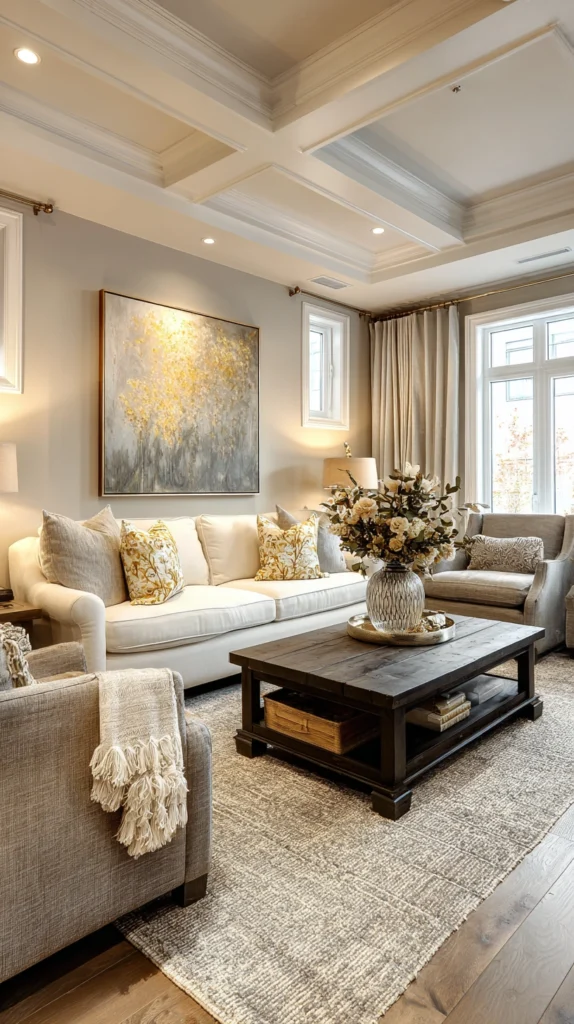
Existing or new formal upholstered furniture reupholstered or selected in genuinely durable, stain-resistant performance fabric, rather than delicate silk, linen, or velvet requiring constant careful treatment.
Why fabric performance is the single highest-leverage decision available
A formal sofa in a delicate fabric creates genuine anxiety around actual use — spills, pet hair, daily wear — while the same silhouette and design in a high-performance fabric removes that anxiety entirely, without sacrificing any of the room’s visual formality.
The fabric selection
Performance velvet, a high-durability woven fabric, or a treated linen blend, chosen specifically for genuine stain resistance and durability while still offering the visual richness and hand-feel associated with more formal upholstery.
The color and pattern
Rich, elevated tones — deep jewel colors, sophisticated neutrals — available in performance fabric just as readily as in more delicate options, meaning the upgrade requires no compromise in the room’s overall color story.
The reupholstery option
Existing formal furniture reupholstered in a performance fabric, rather than replaced entirely, preserving good bones and construction while addressing the specific practical concern that made the piece feel too precious to actually use.
The testing consideration
Requesting a fabric sample and testing its actual stain resistance and durability claims before committing to reupholstering or purchasing a full piece, since performance fabric quality varies considerably across manufacturers.
The overall effect
Furniture that looks and feels exactly as formal as before, but can genuinely be sat on, eaten near, and used daily without anxiety.
Cost breakdown: Performance fabric reupholstery (per piece): $600–1,800 Total: $600–1,800
2. The Deep, Genuinely Comfortable Formal Sofa
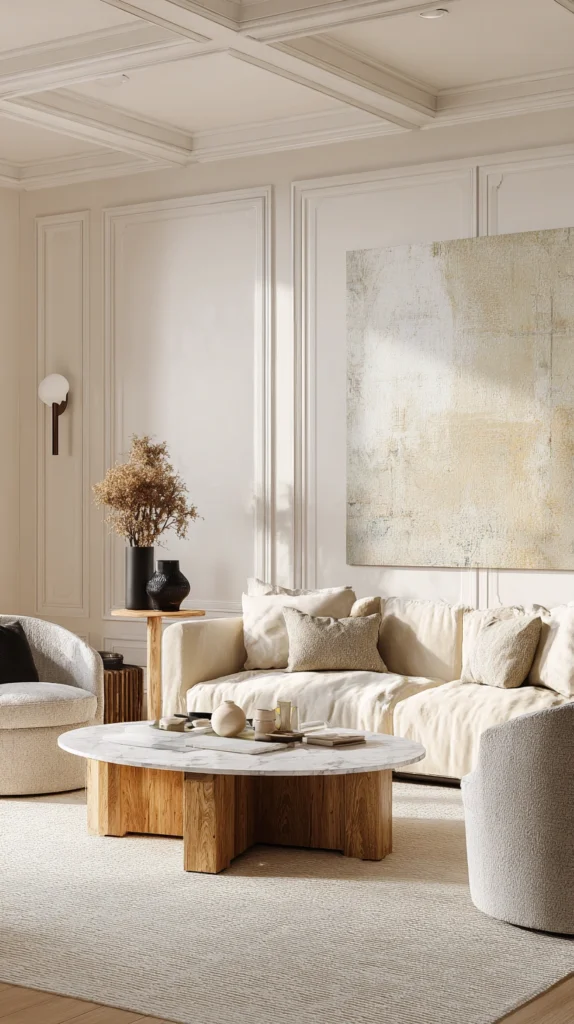
A sofa chosen or reupholstered specifically for genuine seating comfort — deep cushions, proper lumbar support, an appropriate seat depth — while maintaining a formal, tailored silhouette.
Why comfort and formal styling are not actually in conflict at the furniture level
A sofa can have clean, tailored lines and a formal silhouette while still being built with genuinely deep, supportive cushions — the assumption that formal furniture must be firm and upright is a stylistic choice, not an inherent requirement of the formal aesthetic.
The cushion construction
High-quality down-and-foam or foam-core cushions, providing genuine sink-in comfort rather than the firm, formal-for-display-only cushioning common in many traditional formal sofas.
The seat depth
A seat depth allowing genuine relaxed sitting, rather than an overly shallow seat that forces an upright, formal posture regardless of the sitter’s actual preference.
The back support
Proper lumbar and back cushion support, ensuring the sofa remains comfortable for extended sitting rather than only brief, formal perching.
The silhouette retention
Clean, tailored arms and a considered overall proportion, maintaining the room’s formal visual language even as the actual seating experience prioritizes genuine comfort.
The overall effect
A sofa that looks every bit as elegant as a traditional formal piece, while actually inviting extended, comfortable use rather than only brief, careful sitting.
Cost breakdown: Quality formal sofa with genuine comfort construction: $1,500–4,000 Total: $1,500–4,000
3. The Layered Lamp Lighting Beyond the Chandelier
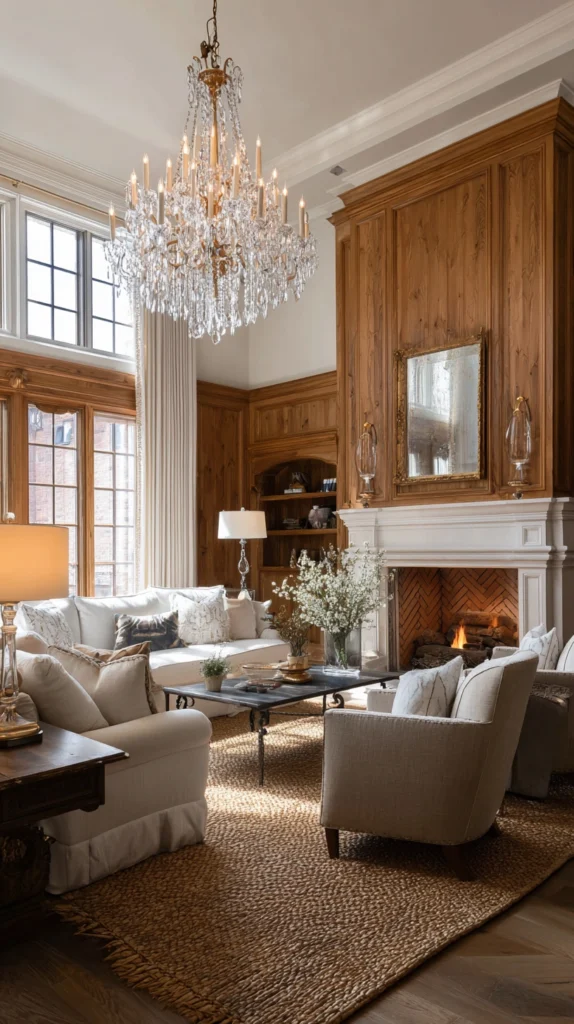
Multiple table and floor lamps added throughout the room, supplementing a formal overhead chandelier rather than relying on it as the room’s sole light source.
Why layered lighting prevents a formal room from feeling like an unused showroom
A room lit only by a single overhead chandelier, switched on solely for guests, reads as a space reserved for occasions rather than a room genuinely lived in day to day. Layered lamp lighting supports actual daily use at a comfortable, livable brightness.
The lamp placement
Table lamps on side tables and consoles, plus at least one floor lamp, positioned throughout the room to provide warm, functional light for reading, conversation, or simply everyday presence in the space.
The bulb warmth
Warm, low-wattage bulbs throughout, avoiding the room’s chandelier from being the only warm light source while everything else remains cool or unlit.
The everyday use case
The lamps used regularly, even without guests present, signaling that the room is genuinely meant for daily use rather than reserved exclusively for formal occasions when the chandelier alone is switched on.
The dimmer integration
A dimmer on the chandelier itself, allowing it to be used at a lower, everyday brightness alongside the lamps rather than only at full formal brightness for special occasions.
The overall effect
A room lit for genuine daily life, the chandelier remaining available for its formal function while the layered lamps support the room’s actual everyday use.
Cost breakdown: Table lamps (2–3): $100–250 Floor lamp: $60–150 Total: $160–400
4. The Durable Stone or Wood Coffee Table
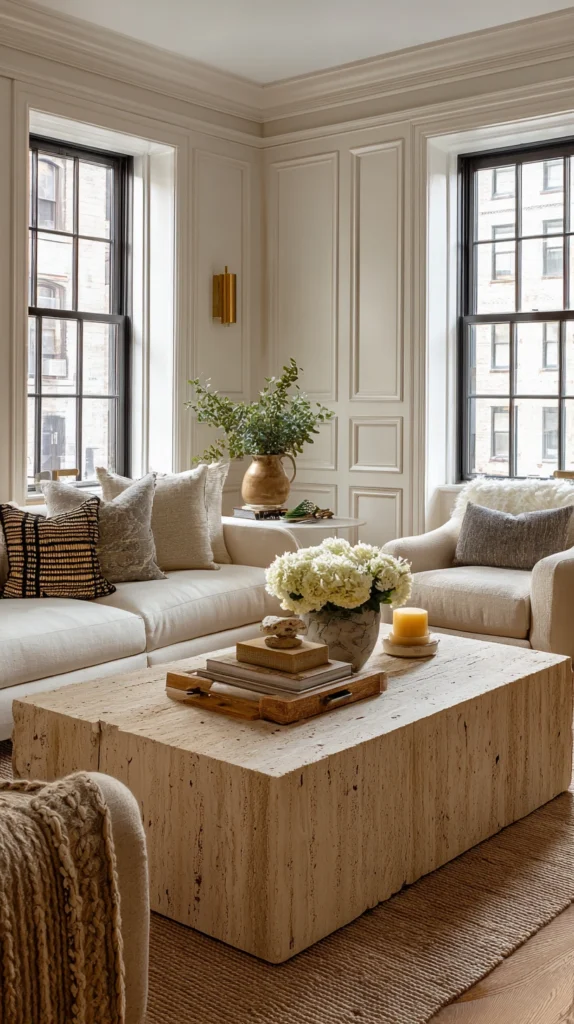
A coffee table in genuinely durable stone, wood, or a sealed surface material, rather than glass or a delicate finish requiring coasters and constant vigilance.
Why the coffee table is one of the most heavily used surfaces in any living room
A coffee table sees daily use for drinks, feet, books, and general living, and a surface too delicate for that reality — easily scratched glass, an unsealed fine wood finish — creates the same kind of use-anxiety a delicate fabric sofa does.
The material selection
A sealed, durable stone (granite or a hardy quartzite) or a well-finished hardwood, chosen specifically for genuine resistance to scratches, heat, and moisture rather than a more delicate material requiring extensive protective habits.
The finish
A matte or lightly textured finish, which tends to show fingerprints, water rings, and minor wear considerably less than a high-gloss surface.
The formal silhouette
A refined, tailored table design — clean lines, quality proportions — ensuring the durability upgrade does not come at the expense of the room’s overall formal visual language.
The everyday use permission
A table genuinely used for drinks, feet, and daily activity without requiring a coaster for every single interaction, removing one more layer of use-anxiety from the room.
The overall effect
A central table that supports the room’s actual daily use without sacrificing any of its formal visual presence.
Cost breakdown: Durable stone or wood coffee table: $400–1,200 Total: $400–1,200
5. The Relaxed, Conversation-Focused Furniture Layout
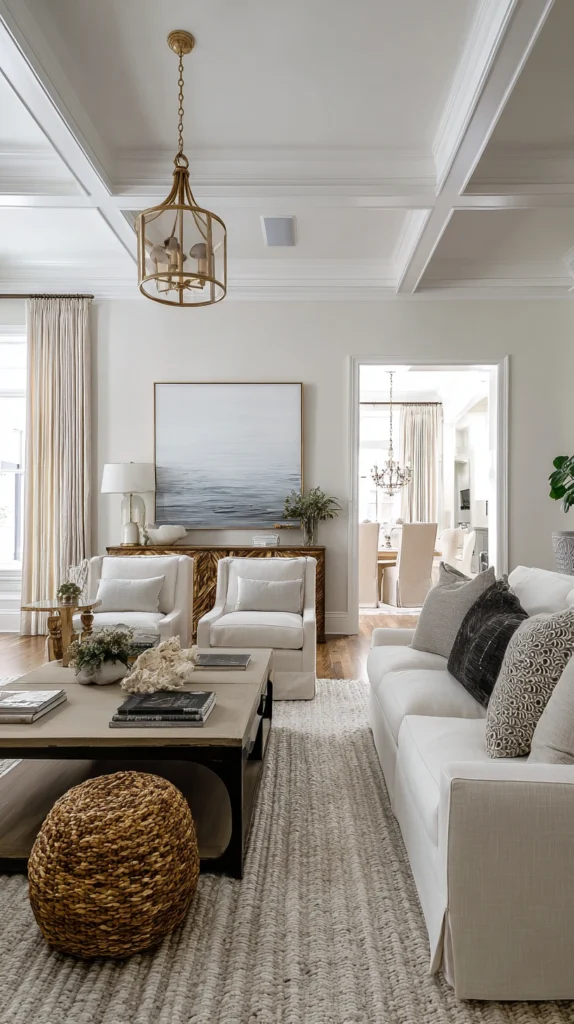
Furniture arranged specifically for genuine, comfortable conversation and daily use, rather than a perfectly symmetrical arrangement designed primarily for visual display from the doorway.
Why layout matters as much as any individual furniture or fabric choice
A room with beautiful, comfortable furniture can still feel unusable if that furniture is arranged purely for visual symmetry rather than genuine conversational function — seating too far apart, chairs facing away from the natural gathering point.
The seating distance
Seating positioned close enough for comfortable conversation without raised voices, generally within 8 feet of each other, rather than spread across the room purely to fill space symmetrically.
The conversational angle
Chairs and sofas angled toward each other rather than all facing a single direction, encouraging genuine group conversation rather than a formal, lecture-style arrangement.
The functional center
A coffee table or ottoman within comfortable reach of every seat, ensuring drinks and books have a genuine home rather than requiring an awkward reach or a separate side table for every single chair.
The traffic flow
Clear pathways maintained through the room despite the furniture’s formal quality, ensuring the space remains genuinely easy to move through and use rather than an obstacle course preserved purely for display.
The overall effect
A room where the furniture’s formal quality serves an actually functional, comfortable conversational layout, rather than being arranged primarily to be admired from a doorway.
Cost breakdown: No additional cost — a furniture arrangement decision Total: $0
6. The Layered, Textured Rug for Warmth Underfoot
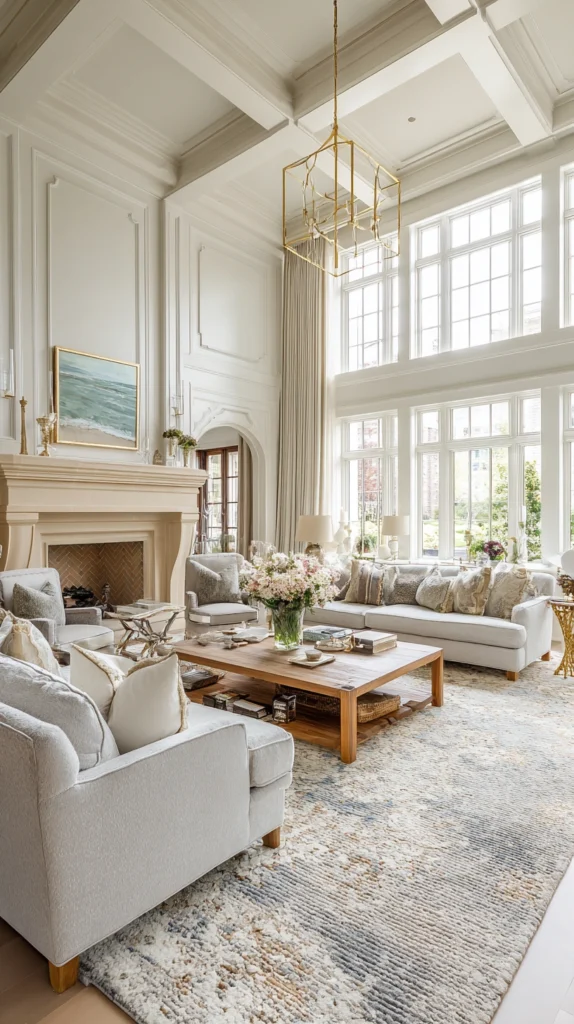
A substantial area rug, in a durable weave and a pattern that hides wear, providing genuine tactile warmth and softening the room’s harder formal surfaces.
Why a rug does real work toward making a formal room feel livable
A formal room with hard flooring and no rug can feel cold and gallery-like underfoot. A substantial, textured rug adds genuine warmth and softness, directly countering the sense of a room too precious to walk through comfortably.
The rug material
A durable wool or wool-blend rug, offering genuine softness and warmth underfoot while remaining considerably more resilient to wear and stains than a delicate silk or a thin, decorative-only rug.
The pattern consideration
A pattern or subtle texture that helps disguise everyday wear and minor stains, rather than a solid, pale color that would show every mark immediately.
The size
Sized generously to anchor the full seating arrangement, extending well beyond the furniture’s own footprint rather than a small, purely decorative rug that fails to provide genuine warmth across the room’s actual walked and sat-upon area.
The maintenance routine
Regular vacuuming and occasional professional cleaning, maintained as a matter of course rather than treating the rug as too precious for actual foot traffic.
The overall effect
A room that feels genuinely warmer and more inviting underfoot, the rug directly countering the coldness often associated with a purely formal, hard-surfaced room.
Cost breakdown: Durable wool area rug (large size): $400–1,200 Total: $400–1,200
7. The Everyday China and Casual Serving Integration
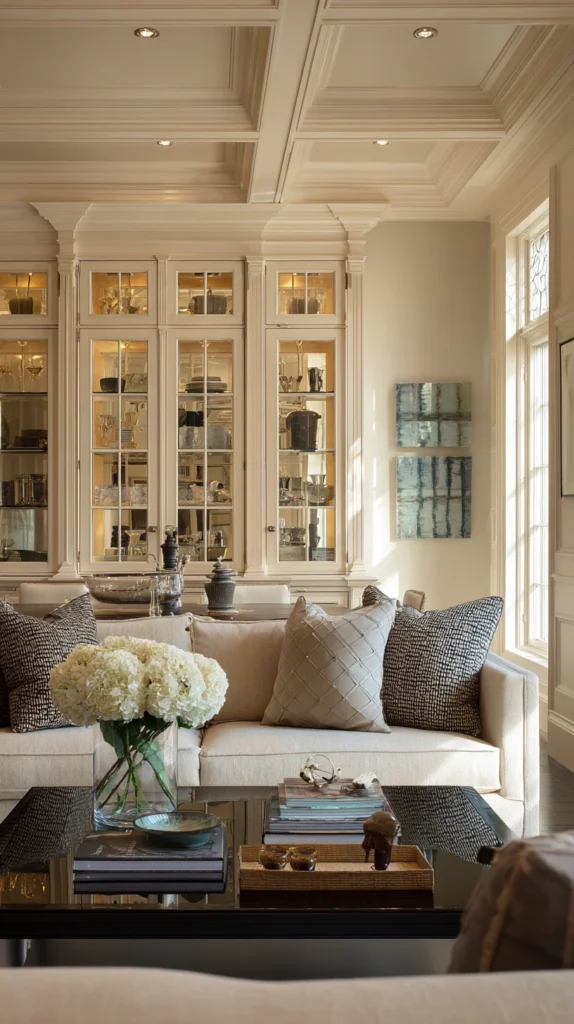
A formal room’s china cabinet or display shelving stocked partly with everyday-usable pieces, rather than exclusively with china reserved for special occasions and otherwise left purely on display.
Why integrating everyday use into a formal display cabinet extends the room’s livability
A cabinet of beautiful china used only once or twice a year signals that the room’s fine possessions, and by extension the room itself, exist primarily for rare occasions rather than daily enjoyment. Using at least some of the good china regularly extends that permission to the room as a whole.
The cabinet contents
A mix of genuinely special-occasion pieces and everyday-usable dishware, both displayed together, signaling that fine tableware has a place in daily life rather than existing purely as untouchable display.
The rotation habit
A specific set or a few pieces designated for regular use — perhaps for a weekly family dinner or simply an ordinary Tuesday meal — rather than reserving every piece exclusively for holidays and formal entertaining.
The display styling
The remaining pieces still styled thoughtfully within the cabinet, maintaining the room’s formal visual presentation even as some of the collection sees genuine daily use.
The permission this signals
A household practice, more than a design choice, that directly reinforces the room’s overall livability — if the good china gets used on an ordinary evening, the room itself becomes similarly available for ordinary, everyday enjoyment.
The overall effect
A subtle but meaningful signal, both to the household and to any observant guest, that the room’s fine possessions and its own formal character exist to be enjoyed regularly rather than preserved untouched.
Cost breakdown: No additional cost — a usage habit rather than a purchase Total: $0
8. The Comfortable Reading Chair Addition
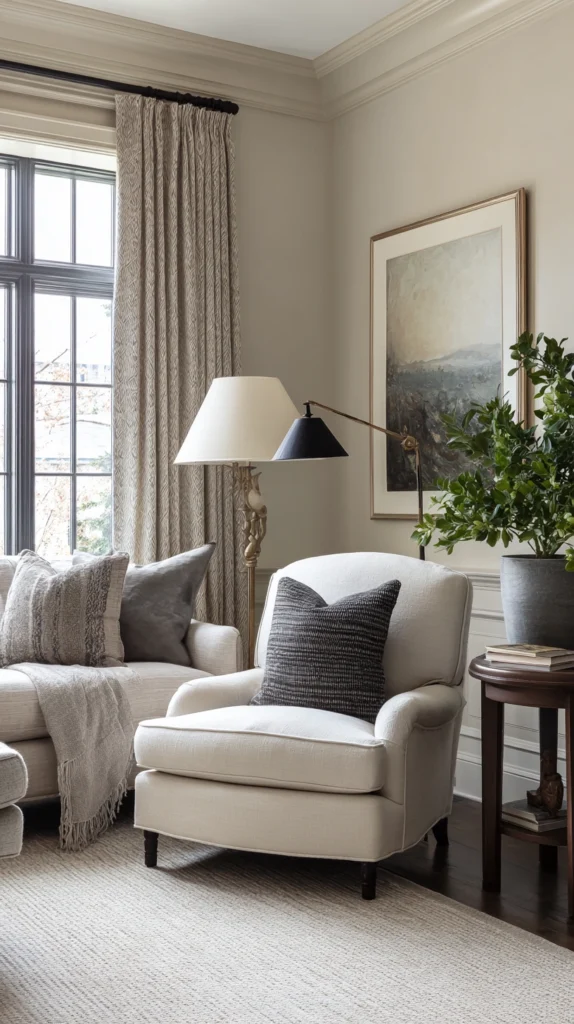
A single genuinely comfortable reading chair added to the formal seating arrangement, providing one spot in the room specifically built for relaxed, extended sitting.
Why one clearly comfortable chair changes the room’s overall invitation
Even a room furnished entirely with comfortable pieces can read as uniformly formal if every chair shares the same tailored, upright silhouette. One chair specifically chosen for obvious, deep comfort signals that relaxed use is genuinely welcome throughout the space.
The chair selection
A deep, well-cushioned reading chair, distinct in silhouette from the room’s more formal sofa and accent chairs, chosen specifically for its inviting, comfortable appearance.
The placement
Positioned near a window or a good reading light, giving the chair a clear, specific daily function beyond purely formal seating.
The styling
A small side table and a reading lamp beside the chair, reinforcing its function as a genuine daily-use spot within the broader formal room.
The material coordination
Chosen in a fabric and finish that complements the room’s overall palette, ensuring the more casual chair integrates visually rather than reading as an obviously mismatched addition.
The overall effect
A single, clear signal within the room that comfortable, relaxed use is genuinely invited, without requiring the room’s other, more formal pieces to change at all.
Cost breakdown: Comfortable reading chair: $400–1,200 Total: $400–1,200
9. The Warm Wood Tones Over Cold Formal Materials
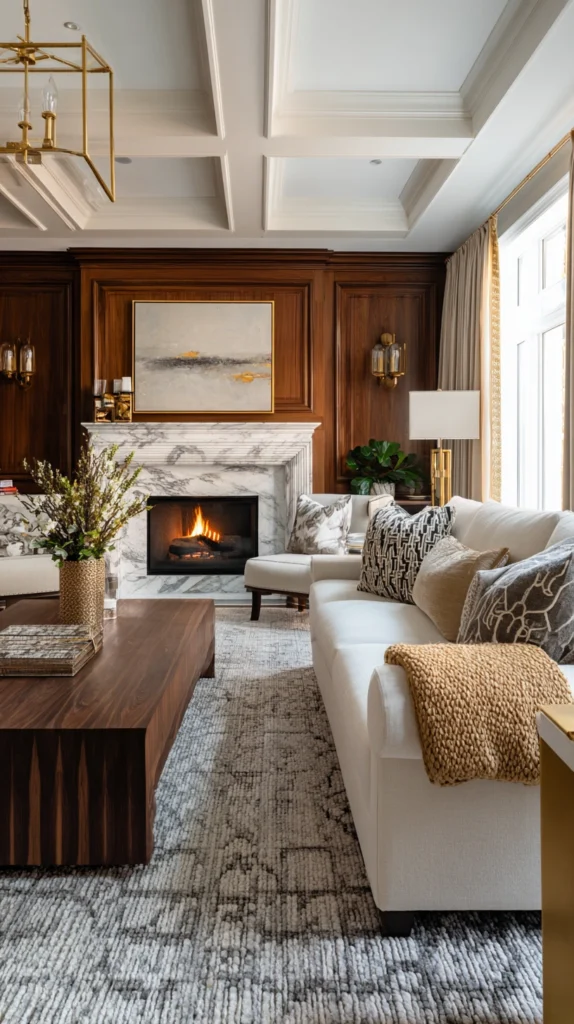
Furniture and finishes favoring warm wood tones over colder materials like glass, chrome, or marble, softening the room’s overall material temperature.
Why warm materials directly counter a formal room’s potential coldness
Formal rooms often lean toward materials associated with elegance — glass, marble, polished metal — which can collectively create a cold, showroom-like atmosphere. Introducing genuine warm wood tones throughout directly counters that coldness.
The furniture material
Wood furniture in warm tones — walnut, cherry, or a rich mahogany — favored over glass-topped tables or heavily chromed furniture frames.
The trim and millwork
Warm wood trim or paneling, where feasible, rather than painted white trim throughout, adding genuine material warmth to the room’s architecture itself.
The balance with formal materials
Warm wood used specifically to balance, rather than eliminate, the room’s more formal cooler materials — a marble-topped table with warm wood legs, for instance, rather than avoiding marble entirely.
The overall material story
A room where warm and cool materials coexist deliberately, the wood tones preventing the space from tipping entirely into a cold, purely formal register.
The overall effect
A room that retains its elegant, formal materials while feeling genuinely warmer and more inviting, the wood tones doing considerable work toward that specific balance.
Cost breakdown: No additional cost if working with existing furniture Wood furniture pieces (if adding): $300–1,000 Total: $0–1,000
10. The Family Photo Integration Within Formal Framing
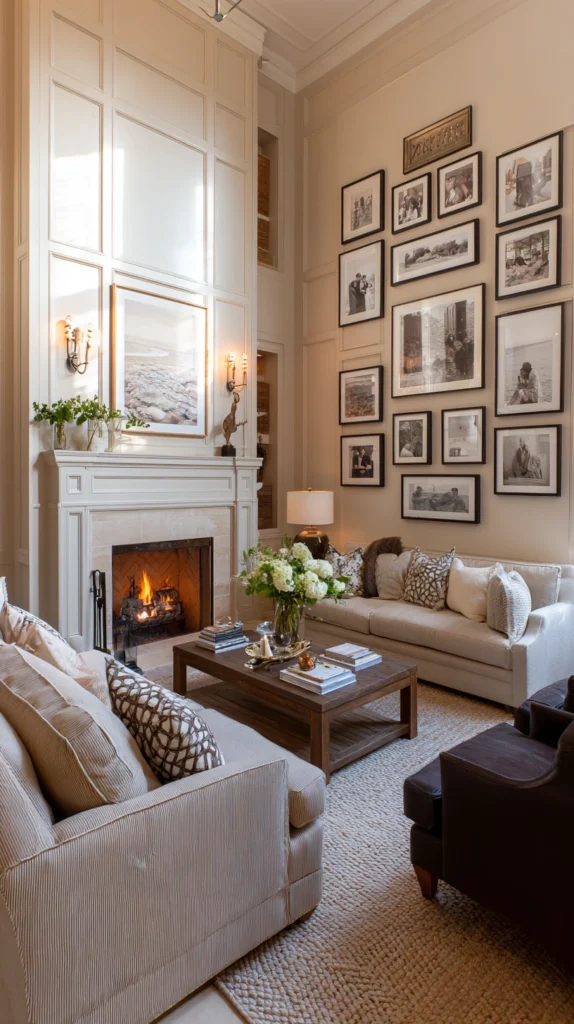
Personal family photographs displayed in elegant, coordinated frames throughout the formal room, rather than reserving all personal photography for more casual spaces in the home.
Why personal photos belong in a formal room too
Many households reserve family photos exclusively for a casual family room, treating the formal living room as a space for only impersonal, purely decorative art. Including genuine personal photography, framed elevated, signals the room belongs to the family’s actual life rather than existing purely for outside impression.
The frame selection
Coordinated, elevated frames — matching brass, dark wood, or a considered mixed set — displaying genuine family photographs with the same visual polish given to any other art in the room.
The photo selection
Meaningful, well-composed photographs, chosen with the same consideration given to any other art placement, rather than casual snapshots that would read as visually inconsistent with the room’s formal quality.
The placement
Integrated among the room’s other art and objects, rather than segregated to a single obvious “family photo corner,” allowing the personal photography to feel like a genuine part of the room’s considered decor.
The overall signal
A room that includes the family’s actual life and history reads as lived-in and personal, rather than existing purely as a formal display for outside visitors.
The overall effect
A formal room that feels genuinely connected to the household’s actual daily life, the personal photography providing warmth and specificity a purely impersonal formal room lacks.
Cost breakdown: Coordinated frames (4–6): $60–150 Total: $60–150
11. The Durable, Washable Throw and Cushion Layer
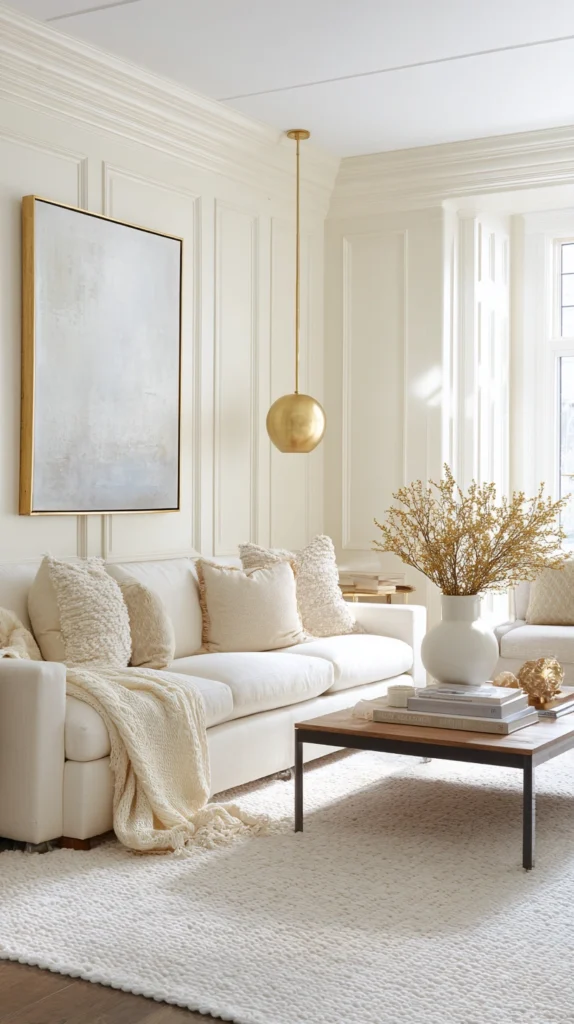
Cushions and throws in genuinely washable, durable fabrics layered onto the formal seating, providing softness and daily-use resilience simultaneously.
Why washable textiles matter as much as the underlying upholstery
Even with durable upholstery fabric, cushions and throws that cannot be easily cleaned reintroduce the same use-anxiety the fabric upgrade was meant to resolve. Genuinely washable textiles extend that practical resilience throughout the room’s soft furnishings.
The cushion covers
Removable, machine-washable cushion covers, in elevated fabrics and patterns, allowing the room’s formal color story to be maintained while addressing the practical reality of daily use.
The throw material
A durable, washable knit or woven throw, rather than a delicate, dry-clean-only fabric requiring the same cautious handling the room is otherwise working to move away from.
The color and pattern coordination
Coordinated with the room’s overall formal palette, ensuring the practical fabric choice does not read as a visible compromise in the room’s elevated appearance.
The everyday use encouragement
Textiles genuinely used and regularly laundered, rather than displayed purely for appearance and treated too preciously for actual daily contact.
The overall effect
Soft furnishings that extend the room’s overall practical resilience down to its smallest textile details, ensuring no single element of the room remains too delicate for genuine daily use.
Cost breakdown: Washable cushion covers (4–6): $60–150 Washable throw: $40–90 Total: $100–240
12. The Bar Cart or Drinks Station Addition
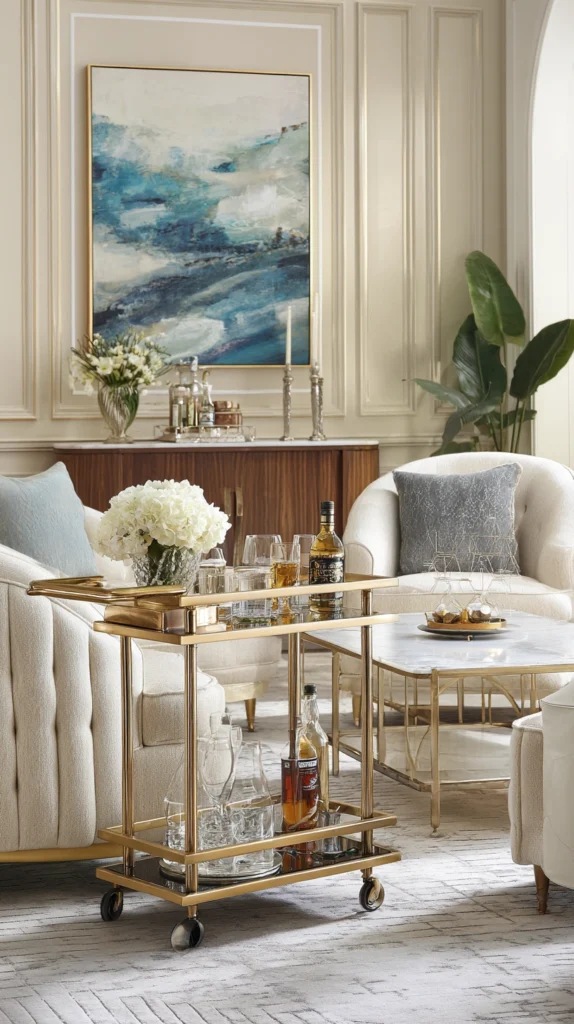
A small bar cart or drinks station added to the formal room, providing a genuine, regularly used function beyond pure display, encouraging the room’s actual daily or weekly use.
Why a functional drinks station gives the room a concrete daily-use reason
A formal room without any specific ongoing function can default to being used only for rare guest occasions. A bar cart or drinks station gives household members a specific, genuine reason to use the room regularly, even without company present.
The cart or station
A small bar cart or a section of a console table, stocked with regularly used spirits, wine, and glassware, positioned within the formal room itself.
The everyday use case
Genuinely used for an evening drink, rather than styled purely for occasional entertaining, giving the room a specific, repeated daily or weekly function.
The styling integration
Glassware and bottles arranged with the same considered styling given to any other display within the room, maintaining its formal visual presentation even as it serves genuine daily function.
The conversation invitation
A drinks station naturally drawing household members into the room for a specific activity, rather than the room remaining purely a space passed by rather than entered.
The overall effect
A concrete, ongoing reason for the room’s regular use, directly countering the tendency for a formal space to become reserved exclusively for rare special occasions.
Cost breakdown: Bar cart or drinks station setup: $150–400 Total: $150–400
13. The Pet and Child-Friendly Formal Fabric Choices
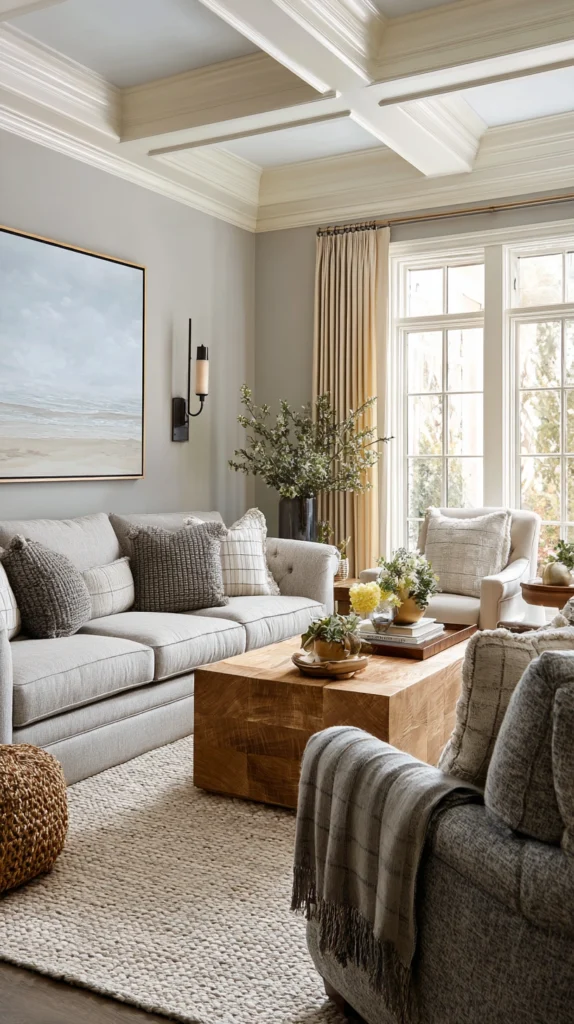
Furniture specifically selected in fabrics and finishes genuinely suited to a household with pets or young children, rather than assuming a formal room must be off-limits to them entirely.
Why accommodating pets and children directly, rather than excluding them, makes the room genuinely livable
Many households simply declare a formal living room off-limits to pets and children, effectively removing a significant portion of the household’s actual daily life from the room. Choosing genuinely resilient materials instead allows the room to remain formal while welcoming the whole household.
The fabric selection
Pet-hair-resistant weaves, scratch-resistant leather or performance fabric alternatives, and stain-resistant textiles throughout, chosen specifically with the household’s actual pets or children in mind.
The color and pattern strategy
Patterns and mid-tone colors that hide pet hair, minor stains, and everyday wear more effectively than a solid, pale color, without sacrificing the room’s overall elevated color story.
The furniture height and edges
Furniture without particularly sharp corners or fragile, easily toppled accent pieces at a young child’s height, addressing genuine safety alongside pure material durability.
The whole-household inclusion
The room genuinely included in the family’s actual daily life, pets and children included, rather than existing as an adults-only, guests-only space.
The overall effect
A formal room that welcomes the entire household rather than excluding a significant portion of its actual daily life, the material choices making that inclusion genuinely practical rather than requiring constant vigilance.
Cost breakdown: Pet and child-resistant fabric upholstery: $600–1,800 Total: $600–1,800
14. The Complete Livable Formal Living Room (The Fully Balanced Elegant Room)
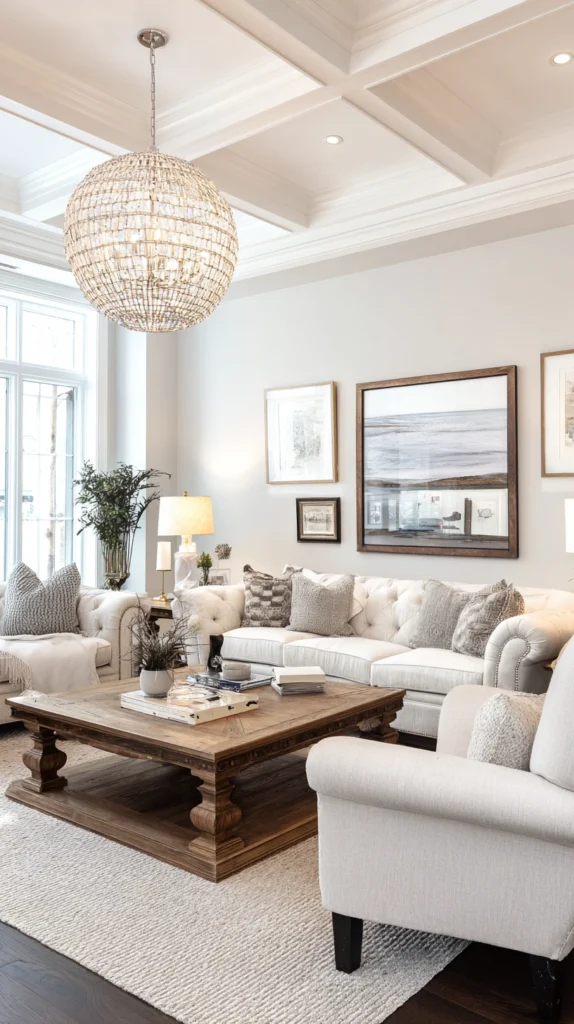
A complete formal living room combining several of the approaches above — durable fabric, genuine seating comfort, layered lighting, and household permission to actually use the space — treating formality and livability as complementary qualities rather than a compromise between the two.
What separates the complete room from a single durable fabric swap
A single reupholstered sofa in performance fabric within an otherwise untouchable, over-precious room: a meaningful start. A complete livable formal living room: every element — material durability, genuine comfort, layered lighting, and household habit — working together, so the room reads as elevated and feels genuinely welcoming in equal measure.
The elements of the complete livable formal living room
The materials
High-performance, durable fabrics throughout, on both major furniture and smaller textiles, removing use-anxiety from every surface in the room.
The comfort
Genuinely comfortable seating, including at least one obviously relaxed reading chair, alongside the room’s more formal, tailored pieces.
The lighting
Layered lamp lighting supporting daily use, alongside the room’s formal overhead fixture reserved for special occasions and everyday dimmed use alike.
The layout
Furniture arranged for genuine conversation and daily function, rather than purely symmetrical display.
The personal integration
Family photographs and genuinely used objects — china, a drinks station — signaling the room belongs to actual daily life rather than existing purely for outside impression.
The household permission
A deliberate, ongoing practice of actually using the room regularly, rather than reserving it exclusively for guests.
The complete design in action
An ordinary Tuesday evening:
After dinner: The family gathered in the formal living room, not reserved for a special occasion, simply because it is a genuinely comfortable place to be.
On the sofa: A cup of tea set down without anxiety, the performance fabric handling any minor spill without concern.
In the reading chair: Someone genuinely relaxed with a book, the room’s formal silhouette elsewhere not preventing this one obviously comfortable spot from being used exactly as intended.
A pet curled on the rug: Included in the room’s daily life rather than excluded from it, the durable materials making that inclusion possible without constant vigilance.
The complete livable formal living room: not a room admired from the doorway and otherwise avoided, but a genuinely elegant space that earns its square footage every single day, proving formality and livability were never actually in conflict.
Cost breakdown for the complete room: Assuming a starting point of an existing but overly precious formal room: Performance fabric reupholstery (sofa and chairs): $1,200–3,000 Durable rug: $400–1,200 Layered lighting: $160–400 Comfortable reading chair: $400–1,200 Durable coffee table: $400–1,200 Small textile and styling updates: $150–350 Total: $2,710–7,350
Phased over two or three projects:
Project one: Performance fabric reupholstery on the primary seating, the single highest-impact change for removing use-anxiety
Project two: Layered lighting and the durable rug, extending the room’s daily-use comfort
Project three: The reading chair, coffee table upgrade, and personal styling integration, completing the room’s full balance of formality and genuine livability
The complete livable formal living room: not a room that sacrifices elegance for comfort, but proof that genuine material quality and thoughtful design allow both qualities to coexist fully.
The Question Before Any Formal Living Room Decision
Before choosing a single element:
What is the primary reason this room currently goes unused day to day?
If the answer is: the furniture feels too delicate or precious to actually sit on — start with the high-performance fabric upgrade, the single highest-leverage change available.
If the answer is: the room is comfortable enough but nobody has a habit of using it — the china integration and household permission principle, alongside a specific daily-use function like a bar cart.
If the answer is: the lighting makes the room feel unused except for special occasions — the layered lamp lighting addition.
If the answer is: pets or children are effectively excluded from the room — the pet and child-friendly fabric selection, extending genuine daily use to the whole household.
The design follows the room’s specific reason for currently going unused, more than any single universal formal-meets-livable formula. Every idea on this list addresses a different piece of what prevents a formal room from being genuinely enjoyed daily. The question is which particular barrier matters most in this specific home.
The single fabric upgrade removing use-anxiety from the room’s main seating: still meaningfully extends how comfortable the room feels to actually use. The complete room, balanced across material, comfort, lighting, and household habit: a space that is both genuinely elegant and genuinely lived in, proving the two were never actually in tension.
That balance: the whole point of building a formal room meant to be enjoyed rather than merely admired.
Getting Started This Weekend
The immediate livable formal room solution:
Identify the specific reason the room currently feels off-limits.
Delicate fabric, no established use habit, insufficient lighting for daily use — the answer shapes which of the fourteen approaches matters most right now.
Add one lamp and turn it on this evening, using the room without any special occasion as the reason.
The lowest-cost, most immediate test of whether daily use itself starts to feel more natural.
Bring in one genuinely comfortable throw or cushion, chosen specifically for how inviting it looks.
A small, visible signal that relaxed use is welcome.
Sit in the room for twenty minutes this week, doing nothing more than existing there.
The rest of the design: the elaboration of this moment.
The permission: the beginning. The livable formal room: what gets used, and enjoyed, because of it.