14 Korean Minimalist Bedroom Ideas for a Clean, Serene Space
The bedroom stopped feeling like a room I needed to escape from the moment I stopped filling it with things. Not a bigger closet. Not more storage furniture. Not a new headboard or a statement rug or additional decorative objects arranged across every surface.
The removal of nearly everything else.
Because subtracting, rather than adding, did something no new purchase ever managed. Before it: a bedroom with furniture on every wall, decorative objects on every surface, technically well-decorated but somehow never quite restful. After it: a room with a bed, a low platform, soft neutral tones, and almost nothing else, the emptiness itself becoming the room’s most calming feature.
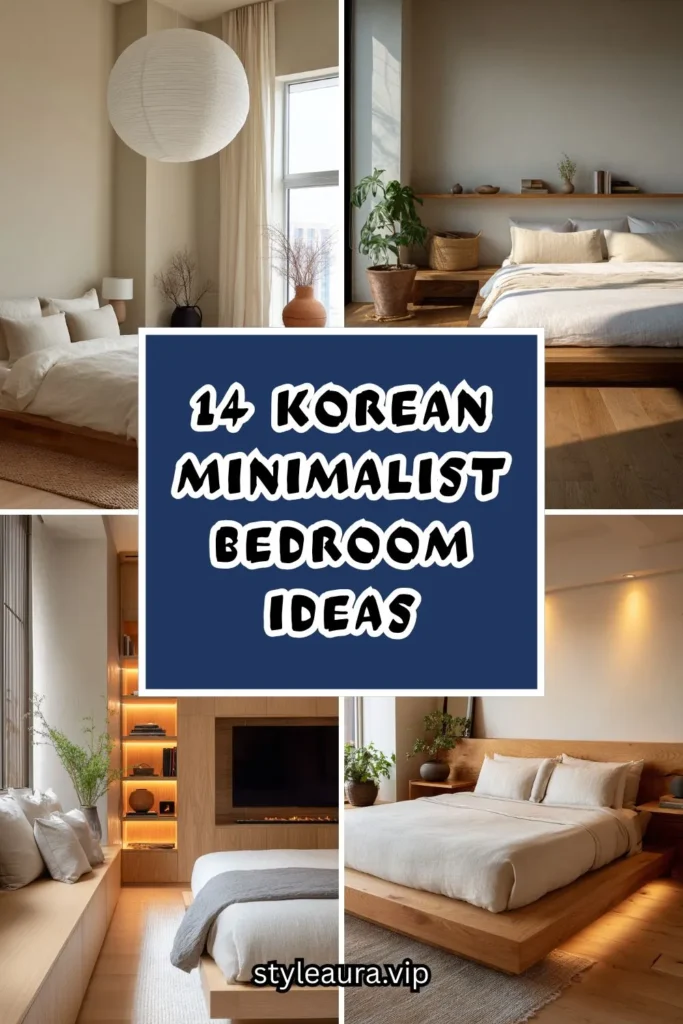
Korean minimalist bedroom design is not simply removing furniture until a room looks sparse. It is a specific aesthetic tradition, built around soft neutral palettes, natural materials, low furniture silhouettes, and a deliberate absence of visual clutter, all working together toward a single goal: a room that actively promotes rest rather than merely containing a bed. The bedroom: no longer a room decorated like every other room, but a genuinely calming space built around restraint as its central design principle.
Here are 14 Korean minimalist bedroom ideas for a clean, serene space — from the simplest color palette shift to the most fully realized minimalist retreat — built on that understanding.
Why Korean Minimalism Reads as Calmer Than Standard Minimalism
The soft neutral distinction
Where much Western minimalism leans toward stark white and cool grey, Korean minimalist design typically favors warmer, softer neutrals — ivory, beige, soft grey-beige, muted sage — creating a gentler, less clinical version of the same underlying restraint.
The low furniture principle
Without low furniture silhouettes:
Standard-height beds and furniture, functional but visually occupying more of the room’s vertical space and creating a more imposing, less open feeling.
The room: minimal in object count, perhaps, but not necessarily calm in feeling.
With low furniture silhouettes:
A low platform bed, low side tables, and furniture generally closer to the floor, opening up the room’s visual field and creating a distinctly more grounded, calm feeling.
The room: reading as genuinely serene rather than simply sparsely furnished.
The natural material emphasis
Wood, linen, cotton, and stone appear far more consistently in this aesthetic than glossy, synthetic, or heavily processed materials, reinforcing the room’s overall sense of quiet, organic calm.
The function-over-decoration principle
Every object in a well-executed Korean minimalist bedroom tends to serve a clear function — nothing purely decorative exists without also being genuinely useful, or is included so sparingly that it barely registers as “decoration” in the conventional sense.
The Five Core Elements of Korean Minimalist Bedroom Design
Before making any single change:
A soft neutral color palette
Ivory, beige, soft grey, and muted sage, rather than stark white or bold color.
The foundational element every other decision builds upon.
Achievable through paint alone at relatively low cost.
Low-profile furniture
A low platform bed, low side tables, and minimal-height furniture throughout.
Changes the room’s entire visual proportion and sense of scale.
Often requires furniture-specific sourcing rather than standard height pieces.
Natural, tactile materials
Linen bedding, wood furniture, and woven natural fiber textiles.
Reinforces the room’s organic, calm quality through touch as much as sight.
Suits both a full renovation and a simple textile swap.
Deliberate emptiness
Genuine negative space, both on surfaces and within the room’s overall floor plan.
The single most important and most difficult principle to maintain.
Requires an ongoing commitment to restraint rather than a one-time styling choice.
Soft, diffused lighting
Warm, indirect light sources rather than bright overhead fixtures.
Reinforces the room’s overall calm, restful atmosphere.
Often achieved through paper or fabric-shaded fixtures.
1. The Soft Ivory and Beige Color Palette
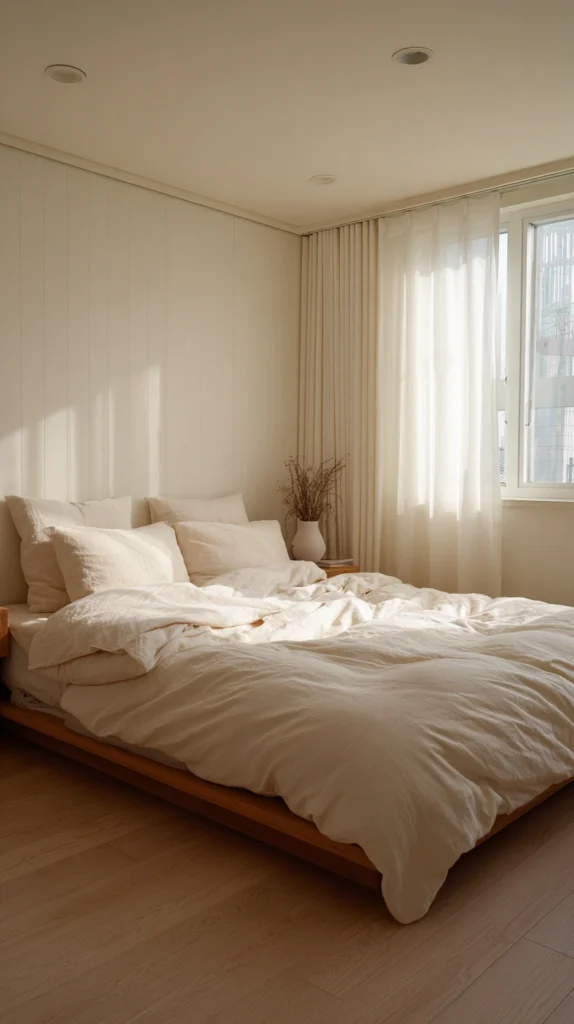
Every wall, and much of the room’s textiles, restricted to a tight range of ivory, beige, and soft warm neutrals, avoiding both stark white and any bold accent color.
Why a warm neutral palette differs meaningfully from a standard white minimalist room
Stark white can read as clinical and cold, particularly under artificial light. A warm ivory or beige palette retains minimalism’s visual quiet while adding genuine warmth, avoiding the more sterile quality often associated with a purely white minimalist room.
The wall color
A soft ivory, warm beige, or a muted greige, applied consistently across all walls rather than a single accent wall, establishing the room’s overall calm tonal foundation.
The textile coordination
Bedding, curtains, and any upholstered furniture kept within the same tight tonal range, avoiding any single bold color that would disrupt the room’s overall visual quiet.
The texture reliance
With color intentionally restricted, texture becomes the primary source of visual interest — a woven throw against smooth linen sheets, a nubby wool rug against a polished wood floor.
The natural light interaction
A soft neutral palette generally reading warmer and more inviting under both natural daylight and warm artificial lighting than a stark white would, reinforcing the room’s overall serene quality throughout the day.
The overall effect
A room that reads as calm and restful rather than sparse and cold, the warm neutral palette doing considerable work toward that specific emotional register.
Cost breakdown: Paint (full room): $80–150 Total: $80–150
2. The Low Platform Bed
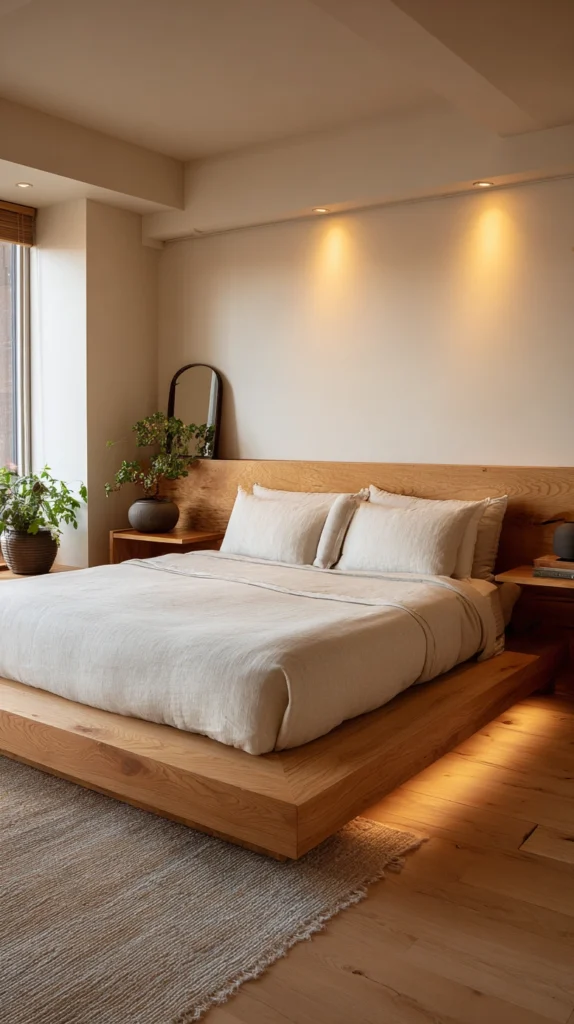
A low platform bed frame, sitting close to the floor, replacing a standard-height bed frame with a substantially lower, more grounded silhouette.
Why a low bed changes the room’s entire sense of proportion and calm
A low platform bed reduces the room’s overall vertical furniture presence, opening up visual space above and around it, and creating a more grounded, calm feeling than a standard-height bed frame with a tall headboard.
The bed frame
A simple, low platform frame, often just a few inches off the floor, in a natural wood tone or a simple upholstered low panel rather than an elaborate, tall headboard structure.
The mattress height
The overall sleeping surface sitting considerably lower than a standard bed, reinforcing the room’s grounded, minimal visual profile.
The absence of a tall headboard
Many platform beds in this aesthetic feature no headboard at all, or only a very low one, keeping the wall behind the bed genuinely open and uncluttered.
The material choice
Natural wood, left in a light or medium tone, or a simple upholstered low panel in a neutral linen, avoiding any dark, heavy, or ornately detailed frame.
The overall effect
A bed that anchors the room without dominating it, the low silhouette contributing directly to the room’s overall sense of open, calm space.
Cost breakdown: Low platform bed frame: $200–600 Total: $200–600
3. The Deliberately Empty Nightstand
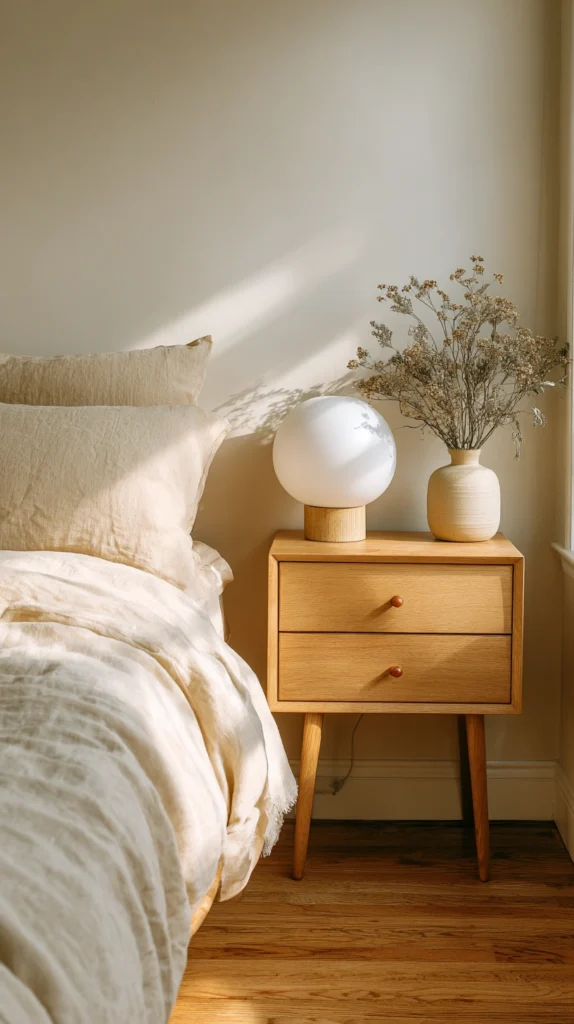
A nightstand, or a small low side table, kept almost entirely bare, holding at most a single small lamp and nothing else.
Why genuine emptiness is itself a deliberate design choice in this aesthetic
Rather than a nightstand styled with several small objects, a nearly bare surface reflects this aesthetic’s core principle: negative space itself is a valued design element, not simply an absence to be filled.
The nightstand
A low, simple table, in natural wood or a simple painted finish, positioned beside the low platform bed.
The single object
One small lamp, and nothing else, rather than the layered arrangement of books, trays, and small objects common to many other bedroom styling approaches.
The maintenance discipline
Genuinely maintained as bare, rather than styled once and then allowed to accumulate clutter, requiring an ongoing commitment to the same restraint principle central to this entire aesthetic.
The functional exception
A single book, if genuinely being read, permitted as the one small departure from complete emptiness, though returned to a drawer or shelf once finished rather than left to accumulate into a growing stack.
The overall effect
A surface that embodies the aesthetic’s core philosophy directly, the emptiness itself functioning as the room’s intended calming feature rather than an unfinished or underdeveloped styling choice.
Cost breakdown: Low side table: $40–100 Small lamp: $30–70 Total: $70–170
4. The Natural Linen Bedding Layer
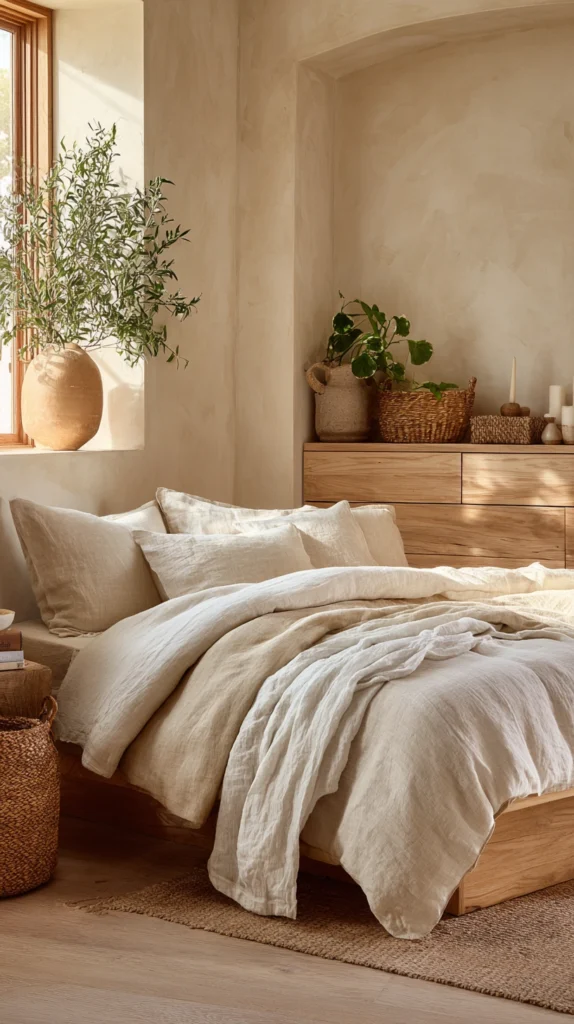
Bedding entirely in natural, unbleached or lightly dyed linen, in soft neutral tones, replacing patterned or brightly colored bedding with a single, tactile, natural material.
Why linen specifically suits this aesthetic’s material philosophy
Linen’s natural texture, slight wrinkle, and inherently muted color palette embody the aesthetic’s broader preference for genuine, unprocessed natural materials over smoother, more uniform synthetic alternatives.
The bedding
Linen sheets, a linen duvet cover, and linen or linen-blend pillowcases, in a soft ivory, warm oatmeal, or muted sage tone.
The texture embrace
Linen’s natural wrinkle and slight irregularity left unaddressed, rather than pressed flat and smooth, consistent with this aesthetic’s broader comfort with visible natural material texture.
The layering
A single lightweight blanket or a simple woven throw at the foot of the bed, rather than multiple patterned decorative pillows layered densely across the bed’s surface.
The color restraint
Kept within the same tight neutral palette established by the room’s walls, avoiding any patterned or brightly colored bedding that would disrupt the overall visual calm.
The overall effect
A bed that reads as genuinely soft and inviting through material quality and tone rather than decorative styling, reinforcing the aesthetic’s broader preference for tactile, natural simplicity.
Cost breakdown: Linen bedding set: $100–250 Total: $100–250
5. The Hidden Storage Wall
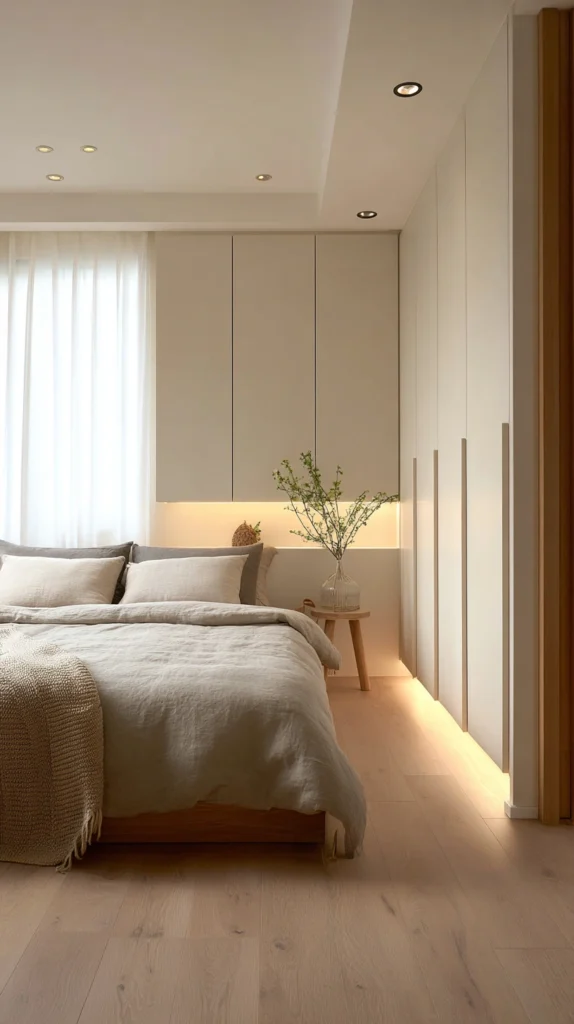
Built-in wardrobe storage, fully concealed behind flat, handle-less cabinet doors, keeping all clothing and personal items entirely out of view.
Why concealed storage is essential to maintaining genuine minimalism over time
A minimalist room depends on maintaining an uncluttered appearance day to day, not just on the day it is first styled. Fully concealed storage removes the temptation and visual clutter of open shelving or a visible closet, keeping the room’s calm appearance genuinely sustainable.
The wardrobe construction
Floor-to-ceiling built-in cabinetry, with flat, unadorned doors, running one full wall, providing substantial storage capacity while presenting a clean, minimal exterior.
The handle-less design
Push-to-open mechanisms or discreet recessed pulls, rather than visible handles or knobs, maintaining the wardrobe wall’s flat, uninterrupted appearance.
The interior organization
Genuine, well-planned interior organization — drawers, shelves, and hanging space — ensuring that everything has a specific place, which in turn makes maintaining the room’s clutter-free exterior considerably easier.
The color match
The wardrobe doors painted or finished in the same tone as the surrounding walls, allowing the storage to visually recede rather than standing out as a separate furniture element.
The overall effect
A room where genuine storage capacity exists without any of it being visible, directly supporting the aesthetic’s core requirement of sustained, everyday visual calm rather than a one-time styled appearance.
Cost breakdown: Built-in wardrobe wall: $1,500–4,000 Total: $1,500–4,000
6. The Soft Diffused Paper Lantern Lighting
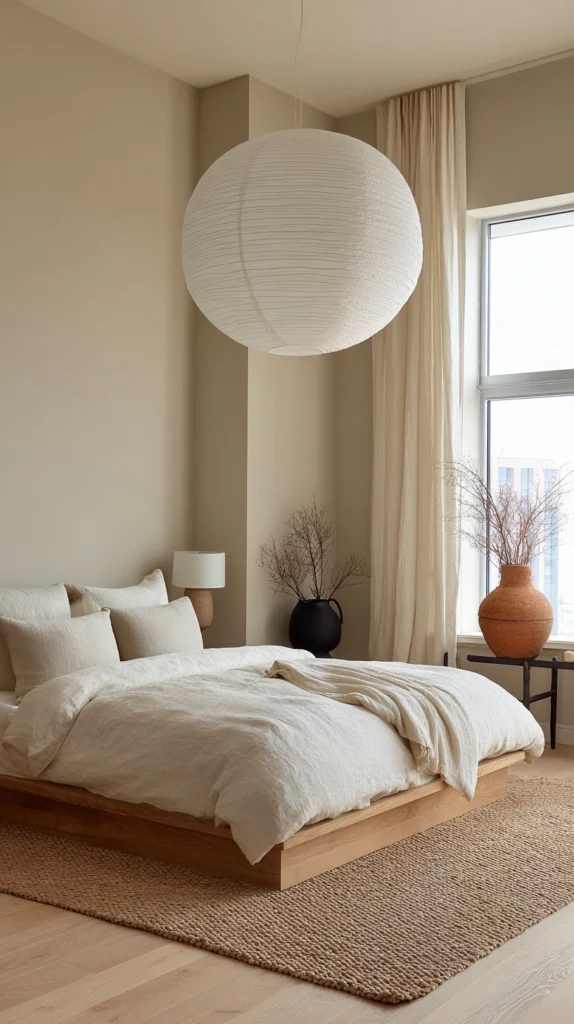
A paper or fabric-shaded pendant light, providing soft, evenly diffused light throughout the room, rather than a bright, direct overhead fixture.
Why diffused lighting suits this aesthetic’s overall calm philosophy
Bright, direct overhead lighting creates harsh shadows and a more clinical, alert atmosphere. A paper or fabric-shaded fixture diffuses light evenly and softly, reinforcing the room’s overall restful, calm quality.
The fixture
A round paper or rice-paper-style pendant lantern, or a simple fabric drum shade, providing soft, even light distribution rather than a direct, harsh source.
The bulb warmth
A warm, low-wattage bulb, avoiding the cooler, brighter light more common in standard overhead fixtures.
The placement
Centered in the room or positioned above the bed, providing genuinely even light distribution throughout the space rather than a single harsh point source.
The supplementary lighting
A single small lamp on the nightstand, providing an additional, even softer light layer for evening reading or winding down, without requiring the main overhead fixture at all.
The overall effect
A room lit in a way that actively reinforces its calm, restful intention, the soft, diffused quality of light doing as much work toward that goal as any furniture or color choice.
Cost breakdown: Paper or fabric pendant light: $40–100 Small nightstand lamp: $30–70 Total: $70–170
7. The Single Statement Plant
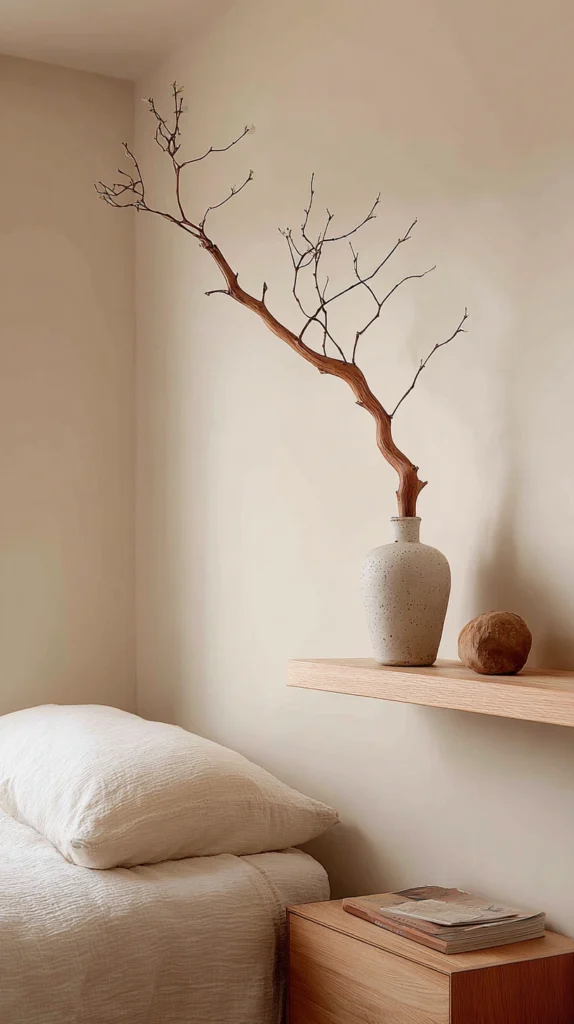
One well-chosen plant, in a simple ceramic pot, providing the room’s sole living, organic element without any additional greenery scattered elsewhere.
Why one plant suits this aesthetic better than several scattered around the room
A single, well-placed plant provides genuine organic life and a small amount of visual interest without disrupting the room’s overall sense of restraint — several plants placed throughout would begin to work against the minimal, uncluttered quality central to the aesthetic.
The plant selection
A single structural plant — a small fig tree, a snake plant, or a simple branch arrangement in a vase — chosen for a calm, considered silhouette rather than a particularly showy or colorful variety.
The pot
A simple, unglazed or lightly glazed ceramic pot, in a neutral tone consistent with the room’s broader palette, avoiding a bright or patterned planter that would disrupt the room’s visual calm.
The placement
Positioned in a single considered spot — a corner, beside the window — rather than scattered as multiple smaller plants throughout the room.
The maintenance
Kept healthy and well-tended, since a single plant in an otherwise minimal room registers with disproportionate visual weight, meaning any decline in its condition would be similarly disproportionately noticeable.
The overall effect
A single point of organic, living calm within the room’s broader restraint, the plant’s presence feeling deliberate and considered rather than one of many competing decorative elements.
Cost breakdown: Structural plant and ceramic pot: $30–80 Total: $30–80
8. The Low Floor-Level Seating Corner
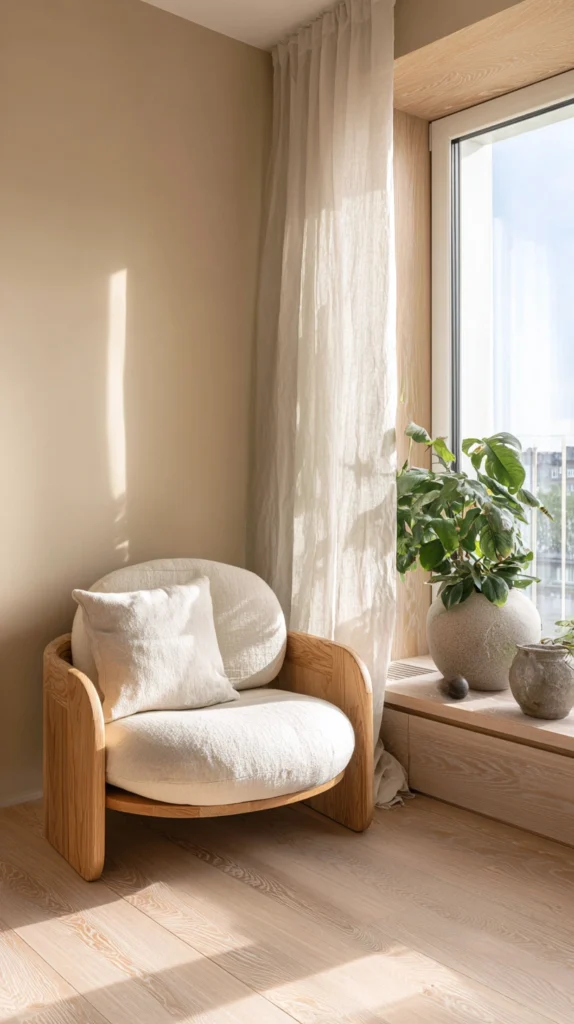
A single low chair or a floor cushion, positioned near a window, providing a small seating spot without introducing a full, standard-height armchair into the room.
Why low seating suits this aesthetic more than a standard chair
A low chair or floor cushion continues the same grounded, close-to-the-floor visual language established by the platform bed, rather than introducing a taller furniture silhouette that would disrupt the room’s overall low, open profile.
The seating choice
A low, simple chair with a wood frame and a thin cushion, or a single floor cushion, positioned near natural light for a small reading or quiet sitting spot.
The scale restraint
Kept genuinely minimal in scale, avoiding a large, overstuffed chair that would introduce visual bulk inconsistent with the rest of the room’s low, spare furniture profile.
The surrounding space
Generous negative space around the seating spot, rather than additional side tables or accessories crowding the small nook.
The natural light
Positioned specifically to take advantage of a window’s natural light, reinforcing the spot’s quiet, contemplative function.
The overall effect
A small additional seating option that maintains the room’s overall low, uncluttered profile rather than introducing a taller, bulkier furniture piece that would disrupt it.
Cost breakdown: Low chair or floor cushion: $60–200 Total: $60–200
9. The Exposed Natural Wood Flooring
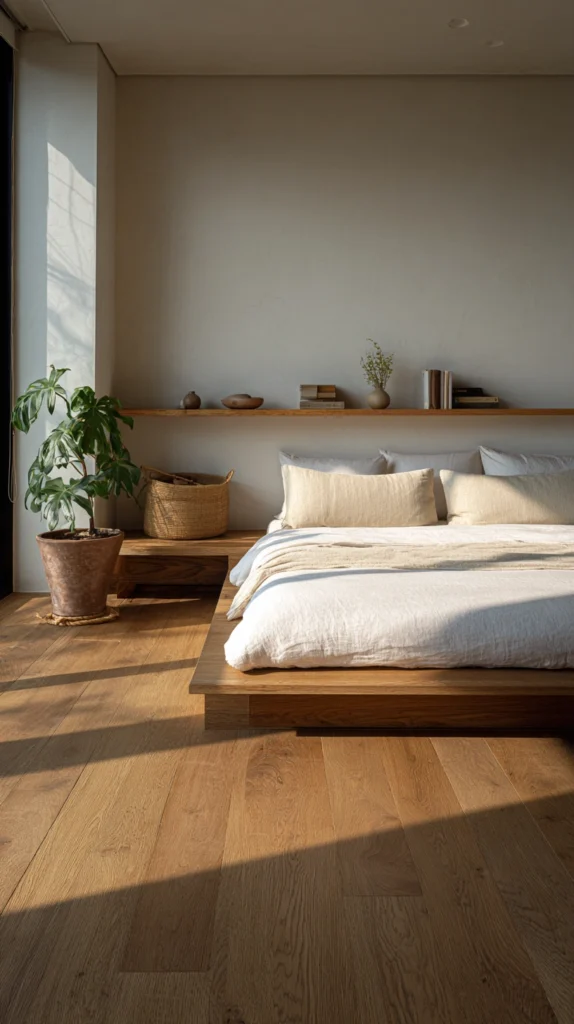
Natural wood flooring, left in a light or medium natural tone without a heavy stain or a covering rug, allowing the material’s genuine grain and warmth to remain visible throughout the room.
Why exposed natural wood suits this aesthetic’s material philosophy directly
Wide-plank natural wood flooring, left simple and unobscured by heavy rugs or dark staining, reinforces the aesthetic’s broader preference for visible, genuine natural material over a fully carpeted or heavily layered floor treatment.
The wood finish
A light or medium natural stain, or the wood left entirely unstained and simply sealed, allowing its natural color and grain to remain the floor’s primary visual quality.
The minimal rug approach
If a rug is used at all, a single small, simple rug beneath the bed, rather than a large area rug covering most of the floor, allowing the wood itself to remain visible and prominent.
The maintenance
Regularly cleaned and maintained, since exposed wood flooring in a minimal room registers any wear or damage more prominently than a fully carpeted or heavily rugged floor would.
The underfloor heating consideration
Radiant underfloor heating, if feasible, addressing the practical concern of exposed wood flooring feeling cold underfoot, particularly relevant in colder climates.
The overall effect
A floor that reinforces the room’s overall natural material palette and sense of open, uncluttered space, the wood’s own texture and grain providing visual interest without any additional pattern or layering.
Cost breakdown: Natural wood flooring (if installing new): $2,000–6,000 Small simple rug: $60–150 Total: $60–6,150 depending on whether flooring replacement is needed
10. The Sheer Linen Curtain Treatment
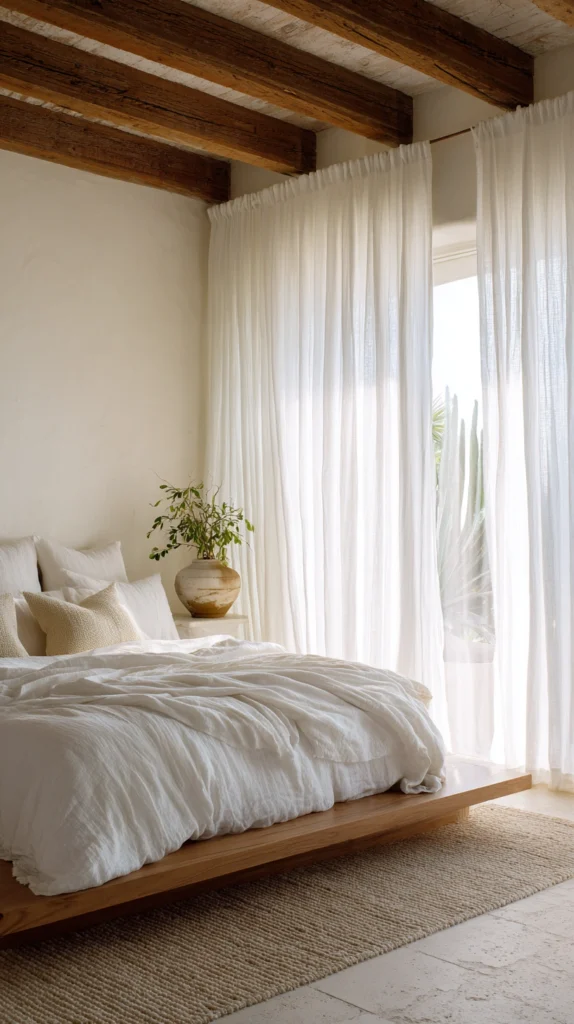
Simple, sheer linen curtains, filtering natural light softly throughout the day, rather than heavier drapery or a patterned window treatment.
Why sheer linen suits this aesthetic’s overall approach to light and texture
Sheer linen curtains filter and soften natural light without blocking it entirely, maintaining the room’s bright, airy quality throughout the day while adding a layer of soft, natural texture consistent with the rest of the room’s material choices.
The curtain fabric
Lightweight, sheer linen, in the same soft neutral tone as the room’s walls and bedding, rather than a heavier blackout curtain or a patterned fabric.
The hanging style
Simple curtain rings on a thin rod, hung from ceiling height for maximum height and a clean, understated presentation.
The light filtering
Genuine natural light passing softly through the sheer fabric, maintaining the room’s bright, airy daytime quality rather than a heavier curtain that would darken the space.
The privacy consideration
A secondary blackout layer added behind the sheer curtains if genuine privacy or full darkness is needed for sleep, kept discreet and used only when required rather than as the primary daytime window treatment.
The overall effect
Windows that contribute to the room’s overall soft, natural light quality throughout the day, the sheer linen continuing the same material and tonal restraint established throughout the rest of the space.
Cost breakdown: Sheer linen curtains: $40–90 Curtain rod: $20–45 Total: $60–135
11. The Woven Natural Fiber Textural Layer
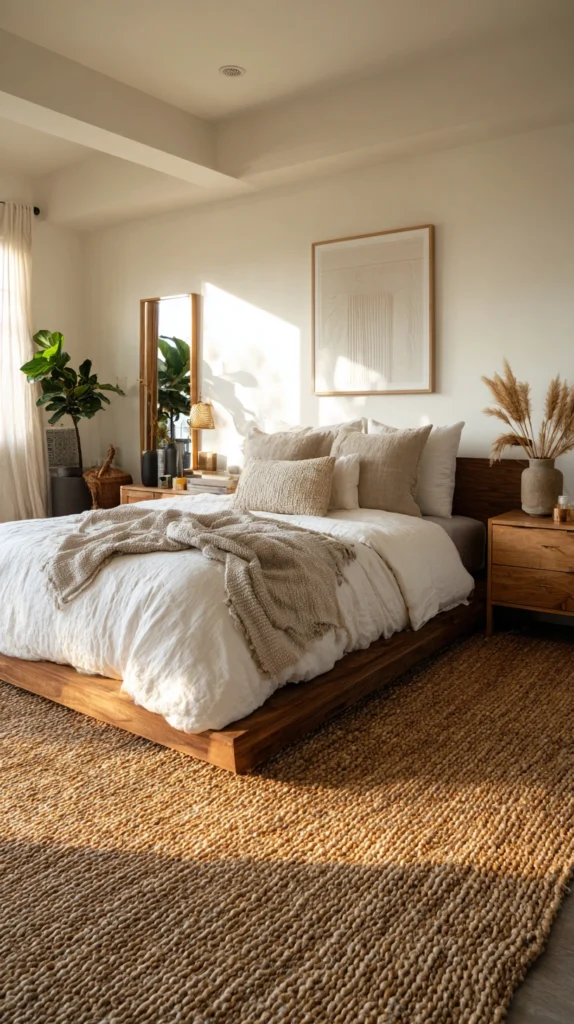
A single woven natural fiber element — a jute rug, a rattan chair, or a woven basket — introducing genuine tactile texture within the room’s otherwise smooth, soft material palette.
Why one textural natural fiber piece adds necessary variety to an otherwise smooth palette
A room built entirely from smooth linen, painted walls, and simple wood furniture can begin to feel visually flat without at least one element offering a genuinely different, rougher texture. A single woven natural fiber piece provides that contrast.
The element selection
A jute rug beneath the bed, a rattan accent chair, or a single large woven basket used for extra blanket storage, chosen for genuine textural contrast against the room’s smoother surfaces.
The color coordination
Kept within the same warm neutral tone family as the rest of the room, ensuring the textural contrast comes from material and weave rather than an additional competing color.
The restraint principle
Limited to one single textural element, rather than introducing woven texture in several different places throughout the room, maintaining the same overall restraint central to this aesthetic.
The functional integration
Chosen for genuine daily function — the rug actually walked on, the basket actually used for storage — rather than existing purely as a decorative textural accent.
The overall effect
A single point of textural variety and interest within an otherwise smooth, soft material palette, preventing the room from feeling visually flat despite its overall material restraint.
Cost breakdown: Jute rug, rattan chair, or woven basket: $60–200 Total: $60–200
12. The Concealed Television and Media Wall
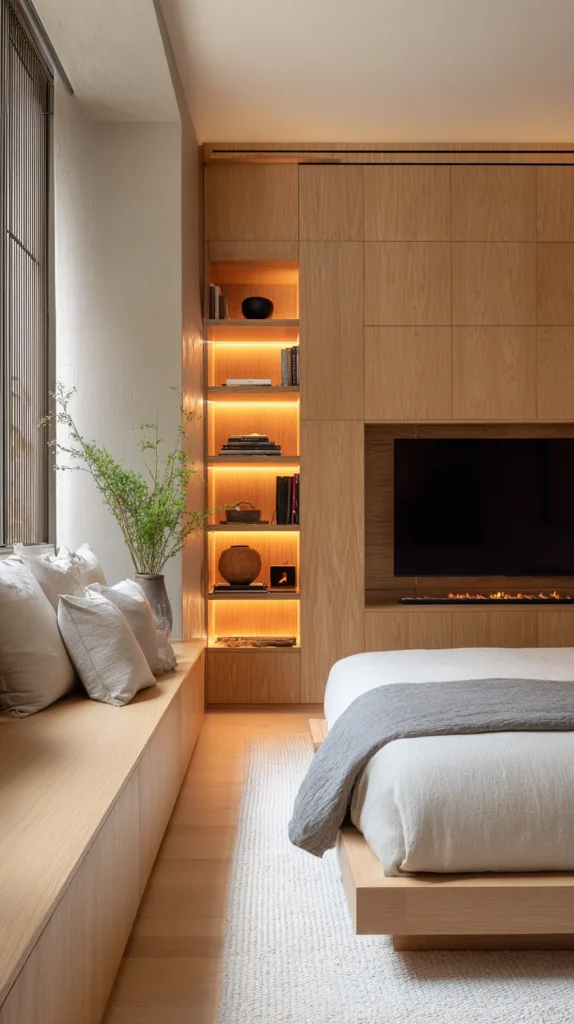
A television, if included in the bedroom at all, fully concealed behind a sliding panel or within a cabinet, keeping the room’s main wall free of a dark screen when not in active use.
Why concealing electronics matters more in this aesthetic than in most others
A dark, glossy television screen is one of the most visually disruptive objects possible in an otherwise soft, natural, uncluttered room, its cold, reflective surface working directly against the aesthetic’s entire material and visual philosophy.
The concealment method
A sliding wood panel, a cabinet with doors, or a lift mechanism concealing the television within a piece of furniture, keeping the screen entirely out of view except during active use.
The panel material
Matched to the room’s other wood tones, allowing the concealment panel to read as a genuine piece of furniture rather than an obvious television cover.
The alternative approach
Many rooms following this aesthetic exclude a television from the bedroom entirely, reflecting the broader philosophy that the bedroom should be reserved specifically for rest rather than entertainment, worth considering as an alternative to concealment.
The remaining wall
The wall reading as calm and uninterrupted when the television is concealed, maintaining the room’s overall visual quiet even if the household does choose to include a screen.
The overall effect
A room where even genuine modern technology needs does not compromise the space’s overall calm, uncluttered visual philosophy.
Cost breakdown: Concealment panel or cabinet: $300–800 Total: $300–800
13. The Single Framed Piece of Minimal Art
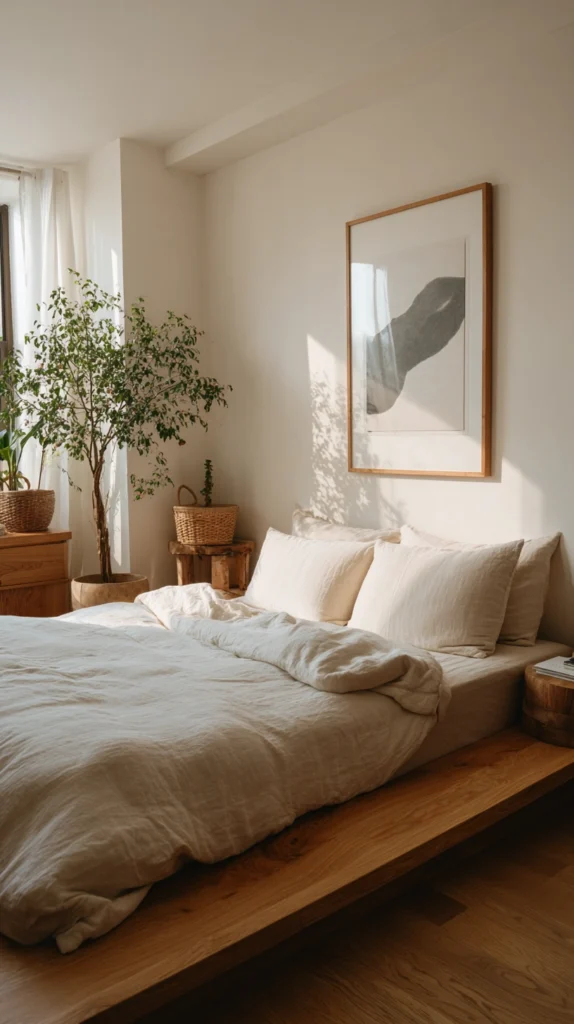
One small, restrained piece of art or a simple ink-wash style painting, hung alone on an otherwise bare wall, rather than a gallery arrangement or multiple decorative pieces.
Why a single piece of art suits this aesthetic better than a fuller gallery arrangement
A dense gallery wall, however well executed, works directly against the aesthetic’s core principle of genuine negative space. One small, considered piece, given generous surrounding bare wall, respects that principle while still allowing for a point of visual and emotional interest.
The art selection
A simple ink-wash landscape, an abstract minimal composition, or a single calligraphy-style piece, chosen for quiet, restrained visual quality rather than a bold, busy, or brightly colored piece.
The frame
A simple, thin frame in natural wood or a matching neutral tone, avoiding an ornate or heavy frame that would draw disproportionate attention.
The placement
Hung alone, with considerable surrounding bare wall, rather than as part of a denser arrangement, allowing the single piece the same kind of negative space valued throughout the rest of the room.
The subject restraint
Subject matter that reinforces rather than disrupts the room’s overall calm — a simple landscape, an abstract wash of muted color — rather than anything visually busy or emotionally intense.
The overall effect
A single point of considered visual interest that respects rather than undermines the room’s broader commitment to negative space and restraint.
Cost breakdown: Simple framed art piece: $40–120 Total: $40–120
14. The Complete Korean Minimalist Bedroom (The Fully Realized Serene Retreat)
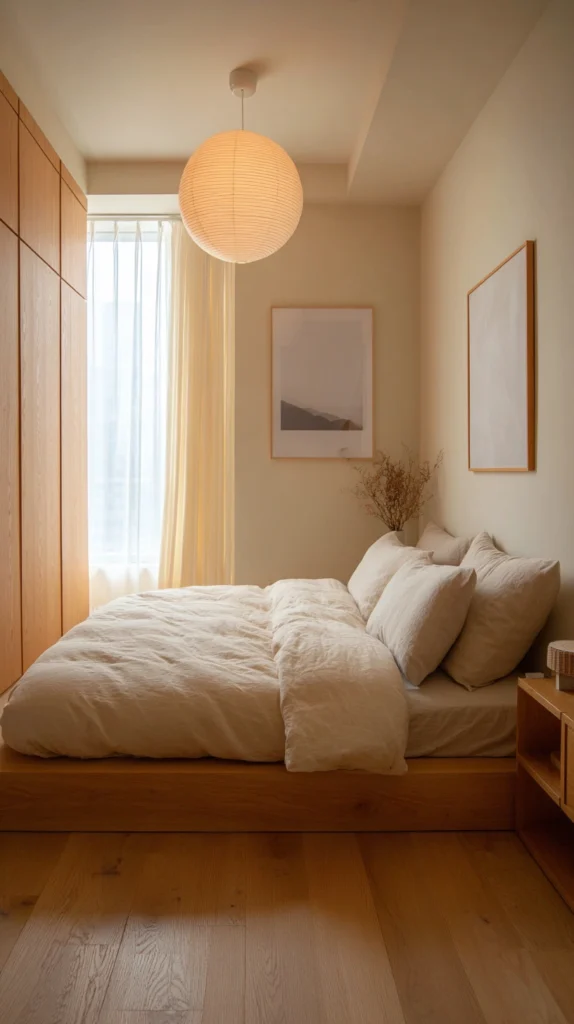
A complete bedroom combining several of the approaches above — a soft neutral palette, a low platform bed, concealed storage, natural materials, and diffused lighting — treating restraint itself as the room’s central, ongoing design principle rather than a single styling choice applied once.
What separates the complete room from a few individually minimal choices
A low bed frame placed in an otherwise cluttered room: a partial improvement. A complete Korean minimalist bedroom: every element — color, furniture height, material, storage, and lighting — working together toward the same restrained, calm philosophy, maintained consistently rather than achieved once and then allowed to accumulate clutter again.
The elements of the complete Korean minimalist bedroom
The palette
A soft ivory or beige color scheme, carried consistently across walls, bedding, and textiles.
The furniture profile
A low platform bed and correspondingly low side tables, keeping the room’s overall vertical furniture presence minimal.
The storage
Fully concealed wardrobe storage, ensuring genuine clutter-free maintenance is achievable on an everyday basis.
The materials
Linen bedding, natural wood furniture, and a single woven textural element, reinforcing the aesthetic’s organic, tactile quality throughout.
The lighting
Soft, diffused lighting from a paper or fabric-shaded fixture, avoiding harsh overhead light.
The restraint discipline
A single plant, a single piece of art, and genuinely maintained negative space throughout, rather than accumulated decorative objects.
The complete design in action
An evening in the finished room:
Entering: The soft ivory walls and low platform bed immediately establishing a calm, uncluttered first impression.
Settling in: Linen sheets, a single lamp’s warm glow, the room’s overall quiet supporting genuine rest rather than requiring active effort to relax within it.
The following morning: The room appearing exactly as calm and uncluttered as the night before, the concealed storage having kept the space genuinely tidy overnight.
The complete Korean minimalist bedroom: not a room decorated once to look sparse for a single photograph, but a genuinely and consistently restful space, built around restraint as an ongoing practice rather than a one-time styling choice.
Cost breakdown for the complete bedroom: Assuming a starting point of a standard, more cluttered bedroom: Paint (soft neutral palette): $80–150 Low platform bed: $200–600 Concealed wardrobe storage: $1,500–4,000 Linen bedding: $100–250 Diffused lighting: $70–170 Natural textural element and plant: $90–280 Single art piece: $40–120 Total: $2,080–5,570
Phased over two or three projects:
Project one: The color palette and linen bedding, the lowest-cost foundational shift
Project two: The low platform bed and diffused lighting
Project three: Concealed built-in storage, completing the room’s ability to maintain its calm appearance on an ongoing, everyday basis
The complete Korean minimalist bedroom: not simply a room with less furniture, but a space built specifically, and maintained consistently, around the principle that genuine rest depends on genuine visual and material calm.
The Question Before Any Korean Minimalist Bedroom Decision
Before making any single change:
What is the primary source of visual clutter or restlessness in the current bedroom?
If the answer is: too many objects and too little negative space — start with the deliberately empty nightstand and a genuine decluttering pass before any new purchase.
If the answer is: the room’s colors feel cold or the furniture feels visually heavy — the soft ivory palette shift and the low platform bed.
If the answer is: storage is inadequate, leading to visible clutter — the hidden storage wall, addressing the root cause of ongoing visual disorder.
If the answer is: the room simply lacks any sense of calm despite being tidy — the diffused paper lantern lighting and the natural linen bedding layer, addressing atmosphere rather than object count alone.
The design follows the room’s specific current source of restlessness, more than any single universal minimalist template. Every idea on this list addresses a different piece of what prevents a bedroom from feeling genuinely calm. The question is which particular issue matters most for this specific room.
The single shift to a soft neutral palette and a genuinely decluttered nightstand: still meaningfully changes how restful the room feels. The complete room, built around restraint as an ongoing practice: a space that actively supports rest, rather than merely containing a bed within an otherwise ordinary room.
That active support for rest: the whole point of building a genuinely minimalist bedroom rather than simply owning fewer things.
Getting Started This Weekend
The immediate Korean minimalist bedroom solution:
Clear every surface in the room completely, and return only what is genuinely necessary.
The single most revealing and most immediately impactful first step, before any purchase or paint color is considered.
Swap any bright white or cool-toned bedding for a soft ivory or beige linen.
An immediate shift in the room’s overall warmth and calm without requiring any furniture change.
Lower the room’s primary light source, whether through a new fixture or simply dimming and relying more on a soft lamp.
The rest of the design: the elaboration of this moment.
Commit to keeping the nightstand and main surfaces genuinely bare for one full week, before deciding what, if anything, truly needs to be added back.
The clearing: the beginning. The Korean minimalist bedroom: what remains, deliberately, after everything unnecessary has been removed.