13 Bedroom Plant Ideas for a Fresh Living Space
A bedroom is one of the few rooms where plant choice actually matters for reasons beyond decoration.
Light is usually more limited than in a living room, air quality affects actual sleep quality, and anything toxic matters more in a room where kids or pets spend unsupervised hours.
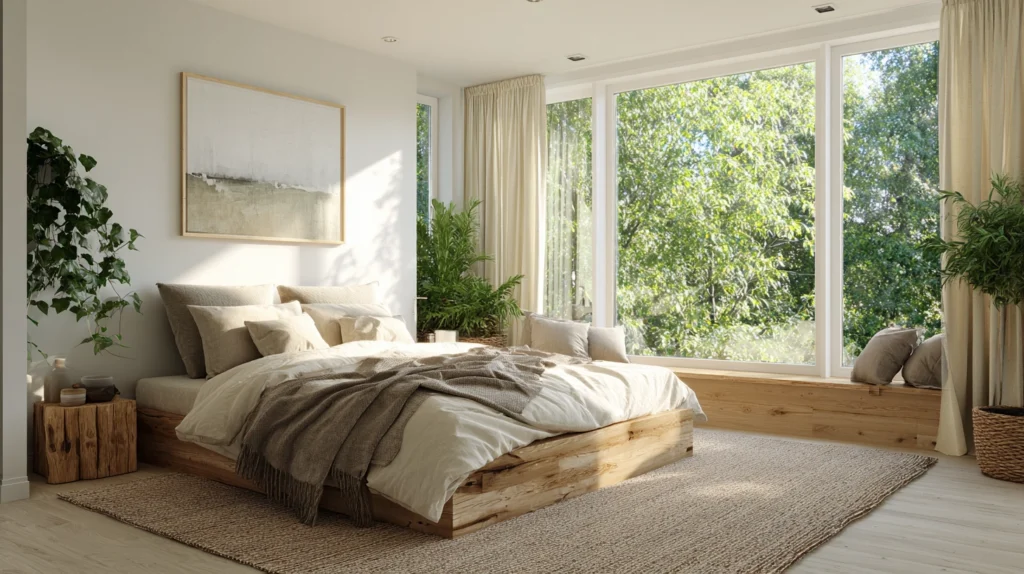
That makes bedroom plant selection a genuinely different exercise than picking something for a bright kitchen windowsill.
Here are 13 plants and placement ideas built specifically around what a bedroom actually needs, not just what looks good in a photo.
Every one of these accounts for typical bedroom light levels and genuine bedroom-specific concerns like safety and air quality.
Quick Reference: Matching a Plant to Your Bedroom Situation
| Bedroom Situation | Best Plant Choice | Why It Works |
| Very little natural light | Snake plant, ZZ plant | Genuinely tolerates dim conditions |
| Pets or young kids present | Spider plant, areca palm | Non-toxic if chewed or handled |
| Wanting better air quality | Peace lily, pothos | Documented air-filtering qualities |
| Wanting sleep-supportive scent | Lavender, jasmine | Fragrance linked to relaxation |
1. A Snake Plant for the Darkest Corner
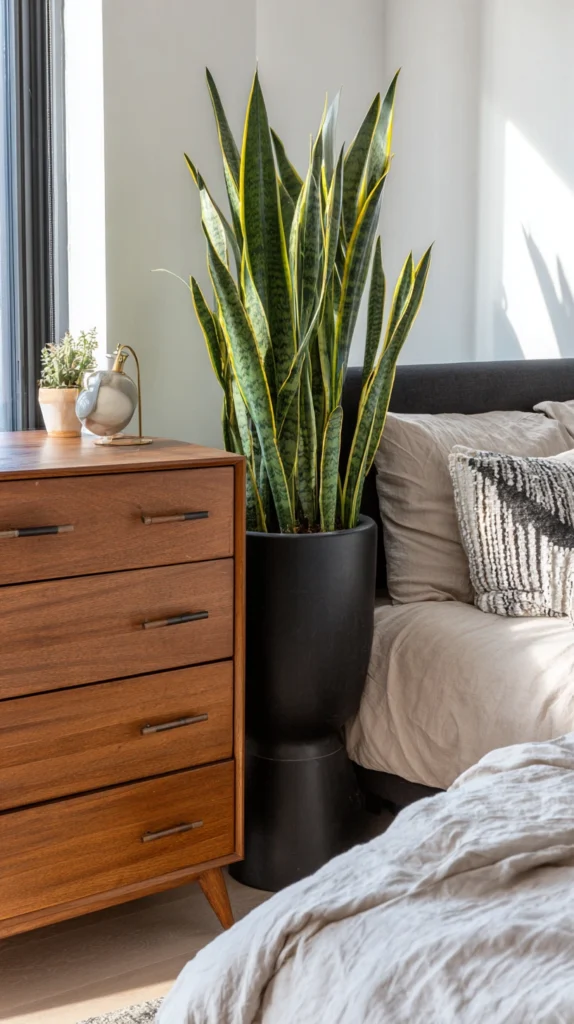
A snake plant, genuinely one of the most shade-tolerant houseplants available, positioned in whatever corner of the bedroom gets the least natural light.
Most bedrooms have at least one spot considerably dimmer than a living room ever would be, and snake plants specifically thrive where other plants simply give up.
I keep a snake plant in the corner of my bedroom furthest from the window, and it’s thrived there for years despite genuinely minimal light.
Budget tip: Snake plants are among the least expensive and most widely available houseplants, making them an accessible starting point for any bedroom.
A few things worth knowing:
- Water infrequently, generally every two to three weeks, since overwatering is the most common cause of decline in this otherwise resilient plant
- Snake plants release oxygen at night specifically, unlike many plants that do so only during daylight hours, making them a popular choice for a bedroom
- Choose a variety like Sansevieria trifasciata for the most reliable low-light tolerance
A snake plant solves the specific bedroom problem of genuinely limited light better than almost any other houseplant option.
2. Lavender for Genuine Sleep-Supportive Scent
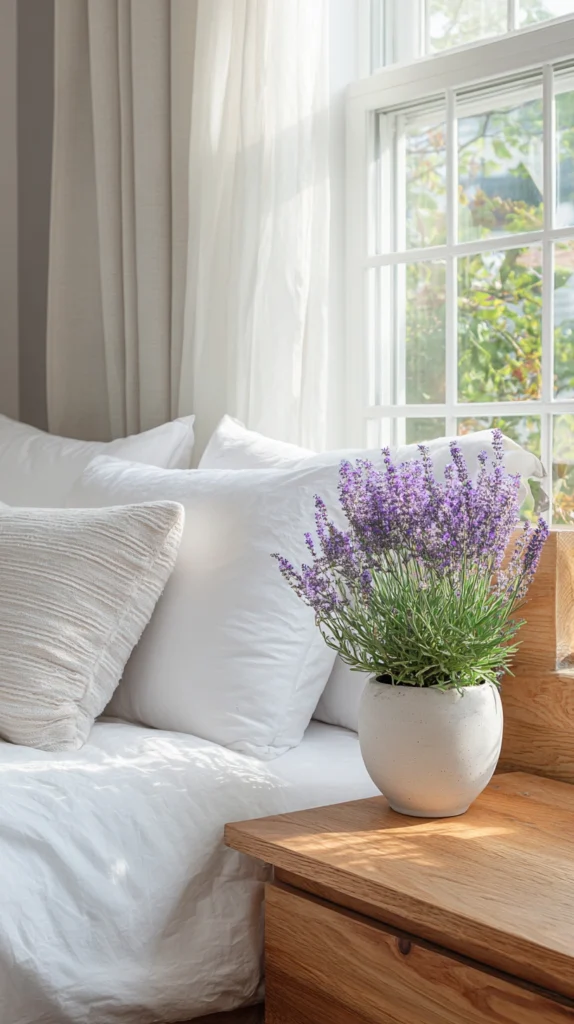
A potted lavender plant, positioned on a nightstand or windowsill specifically for its calming fragrance rather than purely visual appeal.
Lavender’s scent has real research behind its association with relaxation and improved sleep quality, making it a genuinely functional bedroom plant choice rather than a purely decorative one.
I keep a small potted lavender on my nightstand, and the subtle fragrance has become part of my actual evening wind-down routine.
Budget tip: Lavender is inexpensive and widely available at most garden centers, particularly during spring and summer planting seasons.
A few things worth knowing:
- Lavender needs considerably more direct sunlight than many other bedroom plant options, so position it in your brightest available window
- Water sparingly, since lavender is a Mediterranean plant that prefers drier conditions between waterings
- Trim spent blooms regularly to encourage continued flowering and maintain the plant’s fragrance production
Lavender brings a functional, sleep-supportive benefit that few other bedroom plants can genuinely claim.
3. A Peace Lily for Air-Purifying Benefits
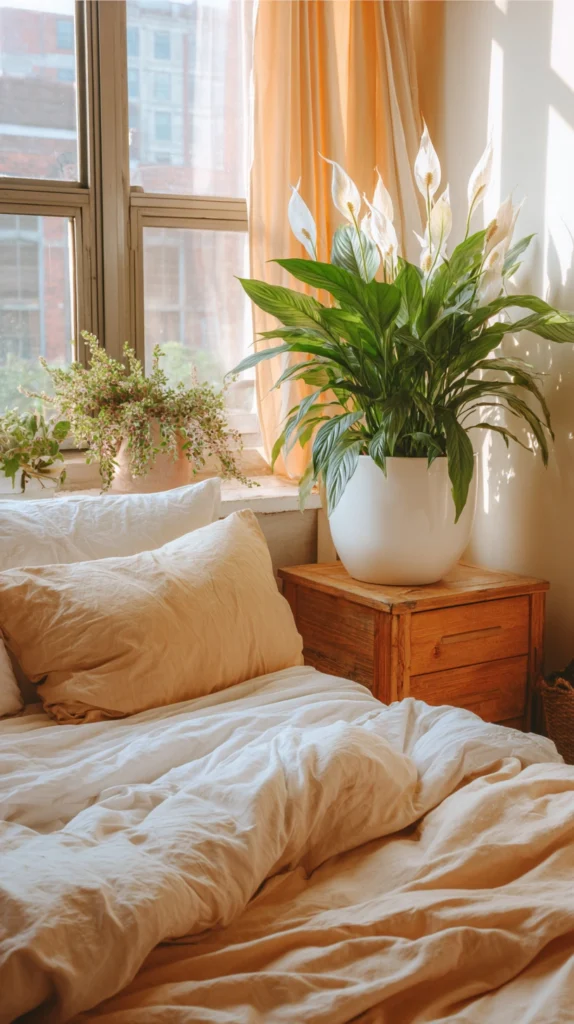
A peace lily, known for genuine air-filtering qualities documented in NASA’s original clean air studies, positioned somewhere it can get consistent, indirect light.
Improved indoor air quality matters more in a bedroom than almost any other room, given the many consecutive hours spent breathing that same air each night.
I keep a peace lily near my bedroom window, and its drooping leaves give me an obvious visual cue for when it needs water, making it genuinely low-effort to maintain.
Style tip: Choose a peace lily specifically if you want a plant that also flowers, since its white blooms add visual interest beyond just foliage.
A few things worth knowing:
- Peace lilies are toxic if ingested, so this is a better choice for a bedroom without curious pets or young children with regular access
- Keep soil consistently moist but not soggy, watering when the plant’s leaves just begin to droop slightly
- This plant tolerates lower light than many flowering houseplants, though it blooms more reliably with brighter indirect light
A peace lily brings genuine air quality benefits alongside attractive flowers, making it one of the more functional choices on this entire list.
4. A Spider Plant for Pet-Safe Greenery
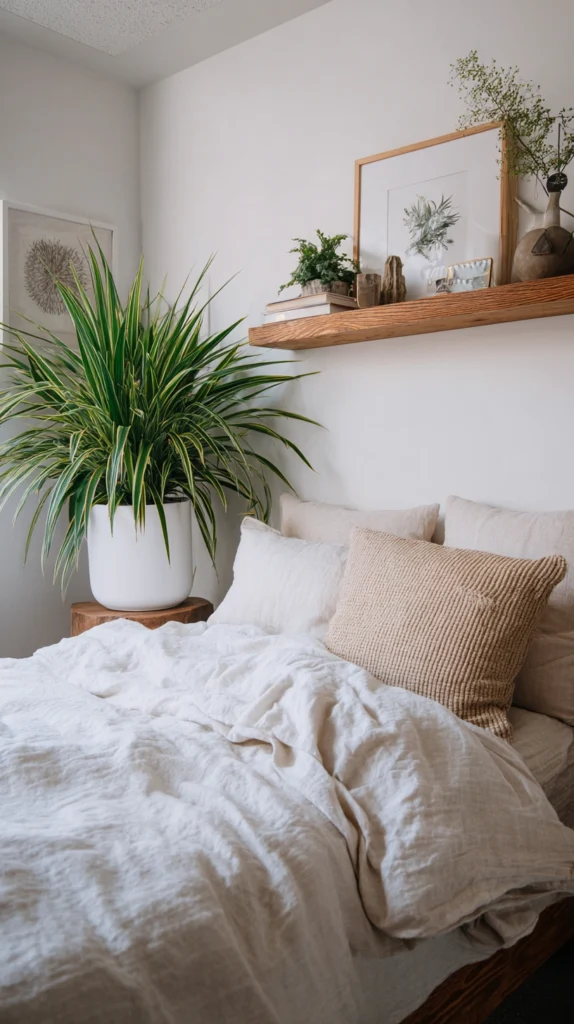
A spider plant, genuinely non-toxic to cats and dogs, making it a safer choice for a bedroom shared with curious pets.
Many popular houseplants are actually toxic if chewed or ingested, and a bedroom is exactly the kind of space where a pet spends significant unsupervised time.
I switched from a toxic plant to a spider plant specifically after my cat started nibbling on my previous bedroom greenery, and the peace of mind alone was worth the swap.
Budget tip: Spider plants are inexpensive and propagate easily from their own offshoots, letting a single plant eventually produce several more for free.
A few things worth knowing:
- Confirm any plant’s pet safety specifically before bringing it into a shared bedroom, since toxicity varies considerably even among otherwise similar-looking houseplants
- Spider plants tolerate a wide range of light conditions, making them forgiving for most bedroom placements
- Hang spider plants in a basket specifically if floor or shelf space is limited, letting their offshoots trail attractively downward
A spider plant solves the specific concern of pet safety without sacrificing genuine visual appeal or easy care.
5. An Areca Palm for Humidity and Air Quality
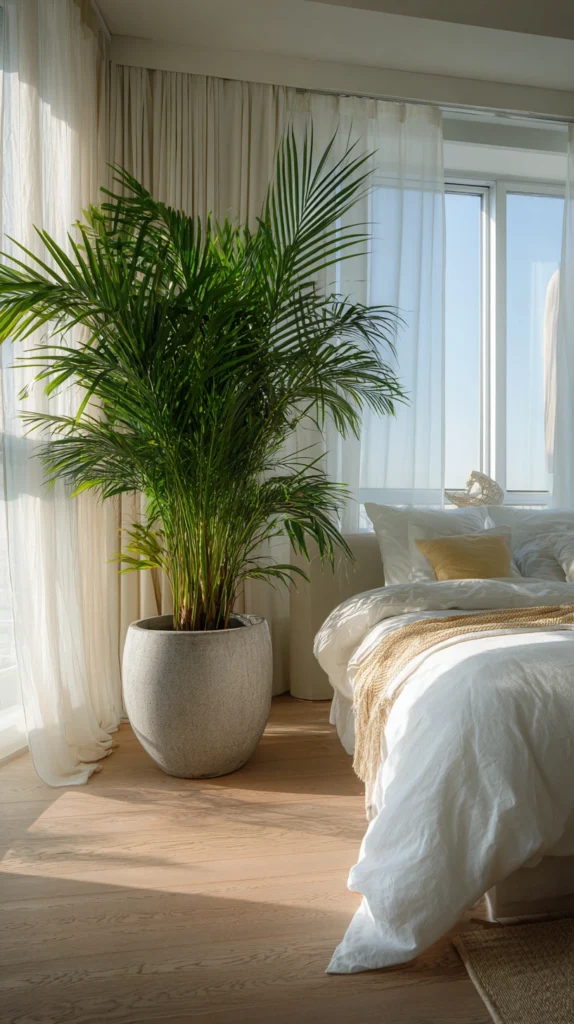
An areca palm, valued both for its air-purifying qualities and its natural humidity-adding properties, particularly useful in a dry climate bedroom.
Dry indoor air, common in winter or in genuinely arid climates, can affect sleep comfort and skin, and areca palms release moisture into the air as part of their natural transpiration process.
I keep an areca palm in my bedroom specifically during Arizona’s dry winter months, and it’s made a noticeable difference in how dry my throat feels overnight.
Budget tip: A single areca palm provides meaningful humidity benefit without the ongoing cost of running an electric humidifier.
A few things worth knowing:
- This plant needs a decent amount of bright, indirect light, so it suits a bedroom with a genuinely sunny window better than a dim corner
- Areca palms are also non-toxic to pets, making them a safe choice for households with curious animals
- Water when the top inch of soil feels dry, avoiding both drought stress and waterlogged roots
An areca palm brings genuine humidity and air quality benefits that few other bedroom plant choices can match.
6. A Pothos for the Easiest Possible Care
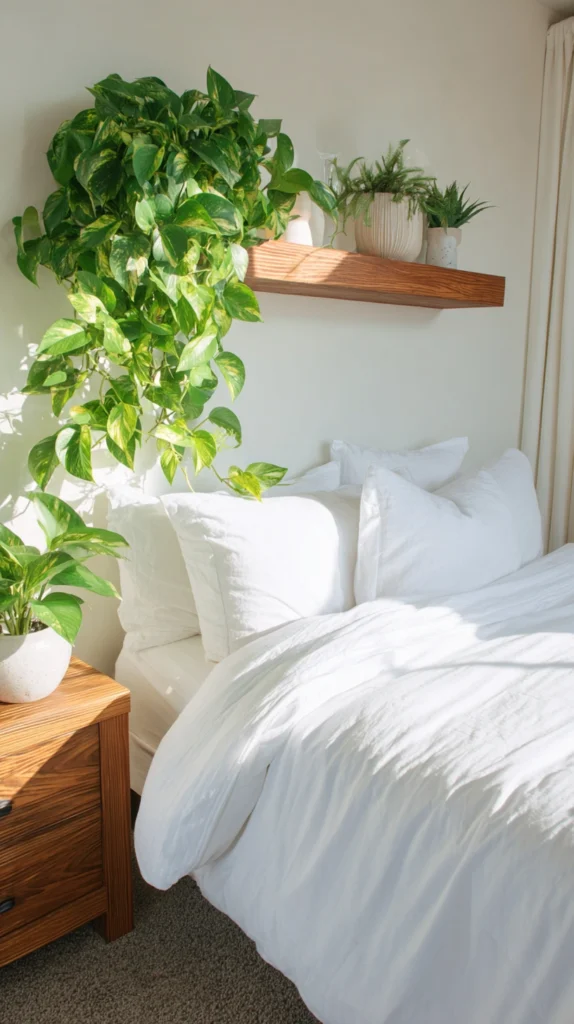
A trailing pothos, widely regarded as one of the most forgiving houseplants available, suited to almost any bedroom regardless of light or a busy schedule.
For anyone nervous about bedroom plant care specifically, pothos tolerates genuine neglect better than almost any other option on this list.
I keep a pothos on my bedroom dresser, and it’s survived considerable inconsistent watering over the years without any real decline.
Budget tip: Pothos is among the least expensive houseplants available, and cuttings root easily in water, letting you propagate new plants for free.
A few things worth knowing:
- Pothos tolerates a wide range of light conditions, from fairly dim corners to bright indirect light, making it genuinely adaptable to most bedrooms
- This plant is toxic to pets if ingested, so consider a different option specifically for a bedroom shared with a chewing-prone animal
- Trailing vines can be trained along a shelf or allowed to hang, offering flexibility depending on your bedroom’s specific layout
Pothos remains one of the most forgiving options on this entire list, ideal for anyone still building confidence with plant care.
7. A ZZ Plant for Genuinely Low Light and Low Water
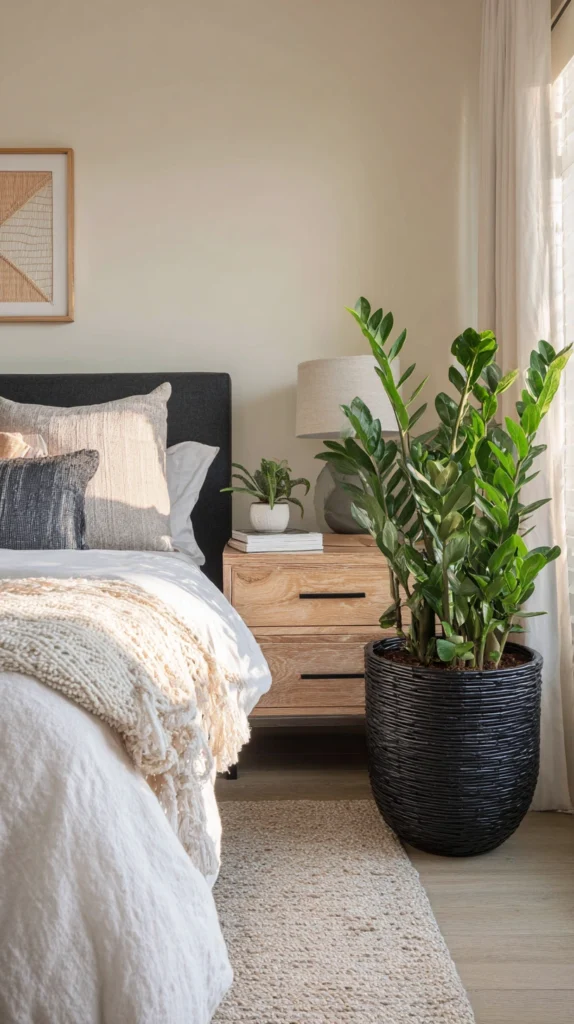
A ZZ plant, tolerating both low light and infrequent watering better than almost any other houseplant, suited to a bedroom with minimal natural light and a busy owner.
This is one of the few plants that genuinely thrives on neglect, making it well suited to a bedroom that doesn’t get daily attention.
I keep a ZZ plant in my guest bedroom specifically, a room that doesn’t see daily traffic or consistent care, and it’s held up beautifully regardless.
Budget tip: ZZ plants grow slowly, which means a single purchase lasts considerably longer before needing repotting or division compared to faster-growing alternatives.
A few things worth knowing:
- Water only when soil is genuinely dry throughout, since ZZ plants are more prone to root rot from overwatering than drought stress
- This plant is toxic if ingested, so keep it away from pets or young children with regular unsupervised access to the room
- ZZ plants tolerate genuinely low light better than almost any other option on this list, suiting a bedroom with minimal windows
A ZZ plant is the right choice specifically for a lower-traffic bedroom or guest room that doesn’t receive consistent daily care.
8. A Small Fiddle Leaf Fig as a Statement Piece
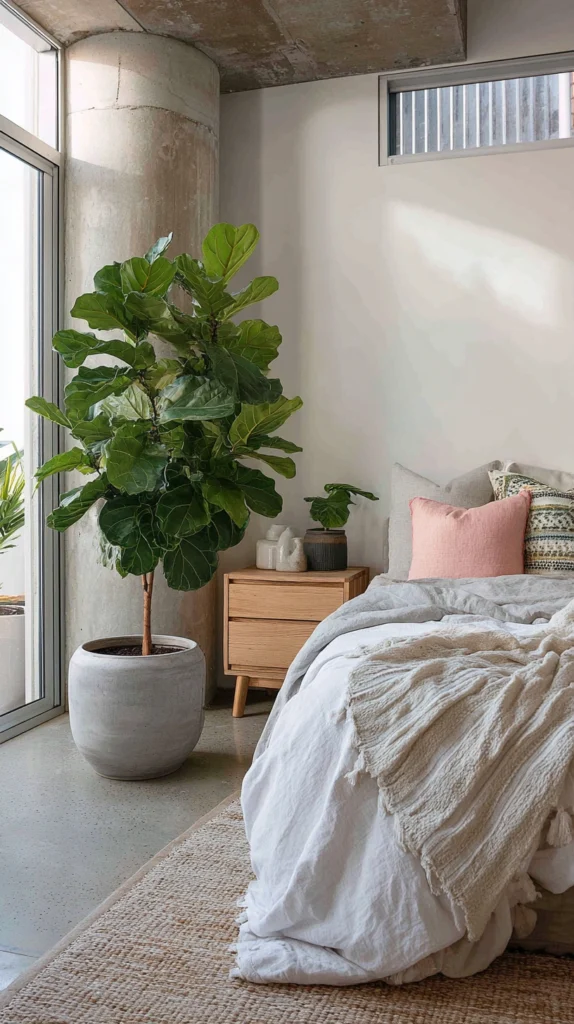
A smaller fiddle leaf fig, positioned as a genuine design statement rather than purely functional greenery, bringing real visual drama to a bedroom corner.
Unlike many of the purely practical options on this list, a fiddle leaf fig serves primarily as a design feature, its bold leaves creating genuine visual impact.
I keep a fiddle leaf fig in the corner of my bedroom near a bright window, and it’s become the room’s clear focal point beyond just the bed itself.
Style tip: Choose a smaller or narrow variety specifically for a bedroom, since a full-sized fiddle leaf fig can quickly overwhelm a room this size.
A few things worth knowing:
- This plant needs genuinely bright, indirect light, so it’s not suited to a dim bedroom the way several other options on this list are
- Rotate the plant periodically to encourage even growth on all sides, since it will lean toward its light source otherwise
- This species is somewhat finicky about consistency, preferring a stable location rather than being moved frequently between rooms
A fiddle leaf fig brings genuine design drama to a bedroom, working best as a deliberate statement piece rather than a purely functional addition.
9. Aloe Vera for a Sunny Windowsill
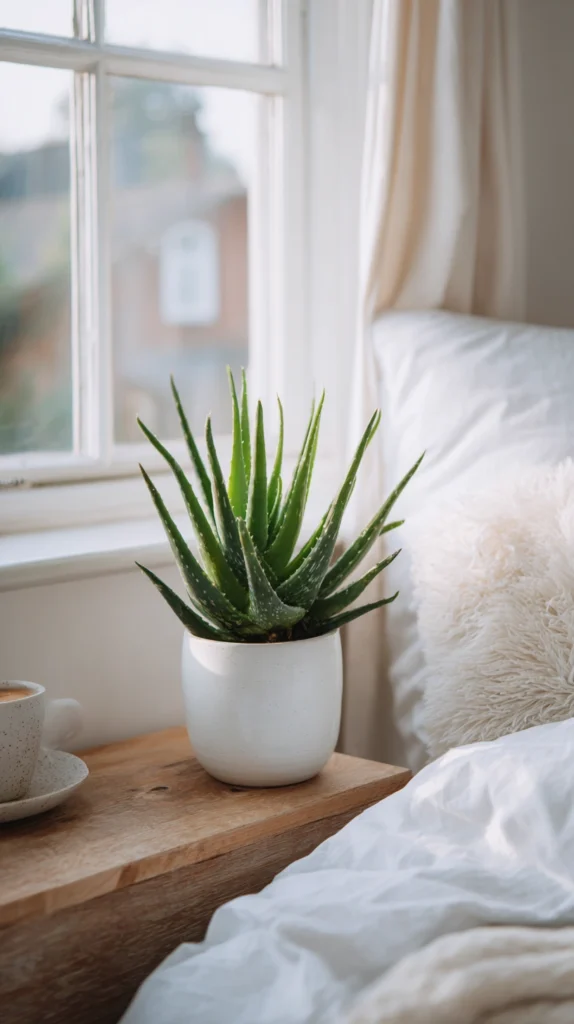
An aloe vera plant, combining genuine low-maintenance care with a practical use, its gel commonly applied to minor burns or skin irritation.
This is one of the few bedroom plants that offers a genuine practical household use beyond air quality or aesthetics alone.
I keep an aloe plant on my sunniest windowsill, and having it on hand for the occasional minor kitchen burn has been a small but genuine convenience.
Budget tip: Aloe plants are inexpensive and propagate readily from offshoots, called pups, letting a single plant eventually produce several more.
A few things worth knowing:
- Aloe needs genuinely bright, direct light, making it suitable only for a bedroom with a strong sunny window
- Water infrequently, allowing soil to dry out completely between waterings, since aloe is highly prone to root rot in consistently moist soil
- This plant is mildly toxic if ingested by pets, so position it out of reach in a shared bedroom
Aloe vera brings a genuinely practical household use alongside its easy care, a rare combination among typical bedroom plant choices.
10. A Boston Fern for Humidity-Loving Texture
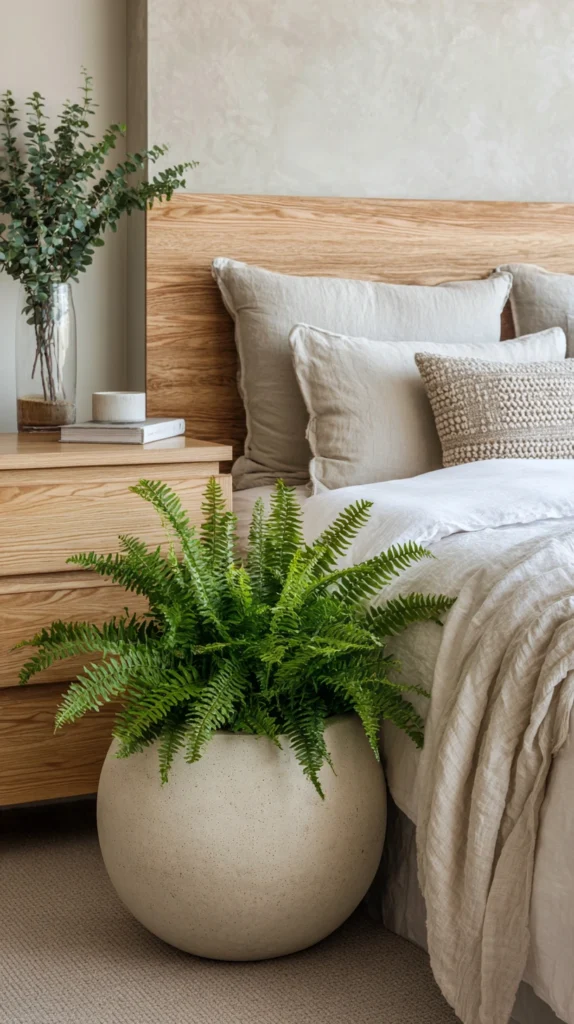
A Boston fern, bringing soft, textural greenery and genuine humidity benefits, particularly well suited to a bedroom with an attached or nearby bathroom.
Ferns thrive on humidity that many other bedroom plants don’t require, making this a smart choice specifically near a bathroom’s naturally higher moisture levels.
I keep a Boston fern near my bedroom’s ensuite bathroom door, where it benefits from the extra humidity generated by regular showers.
Style tip: Choose a hanging basket specifically for a Boston fern, letting its naturally cascading fronds create a softer, more textural look than a standard potted placement.
A few things worth knowing:
- Mist regularly if your bedroom doesn’t naturally offer high humidity, since dry air causes this plant’s fronds to brown and drop
- Boston ferns prefer bright, indirect light rather than direct sun, which can scorch their delicate fronds
- This plant is non-toxic to pets, making it a safe choice for a shared bedroom space
A Boston fern brings genuine textural softness to a bedroom, particularly effective in a spot that naturally benefits from its humidity preferences.
11. A Rubber Plant for Bold, Glossy Foliage
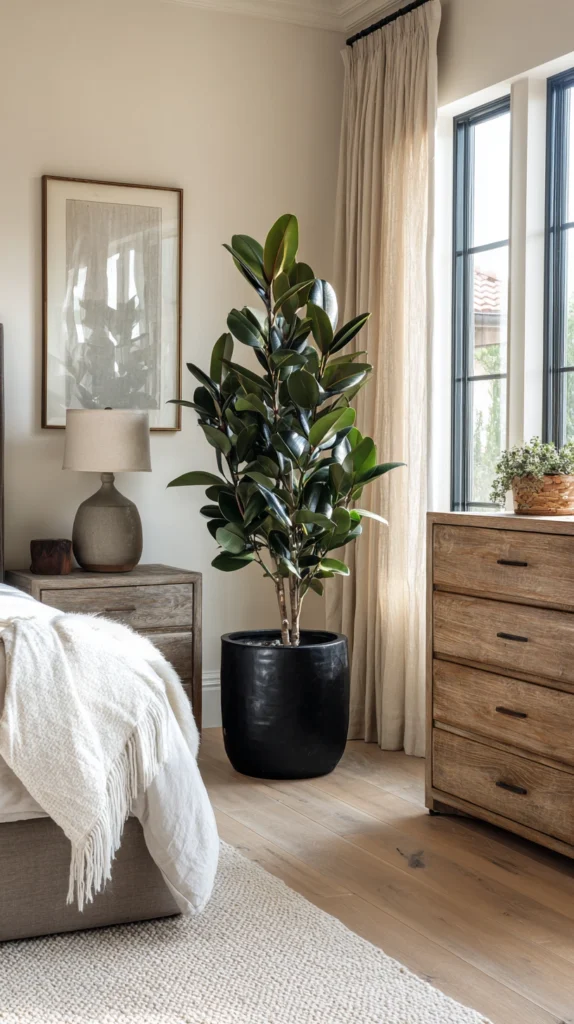
A rubber plant, with its deep green, glossy leaves, bringing a bolder foliage texture than many of the softer, more delicate options on this list.
This plant tolerates a genuinely wide range of bedroom conditions while still delivering real visual presence.
I keep a rubber plant near my bedroom’s dresser, and its deep, glossy leaves add real richness against my room’s otherwise neutral color palette.
Budget tip: Rubber plants are widely available and grow at a moderate pace, offering good value relative to their visual impact over time.
A few things worth knowing:
- This plant tolerates a range of light conditions, though it grows more vigorously with bright, indirect light
- Wipe leaves occasionally with a damp cloth, since dust buildup can dull their naturally glossy appearance
- Rubber plants are mildly toxic if ingested, so consider placement carefully in a bedroom shared with pets
A rubber plant delivers bold, glossy foliage that holds its own as a genuine design element within an otherwise simple bedroom.
12. A Small Jasmine Plant for Evening Fragrance
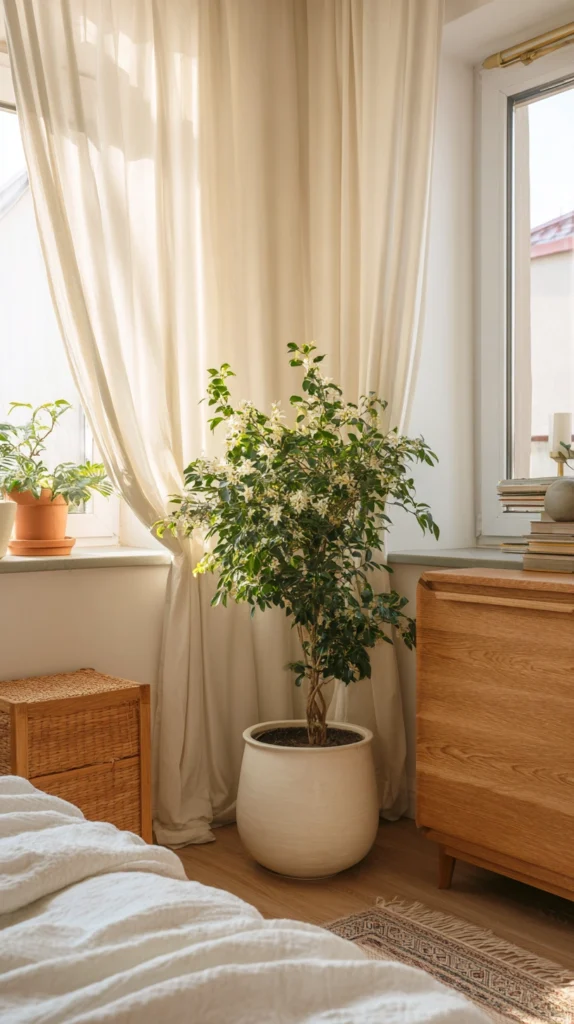
A potted jasmine plant, valued specifically for its fragrant blooms released in the evening, similar in function to lavender but with a distinctly different scent profile.
Like lavender, jasmine’s fragrance has genuine associations with relaxation, making it another functional choice for a bedroom rather than a purely decorative one.
I keep a small jasmine plant near my bedroom window, and its evening fragrance has become a genuinely pleasant part of my nightly routine during its blooming season.
Style tip: Position jasmine near a window that gets opened occasionally, letting its fragrance genuinely circulate through the room rather than staying confined to one small corner.
A few things worth knowing:
- Jasmine needs a good amount of bright light to bloom reliably, so a sunny bedroom window matters more here than for many other options on this list
- This plant can be trained onto a small trellis for a more decorative, climbing presentation
- Trim after blooming to encourage healthy new growth for the following season
Jasmine offers a genuinely different fragrance option from lavender, giving you a choice between two functional, scent-focused bedroom plants.
13. A Small Grouping at Bedside for a Layered Look
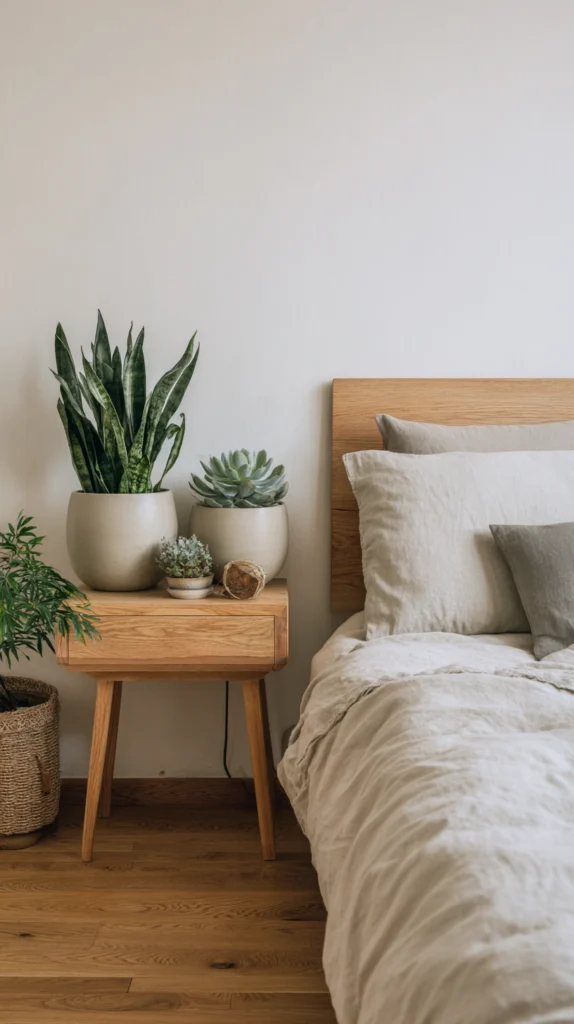
Rather than a single plant, a small grouping of two or three different varieties clustered together on a nightstand or nearby shelf, creating genuine visual layering.
This treats bedroom plants as an intentional design vignette rather than a single scattered addition.
I keep a small snake plant, a trailing pothos, and a tiny succulent grouped together on my dresser, creating a layered green corner rather than one isolated plant.
Style tip: Choose plants with genuinely different heights and leaf shapes within the grouping, since variety in silhouette is what makes a small cluster read as intentional rather than random.
A few things worth knowing:
- Confirm all plants in the grouping share reasonably compatible light and water needs, simplifying ongoing care
- Keep the grouping small, two or three plants, rather than overcrowding a nightstand or shelf meant for other daily items too
- This approach lets you combine a highly functional plant, like lavender, with a purely decorative one, like a small succulent, in the same small display
A layered plant grouping brings more visual interest to a bedroom than any single plant alone, while still keeping the overall footprint genuinely small.
The Easiest Plant to Start With
A snake plant remains the most forgiving choice for nearly any bedroom situation, tolerating low light and inconsistent watering while still delivering genuine air-quality benefits overnight.
A Few Safety Details Worth Confirming First
- Check pet toxicity specifically for any plant before placing it in a bedroom shared with a curious cat or dog
- Confirm your bedroom’s actual light levels honestly, rather than assuming a plant will adapt to conditions it’s not genuinely suited for
- Position any plant with fragrance, like lavender or jasmine, close enough to actually notice the scent, but not so close it becomes overwhelming
Why Some Bedroom Plants Struggle Despite Good Intentions
Most bedroom plants fail not from bad luck, but from a mismatch between what the plant actually needs and what a typical bedroom actually offers, particularly around light, since bedrooms are frequently the dimmer end of a home’s overall daylight exposure. Choosing a plant genuinely suited to your bedroom’s real light levels, rather than the plant that looked best in a store with far brighter conditions, is what actually determines whether it thrives long term.